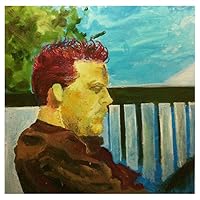
Jack Kerouac is best known through the image he put forth in his autobiographical novels. Yet it is only his private journals, in which he set down the raw material of his life and thinking, that reveal to us the real Kerouac. In Windblown World, distinguished Americanist Douglas Brinkley has gathered a selection of journal entries from the most pivotal period of Kerouac’s life, 1947 to 1954. Here is Kerouac as a hungry young writer finishing his first novel while forging crucial friendships with Allen Ginsberg, William S. Burroughs, and Neal Cassady. Truly a self-portrait of the artist as a young man, this unique and indispensable volume is sure to become an integral element of the Beat oeuvre.
Jean-Louis Lebris de Kérouac, known as Jack Kerouac, was an American novelist and poet who, alongside William S. Burroughs and Allen Ginsberg, was a pioneer of the Beat Generation.
Of French-Canadian ancestry, Kerouac was raised in a French-speaking home in Lowell, Massachusetts. He "learned English at age six and spoke with a marked accent into his late teens." During World War II, he served in the United States Merchant Marine; he completed his first novel at the time, which was published more than 40 years after his death. His first published book was The Town and the City (1950), and he achieved widespread fame and notoriety with his second, On the Road, in 1957. It made him a beat icon, and he went on to publish 12 more novels and numerous poetry volumes. Kerouac is recognized for his style of stream of consciousness spontaneous prose. Thematically, his work covers topics such as his Catholic spirituality, jazz, travel, promiscuity, life in New York City, Buddhism, drugs, and poverty. He became an underground celebrity and, with other Beats, a progenitor of the hippie movement, although he remained antagonistic toward some of its politically radical elements. He has a lasting legacy, greatly influencing many of the cultural icons of the 1960s, including Bob Dylan, The Beatles, Jerry Garcia and The Doors. In 1969, at the age of 47, Kerouac died from an abdominal hemorrhage caused by a lifetime of heavy drinking. Since then, his literary prestige has grown, and several previously unseen works have been published.
I have been reading this book very slowly on and off for months because, truthfully, I don’t ever want it to end. I have only gotten so far in his “work journal” of his first novel Town and The City. Dismissed by most, it is my favorite novel by Kerouac, and I have many fond memories of reading it at my parent’s breakfast table one long and isolated winter (I have not-so fond memories of the winter when I read it, however).
Here we see Jack Kerouac at his most pretentious and naïve, his most innocent and wild-eyed, as he struggles alone in his determination to become a Big Writer. We see his obsessions with his output in word count at the end of the day, his feelings on Catholicism, his sadly ill-fated attempts to swear off drinking, his morality, his guilt for being a twenty something layabout sponging off his mother, his existential fears, his lofty aspirations, his lonely walks, his dates, his deep conversations with slouching bohemians in the city, and his curious desire to settle down in Colorado with a wife and start a family. Such a life, we all know, would not be for him, but it is amazing to read in this book how much of an average Joe Jack Kerouac really was.
I really don’t understand how anyone can hate Jack Kerouac. He wasn’t the smartest guy in the room, but then again he never really claimed to be. He was a jock, a real dyed in the wool American, and only by hanging around hip circles did he ever come to foresee the promise of questioning and creativity that could be the center of his life, that could be the center of any average American’s life. He glorified the working man, sure, but where’s the harm in putting some lipstick on this pig-shit of doldrum American life, of experiencing an ever-fleeting superficial high at the sight of railway tracks, coffee, factories, garbage cans, fast cars and beer?
Kerouac knew what he was doing, though it seems most don’t know what to do with Kerouac. It’s funny to read at one point that he “believes in sane writing, as opposed to the psychotic sloppiness of Joyce. Joyce is a man who only gave up trying to communicate to human beings. I myself do that when I’m drunk-weary and full of misery, therefore I know it’s not so honest and it’s spiteful to blurt out in associations without a true human effort to evoke and give significant intelligence to one’s sayings. It’s a kind of scornful idiocy” (48). Isn’t that just the sort of thing Kerouac’s been accused of doing so many times? He had a process, and if he evolved as a writer into stream-of-consciousness nonsense, it’s because he thought that was the direction writing needed to go.
I’m also fascinated by his love/hate relationship with other hipster/beats, especially Allen Ginsburg. Kerouac doesn’t seem to know whether they’re weighing him down to an anarchic, apathetic, hedonistic hip oblivion or whether they give him the energy and motivation and experience he needs to write anything of value. It also seems like Jack Kerouac was the hipster’s pet project at first, the simple-minded square guy that from his very essence of being square had some tap to “Truth,” though Kerouac seems aware he is being exploited (and in turn is exploiting) and derided for being a norm (just as he derides the others for being effeminate hipsters). They get into all sort of stupid but familiar arguments about whether things are “interesting” or “real” and it’s depressing to know that the dichotomy between over-educated hip people hasn’t changed much over the decades.
Take it with a grain of salt, but Kerouac had this to say about Ginsberg, and I think it stands well for all hipsters at all times:
“He giggles at everything except his own horror, which precipitates the giggles in the first place. He is locked up inside himself hopelessly to the point where he is actually like a gargoyle-head grinning on the prow of an old ship, and as the old ship proceeds through the waters of the world, the gargoyle-head, undeviating, is grinning and giggling forever as the ship rounds capes… noses into grimy old harbors, stands anchored in flowery lagoons… and finally sinks to the bottom of the ocean, where, amid bubbling muds and weird fishes and sea-light, the gargoyle-head still grins and giggles forever.” (43-44)
Jack Kerouac was never a hypocrite (being a hypocrite requires a certain level of self-awareness he was incapable of) but he was at times a coward and a chauvinist and a petty, jealous blowhard. But so what? If he was ever lying to himself he never knew it, and when he thought he was being honest he was being honest in the best way possible, without veneer, without accepted vocabulary, just big fancy abstract, purple-prosed words that cut to the heart of the matter in ways nobody else would ever dare. He was self-taught and had the balls to call himself an intellectual and a self-made Big Writer, and as this workbook shows, he worked hard to get to the blessed yet doomed place he very much wanted to be. There’s an honesty and an approachability and an innocence and an aliveness and even an intelligence to Jack Kerouac that I have yet to encounter anywhere else, and that’s why reading almost anything by him leaves me awake, alive and inspired.
And as far as this here journal goes, reading it should leave any writer inspired: not only does Kerouac treat writing as a "holy" profession, he is committed to working and does so with determination and loneliness through the nights. In other words: to be a writer you have to really really really want to write, and really really really write until dawn. The next best thing to doing all that of course is to at least be motivated by someone who does, and with that and a little bit of grace maybe even your or I will come around some day and get our shit together.
It's taken me several months to read this. Kerouac is one of my all time favourite writers, he writes the words from my soul in a way that very few others do. This was a wonderful Christmas present. I read it slowly because I wanted it to last. It's diary sections so easy to stop between parts. It was wonderful to have this glimpse directly into his mind outside his crafted prose. Here was so much self doubt, and self determination. The diary of a struggling writer, determined to write and tell stories. Full of dreams about succuess and worries of failure. I'd recommend it to everyone who writes and worries about their writing.
Having been a New York City high school student in the mid 1960s Jack Kerouac’s On The Road has long been a literary touchstone. As a teenager I became enamored with its tale of exploration and beatnik culture. Kerouac, Ginsberg and Corso formed a trilogy of poetic vision which helped formulate my own philosophy of living.
About two years ago, while browsing the bookshelves in the Barnes and Noble in Brooklyn Heights, I came across a new publication: On The Road,The Original Scroll, edited by Howard Cunnell. Once home, it found a resting spot in my bookshelf where it remained until a few months ago. Bored between books I picked it up and started to read first the four introductory essays describing the process by which the scroll found a publisher; eventually, the legendary editor Robert Giroux was presented with the 120 foot long scroll Kerouac had typed out in a 30 day benzedrine haze, a single paragraph of creativity. When Giroux told him it would need to be edited, Kerouac protested insisting “the Holy Spirit” had dictated the work. After months of cajoling, the finished product was published with Chapters, names changed to protect against libel and became an instant best seller and modern classic.
I remember reading it with eyes wide open delighting in Kerouac’s adventures crisscrossing the continental United States with a side trip to Mexico. It was populated with aimless adventurers focused on living free of convention with drug induced visions of an alternative consciousness. As I revisited the book in its original form I was astounded at the poetic flow, a rush of words and scenes depicted as if I had a backseat perch in the old Hudson or variety of other cars Kerouac and Cassidy hightailed on the roads of America…
“that magnificent car made the wind roar; it made the plains unfold like a roll of paper; it cast hot tar from itself with deference---an imperial boat.”
This was a totally different reading experience, within which I felt emerged like a diver in a deep body of water.
At the same time, I had the good fortune of spending considerable time in the Rose Reading Room, a research space located on the third floor of the main branch of the New York Public Library building on 42nd Street and Fifth Avenue. There, I also discovered a one-off copy of Windblown World: The Journals of Jack Kerouac 1947-1954, edited by the American historian Douglas G. Brinkley. In my hands at the library was Kerouac’s personal thoughts and notes about his process while writing On The Road and vast notes taken while he was out on the road traipsing from North Carolina where his family lived and then to Queens, New York where they relocated. His mother an inescapably key figure in supporting the author in his down and out times. Additionally, the journals noted his interactions with other writers and the key figures in the finished classic as he and Neal Cassidy spent considerable time in NYC, Denver, Colorado, San Francisco, New Orleans (hanging out with William Burroughs and family), and finally Mexico City. Within these journal pages Kerouac provides insight into his own state of mind…
“one has to learn history and the stupid study of cause and effect, to enter into an understanding of eternity so far as we may know it. Cause-and-effect is also a prurience of mind and soul, because it pettishly demands surface answers to bottomless matters, though it is not for me to deny the right of men to build bridges over voids…but why walk on such a bridge; an elephant can do that; only a man can stare at the void and know it. Only man cares, not elephants and asses.”
…and his sense of humor “If you can’t get a girl in the Springtime You can’t get a girl at all.”
...after which Kerouac notes a WC Fields line: “you’re as funny as a cry for help.”
And still from the journals, a direct link to the road trips:
“Neal and I were still dreamily uncertain of whether it was Market St. in Frisco or not – at dreamy moments. This is when the mind surpasses life itself. More will be said and must be said about the sweet, small lake of the mind, which ignores Time & Space in a Preternatural Metaphysical Dream of Life…On we went into the violet darkness up to Baton Rouge on a double highway. Neal drove grimly as the little blond dozed, I dreamed.”
The Windblown World ends with these words:
“And what a revelation to know that I was born sad-that it was no trauma that made me sad-but God-who made me that way...The Eternal Wheel is Infinite Joy…I’m really willing to be conscientious…Death…death…and nothing else. I have to be joyful or I die, because my earthly position is untenable in gloom and I betray God in spite of myself therein. “I don’t have to go to museums, I know what’s there.”
So, there you have it. I am not so sure it would be feasible nor accessible for those reading this review to simultaneously read The Original Scroll in tandem with the Journals-Windblown World. I now consider this opportunity as being near the pinnacle of my life’s reading experience.
But, if you are interested in reading or revisiting ,On The Road, I urge you to read in its original form, the scroll; it is transformative in its poetry and pace to the edited published editions better known to the reading public.
I think fans of Kerouac will like this selection from Kerouac’s journals, written at the time during which he was working on his first novels. I have not read The Town and the City, so can’t say a lot about what can be learned from these journals with regard to that book. However, the latter sections of the journals were of particular interest to me, as I suspect they will be to most readers of Kerouac, inasmuch as these were written while Kerouac was at work on the novel for which he is best known, On the Road. Here, you will find lines and ideas that reappear in fictional form in Kerouac’s great hipster picaresque. Lines like “We know time” and “Whither goest thou America in thy shiny car in the night?” Ideas like “IT” (as in “searching for IT”) and the “ghost of Susquehanna” and the “Shrouded Stranger.” Better, you get Kerouac writing about Neal Cassady and Allen Ginsberg and William S. Burroughs, the real people on whom the characters Dean Moriarty, Carlo Marx and Old Bull Lee were based. In addition, you get notes Kerouac made during his travels, some of which describe experiences that were later fictionalized in the novel. These latter include, for instance, his description of a trip he took with Cassady and with Cassady’s girlfriend Luanne: as the journals show, the tensions between Sal Paradise and Marylou in the novel are based on real events.
In addition to taking notes as he travels around the continental United States, Kerouac writes of his experiences in New York City, including his work on his writing, disagreements with instructors at the The New School for Social Research and conversations with friends. I have not checked it out yet, but it is likely that some of the parties described here, as well as the evenings at clubs listening to the jazz of musicians like Ornette Coleman, Dizzy Gillespie and George Shearing also appear in fictional form in Kerouac’s novel of the road.
The journals include many instances in which Kerouac comments on his literary methods and models. For instance, he is critical of editors who cut from a manuscript anything that does not contribute to plot; in addition, he suggests that for himself writing fiction is less about construction of a plot and more of an exploration in which one finds out what one is writing about while in the process of writing; it’s about the journey rather than the destination. There appears to be some validity to this, as it is while working on On the Road that Kerouac begins to get notions of alternate approaches to writing prose fiction: at one point he is describing a novel in which each chapter is a “poem,” the entire novel being a string of such poems. For me, passages like these, as well as passages in which Kerouac comments on his literary models, including Fyodor Dostoevsky and Louis-Ferdinand Celine, are extremely useful for understanding what it is Kerouac wants to do in On the Road and in his “spontaneous prose” in general.
As the most visible member of the Beat Generation, Kerouac is one of the early voices of the oppositional culture that emerged in postwar America. In his journals, there are a number of instances in which he alludes to or comments explicitly on themes and ideas that have since become associated with the counterculture, including the generation gap, the emptiness of middle-class values, the absurdity of wage slavery, and the desirability of a sexual revolution.
Another aspect of Kerouac’s oppositionality is his Buddhism, and while he had not yet become a Buddhist at the time at which these journals were written, one can see here the beginnings of ideas that would later find expression within the belief system of that religion. In some passages, for instance, Kerouac speculates on ultimate questions; in others he looks for holiness in existence. However, at this time, Kerouac is thinking about these things within the rubric of Catholicism, and the extremes of mood to which he gives expression, in passages reflecting praise and thanksgiving on the one hand, and describing experiences of deep guilt on the other, suggest that in becoming a Buddhist, Kerouac found a kind of stability that he was not experiencing as a Catholic.
In writing of his work on his novels, Kerouac frequently reflects some of the traits associated with the modern-day workaholic. For instance, there are passages in which Kerouac considers restricting his contacts with friends, even close ones like Ginsberg, because (he feels) they keep him from his work. He tries to write every day, and he notes his progress by keeping a word count (at his most “geeky,” he calculates his “batting average” based on these daily word counts).
Although in these journals Kerouac most typically writes in serious moods, there are passages in which he is playful as well, for instance in some of his plays on words, in his goofy poems and in his suggestions for a “School of Comedians.”
A few things can be pointed out about this edition of Kerouac’s journals. One is that the editor’s previous work includes books about such persons as Gerald Ford, Rosa Parks, Jimmy Carter, Ronald Reagan and John Kerry; while Kerouac is certainly as representative of the American experience as these others, nevertheless he seems to reflect a very different aspect of that experience than that signified by the other names in that list. Another, and perhaps more useful thing to point out to potential readers of this book, is the difference between its 2004 hardcover and its 2006 paperback versions: while the latter includes pages from journals describing events later fictionalized in On the Road, the former does not.
Acquired Jun 7, 2010 Powell's City of Books, Portland, OR
Learned a lot about Jack the human being, instead of the author Jack, or the celebrity Jack. This book left me with the knowledge of the type of character that was necessary to write books like "On The Road" or "Dharma Bums". Jack was an earnest seeker, and a confused young man when these journals were written. It's heartbreaking to read his optimistic speculations on his possible futures (he was constantly searching for the right path) knowing what road he eventually took. I got the impression he was hung up by and handicapped by his religion first (Catholicism) and his mother/family issues second. The many references to God and salvation show someone who needed to believe and wanted to believe, but was constantly straying. Jack tried Buddhism when Catholicism wasn't enough apparently. Sad to think this bright young talent, so full of promise self-destructed and faded into an alcoholic haze only to die in his late '40s.
Jack Kerouac es un poeta en toda regla. Su sensibilidad estalla la página. La extrañeza del mundo, la seducción de todas las cosas, desmenuza la emoción y el contexto. El ímpetu por la experiencia, y ese tremendo sentido de la exigencia, y el temor a la inutilidad. El amor, el miedo, la cercanía de Dios, la espiritualidad, los viajes, los amigos, la errancia, la soledad. Kerouac es sentir contemporáneo. Es un maestro de la complejidad sensible y humana de un escritor que bien sabe no puede hacer nada más que ser, y deberse al trabajo para dejar rastro para siempre.
An absolutely riveting joy of a read for Kerouac fans. I savored every page and slowed my reading as I progressed to extend my time with the book. This collection of journals chronicles events that occurred around the time of those in On the Road. It offers another layer of understanding Kerouac and how he found his voice.
“…ahora el invierno, la comprensión de la tierra y de nuestro ser en ella: este drama de enigmas y dobles fondos y lamentos y profundas alegrías, estas cosas humanas en la elemental vastedad de un mundo soplado por el viento.”
It was always somewhat unclear, in the works dealing with Kerouac's life and methods, just how much he was beholden to classic literature and literary theory. The most famous story, of course, was always about the benzedrine, caffeine, and nicotine fueled three-day writing binge that resulted in "On The Road." And Kerouac himself, with his later works, and his articles and essays about writing, became a vocal proponent of "automatic" or "stream of consciousness" writing, further muddying the waters of his influences. In reading many of the biographies about Kerouac, we can get something of a feel for his abiding love of literature, and his almost reverent regard for certain writers who most inspired him.
In this book, a collection of journals--in whole and in part--taking the form of a mixture of working writing journals, and personal diary-type entries, his interests and desires are made clear.
Especially in regards to his first novel, Kerouac is keenly interested in creating a work of import and gravity, to be held among the works of his admired influences. He discusses the great efforts to maintain his momentum, and to edit and re-arrange his work. His fluctuating emotional connection to his own work sees him moving from the depths of despair that he will never be able to finish to his satisfaction, to the height of narcissistic belief that it will be a greater work than anything else in his time. This journal enlightens us to his struggles just to *be* a writer--which is a far cry from that image of Kerouac as the mindless typist cranking out words in a drug-fueled haze.
Later entries shine a light on his most famous novel "On The Road," that it rarely receives. Showing "On The Road" as a careful work, which goes through several conceptual changes, not to mention numerous drafts.
Much of these journals are also notes from the journeys that actually appear in the finished novel, so we are able to see, in a way, how Kerouac captures his raw material.
These journals are a fantastic opportunity for Kerouac fans to get an internal glipmse at the reality behind the fiction we've come to love. For those who aren't fans, but who are interested in the act and art of writing--and of *creating*, in general--it is a window on the extraordinary struggles of a man attempting to leave his mark.
Este es, por lejos, el mejor libro que leí en 2018, tal vez el mejor desde 2013. Tanto es así que inmediatamente después de terminarlo, lo volví a empezar, y después leí "En el Camino" con estos diarios al lado. Son los diarios que registran las experiencias de las primeras etapas de Kerouac como escritor. Si bien está dividido en varias secciones correspondientes a los cuadernos de Kerouac, básicamente pueden distinguirse tres partes distintas: La primera que corresponde a la escritura, corrección, tipeo y publicación de "El pueblo y la ciudad", su primera novela, esta etapa va aproximadamente de 1947 a 1949. La segunda parte corresponde a los inicios de la escritura de "On the Road" y "Dr. Sax", y la tercera, si bien contiene textos fechados, se parece más a un cuaderno de apuntes de viajes que a un diario. A difeencia de los otros dos diarios, aquí hay una voluntad más descriptiva y un tono menos confesional que en las otras dos secciones. La edición de Editores Argentinos es excelente, una traducción impecable, un prólogo genial de Douglas Brinkley y una guía descriptiva de muchísimos personajes que aparecen en los diarios entre quienes están, por su puesto, Neal Cassady, William Burroughs, Allen Ginsberg, John Clellon Holmes y muchos otros reconocidos amigos de Kerouac. Estos Diarios registran la época precisa en que Kerouac pasa de ser un entusiasta y obstinado escritor joven, que pretende vivir de la literatura en una granja alejada de todo, con una mujer y muchos hijos, que cuenta obsesivamente el número de palabras escritas día a día, que aspia a escribir como Thomas Wolfe...; a ser el escritor libre y vitalista de "On the Road". Es la etapa en la que encuentra su propio estilo, su propia respiración y, tal vez, algunas respuestas que exceden la experiencia literaria. Además del escritor se muestra, al principio, como un muchacho algo ingenuo, católico, muy conservador, que cree en el esfuerzo, el trabajo y la familia como sostenes principales y que, además, sueña con consagrarse como escritor. También están los amores fugaces, la tensa relación con sus amigos "beats", la desconfianza en la complejidad intelectual de Ginsberg, la fragilidad emocional, las decepciones cada vez que una mujer "no es la indicada" para ser su esposa en una zona rural. El amor por su padre recientemente fallecido, la adoración por su familia. Y, sobre todo, la voluntad para escribir una novela decente. En el medio sus viajes con Cassady, en donde algo va cambiando, en donde la literatura empieza a convertirse en un espacio de libertad, en donde descubre que la respiración del jazz puede ser llevada al lenguaje. Algo se quiebra, algo cambia en ese muchacho conservador, algo que lo transforma en uno de los mejores y más originales escritores americanos. El libro, además destruye uno de los randes mitos sobre KErouac. Un mito que él mismo se encargó de construir: el que dice que "En el camino" fue escrito en un febril rapto de inspiración en tres semanas. Este libro desmiente esa aseveración, la idea de "En el camino" surge mientras estaba escribiendo todavía su primera novela, y empezó a escribirlo inmediatamente después, al principio escribía juntas la mítica novela y "Dr. Sax", los diarios lo registran durante 1949/50 y siguen haciéndolo en los años posteriores, de hecho hay fragmentos borradores de la novela, fácilmente reconocibles en el original. Es probable que esas tres semanas a las que hizo referencia Kerouac en la entrevista famosa, sean las que le llevó tipear la versión original (el famoso rollo sin capítulos y con nombres reales), pero los diarios demuestran que la novela se escribió durante años. Algo lógico tratándose de una obra maestra. Otro de los mitos es el del escritor maldito, libertino, borracho y drogadicto, que después de una noche de alcohol, saca la esquizofrenia del cajón y la tira sobre el papel entre vómito y vómito. Nada más alejado de eso, los diarios dejan claro que, más allá de los lógicos deslices juveniles (o, tal vez, no tan juveniles), Kerouac estaba comprometido con su escritura, era lo que más le importaba, y escribía cuando estaba totalmente lúcido. Ese malditismo bukowskiano que pretenden imponerle algunos entusiastas fans son más una expresión de deseo que una verdad. En fin, además de esas iluminaciones, el libro está lleno de sorpresas. Además se ve que Kerouac se preocupaba mucho de la forma en sus diarios, porque están escritos con su estilo inconfundible e incluso alcanza picos de alto vuelo poético. La lectura se desliza con suavidad, sin ripios, sin complejidades inútiles y con alguno que otro salto temporal que no afecta en nada. Libro imprescindible, de mesita de luz, para subrayar, releer, y rereleer mil veces. Uno de esos libros para comprar y no prestar. Después de leerlo, además, dan ganas de volver a leer todo Kerouac. Uno de los mejores libros que leí en los últimos diez o veinte años. No exagero.
La mia vita è uno sforzo incessante per raggiungere la perfezione del dubbio
È questo il modo in cui si scrive un romanzo, con ignoranza, paura, dolore, follia e quel genere di felicità psicotica che serve da incubatrice per le meraviglie che vengono alla luce
Diari che vanno dal 1947 al 1954. Un continuo susseguirsi di emozioni che descrivono i primi turbamenti dello scrittore emergente- Questa mattina potrei scrivere un mucchio di sciocchezze sulla mia paura di non riuscire a scrivere, sono un ignorante e forse il peggiore, un idiota che cerca di realizzare qualcosa a cui non può assolutamente arrivare. Tutto sta nella volontà, nel cuore! Al diavolo dubbi schifosi! Ora li sfido e ci sputo sopra.
Ho la piena consapevolezza di quanto tempo perdo a "rimuginare" sui fatti mentre la vita continua ad infuriare tutto intorno a me.
Le annotazioni maniacali delle parole battute quotidianamente- Svegliato presto e iniziato subito il lavoro, epure ho scritto solo 1000parole! Tuttavia ne ho riscritte 3000 del ms principale e, cosa ridicola, all'alba ho trascorso due ore a cercare un passo fra i due milioni di parole contenuti nelle cassette arancioni. Dovevo trovarlo. Trovato. Poi sono dovuto andare a letto perchè ero stanco morto. Che notte.
Il sogno utopico di una fattoria e di una vita "normale"- Per la mia vita privata ci vorrebbe una tranquilla esistenza casalinga che compensi l'irrequieta vita mentale... Altrimenti brucerei velocemente, come Wolfe.
Gli appunti di viaggio che scivolano via in una interminabile e ininterrotta lista di città, paesi e persone. Ma c'è spazio anche per le sue letture del momento, Joyce, Dostoevskij, Tolstoj, Dickens, Céline, tanto Twain e persino una breve menzione a Jane Austen, non tanto lusinghiera però.
Avvincenti i quaderni dedicati alla stesura de La città e la Metropoli e Sulla strada dove si riscoprono gli albori delle future amicizie con Ginsberg, Burroughs e Cassady- "Partito per la strada". Ecco quel che dice Dean quando, dopo le sue visioni da marijuana, qualcuno si china sul letto e gli chiede come sta. La vita è un viaggio sulla strada, dall'utero fino alla fine della notte, in cui si continua a tendere il cordone d'argento finchè non si rompe da qualche parte lungo il cammino.
Apprezzabile lavoro di "reunion" dei suoi quaderni/diari/appunti, un lavoro che poteva comunque esser assemblato meglio, soprattutto per quanto riguarda l'ultima parte. In poche pagine vengono raggruppati appunti che, stando a quanto scritto dal curatore, riguardano la stesura di "Sulla Strada" ma non sono datati e sono talmente cupi, pessimistici e a tratti mistici, da far pensare ad un periodo che va oltre il 1954.
Io ho un bisogno immediato di estasi. Se non arriva preferisco morire e raggiungere il mio mondo personale, che è il nostro mondo intimo, e lì trovare subito il mio.
Non ho mai chiesto di essere creato e di nascere così inadatto a una simile realtà. Io chiedo solo, ora che sono vivo e consapevole, l'estasi di cui la mia anima ha bisogno. So dove si trova nell'altro mondo. Ci andò quando sarà pronto per me, il che avverrà ben presto.
I should state that I actually read the hardback, not the paperback edition of the book, so the page count is slightly smaller. There are a total of 371 pages of actual content and an index, rather than the 400+ pages listed.
Journals are a tricky thing to read, especially early ones like Windblown World. The book is roughly divided into two sections--the first was penned while writing Town and the City; the second half is from the time his first novel was being published, while writing early drafts of On the Road, and contain an edited collection of road travels that would ultimately become the basis for his second and most famous novel.
While reading the T&C section, it is apparent that this journal isn't meant for history, nor is it notes he will refer back to when working on the novel. Instead, we read a rather mundane collection of word counts written and notes of when he didn't write because he went into the city and got drunk. There are several times throughout this section when you can see the prejudices and paranoia that will mark Kerouac's later, more conservative years in Florida.
The second half is much better. Neal Cassidy is mentioned several times and there are notes about travels that will ultimately be used in OTR. This is a much more enjoyable read. It's clear Kerouac intends to go back to this section and mine it for his writing.
Douglas Brinkley edited this journal. I sometimes question his edits and wonder what was left on the cutting room floor. Brinkley is a noted historian and has written about Kerouac in the past, I wonder though about his gravitas and innate knowledge of a subject as far outside of his daily universe as the author and the Beats in general. I would have felt much more comfortable if the editor had been someone more intimately involved with the subject.
If you aren't a Kerouac fan that has Some of the Dharma, the two volumes of Collected Letters, The Book of Dreams, Good Blonde and other, lesser known works, I would steer clear of this collection and instead mine the well known--On The Road, Dharma Bums, Desolation Angels, The Town and the City, etc.
Ho trovato ‘Un Mondo battuto dal Vento’ come avrebbe voluto Jack Kerouac, per strada, fra gli scatoli di un mercatino dell’usato; un libro dalle pagine ingiallite, con qualche foglio che si era ormai staccato. Il libro raccoglie i diari di Kerouac dal 1947 al 1954: le note sui giorni passati a scrivere ‘La Città e la Metropoli’, i diari dei viaggi per l’America che preludono a ‘On The Road’, i continui pensieri (a volte veramente tortuosi) sulla vita, sul mondo, sul significato dell’esistenza. Mi chiedo se Kerouac avesse mai immaginato che un giorno i sui diari sarebbero stati dati liberamente alla stampa, svelando al mondo intero tutta l’intimità del suo autore. Scrittore, pioniere della Beat Generation, irriducibile vagabondo e mistico indagatore della vita. mi sarebbe piaciuto conoscere Kerouac, bere un birra con lui chiacchierando di tutto e di niente, guardando intorno la gente arrabattare senza tregua la propria vita.
“La vita è un viaggio sulla strada, dall’utero fino alla fine della notte, in cui si continua a tendere il cordone d’argento finché non si rompe da qualche parte lungo il cammino.”
"Hemos venido a esta tierra y no sabemos lo que tenemos que hacer, y nos sentimos llorar en medio de tanto desorden y confusión - "Ha de haber alguna verdad, ¡puesto que yo soy de verdad! ¡De verdad!". Aún todo se ve tonto y falso a nuestro alrededor, y más tontos y falsos somos nosotros, y oh ¿qué tendríamos que hacer? ¿qué otros desórdenes sobrevendrán y cuál será nuestro lugar? Pronto escribiré un ensayo titulado - "Extrañas Razones para la Abolición de la Pena Capital y Por qué los hombres no deberían cometer suicidios" - donde demostraré que, más allá de lo que pueda pasarle a un hombre, él nunca ha de destruir nada, ni destruirse a sí mismo - ya que en medio del desorden, aún persevera la vida y la posibilidad de redención a través del simple ver, a través de la maravilla, el pedazo más abyecto de maravilla arrastrándose por la calle, pues a partir de ello todo se vuelve redimible, y POR FIN, ¡verdadero!"
“Powerful winds that crack the boughs of November! - and the bright calm sun, untouched by the furies of the earth, abandoning the earth to darkness, and wild forlornness, and night, as men shiver in their coats and hurry home. And then the lights of home glowing in those desolate deeps. There are the stars, though! - high and sparkling in a spiritual firmament. We will walk in the windsweeps, gloating in the envelopment of ourselves, seeking the sudden grinning intelligence of humanity below these abysmal beauties. Now the roaring midnight fury and the creaking of our hinges and windows, now the winder, now the understanding of the earth and our being on it: this drama of enigmas and double-depths and sorrows and grave joys, these human things in the elemental vastness of the windblown world.”
I would rate this book 1 star but I needed to give a star to Douglas Brinkly who composed this nice set of Kerouac's journals. Brinkly organizes the messy thoughts of of a self proclaimed genius with supreme organization and professionalism. As for the content - I can only say I did not gain any further appreciation for the author. Kerouac and friends were a self absorbed bunch obsessed with finding inner truths by burning the candle at both ends. This group did not exude humility in this search and the relationships formed in my opinion were superficial at best. Truly a young mans book but I wouldn't even recommend it to the young as Kerouac's journals do not exude any sort of profound wisdom - even if the author believes that he does.
A pleasure to be able to know Kerouac's innermost thoughts. The first bit of this was annoying, more of a work log. However, it was cool to see his views on T&C, his mood swings from extreme confidence to crippling self doubt, how ideas for On the Road came about, and to have a better idea of Kerouac as a person (as a man, a reader, and one of faith) rather than just as a writer. If you like this, I also recommend Last Words, which are Burroughs' final journals.
Even having not read much Kerouac at all, this is such an interesting compilation. I'm looking forward to seeing how some of the thoughts and concepts manifest themselves in his books but there are so many lines and sections that are so thought provoking just on their own. And I mean if he was looking to get an authentic portrayal of emotion through his writing, with stream of consciousness and sketches, what's more honest than personal diary entries?
One thing I'm looking for; dates: It would have been fairly easy to provide comprehensive dating of the journal entries, but I found my self hunting backwards to figure out just when a particular entry was made. I was particularly interested in correlation of dates. Some excellent information of real interest to biographers and just fans. Very difficult to navigate.
It can be repetitive in places and the structure is a little confusing but Jack as a real person leaps off the page here, not as a deliberately unpolished genius but as a talented and thoughtful guy, very uncertain but also sure of his gifts. A wonderful read for any of his fans.
For me the most interesting part of this book is Rain and Rivers,which is kind of a real-time ,rough version of On the Road.On the road was partly based on this "early draft".....Only for devote Kerouac-fans though.
A sometimes desperate, sometimes sublime, often gritty with the day to day anxieties that Kerouac lays down with complete candidness. Charming in its honesty and earnestness, yet covers enough time one sees the development of the jadedness begin to take hold.