Jump to ratings and reviews
Rate this book

Pictures at an Exhibition

Rate this book
Set in a Paris darkened by World War II, Sara Houghteling’s sweeping and sensuous debut novel tells the story of a son’s quest to recover his family’s lost masterpieces, looted by the Nazis during the occupation.

Born to an art dealer and his pianist wife, Max Berenzon is forbidden from entering the family business for reasons he cannot understand. He reluctantly attends medical school, reserving his true passion for his father’s beautiful and brilliant gallery assistant, Rose Clément. When Paris falls to the Nazis, the Berenzons survive in hiding. They return in 1944 to find that their priceless collection has gone are the Matisses, the Picassos, and a singular Manet of mysterious importance. Madly driven to recover his father’s paintings, Max navigates a torn city of corrupt art dealers, black marketers, Résistants, and collaborators. His quest will reveal the tragic disappearance of his closest friend, the heroism of his lost love, and the truth behind a devastating family secret.

Written with tense drama and a historian’s eye for detail, Houghteling’s novel draws on the real-life stories of France’s preeminent art-dealing familes and the forgotten biography of the only French woman to work as a double agent inside the Nazis’ looted art stronghold. Pictures at an Exhibition conjures the vanished collections, the lives of the artists and their dealers, the exquisite romance, and the shattering loss of a singular era. It is a work of astonishing ambition and beauty from an immensely gifted new novelist.

243 pages, Hardcover

First published January 1, 2009

39 people are currently reading
1307 people want to read

About the author

Sara Houghteling

4 books18 followers
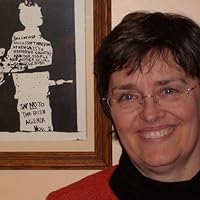
Sara Houghteling graduated from Harvard College in 1999 and received her master's in fine arts from the University of Michigan. She is the recipient of a Fulbright scholarship to Paris, first prize in the Avery and Jules Hopwood Awards, and a John Steinbeck Fellowship. She currently lives in California, where she teaches high school English. Pictures at an Exhibition is her first novel.

Photo courtesy of author's website.

Ratings & Reviews

What do you think?
Rate this book

Friends & Following

Create a free account to discover what your friends think of this book!

Community Reviews

5 stars
195 (13%)
4 stars
467 (32%)
3 stars
539 (37%)
2 stars
200 (13%)
1 star
46 (3%)
Displaying 1 - 30 of 268 reviews
Profile Image for Jennifer.
748 reviews114 followers
May 24, 2009
I was thinking that one of the tell tale signs of a mediocre book review is "I really wanted to like this book..." And I really did. I enjoyed the setting of the Paris art scene in the pre world war two era. This was what drew me to the book in the first place. But the setting and the books potential were undermined by the vapidness of the main character - the son of a Jewish art dealer. The first half of the book (pre-war)he is floundering in his father's shadow and wallowing in a strange generally one sided love affair with his father's art student assistant from the Louvre, Rose. The second half of the book (post war) he is on a mission to find his father's looted art as if this would change the horrors and the aftermath of the brutal war. In the name of this quest he steals and abandons his father, he overstays his welcome with a Jewish stranger, and he threatens to destroy a larger effort to recover looted French art.

Two thirds of the way through the book, the plot twists - in a way that is supposed to revelatory but is, instead, completely dull. It was very disappointing to watch this promising topic of wartime looting and recovery get watered down with soap operatic melodrama.

The bright spot in this novel is Rose. While I found her character underdeveloped, her story line was fascinating. He was modeled after a real women who worked in the Louvre during the way tracking stolen art from Jewish homes and then working with the Resistance to keep them safe from bombs and intercept trains headed for Germany etc. Houghteling uses Rose as a backdrop, a catalyst, and a love interest when she should have been the center of a much better novel.
Profile Image for Cynthia.
722 reviews51 followers
July 3, 2009
Wow, if only all novels were this good. Intelligent, informative, compulsively readable, moving without being painfully so. I highly recommend this book. I was glad that I had just finished reading Thomas Hoving's Master Pieces, and so had some idea what the paintings described in the book look like; it's not essential but if you don't know much about art it's not a bad idea to have a Survey of Great Western Art type book available. Or i guess you can look the pictures up on the internet. A really fascinating story, in addition to teaching me a bit about art, and I want to know more about the real story behind this novel.
Profile Image for Amy.
935 reviews29 followers
August 1, 2011
In 1944-45 Paris, Max, the son of a prominent art dealer, tracks down the confiscated contents of his father's gallery. The key to the mystery is Rose Clement, who'd apprenticed with his father before the war and worked during the war at the Jeu de Paume.

Likes: the embedded history lessons. Between liberation and the end of the war, Paris was more chaotic than I'd realized. Hard to picture battles around the Grand Palais or in the Luxemburg Gardens.

Dislikes: The writing was awkward, heavy. Max's voice was cold and dull, which didn't match his youth and erratic behavior. For a 25-year-old of that time and place, he's incredibly immature. Many scenes simply made no sense to me, as if Max were hallucinating. Now we have Maurice Chavalier giving an impromptu street performance; now we have Max at a gallery owned by a dealer his family knew before the war but who somehow doesn't recognize him. And I have no idea why Max, with all his money, crashes for several months with Chaim, a much older and much poorer man who'd survived Auschwitz. The story kept losing its focus.

Rose's story is very interesting--she mentally catalogued all the confiscated art and told the Resistance which eastbound train cars held masterpieces so that they wouldn't be blown up. Also, the story of Jewish deportees returning to Paris is very interesting. Unfortunately, the least interesting part of the story to me was Max and his family. Max became an annoying narrator.

Great material, but the frame was distracting.
Profile Image for Brenna.
158 reviews12 followers
October 2, 2009
Sometimes I pick up a book by an author I've never heard of, whose book is reviewed by other authors I've never heard of or know I don't like, just because the plot idea for the book is so intriguing.

Note to self: stop doing this. You'll only spend the entire time you're reading the book wishing a better writer had thought of the plot idea.

There was a lot of confusing, convoluted writing in this book, and it was as if the author was having a hard time wrestling the book into submission. It seemed like she was struggling to write it, and at times just gave up and left a snarl of unintelligible dialogue on the page. She also gave herself too many side plots to deal with, with the result of not really attending to any of them to satisfaction.

The best part of the book was the Author's Note at the very end, where she points the reader to non-fiction works she drew from. At least my desire to read The Rape of Europa has been rekindled.
Profile Image for Sherri.
336 reviews2 followers
April 4, 2011
This book had so much promise, but I just couldn't finish it. The note at the end of the book about the sources she used for her story was actually quite interesting. It is unfortunate that the story just didn't work. The story is supposed to be a mystery - a family loses their paintings during WWII and the son is on a quest to locate the paintings, and a woman that he fell in love with before he left Paris. The woman was a curator at the Louvre during WWII (the true part of the story that was in the interesting note). Romance, mystery, the backdrop of WWII....it could have worked, but it didn't. It was a bomb.

The writing was very passive - like an observer in a room, which meant that the characters were two dimensional. The son was a self-centered whiner.

Save yourself some time and money and skip this book.
Profile Image for Allyson.
740 reviews
June 3, 2015
I really wanted to like this book much more than I did. The subject matter and even some of the writing is incredible, but it seemed so flat @ times and also uneven. As if she wrote it in different moods, or else without a cohesive outline, or something. The ideas behind it and how she chose to present the story were very interesting, but it needed more guidance, more depth, more story, more something.
I am almost tempted to reread it at a later date to see if my disappointment once forgotten is not so omnipresent and obstructive to my reading experience.
Profile Image for Bill.
308 reviews300 followers
April 13, 2009
Excellent debut novel about the art world in Paris before WW2 and the story of all the art looted by the Nazis, much of which was never recovered. Extremely well written, especially for a first novel.
Profile Image for Joan.
89 reviews6 followers
Read
July 13, 2009
What is the loss of art, compared to the murder of millions of human beings? Perhaps little. Yet art is part of what makes us human, and the destruction and theft of art because of its associations with people of a particular ethnicity is soul murder.

During World War II, the Germans looted the great museums and the great private collections of Europe. Much of this loot has never been recovered, and, even where it has, much of it has not or cannot be restituted, because of lack of records, resistance from its current "owners" or because there are no survivors left to reclaim it.

This is the historical backdrop for Sara Houghteling's beautiful first novel.

Max Berenzon (a nod, perhaps, in the direction of Bernard B?) is the son of a Parisian art dealer and his concert pianist wife. Though his father, Daniel, spends hours with him, getting him to memorize the paintings in his exhibitions, Max is not encouraged to enter the business, but rather is urged to go to medical school. Daniel instead hires as assistants young curators from the Louvre, with one of whom, Rose Clément, Max will fall in love. Despite that time spent together, there is no real closeness between Max and his father, and his one attempt at sharing in the business ends in disaster, as he bids on a Manet that turns out to be a forgery. Then the war closes in and the Berenzons flee to the town of Le Puy, and hide in the home of a gentile.

The Germans are routed from Paris. It is August, 1944, and the Berenzons return to their home to find thee had been a fire, and that the paintings in the gallery vault have disappeard. They will learn that many more entrusted to a bank vault are also gone. Max begins his attempts to find and recover his father's collection. In the process, he learns family secrets that go a long way to explaining that lack of closeness, that lack of encouragement, that he experienced.

The first, pre-war, part of this novel describes a Paris under the cloud of the coming war. The warnings are there, observed. Some heed the warnings, others, like Max's friend Bertrand's family, cannot believe that the service and sacrifice they have given France will not protect them.

The second part I found even more compelling, as Max learns the extent of the losses. These are not merely losses of art, but losses of trust, learning of how other dealers have turned a blind eye to the sources of what is now hanging on their walls. But there is honor and bravery, too. Believed by some to be a collaborator, Rose (whose character is based on a real person, Rose Valland) has, in fact, spent the war protecting art, letting the Resistance know the trains on which it is being spirited out, so they will not be bombed, secretly documenting what art the Germans have taken. She is living now with her piles of paper, knowing they will be needed.

Art is important. Its loss, particularly under these circumstances, is a tragedy. But Houghteling does not let us forget the greater loss, the loss of life under circumstances which are almost unimaginable. While Max searches for the lost paintings, he is also searching for news of his friend, Bertrand, and is taken under the wing of a survivor of the camps, who wonders when he will learn the news of his wife and son. There is a particularly compelling passage in which Max's wartime experience at LePuy is contrasted with that of Chaim Tenenwurzeil:

"It was at Auschwitz that [Chaim:] learned of the German surrender at Stalingrad, thus locating his arrival there in February of 1943.

"That same winter, I was in Le Puy, where the stark, bare tree branches were like Chinese calligraphy against the sky. After a storm, Monsieur Bickart enlisted me to shake the snow from their boughs so they would not be damaged . . .

"The winter Chaim was first interned, Mother embroidered handkerchiefs for us all and gave them out on Christmas morning, out of respect for our host. We drank a fierce hot cider, then Father and Mother played belote while Monsieur Bickart stirred the fire, lost in thought, with the flush of the fire and the cider in his cheeks."


Suffering is relative.

This is a stunning debut novel, well-researched, with characters who are psychologically believeable. The portraits Houghteling draws of Paris in the days before and after the fall of Paris have the absolute ring of truth.

(If you know the whereabouts of art stolen in the war, or if you or your family had art stolen from you, there are resources available to seek restitution:

A resource list

B'nai B'rith Klutznick National Jewish Museum Holocaust Art Resource List.)

Never forget.
Profile Image for Kay.
710 reviews
July 9, 2012
My reading of this book happened to coincide with publication of a new study, "Savage Continent," by Keith Lowe, about the violence that persisted in Europe after WWII. Like most Americans, I always thought of VE Day as the happy ending to WWII. In fact, for many survivors it was a nightmare. They were not welcomed back with open arms, and many of their French neighbors were not eager to restore the looted homes, businesses, and possessions. According to Lowe, anti-semitism actually increased in Europe after the war when the full horrors of the Holocaust unfolded.

This novel is partly based on the life of Rose Valland, called Rose Clement in this story about a young man whose father was one of the most prominent art dealers in Paris before the occupation. However, he forbids his son to follow him into the business and tries to steer him into medical school. The family (they are Jewish) survives the occupation by paying a farmer to hide them in the Massif region. After the war, young Max is determined to somehow retrieve his father's collection.

The book is a graphic illustration of two points made by Lowe: the attempts at vengeance/vigilante justice and the rise of anti-Semitism. Despite her heroic role in saving the treasures of the Louvre, Rose had to be hidden from people who perceived her as a collaborator (she eventually received the Legion of Honor) because she worked as a Secretary in the Jeu de Paume museum during the occupation. The second point, about the reluctance of non-Jews to restore the possessions of Jews becomes abundantly clear as Max tries to find a particular Manet painting, "Almonds," that was central to his childhood.

The only reason I'm not giving this four stars is that I found the persona of Max himself, as he wanders from one fiasco to another, wildly irritating. His quest for a lost sister was also hard to believe; how could you hide the death of a child from her older brother by simply not talking about her?
In many other respects, though, this book is well worth reading and will probably lead me to others, including "The Rape of Europa," which was dramatised on PBS.
1,082 reviews14 followers
September 25, 2012
What happened during the Second World War to all the art owned by Jewish people in France? MS Houghteling takes a Parisian art dealer as an example, describes what he has on his walls and which artists he handles and then shows the ways in which cultural objects were made to disappear. Many of them were intended for Hitler's projected museum, but some went to collections of Nazi leaders and not a few were lifted by "Americans". I put quote marks because I am sure the people flogging art after liberation were not all American by any means. There is something very immediate about this book, a real sense of walking with the narrator and the feeling of knowing right from the start that the two pictures that the dealer really values will not be found. (The detail is along the edge of the picture as usual.) It's a sad story in many ways and Max is sometimes totally pathetic, but the ending is about as satisfying as one is likely to get, given the subject matter. The statement about pictures eventually turning up is certainly correct because you hear about examples in the news all the time.
Profile Image for Charlaralotte.
248 reviews48 followers
May 20, 2009
A good read, though ended just when it could have really begun to go somewhere. The info about the real woman that the story is based on sounded fascinating, and I wished that the book had many more chapters about her involvement in the art dealings with the Nazis and with the French after the war.

The main character was not as interesting as her (he's smart but so oblivious about people around him that he is frustrating), so I understand why the book ended when it did, but I think we lost a great opportunity to let her story rise above the stories of the individual art collectors.

Nice descriptions of manners and styles in pre-war Paris.
Profile Image for Sterlingcindysu.
1,661 reviews77 followers
June 7, 2017
2.5 rounded down. I think the history and art section of the book were great. There's even some photos of artwork that went missing during WWII.

But the story part...well, perhaps I have WWII burnout in fiction. Each book I read reveals worse and worse events. For the main reveal here of the big secret--huh? That's it? ()

The title comes from a musical composition based on artwork of an artist who died young and all his work was lost. I thought this was foreshadowing, but no.

I think future work of the author will be better because she knows the history and art...she'll come across better stories and boom!
Profile Image for Camille.
473 reviews18 followers
May 28, 2010
Narrator has a good French accent. Not sure what I think about the book. Subject is very interesting so far. WWII, stolen art.

There were many things I liked about this book. Houghteling did a great job of selling the setting to me. I could smell the Gauloise cigsand the Parisian quai, and the French countryside.

Ultimately, despite the fascinating subject matter, I decided the characters I wanted to know the most about were only seen through the narrator, Max. I wanted to know more about Rose, the heroic gallery assistant who did her best to track the shipments of art stolen by the Nazis. She tells Max her story, which he reported but I would have liked to have seen it through her eyes. I understood Maxs zeal for finding the paintings that belonged to his father's art gallery before the war. His quest was intriguing. His discovery of the FAMILY SECRET left him paralyzed and so upset he could barely function though. I guess it was a big surprise and maybe his parents should have told him but, c'mon. Really? I just could not connect to that part of the story.

Still, I did want to finish and it concluded well.
I did like the book but didn't love it. It was OK Plus. 2.5 stars which I suppose should round up to 3 stars.

Profile Image for Anne.
797 reviews36 followers
November 26, 2009
For awhile, I was reading quite a number of books about art theft, art fraud, and art stolen during the Holocaust (including Noah Charney's The Art Thief, and Edward Dolnick's books The Forger's Spell and The Rescue Artist). So, I was a little reluctant to pick this one up, thinking it would just be more of the same. Luckily, I decided to read it anyway. Pictures at an Exhibition takes place in Paris, and chronicles a young man's quest to recover his father's paintings which were looted by the Nazis during WWII. While the book is fiction, Houghteling's background in art history comes through in her historical detail and meticulous descriptions of the missing art. The writing is beautiful, and I often found myself so lost in passages, almost to the detriment of the overall story. I was impressed with how seamlessly the story turned from the art museums and auction houses, to the main character's world of medicine, while all the while incorporating a love story and the mystery of the lost paintings. Pictures at an Exhibition is suspenseful and filled with family secrets, while at the same time written so beautifully as to be its own work of art.
Profile Image for switterbug (Betsey).
936 reviews1,496 followers
February 27, 2011
I really wanted to love this book, to appreciate its classiness and dignity and deep appreciation of art. However, the problem is that with all its splendor of music and art, it is too expository. I am very visual when I read, and I depend on the narrative to float me along, to raise strong vivid images. It failed to do that. The cadence is choppy and before I can attempt to grasp a scene or a character, it has skittered past me. Its very lightness was ponderous.

This is a first novel for Houghteling, and she does show promise and passion. The passion was buried, however, under needless exposition and too many paintings. The author has her degree in fine arts; she unquestioningly knows what she is talking about. But I would like to see this novel be more novelistic--it reads too much like lesson after lesson strung together for Art History 101.

I was torn between 2 and 3 stars, but because of its intelligence and promise, I felt it deserved 3 stars. But beware the coming boredom when you are reading. I was groaning for the end, all too happy to put this book down to start on another.
Profile Image for Bookmarks Magazine.
2,042 reviews809 followers
April 15, 2009

In this historical novel, Houghteling explores Fascism and humanism, unrequited love, and plundered art; it's a historical fact that most of the paintings Max searches for never resurfaced. Critics couldn't help but note that Pictures contains the promises and pitfalls of a first novel. Houghteling evokes 1930s and 1940s Paris, the one-of-a-kind paintings, and the chilling complicity of art dealers in crisp, descriptive language. However, reviewers diverged on a number of points. To some, Rose -- based on the real-life Rose Valland, a member of the French Resistance who recorded the Nazi theft of Jewish-owned art -- occupies the true center of the novel, while to others she remains a static presence. Similarly, some critics commented on unconvincing subplots and drama. Still, Houghteling is a writer to watch -- and her subject is never less than fascinating.

This is an excerpt from a review published in Bookmarks magazine.

Profile Image for Kelli.
117 reviews7 followers
June 20, 2011
When I realized that this story of a Jewish art dealer's family would be taking me into the days of World War 2 occupation I almost put it aside. I just felt like I could not handle concentration camps and death and loss and heartbreak. It's hard enough to face it in nonfiction, I was not up to letting it take center stage in my escapist fiction literature too. But, true to my vow to myself that every book deserves at least 80 pages before I give up on it, I persevered. I was very glad that I did.

This author does treat the suffering of Parisians during German occupation with compassion and honesty, but the real center of this book is what became of the art. What became of the art in public museums and what became of the art owned by private citizens? If you believe that this topic is better left to the history books and would be a yawner of a subject for a novel, reconsider and give this book a chance to prove you wrong.

I really did not find anything objectionable in this book. It deals with the cruelty of German occupation, love in time of war, and family secrets.

Profile Image for Liane Wakabayashi.
63 reviews9 followers
March 3, 2016
I've just returned from Paris and oh what a trip Sara Houghteling has prepared for us. I'm a lover of European art, Impressionist and post-Impressionist art in general, Manet, Picasso, Matisse in particular, and I have never read a book quite like this--a historical re-enactment of the lives of France's great Jewish art dealers before and during World War II. There's much to celebrate, much to mourn over. Sara Houghteling leaves it up to us to figure out whether art collecting is a high stakes game with grave consequences, or whether whether identifying so closely with dabs of paint can drive the collecting instinct so forcefully that you actually see your own life story illustrated in someone else's dry paint. In this exquisitely crafted romance, objects of love are more often than not painting masterpieces themselves. But then there's Rose Clement and Max Berenzon--art lovers whose fate drives the story forward from start to finish.
Profile Image for Meredith.
1,440 reviews
April 11, 2009
While I did enjoy Ms. Houghteling's prose, the plot has several large gaps. I felt she glazed over the French Jewish people's experiences during and after German-occupied Paris during World war II to focus soley on how the Nazis raided Paris' art collections, both public and private, and the problems that arose trying to restore those stolen art works.

Certainly poignant, I still wanted more information and interaction between the central characters the author created. She sets up these characters and then jumps 30 years into the future without explaining how the characters arrived to where she later placed them.

Ms. Houghteling's meticulous research into the art world and its plunder during World War II is fasctinating, but one is better off watching the documentary "The Rape of Europa", since the fictional parts of her novel leave the reader wanting more.
1,103 reviews2 followers
October 23, 2011
I could not put this book down. I have read some of the books that appear in the bibliography, and that may have helped, but the story was fascinating and functioned on many levels: a father-son story, a putative romance, the collaboration of the Vichy government with Nazis, the systematic looting of private art collections during the second world war, the pain of families and friend disappeared (and ultimately dead) during the war, and the goodness and clear morals that guide some people even in the darkest moments of humanity. The title, and the beginning of the story, become far more powerful at the end.
Profile Image for Magill.
503 reviews14 followers
November 16, 2014
I got 3/4s of the way through and just couldn't push to the finish. This is a perfect example of why I prefer non-fiction about such topics. The Journal of Helene Berr, or Nine Suitcases, were readable and real, this book was not. The story of the woman that Rose was based on would have been a vast improvement.

For me, a strangely disjointed narrative of a dullness unsurpassed. I thought I could finish it but, after setting it down for a week, it was even less palatable.

I didn't hate this so not a 1, but the sheer apathy I feel makes it very nearly so. If I could manage to call up the energy I would almost resent the waste of time and of paper.
Profile Image for Tuck.
2,264 reviews252 followers
June 10, 2009
great first novel. sure there's lots of holes in plot and some weirdness on the characters, but very well portrays horror of wars, looting, lost cultural treasures, lost lives, beauty and power of art. plus its based on wwii facts and personalities. of the 100,000 looted art and books from france in wwii, 40,000 are unclaimed or lost (forever?) and that's what this story is about, things lost and unclaimable.
now we have our own looted and lost art and books for our usa conscious. what REALLY is the difference between vichy/paris 1940 and usa/baghdad 2003?
Profile Image for Colleen.
253 reviews2 followers
March 20, 2009
This debut novel was a wonderfully written story about love and art and loss that somehow failed to make an emotional connection. Though I was pulled into the narrative, I found myself caring more about the art than the personal lives of the characters. Perhaps the author was trying to convey the coldness of war, but I found myself feeling isolated from the characters. There was great potential in this novel, and the writing was exquisite, but in the end I just wasn't invested enough in it to consider it a must-read.
2 reviews
April 15, 2009
Beautifully written for a first novel. Unfortunately, the story never hooked me and I really had to work my way through it. The book is well researched and as previous reviewers have noted, Houghteling clearly has a passion for both art and Paris as well as the talent to express it. A fascinating subject and a wonderful setting are slowed by efforts to keep the reader engaged with the characters. The Author's Note was especially interesting and pointed to other great resources on the subject.

Profile Image for Amber.
709 reviews4 followers
July 30, 2019
Well done for a first novel, but as many other reviewers noted, the story idea was better than the execution. It had parts that were great, but then sometimes it seemed to be trying too hard to be deep and introspective. The plot seemed to peter off at the end-- I thought I was in the middle of the story, and suddenly, I heard "Epilogue." What happened to the rest of the story? Perhaps the author was going for a post-modern ambiguous ending, but then why the long, drawn-out epilogue?
Profile Image for Debbie.
57 reviews6 followers
June 2, 2009
Beautifully written. A difficult era to write about, but Ms. Houghteling brought the Paris art world before and after WWII to life. Just an excellent book.
Profile Image for Julie.
161 reviews5 followers
July 30, 2023
Before World War 2 the Berenzon family, a prominent and wealthy Jewish family, ran the most successful art gallery in Paris, representing some of the greatest artists past and present. Max, the only son, wanted desperately to prove to his father that he was qualified to join the business, but instead his father chose a young woman as his apprentice. Though deeply hurt and angered by his father’s decision, Max soon found himself falling in love with the lovely new apprentice.

Then the war changed everything. The family fled the German invasion and sheltered in the south of France. Upon the liberation of Paris, father and son returned to discover that they had lost everything. Their home, their business, their friends, everything was lost. Max had always been an angry and somewhat impetuous young man and these losses threatened to destroy him.

An important, intense, and heartbreaking story. Though fiction, this book is based upon the the actual looting and destruction of art that occurred in France during World War 2. With beautifully intimate language the author shows the reader not just the atrocities that happened during the war, but also the emotional, physical, and financial brutality that the surviving Jewish community faced in the years following the war. Moreover, Houghteling highlights that it wasn’t only the Germans who victimized the Jewish community.

This book is emotionally devastating. It’s one of those that so shook me that I couldn’t even cry, but it is a book I would nevertheless recommend for anyone interested in historical fiction, WW2, looting, or issues of anti-Semitism
Profile Image for Justin Marquis.
4 reviews
June 23, 2025
I really wanted to like this book and wish I could give it a higher rating than I did but there were some things I just couldn’t look past.

I LOVED the setting and time period of pre/post WW2 Paris and the subject matter of tracking down stolen artwork from the Nazis is an amazing premise. Unfortunately, I couldn’t really connect with the main character, Max, and found a lot of his actions confusing and frustrating. I was hoping my feeling towards him would resolve at the end of the book with a him having some character developing moments, but never really got that pay off.

Max doesn’t ever really change or develop as the book goes along and it feels like a lost opportunity. Especially when compared to the other supporting cast of characters that feel like they have more to offer, but never get the time to be fleshed out. This is especially true for Rose, who is based off of a real person and her story is so amazing it is deserving of being told. Unfortunately, she ends up being relegated to a set dressing ghost that moves in and out of the story to help ground the main character to the time period.

Overall it was an easy quick read that anyone who enjoys WW2 subject matter or masterpiece art discussions will enjoy, just don’t expect any sort of deep character study.
Profile Image for Adam Rosenbaum.
243 reviews1 follower
March 12, 2017
Another reason why I've chosen to not join book clubs. This was a selection that I never would have picked. A Jewish son of a leading art gallery owner in Paris tries to track down his father's paintings (Manets,' Picasso's, Braque's, etc) that were looted by the Germans. He also pursues his elusive and mysterious paramour Rose. It just wasn't compelling, not the love story, the art gallery or anything. And how does anybody write about this time period while skipping over the impact of WWll? The writing was somewhat disturbing as its arc made little sense. And as far as the writing, it was non-evocative. I did no "conjuring" of the characters or the place. A cardinal sin in any of my reviews.
Displaying 1 - 30 of 268 reviews

Can't find what you're looking for?

Get help and learn more about the design.