Jump to ratings and reviews
Rate this book

Logis in einem Landhaus

Rate this book
Eine Landschaft in Büchern. W. G. Sebald folgt in seinen alemannischen Dichterporträts Rousseau auf seiner Flucht bis auf die Petersinsel und er begleitet Robert Walser bei seinen einsamen Spaziergängen durch den Schnee. Ob Keller, Mörike oder Hebel, immer gelingt es W. G. Sebald, die Dichtergestalten, von denen er erzählt, so greifbar vor dem Leser erscheinen zu lassen, als wären sie nur ein wenig entrückte Zeitgenossen.

192 pages, Hardcover

First published January 1, 1998

95 people are currently reading
2037 people want to read

About the author

W.G. Sebald

47 books1,789 followers
Winfried Georg Maximilian Sebald was a German writer and academic. His works are largely concerned with the themes of memory, loss of memory, and identity (both personal and collective) and decay (of civilizations, traditions or physical objects). They are, in particular, attempts to reconcile himself with, and deal in literary terms with, the trauma of the Second World War and its effect on the German people.

At the time of his death at the age of only 57, he was being cited by many literary critics as one of the greatest living authors, and was tipped as a possible future recipient of the Nobel Prize in Literature.

Ratings & Reviews

What do you think?
Rate this book

Friends & Following

Create a free account to discover what your friends think of this book!

Community Reviews

5 stars
308 (36%)
4 stars
333 (39%)
3 stars
163 (19%)
2 stars
22 (2%)
1 star
8 (<1%)
Displaying 1 - 30 of 117 reviews
Profile Image for Orsodimondo.
2,458 reviews2,430 followers
July 11, 2023
LE CONNESSIONI INVISIBILI

description
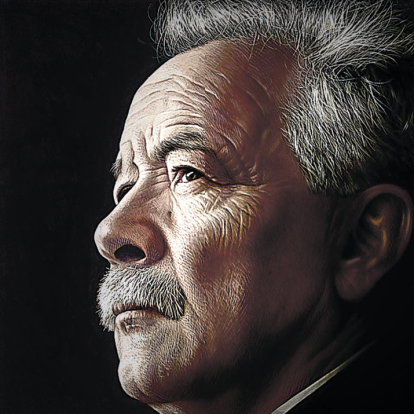
Jan Peter Tripp: Ritratto di W.G.Sebald.

L’arco di tempo preso in considerazione abbraccia quasi due secoli, il che ci permette di constatare come, in questo lungo periodo, ben poco sia cambiato in quello strano disturbo del comportamento che costringe a trasformare tutti i sentimenti in parole scritte e che, pur mirando alla vita, riesce sempre con sorprendente precisione a mancare il centro.
E infatti il filo rosso che pare collegare questo saggi è proprio la scrittura, vista come attività nevrotica, faticosa, frustrante, ma a cui i soggetti presi qui in esame (e certo non solo loro, a cominciare dallo stesso Sebald) non sanno rinunciare, dalla quale non riescono a separarsi.

description
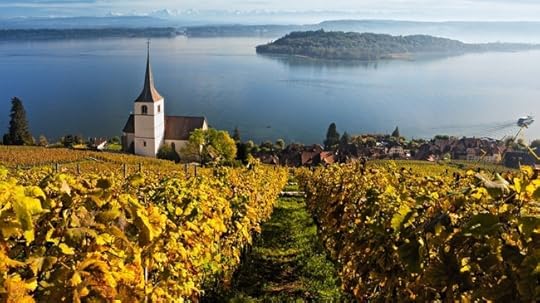
L’isola di San Pietro sul lago di Bienne, nel Cantone di Berna in Svizzera. Ci soggiornò Jean-Jacques Rousseau, Sebald la visita per ripercorrere i passi di Rousseau.

Sebald era narratore anche quando faceva il critico letterario, la sua critica letteraria si fa essa stessa letteratura: perché sapeva intrattenere spargendo idee – si rispecchiava, quasi immedesimava, negli artisti di cui parlava, sia scrittori che pittori che architetti, penetrava nella loro opera attraversa la loro anima per donarci la sua – si perdeva nelle emozioni trasmesse dalle loro opere, emozioni che sapeva bene come contagiarci. Perché aveva il dono di trasformare in autobiografia anche l’aspetto più oscuro del più sconosciuto personaggio e artista di cui si è occupato: senza mai essere invadente, senza mai collocarsi al centro.

description
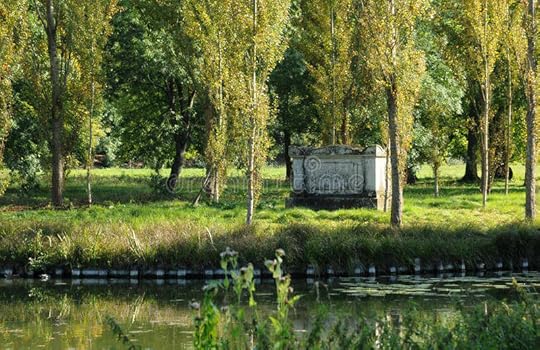
La tomba di Jean-Jacques Rousseau nel parco omonimo a Ermenonville, comune francese di 966 anime nel diparimento dell’Oise della regione dell’Alta Francia.

Proprio quello che lui stesso attribuisce a Johann Peter Hebel, per me fino a oggi assolutamente sconosciuto:
non si colloca mai al centro in veste di precettore, ma sempre un po’ discosto, simile ai fantasmi, che, come è noto, sono avvezzi a osservare la vita dalla loro posizione eccentrica, in un silenzio fatto di meraviglia e rassegnazione.

description
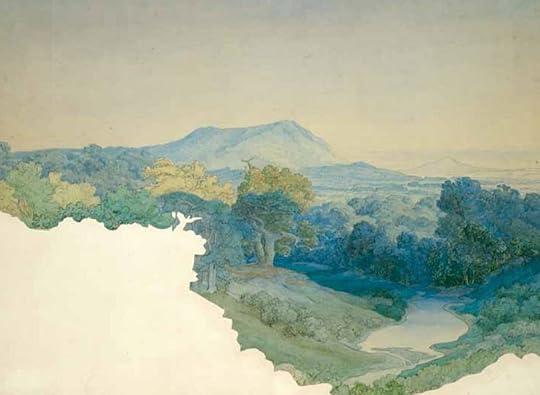
Julius Schoppe: Veduta di Salisburgo, 1817.

Poco più avanti usa parole per lo stesso Hebel che mi hanno fatto pensare al Sebald di Gli anelli di Saturno:
La singolare combinazione in cui si conciliano in tal modo pietà e indifferenza, è per così dire il segreto professionale di un cronachista, che talvolta concentra un secolo intero in una sola pagina, ma ha nel contempo anche un occhio attento ai dettagli meno appariscenti, un cronachista che non parla solo della povertà in generale, ma racconta anche di bambini a casa con le unghie livide per la fame, e intuisce l’esistenza di un insondabile rapporto, ad esempio, fra le liti domestiche di due coniugi in Svevia e la disfatta di un intero esercito in mezzo ai flutti della Beresina.

description
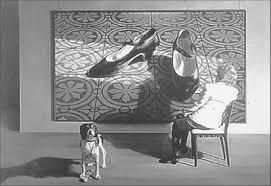
Jan Peter Tripp: Déclaration de guerre, 370x220. 1988.

Come qualcuno che ti porta a spasso in un bosco sconosciuto, dove ogni pianta è nuova, mai vista prima, e ti affabula e ammalia raccontando storie aneddoti e divagazioni spigolature sulla corteccia e l’innesto e l’animaletto che vive in quel tronco.

description
Jan Peter Tripp: Devant à la Déclaration de guerre, 100x145. 1990.

Da allora ho a poco a poco imparato a comprendere come ogni cosa sia legata all’altra al di là del tempo e dello spazio: la vita dello scrittore prussiano Kleist e quella di un prosatore svizzero, che afferma di aver lavorato a Thun come impiegato di una fabbrica di birra costituita in società per azioni, l’eco del colpo di pistola sul Wannsee e lo sguardo gettato da una finestra della clinica di Herisau, le passeggiate di Walser e le mie escursioni, le date di nascita e quelle di morte, la felicità e l’infelicità, la storia della natura e la storia della nostra industria, quella della terra natale e quella dell’esilio.

description
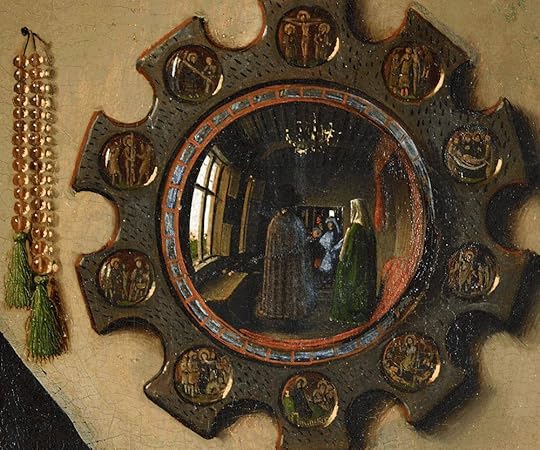
Particolare del ritratto di Giovanni Arnolfini di Jan van Eyck, 1434, National Gallery di Londra.

Particolarmente bello e toccante il penultimo capitolo dedicato a Robert Walser.
Colpisce in modo particolare che la metà degli artisti qui discussi e raccontati abbiano avuto frequentazione e assiduità con ospedale psichiatrico.
Con sguardo obliquo, procedendo in modo erratico, osservando in modo apparentemente casuale, individuando il dettaglio minuscolo che scatena l’epifania improvvisa dal respiro universale.

description
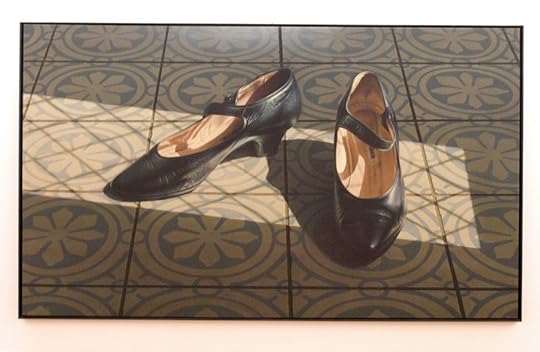
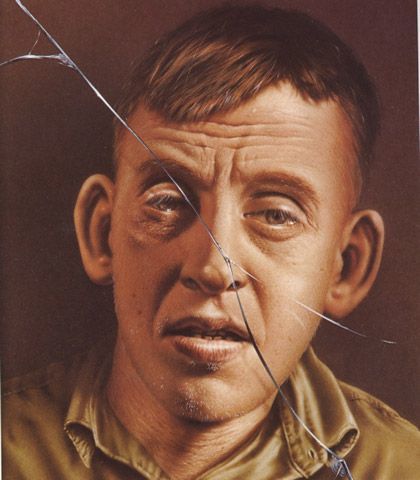
Jan Peter Tripp: Una leggera incrinatura.
Profile Image for Argos.
1,260 reviews490 followers
November 22, 2025
Edebiyat bilimcisi olan yazar bu kitabında bilim ve edebiyatı harmanlamış, beş yazar ve bir ressam hakkındaki anektodları, biyografik bilgileri ve kendi düşüncelerini deneme tarzında kaleme almış. Aslında inceleme sayılacak bir çalışmayı edebi eser haline getirmiş. Konuya ve kitapta yer alan portrelere ilgi duyanlar için ilginç bir kitap, örneğin Voltaire’nin J.J. Rousseau’ya olan nefreti ve ona her yerde cephe alarak yaşamını kararttığı bilgisi beni çok şaşırttı. Bu ve bunun gibi farklı bilgiler ve bolca resim kitapta yer alıyor. Bilgilenmek ve edebiyat tarihine dair bir şeyler öğrenmek isteyenlere önerilir.
Profile Image for Matthew Ted.
1,007 reviews1,037 followers
July 4, 2021
72nd book of 2021. No artist for this review, instead pictures used from the text itself.

4.5. (Dropped to 4 when comparing to Sebald's novels.) As I've read all of Sebald's novels (and consider him one of my all-time favourite writers and inspirations), I'm now pushing into his other areas of written work: poetry and essays. A Place in the Country is comprised of six essays on various writers and finally an artist: Johann Peter Hebel, Jean-Jacques Rousseau, Eduard Mörike, Gottfried Keller, Robert Walser, and Jan Peter Tripp. Sebald states in his Foreword,
And so it is a reader, first and foremost, that I wish to pay tribute to these colleagues who have gone before me, in the form of these extended marginal notes and glosses, which do not otherwise have any particular claim to make.

He touches on the important thing about these essays right here: like his fiction, these essays are multifaceted looks at their subjects, including snatches of the autobiographical from Sebald, biographies of the subjects, from general musings, appreciations, less literary criticism and more literary (and personal) appreciation. And he ends his Foreword by saying, with all the beauty that Sebald says almost anything:
I have learned how it is essential to gaze far beneath the surface, that art is nothing without patient handiwork, and that there are many difficulties to be reckoned with in the recollection of things.
description

Despite being only really familiar with Rosseau, the essays were illuminating for me. Rosseau's essay is, too, perhaps, the most realised of the collection. I may believe this because it is the heaviest with Sebald's own presence. It opens as such.
At the end of September 1965, having moved to the French-speaking part of Switzerland to continue my studies, a few days before the beginning of the semester I took a trip to the nearby Seeland, where, starting from Ins, I climbed up the so-called Schattenrain. It was a hazy sort of day, and I remember how, on reaching the edge of the small wood covering the slope, I paused to look back down at the path I had come by, at the plain stretching away to the north criss-crossed by the straight lines of canals, with the hills shrouded in mist beyond; and how, when I emerged once more into the fields above the village of Lüscherz, I saw spread out below me the Lac de Bienne, and sat there for an hour or more lost in thought at the sight, resolving that at the earliest opportunity I would cross over to the island in the lake which, on that autumn day, was flooded with a trembling pale light. As so often happens in life, however, it took another thirty-one years before this plan could be realized and I was finally able, in the early summer of 1996, in the company of an exceedingly obliging host who lived high above the steep shores of the lake and who habitually wore a kind of captain's cap, smoked Indian bidis and seldom spoke, to make the journey across the lake from the city of Bienne to the island of Saint-Pierre, formed during the last ice age by the retreating Rhône glacier into the shape of a whale's back—or so it is generally said.

(And as we discuss Sebald discussing other writers let us take a moment to discuss Sebald himself here. This paragraph is comprised of just three Sebaldian sentences of great length and grace; his prose is effortless, wandering, that builds itself, ripple-by-ripple, until its conclusion breaks and washes us down. Even here in his essays, he presents himself as a master of prose.)

And before he discusses Rosseau's work he describes the room he took: The room I took at the hotel looked out on the south side of the building, directly adjacent to the two rooms which Jean-Jacques Rosseau occupied when, in September 1765, exactly 200 years before my first sight of the island from the top of the Schattenrain, he found refuge here...; and Sebald once again expresses, firmly but subtly, a general contempt for the modern world he inhabits,
At any rate, in the few days I spent on the island—during which time I passed not a few hours sitting by the window in the Rosseau room—among the tourists who come over to the island on a day trip for a stroll or a bite to eat, only two strayed into this room with its sparse furnishings—a settee, a bed, a table and a chair—and even those two, evidently disappointed at how little there was to see, soon left again. Not one of them bent down to look at the glass display case to try to decipher Rosseau's handwriting, nor noticed the way that the bleached deal floorboards, almost two feet wide, are so worn down in the middle of the room as to form a shallow depression, nor that in places the knots in the wood protrude by almost an inch. No one ran a hand over the stone basin worn smooth by age in the antechamber, or noticed the smell of soot which still lingers in the fireplace, nor paused to look out the window with its view across the orchard and a meadow to the island's southern shore.
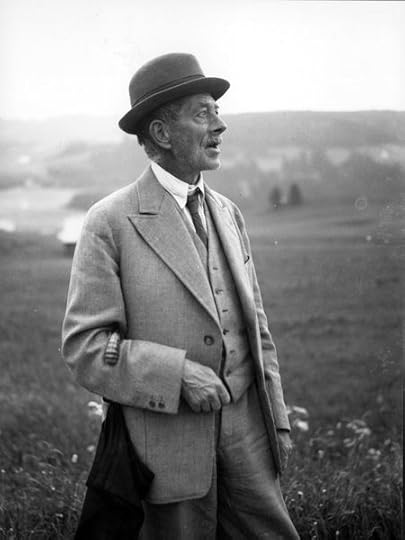
S. once told me that he had begun writing a biography on the writer A.E. Coppard (whom he oddly resembles in certain photographs, though was surprised to find people telling him this); he told me of the stories he had found throughout his research, playing cricket with Robert Graves, or breaking into Yeats' garden. The project soured though, he told me, because the family were very protective of Coppard's image and had previously attacked earlier attempts at rooting about in his life. Though I expressed disappointment, and was disappointed to see his evident excitement extinguished, he told me that visiting those places that Coppard had been had instilled in him a strange feeling. He told me not to underestimate the power of place, and the place where those that have inspired us have been. "Literary journeys", he called them, and urged me there and then to take as many as I can. I believe, he said to me, that there is a certain power there, somehow, left by them, which can find its way into us.

description

And so it's no surprise that in a similar vein Sebald writes,
For me, though, as I sat in Rosseau's room, it was as if I had been transported back to an earlier age, an illusion I could indulge in all the more readily inasmuch as the island still retained that same quality of silence, undisturbed by even the most distant sound of a motor vehicle, as was still to be found everywhere in the world a century or two ago.

The essays retain some of the sadness always found in Sebald's prose. Some of his subjects, such as Mörike make for sad subjects.
And so we see Mörike at the last sitting in the garden surrounded by his wife's relations on a hot summer's day, the only one with a book in his hand, and in the end not very content in his role as a poet, from which he—unlike his clerical calling—can no longer retire. Still he has to torment himself with his novel and other such literary matters. But for years now the work has not really been going anywhere. The painter Friedrich Pecht, in a reminiscence about this time, relates how on several occasions he observed Mörike noting things down which came into his head on speecial scraps and pieces of paper, only soon afterwards to take these notes and 'tear them up into little pieces and bury them in the pockets of his dressing-gown.'
Keller is another beautiful, sad and slightly disturbing essay. There are images imbedded in the text of his incessant writing of a woman's name, plagued by unrequited love, Betty Betty Betty, BBettytybetti, bettibettibetti, Bettybittebetti [Bettypleasebetti] is scrawled and doodled there in every calligraphic permutation imaginable. It is reminiscent of the moment Humbert Humbert asks the finder of his notebook to repeat the name Lolita for the entire page.

The Robert Walser is perhaps the best essay in the collection along with Rosseau. In it, Sebald draws comparisons between Walser and Sebald's own grandfather, of dates that seem to correspond within their lives, of other strange affinities. (On all these paths Walser has been my constant companion. I only need to look up for a moment in my daily work to see him standing somewhere a little apart, the unmistakable figure of the solitary walker just pausing to take in the surroundings.)

description

This is not simply literary criticism but the understanding of the strange ways that writers, for sometimes reasons outside of our understanding, haunt us. Walser is there haunting Sebald as Nabokov haunts each of the four parts in his novel The Emigrants. It makes me wonder if there is a thread that could be found between all writers, haunting one another in some way. I remember reading recently about Kawabata's suicide (or not suicide, no one knows) following Yukio Mishima's death; and how, Kawabata, apparently, according to his biographer, had recurring nightmares about him, for two or three hundred nights in a row, and was "incessantly haunted by the specter of Mishima". This collection of essays is really a reflection on the spectres in Sebald's life. And in turn he has become a spectre in my own.
Profile Image for Jonfaith.
2,146 reviews1,747 followers
July 4, 2018
The mistake we always make as listeners is to imagine that these miracles of composition, language and music are drawing directly upon their natural heritage, whereas in fact they are the most artificial thing about it.

Measured and strange. I felt an unexpected peace when reading these essays. There was a shadowed forbearance at play---if only within myself. The careful apprehension in each essay is a point of contemplation, despite the assurances from the author that these are "glosses" from alleged "margins". Aside from the looks at Rousseau and Walser Sebald walks in some strange territory, though with signature estrangement.

There's parenthetical charm in books of authors on other authors, I was exclaiming my joy in such when in the essay on Walser, Sebald notes the similarity of Walser with the Gogol studied by Nabokov. He stole my thunder, I screeched with a bootless cry. I am actually barefoot, its hot as hell outside.
Profile Image for Radioread.
126 reviews122 followers
March 27, 2019
Külliyat tamamlanınca Sebald yazını ile ilgili duygularımı özellikle kısaca, madde madde yazmak istiyorum. Belki yazarken bu eserlerin anıtsal niteliğinin nereden ileri geldiği hakkında ihtiyaç duyduğum küçük zihin açıklıklarını bulabilirim.
Profile Image for trovateOrtensia .
240 reviews269 followers
October 13, 2017
Sebald è uno scrittore straordinario, e questo libro - una raccolta di sei saggi sugli scrittori Hebel, Keller, Walser, Morike, Rousseau e il pittore Tripp - non fa che confermarlo.
Vi compaiono i temi ricorrenti della sua opera: la riflessione sulla scrittura, “quel vizio dalla vaga funzione compensatoria di cui, una volta che si comincia, è impossibile liberarsi", e il tema della memoria e del suo continuo rischio di scivolamento nell’oblio, di fronte al quale Sebald si assume il compito di sottrarre alle “fauci spalancate della Storia” ogni più piccola traccia, ogni più infimo indizio di esistenze che andrebbero altrimenti irrimediabilmente perdute. Esistenze in qualche modo votate o condannate “all’amnesia pura”, fatte di una materia refrattaria al ricordo, leggere, nate per “un silenzioso viaggio nell’aria”.
Penso soprattutto al bellissimo saggio su Walser, più di un saggio in verità, quasi un atto d’amore nei confronti di questo scrittore, nel quale questi temi si condensano e trovano una loro paradigmatica manifestazione: la sua coazione alla scrittura, “l’infinito e caotico accumularsi di foglietti” nel quale il flusso del ricordo ”si fa sempre più esile sino a sfociare nel mare dell’oblio”.
Accanto a queste tematiche, vorrei brevemente sottolineare la presenza di un altro tema, qui decisamente più evidente che in altre opere di Sebald: la dimensione storica, che sembra interagire e condizionare fortemente la vita e l’arte di questi scrittori, con echi che richiamano immediatamente alla mente le riflessioni del Walter Benjamin di Angelus Novus e dei Passages.
Hebel, Keller, Rousseau e Moricke vivono in un periodo storico caratterizzato dal dissolvimento del sogno rivoluzionario, nella fase in cui la società borghese europea rinuncia sempre più al suo ruolo di soggetto storico nuovo, per assestarsi come forza conservatrice “sempre più orientata verso la produzione di beni, il commercio e l’incremento della proprietà privata”. Sebald pone fortemente l’accento su questo disagio dei suoi autori di fronte all’economia delle merci e del capitale, mettendo in luce come questa nuova realtà che si va delineando costituisca per loro un evento traumatico, una realtà con cui essi cercano in vario modo di differire l'incontro.
E’ questo il “sogno di essere svegli” di benjaminiana memoria, unico stratagemma per non vedere “gli abissi spaventosi” che si apriranno in un futuro ormai prossimo: da qui l’utopia regressiva di Rousseau, o il walseriano ritirarsi dal mondo. Di qui, ancora, il rifugiarsi nel collezionismo (altro tema investigato da Benjamin), la creazione di un ordine nuovo (l’almanacco hebeliano, l’erbario di Rousseau, i “microgrammi walseriani, la kelleriana “filosofia della caducità”) che si contrapponga, in quanto sistema autoreferenziale e ordinato, al “processo cieco e sordo della storia, che avanza rumoreggiando”.
In queste analisi mi pare che sia estrema la vicinanza di Sebald a Benjamin (penso soprattutto alle riflessioni che quest’ultimo dedica all’ intérieur borghese e allo stile Biedermeier).
Questa vicinanza si manifesta ancora più chiaramente nell’ultimo saggio del libro, dedicato al pittore iperrelistico Jan Peter Tripp: la riflessione sulla “tediosa questione del realismo” diventa occasione per una incursione nei territori proustiani (un Proust riletto dal Benjamin di Baudelaire e Parigi e di Parco centrale) del tempo vissuto e del tempo narrato, della memoria e del ricordo che si cristallizzano negli oggetti e nella loro “aura”.
Sino a chiudersi su quella bellissima e commovente immagine dello sguardo animale (il cane della Déclaration de guerre di Tripp) che, guardandoci dal fondo del quadro con un occhio “un po’ adombrato” , “supera con agilità”, in quanto sguardo pre-storico, “gli abissi del tempo”.
E questo piccolo cane che ci fissa da una remota distanza, eppure “ci mette a nudo”, è così simile alle “preistoriche” creature kafkiane, agli “assistenti” di cui parla Benjamin nel suo saggio su Kafka, che qui sono costretta a mettere un bel punto fermo, solido ancoraggio che mi salvi dalle infinite vie della digressione.
Profile Image for A. Raca.
768 reviews172 followers
February 29, 2020
"Rüya dediğin şey de bizlerden olur işte ve minicik ömrümüzü yine bir uyku noktalar."
Shakespeare

Birkaç yıl sonra bir daha okuyacağım kendim için... Özellikle Rousseau ve Walser bölümlerini çok beğendim.
Profile Image for Jimmy.
513 reviews905 followers
November 3, 2013
Five of these essays are about writers (Johann Peter Hebel, Jean-Jacques Rousseau, Eduard Morike, Gottfried Keller, and Robert Walser) and the last is about a painter (Jan Peter Tripp). What immediately sets this collection apart from other collections of literary criticism is Sebald's unique voice, his slow sobering rhythms, learned yet personable, full of humanity and curiosity, sweeping in its scope from political to personal. Criticism that focuses on the biography of the writer usually turns me off, but here Sebald blends these biographical elements with personal recollections, historical context, and upclose examinations of the writing itself so that all these elements become inextricably entangled when considering the work/writer. This is as it should be. This is the perfect type of criticism, and probably shouldn't even be called criticism, for it simply feels like you are talking to Sebald about his literary heroes in a conversation that mirrors many of his books, full of asides and observations and stories. I was led to think about crystals when reading about Morike--curiously enough, a while ago I read an essay about the recurrence of crystals in Sebald's own writing (a series of essays by Caspar Mao that is no longer on the internet, sadly). While reading about Keller, I was led to think about how hoarders are in their own small way rebelling against capitalism, putting value on the value-less and therefore keeping money out of circulation... perhaps that is why we as a society publicly mock hoarders on television--many psychological conditions deserve our empathy, but oddly we don't feel the need to extend this to hoarders. In the writers he chose, one can detect the same themes that drew Sebald to write his own books, and in the shadow of this personal literary history can be drawn Sebald's own vague melancholy, the lingering curse of always being outside, of exile and alienation in an unforgiving time. In his own "prose fictions", Sebald --perhaps wisely-- does not touch on the historical and political quite as explicitly as he does here, when talking about other writers. Nonetheless, that preoccupation with history's stain permeates all his books, so it is quite refreshing to see him open up.
Profile Image for Michael.
1,609 reviews209 followers
June 29, 2017
Wie gefährdet das der Gesellschaft und den Zeitläuften unterworfene Individuum ist, davon habe ich wohl eine Vorstellung; auch davon, dass ein bestimmter Typus Künstlernaturen unermesslich viel sensibler reagiert, vom Scheitern noch bedrohter ist. Zumal die lebenspraktische Seite nicht immer sehr ausgeprägt ist, man denke an Walter Benjamin oder Proust. In seiner Vorbemerkung schreibt Sebald:

"Beinah über zweihundert Jahre spannt sich jetzt der Bogen, und man kann an ihm sehen, daß sich im Verlauf dieser langen Zeit nicht viel geändert hat an jener sonderbaren Verhaltensstörung, die jedes Gefühl in Buchstaben verwandeln muß und mit erstaunlicher Präzision vorbeizielt am Leben".

In den Essays fokussiert sich Sebalds Blick auf Johann Peter Hebel, Rousseau, Mörike, Keller, Robert Walser und schließlich auf den Künstler Jan Peter Tripps. Sie waren Seismographen ihrer Zeit, wurden Opfer oder scheiterten an den Umständen. Oft waren es die Fluchten ins Kleine und Private, gar in die Irrenanstalten, ins letzte Refugium vor dem Freitod, die am Ende ihrer Leben standen (oder gar im geheimen Zentrum zeitlebens).
Darunter leidet nun aber mitnichten der ästhetische Anspruch, wie sich zum Beispiel aus diesem Walser-Zitat erkennen lässt:

"Gesunde Menschen sollten stets gewissermaßen etwas riskieren. Wozu, heilandhagelnochmal, ist man denn gesund? Bloß um eines Tages aus der Gesundheit heraus zu sterben? Eine verflucht trostlose Bestimmung... Ich weiß heute intensiver als je, dass es in den Kreisen der Gebildeten sehr viel Spießiges gibt, ich meine Angstmeierliches in sittlicher und ästhetischer Hinsicht. Ängstlichkeit aber ist etwas Ungesundes."
Gerade in der Zurückgezogenheit, so sehen wir, im Scheitern findet sich Raum zum Aufbegehren.

Ich lese diese Sebalds Essays und bin zutiefst berührt, erschüttert. Im Alltag, in der Oberflächlichkeit der Tage, bleiben gerade die Konsequenzen, auf die es ankommt, so oft unbemerkt von mir. Es braucht Sebalds aufs ganze gerichteten Blick, einen Blick, der historisch geschult, dem nichts zu groß und nichts zu klein ist. Einen Blick, der sympathisch Anteil nimmt, der Verständnis hat, und der mich als Leser zum besseren Verständnis führt.
Hinzu kommt Sebalds poetische und zugleich glasklare Sprache, die das Sagbare sagt und darüber hinaus ein Gefühl für Zusammenhänge vermittelt, die vielleicht in der Alltags-Realität nicht zu greifen sind. Vielleicht mag Walter Benjamin hier mitschwingen, für den das Geheimnis nicht im Widerspruch zur Philosophie stand, und an dem Sebald sein Lesen geschult hat.
Die Essays sind wunderschön zu lesen, sie sind intensiv und vermitteln mir ein Gefühl tieferer Lebendigkeit. Sie zu lesen macht mich glücklich.

Ein Zitat zum Abschluss möge zeigen, in welcher Tradition Sebald selbst sich sieht:

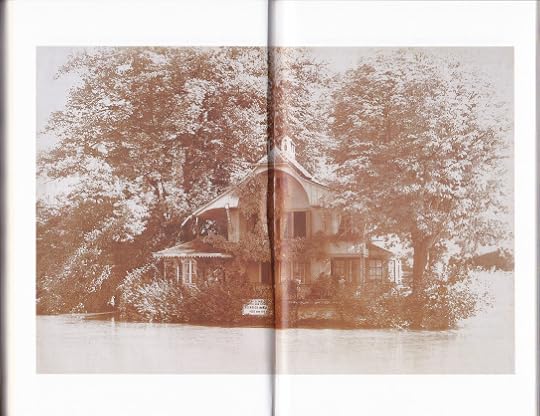
"Zu den Anfängen meiner Walser-Lektüre in der zweiten Hälfte der sechziger Jahre gehörte auch, dass ich damals, einliegend in der in Manchester von mir antiquarisch erstandenen dreibändigen Keller-Biographie von Bächtold, die mit einiger Gewißheit aus dem Nachlaß eines aus Deutschland vertriebenen Juden stammte, eine schöne Sepia-Fotografie von dem ganz von Buschen und Bäumen umstandenen Haus auf der Aare-Insel gefunden habe, in dem Kleist im Frühjahr 1802 an dem Wahnsinnsdrama der Familie Ghonorez schrieb, ehe er, selber krank, nach Bern gehen mußte in die Pflege des Dr. Wyttenbach. Langsam habe ich seither begreifen gelernt, wie über den Raum und die Zeiten hinweg alles miteinander verbunden ist, das Leben des preußischen Schriftstellers Kleist mit dem eines Schweizer Prosadichters, der behauptet, Aktienbrauereiangestellter gewesen zu sein in Thun, das Echo eines Pistolenschusses über dem Wannsee mit dem Blick aus einem Fenster der Heilanstalt Herisau, die Spaziergänge Walsers mit meinen eigenen Ausflügen, die Geburtsdaten mit denen des Todes, das Glück mit dem Unglück, die Geschichte der Natur mit der unserer Industrie, die der Heimat mit der des Exils. Auf allen Wegen hat mich Walser dabei begleitet. Ich brauche bloß einmal aussetzen mit der täglichen Arbeit, dann sehe ich ihn irgendwo abseits stehen, die unverkennbare Figur des einsamen Wanderers, der sich gerade ein wenig umschaut in der Umgegend."
Profile Image for Alessandra.
164 reviews26 followers
April 7, 2023
Bellissimo. Sebald è un cantastorie e un pifferaio magico, potrebbe raccontare di chiunque e qualunque cosa e farebbe sempre centro.
Profile Image for Daniele.
304 reviews68 followers
October 29, 2024
Secondo tentativo con Sebald, una serie di saggi su Keller, Hebel, Walser, Rousseau e Mörike, con l'aggiunta del pittore Tripp.
Secondo me per apprezzare veramente Sebald devi masticare la materia di cui parla, i suoi saggi non sono molto dettagliati e si rivolgono più a chi i suddetti personaggi li conosce già.
Infatti il saggio su Walser,che era tra i vari autori l'unico che avevo già letto e apprezzato, mi ha fatto venire una voglia matta di rileggerlo!

Contro il vizio della scrittura non sembra esserci rimedio: coloro che ne sono caduti preda, vi si accaniscono persino quando la voglia di scrivere li ha già abbandonati da un pezzo, e financo in quell'età critica nella quale, come osserva di sfuggita Keller, corriamo tutti i giorni il rischio di rincitrullire e nulla desideriamo così intensamente quanto di poter metter freno, una buona volta, alle rotelle che senza posa girano nella nostra testa.

L'arte dello scrivere è il tentativo di esorcizzare il nero garbuglio che minaccia di prendere il sopravvento, al fine di conservarsi una personalità almeno in parte in grado di funzionare.
Profile Image for Michael.
218 reviews51 followers
February 26, 2015
Sebald, one of the great writers of the twentieth century, pays homage to six artists who influenced him in this hard-to-categorize book. This is a work for those who have already fallen under Sebald's melancholic and nostalgic spell rather than an entry point to his writing. First read at least The Rings of Saturn and Vertigo. Better still include The Emigrants and Austerlitz. Finally, turn your attention to Landscape and Memory by Simon Schama. Then when you find the imagery of these works haunting your dreams, you'll be ready for A Place in the Country. The translation seems sometimes awkward, but then Sebald's German prose was hardly standard either. The book is better read in hard copy than in an e-book format. It includes interesting illustrations, helpful notes, and a useful bibliography. A must-read for those who want to understand Sebald, it is remarkable for the connections Sebald makes among the six artists featured and between them and his own life and work. There is some literary criticism, but this book contains deeper reflections on landscape, memory, artistic influences, and the suffering that can give rise to creative genius. It is also a very poignant reflection by the author on the meaning of lives (including his own) in the context of artistic creation, made more poignant by the closeness of the date of publication to his premature death at age fifty-seven. For Jungians, there is even oblique reference to acausal synchronicity among the many strands that bind together the individuals in this volume in the web of words, memory, landscape, and mystery in which art is born.
Profile Image for Sebnem.
53 reviews30 followers
July 14, 2016
Okuyun. Sadece Gottfried Keller'i anlatan “Ölüm Gelir, Ömür Geçer başlıklı bölüm” bile, Moretti'nin Burjuva'sıyla yarışır. Bonusu da var.
Profile Image for Yasemin Zeynep.
22 reviews5 followers
July 31, 2018
En çok Mörike ve Walser bölümlerinden etkilendim. Kitabı bitirdiğimde aklımda hala şu cümle vardı: "Neyin yasını tutuyorum, bilmiyorum."
Profile Image for Arhondi.
121 reviews17 followers
April 23, 2014
For anyone who is not familiar with Sebald's work, this book provides an insight to his main influences. For anyone who knows and loves him, it serves as a reminder of the great void his death left behind in European literature. He has the rare gift of combining the personal with the literary in a way that is inextricable. This collection of essays, published in English after his death (giving those who miss him the joy of reading something of his again) but in German during his lifetime, focuses on the life and works of six people who have left their mark on his mind and heart, on equal measure. Even if one is not familiar with them or their work, they cannot help but be moved by the love which imbues Sebald's writing when speaking of them and their significance.
He has been called a ghost hunter and here, this is most apparent: discussing Rousseau's withdrawal from the world in Switzerland, describing Walser's descent into the abyss of madness or explaining Jan Peter Tripp's use of realism, Sebald is always chasing his obsessions and managing to make them our own, intriguing us enough to look for the names, the work, the writings or paintings.
Quite apparent here are his affinity and predisposition for long walks, solitude, and an uncanny empathy for those minds who could not somehow find a place in this world (such as Walser). What connects his choices is their inability to feel they can fit in and sometimes, how they make a conscious choice of leaving everything behind.
His writing is hypnotizing as ever, blurring the lines between fact, fiction, dream, reality, creating moving stories of the lives of significant artists, showing us at the same time that they are worth loving and knowing and we should not let them fall into obscurity. He manages that while also demonstrating his elective affinities and laying his cards on the table.

A real treat for Sebald lovers and for anyone who appreciates crystal clear writing, straight from the heart.
Profile Image for Celil.
204 reviews20 followers
March 11, 2018
İçinden başka kitap ve yazarlara uzanmadığım kitapları pek sevemiyorum. Sebald'ın bu serisi ise tam olarak bu sevgimin yeşerdiği bir büyük gülistan gibiydi.
Profile Image for Mira Madsen.
132 reviews
July 25, 2025
Kom for Rosseau (og Sebald såklart), bliv for beskrivelserne af for mig ukendte tyske/schweiziske forfatteres liv og værker
Profile Image for Graychin.
874 reviews1,831 followers
May 29, 2014
“The gap between our longings and our rational strategy for living…” So much of life is captured in Sebald’s half sentence. The human heart is apparently insatiable. I may be perfectly grateful for all that I have and am, but I would very much like the opportunity to be more grateful still.

I usually hear my own voice in my head when reading. (This allows me to pretend that I am the author of every book I open.) When reading W.G. Sebald, however, I can’t help but hear the voice of Werner Herzog. Somehow this works out fine. I wonder if there isn’t a spiritual kinship between them.

Published for the first time in English translation a dozen years after his death, A Place in the Country isn’t Sebald’s best, but it’s good. If you’re new to Sebald, start with The Emigrants or The Rings of Saturn. Come back around to this one when you’re hooked. It collects six essays on various authors and artists of personal significance to Sebald. The pieces on Rousseau, Gottfried Keller and Robert Walser are especially well done.
Profile Image for Paul Fulcher.
Author 2 books1,953 followers
September 11, 2013
Sebald's own description of this work as merely "extended marginal notes and glosses" isn't as modest as it might first appear, and I wouldn't recommend this as a starting point for those interested in exploring Sebald.

But given his untimely death, any new translation of his work is more than welcome, and Sebald remains one of the greatest literary figures of the late 20th century.

The essays are clearly more enjoyable when you're more familiar with the work of the authors (Keller and Walser in my case), as compared to the many digressions in his novels, the essays do assume some prior knowledge of the author and subject.

Nevertheless, Sebald being Sebald, the ostensible subject is merely the starting point for his thoughts, and in many respect his reflections on the different authors can be read as a commentary on his own work.

Profile Image for Joe.
194 reviews21 followers
September 7, 2013
At face value this is a set of essays on literary criticism. However, because it is Sebald the whole exercise is far stranger, personal and almost certainly more rewarding for the reader, and as with his “fiction“ the literary boundaries start to break down.

He examines the life and works of a number of writers from southern Germany (including Switzerland) who are a mixture of the very famous and totally obscure. They all seem to share an obsessive nature and a sense of exile. All are chosen as influences on Sebald’s work and, as he puts it in the introduction, the book is a way of paying his respects to them.

The writing style is distinctively Sebald with its melancholy, underlying loss, wandering memoir and sense of journey. If you’re an admirer it’s rather wonderful to immerse yourself back into his writing again.
Profile Image for Teresa.
1,492 reviews
September 14, 2014
Neste livro, composto por seis histórias, Sebald homenageia cinco escritores e um pintor; pessoas que admira e cujas obras o acompanharam ao longo da sua vida.

Apesar de bem escrito e ilustrado com algumas fotos e pinturas, foi uma leitura que me aborreceu, exceptuando a parte correspondente a Robert Walser - cuja pessoa, vida e obra me fascina e pelo qual adquiri este livro.
Talvez se eu conhecesse os outros autores este livro se tornasse mais interessante. Não sei.

(Estrelas: Cinco para a história de Walser e duas para as restantes. A média não dá três, mas o Cinco é grande...)
Profile Image for Caroline.
910 reviews310 followers
August 13, 2016
I never connected with this recent translation of a work from 1998.

Sebald generally makes contact with his subjects at only one or two points, and then takes off into his own memories and reading to meander about in fairly obscure byways. If you have a sensibility that resonates with his, it works. For the most part, I don’t, and so I found these rather frustrating essays to slant at sensations and judgments that seem tenuous and miniscule. But for someone else, it might work very well.
Profile Image for Bobparr.
1,149 reviews88 followers
October 10, 2017
Su alcuni saggi metterei 5 stelle (anzi, su quasi tutti, giusto quello di Hebel è poco fruibile, per me, perche' non conosco l'autore).
Di Sebald ammiro l'amichevolezza dell'eloquio, la profondita' del sentire, l'attenzione al dettaglio. In questa raccolta di saggi ho scoperto Tripp e mi sono commosso di Walser, stupito di Rousseau e incuriosito di Keller.
Per un libercolo da 200 pagine non c'e' male.
Profile Image for Tosh.
Author 14 books776 followers
January 15, 2019
Beautifully written essays on writers and dreamers that effected W. G. Sebald's aesthetic and style. A wonderful essay on Robert Walser, but was totally turned on by his essay on the artist Jan Peter Tripp, whose work I knew nothing about, except in this book. Wonderful illustrations throughout the book. A book to keep to re-read.
Profile Image for Luc De Coster.
292 reviews61 followers
August 8, 2015
In mijn jeugd had ik een leraar Latijn die mij de verzen van Vergilius en Ovidius kon doen smaken. Hij wist zowel de epiek van de Aeneis als de lyriek van de Metamorfosen te ontsluiten voor een stel door testosteron geteisterde adolescenten (bemerk alliteratie en assonantie!). Door een mix van close reading en het verschaffen van historisch-literaire contekst opende hij een wereld waarvan de toegang mij anders altijd onbekend zou zijn gebleven.
Zo een leraar is ook W.G. Sebald. “Logies in een landhuis” bevat zes monografieën van kunstenaars (vijf schrijvers, één beeldend kunstenaar) die mee aan de basis liggen van de artistieke identiteit van Sebald. Nadrukkelijk plaatst hij zichzelf in een soort literaire traditie die door cultuur, idee, taal en heimat (De Alpen, Jura, Duits-Frans-Zwitzers grensgebied) wordt bepaald. De eerste die aan bod komt is wat moeilijk: een achttiende eeuwse predikant die gedichten in het Alemannisch pleegde en korte verhalen schreef voor de almanak: Johann Peter Hebel. Ik ga dat nu niet direct beginnen lezen, maar zou Sebald nog leven en een masterclass organiseren, ik zou mij inschrijven. Hij zou mij namelijk laten voelen en zien hoe de overgang van het Ancien Régime naar de Verlichting in de almanak van het toenmalige Karlsruhe resonneerde. Het lijkt alsof Sebald een raam opendoet en plots ligt daar een landschap met kleuren en klanken van tweehonderd jaar geleden en in luttele bladzijden vertelt hij wat daar zoal te beleven valt. En je weet: als ik hier mee op wandel ga, zal ik het allemaal degusteren en vatten.
En dat doet hij zes keer in deze bundel. De besten vind ik die over Jean Jacques Rousseau (in dat hotel op het île Saint-Pierre in het meer van Biel, waar Rousseau van God en klein Pierke verlaten verbleef, wil ik ooit nog eens slapen) en over Robert Walser. “De Wandeling” van Walser is net heruitgegeven in die mooie Lebowski reeks en het essay van Sebald is ook daarin opgenomen. Opnieuw legt hij virtuoos uit hoe het werk van Walser, zijn eigenaardige leven en de dynamiek van zijn tijdsgewricht op mekaar ingrijpen en geeft hij en passant nog even mee wat zijn plaats in de Duitse literatuur is. Wandelen met Walser is tragi-komisch, wandelen met Sebald is gulzig slurpen van “the Pierian Spring”.
Profile Image for Taylor Lee.
399 reviews22 followers
October 8, 2020
Sebald’s writing, as though one were able to step into the hazy world of a Romantic-era painting, or, similarly, inhabit the scents, sounds, and citied walkways of a favorite novel, is an evocative and richly sensuous experience that, even when touring the gentle undulations, unfamiliar hillsides, of classical German literature, one is ceaseless reluctant to abandon. Each of the essays that constitute this volume recall, in their winding erudition, the almost endless bounty of a house of mirrored reflections. A treasure house of literary reflections intertwined with the mist of identity and memory.
Profile Image for Laurent De Maertelaer.
804 reviews163 followers
May 8, 2016
Vijf sprankelende schrijversportretten (Hebel, Rousseau, Mörike, Keller en Walser) en één panegyrisch kunstenaarsportret (over de mij onbekende Jan Peter Tripp). De heerlijke langoureus-suggestieve en anekdotische stijl van Sebald maakt dat je van begin tot eind aan zijn lippen hangt. Hoogtepunt was voor mij het mooie stuk over Robert Walser, 'Le promeneur solitaire', dat eerder vorig jaar al als nawoord van Lebowski's nieuwe uitgave van 'De wandeling' was verschenen.
Profile Image for Sophy H.
1,901 reviews110 followers
June 4, 2025
Admittedly I ended up skim reading a lot of this.

The writing felt sketchy and erratic, a bit all over the place, as if Sebald just wrote what he was thinking straight onto the page without any structuring or editing.

Not for me unfortunately. Glad it was a library loan.
Displaying 1 - 30 of 117 reviews

Can't find what you're looking for?

Get help and learn more about the design.