

What do you think?

The Shepherd's Granddaughter
Amani longs to be a shepherd like her beloved grandfather Sido, who has tended his flock for generations, grazing sheep on their family's homestead near Hebron. Amani loves Sido's many stories, especially one about a secret meadow called the Firdoos. But as outside forces begin to encroach upon this hotly contested land, Amani struggles to find suitable grazing for her family's now-starving herd. While her father and brother take a more militant stance against the intruding forces, Amani and her new American friend Jonathan accidentally stumble upon the Firdoos and begin to realize there is more to life than fighting over these disputed regions. Amani learns a difficult lesson about just what it will take to live in harmony with those who threaten her family's way of life.
192 pages, Hardcover
First published August 5, 2008
About the author
Anne Laurel Carter
44 books15 followersAnne Laurel Carter has been a waitress, baker, store clerk, fruit picker and milked cows. Her all-time favourite job was being a school librarian. She often writes about experiences she, her siblings, her friends, her four children, even complete strangers had, or she imagines they had, and then embellishes. Liberally. She divides her year, writing and teaching, between Toronto and Nova Scotia.
Ratings & Reviews
Friends & Following
Create a free account to discover what your friends think of this book!
Community Reviews
Displaying 1 - 30 of 162 reviews

April 29, 2010
If you needed any more proof that banning - or trying to ban - a book will cause more people to read it than before, I am it. I first heard of this book just a few weeks ago, when it became a suddenly controversial issue in the Toronto District School Board (TDSB) and in the news. It is a book promoted by the Canadian Library Association and in grade 7 & 8 curriculum, but came under fire for being biased against Jews. Thankfully, it wasn't banned in the TDSB (or anywhere). But the furore certainly drew me in. I take a great interest in the issue of censorship and banning books (I'm hugely anti), and I have developed a great interest in reading more about the Palestine-Israeli conflict, and the lives of the people who live in the region. It is in the news again this week, regarding the Israeli's stopping - with bloodshed - the arrival of aid to Palestine; and, at home, the banning of the words "Israeli apartheid" in the Toronto Pride Parade this year.
I think to read a book in a non-politicised way is to do it and yourself a disservice. You can, of course, read a topical and contentious book as just a story, but you won't learn anything by it, you won't think critically about the story, its message, or reflect on your own thought processes. Books aren't to be read to tell you what to think, but to think, hopefully critically. Yes, this is the teacher coming out in me, and the academic, as well as the book lover.
It is so important to hear more than one side of any given issue, but more than that, to empathise. And that is what The Shepherd's Granddaughter excels at. Not a manipulation of your emotions, but a voice that reaches out, quietly begs to be heard and felt, and is rewarded because it is trusting and respectful and yearns for something better.
The Shepherd's Granddaughter is the story of a Palestinian girl, Amani, living with her family on their farm, nestled in a valley not far from a village where other family members live and where they go to school. The family has a vineyard, an olive grove, and about a hundred sheep. When Amani is just six she talks her shepherd grandfather ("Seedo") into teaching her, and over the next ten years she is homeschooled so that she can tend to the sheep, taking them up onto Seedo's Peak, which they share with a wolf.
It is not until after Seedo dies that things become really bad. The Israeli's have built for themselves a highway through the land, turning up one day to bulldoze the heart out of their vineyard to make room for the road. Then they make a road up onto Seedo's Peak, fence the hill off and build a settlement there, leaving Amani with nowhere to take her sheep to graze. The settlers fear the Arabs in the valley below, Amani and her family, and feel free to poison Amani's sheep, have their olive grove ripped out (snipers could hide there and shoot at the settlers), and, because the settlers don't want to live so close to any Palestinian "dogs", bulldozers arrive to tear down the three houses of Amani's family.
This is not an "all Jews are bad" story. This is a story about what many Palestinians have endured, being pushed off their land, being persecuted on the flimsiest of accusations, and generally terrorised. It shows how, when pushed so far, people will bite back. We are just another kind of animal, territorial and protective and, when attacked, defensive. We also yearn for a place to call home, for people to love, to be loved, to belong. The Israelis and Palestinians are identical in being human, and in their humanity, are unable to communicate and share.
I read in another book recently, that children care more about justice than truth. I remember believing, as a child, that the two are inseparable, but regardless I think children do care strongly about justice, and see it more clearly than adults. How many times have you heard kids, or did you say yourself as a kid, "That's not fair!" Children are more moral than adults, in this way. We dismiss their outburst as being too simplistic, "You don't understand, it's more complicated than that." But is it? Should it be? Have we just made it so complicated because, worse than children, we don't want to give any ground, we'd rather fight to the grave than share?
In The Shepherd's Granddaughter, Amani befriends a Jewish boy from the settlement, Jonathan, who came to Israel with his father from New York. Jonathan is sympathetic to the Palestinian's situation, and disagrees with what the settlers are doing. The two together are voices for their people, whether rightly or wrongly, to illuminate prejudice and understanding, belief and opinion. No, it is not a simple issue. But reading this book, I empathised so deeply with Amani and her people - disagreed with them at times too, but always empathised. It was a hard book to read, quick (I read it in a day), but hard because it involves your heart and head so much. Your heart rages, your head fills, empties, rethinks, fills again. And at the end of it, I cried. I cried not just for Israel and Palestine, two people who have made a crap situation worse, a situation that will probably never be resolved because it has gone too far into the extreme, into unforgiving territory with both sides wanting only the annihilation of the other, wanting only revenge - but also for every other displaced people in the world.
Empathy is being able to put yourself in someone else's situation, in their very emotions, and feel them too, as if they were your own. It goes much deeper than sympathy, which is more a surface emotion. Empathy is essentially this: as I was reading it, I imagined, with great clarity, another people turning up one morning, destroying my home, ignoring my voice, pointing a gun at me if I tried to so much as move, while they coldly, calmly reshaped my world, my home, they way they wanted and moved other people in there. I felt how very defenceless, useless, ineffective I would be. It is a great fear humans have, I think, being invaded and displaced, considering how often it is reflected in fiction, including alien stories, and how many wars have been fought over this very thing. And yet, what is scary about Palestine, is that there is no one to defend these displaced people. They have no army or police force to fight back for them, no (effective or powerful) government to condemn it. And they have no voice, because no one wants to listen. If this happened to me here, in Toronto, or at home in Tassie, you can bet my and your white-skinned bum the world would hear about it, and come to my aid.
This is what made me cry: that there is no one, or no one who matters, to speak up for the Palestinians. Perhaps this is changing over the last decade, especially as things get worse, but with terrorists on both sides of the conflict, and as our own lands destabilise and become more dangerous, people do not seem interested in getting involved at all, in caring at all.
We have such a long history of doing this to ourselves, time after time, and never learn. Never learn to love our neighbour. Never learn to live with our neighbours. Never learn to appreciate them, to learn from them, to humble ourselves. The Israelis aren't the only displaced people in the world. And the Anglo-Europeans aren't the only displacers in the world, or in history. The Jews in Israel feel defensive because the Islamic countries surrounding them, or many of them, refuse to acknowledge them or grant them the right to land of their own. But their response to it has only inflamed it to the point of no return. We must have such little faith in one another, our fear of the alien Other is so entrenched no matter your background or religion, that we isolate ourselves and look askance at everyone else. Amani and Jonathan are two very different people who stop and listen to each other, who really look at each other until they are no longer aliens. They each extend a hand of friendship and understanding, and discover what they both have in common.
There are many messages in this book, good messages, as well as being a powerful and moving story to read. It is well written, doesn't moralise, isn't self-indulgent. Carter is a librarian who has lived in Israel and was sympathetic only to their side until she met some Palestinians - it was only after learning both sides of the story that she felt she understood better. This is a fictionalised account of the true story, about people she met and talked with many times. You can read an interview with her from the Toronto Star here, reproduced on Did You Know along with background on the controversy. One thing she says that stuck out for me, was that she wrote it "with the Jewish audience in mind": she wrote it for them, because they won't listen to the Palestinians themselves, and so can claim ignorance of what their neighbours are experiencing.
Another book that also gives voice to both sides is Three Wishes by Deborah Ellis, in which children from Israel and Palestine speak.
I think to read a book in a non-politicised way is to do it and yourself a disservice. You can, of course, read a topical and contentious book as just a story, but you won't learn anything by it, you won't think critically about the story, its message, or reflect on your own thought processes. Books aren't to be read to tell you what to think, but to think, hopefully critically. Yes, this is the teacher coming out in me, and the academic, as well as the book lover.
It is so important to hear more than one side of any given issue, but more than that, to empathise. And that is what The Shepherd's Granddaughter excels at. Not a manipulation of your emotions, but a voice that reaches out, quietly begs to be heard and felt, and is rewarded because it is trusting and respectful and yearns for something better.
The Shepherd's Granddaughter is the story of a Palestinian girl, Amani, living with her family on their farm, nestled in a valley not far from a village where other family members live and where they go to school. The family has a vineyard, an olive grove, and about a hundred sheep. When Amani is just six she talks her shepherd grandfather ("Seedo") into teaching her, and over the next ten years she is homeschooled so that she can tend to the sheep, taking them up onto Seedo's Peak, which they share with a wolf.
It is not until after Seedo dies that things become really bad. The Israeli's have built for themselves a highway through the land, turning up one day to bulldoze the heart out of their vineyard to make room for the road. Then they make a road up onto Seedo's Peak, fence the hill off and build a settlement there, leaving Amani with nowhere to take her sheep to graze. The settlers fear the Arabs in the valley below, Amani and her family, and feel free to poison Amani's sheep, have their olive grove ripped out (snipers could hide there and shoot at the settlers), and, because the settlers don't want to live so close to any Palestinian "dogs", bulldozers arrive to tear down the three houses of Amani's family.
This is not an "all Jews are bad" story. This is a story about what many Palestinians have endured, being pushed off their land, being persecuted on the flimsiest of accusations, and generally terrorised. It shows how, when pushed so far, people will bite back. We are just another kind of animal, territorial and protective and, when attacked, defensive. We also yearn for a place to call home, for people to love, to be loved, to belong. The Israelis and Palestinians are identical in being human, and in their humanity, are unable to communicate and share.
I read in another book recently, that children care more about justice than truth. I remember believing, as a child, that the two are inseparable, but regardless I think children do care strongly about justice, and see it more clearly than adults. How many times have you heard kids, or did you say yourself as a kid, "That's not fair!" Children are more moral than adults, in this way. We dismiss their outburst as being too simplistic, "You don't understand, it's more complicated than that." But is it? Should it be? Have we just made it so complicated because, worse than children, we don't want to give any ground, we'd rather fight to the grave than share?
In The Shepherd's Granddaughter, Amani befriends a Jewish boy from the settlement, Jonathan, who came to Israel with his father from New York. Jonathan is sympathetic to the Palestinian's situation, and disagrees with what the settlers are doing. The two together are voices for their people, whether rightly or wrongly, to illuminate prejudice and understanding, belief and opinion. No, it is not a simple issue. But reading this book, I empathised so deeply with Amani and her people - disagreed with them at times too, but always empathised. It was a hard book to read, quick (I read it in a day), but hard because it involves your heart and head so much. Your heart rages, your head fills, empties, rethinks, fills again. And at the end of it, I cried. I cried not just for Israel and Palestine, two people who have made a crap situation worse, a situation that will probably never be resolved because it has gone too far into the extreme, into unforgiving territory with both sides wanting only the annihilation of the other, wanting only revenge - but also for every other displaced people in the world.
Empathy is being able to put yourself in someone else's situation, in their very emotions, and feel them too, as if they were your own. It goes much deeper than sympathy, which is more a surface emotion. Empathy is essentially this: as I was reading it, I imagined, with great clarity, another people turning up one morning, destroying my home, ignoring my voice, pointing a gun at me if I tried to so much as move, while they coldly, calmly reshaped my world, my home, they way they wanted and moved other people in there. I felt how very defenceless, useless, ineffective I would be. It is a great fear humans have, I think, being invaded and displaced, considering how often it is reflected in fiction, including alien stories, and how many wars have been fought over this very thing. And yet, what is scary about Palestine, is that there is no one to defend these displaced people. They have no army or police force to fight back for them, no (effective or powerful) government to condemn it. And they have no voice, because no one wants to listen. If this happened to me here, in Toronto, or at home in Tassie, you can bet my and your white-skinned bum the world would hear about it, and come to my aid.
This is what made me cry: that there is no one, or no one who matters, to speak up for the Palestinians. Perhaps this is changing over the last decade, especially as things get worse, but with terrorists on both sides of the conflict, and as our own lands destabilise and become more dangerous, people do not seem interested in getting involved at all, in caring at all.
We have such a long history of doing this to ourselves, time after time, and never learn. Never learn to love our neighbour. Never learn to live with our neighbours. Never learn to appreciate them, to learn from them, to humble ourselves. The Israelis aren't the only displaced people in the world. And the Anglo-Europeans aren't the only displacers in the world, or in history. The Jews in Israel feel defensive because the Islamic countries surrounding them, or many of them, refuse to acknowledge them or grant them the right to land of their own. But their response to it has only inflamed it to the point of no return. We must have such little faith in one another, our fear of the alien Other is so entrenched no matter your background or religion, that we isolate ourselves and look askance at everyone else. Amani and Jonathan are two very different people who stop and listen to each other, who really look at each other until they are no longer aliens. They each extend a hand of friendship and understanding, and discover what they both have in common.
There are many messages in this book, good messages, as well as being a powerful and moving story to read. It is well written, doesn't moralise, isn't self-indulgent. Carter is a librarian who has lived in Israel and was sympathetic only to their side until she met some Palestinians - it was only after learning both sides of the story that she felt she understood better. This is a fictionalised account of the true story, about people she met and talked with many times. You can read an interview with her from the Toronto Star here, reproduced on Did You Know along with background on the controversy. One thing she says that stuck out for me, was that she wrote it "with the Jewish audience in mind": she wrote it for them, because they won't listen to the Palestinians themselves, and so can claim ignorance of what their neighbours are experiencing.
Another book that also gives voice to both sides is Three Wishes by Deborah Ellis, in which children from Israel and Palestine speak.
March 12, 2010
The Israeli-Palestinian conflict isn't as simple as made out in this one-sided story. The author has taken every bad thing ever done by any settler, made up a few more, and inflicted them all on the hapless heroine and her family.
In real life, the Israelis haven't built a new settlement in ten years. The govt in the area where this family lives (near hebron) is the Palestinian Authority.
If settlers were encroaching on their lands, the Palestinians would have appealed to the Israeli courts (which they do all the time). The courts would have come down on their side.
The Israeli army probably wouldn't ever be involved at all, but if it were, it would be on the side of the Palestinians.
There are roads (or parts of roads) that are for the exclusive use of Isralis (both Jewish or Arab). It's a security measure put into effect because Palestinian terrorists like to ambush cars with Israeli licence plates and murder the driver and passengers.
The author would probably excuse her flights of fancy on the basis that this is a work of fiction. It would be more accurate to call it a work of propaganda.
In her review, Madeline comments that the book made her want to go and kill Israelis. I think that's exactly the effect it's supposed to have.
In his review Ryan Webb said the book made him think Israelis are Nazis. Ryan may not be aware that the Nazis murdered 6 million Jews and millions of other people, too. But again, he can be forgiven for his over the top reaction, because that's exactly the sort of response this book is designed to create.
In real life, the Israelis haven't built a new settlement in ten years. The govt in the area where this family lives (near hebron) is the Palestinian Authority.
If settlers were encroaching on their lands, the Palestinians would have appealed to the Israeli courts (which they do all the time). The courts would have come down on their side.
The Israeli army probably wouldn't ever be involved at all, but if it were, it would be on the side of the Palestinians.
There are roads (or parts of roads) that are for the exclusive use of Isralis (both Jewish or Arab). It's a security measure put into effect because Palestinian terrorists like to ambush cars with Israeli licence plates and murder the driver and passengers.
The author would probably excuse her flights of fancy on the basis that this is a work of fiction. It would be more accurate to call it a work of propaganda.
In her review, Madeline comments that the book made her want to go and kill Israelis. I think that's exactly the effect it's supposed to have.
In his review Ryan Webb said the book made him think Israelis are Nazis. Ryan may not be aware that the Nazis murdered 6 million Jews and millions of other people, too. But again, he can be forgiven for his over the top reaction, because that's exactly the sort of response this book is designed to create.

October 31, 2023
سذاجة بلا معنى
دس السم في العسل
لا يكتب عن فلسطين إلا أهلها، أو أهل أهلها في الدين أو الدم، غير ذلك هراء.
دس السم في العسل
لا يكتب عن فلسطين إلا أهلها، أو أهل أهلها في الدين أو الدم، غير ذلك هراء.

May 4, 2021
.
.
تحتاج أكثر من ( عقد بيع ) بعنوان معاهدة سلام، تحتاج أكثر من تطبيع، تحتاج آلاف السنين لكي تجتث جذور شجرة زيتونٍ واحدة تمتد في الأرض وفي عروق الفلسطنيين كل الفلسطينيين، تحتاج الكثير حتى تقضي على هذه الأرض التي ينادونها "فلسطين ".
في الرواية حكاية متكررة لمعاناة ممتدة على مدى عقود تحكي قصة الاحتلال والسرقة والنهب وفرض السيطرة والتجبر، لم تكن غريبة ولم تأتي الكاتبة -آن لوريل كارتر -بأي شيءٍ جديد، هي أعادت سرد وقائعٍ نعرفها ونقرأها ونشاهدها ونبكي ربما على حال ضحاياها منذ أعوام.
كتبت كارتر هذه الرواية لجمهور اليافعين هذا برأيي جعلها تعزف عن ذكر التفاصيل البشعة التي تُمارس من قبل قوات الكيان خاصة في لحظات الاستيلاء على الاراضي وطرد أهلها منها، وإقحام اللطف في شخصية بعض المستوطنين! هل من الممكن فعلاً أن يتقبل المرء اللطف من اللص الذي سرق بيته وأرضه ! وهل يندم اللص فعلًا على السرقة! لاحظ أن ندمه هنا لا يُعيد المسروقات إليك بل يُبقيها معه،لكنه يظهر تعاطفه معك !! فهل مقبول هنا اللطف ؟
أنا لا أعتقد هذا ولا أُصدقه.
ماذا بعد القراءة ؟
وبقدر ما نعرف هذا الظلم ونؤمن بوقوعه بقدر ما نؤمن أنه لا قوة على وجه هذه الأرض قادرة على إلغاء حقيقة أن فلسطين هي أرض الفلسطنيين.
تمت
#أبجدية_فرح 5/5 🌸📚
#candleflame23bookreviews
#حفيدة_الراعي #آن_لوريل_كارتر
صادر عن #مجموعة_كلمات
#غرد_بإقتباس
#حي_على_القراءة
#ماذا_تقرأ #ماذا_تقتبس #القراءة_حياة
#القراءة #القراءة_حياة_أخرى_نعيشها
#أقرأ_في_رمضان🌙
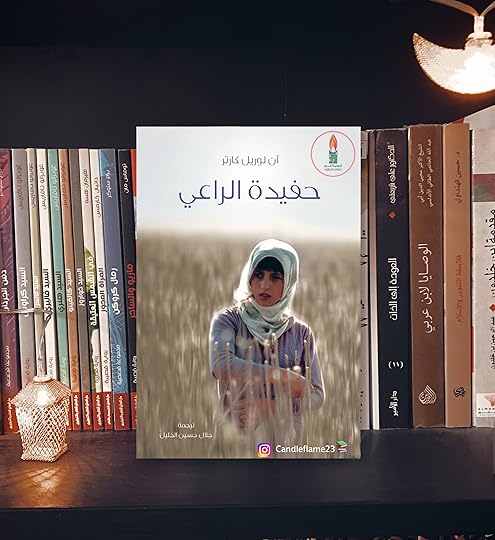
.
تحتاج أكثر من ( عقد بيع ) بعنوان معاهدة سلام، تحتاج أكثر من تطبيع، تحتاج آلاف السنين لكي تجتث جذور شجرة زيتونٍ واحدة تمتد في الأرض وفي عروق الفلسطنيين كل الفلسطينيين، تحتاج الكثير حتى تقضي على هذه الأرض التي ينادونها "فلسطين ".
في الرواية حكاية متكررة لمعاناة ممتدة على مدى عقود تحكي قصة الاحتلال والسرقة والنهب وفرض السيطرة والتجبر، لم تكن غريبة ولم تأتي الكاتبة -آن لوريل كارتر -بأي شيءٍ جديد، هي أعادت سرد وقائعٍ نعرفها ونقرأها ونشاهدها ونبكي ربما على حال ضحاياها منذ أعوام.
كتبت كارتر هذه الرواية لجمهور اليافعين هذا برأيي جعلها تعزف عن ذكر التفاصيل البشعة التي تُمارس من قبل قوات الكيان خاصة في لحظات الاستيلاء على الاراضي وطرد أهلها منها، وإقحام اللطف في شخصية بعض المستوطنين! هل من الممكن فعلاً أن يتقبل المرء اللطف من اللص الذي سرق بيته وأرضه ! وهل يندم اللص فعلًا على السرقة! لاحظ أن ندمه هنا لا يُعيد المسروقات إليك بل يُبقيها معه،لكنه يظهر تعاطفه معك !! فهل مقبول هنا اللطف ؟
أنا لا أعتقد هذا ولا أُصدقه.
ماذا بعد القراءة ؟
وبقدر ما نعرف هذا الظلم ونؤمن بوقوعه بقدر ما نؤمن أنه لا قوة على وجه هذه الأرض قادرة على إلغاء حقيقة أن فلسطين هي أرض الفلسطنيين.
تمت
#أبجدية_فرح 5/5 🌸📚
#candleflame23bookreviews
#حفيدة_الراعي #آن_لوريل_كارتر
صادر عن #مجموعة_كلمات
#غرد_بإقتباس
#حي_على_القراءة
#ماذا_تقرأ #ماذا_تقتبس #القراءة_حياة
#القراءة #القراءة_حياة_أخرى_نعيشها
#أقرأ_في_رمضان🌙

October 6, 2008
This is an important book that should be read by everyone because it brings Palestine to life through Amani's world. It is good book on its own, but I read "The Boy who Dared" at the same time and the experience made it even more powerful.
Helmuth spoke out against what a majority of people now believe was an evil regime, Hitler and the Nazis. This makes him a freedom fighter, a hero. As I read of Amani's life, I began to question my own government's support of Israel, a country that exists largely because of the wrongs inflicted by the government that Helmuth spoke out against. Amani is a Palestinian girl whose family has raised sheep and olive trees on the same land for a thousand years. She and her brother love their land, she wants to be a shepherd like her grandfather, loves the olive harvest. Yet by the end of the book, all her sheep are gone - sold to buy food because her family can no longer transport their olives to market, poisoned by Israelis who settle on her family's land. The Israeli soldiers arrest her uncle and her father when they question these actions - drag them off to prison where they are held without bail, without trial, without rights. Her brother is detained when the family tries to enter a nearby town because "no Palestinian boys are allowed." Is her brother, her father, uncle - is she - a freedom fighter because they question Israel's right to take their land, their livelihood? Or are they terrorists because Israel is a friend of the United States and only terrorists would question Israel's right to exist - even at the expense of others? Is Israel any better than the Nazi government who took Jewish property, arrested Jewish men and women without cause, put them in prisons without bail, trial, rights, who killed millions of Jews?
This book made me think about patriotism, my country and the truth. I attended a professional football game after reading both and found myself still brought to tears by the national anthem, still deeply in love with the ideals and ideas of my country. But deeply ashamed that we shred the dignity, culture and history of so many people, that we provide fear, unemployment and hardship to thousands of young people who want nothing more or less than our own children - and then we kill them, arrest them, torture them and because we call them terrorists, we claim ourselves to be freedom fighters.
Helmuth spoke out against what a majority of people now believe was an evil regime, Hitler and the Nazis. This makes him a freedom fighter, a hero. As I read of Amani's life, I began to question my own government's support of Israel, a country that exists largely because of the wrongs inflicted by the government that Helmuth spoke out against. Amani is a Palestinian girl whose family has raised sheep and olive trees on the same land for a thousand years. She and her brother love their land, she wants to be a shepherd like her grandfather, loves the olive harvest. Yet by the end of the book, all her sheep are gone - sold to buy food because her family can no longer transport their olives to market, poisoned by Israelis who settle on her family's land. The Israeli soldiers arrest her uncle and her father when they question these actions - drag them off to prison where they are held without bail, without trial, without rights. Her brother is detained when the family tries to enter a nearby town because "no Palestinian boys are allowed." Is her brother, her father, uncle - is she - a freedom fighter because they question Israel's right to take their land, their livelihood? Or are they terrorists because Israel is a friend of the United States and only terrorists would question Israel's right to exist - even at the expense of others? Is Israel any better than the Nazi government who took Jewish property, arrested Jewish men and women without cause, put them in prisons without bail, trial, rights, who killed millions of Jews?
This book made me think about patriotism, my country and the truth. I attended a professional football game after reading both and found myself still brought to tears by the national anthem, still deeply in love with the ideals and ideas of my country. But deeply ashamed that we shred the dignity, culture and history of so many people, that we provide fear, unemployment and hardship to thousands of young people who want nothing more or less than our own children - and then we kill them, arrest them, torture them and because we call them terrorists, we claim ourselves to be freedom fighters.

February 23, 2010
This author expertly crafts a story that juxtapositions the ancient with the modern, the shepherd and the cell phone. Amani, known as “sheep girl” to some, is a young girl who desires to follow in her grandfather’s footsteps as a shepherd. This is more difficult that she imagined because Israelis occupy the land and are turning it into settlements. Living in a world of her ancestors’, Amani practices the traditional, Muslim law. The muezzin alerts the prayer times and her family responds. She is aware and accepting of how “a good Muslim behaves.” Her father reminds the reader that the “Qu’ran doesn’t teach us to kill civilians, innocent people,” a point that arises often in books that address the Palestinian and Israeli conflict. Amani learns that “The modern world is different… Back then we only lived in the valley during spring and summer. We followed the tradition of our ancestors, camping like Bedouin in the cave close to our fields until harvest.” Caught between an ancient way of life and the modern world, complete with iPods, Amani struggles to hold onto her culture, customs, and traditions. Some of her family lament that at Birzeit University, “the girls don’t cover their arms or heads.” But Amani’s father espouses that “If we’re going to survive we have to adapt to change.” The author includes many of the observances of the Muslim law such as alcohol and “going out with girls” is forbidden, and it is of great importance to fast during Ramadan. Many of the characters support the law and its traditions, but it is clear from the story that much of the way of life of the Palestinians is in jeopardy. It is interesting to note that the oppression the Arabs suffer in this story echoes the protests of the Native Americans. The reader knows that these Palestinians will surely lose their land. In a poem written by Amani, the reader realizes that she has a strong attachment to the land, her “blood is mixed with the soil of our land and I will never leave.” A parallel could be easily drawn between these people and Native Americans who lost their land. This is a compelling story that I believe students will not have heard before.
February 6, 2019
This book is important. I read this book as a requirement for my Young Adult Literature class, and I am so glad that I did. This book (as any good book should) teaches to see from a new perspective. There are many who claim this book to be anti-israeli propaganda, but I firmly disagree. This book simply views another's peaceful experience. It does not at all support violent acts, but abhors them from both sides. This is a book whose goal is the inspiration of peace between every nation. It begs the reader to see another perspective. It begs the reader to see into the life of a family who has lived peacefully for generations. It states that a person is not a history, and history does not have to become a person.
I would recommend this story to anyone who is interested in learning more about this conflict. I would recommend it to someone who wants to understand different perspectives. I would teach this in my classroom to inspire perspective. I would discuss with my students why perspective is important. I would have my students research all they could on the topic and teach them how to search for unbiased information or how to spot bias for themselves. I would have them try to understand every side.
WARNINGS:
Drugs - No
Sex - No
Rock & Roll - As the reader, you are put into a new pair of shoes. You will see issues that are based on the real experience of a real family. Knowing that should make anyone think. This book is meant to rock your world and make you see things you choose not to. So, yes, this book is rock & roll.
Language - Yes, but very little.
Violence - Yes. The conflict is based around the violent attacks during the Arab Israeli conflict, so you should expect some. However, there is nothing very gruesome in the novel.
I would recommend this story to anyone who is interested in learning more about this conflict. I would recommend it to someone who wants to understand different perspectives. I would teach this in my classroom to inspire perspective. I would discuss with my students why perspective is important. I would have my students research all they could on the topic and teach them how to search for unbiased information or how to spot bias for themselves. I would have them try to understand every side.
WARNINGS:
Drugs - No
Sex - No
Rock & Roll - As the reader, you are put into a new pair of shoes. You will see issues that are based on the real experience of a real family. Knowing that should make anyone think. This book is meant to rock your world and make you see things you choose not to. So, yes, this book is rock & roll.
Language - Yes, but very little.
Violence - Yes. The conflict is based around the violent attacks during the Arab Israeli conflict, so you should expect some. However, there is nothing very gruesome in the novel.
April 6, 2010
Nonsense. Pure nonsense. If I could give this book not a single star, believe me, I would. If an author is going to select to write about such a complex, intricate topic, she should be sure that she actually puts in some research and doesn't fill the story with imagined nonsense just to provoke some emotion from the reader. Stories this biased and untrue should not even be permitted to possess a space on a library shelf as they have the ability to give readers completely false ideas and instigate new anti-Semetic feelings in many young readers. ISRAEL is a land where there are many troubling events occurring. However, what the prejudiced and uneducated author needs to learn is that the Palestinians are not as innocent as this book makes them out to be. Suicide bombers are martyrs? Give me a break. I know someone who instantaneously lost his innocent, Jewish son on a typical bus ride in Israel.. Why? A Palestinian suicide bomber. Let me also say that Israel has given up much land, including much of the West Bank, in an attempt to make peace. Palestinians just want it all, but it's the Jewish people's land just as well. There has never been a publicized case on Jewish settlers evicting Arabic people by poisoning their sheeps and killing their dogs, as well as nonchalantly razing their houses. If you look this book up in a book store, you'll discern that it is placed in the Fiction section, because that's what it is, pure, total, imagined fiction. Shame on the author for influencing people in such an adverse way using such lies!!!

July 28, 2011
Palestinian life under Israeli occupation. Seedo the grandfaather in a Palestinian extended family thaat has has had afamily shepherd for thoousands of years passes on thee responsibility to his granddaughter even over the objections of the rest of thee faamily member. Amani is the young girl who chooses shepherding over school. She enjoyes sheperding until something traumatic happens Israeli settler from AMerica take part of her land for settlement building. It becomes unsafe for her to take the sheep over to Seedo's peak. From apprehension to violence the story moves on. Settlers shoot one of her sheep in front of her, lateer theey poison her sheep kiling all but one. A new highway is opend to only Israelis. When they driive to Al Khalil her uncle the family lear afteer Seedo dies is arrested,beaten aftr he drivess on the highway. His harvest of graapes is thrown to the floor. Amani beffriends a sixteen year old who disagreees with all that is beeing done and eventualy reeturns to New York. Close to the endAmani witnesses her house being demolished and her fatheer geting aarreested. THe story is written specifically for yooung adult. If you wnat to understand how the Palestinians view th current conflict I strongly advise thise book. ONe of th main characters , Amani's, Faather is for aa peaceful solution with out violence. I believe that is the author's point of view as well

July 9, 2011
Considering the topic is one of the most hot button political issues in North America, I'm not at all surprised that people have tried to ban this book from school libraries. But as with many book challenges, it sounds like many of the challengers haven't actually read it. If they had (with an open mind), they would see that it's a balanced exploration of the Palestinian side, and that the story calls for nonviolent responses to the complicated conflict. This interview gives a little more information about the author's background and research, which I find persuasive.
I think I would actually give the book 3 stars for how much I enjoyed it, but I tacked on another star because I think it's a story that needs telling.
I think I would actually give the book 3 stars for how much I enjoyed it, but I tacked on another star because I think it's a story that needs telling.

August 15, 2015
This book is intense. Follows the point of view of a young Arab girl in the occupied West Bank as she grows up tending to her family's sheep and deals with various changes and loss. The depiction of the Palestinian experience is very vivid and mirrors a documentary in its detail. She becomes more perceptive of the world around as she grows, becoming acutely aware that her family's physical space is shrinking due to illegal settlements. The author conveys Amani's confusion and pain and anger convincingly, and yes, the settlers are presented as pretty despicable creatures ... because through their actions, they are. Their behavior in the book is exactly what goes on in Palestine every day - demolitions, destruction of fields and livestock, violence. She is able to recognize there are good people "on their side", who come to her and her family's defense. This book was disturbingly real, unfortunately, with lots of sadness, but it also contains moments of hope. I can see how some misguided would distort the story, but it's hard to argue with a little girl's reaction to her sheep being killed and father jailed.
November 14, 2011
This book tells the story of a Palestine girl, Amani, who lives with her family. Amani's family has a vineyard, olive grove, and a herd of sheep. The shepheards grandfather, Seedo, teaches Amani while she is being homeschooled. However, trouble breaks lose when Seedo dies and terrible things start happening to the farm, where Amani and her family are living. I thought this book started off slow, but then once I got into it I couldn't put it down. It had a lot of information about the Palestine and Israeli conflict and the lives of the people who live in those regions. The book also shows how the Palestinians and the Israelis are just really unable to communicate and come to agreements. I also noticed the story shows when people are pushed so far, to their limits, they will strike back.

July 22, 2010
Kudos to Anne Carter for taking on a challenging topic -- perhaps THE most challenging topic in today's political climate. She gives voice to a population never heard from in American literature, let alone children's lit. She may be criticized for the perspective she takes in "Granddaughter," but the call to ban this book is ridiculous. It is a great launching point for discussion and nothing to be shied away from.

July 14, 2022
فلسطين ليست قضية إنسانية وحسب بل هي قضية إسلامية
هي قضية دين وجهاد
قضية إيمان وعمل
ولا حل من الحلول الفنتازية يمكن أن يحل هذه المعضلة
فلا التعايش حل ولا الرضى بالظلم حل
،،
دس السم بالعسل هو أسلوبهم أينما كانوا
حتى وإن كانت هذه الرواية للناشئة
حتى وإن كانت الكاتبة قد حاولت أن تبرز جزء من الظلم الذي وقع على الفلسطينين من المستوطنين الغاصبين
فهي لم تروِ إلا ماهو حق
لكن أن تعتبر أن التعايش والقبول والرضى هو الحل
فما هذا إلا وهم صرف لا أصل له ولن يكون
،،
أشكر لها فصلها الأول في حكايتها ن أماني وجدها ورحلة تعلمها للرعي الغنم ..
هي قضية دين وجهاد
قضية إيمان وعمل
ولا حل من الحلول الفنتازية يمكن أن يحل هذه المعضلة
فلا التعايش حل ولا الرضى بالظلم حل
،،
دس السم بالعسل هو أسلوبهم أينما كانوا
حتى وإن كانت هذه الرواية للناشئة
حتى وإن كانت الكاتبة قد حاولت أن تبرز جزء من الظلم الذي وقع على الفلسطينين من المستوطنين الغاصبين
فهي لم تروِ إلا ماهو حق
لكن أن تعتبر أن التعايش والقبول والرضى هو الحل
فما هذا إلا وهم صرف لا أصل له ولن يكون
،،
أشكر لها فصلها الأول في حكايتها ن أماني وجدها ورحلة تعلمها للرعي الغنم ..
January 22, 2018
اسم الكتاب: حفيدة الراعي
اسم الكاتب: آن لوريل كارتر
عدد الصفحات: 219
دار النشر: كلمات
التقييم: 4/5
تدور أحداث هذه الرواية في فلسطين المحتلة، وتتناول قضية تأثير الإحتلال على الفلسطينين ..
"أماني" حفيدة الراعي كانت تتمنى أن تكون راعية مثل جدها، وبالفعل تمكنت من تخطي عقبات رغبة أهلها بالدراسة لتكون راعية، ولكن لم تكن رغبة أهلها هي العقبة الصعبة بل وجود الاحتلال والمستوطنين الذين يريدون أن يسرقوا أرضهم وماءهم وترابهم، فما هو مصير أماني وما هو مصير حلمها بأن تكون راعية؟
اسم الكاتب: آن لوريل كارتر
عدد الصفحات: 219
دار النشر: كلمات
التقييم: 4/5
تدور أحداث هذه الرواية في فلسطين المحتلة، وتتناول قضية تأثير الإحتلال على الفلسطينين ..
"أماني" حفيدة الراعي كانت تتمنى أن تكون راعية مثل جدها، وبالفعل تمكنت من تخطي عقبات رغبة أهلها بالدراسة لتكون راعية، ولكن لم تكن رغبة أهلها هي العقبة الصعبة بل وجود الاحتلال والمستوطنين الذين يريدون أن يسرقوا أرضهم وماءهم وترابهم، فما هو مصير أماني وما هو مصير حلمها بأن تكون راعية؟

July 27, 2021
رواية جميلة تصف الحياة الجميلة لفتاة فلسطينية قبل دخول المستوطنين و بعد مجيئهم ، و الصعوبات والمشاكل التي يسببوها لهم من اعتداءات و اعتقال لأفراد العائلة دون سبب و نهب الممتلكات و هدم المنازل و غصب الأراضي .. وكل هذا تحت حماية جيش الاحتلال .. و من يعارض يُحبس أو يقتل !!
November 21, 2020
The Shepherd’s Granddaughter (ISBN: 9780888999023) was written by Anne Laurel Carter in 2008. It was published by House of Anansi Press. This book tells the story of the Israel-Palestine Conflict from the perspective of a six year old Palestinian girl named Amani. Amani lives on a farm with her family. She idolizes her grandfather who is a shepherd. She aspires to become a shepherd like her grandfather, but her family is against it because she is a young girl. They wanted her to go to school instead. However, her grandfather soon becomes very ill. Right before his passing, he gifts her his shepherd’s crook. This crook had been in the family for generations and left Amani to tend to the sheep just as she wanted. Soon the Israeli occupation would have an effect on Amani’s family. Her brother Omar started to become angry with the settlers and vowed to fight against them. Eventually, her uncle is arrested by Israeli soldiers. They are told he would only be held for a week, but when Amani’s father goes to pick him up, he is told that he will not be released. The Israelis began to build roads and settlements closer and closer to Amani’s farm. She discovers that they planned to build on her grandfather’s peak. She wants to stop this, but the Israelis have an army and the support of the United States. Amani and her family organized a protest against the occupation. The family was being told they had to leave their land and their livelihood behind. Amani also befriends an American Jewish boy named Johnathon. She refuses to give him her real name, so she goes by “Palestine”. They have several arguments about the conflict. At first she feels they will never understand each other, but as time goes by she starts to like him more. He expresses how badly he feels that his family and the rest of the settlers are taking Amani’s land from her. At the end of the novel, Amani’s father is beaten and arrested. After Amani throws several rocks, she runs into a cave that her grandfather had shown her. She decides to hide there for the night. She runs into Johnathon who tells her he is going back to New York. He doesn’t feel right about the occupation and no longer wants to take part in it. She is sad to see him go. The next day she is reunited with her family who thought she was dead.
Anne Laurel Carter is a Canadian author and lived in Israel for a year and a half, during the Yom Kippur War whilst studying Hebrew. Carter has a bachelor's degree in education and a masters degree in second language learning. Carter is a well known children’s book author and has received many awards for her works.
Overall this book is an important read and gives readers an idea of Palestine through Amani’s story. Readers are able to view the world vividly from a different perspective and see a glimpse of the problems in Palestine, and their effects on Palestinians. It shows the good and the bad for both sides in this war. In our opinion the author’s purpose correlated perfectly with the conveyed purpose, that being international peace. The reader connects with Amani and her family. It also provides the reader with some new perspective that is relevant to the state of the world today.
Some view this book as controversial and implying negative associations with Israelis. From that viewpoint, we believe you must dig deeper. Read with open eyes and be ready to take on many emotions. You will feel sad, angry, and sometimes even get a laugh out of it. More importantly this book is heavy and is written very concisely, take this as an educational experience and as a stepping stone to becoming a more socially responsible being. The Shepherd’s Granddaughter doesn't hide the violence and devastation brought with the war.
The Shepherd’s Granddaughter calls for a specific audience and that is our youth. Of course open minded mature adults would appreciate this book as well, but having a young main character makes the story really easy to read for a young audience. This would do very well in middle and high school for young students to better their understanding of the world around them, specifically Palestine. The Shepherd’s Granddaughter would be great to pair with A History of the Israeli-Palestinian Conflict(2009), written by Mark Tessler. His work represents this conflict from start to the present. Known for its cohesiveness and balance of Israel and Palestinee and their war. This book will help give the reader context for the setting of the story in The Shepherd’s Granddaughter With the common theme and hope for people. (Review by Katrina Applegate and Maria Irwin)
Source:
Carter, A. L. (2008). The shepherd's granddaughter. Toronto, Ontario: Groundwood Books/House of Anansi.
Tessler, M. A. (2009). A history of the Israeli-Palestinian conflict. Bloomington, IN: Indiana University Press.
Anne Laurel Carter is a Canadian author and lived in Israel for a year and a half, during the Yom Kippur War whilst studying Hebrew. Carter has a bachelor's degree in education and a masters degree in second language learning. Carter is a well known children’s book author and has received many awards for her works.
Overall this book is an important read and gives readers an idea of Palestine through Amani’s story. Readers are able to view the world vividly from a different perspective and see a glimpse of the problems in Palestine, and their effects on Palestinians. It shows the good and the bad for both sides in this war. In our opinion the author’s purpose correlated perfectly with the conveyed purpose, that being international peace. The reader connects with Amani and her family. It also provides the reader with some new perspective that is relevant to the state of the world today.
Some view this book as controversial and implying negative associations with Israelis. From that viewpoint, we believe you must dig deeper. Read with open eyes and be ready to take on many emotions. You will feel sad, angry, and sometimes even get a laugh out of it. More importantly this book is heavy and is written very concisely, take this as an educational experience and as a stepping stone to becoming a more socially responsible being. The Shepherd’s Granddaughter doesn't hide the violence and devastation brought with the war.
The Shepherd’s Granddaughter calls for a specific audience and that is our youth. Of course open minded mature adults would appreciate this book as well, but having a young main character makes the story really easy to read for a young audience. This would do very well in middle and high school for young students to better their understanding of the world around them, specifically Palestine. The Shepherd’s Granddaughter would be great to pair with A History of the Israeli-Palestinian Conflict(2009), written by Mark Tessler. His work represents this conflict from start to the present. Known for its cohesiveness and balance of Israel and Palestinee and their war. This book will help give the reader context for the setting of the story in The Shepherd’s Granddaughter With the common theme and hope for people. (Review by Katrina Applegate and Maria Irwin)
Source:
Carter, A. L. (2008). The shepherd's granddaughter. Toronto, Ontario: Groundwood Books/House of Anansi.
Tessler, M. A. (2009). A history of the Israeli-Palestinian conflict. Bloomington, IN: Indiana University Press.

January 9, 2022
جيدة، مؤثرة، تستحق القراءة ♡

May 2, 2010
When I finished this book I couldn't for the life of me understand why anyone would want to remove it from libraries. This book does not make Israeli's out to be evil people, but it does bring to light some of the issues that Palestinian's live with on a daily basis. I feel that this book is important because it gives notice to both sides of the story and portrays each side in favorable and unfavorable lights. Yes, Israeli's are portrayed, at times, as tyrants pushing their way into the lands occupied by Palestinians. But then the author shows how some Palestinian's want to react with violence and threats. We all know that this way of dealing with conflict can not continue, but how do you stop it??? Well, it sure as hell isn't by censoring and removing books that certain groups of people take issue with. We start by educating our children and showing them that violence, no matter which side of the fence you're on, is not the answer. And hope and pray that this new generation of humans will somehow bridge this cultural difference. Will it happen? I don't know, this conflict is ancient, but I do know that we need to have honest, thoughtful discussions about the issues. I for one will be talking about this book to the students at my school that I feel will appreciate the story within the covers and be smart enough to start asking questions, investigate, and make an informed decision about how they feel in regards to this situation. I urge you, the reader, to pick this book up and make that decision for yourself...should we allow groups who don't like that another point of view (other than theirs) is being brought to light and they want to stop you from questioning the information that you've gathered from the nightly news, newspaper, magazine, and the internet get away with censorship?????? Regardless of where you stand on this issue, this book deserves to be on the shelves of libraries worldwide. I am one librarian who will make sure that the copy at my middle school is never pulled from circulation.
February 3, 2019
I read this book for a class and I have to admit I wasn’t really looking forward to it. I thought it was going to be a dull history lesson. Oh, how I was wrong! This is far from a boring history lesson! This book made me angry, sad, happy and relieved. Its awe inspiring watching this young girl overcome the many challenges thrown her way. I would recommend this book to anyone who thinks they have a set opinion on the issues in this book. I promise you, they will be challenged one way or another. I would recommend this book to anyone who loves animals. Watching the importance of the sheep develop in the book was fascinating. Lastly, I would recommend this book to anyone who feels sheltered. I definitely was sheltered before this book, or maybe just oblivious. This opened my eyes to things I had no idea were going on in our world.
If I were to teach/use this book in a classroom, I would use it to emphasize that there are always two sides to a story, and that the news/history books don’t always portray the right one. I would ask my students what they knew/felt about the situation before the book, and then ask them what they learned after reading it. I guarantee it will change anyone’s view, or at least soften their perspective.
Warning:
• Language: There isn’t any other than the word “hell” but it’s used to reference the place, not the swear word.
• Violence/Gore: There is obviously war going on, and therefore killing and fighting going on too. Family members are taken and beaten. Animals are killed which might be disturbing to some.
• Sex: N/A
• Drugs: N/A
• Rock and Roll: The idea that this is going on and no one seems to pay any attention to it is honestly mind boggling. I know for me, this was an intense book to read, realizing how blind I’ve been to the world outside of the U.S.
If I were to teach/use this book in a classroom, I would use it to emphasize that there are always two sides to a story, and that the news/history books don’t always portray the right one. I would ask my students what they knew/felt about the situation before the book, and then ask them what they learned after reading it. I guarantee it will change anyone’s view, or at least soften their perspective.
Warning:
• Language: There isn’t any other than the word “hell” but it’s used to reference the place, not the swear word.
• Violence/Gore: There is obviously war going on, and therefore killing and fighting going on too. Family members are taken and beaten. Animals are killed which might be disturbing to some.
• Sex: N/A
• Drugs: N/A
• Rock and Roll: The idea that this is going on and no one seems to pay any attention to it is honestly mind boggling. I know for me, this was an intense book to read, realizing how blind I’ve been to the world outside of the U.S.
February 5, 2019
Wow, wow, WOW. This novel is amazing! I didn't think I would like it because of what it was about but I cannot express how much I enjoyed this book. "The Shepherd's Granddaughter" is a beautiful story about what happens when one community goes to take over another and the other's reaction to it. I was laughing at some parts and crying at the end. Because of this story, I better know about the conflict between the Israelis and the Palestinians as well as what it is like for innocent people to be thrown into a war. I really wish there was a second book so I knew what happens in these character's futures. The only reason this took me so long to finish was because I was reading it while doing other things.
Anne Laruel Carter is a fantastic author and her writing is beautiful. I love how she focuses on the important parts in each scene and doesn't waste words over describing. She really wants her audience to focus on the story. I would recommend "The Shepherd's Granddaughter" to anyone who wants to know more about the struggle between these two peoples as well as anyone who wants to learn more about sheep. I definitely learned more about them!
CONTENT WARNING
*Sheep birthing scenes
*Violence
*Slightly graphic sickness in sheep
(Heartache, pain, hatred of some characters, fondness for others, YOU WILL CRY IF YOU HAVE A HEART)
Anne Laruel Carter is a fantastic author and her writing is beautiful. I love how she focuses on the important parts in each scene and doesn't waste words over describing. She really wants her audience to focus on the story. I would recommend "The Shepherd's Granddaughter" to anyone who wants to know more about the struggle between these two peoples as well as anyone who wants to learn more about sheep. I definitely learned more about them!
CONTENT WARNING
*Sheep birthing scenes
*Violence
*Slightly graphic sickness in sheep
(Heartache, pain, hatred of some characters, fondness for others, YOU WILL CRY IF YOU HAVE A HEART)

May 28, 2020
This book is excellent. Bit of a slow burner, it took me a few chapters to get into it but once I could get the feel of the book, everything was great. The book takes the Palestinian point of view as seen from a child. Much more interesting than if told by an adult, Amani pulls at the heart strings as she cares for her little flock. The last few pages had me glued, solid! The type that the last 1/3 I had to stay up late to finish it knowing I wouldn't be able to sleep without knowing the end. Highly recommend this novel.
Class setting: I would love to do a unit on conflict, introducing this book and another from the Israeli side and then holding a Socratic circle or have the students present their solutions to this seemingly impossible issue. I don't have one in mind for the Israeli view but this book has a strong appeal to ethos and pathos. I think keeping the humanity in the book is exactly what is typically stripped from this conflict in the US pov. We forget that there are real people on both sides.
The only warning I can think of is talk and scenes of Israeli-Palestinian violence. Nothing extreme to handle.
Class setting: I would love to do a unit on conflict, introducing this book and another from the Israeli side and then holding a Socratic circle or have the students present their solutions to this seemingly impossible issue. I don't have one in mind for the Israeli view but this book has a strong appeal to ethos and pathos. I think keeping the humanity in the book is exactly what is typically stripped from this conflict in the US pov. We forget that there are real people on both sides.
The only warning I can think of is talk and scenes of Israeli-Palestinian violence. Nothing extreme to handle.
This entire review has been hidden because of spoilers.
February 15, 2021
This was an interesting book and in a way it reminded me of the book Burn My Heart. These two books are similar because again another country is trying to take over the land. Amani first faces the struggle of being a shepherd and people judging her to loosing her village. In the end I felt this was a pretty good book.
I would suggest this book to public schools because I felt that this shows another culture that some students may not know about. Students can also learn how important family is and how a village can stay together even through hard times.
Warnings:
Drugs: Amani's father smokes cigarettes throughout the book
Sex: None
Violence: There is a lot of violence in this book because settlers are trying to completely kill and get rid of the Palestine population. Settlers shoot people and animals and they kick and physically abuse some of Amani's family members. Talks about rifles and shooting people.
Language: There is a little bit of references to bad language but they are never actually stated.
Also there is a detailed birth of a lamb so if that grosses you out then you may want to skip through that part.
I would suggest this book to public schools because I felt that this shows another culture that some students may not know about. Students can also learn how important family is and how a village can stay together even through hard times.
Warnings:
Drugs: Amani's father smokes cigarettes throughout the book
Sex: None
Violence: There is a lot of violence in this book because settlers are trying to completely kill and get rid of the Palestine population. Settlers shoot people and animals and they kick and physically abuse some of Amani's family members. Talks about rifles and shooting people.
Language: There is a little bit of references to bad language but they are never actually stated.
Also there is a detailed birth of a lamb so if that grosses you out then you may want to skip through that part.

February 4, 2019
I wasn’t sure what to expect from this book to be honest. I knew it was a book that took place in Palestine, but that was the extent of my knowledge. As I read, however, I fell in love with it! The story is beautifully written, the characters relatable, and it caused me to think from a perspective I’m not necessarily used to. Despite the controversial political context this story is placed in, The Shepherd’s Granddaughter isn’t in your face about it. It doesn't try to convert you to one side for the argument necessarily, and I believe it shows the good and bad on both sides.
Who should read this book? Anyone interested in seeing both sides for the Israeli/Palestinian issue, and anyone able to understand that no issue—especially not this one—is entirely black and white.
Content warnings:
Violence
Brief description(s) of a sheep giving birth
Death
Discusses controversial politics and religious conflicts
Be weary to read this in public: a few scenes portray strong emotions and the desire to throw the book—because you can’t throw some of the characters—might arise
Who should read this book? Anyone interested in seeing both sides for the Israeli/Palestinian issue, and anyone able to understand that no issue—especially not this one—is entirely black and white.
Content warnings:
Violence
Brief description(s) of a sheep giving birth
Death
Discusses controversial politics and religious conflicts
Be weary to read this in public: a few scenes portray strong emotions and the desire to throw the book—because you can’t throw some of the characters—might arise
February 16, 2021
I read this book for my ENG356. I didn't know anything about it before, so this was the main and only reason that I chose to read this book. After reading it, it isn't typically a book that I would choose to read; however, I am so glad I did because I loved it!
I would definitely recommend this book be taught in public schools. In fact, I would teach it in my own classroom! This book is clean and uplifiting in content. It is very realistic and actually deals with real life topics from different parts of world. It gives a front-row seat perspective to a different culture and way of living. Not only that, but it is full of important lessons, such as family, friendship, peace, unity, and values. I loved it! I would recommend this book to anyone who wants an inspiring read.
Warnings for the faint of heart:
Drugs: No, but cigarettes are used once by a character.
R&R: Political unrest and violence are dominant themes of conflict throughout the book. There is also a lot of plot that involves animals, including disease, birth, and death.
Sex: No.
Language: No.
I would definitely recommend this book be taught in public schools. In fact, I would teach it in my own classroom! This book is clean and uplifiting in content. It is very realistic and actually deals with real life topics from different parts of world. It gives a front-row seat perspective to a different culture and way of living. Not only that, but it is full of important lessons, such as family, friendship, peace, unity, and values. I loved it! I would recommend this book to anyone who wants an inspiring read.
Warnings for the faint of heart:
Drugs: No, but cigarettes are used once by a character.
R&R: Political unrest and violence are dominant themes of conflict throughout the book. There is also a lot of plot that involves animals, including disease, birth, and death.
Sex: No.
Language: No.

December 13, 2016
أماني تلك الفتاة التي كان اقصى احلامها انت تكون راعية مثل جدها
يتحقق حلمها لكن يد الاحتلال الاسرائيلي في فلسطين لا يتركها بحالها
تأتي الجرافات لبناء مستوطنه على أرضهم التي ورثوها من اجدادها
وهنا يبدأ الظلم الذي يمارس على كل الفلسطنيين في بلدها فيبدؤون اليهود بمحاولة طردهم من بلادهم بحجه انهم ارهابيون...!
يالا الغرابه من يحملون البنادق و المدافع يسمون مزارعين عزل بالارهابيين بينما هم اصحاب حق فعلاا في فلسطين انقلبت الايه
وماتزال فلسطين غصةً بقلب كل مسلم
الروايه جميله وقصيره وجميلة انصح بها
يتحقق حلمها لكن يد الاحتلال الاسرائيلي في فلسطين لا يتركها بحالها
تأتي الجرافات لبناء مستوطنه على أرضهم التي ورثوها من اجدادها
وهنا يبدأ الظلم الذي يمارس على كل الفلسطنيين في بلدها فيبدؤون اليهود بمحاولة طردهم من بلادهم بحجه انهم ارهابيون...!
يالا الغرابه من يحملون البنادق و المدافع يسمون مزارعين عزل بالارهابيين بينما هم اصحاب حق فعلاا في فلسطين انقلبت الايه
وماتزال فلسطين غصةً بقلب كل مسلم
الروايه جميله وقصيره وجميلة انصح بها
May 24, 2018
رواية جميلة وخفيفة عن مأساة الشعب الفلسطيني مع الاحتلال الاسرائيلي.
القصة تدور حول الطفلة أماني التي كان حلم طفولتها أن تُصبح راعية غنم مثل جدها.
الراوية نجحت في تصوير المكان والأحداث بطريقة رائعة ودقيقة.
جزء كبير من الرواية يحكي معاناة الشعب الفلسطيني مع المستوطنين وسلب أراضيهم بدون وجه حق من أجل بناء مستعمراتهم المخالفة للقوانين وللإنسانية .
الوجه المشرق للرواية هي أنها تُذكرنا بالقضية الفلسطينية وبمعاناة الشعب الفلسطيني اليومية مع الاحتلال البشع اللاإنساني
القصة تدور حول الطفلة أماني التي كان حلم طفولتها أن تُصبح راعية غنم مثل جدها.
الراوية نجحت في تصوير المكان والأحداث بطريقة رائعة ودقيقة.
جزء كبير من الرواية يحكي معاناة الشعب الفلسطيني مع المستوطنين وسلب أراضيهم بدون وجه حق من أجل بناء مستعمراتهم المخالفة للقوانين وللإنسانية .
الوجه المشرق للرواية هي أنها تُذكرنا بالقضية الفلسطينية وبمعاناة الشعب الفلسطيني اليومية مع الاحتلال البشع اللاإنساني

April 10, 2014
قصة أماني الطفلة التي أصبحت راعية للأغنام خلفًا لجدها الراعي، في أحد وديان فلسطين المحتلة. العديد من المغامرات والعلاقات الفريدة تعيشها أماني البنت مع الأغنام، وعائلتها والمدرسة والمستوطنون. تتعرف أماني على شاب من المستوطنين في مثل عمرها، يرفض ما يفعله أهله، لكنه لا يستطيع المساعدة عندما يهدمون بيتها ويقتلعون أشجار العائلة.

January 22, 2009
This was an interesting book to get the Palestinian point of view. It was slow paced - I think to reflect the kind of life these people led. Israelis are definitely the bad guys in the book. The ending leaves you hanging and was disappointing.

May 17, 2021
-رواية انسانية سياسية تحكي عن أماني الطفلة الفلسطينية التي أحبت أرضها وجدها وأفراد عائلتها الذين تختلف أفكارهم وتجتمع قلوبهم، وأحبت صوت الآذان ورائحة الزيتون...
-كان حلمها أن تصبح راعية غنم مثل جدها، وبذلت جهدها لتقنع أهلها الذين رضخوا لاستجابة جدها لها، فأصبحت راعية مميزة، ولكن الاحتلال حال بين أماني وأمانيها ببناء طريق سريع ومستوطنة بالطريق الجبلي الذي كانت ترعى فيه وقطع شجر الزيتون والكرم وهدم بيوتهم..
-الكتاب مناسب لليافعين "الأجانب" ويطرح القضية الفلسطينة من وجهة نظر غربية، فالكاتبة تقول بأن الفلسطينين أصحاب الأرض وقد شردوا واعتدى على بيوتهم وأملاكهم ومن حقهم الدفاع عنها "ولكن بلا عنف-سلمية"، وتظهر أن اليهود أصحاب الأرض أيضا وأن القوة معهم وما يدفعهم للعنف هو خوفهم من العدوان عليهم!!
-وكذلك تمرر رسالة أن المقاومة ليست الحل بل المحاكم والتظاهرات السلمية، وأن ليس كل الصهاينة متطرفين..
-طوال فترة القراءة وأنا حانقة على الكاتبة لأنها ساوت بين الضحية والجلاد، بين من يقتل ويدمر ويشرد لكي يستوطن بأرض ليست له، فهل كان هذا موقفها لو أن عدواناً احتل أرضها وسلب بيتها وحريتها، هل ترى بأنها أنصفت العدالة! لا يمكن المساواة بين أصحاب الحق والباطل أبداً.
-القصة بسيطة كانت لطيفة ثم أصبحت مؤلمة وحزينة، أتمنى أن يفهم منها قضيتنا وأن يعرف ممارسات الاحتلال المتغطرسة بحق اخواننا في فلسطين.
-بالمناسبة قرأت مراجعات الرواية على القودريد ولاحظت تفاعل القراء الأجانب مع الرواية بين متفاجئ وداعم ومندد ومن فتحت له المجال للبحث ولمعرفة حقيقة ما يحدث.
-كان حلمها أن تصبح راعية غنم مثل جدها، وبذلت جهدها لتقنع أهلها الذين رضخوا لاستجابة جدها لها، فأصبحت راعية مميزة، ولكن الاحتلال حال بين أماني وأمانيها ببناء طريق سريع ومستوطنة بالطريق الجبلي الذي كانت ترعى فيه وقطع شجر الزيتون والكرم وهدم بيوتهم..
-الكتاب مناسب لليافعين "الأجانب" ويطرح القضية الفلسطينة من وجهة نظر غربية، فالكاتبة تقول بأن الفلسطينين أصحاب الأرض وقد شردوا واعتدى على بيوتهم وأملاكهم ومن حقهم الدفاع عنها "ولكن بلا عنف-سلمية"، وتظهر أن اليهود أصحاب الأرض أيضا وأن القوة معهم وما يدفعهم للعنف هو خوفهم من العدوان عليهم!!
-وكذلك تمرر رسالة أن المقاومة ليست الحل بل المحاكم والتظاهرات السلمية، وأن ليس كل الصهاينة متطرفين..
-طوال فترة القراءة وأنا حانقة على الكاتبة لأنها ساوت بين الضحية والجلاد، بين من يقتل ويدمر ويشرد لكي يستوطن بأرض ليست له، فهل كان هذا موقفها لو أن عدواناً احتل أرضها وسلب بيتها وحريتها، هل ترى بأنها أنصفت العدالة! لا يمكن المساواة بين أصحاب الحق والباطل أبداً.
-القصة بسيطة كانت لطيفة ثم أصبحت مؤلمة وحزينة، أتمنى أن يفهم منها قضيتنا وأن يعرف ممارسات الاحتلال المتغطرسة بحق اخواننا في فلسطين.
-بالمناسبة قرأت مراجعات الرواية على القودريد ولاحظت تفاعل القراء الأجانب مع الرواية بين متفاجئ وداعم ومندد ومن فتحت له المجال للبحث ولمعرفة حقيقة ما يحدث.
Displaying 1 - 30 of 162 reviews