From beloved New York Times bestselling author and award-winning journalist—the definitive guide to Judaism’s end-of-life rituals, revised and updated for Jews of all backgrounds and beliefs.
From caring for the dying to honoring the dead, Anita Diamant explains the Jewish practices that make mourning a loved one an opportunity to experience the full range of emotions—grief, anger, fear, guilt, relief—and take comfort in the idea that the memory of the deceased is bound up in our lives and actions.
In Saying Kaddish you will find suggestions for conducting a funeral and for observing the shiva week, the shloshim month, the year of Kaddish, the annual yahrzeit, and the Yizkor service. There are also chapters on coping with particular losses—such as the death of a child and suicide—and on children as mourners, mourning non-Jewish loved ones, and the bereavement that accompanies miscarriage.
Diamant also offers advice on how to apply traditional views of the sacredness of life to hospice and palliative care. Reflecting the ways that ancient rituals and customs have been adapted in light of contemporary wisdom and needs, she includes updated sections on taharah (preparation of the body for burial) and on using ritual immersion in a mikveh to mark the stages of bereavement. And, celebrating a Judaism that has become inclusive and welcoming. Diamant highlights rituals, prayers, and customs that will be meaningful to Jews-by-choice, Jews of color, and LGBTQ Jews. Concluding chapters discuss Jewish perspectives on writing a will, creating healthcare directives, making final arrangements, and composing an ethical will.
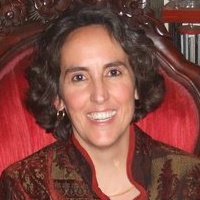
Anita Diamant is the author of thirteen books -- including THE RED TENT. Based on the biblical story of Dinah, THE RED TENT became a word-of-mouth bestseller in the US and around the world, where it has been published in more than 25 countries.
Her new book, a work of nonfiction. PERIOD. END OF SENTENCE. A NEW CHAPTER IN THE FIGHT FOR MENSTRUAL JUSTICE will be published in May 2021., As different as they are, this book returns to some of the themes of THE RED TENT -- including the meaning and experience of menstruation.
Anita has written four other novels: GOOD HARBOR, THE LAST DAYS OF DOGTOWN, DAY AFTER NIGHT, and THE BOSTON GIRL. She is also the author of six non-fiction guides to contemporary Jewish life, which have become classic reference books: THE JEWISH WEDDING NOW, THE JEWISH BABY BOOK, LIVING A JEWISH LIFE, CHOOSING A JEWISH LIFE, HOW TO RAISE A JEWISH CHILD, and SAYING KADDISH..
An award-winning journalist, Diamant's articles have appeared in the Boston Globe, Real Simple, Parenting Magazine, Hadassah, Boston Magazine and Yankee Magazine. PITCHING MY TENT, a collection personal essays, is drawn from twenty years worth of newspaper and magazine columns.
Holly says she wonders who taught me to pick out books! HA! This one is very interesting --Of course, I am not Jewish, but I am appreciating learning about the traditions and how saying Kaddish is a form of comfort for the loss of a loved one. There are probably things in the Kaddish tradition that we as Christian's could use to help us when we go through the loss of someone we care about.
I suppose I should have read this before my father died. I suppose I should have read this right after my father died. I didn't. I'm reading it now, and, although it makes me sad, it helps me understand the Jewish way in mourning and death. It was a mildly helpful book in terms of the rituals surrounding Jewish death and dying.
The one who really should read it next is my husband. His parents are in their late 70s.
I blame Potok's Davita's Harp for my interest in rituals for the grieving. I wanted to learn more and found that, apart from a few small things (and updated liberal practices) Potok's book was quite comprehensive.
It begs the question, though: Do we, as a largely privately grieving society, suffer in some way since we have mostly eliminated practices such as these? And do religious Jews benefit, emotionally at least, in ways that we don't?
This was such an engaging book. It gave me all the information in an easily palatable way so even though I didn't know a lot about the subject at first, I found it so easy to understand. And the depth of information was astounding! It's not a huge surprise that it's written so well, I've read other non fiction by this author and I can read them again and again and never get sick of them. If this book follows the same trend then I know rereads will reveal subtle details I missed the first time around. If you're at all curious about this subject matter I highly recommend you read this book!
I love Anita Diamant. I hemmed and hawed about which Jewish traditions to adhere to for my wedding and often consulted her book on Jewish weddings. She's non judgmental and informational. It would have served me well to read this book earlier, not only so I would have a clue before my mother's death, but also so I could have been a better friend and cousin and niece and daughter in the deaths that came before.
While not a huge believer (which isn't actually important in judiasm, which Diamant touches on), I do love practicing Jewish traditions. I often light shabbat candles, I say Shema with my daughter before bed, I host a Passover Seder, I make round challah for Rosh Hashanah, I make hamantaschen for Purim...And saying kaddish is no different. I am finding tremendous comfort and community from this practice, even in the short few weeks since I've begun. I don't know if I'll be be able to go regularly for the whole 11 month the but one day and one week at a time.
I learned a lot of what's within the book over the past month or so, and the familiarity that these are the customs of my people, and we are all in this together at some point, as we must mourn or be mourned...it's a comfort. And to read what I know is true, that these traditions are in place to keep mourners among the living, is also a comfort. We must go on. And we do.
Something interesting I didn't know before becoming a mourner is that funeral homes (sometimes? Often?) may ask if old religious items can be buried with your loved one, such as siddurim, tallit, kippot, etc. I knew these items must be buried not thrown out but I never thought about how that happened.
I do think the book could use a update for the 21st century, but not too much has changed.
Anita Diamant's beautifully lucid prose sheds a comforting light on a subject many of us would prefer to keep in the dark. Her extensive knowledge of Jewish tradition is bolstered by useful bibliographical footnotes and she combines this with a helpful sensitivity to psychological and cultural issues associated with bereavement. I think what I appreciated most about this book is her neutrality with regard to the spectrum of observance. She presents various perspectives on religious tradition, from liberal to orthodox, with so much respect that it is impossible to detect where she herself stands. Saying Kaddish embodies the loving understanding that individuals interact with tradition according to their own understanding and needs.. This book eloquently conveys the immense wisdom and life-affirming nurturance that Jewish tradition offers when we are confronted with mortality and grief.
This wonderful slim volume is packed with wisdom. It has brought me immense comfort and solace during an incredibly difficult time. I would recommend it for anyone, regardless of religion, because it allows us mortals to think about death in a healthy and affirming way as one of the cycles of life. In addition, it encourages all of us to be there for those who are on the threshold of passing over in the most loving and compassionate ways.
Anita Diamant, as always, provides a well-written, thoughtful, and touching how-to on the practices & customs of mourning, burial, and grief in Jewish tradition. Her explanations of the Mourner’s Kaddish are poetic, moving, and empathetic. She gets to the heart of why we say this prayer - an exultation of HaShem’s glory - in honor of the dead & does a excellent job of explaining the psychology of Jewish approaches to grief.
However, I think I was hoping for more spiritual resources than this volume was able to survive. I would’ve loved to see more discussion of how the tradition has thought about loss, grief, death, and the afterlife. I started reading this book in November 2022, after the sudden, unexpected death of a friend left me feeling unmoored. I couldn’t focus on it then, as it seemed too concerned with the practical matters of burial & settling the estate of the deceased. With a few months’ distance, I am less critical of the book. Everything Diamant covers is important & she invites her readers, of any age, to get our affairs in order as we age. The section of the book that I enjoyed most was the selection of poetic translations of Kaddish towards the end of the text. This section got to what I needed back in November and I appreciate knowing that I have that repository of prayers & meditations when I next need them.
Over the last 14 months, I've lost several people in my life, including one of my closest friends, all prematurely, well-before their time. I think if I'd read this book before this wave, I would've known how to better process these losses in terms of my own traditions, but none whom I've lost were themselves Jewish, so the relevance is questionable. Both these losses and this book though have forced me to think about my own mortality and how I'll handle the inevitable future deaths of loved ones. This book is a good primer for making sense of my traditions and how they can help to navigate loss in the darkest times of grief, but it doesn't do much for making sense of the loss itself. For those who anticipate burying a Jewish parent, sibling, spouse, friend, or (God forbid) child, this is a must-read to help prepare you and become more familiar with some of the facts on the ground. It's not, I suspect, the book you want to be reading AFTER the funeral while you sit shiva.
I started this book to prepare for a Yom Kippur sermon on mourning. Truth be told, I am a rabbi of a small congregation that has had a lot of recent deaths. Young, old, anticipated, sudden. And then, we had two deaths on Rosh Hashanah itself. I moved up what I was working on for Yom Kippur and delivered it on Rosh Hashanah. Only then did I get to return to this book. This book is a gem. It gives people who are mourning the sense that they are not alone. Diamant does a good job explaining the range of Jewish responses and traditions, from before someone dies, through death itself, to funeral, shiva, slohoshim, and beyohd. She covers modern "dilemmas", suicide, still born, interfaith families, and so much more. She is particularly good on how to talk to children about death. I am grateful for this resource and intend to gift it to my local grief counseling agency.
Wise. Diamant directly addresses many questions around death from the Jewish perspective. She is efficient but empathetic. She demonstrates breadth, with a focus on liberal American Judaism, but also goes into emotional dives into the meaning of Kaddish, of the milestones of mourning, of burial practices, explaining the value of ritual at a time of such deep pain. I felt deeply connected to the directness of the writing and only wish there had been more — more of the historical, philosophical, emotional exploration that formed the heart of this book.
I first got this book when my father was in hospice. I'm currently on my second read through. I recommend reading it before you are in mourning, but if you find yourself bereft and haven't read it yet, it's still very much with the read.
It includes information about Jewish rituals around death, of course, but also talks about Jewish ideas and attitudes about death and mourning that can be good to think about at any time of life.
A good solid resource covering every aspect of death, mourning and grief from a Jewish perspective. I was particularly intrigued with finding some halakhic recommendations for what to do when you can't make it to minyan to say Kaddish (study the portion of the week or some Mishnah)
My Mother in Law was dying. What did I need to do?
We are Catholic, not Jewish but there is not a book like this for Catholics. I know about purgatory, about Masses. But what prayers to say? My daughters really miss their grandmother, she was living with us until they went to school. I think they thought she would live forever, well she may as we believe in the resurrection. We will offer Masses at All Saints Day, and at her Memorial.
I normally don't like Anita Diamant's books but this was surprisingly good. I think it covers almost everything one would need for the death and dying process. This is going to be quite helpful in my pararabbi program.
I am not Jewish, I am Christian but I am interested in the practice of Kaddish. It was a very practical and thorough description of the Jewish rituals, always discussing the spectrum from Orthodox to Liberal Judaism. I thought it was well presented and educational.
This was extremely helpful in giving me grounding in the death of my grandmother. Will be keeping it on my bookshelf to return to, now for the Kaddish and later as a guide to think about my own ethical will and Jewish funeral.
First of all: Thank you Inter-Library Loan and Ball State University for the lending of this book. The one year anniversary of my Dad's passing was coming up and since I love Anita's writing I thought I'd read her book even tho I'm not Jewish. I was impressed with the gentle way the book guides the reader through the history and prayers (both traditional and modern) of mourning the dead and provided comfort to the survivors. Thanks Anita!
This book, beyond being essential reading for any Jew who wants to mourn as a Jew, gives so many examples of how G-d has sought to protect us for centuries in difficult times like death and mourning. Special spiritually, and helpful practically.
Unlike most books I read, I didn't choose this one, or read it for pleasure. Rather, our rabbi gave it to me when my husband died. It talks about everything I needed to know about what would happen and what I needed to do, as well as giving down-to-earth advice about the process of grieving. It's something I'll keep and refer to again and again.
Diamant has included an interesting appendix, "Planning for the Unthinkable," in which she urges us all to prepare for our own deaths by, among other things, composing an ethical will to leave behind. I haven't decided yet what I think about doing that. It might be a good exercise to try during the High Holy Days.
Anita, always solid stuff. Caring for the dying and the dead, sitting Shiva, sticking to rhythms, turning the focus from the mourned to the mourner deliberately. I learned some great things about ways to mark and understand dying in a Jewish cultural and religious context, but as often is the case, I found myself seeking a philosophical solace in a how-to book. Diamant is great at straddling that line, but I expected a slightly heavier tome. Ah well. It was quite good, and I'm glad she is there to illuminate the Jewish tradition in an accessible, poetic way.
A gift from my rabbi when my mother passed away in November, 2012, this book has guided and comforted me through these early weeks of mourning. Diamant clearly explains traditional Jewish customs and beliefs while offering support for less traditional Jews to find a meaningful path to healing from such loss. Never "preachy," "Saying Kaddish" is a book I will return to throughout the coming months and keep in my library for reference and comfort in the future.
Very helpful book when dealing with the process of grief and mourning from a Jewish perspective. Educational as well as spiritual. Most Most of the book is written with an orthodox lens, but there is some information on how each of the branches of Judaism observe.