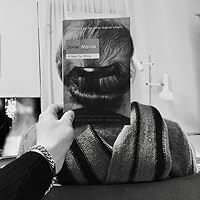
Mark Lamming is happily married--until he falls for the lovely granddaughter of his latest biography subject. Nothing can prepare him for the ensuing circumstances in this witty novel of memory and expectations.
Penelope Lively is the author of many prize-winning novels and short-story collections for both adults and children. She has twice been shortlisted for the Booker Prize: once in 1977 for her first novel, The Road to Lichfield, and again in 1984 for According to Mark. She later won the 1987 Booker Prize for her highly acclaimed novel Moon Tiger.
Her other books include Going Back; Judgement Day; Next to Nature, Art; Perfect Happiness; Passing On; City of the Mind; Cleopatra’s Sister; Heat Wave; Beyond the Blue Mountains, a collection of short stories; Oleander, Jacaranda, a memoir of her childhood days in Egypt; Spiderweb; her autobiographical work, A House Unlocked; The Photograph; Making It Up; Consequences; Family Album, which was shortlisted for the 2009 Costa Novel Award, and How It All Began.
She is a popular writer for children and has won both the Carnegie Medal and the Whitbread Award. She was appointed CBE in the 2001 New Year’s Honours List, and DBE in 2012.
Penelope Lively lives in London. She was married to Jack Lively, who died in 1998.
I read this book as part of the 2019 Mookse Madness Tournament.
This link contains a plot description – as well as one of the three central characters (who all appear as point of view characters, in some cases all three observing the same scene)
EITHER: A novel about a biographer writing a biography of a second, now deceased writer who wrote essays discussing the difference between novels and biography and who the biographer increasingly feels has ordered his affairs so as to frustrate a future biographer. The biographer also reflects on the tasks of the biographer – how it differs from that of a novelist, how it implies a level of omniscience but how it challenges the extent to which we can understand of the inner lives of those we are closest to, and they of ours. The novel has an omniscient narrator who has read the biographers essay and at times discusses its advice and once even incorporates it to alter the way the novel is being told.
But a novel that is nevertheless much more light-hearted than that description might suggest.
OR: A mid-life crisis story about an educated middle aged married writer who, to his surprise and to the bemusement of his wife, is attracted to, and has an affair with, a young female garden centre manager, after realising her business partner is gay and not her lover. The affair, which the young girl participates in more out of a sense of obligation, helps her to break through her previous indifference towards love – caused by a dysfunctional childhood - and begin a relationship of her own.
But a story which is much more serious than that description might suggest.
And both would be true – and the juxtaposition of the two makes this an enjoyable as well as thought provoking read.
p. 56 - Suzanne's marital history remained unrevealed to the Mannings, even after five years' association with her. It was rumored that she had had two husbands. Mark's view was that she had probably eaten them.
p. 65 - Never having been in close contact with the institution, Carrie had a puzzled respect for matrimony. Everyone seemed to want it, but most people who'd got it seemed to be complaining about it.
p. 114 - How all this could end except in tears (his probably) he had no idea but he simply didn't care.
p. 129 - He was a married man yearning for a woman who was not his wife; his main preoccupation was that he could not have her and his secondary one was that given that he couldn't then he could not endure the idea that anyone else could. Betrayal and selfishness, all in one go. He didn't even want her to be happy, since any presumed happiness of hers would exclude him. It is far from true, he thought bitterly, that love is an ennobling emotion.
p. 145 - 'She has the educational attainments of a check-out girl at Marks and Spencer. She has read about five books in her life. She can't spell. She doesn't know if the Prime Minister is Labour or Conservative. She isn't even pretty. And you're in love with her.' 'Up to a point', said Mark. Diana snorted. 'Up to a point, my foot. I thought better of you, frankly.'
p. 145 - 'You told her, he said. 'She asked', said Carrie, 'if we had or not.' 'And you told her we had.' 'What else could I have said?' 'Various things,' said Mark at last. 'You always tell the truth, don't you? Now I know what it is that's so disturbing about you.'
Every guy in his 40's who is contemplating having an affair with a younger woman would do well to read this novel.
This is a very interesting and thought-provoking novel. On one level it tells the story of a biographer's mid-life crisis, but it addresses deeper questions about the nature of experience, memory, truth and fiction, as the writer's experiences, thoughts and perceptions are contrasted with those of his subject, and he begins to question how his own life will be remembered. A rewarding book reminiscent of A.S. Byatt (I was reminded of elements of Possession and The Biographer's Tale, but this book preceded both of those).
According To Mark is a splendid, miraculous work of fiction, shortlisted for the 1984 Booker Prize – won by the equally resplendent Hotel du Lac http://realini.blogspot.com/2016/01/h... by another female Magister Ludi, Anita Brookner – for all the best reasons, this being an erudite, challenging, captivating, elating story of love, in fact we could count about four or more such tales
Mark Lemming is arguably the main character of the narrative, albeit if this were a motion picture and we would nominate it for the most important awards, then we would have to ponder on where we would place Gilbert Strong, Diana Lemming, or Carrie Summers, the others will certainly take the supporting roles, which are equally relevant and make or break a saga…the example of Dame Judi Dench keeps coming to mind and her exulting presence in Shakespeare In Love http://notesaboutfilms.blogspot.com/2... they have counted the few minutes it took the female actor to get the Oscar and other trophies for her astounding performance
According To Mark is a Strong indication that we see portions of the novel through his eyes, or through a double lens, because evidently this a figment of the imagination of glorious Penelope Lively, and we also have explanations on the role of the Supreme Being: ‘the novelist has an infinity of choices, He chooses what is to happen, to happens, and in what way he will relate what happens, the picture he constructs is complete on its own terms…when he says this is the story and the whole story we must accept it…perhaps novelists are the only people telling the truth’ concluding hence that the writer is god
We have here a complex structure, where we enter the life of Mark Lemming, who is a biographer and thus he, in his turn is trying to understand, write about Gilbert Strong, a deceased writer, whose network of friends, lovers, antagonists is hard to put together so that future readers have an accurate fresco, mural, whatever the right description would be of the history of a figure that is most often elusive, different personages give conflicting accounts of the character of the luminary, and to make things worse, Strong has tried to present his own version, eliminating letters, portions of diary that he apparently, or clearly had not wanted a future biographer (and Lemmings is sure that the protagonist of his present work had known there would be interest in his life) to access, something that becomes rather personal.
We have hence different layers, timeframes, for together with the life of the Strong personage, we have access to what happens to the other figures – let us think of Umberto Eco and his insight- ‘The person who doesn't read lives only one life…The reader lives 5,000…Reading is immortality backwards” – Penelope Lively makes the difference between the novel, where the author has the liberty to skip over parts of the lives of the personages, as opposed to the biographer, where silences are sometimes equivalent to failures, periods for which there is no record, account, what happened to the subject is unknown
The hero travels to Dean Close, where Gilbert Strong used to live, and this is where he meets Carrie Summers the granddaughter that now runs a Garden Centre with her gay partner, Bill, a young woman that is self-effacing, has had a rather difficult childhood, since her mother, Hermione, was not a good parent, dragging her child along on her endless travels, making her witness to her numerous escapades, and neglecting her education entirely…At the age of nine, the girl could not read and after becoming literate, she does not get acquainted with any of the major writers, with perhaps a few exceptions.
However impossible it looks on the face of it – and let me enhance this, in my opinion opposites may attract sometimes, not enough to make a ‘golden rule’ of it, but anyway, when too different, people do not get along well in the medium or long term…this is the subject of longer, philosophical debate in a book by our greatest philosopher, well, together with Andrei Plesu and Gabriel Liiceanu, Constantin Noica http://realini.blogspot.com/2014/02/p... who took on proverbs and explained why they are silly, perhaps noxious even – the erudite, sophisticated Mark Strong falls in love – now there is another invitation here to speculate on what is love and the difference between it and infatuation, physical attraction and other feelings – with the simple Carrie.
The young woman is not his type, indeed, she is the antithesis of what the cultured biographer admires, a highly educated woman, in contrast with the ignorant Carrie, who has not heard of, well, anyone of importance in high culture, with a few exceptions, and the relationship, if one is about to be explored, looks doomed…nonetheless, I felt somehow that I wished them to be together, and in the cliché manner of ‘they lived happily together forever after’ – if we arrived at this point together, assuming there is ‘we’, and somebody is still out there, reading this, a spoiler alert might be needed, however convoluted this scribbling is, which means someone would not understand what I am getting at, what the heel am I talking about, and there it is, Mark and Carrie may have something in store for the reader, but then, as anticipated, they may not be the perfect fit, if I were young and met some dashing young woman, who is into kickboxing, manele, Trump and other crap things, I would appreciate her looks, but then would be aghast at her thinking (if we could call it that) and realize that this is a nonstarter…actually, it could be a case where you do share a few interests, political views and still be world apart, as I am with my spouse, who sees me as the ultimate badass eejit, the archetypal loser
Diana Lemming is another intriguing personage, somehow objectionable to begin with, after all, she stands in the path to happiness of the favorite couple, Romeo and Juliet of rural, contemporary England (Carrie is closer to the innocent, naïve and ignorant sixteen years old, or was she just fourteen, of the best known [these days it is different, I realize now, after putting this oxymoron down] love story in the world) with time, Diana becomes an impressive, strong, lucid, munificent, resilient, intelligent, erudite, towering figure, she is just one example of the magnificent talent that Penelope Lively has, giving the reading public access to wonderful, if fictional friends, unforgettable twists, resplendent characters that make me do this http://realini.blogspot.com/2022/02/u...
I read this in anticipation of a future episode of the delightful podcast Tea or Books . I loved Moon Tiger and appreciate this kick in the pants to read more by Lively. The book is about a biographer, the titular Mark, and his experiences and dilemmas in researching the life of a fictional Edwardian era author named Gilbert Strong. I really disliked Mark but I do think the author intended this. The writing was impeccable and the story wry, witty and often wise. It reminded me in tone and subject matter - both in that it is a bit of a literary mystery and a literary pastiche - of one of my favorite books, Possession by A.S. Byatt, yet it is only a quarter of the length. My only complaints are the ending was a bit abrupt and Mark’s wife Diana a tad too understanding to be realistic.
I’ve read three Penelope Lively books in the last five months and this is my favorite. That’s despite the fact that at page 140 or so I thought it had turned into a yawner, and I was having trouble buying the main character’s attraction to a woman with whom he had nothing in common.
The plot centers on Mark Lamming, a biographer researching a book on the author Gilbert Strong. He’s a contentedly married, childless man in his early forties. His ebullient, efficient wife Diana works in an art gallery. As to Strong, Mark finds his essays and criticism best, though Strong also wrote a couple novels and a play he would have preferred to forget. Mark believes he’s got Strong pinned down when he goes off to do further research at Dean Close, Strong’s former home, now maintained by a foundation and Strong’s granddaughter Carrie, who runs a plant and nursery business on the premises with her gay partner Bill. Carrie is a kind of lost soul, diffident, detached, but attractive to Mark despite her having read only 4-5 books in her whole life.
There are three things Penelope Lively likes to explore: mother-daughter relationships, men as “other,” and tourism. The last one seems odd, I know, but in "Heat Wave," which I read first, the odious son-in-law figure is writing about tourist traps. In "Moon Tiger," there is also an important scene in a recreated historical village. In According to Mark, writers’ home are tourist spots - Thomas Hardy’s and Gilbert Strong’s - and there’s likewise a trip to a historical fortress, and then on to France and the Louvre.
Every reader knows the enjoyment of book has to do with the state of mind s/he’s in when s/he reads it. My satisfaction with According to Mark could have to do with having seen a movie a few days before with a sad ending that I had trouble accepting. Thus emotionally ripened, I said a glad grateful thank-you when Carrie finally threw off her passivity and found her way. And Mark’s discovery of a fresh, worthwhile source of information on Strong was also satisfying, and helped him discover and understand more about his subject and himself. The book wasn’t perfect - the character Diana especially didn’t quite convince - but it was an intelligent story in a literary setting that unfolded nicely.
Occasionally you pick up a book and become so absorbed in the characters lives that it proves impossible to put down. So it was with this book which on the surface is a simple story of a middle age man going through a mid life crisis but it is told with such gentle humour yet captures brilliantly the complexities of individuals lives and emotions that I was completely hooked. My only other Penelope Lively novel is the masterful 'Moon Tiger' which I loved so I was so pleased to find her skill with characters ,their conversations and feelings carried into this despite the more domestic nature of the theme. The story is about Mark Lamming a moderately successful biographer who is married comfortably to the indefatigable and wonderful Diana (who works in an art studio). Mark embarks upon a biography of Gilbert Strong , great man of letters and literary critic of the twentieth century. As part of the project he visits Strong's home which is now run as a museum and garden centre by the granddaughter Carrie. Diana in the book describes Carrie as fey and it is perfect for this somewhat otherworldly young woman, who lives a life obsessed with her flowers in a run down house with her gay friend Bill. Carrie is however probably more emotionally flat because of a childhood with her bonkers mother Hermione moving from one European city to another without any settled roots or education. Inevitably as Mark becomes immersed in Strong's life he becomes besotted with Carrie and the story moves forward then at both a gentle pace but with wonderful wit and charm. As I said the characters were wonderfully drawn and the situations they find themselves are both comic and at times moving. The author frequently takes one scene and shows it from several characters perspectives which I thought was wonderfully done so for example as mark and carrie drive down to the South of France to visit and interview Hermione we see a conversation and impressions of the conversation from both sides. I also found Diana a wonderful character who takes control of a husband whom she loves and manages the situation with some witty one liners. The finale of the book finds Mark discovering lost letters of Strong which help him understand a man who appears to have been at first glance a irascible womaniser who may have stolen ideas for a book and is far from pleasant but allows him greater insight into what can change a persons life and that insight allows his own reflection on life and the events of that summer. Definitely a highlight of my reading year so far.
Mark, a respected literary biographer, is happily married, wholly satisfied by his career choice, despite the better-paid alternatives, and confident in his knowledge of Gilbert Strong, the subject of his next biography. But then he visits Dean Close, the old home of Strong, half preserved as a museum, and half taken over by Strong's granddaughter, Carrie, and her business partner, Bill, as their home and successfully-run garden centre. Here, much to his surprise, Mark finds a cache of letters and documents belonging to Strong, which he didn't know existed, and that he has fallen in love with Carrie, an unusual woman, almost childlike in her mannerisms, more interested in bedding plants than books or relationships, and certainly not Mark's type.
I loved the leisurely pace of this one, as Lively seems to drift between the minds of her characters, raising thought-provoking questions about love, literature, truth, and memory, and how well any of us really know each other, or even ourselves. Highly enjoyable.
No se va a convertir en mi libro favorito, pero he disfrutado un montón de la lectura. Penelope Lively tiene una forma muy sutil de retratar a los personajes que me ha resultado interesantísima y que los hace muy reales.
«Le embargó un sentimiento de pérdida en general antes que de algo específico; una pena profunda no del todo desapacible por las emociones pasadas, por el orden de las cosas, por el paso de la vida».
While the story here is pretty thin, I really enjoy Lively’s prose…she’s an economical writer, with no words going to waste, and she’s both witty and intelligent in her ideas and expression. Plot-wise, everything seems a bit too tidy at the end, and the characters remain somewhat enigmatic in their thoughts and actions…but it’s always a delight to read such well-honed and thoughtful writing, and to be provoked intellectually and emotionally both.
fuck it five stars. feel i should have a 5 star scarcity mindset but this book was such a fun time. even the beach wasps wanted it a lot so word must have got out about it. very funny book imo. lots of silliness and fun. kept having to make lucy stop reading the book she was reading at the beach to read her funny lines and bits and passages. she thought it was funny too and also wants to read it. best characters remain the cunty wife and the garden centre gay best friend. main man semi annoying but funny when he fell off the chair and fucked his ankle up lol
Another thoroughly enjoyable and richly rewarding book by Penelope Lively. I've yet to encounter one that isn't. According to Mark is a multilayered novel about many things: the ethics of literary biography, the conflict between high culture and the world at large, marital relationships and middle-aged folly. All that in a book of just over 200 pages. The central characters, Mark, his wife Diana, and Carrie, the granddaughter of Gilbert Strong (the subject of the book Mark is researching) are all beautifully drawn and lovingly observed, the plot unfolds with perfect timing, and the denouement is spot on. According to Mark is a completely satisfying novel.
This seems a bit like the flip side of Possession by AS Byatt in that here Mark is someone who tries not to have to choose or if he has to he chooses the easiest solutions as opposed to Byatt's academics who are in it for their careers but also their love of literature and the authors who they've centered their careers around.
I enjoyed reading about Mark's limerence with Carrie and her very matter of fact response.
Lively explores different ideas about writing a biography including unreliable interviews and how do you write an accurate portrayal of someone when both the subject and people who knew him only know a piece of what he was like, the fallibility of memory as well as biases.
4.5 stars. A very interesting, concise, enjoyable, thought provoking story about Mark Lamming, a married man in his mid 30s, who is an author of biographies and book reviewer. He has been married for some years to Diana, a private art gallery employee who is an excellent organiser. Mark is currently researching the life of famous author, Gilbert Strong. During his research Mark discovers correspondence by Gilbert Strong in an old house Gilbert Strong owned and lived in. It is currently owned by the Strong estate and Strong’s grand daughter, Carrie, who is 26 years of age and runs a gardening centre from the house and lives in the house. Mark decides he must read this additional correspondence before he can start writing the Gilbert Strong biography. Whilst working through this correspondence he falls in love with Carrie. Carrie and Mark have no interests in common.
The novel is very informative on the work done by a biographer and the issues that a biographer encounters. For example, interviewing people who knew Strong fifty years ago can be both helpful and unhelpful. Memories become distorted. Mark has to follow up on a number of statements made by people who knew Strong to check their authenticity.
Here are some examples of Lively’s writing style: ‘Giving presents in one of the most possessive things we do, did you realise that? It’s the way we keep a hold on other people. Plant ourselves in their lives.’ ‘Children are not like us. They are beings apart: impenetrable, unapproachable. They inhabit not our world but a world we have lost and can never recover. We do not remember childhood - - we imagine it. We search for it, in vain, through layers of obscuring dust, and recover some bedraggled shreds of what we think it was.’ ‘When you are able to be with a person and there is no need to talk, something has happened.’
Highly recommended. I have read two other Penelope Lively books, ‘Moon Tiger’ (Booker Prize winner) and ‘The Road to Lichfield’ (Shortlisted for the Booker Prize). Both are very good reads. I will be reading more of Penelope Lively novels.
It starts boring. That’s okay though, I like boring books. I was holding on for more love but they always cut it off just before something gets sweaty. The whole biography plot seems necessarily mundane. I like France and I like how travel can completely change the track of one’s thinking. Humans are nomadic, we should never stay inside
I enjoyed this so intensely while I was reading it, and at the same time I kept trying to figure out just why I was enjoying it -- Mark is not particularly likeable, there is what I would call coerced sex that I don't think registers as problematic to Lively, it is a small canvas of mostly middle-class white people -- and yet I adored it. I love Lively's writing, the way she puts words together, how she dips in and out of viewpoints to show what she wants to show -- the scene in which Mark, Carrie and Diana all go out together and we get to see the afternoon from each of their perspectives in turn, and they are so different, yes this is something I already knew, but I know it newly and differently thanks to Lively. And scenes such as that speak to Mark's work as a biographer, to the very belief that a person can reconstruct someone's life and put it together as a meaningful narrative that explains and reveals -- really, how can we believe that? But we do, and I love that Lively did not need to say any of it, she just shows and tells and shows and tells and lets the layering of it all say what it is she is trying to say, or maybe just I read into the layering what I like, this novel is certainly aware of that possibility too.
The only reason that I am not immediately reading more of Lively's adult novels is that I enjoy anticipating the pleasures of them over the years to come.
La cantidad de sentimientos que he pasado con los personajes de esta novela ha sido increíble! Los he odiado, me han aburrido, abrumado, sorprendido, he conectado a veces y otras no. Lo mejor del libro es que en todo momento hay una acción que te hace seguir leyendo sin que te des cuenta hasta después, pasan pequeños acontecimientos que sorprenden en ocasiones mas de lo esperado y en otras no tanto, haciendo que uno no vislumbre que quiere saber que pasa mientras no parar de pensar en ello. Nos encontramos con un personaje que no se verbaliza hasta el final, dandole un último colofón de sentimiento a la novela, ya que al final oímos a quien no ha tenido voz. Nos encontramos con Mark y su visión del mundo, como evoluciona, se da cuenta de algunas cosas, acepta otras... Tenemos a Carrie y su fascinante infancia. Tenemos personajes variopintos y de personalidades dispares que no pensaba encontrar en la novela, haciendo de esta algo que quieres devorar.
Penelope Lively is an author who faithfully draws us in. "According to Mark" is actually also "according to Carrie", " according to Diana" and even "according to Gilbert Strong". Lively's books, always rewarding to the reader and time well-spent, consistently remind us that each of us has our own point of view about the experiences that happen to us throughout our lives and that we each hang on to different fragments of memory about them. We sift, we select, we toss away...or we burnish them lovingly.
p.s. While she will always be a favourite 5* author, I did not like Mark who is so ego-driven - just as he was perhaps intended to be? However no doubt someone else would have a different pov?!!
This was a re-read. It is a witty literary novel about an academic biographer in midlife who goes to research the life of a late 19th century biographer with a rather enigmatic and scandalous past. As with many of Lively's novels the themes include the shifting and distortion of memory, the unreliability of narrative and the possibility of transformative change. As Mark Lamming the modern day biographer examines the different layers of Gilbert Strong's life he finds his own life and values shifting and changing. This is a moving and thought provoking read. I plan to read more Lively in 2016.
Penelope Lively writes beautifully, and the prose in this novel flows like magic. But the story itself is insubstantial, and the characters interacting are perhaps amusing -- but unfortunately not very engaging. The result is a light exploration of the meanings of love versus lust among the English middle class. Fun enough for a summer read, but not nearly as probing and thoughtful as some of Lively's other books.
Try "Moon Tiger" if you want a better Penelope Lively novel.
Sportsmen write about sport, musicians talk about music, so it’s natural that a novelist should write a novel about a biographer of a biographer who also writes about novels. No wonder I love it. It was clearly the sort of stuff that the 1984 Booker Prize judges loved too - no fewer than five of the six short-listed titles centring around the craft of writing. Indeed it's the thoughts of the supposed subject, Gilbert Strong, on the differences between biograph and fiction, and the subtle and changing attitude toward him of his supposed biographer, Mark Lamming, that give this book its bite. The novelist controls his characters, putting in only what suits his purpose, whereas it seems one recalling the real life of another has an obligation to hang out the smalls, and the soiled ones at that. It can make for guilty pleasure, or moral dilemma, depending on one's view. ‘It’s like marching into someone’s bathroom while they’re out and having a look at what kind of deodorant and laxative they use,’ accuses Mark's wife Diana. Which Lively follows with an elegant counter-thrust. ‘Is that something you’ve done?’ he asks. ‘Only inadvertently,’ she replies. And with literary irony, faced with uncertainties and moral ambiguities in Strong's life, Mark concludes at one point, "If I could sit down now and write a novel based on the life of Gilbert Strong, I would be very well equipped." The plot of the actual novel is rather more conventional - the intoxication of a vicarious life goes to the head of middle-aged researcher who falls for younger, naif Carrie, who belatedly discovers real passion - but for a man her own age, before Mark goes back to wifey. But if the story-line is unexceptional, there's much to enjoy from the sharp differentiation of the characters involved. Mark is the one with imagination. In his youth sex was 'firmly associated with the Continent; the first time he had achieved it what seemed disorienting was that the girl had not spoken in sub-titles.' His wife Diana is the literal-minded one, with no time for fantasies, including Mark's obviously ridiculous and therefore unimportant obsession, which can be disposed of like debris in a dustpan. She would be right in her assessment of the Carrie we see at the start of the novel, for whom sex has been a take-it-or-leave-it matter that helps to avoid the unpleasantness of saying No. This is a girl happy in anonymity, off to the compost heap of her garden centre business rather than holding elevated conversation about her distinguished grandfather, repelled by her gallivanting mother, confessing to having read only two novels - by Jean Plaidy. But she's probably the one in whom Lively invests the most, as the young woman grows in confidence and maturity. And in a kind of summation of a very literary novel, her enlightenment seems to come from reading the Jane Austen novel pressed upon her by Mark. The fate of his planned biography remains uncertain, but the value of literature has been affirmed.
Although I found this book less successful than Heat Wave and considerably less so than Moon Tiger, Penelope Lively being unsuccessful is still better than most writers' very successful. She makes no bones about the fact that she’s interested in Bad Men and The Art of Writing. In many ways this reminded me of Possession, which came later but not much later, and is far more misty-eyed and romantic. What mainly didn’t work is that Carrie a) wasn’t bookish (what bookish girl wants to read a romance about one of Them) and b) got pushed into a lot of situations she didn’t want to be in by the heedless men around her, up to and including sleeping with Mark when she had zero interest in him. The fact that Lively wrote it the way she wrote it suggests she’s aware of how nasty it comes off, but I’m not convinced she (in 1984, in fairness) followed the thought process to its logical end.
Still, the absolute control she has over her writing is so enjoyable and admirable in this era of ‘vomiting a half-digested diary on to the page’.
“This century, for Mark, was brown; the eighteenth was a delicate powder blue.”
Me too!
“It sometimes seemed to Mark impossible that the historic past was extinguished, gone; surely it must simply be somewhere else, shunted into another plane of existence, still peopled and active and available if only one could reach it. Despite such evidence as yellowing letters, disintegrating books, and the decease of almost everyone to do with his researches, he found himself disbelieving in organic decay. Somewhere, Strong was still prowling around in that light green knickerbocker suit, or sitting at his desk writing with a scratchy nib pen, or laughing on the Serpentine with a woman.”
Penelope Lively loves history and its intersection with the present and how we draw the boundary.
“He didn’t even want her to be happy, since any presumed happiness of hers would exclude him. It is far from true, he thought unhappily, that love is an ennobling emotion.”
“She regarded men as different; not as inferior or superior but quite simply apart in a sense that transcended discussion, or made it superfluous. You treated them differently from women and expected different (and, by implication, irrational) behaviour from them. […] So far as she was concerned, not only should any girl worth her salt be prepared to confront difficulty, but that was what she was there for. nor did this state of conditioned readiness have any bearing on her feelings for Mark; she loved him. But love was not a matter of brooding or analysis; it was simply the climate in which you lived, and you dealt with it appropriately, with the help of barometers and umbrellas and air-conditioning.”
Man, I love this approach, and I don’t even think it’s wrong.
“[…] her whole body hummed, in accord with the world, an accord that she had never suspected, as though she were putting out buds or leaves in response to the season.”
This entire review has been hidden because of spoilers.
A good read: pity poor Carrie, ill-educated daughter of a Patsy Stone-type parasite and granddaughter of a long-dead literary hero, whose misfortune it is to be hit on by her grandfather’s biographer, who imagines he can do a Pygmalion on her. “Jean Plaidy….I’ve read two by her. And one by that man who’s a vet somewhere. I don’t suppose they’re any good?” she offers, sealing her fate. Which is to be dragged over to France to tour various off the beaten track pensions in a battered Renault 5 with a weekend bag, the whole progress allowing author Mark Lamming to fornicate with her, and winding up at her mother’s house so he can interview the ghastly old trout. As this is Penelope Lively, recollections don’t just differ, they go to war with each other, and matters are compounded when Mark’s wife, all cut glass accent and North London briskness, arrives to take charge. Wisely, Carrie leaves them to it, abandoning the pair in a Pris-Unic and picking up a man in a Paris bookshop. Clever Carrie, for digging into the secret life of your hero may rebound in unexpected ways. Amusingly sordid fun at the expense of the haut bourgeoisie of the London literary and art worlds. Lively knows of what she writes.
Love the title (as my name) and second time reading it. Closely studied literary novel, in style and content. British scenery and overall. Multi-layered, meaning this is a fictional biography of a character- man who is also a biographer, and writer, Mark, is the biographer. The subject of the so-called biography is like a real character, though he is "dead" for 23 years. Lively has astute observations on marriage and love with a very psychological POV. The POV is from Mark, his wife, girlfriend. My only criticism is that Mark's wife is not believable to me. Her reactions to his behavior is just not realistic or credible---unless she really doesn't love him and their marriage is mainly a show, an appearaance. I don't know. That's why I give it 4 not five stars. Especially recommended for Jane Austen readers.
I'd only read a children's book by Penelope Lively (The Ghost of Thomas Kempe) which I'd thoroughly enjoyed, so when I saw this in the library I thought I would try it.
I enjoyed the writing style and found all the settings and the details about writing biography, running a garden centre and driving through France convincing and interesting. It was just the characters I found unconvincing. Why does bookish Mark suddenly fall in love with fey, dreamy Carrie? They have nothing in common. Why does Dinah, Mark's wife, treat him like a recalcitrant teenager she has to manage whilst being endlessly understanding about his 'love affair'. The only part of the book where I thought the plot really came to life was towards the end where Mark stays with the Major and his dog and this was all too brief.
I picked this book up a couple of months ago from a British Library clearance sale. It promised to be a promising one right from the start. Till the end you really don't know what will really happen. Since I just got back from tripping over France it had a special connect.
The story is about a biographer Mark and his journey of gathering facts, lies and silences on his muse. Saying anything more would land up just ruining the book. It has twists and turns while being so straight forward. At the end you land up empathising, with both Mark and his muse. You understand their actions and why they did act in a certain way.
A good holiday read, According to Mark, can't be dismissed as frivilous, but a light read for sure.