Jump to ratings and reviews
Rate this book

Black Maria

Rate this book
On the surface, Aunt Maria seems like a cuddly old lady, all chit-chat and lace doilies and unadulterated NICEness! When Mig and her family go for a short visit, they soon learn that Aunt Maria rules the place with a rod of sweetness that's tougher than iron and deadlier than poison. Life revolves around tea parties, while the men are all grey-suited zombies who fade into the background, and the other children seem like clones. The short visit becomes a long stay, and when all talk of going home ceases, Mig despairs! Things go from bad to worse when Mig's brother Chris tries to rebel, but is changed into a wolf . Mig is convinced that Aunt Maria must be a witch -- but who will believe her? It's up to Mig to figure out what's going on. Maybe the ghost who haunts the downstairs bedroom holds the key?

240 pages, Paperback

First published January 1, 1991

25 people are currently reading
1183 people want to read

About the author

Diana Wynne Jones

151 books12k followers
Diana Wynne Jones was a celebrated British writer best known for her inventive and influential works of fantasy for children and young adults. Her stories often combined magical worlds with science fiction elements, parallel universes, and a sharp sense of humor. Among her most beloved books are Howl's Moving Castle, the Chrestomanci series, The Dalemark Quartet, Dark Lord of Derkholm, and the satirical The Tough Guide to Fantasyland. Her work gained renewed attention and readership with the popularity of the Harry Potter series, to which her books have frequently been compared.

Admired by authors such as Neil Gaiman, Philip Pullman, and J.K. Rowling, Jones was a major influence on the landscape of modern fantasy. She received numerous accolades throughout her career, including the Guardian Children's Fiction Prize, two Mythopoeic Awards, the Karl Edward Wagner Award, and the World Fantasy Award for Life Achievement. In 2004, Howl's Moving Castle was adapted into an acclaimed animated film by Hayao Miyazaki, further expanding her global audience.

Jones studied at Oxford, where she attended lectures by both C.S. Lewis and J.R.R. Tolkien. She began writing professionally in the 1960s and remained active until her death in 2011. Her final novel, The Islands of Chaldea, was completed posthumously by her sister Ursula Jones.

Ratings & Reviews

What do you think?
Rate this book

Friends & Following

Create a free account to discover what your friends think of this book!

Community Reviews

5 stars
532 (23%)
4 stars
866 (37%)
3 stars
719 (31%)
2 stars
136 (5%)
1 star
31 (1%)
Displaying 1 - 30 of 165 reviews
Profile Image for Jessica.
Author 26 books5,912 followers
June 8, 2022
This is classic DWJ! Very British, very mysterious, with magic that seems to come from the earth itself. Men in green coats keeping the ancient ways, women hunched around cauldrons-- well, a silver teapot, anyway!
Profile Image for Stephanie.
796 reviews98 followers
February 7, 2016
Terrifying and perfect. I want to write a 10-book thesis about gender in this book.
Profile Image for Tijana.
866 reviews288 followers
Read
November 4, 2017
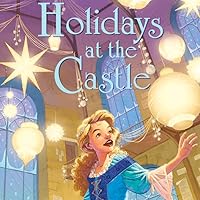
Malo znam pisaca koji toliko nisu imali sreće s naslovnim stranama svojih knjiga kao Dajana Vin Džouns. Crna Marija (a ovaj naslov je zapravo aluzija na pikovu damu), sudeći po ovim koricama, jeste knjiga za mlađu decu, o nekoj simpatičnoj veštičici. Jeste, đavola.
Ako ste ikada imali blizak dodir sa pasivno-agresivnom osobom od koje niste mogli da pobegnete glavom bez obzira jer vam je neki rod - u strina-Mariji ćete je prepoznati u roku od prve dve-tri strane. Još toliko i roman koji je počeo kao priča o adolescentskim mukama (tata je otišao s mlađom ženom pa poginuo u saobraćajci; devojčica-pripovedačica, njen brat i majka nisu još ni počeli da se oporavljaju od šoka) pretvara se u čistokrvni horor kad odu u goste kod starije rođake.
Ne radi se samo o tome da je Marija, uz svoje "ja-inače-ne-mogu-da-jedem-rovita-jaja-ali-lepo-što-si-se-potrudila-da-mi-doneseš-doručak-u-krevet-iako-si-pogrešno-rasporedila-escajg", težak sadista; sa tog svakodnevnog i svakodnevno nepodnošljivog terena knjiga glatko sklizne ne samo u natprirodno već i u prikaz mnogo opštijeg, trajnijeg i otrovnijeg sukoba između žena i muškaraca. Ali to bi već zadiralo u teške spojlere pa se neću mnogo upuštati u priču. Samo još da kažem da po običaju autorka u svoj tekst upliće aluzije u rasponu od Merlina i Nimue pa do Elizabet Gaskel i Krenforda. I da je onaj matori književni postupak pisanja dnevnika ovde iskorišćen lukavo i uz osvežavajući obrt. I da ovo nije laka i jednostavna knjiga za dečicu (a može na više nivoa biti i dosta problematična za pojedine starije čitaoce). Ali jeste dobra.
Profile Image for C..
517 reviews178 followers
January 7, 2021
So that was my last DWJ, sigh. I suppose I'll have to start buying them now.

I think because my edition has an awful, awful cover, I didn't like this book when I first read it, years and years ago. This was only the second time I've read it, and naturally it was very good. Not one of her best, I think, but DWJ's worst is better than, I would say, pretty much all of the children's literature being published today.
Profile Image for Mariel.
667 reviews1,211 followers
February 4, 2015
I think it was then that it dawned on me that Mum wasn't going to notice Chris was missing. She has been made so that she thinks Chris is just round the corner all the time. She doesn't realise that she never sees him. I don't know why I didn't understand earlier. If Aunt Maria can turn Chris into a wolf, she's surely strong enough to do this to Mum- except that it seems a different kind of thing, much more natural and ordinary, and I didn't really think she could do both kinds.

Old Aunt Maria's sweet victim voice is a whistle only a kicked dog can hear. Mig, her brother Chris and their mother Betty were free in London until the wheedling voice found them. Pack up for a "working holiday" in Cranbury-on-Sea. You'll never see the sea. It must have been littered with s.o.s bottles. Honey, do take care of this one for them. Well, the mom answered the phone and that was that. It's selfish to live the only life you will ever have. I know how this goes. I didn't buy all of the stuff about how Aunt Maria is so sweet. She sounded exactly like the passive aggressive assholerly of my elderly relatives. The younger ones are fond of volunteering me to babysit for others. Don't have kids? You can't be doing anything important like the important people. I have to put up with the disappointment in my "selfishness" when I don't drop my plans. It feels like not being one of them. It's better than the alternative. You don't become more of a person if you play their part. They hate Aunt Maria and they didn't have to be there. What made this so real is that Betty wanted Mig to be eternally understanding, keep the cold war under lid. Look at the old woman. I know she is faking it, she didn't need those walking sticks because there she is running, but come on take this burden from me so I don't have to sacrifice or feel guilty. Chris she sent out of the house as much as possible. Mig is the girl and won't she be the dutiful little lady. The Queen is a big spider weaving her sticky familial duty strings. She's an ant with worker slaves, a bee's sting. If they were there could only be one queen. There is a contender in the thirteen females in her posse. I don't know why Aunt Maria needed her power. She has the same conversations, eats the same food. Someone to wait on her hand and kiss her feet. What made this so eerie is the drones-in-waiting quality. Children don't live with families. They are mind clones in superfluous camouflage. Waiting in orphanages to take their place for what is the point anyway. Why are people more important if they have kids, anyway? The kids will grow up and then their point is to have more of them. The men of Cranbury-on-Sea are zombies. An ambitious player in Aunt Maria's circle is the creepy Elaine. Her husband is one of these zombies. She didn't bite his head off when he's done but she may as well have done. I say why would someone go looking for this kind of relationship in the first place. If you are married to an Elaine you asked for it. She's one of those women who don't like other females. They aren't assured of their pheromones working the zombie magic, I guess. Black Maria is the best when the sinister expectations are real world dead air from the you're doomed seas. Goblin woods, underground alive. It doesn't have to be that way. Aunt Maria does have a power. There's an garden of eve apple in a Pandora's box reason for her hold on Cranbury. Hunter and gatherer history. The women have the power for now. I didn't like the book as much in the end as the beginning. It annoyed me that one woman would keep other people down and that it could be a man to restore the balance. I know that there are people who are willing sheep. I have known men who choose women who will do absolutely all of the life necessities for them, only to drool over the airhead at work who will "make them feel like a man". So gross. But every single person is like this unless one person is going to fix everything with magic? I wanted Betty and Chris to stop railing at Mig for not being preternaturally heroic, figure out things they didn't figure out themselves. She's a real girl and why isn't that enough for people. Black Maria was so good when Aunt Maria seems to have an inexplicable power over their mother. When it feels like Betty will be an ally, they'll go home. It's such real life shittiness when that happens. She know life is the miserable unreasonableness sneaking on you like hidden ways down. It is, but I liked it best when it's not accepting it in the end. Jones got it right when she hugs to herself an almost seeing the light. It feels truer that you know this and it feels so bad in spite of that "understanding". I hope Mig doesn't grow up to do things she doesn't want to do because she feels she will be a bad person if she doesn't. I loved the orphans who always sneak each other cookies when one of them is punished. That gave me something that the women on one side and men on the other was wrong here. Brains turned and hearts churned off Aunt Maria's web, maybe. I'm not sure either about the men who would one moment accuse Mig on behalf of all women that they manipulate men with these people burdens only to be comfortable in figment rules. The could beam well practiced getting away with it smiles. I guess you can make a case for this happening (it could if you looked for it without meaning it is true for everyone). I just didn't like it that it's so conscious. Everybody seems to know it is going down when it is going down. Getting away with what? It seems just like feeling bad when you're being you.

It was neat when a buried alive character astral projects himself as he sees himself. A court jester parrot. It's a weird mix of special with some nagging reasoning. It would be great if I could go inside books I read and then argue with them about what I can't deal. Not that I would think it would work in life.
Profile Image for Debbie Gascoyne.
732 reviews26 followers
March 10, 2018
3 stars seems very low for a Diana Wynne Jones novel, and it's maybe not entirely fair, because in many ways it's brilliant. But it's really hard to read! This was a re-read, for my PhD, and for some reason I found myself bouncing off it even more than usual. I have personal triggers with the passive-aggressive evil Aunt Maria, having care-given for an elderly parent for more years than I care to remember, and having experienced some of that same treatment. However, even more than that, DWJ seemed to have a particularly strong axe to grind this time out. Not just the selfish, grasping relative, but a whole crew of Stepford husbands, and a rigid and harmful division between the sexes. Many of the points that she makes more subtly in other works come across with a hammer here. And, as is often the case in Jones's work, the ending was rushed and not entirely satisfying.
Profile Image for Chris.
946 reviews114 followers
July 22, 2021
But it's no good thinking happy endings just happen. -- Chapter 11

Mig Laker, her brother Chris and her mother have been persuaded to spend a spring break with her father's Aunt Maria in Cranbury-on-Sea. But pretty soon they find themselves skivvying for the old lady, whose helpless, defenceless appearance belies her ability to get her own way, and it looks as though they mayn't be able to leave.

And there are mysteries: Mig's estranged father is missing, believed drowned in his car, but Mig and Chris think they have spotted the vehicle in the town. And why are the town's inhabitants so weird? Aunt Maria's cloying coterie of female friends (the several "Mrs Urs" is the collective term Mig gives them) seem to be forever spying on the trio; the men seem very distant, almost zombie-like, and keep to themselves, while the children Mig sees she finds chillingly clone-like.

This may be one of Diana Wynne Jones's creepiest novels but, leavened with her mischievous humour, it also raises important questions about gender roles, the respect one owes to one's elders, and the nature of invidious control.

The British title doesn't refer to the police van (sometimes perjoratively called a paddy wagon) but, as the narrator informs us at the start, to a card game. To win each player has to avoid winning tricks with hearts in them (one point each heart), and especially the trick including the Queen of Spades (thirteen points). Mig and Chris's aunt is clearly the dreaded court card in her coven of thirteen Mrs Urs; she's also the queen bee of Cranbury-on-Sea (which I fancy is a nod to Clacton-on-Sea, still largely an Essex seaside town for retirees, accessible from Thaxted where the author herself grew up) and somehow has the community in her thrall.

Try as they might Mig and her brother can't seem to break the spell that Aunt Maria apparently has over everyone. Without giving away crucial spoilers we have a ghost who isn't a ghost, involuntary lycanthropy and other forced shape-shifting, a sleeping 'warrior' in a burial mound, and a weirdly decorated box (I was reminded here of John Masefield's Box of Delights) which Mig like a modern Pandora is tempted to open.

The author wrote this novel in the early 1980s and so I wonder if in 1983 she knew of reports of a number of wolves which had escaped from Cardigan Wildlife Park in Wales -- only to be hunted down and shot -- because the novel's first big climax involves a wolf hunt. At this time too children's fiction was starting to feature more young female protagonists despite the belief then current that boys wouldn't read novels with a girl lead; Mig proves to be as proactive as her brother Chris (she knows happy endings don't just happen) vindicating the author's determination to have her narrate and take a strong role.

In fact the novel very much examines and questions gender roles then prevailing, where women's work and position is in the home while men travel to work or are occupied outside. What happens when this sexist convention is overturned but the one perversely maintaining the unfair status quo refuses to admit any guilt or be contrite? As an emerging character declares when the guilty party is brought to book, and when the question of sentencing is broached,
[T]he only point of punishment is to make someone see the error of their ways. If they don't see it, then what you are doing to them is vengeance, not punishment.

One can only diminish the malignant hold they have on the community -- perhaps more than just figuratively.

But the key note for me is the notion of coercion and how it is obtained. In Black Maria it is brought about seemingly by a very mundane magic: the inducement of boredom. Anybody who knows that social conventions require one to be polite in certain company, however tedious or unreasonable the conversation is, will know the guilt-tripping stasis that forces the rictus grin or the ritualised compliances.

Diana Wynne Jones, who knew a victim's helplessness was due to malevolent magic of a sort, makes sure we recognise it for what it is by weaving a creative and fantastic tale out of it. Though this is not in any way a didactic novel these themes give Black Maria a strength and provide the motivation for positive action, as any good fairytale would and should.
Profile Image for Margaret.
1,056 reviews401 followers
April 21, 2017
Here, Jones examines the workings of families and the relationship between the sexes. After her father's car goes over a cliff, Mig, her brother Chris, and their mother go to stay with Mig's Aunt Maria in the little town of Cranbury-on-Sea, but they quickly realize that all is not as it seems to be: the women, under Aunt Maria's rod of iron, rule the town, the men almost all act like zombies, and the only children are locked away in an orphanage. Along with the characteristically inventive story, Black Maria is full of memorable characters, particularly the sinister Aunt Maria, so sweet and helpless on the outside and chillingly evil within - one of Jones's most memorable villains, I think.
Profile Image for Suzannah Rowntree.
Author 34 books593 followers
Read
January 3, 2025
The wonderful Diana Wynne Jones does THE STEPFORD WIVES as a middle-grade story. Like many DWJ books, this one is a slow burn; the first half is nothing so much as a psychological thriller set in a small seaside town. It isn't until the midpoint that the fantasy elements begin, and those are heaps of fun - I was absolutely feral about all the little references and borrowings of medieval romance and folklore that turn up.

This is one of the things that I think sets Diana Wynne Jones apart from many other fantasy authors working today. Much fantasy these days is very derivative, simply remixing tropes from other fantasy authors. But Jones didn't do that: she, like Tolkien, reached far outside and beyond her genre, from medieval romance and renaissance epic, to science fiction and horror. I think it's very important for fantasy authors to draw on sources from outside our own genre, or we'll start to produce stuff that feels like a blurred photocopy of a photocopy.

And then there's the theme of the book, which has to do with gender roles. In Aunt Maria's Cranbury, the men and the women are locked in a centuries long struggle for power. There are of course hundreds of fantasy novels dramatising this struggle, but Jones, coming before most of them, brings what feels like a fresh eye to the question. Aunt Maria presides over a matriarchy in which men are either repressed into dutiful zombies or cast out into the wilderness, but this isn't liberating to women either: she still buys into restrictive gender roles. It's a fascinating parable of how women in traditionalist cultures may gain a kind of power as long as the perpetuate the problem.

Profile Image for deborah o'carroll.
499 reviews107 followers
March 21, 2017
10(ish) Thoughts on “Aunt Maria”

1. First thing’s first: Time travel! There was a bit of time travel near the end of the book, which was SUPER awesome! I will not say anything more about it, but suffice to say that it was fabulous.

2. It’s told in first person by Mig, a girl who likes to write (kindred soul!). She tells us the story in her journal. I don’t always care for first-person, but I really liked how it was her journal! It gave the story such an immediate feeling and all the descriptions etc. felt so up-close-and-personal, somehow. And it didn’t feel like a normal journal-or-letters type story, because it wasn’t under daily headings or anything, but had more of a flowing-together sort of feeling. Anyways, it was so well done.

3. Favorite characters! Mig’s brother, Chris, is awesome. XD I really enjoyed his character! Chris(tian) not Chris(topher) as he likes to stress when Aunt Maria gets it wrong. :P He’s outspoken and has wonderful strong feelings of fun or anger, and is just great. While I’m thinking of favorite characters, Antony Green was fabulous. :D I really, really liked him! I also can’t say anything about him because he’s one of those fascinating characters with SO. MANY. SPOILERS. Ahem. But he’s great. :D

4. The plot was super interesting and complex, with so much going on under everything, even though it seemed pretty ordinary on the surface for awhile. It was soooo strange! (Like DWJ books always are.) But also fascinating. The undercurrent of magical things, the strange, almost sci-fi/dystopia set-up of the strange village, Cranbury-on-Sea, with its people divided into vacant worker-men, women who work for Aunt Maria, and clone-like children in an “orphanage.” There are so many questions about EVERYTHING, so it’s very much a mystery (especially since we’re in Mig’s limited point of view).

5. On that note, for a good half of the story, I wondered why it WAS Mig’s POV, because it seemed like it would have worked better from Chris’s perspective. He was the one who was doing everything to start with, and Mig is always telling us things about what he thinks. But then things happened and everything clicked, and I realized exactly why it had to be Mig telling it and it made perfect sense. So I liked that. :)

6. Dislikes: Aunt Maria was awful! (So were her followers.) Eep. She acts like a sweet, innocent, helpless old woman, but she’s sooo creepy! Not that that’s a bad thing, exactly (meaning it’s not something I dislike about the book, I just dislike her. XD). I don’t care for splitting-up-couples storylines, so I’m not sure how I feel about that part, though under the circumstances I suppose it turned out as well as it could.

7. I felt like there was a lot of deep stuff going on... It really felt like it was presenting a lot of thoughtful takes on society and men and women etc. It was really interesting and I can’t really explain it. I might be able to put my finger on it better on a second read, but my first thought is that it had some fascinating ideas about society.

8. The characters were all so complex and well-written that most of the time I was kept guessing and re-adjusting on who I thought was good, bad, or on their way between changing back or forth, or just (as was often the case) had bits of good and bad mixed up in them just like real people.

9. Also contains: humor; a wolf-hunt (which is not what it seems); cats and wolves who are not what they seem; a fascinating bit on what it’s like to have a cat’s perspective (so adorable!); a mysterious elderly brother-sister pair (she’s tiny, with a tendency to fall over; he’s brusque and grumpy with a tendency to practice the art of swordsmanship—mostly standing holding a sword over his head); an ending which wrapped things up in a way that for the most part I really liked; and, of course, lots and lots of tea.

1o. I think I need to reread it.

Favorite quotes:

What’s the good of being civilized, that’s what I’d like to know? It just means other people can break the rules and you can’t.


“There goes Mig with her happy endings again,” Chris said. But I don’t care. I like happy endings. And I asked Chris why something should be truer just because it’s unhappy. He couldn’t answer.


(Review originally posted on The Page Dreamer: https://thepagedreamer.wordpress.com/...)
Profile Image for cookiemonger.
232 reviews7 followers
March 5, 2016
Well, the cover is slightly misleading in a bibbity-bobbity way.

I initially thought of just letting that be my review, but that wouldn't really help someone who hasn't read this book with this cover. If you have, then you know it's rather like seeing a poster for The Secret of NIMH 2: Timmy to the Rescue used as the cover of Mrs Frisby and the Rats of NIMH. I prefer the demented version of the titular character from the German version, but I digress.

Mig, her brother Chris, and their mum are politely forced to visit a relative with whom they associate lethal boredom for the Easter holiday. There, they find that Aunt Maria is not only a vicious old hag, but powerful and just plain bloody evil.

If you have ever lived or been forced to "visit" in an environment like the one Mig and her family have to deal with, then this book will hit you right in the feels. I was cursing the second Aunt Maria's politeness began. Also, one of my berserk buttons crops up more than once: when a character refuses to call someone by their desired name. Mig, not Naomi. And Chris is short for Christian, not Christopher! You are supposed to see it as annoying, but I always get a little bit of gibbering rage when it comes up because of all the Romance heroes (including YA) who smugly call the heroine whatever they want. Ugh. I hate that so much.

Eheh. TL;DR.

The book is written in a pseudo-epistolary fashion. Mig keeps a journal with a lock on it. This means that sometimes the book is in past tense, and sometimes it's in present. I hate present tense usually, but I didn't bother myself about it here, since there's an actual reason. Mig has that kind of mild, upfront, bald likeability that I like to think of as Diana Wynne Jones's default voice.

In fact, some of the other characters have common traits with other DWJ characters. The mother reminded me of Howard's mother from Archer's Goon. This is not bad, it just goes to show how many of DWJ's books I have read...

The beginning can be a bit of a slog, with all the angry-making, and I didn't feel like it was really resolved at the end. I really came to hate Aunt Maria. The magic is also remarkably under-defined, and is explained too late in the book to allow for much impact other than to explain things that went on a bit too long.
Profile Image for a ☕︎.
696 reviews36 followers
May 6, 2025
up there as one of my very favorite DWJ books, completely unexpectedly. she pulls a lot from arthurian legends, particularly the lady of the lake, the enchantment of merlin, and bisclavret. and there are sorcier men in green coats, silver teapots, and prophetic latin. anddd some recitations of GK chesterton’s lepanto. for me, perfect.
Profile Image for Bibliothecat.
1,748 reviews77 followers
August 27, 2018


We have had Aunt Maria ever since Dad died. If that sounds as if we have the plague, that is what I mean.

Dad drove off a cliff. Now Mig, Chris and their mother go to Cranbury-on-Sea to care for their Aunt Maria in his stead. Aunt Maria is sweet and helpless - or so it would seem. Neither Cranbury-on-Sea nor Aunt Maria are quite what they seem as Mig and Chris find themselves under constant watchful eyes. Chris insists there's a ghost in his room while Mig is certain she's seen Dad's car that went off the cliff drive past. But their biggest worry is when Mother doesn't seem to want to go home anymore.

Diana Wynne Jones makes wild stories, yet Black Maria has to be the most bizarre and chaotic one yet. It consists of so many elements that it's hard to even pinpoint a genre - is it a ghost story? A family drama? A social commentary? Then we also have the zombie-men and clone-like children that give the whole a dystopian vibe. And let's not forget the animal transformations and time travel!

There's just so much and rather than coming across as messy, it's wonderfully suspenseful and keeps you reading. It also has an interesting narrative; Chris is by far the more active character, yet the story is told from Mig's point of view in the form of her journal. And while it is a journal, it reads differently from most books of its kind. Her narrative has a smooth flow and her entries, which she has to write in secret, add to the suspense.

However, Black Maria suffers from a general weak point in Diana Wynne Jones' stories; the ending comes and goes and you feel like there's still much left to be explained. Everything is resolved a little too neatly and I feel as though the actual powers that were at work throughout the book were never properly explained. It caused quite the anti-climax to this otherwise intense story.

But still, this book also shines with having a great cast of characters. I love how Mig is actually quite frightened at times - it baffles me when main characters are too daring in the face of danger. This natural approach towards danger made Mig seem a lot more real. Chris, on the other hand, throws caution to the wind and as a result, we get quite a few fun and witty lines out of him. Aunt Maria is a great villain in that she can really grind your gears - she's nasty and you feel it. But my favourite character was without a doubt Betty - Chris' and Mig's mum. She's one of the best mother characters I've ever come across. She's very kind and thoughtful but also strict when she needs to be. She's part of the mystery and action almost as much as her children are and the end of the story might have been quite different without her.

There's also an honourable mention of Lavinia the cat - Diana Wynne Jones always seems to create ugly or derpy cats (Lavinia belonging to the latter) but makes them so lovable! I also loved how certain characters were said to get married towards the end of the book. To be honest, it came quite unexpectedly, but I'm happy to take it as such. It's just too bad the overall ending didn't live up to the rest of the story!
Profile Image for Peyton Carter.
112 reviews
December 26, 2021
Honestly astounding, dark, and ambitious. Jones is capable of morphing magic into anything she wants, and the metaphor it serves in this novel will knock your socks off. I won’t say another word about it, because it’s a puzzle to solve ! Layers of mystery here.

This novel is a lesson in storytelling and particularly for a young writer. The narrator, Mig, reflects on her process continually and admits to her insecurities and revisions. She struggles with being the protagonist in her own life, something I think a lot of kids feel. Her character arc is deeply internal, and I wish more young adult authors understood the need for kid/teen characters to have rich internal character arcs. Finding yourself is one thing, but what Jones tackles here is that desire to distinguish oneself, to separate from society and family and expectations, etc, when you can’t just up and leave it all behind. This novel roots itself in the reality of being stuck with family, for better or for worse.

The clever structure of the plot had me turning back pages to double check—wait a minute, is that the same character as—oh my god!

Broiling beneath the surface of this novel are the emotions of shame, self-doubt, and grief. It feels like Jones’ darkest work (that I have read), and yet it made me laugh out loud in nearly every chapter. Like anytime in your life when feelings are overwhelming, you have all the wrong priorities, and it’s remarkable to see that represented so expressively in writing.

After reading many of her novels for younger readers, it is wonderful to see Jones take on this eye-rolling teenage voice and address the nuances of love, manipulation, abuse, and neglect. Being “managed” is a theme that rises in the novel and it’s another thing that you have to unpack from the dialogue, but it is one of those rare, keen social observations only a children’s book can make with such levity and clarity. If you want to write a story that matters regardless of commercial success, I think this novel is a perfect example to learn from.
Profile Image for Kate.
34 reviews
July 22, 2013
If I didn't already love DWJ, I wouldn't have finished this. The writing style, the humour, the feeling of it all going to pot and then safety at the last second-that was all her. But it was grown up. Darker. A little crazier. More like 8 Days of Luke than her normal fantasy stuff. And while I enjoyed how she played with the traditional myths in Luke, I didn't like this one so well. Maybe it's because I didn't know so much about the legends she pulled from this time-it was hard going-and like she said, not such a normal happy ending. Maybe it's because she was dealing with political feminism/traditional roles and bad parenting in some of their nastiest forms.

Also. Maria was one of the scariest and most realistic villains I've ever met. *shiver*
Profile Image for Angelika Rust.
Author 25 books42 followers
April 12, 2018
I liked this one a lot when I read it years ago, and still liked it the second time around. My advice if you want to read it: Resist the temptation to try and interpret it along the lines of male/female power balance issues, society's rules, stuff like that. Just take it for what it is: a story.
Profile Image for Mary Archer.
33 reviews
October 27, 2020
At last! A successful book-within-a-book framework for Diana Wynne Jones. I’ve been on a DWJ binge lately and I’ve noticed that this author frequently tries to write her novel as if her narrator is writing a report, or a text of some kind, and really it hasn’t worked or added to the sense of the novel. Mostly just confused it! But here DWJ does a thorough job of writing her book as a young girl’s journal, complete with explanations as to why it’s so long or or flourished upon and when she was interrupted, etc. How neat to read a plot device that works.

The other thing is about relationships and divorce. I’ve noticed DWJ can’t really tell a romance. Sure the relationships end up making sense but they have a problematic way of getting there. Here doesn’t entirely escape that, but it does deal with a divorce as a main theme and about a mom and dad who actually didn’t deserve each other, and I think it’s great DWJ has finally ended up writing the more imperfect and doomed outcome, than the perfect and deux ex machine one. Kudos!

Thoroughly enjoyed quite frankly everything about this book. A strength of DWJ has been her insightfulness about character, and here we have probably the most wicked villain in Aunt Marie in the most unexpected package of a super sweet grandma. And the contrast is funny, but also actually frightening, and most wonderfully complex for all the characters to try to unpuzzle.

You could quite easily compare this novel to Roald Dahl’s The Witches. It’s entertaining, it’s eerie, it’s about the terrors of too much adulthood and a child’s way of sorting through it all.

DWJ has also suffered by having too little or too much detail, and making me confused or rather impatient. This novel Aunt Marie thankfully is written with very good pacing aided by much more consistent characters than I’ve seen in other DWJ works. And also by an a narrator who strikes the right note of using simple language while being very perceptive as a young authoress protagonist might be.

Really quite a gem of a book, and honestly thought provoking when it comes to ideas of guilt, and using guilt to control, and about “managing” people as the protagonist likes to say.

It is also rather a mature book that children might read, as it doesn’t shirk from death as like the part about hunting a wolf. I’m always impressed with a book that can be read by children which also doesn’t shield them from some of the ugly parts that children would know, despite adults not liking them to. I think it makes for a more intelligent book.

DWJ often make me thoughtful because of what they say about characters, but this one did especially and without all that gunky romance. Though of course perhaps I like those too.
Profile Image for Pam Baddeley.
Author 2 books64 followers
April 23, 2016
Mig, who writes stories and keeps a journal to document her experiences, tells how she, her brother Chris and their mum, are spending the Easter holidays at the home of aunt Maria who lives by the sea. Their father, who had left to live with another woman, has recently been killed in a car accident while on the way to visit the aunt.

It soon becomes apparent that Maria is a master manipulator and loves nothing more than to have Mig and her family dancing attendance on her. And she is a queen bee with a coterie of women that the two children nickname the Mrs Urs. The men of the community are mostly non entities governed by their wives, the Mrs Urs, and the only children are kept in an orphanage. Mysteries surround the disappearance of an Anthony Green, son of a woman who is now mentally disturbed, and it eventually transpires that his disappearance is linked with that of Aunt Maria's daughter.

Chris tells Mig that a ghost is waking him every night and trying to communicate, an occurrence which later turns out to have great significance. Chris' sarcasm and refusal to obey the aunt and her minions eventually brings retaliation from Aunt Maria who, as well as befuddling with words, turns out to have the power to . Mig and her family have unwittingly been caught up in a magical power struggle along gender lines in the town and to resolve their predicament, she will have to secure help from outcasts and solve mysteries including what happened to her father.

A very entertaining story with unusual characters including some truly villainous ones, and rather wacky fantasy elements. The only thing that keeps it from 5 stars is that the ending is a little rushed and also it ends up being a kindly male wizard who resolves matters rather than Mig herself. So I would award it 4.5 if half marks were allowed on Goodreads.
Profile Image for Clare.
63 reviews144 followers
July 3, 2007
I loved Wynne-Jones when I was young so it was great to see that the writing does stand up to adult scrutiny. The story was pacy and exciting - she's a past master at suckering the reader in. And the tone was just right - the child narrator didn't sound stilted or unrealistic.

However, the story has dated a little. I think one of the problems is that Wynne-Jones has decided to deal with "issues" - fatal, really. Briefly to explain, the town has been divided along gender lines. The women are in control of the town and the men have become "zombies", under the control of their mothers and wives. Naomi, the central character, must find a way of restoring the balance - which seems to involve finding a kindly wizard to set everything right. This isn't to say that the book is anti-feminist but the politics are a little old-fashioned and the passages of exposition to make the "issue" clearer are quite clunky.

It's a minor problem really, as the book is still great fun to read and I'll definitely pass it on to my daughter when she's old enough. However, it's not in the same class as Howl's Moving Castle or the Christomanci series where she didn't have such an intrusive message to impart.

There's still plenty to get the teeth into, however. Some parts are genuinely creepy and the divide between the ignorant adults and clued up children would be sure to prove a hit with many young readers.
Profile Image for Nente.
510 reviews68 followers
November 18, 2023
Imaginative, creepy in places, question-raising and altogether refreshing. The story did take some time to start properly, but perhaps we had to be immersed in the mind-numbing boredom Mig and Chris are going through.
A light but quality read. It may be even sufficiently characterized by all things that it is not:
* for children, but not dumbed down
* first-person, but not Mary Sue
* taking on the gender difference question and not muffing it
* using magic, but not as a plot device or totally without rules problem-solver
* and not part of a series!

Seriously, I love Diana Wynne Jones' generosity in making up a new universe/set of magic rules, with sparing but sensible worldbuilding - and then setting just one book in it. And this one isn't the only case: check out Power of Three or Archer's Goon.

Oh, and her wonderful humour with a literary turn! Would you believe it, the boring little town where all the ladies go around having tea parties and the men are almost nonexistent is called Cranbury! I missed the reference first time I read it, but I've read Gaskell since.
Profile Image for Ngaire.
325 reviews22 followers
September 8, 2016
Another one of my favorites, Black Maria (sometimes published as Aunt Maria in the USA) is about how far people will go to manage other people and how to resist being managed. But it's a lot more fun than that sounds - Aunt Maria is an awesome creation who gets people to do what she wants through both magic and good old fashioned manipulation and guilt-tripping. Mig, Chris and their mother are only supposed to stay in Cranbury-on-Sea for a few days over Easter, but when Chris starts seeing a ghost in his bedroom, a cat turns up who looks awfully like Aunt Maria's missing carer, and all the town's men act like robots, things get a lot more complicated. Really, Diana Wynne Jones is an absolute genius and it makes me so sad that she's gone now.
Profile Image for verbava.
1,145 reviews161 followers
October 17, 2017
гендерний розподіл у цій книжці експериме��тальний і напружений, але мені так і не вдалося проникнути в його глибший сенс. в основі світу лежить щось, про що не зрозуміло, навіщо воно було, і це трохи псує враження від загалом приємної книжки з активним сюжетом. з дорослими антиутопіями таке не те щоб не проходить, однак у них автори докладають якось більше зусиль до обґрунтування світу й подій у ньому (часом із посереднім успіхом, але все-таки), а тут працює магія, тож, вочевидь, усе можна списати на неї.
Profile Image for David.
Author 1 book123 followers
August 12, 2022
Very good! The whole first half was superb children's mystery fiction. DWJ has such a unique way of revealing information in ways that are sort of twists and sort of in front of you the whole time. The setting and humor were completely enchanting (while always containing an element of danger and unease).

I think another huge strength in her fiction is the way her characters are all motivated by totally different things. It's realistic in a way that can be jarring and sometimes even upsetting. It makes the stories compelling because often you have NO IDEA what a character will do. But when they do, it makes sense.

It turns out that the premise of the book is pretty wild and the ending...would take some re-readings to properly decide if I like it or not. (Honestly, I shouldn't be putting ratings on anything I haven't read at least twice. But there's so many books to read, so I just plow on to the next one.) Anyway, I'm not ready to stamp this with five stars, but only because I think I liked the first half better than the second half, even when less was happening.
289 reviews
September 9, 2017
A classic DWJ, with great character interactions and intriguing ideas. I liked the mystery and adventure and process of discovery. However I felt like there needed to be more 'wrapping up' at the end.
Profile Image for Amelia Buzzard.
22 reviews2 followers
September 16, 2024
This left me wondering how DWJ knows so much about magic. The way in which she describes the supernatural makes me think she’s seen it in action. Terrifying book about a terrifying kind of villain—the kind that looks and behaves like a fussy old lady.
Profile Image for Emilie.
99 reviews1 follower
November 30, 2018
I'd been meaning to read this one for a long, long time and I absolutely loved it :)
Profile Image for Becca.
1,662 reviews2 followers
Read
May 28, 2024
2024 reread: this book lives on the narrow line where Aunt Maria is just barely believable in her awfulness. It's amazingly good, even though I don't read it as often as some of DWJ's other books.
Profile Image for Sha.
1,000 reviews39 followers
March 17, 2023
17 Mar 2023

1. So when I started re-reading this one after realizing I had no brainspace to finish a whole new book, I did skim through my old review. I was fully expecting general creepiness, but I did think my younger self (it has been 6 years) was maybe overreacting a bit. BOY WAS I WRONG.

2. The antagonist and her posse are deeply, deeply terrifying and infuriating. I have a strong urge to reach into the book and commit murder. Aunt Maria is evil in small, petty ways (to start with) and it's not until all the ways pile up one after the other that you realize how godawful she is. It's like this nagging mosquito that seems fairly harmless at first, but which then starts to buzz louder and louder and louder till you go crazy and then you find out it's not just carrying fatal pathogens but also indestructible. The buildup from petty annoyance to this-crosses-the-line concerning behavior to actual horror is very slow and gradual, and you can see it happening before your eyes like an avalanche that cannot be stopped.

3. Also, you can see how old this book is from all the little details (like the existence of telephone operators) and also the blatant enforcing of gender roles is so much more direct than what I'm used to from today's book. I mean, it's obviously deliberate, because Aunt Maria is a sexist, sexist little bitch (is she a misogynist? maybe not, because it's at least partially a facade used to control others) and the roles she keeps thrusting on to Mig and her mom in particular are particularly stifling. Like Aunt Maria getting all pearl-clutchy because they wore pants.

Bless Chris for his "should I wear a skirt too?" when Aunt Maria passive-aggressively hinted that the girls had to change to skirts to be presentable for company. I love you Chris. Sure you are yelling into a lion's mouth but who can blame you. If I were there with you, I too would have made bad life choices and gotten transmogrified for them.

4. Chris is the MVP. Okay listen, I know he didn't actually make the situation any better and probably made it worse with all his snide commentary but HOO BOY did I need someone able and willing to snark openly at Aunt Maria. It was like my screaming feelings of rage and resentment had an outlet. Thank you, Chris! Mig and her mom are more constrained by social norms and expectations than Chris is, and that means they have to compromise more. Here's gender coming into things again.

5. I have to say I was actually more interested in the psychological warfare stuff than in the magic stuff? Honestly, I'd have liked it fine if this was a non-supernatural book with just the passive aggressiveness and social bullying. Not that the supernatural element was bad, per se (especially the insidious memory modification bits). I got more into it as the story went on, but I think the emotions and feelings I got from he starting bits were stronger overall. That said, that could just be because of me rushing to finish this one on time so eh. //shruggif

6. One last thing before I wrap up. DWJ is a very good writer. As in, she is one of those writers whose prose does not give me "I'm reading this as fast as I can and I mostly want to get to the next bit of dialogue" feelings. The insights in her narration are often very poignant, and there are a lot of feelings and observations in here that made me go "oh". I think the first person PoV helped with that, but probably not by that much.

19 Feb 2017
4.5 Stars

Yeah so this book is way creepier than the cover or the blurb would suggest.

Aunt Maria is not sweet and not nice and everyone knows it. She's a study in the usage of PASSIVE-AGGRESSIVENESS (the way she uses it, it deserves the shouty letters), who guilts the rest of the people who are civilized, into doing what she tells them to do because she is old and apparently, helpless. She has a group of women attending to all of her needs, acting as her lieutenants, and together they rule the town with smiles and snide comments.

Everyone who's been stared and shook-headed into wearing more decent or more ladylike clothing, you know what I'm talking about. And yes, it's EXACTLY as frustrating as you imagine. A few chapters into the book, you are ready to start yelling at people to break something. Sadly Chris (the narrator Mig's brother) is the only one who does this, and he gets turned into a wolf for his troubles.

Maria is ruthless- she orders executions and destruction of lives with a gleeful pettiness that's so human that it's worrying. Most of the story deals with Migs' attempt to figure out what on earth is going on with the town, while Maria spies on her through her well... coven, I suppose.

I'm suspecting there are cultural references in this book that I just don't get (the same way there were for Dogsbody), which make some moments more "huh?" than "aha". I liked the feeling of constant god-i-gotta-watch-over-my-shoulder that the book gave me, and the mind control stuff was frankly terrifying.
Profile Image for Emily.
576 reviews
June 20, 2020
Ooooh amazing and terrifying! Couldn't go to bed till I knew it ended all right.


(Read on the Kent Libby app)
Profile Image for Liz.
1,853 reviews53 followers
December 28, 2025
There is a kind of aging that happens when you are reading a DWJ book and start thinking “oh thank goodness, the supernatural horrors are here and we can abandon the very real horrors”.
See also rereading Fire and Hemlock as an adult.
I swear, I have met these people and WOW has jones captured them.
That part is probably more interesting than the thing she is trying to do with gender which, as with a number of times when she feels like geisting the zeit is almost successful and wildly fun in the process.
Displaying 1 - 30 of 165 reviews

Can't find what you're looking for?

Get help and learn more about the design.