This book contains over 130 short activities for the language some are well-tried favourites clearly restated; others are new ideas or variations. The activities can be used to support learners with particular aspects of language, help students and teacher to get to know each other, provide a smooth transition between two major parts of a lesson, supplement a coursebook, and introduce or round off lessons. The activities are laid out simply in alphabetical order, with sections providing guidance on aims, preparation (if any), and procedure.
I've decided to write a different review this time (always?)[PUN]. You'll find below a list with the 13 best activities for your classes. Simple, fun and easy to do. Roll it down! Let the fun begin:
1- CROSSWORDS
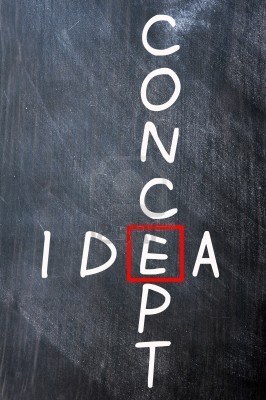
Ask a student to write a word (no more than 5 letters) in the middle of the board. Now you think of a word that shares one letter with the one on the board. Give a definition and the student who guesses it is the one writing the next word by also giving clues. Alternate between horizontal and vertical words. Check how many words they can think of in 5 minutes.
Variation 1: you may draw a grid of 100 squares and proceed as above. Variation 2: if your class is small, this is a good way to introduce and learn names.
My variation: I've adapted this activity as a competition in my class. I asked students to be in 2 groups and I wrote the word "verb" on the board. Taking it in turns, they had to write as many verbs and they could think of but only using the letters from the last verb written.
2- KIM'S GAME
Tell students you'd like to check how observant they are. Collect 7 or 8 objects from your students and put them in a bag. Take one object from the bag and ask them to write the name of its owner. Don't say if they're right straight away. Encourage argument!
My variation: I've done it a bit different to practice possessive and the genitive case. I invited one student to leave the room and I asked one of the other students to lend me an object for a while. I placed the object on a desk in the middle of the classroom. The student who was outside had to come back to the classroom and guess whose the object was. (They can either use "It's hers", "It's his" or the genitive case: "It's Amanda's", "It's Mark's". For very basic level: you may use it to revise vocabulary).
3- LIKES AND DISLIKES
Ask each student to write down 3 things they like and 3 things they don't. You do the same and start by reading out your points and adding some details to it. Encourage students to ask you questions. Having done that, students contribute with their likes & dislikes.
Variation 1 (not from the book): I've seen a teacher once asking students to do the same but when all students wrote down their likes and dislikes, they were supposed to fold their pieces of paper and play "paper war" with them. After 30 seconds, the teacher said "stop" and each student had to take a piece of paper from the floor and try to guess who it belonged to.
My variation: I've done a bit similar to the variation above. I collected the students' pieces of paper and distributed them randomly. So, students had to stand up and ask questions to each other to guess who the paper belonged to. I've also done a second version of it: ask students to write their names on their pieces of paper and distribute the pieces at random. Each student has to read out the information without saying the student's name. The other students can ask questions but the answers are only "yes" or "no".
4- FLASHING
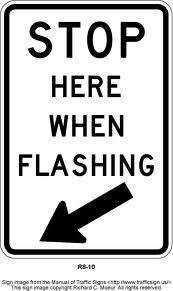
You can flash any of the following for a brief moment: a picture mounted on a card or in a book; a text on a strip of car; a book cover; a newspaper headline; an object. Show it quickly to the students. Students have to describe what they saw. Flash many times to promote discussion. In the end, show the text, the picture or the object and check how much they could remember.
My variation:Ask students to look at a picture with some objects (singular & plural ones). Ask them to describe what they saw with "there's a" or "there are".
5- GUESSING
Choose an object, animal or person, and tell the students which of these categoies it belongs to. They have to guess what it is by "narrowing-down" questions. You may help them by giving hints. Questions are limited to 10 or 20. The student who guesses it is the next one to choose something to be guessed.
My variation: Ask 2 students to sit down back to the board. Write the word on the board and these 2 students have to ask questions to the ones who can see what it is written. The first one to guess is the winner and changes places with a student who hasn't had an opportunity to play yet.
6- VOCABULARY STEPS
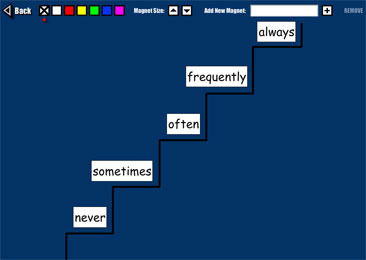
Draw a series of steps on the board. Write "warm" on a middle step. Ask students to write on the other steps words that are warmer or colder than the word "warm". They can use a Thesaurus.
Variation 1: Take any set of concepts which can only be graded by subjective criteria. For example, animals (how dangerous they are).
My variation: Ask students to think of only verbs related to a category (for example: sports, food, etc.).Place the first verb in the beginning of the steps. Students can only initiate a verb with the last letter from the one before. It can be used with parts of the house or any vocabulary you may wish to work with.
7- MEMORISING WORDS
Divide the board into two halves. Write on the left side difficult words that you'd like students to remember. Ask them to say a word that "reminds" them of one word on the left and write this new word on the right side of the board. After doing that, erase the word from the left. After replacing all the words on the left by the "reminding words", ask students which each "reminding word" was linked to. Write in the difficult words on the left again and erase the "reminding words".
My variation: after erasing all the difficult words on the left, ask students to work in pairs and write down which difficult words were liked to each reminding word. Do it as a competition with prizes to the pair of students that can remember the highest number of words.
8- HOW MANY THINGS CAN YOU THINK OF THAT...?
In groups, students try to think of and note down as many things as they can that fit a given definition. For example: How many things can you think of that...? ...are bigger than you are? ...are rectangular? ...are round? ...make a noise?
My variation: ask students to write in 45 seconds the following list: How many words can you think of that...? ...are verbs? ...are nouns? ...are adjectives? ...are adverbs? ...are prepositions? ...are phrasal verbs? ...are related to the weather? ...are parts of the house? ...are sports?
Ask them to write down just for 45 seconds and straight away change the category. The idea is to make them remember as many words as they can within a short time.
9- MATCH THE ADJECTIVE
Write 3 adjectives on the board. For example: important, dangerous,heavy. Ask students to work in pairs and write down things which could be described by all adjectives.
My variation: ask students (in pairs) to write down words that go under each category separatedly. Having done that, when students have about 10 words for each category, they could take 2 words under each category and compare them. For example: under heavy they could have written: car and bus. So, they could say: a bus is heavier than a car. They could also use the superlative for this activity.
10- SELLING FREEZERS TO SKIMOS
Give a picture to a student with something s/he should try to sell to the class by arguing why they really need it. It could be done seriously or humorously. For example: a student trying to sell a knitting machine. The other students decide whether the sales talk was persuasive or not.
Variation: I've seen a teacher using students in pairs to sell 2 different objects under a category. For example: a pair trying to sell a car and the other pair trying to sell a motorbike at the same time. The other students would decide what to buy according to the persuasion of each pair. They were given only 1 minute to sell their products. Comparative and superlative adjectives could be used in this activity.
11- WHAT'S THE EXPLANATION?
Describe to the students a brief situation or event which seems on the face of it strange or inexplicable. They ask questions in order to find out what true explanation is. For example: The man had been a hostage for ten years. His wife watched him leave the plan, and called to him excitedly. He did not respond.
Through the answers to "narrowing-down" questions ('Was he deaf?'), students should be able to find out that the woman saw her husband on television. You may need to supply hints.
12- WE BOTH...
In pairs, students ask each other questions in order to find as many things as they can that they have in common. But tell them not to use immediately apparent ideas such as "We are both tall". They have to start the senteces with: "We both..." or "Neither of us..."
My variation: you can use this to talk about likes/dislikes; abilities; present perfect for experiences and do it as a competition: how many sentences can they write in 3 minutes?
13- SILENT SPEECH
To focus on pronunciation and the contribution of mouth movement, list on the board words which will illustrate the various sounds you would like to concentrate on. Tell the class to listen carefully and then, "mouth" a word silently! They try to identify what the word is by paying attention to the movement of your mouth.
Variation: I've seen a teacher placing students in pairs but one of them back to the board. The other student had to "mouth" a word silently while the student who could not see the board would write it down. The first pair to finish would win the game but only if the words were correct.
That's all folks! I hope you have enjoyed it :) Larissa Fauber
This book was filled with a plethora of short activities that could be used in the last five minutes of class or a free day in class. While a few of these ideas my not be applicable to my classes (due to size or target skill), I did stumble across a number of ideas that I could use to augment my regular lessons.
Additionally, the methods of presenting visual aids in this book is a bit dated. However, these ideas can easily be adapted to a modern class room that has computer with a projector.
This book is great! It makes the classroom more exciting and time fly quickly. Teaching language is bored, but these activities make students comfortable with classes.
It's an excellent book for English teachers full of small activites such as ice-breakers and starters. Me and my group used it every day in our internship as English teachers in a Danish primary school. The response from the students was great.
A very helpful last-minute resource book for language teachers. The activities are well designed and fun for students. I use it a lot when teaching junior classes.