

What do you think?

The Alberta Trilogy #2
Alberta and Freedom
Cora Sandel was one of the most important Scandinavian writers of the 20th century and this is the second volume in her richly acclaimed Alberta trilogy. Alberta Selmer escapes from her cold suffocating provincial life in Norway to seek out the summer riches in a city where the bohemians will never die, where there is absinthe and endless talk of Cubism. But Paris is not all she although she begins to write small pieces for newspapers and periodicals, Alberta's self-esteem is low, and her inexperience makes her prey to the casual approaches of predatory men. Relationships, when they happen, are neither easy nor happy. Feeling her talent beginning to suffer and her freedom stagnating, Alberta faces a struggle to survive. After its publication in 1931, Alberta and Freedom established itself as an immediate classic and Alberta Selmer as one of the century's great anti-heroines.
220 pages, Paperback
First published January 1, 1931
About the author
Cora Sandel
34 books41 followersCora Sandel was the pen name of Sara Cecilia Görvell Fabricius, a Norwegian writer and painter who lived most of her life abroad. Her most famous works are the novels now known as the Alberta Trilogy.
Sara Cecilia Görvell Fabricius was born in Kristiania (now Oslo). Her parents were Jens Schow Fabricius (1839–1910) and Anna Margareta Greger (1858–1903). When she was 12 years old, financial difficulties forced her family to move to Tromsø where her father was appointed a naval commander. She started painting under the tutelage of Harriet Backer, and while still a teenager moved to Paris, where she married the Swedish sculptor Anders Jönsson (1883–1965). In 1921 they returned to Sweden, where she won custody of her son Erik after divorcing Jönsson.
In her youth she tried, without much success, to establish herself as a painter. And it wasn't until she was 46 years old that her debut novel, Alberte and Jakob was published, the first in what became the semi-autobiographical Alberta trilogy. Sandel used many elements from her own life and experiences in her stories, which often centre on the spiritual struggles of inarticulate and isolated women. The Alberta trilogy traced the emotional development of a lethargic and unhappy girl into a self-sufficient woman. These novels earned her an immediate place in the Scandinavian canon, but it was not until the 1960s that Sandel, now living as a recluse in Sweden, was discovered by the English-speaking world.
Despite her great literary success, she remained hidden behind her pseudonym and lived a rather secluded life. She was decorated with the Royal Norwegian Order of St. Olav in 1957. Her home in Tromsø, built in 1838, now houses the Perspektivet Museum.
Sara Cecilia Görvell Fabricius was born in Kristiania (now Oslo). Her parents were Jens Schow Fabricius (1839–1910) and Anna Margareta Greger (1858–1903). When she was 12 years old, financial difficulties forced her family to move to Tromsø where her father was appointed a naval commander. She started painting under the tutelage of Harriet Backer, and while still a teenager moved to Paris, where she married the Swedish sculptor Anders Jönsson (1883–1965). In 1921 they returned to Sweden, where she won custody of her son Erik after divorcing Jönsson.
In her youth she tried, without much success, to establish herself as a painter. And it wasn't until she was 46 years old that her debut novel, Alberte and Jakob was published, the first in what became the semi-autobiographical Alberta trilogy. Sandel used many elements from her own life and experiences in her stories, which often centre on the spiritual struggles of inarticulate and isolated women. The Alberta trilogy traced the emotional development of a lethargic and unhappy girl into a self-sufficient woman. These novels earned her an immediate place in the Scandinavian canon, but it was not until the 1960s that Sandel, now living as a recluse in Sweden, was discovered by the English-speaking world.
Despite her great literary success, she remained hidden behind her pseudonym and lived a rather secluded life. She was decorated with the Royal Norwegian Order of St. Olav in 1957. Her home in Tromsø, built in 1838, now houses the Perspektivet Museum.
Ratings & Reviews
Friends & Following
Create a free account to discover what your friends think of this book!
Community Reviews
Displaying 1 - 30 of 45 reviews

October 15, 2022
4.5
The title of this second novel in the Alberta trilogy seems at least partly ironic, as, yes, the insecure Alberta is now free from her provincial Norwegian ties, but as a woman, even living amongst artists in bohemian Paris, constraints upon her are many. She’s determined to stay free in mind and temperament, but maintaining her principles is difficult while living in extreme poverty and loneliness. True sexual freedom is nonexistent for most and women bear the brunt of the secrecy and aftermath, still a relevant topic, much less in 1931 when the book was first published.
In the beginning of the novel, the reader is thrust into Alberta’s Parisian life with no preamble and the story gains momentum as it continues. The writing is brilliant throughout, but I found the last two pages problematic and couldn’t help but wonder if Sandel couldn’t have employed a slightly different ending.
This trilogy deserves to be easier to find. Much gratitude to Dhanaraj Rajan’s reviews for bringing my attention to it a few years ago.
*
The fact that she could not leave her door open on a suffocating evening unpunished, because she was everyman’s booty, a woman, had left her bitter. (p. 69)
Again she felt the acrid after-taste left by gifts of money. Such gifts resemble stringent medicine; you are forced to accept them if you are to get on your feet. But they leave a paralysed spot, a dead place in the mind where nothing will grow. (p. 130)
‘Making arrangements’ could only mean wresting from her the only thing she had succeeded in conquering in her whole life. (p. 138)
Her hand trembling, Alberta put the book down and did not pick it up again. Some words in it had hurt her, stinging like salt in a wound. Hard, merciless, true, they had reached their target unswervingly. The words of a man, thought by a man, written by a man. They sank into her mind with painful gravity. Her heart stopped for an instant, as with all of life’s shocks. (p. 150)
This evening she seemed to recognize that everything comes to an end, even pain. It burns itself out finally. One dies of it, or it passes out of one’s system like an ache that is over. All that is left is a calcification in the mind, a hard scar that cannot be affected again. (p. 173)
I wish I could quote a longish paragraph on my page 215 in full.
The title of this second novel in the Alberta trilogy seems at least partly ironic, as, yes, the insecure Alberta is now free from her provincial Norwegian ties, but as a woman, even living amongst artists in bohemian Paris, constraints upon her are many. She’s determined to stay free in mind and temperament, but maintaining her principles is difficult while living in extreme poverty and loneliness. True sexual freedom is nonexistent for most and women bear the brunt of the secrecy and aftermath, still a relevant topic, much less in 1931 when the book was first published.
In the beginning of the novel, the reader is thrust into Alberta’s Parisian life with no preamble and the story gains momentum as it continues. The writing is brilliant throughout, but I found the last two pages problematic and couldn’t help but wonder if Sandel couldn’t have employed a slightly different ending.
This trilogy deserves to be easier to find. Much gratitude to Dhanaraj Rajan’s reviews for bringing my attention to it a few years ago.
*
The fact that she could not leave her door open on a suffocating evening unpunished, because she was everyman’s booty, a woman, had left her bitter. (p. 69)
Again she felt the acrid after-taste left by gifts of money. Such gifts resemble stringent medicine; you are forced to accept them if you are to get on your feet. But they leave a paralysed spot, a dead place in the mind where nothing will grow. (p. 130)
‘Making arrangements’ could only mean wresting from her the only thing she had succeeded in conquering in her whole life. (p. 138)
Her hand trembling, Alberta put the book down and did not pick it up again. Some words in it had hurt her, stinging like salt in a wound. Hard, merciless, true, they had reached their target unswervingly. The words of a man, thought by a man, written by a man. They sank into her mind with painful gravity. Her heart stopped for an instant, as with all of life’s shocks. (p. 150)
This evening she seemed to recognize that everything comes to an end, even pain. It burns itself out finally. One dies of it, or it passes out of one’s system like an ache that is over. All that is left is a calcification in the mind, a hard scar that cannot be affected again. (p. 173)
I wish I could quote a longish paragraph on my page 215 in full.

January 23, 2018
Norwegian Angst
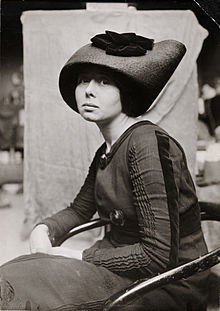
Cora Sandel continues her Alberte trilogy in this second volume. One now finds Alberte in Paris. I kind of expected a continuation of her journey from Norway, i.e. stepping away from the family home, conflict etc. Instead Sandel chooses to share her memories from living a different type of life in the streets of Paris. It is actually quite interesting and Sandel has a knack for the staying in the psychological realm. I realized that I have missed Alberte since I last left her back in Norway (last month). She is such a lovable character!
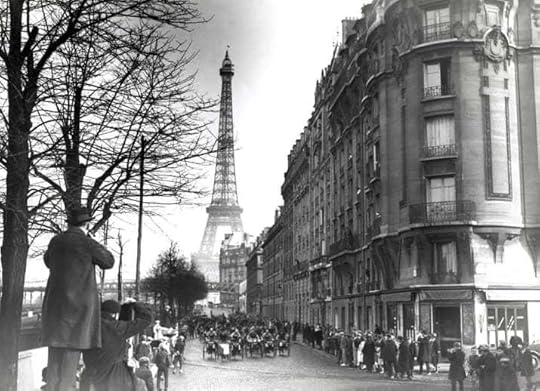
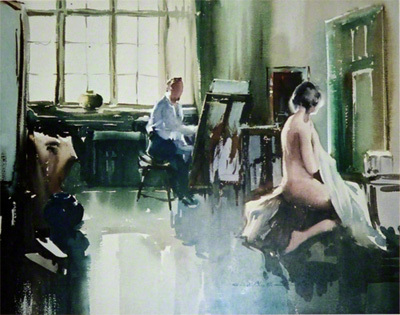
It seems like she is doing some kind of writing, but it is not really emphasized in the novel. It is more a matter of pieces of paper in a box mentioned on the sidelines here and there. I presume she is heading towards some type of writing since these novels are semibiographical. Alberte has issues with making a living so she has decided to model as a nude. Kind of awkward for her and beautifully depicted in the very beginning of the novel. Quite a change from hiding in her family home in northern Norway as in the first novel.
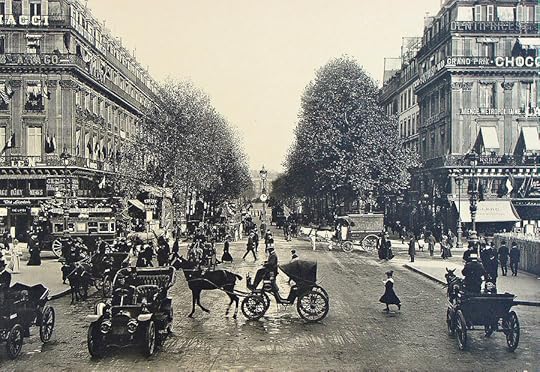
The novel is very existential and depicts an almost dream-like world as Alberte’s reality. She seems to only live in the present and expands with connections to friends, and other people from abroad trying the more artsy life style in Paris. She barely mentions anything about Norway and her past experiences which surprised me. It is almost as if the reader is floating along in her company in the streets of Paris, its restaurants and little tiny attic rooms filled with mice, while trying to stay warm and get a bite to eat every now and then.
Sandel’s emphasis is an existential dream with Alberte floating through life with plenty of Scandinavian angst to accompany her. To me it was interesting to get a feel for the community of artists living in Paris at the time. Alberta is a bit different though, but her mind and observations allow us to get a sense of the lives of the artists, their friends, models, gatherings and the overall way of life. I sense small to medium studios with few possessions and friendships. Always a bill to pay around the corner! I keep asking myself how Alberta makes ends meet. The novel lags here and there as Alberte is trying to figure out who she is. The book is an interesting blend of realism and philosophy. Alberta continuously strives towards finding meaning in her existence. Sandel does a brilliant job suspending the reader in Alberta's mind as time flows by. It reminds me of George Orwell with an additional injection of the artist's life. The translation by Elizabeth Rokkan is excellent!
4.5/5
Cora Sandel continues her Alberte trilogy in this second volume. One now finds Alberte in Paris. I kind of expected a continuation of her journey from Norway, i.e. stepping away from the family home, conflict etc. Instead Sandel chooses to share her memories from living a different type of life in the streets of Paris. It is actually quite interesting and Sandel has a knack for the staying in the psychological realm. I realized that I have missed Alberte since I last left her back in Norway (last month). She is such a lovable character!
It seems like she is doing some kind of writing, but it is not really emphasized in the novel. It is more a matter of pieces of paper in a box mentioned on the sidelines here and there. I presume she is heading towards some type of writing since these novels are semibiographical. Alberte has issues with making a living so she has decided to model as a nude. Kind of awkward for her and beautifully depicted in the very beginning of the novel. Quite a change from hiding in her family home in northern Norway as in the first novel.
The novel is very existential and depicts an almost dream-like world as Alberte’s reality. She seems to only live in the present and expands with connections to friends, and other people from abroad trying the more artsy life style in Paris. She barely mentions anything about Norway and her past experiences which surprised me. It is almost as if the reader is floating along in her company in the streets of Paris, its restaurants and little tiny attic rooms filled with mice, while trying to stay warm and get a bite to eat every now and then.
Sandel’s emphasis is an existential dream with Alberte floating through life with plenty of Scandinavian angst to accompany her. To me it was interesting to get a feel for the community of artists living in Paris at the time. Alberta is a bit different though, but her mind and observations allow us to get a sense of the lives of the artists, their friends, models, gatherings and the overall way of life. I sense small to medium studios with few possessions and friendships. Always a bill to pay around the corner! I keep asking myself how Alberta makes ends meet. The novel lags here and there as Alberte is trying to figure out who she is. The book is an interesting blend of realism and philosophy. Alberta continuously strives towards finding meaning in her existence. Sandel does a brilliant job suspending the reader in Alberta's mind as time flows by. It reminds me of George Orwell with an additional injection of the artist's life. The translation by Elizabeth Rokkan is excellent!
4.5/5

October 20, 2014
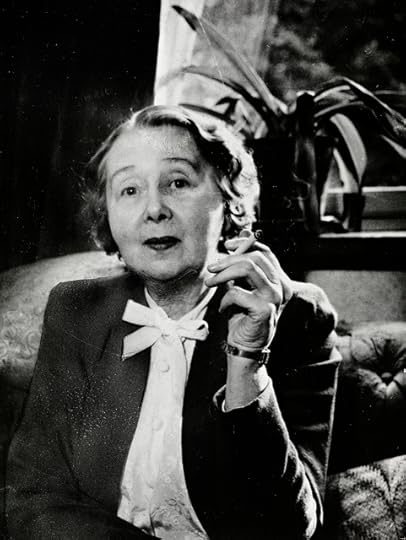
This is Cora Sandel, real name Sara Fabricius. She is significantly more awesome than you.

July 30, 2026
[From Alberte og Jakob]
In the second volume of the trilogy, Alberte has left Norway and moved to Paris, though you don't understand how this happened until you've nearly reached the end of the book. She always wished to escape from her stifling home environment, where she was isolated by belonging to the wrong class and speaking the wrong dialect, but you need to be careful what you wish for. Now she's even more isolated. Even though she's worked hard on her French, it's a notoriously unforgiving language. (As a friend said to me this morning over lunch, the only country in the world where your cleaning lady can tell you off about your incorrect grammar; perhaps he was thinking of L'Élégance du hérisson). She hangs out with the foreign painters and writers. She is desperately poor; the only way she can earn enough to pay the rent on her miserable furnished room and not starve is to pose nude for the amiably pretentious Mr. Digby, who at least doesn't try to rape her but contents himself with checking her out as he daubs. She can't even understand why she's doing this. Her friends keep giving her well-meaning advice: go back to your home country, marry someone. But Alberte doesn't want either of these rational alternatives. As she says, she doesn't know what she wants, she only knows what she doesn't want.
After a while, the reader figures it out, though Alberte hasn't done so yet. She is in reality a brilliant writer, even though she has absolutely no confidence in herself. She just scribbles down a note every now and then, when she thinks of something that she feels needs to be committed to paper. More often than not, she tears it up immediately after; but some of the notes don't get torn up, and they're thrown in her trunk. Alberte can't understand why she keeps them, she just does. Near the end of this volume, after a number of very tragic and painful things have happened, she decides one day to look at her notes properly. She gradually realises that, hey, they weren't so bad after all. Maybe they stick together in some way. Since the trilogy is generally described as semi-autobiographical, I'm guessing that in the third volume we'll see how she's created and published the book we have in our hands. Because of its unusual origin, it's quite difficult to read. It's a concatenation of small, very intense episodes, which somehow cohere in a way that's at first hard to grasp.
Cora Sandel, I understand, did indeed live in Paris during the early twentieth century, and she did indeed hang out with the painters and litterateurs, and it seems impossible that someone like that could not have been familiar with Proust's books. Volume two of her trilogy appeared in 1931, four years after the posthumous publication of Le Temps retrouvé. To me, it feels so far like a feminist adaptation of Proust's central ideas: what is memory, what is art, how does memory turn into art? And I can't help wondering if she's giving us a clue with the central figure's name. "Alberte" is the Norwegian version of "Albertine", the name of the unfortunate girl that Proust's narrator gets involved with. Like many people, I feel very sorry for Albertine, who, it seems to me, is unsympathetically treated and never accomplishes anything before dying off-stage. Maybe Cora Sandel wondered what Albertine could have done if she'd ever been allowed to have a life of her own and not just been part of a man's story. And Sandel is indeed a brilliant writer; but to her misfortune, she wrote in a language that hardly anyone knows, so she never became famous.
Well, those are my guesses at the two-thirds mark. I'm curious to see how correct they turn out to be once I've reached the end; I promise I haven't peeked ahead.
[To Bare Alberte]
In the second volume of the trilogy, Alberte has left Norway and moved to Paris, though you don't understand how this happened until you've nearly reached the end of the book. She always wished to escape from her stifling home environment, where she was isolated by belonging to the wrong class and speaking the wrong dialect, but you need to be careful what you wish for. Now she's even more isolated. Even though she's worked hard on her French, it's a notoriously unforgiving language. (As a friend said to me this morning over lunch, the only country in the world where your cleaning lady can tell you off about your incorrect grammar; perhaps he was thinking of L'Élégance du hérisson). She hangs out with the foreign painters and writers. She is desperately poor; the only way she can earn enough to pay the rent on her miserable furnished room and not starve is to pose nude for the amiably pretentious Mr. Digby, who at least doesn't try to rape her but contents himself with checking her out as he daubs. She can't even understand why she's doing this. Her friends keep giving her well-meaning advice: go back to your home country, marry someone. But Alberte doesn't want either of these rational alternatives. As she says, she doesn't know what she wants, she only knows what she doesn't want.
After a while, the reader figures it out, though Alberte hasn't done so yet. She is in reality a brilliant writer, even though she has absolutely no confidence in herself. She just scribbles down a note every now and then, when she thinks of something that she feels needs to be committed to paper. More often than not, she tears it up immediately after; but some of the notes don't get torn up, and they're thrown in her trunk. Alberte can't understand why she keeps them, she just does. Near the end of this volume, after a number of very tragic and painful things have happened, she decides one day to look at her notes properly. She gradually realises that, hey, they weren't so bad after all. Maybe they stick together in some way. Since the trilogy is generally described as semi-autobiographical, I'm guessing that in the third volume we'll see how she's created and published the book we have in our hands. Because of its unusual origin, it's quite difficult to read. It's a concatenation of small, very intense episodes, which somehow cohere in a way that's at first hard to grasp.
Cora Sandel, I understand, did indeed live in Paris during the early twentieth century, and she did indeed hang out with the painters and litterateurs, and it seems impossible that someone like that could not have been familiar with Proust's books. Volume two of her trilogy appeared in 1931, four years after the posthumous publication of Le Temps retrouvé. To me, it feels so far like a feminist adaptation of Proust's central ideas: what is memory, what is art, how does memory turn into art? And I can't help wondering if she's giving us a clue with the central figure's name. "Alberte" is the Norwegian version of "Albertine", the name of the unfortunate girl that Proust's narrator gets involved with. Like many people, I feel very sorry for Albertine, who, it seems to me, is unsympathetically treated and never accomplishes anything before dying off-stage. Maybe Cora Sandel wondered what Albertine could have done if she'd ever been allowed to have a life of her own and not just been part of a man's story. And Sandel is indeed a brilliant writer; but to her misfortune, she wrote in a language that hardly anyone knows, so she never became famous.
Well, those are my guesses at the two-thirds mark. I'm curious to see how correct they turn out to be once I've reached the end; I promise I haven't peeked ahead.
[To Bare Alberte]

February 6, 2015
'Tenderness? What about tenderness, Alphonsine? When you have lived next door to all kinds of people, and the walls are thin, you begin to find it a little difficult to believe in that. At first you are frightened, thinking of madness or confined animals, finally you understand. Groans, struggle, a smothered bellow in the darkness, a heavy silence as if death had supervened, the snoring. The snoring! Or women's tears, streams of bitter, upbraiding words. What happened to tenderness? It must have been lost on the way?'
She isn't good at life. They have looks in their eyes, asking stances. She's not good at them. Drive her into the street. I was disappointed that Alberta hadn't left the home from 'Alberta and Jacob' on her own don't look back flight. Sandel doesn't reveal the lead up to her freedom until much later, and I had believed in the daily bread reminder of "at least I'm not at home" trailing her darker thoughts. But she is only in Paris off kindness of others. Pick the wound of fear and it bleeds over into another layer of scab somewhere else. Oh Alberta, you were doing it all wrong.
She meeks an existence there for seven years in starving artist lights. A street glow perfect for Russian dancers. Country boys splash in French farms far away from the Parisian heat oppression. Her eyes create on the way to their steps on the Alberta inside universe. She only savages them in it's no good loneliness. They tell her she should get a real job. Sometimes she poses nude for an artist, or writes articles that eat at her malnourished soul (I kept thinking of a scene in the old tv series Spaced when Jessica Stevenson's perpetually writer's blocked character pleads unemployment because she "Can't just pluck another skin cares do's and don'ts out of the air!"). They weren't wrong that she should have just gotten a job. Freedom in your free time is worth a lot more than the prison of paralyzed mooching. Alberta broke my heart when she is dying alive in filthy hotel rooms, benches and the arms of men who want something out of her. I believed the hell out of her all of the wrong choices, though. If she had earned her freedom it would have been freedom. It's a the ghost of Christmas past and it is too late kind of way.
When her fellow street inmate Liesel hangs her starry eyes on the sculptor's hands I felt betrayed. I loved these girls when they were asking at more than he holds me in his arms. There is more than one Alberta in Alberta, though. 'Alberta and Jacob' she is inside a graceful Alberta, says the right things and life winning smile. Inside Alberta is the phantom lover holding you in bed at night, whispering you can't unless you kill you for me. 'Albert and Freedom' she stuffs her fevered letters into a chest. Fragments in the belly with previous evening almosts. I didn't really believe that if she made a living for herself from writing she would be happy. But she wasn't going to be happy if the Danish schoolteacher made good on promises of a life together. If the Norwegian painter was a life beyond a collection of arms embracing and not wrong make warm love sex. She comes so close to the obvious, to write because this is how her freedom streets become real. But she does as Liesel, chooses the dependency. I don't know how it happened. Liesel enters Alberta's kept woman's room when the mood was finally turning to write or fight. They are both scared, though why Liesel is unless it is like the smell of do or die blood in the air. As for Alberta, I am leaning towards why a woman as prey in the sun's predator headlights all the time would choose nude modeling over any job. Any job that wouldn't leave her open to exposure and nowhere to go but mental trains that stop where it hurts the most. Everyone she meets could not have meant her harm. The evil they expect. Alberta is too many Alberta's in her head for that, though. I was bitterly disappointed that she is still going to lie there at the mercy of someone else. She has changed so much since 'Alberta and Jacob' and she hasn't changed at all. Hell, she likes it when the Danish boyfriend rails at her helplessness. He doesn't get it, there is a life in Alberta. It just doesn't speak for itself. The Nils Viergaard scenes reminded me a lot of Ingeborg Bachmann's Malina. Particularly the parts in that book when she is interviewed. It felt like Viergaard was interviewing Alberta. It can be illuminating to hear a person defend themselves, and in the case of Alberta a will is breaking down. It is also a way for a person to talk themselves into one truth over another one and that is what Alberta does. Go with the man, not herself. There's a curious unnaturalness about her sacrificing real freedom. A forever giving up. I thought Sandel could have done better than have Alberta think she is a different Alberta than she knew she could be by smiling with him. No, she wasn't. She was looking for a different eye mirror to measure herself. It eats at Alberta when men like her Norwegian lover use her to take care of their bad at the real world. Translate for them, feed them, they're lost. Until she falls for Viergaard's (already divorced!) promises to see to her care. Was she waiting to be worn down? This was more important to me.
Alberta is gutted by a quote from La Bruyere. "Women attach themselves to the men by the favors they give- men heal by the same favors". I think that's shit but I can't deny I wanted more than anything for Alberta and Liesel to do anything but that (how the hell was she shocked by her friend or her own pregnancy? Did she forget about Beda from 'Alberta and Jacob'?). I liked Alberta more when she wasn't. I wasn't any better than Viergaard getting on his high horse about her not doing anything with her life. I don't need Alberta to earn herself but I want her to so badly. It wasn't like that before it became question and answering. I wasn't going "When are you going to DO something with your life?" It was some people are lonely and some people aren't lighted windows. So why not change the conversation?
At first she thought about nothing at all, keeping hateful thoughts successfully at a distance. They can resemble greedy birds round carrion. They circle round you in narrower and narrower rings. You throw them off, they return once more. Finally they alight on you, flapping their dark wings and hooting in your ears. They tear at your heart with their sharp beaks, and your heart writhes in pain, and sometimes stops.
I loved the continuity from 'Alberta and Jacob'. She feels guilty when she leaves her poor family to have a warm dinner in the first book. This time she regrets the left behind hotel denizens. I don't buy that she's guilty that they aren't going with her rather than looking for a reason to not enjoy anything herself. Something in Alberta will do anything to keep the truest Alberta quiet. Or maybe the truest Alberta is the one who will show up at Liesel's house when she knows her friend wants to sleep so she can enjoy the privacy of her balcony. Alberta had that selfish streak before. I want the truest Alberta to be the Alberta who took walks in her freezing hometown. Real faces blurring and becoming real as she walks past. Everyone she was too afraid to see. The in spite ofs gives me hope. The Alberta that won't seek her other people solace in the Paris streets if it would ruin her treasure when she's desperate. Alberta hits really close to home with me. I was terrified of the world too. My mom was a lot like hers and I believed her that I was too stupid to do the simplest things. I also thought that I would have to be a person nothing at all like who I am to live. It hasn't completely gone away. It is hard to read Alberta pursue this on her own. I am afraid to read Alberta Alone if she holds her son in front of her as another excuse. This was not freedom and the rebellion of 'Alberta and Jacob' was not rebellion. What if it never happens? I know she should write.... but writing is one night, a day. Will it lead to....? Jean Rhys was eating alive in the cold too. (Alberta could have hung out with Rhys and Rosamond Lehmann's heroines in Paris. But does it change anything when you are not the only one....) Men's invisible arms no longer holding her. I wish.... I wish that there was something else better than that. It happens again and again when Alberta is knee on her own throat. Open up and listen, Alberta, to Albertas. I don't want a desperate moment. I want....
There's a moment when Alberta is praying that she would go through all that she's gone through if she could have clarity. Me too. There's a quality about Alberta as if she is praying all of the time. I want her to stop it (you have yourself!) and I find it so moving that she could put her knees to its ear anywhere.

September 2, 2019
THE REVIEW HAS SPOILERS. OBVIOUSLY I DO NOT KNOW TO WRITE A REVIEW FOR THIS TRILOGY WITHOUT SPOILERS.
The second in the Alberta Trilogy. Equally as good as the first one (Alberta & Jacob).
In the first, we are introduced to Alberta and her family in Northern Norway. Alberta was then an adolescent girl. She was marked for failure. She had no talents except an interest in reading and writing. She was not attractive. She was a shy girl who knew no domestic chores (qualities needed for a prospective bride in those days). She found her home and town oppressive and wanted to run away from it. But she could not do it for she did not have the needed courage. She was a complete failure. Though she was a failure, yet she was one of the most lovable characters for this reader who rooted for her.
In the second book of this trilogy, we see Alberta in Paris trying to make a living with the minimum talent that she has (writing). She lives in utter poverty and alone. She is almost an orphan having no one. Occasionally she meets with the fellow artists from the Scandinavian region. Alone and very timid and with hardly a job to meet her expenses she works as a model for a old painter. She is almost the same timid lonely adolescent girl that we meet in the first book. But obviously she is now a grown up girl (an adult). She looks for company and when she finds her girl friends with male companions, she is torn to pieces. But she is still the same frightened girl and slow in socializing. Subsequently she ends up in love affairs. One ends in a heart break and the other is left standing precariously at the end of the second book adding tension for the reader.
As I concluded in the review for the first book, I will conclude this one too. The reader cries with Alberta in her sufferings; feels the loneliness with her; feels the hunger with her; feels sympathy for her; wants her to win somehow or at least find a good Samaritan. But then, she hardly succeeds. Now, once again I am both discouraged and encouraged to read the last book in the trilogy. Discouraged because I do not want to read more of her struggles and sufferings. The title of the third book (Alberta Alone) makes me shudder. Encouraged to read because being the last book I still harbour a hope that Alberta's life would end in that book if not in a spectacular success, at least in a normal happy life/success.
Cora Sandel is a superb writer. And the translator, Elizabeth Rokkan has done a great job.
Do read this trilogy, dear friends.
The second in the Alberta Trilogy. Equally as good as the first one (Alberta & Jacob).
In the first, we are introduced to Alberta and her family in Northern Norway. Alberta was then an adolescent girl. She was marked for failure. She had no talents except an interest in reading and writing. She was not attractive. She was a shy girl who knew no domestic chores (qualities needed for a prospective bride in those days). She found her home and town oppressive and wanted to run away from it. But she could not do it for she did not have the needed courage. She was a complete failure. Though she was a failure, yet she was one of the most lovable characters for this reader who rooted for her.
In the second book of this trilogy, we see Alberta in Paris trying to make a living with the minimum talent that she has (writing). She lives in utter poverty and alone. She is almost an orphan having no one. Occasionally she meets with the fellow artists from the Scandinavian region. Alone and very timid and with hardly a job to meet her expenses she works as a model for a old painter. She is almost the same timid lonely adolescent girl that we meet in the first book. But obviously she is now a grown up girl (an adult). She looks for company and when she finds her girl friends with male companions, she is torn to pieces. But she is still the same frightened girl and slow in socializing. Subsequently she ends up in love affairs. One ends in a heart break and the other is left standing precariously at the end of the second book adding tension for the reader.
As I concluded in the review for the first book, I will conclude this one too. The reader cries with Alberta in her sufferings; feels the loneliness with her; feels the hunger with her; feels sympathy for her; wants her to win somehow or at least find a good Samaritan. But then, she hardly succeeds. Now, once again I am both discouraged and encouraged to read the last book in the trilogy. Discouraged because I do not want to read more of her struggles and sufferings. The title of the third book (Alberta Alone) makes me shudder. Encouraged to read because being the last book I still harbour a hope that Alberta's life would end in that book if not in a spectacular success, at least in a normal happy life/success.
Cora Sandel is a superb writer. And the translator, Elizabeth Rokkan has done a great job.
Do read this trilogy, dear friends.
July 22, 2025
"After all misfortune perhaps there always comes a day when one thinks: It was painful, but a kind of liberation all the same; a rent in my ignorance, a membrane split before my eyes."
This is the second book in a trilogy following Alberta, the protagonist in this story, a young woman from a provincial Norwegian town. Here, Alberta has suffered losses, life has taken a tragic turn for her in many ways (deaths of loved ones, several disappointments and looming despair), and still she learns, feeling her way in the dark, trying to make sense of the world she's in as she's left her provincial town for the big city of Paris. This book's great strength is Cora Sandel's incredible insight into human suffering and the ways women's development is kept stunted by systemic sexism. It's a pity it's one of those books that have received little attention in the English speaking world, but remains a remarkable feat for its time and a book that can still penetrate into the reader's mind despite being published almost a century ago.
This is the second book in a trilogy following Alberta, the protagonist in this story, a young woman from a provincial Norwegian town. Here, Alberta has suffered losses, life has taken a tragic turn for her in many ways (deaths of loved ones, several disappointments and looming despair), and still she learns, feeling her way in the dark, trying to make sense of the world she's in as she's left her provincial town for the big city of Paris. This book's great strength is Cora Sandel's incredible insight into human suffering and the ways women's development is kept stunted by systemic sexism. It's a pity it's one of those books that have received little attention in the English speaking world, but remains a remarkable feat for its time and a book that can still penetrate into the reader's mind despite being published almost a century ago.
March 29, 2021
Väldigt tung. En otrolig skildring av en kvinnas liv för hundra år sedan. Så fint skriven, så modern och så spännande. Klassiker som förtjänar mer uppmärksamhet!
Read
March 17, 2026Nja… jeg måtte kjempe meg gjennom store deler av boken, som farget leseopplevelsen. Samtidig appellerer ikke den franske litteraturtradisjonen, som Cora Sandel forguder og strekker seg mot, for meg.
MEN det er veldig mye jeg elsker ved denne boka, særlig øyet hun har for mennesket og det antropologiske blikket. Samt er den ekspresjonistiske skrivestilen, med maleriske utsnitt, helt nydelig å lese.
MEN det er veldig mye jeg elsker ved denne boka, særlig øyet hun har for mennesket og det antropologiske blikket. Samt er den ekspresjonistiske skrivestilen, med maleriske utsnitt, helt nydelig å lese.

February 1, 2021
om man vill läsa en bok om en helt vanlig norsk tjej som på tidigt 1900-tal åker till paris för att leva livet så absolut. problemet e att hon inte gör nått?? går runt o väntar på att nåt ska hända typ. tror inte hon fattar ett enda beslut i hela boken. inspirerande på nåt sätt.... älskade dock hennes små insikter som var toppen, många ”hundöron” :)
October 22, 2025
5 stars down to 4 on account of the last 2 pages, a near perfect book of gorgeous observations. “Savage tenderness.”
Everything I underlined:
‘This evening she seemed to recognize that everything comes to an end, even pain. It burns itself out finally. One dies of it, or it passes out of one's system like an ache that is over. All that is left is a calcification in the mind, a hard scar, that cannot be affected again.
P.173
Occasionally Alphonsine came.
She made herself comfortable on Eliel's divan, blew smoke-rings at Alberta, and studied her with her green eyes while the water boiled for tea.
P.95
Liesel's eyes focused again, returning from a great distance.
P.14
But she longed for him every minute he was away from her. He lived in her, possessed her. The French call it having someone in the blood. Nothing is closer to the truth.
P.142
Alphonsine strummed with her fingers on the table as if to gain time. Then she said: ' Has someone made you unhappy, ma petite?'
P.166
Up in her room Alberta gasped in the enclosed atmosphere that met her. Quickly and roughly as if in desperation she tore off her clothes, threw them on to the bed and rubbed herself down with a sponge. Then she lighted the spirit stove, sat down naked among her clothes and sucked peach after peach.
At first she thought about nothing at all, keeping hateful thoughts successfully at a distance. They can resemble greedy birds round carrion. They circle round you in narrower and narrower rings. You throw them off, they return once more. Finally they alight on you, flapping their dark wings and hooting in your ears. They tear at your heart with their sharp beaks, and your heart writhes in pain, and sometimes stops.
P.67
'A good friend - two arms round you at the end of the day - that is what I wish for you, Mademoiselle.’
P.71
To come up from the hard street. To kick off one's shoes and stretch out one's whole length on something, a bed, a divan. To relax in every limb, while the little spirit stove hums gently. To have a cup of tea, or perhaps two, some biscuits, marmalade, a couple of cigarettes-and the numbness arrives: that blessed state of indifference out of which the will towards life is born anew.
P.12
Like a light picture in a dark frame she was enclosed by the doorway and the open doors with their filthy curtains sticking to the panes, all of them that solid grey of the streets through which railways pass. A ray of the setting sun fell upon her in a beautiful alternation of light and shade, modelling a section of the plaiting encircling her head, the tense sinews of the neck, the breast forced upwards by her stance, the drooping wrists. A breath of wind carried her skirt a little outwards and sideways, almost wrapping it round her leg. The loose-limbed figure in the worn black dress was given a plastic gravity it normally lacked, the hair acquired an alien sheen of metal. Liesel was suddenly statuesque out there between earth and sky.
She addressed the Rue de l'Arrivée quietly in her clipped French: ' My life is not interesting.’
Surprised by the brief, gently-spoken phrase, Alberta went on listening. Whether or not it was because Liesel was standing out there looking statuesque, the words grew in the silence they left behind them, turning into an oracular pronouncement, casting a sharp, unexpected light over the past and the future. One of those appalling seconds when one sees one's existence and is made giddy by it, had suddenly occurred. Deep down Alberta was gripped by the thought: Nor mine, nor mine. It goes on and on and is not interesting, as Liesel says. I don't even know what I want to do with it. I am like someone who has set out from land and is letting himself drift.
An uncomfortable chill crept over her, her heart became small and hard, hammering as it used to at home when she had done something wrong or something unpleasant was about to happen. She heard her voice dwindle and freeze as she said: It will be interesting, Liesel, of course it will.
Wait till you start exhibiting and get properly under way.
Thank you for my tea.'
She laced up her shoes and put on her coat, bracing herself as she got ready to leave, trying to find that feeling of freedom which, like an intoxication, can sometimes turn walking into a dance, reminding herself that now and again one lands on small islands of joy. Of course they would get somewhere, not just Liesel, but herself too. It was already something of a feat not to be lying becalmed in quite the wrong place -and after all, this was life, life itself, irreplaceable.
'Are you going to the evening class, Liesel?' Alberta half hoped that Liesel would consider further effort useless this evening. They could then go out together, laugh about things together, and finally laugh at themselves. Once you get as far as that, things begin to look brighter.
But Liesel was going to the course. She had paid for it, so she had better...
'What a reason!' she said. She suddenly slumped down on the bed and laughed despairingly. ' Wie alles tragi-komisch ist, Albertchen.’
"It is indeed.' Alberta laughed with her, liberated, and at once felt immensely grateful at the thought of how much they had laughed off together, she and Liesel, through the years.
P.22
Apart from the first couple of effervescent years, when everything, the language, the city, the museums, the past and the present, had surrendered of their own accord when she attacked them like a famished soul who at last sits down at a table set with food, Alberta did not yet know what she really wanted. She still had only negative instincts, just as when she was at home. They told her clearly what she did not want to do. Her whole being cringed when faced with certain situations and certain people, certain activities and certain surroundings, so that she felt it physically in the form of fever and pressure on the heart.
Afterwards she was left free to reject what she did not want and without the slightest idea of what she should do with herself.
P.32
The waves of sound had a new tone, a light humming, peculiar to the season. The fresh colour of the new leaves was just as astonishing in the street scene this year as last year, as every year. The air and the light raised everything to a higher pitch, to the border of unreality. A hint of water and meadows was adrift in the atmosphere. Spring with all its happiness and sorrow had conquered the city, giving one the desire to do ridiculous things:
P.37
Skaal, Albertchen - where were you then?' Liesel, a little distance away, lifted her glass towards her, smiling.
Liesel was no longer disintegrating and depressed, as she had been a short while ago. She radiated a kind of quiet, concerted glow, which she seemed to force back, but which kept on breaking through. As the evening wore on her eyes seemed to darken and become veiled, because of what she was drinking or perhaps for some other reason.
Presumably everything was settled between her and Eliel.
That very day Liesel had said: ' We are happy, Albertchen - aber so.'
P.56
There was a painful time of day - the hour when it arches over and goes downwards again. It does not correspond to high noon, but occurs a couple of hours later.
The sun left the passage, the ivy turned blue. That was the time. In the hotel room it had been when the lustre died on the belly of the earthenware jug. The room had at once become strangely threatening and desolate.
Yet again she had not come to terms with herself today; she had not come a step nearer those admirable, industrious souls who accomplish something.
P.92
She had his blue, momentarily much too glittering eyes directed straight at her. She sensed a loneliness as great as her own behind his visit, the hunger for human society that can be damned up inside one in Paris in the summer, when one cannot speak the language and all one's acquaintances are away - a hunger perhaps for female company too.
P.97
This was where the summer found sanctuary. Heavy and dark with maturity the trees and bushes trailed their foliage on the ground. The twilight was scented, people sat silent on the benches. A late bird flew home, the first bat flitted soundlessly past. Arc-lamps were lighted here and there, hidden behind the enormous crowns of the chestnut trees, casting large circles of greenish light over the lawns.
Someone ought to have danced in that light, fauns and nymphs, the Russian ballet.
P.104
In all her veins there beat an urgent, all-embracing hunger for warmth. The words forced themselves up towards her lips and insisted on being spoken, she whispered them, dry as if from thirst. Memories lay in her, a kind of futuristic picture. She saw a chin, a slightly crooked mouth, two eyes, a hand, a hat. A hat! She saw it out in the darkness and was not always quite certain how far the limits of reality went.
P.160
She saw his eyes, wide and dark like her own. When she put her arms round his neck he drew his face back a little, but continued to look at her, as if trying to see into the depths of her mind. She thought: If I must I shall even conquer the innermost, shining white fear of anyone coming near me, I shall do it now. And suddenly these dark eyes which continued to look at her sent the blood flooding through her veins. She felt her own expression altered by it, as if it were sinking back, turning inwards. She heard Veigaard say, his voice trembling, ' Alberta'. He seized her wrists. But she forced herself up against him, tensing her body like a spring - and suddenly had his arms tightly about her.
P.146
They were halted by the traffic. Veigaard looked at his watch and his small gesture made Alberta think of executions, the moments just before. They were probably like this. Perhaps they contained the same microscopic amount of curiosity as to how it would feel when it was all over.
She sat drinking in all her impressions of the life about her in quite a new way: the air, the sounds, the light murmur of the city on a clear, beautiful morning. There it was still, she had not left it, nor let it slip out of her hands. In a short while she would be alone with it again.
P.147
Alberta attempted to hold on to the flickering patterns that form behind the eyeballs when one shuts one's eyes hard. The patterns shift, growing out of each other, colour within colour, whorl within whorl, figure within figure. She glimpsed landscapes, animals. Strange, unearthly flowers exploded in the darkness, the one out of the other, snakes writhed about each other. It was beautiful or frightening, according to how it turned out, a fantastic primeval world, hidden within reality, visible when one looks inwards.
Until all of a sudden she sat upright on the divan, her heart hammering, staring hungrily at the door.
P.164
But sometimes she would lie on her elbow watching him when he slept. He was handsome then, and looked like a child or a young boy. The thought that he would die one day occurred to her. She, too, would die. They would disappear from each other, sink down each to his own part of infinity, exist for each other no longer. The smell of his hair, the warmth of his arm, his even breathing, would all wither and be extinguished.
A boundless feeling of loneliness seized her. Her face was wet with tears. Sivert slept. P.200
A wave of expansiveness passed through Alberta, washing away fatigue and stale cold. She felt her face changing to an expression that men found disquieting. God knows how it came about. It was suddenly there, making them turn their heads towards her, jerkily, hurriedly, as if in surprise. It was no special distinction, for it can happen to almost any woman. But at least it was a kind of guarantee that she was reasonably like other people, not remarkably ugly, not directly repulsive.
P.11
Inside, the airy curtains were half drawn; they moved slightly in the draught from the door and filled the room with a subdued, rose-coloured light. Nickel taps and other modern fixtures shone. It was the kind of room one dreamed about in winter, when a small box of coal cost one franc fifty and the icy north wind chased the dust clouds down the street.
P.24
Alberta was already on her way up. Wolochinska called out after her: ' You are unkind! Unkind! Don't you know what loneliness is?'
"Oh yes,' called Alberta. "Yes, Mademoiselle.’ And she fled, two steps at a time.
The red matting gave way to coco-nut. Soon this gave out too. The doors were different, the windows low and small. Finally Alberta groped her way forward in the darkness under the roof to a door that was hers, opened it, divested herself of her outdoor clothes and carefully removed two eggs and other provisions from inside her blouse. Then she sat down on the bed with her hands pressed against her heart as if to control it.
P.25
A memory came back to Alberta. A clear, mild autumn day, an attractively-lighted, peaceful interior that had been like a revelation after the darkness of the stairs, an artist's attic perhaps, almost a studio, with sunshine falling from above in a flaming parallelogram on the red-tiled floor; a kind old lady in a light blue shawl, who mischievously put her hand in front of her mouth and whispered: 'No bedbugs - believe me - you can sleep here in peace.' The sensation of happiness, peace, security, given by it all, of having finished with dark, oblong hotel rooms, as narrow as corridors and lying opposite the staircase, filtering machines for noise, draughts and stale air, cheap, the cheapest there were....
P.29
She wandered about the room, climbed up on to a chair and looked out of the skylight, arranged the flowers on the mantelpiece and gave them water, lighted the spirit stove.
Soon she would only see the surfaces of things. The darkness flowed higher about them, seeping up from the corners, like the sea at home gaining slowly on the seals and the rocks. Only the front legs of one of the two ancient, suspicious-looking armchairs would remain standing for long out under the skylight, while the black marble profile of the mantelpiece became sharper.
P.30
Childhood tendencies are not easily escaped. They lead one further, lead one far. Alberta had had this inclination to drift since she was small. It could be roused by many things: tedium, weariness, physical unrest, a blue sky or a grey one, joy, an inexplicable impulse. It had acquired the addition of curiosity which did not make it any more permissible.
P.43
A short, sharp shower had fallen. There was a scent of earth and wet leaves, the air was heavy with spicy perfume from the Japanese rowan trees on the Boulevard Edgar Quinet. The evening sky hung sick and thundery between the rooftops.
P.50
Alberta was sitting on her bed in the dark, her arms round her knees and her chin resting on them. Suddenly she got down, found a light, and dressed herself feverishly.
Now the evil had reached her heart, anxiety gripped it. That vague anxiety for life as it reveals itself step by step; anxiety that in spite of everything it might slip through her fingers unused.
She ran downstairs, bought the evening papers, Le Rire, more cigarettes, even an expensive literary monthly, drank a vermouth at the zinc counter in the building next door, wasted a lot of money in great haste.
P.73
From the Pont Neuf she could see the moon rising in the south-west over Charenton, a red, drunken, crazy August moon.
P.103
There was something she should have experienced, something besides this. There was a path somewhere that she could not find. It was and it was not her own fault.
P.105
A strange and unaccustomed little sensation as if of power stirred deep in her mind.
P.124
But fearful notions could occur to her. Just as now when Veigaard was lying there passing his slender, muscular hand through his hair, which was a little long and tended to fall over his forehead, a gesture he often employed, and a highly unmotivated desire came over Alberta to take his head in her hands and lay it in her lap. She was flooded with quite unwarranted pity for it. It was as if there were a double substratum to her personality, or perhaps several.
Full of contradictions, she wanted and did not want. It was as well that irreproachable persons, with their emotions in order, could not see inside her.
P.128
It was no use pretending it didn't matter. The dreadful words already lay like stones in her soul.
P.150
A bluish mist filled the Gardens. Behind the strong silhouette of the railings the tree-trunks appeared one behind the other as in a dissolving water-colour. A last remnant of yellow was left in the treetops, a hint of vanishing sunset-red hung in the air above them, light fell from a row of windows at the Senate. Untouched by trends, sentimental and traditional, the day died its quiet, natural death above the lawns. Out in the streets it was killed by the newly lighted lamps. There was a smell of roast chestnuts and rotten leaves, petrol, perfume and damp soil. The last gladioli shone hectically under the arc-lamps round the fountain at the Rue Soufflot. Red in leaf and stem, a dark, muddy colour that contrasted violently with the clear flame of the flower, they looked as if they blossomed in fury and defiance.
P.151
If she did not do so, it was because we really can remain on the verge of action for a long time without doing anything.
P.155
Whatever the appearance of this lady, when she vanished from sight, took a cab, mounted a tram-car, went into a shop or down the Métro, she took Alberta's vitality with her. She felt she could not be bothered to drag herself home again. For her too, she had words on her lips, which died unborn, lay in her mind and turned to poison.
P.160
His thick country clothes smelled of homespun cloth in the autumn rain.
Now and then he would look up, and the gleam would come into his eyes, a gleam Alberta scarcely noticed any more. He sat there, at any rate, and helped her through an hour of miserable loneliness; and she had to give him his due and listen to him abstractedly.
P.161
'Do you know that you are of an age when one is supposed to be happy, ma petite? All this is stupidity. You live in a hole.’
P.164
Alberta already had the winter's lurking sensation of influenza in her body. It came with the autumn fogs. She was perpetually cold and could never swill down enough cups of tea, as hot as possible.
P.166
To start with we shall have to cheer you up a little. You are alone too much, go out too seldom.
Tomorrow evening you're coming with me and my friend to the Gaité Montparnasse.
P.168’
Everything I underlined:
‘This evening she seemed to recognize that everything comes to an end, even pain. It burns itself out finally. One dies of it, or it passes out of one's system like an ache that is over. All that is left is a calcification in the mind, a hard scar, that cannot be affected again.
P.173
Occasionally Alphonsine came.
She made herself comfortable on Eliel's divan, blew smoke-rings at Alberta, and studied her with her green eyes while the water boiled for tea.
P.95
Liesel's eyes focused again, returning from a great distance.
P.14
But she longed for him every minute he was away from her. He lived in her, possessed her. The French call it having someone in the blood. Nothing is closer to the truth.
P.142
Alphonsine strummed with her fingers on the table as if to gain time. Then she said: ' Has someone made you unhappy, ma petite?'
P.166
Up in her room Alberta gasped in the enclosed atmosphere that met her. Quickly and roughly as if in desperation she tore off her clothes, threw them on to the bed and rubbed herself down with a sponge. Then she lighted the spirit stove, sat down naked among her clothes and sucked peach after peach.
At first she thought about nothing at all, keeping hateful thoughts successfully at a distance. They can resemble greedy birds round carrion. They circle round you in narrower and narrower rings. You throw them off, they return once more. Finally they alight on you, flapping their dark wings and hooting in your ears. They tear at your heart with their sharp beaks, and your heart writhes in pain, and sometimes stops.
P.67
'A good friend - two arms round you at the end of the day - that is what I wish for you, Mademoiselle.’
P.71
To come up from the hard street. To kick off one's shoes and stretch out one's whole length on something, a bed, a divan. To relax in every limb, while the little spirit stove hums gently. To have a cup of tea, or perhaps two, some biscuits, marmalade, a couple of cigarettes-and the numbness arrives: that blessed state of indifference out of which the will towards life is born anew.
P.12
Like a light picture in a dark frame she was enclosed by the doorway and the open doors with their filthy curtains sticking to the panes, all of them that solid grey of the streets through which railways pass. A ray of the setting sun fell upon her in a beautiful alternation of light and shade, modelling a section of the plaiting encircling her head, the tense sinews of the neck, the breast forced upwards by her stance, the drooping wrists. A breath of wind carried her skirt a little outwards and sideways, almost wrapping it round her leg. The loose-limbed figure in the worn black dress was given a plastic gravity it normally lacked, the hair acquired an alien sheen of metal. Liesel was suddenly statuesque out there between earth and sky.
She addressed the Rue de l'Arrivée quietly in her clipped French: ' My life is not interesting.’
Surprised by the brief, gently-spoken phrase, Alberta went on listening. Whether or not it was because Liesel was standing out there looking statuesque, the words grew in the silence they left behind them, turning into an oracular pronouncement, casting a sharp, unexpected light over the past and the future. One of those appalling seconds when one sees one's existence and is made giddy by it, had suddenly occurred. Deep down Alberta was gripped by the thought: Nor mine, nor mine. It goes on and on and is not interesting, as Liesel says. I don't even know what I want to do with it. I am like someone who has set out from land and is letting himself drift.
An uncomfortable chill crept over her, her heart became small and hard, hammering as it used to at home when she had done something wrong or something unpleasant was about to happen. She heard her voice dwindle and freeze as she said: It will be interesting, Liesel, of course it will.
Wait till you start exhibiting and get properly under way.
Thank you for my tea.'
She laced up her shoes and put on her coat, bracing herself as she got ready to leave, trying to find that feeling of freedom which, like an intoxication, can sometimes turn walking into a dance, reminding herself that now and again one lands on small islands of joy. Of course they would get somewhere, not just Liesel, but herself too. It was already something of a feat not to be lying becalmed in quite the wrong place -and after all, this was life, life itself, irreplaceable.
'Are you going to the evening class, Liesel?' Alberta half hoped that Liesel would consider further effort useless this evening. They could then go out together, laugh about things together, and finally laugh at themselves. Once you get as far as that, things begin to look brighter.
But Liesel was going to the course. She had paid for it, so she had better...
'What a reason!' she said. She suddenly slumped down on the bed and laughed despairingly. ' Wie alles tragi-komisch ist, Albertchen.’
"It is indeed.' Alberta laughed with her, liberated, and at once felt immensely grateful at the thought of how much they had laughed off together, she and Liesel, through the years.
P.22
Apart from the first couple of effervescent years, when everything, the language, the city, the museums, the past and the present, had surrendered of their own accord when she attacked them like a famished soul who at last sits down at a table set with food, Alberta did not yet know what she really wanted. She still had only negative instincts, just as when she was at home. They told her clearly what she did not want to do. Her whole being cringed when faced with certain situations and certain people, certain activities and certain surroundings, so that she felt it physically in the form of fever and pressure on the heart.
Afterwards she was left free to reject what she did not want and without the slightest idea of what she should do with herself.
P.32
The waves of sound had a new tone, a light humming, peculiar to the season. The fresh colour of the new leaves was just as astonishing in the street scene this year as last year, as every year. The air and the light raised everything to a higher pitch, to the border of unreality. A hint of water and meadows was adrift in the atmosphere. Spring with all its happiness and sorrow had conquered the city, giving one the desire to do ridiculous things:
P.37
Skaal, Albertchen - where were you then?' Liesel, a little distance away, lifted her glass towards her, smiling.
Liesel was no longer disintegrating and depressed, as she had been a short while ago. She radiated a kind of quiet, concerted glow, which she seemed to force back, but which kept on breaking through. As the evening wore on her eyes seemed to darken and become veiled, because of what she was drinking or perhaps for some other reason.
Presumably everything was settled between her and Eliel.
That very day Liesel had said: ' We are happy, Albertchen - aber so.'
P.56
There was a painful time of day - the hour when it arches over and goes downwards again. It does not correspond to high noon, but occurs a couple of hours later.
The sun left the passage, the ivy turned blue. That was the time. In the hotel room it had been when the lustre died on the belly of the earthenware jug. The room had at once become strangely threatening and desolate.
Yet again she had not come to terms with herself today; she had not come a step nearer those admirable, industrious souls who accomplish something.
P.92
She had his blue, momentarily much too glittering eyes directed straight at her. She sensed a loneliness as great as her own behind his visit, the hunger for human society that can be damned up inside one in Paris in the summer, when one cannot speak the language and all one's acquaintances are away - a hunger perhaps for female company too.
P.97
This was where the summer found sanctuary. Heavy and dark with maturity the trees and bushes trailed their foliage on the ground. The twilight was scented, people sat silent on the benches. A late bird flew home, the first bat flitted soundlessly past. Arc-lamps were lighted here and there, hidden behind the enormous crowns of the chestnut trees, casting large circles of greenish light over the lawns.
Someone ought to have danced in that light, fauns and nymphs, the Russian ballet.
P.104
In all her veins there beat an urgent, all-embracing hunger for warmth. The words forced themselves up towards her lips and insisted on being spoken, she whispered them, dry as if from thirst. Memories lay in her, a kind of futuristic picture. She saw a chin, a slightly crooked mouth, two eyes, a hand, a hat. A hat! She saw it out in the darkness and was not always quite certain how far the limits of reality went.
P.160
She saw his eyes, wide and dark like her own. When she put her arms round his neck he drew his face back a little, but continued to look at her, as if trying to see into the depths of her mind. She thought: If I must I shall even conquer the innermost, shining white fear of anyone coming near me, I shall do it now. And suddenly these dark eyes which continued to look at her sent the blood flooding through her veins. She felt her own expression altered by it, as if it were sinking back, turning inwards. She heard Veigaard say, his voice trembling, ' Alberta'. He seized her wrists. But she forced herself up against him, tensing her body like a spring - and suddenly had his arms tightly about her.
P.146
They were halted by the traffic. Veigaard looked at his watch and his small gesture made Alberta think of executions, the moments just before. They were probably like this. Perhaps they contained the same microscopic amount of curiosity as to how it would feel when it was all over.
She sat drinking in all her impressions of the life about her in quite a new way: the air, the sounds, the light murmur of the city on a clear, beautiful morning. There it was still, she had not left it, nor let it slip out of her hands. In a short while she would be alone with it again.
P.147
Alberta attempted to hold on to the flickering patterns that form behind the eyeballs when one shuts one's eyes hard. The patterns shift, growing out of each other, colour within colour, whorl within whorl, figure within figure. She glimpsed landscapes, animals. Strange, unearthly flowers exploded in the darkness, the one out of the other, snakes writhed about each other. It was beautiful or frightening, according to how it turned out, a fantastic primeval world, hidden within reality, visible when one looks inwards.
Until all of a sudden she sat upright on the divan, her heart hammering, staring hungrily at the door.
P.164
But sometimes she would lie on her elbow watching him when he slept. He was handsome then, and looked like a child or a young boy. The thought that he would die one day occurred to her. She, too, would die. They would disappear from each other, sink down each to his own part of infinity, exist for each other no longer. The smell of his hair, the warmth of his arm, his even breathing, would all wither and be extinguished.
A boundless feeling of loneliness seized her. Her face was wet with tears. Sivert slept. P.200
A wave of expansiveness passed through Alberta, washing away fatigue and stale cold. She felt her face changing to an expression that men found disquieting. God knows how it came about. It was suddenly there, making them turn their heads towards her, jerkily, hurriedly, as if in surprise. It was no special distinction, for it can happen to almost any woman. But at least it was a kind of guarantee that she was reasonably like other people, not remarkably ugly, not directly repulsive.
P.11
Inside, the airy curtains were half drawn; they moved slightly in the draught from the door and filled the room with a subdued, rose-coloured light. Nickel taps and other modern fixtures shone. It was the kind of room one dreamed about in winter, when a small box of coal cost one franc fifty and the icy north wind chased the dust clouds down the street.
P.24
Alberta was already on her way up. Wolochinska called out after her: ' You are unkind! Unkind! Don't you know what loneliness is?'
"Oh yes,' called Alberta. "Yes, Mademoiselle.’ And she fled, two steps at a time.
The red matting gave way to coco-nut. Soon this gave out too. The doors were different, the windows low and small. Finally Alberta groped her way forward in the darkness under the roof to a door that was hers, opened it, divested herself of her outdoor clothes and carefully removed two eggs and other provisions from inside her blouse. Then she sat down on the bed with her hands pressed against her heart as if to control it.
P.25
A memory came back to Alberta. A clear, mild autumn day, an attractively-lighted, peaceful interior that had been like a revelation after the darkness of the stairs, an artist's attic perhaps, almost a studio, with sunshine falling from above in a flaming parallelogram on the red-tiled floor; a kind old lady in a light blue shawl, who mischievously put her hand in front of her mouth and whispered: 'No bedbugs - believe me - you can sleep here in peace.' The sensation of happiness, peace, security, given by it all, of having finished with dark, oblong hotel rooms, as narrow as corridors and lying opposite the staircase, filtering machines for noise, draughts and stale air, cheap, the cheapest there were....
P.29
She wandered about the room, climbed up on to a chair and looked out of the skylight, arranged the flowers on the mantelpiece and gave them water, lighted the spirit stove.
Soon she would only see the surfaces of things. The darkness flowed higher about them, seeping up from the corners, like the sea at home gaining slowly on the seals and the rocks. Only the front legs of one of the two ancient, suspicious-looking armchairs would remain standing for long out under the skylight, while the black marble profile of the mantelpiece became sharper.
P.30
Childhood tendencies are not easily escaped. They lead one further, lead one far. Alberta had had this inclination to drift since she was small. It could be roused by many things: tedium, weariness, physical unrest, a blue sky or a grey one, joy, an inexplicable impulse. It had acquired the addition of curiosity which did not make it any more permissible.
P.43
A short, sharp shower had fallen. There was a scent of earth and wet leaves, the air was heavy with spicy perfume from the Japanese rowan trees on the Boulevard Edgar Quinet. The evening sky hung sick and thundery between the rooftops.
P.50
Alberta was sitting on her bed in the dark, her arms round her knees and her chin resting on them. Suddenly she got down, found a light, and dressed herself feverishly.
Now the evil had reached her heart, anxiety gripped it. That vague anxiety for life as it reveals itself step by step; anxiety that in spite of everything it might slip through her fingers unused.
She ran downstairs, bought the evening papers, Le Rire, more cigarettes, even an expensive literary monthly, drank a vermouth at the zinc counter in the building next door, wasted a lot of money in great haste.
P.73
From the Pont Neuf she could see the moon rising in the south-west over Charenton, a red, drunken, crazy August moon.
P.103
There was something she should have experienced, something besides this. There was a path somewhere that she could not find. It was and it was not her own fault.
P.105
A strange and unaccustomed little sensation as if of power stirred deep in her mind.
P.124
But fearful notions could occur to her. Just as now when Veigaard was lying there passing his slender, muscular hand through his hair, which was a little long and tended to fall over his forehead, a gesture he often employed, and a highly unmotivated desire came over Alberta to take his head in her hands and lay it in her lap. She was flooded with quite unwarranted pity for it. It was as if there were a double substratum to her personality, or perhaps several.
Full of contradictions, she wanted and did not want. It was as well that irreproachable persons, with their emotions in order, could not see inside her.
P.128
It was no use pretending it didn't matter. The dreadful words already lay like stones in her soul.
P.150
A bluish mist filled the Gardens. Behind the strong silhouette of the railings the tree-trunks appeared one behind the other as in a dissolving water-colour. A last remnant of yellow was left in the treetops, a hint of vanishing sunset-red hung in the air above them, light fell from a row of windows at the Senate. Untouched by trends, sentimental and traditional, the day died its quiet, natural death above the lawns. Out in the streets it was killed by the newly lighted lamps. There was a smell of roast chestnuts and rotten leaves, petrol, perfume and damp soil. The last gladioli shone hectically under the arc-lamps round the fountain at the Rue Soufflot. Red in leaf and stem, a dark, muddy colour that contrasted violently with the clear flame of the flower, they looked as if they blossomed in fury and defiance.
P.151
If she did not do so, it was because we really can remain on the verge of action for a long time without doing anything.
P.155
Whatever the appearance of this lady, when she vanished from sight, took a cab, mounted a tram-car, went into a shop or down the Métro, she took Alberta's vitality with her. She felt she could not be bothered to drag herself home again. For her too, she had words on her lips, which died unborn, lay in her mind and turned to poison.
P.160
His thick country clothes smelled of homespun cloth in the autumn rain.
Now and then he would look up, and the gleam would come into his eyes, a gleam Alberta scarcely noticed any more. He sat there, at any rate, and helped her through an hour of miserable loneliness; and she had to give him his due and listen to him abstractedly.
P.161
'Do you know that you are of an age when one is supposed to be happy, ma petite? All this is stupidity. You live in a hole.’
P.164
Alberta already had the winter's lurking sensation of influenza in her body. It came with the autumn fogs. She was perpetually cold and could never swill down enough cups of tea, as hot as possible.
P.166
To start with we shall have to cheer you up a little. You are alone too much, go out too seldom.
Tomorrow evening you're coming with me and my friend to the Gaité Montparnasse.
P.168’

February 24, 2015
I'm delighted to finally have found Cora Sandel. This is the finest description of the interior life of a young and diffident woman I ever have encountered. Sandel masterfully portrays the ennui and the lack of individual direction of a woman who struggles to wrest control of her own life, but, in the end, is mostly buffeted by life and largely makes her life choices through the process of avoiding choices. Alberta is plagued by the problem of only knowing what she does not want rather than what she does want of life. Not only did I recognize my younger self, but to some degree I recognized every woman among the novel's various female characters. Beautifully written, this novel by Sandel (the pen name for Sara Fabricius, Norwegian, 1880-1974) is the second in a trilogy. I have thoroughly enjoyed the journey so far and look forward to "Alberta Alone," the third novel. It occurs to me that perhaps Sandel came to recognition late because she was so far ahead of her time. Writing in the early 20th century, she describes the struggles of women as they only came to be popularly recognized in the 1960s and 70s.

April 1, 2013
This book is really beautifully written and the story is very nice. I really liked it.

December 17, 2013
Why isn't this author better known? This is a fantastic study of an insecure person coming to terms with life. And it's beautifully written!
Read
January 16, 2024medan alberte och jakob är en av de absolut bästa böcker jag läst slog del två faktiskt inte alls an på samma sätt. det rann mest iväg, brände sällan till, alla intressanta iakttagelser och känslor förångades på direkten och boken nådde inte samma intensitet som den första i serien. (vilket såklart är ett berättande som stämmer väl överens med albertes position i boken, där mycket liten progression, riktning eller konsekvens finns, men det gjorde i vilket fall läsupplevelsen mindre stark.) kanske berodde det på att jag själv satt rastlös på ett försenat tåg?

February 4, 2024
Femton år efter "Alberte och Jakob" - inte en dag för tidigt!
August 9, 2025
«Det går som frost gjennom Alberte når hun tenker på at hun skal bli alene igjen. Så kan hun plutselig kjenne lettelsen ved å få avstand til det hele. Så nær er det kommet at det er i morgen tidlig.»

June 1, 2014
I read the trilogy of which "Alberta and Jacob" is the first novel. I was attracted to the location of Norway and Scandinavia in general and I like to explore rather unknown greats in literature. As a contented male, I also like to explore the dark and twisting tributaries of the female mind, especially of the intelligent, sensitive kind. Why men do not find the complexity of the person next to them more interesting than sports or politics, for example, is mystifying in itself. One thing that I've observed is that men seek immediacy while women seek depth in relationships.
While it has been some time since I finished the final volume of Sandel's trilogy, I am taking the long view of its overall effect on me. There are some works that pull you in and you don't know why. You just slavishly keep reading the whole body of work regardless of how long and seemingly mundane, but your body and soul recognize an affinity that your present self does not and that is what happened to me. While I did not find Alberta very captivating, part of me did, and while I rated it a 3 ("meh") it should have been closer to a 4, maybe a 3.7, but it did not give me the boost I was looking for, probably similar to how Norway, Sweden, Denmark or Finland would affect me now.
Incidentally, over the past few months I've been watching the streaming videos of Rachel building her own cabin in a remote Swedish forest and of the Swedish woman, Cecilia, coping in Svalbard, Norway--almost the North Pole, and a couple of other people in similar circumstances in the general region of Scandinavia. Not to mention even a possible family tie and definitely that of an old-friend connection from high school to Sweden and Finland.
I recommend reading this trilogy if you are interested in depth rather than immediacy.
While it has been some time since I finished the final volume of Sandel's trilogy, I am taking the long view of its overall effect on me. There are some works that pull you in and you don't know why. You just slavishly keep reading the whole body of work regardless of how long and seemingly mundane, but your body and soul recognize an affinity that your present self does not and that is what happened to me. While I did not find Alberta very captivating, part of me did, and while I rated it a 3 ("meh") it should have been closer to a 4, maybe a 3.7, but it did not give me the boost I was looking for, probably similar to how Norway, Sweden, Denmark or Finland would affect me now.
Incidentally, over the past few months I've been watching the streaming videos of Rachel building her own cabin in a remote Swedish forest and of the Swedish woman, Cecilia, coping in Svalbard, Norway--almost the North Pole, and a couple of other people in similar circumstances in the general region of Scandinavia. Not to mention even a possible family tie and definitely that of an old-friend connection from high school to Sweden and Finland.
I recommend reading this trilogy if you are interested in depth rather than immediacy.

June 2, 2023
Alberte är i Paris och lever i kanten av konstnärskretsarna, står lite modell (måste varit en chockerande öppning när den kom, med hur hun klär av sig helt näck) och hankar sig fram men osäkerheten kring vad hon verkligen vill är fortfarande kvar, trots att hon tagit sig ut i världen. Hon är ung och velig och slår dank! Precis som vilken roman som helst utgiven de senaste åren om att vara ung o velig o inte göra nåt vettigt av sitt liv trots tusen möjligheter! Jag säger det, romanen hade lika gärna kunnat skrivas idag (bara inte riktigt lika mycket ligga runt). Först halva boken in får vi bakgrundsberättelsen om hur hon lyckats ta sig ut i världen. Hon gör några försök att ta sig ur sin letargi, men stöter på patrull förstås. Sjukt bra och fina existentiella funderingar och vi väntar bara på att hon ska fatta att hon ska ta sitt skrivande på allvar.
Ps. Beskrivningen på engelska av den utgåva jag nu recenserar är för bok 3, Bara Alberte. Läs den inte!
Ps. Beskrivningen på engelska av den utgåva jag nu recenserar är för bok 3, Bara Alberte. Läs den inte!
September 20, 2025
Cora Sandel slår meg som ein realist, som må ha lest enormt masse modernistisk litteratur fra sin egen samtid.
Det e ein så sensitiv vibrasjon gjennom alle sidene, og her ligge ikkje det geniale i den bevegande handlinge, men i de passive stillbildene.
Bokå som kunstnerroman, og poetikken som skinne gjennom e og utvilsomt sentral
Det e ein så sensitiv vibrasjon gjennom alle sidene, og her ligge ikkje det geniale i den bevegande handlinge, men i de passive stillbildene.
Bokå som kunstnerroman, og poetikken som skinne gjennom e og utvilsomt sentral
May 23, 2023
*4,5/5
September 6, 2024
2.5-3 don't know really. Some very profound observations. Alberte is astonishingly relatable for any young woman lost in life and existence.

Read
July 24, 2025Hører på lydbok denne serien. Alberte er så tafatt! Men mye man kan kjenne seg igjen i, litt grotesk om fattigdom i Paris til tider.

March 15, 2026
Det skjer jo ingenting i denne romanen...
May 1, 2017
Here you spend some time blowing about uncertainly with Alberta in Paris. Alberta is not a painter herself but she is part of a social group of artists and there is a fair bit of description of the days and their atmospheres that seemed painterly. It's not a happy book but I felt somehow something quite warm and likeable about it. Alberta is a very occasional artist's model and freelance journalist but really she has no job. This means she has no role and no income. Sometimes she scribbles fragments which may ultimately add up to something, to a role, but they do not do so yet. Both the lack of money and the lack of role are problems but this rolelessness brings us to the freedom of the title. Alberta is lost and lonely, shut out from the action of life both because she is evading it and because she cannot get into it. This awkward, unnerving in-between-ness in which she somehow carries on is the nearest she can get to freedom because there she is as much herself as the world will allow her to be, without having to be something to somebody else. This is part of why the book has some warmth to it; Alberta's life is not so devoid of consolation as it might seem. But then, in one of the most important moments of the book for me, Alberta has a fleeting epiphany that everything she has suffered has given her more wisdom and experience, more illumination, than before, and I feel this is a consolation which could be carried over into the next book, where I gather Alberta is not free. The freedom theme is very gendered; all the choices open to Alberta and other women involve more irrevocable commitment than they might for men, which corrupts the joy of romantic relationships.

January 7, 2020
I picked this book up for ‘a book in translation from before 1945 by a female author.’ I didn’t really know anything about the book before I started reading it and mostly got it because I looked up a list of books and this was one my library had. This is the second book in a trilogy, which I had no idea about when I got it out and didn’t know until I logged it into my goodreads. So, I guess that means you can read it without reading the first one.
Alberta is a young Norwegian woman living in Paris in poverty among the artists some time around 1920ish. She just drifts through her life, doing what she can to get enough money to get by, but never really committing to any work and continuing in her chosen life even after it seems illogical to do so.
This is a strange book that I wouldn’t have chosen just off the shelf. I had trouble understanding Alberta and her choices. Abortion and pregnancy comes up in the book and the conflict and consequences of those. There is also a super racist part at the very end. As this is part of a trilogy, there is a book following this, but I don’t think I’ll read it.
Alberta is a young Norwegian woman living in Paris in poverty among the artists some time around 1920ish. She just drifts through her life, doing what she can to get enough money to get by, but never really committing to any work and continuing in her chosen life even after it seems illogical to do so.
This is a strange book that I wouldn’t have chosen just off the shelf. I had trouble understanding Alberta and her choices. Abortion and pregnancy comes up in the book and the conflict and consequences of those. There is also a super racist part at the very end. As this is part of a trilogy, there is a book following this, but I don’t think I’ll read it.

January 17, 2019
This second book of the trilogy places Alberta in Paris before the first world war. She hangs out with the artistic crowd around Montparnasse, but woe to Alberta, who is"just a woman." She aspires to being a writer, and indeed has sold some articles on human interest to a magazine. While men artists around her achieve some success, she becomes more and more poor, living in a succession of the cheapest hotel rooms she can find, with bedbugs and mice and the disgusting human smells accumulating under her attic roof. Patriarchal society in the early part of the 20th century being the death knell that it is for the kind of freedom that Alberta seeks, she ends up as so many women before and after her, who have a picture they hold dear in their hearts, of an important and meaningful life.

August 5, 2024
Tive que reler um trecho de O livro do desassossego do Pessoa enquanto lia este... A pobre artista flaneur em Paris, isto é a vida de Alberta neste volume.
"Mais tarde, à noite, Alberta saiu e vagou pelas ruas.
Este era o refúgio de muitos a esta hora do dia: os sem-teto, os solitários, os desgraçados, os confusos, que não sabem o que fazer consigo mesmos. Ninguém é tão impossível que não sinta que pertence aqui."
Literalmente despir-se para viver,seu passado e família Noruega ficou para trás. Está abertura do livro é tão simbólica. Estar perdida não é o pior,é exatamente saber seu lugar. Assim como Jenny de Sigrid Undset é excelente nas descrição da vida miserável entre normas sociais e boêmia que mulheres navegavam para ser "artistas". Freedom? Não.
"Mais tarde, à noite, Alberta saiu e vagou pelas ruas.
Este era o refúgio de muitos a esta hora do dia: os sem-teto, os solitários, os desgraçados, os confusos, que não sabem o que fazer consigo mesmos. Ninguém é tão impossível que não sinta que pertence aqui."
Literalmente despir-se para viver,seu passado e família Noruega ficou para trás. Está abertura do livro é tão simbólica. Estar perdida não é o pior,é exatamente saber seu lugar. Assim como Jenny de Sigrid Undset é excelente nas descrição da vida miserável entre normas sociais e boêmia que mulheres navegavam para ser "artistas". Freedom? Não.

July 2, 2020
The first book in the Alberta trilogy, Alberta & Jacob, is a stunning masterpiece. This, the second volume in the trilogy, is maybe not as great, but fantastic nevertheless. A pinch of Virginia Woolf, a dose of Colette, and the author's own twist on things. In the first novel, the setting was a small Norwegian town in the far north. So wonderfully atmospheric. The second novel is set in Paris, and not as captivating. There are plenty of Paris novels. I wanted more Norway. Still, excellent though. I find is hard to understand that this author is so little known. Now on to Alberta Alone.

June 13, 2022
Underwhelming/disappointing. Nicely written, but .
Displaying 1 - 30 of 45 reviews