

What do you think?
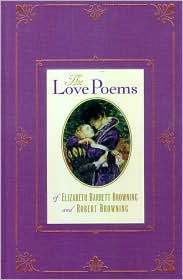
Love Poems of Elizabeth and Robert Browning
The marriage of the Brownings was by most standards an unlikely union of opposites. Yet, despite their differences, each one's poetry is a celebration of their unbroken devotion, compatibility, and passion; and together their poems reflect the union of two great souls.
268 pages, Unbound
First published January 1, 1994
About the author
Elizabeth Barrett Browning
993 books720 followersElizabeth Barrett Browning was one of the most respected poets of the Victorian era.
Born in County Durham, the eldest of 12 children, Browning was educated at home. She wrote poetry from around the age of six and this was compiled by her mother, comprising what is now one of the largest collections extant of juvenilia by any English writer. At 15 Browning became ill, suffering from intense head and spinal pain for the rest of her life, rendering her frail. She took laudanum for the pain, which may have led to a lifelong addiction and contributed to her weak health.
In the 1830s Barrett's cousin John Kenyon introduced her to prominent literary figures of the day such as William Wordsworth, Mary Russell Mitford, Samuel Taylor Coleridge; Alfred, Lord Tennyson, and Thomas Carlyle. Browning's first adult collection The Seraphim and Other Poems was published in 1838. During this time she contracted a disease, possibly tuberculosis, which weakened her further. Living at Wimpole Street, in London, Browning wrote prolifically between 1841 and 1844, producing poetry, translation and prose. She campaigned for the abolition of slavery and her work helped influence reform in child labour legislation. Her prolific output made her a rival to Tennyson as a candidate for poet laureate on the death of Wordsworth.
Browning's volume Poems (1844) brought her great success. During this time she met and corresponded with the writer Robert Browning, who admired her work. The courtship and marriage between the two were carried out in secret, for fear of her father's disapproval. Following the wedding she was disinherited by her father and rejected by her brothers. The couple moved to Italy in 1846, where she would live for the rest of her life. They had one son, Robert Barrett Browning, whom they called Pen. Towards the end of her life, her lung function worsened, and she died in Florence in 1861. A collection of her last poems was published by her husband shortly after her death.
Browning was brought up in a strongly religious household, and much of her work carries a Christian theme. Her work had a major influence on prominent writers of the day, including the American poets Edgar Allan Poe and Emily Dickinson. She is remembered for such poems as "How Do I Love Thee?" (Sonnet 43, 1845) and Aurora Leigh (1856).
Born in County Durham, the eldest of 12 children, Browning was educated at home. She wrote poetry from around the age of six and this was compiled by her mother, comprising what is now one of the largest collections extant of juvenilia by any English writer. At 15 Browning became ill, suffering from intense head and spinal pain for the rest of her life, rendering her frail. She took laudanum for the pain, which may have led to a lifelong addiction and contributed to her weak health.
In the 1830s Barrett's cousin John Kenyon introduced her to prominent literary figures of the day such as William Wordsworth, Mary Russell Mitford, Samuel Taylor Coleridge; Alfred, Lord Tennyson, and Thomas Carlyle. Browning's first adult collection The Seraphim and Other Poems was published in 1838. During this time she contracted a disease, possibly tuberculosis, which weakened her further. Living at Wimpole Street, in London, Browning wrote prolifically between 1841 and 1844, producing poetry, translation and prose. She campaigned for the abolition of slavery and her work helped influence reform in child labour legislation. Her prolific output made her a rival to Tennyson as a candidate for poet laureate on the death of Wordsworth.
Browning's volume Poems (1844) brought her great success. During this time she met and corresponded with the writer Robert Browning, who admired her work. The courtship and marriage between the two were carried out in secret, for fear of her father's disapproval. Following the wedding she was disinherited by her father and rejected by her brothers. The couple moved to Italy in 1846, where she would live for the rest of her life. They had one son, Robert Barrett Browning, whom they called Pen. Towards the end of her life, her lung function worsened, and she died in Florence in 1861. A collection of her last poems was published by her husband shortly after her death.
Browning was brought up in a strongly religious household, and much of her work carries a Christian theme. Her work had a major influence on prominent writers of the day, including the American poets Edgar Allan Poe and Emily Dickinson. She is remembered for such poems as "How Do I Love Thee?" (Sonnet 43, 1845) and Aurora Leigh (1856).
Ratings & Reviews
Friends & Following
Create a free account to discover what your friends think of this book!
Community Reviews
Displaying 1 - 22 of 22 reviews

January 5, 2015
Wow, I adored these poems. They were beautiful. Robert and Elizabeth had such a fascinating and beautiful love story and their poetry definitely reflects that.
All that I know
Of a certain star
Is, it can throw
(Like the angled spar)
Now a dart of red,
Now a dart of blue,
Till my friends have said
They would fain see, too,
My star that dartles the red and the blue!
Then it stops like a bird: like a flower, hangs furled;
They must solace themselves with the Saturn above it.
What matter to me if their star is a world?
Mine has opened its soul to me; therefore I love it.
My Star, Robert Browning
I'm pretty sure any woman would be stoked to have her husband write her a poem like that.
'Mine has opened its soul to me; therefore I love it'???
Mr Darcy has nothing on this guy.
All that I know
Of a certain star
Is, it can throw
(Like the angled spar)
Now a dart of red,
Now a dart of blue,
Till my friends have said
They would fain see, too,
My star that dartles the red and the blue!
Then it stops like a bird: like a flower, hangs furled;
They must solace themselves with the Saturn above it.
What matter to me if their star is a world?
Mine has opened its soul to me; therefore I love it.
My Star, Robert Browning
I'm pretty sure any woman would be stoked to have her husband write her a poem like that.
'Mine has opened its soul to me; therefore I love it'???
Mr Darcy has nothing on this guy.

October 12, 2016
Beautiful feel to these poems, great book to have next to your bed and read before you settle down for the night.

Read
September 6, 2024DnF 9.6.2024
Wasn't connecting :(
Wasn't connecting :(
Did Not Finish
July 10, 2025Lost steam once it switched to the Robert Browning poems. I preferred the Elizabeth Barrett Browning ones.

September 4, 2011
Forget all of the mindless and empty Hollywood romances of our day which are more about publicity than true effection. The Brownings shared a truely passionate and loving relationship which was echoed in the poetry and letters they wrote to one another.
For anyone who wants real passion and romance, this is the real thing. For anyone looking for deep and meaningful verse, this is also the real thing. This collection contains timeless love shared and explored through the verse of two of the greatest English poets of all time.
For anyone who wants real passion and romance, this is the real thing. For anyone looking for deep and meaningful verse, this is also the real thing. This collection contains timeless love shared and explored through the verse of two of the greatest English poets of all time.

January 29, 2011
The cutest couple in history. Also, I kind of want to go back in time and steal her dog, but Flush would probably bite me for separating him from his owner.

May 9, 2017
Poetry is such a beautiful thing.
I have to admit that I enjoy Elisabeth Barret Browning far more than her husband. Just her works I would give 4 stars.
My favorite verse: "I have known how sickness bends,
I have known how sorrow breaks, -
How quick hopes have sudden ends,
How the heart thinks till it aches
Of the smile of buried friends."
I have to admit that I enjoy Elisabeth Barret Browning far more than her husband. Just her works I would give 4 stars.
My favorite verse: "I have known how sickness bends,
I have known how sorrow breaks, -
How quick hopes have sudden ends,
How the heart thinks till it aches
Of the smile of buried friends."

February 6, 2019
Fabulous love poems!

March 26, 2020
A beautiful collection of their poetry, but I think I would have liked it better if they were more interspersed. I also would have enjoyed some further commentary.

June 24, 2022
I love EBB’s work, she speaks to my soul. Her husband… meh, not so much. His stuff is harder to follow.

November 14, 2022
BRUHHHHHHH 😭😭😭😭😭😭😭😭😭😭😭😭😭😭😭😭😭😭😭❤️

January 10, 2026
beautiful ♡

November 17, 2008
I really enjoyed the poems of Mr. and Mrs. Browning. I didn't know much about their life before reading this book. These poems are beautiful and personal and powerfully emotional. This was a surprise to me too considering the era they were written in.

February 17, 2010
I know my reading didn't do justice to this book. Still, I learned more about the Brownings, increased my poetry intake, and realized I prefer Robert to Elizabeth. 'Love in a Life', 'Summum Bonum', and 'A Lovers' Quarrel' were my favorites.

April 26, 2015
A nice, pleasant read. I think Robert Browning has a better grasp of composition (or, at least, the type of composition I prefer), but Elizabeth has more depth of feeling. I was looking for an excellent example of requited love, and I found it here.
Read
August 9, 2008shhhh

October 16, 2008
it made me grow up with time and taught me how to love

September 27, 2009
A very nice collection of Love Poems.
September 26, 2014
Beautiful!

May 14, 2015
Their romance always delights me, mine seems much darker. excellent read.
December 3, 2025
Timeless read...
Beautifully executed, worth the read.
Beautifully executed, worth the read.

January 14, 2011
fantastic . . .
Displaying 1 - 22 of 22 reviews