The second volume in the Library of America’s authoritative edition of John Steinbeck features his acknowledged masterpiece, The Grapes of Wrath. Written in an incredibly compressed five-month period, the novel had an electrifying impact upon publication in 1939, unleashing a political storm with its vision of America’s dispossessed struggling for survival. It continues to exert a powerful influence on American culture, and has inspired artists as diverse as John Ford, Woody Guthrie, and Bruce Springsteen. Tracing the journey of the Joad family from the dust bowl of Oklahoma to the migrant camps of California, Steinbeck creates an American epic, spacious, impassioned, and pulsating with the rhythms of living speech. The novel won the Pulitzer Prize and has since sold millions of copies worldwide.
This text of The Grapes of Wrath has been newly edited based on Steinbeck’s manuscript, typescript, and proofs. Many errors have been corrected, and words omitted or misconstrued by his typist have been restored. In addition, The Harvest Gypsies, his 1936 investigative report on migrant workers, which laid the groundwork for the novel, is included as an appendix.
The Long Valley (1938) displays Steinbeck’s brilliance as a writer of short stories, including such classics as “The Chrysanthemums,” “The White Quail,” “Flight,” and “The Red Pony.” Set in the Salinas Valley landscape that was Steinbeck’s enduring inspiration, the stories explore moments of fear, tenderness, isolation, and violence with poetic intensity.
The Log from the Sea of Cortez, an account of the 1940 marine biological expedition in which Steinbeck participated with his close friend Ed Ricketts, is a unique blend of science, philosophy, and adventure, as well as one of Steinbeck’s most revealing expositions of his core beliefs. First published in 1941 as part of the collaborative volume Sea of Cortez, Steinbeck’s narrative was reissued separately a decade later, augmented by the moving tribute “About Ed Ricketts.”
This volume contains a newly researched chronology, notes, and an essay on textual selection. It is the second of four volumes in The Library of America edition of John Steinbeck’s writings.
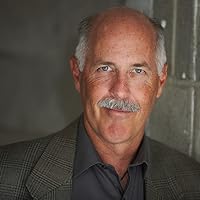
John Ernst Steinbeck was an American writer. He won the 1962 Nobel Prize in Literature "for his realistic and imaginative writings, combining as they do sympathetic humor and keen social perception". He has been called "a giant of American letters." During his writing career, he authored 33 books, with one book coauthored alongside Edward F. Ricketts, including 16 novels, six non-fiction books, and two collections of short stories. He is widely known for the comic novels Tortilla Flat (1935) and Cannery Row (1945), the multi-generation epic East of Eden (1952), and the novellas The Red Pony (1933) and Of Mice and Men (1937). The Pulitzer Prize–winning The Grapes of Wrath (1939) is considered Steinbeck's masterpiece and part of the American literary canon. By the 75th anniversary of its publishing date, it had sold 14 million copies. Most of Steinbeck's work is set in central California, particularly in the Salinas Valley and the California Coast Ranges region. His works frequently explored the themes of fate and injustice, especially as applied to downtrodden or everyman protagonists.
And this you can know—fear the time when Manself will not suffer and die for a concept, for this one quality is the foundation of Manself, and this one quality is man, distinctive in the universe.
This review is for The Grapes of Wrath only.
This is the second time I’ve read The Grapes of Wrath. I’ve also read a few other works by John Steinbeck. The Grapes of Wrath is a realist novel, third-person narrative, telling the tale of Joad family as they flee the dustbowl of Oklahoma for the land of plenty in California. The book won a Pulitzer Prize for fiction, and was probably the greatest factor leading to Steinbeck’s Nobel Prize.
I have never been much of a fan of short stories. When I decided to read this collection what amazed me was you could easily see how any one of them could have been a novel. The amazing part is the master story teller did it in a short story. Of course the Grapes of Wrath is a masterpiece telling a nightmare in the history of our country that never ceases to grip you no matter how many times you read this magnificent portrayal of human suffering. But, the portrayal of the refusal to give up love and affection for family makes it one of the greatest books of all time.
I totally understand why the Grapes of Wrath is a classic. We can fully appreciate the historical story of “real” hardship without any personal experience. I started with the Grapes of Wrath, and then had to read the rest of this book, only then realizing it is over a 1000 pages, but keeping my interest as much as any book has. The “Log from the Sea of Cortez”, started out curious and interesting enough, however I found that story of sailing biologists collecting sea specimens was so repetitive and boring, I abandoned this story after about 100 of the 275 pages. Steinbeck’s life events was an interesting read in the Chronology. Looking forward to reading more of his books.
My sister gave me this collection for my birthday (thanks, Krista!), and I'm loving it. In addition to The Grapes Of Wrath, which is my favorite novel, this collection includes The Long Valley (a volume of short stories, which are humorous, entertaining, and insightful), The Harvest Gypsies (a work of nonfiction research that laid the groundwork for Grapes), and The Log from the Sea of Cortez (a work of nonfiction featuring Steinbeck's friend, Ed Ricketts). I read The Long Valley first, and I'm reading The Log from the Sea of Cortez right now. I plan to read The Harvest Gypsies next, and then I'll re-read The Grapes of Wrath. I'm loving The Log from the Sea of Cortez so far. Ed Ricketts is the inspiration for several of Steinbeck's fictional characters, including Doc from Cannery Row, so I'm enjoying learning more about the man behind the characters. This is a great collection for the both the Steinbeck novice and the enthusiast, and it comes with a useful built-in book mark.
At one point John Steinbeck was regarded as one of the world's great writers. His reputation carried him all the way to the Nobel Prize for Literature in 1962.
Steinbeck's standing has fallen dramatically in recent decades, and I must say I agree with this reassessment. This volume contains Steinbeck's celebrated novel The Grapes of Wrath; The Log from the Sea of Cortez, a non-fiction account of his expedition to the Sea of Cortez with his friend, biologist Ed Ricketts; and a series of short stories collected under the heading The Long Valley. It closes with The Harvest Gypsies, Steinbeck's polemic about migratory agricultural workers in California's Central Valley.
To my mind The Grapes of Wrath suffers from all the defects of the explicitly political, topical novel. A great novel comes into creation when a writer sets out to tell a story and manages to touch something important, sometimes without even realizing it. The explicitly political novel suffers from the need to touch all those plot points needed to convey the political message. That makes it much more difficult to maintain a coherent line toward something deeper, and the writer often isn't even that interested in doing much beyond making the political point. The result is a novel which may be good, but never rises above the middle-brow. The Grapes of Wrath is perhaps the best example of this phenomenon in American literature.
Steinbeck had a decades-long friendship with biologist Ed Ricketts, who lived on the edges of society by his own choice and made his living selling biological specimans to school and university laboratories. In 1940 Steinbeck joined Ricketts for an expedition to the Sea of Cortez, located between Baja California and mainland Mexico. Ricketts apparently was an indelible character, but the book (published in the early 1950s) comes off more as the story of a road trip for middle-aged men with no great thoughts being expressed. They never went deeper than tidal pools to collect specimans. Scuba gear didn't yet exist, but as a diver myself I have to wonder whether Steinbeck and Ricketts resented their inability to go deeper and see more, or whether they simply accepted it, perhaps without even thinking about what they had missed.
The stories of The Long Valley are an uneven collection. Some seem trite, with unconvincing and unrealistic plot twists. One the other hand, the four stories previously collected as The Red Pony are marvelous. These stories often are thought of as children's or young adult literature because the central character is a boy named Jody who appears to be about 10 years old. However, the stories are filled with incisive details and insights into the characters of Jody, his parents and grandfather, ranch hand Billy Buck, and others who pass through their corner of the central valley. The stories look unflinchingly at the characters' shortcomings and their sometimes snarky and unkind treatment of each other. This steady gaze and Steinbeck's obvious understanding of people like this makes the characters fully rounded and gives the stories some genuine bite. For my money, The Red Pony is the best thing Steinbeck ever wrote.
Without The Red Pony I would give this volume three stars, but since it is included I will bump the rating up to four.
In the early morning before daylight we came into the harbor at San Diego, in through the narrow passage, and we followed the lights on a changing course to the pier. All about us war bustled, although we had no war; steel and thunder, powder and men -- the men preparing thoughtlessly, like dead men, to destroy things. The planes roared over in formation and the submarines were quiet and ominous. There is no playfulness in a submarine. The military mind must limit its thinking to be able to perform its function at all. Thus, in talking with a naval officer who had won a target competition with big naval guns, we asked, "Have you thought what happens in a little street when one of your shells explodes, of the families torn to pieces, a thousand generations influenced when you signaled Fire?" "Of course not," he said. "Those shells travel so far that you couldn't possibly see where they land." And he was quite correct. If he could really see where they land and what they do, if he could really feel the power in his dropped hand and the waves radiating out from his gun, he would not be able to perform his function. He himself would be the weak point of his gun. But by not seeing, by insisting that it be a problem of ballistics and trajectory, he is a good gunnery officer. And he is too humble to take the responsibility for thinking. The whole structure of his world would be endangered if he permitted himself to think. The pieces must stick within their pattern or the whole thing collapses and the design is gone. We wonder whether in the present pattern the pieces are not straining to fall out of line; whether the paradoxes of our times are not finally mounting to a conclusion of ridiculousness that will make the whole structure collapse. For the paradoxes are becoming so great that the leaders of people must be less and less intelligent to stand their own leadership.
My first foray into this anthology was reading "The Log from the Sea of Cortez." I then continued on with "Grapes of Wrath" out of a sense of obligation to read this classic dipicting drastic social change and the dogged perseverence of humans around the time of the Great Depression. Perhaps I should rephrase that as the horrible effects of poverty on good people who suffered in ways we can hardly imagine now. We all know them as Okies ever since.
Of course we are talking about the ecological disasters in the Dust Bowl that uprooted thousands of Oklahoma tenant farmers and drove them to try to get beyond their troubles by moving west to California. The story itself is told using the authentic dialog and speech patterns of these poor, honest people. This is not the style of writing I normally read, but it would be hard to imagine this book without this patois. And the tale grinds on and on through the story around the abject poverty of these people, where the ownership class, instead of showing some sympathy and helping them, despised them and exploited their constant state of near starvation and lack of money by obtaining what amounted to forced labor. Every person should read this book even there is litte joy in doing so.
These days you can get a good book review by going to AI; whereas, this is simply a personal reaction to this powerful work of John Steinbeck. I spent a whole year traipsing over the ground where Steinbeck lived in Pacfic Grove, and Cannery Row, that helped make Steinbeck famous. And this was another personal reason for me to read this book.
Its an old adage that the book is always better than the movie, and that just might be true in this case. I am a big fan of the movie, which I have seen a couple of dozen times before picking up the book. It was after recently showing a segment to my environmental history course that I decided to read the book. What strikes me is how well the movie is adapted from the book. Yes, there are some differences. First, the language is much more salty. Lots of curses and few "f-bombs" from Tom Joad and others. Second, there is a lot more talk about sex in the book. Third, there are more characters. While this is true of most books when compared to the movies made from them, the Joads often met other families in the book that are not depicted in the movie. Finally, the movie ends at a scene before the book ends. Nevertheless, the movie is coherent, true to the general narrative of the book, and definitely captures the politics of the book. One of the best parts of the book for me, is how Steinbeck alternates from chapters about the history and social impact of the depression and Dust Bowl to one focused on the Joad story. I think this makes the book more valuable and gives it much more force.
《Steinbeck》short stories in transport you back to another time and space. Feels so vivid. John Steinbeck has a gift of making breakfast and coffee sound so delicious. described a very interesting, unconventional, and original character Ed Ricketts (a biologist who interacts with hustlers, pimp, Madam of a whorehouse etc). The log part about the scientific expedition feels a bit boring and dull, although I do like the analogy between animals and human race in places. Evidently, the author is concerned with industrial evolution and its impact on human race, which is also the theme of . The story of the Indian boy who found a pearl stuck. After throwing away the pearl, ‘He was a free man again with his soul in danger and his food and shelter insecure’. ‘The great drive of our people stems from insecurity’. Throughout the text, the author mentioned Chinese poet Li Po(诗仙李白)several times due to his love of alcohol. I find this very interesting.
I wanted this to be what East of Eden was to my heart or Of Mice and Men to my mind but it was neither. It wasn't much to me personally but I can see why it was an important work of its time and I enjoyed it nonetheless.
I do admire that Steinbeck alternated chapters between long, slow and rapid, fast chapters to advance the drama in the plot. Feels life real life can be sometimes. Some of our seasons drag on and on and then in a flick of a switch you're somewhere new with someone new with brand new keys and cards in your wallet unlocking new paths for yourself.
The intro says it best. "The novel demonstrates how form itself is a kind of magic langetern, a shifting lens for magnifying and viewing multiple perspectives of reality." and "The Grapes of Wrath is not a closed system of historical periodicity, nature, and culture, physical earth and inhabitants.'
The Penguing Classics version has an extensive section compromising recommended works, both by and about Steinbeck's authorship. I intend to give some more a go.
Seeing the movie before reading the novel inevitably fills the head with scenery and the faces of the actors, as the imagination is a resourceful scavenger of stored memories, but this shift of perception far from ruined my experience with The Grapes of Wrath. There was no way to shake the mug of Henry Fonda from my second acquaintance with Tom Joad. Instead of this serving as a distraction, it provided me with a template to deepen the character of this charismatic, unsubmissive anchor to the novel.
In the novel, you see a slower push of the Joad family off their farm. You see a harder, longer struggle of the "Okies" across the highways of the West and the valleys of California. The novel also ends on a much different note than the film. After leaving the theater, many moviegoers must have felt hopeful and proud for the unquenchable spirit of the little guy. On film, Tom Joad gives his uplifting speech under the clear, endless night sky. On paper, this same speech is given in a makeshift hovel in the ground. The rolling of the credits and the closing of the back cover leaves the spectator in a much different state of mind. The reader most likely feels a mix of slight disgust, sharp compassion, and deep melancholy at the seemingly unchanging cruelness of this world of haves and have-nots. Although Steinbeck may have disagreed, since he is quoted in the Chronology of this book saying that the movie was even more bitter than his novel. If my memory serves me correct, there was also much pressure to change the ending of this novel, but Steinbeck wanted the bitterness of the migrant worker situation to sting the reader as much as possible. This was a master stroke and I respect Steinbeck for ending the story on such an emotional climax.
The structure of the novel is particularly interesting. It's split into exactly 30 chapters. Two to four chapters are dedicated to plot advancement, which are broken up by poetic minuets of a few pages each to shift the perspective away from the Joad family to small portraits of others going about their daily lives. These sections were the most experimental in their use of language and a welcome change of pace from the rest of the novel. The passage at the used car lot stands out particularly well. The perspective would shift from mind of the owner to mind of the salesman to an omniscient description of the car lot to dialogue between the owner and salesman to the mind of the buyer to the dialogue between buyer and salesman. All this was achieved smoothly without much indication in the change of the thinker or speaker. There were several other similar passages. Some summarized the travel of all the Midwestern migrants to the West, framing the narrative in a broader context. One focused on the relations between waitresses and truckers in roadside diners. The first one of these simply followed a turtle as it crossed the road, which invites a metaphorical reading. These deftly-written segues from the main text strengthens the story in at least two ways. One, it invites a metaphorical reading of the Joad story and it drives home the point that this is an example of a much larger trend. And two, it allows the reader some respite from the heavily colloquial dialogue that can weigh down the reading at times. These shifts fasten some poetic wings to help carry the load of this densely-dialectal, dialogue-driven text. It gives Steinbeck some space to show off his writing chops as well and I greatly appreciate the show.
All in all, a classic that thoroughly deserves its status.
Let us give thanks for library used book sales and Library of America: the former because I was able to snag an LOA edition for two bucks, and the latter because of the meticulous care they take when choosing which works to include in a volume. In this case, the LOA published three volumes to cover as much of Steinbeck's work as possible, the edition I scored covering the author's works from 1936-41. At first glance, I saw the list of works included and thought I'd get to the book at some future date, since I am currently on a quest to dive into Rex Stout's Nero Wolfe series. But upon closer inspection, I discovered that there's a fifty-page section ("About Ed Ricketts"), prior to the start of Sea of Cortez. A biography of sorts, the piece begins with Ed's untimely death, the result of his car colliding with a train. Given the fact that Ricketts and Steinbeck spent some eighteen years hanging out, Steinbeck knew a lot about his friend, which makes all that follows take the form of a eulogy more than a bio. Regardless of form, it's one of the most insightful and affecting tributes I've ever read. John S. covers the man's habits, lifestyle, loves, hates, virtues, vices, good deeds, and all the rest. What emerges is a portrait of an intelligent, passionate man whose interests span the spectrum of human experience. Ricketts was no angel, and I found myself repelled by some of his lifestyle choices, but I look at what he accomplished in the areas of marine biology and ecology, and realize I need to contribute a lot more to the world I live in.
One last note: "The Log from the Sea of Cortez" didn't originally contain the Ricketts bio. Said addition didn't occur until the 1951 edition, three years after Ed's death. That's another thing I like about the Library of America series: they're always thinking of the reader.
It is not easy to read, and I found it easier to see the film and understood better - but therefore all the more I value this work, not because it is difficult but because I could grasp it through the film.
And the film truly was great, especially when it came to the dialogue of mother and son at the end - and Henry Fonda forever marked his place amongst the great with his portrayal and his delivery in the last speech.
It is an entirely worthy, great - in the original sense of the word - work, and for anyone from US it is a must read because it is your own history, usually not told around in the fairy tale account of your country you get officially.
If you are not from US it is still a great work relating a part of history of US, and entirely worthy of reading. Difficult, yes. Great, absolutely.
The book deals with the depression in US that was devastating there, the beginning of an era in Europe that ended with millions killed in war and a sizeable few millions helpless killed by their own government in gas chambers and other ways of murder, and so on.
In all this the poor and the not so poor that became poor in US were almost forgotten, since the nation holds on to the myth that anyone who is willing to work must do well in that country.
This book for one exposes such myths. ......................................................................
Grapes of Wrath:Wow!I just finished reading this and what an ending. Honestly the best ending I've ever read in any book. Steinbeck writes so clearly I can feel the cotton in the feilds and the pouring rain through the valley. I highly recommend this book for anyone, especially if you like adventure.
The Long Valley: Steinbeck's literary brilliance shines through in this collection of short stories. From ranching to racial inequality to the beauty of nature, Steinbeck never fails to entertain and captivate his readers.
Log from the Sea of Cortez: An amusing story, this was based on Steinbeck's actual voyage with a team including close friend, Marine Biologist, Ed Ricketts. My interest was held mostly throughout and I got in a good number of laughs as well.
The Harvest Gypsies: A combination of articles Steinbeck wrote as a journalist, this series depicts the grim and restless life of California migrant workers in the thirties. It provides a shocking picture of the evil that man is capable of doing upon his fellow man simply because of greed and indifference.
July 09: The Long Valley, 4 of 5 The most of Valley's collection is solid, standard Steinbeck fare. The eleventh of thirteen stories, "Saint Katy", however, is terribly out of place in both style and content, a poorly executed experiment in fable having nothing whatever to do with the rest of the collection's shared elements of time, manner and place. It's really quite puzzling and bizarre why after ten stories we suddenly leave early 20th-century Salinas Valley in order to witness Steinbeck completely out of his element with a sloppily-written tale of a talking pig's elevation to sainthood by 13th-century monks, only to be thrust back almost with a vengence into the bright, shining star of the collection, the flawless, beautifully constructed, exemplary "The Red Pony", which I'm inclined to tuck just behind East of Eden as my favourite Steinbeck work.
I was born in Oklahoma City and have spent most of my life living in the state of Oklahoma. What can a native Oklahoman have to say that is bad to this classic of world literature? Nothing that is intelligible.
Steinbeck's writing is engaged throughout this tragic tale of the Joads. Though clearly a piece of socialist propaganda it does not hit the reader in the head with what it is in the same way that such pieces as Upton Sinclair's "The Jungle" does. By that, I mean it is a really good story.
The Joads leave their Oklahoma farm due to bank forclosure and the Dust Bowl. Steinbeck's characters are three-dimensional. He paints the events and places acurately as the Joads attempt to survive as produce pickers in California.
And there is a character that has to be inspired by another great Oklahoman, the ballad writing protester Woodie Gutherie. I highly recommend this book.
I was excited to read The Grapes of Wrath, as I recently became a Steinbeck fan and this is perhaps his most famous novel. But I was not impressed. He's a little too narcissistic when he gets in his descriptive mode; I like meat, not flowery appetizers. The plot is merely every other chapter - the in-betweeners are pure scenery. The language is pretty crude, too (which I don't mind overlooking if the plot compensates for it), and about half way through the book I realized I was forcing myself to read it. I wasn't excited about it; there was no page-turning, no voracious need to know what happens next.
I appreciated learning more about the American of that time period (and I did learn a lot), but frankly, I'd rather look it up on Wikipedia.
O carte superba..am calatorit cu familia Joad din Oklahoma pana in California, am fost alaturi de ei prin toate greutatile lor...mi-am facut sperante impreuna cu ei, sperand ca pana la urma vor avea o viata decenta, in casuta lor alba..fara foame , fara grija zilei de maine..dar...Trist...Oare e o coincidenta ca am citit aceasta carte fix in momentele astea cand mii si mii de refugiati vin in Europa? Oare cam asa este si viata lor in zilele astea , cum a fost viata familiei din carte? Cred ca da.. Cartea asta statea in biblioteca mea de cela luni bune, pana cand am pus mana pe ea si nu am mai lasat-o. Mi-am dat seama ca sunt atatea vieti de trait, care stau pe rafturile bibliotecii mele si asteapa sa fie descoperite...
See my individual reviews of _The Long Valley_, _The Grapes of Wrath_, and _The Log from the Sea of Cortez_. I did want to say something about the appendix materials, "The Harvest Gypsies" and "Starvation under the Orange Trees" (later collected in a pamphlet titled _Their Blood Is Strong_). These latter materials are a series of newspaper articles Steinbeck wrote between 1936 and 1938 documenting the "terrorist" tactics of farmers against migrant workers. The anger is righteous and justified, and these articles provide important arguments against trends and events that continue to plague our agricultural system today. Great stuff.
I re-read many of Steinbeck's books in winter for a conference I had planned on attending. Didn't make it to the conference, but enjoyed the reading. The end image of Grapes of Wrath still leaves me speechless. I especially enjoyed "The Long Valley" this time around.
I enjoyed all the stories with the exception of 'The Log from the Sea of Cortez.' I got about four chapters in and said nevermind. But the rest of the stories were good, I enjoyed 'The Grapes of Wrath' particularly well, as well as 'The Harvest Gypsies'.
Ugh! Worse book ever! What makes this a classic???? You read about this family during the Great Depression, you get close to the characters and it just ends with no resolution, no hope, nothing!!! Ugh!
I read Grapes of Wrath several times in my youth and was very moved by it. Having just reread it, I was totally blown away. The commentary chapters in between the Joad story chapters are magnificent. Wow!
The story of the people of the land I am from. A ravaging read. The sprawling tale of the Joads is not an easy journey, but it does light upon the resilience of hardworking Americans. A clear and mighty observing of the lengths of which we are capable. A call to action.
Read The Grapes of Wrath as a child; the others in this volume, not yet. I love the Library of America volumes because of the author chronologies, the long lasting construction, and the silk place marker.
Steinbeck was just entering his 'Golden Period' in 1936 and this is a magnificent collection of his greatest work including The Grapes of Wrath which one read lives in you memory like a visceral experience.