Len Deighton brings to bear all the skills of a best-selling novelist in this compelling study.
In Blitzkrieg, Len Deighton turns a searchlight on the rise of Hitler, the lightning dash of his armies to the Channel coast in 1940 and on the debacle of Dunkirk, where — in a mistake that was to trigger his eventual downfall — a quarter of a million British troops were allowed to escape.
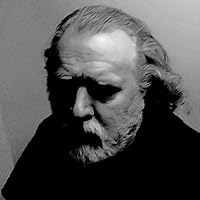
Deighton was born in Marylebone, London, in 1929. His father was a chauffeur and mechanic, and his mother was a part-time cook. After leaving school, Deighton worked as a railway clerk before performing his National Service, which he spent as a photographer for the Royal Air Force's Special Investigation Branch. After discharge from the RAF, he studied at St Martin's School of Art in London in 1949, and in 1952 won a scholarship to the Royal College of Art, graduating in 1955.
Deighton worked as an airline steward with BOAC. Before he began his writing career he worked as an illustrator in New York and, in 1960, as an art director in a London advertising agency. He is credited with creating the first British cover for Jack Kerouac's On the Road. He has since used his drawing skills to illustrate a number of his own military history books.
Following the success of his first novels, Deighton became The Observer's cookery writer and produced illustrated cookbooks. In September 1967 he wrote an article in the Sunday Times Magazine about Operation Snowdrop - an SAS attack on Benghazi during World War II. The following year David Stirling would be awarded substantial damages in libel from the article.
He also wrote travel guides and became travel editor of Playboy, before becoming a film producer. After producing a film adaption of his 1968 novel Only When I Larf, Deighton and photographer Brian Duffy bought the film rights to Joan Littlewood and Theatre Workshop's stage musical Oh, What a Lovely War! He had his name removed from the credits of the film, however, which was a move that he later described as "stupid and infantile." That was his last involvement with the cinema.
Deighton left England in 1969. He briefly resided in Blackrock, County Louth in Ireland. He did not return to England apart from some personal visits and very few media appearances, his last one since 1985 being a 2006 interview which formed part of a "Len Deighton Night" on BBC Four. He and his wife Ysabele divided their time between homes in Portugal and Guernsey.
Good easy read. Breaks down the twenty-five years of German history leading up to the beginning of World War II (political & military) and shows how the theory of Blitzkrieg came about and evolved into reality. Deighton writes for the layman and therefore does an excellent job of explaining things in detail. His writing is easy to follow, but there is never the feeling that Deighton is "dumbing down" either. In addition the book is lavishly illustrated with line drawing, maps and photos.
I am also in agreement with Aussie Rick in that even though the book is now forty-two years old it still has a current feeling to it. This is due to the fact that Deighton was not trying to support a new radical historical theory, but merely examining new tactics that were developed by the Germans and put into action in 1939/1941.His conclusions do not differ from other historians and therefore falls more into the realm of overview. Actually this book would be a good one for a lower level university history class (Freshman and Sophomore years).
This book would make a nice addition to one's military history collection.
(UPDATE 06/02/2021)
I realize that I was remiss in leaving out an important detail. Mr. Deighton addresses the fact that the German war machine wasn't as all powerful as many still believe eighty years later (Dr. Josef Goebbels can take credit for this belief still persisting). The Wehrmacht relied on horses to a surprising extent, the French tanks were actually superior in terms of armor and firepower and the British were quite strong in both the air and sea. However, he also addresses what went wrong for the allies and what went right for the Germans.
I read this book in 1980 not long after it was first published in 1979 and I found it to be a very easy to read account of Hitler and the German Army during the early period of World War Two. As mentioned in the earlier review, the author offers a general overview of this period but covers such things as Hitler and his relationship with the German Army and its commanders, Hitlers 'style' of warfare, the concept of 'Blitzkrieg' and the weapons & tactics involved and finally the camapign in France. The book is well researched and is very easy to read with 20 maps, 59 B&W photos and a number of line drawings and charts to assist the reader. I do not think that the book or any of its ideas has aged since it was first published in 1979 and I would recommend it to anyone who is looking to understand how the German Army conquered all before it in 1940.
This maybe wasn't the best book to tackle in the middle of lockdown, and I'll be looking for something softer and fluffier next, but I learned a heck of a lot about German tanks, the buildup to war and Germany's invasion tactics.
A better read than "The Blitzkrieg Myth". It was more thorough, more detailed and more readable. However both authors put forward notions that there was much bumbling and fumbling by commanders and politicians on all sides, for which the common people paid the price of losing their lives.
A great history - I've been studying World War II for decades and I learned a fair amount about this particular phase of the war from this book (for example, the extent of Rommel's recklessness and how lucky he was to survive this campaign.) Deighton uses extensive references and makes his points in a clear, ordered, meticulous way. He cites many primary sources as well as the works of other historians. It made me wish the book had covered a broader scope - Deighton did write about other parts of the war, and I'll be reading those books too.
An outstanding account of the early days of World War Two. Starting with a concise and informative outline of Hitler’s ascension to power, it tracks on through the invasion of Poland and ends with the fall of France.
Deighton documents how French and British incompetence and shortsightedness...and German skill and luck...led to a disaster for the Allies.
I really wish I’d read this back when it came out. There might be better and more recent accounts and analyses of the debacle, but this one deserves attention.
I suppose this book is somewhat dated, considering that so much has been written since its publication, but it is a very interesting book, especially about tanks, which I know little about. The photos at the end are also interesting. Deighton does mention the controversy over the German Army's "pause" which allowed the rescue of 300,000+ allied soldiers. This "What if..." probably has no definitive answer, but it certainly was fortuitous for the Allies.
Well written, opinionated, interesting account of the rise of the Nazis up to Dunkirk. Lots about specific armaments - who knew the history of tanks could be so fascinating - and specific officers. Well worth the read.
This was a wonderful find. To be honest I was not sure what to expect, considering that author is best known as spy novel author, but I definitely did not expect level of detailed information this book gives to the reader.
Author starts with the rise of Nazis and forces, together with paramilitary (Freikorps and SA) and political support they received (masterfully manipulated by Hitler who managed to mercilessly get rid of any and all political opposition, either through violence or through political machinations, by creating crisis and presenting himself as an only solution for them).
We are given picture of events taking place in the society that was crushed after WW1, governed by (unfortunately) incapable government that just could not cope with the economical difficulties and did nothing but provide fertile ground for the radical movement that will play the only card they know will bear fruit for them - ideological indoctrination.
While presenting rise of Nazis to power, author also points out that elements that will later be called Blitzkrieg showed up in merciless Freikorps and [what will later be known as] SA city fighting with the political enemies (especially German communists) - quick assaults by infantry armed with mechanization (trucks, light armored vehicles) and cannons, deployed on every hot spot to quickly overcome the opposition and then move to next front.
I like how role of German Army was clearly given in the first years of Nazis trying to establish themselves as a political force - Army was from start playing the role of kingmaker and unfortunately fell under the spell of master manipulator [who promised the return to martial glory] and willingly became the instrument of horrors to come during WW2. Rommel and his political views (I have to admit I was not aware of this before) prove that German military was fully supporting Hitler and started changing the position only when the tides started to turn and they saw they were heading towards the defeat. Propaganda launched at the end of WW2 (and lasting 'til this day) to clean this disgrace is something that will forever stain the West.
Author then moves to more military centered history and I have to admit he revealed quite a few details that marked the period of German military rise.
First, the idea that blitzkrieg was something new. Author shows how glorifying enemies successes and presenting it as something completely novel is nothing but a way to hide ones own incompetence. In essence what later became known as blitzkrieg was nothing else but a way of warfare that was specific for German armed forces for centuries - quick wars in order to prevent conflict on multiple fronts. Only thing that changed is that speed of forces increased but even this happened only to a degree. Second, myth of German army as a heavily mechanized force. Bulk of German troops still used horses to move around even by the end of WW2. Elite units (actual mechanized infantry and SS armed troops) used majority of mechanization but rest of Army still used horses to move troops and heavy equipment around. This I agree was in great contrast to very advanced air warfare component of German army but nevertheless it was true. While war industry was enlarged by conquests in East and West of Europe total mechanization of the armed forces never took place. Third, initiative in combat was something that allowed Germans to succeed. What separated German army from the rest of armies in Europe was high level of initiative given to both troops and officers. They were encouraged to adapt to the situation on the ground and execute the actions in the best way they can, without limitations from the upper echelons (commanders are there just to issue the objective but they do not proscribe the one and only way to achieve it). This proved to be the element to completely shock French and UK forces who were sticking to a rather inflexible (prepared) plans to fight the German army. I was truly surprised by inflexible French army command structure. Fourth, confirmation that new technology creates awe from the opposition only in the first phases of conflict. Once tanks were identified for what they were (highly vulnerable to determined infantry) they moved from the apex predator to the role of just another weapon in the battlefield that can easily be hunted and destroyed. Same today is happening with UAVs and other "wonder" weapons that military analysts are so amazed with. Fifth, you can wage war with this or that super weapon but without infantry all gains will very soon be lost. This is confirmed in recent wars too - without infantry to actually control the area no gain in the battlefield can be secured. This was truth before, and will remain truth for many years ahead. Only thing that can change is equipment for these very infantry troops. While tanks were a spearhead for many a German attack it was mechanized and standard infantry that went behind them and secured the area from flank and rear attacks.
Author provides a lot of details for each and every campaign fought - from Poland, Norway to France. It is visible that entire campaign (especially French one) were based off the existing plans from previous years (19th century and WW1) but adapted for new technology and means of warfare. Germans took the initiative and played to the weaknesses of their enemies by sowing fear and paralysis by quick penetration of armored columns. This psychological effect will paralyze the Allies (coupled with their rigid command structure) and enable thinly stretched German forces to cut them off unmolested instead of being targeted from flanks by every force capable of it.
Wherever Germans encountered resistance that was organized they were stopped and required larger infantry and artillery (thus much slower) forces to join the leading tank columns to move forward. Unfortunately there wasn't much of organized resistance at the time.
What truly surprised me in this book is level of details given to the issues of organizing large armor and mechanized forces entering the theater of operations. Even slight change in order was causing havoc on roads and approaches and caused delays when it comes to deploying infantry, armor and support services for the respective divisions. Considering snickering (although I understand it, it is propaganda after all) views of use of mechanized forces in latest war in Europe by the so many experts today, one can only understand that West has forgotten everything when it comes to waging war in large towns and cities (as author shows these were areas where tank attrition for Germans were horrendous, from Poland onwards) or in general heavily wooded and populated areas.
While at the beginning I was surprised by author ending the book about blitzkrieg after Dunkirk I understand his point of view. Up to cut off of Allied forces and forcing the Dunkirk evacuation German actions were what you might call blitzkrieg, lightning fast (reckless and total gamble though, bt again war is always a gamble) advance of armored columns that literary shocked French and UK forces and force them to go from paralysis to withdrawal instead of holding ground. After Dunkirk though front line expanded and with it German speed of advance naturally decreased to become more of a standard army advance and mop up of rest of the French resistance. Also every other theater of operations after France was [again] not blitzkrieg but again standard army advance with higher tempo (due to mechanization and air force leading the way). Once encountering the determined enemy (Russians/Soviets) with production base and covering mind boggling vastness of front, Germans just could not apply blitzkrieg at all and war entered the traditional warfare phase - attrition and destruction of manpower and equipment.
Excellent book with lots of details on WW1 experimental forces (J.C.Fullers project 1919 that was written off as war ended) followed by inter-war development of various mechanized and mobile force concepts tried out in UK and German initial approaches to organization of new forces following WW1 experiences and contemporary works (again by J.C Fuller and Liddell Hart) (and again having great luck of having someone as Guderian to amalgamate all the different tactical and technical approaches into workable new-force model).
As I said incredibly detailed book, describing pros and cons of both Allies and Germans, mistakes they made and how they solved some of the very difficult tasks (Dunkirk evacuation being one of the most complex evacuations I came across in history). As an additional plus, book gives comparison between units and equipment at disposal of every party in the opening years of WW2. I have to admit that now I understand even less the French army considering the mass of equipment they had at their disposal but actually never managed to apply it against the Germans.
This was a pretty good book, but it had some information and assertions that surprised me. I've spent my whole life as a war buff, spent much of my youth consumed with WW II, thought I understood how Blitzkrieg theory was actually fought in WW II, but apparently, I'm wrong. \
The book gives a pretty good history and summary of German war status, theory, preparation, Hitler's rise, mindset, theories of various military strategists. And then the war finally commences. Obviously, then, if this is well known to others, I'm showing my own ignorance here, but I'd always heard that Germany's Blitzkrieg techniques were unleashed on Poland, before excelling in Belgium and France, and ultimately later Russia, to a degree. If you've believed that too, Len Deighton will argue you're wrong. His thesis is it was not used in Poland, it was somehow not used in Russia, and it wasn't even really used in Belgium. Merely in France, in the Ardennes, to a shocking degree of success. This was news to me, but I'll grant Len authority status and take his word for it.
I wasn't totally stunned at how inept France's leadership, both political and military, was, as I'd read other books on France in other wars of the century where the beaurocracy, logistical and communication nightmares are simply legendary, but it was still a bit of a shock to find out how the previously thought to be best army in Europe/the world was so incredibly fucked up! It took 48-72 hours to relay orders, because the leaders didn't use radios, everything was hand carried (orders), and just because you got orders, you didn't do anything until they had been confirmed one to two more times. By which point the German army was 60 miles behind your lines, destroying your country. Fucking idiots! The British, initially, weren't a lot better, at least not the vaunted RAF, which was disappointing to read, but if the truth hurts, it hurts. Some of the French actually played soldier at Dunkirk, allowing hundreds of thousands of British and French troops to escape to Britain, but again, I continued to be shocked at how willing the French political and military leadership was to surrender to Hitler and essentially conspire in his plot against Jews and others, while the Free French forces in Britain were led by only one real general of note, and we all know who that is. Why France is on the UN Security Council is beyond me. They've insisted they're one of the great world powers, but they got their asses kicked in WW I, went over to Hitler after getting their asses kicked in WW II, lost Indochina (although embarrassingly, America followed France's exact same mistakes with the same results), lost most or all of their colonies, and while they're the centuries biggest losers, they land a permanent spot on the UN Security Council. Don't get it. I've read about how they insisted. THEY HELPED HITLER! They shouldn't have been allowed anywhere near the UN Security Council! Of course, while implicitly bragging about the US in the first half of the century, like an ugly American, I could admit to a number of American "irregularities" that many people wouldn't want known about a LOT of countries around the world where uninvited or unwanted westerners stuck their noses into things and propped up or took down "dictators" all over the damn place, so in the end, maybe the US shouldn't be on the Security Council either, eh? LOL!
Okay, I'll stop with the politicizing. Sorry. It's a good book, an easy read, interesting to those who would find the topic interesting, but stops with the capitulation of France, and I guess I knocked a star off because I wish the author had gone on to address Russia and explain just why that was NOT blitzkrieg warfare -- what the differences were -- because without having studied it in detail lately, it seems like similar tactics were used to launch the Eastern Front, but obviously I'm wrong. I just want to know how and why I'm wrong, and I never got that information from this book, so one star off for that. Otherwise, recommended.
I found this book interesting but unfortunately, the author duplicates German lies by writing that Polish cavalry charged German tanks. This is a German lie created for propaganda purposes. The Germans themselves were aided in fabricating this lie by a description of the Battle of Krojanty on September 1, 1939, a description fabricated by a correspondent for the Italian newspaper Corriere della Sera, Indro Montanelli. He described the battle, which he had not seen, and made it up in total good faith (as we can assume), wanting to show the courage of the Polish lancers. The journalist was supposed to describe for the Italians the glorious victories of their German allies in Poland. Brought to the site of the battle in a Wehrmacht vehicle, he saw fallen horses, lots of blood, Polish sabers near German armored vehicles. German officers told Montanelli what the battle "looked like." Of course, they told him their version, which was quite nearly untrue. In fact, the battle itself looked like this: On September 1, in the late afternoon near Krojanty, near Chojnice, the 18th Cavalry Regiment of the Pomeranian Cavalry Brigade under the command of Colonel Kazimierz Mastalerz charged at the German infantry of Colonel Hans Gollnick's 76th Regiment. During the charge against about 800 German infantry soldiers, the Polish lancers (about 250) were attacked by German armored personnel carriers and tanks standing in the woods, which shelled them with machine gun fire. Being at full gallop, it was difficult for the lancers to stop their horses or bounce to the side (this succeeded for those riding behind). The first ranks, headed by Colonel Mastalerz, were wiped out by heavy artillery. No one charged at the tanks with sabers, let alone lances, which were withdrawn from battle use in the mid-1930s. (They were used only during ceremonial parades). The Italian journalist's story was picked up by German propaganda. On September 13, the magazine Der Wehrmacht printed it, and Goebbels ordered it to be included in the documentary Feldzug in Polen and in the film Kampfgeschwader Lützow, both of which were intended to prove the stupidity and irrationality of the Poles. The author also writes that pre-war Poland was inhabited by 2 million Jews who were victims of murderous pogroms (which is a strong misuse on the author's part) and that is why they clung to their community. Officially, there were about 3 million Jews in Poland , who simply formed their own communities from the mere fact that there were a lot of them. Poland had religious tolerance for many centuries, which is why Jews chased out of Western Europe were welcomed by Polish kings. The influx of such a number of people was bound to stir up conflicts, and the fact that Poland was later occupied by Russia, Germany and Austria for 120 years also had an impact on social relations and the fact that attitudes towards the Jewish population, who often felt no ties to Poland, changed.
Confession time: I am an addict. And my addiction is WW2 nonfiction. Specifically nonfiction books that cover such characters as Churchill, FDR, Eisenhower, De Gaulle, and that evil dude who stole his style of mustache from Charlie Chaplin. I'm far more interested in the underpinnings of war, the why of it all, than in battlefield maneuvers and logistics.
"Blitzkrieg" does a good job of providing both an overview of what led up to WW2 (my favorite part of the book) as well as a semi-deep dive into the weaponry and tactics of what came to be known as lightning war. It also profiles the Nazi generals who championed the strategies involved in blitzkrieg and those who thought it would never work. It also has a lot to say about why the French armies were so soundly defeated when they had both the troop numbers and weaponry necessary to prevail (it boils down to poor communication and bad luck).
An interesting side note is that the author asserts that "Case Yellow" (the Nazi's plan for the invasion of France and the low countries) is the only time in the history of 20th century warfare that true blitzkrieg tactics were implemented.
This book will undoubtedly be of most interest to dedicated WW2 fans, although the brief historical overview regarding the ramp up to the war may be of more general interest.
A well researched account of the fall of France, the introduction of a fast-moving armored attack, and the miracle of Dunkirk. I like that as part of his research, Deighton talked to many civilian survivors, military participants- of all ranks, and gave a rather unvarnished, non-political account, correcting some of the established reasoning that followed World War Two. Wether his views are correct on these mistakes and blunders they sound plausible and very in line with human nature, especially at war. Also there is quite a gallery of black & white photos of all the major participants and some actual battle footage talked about. It gets a little too technical when talking about tanks- in fact an alternate title for the book would be TANK- but the narrative picks up and puts you right into the action. I've read a lot of Len Deighton's spy novels but this was a nice surprise and an enjoyable read.
Len Deighton has long been one of the British spy-fiction writers that I enjoy, but his nonfiction works are worth reading as well. This one, documenting the way in which war was waged in France in 1940, argues that this was the only instance in which Hitler and the Nazis actually used the tactics of "blitzkrieg" (lightning war) in its pure, unadulterated form. The books goes to some length describing the armaments on both sides, as well as the generalship on each side (in many cases, the absence of it on the Allied side, in the face of German aggression that wasn't what the other side expected after their bloody apprenticeship in the trenches of 1914-1918). A very good, very fast-moving (no pun intended) history of an episode in the war that seemed like a German victory at the time, but was actually the beginning of the Allied response.
The author has done a remarkable job giving us the story from those who spearheaded these historical events with several important life lessons. Boldness oft times carries the day. We don’t always need to have all the answers, but it is vital to have a vision, a plan and the necessary support to facilitate it. More importantly however, we must stand against evil at all times. The German soldiers were fearless, but the leaders carrying the vision had a bent perspective of the world. They lost
I have read or heard most of this before, but Mr. Deighton does bring up a few items I was not aware of before. 1. Why did the French Air Force sit out the attack? 2.How could the allies not see that being able to talk with one another was not a good thing? 3. Pride will lose you people and things every time. This book is a good read if you want to understand a bit more about the war in the west in 1940, but I would not use it as your only source.
A good read, but showing it’s date now. Something’s can be disputed through what is now known of Bletchley. But that doesn’t detract from what is a good explanation of how the Germans made there advance through the Ardenne to the coast and the encircling of the French and BEF. It’s not big on detail of ‘this regiment did this’, but you get a good flavour for movement. It’s about the Germans, very little about the Allies. But I like that.
Deighton honed his skills as a novelist, and brings that expertise to bear in not just telling the history of blitzkrieg, but the STORY of blitzkrieg. Much military history is stultifying, with recitations of numbers of weapons and this unit moving there and that commander placaed in charge there. With Blitzkrieg, we experience the events and emotions of the proponents of blitzkrieg, the challenges faced by the attackers, and the confusion worught upon the defenders.
A great follow up to Alistair Horne’s To Lose a Battle. The illustrations are excellently executed but not attributed. Since Deighton is an illustrator, doing the U.K. cover for On the Road, for example, I assume he did them himself. All in all I preferred Alistair Horne’s To Lose a Battle but this was a worthwhile complement especially since Deighton had the assistance of Rommel’s chief of staff who also wrote the foreword.
Goed overzicht van de oorzaken en de weg naar het succes van de NSDAP in duitsland. De gedetailleerde beschrijvingen van de wapens en aanvalsplannen die van uur tot uur worden besproken zijn minder aan me besteed. De politiek historische gebeurtenissen zijn wel duidelijk beschreven daar ligt ook meer mijn interesse
I would definitely say I was a world war 2 buff. This was the first Len Deighton book I ever read, my brother gave me a copy over 40 years ago! I was hooked, the attention to detail is astounding. If you ever want to read or research the rise of Germany and their forces leading up to WWII, this is a must read! Blitzkreig or lightning war, is the most comprehensive account I have ever read.
A detailed look at the logistics, men, and machinery involved in the early stages of World War II. This book explores how Germany succeeded in taking over the vast majority of Europe, with very little resistance.
My copy was from the local library system. It is interesting to note that the author, currently aged 92, is known for popular spy novels, illustration and French cookbooks