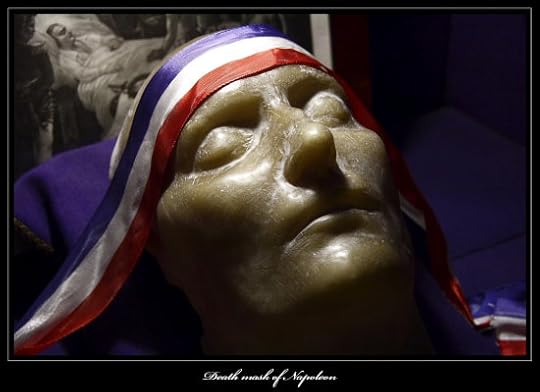
Napoleon has escaped St. Helena, but the impersonator he left in his place has unexpectedly passed away. Travelling incognito through the Continent, he experiences a series of bizarrre adventures that bring him face to face with the myth of Napoleon as it is disconcertingly played out in everyday life.
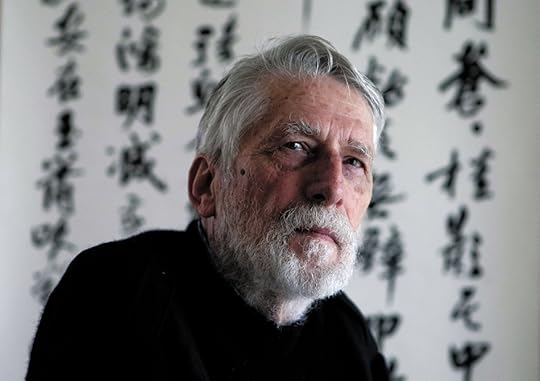
Simon Leys is the pen-name of Pierre Ryckmans, who was born in Belgium and settled in Australia in 1970. He taught Chinese literature at the Australian National University and was Professor of Chinese Studies at the University of Sydney from 1987 to 1993. He died in Sydney in 2014.
Writing in three languages - French, Chinese and English - he played an important political role in revealing the true nature of the Cultural Revolution. His many prizes include the Prix Renaudot, Prix mondial Cino Del Duca and the Christina Stead Prize.
“For the first time, he began to see himself as he really was, naked and defenseless at the center of a universal debacle, buffeted this way and that by events, threatened on every side by an all-pervasive decay, sinking slowly into the quicksands of failed resolutions, and finally disappearing into the ultimate morass against which no honor could prevail.” ― Simon Leys, The Death of Napoleon
Such lyrical, precise language, a cross between extended prose poem and novelistic meditation on the nature of identity, glory and history, both whimsically light and philosophically deep. Such graceful fiction from scholar/essayist/sinologist/quirky renaissance man Simon Leys (1935-2014).
"What a pleasure to read a real writer. The Death of Napoleon is utterly satisfying sentence by sentence and scene by scene, but it is also compulsively readable." These are the words of renowned literary critic Gabriel Josipovici, words with which I wholeheartedly agree. And to underscore my agreement, I’ll serve up a few slices of Leys poetic, that is, three quotes from scenes in Chapter One that chronicle Napoleon’s voyage on board a ship carrying the world-famous emperor from St. Helena back to his beloved France. And, yes, of course, this is imaginative alternate history.
A snippet of the author’s description of the ship’s cook: “He was tall, but a good half century spend over stoves in low-ceilinged galleys had broken him up into several angular segments, like a half-folded pocket rule. Without really being fat, his body swelled out arbitrarily in places, giving him the shape of a semi-deflated balloon. His face was split by a huge gaping mouth; in this grotto, as black and dirty as the maw of his stove, there emerged one or two teeth, like slimy rocks protruding at low tide. The ruined state of his teeth made his speech, already bizarre, all the harder to understand, endowing his rare utterances with a kind of oracular force – as befits a black cook on a sailing ship who, to be true to type, must naturally have a smattering of occult sciences.” Wow! I mean, Super-Wow! -- exquisite visual images; expressive vivid metaphors.
“Every evening, crushed by the fatigue of the day’s work, Napoleon would escape for a moment from the stuffy atmosphere of the forecastle and lean against the bulwark in the bows to watch the first stars come out. The softness of the tropical azure giving way slowly to the velvet of night, and the glittering of the lonely stars which seem so close to us when they begin to shine in the dusk, left him perfectly cold.” If you have never had an opportunity to stand on the deck of a ship at sea and watch tropical azure give way slowly to the velvet of night, here is your opportunity to not only experience via your imagination but to join Napoleon in doing so.
Napoleon assumes the identity of a cabin boy by the name of Eugène in order to escape from St. Helena. At one point we read of Napoleon’s self-reflection: “During this time in limbo, and until the day when Napoleon’s sun would rise again, he had to survive by relying upon wretched Eugène's purely physical existence. Only the slenderest thread was leading him back toward the hypothetical dawn of his future. So far, at every stage of his journey, a new, unknown messenger had emerged from the shadows to show him the route to follow.” Again, on one level Simon Leys’ slim novel is a meditation on the nature of time and identity. And what an identity! After all, he is Napoleon.
Thank you, New York Review Books (NYRB) for reprinting this slim classic. And thanks to Patricia Clancy for joining Mr. Leys in translating from the French into English. 130 pages of large font – this novella can be read in three hours. Treat yourself to a day of literary ecstasy. I have four times over and counting, but then again, when it comes to ecstasy I admit that I have never observed moderation.
Inspired. A beautifully nuanced novella. (The optimal narrative form for our time, according to Ian McEwan and others.) Napoleon leaves a double on St. Helena and sneaks back to Paris on a merchant vessel as a lowly ship's hand. When the ship is rerouted to Antwerp at the last minute he loses touch with the cabal that would return him to power, and so becomes a regular joe. He may or may not revisit Waterloo. It's not entirely clear. I don't want to say more. It's quite a story. You can read it in an hour or so.
"Other napoleons came and went around him; in the middle of the lawn, where a patch of white mist now hovered, one of them peered into the shadows through a cardboard telescope; another spread an old newspaper on the stone balustrade, as if it were a staff map. There were some who sat astride rusty garden chairs, lost in thought." In The Death of Napoleon (originally published as La Mort de Napoléon), Belgian writer Simon Leys twists fact with fiction by envisioning Napoleon Bonaparte's escape from imprisonment on the isle of St. Helena by switching identities with a fellow officer named Eugene Lenormand, and then by traveling incognito as a deck hand on a cargo ship, all in the hope of recapturing his destiny in Paris. To say much more about Napoleon's imaginary adventure would spoil the experience of how this small, whimsical story unfolds. Several unexpected plot twists along the way raise thought-provoking questions about the nature of hero-worship, identity, self-discovery, and madness. "For the first time, [Napoleon] began to see himself as he really was, naked and defenseless at the center of a universal debacle, buffeted this way and that by events, threatened on every side by an all-pervasive decay, sinking slowly into the quicksands of failed resolutions, and finally disappearing into the ultimate morass against which no honor could prevail."
Simon Leys has written an antidote to the What If Novel. What if Napoleon had used a double to escape from St. Helena? Well perhaps nothing significant except that he saves a failing fruit business in a Paris suburb and gets loved up by a plump widow. The fly in the strategic ointment is that by the time of his return to national politics there is an entire hospital devoted to men who believe they are Napoleon. Could have been, why not?
This entire review has been hidden because of spoilers.
As he bore a vague resemblance to the Emperor, the sailors on board the Hermann-Augustus Stoeffer had nicknamed him Napoleon. And so, for convenience, that is what we shall call him.
Besides, he was Napoleon. . . .
Simon Leys was the pen name of the renowned Sinologist Pierre Ryckmans, one chosen to avoid issues on his trips to China from his forthright opinions (no fan of Maoism, he clashed with leftist Parisian intellectuals of the time).
His 1986 novel La Mort de Napoleon was translated into English, as The Death of Napoleon, by Patricia Clancy and himself in 1991 and won the 2nd Independent Foreign Fiction Prize in 1992, the forerunner of the Man Booker International, from, it has to be said, a relatively obscure longlist (25 years later I recognise only 2 other books of the 12).
The delusion of grandeur that one is Napoleon, now a common trope, dates back to the 19th Century, but perhaps not so widespread as in this book. A first literary mention can be found as early as the 1890 treatise The Principles of Psychology , where William James describes enducing such a delusion as a typical demonstration of hypnotism, and "a character in William De Morgan’s 1907 novel Alice-for-Short thinks he’s Napoleon but is counseled to keep it to himself lest he get locked up. The earliest filmed version of the gag is almost certainly found in the 1917 Stan Laurel short Nuts in May". (Source https://straightdope.com/columns/read...)
The Death of Napoleon, a cleverly constructed 130 page novel(la), asks us: what if the person suffering the delusion really is who he thinks he is?
Napoleon has escaped from his exile on St Helena, swapped for a double, and is returning to Europe to arouse his still loyal supporters and reclaim his position.
At no stage was anything left to his initiative, every move had been minutely planned for him, and each time he was notified at the last minute, by a series of anonymous agents, themselves mere cogs that fitted blindly into a huge, mysterious machine. ... This new contact would guide him to the huge secret organization that had been prepared to propel him back into power, and which needed only one spark of his genius to be set in motion.
An organisation so secret that the conspirators themselves did not know the very object of their association. Although the membership could already be counted in tens of thousands, no two members knew each other. Under such conditions, they naturally had no way of knowing that the author of this gigantic scheme- an obscure young mathematician - had already departed the world two years earlier, carried off by brain fever! However, the complex mechanism that his brilliant mind had designed was so perfect, and every detail had been planned with such precision, that the wheels kept turning blindly day after day, month after month, without being affected in the slightest by the disappearance of their anonymous creator.
Except the perfect plan is derailed completely when the Hermann Augustus Stoeffer, the brig taking Napoleon, in the guise of a lowly deck hand Eugene Lenormand, from Cape Town to Bordeaux, instead diverts at the last minute to Antwerp, a mundane decision made by some shopkeeper, based on the prices of molasses or indigo.
Napoleon is not one to give up hope:
He has always had the unshakable conviction that all setbacks that have happened in his life, even those that seemed the most painful and futile, must in some way or another actively contribute to the working out of his destiny.
He visits the battlefields of Waterloo, already turned into a tourist attraction, finding several inns claimed to be where he spent the night before the battle (none of which he recognises) and getting into an argument with the grizzled veteran who gives guided tours (and who turns out to have lost his leg in a drunken accident, not on the battlefield) as to the precise disposition of forces during the battle. He leaves Brussels without remembering that common seamen have to pay for their hotel accommodation.
At one point en route to Paris he thinks he has been recognised, hopefully by a fellow conspirator. Alas..
“Sergeant, we’ve got the man!” the gendarme announces, looking pleased with himself.
The Man! This is what all the crowned head of Europe used to call him, in fear an trembling, as though the four syllables of his Christian name were a thunderbolt that could topple their thrones at the first distant rumble...
“Eugene Lenormand, wanted for failure to pay a hotel bill.”
But he finds his way to Paris and a group, not of the plotters but as least of loyalists to the Emperor, only to be greeted by the news that Napoleon, or rather his double on St Helena, has died. At first, highly moved by their grief, he soon realises it presents a major barrier: he will be battling against a Napoleon who was largely than life - the memory of Napoleon! (a figure that now, ageing, bald and out of shape he increasingly no longer physically resembles) and as for the men they enjoyed their despair: they sale into it with a kind of relish, as one voluptuously sinks into sleep after a very long vigil. If anyone had tried to wake them at that time, he would have found them not only deaf but hostile as well.
Offered accommodation by the widow of them, who has a humble and struggling business selling watermelons, and biding time while he plots what to do, still in the guise of Eugene, he turns his attentions to successfully revitalising her business deploying the detailed and unique strategies that led to his military successes.
Another Bonapartist, an ex medical officer, sees through this to recognise Eugene’s identity but seeing his Emperor calmly settle into his newfound bourgeois prosperity... he found himself in a position similar to that of a believer to whom God has just revealed the fact that He intends to retire.
Napoleon sees the chance to begin his campaign to reclaim power, but the medic tells him it is too late and, to convince him, takes him to the asylum of one Dr Quinton, filled, of course, with delusional Napoleons. Seeing one such figure, complete with homemade costume and trademark mannerisms, the real Napoleon realises:
This miserable wreck presented an image of his model a thousand times more faithful, more worthy, and more convincing than the unlikely bald fruiterer.
Napoleon is chastened (he began to perceive more clearly that greatness should always be on its guard against the snares of happiness) but not deterred and starts to plot his return on his own, using his extensive knowledge to plan a secret and complex campaign of claims of loyalty and blackmail to gradually build up a power base within the Government so that a clandestine power would grow gradually within the official power structure, replicating its functions and sapping its energies, until the day when, sure of its hidden network, with one stroke the former could take over from the latter.
But his plotting seems to be theoretical rather than actual and takes place entirely in the detailed written dossiers he prepares, increasingly neglecting the watermelon business, and when he hints at his true identity to the widow, a visit from Dr Quinton soon follows...
A highly entertaining read and at the same time a compelling explanation of identity and power, of outer reality versus inner belief, and a worthy winner of the IFFP.
"He began to perceive more clearly that greatness should always be on its guard against the snares of happiness."
Simon Leys is one of my very favorite essayists. The Hall of Uselessness, a collection of his essays, was one of the best things I read in 2014. I didn’t realize that he had also written fiction, so when NYRB republished his novella The Death of Napoleon I bit without hesitation. I’m glad I did. This book is a little masterpiece.
The premise is irresistible: What if after six years of exile on St Helena, Napoleon had been put by loyal conspirators aboard a ship, where he served as an anonymous deckhand, leaving a double in his place; and what if the ship in question was diverted from its intended destination in France (where other conspirators awaited) and set him down in Antwerp instead? What if Napoleon himself had made a visit to the battlefield of Waterloo, now overrun by English tourists, and found himself alone in Paris where no one recognized him?
This is not simply an alternative history novel, however. It’s a carefully, lovingly crafted meditation on identity and, more specifically, on the tragedy involved in striving to become the person you once were or feel you want to be, and failing to be the person you actually are right now.
beautifully written and outrageously boring, the death of napoleon satirically explores the banality of man in the most tedious way possible.
in his think piece on the mundaneness of humanity, leys explores how a man once hailed as the greatest commander of the century, struggles to find excellence within a life of insignificance, vying for his former glory but constricted by the simplistic nature of life.
so i guess it seems fitting that a book about the mundane imitates its messaging, where there is a start, an end and a whole lot of nothing in the middle.
Wonderful. I read this book once a year and marvel at the complexity of feeling it conjures in me. It's slight in size, but funny, poignant, heartbreaking and somehow wise. Read it!
a beautiful little book that believes Napolean's tragedy wasn't that he could have been something more than an emperor- but that he could've been an everyday man who knew our days are few on this earth
Lectura ligera muy recomendable. Me ha encantado porque explora una de mis anécdotas favoritas de Napoleón: durante su exilio en Elba en cuestión de meses había reformado la industria pesquera, organizado proyectos de construcción de carreteras y abierto una mina. Siempre Bonapartista porque como decía mi querido Leon Bloy todos los errores de Napoleón se debieron a que el ángel de la guarda que le asignaron en el Cielo no estaba a su altura.
Yeah… uhhhh….Napoleon’s last attempt to free France from the tyranny of perfidious Albion falls apart and Napoleon is forced to live out the final brief shred of his life as a humble Parisian fruit seller. It’s slight and sweet and short. Will I Keep It: It’s an NYRB classic, they just look so goddamn pretty on my shelf I can’t help it.
A selection of my favourite passages from the book
What a pity to see a mind as great as Napoleon’s devoted to trivial things such as empires, historic events, the thundering of cannons and of men; he believed in glory, in posterity, in Caesar; nations in turmoil and other trifles absorbed all his attention. . . . How could he fail to see that what really mattered was something else entirely? —PAUL VALÉRY
• In actual fact, although they did not feel the slightest respect for him, something prevented them from bullying him. Was it his aloofness, his obstinate silence that created a certain distance, or his plump white hands, like a bishop’s, that gave him a mysterious dignity? Perhaps they simply took pity on his physical weakness and his prodigious ineptitude in performing any sort of manual work.
• He was tall, but a good half century spent bending over stoves in low-ceilinged galleys had broken him up into several angular segments, like a half-folded pocket rule
• His face was split by a huge gaping mouth; in this grotto, as black and dirty as the maw of his stove, there emerged one or two teeth, like slimy rocks protruding at low tide
• The strange thing is that, far from discouraging Nigger-Nicholas, this very indifference seemed to increase his solicitude.
• Between the persona he had shed, and the one he had not yet created, he was no one
• The sky was divided between night and dawn—blue-black from the west to the zenith, pearl-white in the east—and was completely filled with the most fantastic cloud architecture one could possibly imagine
• The night breeze had erected huge unfinished palaces, colonnades, towers, and glaciers, and then had abandoned this heavenly chaos in solemn stillness, to be a pedestal for the dawn
• The flamboyant mysteries of dawn had faded into the banality of plain day
• He has always had the unshakable conviction that all the setbacks that have happened in his life, even those that seemed the most painful and futile, must in some way or another actively contribute to the working out of his destiny
• And what of Napoleon? To tell the truth, at that moment his mind was occupied, much against his will, with a thought so futile that he himself was irritated by it: Who on earth was Louis?
• Her voice, even when she was describing disasters, still had a kind of cheerfulness. In the midst of ruination, this woman radiated a warmth and vitality which could be felt in the old house itself, in spite of its being so bare.
• It was a long vigil. They wept, talked, drank. That night, a strange intimacy, forged from their common grief, bound together these old children who found themselves all at once orphans of the same dream.
• In a Europe which could not find a single adversary worthy of opposing him, the dismemberment of states, the carving up of empires, the dethronement of kings were hardly challenges to him . . . But now an obscure noncommissioned officer, simply by dying like a fool on a deserted rock at the other end of the world, had managed to confront him with the most formidable and unexpected rival imaginable: himself!
• For the first time, he began to see himself as he really was, naked and defenseless at the center of a universal debacle, buffeted this way and that by events, threatened on every side by an all-pervasive decay, sinking slowly into the quicksands of failed resolutions, and finally disappearing into the ultimate morass against which no honor could prevail
• The doctor kept looking at him; his eyelids were strangely bereft of lashes, giving his eyes an unpleasantly fixed stare
• Previously, during the long hours they spent alone together in the evenings, silence had wrapped them round in a warm feeling of security, whereas now it became unbearable, loaded with permanent menace.
• He began to perceive more clearly that greatness should always be on its guard against the snares of happiness. The most brilliant achievements of his past career had been but a dream from which he was awakening at last. It was only now that his genius was coming to maturity. The epic of his past was no more than a confused and aimless burst of youthful energy compared with what he would be able to achieve, now that there would be no emotions, no attachments to stand between his creative intelligence and his will to act. He was reaching a higher plane of existence, and on these heights he breathed deeply of an air so pure that it would have burned the lungs of ordinary men.
"Is Simon Leys Belgium's best gift to Australia?" asked The Canberra Times. (Canberra NOT Sydney or Melbourne is Australia's capital...stuck out in the mulga miles away from the coast!) Well, of course !!!...Leys is Best Gift !!! Especially since Susan Sontag,"probably the most intelligent woman in America"(Jonathan Miller) had followed up his Canberra residency with her : "Lucky Australia that Pierre Ryckmans has chosen to live there." The Chinese had something to do with it too, because they had refused him re-entry, after he had made some minor criticism of the Cultural Revolution under Mao ...even minor is major there!!! Especially when you have exposed Mao's horrors and his apologists!! But THAT only after French Maoists had worked out that Simon Leys, author, was also Pierre Ryckmans, famous sinologist and employed for some years in China. They soon betrayed him to his Asian bosses. It was Ryckman's publisher of his damning critiques who had suggested that a pseudonym wouldn't go astray...hence meet "Simon Leys"...who continued to exist and be used by Ryckmans for a host of other books. Luckily he was in Australia when this French betrayal occurred...and stayed from 1970 to his death in 2014. China's loss!!!...hardly Australia's Gain when he proceeded to give the Establishment here several critiques, for which the general populace was VERY grateful. Pierre/Simon had taken out Aussie Citizenship and could be as critical as he liked and as THEY deserved.
Here he won a prestigious Award for his "Death of Napoleon"in 1991 ...BUT claiming that this remarkable novel "has nothing to do with history, politics or even with Napoleon himself." (There's a yardstick for measuring the Reviews here, if you can. AND for measuring the book too!!! To put a powerful presence and character such as Napoleon as the Central Figure in a novel and claim he ISN'T, is more than a risk, it's foolishness.)
This little book, a novella and a fable, is a Gain for the Global Citizen.
Alas,I read a borrowed copy some years ago and remembered to return it.
But JOY...very recently discovered a cheap secondhand copy in our local excellent bookstore!!!
Read it slowly and indulgently...relishing vocab and style and pursuing purpose with 'what the Hell is he getting at HERE???' The scene of multiple Napoleons is cruel and clever and pointed. I felt for Napoleon even after knowing that the novel has 'nothing to do with Napoleon himself.' So 'What Abstraction' is it pursuing ?? I suggest you read it YOURSELF. It IS worth the READ, well written, beautifully written but the puzzle remains: "What Is He Getting At?" At 103 pages, a slight book really, you have time for a Second Read !! Especially if you're going to squeeze the Profundity out of it.
THE MOVIE : Earlier I did pick up cheaply a DVD of the film of the book, a MOST faithful rendition...sometimes....mostly... and what isn't is so close to the pursued purpose is perfectly satisfying... with Ian Holm playing the role so well; and of whom Pierre/Simon said "interpreted to perfection...whose performance made me dream of what could have been achieved had the producer and director bothered to read the book." And actually, quite a lot IS achieved. Only the poster trivializes the book AND film...AND unsuccessfully. He must have realised they HAD read it and found it wanting in Box Office Attraction. Retitled "The Emperor's New Clothes" and with a poster of a Big Red Lipstick Kiss planted on Napoleon's cheek it resembled an advert for an Historical/Hysterical Comedy ...let me assure you it ISN'T any of those. See it...you're safe !! See it as an extra, a bonus !!! See it as it has a very satisfying ending with none of the "comedy" the poster insinuates, and much more in the spirit of the book.
The story is a "what if..." tale and a clever and intriguing and ironic one. Escaping from exile, how does an Ego like Napoleon's cope with being an anonymity ? It would be nice to think that this is how Napoleon ended up ...wiser and happier. But THAT's the Movie talking. Not the book. No Spoilers here even with THAT much told.
Enjoy....both of them! I really liked and preferred...them BOTH !!
Napoleon Bonaparte is a curious historical figure. An ultra French nationalist, despite his Corsican roots, he rampaged across Europe in a frenzy of expansionism, crowned himself Emperor and apepared to regard himself as something of a Godlike being. Perhaps it's the passage of time that leads him to be still largely viewed as a hero, unlike those cross-Rhine warmongers of the twentieth century. His tomb in Les Invalides is still an essential visit for anyone who wishes to understand the concept of French nationhood.
This wonderfully written and translated novella imagines what might have occurred had Napoleon escaped his rocky island exile on St. Helena, an island memorably described in Thomas Pynchon's Mason and Dixon. The elaborate turn of phrase is a constant delight and the fate of the Emperor, ending up as he does in a Paris that has already moved on, is described with some pathos and well judged humour. This clever historical conceit of a novel desrves to be far more widely read.
This very short novel, originally written in French, imagines Napoleon escaping from St. Helena with the help of conspirators who plan to reinstate him once again as emperor. But the scheme quickly unravels and he ends up as a private citizen on a much shrunken stage, ignored and ignoble, suffering at one point even the humiliation of being just another tourist at Waterloo, listening to a tour guide tell lies. The story pivots on the lyrical irony of a hero's descent into irrelevance and invisibility--in short, of him becoming like everyone else. Ley uses short brush strokes and a poetic palate to paint this unforgettable tale. (It's more sad than funny). One suspects that the story would have even more resonance with the French, whose historical remembrance of the charismatic Corsican must be more vivid and less removed. Well worth a read in this excellent translation.
This slim consideration of an alternate history in which Napoleon is helped off the island of St Helena by a group dedicated to restoring him to power was okay. It's a quiet book with very little action or dialogue so I can't really say why I liked it, but I did. It's probably best read in one or two sitting so one can get a feeling of what is to have to move through the through the areas where you fought, and lost, a major battle and hear from old soldiers, some still very loyal, what impact your image and your decisions had on their lives.
Fascinating "what if?" novel about Napoleon escaping from Elba. It's interesting to read the interior monologue of a great (but physically short and in this case not all that recognizable) man who has to reinvent himself in a world he's not accustomed to. He might also be crazy (I though the ending might have left some ambiguity, but I'm reviewing this two months later so don't take my word for it).
A charming and somewhat delicate little novella that puts an answer the longstanding question, "what if Napolean dissapeared at Waterloo, was thought dead, but actually escpaped the battlefield and found contentment among the merchant class?" This literary petit-four is well worth the one or two days you will spend reading it.
A fun, quick, easy read. With lots of turns, that aren't quite twists, the story is unpredictable and you never quite know where you're headed. Humorous, but also at times serious, it's a fresh fictionalized history of Napoleon's escape from St. Helena, and the obstacles he faces on this attempted return to Paris.
Bonita, breve novela sobre el regreso de Napoleón a Francia desde la isla de Elba. Es una novela emocional, intimista, no una novela histórica. Muy bien escrita.
Deludente, non riesce a coinvolgere quanto dovrebbe - forse a causa dell'eccessiva brevità, forse anche a causa della superficialità con cui sono tratteggiati i personaggi e il contesto, e dello stile della narrazione. Tutto buttato un po' lì, pigramente. Tra le altre pecche, poi, il protagonista, che del celeberrimo N porta solo il nome senza che l'autore gli abbia conferito tutto lo spessore (sebbene in declino, data l'ambientazione) dovuto a un tale colosso. Sembra più un canovaccio, un soggetto su cui lavorare e da approfondire meglio, che un racconto effettivamente compiuto. E, infatti, è molto ma molto meglio il film realizzato nel 2001 I vestiti nuovi dell'imperatore con Ian Holm (di cui consiglio vivamente la visione, ma è un altro discorso questo) tratto proprio da questo romanzo breve, in grado di rendere molto meglio l'idea di fondo e, pur differenziandosi fortemente nel finale (e quindi, magari, anche nello spirito e nel messaggio della trama), riesce comunque a fornire un'impressione più definita e compiuta della vicenda e a delineare un Napoleone credibile (sebbene sia il film che il libro "tradiscano" per certi versi il Napoleone storico). Poche pagine che lasciano il lettore insoddisfatto. Peccato per l'ottima intuizione di partenza che mi aveva fatto piazzare, purtroppo erroneamente, l'asticella delle aspettative piuttosto in alto. Due stellette.
I enjoyed this alternate history of Napolean's desperate attempt to find his way back to Paris after his excile and where a doppelganger is sent to Alba in his place. Beautifully written and constructed, with unexpected turns and some humor. The description and atmosphere of the times was handled subtly but I would have liked a bit more feeling of the places and society we find ourselves in.