

What do you think?
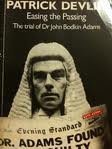
Easing the passing: The trial of Dr John Bodkin Adams
Easing the The Trial of Doctor John Bodkin Adams
1 pages, Hardcover
First published June 13, 1985
About the author
Patrick, Baron Devlin
5 booksPatrick Arthur Devlin, Baron Devlin, PC was a British lawyer, judge and jurist. He worked as junior barrister for William Jowitt while Jowitt was Attorney-General, and by the late 1930s he had become a successful commercial lawyer. During the Second World War he worked for various ministries of the UK Government, and in 1948 Jowitt (by then Lord Chancellor) made Devlin (then aged 42) a High Court judge, the second-youngest such appointment in the 20th century. Devlin was knighted later that year.
In 1960, Devlin was made a Lord Justice of Appeal, and the following year he became a Law Lord and life peer as Baron Devlin, of West Wick in the County of Wiltshire.
After retirement, Baron Devlin was a judge on the Administrative Tribunal of the International Labour Organization until 1986. He was also chairman of the Press Council from 1964–69, and High Steward of Cambridge University from 1966 until 1991. He also spent time writing about law and history, especially the interaction of law with moral philosophy, and the importance of juries.
In 1960, Devlin was made a Lord Justice of Appeal, and the following year he became a Law Lord and life peer as Baron Devlin, of West Wick in the County of Wiltshire.
After retirement, Baron Devlin was a judge on the Administrative Tribunal of the International Labour Organization until 1986. He was also chairman of the Press Council from 1964–69, and High Steward of Cambridge University from 1966 until 1991. He also spent time writing about law and history, especially the interaction of law with moral philosophy, and the importance of juries.
Ratings & Reviews
Friends & Following
Create a free account to discover what your friends think of this book!
Community Reviews
Displaying 1 - 4 of 4 reviews

November 7, 2014
John Adams was a family doctor in England in the 1940s-50s. After having a Mrs. Morrell die under his care in the early part of the 50s, he was put on trial for her murder in 1956. In his past were several others who had died under drug-induced circumstances, as well, which led the police to train their sights on him. Especially since many of his patients bequeathed money and objects to him. In the case of Mrs. Morrell, a woman in her eighties who had suffered a severe stroke and was being given heroin and morphine, she was leaving him a silver chest, and at one point it was rumored her old Rolls Royce. She seems rather contentious based on her adding and then cutting the good doctor out of her will, and then adding him once again. It was at this point that the patient was given some rather large doses of injectable drugs, the same heroin and morphine, under which amount she lapsed into a coma and died. Was Dr. Adams guilty of murdering her? Was intent criminal?
The book itself was written years later by the trial judge who presided over the case. It is at times a bit dry, but it is an intriguing look into British trial law at that time. The judge also gives his own opinion on the case, looking back upon it years later.
On a personal note, I was rather giddy to find that the University of Virginia's Law Library was willing to loan this out to my local library for me to read!
The book itself was written years later by the trial judge who presided over the case. It is at times a bit dry, but it is an intriguing look into British trial law at that time. The judge also gives his own opinion on the case, looking back upon it years later.
On a personal note, I was rather giddy to find that the University of Virginia's Law Library was willing to loan this out to my local library for me to read!

August 16, 2026
In 1957 Dr. John Bodkin Adams was put on trial for the murder of his patient Edith Morrell in Eastbourne in England in 1950 by overdosing her with heroin and morphine. Patrick Devlin was the judge for the trial. In 1985, when all the main participants in the trial were dead, Devlin controversially published this book about the trial giving full and frank opinions on the accused, the witnesses and the lawyers.
The case opened controversially when the Crown, in the Committal (a pre-trial procedure), disclosed similarities between the case being prosecuted and the death of another of Adams' patients, something that would only normally be done if the other case were to be prosecuted as well. This was highly controversial as the second case was not prosecuted but still became public knowledge and risked tainting the jury. Devlin is loud in his insistence that no lawyer would do this deliberately and accepts at face value the Crown's claim that it was not deliberate. I wouldn't be so sure.
The first day of the trial was full of drama because Adam's lawyer, having got the nurse to admit that the record of prescriptions (which she thought was lost) gave a full account of everything given to the patient, then produced the book itself and was able to show exactly what was administered. The medical experts disagreed over whether this dosage was lethal or not and, coupled with the very weak motive (speeding up a death that would occur shortly anyway in order to get a small inheritance) the defence successfully got Adams acquitted. A result that pleased Devlin.
Other entertaining aspects of the book are Devlin's open criticism of senior lawyers and judges, something which even now would be controversial. He describes Chief Justice Hewitt as the worst CJ in history and is pretty scathing of the prosecutor in the case, the Attorney General Reginald Manningham-Butler ("There was no malice in him ... Stupidity? Yes, from time to time. Amounting to perversity? I think it must be conceded that sometimes it did. And might there have been on occasions only a dim perception ... of the borderline between perversity and malice? Possibly.")
Finally, lawyers will enjoy Devlin's his views on questions that arise in criminal law such as the role of the prosecution, the right attitude to adopt before a jury, how to handle an expert witness and the tactics of a successful defence.
The case opened controversially when the Crown, in the Committal (a pre-trial procedure), disclosed similarities between the case being prosecuted and the death of another of Adams' patients, something that would only normally be done if the other case were to be prosecuted as well. This was highly controversial as the second case was not prosecuted but still became public knowledge and risked tainting the jury. Devlin is loud in his insistence that no lawyer would do this deliberately and accepts at face value the Crown's claim that it was not deliberate. I wouldn't be so sure.
The first day of the trial was full of drama because Adam's lawyer, having got the nurse to admit that the record of prescriptions (which she thought was lost) gave a full account of everything given to the patient, then produced the book itself and was able to show exactly what was administered. The medical experts disagreed over whether this dosage was lethal or not and, coupled with the very weak motive (speeding up a death that would occur shortly anyway in order to get a small inheritance) the defence successfully got Adams acquitted. A result that pleased Devlin.
Other entertaining aspects of the book are Devlin's open criticism of senior lawyers and judges, something which even now would be controversial. He describes Chief Justice Hewitt as the worst CJ in history and is pretty scathing of the prosecutor in the case, the Attorney General Reginald Manningham-Butler ("There was no malice in him ... Stupidity? Yes, from time to time. Amounting to perversity? I think it must be conceded that sometimes it did. And might there have been on occasions only a dim perception ... of the borderline between perversity and malice? Possibly.")
Finally, lawyers will enjoy Devlin's his views on questions that arise in criminal law such as the role of the prosecution, the right attitude to adopt before a jury, how to handle an expert witness and the tactics of a successful defence.

June 16, 2013
A fascinating description of the trial of Dr John Adams by the trial judge. This book was hugely controversial when it was written, and can be dry to read but was really interesting to see how the cogs of the law worked in Britain at the time.
April 4, 2016
Voluptate deleniti aspernatur expedita sed vero non. Aut doloremque qui veniam id nisi. Deserunt atque blanditiis quisquam dolores. Soluta ut accusantium et perspiciatis. Cum quis sunt voluptatem sequi iure voluptate delectus.
Displaying 1 - 4 of 4 reviews