

What do you think?

The Archivist
A young woman's impassioned pursuit of a sealed cache of T. S. Eliot's letters lies at the heart of this emotionally charged novel—a story of marriage and madness, of faith and desire, of jazz-age New York and Europe in the shadow of the Holocaust.
326 pages, Paperback
First published April 1, 1998
About the author
Martha Cooley
11 books66 followersMartha Cooley lives in Forest Hills, Queens (New York City) and Castiglione del Terziere, Italy--a tiny medieval village populated mainly by cats. A Professor of English at Adelphi University, she formerly taught in the Bennington Writing Seminars, and she leads workshops in creative writing in Tuscany. With her husband Antonio Romani, she translates fiction and poetry from Italian.
Ratings & Reviews
Friends & Following
Create a free account to discover what your friends think of this book!
Community Reviews
Displaying 1 - 30 of 391 reviews

February 20, 2013
This book created a dark sense. Not noir, but a sense of foreboding and of something evil lurking. I'm a sucker for that. Witness my liking Donna Tartt's The Secret History, which many of my Facebook friends turn up their noses at. Apparently that makes me want to find out *what is going on.*
The story is of a young couple who marries in 1945. She's a poet. He's a librarian (the archivist of the title). He's a Christian, she a Jew. He can't accept what she's going through as everybody learns what happened during the Holocaust, and he can't tolerate looking too closely at it himself. So he tries to block her preoccupation and stifle her creativity on the subject. Although he believes he's protecting her, he's defending himself. Already he subtly looks down on her religion. She gradually falls apart and gets institutionalized for good (which is like nothing that happens today). This parallels what happened in T.S. Eliot's relationship with his wife, so snippets of his and other poetry are part of the narrative.
The book is about how the husband failed the wife in his ability to relate to her.
The book is also about the impact of their faith traditions on what happens. Not only is the husband the male, but also he's part of the dominant religious tradition of their locale.
The book has some flaws. As I put in some of my comments there was some confusion of dates and ages. That's important because it's a little bit of a challenge to keep the people straight. The young couple is of the "greatest generation," i.e., those who were of age to fight in WWII. That makes them the age of my parents, but for many readers, it would be the age of their grandparents. Different events happen along the line that relate to where they are in history. For example, the wife goes into the hospital in 1959, in her 40s. Meanwhile the present (in the novel) is the 1980s, when the husband is in his mid-60s. One of the mistakes would have added another five years onto his age, but being in his 70s during the present day action would have been even less plausible. I say that because he seems a little too young for his 60s -- except that since I'm in mine, of course I'm young at heart - ha!
The male protagonist's character is a little off, as though the author couldn't do men just right. Both my husband and I arrived at that conclusion independently.
The religious attributions are a little odd. Since both the male and female are utterly without community, then it could mean each had arrived at idiosyncratic beliefs. I think you'd have to say that to make sense of it. Also, I think the author leaves the impact from the male's religious attitudes not just subtle but underdeveloped.
The author perhaps couldn't make up her mind or didn't know whether the woman's mental illness was something that would have happened anyway or whether it was in response to relationship issues, religious factors, and the times. The author didn't make a clear case for either one of those, so that took away from her point.
And I wish a little more had been done with Eliot's poetry. I'm not much of a poetry aficionado, so I could have used that. I have heard that Eliot had antisemitic tendencies, but whether they impacted what he wrote I don't know, and it didn't seem to have anything to do with the story.
All that being said, the book did lend itself to discussion of the issues at hand, even though the author's portrayal of them was through a glass darkly.
It didn't bother me that their lives paralleled those of Eliot and his wife. Some Goodreads reviewers thought that seemed contrived, but they are probably very young and don't know how strange life is!
I will say that this book was recommended by a clergyman-scholar involved in an interfaith foundation who thought it would be a good book for interfaith couples to read. In that respect, I just wish it hadn't had the woman going down the tubes!
I would have probably given this book three stars, except that my husband and I read it together. What we put into it raised it to a "4."
The story is of a young couple who marries in 1945. She's a poet. He's a librarian (the archivist of the title). He's a Christian, she a Jew. He can't accept what she's going through as everybody learns what happened during the Holocaust, and he can't tolerate looking too closely at it himself. So he tries to block her preoccupation and stifle her creativity on the subject. Although he believes he's protecting her, he's defending himself. Already he subtly looks down on her religion. She gradually falls apart and gets institutionalized for good (which is like nothing that happens today). This parallels what happened in T.S. Eliot's relationship with his wife, so snippets of his and other poetry are part of the narrative.
The book is about how the husband failed the wife in his ability to relate to her.
The book is also about the impact of their faith traditions on what happens. Not only is the husband the male, but also he's part of the dominant religious tradition of their locale.
The book has some flaws. As I put in some of my comments there was some confusion of dates and ages. That's important because it's a little bit of a challenge to keep the people straight. The young couple is of the "greatest generation," i.e., those who were of age to fight in WWII. That makes them the age of my parents, but for many readers, it would be the age of their grandparents. Different events happen along the line that relate to where they are in history. For example, the wife goes into the hospital in 1959, in her 40s. Meanwhile the present (in the novel) is the 1980s, when the husband is in his mid-60s. One of the mistakes would have added another five years onto his age, but being in his 70s during the present day action would have been even less plausible. I say that because he seems a little too young for his 60s -- except that since I'm in mine, of course I'm young at heart - ha!
The male protagonist's character is a little off, as though the author couldn't do men just right. Both my husband and I arrived at that conclusion independently.
The religious attributions are a little odd. Since both the male and female are utterly without community, then it could mean each had arrived at idiosyncratic beliefs. I think you'd have to say that to make sense of it. Also, I think the author leaves the impact from the male's religious attitudes not just subtle but underdeveloped.
The author perhaps couldn't make up her mind or didn't know whether the woman's mental illness was something that would have happened anyway or whether it was in response to relationship issues, religious factors, and the times. The author didn't make a clear case for either one of those, so that took away from her point.
And I wish a little more had been done with Eliot's poetry. I'm not much of a poetry aficionado, so I could have used that. I have heard that Eliot had antisemitic tendencies, but whether they impacted what he wrote I don't know, and it didn't seem to have anything to do with the story.
All that being said, the book did lend itself to discussion of the issues at hand, even though the author's portrayal of them was through a glass darkly.
It didn't bother me that their lives paralleled those of Eliot and his wife. Some Goodreads reviewers thought that seemed contrived, but they are probably very young and don't know how strange life is!
I will say that this book was recommended by a clergyman-scholar involved in an interfaith foundation who thought it would be a good book for interfaith couples to read. In that respect, I just wish it hadn't had the woman going down the tubes!
I would have probably given this book three stars, except that my husband and I read it together. What we put into it raised it to a "4."

December 1, 2020
Set mostly in the 1960s, this is a story of three people: Matthias Lane, an archivist at a prominent northeastern US university, Judith Lane, wife of Matthias, confined to a mental institution, and Roberta Spire, a graduate student working temporarily at the archives. The archive contains a collection of letters written by TS Eliot to his paramour, Emily Hale, while his wife, Vivienne, resided in a sanitarium. Hale has donated the letters to the archive. Roberta asks to see the letters, but they are to be kept private until the year 2020 (which was well into the future when the book was published, in 1998).
This is a character driven novel focused on relationships between detached men and depressed women. Matthias forms the focal point for the convergence of three storylines, all with interrelated pieces and parts, leading up to a personal revelation. The poetry of TS Eliot is used sporadically throughout the novel to illustrate key points. Each of the main characters has unresolved personal conflicts related to identity, accountability, guilt, relationships, and religion. I had one issue with an action that seems out of character for an archivist. I appreciated the delicate hand of the author and found it easy to become immersed in the story.
This is a character driven novel focused on relationships between detached men and depressed women. Matthias forms the focal point for the convergence of three storylines, all with interrelated pieces and parts, leading up to a personal revelation. The poetry of TS Eliot is used sporadically throughout the novel to illustrate key points. Each of the main characters has unresolved personal conflicts related to identity, accountability, guilt, relationships, and religion. I had one issue with an action that seems out of character for an archivist. I appreciated the delicate hand of the author and found it easy to become immersed in the story.

March 11, 2008
Martha Cooley obviously went to a lot of trouble setting up the various patterns and parallels in this very tightly constructed book. I wish I had enjoyed it more. But really, she might have done better if she hadn’t been trying quite so hard.
Let me explain. There are three main characters in the book – Matthias, the archivist of the title (who is custodian of a cache of T.S. Eliot’s letters, sealed for the next 60 years, and a potential treasure trove for scholars), his wife Judith, and Roberta an English scholar, whose curiosity about the Eliot letters serves as the book’s McGuffin. The emotional palette that Cooley draws on ranges from sombre to bleak.
There’s a lot of torment in this book. Matthias agonizes because Judith is tormented by guilt about the fate of European Jews during World War II. So much so that she goes nuts, has to be put in a mental institution, where she eventually commits suicide. The middle - and strongest - section of the book is an account of her descent into madness, reminiscent of ‘The Bell Jar’. But it’s not the parallel with Plath that is on Cooley's mind, rather it's the parallel between Matthias and T.S. Eliot, who also had a tormented wife who ended up in a mental institution, where she ultimately died.
This is already a bit heavyhanded, but for some reason Cooley finds it necessary to layer on yet another set of parallels. This time an unconvincing crisis of identity suffered by Roberta, upon learning that her parents, far from being the devout life-long Lutherans she was always led to believe, were actually Jews who barely escaped the Holocaust by being sheltered by devout Dutch Protestants. Roberta's crisis is supposed to parallel Judith's breakdown, which was also triggered by learning the real past of her Jewish parents. The problem is, Roberta's crisis in no way rings true; in fact, her role in the book seems little more than a device used by the author to precipitate Matthias's revisiting of his own particular Calvary.
In the end, it's all just a bit too overwrought. The emotional reactions of the characters seem completely off the deep end, and are unconvincing in the final analysis. The novel's intricate structure, and laboriously crafted parallels, seem like much ado about very little. So that, despite the book's welter of swirling emotions, at the end the reader is left surprisingly unmoved.
Let me explain. There are three main characters in the book – Matthias, the archivist of the title (who is custodian of a cache of T.S. Eliot’s letters, sealed for the next 60 years, and a potential treasure trove for scholars), his wife Judith, and Roberta an English scholar, whose curiosity about the Eliot letters serves as the book’s McGuffin. The emotional palette that Cooley draws on ranges from sombre to bleak.
There’s a lot of torment in this book. Matthias agonizes because Judith is tormented by guilt about the fate of European Jews during World War II. So much so that she goes nuts, has to be put in a mental institution, where she eventually commits suicide. The middle - and strongest - section of the book is an account of her descent into madness, reminiscent of ‘The Bell Jar’. But it’s not the parallel with Plath that is on Cooley's mind, rather it's the parallel between Matthias and T.S. Eliot, who also had a tormented wife who ended up in a mental institution, where she ultimately died.
This is already a bit heavyhanded, but for some reason Cooley finds it necessary to layer on yet another set of parallels. This time an unconvincing crisis of identity suffered by Roberta, upon learning that her parents, far from being the devout life-long Lutherans she was always led to believe, were actually Jews who barely escaped the Holocaust by being sheltered by devout Dutch Protestants. Roberta's crisis is supposed to parallel Judith's breakdown, which was also triggered by learning the real past of her Jewish parents. The problem is, Roberta's crisis in no way rings true; in fact, her role in the book seems little more than a device used by the author to precipitate Matthias's revisiting of his own particular Calvary.
In the end, it's all just a bit too overwrought. The emotional reactions of the characters seem completely off the deep end, and are unconvincing in the final analysis. The novel's intricate structure, and laboriously crafted parallels, seem like much ado about very little. So that, despite the book's welter of swirling emotions, at the end the reader is left surprisingly unmoved.

March 7, 2019
A novel that initially enthralled me through the beautiful clarity of its writing and then through the patterns of parallels in its network of a plot; even so, I was hardly prepared for the emotional devastation of its finale.
Matt, in his mid-60s, is a senior archivist in the library of an unnamed university. Among the sealed ("not to be opened until . . .") archives he supervises, the pearl must be the collection of letters between poet T.S. Eliot and the love of his life, Emily Hale. One day a graduate student, Roberta, comes to ask Matt if she might view the Hale correspondence; naturally he refuses her, because the cache isn't due to be opened for decades yet, but he's nevertheless fascinated by her, even though she's half his age, and the two begin a quirky friendship.
The root of his fascination is that Roberta strongly reminds him of his long-dead wife Judith, who spent the last years of her life in a mental asylum receiving futile treatment for her neuroses. As Matt, a T.S. Eliot aficionado, is all too well aware, there's a strong parallel here with the situation of Eliot and his wife Vivienne, who likewise died in an institution. The parallel goes further. The two wives never stopped loving their husbands but, as they languished in confinement "for their own good," they were treated by those husbands with shameful neglect.
Matt (named for Matthias, the replacement for Judas among the apostles) was a librarian and lukewarm Christian, Judith a poet who'd discovered her Jewishness relatively late in life. They married around the end of World War II, when America allowed itself to learn of the atrocities committed in Europe during the Nazi nightmare. Obsessed by those atrocities, Judith began making a collection of the tales of those who'd somehow survived them -- in other words, the novel's title, which seems to refer to Matt, could equally well be taken to refer to Judith.
It was the devastating confrontation with the evil enshrined in the horrific accounts collected in her archive that led to Judith's breakdown; also, I think, the realization that the evil didn't somehow magically end with the Armistice.
Matt is now by choice what we might call a solitudinarian. He's rejected any depths he might once have had, content to live in shallowness, rarely allowing himself to become excited by the manuscripts in his care. And then the arrival of the earthy, argumentative, frank Roberta throws his orderly life into disarray.
The narrative's divided into three almost exactly equal parts. The first and third are told to us by the present-day (1990s) Matt; the central section comprises entries from the journal Judith kept while in the sanitarium. Cooley does well in differentiating the two voices; even so, I had some little difficulty adapting back to Matt's narration after a hundred pages in the presence of the far more volatile, far more impassioned Judith. That's my only complaint about this novel, and it's not so much a minor as a minuscule one.
As I said, the finale devastated me. I think perhaps the quietness -- repression, almost -- of Matt's narration hid from me how very deeply involved I'd become in the characters and in what I might superficially call Judith's dilemma: the powerlessness of the innocent to confront past mass evil. It was in the finale, even more than while reading her own extended account, that it came crashing down on me just how great was the horror she was having to deal with. Although their suffering was indisputably the greatest -- we can hardly imagine how great -- those who experienced the Holocaust directly were not its only victims.
Cooley, I see, hasn't been prolific, which, to judge by this novel, is a pity. On the other hand, I'm not sure how often I could take body-blows like the one The Archivist delivered to me!
Matt, in his mid-60s, is a senior archivist in the library of an unnamed university. Among the sealed ("not to be opened until . . .") archives he supervises, the pearl must be the collection of letters between poet T.S. Eliot and the love of his life, Emily Hale. One day a graduate student, Roberta, comes to ask Matt if she might view the Hale correspondence; naturally he refuses her, because the cache isn't due to be opened for decades yet, but he's nevertheless fascinated by her, even though she's half his age, and the two begin a quirky friendship.
The root of his fascination is that Roberta strongly reminds him of his long-dead wife Judith, who spent the last years of her life in a mental asylum receiving futile treatment for her neuroses. As Matt, a T.S. Eliot aficionado, is all too well aware, there's a strong parallel here with the situation of Eliot and his wife Vivienne, who likewise died in an institution. The parallel goes further. The two wives never stopped loving their husbands but, as they languished in confinement "for their own good," they were treated by those husbands with shameful neglect.
Matt (named for Matthias, the replacement for Judas among the apostles) was a librarian and lukewarm Christian, Judith a poet who'd discovered her Jewishness relatively late in life. They married around the end of World War II, when America allowed itself to learn of the atrocities committed in Europe during the Nazi nightmare. Obsessed by those atrocities, Judith began making a collection of the tales of those who'd somehow survived them -- in other words, the novel's title, which seems to refer to Matt, could equally well be taken to refer to Judith.
It was the devastating confrontation with the evil enshrined in the horrific accounts collected in her archive that led to Judith's breakdown; also, I think, the realization that the evil didn't somehow magically end with the Armistice.
Matt is now by choice what we might call a solitudinarian. He's rejected any depths he might once have had, content to live in shallowness, rarely allowing himself to become excited by the manuscripts in his care. And then the arrival of the earthy, argumentative, frank Roberta throws his orderly life into disarray.
The narrative's divided into three almost exactly equal parts. The first and third are told to us by the present-day (1990s) Matt; the central section comprises entries from the journal Judith kept while in the sanitarium. Cooley does well in differentiating the two voices; even so, I had some little difficulty adapting back to Matt's narration after a hundred pages in the presence of the far more volatile, far more impassioned Judith. That's my only complaint about this novel, and it's not so much a minor as a minuscule one.
As I said, the finale devastated me. I think perhaps the quietness -- repression, almost -- of Matt's narration hid from me how very deeply involved I'd become in the characters and in what I might superficially call Judith's dilemma: the powerlessness of the innocent to confront past mass evil. It was in the finale, even more than while reading her own extended account, that it came crashing down on me just how great was the horror she was having to deal with. Although their suffering was indisputably the greatest -- we can hardly imagine how great -- those who experienced the Holocaust directly were not its only victims.
Cooley, I see, hasn't been prolific, which, to judge by this novel, is a pity. On the other hand, I'm not sure how often I could take body-blows like the one The Archivist delivered to me!

August 1, 2017
The Archivist is based on the real-life sealed trove of letters between T.S. Eliot and his friend Emily Hale (held at Princeton, though that exact location is never given in the novel). Matthias Lane is the archivist of the Mason Room’s rare books and literary papers. He’s still haunted by memories of his late wife, Judith, who was a poet incarcerated in a mental hospital for more than five years. She was an orphan, raised by her aunt and uncle in a jazz-loving household, but her religious angst, augmented by obsessions with the Kabbalah and the Holocaust, caused tension in her marriage with Matt, a Christian.
Matt narrates the first and third sections, while Judith’s diaries fill the second. A reckoning comes for Matt when he is approached by Roberta Spire, a graduate student and library assistant who’s determined to view the Eliot–Hale letters even though they’re legally sealed until 2020. Roberta, too, is a poet preoccupied by her Jewish heritage – her parents converted to Christianity to make it out of Europe alive. The more time Matt spends with Roberta, the more similarities start to arise between her and Judith, and between his situation and Eliot’s when he put his wife away in a mental hospital (and I suspect those familiar with Eliot’s life and work would discover even more parallels).
I like the way the title takes on different meanings, with Judith considering herself an “archivist of evil.” The novel continually asks what we owe the dead and whether we conform to their wishes or make our own decisions. There are also some great lines about what books and poetry do for us. But I think something about the structure – the way Judith’s diaries, which total a third of the book, interrupt Matt’s narrative – weakens the reader’s connection with the protagonist and makes the story drift off into an anticlimax. Ultimately the Eliot letters matter very little. Still, I liked Cooley’s writing and will try her memoir (Guesswork – in a neat little connection, Roberta says to Matt, “I figured you’re an archivist, you probably enjoy a little guesswork.”).
Favorite lines:
Roberta: “You like films?” / “‘Not particularly,’ I said. ‘I prefer books.’”
Judith: “Poetry: where I encounter what is not in memory but arises through a kind of instinct, deep-running, inventive. Recognition of something I don’t know I knew; something I know only as I write and a poem begins to deliver itself, to assert a reality, startling but oddly familiar.”
Matt: “A good archivist serves the reader best by maintaining, throughout the search, a balance between empathy and distance.”
Matt narrates the first and third sections, while Judith’s diaries fill the second. A reckoning comes for Matt when he is approached by Roberta Spire, a graduate student and library assistant who’s determined to view the Eliot–Hale letters even though they’re legally sealed until 2020. Roberta, too, is a poet preoccupied by her Jewish heritage – her parents converted to Christianity to make it out of Europe alive. The more time Matt spends with Roberta, the more similarities start to arise between her and Judith, and between his situation and Eliot’s when he put his wife away in a mental hospital (and I suspect those familiar with Eliot’s life and work would discover even more parallels).
I like the way the title takes on different meanings, with Judith considering herself an “archivist of evil.” The novel continually asks what we owe the dead and whether we conform to their wishes or make our own decisions. There are also some great lines about what books and poetry do for us. But I think something about the structure – the way Judith’s diaries, which total a third of the book, interrupt Matt’s narrative – weakens the reader’s connection with the protagonist and makes the story drift off into an anticlimax. Ultimately the Eliot letters matter very little. Still, I liked Cooley’s writing and will try her memoir (Guesswork – in a neat little connection, Roberta says to Matt, “I figured you’re an archivist, you probably enjoy a little guesswork.”).
Favorite lines:
Roberta: “You like films?” / “‘Not particularly,’ I said. ‘I prefer books.’”
Judith: “Poetry: where I encounter what is not in memory but arises through a kind of instinct, deep-running, inventive. Recognition of something I don’t know I knew; something I know only as I write and a poem begins to deliver itself, to assert a reality, startling but oddly familiar.”
Matt: “A good archivist serves the reader best by maintaining, throughout the search, a balance between empathy and distance.”

September 4, 2012
I first read The Archivist when it was released in paperback in 1999. I was drawn in by the cover and the concept: an archivist, a woman, old letters and the connection of lives in history. There are many plot summaries so I will keep mine brief: the archivist, advanced in years, is a man named Matthias, the younger woman is Roberta, a poet who seeks some letters written by T.S. Eliot. Matthias's deceased wife does have about a third of the book in diary entry form - entries made while she is committed in an asylum - but the main purpose of Matthias's wife is to draw an analog between him and Eliot, whose wife was also committed.
After my first reading, I hated the book. I hated it so much, in fact, that I kept it on my shelves thinking that I would try to let time and personal context really change themselves so I could see if that earlier version of myself lacked some form of depth or experience that was blinding me to what might lie deeper within the novel.
More than 10 years have past, my urban life has given way to a rural one, I'm now married, not single, and birth and death have marked me in ways that, while not making me an entirely different person, have etched things in my understanding of life that make it more comprehensive.
Although I do not "hate" the book, I go away from it with the same misgivings - that the book's central theme on religious conversion is a failure because Cooley doesn't understand religion or a religious identity. The result dilutes her characters and the other themes of the book.
If anything, my experiment in time and rereading validates that the current version of myself retains that younger core; that some of the intuitions I would have had difficulty expressing are now more concrete because of experience and maturity.
After my first reading, I hated the book. I hated it so much, in fact, that I kept it on my shelves thinking that I would try to let time and personal context really change themselves so I could see if that earlier version of myself lacked some form of depth or experience that was blinding me to what might lie deeper within the novel.
More than 10 years have past, my urban life has given way to a rural one, I'm now married, not single, and birth and death have marked me in ways that, while not making me an entirely different person, have etched things in my understanding of life that make it more comprehensive.
Although I do not "hate" the book, I go away from it with the same misgivings - that the book's central theme on religious conversion is a failure because Cooley doesn't understand religion or a religious identity. The result dilutes her characters and the other themes of the book.
If anything, my experiment in time and rereading validates that the current version of myself retains that younger core; that some of the intuitions I would have had difficulty expressing are now more concrete because of experience and maturity.

April 30, 2020
It would appear that I purchased a copy of Martha Cooley's novel at least a decade ago & never read it or perhaps began it while traveling in the U.K., with BritRail ticket stubs parked with the book. I was most likely captivated by the novel's suggested attempt to pair the poetry of T.S. Eliot & his relationship with his wife, who was eventually placed in an asylum, with an American man & his wife, who also was sent to a psychiatric hospital. Alas, my own appraisal after finally reading The Archivist is that the author was ill-equipped to deal with a rather complicated structure. What occurs is a potentially interesting story with many dangling possibilities but with a definite lack of cohesion.

At the outset, we encounter Matthias Lane, age 65, an archivist whose duties include presiding over a wealth of letters from Emily Hale, an American who was a longtime friend & confidant of T.S. Eliot, whose English wife has been incarcerated due to mental instability. We learn that Mr. Eliot seems to have suddenly parted company with Ms. Hale when the Nobel laureate's wife Vivienne dies, though most of the interaction between Eliot & Hale was via posted mail.
Matthias Lane's wife Judith & another woman, Roberta Spire, also a poet as well as a graduate student, someone who who is very intensely in search of the secrets of Eliot's relationship with Emily Hale that may be conveyed within the letters, to be kept under lock & key, unrevealed to the general public until 2020 as it turns out, are both Jewish women raised as Christians. Thus, Judith & Roberta are each exceedingly perplexed by issues of identity & in the case of Matthias's wife Judith, very preoccupied with the issue of the Holocaust, so much so that it seems to affect her sense of well-being, interfering with what had seemed a happy marriage.
The poetry of T.S. Eliot, rather than being used to meaningfully encapsulate the lives of these key characters, is employed as a kind of intermittent decoration within The Archivist. The excerpts do not seem to act in support of the characters or their situations, though Eliot's poetry does have some limited peripheral value for those who find that it represents an important voice. We never learn about the relationship between Eliot & Emily Hale, though Matthias appears aware of content of the letters. It is indicated that Judith had become "an archivist of evil", a nice phrasing perhaps but not really substantiated, even though her behavior is increasingly erratic.
In my view, Eliot's poetry is as profound it is varied. We have The Wasteland, something I feel stands a a kind of intellectual Rosetta Stone for the 20th Century, or at least the first half of it. But we also have poetry that involves an almost perpetual quest for meaning via various formal religious vestiges, a search that culminates in his declaring himself an Anglo-Catholic, something I'd forgotten about until rereading much of Eliot's poetry. And, let's not forget that "Great Tom" (as Mr. Eliot was sometimes called) also authored those wonderful little poems dealing with "practical cats". Thus, T.S. Eliot takes us on a path that leads from complex symbol dissection to considerable feline whimsy.

Eliot stated in Little Gidding, The Four Quartets that..."Every poem is an epitaph." I feel that Martha Cooley should have employed some form of invented poetry for both Judith Lane & Roberta Spire to relate their individual life stories & their inner complexity. The author should also have allowed Matthias Lane to at least insinuate how the letters entrusted to the university for which Matthias serves as archivist to point to some similarity between the "madness" of both Judith & Eliot's wife Vivienne, or even to eventually infer that there was little or no point of similarity. In the end, we have a narrative that displays for the reader little connective fabric, though it seemed to have been forecast. Matthias does tell the reader:
What we encounter is not without interest but I felt that ultimately the framework for the novel exceeded the author's ability to properly navigate it. Because it isn't clear from my review comments, the period detailed in the novel would seem to be from the late 1940s to approximately the early 1970s. And with all of the characters seeming to cast backward glances in search of identity, I would like to offer some more hopeful words from Mr. Eliot:
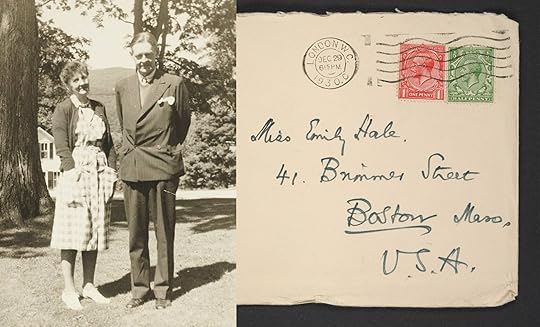
*Author's photo image included within my review, followed by one of T.S. Eliot with Emily Hale + an inset of one of his letters to her, and finally the image of a young T.S. Eliot. **My own inserted Eliot quote is from Little Giddings, the Four Quartets.
At the outset, we encounter Matthias Lane, age 65, an archivist whose duties include presiding over a wealth of letters from Emily Hale, an American who was a longtime friend & confidant of T.S. Eliot, whose English wife has been incarcerated due to mental instability. We learn that Mr. Eliot seems to have suddenly parted company with Ms. Hale when the Nobel laureate's wife Vivienne dies, though most of the interaction between Eliot & Hale was via posted mail.
There he is a hugely successful poet--a man released from an awful marriage, with a woman friend who would marry him instantly. And what does he do? He rejects her completely, isolates himself for a decade, lives like a hermit and at the end of a decade suddenly marries his secretary--a woman almost 40 years his junior.Meanwhile, we learn that Matthias, once happily married to a woman named Judith, also a poet, has likewise dealt with his wife's increasingly bizarre behavior, causing her to be taken to an institution for help in regaining the ability to cope with daily life. Matthias visits her on a regular schedule, as do Judith's adoptive parents Len & Carol but she never regains an ability to cope, drifting deeper into a nether sphere of her own consciousness, though the prescribed drugs are perhaps thought to have been detrimental.
Matthias Lane's wife Judith & another woman, Roberta Spire, also a poet as well as a graduate student, someone who who is very intensely in search of the secrets of Eliot's relationship with Emily Hale that may be conveyed within the letters, to be kept under lock & key, unrevealed to the general public until 2020 as it turns out, are both Jewish women raised as Christians. Thus, Judith & Roberta are each exceedingly perplexed by issues of identity & in the case of Matthias's wife Judith, very preoccupied with the issue of the Holocaust, so much so that it seems to affect her sense of well-being, interfering with what had seemed a happy marriage.
The poetry of T.S. Eliot, rather than being used to meaningfully encapsulate the lives of these key characters, is employed as a kind of intermittent decoration within The Archivist. The excerpts do not seem to act in support of the characters or their situations, though Eliot's poetry does have some limited peripheral value for those who find that it represents an important voice. We never learn about the relationship between Eliot & Emily Hale, though Matthias appears aware of content of the letters. It is indicated that Judith had become "an archivist of evil", a nice phrasing perhaps but not really substantiated, even though her behavior is increasingly erratic.
In my view, Eliot's poetry is as profound it is varied. We have The Wasteland, something I feel stands a a kind of intellectual Rosetta Stone for the 20th Century, or at least the first half of it. But we also have poetry that involves an almost perpetual quest for meaning via various formal religious vestiges, a search that culminates in his declaring himself an Anglo-Catholic, something I'd forgotten about until rereading much of Eliot's poetry. And, let's not forget that "Great Tom" (as Mr. Eliot was sometimes called) also authored those wonderful little poems dealing with "practical cats". Thus, T.S. Eliot takes us on a path that leads from complex symbol dissection to considerable feline whimsy.
Eliot stated in Little Gidding, The Four Quartets that..."Every poem is an epitaph." I feel that Martha Cooley should have employed some form of invented poetry for both Judith Lane & Roberta Spire to relate their individual life stories & their inner complexity. The author should also have allowed Matthias Lane to at least insinuate how the letters entrusted to the university for which Matthias serves as archivist to point to some similarity between the "madness" of both Judith & Eliot's wife Vivienne, or even to eventually infer that there was little or no point of similarity. In the end, we have a narrative that displays for the reader little connective fabric, though it seemed to have been forecast. Matthias does tell the reader:
Words, phrases, then a few lines came to me, pieces of different poems Judith had recited. I was hearing her voice, reedy & dense, profoundly erotic & powerful: an instrument of connection & release. I put my head down, cupped my face in my hands & wept for Judith and for myself. I wept for my terror & my silence, for Judith's courage & her madness; for all our shared loss.This is expressed within a small church in Manhattan where the couple had lived early on in their marriage. In fact, New York City & Jazz might be said to be major characters, or at least primary influences in Martha Cooley's The Archivist. The actions of Matthias & his personal responsibility for decisions made in dealing with his wife's illness & ultimately as archivist are also at the heart of the novel.
What we encounter is not without interest but I felt that ultimately the framework for the novel exceeded the author's ability to properly navigate it. Because it isn't clear from my review comments, the period detailed in the novel would seem to be from the late 1940s to approximately the early 1970s. And with all of the characters seeming to cast backward glances in search of identity, I would like to offer some more hopeful words from Mr. Eliot:
What we call the beginning is often the end
And to make an end is to make a beginning
The end is where we start from
*Author's photo image included within my review, followed by one of T.S. Eliot with Emily Hale + an inset of one of his letters to her, and finally the image of a young T.S. Eliot. **My own inserted Eliot quote is from Little Giddings, the Four Quartets.

August 5, 2007
This has become, unintentionally I assure you, the third book in a row I've read about repression, silence, isolation, and lies, and how they destroy you bit by bit. When I began reading this, I expected something of a love story, something along the lines of Possession, by the description on the back cover.
I could not have beenn more wrong. It is instead, a very introspective, harsh self examination by a man who happens to work at an archivist at "a prominent university," in a place that is unnamed but is likely Harvard or Yale or something of that ilk. The present day story centers around his interactions with a grad student by the name of Roberta who wants to see letters donated by a woman who corresponded with TS Eliot, letters that aren't supposed to be opened up until 2020. But what it is actually about is a man who is coming to terms with his relationship with his late wife, (the entire central section is written by her) his family, his own fear of and need for solitude that ruined his marriage, and the nature of faith.
The poems of TS Eliot are woven through the text. I found them moving even without knowing anything about Eliot (and trust me, I really do not know anything about him), though I imagine that this book would be all the more moving if you are an Eliot fan. The book uses Eliot's familial struggles with his wife as a mirror for the cental character's pain as we float in and out of his head. The central debate on Christianity vs. Judaism that affects much of the interactions of the text (there's also quite a bit Jewish Holocaust and war guilt to be dealt with here) is also interwoven into Eliot's own conversion and repudiation of his wife Vivienne.
The only problem I did have with the text is that I sometimes felt that the various chunks of it were jarringly seperated. The central section dominates too much of the book, in my opinion. It is fascinating, but I lost track of what was happening with the actual characters in the present day. I also felt that it could hit you over the head with it's dry morals a bit too much. Though one could argue that the weighty subject matter deserves that.
All in all, a great read, though, like my last few, quite oppressive and depressing.
I could not have beenn more wrong. It is instead, a very introspective, harsh self examination by a man who happens to work at an archivist at "a prominent university," in a place that is unnamed but is likely Harvard or Yale or something of that ilk. The present day story centers around his interactions with a grad student by the name of Roberta who wants to see letters donated by a woman who corresponded with TS Eliot, letters that aren't supposed to be opened up until 2020. But what it is actually about is a man who is coming to terms with his relationship with his late wife, (the entire central section is written by her) his family, his own fear of and need for solitude that ruined his marriage, and the nature of faith.
The poems of TS Eliot are woven through the text. I found them moving even without knowing anything about Eliot (and trust me, I really do not know anything about him), though I imagine that this book would be all the more moving if you are an Eliot fan. The book uses Eliot's familial struggles with his wife as a mirror for the cental character's pain as we float in and out of his head. The central debate on Christianity vs. Judaism that affects much of the interactions of the text (there's also quite a bit Jewish Holocaust and war guilt to be dealt with here) is also interwoven into Eliot's own conversion and repudiation of his wife Vivienne.
The only problem I did have with the text is that I sometimes felt that the various chunks of it were jarringly seperated. The central section dominates too much of the book, in my opinion. It is fascinating, but I lost track of what was happening with the actual characters in the present day. I also felt that it could hit you over the head with it's dry morals a bit too much. Though one could argue that the weighty subject matter deserves that.
All in all, a great read, though, like my last few, quite oppressive and depressing.

April 15, 2018
"Prisoners live in full awareness of the existence of an external reality, but the cell is of greater significance. My mother was the gatekeeper."
ספר חזק הכולל עלילה מתוחכמת ואפלה שנעה בשלושה מישורים:
במישור הראשון משולש היחסים בין ט. ס. אליוט, אישתו ויויאן ואמילי הייל. מערכת היחסים בין ט. ס. אליוט ואישתו ויויאן היתה רעועה. חלק תולים את התפוררות הנישואים במצבה הבריאותי והנפשי של ויויאן שאושפזה לבסוף במוסד המטפל במחלות נפש ונפטרה שם. בכל תקופת אישפוזה, במשך 10 שנים אליוט לא ביקר את אישתו אף לא פעם אחת. שנים לאחר פטירתה הוא נישא למזכירתו הצעירה ממנו ב 30 שנים.
במקביל לנשואיו, היתה לאליוט מערכת יחסים עם אמילי הייל. היא חייה בארהב והוא באנגליה ולכן קיימת תכתובת ענפה בינהם הכוללת מעל ל 1,000 מכתבים. הייל היתה המוזה שלו כנראה הוא גם אהב אותה ולא ברור אם היה להם רומן אבל אין ספק שהם נפגשו לאורך השנים.
לאחר מותה של ויויאן, הייל היתה בטוחה שאליוט ינשא לה אולם הוא לא. כשהוא נישא למזכירתו הצעירה ממנו ב 30 שנים אמילי הייל סבלה מהתמוטטות עצבים כל כך קשה שהיה צורך לאשפז אותה.
אליוט שרף את מכתביה של הייל אך היא העבירה את המורשת של המכתבים לפרינסטון למשמרת עד 2020 אז יהיו פתוחים לציבור הרחב.
המכתבים הללו הם הציר סביבו חגה העלילה במישור השני:
מאט הוא ספרן בשנות ה 60 שלו. הוא מנהל את אוסף הייל בפרינסטון. במהלך אחד מהימים פוגש מאט את מרתה שפייר המתעניינת באוסף המכתבים בתקווה שהם ילמדו אותה על אליוט ויסייעו לה להעשיר את כתיבת השירים שבה היא עוסקת.
מרתה בת ה 35 היא בת לניצולי שואה שלאחר המלחמה היגרו מהולנד. הוריה מעולם לא שיתפו אותה בקורותיהם בזמן המלחמה ובאופן שבו ניצלו.
השואה, הרוע של השואה, השתיקה של הסביבה מהווים את ציר העלילה השלישי בספר. הציר הזה מספר את סיפור אשמת הניצולים באמצעות סיפורה של ג'ודית, אישתו של מאט.
הספר כולל 4 פרקים. החלק השני הוא יומן שניהלה ג'ודית. אחד הפרקים החזקים שקראתי בספרות והוא מראה כיצד הרוע מחלחל לחיי הפרט גם במרחק השנים. ג'ודית אוספת קטעי עיתונות שקשורים לשואה ולניצולים. היא נשאבת לתוך הצער וחווה את הרוע במלוא עוצמתו מה שמעורר אצלה שאלות על אמונה באלוהים ודת. הסיחרור של ג'ודית מוביל אותה ואת מאט למחוזות אפלים בהם מאט ניצב משותק וחסר יכולת תגובה מול עוצמת הרגש והחוויה של ג'ודית.
מאט מנסה לסייע לג'ודית, אבל אהבתו אינה מספיקה להחזיק את נפשה המתרסקת של ג'ודית שמתחילה לחוות אפיזודות פסיכוטיות.
החלקים השלישי והרביעי הם סגירת מעגל של מאט באמצעות מרתה שפייר. מרתה חווה את הכאב שבהסתרה בדיוק כפי שג'ודית חווה אותו. מאט סוגר את המעגל הפרטי שלו באמצעות מרתה.
כפי שכתבתי ספר מתוחכם עם עלילה אפלה. הורדתי לספר כוכב כי אני מרגישה שלא הבנתי את הפרק האחרון של הספר ואת סגירת המעגל הסופית של מאט.
ספר חזק הכולל עלילה מתוחכמת ואפלה שנעה בשלושה מישורים:
במישור הראשון משולש היחסים בין ט. ס. אליוט, אישתו ויויאן ואמילי הייל. מערכת היחסים בין ט. ס. אליוט ואישתו ויויאן היתה רעועה. חלק תולים את התפוררות הנישואים במצבה הבריאותי והנפשי של ויויאן שאושפזה לבסוף במוסד המטפל במחלות נפש ונפטרה שם. בכל תקופת אישפוזה, במשך 10 שנים אליוט לא ביקר את אישתו אף לא פעם אחת. שנים לאחר פטירתה הוא נישא למזכירתו הצעירה ממנו ב 30 שנים.
במקביל לנשואיו, היתה לאליוט מערכת יחסים עם אמילי הייל. היא חייה בארהב והוא באנגליה ולכן קיימת תכתובת ענפה בינהם הכוללת מעל ל 1,000 מכתבים. הייל היתה המוזה שלו כנראה הוא גם אהב אותה ולא ברור אם היה להם רומן אבל אין ספק שהם נפגשו לאורך השנים.
לאחר מותה של ויויאן, הייל היתה בטוחה שאליוט ינשא לה אולם הוא לא. כשהוא נישא למזכירתו הצעירה ממנו ב 30 שנים אמילי הייל סבלה מהתמוטטות עצבים כל כך קשה שהיה צורך לאשפז אותה.
אליוט שרף את מכתביה של הייל אך היא העבירה את המורשת של המכתבים לפרינסטון למשמרת עד 2020 אז יהיו פתוחים לציבור הרחב.
המכתבים הללו הם הציר סביבו חגה העלילה במישור השני:
מאט הוא ספרן בשנות ה 60 שלו. הוא מנהל את אוסף הייל בפרינסטון. במהלך אחד מהימים פוגש מאט את מרתה שפייר המתעניינת באוסף המכתבים בתקווה שהם ילמדו אותה על אליוט ויסייעו לה להעשיר את כתיבת השירים שבה היא עוסקת.
מרתה בת ה 35 היא בת לניצולי שואה שלאחר המלחמה היגרו מהולנד. הוריה מעולם לא שיתפו אותה בקורותיהם בזמן המלחמה ובאופן שבו ניצלו.
השואה, הרוע של השואה, השתיקה של הסביבה מהווים את ציר העלילה השלישי בספר. הציר הזה מספר את סיפור אשמת הניצולים באמצעות סיפורה של ג'ודית, אישתו של מאט.
הספר כולל 4 פרקים. החלק השני הוא יומן שניהלה ג'ודית. אחד הפרקים החזקים שקראתי בספרות והוא מראה כיצד הרוע מחלחל לחיי הפרט גם במרחק השנים. ג'ודית אוספת קטעי עיתונות שקשורים לשואה ולניצולים. היא נשאבת לתוך הצער וחווה את הרוע במלוא עוצמתו מה שמעורר אצלה שאלות על אמונה באלוהים ודת. הסיחרור של ג'ודית מוביל אותה ואת מאט למחוזות אפלים בהם מאט ניצב משותק וחסר יכולת תגובה מול עוצמת הרגש והחוויה של ג'ודית.
מאט מנסה לסייע לג'ודית, אבל אהבתו אינה מספיקה להחזיק את נפשה המתרסקת של ג'ודית שמתחילה לחוות אפיזודות פסיכוטיות.
החלקים השלישי והרביעי הם סגירת מעגל של מאט באמצעות מרתה שפייר. מרתה חווה את הכאב שבהסתרה בדיוק כפי שג'ודית חווה אותו. מאט סוגר את המעגל הפרטי שלו באמצעות מרתה.
כפי שכתבתי ספר מתוחכם עם עלילה אפלה. הורדתי לספר כוכב כי אני מרגישה שלא הבנתי את הפרק האחרון של הספר ואת סגירת המעגל הסופית של מאט.

September 8, 2007
You know that email chain letter, "Bad Analogies from High School English Papers," the one that went "He was as tall as a six-foot-three-inch tree"? That's the feeling this book gave me a lot of the time. It's about a librarian in charge of, and obsessed with, a collection of letters T.S. Eliot wrote while separated from his wife, who was in a mental hospital. As it turns out (surprise!), the librarian himself was also separated from his wife, who was in a mental hospital. Now, echoes like that are a perfectly valid formal device, but they shouldn't be so loud. (Quiet, please, this is a library.)
My three stars are for the middle section, the one from the wife's perspective, lighter-handed and with some affecting insights into mental health care as it was in the 1950s.
My three stars are for the middle section, the one from the wife's perspective, lighter-handed and with some affecting insights into mental health care as it was in the 1950s.

December 1, 2008
I really didn't like this book. The dual plot lines were contrived; the characters felt flat, fake, and forced; and everything was just far too predictable for my taste. Add to that the unremarkable, occasionally wooden, writing, and this was a book I was eager to be done with. So that I could move on to something else, not so that I would know how it ended.
This all surprises me because I went in really expecting to like it. After all the plot sounded remarkably similar to Possession, which I loved.
Not a book I would recommend to anyone, really.
This all surprises me because I went in really expecting to like it. After all the plot sounded remarkably similar to Possession, which I loved.
Not a book I would recommend to anyone, really.

June 4, 2018
A brilliant novel that mixes some real history and literature ( T.S. Eliot's poetry and relationships) with some compelling fictional characters. A haunting, poignant and true-feeling portrayal of mental illness is at the center of this novel. Around it the poetry, the violent history, the guilt and confusion of children and parents and husbands and wives, revolves, but there's mystery and beauty, too. This was an amazing story about the power of literature and people who cherish it, among all these other things.

December 17, 2014
If you know what I mean.... I admired the book.... It was impressive and emotional but its not a Christmas feelgood everybody sharing happy book.
This is a serious book. About serious subjects. A book which frames much of the events depicted (albeit backgrounded) against the poetry of T. S. Eliot. Even the figure of "The Archivist", the central character plays into this sense of a disconnected present, a disturbed past and a dangerous future. His marriage to Judith, and its breakdown parallels that of Tom and Viv Eliot, the friends and relatives of characters lead hidden lives and change histories to comfort innocent bystanders to the horror that is always nearby. It is a moving book and set in that historical minefield which includes the holocaust, the creation of the Berlin Wall, the capture and trial of Eichmann and the assassination of John F Kennedy. The book speaks of humanity's capacity to survive and its capacity to manipulate history both public and private. It talks about religion, about conversion and change and coping strategies to face the unthinkable. It talks about love and relationships and the vulnerability that openness allows. It is a book about bravery and cowardice.
This is a serious book. About serious subjects. A book which frames much of the events depicted (albeit backgrounded) against the poetry of T. S. Eliot. Even the figure of "The Archivist", the central character plays into this sense of a disconnected present, a disturbed past and a dangerous future. His marriage to Judith, and its breakdown parallels that of Tom and Viv Eliot, the friends and relatives of characters lead hidden lives and change histories to comfort innocent bystanders to the horror that is always nearby. It is a moving book and set in that historical minefield which includes the holocaust, the creation of the Berlin Wall, the capture and trial of Eichmann and the assassination of John F Kennedy. The book speaks of humanity's capacity to survive and its capacity to manipulate history both public and private. It talks about religion, about conversion and change and coping strategies to face the unthinkable. It talks about love and relationships and the vulnerability that openness allows. It is a book about bravery and cowardice.

June 22, 2016
This was one of the books I bought in the Great Amazon Listmania Frenzy of 2000 (also known as "Ann learns about credit card debt"), and it's a great example of a book I mostly enjoyed reading but didn't need to own (a lesson I continually am re-teaching myself). The description makes the book sound like a Possession read-alike, with an emphasis on hidden information and the thrill of academic discovery, but it's more invested in bigger themes of guilt, religious identity, and isolation. This would all be fine with me, but none of it really clicked. The multiple parallels were too overdone and never really came together for a greater sum than their parts. It seemed like the author had tons of issues she wanted to cover in the book, and couldn't bear to edit them out.
That being said, I really loved parts dealing with the archive (because librarian), and I liked that it made me understand a person's deep love of poetry. It was a very palatable way to experience T.S. Eliot, when I know I'd never read his work on my own.
That being said, I really loved parts dealing with the archive (because librarian), and I liked that it made me understand a person's deep love of poetry. It was a very palatable way to experience T.S. Eliot, when I know I'd never read his work on my own.
October 15, 2014
I have just finished an English degree and I have just finished reading this book as part of an MA course in Literary Research so it has been a long time since I have enjoyed a book so thoroughly and read it so quickly-I picked this up on Monday and have just finished it.
This book is fascinating to someone who is getting grips with academic life and the way in which archives and libraries work, why we privilege some things and discard others.For anyone involved in research, it consciously encourages us, through the character of Matthias to explore our connections to literature and the past and the parallels and the unanswerable questions these throw up. The book doesn't encourage this subtly, but it makes for an intriguing and fascinating read.
This book is fascinating to someone who is getting grips with academic life and the way in which archives and libraries work, why we privilege some things and discard others.For anyone involved in research, it consciously encourages us, through the character of Matthias to explore our connections to literature and the past and the parallels and the unanswerable questions these throw up. The book doesn't encourage this subtly, but it makes for an intriguing and fascinating read.
November 25, 2009
I expected a Da Vinci Code-ish novel from the title. Suffice to say I was pleasantly surprised and relieved. I couldn't handle another book like that without having to hire a hit man for the author. The references to T.S. Eliot and jazz music truly made the story come to life. Tragically beautiful and I loved it. A search for identity amidst a masterfully fragmented plot. It made me want to immerse myself in poetry, reminding me that most of my generation wouldn't recognize poetry if it smacked them between the eyes. In a society where Coldplay lyrics are the paragon of poetry, Cooley reminds us that truly great poetry like Eliot's does exist. Thank God.

March 24, 2024
It’s not often these days that one encounters a beautifully written and richly allusive, substantial work of literary fiction like The Archivist. I feel privileged to have read it, as it is a kind of homage not just to T.S. Eliot, archivists, and scholars but also to the NYC of the 20th century, right before and right after WWII and its aftermath, and the jazz of that era. I’m listening to Bud Powell as I write this, but I digress. The Archivist is also the story of the toxicity of family secrets and lies that work on a person’s identity like a cancer. The Archivist is also the story of faith and conversion, and about loving someone intensely even though they don’t share your beliefs. In some ways The Archivist chronicles how much a person’s literary tastes can give insight into their psyche. In so many ways, protagonist, Matthias’ life with his wife Judith runs parallel to the story of T.S. Eliot’s life with his wife Vivienne. Enter the young graduate student, Roberta Spires. Can she manipulate Matthias into opening up the sealed until 2020 T.S. Eliot archives for her? And why is she so obsessed with it? Read and find out. Being an Eliot scholar as well as a 20th century girl in a 21st century world, I adore this book, and I highly recommend it!

December 28, 2020
I read a lot but I'm not particularly well-read. I haven't read a lot of T.S. Eliot's works although I'm incredibly fascinated by the Emily Hale letters which were actually opened to the public this year! I did enjoy the book and the way the author described the ebb and flow of relationships. There were a lot of themes running through the book. I actually did like the parallel drawn between Matt and Judith and Eliot and Vivienne. I liked Judith's Part 2.
I'm not sure I was wholly convinced of Roberta's breakdown and her role in the book beyond adding yet another echo. Plus I have a strong dislike of relationships between professors and students and that whole power dynamic.
A good portion of the book is set around WW2 and its aftermath. There is a lot of conflict around religious identity throughout the book which was interesting. I'm not sure whether it's meant to dominate the book, but it does.
I'm not sure I was wholly convinced of Roberta's breakdown and her role in the book beyond adding yet another echo. Plus I have a strong dislike of relationships between professors and students and that whole power dynamic.
A good portion of the book is set around WW2 and its aftermath. There is a lot of conflict around religious identity throughout the book which was interesting. I'm not sure whether it's meant to dominate the book, but it does.
This entire review has been hidden because of spoilers.

October 19, 2013
All I knew about TS Eliot prior to reading this novel was he wrote poems about cats. Oh, and I've seen "Cats."
This novel revolves around Eliot's poetry, his marriage, his wife's descent into madness and her subsequent institutionalization. This parallels our protagonist, Mattias', story. We go back into time into his wife, Judith's, descent into madness and her subsequent institutionalization.
This happened 20 years prior to where our story begins, when a young graduate student wants to see the sequestered letters of Eliot to Emily Hale.
But wait, there's more. This novel is not quite about the Hale letters and about Judith's madness after all. It's also about Judith's Jewishness, Matt's casual Christianity, Roberta (the grad student)'s Jewish parents who became Christian and raised her as such. It's also about what American Jews knew during and immediately after World War II.
Unfortunately, it doesn't come together as well as it all could have, and the entire time you feel like you got baited and switched about the plot.
However, the cover is lovely, is it not?
This novel revolves around Eliot's poetry, his marriage, his wife's descent into madness and her subsequent institutionalization. This parallels our protagonist, Mattias', story. We go back into time into his wife, Judith's, descent into madness and her subsequent institutionalization.
This happened 20 years prior to where our story begins, when a young graduate student wants to see the sequestered letters of Eliot to Emily Hale.
But wait, there's more. This novel is not quite about the Hale letters and about Judith's madness after all. It's also about Judith's Jewishness, Matt's casual Christianity, Roberta (the grad student)'s Jewish parents who became Christian and raised her as such. It's also about what American Jews knew during and immediately after World War II.
Unfortunately, it doesn't come together as well as it all could have, and the entire time you feel like you got baited and switched about the plot.
However, the cover is lovely, is it not?
July 14, 2009
This was far too heavy for my personal tastes. Or maybe I'm too non-heavy, too atheistic, too female, too young, too uninterested in poetry, too far removed from the Holocaust, too everything for this book. None of the characters were extremely interesting and they were all very narcissistic. The coincidences between the characters' lives and the fixations on religion were also just too much, too ridiculous.
As an archivist I took huge issue with the main character. He made decisions based on personal feelings rather than proper ethics - the ending especially. I disagreed on several of their procedures, though an archivist trained in the '40s and working at an elitist special collections in the '80s would operate under standards different from those taught today, but those points were merely annoying rather than distracting from the plot.
As an archivist I took huge issue with the main character. He made decisions based on personal feelings rather than proper ethics - the ending especially. I disagreed on several of their procedures, though an archivist trained in the '40s and working at an elitist special collections in the '80s would operate under standards different from those taught today, but those points were merely annoying rather than distracting from the plot.

July 26, 2010
This is a wonderful novel. The archivist works in a university library where TS Eliot's letters to Emily Hale are stored with a not to open date of 2020. This part of the story is based on truth (her letters are at Princeton). A young poet wants to see the letters and is refused. She and the archivist become friends? collaborators? antagonists? and the archivist is driven to examine his own life and spiritual beliefs. T. S. Eliot's life and poetry are woven through the story, sometimes as echo, sometimes as counterpoint. Hard to believe this was the author's first novel.

January 13, 2011
Lots of unnecessary thoughts on God and T.S.Eliot (and sometimes it's not very clear who is who, but they both look profoundly unpleasant).
In fact, everyone in the book is utterly, profoundly unpleasant.
In fact, everyone in the book is utterly, profoundly unpleasant.

February 12, 2017
I loved this book. Not so much for its obvious themes, but for opening up the questions about truth and concealment of the past. The literary references gave the narrative an artistic context. I will reread this book as a lover of poetry and history.
July 6, 2021
based on the cover, the title, and the general premise, i thought for certain this one would knock it out of the park for me.... alas! no such luck. the prose here is certainly engaging (engaging enough that it took me a third of the book to realize i found every character in the cast extraordinarily unlikable) for which i intended to give it a whole three stars!! but then i got to the ending, which reminded me so very much of kipling's "mary postgate" – primarily in deed, but also in that it made me feel genuinely sick to my stomach – that it, unfortunately, forced me to drop yet another star. sad. very sad actually, because this book has such promise, and i could excuse the excessive navel gazing if it weren't for the fact that every character in the book is so introspective and blisteringly self-aware (and prone to quoting ts eliot ad nauseam??) that i had trouble believing a single such person could exist on this our planet earth, let alone an entire cast full of them.... like wow. suspension of disbelief machine broke!
so anyway! two stars for the prose! or rather, one for the prose, and another for the fact that it put me back on my ts eliot obsession, which is, of course, worth all the stars in the night sky....
so anyway! two stars for the prose! or rather, one for the prose, and another for the fact that it put me back on my ts eliot obsession, which is, of course, worth all the stars in the night sky....
April 29, 2025
When I read the back description of the book, I was seriously expecting some deep dive into T.S. Elliot’s works through the lens of an archivist, with some parallels to the main character and his background. It was partially that.
What I wasn’t expecting was: a weird relationship between a college student and a 60 year old man, with extremely bizarre and sexualizing descriptions of this student from his eyes, that had barely anything relevant to the plot. 100 pages of a zionist woman’s depression and suicide with selfish ignorance to her husband’s equally selfish conditions. And constant inconsistencies with the timelines and repetitiveness that seemed like a waste of pages. But, it’s ok, bc we got T.S. Elliot poems everywhere.
Judith’s entire life was doomed from the start and it was extremely painful to read. Not only do I hate books about WWII because it’s constantly overused, but this was the worst crashing out describing the aftermath that I could’ve done without.
This book had so much potential, but it just felt like I was getting the disgusting result of zionism rubbed in my face the whole time and that the moral of the story is apparently relationships cannot last with people who don’t have similar religious beliefs.
What I wasn’t expecting was: a weird relationship between a college student and a 60 year old man, with extremely bizarre and sexualizing descriptions of this student from his eyes, that had barely anything relevant to the plot. 100 pages of a zionist woman’s depression and suicide with selfish ignorance to her husband’s equally selfish conditions. And constant inconsistencies with the timelines and repetitiveness that seemed like a waste of pages. But, it’s ok, bc we got T.S. Elliot poems everywhere.
Judith’s entire life was doomed from the start and it was extremely painful to read. Not only do I hate books about WWII because it’s constantly overused, but this was the worst crashing out describing the aftermath that I could’ve done without.
This book had so much potential, but it just felt like I was getting the disgusting result of zionism rubbed in my face the whole time and that the moral of the story is apparently relationships cannot last with people who don’t have similar religious beliefs.
This entire review has been hidden because of spoilers.

October 8, 2023
Congratulations to the author for a compelling debut novel. The writing is smart, the parallel storylines are finely woven, and I found the conclusion to be both devastating and hopeful. Here is an invitation to explore and consider humanity’s actions individually and corporately when confronting evil, accepting our survival and seeking redemption.

July 3, 2026
(3.5) this was i guess a compelling story but in the same way a tragic memoir is compelling. interesting themes, good writing, just not totally my cup of tea

January 17, 2023
Expertly written, but unfortunately the subject matter was not interesting to me at all.

August 13, 2016
Set primarily in postwar New York, Martha Cooley's The Archivist takes the reader on a journey through the lives of Matthias—an archivist, as the book's title suggests—and his first wife Judith. Judith, raised with little religion in the United States, begins to find her Jewish roots and internalize the struggles of the European-Jewish men and women facing a Nazi regime in World War II and the years leading up to and following it. She fails to separate her own safe life from their lives of horror and suffering. Through the lives of the widowed Matthias and Roberta, a Jewish-American university student obsessed with the letters T. S. Eliot wrote to Emily Hale, which she cannot read, as they are sealed for another six decades; she craves a better understanding of her life and inspiration for her poems, believing these letters hold the key to both. Roberta's likenesses to Judith are palpable, and serve as one of many reminders of the ways history repeats itself, and people repeat the stories and struggles, even those held internally, of past generations. And through Len and Carol, the uncle and aunt who raised Judith and live only by completely separating their happy, jazz- and booze-filled life from horrors overseas and within their own lives.
Poems and archives too serve as characters in this book. Throughout the book we learn of Eliot's life with his wife, Vivienne—this past is an important though unspoken parallel to Matthias's present. Intertwined throughout the book are snippets from the poems of Eliot, LeRoi Jones, and others, which flow smoothly against Cooley's own elegant, poetic writing.
But if there is a leading non-person player, it is religion, specifically, Christianity and Judaism, and the fights we have within ourselves and with each other over the meaning of these beliefs and the centuries-old narratives on which they are based.
The pacing at times feels uneven but the story is so tightly developed, so intricately woven, that a slow section here or there becomes forgivable. While the last line is a disappointment, it is only because the ending as a whole is such a shock to the system and to the trust we've put in the characters that probably no line could live up to the complex narrative we've just read.
Poems and archives too serve as characters in this book. Throughout the book we learn of Eliot's life with his wife, Vivienne—this past is an important though unspoken parallel to Matthias's present. Intertwined throughout the book are snippets from the poems of Eliot, LeRoi Jones, and others, which flow smoothly against Cooley's own elegant, poetic writing.
But if there is a leading non-person player, it is religion, specifically, Christianity and Judaism, and the fights we have within ourselves and with each other over the meaning of these beliefs and the centuries-old narratives on which they are based.
The pacing at times feels uneven but the story is so tightly developed, so intricately woven, that a slow section here or there becomes forgivable. While the last line is a disappointment, it is only because the ending as a whole is such a shock to the system and to the trust we've put in the characters that probably no line could live up to the complex narrative we've just read.

November 27, 2018
Matthias Lane is 65 years old and, in every way, seems the very definition of what an archivist would be. He has organized, preserved and maintained control over the very important documents of a prestigious university and loves his work.
T.S. Eliot was well known as a poet and author of the day, his wife Vivienne was committed to an asylum, he converted to Catholicism, and his many letters to Emily Hale, a woman he loved, are part of the sealed correspondence that Matthias has control over. The letters were not to be unsealed until 2020 but their subject of love and emotion are known.
Matthias wife Judith has been committed to an asylum and struggles deeply with the atrocities against the Jews in world war two and with Christianity. Judith’s parents died as a result of the war and she was raised by and Aunt and Uncle who have their own struggles with religion and the persecution of the Jews.
Grad student and poet Roberta Spire comes to Matthias and requests permission to look at the sealed correspondence between Eliot and Hale. Roberta is a poet but her interest in the letters is not just academic. She feels that Eliot’s conversion to Catholicism may help her understand why her parents, when they fled Germany during the war, converted from Judaism to Christianity.
These stories seem to fold into each other but, in some ways, they are controlled by the hold Matthias has in each of them. It is Roberta who gets Matthias to open up and feel his own pain and guilt.
The poetry of Eliot is a constant throughout the stories and helps tie the stories together even more. In the end it is letting go of the controls and allowing the truth to not be hidden away that creates an act of trust and connection.
The writing is graceful, and the reader connects with the emotions of the several stories as if it was one story. For more about this book see www.connectedeventsmatter.com
T.S. Eliot was well known as a poet and author of the day, his wife Vivienne was committed to an asylum, he converted to Catholicism, and his many letters to Emily Hale, a woman he loved, are part of the sealed correspondence that Matthias has control over. The letters were not to be unsealed until 2020 but their subject of love and emotion are known.
Matthias wife Judith has been committed to an asylum and struggles deeply with the atrocities against the Jews in world war two and with Christianity. Judith’s parents died as a result of the war and she was raised by and Aunt and Uncle who have their own struggles with religion and the persecution of the Jews.
Grad student and poet Roberta Spire comes to Matthias and requests permission to look at the sealed correspondence between Eliot and Hale. Roberta is a poet but her interest in the letters is not just academic. She feels that Eliot’s conversion to Catholicism may help her understand why her parents, when they fled Germany during the war, converted from Judaism to Christianity.
These stories seem to fold into each other but, in some ways, they are controlled by the hold Matthias has in each of them. It is Roberta who gets Matthias to open up and feel his own pain and guilt.
The poetry of Eliot is a constant throughout the stories and helps tie the stories together even more. In the end it is letting go of the controls and allowing the truth to not be hidden away that creates an act of trust and connection.
The writing is graceful, and the reader connects with the emotions of the several stories as if it was one story. For more about this book see www.connectedeventsmatter.com
Displaying 1 - 30 of 391 reviews