ReRead 24 Feb 2026
---
ReRead 1 September 2023
Still like it. Probably would like it better if I saw it performed.
---
ReRead 1 March 2021
I liked it better the second time around. Still a little...I dunno, there's something lacking here, but I can't put my finger on it. The ideas and characters are great, the discussions interesting and resonant, but nevertheless something, SOMETHING, feels lacking in substance.
---
Eh. I felt mostly indifferent to this play. Too much to say and not enough action to justify it.
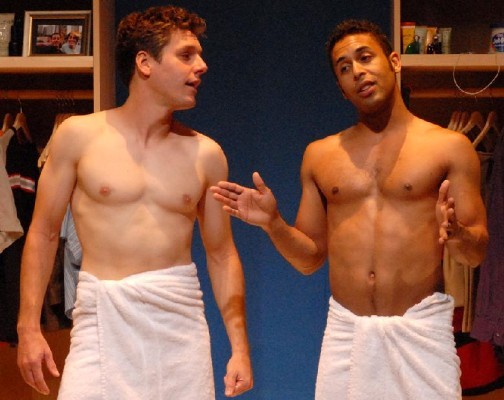
At its core, Take Me Out concerns Darren Lemming: a star baseball player who has recently decided to come out as gay. Though this news troubles some and warms others, Lemming appears largely indifferent to whatever response that decision garners. Appears, at least. With the addition of a new team member--a relief pitcher to help Lemming's team out of its slump--we find that Lemming may not be as calm and collected as he appears to be.
And that presented "coolness", though interesting, unfortunately resulted in a tepid response to this play. I wanted to care about these characters, but the majority of them seemed at least one degree emotionally removed from the plot, at least until the end. And there's nothing inherently wrong with that coolness, especially if it serves a narrative purpose. My problem with it was that it interfered with Take Me Out feeling like a real, fleshed-out world.
I like symbols and metaphors. I like discerning the bigger picture, grander themes and greater ideas, from recurring images, motifs in a given text. I don't even mind a certain amount of explicitness when it comes to that sort of analysis. But take me out just felt too cerebral for its own good. Take Me Out has things to say about baseball: not just as an American institution, but as a way of life. Neat, except characters halt the plot to discuss that meaning of baseball at length. And when most characters adopt a certain loquaciousness when talking about their "role" in this grand sport, it feels less like characters talking with one another and more the author talking to himself.
Add to all this the fact that one of the characters "narrates" the majority of the play to us. Telling instead of showing. It just feels lazy.
I've read plays by Richard Greenberg before, and he is a fine, fine playwright. But with Take Me Out, it feels like he's phoning it in. Certain characters are fleshed out more than others, and the end result is just . . . unsatisfying. There's not enough of a payoff to justify the journey. Perhaps the ideas expressed in here necessary and important and game-changing when the play first premiered. (It DID win the 2003 Tony Award). But to me, it just reads stale. A strike-out.