“A sensitive, informed and funny feat of high journalism that is a classic of the kind.”— The New York Times Book Review
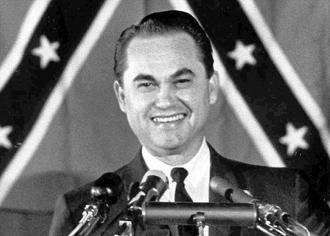
Wallace is a classic portrait of one of the century’s most fiery and controversial political figures. Initially conceived as a novel, Marshall Frady’s biography of George Wallace retains the narrative force and descriptive powers of fiction. Elizabeth Hardwick noted on Wallace ’s first publication in 1968, “There is a palpable Faulknerian mood to the reporting,” and The New Republic observed, “Frady has established new standards in political biography.” This is a wonderfully crafted depiction of a seminal figure whose influence altered the course of national politics.
A native of South Carolina, Marshall Frady was a journalist for more than twenty-five years, writing for Newsweek, Life, Harper's, Esquire, The New York Review of Books, The Sunday Times of London, The Atlantic, and The New Yorker. He was a correspondent on Nightline; chief writer and host of ABC News' Closeup, for which he won two Emmys and the duPont-Columbia Award; and the author of six books.
i work approx 1/4th of a mile from where George Wallace stood in the schoolhouse door, and I drive under Lurleen B Wallace Blvd 2x a day, so I figured I ought to know more about George Wallace other than he was a racist demogogue and that he got shot by the dude who more or less inspired Travis Bickle (I suppose I also knew that Wallace apologized late in his life for ... the way he lived, i guess). Anyway I read this book about George Wallace.
Frady was a new journalism-ish reporter and this book here novelistic, in the sense that novelistic means "uses 50% too many adjectives," but a lot of them are really good adjectives, so I didn't mind too much. the really valuable bits possess the feel of a good documentary - one that knows when it doesn't have to spell out exactly what you're seeing (or what the artist wants you to see, anyhow).
Also, Frady has Dickensian chops for little set-pieces sketching the people he's interviewing on background. Old used up characters sitting in small rooms waiting for the end, happily spilling their thoughts on Gov Wallace. This book also gets down Wallace's kind of crude circus magnetism - a precursor to trump.
TLDR, wallace's ragged prominence and popularity should have prepared everybody for trump, this country is "full of Little Hitlers" in Frady's terms, wallace still looms invisibly behind a lot of how alabama is in 2019, mid 20th century southern vernacular language is my favorite thing, the fact that no one could say deep down just how sincere wallace's racial animus was is kind of the worst part -- you dont even have to be sincerely racist to plug into the evil of the idea and use its power.
TIDBITS >A vigorous and somewhat brittle little lady in dresses of bright tropical colors like the plumage of a parrot, with a surprisingly loud hoarse harsh voice, she is not given to sentimentality. “No,” she says, “my boys and I don't spend much time together.
>Those bastards now, they wouldn't give me potato chips if they was rotten and I was starvin'.
>But this country's full of little Hitlers
>it has never been required of Southern popular heroes that they be successful. Indeed, Southerners tend to love their heroes more for their losses.
>Perhaps the most melancholy aspect of Alabama's massive preoccupation under Wallace has been the toll it has taken in the vitality of the whole state community. Such a bitter obsession enervates any people, exhausts any society, and steals from the spirit of its citizens, narrows their lives. In Alabama, segregation acted as a great succubus.
>He sat in the back study downstairs with his visitors until almost midnight-his chair pulled over to the couch where they were sitting, his tiny feet propped up on the coffee table, and his hands shoved deep into his pockets, his coat tightly buttoned across his paunch, with ashes flaking over his lap from a cigarette pinched squintingly in the exact center of his mouth-and recounted with spasmodic, breathless, panting, delicious little snickers and sniggerings how during college and his Army service he had toyed with Yankees and innocent sophisticates by playing a dim-witted hillbilly. “We used to tell the girls in the sororities about how much whiskey we could drink, how we were just poor country folks. We took out these little girls from New Orleans once, and we had this pint jar filled with water with a corn-cob stopper we'd dipped in whiskey. We told 'em it was moonshine and let 'em smell the stopper. Then I turned the jar up and drank about half that water. It scared 'em to death. They couldn't get over how I could drink all that moonshine and still drive
>“The psychiatrist … asked me, real casuallike, 'How you feelin'?' His voice was real light and high, you know-'How you feelin'? You havin' antagonisms?' …”
>Wallace, still at the window, all alone, leaning forward slightly with his Royal Crown Cola in his hand, was engulfed in the blowing curtains
>that most ominous of all disruptions and divisions in American society, beyond even race-the increasing dissolution between language and meaning in the conduct of the nation's life.
>“Somebody told me this fella's going around town asking questions about my wife's sex life.”
>if only to rouse garlicky memories from his rampantly hale past.
>George Wallace, Sr., was almost totally absorbed in a ceaseless, savage, losing cat-fight with life. He was a frail man outrageously harried by sickness and failure, and it was as if, engaged with his own demons during his precarious existence, he simply couldn't afford to pause long enough to comprehend that he had produced three sons and a daughter, much less the time to pay them attention.
>the South, where life is simply more glandular than it is in the rest of the nation.
>“I haven't been right since,” she announces. “It has impaired my thought attempts.”
Written while Wallace was still alive, Frady's portrait of the Alabama governor and U.S. presidential candidate is, in part, a study of demagoguery and machine politics, phenomena still alive and well in the United States today . It also provides a three dimensional portrayal of a politician whose image has been reduced to a flat cartoon-like picture in the minds of many (due largely to Wallace, himself, whose public rhetoric and behavior lacked ambiguity and nuance altogether, at least until his elder years). The book draws its strength from Frady's power as a writer (his clear, yet sophisticated style, his keen aptitude for analysis, and his skillful integration of quotations from Wallace's friends and cronies) and his credibility (a Georgia native well steeped in southern customs, literature, and politics). I found the book captivating and well worth my time. Wallace will always be remembered for his Stand in the Schoolhouse Door and the words, "Segregation today, segregation tomorrow, segregation forever," and, as a symbol of the Jim Crow South as it sputters in the face of events in the last half of the twentieth century, those snapshots work pretty well. But it is dangerous to oversimplify people like George Wallace and ignore the lessons we need to glean from such lives. People like Wallace don't rise to prominence in a vacuum, and the process by which they do reveals much about human beings, especially their responses to rhetoric which plays to their fears and prejudices.
What is about southern scribes writing on the political game? Are they imbued with greater powers of perception? Are their gifts for lyricism more attuned to human frailty? Some have noted the Faulkerian elements, and they are here in the winding stream of consciousness so out of place and yet so perfect where the subject is a force of nature that can't possibly be contained in a standard construct. It is also Cormac McCarthy in its violence, and James Agee (think the lush, longing prologue in A Death in the Family) in its celebration of southern identity. Frady's Wallace never judges, it doesn't even whack at the easy stuff. Like T. Harry Williams' Huey Long, their is reverence for a demagogue who speaks for his people, clearly at least a partial admiration, and given the subjects, it's hard to blame geniuses of observation like Williams and Frady. This one is stunning. It could have been written yesterday. The lust for unfettered power and the fury of the crowd are not new phenomena. Frady helps us come to grips with something we feel is so new here, but was here, almost identical, not too long ago. This is one of the best pieces of political writing I've ever read.
*I read the 1976 edition, which is 276 pages and ending with Frady ruminating that Wallace may run again in 1976.
I had no knowledge of who Wallace even was before hearing about this book from a NatSec journalist I follow on Twitter. I really enjoyed the almost poetic writing style of this, and George was so interesting traveling around the country, shaking hands and whipping up the crowds. I felt bad for Lurleen but I reckon she knew who she married. The only part that I wasn't fond of was the sudden jump between Part Six and Seven: the reader learns of Lurleen's cancer diagnosis in 1965 or 66 (the timelines were difficult to follow at parts) and then suddenly Part Seven opens with his attempted assassination in 1972. The ending was so quickly wrapped up compared to how much time Frady spent on his governship and campaigns, it felt abrupt and I was left wanting more.
I also wouldn't have minded a bit about the author himself and how he got all this access to Wallace and his cronies.
“Segregation now, segregation tomorrow, segregation forever!” - George C. Wallace
With those words, George Corley Wallace catapulted himself among one of the most important person in America’s political history. An archetypal southern populist in line with the likes of Huey Long, he became the face of southern whites’ defiant stance against civil rights movement, even though I can see that it was a political ploy so he would not be ‘out-niggered’ again, for he started up quite liberal, for a southern politician at his time. Always a political animal, he even put her wife as a governor so he could work behind the scenes. Until this day, he was the third-party presidential candidate with the most electoral college votes, a testament to his reputation as America’s Most Influential Loser. With the world moving towards nationalism, populism and other tensions, it is not hard to see Wallace’s shadow looming over, for it is not hard to see similarities between Trump and Wallace.
Well-written biography on a man I've heard of but didn't know much about. The author provides an intimate glimpse of George Wallace's legacy and some insight into the many different phases of his political career. Gd, 1960's American politics really hits different. Fascinating.
(4.5) Marshall Frady's stream-of-consciousness writing style isn't what I normally go for but it works here because of the subject. Reading this book is like trying to hold on to something inside the vortex of a tornado. Here the tornado is the person, personality, and political powerhouse that was George Wallace. Rather than do a birth/life/politics/death narrative, Frady jumps all over wherever it is convenient, from the man's friends to his enemies, in showing how he rose to power and steadily gripped it. Like Huey Long before him and Donald Trump after, his success on the national stage can be attributed to being in the right place at the right time. He was able to successfully enmesh the southern-fried populism of Long with the rising racial animus that accompanied the 60s Civil Rights Movement. And Frady captures this in a way that is lyrically sound.
People want to know why George Wallace was a success. It certainly had a lot to do with his views on race. But he told people what they wanted to hear in a manner in which they can understand that. It's impossible for even the most seasoned of politicians to be all things to all people. Wallace knew his base and he catered to them. That he did not fully believe the racism in which he publicly embraced, and recanted much of it later in life, is between him and God to mete out at the pearly gates. The damage was done and done in such an effective way that if not for a few missteps in 68 and an assassination attempt in 72, he would have turned either presidential election into a horse trading show.
The title is an understatement. I've read lots of biographies of politicians. This one is the best. It is entirely riveting and insightful from start to finish, with a conclusion so powerful that you'll think it's a Hollywood script or Shakespearean tragedy. Marshall Frady was one of our greatest writers. Don't miss his work.