

What do you think?
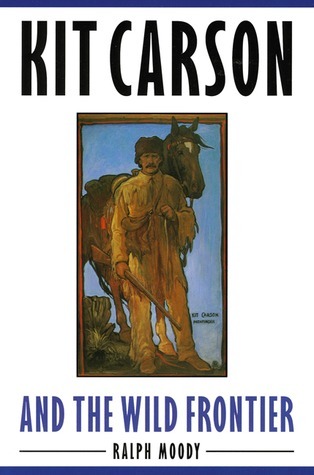
U.S. Landmark Books #53
Kit Carson and the Wild Frontier
Dozens of books and dime novels have been written about the reckless, daring adventures of Kit Carson’s youth. Little has been told of the wisdom and greatness of his later years. —Ralph Moody In 1826 an undersized sixteen-year-old apprentice ran away from a saddle maker in Franklin, Missouri, to join one of the first wagon trains crossing the prairie on the Santa Fe Trail. Kit Carson (1809–68) wanted to be a mountain man, and he spent his next sixteen years learning the paths of the West, the ways of its Native inhabitants, and the habits of the beaver, becoming the most successful and respected fur trapper of his time. From 1842 to 1848 he guided John C. Frémont’s mapping expeditions through the Rockies and was instrumental in the U.S. military conquest of California during the Mexican War. In 1853 he was appointed Indian agent at Taos, and later he helped negotiate treaties with the Apaches, Kiowas, Comanches, Arapahos, Cheyennes, and Utes that finally brought peace to the southwestern frontier.
Ralph Moody’s biography of Kit Carson, appropriate for readers young and old, is a testament to the judgment and loyalty of the man who had perhaps more influence than any other on the history and development of the American West.
Ralph Moody’s biography of Kit Carson, appropriate for readers young and old, is a testament to the judgment and loyalty of the man who had perhaps more influence than any other on the history and development of the American West.
184 pages, Paperback
First published January 1, 1955
About the author
Ralph Moody
63 books205 followersRalph Moody was an American author who wrote 17 novels and autobiographies about the American West. He was born in East Rochester, New Hampshire, in 1898 but moved to Colorado with his family when he was eight in the hopes that a dry climate would improve his father Charles's tuberculosis. Moody detailed his experiences in Colorado in the first book of the Little Britches series, Father and I Were Ranchers.
After his father died, eleven-year-old Moody assumed the duties of the "man of the house." He and his sister Grace combined ingenuity with hard work in a variety of odd jobs to help their mother provide for their large family. The Moody clan returned to the East Coast some time after Charles's death, but Moody had difficulty readjusting. Following more than one ill-timed run-in with local law enforcement, he left the family home near Boston to live on his grandfather's farm in Maine. His later Little Britches books cover his time in Maine and subsequent travels through Arizona, New Mexico, Nebraska, and Kansas—including stints as a bust sculptor and a horse rider doing "horse falls" for motion pictures—as he worked his way back toward Colorado while continuing to support his family financially.
Moody's formal education was limited, but he had a lifelong interest in learning and self-education. At age 50, he enrolled in a writing class, which eventually led to the publication of Father and I Were Ranchers. In addition to the Little Britches series, Moody wrote a number of books detailing the development of the American West. His books have been described as crude in the language of the times but are highly praised by Moody's readership and have been in continuous publication since 1950.
After a period as livestock business owner in rural Kansas, Moody sent to Massachusetts for his former sweetheart, Edna. They married and moved to Kansas City. They had three children.—Source
After his father died, eleven-year-old Moody assumed the duties of the "man of the house." He and his sister Grace combined ingenuity with hard work in a variety of odd jobs to help their mother provide for their large family. The Moody clan returned to the East Coast some time after Charles's death, but Moody had difficulty readjusting. Following more than one ill-timed run-in with local law enforcement, he left the family home near Boston to live on his grandfather's farm in Maine. His later Little Britches books cover his time in Maine and subsequent travels through Arizona, New Mexico, Nebraska, and Kansas—including stints as a bust sculptor and a horse rider doing "horse falls" for motion pictures—as he worked his way back toward Colorado while continuing to support his family financially.
Moody's formal education was limited, but he had a lifelong interest in learning and self-education. At age 50, he enrolled in a writing class, which eventually led to the publication of Father and I Were Ranchers. In addition to the Little Britches series, Moody wrote a number of books detailing the development of the American West. His books have been described as crude in the language of the times but are highly praised by Moody's readership and have been in continuous publication since 1950.
After a period as livestock business owner in rural Kansas, Moody sent to Massachusetts for his former sweetheart, Edna. They married and moved to Kansas City. They had three children.—Source
Ratings & Reviews
Friends & Following
Create a free account to discover what your friends think of this book!
Community Reviews
Displaying 1 - 18 of 18 reviews

February 23, 2012
It's nice to read a book about someone in history that tells the truth and how he developed his character and what made him who he was. We had a great discussion about the huge influence who you surround yourself with have on your life. This book shows distinctly how different the first half of his life was versus the last half solely because of the people he spent all of his time with. I really learned a lot about Kit Carson. After scouring through a stack of lame books on Kit Carson by other authors, I found that Ralph Moody had written one and that made my choice very easy. He is a great author and we can't wait to read more of the Little Britches series together.

September 27, 2024
Another in the "Landmark" series, this volume focuses on an individual rather than a singular topic or occurrence, although the subject in question certainly saw many historic events over the course of his rough-and-ready life. As the introduction states, on account of his many admittedly-often-embellished exploits, Kit Carson is almost as much myth as man. He was, in fact, the subject of many late-nineteenth-century dime novels, which is how many Americans of the day became acquainted with this wilderness adventurer.
Carson's renown has admittedly waned over the last several decades, along with that of many of our country's early adventurers. However, if you've ever driven across this great land of ours, or visited the national parks in places like the Rocky Mountains, or ventured across the burning deserts of the American Southwest, you can't help but be impressed with men like Carson's insatiable appetite for adventure, and their strength and willingness to survive.
At the time the book was written (1955), the Old West craze was in full swing, and men such as Carson featured prominently in popular culture. As opposed to the comic-book-like heroes depicted in movies and TV shows, the reality was more complex. What is known about this particular adventurer is that Christopher Houston Carson (1809-1868) was one of the few of his breed who lived to at least moderate old age. He was, at various times in his life, a frontiersman, fur trapper, miner, explorer, expedition leader, wilderness guide, alternatively an "Indian fighter" and/or agent negotiator, US Army officer, and entrepreneur. Illiterate all of his life, Carson was nonetheless an eyewitness to much of the early history of the American West.
Kit Carson was a famously diminutive man, described by one Civil War Army Colonel, Edward W. Wynkoop, as a man "five feet five and one half-inches tall, weighed about 140 pounds, of nervy, iron temperament, squarely built, slightly bow-legged, and those members apparently too short for his body. But, his head and face made up for all the imperfections of the rest of his person...[he had] mild blue eyes, which could become terrible under some circumstances, and like the warning of the rattlesnake, gave notice of attack. Though quick-sighted, he was slow and soft of speech, and posed great natural modesty."
Born in Kentucky, Carson moved to Missouri in infancy. He left home in in 1826, at age sixteen, after serving only a year as a saddler's apprentice. His family, in fact, had taken up occupancy on land formerly owned by the sons of Daniel Boone, who had in turn purchased it from the Spanish. Essentially having run away from home, Kit joined up with a wagon train headed west, determined, despite his diminutive size, to become a famous "Mountain Man" like Jim Bridger and Jedediah Smith. Over the next decade, Kit Carson made his own way, earning the respect of all who knew him, and the fear of not a few.
Carson's first adventure was as a livestock herder on the Santa Fe Trail. He then settled in Taos, but, unable to find work as a small, scrawny youth, he quickly moved on, later serving as a cook, translator and wagoner between 1827-1829. At age nineteen, he finally began his ventures as a mountain man, continuing to serve as a trapper and explorer, including with the Fitzpatrick/Levin expedition. He remained in the region, continuing to hunt and trap in the Rocky Mountains for about ten years.
Carson was serving as an agent to the Ute tribe when the Civil War broke out, as Confederate forces had captured the southern part of the New Mexico Territory. After Union military commander Colonel Canby called for volunteers to defend it, Carson resigned his position as Indian agent and volunteered. The governor, who, by that time, was well-acquainted with his reputation as a fierce Indian fighter, but also as a fair and even-tempered man, appointed him as Lt. Colonel over the First New Mexico Volunteer Infantry. Carson fought several battles over the next several years, including among native American tribes.
Although he had many friends and allies among some indigenous tribes, he warred with many others. It was during this period that he famously chose a site on the Pecos River as a reservation for the confinement of the Navajo and Apache peoples (who were, in fact, notorious enemies) where they were to be perpetually settled, specifically on account of its remoteness and distance from white settlements. In July, 1863, Carson was ordered to round up any resisters, shoot all the males on sight and to take the women and children captive, to be returned to the reservation. He was instructed to refuse all offers of treaties or peace until all Navajo were confined to the reservation. He then engaged in the campaign and Battle of Canyon de Chelly, in the winter of 1863-64, a sacred site for the Navajo.
This was one of Carson's most shameful exploits, specifically his involvement in rounding up some 3,000 refugees at Fort Canby in March, 1864, and forcing them to walk to Bosque Redondo. Due to the number of deaths which occurred on this forced march, it is sometimes known as the Navajo Trail of Tears, or the "Long Walk of the Navajo." Nor was this arrangement to be long-lasting, as a new treaty was signed in 1868 and the Navajo were allowed to return to their homeland. Thus, it has long been criticized as an utter waste of human life, as the death march to Bosque Redondo did not even result in a long-term solution.
After the Civil War, with a lull in the Indian Wars, Carson was appointed as commander of Fort Garland, Colorado, in the heart of Ute territory, with whom he had retained friendly relations. He later took up ranching, settling at Boggsville. He later traveled to Washington DC, with several Ute chiefs to serve as translator while they met with the US president. However, Carson had been suffering from poor health for some time, and had reportedly been diagnosed with an aneurysm. In fact, he did not live long after returning from this trip.
Much of Carson's personal life is as much fiction as fact. Despite remaining illiterate throughout his life, he reportedly learned numerous indigenous languages, which was almost a necessity as a trapper and trader, but he also had many hostile encounters with natives, most notably the Blackfoot tribe. However, during an encounter with a notorious French trapper, he reportedly won the fair hand of a chief's daughter, Waanibe (Grass Singing) to whom he remained married until her death from an illness after she had given birth to his second daughter, in about 1839. His second daughter died in childhood, but their first, Adeline, lived to adulthood.
Carson later married another Native woman, in 1841, but she divorced him shortly thereafter. In 1842, he met Josefa Jaramillo, the daughter of a wealthy Mexican rancher in Taos. Carson reportedly converted to Catholicism in order to marry the then-fourteen-year-old, with whom he eventually had eight children. She died from childbirth complications just after the birth of their eighth child, shortly after Carson had returned from Washington, DC. His son Charles reported that "he just seemed to pine away after Mother died," and succumbed himself to his many ailments in May, 1868, at age 58, just a month after Josefa had died.
I have traversed a fair amount of the country that Carson and others of his day did, but always by vehicle. That said, each time I pass through the unforgiving desert, in the comfort of an air-conditioned or heated car, equipped with food, water, and other emergency provisions, traveling in relative safety on a paved road, I always think about those great explorers who ventured into the unknown wilderness, who crossed vast oceans of desert, or picked their way, inch by inch, foot by foot, through harsh and rugged mountain terrain, across raging rivers, through hostile territory.
Even now, it's difficult to comprehend that the land we now sail through over the course of an hour or two would take these hardened men weeks to cross, at great risk to their very lives. To that end, I always think about the hardships they endured, all on accord of their own free will. It is also difficult to overstate the strength and endurance of these men, the survivors, who forged the trail that my own ancestors would one day follow, all the way from the land of Carson's birth to the Pacific Ocean, the peaceful place where I now call home.
I wish that the youngsters of my own day were more familiar with the lives and deeds of these long-lost and mostly forgotten adventurers, whose exploits, as in Carson's case, were sometimes far from admirable, but were, at the very least, memorable, and often inspiring. Carson was truly an independent soul, one who forged his own way in life, living by his own rules, and making his own destiny as he sought his fortune in a harsh and unforgiving land.
Carson's renown has admittedly waned over the last several decades, along with that of many of our country's early adventurers. However, if you've ever driven across this great land of ours, or visited the national parks in places like the Rocky Mountains, or ventured across the burning deserts of the American Southwest, you can't help but be impressed with men like Carson's insatiable appetite for adventure, and their strength and willingness to survive.
At the time the book was written (1955), the Old West craze was in full swing, and men such as Carson featured prominently in popular culture. As opposed to the comic-book-like heroes depicted in movies and TV shows, the reality was more complex. What is known about this particular adventurer is that Christopher Houston Carson (1809-1868) was one of the few of his breed who lived to at least moderate old age. He was, at various times in his life, a frontiersman, fur trapper, miner, explorer, expedition leader, wilderness guide, alternatively an "Indian fighter" and/or agent negotiator, US Army officer, and entrepreneur. Illiterate all of his life, Carson was nonetheless an eyewitness to much of the early history of the American West.
Kit Carson was a famously diminutive man, described by one Civil War Army Colonel, Edward W. Wynkoop, as a man "five feet five and one half-inches tall, weighed about 140 pounds, of nervy, iron temperament, squarely built, slightly bow-legged, and those members apparently too short for his body. But, his head and face made up for all the imperfections of the rest of his person...[he had] mild blue eyes, which could become terrible under some circumstances, and like the warning of the rattlesnake, gave notice of attack. Though quick-sighted, he was slow and soft of speech, and posed great natural modesty."
Born in Kentucky, Carson moved to Missouri in infancy. He left home in in 1826, at age sixteen, after serving only a year as a saddler's apprentice. His family, in fact, had taken up occupancy on land formerly owned by the sons of Daniel Boone, who had in turn purchased it from the Spanish. Essentially having run away from home, Kit joined up with a wagon train headed west, determined, despite his diminutive size, to become a famous "Mountain Man" like Jim Bridger and Jedediah Smith. Over the next decade, Kit Carson made his own way, earning the respect of all who knew him, and the fear of not a few.
Carson's first adventure was as a livestock herder on the Santa Fe Trail. He then settled in Taos, but, unable to find work as a small, scrawny youth, he quickly moved on, later serving as a cook, translator and wagoner between 1827-1829. At age nineteen, he finally began his ventures as a mountain man, continuing to serve as a trapper and explorer, including with the Fitzpatrick/Levin expedition. He remained in the region, continuing to hunt and trap in the Rocky Mountains for about ten years.
Carson was serving as an agent to the Ute tribe when the Civil War broke out, as Confederate forces had captured the southern part of the New Mexico Territory. After Union military commander Colonel Canby called for volunteers to defend it, Carson resigned his position as Indian agent and volunteered. The governor, who, by that time, was well-acquainted with his reputation as a fierce Indian fighter, but also as a fair and even-tempered man, appointed him as Lt. Colonel over the First New Mexico Volunteer Infantry. Carson fought several battles over the next several years, including among native American tribes.
Although he had many friends and allies among some indigenous tribes, he warred with many others. It was during this period that he famously chose a site on the Pecos River as a reservation for the confinement of the Navajo and Apache peoples (who were, in fact, notorious enemies) where they were to be perpetually settled, specifically on account of its remoteness and distance from white settlements. In July, 1863, Carson was ordered to round up any resisters, shoot all the males on sight and to take the women and children captive, to be returned to the reservation. He was instructed to refuse all offers of treaties or peace until all Navajo were confined to the reservation. He then engaged in the campaign and Battle of Canyon de Chelly, in the winter of 1863-64, a sacred site for the Navajo.
This was one of Carson's most shameful exploits, specifically his involvement in rounding up some 3,000 refugees at Fort Canby in March, 1864, and forcing them to walk to Bosque Redondo. Due to the number of deaths which occurred on this forced march, it is sometimes known as the Navajo Trail of Tears, or the "Long Walk of the Navajo." Nor was this arrangement to be long-lasting, as a new treaty was signed in 1868 and the Navajo were allowed to return to their homeland. Thus, it has long been criticized as an utter waste of human life, as the death march to Bosque Redondo did not even result in a long-term solution.
After the Civil War, with a lull in the Indian Wars, Carson was appointed as commander of Fort Garland, Colorado, in the heart of Ute territory, with whom he had retained friendly relations. He later took up ranching, settling at Boggsville. He later traveled to Washington DC, with several Ute chiefs to serve as translator while they met with the US president. However, Carson had been suffering from poor health for some time, and had reportedly been diagnosed with an aneurysm. In fact, he did not live long after returning from this trip.
Much of Carson's personal life is as much fiction as fact. Despite remaining illiterate throughout his life, he reportedly learned numerous indigenous languages, which was almost a necessity as a trapper and trader, but he also had many hostile encounters with natives, most notably the Blackfoot tribe. However, during an encounter with a notorious French trapper, he reportedly won the fair hand of a chief's daughter, Waanibe (Grass Singing) to whom he remained married until her death from an illness after she had given birth to his second daughter, in about 1839. His second daughter died in childhood, but their first, Adeline, lived to adulthood.
Carson later married another Native woman, in 1841, but she divorced him shortly thereafter. In 1842, he met Josefa Jaramillo, the daughter of a wealthy Mexican rancher in Taos. Carson reportedly converted to Catholicism in order to marry the then-fourteen-year-old, with whom he eventually had eight children. She died from childbirth complications just after the birth of their eighth child, shortly after Carson had returned from Washington, DC. His son Charles reported that "he just seemed to pine away after Mother died," and succumbed himself to his many ailments in May, 1868, at age 58, just a month after Josefa had died.
I have traversed a fair amount of the country that Carson and others of his day did, but always by vehicle. That said, each time I pass through the unforgiving desert, in the comfort of an air-conditioned or heated car, equipped with food, water, and other emergency provisions, traveling in relative safety on a paved road, I always think about those great explorers who ventured into the unknown wilderness, who crossed vast oceans of desert, or picked their way, inch by inch, foot by foot, through harsh and rugged mountain terrain, across raging rivers, through hostile territory.
Even now, it's difficult to comprehend that the land we now sail through over the course of an hour or two would take these hardened men weeks to cross, at great risk to their very lives. To that end, I always think about the hardships they endured, all on accord of their own free will. It is also difficult to overstate the strength and endurance of these men, the survivors, who forged the trail that my own ancestors would one day follow, all the way from the land of Carson's birth to the Pacific Ocean, the peaceful place where I now call home.
I wish that the youngsters of my own day were more familiar with the lives and deeds of these long-lost and mostly forgotten adventurers, whose exploits, as in Carson's case, were sometimes far from admirable, but were, at the very least, memorable, and often inspiring. Carson was truly an independent soul, one who forged his own way in life, living by his own rules, and making his own destiny as he sought his fortune in a harsh and unforgiving land.
October 30, 2018
I had heard that Ralph Moody tells a great story, and I was not disappointed! I learned some fascinating facts about Kit Carson and would highly recommend this book to young adult readers or adults looking for an interesting biography that is easy to read.
March 27, 2024
Kit Carson was born in Kentucky to uneducated poor parents in the same year as Lincoln, but after that the similarity ends. He played a shocking role in exploring the west, acquiring California and the Southwest for America, pacifying and making treaties with the Indians (he evidently spoke parts of several Indian dialects), and keeping New Mexico in the Union. He was an amazing leader, and inspired men constantly to follow him. He slew a Canadian who would have killed his men and raped the Indian girl he loved. Sadly, she died less than four years after he married her of "prairie fever." Two years later, he converted to Catholicism to marry a Spanish girl he loved. He spent very little time with her because he served America so unceasingly. He and his wife died less than a month apart, just after a baby boy had been born to them, and they left seven orphaned children.
October 7, 2026
I read this book to my kids, we all enjoyed it. While it's not quite up to the level of Ralph Moody's memoirs, IMHO, it was still an interesting read. Kit Carson was certainly an inspirational figure in many ways, but it is unfortunate that significant parts of his career were based on lawlessness - trapping in areas where he had no legal right to be. Thus he contributed to one side of the grievances that fueled in the Indian wars, in which our government's hands were not as clean as we would wish.

July 25, 2025
The way this Landmark book portrays Kit Carson, he was an American hero about whom we sing when we sing “and I won’t forget the men who died who gave that right to me.” I read another review of this book here that mentions lots of negative details that were not in this Landmark book I read. The writing by Ralph Moody was excellent and brought me to tears at the end.

April 2, 2020
Another great Ralph Moody book. I admire Kit Carson. Without knowing his real story you would think he was another ruthless western conqueror. He was a wise and admired friend to the Native Americans.
February 27, 2018
i liked it. I would have rated it 4 1/2

January 6, 2019
Talk about a hero. Kit Carson was amazing. Once again, Ralph Moody gets the prize for making his subject come alive.

August 15, 2025
Kit Carson helped shape the west in America during its formative years.

April 24, 2016
The glimpse into frontier life and the expansion of the United States was interesting, and the book shed a lot of light on Kit Carson's part in it, even if as more than one reviewer said Carson came across as maybe too perfect to be true.
My rating comes from the fact that I won't be sharing this book with my kids, and I bought it for that. While the author doesn't totally paint settlers as all good and Native Americans as all bad, there are plenty of instances where better choices could have been made in the wording, most notable among them from pg 65:
I don't doubt the trappers felt and acted in just such a way, but Mr Moody, writing in the 1950's, could have made it clearer that his opinion was different. But perhaps it wasn't. I don't know, and I prefer to find material that has a more sensitive and approach to the subject.
My rating comes from the fact that I won't be sharing this book with my kids, and I bought it for that. While the author doesn't totally paint settlers as all good and Native Americans as all bad, there are plenty of instances where better choices could have been made in the wording, most notable among them from pg 65:
A squaw was a handy thing for a trapper to have. She would mind like a dog and do all the hard work around his camp. When he tired of her, he would trade her off or send her back to her tribe.
I don't doubt the trappers felt and acted in just such a way, but Mr Moody, writing in the 1950's, could have made it clearer that his opinion was different. But perhaps it wasn't. I don't know, and I prefer to find material that has a more sensitive and approach to the subject.

March 31, 2018
I read a bunch of the Landmark series books as a kid. Our school library had a huge collection of them, so I just made my way down the shelves. I remember enjoying them, but I was too young at the time to question the narrative or the quality of writing. I just liked reading biographies and histories, and there wasn't a lot of interesting non-fiction for kids at that time. Most of what did exist was either boring or more myth than fact. (And these do suffer from a bit of the latter.)
Would I read it to kids today? Nah. The whole "Great White Race has God-given right to take, kill, abuse, and exploit whatever and whoever in the name of making America Great" slant doesn't sit well. It never did; we just were too indoctrinated in it to know better 50+ years ago when these came out. I'm rating them on the memory of enjoyment alone, not on accuracy or how they would go over today. Fortunately, kids today have a lot better from which to choose.
Would I read it to kids today? Nah. The whole "Great White Race has God-given right to take, kill, abuse, and exploit whatever and whoever in the name of making America Great" slant doesn't sit well. It never did; we just were too indoctrinated in it to know better 50+ years ago when these came out. I'm rating them on the memory of enjoyment alone, not on accuracy or how they would go over today. Fortunately, kids today have a lot better from which to choose.
February 20, 2010
A decent western. I haven't read too many books based in that era, so it was interesting. I was writing a research paper on a missionary who worked about that same time period so it gave me a better perspective on both to see what was going on in a different part of the world.
My biggest flaw with this book was that Carson was just too noble and incorruptible. He was 100% selfless and brilliant to the point that it bugged me.
My biggest flaw with this book was that Carson was just too noble and incorruptible. He was 100% selfless and brilliant to the point that it bugged me.

July 23, 2014
This was an okay story. I really enjoyed reading about the country I live in and learning how wild it was so long ago. I felt like the author was making Kit to be a better person than he was, or putting his in own feelings into the book. Otherwise I enjoyed the book. Carson gave it 2 stars. Mailee gave it 5 stars. Mattea gave it 4 stars.
November 26, 2014
I liked it and it was interesting. He captured a lot of horses and brought them back to the people who was in command. He started trapping at age 13 and he really wanted to settle down, but he never did.

August 19, 2010
What an interesting book! I had no idea that Kit Carson was such an influential "mountain man" in the history of our wild west. And Ralph Moody always writes good books.
February 29, 2012
An awesome book about Kit Carson!

May 29, 2015
Very good book on the History and Life of Kit Carson. Read it to my husband and we both enjoyed it very much.
Displaying 1 - 18 of 18 reviews