In my journey around the world, I stopped this time in Tunisia, with a surprising novel that takes a well-known topic - the descent of a relatively democratic Arab country into religious extremism - and gives it a satirical take. There's even a surreal opening scene, which made me laugh out loud (and I was a bit sorry this was just a fragment with no continuation): a prince from a Gulf kingdom chatting on a yacht off Sardinia about football transfers with a man who is very obviously a version of Silvio Berlusconi. As someone who's been following Serie A for 20 years (and as an Inter Milan fan, no less), this detail was hilarious and painfully on brand. And it sets the tone with the themes of power, money and politics.
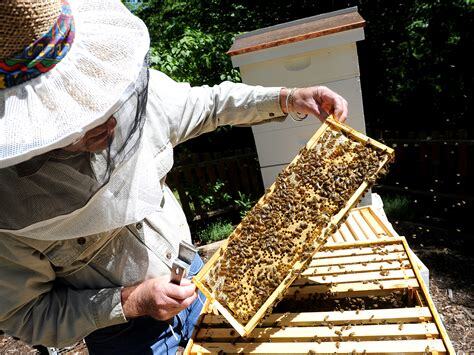
I started by saying "The Ardent Swarm" is a satire. A political satire, to be more precise. But it's also an allegory and an ecological reflection. We are in Nawa, a remote village from a fictional country, where politics rarely make an appearance, and we follow a solitary beekeeper known as "the Don", whose life dramatically changes when his bees start to get mysteriously attacked. We have one main narrative thread, with the Don investigating the cause of the attacks and trying to save his bees, and a political subplot (the country holding parliamentary elections, in which a religious extremist party comes to power) that unexpectedly impacts his small business.
This is a little gem of a book. It packs a lot in a very compact package. We have the small village life, completely transformed by the political campaign. People who lived quiet lives before are becoming religious extremists. There's a lot of social unrest. Institutions are reshaped. And there's a dark atmosphere that clearly echoes the post–Arab Spring, with the fragility of new democracies and the rapid rise of religious parties affecting the country's intellectual and cultural life, among other things.
The characters are mainly muted, with sparse cultural flavour, but the Don anchors the novel. He's observant and deeply tied to the natural world, and it's his awareness that makes him compelling. Because he comes from a place that has gone through similar political changes, he understands patterns and recognises the early signs of collapse. Around him, we have archetypes: Toumi represents disillusionment that slides into radicalisation, Douda represents the passive and confused part of the population, Baya embodies the desire to escape from poverty.
The novel operates on multiple thematic layers and they are all intertwined. Manai addresses the fragility of democracy, and shows how easily it can be manipulated, especially in contexts where institutions are weak and the population is unprepared. He also makes a sharp critique of performative religion and the use of faith as a political tool. The author also addresses how quickly disillusionment and lack of education can be exploited by extremist movements, something we don't see only in the Arab world (I see similar patterns in Europe). And within all this construction, nature acts as a mirror, the consequences of imbalance and intrusion. And then there's also the theme of resistance, both in nature and in the human world.
It's interesting how this book balances gravity with irony. At times, it feels completely absurd, but that absurdity turns dark pretty quickly. As someone who hates preachiness in books, I appreciated that this one never becomes didactic, even when dealing with heavy political themes. It uses the micro (the beehive) to reflect the macro (the country). I really, really recommend this novel because it departs from the melodramatic tone of most stories about religious extremism by inserting satire, which doesn't take anything from the gravity of the themes but gives the book a lighter, more digestible tone.