

What do you think?

Arcadia
It’s a chilling fact that suicide is today’s number two cause of death for young people. Arcadia is a story about suicide, but it’s also a story about life. This is the fascinating tale of a suicidal teen named Jacob Harper, told vividly and unforgettably by his loving father. It’s a journey through Jacob’s private world of torment, disappointment, fear, humor, hope, love, and finally, success. Arcadia is as relentlessly personal as it is entertaining, and as honest as it is encouraging.
300 pages, Kindle Edition
Published October 2, 2019
About the author
Mark Lages
21 books310 followersQuickly...I was born and raised in California, but now live in South Carolina with my wife and our animals. I am neither a liberal nor a conservative. In fact, I despise politics. I think of myself as an artist, and not as a journalist. I've been influenced by Milton Friedman, Frank Lloyd Wright, Hunter S Thompson, Douglas Adams, Salvador Dali, MC Escher, JS Bach, Keith Jarrett, Vincent Price, Tom Waits, and many others. I like to smoke cigars and drink lots of coffee. And I do love to write. Lock me in a room with a box of cigars, a coffee maker, and a computer, and I will do just fine. Click here to leap to my website for more info about me and my books.
Ratings & Reviews
Friends & Following
Create a free account to discover what your friends think of this book!
Community Reviews
Displaying 1 - 30 of 90 reviews

January 4, 2020
What does it take out of a man when he holds his sixteen year old son in his arms, a son who has just slit his wrists and is dying in the man's arms. We take this journey with Stan Harper, the father of Jacob, a young poet, semi-hippy, extremely cynical but gentle soul. We learn about many of Jacob's thoughts through his poetry and other writings, some of which have been smuggled from the trash can as his father searches his room to better understand his morose, depressed son, as Stan tries lessen his worries about lifeless acting Jacob. When I say lifeless, Jacob had become lifeless long before he slit his wrists and his father had struggled to help him, understand him, and to find away to pull Jacob out of his very cynical hole.
This story is really about Stan because we get to go back in the past and visit Stan's memories, not only as they pertain to Jacob but also as he searches his past for where he went wrong, what he could have done differently, and just WHY Jacob sees life and humanity (especially humanity) with such a deadly, jaded eye. Towards the end of the book, as something significant is happening, it's obvious that Stan will never recover from the fact that his son wanted to kill himself and that he didn't/couldn't keep his son from taking that step. That event in Stan's life defines him now, over any other event in his life.
I enjoyed the story but getting to know Stan meant we get to like him less, get to see him as he really is, even if he doesn't always see himself the way we see him. Jacob wasn't the only cynical person in the family. Stan thinks he sees everyone else with a clear eye, sees their foolish ways and manners and knows he's just like them but because he knows it, he thinks he's better than they are. Surely this attitude could have rubbed off on his family...you never know how you are really affecting those around you, even when you think your thoughts and feelings are hidden from display.
Thank you to the author for a copy of this book in exchange for an honest review.
This story is really about Stan because we get to go back in the past and visit Stan's memories, not only as they pertain to Jacob but also as he searches his past for where he went wrong, what he could have done differently, and just WHY Jacob sees life and humanity (especially humanity) with such a deadly, jaded eye. Towards the end of the book, as something significant is happening, it's obvious that Stan will never recover from the fact that his son wanted to kill himself and that he didn't/couldn't keep his son from taking that step. That event in Stan's life defines him now, over any other event in his life.
I enjoyed the story but getting to know Stan meant we get to like him less, get to see him as he really is, even if he doesn't always see himself the way we see him. Jacob wasn't the only cynical person in the family. Stan thinks he sees everyone else with a clear eye, sees their foolish ways and manners and knows he's just like them but because he knows it, he thinks he's better than they are. Surely this attitude could have rubbed off on his family...you never know how you are really affecting those around you, even when you think your thoughts and feelings are hidden from display.
Thank you to the author for a copy of this book in exchange for an honest review.

December 7, 2019
Paul and I have four friends who died by suicide.
....Chris - 39 years old - by knife...( Japanese Hara-Kiri)...in bed.. while his girlfriend was out doing errands. He had just spent 3 days at our house a week before he died. He never seemed depressed but he got caught up in an illegal/stealing situation and was about to be caught and sent to prison. None of his friends knew of his ‘stealing’.
....Doug - late 40’s- walked into the woods in Northern Calif and shot himself. ( soon after having taken a father/ daughter trip with his pre-teen daughter). He was having Financial problems and left a note saying he was totally complete and just didn’t want to grow old.
....Mark - 40ish- hung himself the day after he returned home from Burning Man. He was divorced a year - after a twenty year marriage -but his biggest loss was the recent loss of his mother whom he was very close with. We knew he was depressed.
....Steve, a teenager, was a Freshman in High School. He and our daughter did professional acting together. Steve was home alone and killed himself in his room with a shot gun.
Our family and community was shocked - literally shocked! None of us saw a sign of a problem with this bright, wholesome, kind, handsome kid.
Suicide is real and affects us all. Often it’s a puzzle, ( always devastating news), and we wish we could have done something to have prevented it.
I knew this book was centered around the topic suicide when I decided to read it. But that was all I knew.
We learn right away that 17-year-old Jacob was found by his father - Stan Harper - in the shower, naked, wrists bleeding.
April - wife/ mother calls 911.
Stan’s only focus is to stop the bleeding and save Jacob’s life.
The beginning bathroom scene was straightforward - a parent’s nightmare- heart wrenching - frightening- and believable.
....However, the storytelling itself was written in first person narrative which didn’t work for me.
The writing fell into pitfalls that overshadowed more important issues.
We were told thoughts rather than be allowed to feel them ourselves. There were subplots that were distracting and disjointed.
Lengthy descriptive narrative was inserted at the expense of action and dialogue.
I began to feel annoyed with the narrator.
Stan Harper was in shock - but his condescending-descriptions/ judgements, & generalizing we off-putting.
Jacob liked poetry. I even enjoyed reading his poetry, but I cringed when the narrator asked me to agree with him with this question:
“It’s pretty good for a twelve-year-old, don’t you think?”
Throughout the storytelling— the reader is asked questions:
“Did I tell you Jacob was a hippie?”. More information follows on the ‘type’ of ‘partial’ hippie Jacob was.. (judgements & generalizations)...
The storytelling was filled with subtle righteous comparisons which I found irritating.
Example:
“And while kids at his school had their heads in those simple minded Harry-Potter books, Jacob was discovering works like Siddhartha, Walden, and The Zen and the Art of Motorcycle Maintenance”.
The next example shows the author asking us a question- and his passing judgement: ( just doesn’t feel right to me)....
“As I told you earlier, we lived in Orange County, California. Have you heard of this place?
I am talking about Orange County, as the setting for the popular and awful The Real Housewives of Orange County”.
The Harper Family lived in a gated community called Coto de Caza, in Orange County.
It’s an affluent community -
but I didn’t like the way the author generalized the “lily-white”, All-American families who wasted more money on cars, vacations. watches and Plastic Surgery‘s than most normal people.
Even in joking - this type of humor doesn’t appeal to me.
“It was a community in which being a liberal was akin to being a rapist or a mass murderer, I kid you not. You had to have a sense of humor. This was a place where breast augmented, spray-on-tan moms would park their behemoth Chevy Suburbans in handicap stalls and their husbands would pay the parking fines as if they were paying another utility bill. Didn’t that say it all?
And the kids— what about their kids? The poor, entitled, misguided, social climbing kids didn’t have a chance in hell”.
Stan wants to tell the reader about himself. He says the more we know about him the better we would understand his son. I had my doubts.
Stan lived in the same community as the other people he made fun of. But he tells us the big difference was between him and most other people who lived in their community was that he knew better.
There was an awful lot of judging, comparing, and righteousness. I don’t enjoy this type of writing. Perhaps it was suppose to be sarcastic humor... but it’s styling was not my cup of tea.
The grammatical errors were noticeable. The jokes were noticeable - but sincere examination of suicidal behavior wasn’t.
I do believe the author has a pure heart or he would not have even attempted this topic in the first place...but in my opinion this book needed more revisions.
....Chris - 39 years old - by knife...( Japanese Hara-Kiri)...in bed.. while his girlfriend was out doing errands. He had just spent 3 days at our house a week before he died. He never seemed depressed but he got caught up in an illegal/stealing situation and was about to be caught and sent to prison. None of his friends knew of his ‘stealing’.
....Doug - late 40’s- walked into the woods in Northern Calif and shot himself. ( soon after having taken a father/ daughter trip with his pre-teen daughter). He was having Financial problems and left a note saying he was totally complete and just didn’t want to grow old.
....Mark - 40ish- hung himself the day after he returned home from Burning Man. He was divorced a year - after a twenty year marriage -but his biggest loss was the recent loss of his mother whom he was very close with. We knew he was depressed.
....Steve, a teenager, was a Freshman in High School. He and our daughter did professional acting together. Steve was home alone and killed himself in his room with a shot gun.
Our family and community was shocked - literally shocked! None of us saw a sign of a problem with this bright, wholesome, kind, handsome kid.
Suicide is real and affects us all. Often it’s a puzzle, ( always devastating news), and we wish we could have done something to have prevented it.
I knew this book was centered around the topic suicide when I decided to read it. But that was all I knew.
We learn right away that 17-year-old Jacob was found by his father - Stan Harper - in the shower, naked, wrists bleeding.
April - wife/ mother calls 911.
Stan’s only focus is to stop the bleeding and save Jacob’s life.
The beginning bathroom scene was straightforward - a parent’s nightmare- heart wrenching - frightening- and believable.
....However, the storytelling itself was written in first person narrative which didn’t work for me.
The writing fell into pitfalls that overshadowed more important issues.
We were told thoughts rather than be allowed to feel them ourselves. There were subplots that were distracting and disjointed.
Lengthy descriptive narrative was inserted at the expense of action and dialogue.
I began to feel annoyed with the narrator.
Stan Harper was in shock - but his condescending-descriptions/ judgements, & generalizing we off-putting.
Jacob liked poetry. I even enjoyed reading his poetry, but I cringed when the narrator asked me to agree with him with this question:
“It’s pretty good for a twelve-year-old, don’t you think?”
Throughout the storytelling— the reader is asked questions:
“Did I tell you Jacob was a hippie?”. More information follows on the ‘type’ of ‘partial’ hippie Jacob was.. (judgements & generalizations)...
The storytelling was filled with subtle righteous comparisons which I found irritating.
Example:
“And while kids at his school had their heads in those simple minded Harry-Potter books, Jacob was discovering works like Siddhartha, Walden, and The Zen and the Art of Motorcycle Maintenance”.
The next example shows the author asking us a question- and his passing judgement: ( just doesn’t feel right to me)....
“As I told you earlier, we lived in Orange County, California. Have you heard of this place?
I am talking about Orange County, as the setting for the popular and awful The Real Housewives of Orange County”.
The Harper Family lived in a gated community called Coto de Caza, in Orange County.
It’s an affluent community -
but I didn’t like the way the author generalized the “lily-white”, All-American families who wasted more money on cars, vacations. watches and Plastic Surgery‘s than most normal people.
Even in joking - this type of humor doesn’t appeal to me.
“It was a community in which being a liberal was akin to being a rapist or a mass murderer, I kid you not. You had to have a sense of humor. This was a place where breast augmented, spray-on-tan moms would park their behemoth Chevy Suburbans in handicap stalls and their husbands would pay the parking fines as if they were paying another utility bill. Didn’t that say it all?
And the kids— what about their kids? The poor, entitled, misguided, social climbing kids didn’t have a chance in hell”.
Stan wants to tell the reader about himself. He says the more we know about him the better we would understand his son. I had my doubts.
Stan lived in the same community as the other people he made fun of. But he tells us the big difference was between him and most other people who lived in their community was that he knew better.
There was an awful lot of judging, comparing, and righteousness. I don’t enjoy this type of writing. Perhaps it was suppose to be sarcastic humor... but it’s styling was not my cup of tea.
The grammatical errors were noticeable. The jokes were noticeable - but sincere examination of suicidal behavior wasn’t.
I do believe the author has a pure heart or he would not have even attempted this topic in the first place...but in my opinion this book needed more revisions.

January 18, 2020
This powerful book looks at the ripple effect of pain - and how suicide can sometimes seem like the way to stop the propagation. Mark Lages interweaves a story of such profound intensity that you feel as if you know Jacob Harper; then you read poems written by him which make you wonder if you are seeing the situation clearly. Stan Harper tries to retrace why life has become so unbearable for his son Jacob - what would cause a young boy to slit his wrists and want to leave life behind even before he has lived? This book really made me question some of my own perceptions of suicide - highly recommended.

April 10, 2020
Kid, how's this for personal privilege? Your middle aged father obsesses over you, he's written an entire novel to proclaim utmost admiration (and subsequent fear) about you and your top-tiered intelligence. What will it lead to, when a Republican father figures failure ("it makes me want to cry my eyes out, and that's a powerful sign of love" [24]) to be the opposite of his son's enemy: capitalism? Young Jacob, the WHITE developing American soul in the center of this tale, is anti-capitalistic, anti-Vietnam, a vegetarian, a 9/11 "We had it coming"er. Then changes into anti-immigrant, anti-humanity bipolaroid. His own father gets his job because he's liked, complains about said job, though his income seems lofty (and enough too to NOT afford taking vacations since he hates hotel beds, and basically rich enough to assure the family that it will remain in the same tax bracket for the next generations) Son, with a severely different attitude, attains same.
As you can tell, this novel really rubbed me in a certain way, with its protagonist (the dad, not the son) making sense of his own and offspring's slight and only occasional falls from grace; of "minor/major" incidents that curb fates, in the grasping for hypotheticals (what would have been, what was but then unfairly changed...). But... again, these new writers are nothing but compulsively readable. Although I may complain about this giant microscope on a glaring fault within contemporary American families (at 21, do what you want! If you do not need culture or learning, then that's your choice, because, boy, you'll be just fine!"). We see the net placed under MANY WHITE American families; gee whiz, they have fears and dreams just like the rest of us!
As you can tell, this novel really rubbed me in a certain way, with its protagonist (the dad, not the son) making sense of his own and offspring's slight and only occasional falls from grace; of "minor/major" incidents that curb fates, in the grasping for hypotheticals (what would have been, what was but then unfairly changed...). But... again, these new writers are nothing but compulsively readable. Although I may complain about this giant microscope on a glaring fault within contemporary American families (at 21, do what you want! If you do not need culture or learning, then that's your choice, because, boy, you'll be just fine!"). We see the net placed under MANY WHITE American families; gee whiz, they have fears and dreams just like the rest of us!

November 14, 2019
This is my second Mark Lages book and I'll be honest, neither of them would have caught my interest in the random playing field of searching for books in general. BUT... having read them by the author's request, or indeed, after getting past the first chapter or two with either book, I can now firmly say that I'm a fan of his writing.
I didn't expect it. I truly didn't. And especially when I learn I'm dealing with a novel about teen suicide, I really out to have squirmed and tried to wiggle out of it... but that's the magic of his writing.
It's warm. Gentle. Empathetic.
We don't jump into the mindset of the suicidal teen except through his poetry, his essays, or some of his actions. We see everything from the PoV of his confused but caring father, who, fortunately or unfortunately, snoops through all his son's things. A grey area? Yeah, of course, but in this case he really does admire his son.
Jacob marches to a different beat. Sees things very differently from most. He's an idealist in a crass, crude world. A sensitive boy unable to deal with the very real negative stuff in this world.
His father is just as lost, but in a different way. This is as much his story as his son's.
All of this could go either way, of course, depending on the writing. Mark Lages holds on to this very gently, leading us up to the critical event with love and care.
Best of all, he doesn't take any easy way out. I admire his courage.
I didn't expect it. I truly didn't. And especially when I learn I'm dealing with a novel about teen suicide, I really out to have squirmed and tried to wiggle out of it... but that's the magic of his writing.
It's warm. Gentle. Empathetic.
We don't jump into the mindset of the suicidal teen except through his poetry, his essays, or some of his actions. We see everything from the PoV of his confused but caring father, who, fortunately or unfortunately, snoops through all his son's things. A grey area? Yeah, of course, but in this case he really does admire his son.
Jacob marches to a different beat. Sees things very differently from most. He's an idealist in a crass, crude world. A sensitive boy unable to deal with the very real negative stuff in this world.
His father is just as lost, but in a different way. This is as much his story as his son's.
All of this could go either way, of course, depending on the writing. Mark Lages holds on to this very gently, leading us up to the critical event with love and care.
Best of all, he doesn't take any easy way out. I admire his courage.

November 17, 2019
Stan is about to lose his younger son, Jacob, and as he and his wife try to save him, Stan reflects on Jacob's childhood and teen years through both his son's poetry and events that shaped his life.
A sensitive, extremely intelligent boy who dresses and acts a bit like a hippy, Jacob sees life a bit differently than most, at least early on in the book. Through his writing, we get to see the real Jacob. Some of his poems are mocking, others forthright. None are mainstream.
Stan loves Jacob dearly, that's very clear, even if he doesn't quite understand his son. And much of what we learn about Jacob is reflected in stories about Stan, which I found a little disconcerting. More than once Stan tells us this story is about Jacob, yet many of the chapters, and life events, are told through events that happened to Stan (like his almost losing his job and being saved at the last minute...although maybe that was a metaphor for Jacob's troubles).
This book is incredibly well written--truthfully, it felt more like a memoir than a novel--but certainly could be triggering for some audiences. It's not action-packed, but if you go into it knowing that, you won't be disappointed.
Thanks to the author for the ARC in exchange for an honest review.
A sensitive, extremely intelligent boy who dresses and acts a bit like a hippy, Jacob sees life a bit differently than most, at least early on in the book. Through his writing, we get to see the real Jacob. Some of his poems are mocking, others forthright. None are mainstream.
Stan loves Jacob dearly, that's very clear, even if he doesn't quite understand his son. And much of what we learn about Jacob is reflected in stories about Stan, which I found a little disconcerting. More than once Stan tells us this story is about Jacob, yet many of the chapters, and life events, are told through events that happened to Stan (like his almost losing his job and being saved at the last minute...although maybe that was a metaphor for Jacob's troubles).
This book is incredibly well written--truthfully, it felt more like a memoir than a novel--but certainly could be triggering for some audiences. It's not action-packed, but if you go into it knowing that, you won't be disappointed.
Thanks to the author for the ARC in exchange for an honest review.

January 20, 2020
National Suicide Prevention Lifeline Call 1-800-273-8255
Arcadia is a story about one young person's private world where he doesn't see himself as fitting. He's quiet, writes poetry, doesn't much care for sports, would rather eat meat than vegetables, fears rejection, fears disappointing his parents, has few friends and even they don't see in Jacob's head.
This is Jacob's story, but it's also his father's story. Told by the father, his memories go back to when he was a child, and then he remembers his son, who he has always loved unconditionally. There are plenty of personal stories ...some will make you smile or laugh, some will have you reaching for something to stop the tears.
This story brings out almost every emotion possible ... from sadness to humor, hope and love, and a father's guilt for not seeing the turmoil his son faced every day. It's an emotional heart-breaker, thought-provoking, but yet filled with love.
Very well written, it reads as a true journey for this family.
Many thanks to the author for the digital copy of this most interesting book. Read and reviewed voluntarily, opinions expressed here are unbiased and entirely my own.
Arcadia is a story about one young person's private world where he doesn't see himself as fitting. He's quiet, writes poetry, doesn't much care for sports, would rather eat meat than vegetables, fears rejection, fears disappointing his parents, has few friends and even they don't see in Jacob's head.
This is Jacob's story, but it's also his father's story. Told by the father, his memories go back to when he was a child, and then he remembers his son, who he has always loved unconditionally. There are plenty of personal stories ...some will make you smile or laugh, some will have you reaching for something to stop the tears.
This story brings out almost every emotion possible ... from sadness to humor, hope and love, and a father's guilt for not seeing the turmoil his son faced every day. It's an emotional heart-breaker, thought-provoking, but yet filled with love.
Very well written, it reads as a true journey for this family.
Many thanks to the author for the digital copy of this most interesting book. Read and reviewed voluntarily, opinions expressed here are unbiased and entirely my own.

October 4, 2019
Mark Lages again nails a story so thoughtfully written, the reader engages in reminiscing, reflecting, ruminating. Arcadia is a powerful story of family, love and tragedy- from a father's perspectives raising a son too insightful for his time. His introspective musings catapults us to and through events leading to tragedy, leading to understanding. Full of wit, wisdom, poetry and jest, the author excells in every category. The story ends happily, though ruminating to the end. A must read
December 2, 2019
Mark Lages NEVER disappoints me with his writing. It is a great book and it kinda educated you about the second cause of death among young people. That my friends is suicide. With experience in this field among friends and family, everything in this book is spot on but we.had cops watching us at home and hospital. This book had very good family values to follow and I LOVED the book even though I have been slow at reading it. The beginning starts our sad but it does end with a very happy ending. Let's just say no one died. That is what makes it a happy ending. Mark is a great writer!!

archive
January 3, 2020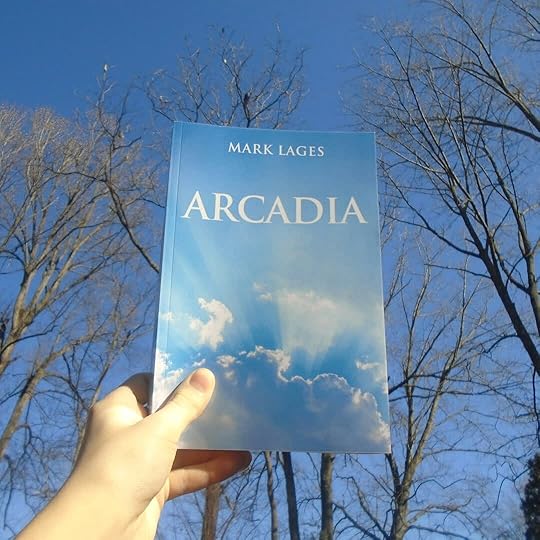

November 18, 2019
I was given my copy in exchange for an honest review. :D So glad I got it because this was great! I mean, I loved Scowl, so obviously I had to give this one a go. :D It was so worth it!
Because... Oh my god. This was beautiful, thoughtful, sad, but also very hopeful. I adored every second of this novel. Arcadia tells the story of a suicidal teen, told through the eyes of his devoted father. Which was such a wonderful choice. I don't think the novel would have had the same effect if it was told from the son's point of view.
Not that Jacob was a bad character. I loved all the characters! I just don't think it would have worked as well. Does that make sense?
Anyway!
The poetry was great too! I don't read a lot of poetry, but each one in Arcadia was brilliant. I might have to rethink my stance on poems. ;)
This was an amazing book, and it deserves to be read by everyone! Especially fans of contemporary fiction stories. :) How is Mark not on a bestseller list? Because he really should be. :D Keep the books coming, and I'll keep reading!
Because... Oh my god. This was beautiful, thoughtful, sad, but also very hopeful. I adored every second of this novel. Arcadia tells the story of a suicidal teen, told through the eyes of his devoted father. Which was such a wonderful choice. I don't think the novel would have had the same effect if it was told from the son's point of view.
Not that Jacob was a bad character. I loved all the characters! I just don't think it would have worked as well. Does that make sense?
Anyway!
The poetry was great too! I don't read a lot of poetry, but each one in Arcadia was brilliant. I might have to rethink my stance on poems. ;)
This was an amazing book, and it deserves to be read by everyone! Especially fans of contemporary fiction stories. :) How is Mark not on a bestseller list? Because he really should be. :D Keep the books coming, and I'll keep reading!
January 10, 2020
*** SPOILER ALERT ***
3.75 (rounded up to 4) out of 5 stars.
Overall, I enjoyed the book, however it didn't unfold the way I had expected, based on the blurb on the back of the book:
"... This is a fascinating tale of a suicidal teen named Jacob Harper, told vividly and unforgettably by his loving father. ..."
While yes, the son's suicide attempt was covered and discussed, the before and after were not as detailed as I had hoped, and really did not touch on the mindset - the thought and emotional processes - of his son both coming up the event and afterwards. As enjoyable as the book was, it seemed more like a slice of life book of the dad's life, with the suicide attempt being a major incident happening during the course of their lives when their two sons were teenagers, instead of this book being *specifically* about Jacob's attempt to end his life. There were times when I could understand where/how the father was "coming from" and other times he seemed harsh, too one sided and even portray elitist thoughts and behaviors. Jacob was a beautiful, sensitive soul who felt and saw and processed things much differently. He marched to the beat of a different drummer and while there were a few times where the dad supported his son and his "specialness", it seemed that there were more times than not that he failed to understand, to truly dig down deep, and see his son as the unique individual that he is/was. He often wanted Jacob to just fall in line, to be like others, to stop with the "hippie stuff", and yet, those beliefs and ideals were so much a part of who Jacob was. There were times when it seemed like the father was more interested in keeping up with the Joneses and keeping up appearances. He praises his son's viewpoints during different times of his younger life, especially in regards to school projects (such as the creationism vs. evolution project) however then he does a complete 180 and makes comments that come off arrogant, self-centered and, at some points, borderline racist, to the point it really made me feel uncomfortable and even upset. As a parent to 4 children, and seeing this family's story unroll in front of me, I actually felt badly for Jacob and could kind of see his side (as limited as it was portrayed from his POV). When your child is faced with a major, life threatening crisis, you don't wonder how much the medical intervention will cost, and you don't worry about how it makes you look as a parent..... you do what you can to get your child help, to get better. It just seemed so self-serving to himself (dad) instead of his son during the days and weeks and months immediately following the attempt.
That being said, I *did* enjoy the book. You *do* get to see - through the dad's eyes - Jacob evolve into a hard working and respectable adult. However the book isn't *just* about the attempt to end his life. It is about their lives and how they work their ways through it and find themselves crossing the finish line to a better, brighter life.
In closing I would like to thank the author and the publisher for allowing me the opportunity to read this wonderful and inspirational story. I give this honest review of my own accord.
3.75 (rounded up to 4) out of 5 stars.
Overall, I enjoyed the book, however it didn't unfold the way I had expected, based on the blurb on the back of the book:
"... This is a fascinating tale of a suicidal teen named Jacob Harper, told vividly and unforgettably by his loving father. ..."
While yes, the son's suicide attempt was covered and discussed, the before and after were not as detailed as I had hoped, and really did not touch on the mindset - the thought and emotional processes - of his son both coming up the event and afterwards. As enjoyable as the book was, it seemed more like a slice of life book of the dad's life, with the suicide attempt being a major incident happening during the course of their lives when their two sons were teenagers, instead of this book being *specifically* about Jacob's attempt to end his life. There were times when I could understand where/how the father was "coming from" and other times he seemed harsh, too one sided and even portray elitist thoughts and behaviors. Jacob was a beautiful, sensitive soul who felt and saw and processed things much differently. He marched to the beat of a different drummer and while there were a few times where the dad supported his son and his "specialness", it seemed that there were more times than not that he failed to understand, to truly dig down deep, and see his son as the unique individual that he is/was. He often wanted Jacob to just fall in line, to be like others, to stop with the "hippie stuff", and yet, those beliefs and ideals were so much a part of who Jacob was. There were times when it seemed like the father was more interested in keeping up with the Joneses and keeping up appearances. He praises his son's viewpoints during different times of his younger life, especially in regards to school projects (such as the creationism vs. evolution project) however then he does a complete 180 and makes comments that come off arrogant, self-centered and, at some points, borderline racist, to the point it really made me feel uncomfortable and even upset. As a parent to 4 children, and seeing this family's story unroll in front of me, I actually felt badly for Jacob and could kind of see his side (as limited as it was portrayed from his POV). When your child is faced with a major, life threatening crisis, you don't wonder how much the medical intervention will cost, and you don't worry about how it makes you look as a parent..... you do what you can to get your child help, to get better. It just seemed so self-serving to himself (dad) instead of his son during the days and weeks and months immediately following the attempt.
That being said, I *did* enjoy the book. You *do* get to see - through the dad's eyes - Jacob evolve into a hard working and respectable adult. However the book isn't *just* about the attempt to end his life. It is about their lives and how they work their ways through it and find themselves crossing the finish line to a better, brighter life.
In closing I would like to thank the author and the publisher for allowing me the opportunity to read this wonderful and inspirational story. I give this honest review of my own accord.

November 3, 2019
Unsettling, but ultimately rewarding, "Arcadia", from author Mark Lages, explores a subject which terrifies many modern families today: teen depression and suicide. Stan Harper is devastated by his son Jacob's suicide attempt, and he is desperate to understand and help his son. Most importantly, he must prevent another suicide attempt--the next one may be successful Jacob has always been a dreamer and a thinker--always in search of his idyllic "Arcadia". Through the author's skilled character development and careful world building, we get to know Jacob and his family and to see how small interactions can lead to larger consequences. It's very important to address painful concerns before they become major issues. I come from a conservative, old-fashioned family where personal matters, especially something with the stigma of a mental health need, were never discussed. Endured. Never discussed. Back in the day, depression was called "melancholy". Unfortunately, I have lost both family and friends to suicide. My oldest friend (from first grade on)--also my childhood sweetheart--died when he was thirty-seven. He was much-loved, very talented, and supremely self-destructive. He ripped a big hole in all of us when he died. What author Mark Lages has done with his beautiful book, "Arcadia", is to show that, yes, Life is "warts and all", but you never give up--if you do, you'll never know what you missed. You never give up on someone you love. You never give up on yourself.
Book Copy Gratis Author
Book Copy Gratis Author
October 14, 2019
The story begins with a son's suicide attempt and what follows is told through his father's perspective as he tries to understand what drove his son to want to end his life. The son, Jacob, has an unusual intellect and an abundance of creativity, and he seems to be adjusted to life until an event in his teen years leaves him in a sorrowful place. The story is told with wit and insight, punctuated here and there with Jacob's poems and Hank's jokes, and like the other books that I have read by this author, it maintains your interest throughout. I am a little sorry that Arcadia isn't a real place, however.

November 3, 2019
It is book about Jacob, who spirals down in depression and becomes suicidal. He feels alone and nobody will listen. He writes his thoughts in poetry. Once his parents discover him in one of his suicide attempts, they try to get him help, not knowing how their son actually feels. This was no accident. They try to make Jacob become someone he's not. It's a struggle and the only way Jacob will seek help is on his terms. This book is sad, but really makes you think.
November 6, 2019
It's taken me a couple of days after finishing this masterful novel to write this review. I have read several of Mark Lages ' books and they have all been given five star reviews from me. They always leave me feeling profoundly curious about the life lessons the author offers up to his readers and Arcadia is no different in that respect. However, what is different for me with Arcadia is how close it hit my heart.
Arcadia is the story of a father, a love letter to his son Jacob, who desperately wants to understand why his brilliant baby boy is in so much emotional pain, why he is unhappy and, most importantly, why he wants to end his life.
As emotional as this topic is this is not a book filled with just drama and sadness. Our narrator, the father, Stan Harper takes us on a journey from his point of view as Jacob's parent. We get insight into Jacob's mind by the poetry and essays he writes which Stan shares with the reader. Stan also shares many happy memories with us and he often brags about how smart his son is even mentioning his high IQ more than once. Despite Jacob's idiosyncrasies, such as not cutting his hair or seeming to prefer being an outsider rather than conforming to the status quo of school society, Stan is proud of his boy.
I was amazed how much I had in common with Stan. I too have two sons about five years apart. My younger son also was pretty smart for his age and followed his own drummer so to speak. Sadly, my son was unhappy and also did not want to stay in this world. Thankfully, we found him before it was too late. This horrendous choice he made was a blessing in disguise because the help he got afterwards led him to the life he now has which includes a happy marriage and a fulfilling career.
I bring up my personal life because it explains why I'm so connected to this book. When Stan talks about those feelings of inadequacies as a parent he could have been reading from my journal. When he expressed the anger he felt over the selfishness of Jacob's suicide attempt I actually gasped out loud. I had never told anyone that I was so angry at the time that it took me a few days to see my son after I knew he was okay. I don't know how the author knew, correctly, all the emotions a parent experiences when their child puts themselves in mortal danger but I do know he has written them in a manner that is brutally honest and realistic.
As I said earlier for all the angst in this story there are antidotes about the Harper family and the people who come and go in their lives that allows the reader to get a full picture of a life well led with the best intentions of a decent man.
This book should be read by everyone. For parents it is a must. It not only helps them to know that some things are out of their control but some things are not and it isn't always easy to know the difference. For teens it will let them see that bring a teen is rarely as easy as it may look and your parents are not your enemy. If you are not a parent or a teen I bet you know someone who may be struggling with just the every day of life. This book will help you understand them and maybe let you help them.
Thank you Mark Lages for once again giving me a literary experience that will stay with me long after I have put your book, Arcadia, in a special place on my bookshelf.
I received an ARC of this book from the author for a fair and honest review. All opinions are my own.
Arcadia is the story of a father, a love letter to his son Jacob, who desperately wants to understand why his brilliant baby boy is in so much emotional pain, why he is unhappy and, most importantly, why he wants to end his life.
As emotional as this topic is this is not a book filled with just drama and sadness. Our narrator, the father, Stan Harper takes us on a journey from his point of view as Jacob's parent. We get insight into Jacob's mind by the poetry and essays he writes which Stan shares with the reader. Stan also shares many happy memories with us and he often brags about how smart his son is even mentioning his high IQ more than once. Despite Jacob's idiosyncrasies, such as not cutting his hair or seeming to prefer being an outsider rather than conforming to the status quo of school society, Stan is proud of his boy.
I was amazed how much I had in common with Stan. I too have two sons about five years apart. My younger son also was pretty smart for his age and followed his own drummer so to speak. Sadly, my son was unhappy and also did not want to stay in this world. Thankfully, we found him before it was too late. This horrendous choice he made was a blessing in disguise because the help he got afterwards led him to the life he now has which includes a happy marriage and a fulfilling career.
I bring up my personal life because it explains why I'm so connected to this book. When Stan talks about those feelings of inadequacies as a parent he could have been reading from my journal. When he expressed the anger he felt over the selfishness of Jacob's suicide attempt I actually gasped out loud. I had never told anyone that I was so angry at the time that it took me a few days to see my son after I knew he was okay. I don't know how the author knew, correctly, all the emotions a parent experiences when their child puts themselves in mortal danger but I do know he has written them in a manner that is brutally honest and realistic.
As I said earlier for all the angst in this story there are antidotes about the Harper family and the people who come and go in their lives that allows the reader to get a full picture of a life well led with the best intentions of a decent man.
This book should be read by everyone. For parents it is a must. It not only helps them to know that some things are out of their control but some things are not and it isn't always easy to know the difference. For teens it will let them see that bring a teen is rarely as easy as it may look and your parents are not your enemy. If you are not a parent or a teen I bet you know someone who may be struggling with just the every day of life. This book will help you understand them and maybe let you help them.
Thank you Mark Lages for once again giving me a literary experience that will stay with me long after I have put your book, Arcadia, in a special place on my bookshelf.
I received an ARC of this book from the author for a fair and honest review. All opinions are my own.

October 28, 2019
Arcadia is an amazing novel about a young man named Jacob Harper, who attempts suicide at the age of seventeen, and the book is written by author, Mark Lages. The story is told by Jacob's father, Stan Harper, and it describes how mental illness effects not only the person diagnosed with the illness, but also how it effects that person's entire family. Stan loves Jacob very much and he describes, in great detail, all of the wonderful things about Jacob; (for example Stan shares with us many of Jacob's very interesting and extremely well written poems that he has saved since Jacob was a young child). Stan tells us about how very smart Jacob is, what a great sense of humor he has, and the unique perspective Jacob has concerning many different topics that he has thoroughly researched just because he wanted to know about them. But Stan also goes into great detail about how Jacob never seemed to fit in with other children his age, and how very depressed Jacob became through out his adolescence. This story is a roller coaster ride through Jacob's and Stan's lives; it had me laughing and crying as I read this book, and I could not put it down!
Mark Lages is a brilliant story teller, and I look forward to reading more of his novels and short stories. Arcadia is a book that I think everyone should read, not only because of what you will learn about one family's experience with their adolescent son's suicide attempt, and their experience with our country's "hit or miss" mental health system, but mostly I think that this book should be read because it is very entertaining! I really enjoyed this book!
Mark Lages is a brilliant story teller, and I look forward to reading more of his novels and short stories. Arcadia is a book that I think everyone should read, not only because of what you will learn about one family's experience with their adolescent son's suicide attempt, and their experience with our country's "hit or miss" mental health system, but mostly I think that this book should be read because it is very entertaining! I really enjoyed this book!

October 26, 2019
This is about the 10th book I’ve read by Mark Lages, all at least very good, most superb. I may have used the word masterpiece in describing one or another of his best books. Arcadia is a masterpiece.
It is about the relationship of a father and a son, told very personally from the father’s point of view. The son struggled through his youth. He dreamed of finding Arcadia, an idyllic imaginary place away from the problems in this world. Eventually, the boy’s depression reaches a level where he attempts suicide.
The father/narrator spends much of the book reflecting back on his experiences with his son. The fond memories. The signs that existed that he might try to take his own life. How to handle being a parent of such a child.
This is a book that everyone should read. The author is such a great storyteller. Everyone can learn from this story.
It is about the relationship of a father and a son, told very personally from the father’s point of view. The son struggled through his youth. He dreamed of finding Arcadia, an idyllic imaginary place away from the problems in this world. Eventually, the boy’s depression reaches a level where he attempts suicide.
The father/narrator spends much of the book reflecting back on his experiences with his son. The fond memories. The signs that existed that he might try to take his own life. How to handle being a parent of such a child.
This is a book that everyone should read. The author is such a great storyteller. Everyone can learn from this story.

November 4, 2019
A wonderful book. I am a fan of Mark, his writing is so wonderful, even when it's sad or tragic. Mental illness is still taboo for some, having grown up in a small town I knew of suicides and/or attempts, but only from gossip or whispers. This was a tough but rewarding read for me, I had a person very close to me attempt suicide. I was quite young and it was confusing for me. No one seemed to have a way to tell me what next. I know realize what's next is different for everyone. I love the character development. I recommend this book. I was given a copy to read but it has no influence on my review. I'm a fan and look forward to more books.

October 29, 2019
A great book. Although this book covers the heartbreak of having a son who has made an unsuccessful suicide attempt it is about so much more. Overall uplifting because of the family relationships and Jacob's ability to become who he is and come out better on the other side of his struggles. I love the father/son relationship as well as the contrast between the two brothers and how they interact with each other. This author is always original and writes heartfelt books that challenge people to look at themselves and their core beliefs. A good read.

October 3, 2019
What an amazing book. This story really moved me, thanks to Mr. Lages's terrific writing talent and his storytelling ability. It is everything a great book should be. It is sad, happy, creative, thought provoking, hilarious, heartbreaking, and hopeful. Highly recommended. I have read other books by this author, and he just keeps getting better and better.
October 6, 2019
This is easily one of the best books I read for some time. Jacob's story broke my heart and made me smile at the same time. There are few things more beautiful than a father's love for his son. And I just can't say enough good things about this author's storytelling skills. Mr. Lages is a writer in full control of his craft.

November 3, 2019
This is the first book that I have read written by Mark Lages. Teen suicide is a very serious problem in a lot of communities. I felt that Mark did a great job telling Jacob's story which is told through a loving father's perspective. I am looking forward to reading more by this author. Pick up a copy & give it a read, I think you will enjoy it as much as I did.

October 27, 2019
This was the first book I've read by Mark Lages and I'm looking forward to reading more of his novels. Arcadia is the story of Jacob, told through his father's eyes. It is a powerful, emotional and beautiful read. I felt as if Stan, Jacob's father, was sitting next to me and telling me his story.
November 7, 2019
A book that touches your heart, I truly empathized with the characters and felt every love and loss. A story of resilience, change, and feelings. I left this book with a lovely warmth.

November 2, 2019
Author Mark Lages has a wonderful little following of loyal fans that swear by his books. I quickly learned that I am now a member of that group. All the books that I have read by him have been interesting and beautifully written.
Arcadia is a thought provoking book. A read that haunts, encapsulates, and reaches out and touches the reader right in the heart. A story of family and the tragedy that attempts to tear it apart. A father not only struggling to cope with but also try and completely understand what is going on with his son. It's beautifully written, raw, but also treads respectfully as it gives it's narrative on the downward spiral that is depression that leads to suicidal tendencies. Heartfelt with touching moments of humor, Author Mark Lages has written yet another reward worthy read.
I recommend this book for many reasons but the one reason that stands out to me is because it should be a book that opens up dialogue among people. A book that should be shared. A book that should be recommended. A book for book clubs. It's a book that you want to talk about with other readers.
Thanks to Mark Lages for my copy of this book won via giveaway. I received. I read. I reviewed this book honestly and voluntarily.
Arcadia is a thought provoking book. A read that haunts, encapsulates, and reaches out and touches the reader right in the heart. A story of family and the tragedy that attempts to tear it apart. A father not only struggling to cope with but also try and completely understand what is going on with his son. It's beautifully written, raw, but also treads respectfully as it gives it's narrative on the downward spiral that is depression that leads to suicidal tendencies. Heartfelt with touching moments of humor, Author Mark Lages has written yet another reward worthy read.
I recommend this book for many reasons but the one reason that stands out to me is because it should be a book that opens up dialogue among people. A book that should be shared. A book that should be recommended. A book for book clubs. It's a book that you want to talk about with other readers.
Thanks to Mark Lages for my copy of this book won via giveaway. I received. I read. I reviewed this book honestly and voluntarily.

November 3, 2019
This was the seventh book by Mark Lages that I have read and this one may be my favorite, though I have loved all of them. Why this author is not on the best seller list is a shame because his books, unlike so many books today, force the reader to think and to feel and to face some difficult issues in today's rather crazy society. Arcadia is the story of a suicidal teen, Jacob Harper, as narrated by his loving father. While the book has a dark theme......you can't get much deeper than teen suicide......it approaches this subject with passion, sympathy, and honesty. It is not only a story about the tragedy of suicide and attempted suicide, it is a story about life. Lages's portrayal of a troubled teen and his parents who have no idea how to help him but will try every thing to do so, is realistic and heartbreaking in its realism. Lages always has such keen insight into the human soul and this book is certainly no exception. Again, I highly recommend Arcadia by Mark Lages and encourage those who love reading to seek out Arcadia and his other books; you will not regret it. I am anxiously awaiting the discovery of this amazing author.

November 13, 2019
Thought Provoking Story
The author leaves you with lots to think about. He's telling the story of Stan's son's life. He tells many interesting side stories to bring it all together. It's very interesting and thought provoking. I really enjoyed this book and had a hard time putting it down. Definitely worth reading. I've read several of this author's books and have loved them all. This book was given to me by the author to read and give an honest review.
The author leaves you with lots to think about. He's telling the story of Stan's son's life. He tells many interesting side stories to bring it all together. It's very interesting and thought provoking. I really enjoyed this book and had a hard time putting it down. Definitely worth reading. I've read several of this author's books and have loved them all. This book was given to me by the author to read and give an honest review.

November 2, 2019
I believe this is one of Mark’s best books yet!
You are reading this from the fathers perspective about his teen son tries to commit suicide. The father talks about his son growing up through the years, he’s a very bright, intelligent young man.
As with many families you have your up & downs. Mark goes through real life situations in this book.
You are reading this from the fathers perspective about his teen son tries to commit suicide. The father talks about his son growing up through the years, he’s a very bright, intelligent young man.
As with many families you have your up & downs. Mark goes through real life situations in this book.
November 6, 2019
Once again Mr. Lages' book has inspired me to put my "thinking cap" on. In this wonderfully written, multi layered book, I found myself asking questions about parenthood, suicide and (amazingly) the Vietnam war. This author has a way of weaving a tale in a personal, yet thought provoking manner. Great characters and great story line. Kudos.
Displaying 1 - 30 of 90 reviews