3.5/5 Stars, were it possible.
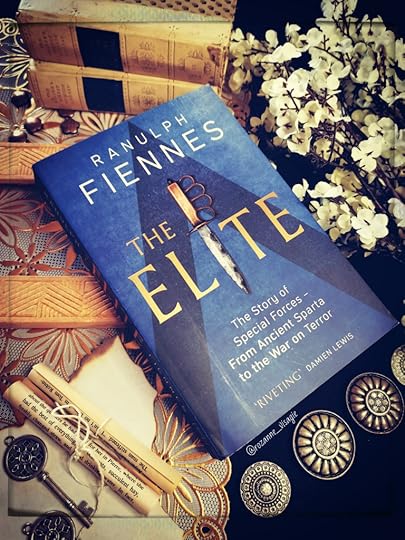
I think this book did what it set out to do - give the reader a taste of various elite military forces throughout history.
It seems to be tailored towards a layman more than someone with extensive knowledge on these forces already. Perhaps that’s why some are disappointed?
Beginning with the Persian Immortals and ending win the US Navy SEALs, Fiennes takes us through history with each chapter focusing on a particular force. Usually the format is one of ‘why the force was created’, ‘training/requirements’ and then an example of a famous action where they demonstrated their abilities and skills. Intertwined are anecdotes of his own life experiences.
Personally, I found he spent rather too much time on these personal anecdotes, given each force only has a single chapter. Thankfully, the ratio of time devoted to those relative to the force in question drastically reduced as the book went on. Personally, I also found them a tad bragging in tone which didn’t seem fitting when the book is chiefly intended to discuss others.
There are areas of history I have never covered (Mongols, Japanese Ninja, Assassins) which this book has now wetted my appetite for and I shall be doing some further reading on those topics. This is, again, the main purpose of the book. Instead of reading 20 books, we can read one and have a taste of all these different worlds before going off ourselves to explore one in detail if we so chose.
The book also reads very well, with a narrative tone that reminded me of Saul David’s absolutely wonderful Zulu Wars book.
I did however dislike some of the simplification of history. Again, I understand that a 340-page book covering a time period from the ancient world to the present day cannot be forensic, but one particular line irked me. I believe it was during the WWII Battle of Britain chapter when the author closed with a statement to the effect of ‘the British then went on to defeat the German armed forces and win the war’. Britain did its part and no-one who has read of that war could say otherwise, but this is an exceptionally Anglo-centric view of things. Even a simple addition of “alongside its western allies and the Soviet Union” would have made all the difference. It may seem nitpicking, but I believe in crediting all those who fought that conflict and it wouldn’t have been hard to do or taken up many words..
A quick issue though - the photograph section features a fairly obvious and terrible error. An image of Royal Marines Commandos, indicated by their desert DPM camouflage and Marine-badged green berets, is captioned as depicting US Green Berets. Anyone with a passing knowledge of the Royal Marines will immediately spot this and sadly it does impact a book which is meant to inform us. After all - if this error is present, are there others?
Overall, I would recommend this book, just don’t expect to leave with a forensic knowledge of these military forces. Take it for what it is and you should have a good time. It also isn’t overly long, and the individual chapters for each force make reading it easy to dip in and out of. It may also lead you to new areas of history you never touched before - it certainly did for me.