Sheds light on a country that is at once a close neighbor and an unknown world, in a look at the real Mexico--the people and places encompassing a land of tremendous struggle and resiliency
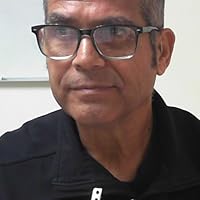
Patrick Oster is the author of seven well-reviewed award-winning thrillers and murder mysteries: “The Commuter,” “The German Club,” "The Hacker Chronicles" and "The Amazon Detective Agency." His fifth novel, a murder mystery, called "The Obituary Writer," came out out in 2020. His sixth, "The Sleeper List," a spy novel came out in April of 2022. Readers Favorite gave it a gold medal as the best spy novel of 2022. "The Man Who Fell in Love With His Wife" was published in August of 2024 to numerous positive reviews. An award-winning journalist, he has covered the White House, the State Department and the CIA. He has been a foreign correspondent in Latin America and Europe, covering civil wars, the fall of the Berlin Wall, NATO and the creation of the European Union. A lawyer, he was managing editor for legal news for Bloomberg News for more than a decade and editor-in-chief of the National Law Journal before that. He is also the author of a non-fiction book, “The Mexicans: A Personal Portrait of a People,” a Book-of-the- Month-Club selection. More details about him can be found at www.patrickoster.com. He can be followed on Twitter @patrickoster or Facebook. patrickoster.novelist
Without a doubt, one of the best books on Mexican culture I have ever read. This was a required text in a college ethics course, and it left a huge impact on me.
First of all, just so that you all know--I am Mexican. And although not very familiar with many of the issues as addressed by Mr. Oster, I am in agreement with many, many of the stories and the details he is telling us. Mr. Oster does have an awesome gift to describe things and events as he sees them and or as he hears them.
One of the great advantages when reading a book written from "outside the box" is just that--that he is not Mexican, thus we can tell he is from outside the box. That doesn't mean he doesn't understand what it is we are going through here in Mexico....he is simply telling us what he has been able to live, learn and confirm.
I can see how some of us Mexicans don't like to read these facts of life--what we need to do--instead of killing the messenger....Is change ourselves to change what it is to what we really want it to be, plain and simple.
I definitely recommend this book to be a class requirement for all our Mexican higher education schools and hopefully our younger generation can learn and change if they want.
I enjoyed reading the book and while he did make some generalizations about Mexico and it's people, it was still eye opening. For a lack of a better term, you have to take it with a grain of salt on some of his opinions because he is not Mexican. He painted a picture of Mexico by the people that inhabit the country and I wish he had included more people rather than focus on the politics. I think that as an outsider, it's an entirely different story than if it was written from someone of Mexican heritage.
I was easily able to relate extensively with what was written due to my ethnic roots ... however there were certain instances in which i didn't agree with the author, because a divergence in our opinions and certain inaccuracies that were presented either grammatically or certain incorrect dates, names, and historical events. I would like to add that I am not basing my statements off of innacurate knowledge; i was born and raised in Mexico and my education allows me to point out said innacuracies. Yet, i must also point out that since i read a 1989 edition, that perhaps these discrepencies are non-existent in more recent versions. At the end of his book, Mr. Oster states that mexicans should not be analized with the same parameters used to study american people, yet after reading the book, i noticed that he occaisionaly forgot to follow his own advice. In the end, I cannot say that the book left a foul taste in my mouth and that although said inaccuracies did damage the legitimacy of the book, i can say that i can glady accept his effort towards understanding what he wrote about and the time and effort he devoted to try and come about with his end product and to give valuable and respectful insight on people and cultures that haven't always been portrayed in a good light.
Excellent. Most of the book's segments focus on the political, social, economic and cultural state of Mexico in the 1980s, the time in which the author actually resided there. Nevertheless, many pages are spent on the history of the PRI party (and Mexican politics in general) from it's formation in the late 1920s until the period from which the author writes. The last segment of the book, "Values", contained some incredibly insightful and enlightening pieces about machoism, the gay community, and gender roles in Mexico. My only wish is that he would have spent more time discussing the president Lárazo Cárdanas and been more aware of the small tone of "american superiority" i sensed in a few places.
Enlightening document of the lives of several Mexican citizens and particularly interesting discussion of the dire economic situation of the country through the lives of these representative individuals. The books puts a face to the stories we hear of our Southern neighbors.