

What do you think?

صبي سعيد
This work has been selected by scholars as being culturally important, and is part of the knowledge base of civilization as we know it. This work was reproduced from the original artifact, and remains as true to the original work as possible. Therefore, you will see the original copyright references, library stamps (as most of these works have been housed in our most important libraries around the world), and other notations in the work.
This work is in the public domain in the United States of America, and possibly other nations. Within the United States, you may freely copy and distribute this work, as no entity (individual or corporate) has a copyright on the body of the work.
As a reproduction of a historical artifact, this work may contain missing or blurred pages, poor pictures, errant marks, etc. Scholars believe, and we concur, that this work is important enough to be preserved, reproduced, and made generally available to the public. We appreciate your support of the preservation process, and thank you for being an important part of keeping this knowledge alive and relevant.
This work is in the public domain in the United States of America, and possibly other nations. Within the United States, you may freely copy and distribute this work, as no entity (individual or corporate) has a copyright on the body of the work.
As a reproduction of a historical artifact, this work may contain missing or blurred pages, poor pictures, errant marks, etc. Scholars believe, and we concur, that this work is important enough to be preserved, reproduced, and made generally available to the public. We appreciate your support of the preservation process, and thank you for being an important part of keeping this knowledge alive and relevant.
148 pages, Paperback
First published January 1, 1860
About the author
Bjørnstjerne Bjørnson
829 books105 followersBjørnstjerne Martinus Bjørnson was a Norwegian writer and the 1903 Nobel Prize in Literature laureate "as a tribute to his noble, magnificent and versatile poetry, which has always been distinguished by both the freshness of its inspiration and the rare purity of its spirit."
Bjørnson is the author of the lyrics to the Norwegian National Anthem, "Ja, vi elsker dette landet".
Bjørnson is the author of the lyrics to the Norwegian National Anthem, "Ja, vi elsker dette landet".
Ratings & Reviews
Friends & Following
Create a free account to discover what your friends think of this book!
Community Reviews
Displaying 1 - 30 of 70 reviews

December 5, 2019
حكاية بسيطة من حكايات زمان
رواية للكاتب النرويجي بيورنستيرن بيورنسون كُتبت عام 1860
الصبي الصغير أويفيند وحياته في الريف من الطفولة وحتى الشباب
التفاصيل اليومية ما بين العمل واللعب والأصدقاء والدراسة
وطبعا قصة الحب التي تنتهي النهاية السعيدة بالزواج
رواية للكاتب النرويجي بيورنستيرن بيورنسون كُتبت عام 1860
الصبي الصغير أويفيند وحياته في الريف من الطفولة وحتى الشباب
التفاصيل اليومية ما بين العمل واللعب والأصدقاء والدراسة
وطبعا قصة الحب التي تنتهي النهاية السعيدة بالزواج

August 26, 2024
مراجعات شهر أغسطس
https://tinyurl.com/4tndanrd
القصة في حد ذاتها مجرد قصة رومانسية تقليدية في إطار وعظي، أو مما يُسمى حاليا بالتنمية البشرية. وكانت الكتابة الحالمة الرقيقة لعالم بعيد زمنا ومكانا، هى ما أعطى لهذا العمل روحه الشاعرية التي جعلته جدير بالقراءة على نمطية فكرته.
https://tinyurl.com/4tndanrd
القصة في حد ذاتها مجرد قصة رومانسية تقليدية في إطار وعظي، أو مما يُسمى حاليا بالتنمية البشرية. وكانت الكتابة الحالمة الرقيقة لعالم بعيد زمنا ومكانا، هى ما أعطى لهذا العمل روحه الشاعرية التي جعلته جدير بالقراءة على نمطية فكرته.

June 4, 2014
“That poverty hemmed him in on every side, he felt, but for that reason his whole mind was bent on breaking through it.”(43)
A Happy Boy, the second Peasant tale of Bjørnson that I have read, the third (1860) in writing of his four Peasant Tales , the first being Synnøve Solbakken, (1857) followed by Arne (1858). Sadly, it would seem that the first two do not exist except in the original Norwegian texts and completion of his Peasant Tales dictates reading it in the original, nothing less.
A Happy Boy, tells us of Oyvind, the son of a houseman, who happens to meet the love of his life in Marit, the granddaughter of a gard (farm) owner. By their stations in life, the inevitable schism arises. This quandary is solely predicated in Oyvind’s lowly station in life. “I will tell you why I have been so happy before: It was because I did not really love anyone; from the day we love someone we cease to be happy.”(34) Our happy boy is not so happy after all. Oyvind struggles to break free from the familial shackles that fate has imposed, and we are taken through his rise from being the son of a houseman to the pride of the town.
This story is a lot sweeter and simpler than The Fisher Girl (3 Stars). Again, Bjørnson plays the same card in the Fisher Girl with love as the mechanism by which the story is set in motion. The same peasant struggles and desire within the story exist.
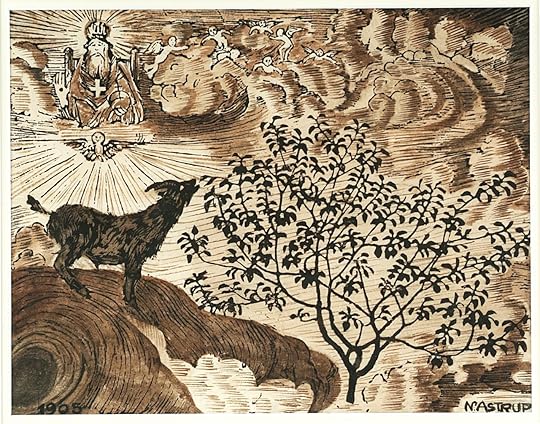
What is more prevalent however is how Bjørnson incorporated the Norwegian faith in the story, more than he did in the The Fisher Girl. This led me to read up on a little bit of Norwegian religious history and find that Norway has always been labeled as a Christian country and that at numerous times in history, Norway sent more missionaries per capita than any other country. What is more interesting is that this Christianity is not under the Holy See but is an entirely new animal. The Church of Norway it is called, with the King of Norway as it head, and professes a Lutheran belief. Interesting isn't it, a union of the church and the state that, it would seem, hasn't screwed the people over. This is probably why the depiction in one scene of the story was like this.
Other work by Bjørnstjerne Bjørnson:
The Fisher Girl (3 Stars)
This book forms part of my remarkably extensive reading list on Nobel Prize for Literature Laureates
This review, along with my other reviews, has been cross-posted at imbookedindefinitely
A Happy Boy, the second Peasant tale of Bjørnson that I have read, the third (1860) in writing of his four Peasant Tales , the first being Synnøve Solbakken, (1857) followed by Arne (1858). Sadly, it would seem that the first two do not exist except in the original Norwegian texts and completion of his Peasant Tales dictates reading it in the original, nothing less.
A Happy Boy, tells us of Oyvind, the son of a houseman, who happens to meet the love of his life in Marit, the granddaughter of a gard (farm) owner. By their stations in life, the inevitable schism arises. This quandary is solely predicated in Oyvind’s lowly station in life. “I will tell you why I have been so happy before: It was because I did not really love anyone; from the day we love someone we cease to be happy.”(34) Our happy boy is not so happy after all. Oyvind struggles to break free from the familial shackles that fate has imposed, and we are taken through his rise from being the son of a houseman to the pride of the town.
This story is a lot sweeter and simpler than The Fisher Girl (3 Stars). Again, Bjørnson plays the same card in the Fisher Girl with love as the mechanism by which the story is set in motion. The same peasant struggles and desire within the story exist.
What is more prevalent however is how Bjørnson incorporated the Norwegian faith in the story, more than he did in the The Fisher Girl. This led me to read up on a little bit of Norwegian religious history and find that Norway has always been labeled as a Christian country and that at numerous times in history, Norway sent more missionaries per capita than any other country. What is more interesting is that this Christianity is not under the Holy See but is an entirely new animal. The Church of Norway it is called, with the King of Norway as it head, and professes a Lutheran belief. Interesting isn't it, a union of the church and the state that, it would seem, hasn't screwed the people over. This is probably why the depiction in one scene of the story was like this.
Other work by Bjørnstjerne Bjørnson:
The Fisher Girl (3 Stars)
This book forms part of my remarkably extensive reading list on Nobel Prize for Literature Laureates
This review, along with my other reviews, has been cross-posted at imbookedindefinitely

January 6, 2020
نوڤيلا جميلة تدور أحداثها في الريف النرويجي الهادئ عن الفتى الصغير أويفيند، وأحلام الطفولة الوردية، وحبّ الطفولة البرئ... أحببت فيها بساطة الحياة، والهدوء، والدفء والحبّ النقي الشفاف كالنسمات البِكر على التلال الخضراء.
لقد كان أويفيند محظوظًا منذ طفولته، يوم التقى حبه الأبدي، الطفلة الجميلة ماريت، عند الجرف، سألها :من أنتِ؟، فأجابته :أنا ماريت، وسيصبح لديّ أربع سنوات في الخريف، بعد الليالي الثلجية بيومين، هذه هي أنا! ❤
من يومها عقد الحب بين قلبيهما برباطه الأبدي، وبعد سنوات كان الفتى يخطو نحو الشباب، ومعه ماريت، وفي سبيل تحقيق حلمه بالزواج منها، تملكه الإصرار والعناد من أجل النجاح، وقد كان محظوظًا بمعلمه الطيب الذي غمره بحب لا نهائي، ومد إليه يده بحنو وأوقفه على قدميه كلما تعثرت خطواته نحو أحلامه، وكان معه دائمًا من دموع الحزن والخوف وحتى دموع الفرح بتحقيق الأحلام والبدايات السعيدة، للفتى السعيد مع ماريت، حبه الذي كان له وحده من البداية.
06.01.2020
لقد كان أويفيند محظوظًا منذ طفولته، يوم التقى حبه الأبدي، الطفلة الجميلة ماريت، عند الجرف، سألها :من أنتِ؟، فأجابته :أنا ماريت، وسيصبح لديّ أربع سنوات في الخريف، بعد الليالي الثلجية بيومين، هذه هي أنا! ❤
من يومها عقد الحب بين قلبيهما برباطه الأبدي، وبعد سنوات كان الفتى يخطو نحو الشباب، ومعه ماريت، وفي سبيل تحقيق حلمه بالزواج منها، تملكه الإصرار والعناد من أجل النجاح، وقد كان محظوظًا بمعلمه الطيب الذي غمره بحب لا نهائي، ومد إليه يده بحنو وأوقفه على قدميه كلما تعثرت خطواته نحو أحلامه، وكان معه دائمًا من دموع الحزن والخوف وحتى دموع الفرح بتحقيق الأحلام والبدايات السعيدة، للفتى السعيد مع ماريت، حبه الذي كان له وحده من البداية.
06.01.2020

October 12, 2017
Perhaps it is not advisable to anticipate the experience of reading some work based upon the sole merit of it being one by a Nobel Laureate. Bjørnstjerne Bjørnson was awarded Nobel for his poetry and I have only read one of his translated novels so I really can't say much about him other than that that this work did evoke in the mind a vision of some beautiful moments ensconced in a rustic way of life, embossed with a sense of serenity and rapture which can only be experienced by someone who loves rambling through the countryside more than the rush of a city life.

January 1, 2019
I had one day left in 2018 and I was looking for a story on the shorter side that I can start on December 31 and finish too! Well, I finished it at 1:30 a.m. so I will count it for 2018! When I was browsing my Kindle, I happily decided to look at my Delphi Complete Harvard edition. I came across such a gem in this wonderful story which I am shelving as an Ultimate Favorite, Bjornstjerne Bjornson's A Happy Boy to me it was spectacular because it included so much of what I love in a story! I want to quote from the Harvard edition which gives some information about this author. I did not read this edition but the Delphi Harvard Classic edition.
"THE LIFE OF Björnstjerne Björnson was so full and active, and involves to such a degree the intellectual and political history of his country in the second half of the nineteenth century, that it is impossible in a short sketch to do more than indicate its main outlines. He was born, the son of a pastor, in Kvikne, Osterdal, Norway, on December 8, 1832, but his youth was spent mainly in the picturesque district of Romsdal. He was educated in Molde and Christiania, and early began a career as a journalist and dramatic critic. His first book of importance was “Synnöve Solbakken” (1857), and it was followed by “Arne,” “A Happy Boy” (1860), and “The Fisher Maiden.” These works deal with the Norwegian peasant, portrayed with understanding and sympathy, and, though true to nature, have an idyllic quality which separates them from much of the fiction of rural life that was being written elsewhere in Europe at that time. "
This is when his writings later became controversial.
"The violence of Björnson’s political activity led to his withdrawing for a time to Germany under threat of prosecution for high treason; and for a time he returned to the writing of novels. "
"It is clear that the varied productions of such a man cannot be represented by any one work. “A Happy Boy”, however, though one of his early books and written before he became immersed either in political controversy or modern social problems, is typical of his work in the period when he was recording the simple life of the peasantry among whom he had been born;"
“A HAPPY BOY” was written in 1859 and 1860. It is, in my estimation, Bjornson’s best story of peasant life. In it the author has succeeded in drawing the characters with remarkable distinctness, while his profound psychological insight, his perfectly artless simplicity of style, and his thorough sympathy with the hero and his surroundings are nowhere more apparent."
What made this story so wonderful to me? It is such an heartfelt story of a young boy coming to age and all the restrictions and trials he must overcome being a houseman's son. It has religious significance which the help of God, a school master and his parents he tries meets his challenges. Does that mean it is overly religious? Not in the least but unlike many modern books that shy away or rebuff God, the classic and older books do not fear to tread here. As you read you feel for the boy's struggles and want to root for his happiness. There is romance in this story which is beautifully told and quite unforgettable IMO.
This story is all that but there is even a more poignant story within this story of two brothers who are close but pride and greed separate them. This story is so tragic and has such a lesson for any time in human history!
The story in brief not giving much away because every page you wonder about his fate in life and I dare not spoil that! Oyvind, is the young boy who is poor and learns early on that life is different for him and a young girl named, Marit. She shows him in the very beginning when they are mere children, that a twisted bun, which is nothing to her but for this poor boy a delight very rare, is sold for his beloved goat before he could think of what he had done. The difference of the classes is the main theme.
I love finding stories by chance which to me is one of the best gifts, I can receive! I will read him again in the future!💟💖💕💖💟💙💜
"THE LIFE OF Björnstjerne Björnson was so full and active, and involves to such a degree the intellectual and political history of his country in the second half of the nineteenth century, that it is impossible in a short sketch to do more than indicate its main outlines. He was born, the son of a pastor, in Kvikne, Osterdal, Norway, on December 8, 1832, but his youth was spent mainly in the picturesque district of Romsdal. He was educated in Molde and Christiania, and early began a career as a journalist and dramatic critic. His first book of importance was “Synnöve Solbakken” (1857), and it was followed by “Arne,” “A Happy Boy” (1860), and “The Fisher Maiden.” These works deal with the Norwegian peasant, portrayed with understanding and sympathy, and, though true to nature, have an idyllic quality which separates them from much of the fiction of rural life that was being written elsewhere in Europe at that time. "
This is when his writings later became controversial.
"The violence of Björnson’s political activity led to his withdrawing for a time to Germany under threat of prosecution for high treason; and for a time he returned to the writing of novels. "
"It is clear that the varied productions of such a man cannot be represented by any one work. “A Happy Boy”, however, though one of his early books and written before he became immersed either in political controversy or modern social problems, is typical of his work in the period when he was recording the simple life of the peasantry among whom he had been born;"
“A HAPPY BOY” was written in 1859 and 1860. It is, in my estimation, Bjornson’s best story of peasant life. In it the author has succeeded in drawing the characters with remarkable distinctness, while his profound psychological insight, his perfectly artless simplicity of style, and his thorough sympathy with the hero and his surroundings are nowhere more apparent."
What made this story so wonderful to me? It is such an heartfelt story of a young boy coming to age and all the restrictions and trials he must overcome being a houseman's son. It has religious significance which the help of God, a school master and his parents he tries meets his challenges. Does that mean it is overly religious? Not in the least but unlike many modern books that shy away or rebuff God, the classic and older books do not fear to tread here. As you read you feel for the boy's struggles and want to root for his happiness. There is romance in this story which is beautifully told and quite unforgettable IMO.
This story is all that but there is even a more poignant story within this story of two brothers who are close but pride and greed separate them. This story is so tragic and has such a lesson for any time in human history!
The story in brief not giving much away because every page you wonder about his fate in life and I dare not spoil that! Oyvind, is the young boy who is poor and learns early on that life is different for him and a young girl named, Marit. She shows him in the very beginning when they are mere children, that a twisted bun, which is nothing to her but for this poor boy a delight very rare, is sold for his beloved goat before he could think of what he had done. The difference of the classes is the main theme.
I love finding stories by chance which to me is one of the best gifts, I can receive! I will read him again in the future!💟💖💕💖💟💙💜

September 20, 2019
يعتبر هذا العمل (نوفيلا) من كلاسيكيات الأدب النرويجي، وهو بالمناسبة حائز على جائزة نوبل للآداب لعام 1903.
لا أنكر أنّ هناك بعض التفاصيل التي شدّتني في هذا العمل، ولكنّ العمل مجملًا لم يكن مميزًا ولا باهرًا في نظري. على أي كاتب حينما يقرر كتابة عملٍ ما أن ينتبه إلى خطّين متوازيين، ألا وهما التفاصيل الداخليّة للعمل وشكله الخارجيّ أو مساره في المجمل، ولا ينشغل بأحدهما فيعوجّ الآخر! إن الأمر أشبه بانشغال خيّاط بحياكة زخرفة جميلة على ثوبٍ ما، وحين ينتهي يكتشف أخيرًا -بعد تقوّس ظهره- أنّ الثوب الذي قرر العمل عليه أطرافه مبتورة!
لا أنكر أنّ هناك بعض التفاصيل التي شدّتني في هذا العمل، ولكنّ العمل مجملًا لم يكن مميزًا ولا باهرًا في نظري. على أي كاتب حينما يقرر كتابة عملٍ ما أن ينتبه إلى خطّين متوازيين، ألا وهما التفاصيل الداخليّة للعمل وشكله الخارجيّ أو مساره في المجمل، ولا ينشغل بأحدهما فيعوجّ الآخر! إن الأمر أشبه بانشغال خيّاط بحياكة زخرفة جميلة على ثوبٍ ما، وحين ينتهي يكتشف أخيرًا -بعد تقوّس ظهره- أنّ الثوب الذي قرر العمل عليه أطرافه مبتورة!

July 13, 2020
الكاتب هو " بيورنستيرن بيورنسون " كاتب نرويجي مشهور من اشهر اربع كتاب في النرويج مؤلف و شاعر .. يستخدمون الان شعره كالنشيد القومي للنرويج ، توفى في باريس 1910 ،
الرواية قصة جميلة تحكي عن شاب اسمه " أويفيند " احب فتاة اسمها ماريت ، في قرية نرويجية ، لكن الفوارق الاجتماعية اعاقت خطبتهما و لكن مدير المدرسة بارد ساعد الشاب أويفيند في التعلم و الالتحاق بكلية الزراعة و من ان يكون ناجح ليحظى بحب الفتاة ماريت التي بالفعل أحبته ، و رفضت كل خطابها من اجل حبها
و تواصل خلال الرواية الصراع بين الطبقات و اعاقة الجد لارتباط ماريت بالشاب الذي كان والده مجرد مزارع بسيط و لكن تبدلت الاحوال باصرار و عزيمة اويفيند تطور من نفسه و اتى جد الفتاة ليطلب منه ان يصلح مزرعته بعدما اصبح مهندسا زراعيا و تطور البلدة الصغيرة
الرواية تمتلىء بصورة شعرية لطبيعة النرويج الجميلة ، و ايضا تتضمن قصائد شعرية رائعة ، يتغلب على الرواية طابع رومانسي ، و تحكي عن الحب الطاهر و الذي يبدا سرا كما قال اويفيند و يجب ان يكون في النور ،
و تكشف الرواية عن الغفران و حاجتنا له فقد تقابل الجد مرتان في بيت اويفيند و في المرة الاولى كان قاسيا و مهددا لاويفيند بالابتعاد ، و في المرة الثانية "ثور " والد اويفيند يغفر له و يقول ان الاشجار المملؤة بالشوك تجرح و لكنها لم تترك اشواك في داخله بل وعد الجد بالمساعدة من مدخرات كان يكتسبها ،
انها الحياة التي تخبرنا اننا يجب ان نغفر و ان لانتمسك كثيرا بالمعتقدات الخاطئة ، مثل الاشجار التي تنفض الاوراق القديمة لكي تنبت اخرى جديدة للحياة
قصة جميلة

September 2, 2019
Ladies and gentlemen, I don't know if you'll give me time, and tomorrow I'm committed to writing another"nice work" review by David Lodge https://www.goodreads.com/book/show/6... https://www.goodreads.com/author/show...
, but I wouldn't want to leave this little gem. Maybe it's this summer's novel revelation, and certainly one that surprised me the most. If I had made a list of the novels i read this summer"A Happy boy" lot of good tempera in Spanish would be in my top 5, or in any case would be the sixth, or seventh in a hypothetical top ten.
I suppose readers won't know, but I'm a lover of Nordic culture, I was always fascinated by Norse mythology, so much so that I regretted not having taken a subject. So years later after i graduated I decided to attend as a listener the subject of Germanic mythology, but if there was one thing that tempted me were the Norse Saints Saint st. Anscario, Saint Magnus (we recommend this novel"Saint Magnus the last viking" by Susan Peek
https://www.goodreads.com/book/show/2... https://www.goodreads.com/author/show... ) Saint Olaf, Saint Knut, Santa Brigid. I thought, those Vikings I loved so much, hadn't lost with conversion to Christianity. Gutrum, and Halfdane were never bigger than when they were defeated by Alfredo of Wessex. As J.F. Powers said America was discovered by three great Catholic St. Brendan, Leif Erickson, accompanied by a nun (even), and Christopher Columbus praised by writers such as Leon Bloy https://www.goodreads.com/author/show... (this he even proposed his canonization) and Paul Claudel https://www.goodreads.com/author/show... . That wonderful world of Christianized Vikings, who came to the Crusades. It was magnificently recreated by another Nobel laureate just like Bjornstjerne Bjornson Sigrid Undset, and his saga of Kristin Lavransdotter https://www.goodreads.com/series/6686... and "Olaf Audunsson" which I believe, that American users know him as "The master of Hestviken" https://www.goodreads.com/series/2075... although the novel, by Sigrid Undset https://www.goodreads.com/author/show... that I liked the most was the duology of Paul Selmer (as no one has given a name to this cycle I have named it well). This cycle has two parts "Wild Orchid" https://www.goodreads.com/book/show/6... and the best novel for me by Sigrid Undset "Burning Bush" https://www.goodreads.com/book/show/1... these two novels are not of that age of light that we mistakenly call the Dark Ages, but of the Contemporary Age. Arguably, Paul Selmer embodies the world that would have been logical in those northern countries. For which I have an affinity. I don't know, I did, but a cousin of my mother, who's a marine biologist, is married to a Norwegian. So some of this Viking past is with me. What prevented Scandinavia from becoming the world of Paul Selmer, which was his logical evolution. Protestantism, which in the words of Gertrude von Lefort https://www.goodreads.com/author/show... or sieled it was Sigrid Undset, which called this phenomenon "A Revolt of Christians against the Church". It is curious, because this change did not come from the best, but from the worst came, from a monarch called by his contemporaries as the Northern Nero Christian II, whose life was bored to life by Johannes V. Jensen https://www.goodreads.com/book/show/3... (another Nobel laureate) in his novel "The Fallen of the King" https://www.goodreads.com/author/show... later confirmed by Protestant Hemmings, in Sweden was worse done by a bloodthirsty king, who rebelled against Christian II Gustavo I Vasa, curiously the data comes from what for me is the best Nordic writer, and who paradoxically does not have the Nobel Mika Waltari (who is also Finnish) curiously the first offspring of the Vasa dynasty, which would lead to a lineofe of crazy kings (some great ones like Gustav Adolf II) was the one who introduced Protestantism to Sweden and not only ended up with the Catholic bishop of Uppsala (which by the way, paradoxically it was also the last redoubt of paganism in Sweden) but also killed the promoter of Protestantism in Sweden, and imprisoned the other Persen, and was succeeded by his mad son Erik XIV, who opted for Calvinism, being reinstated Catholicism for a brief brief period of time by John III, and against the desire of the majority Charles IX re-introduced Protestantism, and snatched the throne from his rightful heir Sigismund III Vasa, who occupied him with the joy of being king of beautiful and beautiful Poland. Thus, it was how these northern lands were torn from the medieval ChristianA Universitas and finally between the nineteenth and twentieth century, already with independent Norway in 1905 these beautiful lands fell under another movement, the political correctness embodied by social democracy. Which was the beginning of the end of his religiosity. This caused my love for those northern lands to cool, but there was always a love for them. Just one thing before I start commenting on this wonderful novel. I am Catholic, and I do not like Protestantism, but a great affection for Protestants, as Would G.K. Chesterton in The Penance of Marne I like sincere Protestants, or diehard https://www.goodreads.com/author/show... in fact I really enjoy reading novels by non-Catholic Christian writers, because they dare to get to where we have not yet arrived, and without falling into a certain ecumenism, which deplore, even if its creator was Leibniz https://www.goodreads.com/author/show... I prefer a Christian world, even Protestant, than post-wesphadian raking secularism, which emerged in the second half of the twentieth century. That is why I am proud of my friendship with Protestant writers, and to be able to read them, from a Catholic perspective. But going back to Bjornstjerne Bjornson we can say, that while he did not win the fight that while he didn't win the fight to be the best Nordic writer this summer. This honor was in the interests of Mr. Lagerkvist, who, like Suguro, convinced Kano in Shusaku Endo's "Scandal" https://www.goodreads.com/book/show/2... was also succeeded by P. Lagerkvist who the third was defeated, after failure with his "Barbas" and his "Verdugo" https://www.goodreads.com/book/show/1... https://www.goodreads.com/book/show/6... the novel "Barrabás" happened to him something similar to the C.S. Lewis I was saying about Thackeray https://www.goodreads.com/author/show... https://www.goodreads.com/author/show... he preached and did it wrong. So, he seemed to say the opposite of what he said. This is what André Gide understood https://www.goodreads.com/author/show... who to annoy Paul Claudel told him that his creative force came from the devil (if Gide had known good theology would have realized, that the Devil does not believe, but corrupts the previously created, even though James Blish contends otherwise in "In a case of conscience" https://www.goodreads.com/book/show/1... ) However although he failed with "Barabbas" (we recommend in spite of everything Fleischer's wonderful film with Anthony Quinn https://www.filmaffinity.com/es/film2... ) but with "The Denaun" that God will talk about another day. It is a story of redemption, and sin in a kingdom of Renaissance Italy. A great masterpiece, which could have been written by any great Catholic writer, although It comes to mind Graham Greene, and that made me think a lot about "Bomarzo" by Mujica Laínez https://www.goodreads.com/author/show... https://www.goodreads.com/book/show/6... however, Bjornstjerne won the duel with the other Nordic Haldor Kiljan Laxcness https://www.goodreads.com/author/show... who in his play "Paradise claimed" we will never know what he wanted, whether to defend a religion like seventh-day Adventists, or mock all religions. Laxness was an Icelandic writer, who converted to Catholicism, but he was also a communist, and he seems to have left the faith, and I don't know if he got it back or not. I could not read his magna work "The Bell of Iceland" and my friend Alfonseca https://www.goodreads.com/author/show... disliked him "The Atomic Station" for the atheism that was coming out, and unlike Brian Moore https://www.goodreads.com/author/show... he is not a lucid novelist, nor does he give you any hope, nor a sign of transcendence. But we'll talk about Laxness in a moment. Now I'm going to focus all my attention on "A happy boy." This novel has surprised me very pleasantly. It's a very short novel. I read it in a sigh, but with few I have enjoyed it as much as with it. I expected something more suffocating as the harrowing, repellent Ibsen https://www.goodreads.com/author/show... also full of socialism, or a harrowing drama from Strindberg https://www.goodreads.com/author/show... The surprise is that I find myself with a beautiful love story. An awakening from childhood to maturity. We have several stories the love story of the protagonist with a girl called Marit, and as thanks to his master Baard. By the way, that this novel would please teachers, or should like them, because that's how they should behave with their students. Baard will not only help you conquer the girl, but help her mature, turn her into a student, and an agronomist. It's a story of learning and initiation. Also Baard has a beautiful story with his brother, which I will not unveil, because he shattered the plot of the novel. This novel has many of the concerns of 20th-century Norwegian styvour of upper-class people with that of the upper class. The work of the earth. The jealousy and suspicions of the students. But it also embodies the best of the Nordic world. It is beautiful, as the students prepared, to enter the religious community, and as the protagonist assisted by Baard manages to medrar in his theology exam. The a, ot, that the protagonist feels for Marit. We can't come up with such a white story, and so pure of true love, almost better than hourly ones. Another good thing, as I said is that it is read in a sigh, and if you do nothing I recommend, that if you have this copy I spent an hour or two reading it, it will not take you longer to finish this beautiful story. It's a song to the family, and it has a perfect ending. People, or goodreads users will ask me, because after writing such a praiseworthy review, and giving up admiration I have not given this book five stars, and I will reply to the users. I didn't, because even though this story is beautifully written. Proving, that sometimes a great novel doesn't need pages, and pages to be a masterpiece. I doubted he'd notice putting it on, and it was very hard for me to put four stars on it. No doubt this novel is closer to five, than four, but it had a factor, which prevented me from putting the five on it, and it was that despite being impeccable the story was very common. He didn't offer me anything extraordinary that didn't happen to anyone. It's a story, which doesn't leave a big pose. It was very normal. All very beautiful, very moral, and the embodiment of the Nordic world, which I love so much, but it was too simple. It needed a brief spark, very little, to be a masterpiece, but it stayed very close. I am pleased that Goodreads has decided to put it on its list of recommendations at Goodreads, and I am saddened that it has such a low rating from Goodreads users, perhaps it is due to what I have said. Yet it is a story, beautiful, luminous, and beautiful, that despite its simplicity the reader will take to forget it, and will remember it with glee wishing that there are more people like the protagonist, and more masters like Baard, apart from being a perfect X-ray and a song of love to an Norway, who had regained his independence, and began his journey through modern history.
, but I wouldn't want to leave this little gem. Maybe it's this summer's novel revelation, and certainly one that surprised me the most. If I had made a list of the novels i read this summer"A Happy boy" lot of good tempera in Spanish would be in my top 5, or in any case would be the sixth, or seventh in a hypothetical top ten.
I suppose readers won't know, but I'm a lover of Nordic culture, I was always fascinated by Norse mythology, so much so that I regretted not having taken a subject. So years later after i graduated I decided to attend as a listener the subject of Germanic mythology, but if there was one thing that tempted me were the Norse Saints Saint st. Anscario, Saint Magnus (we recommend this novel"Saint Magnus the last viking" by Susan Peek
https://www.goodreads.com/book/show/2... https://www.goodreads.com/author/show... ) Saint Olaf, Saint Knut, Santa Brigid. I thought, those Vikings I loved so much, hadn't lost with conversion to Christianity. Gutrum, and Halfdane were never bigger than when they were defeated by Alfredo of Wessex. As J.F. Powers said America was discovered by three great Catholic St. Brendan, Leif Erickson, accompanied by a nun (even), and Christopher Columbus praised by writers such as Leon Bloy https://www.goodreads.com/author/show... (this he even proposed his canonization) and Paul Claudel https://www.goodreads.com/author/show... . That wonderful world of Christianized Vikings, who came to the Crusades. It was magnificently recreated by another Nobel laureate just like Bjornstjerne Bjornson Sigrid Undset, and his saga of Kristin Lavransdotter https://www.goodreads.com/series/6686... and "Olaf Audunsson" which I believe, that American users know him as "The master of Hestviken" https://www.goodreads.com/series/2075... although the novel, by Sigrid Undset https://www.goodreads.com/author/show... that I liked the most was the duology of Paul Selmer (as no one has given a name to this cycle I have named it well). This cycle has two parts "Wild Orchid" https://www.goodreads.com/book/show/6... and the best novel for me by Sigrid Undset "Burning Bush" https://www.goodreads.com/book/show/1... these two novels are not of that age of light that we mistakenly call the Dark Ages, but of the Contemporary Age. Arguably, Paul Selmer embodies the world that would have been logical in those northern countries. For which I have an affinity. I don't know, I did, but a cousin of my mother, who's a marine biologist, is married to a Norwegian. So some of this Viking past is with me. What prevented Scandinavia from becoming the world of Paul Selmer, which was his logical evolution. Protestantism, which in the words of Gertrude von Lefort https://www.goodreads.com/author/show... or sieled it was Sigrid Undset, which called this phenomenon "A Revolt of Christians against the Church". It is curious, because this change did not come from the best, but from the worst came, from a monarch called by his contemporaries as the Northern Nero Christian II, whose life was bored to life by Johannes V. Jensen https://www.goodreads.com/book/show/3... (another Nobel laureate) in his novel "The Fallen of the King" https://www.goodreads.com/author/show... later confirmed by Protestant Hemmings, in Sweden was worse done by a bloodthirsty king, who rebelled against Christian II Gustavo I Vasa, curiously the data comes from what for me is the best Nordic writer, and who paradoxically does not have the Nobel Mika Waltari (who is also Finnish) curiously the first offspring of the Vasa dynasty, which would lead to a lineofe of crazy kings (some great ones like Gustav Adolf II) was the one who introduced Protestantism to Sweden and not only ended up with the Catholic bishop of Uppsala (which by the way, paradoxically it was also the last redoubt of paganism in Sweden) but also killed the promoter of Protestantism in Sweden, and imprisoned the other Persen, and was succeeded by his mad son Erik XIV, who opted for Calvinism, being reinstated Catholicism for a brief brief period of time by John III, and against the desire of the majority Charles IX re-introduced Protestantism, and snatched the throne from his rightful heir Sigismund III Vasa, who occupied him with the joy of being king of beautiful and beautiful Poland. Thus, it was how these northern lands were torn from the medieval ChristianA Universitas and finally between the nineteenth and twentieth century, already with independent Norway in 1905 these beautiful lands fell under another movement, the political correctness embodied by social democracy. Which was the beginning of the end of his religiosity. This caused my love for those northern lands to cool, but there was always a love for them. Just one thing before I start commenting on this wonderful novel. I am Catholic, and I do not like Protestantism, but a great affection for Protestants, as Would G.K. Chesterton in The Penance of Marne I like sincere Protestants, or diehard https://www.goodreads.com/author/show... in fact I really enjoy reading novels by non-Catholic Christian writers, because they dare to get to where we have not yet arrived, and without falling into a certain ecumenism, which deplore, even if its creator was Leibniz https://www.goodreads.com/author/show... I prefer a Christian world, even Protestant, than post-wesphadian raking secularism, which emerged in the second half of the twentieth century. That is why I am proud of my friendship with Protestant writers, and to be able to read them, from a Catholic perspective. But going back to Bjornstjerne Bjornson we can say, that while he did not win the fight that while he didn't win the fight to be the best Nordic writer this summer. This honor was in the interests of Mr. Lagerkvist, who, like Suguro, convinced Kano in Shusaku Endo's "Scandal" https://www.goodreads.com/book/show/2... was also succeeded by P. Lagerkvist who the third was defeated, after failure with his "Barbas" and his "Verdugo" https://www.goodreads.com/book/show/1... https://www.goodreads.com/book/show/6... the novel "Barrabás" happened to him something similar to the C.S. Lewis I was saying about Thackeray https://www.goodreads.com/author/show... https://www.goodreads.com/author/show... he preached and did it wrong. So, he seemed to say the opposite of what he said. This is what André Gide understood https://www.goodreads.com/author/show... who to annoy Paul Claudel told him that his creative force came from the devil (if Gide had known good theology would have realized, that the Devil does not believe, but corrupts the previously created, even though James Blish contends otherwise in "In a case of conscience" https://www.goodreads.com/book/show/1... ) However although he failed with "Barabbas" (we recommend in spite of everything Fleischer's wonderful film with Anthony Quinn https://www.filmaffinity.com/es/film2... ) but with "The Denaun" that God will talk about another day. It is a story of redemption, and sin in a kingdom of Renaissance Italy. A great masterpiece, which could have been written by any great Catholic writer, although It comes to mind Graham Greene, and that made me think a lot about "Bomarzo" by Mujica Laínez https://www.goodreads.com/author/show... https://www.goodreads.com/book/show/6... however, Bjornstjerne won the duel with the other Nordic Haldor Kiljan Laxcness https://www.goodreads.com/author/show... who in his play "Paradise claimed" we will never know what he wanted, whether to defend a religion like seventh-day Adventists, or mock all religions. Laxness was an Icelandic writer, who converted to Catholicism, but he was also a communist, and he seems to have left the faith, and I don't know if he got it back or not. I could not read his magna work "The Bell of Iceland" and my friend Alfonseca https://www.goodreads.com/author/show... disliked him "The Atomic Station" for the atheism that was coming out, and unlike Brian Moore https://www.goodreads.com/author/show... he is not a lucid novelist, nor does he give you any hope, nor a sign of transcendence. But we'll talk about Laxness in a moment. Now I'm going to focus all my attention on "A happy boy." This novel has surprised me very pleasantly. It's a very short novel. I read it in a sigh, but with few I have enjoyed it as much as with it. I expected something more suffocating as the harrowing, repellent Ibsen https://www.goodreads.com/author/show... also full of socialism, or a harrowing drama from Strindberg https://www.goodreads.com/author/show... The surprise is that I find myself with a beautiful love story. An awakening from childhood to maturity. We have several stories the love story of the protagonist with a girl called Marit, and as thanks to his master Baard. By the way, that this novel would please teachers, or should like them, because that's how they should behave with their students. Baard will not only help you conquer the girl, but help her mature, turn her into a student, and an agronomist. It's a story of learning and initiation. Also Baard has a beautiful story with his brother, which I will not unveil, because he shattered the plot of the novel. This novel has many of the concerns of 20th-century Norwegian styvour of upper-class people with that of the upper class. The work of the earth. The jealousy and suspicions of the students. But it also embodies the best of the Nordic world. It is beautiful, as the students prepared, to enter the religious community, and as the protagonist assisted by Baard manages to medrar in his theology exam. The a, ot, that the protagonist feels for Marit. We can't come up with such a white story, and so pure of true love, almost better than hourly ones. Another good thing, as I said is that it is read in a sigh, and if you do nothing I recommend, that if you have this copy I spent an hour or two reading it, it will not take you longer to finish this beautiful story. It's a song to the family, and it has a perfect ending. People, or goodreads users will ask me, because after writing such a praiseworthy review, and giving up admiration I have not given this book five stars, and I will reply to the users. I didn't, because even though this story is beautifully written. Proving, that sometimes a great novel doesn't need pages, and pages to be a masterpiece. I doubted he'd notice putting it on, and it was very hard for me to put four stars on it. No doubt this novel is closer to five, than four, but it had a factor, which prevented me from putting the five on it, and it was that despite being impeccable the story was very common. He didn't offer me anything extraordinary that didn't happen to anyone. It's a story, which doesn't leave a big pose. It was very normal. All very beautiful, very moral, and the embodiment of the Nordic world, which I love so much, but it was too simple. It needed a brief spark, very little, to be a masterpiece, but it stayed very close. I am pleased that Goodreads has decided to put it on its list of recommendations at Goodreads, and I am saddened that it has such a low rating from Goodreads users, perhaps it is due to what I have said. Yet it is a story, beautiful, luminous, and beautiful, that despite its simplicity the reader will take to forget it, and will remember it with glee wishing that there are more people like the protagonist, and more masters like Baard, apart from being a perfect X-ray and a song of love to an Norway, who had regained his independence, and began his journey through modern history.

December 25, 2021
My comments in video: https://youtu.be/13d4ILY4KcE
Success stories. It motivates us to be better.
A moralizing work, which presents the story that could be that of any of us who comes out ahead, emerges and fulfills his life goals and the hand of his beloved. I think Latin America is full of these stories. Therefore, it has a connection with the Great Gatsby, but less Machiavellian, since it achieves its ends without dark means, but with faith and work. And I like that it also presents us with what happens if we do not take control of our life, because it presents us with what happens if we allow ourselves to be overwhelmed by the frustrations of life. In short, a story to share with the family, and especially with the children, to motivate and teach them. I await your comments
Casos de éxito. Nos motiva a ser mejores.
Una obra moralizante, que presenta la historia que podría ser la de cualquiera de nosotros que sale adelante, surge y cumple sus objetivos de vida y la mano de su amada. Creo que latinoamérica está llena de estas historias. Por lo anterior, tiene una conexión con el Gran Gatsby, pero menos maquiavélico, pues consigue sus fines sin medios oscuros, sino con fé y trabajo. Y me gusta que también nos presenta lo que pasa si no tomamos las riendas de nuestra vida, pues nos presenta qué pasa si nos dejamos abatir por las frustraciones de la vida. En fin, una historia para compartir en familia, y en especial con los hijos, para motivarlos y enseñarles. Espero sus comentarios
Success stories. It motivates us to be better.
A moralizing work, which presents the story that could be that of any of us who comes out ahead, emerges and fulfills his life goals and the hand of his beloved. I think Latin America is full of these stories. Therefore, it has a connection with the Great Gatsby, but less Machiavellian, since it achieves its ends without dark means, but with faith and work. And I like that it also presents us with what happens if we do not take control of our life, because it presents us with what happens if we allow ourselves to be overwhelmed by the frustrations of life. In short, a story to share with the family, and especially with the children, to motivate and teach them. I await your comments
Casos de éxito. Nos motiva a ser mejores.
Una obra moralizante, que presenta la historia que podría ser la de cualquiera de nosotros que sale adelante, surge y cumple sus objetivos de vida y la mano de su amada. Creo que latinoamérica está llena de estas historias. Por lo anterior, tiene una conexión con el Gran Gatsby, pero menos maquiavélico, pues consigue sus fines sin medios oscuros, sino con fé y trabajo. Y me gusta que también nos presenta lo que pasa si no tomamos las riendas de nuestra vida, pues nos presenta qué pasa si nos dejamos abatir por las frustraciones de la vida. En fin, una historia para compartir en familia, y en especial con los hijos, para motivarlos y enseñarles. Espero sus comentarios

April 1, 2020
أشتقت لهذا النوع من القصص
قادره أنها تشدك لتترقب أحداثها بلهفة طفل
حبكة بسيطة وأسلوب أبسط ومشاعر طاهره نقية وأحلام صغيرة تكلل بالنجاح والنهايات السعيدة..
عالم أصبح بعيد جداً عن عالمنا ،وهمومنا وصعوبة حياتنا
وحتى عن تعقيد أحلامنا
"كنت سعيداً جداً من قبل؛ذلك لأني لم أحب أحداً بحق
فمنذ اليوم الذي نحب فيه أحداً نتوقف عن كوننا سعداء"
"نصيحتي :ألا تأخذ الدنيا بلهفة ومشقة
لكن لتثق بالرب ولا تدع قلبك يستنفذك
لأنك إن فعلت سوف يكون لديك إله آخر إلى جانب الرب "
قادره أنها تشدك لتترقب أحداثها بلهفة طفل
حبكة بسيطة وأسلوب أبسط ومشاعر طاهره نقية وأحلام صغيرة تكلل بالنجاح والنهايات السعيدة..
عالم أصبح بعيد جداً عن عالمنا ،وهمومنا وصعوبة حياتنا
وحتى عن تعقيد أحلامنا
"كنت سعيداً جداً من قبل؛ذلك لأني لم أحب أحداً بحق
فمنذ اليوم الذي نحب فيه أحداً نتوقف عن كوننا سعداء"
"نصيحتي :ألا تأخذ الدنيا بلهفة ومشقة
لكن لتثق بالرب ولا تدع قلبك يستنفذك
لأنك إن فعلت سوف يكون لديك إله آخر إلى جانب الرب "

April 2, 2014
Remarkably unremarkable. Finished it two hours ago and I think I've forgotten it already.

June 9, 2019
İçten, samimi, sıcacık bir kitap okuduk soğuk diyarlardan. Kilometrelerce uzaklıkta olsa da tam bizim buraların hikayesi. Zengin kız , fakir oğlan ☺️ Tabi sadece böyle yazıp kitabın güzelliğini azaltmak istemiyorum. Şu kısacık kitaptan kendimce hayat dersleri çıkarttım. Kibrin ve hırsın yıpratıcılığını, başarılarımıza düşen gölgesini gördüm. Ve tabi mutluluk 😊 Ancak çağırırsak peşimizden gelir ve en önemlisi mutluluk mutluluğu getirir. Baş karakterimiz Eyvind’in şu cümlesi çok hoşuma gitti : “nereye gidersem şans takip ediyor beni.” Hep şansı ve mutluluğu çağıralım hayatımıza ki nereye gidersek peşimizden gelsin 🍀 Bu masal tadındaki kitabı herkese tavsiye ederim. ✌🏻
.
.
“Önceleri neden çok mutlu olduğumu sana söyleyeceğim , Hans; çok mutluydum çünkü hiç kimseyi umursamıyordum. Ola ki bir gün birisini umursarsak, o gün, mutluluğumuzun son bulduğu gündür. “
.
.
“Önceleri neden çok mutlu olduğumu sana söyleyeceğim , Hans; çok mutluydum çünkü hiç kimseyi umursamıyordum. Ola ki bir gün birisini umursarsak, o gün, mutluluğumuzun son bulduğu gündür. “

January 9, 2014
Evidentemente, una obra a la que el paso del tiempo ha dejado completamente fuera de juego. A día de hoy, esta naíf historia no se sostiene por ningún sitio, ni como anecdótica reconstrucción de la sociedad rural noruega del siglo XIX, puesto que muy poco de ella se describe como idiosincrásico.

January 6, 2016
Such a sweet story and heartwarming! I read it in Norwegian of course, but I’m using the english cover on goodreads. Bjørnson is a part of “The Norwegian Four”; considered among the best classic Norwegian authors. It was a story more on the light side which was perfect for me right now.

Read
August 20, 2022Ambientado en una comunidad dialogante con la naturaleza, fuente amplia de alegorías y significados, y estructurada a partir de cierta ética del trabajo vinculada con la creencia en el esfuerzo, el desarrollo y la fe cristiana como motor de lo anterior, Un muchacho de buen temple del noruego Bjornstjerne Bjornson, ganador del premio Nobel de 1903, nos entrega mensajes claros y directos acerca de cómo conducirnos por la vida y no caer en trampas y engaños que acrecientan el dolor y la aflicción.
Oeyvind, protagonista de la historia, deberá aprender e interiorizar los valores y actitudes necesarios para sortear con éxito las dificultades que trae aparejada la vida, especialmente si eres hijo de una familia campesina de esfuerzo que no posee el status socioeconómico necesario para ser tomado en cuenta por los grandes propietarios que habitan la misma región. Lo anterior, a partir de la figura del Maestro, preceptor y guía moral de todo el pueblo, y el esfuerzo mancomunado de la familia y el propio Oeyvind, podrá ser subsanado y quizás recompensado debidamente, ya sea en el ámbito de la movilidad social, como en el terreno del amor y el afecto.
Un muchacho de buen temple nos presenta las principales inquietudes de los habitantes rurales de la Noruega de la segunda mitad del siglo XIX. Inquietudes traducidas en el sustento económico y su necesidad de incremento a partir de la conjunción entre teoría y técnica derivado de la enseñanza superior a la que solo algunos podían acceder, el resguardo y puesta en práctica de acciones respaldadas por la moral cristiana de fondo, guía inequívoca de reglas y mandatos dirigidos a la buena convivencia y el buen vivir para con uno mismo y la comunidad en la que se habita, y la pujante necesidad de basar las relaciones humanas en el afecto y el amor, esto último quizás una apuesta del autor por relevar la importancia de los sentimientos por sobre lo material.
Un libro interesante, que nos dice mucho acerca de una época marcada por el cristianismo en ámbitos rurales, el desarrollo de la industria y la innovación científica, y la vida en comunidad que cristaliza valores, figuras y cultura en un espacio delimitado.
Oeyvind, protagonista de la historia, deberá aprender e interiorizar los valores y actitudes necesarios para sortear con éxito las dificultades que trae aparejada la vida, especialmente si eres hijo de una familia campesina de esfuerzo que no posee el status socioeconómico necesario para ser tomado en cuenta por los grandes propietarios que habitan la misma región. Lo anterior, a partir de la figura del Maestro, preceptor y guía moral de todo el pueblo, y el esfuerzo mancomunado de la familia y el propio Oeyvind, podrá ser subsanado y quizás recompensado debidamente, ya sea en el ámbito de la movilidad social, como en el terreno del amor y el afecto.
Un muchacho de buen temple nos presenta las principales inquietudes de los habitantes rurales de la Noruega de la segunda mitad del siglo XIX. Inquietudes traducidas en el sustento económico y su necesidad de incremento a partir de la conjunción entre teoría y técnica derivado de la enseñanza superior a la que solo algunos podían acceder, el resguardo y puesta en práctica de acciones respaldadas por la moral cristiana de fondo, guía inequívoca de reglas y mandatos dirigidos a la buena convivencia y el buen vivir para con uno mismo y la comunidad en la que se habita, y la pujante necesidad de basar las relaciones humanas en el afecto y el amor, esto último quizás una apuesta del autor por relevar la importancia de los sentimientos por sobre lo material.
Un libro interesante, que nos dice mucho acerca de una época marcada por el cristianismo en ámbitos rurales, el desarrollo de la industria y la innovación científica, y la vida en comunidad que cristaliza valores, figuras y cultura en un espacio delimitado.

September 3, 2023
Un libro muy pintoresco, sencillo y elocuente.
Nos muestra la vida de un niño, todos sus pasos y trabajo para llegar a ser quien fue y poder estar con su persona amada.
Hace reflexión sobre la sencillez de vida, la importancia de la perseverancia, la fidelidad a uno mismo y tus ideales, y como el dinero a pesar de no dar felicidad como dicen por ahí, si es un buen conductor para cumplir las metas plasmadas. Además habla de la religión y como está logra ser un refugio.
Muestra la vida campestre en Noruega de la época, como eran las comunidad y como se mantenían a flote.
Es mi 7mo libro del reto nobel, bastante difícil de conseguir, sinceramente no lo hubiera leído por elección propia, no es mi estilo.
3/5 🌟
Nos muestra la vida de un niño, todos sus pasos y trabajo para llegar a ser quien fue y poder estar con su persona amada.
Hace reflexión sobre la sencillez de vida, la importancia de la perseverancia, la fidelidad a uno mismo y tus ideales, y como el dinero a pesar de no dar felicidad como dicen por ahí, si es un buen conductor para cumplir las metas plasmadas. Además habla de la religión y como está logra ser un refugio.
Muestra la vida campestre en Noruega de la época, como eran las comunidad y como se mantenían a flote.
Es mi 7mo libro del reto nobel, bastante difícil de conseguir, sinceramente no lo hubiera leído por elección propia, no es mi estilo.
3/5 🌟

January 13, 2023
So happy I ran across this book. A good mix of culture/period history, characters, and great lines. I had to look up a bit of info to understand what a “gardsman” was, etc. Very interesting information about educational, social, and spiritual life. Fairly simple plot, but not inferior for that reason, as the characters are all lovely and realistic.

May 16, 2023
Una ‘Bildungsroman’ con muchos elementos románticos a través de la cual Björson exalta la inocencia de la niñez, los aprendizajes del dolor, los viajes iniciáticos y la constancia moral que permite vivir sabiamente tanto las privaciones como la riqueza.

February 2, 2020
A touching story of a youth growing up in Norway in the 1800s.

February 21, 2024
Kısa akıcı bir öykü, yazarımız Norveç milli marşı yazarı ve şiir tutkunu, şiirsel ezgiler kitapta bize eşlik ediyor. Kuzeyin çorak tarlaları ve fakir köylülerini bir nebze yaşayabiliyoruz

February 28, 2023
Tercer premio noble de literatura y me he llevado una grata sorpresa, es el unico libro que pude encontrar del autor, pero la verdad me ha gustado mucho, es un libro muy campirano que habla de una noruega costumbrista de los años 1850 y me encanto, trata de la vida de una niña y un niño, y como estos van creciendo y se van conociendo, y como van enfilando su vida poco a poco y como sus intereses van cambiando, y como encuentran el amor, y es una historia inolvidable, es una lastima que me haya costado tanto encontrar algo de este autor porque por supuesto me encantaría leer algo mas de el, los personajes son entrañables, con una historia muy linda, y que me ha fascinado.

June 30, 2024
اسم الكتاب: صبي سعيد
اسم الكاتب : بيورنستيرن بيورنسون
اسم المترجم: ياسر شعبان
اسم الدار: الهيئة المصرية العامة للكتاب
عدد الصفحات: 143
صبي سعيد حكاية من التراث النرويجي رواية لطيفة خفيفة على القلب تدور احداثها في الريف النرويجي مع فتى صغير يدعى أويفيند يأخذنا أويفيند في عالمه عن البساطة والحقول ، التلال الخضراء عن الطبيعة والقصائد الجميلة عن احلامه الوردية وحب الطفولة والفتاة الجميلة ماريت.
لنرى كيف سيحقق أويفيند احلامه كيف يغير من نفسه للافضل.
رواية عن الصراع ،تحقيق الاحلام، الصبر، والغفران، الاقبال على الحياة ، التمسك بالامل والاصرار.
توضح صراع الطبقات والفوارق الاجتماعية والحياة بشكل عام في الريف النرويجي.
رواية عند قراءتها تشعر وانك بين الحقول الخضراء والطبيعة الساحرة.
حقا رواية خفيفة على القلب وردية وجميلة احببت القصائد واحببت اويفيند واحببت الريف النرويجي.
اسم الكاتب : بيورنستيرن بيورنسون
اسم المترجم: ياسر شعبان
اسم الدار: الهيئة المصرية العامة للكتاب
عدد الصفحات: 143
صبي سعيد حكاية من التراث النرويجي رواية لطيفة خفيفة على القلب تدور احداثها في الريف النرويجي مع فتى صغير يدعى أويفيند يأخذنا أويفيند في عالمه عن البساطة والحقول ، التلال الخضراء عن الطبيعة والقصائد الجميلة عن احلامه الوردية وحب الطفولة والفتاة الجميلة ماريت.
لنرى كيف سيحقق أويفيند احلامه كيف يغير من نفسه للافضل.
رواية عن الصراع ،تحقيق الاحلام، الصبر، والغفران، الاقبال على الحياة ، التمسك بالامل والاصرار.
توضح صراع الطبقات والفوارق الاجتماعية والحياة بشكل عام في الريف النرويجي.
رواية عند قراءتها تشعر وانك بين الحقول الخضراء والطبيعة الساحرة.
حقا رواية خفيفة على القلب وردية وجميلة احببت القصائد واحببت اويفيند واحببت الريف النرويجي.

January 2, 2017
A Happy Boy was my first read by Bjørnson, as well as my first Norwegian story, and it was simply amazing. It felt like such a light and refreshing read, and I loved it from the first paragraph and knew I was going to love the rest! I often have to read 20 pages or so before I get truly interested, but that wasn't my experience here.
The story opens with a remark about Oyvind as a baby, and quickly goes to his early childhood, where he meets Marit. I appreciated that the story started almost immediately, without a lot of explaining or "fluff," and that there was still so much to tell. There were some points I wish I had known a little more, or certain times where I was confused by the span of time, but I don't feel like I missed anything, and the time frame soon became rather clear.
About halfway in Oyvind goes off to school, and while Bjørnson doesn't write much about Oyvind's life at school, I really loved that time because we were only privy to the letters he wrote, and I liked seeing the differences in writing amoung he, Marit, and the school master. I found a lot of it amusing as well, like requests to burn immediately, and Oyvind getting frustrated with Marit's short letters.
As Oyvind came home I came to love him even more by his role with his family, his determination with Marit, and how he so respectfully stood up to her family and eventually gained favor, to the point that he not only got her, but the farm as well!
While I would have loved to read about the wedding "as it was happening" there was something wonderful about it being narrated, and while I was so sad the story was coming to an end, I was also so happy with how it was ending and I felt it was perfect. Sometimes there is a happy ending.
Oyvind was always a happy boy.
The story opens with a remark about Oyvind as a baby, and quickly goes to his early childhood, where he meets Marit. I appreciated that the story started almost immediately, without a lot of explaining or "fluff," and that there was still so much to tell. There were some points I wish I had known a little more, or certain times where I was confused by the span of time, but I don't feel like I missed anything, and the time frame soon became rather clear.
About halfway in Oyvind goes off to school, and while Bjørnson doesn't write much about Oyvind's life at school, I really loved that time because we were only privy to the letters he wrote, and I liked seeing the differences in writing amoung he, Marit, and the school master. I found a lot of it amusing as well, like requests to burn immediately, and Oyvind getting frustrated with Marit's short letters.
As Oyvind came home I came to love him even more by his role with his family, his determination with Marit, and how he so respectfully stood up to her family and eventually gained favor, to the point that he not only got her, but the farm as well!
While I would have loved to read about the wedding "as it was happening" there was something wonderful about it being narrated, and while I was so sad the story was coming to an end, I was also so happy with how it was ending and I felt it was perfect. Sometimes there is a happy ending.
Oyvind was always a happy boy.
This entire review has been hidden because of spoilers.

March 8, 2015
More interesting for the view of that lifestyle than the actual story (which was nice, but not particularly noteworthy). There's a ton of simple lessons wrapped up in the narrative, and it almost feels like an extended fairytale (minus fairies) with all of the morals found within the story. This snapshot of 19th century Norwegian peasant life is short enough to read in a couple of hours, and they will be spent pleasantly enough.
March 28, 2016
a sweet story which meant more to me because it was one of only two books which my father remembered as really liking from his childhood. I asked him because our library's Extreme Book Nerd challenge has a category " A book your dad loves"

November 2, 2011
A simple little tale set in old Scandinavia. I read it because it was in my collection of classic novels. But I doubt that something this sweet and moralistic would ever get published today.

February 7, 2017
A short easy read about a poor peasant boy growing up to become more than his lowly status would dictate.

July 8, 2017
Delightful story of a young man creating a good life for himself. Simple story with plenty of substance. Did I say delightful?

April 28, 2025
#حجازي_بدرالدين
#سيكولوچيست_حجازي_بدرالدين
رواية صبي سعيد
لعملاق الأدب النوريجي ، الحائز على جائزة نوبل في الأدب عام 1903 ، تشكل دراما بسيطة ، ذات نهاية سعيدة ، منطقية تبعث و تؤكد على مفاهيم :
الأمل ، السعي ، الكفاح ، المرونة و الكفاءة و رأس المال النفسي و الحكمة و الحيوية الذاتية و عدم الضغف و الهوانم و الطموح و عدم الإنكسار و الحلم و الشغف و الإيمان بالذات و التطوير و العلم و المعرفة و الصلاح و الرشاد ، أنت بأنت ، أنت بذاتك بسعيك بإيمانك بتوفيق الله لكل ما فيه الخير لك ، فقط أسعي و لا تظل في مكانك ، رافعاً لديك للسماء فقط ، بل أرفع يديك و أسعي و أسعي و أرفع يديك و لا تتوقف علي رفع يديك فقط و لا تعتمد علي أحد غير الله ، بالسعي و العرق و البذل و المجهود و الحراك و ييسر الله أمراً كان مفعولا ، فالاخذ بالأسباب فرض و الإعتماد عليها شركة و تركها تقصير و ضعف و هوان .
«صبي سعيد» بالعربية... رواية ترصد الريف النرويجي في القرن الثامن عشر
مؤلفها حاز جائزة نوبل عام 1903
«صبي سعيد» بالعربية... رواية ترصد الريف النرويجي في القرن الثامن عشر
ترتكز رواية «صبي سعيد» التي كتبها الشاعر والأديب النرويجي بيورنستيرن بيورنسون عام 1860. وترجمها للعربية الكاتب المصري ياسر شعبان، على تيمة قديمة قدم الإبداع الروائي نفسه، وهي علاقة الحب التي تربط بين طرفين أحدهما فقير والآخر غني، ويبدأ الصراع ويتصاعد ثم ينتهي بالزواج، وتحكي «صبي سعيد» عن طفل فقير يدعى «أويفند»، يتمتع بكثير من ميزات المرح والجدية والرغبة في التفوق، مما يجعل لديه قدرة كبيرة على تجاوز فقر عائلته، وتحقيق نوع من السعادة والرضا للمحيطين به، فهو يعلم أن وضع عائلته المادي سوف يشكل أمامه عقبة ويعوقه عن تحقيق طموحه بالزواج من ماريت ابنة «أولا نورديستون هايدجاردز» صاحب أكبر مزرعة في المنطقة أعلى الهضبة، لكنه يظل يعمل حتى يحقق حلمه الذي يقف بينه وبين الوصول إليه كلاب تنبح وطامعون في الزواج من حبيبته، وثري عجوز يراه أقل مستوى من أن يزوجه حفيدته. هذه العناصر وغيرها تشكل خيوط النسيج التي يغزل منها بيورنسون فصول روايته حتى نهايتها، وتحقيق أمل الطفل، الذي كبر وصار مهندساً زراعياً، يستعين به كل أصحاب المزارع في تطوير حقولهم، وزيادة محاصيلهم.
تبدأ «صبي سعيد» التي صدرت حديثاً عن هيئة الكتاب المصرية، بتتبع قصة أويفند، وهو ابن ربة منزل، تمثل بالنسبة له طاقة النور التي يرى منها العالم، عبر الحكايات والأغنيات التي تغنيها له، أما أبوه فيملك طاحونة قديمة ويعمل في قطع الخشب في الغابة القريبة من منزله، الذي يقع أسفل الهضبة في منطقة «بالدسن» الريفية، عندما يبلغ أويفند الرابعة من عمره، تصحبه أمه إلى المدرسة الابتدائية، وهناك يلتقي فتاته ماريت، التي يملك جدها مزرعة كبيرة مجاورة، أعلى الهضبة، يسوقه القدر إلى أن يجلس في الفصل إلى جوارها، ولأنه منجذب لجمالها وسحرها منذ البداية، يربط بينهما غَزَّال العشق خيوطه، يكبران معاً، وسرعان ما يجذبه جمالها، ولا يستطيع الفكاك منه.
يأتي بيورنستيرن بيورنسون (1832 - 1910) ثالثاً في قائمة الحاصلين على جائزة نوبل في الآداب عام 1903. هو وروائي وشاعر وكاتب صحافي، ولد في قرية «كيفيكن» شمال النرويج، 8 ديسمبر (كانون الأول) 1832 وتوفي في مدينة باريس 26 أبريل (نيسان) 1910.كان أبوه قساً لتلك القرية، التي تقع في منطقة أوستردال، ويعتبر علماً من أعلام الأدب النرويجي، كما قاد الحركة الوطنية النرويجية، وأول مؤلفاته كان عام 1857. بعنوان «سنوفه سولباكن» وهي أيضاً قصة تسيطر عليها الأجواء الريفية التي اتسمت بها كتابات بيورنسون الذي أصبح مديراً لمسرح برجن فيما بعد، وكتب شعراً تشيع فيه روح الوطنية، ويعتبر أحد الكتاب «الأربعة الكبار» في النرويج، مع هنريك إبسن ويوناس لي وألكسندر كيلاند.
تشيع في «صبي سعيد» أجواء استلهمها بيورنسون من نشأته، كما يبدو جلياً تضمينها الكثير من التعاليم الدينية والوعظ والإرشاد وحب الأرض والحرص عليها، وهو ما يظهر واضحاً في قبول «أولا» العجوز تزويج أويفند من حفيدته بعد أن عرف أنه الوحيد القادر على تنمية وتطوير مزرعته وإنقاذها من البوار.
وفي الرواية، التي نشرت عام 1960، تتنوع تكنيكات السرد عند بيورنسون بين الحكي الذي يستأثر به راوٍ عليم، وبين الحوار بين الشخصيات. كما يستخدم تقنية الحلم عندما يتعلق الأمر بأمور بعيدة المنال، كما يلجأ بين حين وآخر للتعبير بالقصائد والأغنيات وهو يرصد طموحات شخصيات روايته وأحلامهم، كما عمد إلى استخدام تكنيك الخطابات حتى يظل أويفند حاضراً في الرواية بعد رحيله من «بالدسن» للدراسة في كلية الزراعة البعيدة عن بلدته.
الطريف في صبي سعيد وهي رواية صغيرة يمكن قراءتها في ساعات قليلة أن ما تسرب في أجوائها من مواعظ وإرشادات دينية جاءت على لسان مدير المدرسة «بارد». بينما غاب القس وراهب الكنيسة، حتى في مشهد «التثبيت»، الذي خضع له أويفند وماريت وعدد من شباب المنطقة بعد بلوغهم السادسة عشرة.
لم يتوقف بيورنسون عند الرواية وكتابة المقالات والنضال من أجل الحرية والديمقراطية في بلاده بل كتب الشعر، وجُمع أغلبه في ديوان «قصائد وأغانٍ» وضم فيه قصيدته ذائعة الصيت «نعم نحب هذه الأرض إلى الأبد» والتي شكلت كلماتها النشيد الوطني للنرويج، وقد قضى سنواته الأخيرة مدافعاً عن السلام والقيم الإنسانية والعدل والتفاهم بين الشعوب.
فهكذا، عبر رمز بسيط وواضح، يرسم الكاتب حياة شخصياته فبطل الرواية وعائلته الفقيرة يعيشون في أسفل متحدر صخري يصعب تسلقه للوصول إلى أعلى حيث تعيش طبقة من الأثرياء، أما ماريت وجدها فيسكنان في أعلى الهضبة، وتأتي حكمة مدير المدرسة من تجربة أليمة، فقد على أثرها شقيقه بعد صراع بينهما على تملك ساعة ذهبية ورثاها عن والدهما، فراح يكفر عما اقترفه في حقه بإشاعة الحب بين أهل بلدته ومساعدتهم على فعل الخير.
#سيكولوچيست_حجازي_بدرالدين
رواية صبي سعيد
لعملاق الأدب النوريجي ، الحائز على جائزة نوبل في الأدب عام 1903 ، تشكل دراما بسيطة ، ذات نهاية سعيدة ، منطقية تبعث و تؤكد على مفاهيم :
الأمل ، السعي ، الكفاح ، المرونة و الكفاءة و رأس المال النفسي و الحكمة و الحيوية الذاتية و عدم الضغف و الهوانم و الطموح و عدم الإنكسار و الحلم و الشغف و الإيمان بالذات و التطوير و العلم و المعرفة و الصلاح و الرشاد ، أنت بأنت ، أنت بذاتك بسعيك بإيمانك بتوفيق الله لكل ما فيه الخير لك ، فقط أسعي و لا تظل في مكانك ، رافعاً لديك للسماء فقط ، بل أرفع يديك و أسعي و أسعي و أرفع يديك و لا تتوقف علي رفع يديك فقط و لا تعتمد علي أحد غير الله ، بالسعي و العرق و البذل و المجهود و الحراك و ييسر الله أمراً كان مفعولا ، فالاخذ بالأسباب فرض و الإعتماد عليها شركة و تركها تقصير و ضعف و هوان .
«صبي سعيد» بالعربية... رواية ترصد الريف النرويجي في القرن الثامن عشر
مؤلفها حاز جائزة نوبل عام 1903
«صبي سعيد» بالعربية... رواية ترصد الريف النرويجي في القرن الثامن عشر
ترتكز رواية «صبي سعيد» التي كتبها الشاعر والأديب النرويجي بيورنستيرن بيورنسون عام 1860. وترجمها للعربية الكاتب المصري ياسر شعبان، على تيمة قديمة قدم الإبداع الروائي نفسه، وهي علاقة الحب التي تربط بين طرفين أحدهما فقير والآخر غني، ويبدأ الصراع ويتصاعد ثم ينتهي بالزواج، وتحكي «صبي سعيد» عن طفل فقير يدعى «أويفند»، يتمتع بكثير من ميزات المرح والجدية والرغبة في التفوق، مما يجعل لديه قدرة كبيرة على تجاوز فقر عائلته، وتحقيق نوع من السعادة والرضا للمحيطين به، فهو يعلم أن وضع عائلته المادي سوف يشكل أمامه عقبة ويعوقه عن تحقيق طموحه بالزواج من ماريت ابنة «أولا نورديستون هايدجاردز» صاحب أكبر مزرعة في المنطقة أعلى الهضبة، لكنه يظل يعمل حتى يحقق حلمه الذي يقف بينه وبين الوصول إليه كلاب تنبح وطامعون في الزواج من حبيبته، وثري عجوز يراه أقل مستوى من أن يزوجه حفيدته. هذه العناصر وغيرها تشكل خيوط النسيج التي يغزل منها بيورنسون فصول روايته حتى نهايتها، وتحقيق أمل الطفل، الذي كبر وصار مهندساً زراعياً، يستعين به كل أصحاب المزارع في تطوير حقولهم، وزيادة محاصيلهم.
تبدأ «صبي سعيد» التي صدرت حديثاً عن هيئة الكتاب المصرية، بتتبع قصة أويفند، وهو ابن ربة منزل، تمثل بالنسبة له طاقة النور التي يرى منها العالم، عبر الحكايات والأغنيات التي تغنيها له، أما أبوه فيملك طاحونة قديمة ويعمل في قطع الخشب في الغابة القريبة من منزله، الذي يقع أسفل الهضبة في منطقة «بالدسن» الريفية، عندما يبلغ أويفند الرابعة من عمره، تصحبه أمه إلى المدرسة الابتدائية، وهناك يلتقي فتاته ماريت، التي يملك جدها مزرعة كبيرة مجاورة، أعلى الهضبة، يسوقه القدر إلى أن يجلس في الفصل إلى جوارها، ولأنه منجذب لجمالها وسحرها منذ البداية، يربط بينهما غَزَّال العشق خيوطه، يكبران معاً، وسرعان ما يجذبه جمالها، ولا يستطيع الفكاك منه.
يأتي بيورنستيرن بيورنسون (1832 - 1910) ثالثاً في قائمة الحاصلين على جائزة نوبل في الآداب عام 1903. هو وروائي وشاعر وكاتب صحافي، ولد في قرية «كيفيكن» شمال النرويج، 8 ديسمبر (كانون الأول) 1832 وتوفي في مدينة باريس 26 أبريل (نيسان) 1910.كان أبوه قساً لتلك القرية، التي تقع في منطقة أوستردال، ويعتبر علماً من أعلام الأدب النرويجي، كما قاد الحركة الوطنية النرويجية، وأول مؤلفاته كان عام 1857. بعنوان «سنوفه سولباكن» وهي أيضاً قصة تسيطر عليها الأجواء الريفية التي اتسمت بها كتابات بيورنسون الذي أصبح مديراً لمسرح برجن فيما بعد، وكتب شعراً تشيع فيه روح الوطنية، ويعتبر أحد الكتاب «الأربعة الكبار» في النرويج، مع هنريك إبسن ويوناس لي وألكسندر كيلاند.
تشيع في «صبي سعيد» أجواء استلهمها بيورنسون من نشأته، كما يبدو جلياً تضمينها الكثير من التعاليم الدينية والوعظ والإرشاد وحب الأرض والحرص عليها، وهو ما يظهر واضحاً في قبول «أولا» العجوز تزويج أويفند من حفيدته بعد أن عرف أنه الوحيد القادر على تنمية وتطوير مزرعته وإنقاذها من البوار.
وفي الرواية، التي نشرت عام 1960، تتنوع تكنيكات السرد عند بيورنسون بين الحكي الذي يستأثر به راوٍ عليم، وبين الحوار بين الشخصيات. كما يستخدم تقنية الحلم عندما يتعلق الأمر بأمور بعيدة المنال، كما يلجأ بين حين وآخر للتعبير بالقصائد والأغنيات وهو يرصد طموحات شخصيات روايته وأحلامهم، كما عمد إلى استخدام تكنيك الخطابات حتى يظل أويفند حاضراً في الرواية بعد رحيله من «بالدسن» للدراسة في كلية الزراعة البعيدة عن بلدته.
الطريف في صبي سعيد وهي رواية صغيرة يمكن قراءتها في ساعات قليلة أن ما تسرب في أجوائها من مواعظ وإرشادات دينية جاءت على لسان مدير المدرسة «بارد». بينما غاب القس وراهب الكنيسة، حتى في مشهد «التثبيت»، الذي خضع له أويفند وماريت وعدد من شباب المنطقة بعد بلوغهم السادسة عشرة.
لم يتوقف بيورنسون عند الرواية وكتابة المقالات والنضال من أجل الحرية والديمقراطية في بلاده بل كتب الشعر، وجُمع أغلبه في ديوان «قصائد وأغانٍ» وضم فيه قصيدته ذائعة الصيت «نعم نحب هذه الأرض إلى الأبد» والتي شكلت كلماتها النشيد الوطني للنرويج، وقد قضى سنواته الأخيرة مدافعاً عن السلام والقيم الإنسانية والعدل والتفاهم بين الشعوب.
فهكذا، عبر رمز بسيط وواضح، يرسم الكاتب حياة شخصياته فبطل الرواية وعائلته الفقيرة يعيشون في أسفل متحدر صخري يصعب تسلقه للوصول إلى أعلى حيث تعيش طبقة من الأثرياء، أما ماريت وجدها فيسكنان في أعلى الهضبة، وتأتي حكمة مدير المدرسة من تجربة أليمة، فقد على أثرها شقيقه بعد صراع بينهما على تملك ساعة ذهبية ورثاها عن والدهما، فراح يكفر عما اقترفه في حقه بإشاعة الحب بين أهل بلدته ومساعدتهم على فعل الخير.
Displaying 1 - 30 of 70 reviews