

What do you think?

The Pacific War Trilogy #3
Twilight of the Gods: War in the Western Pacific, 1944-1945
New York Times BestsellerThe final volume of the magisterial Pacific War Trilogy from acclaimed historian Ian W. Toll, “one of the great storytellers of War” (Evan Thomas).
In June 1944, the United States launched a crushing assault on the Japanese navy in the Battle of the Philippine Sea. The capture of the Mariana Islands and the accompanying ruin of Japanese carrier airpower marked a pivotal moment in the Pacific War. No tactical masterstroke or blunder could reverse the increasingly lopsided balance of power between the two combatants. The War in the Pacific had entered its endgame.
Beginning with the Honolulu Conference, when President Franklin Delano Roosevelt met with his Pacific theater commanders to plan the last phase of the campaign against Japan, Twilight of the Gods brings to life the harrowing last year of World War II in the Pacific, when the U.S. Navy won the largest naval battle in history; Douglas MacArthur made good his pledge to return to the Philippines; waves of kamikazes attacked the Allied fleets; the Japanese fought to the last man on one island after another; B-29 bombers burned down Japanese cities; and Hiroshima and Nagasaki were vaporized in atomic blasts.
Ian W. Toll’s narratives of combat in the air, at sea, and on the beaches are as gripping as ever, but he also reconstructs the Japanese and American home fronts and takes the reader into the halls of power in Washington and Tokyo, where the great questions of strategy and diplomacy were decided.
Drawing from a wealth of rich archival sources and new material, Twilight of the Gods casts a penetrating light on the battles, grand strategic decisions and naval logistics that enabled the Allied victory in the Pacific. An authoritative and riveting account of the final phase of the War in the Pacific, Twilight of the Gods brings Toll’s masterful trilogy to a thrilling conclusion. This prize-winning and best-selling trilogy will stand as the first complete history of the Pacific War in more than twenty-five years, and the first multivolume history of the Pacific naval war since Samuel Eliot Morison’s series was published in the 1950s.
In June 1944, the United States launched a crushing assault on the Japanese navy in the Battle of the Philippine Sea. The capture of the Mariana Islands and the accompanying ruin of Japanese carrier airpower marked a pivotal moment in the Pacific War. No tactical masterstroke or blunder could reverse the increasingly lopsided balance of power between the two combatants. The War in the Pacific had entered its endgame.
Beginning with the Honolulu Conference, when President Franklin Delano Roosevelt met with his Pacific theater commanders to plan the last phase of the campaign against Japan, Twilight of the Gods brings to life the harrowing last year of World War II in the Pacific, when the U.S. Navy won the largest naval battle in history; Douglas MacArthur made good his pledge to return to the Philippines; waves of kamikazes attacked the Allied fleets; the Japanese fought to the last man on one island after another; B-29 bombers burned down Japanese cities; and Hiroshima and Nagasaki were vaporized in atomic blasts.
Ian W. Toll’s narratives of combat in the air, at sea, and on the beaches are as gripping as ever, but he also reconstructs the Japanese and American home fronts and takes the reader into the halls of power in Washington and Tokyo, where the great questions of strategy and diplomacy were decided.
Drawing from a wealth of rich archival sources and new material, Twilight of the Gods casts a penetrating light on the battles, grand strategic decisions and naval logistics that enabled the Allied victory in the Pacific. An authoritative and riveting account of the final phase of the War in the Pacific, Twilight of the Gods brings Toll’s masterful trilogy to a thrilling conclusion. This prize-winning and best-selling trilogy will stand as the first complete history of the Pacific War in more than twenty-five years, and the first multivolume history of the Pacific naval war since Samuel Eliot Morison’s series was published in the 1950s.
943 pages, Kindle Edition
First published September 1, 2020
About the author
Ian W. Toll
10 books813 followersIan W. Toll, is the author of Pacific Crucible: War at Sea in the Pacific, 1941-1942 and Six Frigates: The Epic History of the Founding of the U.S. Navy, winner of the Samuel Eliot Morison Award and the William E. Colby Award. He lives in San Francisco and New York.
Ratings & Reviews
Friends & Following
Create a free account to discover what your friends think of this book!
Community Reviews
Displaying 1 - 30 of 585 reviews

April 19, 2021
“If the Pacific War had been a game of chess, played between grandmasters, there would have been no endgame. With the outcome no longer in doubt, neither grandmaster would have felt the need to play to the end. Foreseeing that his king was soon to be checkmated, the Japanese player would have laid it down on the board and shaken hands with his opponent. But this was war, not a board game, and conditions in Japan did not allow for the possibility of a negotiated truce until long after defeat had become inevitable…”
- Ian Toll, Twilight of the Gods: War in the Western Pacific, 1944-45
It’s pretty hard to find a truly great history book.
By great, I mean one that pulls it all together. Not just the meticulous research, the sound analytical conclusions, and a coherent organizational structure, but one that has literary merit as well. History, after all, is not just an explanatory theory. It is a story of human experiences, and requires a good storyteller.
Because of this high bar, it is even rarer to find a great series. You need all the elements above, and also to sustain that excellence from one book to the next.
With Twilight of the Gods, Ian Toll has achieved that feat.
Toll's Pacific War Trilogy – covering America’s war against Japan between 1941 and 1945 – is a masterpiece from the first word to the final period. In trying to describe it, one quickly runs out of superlatives. It compares favorably – and I don’t say this lightly – to Rick Atkinson’s celebrated “Liberation Trilogy,” encompassing the U.S. Army’s campaigns in the European Theater. Thus, anyone who wants to understand America’s participation in the Second World War is in good hands.
Leaving everything else aside, perhaps the most gratifying thing about Toll’s trilogy is that he manages to save the best for last. While Pacific Crucible and The Conquering Tide were both magnificent, Twilight of the Gods surpasses them with room to spare. This ultimate volume is the longest, most ambitious, and best-written of the three.
Without overstating the matter, it approaches perfection.
***
Twilight of the Gods begins with the July 1944 Honolulu Conference, between President Franklin D. Roosevelt, General Douglas MacArthur, and Admiral Chester Nimitz. The subject of the conference was the endgame in the Pacific Theater. MacArthur, who had been kicked out of the Philippines at the start of the war, wanted to return. Nimitz argued that the Philippines should be bypassed, and Formosa taken instead, preparatory to an invasion of Japan itself. MacArthur got his way, and though the conference was informal, an invasion of the Philippines eventually became part of the official strategy.
After this strategic setup – comprising nearly a hundred pages – Toll launches into the brutal, bloody campaigns that finished the Japanese Empire. The major set pieces include the Battle of Leyte Gulf (actually three widely separated naval clashes), the retaking of the Philippines, the Battles of Peleliu, Iwo Jima, and Okinawa, and the atomic bombings of Hiroshima and Nagasaki. By the time it was over, the total casualties dwarfed everything that had come before. It is not for nothing that Toll titled this endpiece Twilight of the Gods. From the translation of the German Götterdämmerung – and popularized by a Wagner opera – it refers to a mythological final battle resulting in the destruction of the gods. Unfortunately, the death and destruction here are quite real.
***
War in the Pacific took place in every dimension: in the air, on the sea, below the sea, and on land. Though Toll clearly relishes the naval encounters, he strikes an excellent balance between the different modes of warfare. In The Conquering Tide, for instance, I noticed that Toll’s account of Guadalcanal was heavily weighted in favor of the maritime conflict, spending much less time with the Marines onshore. Here, Toll fine tunes the distribution between the different service branches. While certain aspects of the land conflict are only summarized, he delivers visceral accounts of the Army and Marines in combat. Especially well told is the Battle – or Massacre – of Manila, which is a profoundly under-remembered atrocity in a war filled to the brim with atrocities.
Aside from the battles, Toll once again provides sharp portraits of the major figures. I really enjoyed his characterization of Admiral Raymond Spruance, a big-picture guy who was fine delegating the details to his subordinates, and demanded his eight-hours of sleep a night, even in a war zone. The cerebral Spruance contrasts nicely with Admiral William “Bull” Halsey, a shameless self-promoter whose newspaper soundbites played no small role in getting him five stars, and in helping him avoid being fired. Toll doesn’t ever come out and say it, but it is clear that he finds Halsey overrated. He excoriates Halsey for his blunder at Leyte Gulf, and his seamanship during Typhoon Cobra in December 1944. (Toll does fine work evoking the storm’s fury). One of the many highlights in this book is Toll’s wry meditation on the nature of Halsey’s nickname, and what it said about him. Hint: it’s not altogether positive.
***
Twilight of the Gods really jumped out at me as a smart book. While stuffed with vivid battles scenes and big personalities, it is not a simple retelling of heroic deeds. A large section is devoted to the “cumulative” operational strategies that – despite getting much less press – probably did more to end the war than the capture of particular islands. These strategies included minelaying, strategic bombing, and – most importantly – the destruction of merchant shipping by U.S. submarines. Toll finds a way to capture the essence of this strategy by closely following a patrol made by the U.S.S. Tang. As in his earlier books, Toll does not forget the importance of logistics, from which everything else stems. He also does a really nice job explaining the changes wrought by updated technology.
Toll is an extremely generous writer. Twilight of the Gods is expansive and thoughtful and full of fascinating sidelights. Ranging far and wide, Toll discusses food shortages in Japan, the evacuation of Japanese children from the cities, and the economic boomtimes on the American home front (and how that embittered the soldiers – many of whom were draftees – who were not benefiting). He provides a detailed look at American pilot training, a thorough process that ruthlessly culled those unable to make the grade. Toll then contrasts this carefully constructed regimen with Japan’s shortage of skilled pilots. In the end, Japan’s material difficulties led to one of the war’s most horrifying turn of events.
***
Short on fuel and short on pilots, Japan turned to suicide tactics to make up for the growing force imbalance between them and the United States. Nothing illustrates the mercilessness of World War II quite so well as these so-called kamikazes. The viscerally shocking nature of their attacks – young men flying bomb-laden planes directly into ships – makes them hard to talk about without slipping into lurid detail. Of all the books I’ve read on the Pacific War, this might be the best in providing a full, objective, unsensational presentation of the “Special Attack Units.”
As Toll notes, suicide attacks were not simply an expression of fanaticism, but a cold-eyed utilization of scarce resources. The Japanese had plenty of planes, but they did not have the oil to fly them, or the trained men to guide them. A kamikaze pilot might not have been able to dogfight, drop a bomb, or land, but he certainly could aim his craft at a U.S. ship, thereby turning himself into a guided missile. In short, the kamikaze attacks were both a primitive death-rattle and a technological leap.
While bluntly effective, organized suicide squads were controversial in Japan. Commendably, Toll explains that many Japanese found self-immolation a misrepresentation of bushido ideals. Moreover, a lot of the men involved in the Special Attack Units harbored doubts about their mission.
The impact of kamikazes on American strategic thinking cannot be overstated. It’s not simply that they sank and damaged a lot of ships, and killed thousands of men. It’s that they represented a huge potential threat during the planned invasion of the Japanese home islands.
***
This, of course, leads to Toll’s handling of the atomic bombings. With the passage of time, no facet of World War II has become more controversial than the dropping of Little Boy and Fat Man. That’s saying something, because premeditated, industrial-scale slaughter killed tens of millions of innocent men, women, and children. Toll does his usual good work with this topic. Indeed, he provides one of the most detailed renditions of the Nagasaki raid that I’ve read.
Somewhat surprisingly, Toll does not engage in an overt examination over whether or not the bombs should have been dropped. If he has an opinion, he keeps it to himself. The narrative just lays out what happened – from a variety of perspectives, including the victims – and leaves the verdict solely to the reader.
Having read dozens of books that tackle the lethal dawning of the Nuclear Age, I found Toll’s reticence toward argument to be refreshing. For me, this debate often devolves into moral glibness, an unthinking embrace of utilitarian ethics where we – with the benefit of hindsight, the comfort of abstraction, and the righteousness of the unaffected – confidently cast our judgments about who deserved to live, and who deserved to die. It’s really easy to form a strongly-held opinion about the atomic bombs when it’s not your responsibility or life on the line. The better approach, which Toll utilizes, is to present the bombings as a tragedy of many parts, created by a larger, overarching catastrophe.
***
When I was a kid, World War II did not feel all that distant. My grandparents were in it, and their houses were filled with the mementoes. I once went to a panel discussion where I got to shake hands with a Tuskegee Airman, as well as the copilot of Bockscar (which dropped the Nagasaki bomb). Now, though, the gulf has widened. It is three-quarters of a century into our rearview mirrors. The chasm between the present day and the Japanese surrender in Tokyo Bay is roughly the same as that between Tokyo Bay and Appomattox Courthouse. Despite this, World War II still holds a powerful sway over our imaginations. New books are still being written, covering the war from every angle. It can be a daunting task to choose which to read, and which to ignore.
Ian Toll has made the choice a lot easier.
- Ian Toll, Twilight of the Gods: War in the Western Pacific, 1944-45
It’s pretty hard to find a truly great history book.
By great, I mean one that pulls it all together. Not just the meticulous research, the sound analytical conclusions, and a coherent organizational structure, but one that has literary merit as well. History, after all, is not just an explanatory theory. It is a story of human experiences, and requires a good storyteller.
Because of this high bar, it is even rarer to find a great series. You need all the elements above, and also to sustain that excellence from one book to the next.
With Twilight of the Gods, Ian Toll has achieved that feat.
Toll's Pacific War Trilogy – covering America’s war against Japan between 1941 and 1945 – is a masterpiece from the first word to the final period. In trying to describe it, one quickly runs out of superlatives. It compares favorably – and I don’t say this lightly – to Rick Atkinson’s celebrated “Liberation Trilogy,” encompassing the U.S. Army’s campaigns in the European Theater. Thus, anyone who wants to understand America’s participation in the Second World War is in good hands.
Leaving everything else aside, perhaps the most gratifying thing about Toll’s trilogy is that he manages to save the best for last. While Pacific Crucible and The Conquering Tide were both magnificent, Twilight of the Gods surpasses them with room to spare. This ultimate volume is the longest, most ambitious, and best-written of the three.
Without overstating the matter, it approaches perfection.
***
Twilight of the Gods begins with the July 1944 Honolulu Conference, between President Franklin D. Roosevelt, General Douglas MacArthur, and Admiral Chester Nimitz. The subject of the conference was the endgame in the Pacific Theater. MacArthur, who had been kicked out of the Philippines at the start of the war, wanted to return. Nimitz argued that the Philippines should be bypassed, and Formosa taken instead, preparatory to an invasion of Japan itself. MacArthur got his way, and though the conference was informal, an invasion of the Philippines eventually became part of the official strategy.
After this strategic setup – comprising nearly a hundred pages – Toll launches into the brutal, bloody campaigns that finished the Japanese Empire. The major set pieces include the Battle of Leyte Gulf (actually three widely separated naval clashes), the retaking of the Philippines, the Battles of Peleliu, Iwo Jima, and Okinawa, and the atomic bombings of Hiroshima and Nagasaki. By the time it was over, the total casualties dwarfed everything that had come before. It is not for nothing that Toll titled this endpiece Twilight of the Gods. From the translation of the German Götterdämmerung – and popularized by a Wagner opera – it refers to a mythological final battle resulting in the destruction of the gods. Unfortunately, the death and destruction here are quite real.
***
War in the Pacific took place in every dimension: in the air, on the sea, below the sea, and on land. Though Toll clearly relishes the naval encounters, he strikes an excellent balance between the different modes of warfare. In The Conquering Tide, for instance, I noticed that Toll’s account of Guadalcanal was heavily weighted in favor of the maritime conflict, spending much less time with the Marines onshore. Here, Toll fine tunes the distribution between the different service branches. While certain aspects of the land conflict are only summarized, he delivers visceral accounts of the Army and Marines in combat. Especially well told is the Battle – or Massacre – of Manila, which is a profoundly under-remembered atrocity in a war filled to the brim with atrocities.
Aside from the battles, Toll once again provides sharp portraits of the major figures. I really enjoyed his characterization of Admiral Raymond Spruance, a big-picture guy who was fine delegating the details to his subordinates, and demanded his eight-hours of sleep a night, even in a war zone. The cerebral Spruance contrasts nicely with Admiral William “Bull” Halsey, a shameless self-promoter whose newspaper soundbites played no small role in getting him five stars, and in helping him avoid being fired. Toll doesn’t ever come out and say it, but it is clear that he finds Halsey overrated. He excoriates Halsey for his blunder at Leyte Gulf, and his seamanship during Typhoon Cobra in December 1944. (Toll does fine work evoking the storm’s fury). One of the many highlights in this book is Toll’s wry meditation on the nature of Halsey’s nickname, and what it said about him. Hint: it’s not altogether positive.
***
Twilight of the Gods really jumped out at me as a smart book. While stuffed with vivid battles scenes and big personalities, it is not a simple retelling of heroic deeds. A large section is devoted to the “cumulative” operational strategies that – despite getting much less press – probably did more to end the war than the capture of particular islands. These strategies included minelaying, strategic bombing, and – most importantly – the destruction of merchant shipping by U.S. submarines. Toll finds a way to capture the essence of this strategy by closely following a patrol made by the U.S.S. Tang. As in his earlier books, Toll does not forget the importance of logistics, from which everything else stems. He also does a really nice job explaining the changes wrought by updated technology.
Toll is an extremely generous writer. Twilight of the Gods is expansive and thoughtful and full of fascinating sidelights. Ranging far and wide, Toll discusses food shortages in Japan, the evacuation of Japanese children from the cities, and the economic boomtimes on the American home front (and how that embittered the soldiers – many of whom were draftees – who were not benefiting). He provides a detailed look at American pilot training, a thorough process that ruthlessly culled those unable to make the grade. Toll then contrasts this carefully constructed regimen with Japan’s shortage of skilled pilots. In the end, Japan’s material difficulties led to one of the war’s most horrifying turn of events.
***
Short on fuel and short on pilots, Japan turned to suicide tactics to make up for the growing force imbalance between them and the United States. Nothing illustrates the mercilessness of World War II quite so well as these so-called kamikazes. The viscerally shocking nature of their attacks – young men flying bomb-laden planes directly into ships – makes them hard to talk about without slipping into lurid detail. Of all the books I’ve read on the Pacific War, this might be the best in providing a full, objective, unsensational presentation of the “Special Attack Units.”
As Toll notes, suicide attacks were not simply an expression of fanaticism, but a cold-eyed utilization of scarce resources. The Japanese had plenty of planes, but they did not have the oil to fly them, or the trained men to guide them. A kamikaze pilot might not have been able to dogfight, drop a bomb, or land, but he certainly could aim his craft at a U.S. ship, thereby turning himself into a guided missile. In short, the kamikaze attacks were both a primitive death-rattle and a technological leap.
While bluntly effective, organized suicide squads were controversial in Japan. Commendably, Toll explains that many Japanese found self-immolation a misrepresentation of bushido ideals. Moreover, a lot of the men involved in the Special Attack Units harbored doubts about their mission.
The impact of kamikazes on American strategic thinking cannot be overstated. It’s not simply that they sank and damaged a lot of ships, and killed thousands of men. It’s that they represented a huge potential threat during the planned invasion of the Japanese home islands.
***
This, of course, leads to Toll’s handling of the atomic bombings. With the passage of time, no facet of World War II has become more controversial than the dropping of Little Boy and Fat Man. That’s saying something, because premeditated, industrial-scale slaughter killed tens of millions of innocent men, women, and children. Toll does his usual good work with this topic. Indeed, he provides one of the most detailed renditions of the Nagasaki raid that I’ve read.
Somewhat surprisingly, Toll does not engage in an overt examination over whether or not the bombs should have been dropped. If he has an opinion, he keeps it to himself. The narrative just lays out what happened – from a variety of perspectives, including the victims – and leaves the verdict solely to the reader.
Having read dozens of books that tackle the lethal dawning of the Nuclear Age, I found Toll’s reticence toward argument to be refreshing. For me, this debate often devolves into moral glibness, an unthinking embrace of utilitarian ethics where we – with the benefit of hindsight, the comfort of abstraction, and the righteousness of the unaffected – confidently cast our judgments about who deserved to live, and who deserved to die. It’s really easy to form a strongly-held opinion about the atomic bombs when it’s not your responsibility or life on the line. The better approach, which Toll utilizes, is to present the bombings as a tragedy of many parts, created by a larger, overarching catastrophe.
***
When I was a kid, World War II did not feel all that distant. My grandparents were in it, and their houses were filled with the mementoes. I once went to a panel discussion where I got to shake hands with a Tuskegee Airman, as well as the copilot of Bockscar (which dropped the Nagasaki bomb). Now, though, the gulf has widened. It is three-quarters of a century into our rearview mirrors. The chasm between the present day and the Japanese surrender in Tokyo Bay is roughly the same as that between Tokyo Bay and Appomattox Courthouse. Despite this, World War II still holds a powerful sway over our imaginations. New books are still being written, covering the war from every angle. It can be a daunting task to choose which to read, and which to ignore.
Ian Toll has made the choice a lot easier.

July 19, 2025
An outstanding history of the final year of the Pacific War theater during WW2 between Japan and the US. I highly recommend this book for all history buffs, fans of the Pacific War, and those desiring to learn more about WW2.

January 27, 2021
Only the dead have seen the end of war: Plato
This 900 page book is the last of the Pacific War trilogy by Ian Toll and relates the horrors of the final year of WWII. It is an exhausting read, not because it is slow or boring but because the reader cannot put it down. The author dedicates the narrative (and maps) to the air, naval and land battles and his detail is spellbinding. He further examines the commanders, both American and Japanese, and the men on the ground and their experiences.
There is so much to say about this book that it would take pages to review it. Rather than that, I will just note some points of interest.
*The description of the battles of the islands of Peleiu, Okinawa, and Iwo Jima are very graphic and support the idea that the Japanese would fight to the last man, which they did. Many soldiers on both sides suffered total mental breakdowns and survivors had memories of the slaughter which would haunt their lives forever.
* The damage done by the kamikazi (the Divine Wind) was not to be underestimated. It was a last gasp of the Japanese air forces but was more destructive than history has reported. One American General said that the suicide planes were the greatest secret weapons that Japan possessed.
* Two American commanding officers' reputations were frankly addressed as not quite as outstanding as usually believed. General MacArthur was an ego-driven man who always made sure that the photographers were close by; Admiral "Bull" Halsey made several very bad decisions, especially in the Lingayen Gulf, which could have lost some major battles, if not for luck.
* The corpsmen and chaplains who ran onto the battle field to assist the fallen and dying are given the recognition that has basically been ignored in most histories.
*The surrender of Nazi Germany had little meaning to the men in the Pacific and one soldier noted that "Nazi Germany might as well have been on the moon".
* The dropping of the atomic bomb is fully described, as well as the men who piloted the Enola Gay.
That doesn't even begin to touch on the many subjects that the author describes in this superb and disturbing book. A must read for those interested in the Pacific theater of WWII and highly recommended.
This 900 page book is the last of the Pacific War trilogy by Ian Toll and relates the horrors of the final year of WWII. It is an exhausting read, not because it is slow or boring but because the reader cannot put it down. The author dedicates the narrative (and maps) to the air, naval and land battles and his detail is spellbinding. He further examines the commanders, both American and Japanese, and the men on the ground and their experiences.
There is so much to say about this book that it would take pages to review it. Rather than that, I will just note some points of interest.
*The description of the battles of the islands of Peleiu, Okinawa, and Iwo Jima are very graphic and support the idea that the Japanese would fight to the last man, which they did. Many soldiers on both sides suffered total mental breakdowns and survivors had memories of the slaughter which would haunt their lives forever.
* The damage done by the kamikazi (the Divine Wind) was not to be underestimated. It was a last gasp of the Japanese air forces but was more destructive than history has reported. One American General said that the suicide planes were the greatest secret weapons that Japan possessed.
* Two American commanding officers' reputations were frankly addressed as not quite as outstanding as usually believed. General MacArthur was an ego-driven man who always made sure that the photographers were close by; Admiral "Bull" Halsey made several very bad decisions, especially in the Lingayen Gulf, which could have lost some major battles, if not for luck.
* The corpsmen and chaplains who ran onto the battle field to assist the fallen and dying are given the recognition that has basically been ignored in most histories.
*The surrender of Nazi Germany had little meaning to the men in the Pacific and one soldier noted that "Nazi Germany might as well have been on the moon".
* The dropping of the atomic bomb is fully described, as well as the men who piloted the Enola Gay.
That doesn't even begin to touch on the many subjects that the author describes in this superb and disturbing book. A must read for those interested in the Pacific theater of WWII and highly recommended.

March 6, 2020
Just finished this fantastic book. The most readable and elegant and clear account of the last year of war in the Pacific and great climax to Toll's trilogy. Best history book of 2020 so far!

December 23, 2020
I have read the first two entries in this trilogy and gave them both 5 stars. This last addition to this history is no less deserving of the 5 stars but I am tempted to give it 3 or even 2 stars for the ordeal the author has presented me and the rest of his readers with. At just 8 pages short of 800 pages and with what seems like 10 pounds of weight this is definitely not a book for the casual reader and even the dedicated WWII buff will be challenged to finish this tome. However, if I have a criticism it is that there is such a thing as too much of a good thing. I'm not sure that that is a valid criticism but 800 pages to cover one year of history does seem a bit much. The other two volumes were in the 500+ page category and at first view this book could be suspected of having been overdone. I suppose editing would be possible but I could not begin to suggest what should be cut. The book is thorough and then some and then even more. Just reading the 40 page prologue and the 47 page epilogue makes the price, time, and loss of leg circulation worth it. Reading this book was like trying to run a marathon at a sprinter's pace, exhausting but if successful quite an accomplishment. But what does the book contain that we haven't all read before?
I am admittedly not terribly interested in WWII histories. That war has been done to death and to me since the sides were so clearly defined it was a clean and simple war of good vs evil. That being the case it lacked many of the complexities found in history that makes the reading enjoyable. Toll manages to hold the readers' attention as he fills this book with detail from the most mundane levels to the ultra secret behind the scenes murmurings of the highest levels. I mentioned the prologue and the epilogue of the book with good reason. The prologue contains a history of war time press relations that should be read by all journalism students. Toll discusses the press relationships of FDR and a great many of the military figures and service branches during the war. It would probably surprise our present, soon to be former, president that fake news is not a new invention and that he was hardly the sole victim of this practice. It was quite interesting to read how PR was used and how it evolved and then mandated during the war. The epilogue was incredible. Toll starts the summation of this work with a very moving quote from the diary of Anne Frank about hope for the future amid the horror and devastation of the present. It's a quote very timely for all of us right now. In his last pages Toll tells us about the final days of the war in Japan and how precarious the move to surrender was for the rational leaders of that country. We then learn of the immediate occupation and the challenges and the countless details that had to be addressed after the surrender. Post war life is also dealt with extensively. All the GIs that wanted to go home ASAP and the logistical, military, and political nightmare that was. Then there was the arrival home and the assimilation back into civilian life and what the war did to civilian life and especially to the role of women in society. These two sections of the book alone could have justified books in themselves.
The prologue and epilogue amount to just under 100 pages and there were still about 700 pages left in the book to cover one year of the Pacific war and cover it Toll does. I have read other WWII histories of the Pacific War but none was as well presented as this one. Of course MacArthur comes off as he usually does in most of these histories as a vain and arrogant prima dona but the author is none too kind to Admiral Halsey either and details significant reasons to question his judgment and the consequences of that judgment. It appears Halsey was about to be sacked for poor judgment when the bombs were dropped and the war brought to a sooner than expected end. The end of the war saved Halsey's career but why he was promoted to 5 star rank later is not explained. What is explained is all the major campaigns that occurred in late 1944 into 1945 with the movements surrounding MacArthur's return to the Philippines rendered to a level of understanding that I have never experienced before. Maps are occasionally provided but more maps would have been better but what is in the book serves their purpose. Most war histories are overviews of the big picture involving the major political and military leaders or they are about the frontline combatant and the lives of the people that actually have to fight without having a clue as to what the big picture might be. This book gives you both views and doesn't skimp on any of it. This trilogy will probably be the standard against which other histories of this war will be measured as it is that good. Reading this book will be a challenge but it will be worth it. Enjoy.
I am admittedly not terribly interested in WWII histories. That war has been done to death and to me since the sides were so clearly defined it was a clean and simple war of good vs evil. That being the case it lacked many of the complexities found in history that makes the reading enjoyable. Toll manages to hold the readers' attention as he fills this book with detail from the most mundane levels to the ultra secret behind the scenes murmurings of the highest levels. I mentioned the prologue and the epilogue of the book with good reason. The prologue contains a history of war time press relations that should be read by all journalism students. Toll discusses the press relationships of FDR and a great many of the military figures and service branches during the war. It would probably surprise our present, soon to be former, president that fake news is not a new invention and that he was hardly the sole victim of this practice. It was quite interesting to read how PR was used and how it evolved and then mandated during the war. The epilogue was incredible. Toll starts the summation of this work with a very moving quote from the diary of Anne Frank about hope for the future amid the horror and devastation of the present. It's a quote very timely for all of us right now. In his last pages Toll tells us about the final days of the war in Japan and how precarious the move to surrender was for the rational leaders of that country. We then learn of the immediate occupation and the challenges and the countless details that had to be addressed after the surrender. Post war life is also dealt with extensively. All the GIs that wanted to go home ASAP and the logistical, military, and political nightmare that was. Then there was the arrival home and the assimilation back into civilian life and what the war did to civilian life and especially to the role of women in society. These two sections of the book alone could have justified books in themselves.
The prologue and epilogue amount to just under 100 pages and there were still about 700 pages left in the book to cover one year of the Pacific war and cover it Toll does. I have read other WWII histories of the Pacific War but none was as well presented as this one. Of course MacArthur comes off as he usually does in most of these histories as a vain and arrogant prima dona but the author is none too kind to Admiral Halsey either and details significant reasons to question his judgment and the consequences of that judgment. It appears Halsey was about to be sacked for poor judgment when the bombs were dropped and the war brought to a sooner than expected end. The end of the war saved Halsey's career but why he was promoted to 5 star rank later is not explained. What is explained is all the major campaigns that occurred in late 1944 into 1945 with the movements surrounding MacArthur's return to the Philippines rendered to a level of understanding that I have never experienced before. Maps are occasionally provided but more maps would have been better but what is in the book serves their purpose. Most war histories are overviews of the big picture involving the major political and military leaders or they are about the frontline combatant and the lives of the people that actually have to fight without having a clue as to what the big picture might be. This book gives you both views and doesn't skimp on any of it. This trilogy will probably be the standard against which other histories of this war will be measured as it is that good. Reading this book will be a challenge but it will be worth it. Enjoy.

February 21, 2024
This trilogy, in the best way possible, is 100% to the Pacific War what Atkinson's Liberation Trilogy is to the MTO/ETO. Doubtful either of these histories will be surpassed in my lifetime.

October 17, 2020
Been waiting for this one for a long time. This is the final installment of Ian Toll’s Pacific War trilogy, a military, political, and social history of the war between the United States and Japan.
This ended up being my least favorite of the three books, and that’s not Toll’s fault - this book is incredibly interesting and very well-written, as always. It’s just that the first two books were so mind-blowing to me that there was no way for this one to surprise me as much. The battles at Peleliu and Leyte Gulf were very similar to some of the battles that had happened before. Very interesting (especially Peleliu, with thousands of Japanese underground in caves waiting for American invaders who didn’t know they were there), but not astonishing.
But on the other hand! The end of this book covers the very end of the war, and it’s as good as anything in the other two books. I thought I knew the story - kamikazes and the atomic bomb and Japan filled with millions of people ready to fight to the death to defend their country.
But there was so much I didn’t know. Some of the great parts:
- The rise of the B-29s and the aerial bombing of Japan. Everybody was kind of learning how to do it as they went.
- The rise of kamikaze flights and the psychology behind it.
- Part of what kept the average Japanese citizen believing they would win the war (despite overwhelming evidence to the contrary) was the 1944 US Presidential election. It was so rough and the country was so divided that it seemed to the Japanese like evidence of what they had thought about Americans all along - that they were depraved and soft and too divided to be able to win a war against them.
- All of the atomic bomb stuff. The story of the Trinity test in the desert was great. Truman’s diary entries from this time lead you to believe that he believed that Hiroshima and Nagasaki were “purely military” targets. He definitely knew better, and it’s likely he was writing this to protect his image for historians. He knew how terrible and destructive it was going to be and how it would be judged.
- The Hiroshima bombing mission went off without a hitch. The Nagasaki bombing mission was a hilarious disaster, the extent of which was apparently covered up until recently.
- The Americans and Japanese each believing the other to be complete savages, then all of them finding out during the occupation of Japan that they actually really liked each other, and liked each other pretty much immediately. This was maybe the best part of the book.
- How quickly American opinion about the war swung back to negative as soon as it was over. Within weeks of VJ Day Americans were protesting in front of the White House demanding that soldiers return home. Americans were also pretty much immediately wary of the bomb. The war didn’t end after the Nagasaki bomb, but the US knew they wouldn’t be able to drop another one because of public opinion.
- What happens when the war ends and there are islands full of dead bodies and busted equipment? What do you do with all of it? The Graves Registration Service is something I’m going to have to read more about. Figuring out who was buried where and how to get them back to their hometown cemeteries is something I had never thought about.
As always, Toll gives you the inside scoop from both the American and Japanese perspectives. Part of what made Pacific Crucible (the first book in this series) so good is that it gave you a look at what was happening in the Japanese government and society that made the war with the United States inevitable. In the end, those same factors (no clear leadership at the top, a weak monarch, an Army vs Navy rivalry, too much Army/Navy power in national decision making) made unraveling the war that much more difficult, and cost thousands of additional American and Japanese lives.
Can’t wait to see what Toll tackles next!
Notes:
- Toll doesn’t really get into whether or not the atomic bombs were necessary to end the war, but here is an excellent 2016 op-ed from him on the subject - https://www.nydailynews.com/opinion/i...
- One of the unexpected outcomes of the Nagasaki bombing was the almost complete decimation of the Christian population of Japan. The country’s only large population of Christianity was in the city, and their community was ground zero. 10,000 Christians died.
This ended up being my least favorite of the three books, and that’s not Toll’s fault - this book is incredibly interesting and very well-written, as always. It’s just that the first two books were so mind-blowing to me that there was no way for this one to surprise me as much. The battles at Peleliu and Leyte Gulf were very similar to some of the battles that had happened before. Very interesting (especially Peleliu, with thousands of Japanese underground in caves waiting for American invaders who didn’t know they were there), but not astonishing.
But on the other hand! The end of this book covers the very end of the war, and it’s as good as anything in the other two books. I thought I knew the story - kamikazes and the atomic bomb and Japan filled with millions of people ready to fight to the death to defend their country.
But there was so much I didn’t know. Some of the great parts:
- The rise of the B-29s and the aerial bombing of Japan. Everybody was kind of learning how to do it as they went.
- The rise of kamikaze flights and the psychology behind it.
- Part of what kept the average Japanese citizen believing they would win the war (despite overwhelming evidence to the contrary) was the 1944 US Presidential election. It was so rough and the country was so divided that it seemed to the Japanese like evidence of what they had thought about Americans all along - that they were depraved and soft and too divided to be able to win a war against them.
- All of the atomic bomb stuff. The story of the Trinity test in the desert was great. Truman’s diary entries from this time lead you to believe that he believed that Hiroshima and Nagasaki were “purely military” targets. He definitely knew better, and it’s likely he was writing this to protect his image for historians. He knew how terrible and destructive it was going to be and how it would be judged.
- The Hiroshima bombing mission went off without a hitch. The Nagasaki bombing mission was a hilarious disaster, the extent of which was apparently covered up until recently.
- The Americans and Japanese each believing the other to be complete savages, then all of them finding out during the occupation of Japan that they actually really liked each other, and liked each other pretty much immediately. This was maybe the best part of the book.
- How quickly American opinion about the war swung back to negative as soon as it was over. Within weeks of VJ Day Americans were protesting in front of the White House demanding that soldiers return home. Americans were also pretty much immediately wary of the bomb. The war didn’t end after the Nagasaki bomb, but the US knew they wouldn’t be able to drop another one because of public opinion.
- What happens when the war ends and there are islands full of dead bodies and busted equipment? What do you do with all of it? The Graves Registration Service is something I’m going to have to read more about. Figuring out who was buried where and how to get them back to their hometown cemeteries is something I had never thought about.
As always, Toll gives you the inside scoop from both the American and Japanese perspectives. Part of what made Pacific Crucible (the first book in this series) so good is that it gave you a look at what was happening in the Japanese government and society that made the war with the United States inevitable. In the end, those same factors (no clear leadership at the top, a weak monarch, an Army vs Navy rivalry, too much Army/Navy power in national decision making) made unraveling the war that much more difficult, and cost thousands of additional American and Japanese lives.
Can’t wait to see what Toll tackles next!
Notes:
- Toll doesn’t really get into whether or not the atomic bombs were necessary to end the war, but here is an excellent 2016 op-ed from him on the subject - https://www.nydailynews.com/opinion/i...
- One of the unexpected outcomes of the Nagasaki bombing was the almost complete decimation of the Christian population of Japan. The country’s only large population of Christianity was in the city, and their community was ground zero. 10,000 Christians died.

September 24, 2020
As in the previous volumes, in
Twilight of the Gods
Ian W. Toll launches his narrative with a recap of the "what next" questions the key American commanders were faced with after a cruicial turning point: in this case, the conquest of the Marianas. The book begins with the July 1944 Honolulu meeting, where President FDR, a shrewd if evasive politico, General Douglas McArthur, a military genius with a massive ego, and Admiral Chester Nimitz conferred over two competing visions of how to win the war with Japan. Eventually, they decided to invade Japan by way of the Philippines rather than Formosa.
By 1944, Japanese leaders knew victory was impossible, but also belived that they were inconquerable. Once Americans, whom they considered technically advanced but soft, realized every Japanese soldier, civillian, woman, and child would fight to death, they would lose heart and agree to a peace with compromise, reasoned they.
Ironically, their plan partially worked: American military leaders were indeed convinced that the Japanese preferred death to surrender. Yet, instead of quailing, they simply proceeded with that in mind.
As his story rolls through the brutal battles of Peleliu, the Philippine Islands, Luzon, Iwo Jima, and Okinawa, Toll compellingly introduces the America's battle captains.
Admiral Raymond Spruance, commander of the Fifth Fleet, an eccentric thinker who commissioned almost everything to his subordinates, did not fit in the convential mold of a wartime fleet commander. He was introverted, aloof, and monkish. On an average day at sea, he paced for three to four hours around the forecastle of Indianapolis dressed in a Hawaiian floral-print bathing suit, white socks, his regulation black leather shoes, and no shirt. Yet, Toll reveals, Spruance's insistence upon delegating authority down the line of command brought the best in his subordinates, and since the admiral's biography included spectacular victories at Midway and the Philippine Sea, FDR tolerated his eccentric behavior.
Third Fleet's Admiral William Halsey, nicknamed "Bull" by the press, is depicted as an instantly likeable commander, who cemented his reputation with his victory at Leyete Gulf, the largest naval battle in world history. (The most effective submarines of the war, Toll narrates, were not Hitler's but America's, who crippled Japan's economy and sank myriad warships.) Halsey was rowdy, fun-loving four-star admiral, who laughed at jokes at his own expense and fired provocative verbal volleys against his enemy. His friendly relations with the press would save him from trouble on multiple occasions and eventually propel him to the rank of a five-star fleet admiral.
Other not less interesting figures, whom Toll examines, are Vice Admiral Marc Mitscher, commander of 16-carrier kraken that ruled the Pacific in 1944, and John McCain, the Navy' pleasant air commander.
Meanwhile, the author also presents graphic, unsettling descriptions of the brutal island-hopping invasions. On the wastelands of Peleliu, clouds of large greenish flies fed off the unburied dead and molested the living; there was no excape from the relentless artillery and mortal barrages. On Iwo Jima, the cave-dwelling Japanese defenders stepped around all the dead, who could not be burried, and the stench was unspeakable.
On Okinawa, Kikuko Miyagi, a 16-year-old student, hid in a cave for two weeks together with many other Japanese soldiers and civillians. Then it was blown up by an American grenade, and while Kikuko was uninjured, many of her fellow students were mortally wounded.
“I smelled blood," recounts she. "I thought instantly, 'They've just been hit!' We lived in darkness and sensed everything by smell. From below I heard my classmates’ voices, 'I don’t have a leg!' 'My hand’s gone!' At my teacher’s urging, I descended into a sea of blood. Nurses, soldiers, students killed instantly or severely injured, among them a friend of mine, Katsuko-san, with a wound in her thigh. 'Quick, Teacher, quick,' she was crying. 'It hurts!' I was struck dumb. There was no medicine left, and near me a senior student was desperately trying to push her intestines back into her stomach. 'I won’t make it,' she whispered, 'so please take care of other people first.' Then she stopped breathing.”
Toll takes a short detour to the home front during the war's last year, accounting for the housing shortages in California, the dangers of flight training and the rancor of the 1944 election, providing insight into how Americans viewed the world of mass killing that was a world away. Toll's depiction of the enemy's front is just as insightful; he draws upon Japanese sources, describing the emperor's soldiers who were under direct orders, by officers with godlike authority, to execute every last man, woman, and child within their lines – many were even instructed to burn their victims alive.
Throughout his whole narrative, Toll traces the evolution of weaponry from the big Essex-class aircraft carriers to the Hellcat fighter-bombers to the ultimate piece of the war's power game: the atomic bomb. Proximity fuses, doppler radars, air-dropped mines, and napalm all raise the current on modern warfare.
What makes Twilight of the Gods special, however, is that – although it covers only one year – it is the longest and most morally complex volume. Toll argues that both sides tipped their hands in blood. He scrutinizes Japan's mass slaughters of civillians and refusal to surrender when the war was clearly lost, as well as American bombing of Hiroshima and Nagasaki. Under his scrutiny fall also the Japanese employment of children in fire munition factories, the use of kamikaze attacks, and McArthur's publicity-driven ego in his decision to take over Manila. At the same time, Toll forbears from being over-judgemental.
Twilight of the Gods is a great conclusion to the trilogy: vivid, well-researched, and full of intriguing details of the complex naval and air operations. Five stars.
By 1944, Japanese leaders knew victory was impossible, but also belived that they were inconquerable. Once Americans, whom they considered technically advanced but soft, realized every Japanese soldier, civillian, woman, and child would fight to death, they would lose heart and agree to a peace with compromise, reasoned they.
Ironically, their plan partially worked: American military leaders were indeed convinced that the Japanese preferred death to surrender. Yet, instead of quailing, they simply proceeded with that in mind.
As his story rolls through the brutal battles of Peleliu, the Philippine Islands, Luzon, Iwo Jima, and Okinawa, Toll compellingly introduces the America's battle captains.
Admiral Raymond Spruance, commander of the Fifth Fleet, an eccentric thinker who commissioned almost everything to his subordinates, did not fit in the convential mold of a wartime fleet commander. He was introverted, aloof, and monkish. On an average day at sea, he paced for three to four hours around the forecastle of Indianapolis dressed in a Hawaiian floral-print bathing suit, white socks, his regulation black leather shoes, and no shirt. Yet, Toll reveals, Spruance's insistence upon delegating authority down the line of command brought the best in his subordinates, and since the admiral's biography included spectacular victories at Midway and the Philippine Sea, FDR tolerated his eccentric behavior.
Third Fleet's Admiral William Halsey, nicknamed "Bull" by the press, is depicted as an instantly likeable commander, who cemented his reputation with his victory at Leyete Gulf, the largest naval battle in world history. (The most effective submarines of the war, Toll narrates, were not Hitler's but America's, who crippled Japan's economy and sank myriad warships.) Halsey was rowdy, fun-loving four-star admiral, who laughed at jokes at his own expense and fired provocative verbal volleys against his enemy. His friendly relations with the press would save him from trouble on multiple occasions and eventually propel him to the rank of a five-star fleet admiral.
Other not less interesting figures, whom Toll examines, are Vice Admiral Marc Mitscher, commander of 16-carrier kraken that ruled the Pacific in 1944, and John McCain, the Navy' pleasant air commander.
Meanwhile, the author also presents graphic, unsettling descriptions of the brutal island-hopping invasions. On the wastelands of Peleliu, clouds of large greenish flies fed off the unburied dead and molested the living; there was no excape from the relentless artillery and mortal barrages. On Iwo Jima, the cave-dwelling Japanese defenders stepped around all the dead, who could not be burried, and the stench was unspeakable.
On Okinawa, Kikuko Miyagi, a 16-year-old student, hid in a cave for two weeks together with many other Japanese soldiers and civillians. Then it was blown up by an American grenade, and while Kikuko was uninjured, many of her fellow students were mortally wounded.
“I smelled blood," recounts she. "I thought instantly, 'They've just been hit!' We lived in darkness and sensed everything by smell. From below I heard my classmates’ voices, 'I don’t have a leg!' 'My hand’s gone!' At my teacher’s urging, I descended into a sea of blood. Nurses, soldiers, students killed instantly or severely injured, among them a friend of mine, Katsuko-san, with a wound in her thigh. 'Quick, Teacher, quick,' she was crying. 'It hurts!' I was struck dumb. There was no medicine left, and near me a senior student was desperately trying to push her intestines back into her stomach. 'I won’t make it,' she whispered, 'so please take care of other people first.' Then she stopped breathing.”
Toll takes a short detour to the home front during the war's last year, accounting for the housing shortages in California, the dangers of flight training and the rancor of the 1944 election, providing insight into how Americans viewed the world of mass killing that was a world away. Toll's depiction of the enemy's front is just as insightful; he draws upon Japanese sources, describing the emperor's soldiers who were under direct orders, by officers with godlike authority, to execute every last man, woman, and child within their lines – many were even instructed to burn their victims alive.
Throughout his whole narrative, Toll traces the evolution of weaponry from the big Essex-class aircraft carriers to the Hellcat fighter-bombers to the ultimate piece of the war's power game: the atomic bomb. Proximity fuses, doppler radars, air-dropped mines, and napalm all raise the current on modern warfare.
What makes Twilight of the Gods special, however, is that – although it covers only one year – it is the longest and most morally complex volume. Toll argues that both sides tipped their hands in blood. He scrutinizes Japan's mass slaughters of civillians and refusal to surrender when the war was clearly lost, as well as American bombing of Hiroshima and Nagasaki. Under his scrutiny fall also the Japanese employment of children in fire munition factories, the use of kamikaze attacks, and McArthur's publicity-driven ego in his decision to take over Manila. At the same time, Toll forbears from being over-judgemental.
Twilight of the Gods is a great conclusion to the trilogy: vivid, well-researched, and full of intriguing details of the complex naval and air operations. Five stars.
November 29, 2023
In just over a half century of devouring fiction and non-fiction books alike, I inadvertently accomplished a first that I had prior never actually pined for—completing a trilogy of books in succession, thereby sticking with one particular subject for over a month—the three books authored by Ian Toll on the Pacific Theater of WWII.
Mr. Toll saved his best effort for last as the final installment, “Twilight of the Gods” is a tour de force that not only delves into the “blow by blow” descriptions of the horrific campaigns of Saipan, Peleliu, Iwo Jima, Okinawa and Leyte Gulf (to say nothing of the appalling B-29 firebombing of key Japanese cites) but also, in somewhat quixotic fashion delves deeply into the divergent cultural philosophy of the US and Japan and how and why particular campaigns and the greater conflict in the Pacific came to be.
One thing that reinforced my prior convictions about historical luminaries is that time and again, the military leaders the likes of Admiral Halsey and General Douglas MacArthur are the “household” names, primarily because they were the telegenic, often shameless, self promoters. But Admirals Turner, Spruance, Mitscher, Clark, King et. al.? They were the intrepid “strong and silent” types who waged campaign strategy with aplomb—and seldom seem to have been accorded their just due. Thankfully, with Ian Toll’s superb series, he has done much to rectify the oversight.
Mr. Toll saved his best effort for last as the final installment, “Twilight of the Gods” is a tour de force that not only delves into the “blow by blow” descriptions of the horrific campaigns of Saipan, Peleliu, Iwo Jima, Okinawa and Leyte Gulf (to say nothing of the appalling B-29 firebombing of key Japanese cites) but also, in somewhat quixotic fashion delves deeply into the divergent cultural philosophy of the US and Japan and how and why particular campaigns and the greater conflict in the Pacific came to be.
One thing that reinforced my prior convictions about historical luminaries is that time and again, the military leaders the likes of Admiral Halsey and General Douglas MacArthur are the “household” names, primarily because they were the telegenic, often shameless, self promoters. But Admirals Turner, Spruance, Mitscher, Clark, King et. al.? They were the intrepid “strong and silent” types who waged campaign strategy with aplomb—and seldom seem to have been accorded their just due. Thankfully, with Ian Toll’s superb series, he has done much to rectify the oversight.

September 11, 2022
A very readable and clear account of the last phase in the Pacific War. Ian W. Toll manages to capture the imagination while recounting the battles and the experiences of the men who fought in it. I really liked it.

January 21, 2026
The Twilight of the Gods is the third and final book in Ian Toll’s trilogy about the Pacific theatre in World War II. It covers the war’s final phase from July 1944 through Japan's September 1945 surrender. It opens with the Honolulu Conference, where Roosevelt, MacArthur, and Nimitz planned the campaign's conclusion, then tracks the liberation of the Philippines, the Battle of Leyte Gulf, and the series of island invasions. It covers the kamikaze campaign, the firebombing of Japanese cities, and the atomic strikes on Hiroshima and Nagasaki.
This book is one of the best I’ve read about WWII in the Pacific. It is detailed and comprehensive. It evaluates the alternatives considered in making strategic decisions, moving between combat zones and the power bases in Washington and Tokyo. It includes the debate over whether to approach Japan via the Philippines or Formosa. I especially appreciated Toll’s analysis of the reasons Japan attacked Pearl Harbor. He portrays how Japanese leadership drastically underestimated American industrial capacity and the nation's willingness to fight a war of attrition.
Toll reconstructs a blow-by-blow account of each battle from both the American and Japanese perspectives, using primary sources. He gives the reader a good idea of the personalities of the decision-makers (on both sides), as well as what the ordinary soldier on the ground experienced. This trilogy is an outstanding accomplishment. It combines analytical depth with engaging storytelling. I consider it essential reading for anyone who wants to gain a thorough understanding of WWII in the Pacific.
This book is one of the best I’ve read about WWII in the Pacific. It is detailed and comprehensive. It evaluates the alternatives considered in making strategic decisions, moving between combat zones and the power bases in Washington and Tokyo. It includes the debate over whether to approach Japan via the Philippines or Formosa. I especially appreciated Toll’s analysis of the reasons Japan attacked Pearl Harbor. He portrays how Japanese leadership drastically underestimated American industrial capacity and the nation's willingness to fight a war of attrition.
Toll reconstructs a blow-by-blow account of each battle from both the American and Japanese perspectives, using primary sources. He gives the reader a good idea of the personalities of the decision-makers (on both sides), as well as what the ordinary soldier on the ground experienced. This trilogy is an outstanding accomplishment. It combines analytical depth with engaging storytelling. I consider it essential reading for anyone who wants to gain a thorough understanding of WWII in the Pacific.

October 7, 2020
Military, political and social history of the Pacific theater of WWII, going from FDR’s third term election to the demobilization of the Pacific forces.
I miraculously picked this book up in an independent book store while on vacation. (It’s not available on Amazon until November.) It was sitting on top of a pile of books by the cash register when I noticed it. It was a local library's order. I begged the store's owner to sell it to me. She phoned the librarian, who graciously said I could have it and she'd wait for a reorder. I donated US$10 to the library's store account for the favor.
My dead tree, format hard back was a doorstopper of 972-pages which included footnotes and and index. It had a US 2020 copywrite.
Ian W. Toll is an American author of military and political history. He is the author of four (4) non-fiction books. This book is the final volume in his Pacific War Trilogy. The last book of his I read was The Conquering Tide: War in the Pacific Islands, 1942-1944 (my review). I have read all the author’s books.
Firstly, it is not necessary to have read the previous books in the series, to be reading this book. However, I would strongly recommend it. The previous books will provide a greater context than reading this book standalone. It would also be helpful for a reader to have some background in mid-20th Century Military and Diplomatic history to fully appreciate this work. It is an intermediate-level text.
This book was not a great work. It does have merit. It is part of the recent trend toward pro-sumer history. This is a category between truly popular histories and academic histories. This author’s work very closely follows the style of Rick Atkinson and his World War II Liberation Trilogy . Atkinson is the most popular of the recent crop of WWII writers in this market. This style of history takes a more feature journalistic approach to military and diplomatic history than a purely academic history. The history is a story. For example, the evocative descriptions of combat and the use of anecdotes have a greater Edu-tainment value than reading the more scholarly work of Samuel Eliot Morison whom Toll frequently quotes.
This book was different from previous books in the series. It was more of a potpourri of Pacific War topics embedded into the chronological order of events in the larger military campaign's final year. It was as if Toll had almost an additional half-book of related material he wished to include, which did not 'fit' into the military history orientation of the original series. An example of this was the anecdotes on non-combatant Japanese home front life, that did not appear in previous books of the series. Another example was the Epilogue and the Prologue. I felt they could each have been divided to provide two or more Chapters by themselves? While most of these diversions were certainly interesting, I found myself wishing the author had stuck closer to his knitting of a military and organizational behavioral history of WWII in the western Pacific.
Still this book and the series have merit. All of the books were very good at describing the Operational aspects of the campaign. The usage of maps was very good. Although, for ground operations, I found myself wanting greater topographical details. The author wrote very vivid descriptions of the combat. I have a deep and abiding interest in 19th and 20th Century naval history. I found his descriptions excellent. I personally would have appreciated him addressing the Strategic aspects of the campaign with the same vigor as the individual battles. In addition to being greatly entertained, I learned things about the land/sea/air war in the Pacific during WWII I didn't know. I also learned more about mid-20th Century organizational behavior of the IJN, IJA, USN (including Marines), USAAF, US Army, and both civil governments during the war than in several books put together.
I do have more issues with this book than with previous books in the series. In particular: this continued to be an American history; the prose and organization of the final book was not as good as the first two books; it was not symmetric in the way it described what the author thought were the important aspects of the war; in its detail it left me with many questions.
This series was very much an American history, and to a lessor extant there was a Japanese perspective. However, the preponderance of anecdotes, and excerpts from correspondence, diaries, histories and biographies was American. Where were ANZAC allies? They only mention them when their ships took battle damage or (earlier in the series) their women were co-opted by MacArthur’s soldiers, Marines and sailors. China was briefly discussed, but only in terms of being a base for strategic bombing. This book’s allied-avoidance extends to Great Britain’s fleet, who after the fall of Singapore is only mentioned again at Okinawa. In addition, Canada was a combatant in the Pacific theater. I don't recall a single mention of Canadian combat units? At least all the allies were mentioned aboard the Missouri in Tokyo Bay at the end of the book?
I thought the narrative of this last book was not of the same caliber of the previous books. The series' writing has always been technically, very polished. It has also been refreshingly spare. However, there was more repetition in this volume than in the previous books. It was repetitive in both including and paraphrasing narrative from previous books in the series and in more obvious use of the author’s little darlings. For example, I’m certain the faulty Mk. 14 torpedoes issue was previously discussed in the rare submarine service narrative of the second book. An example of the other type of repetition was the, blue, lit exhaust Hellcat pilots followed in formation under zero-zero conditions. This phrase and others were used and re-used several times without alteration.
Toll generally does a good job in describing the details of the air/sea/land battle. However, throughout the book he plays favorites with his tools of war. The author devoted the most text to aircraft and air war doctrine. Both American and Japanese naval aircraft were well-covered. American aircraft get the most discussion. The Navy Hellcat (F6F) fighter bomber and the USAAF B-29 Super Fortress heavy bomber received the most recognition. What about The North American Aviation P-51 Mustang or the F4U Corsair? The navy, particularly naval aviation was a favorite. The naval pilot training section was interesting, but what about AAF fighter pilot training? How did it differ? I note I was able to compare and contrast the brutal training of pre-war Japanese pilots from the description in the previous book. Amphibious and ground operations received the next most recognition. Although, the descriptions of combat were not particularly tech-heavy. Surface and subsurface naval craft and doctrine took up the rear. I note that the carriers were front and center as they should be. Although, I would have liked to know more about the fast Iowa battleships and mass-produced Gato fleet boats. I felt the use of naval radars and more sophisticated sonars miraculously appeared in the narrative. Finally, its an axiom of warfare that, Amateurs talk strategy. Professionals talk logistics. The Fleet Logistical services took the 3rd/5th fleets to the home islands. The description of this effort was understated throughout the series. The fleet oilers, tenders, tugs, and provisioning ships were omnipresent in the naval narrative, but the organization that directed them was absent from the narrative.
As I mentioned the descriptions of the combats were very vivid. However, they also assumed more context than was provided. Toll did not always provide the needed background to understand the narrative. In some places, I think he may have been guilty of exaggeration? A familiarity with naval architecture was implicit in many of Toll's shipboard narratives. For example, when describing the kamikaze damage to the BB New Mexico he made casual reference to "grates" along with 40mm and 20mm ammo. I had to study a diagram of the New Mexico class to realize they were smoke stack grates and unrelated to ammunition. A familiarity with different combat environments and their sometimes greatly different requirements was also implicit in the ground war descriptions. For example, in the battle for Manila. The US Army adapted to the unfamiliar, urban warfare very quickly without any previous experience and formal training. The MacArthur's Pacific theater Army and Marine formations had been jungle fighting for years. The Stalingrad-like European theater urban combat was seemingly outside of their training and experience. How did they master it so quickly? This might leave a reader skeptical of the Army's prowess going house-to-house and room-to-room in Manila?
I have a particular interest in organizational behavior. Throughout the series Toll had a peculiar ability to point out a particular example of behavior, and then move right along leaving his observations unanswered. For example, in this book it was the breakdown of discipline in the Imperial Japanese Army (IJA). I note the IJA did not receive as much attention as the IJN in the series' narrative. In WWII this breakdown lead to atrocities against civilians and mistreatment of prisoners. The Imperial Rescript to the Military of 1882 and the later Code of Battlefield Conduct (1941) forbid this behavior. The Japanese never signed the Geneva Convention for the treatment of prisoners in 1929. (Toll correctly cited all of these.) The IJA's discipline and behavior prior to The Rape of Nanking (1937) was exemplary. Toll describes it to have been better than some western powers. (I think he was describing the Russians?) How and why did a large, complex organization like the IJA change in the 1930's went unanswered.
This book is a good follow-up to the second book. Although, I thought that it lacked the focus of the previous books in the trilogy. I personally thought the first book Pacific Crucible: War at Sea in the Pacific, 1941-1942 (my review) to have been the best book in the series. However, despite the points I’ve made to the contrary, this was a ‘good read’. It should be of interest to anyone with a serious interest in the Pacific Theater of World War II.
I can recommend the author’s Six Frigates: The Epic History of the Founding of the U. S. Navy. This is the first book of the author’s which I read. I personally think it is his best. WWII history-wise, I recommend The Two-Ocean War by Morrison, which while a bit dated, is an excellent single volume history of the US Navy in WWII.
I miraculously picked this book up in an independent book store while on vacation. (It’s not available on Amazon until November.) It was sitting on top of a pile of books by the cash register when I noticed it. It was a local library's order. I begged the store's owner to sell it to me. She phoned the librarian, who graciously said I could have it and she'd wait for a reorder. I donated US$10 to the library's store account for the favor.
My dead tree, format hard back was a doorstopper of 972-pages which included footnotes and and index. It had a US 2020 copywrite.
Ian W. Toll is an American author of military and political history. He is the author of four (4) non-fiction books. This book is the final volume in his Pacific War Trilogy. The last book of his I read was The Conquering Tide: War in the Pacific Islands, 1942-1944 (my review). I have read all the author’s books.
Firstly, it is not necessary to have read the previous books in the series, to be reading this book. However, I would strongly recommend it. The previous books will provide a greater context than reading this book standalone. It would also be helpful for a reader to have some background in mid-20th Century Military and Diplomatic history to fully appreciate this work. It is an intermediate-level text.
This book was not a great work. It does have merit. It is part of the recent trend toward pro-sumer history. This is a category between truly popular histories and academic histories. This author’s work very closely follows the style of Rick Atkinson and his World War II Liberation Trilogy . Atkinson is the most popular of the recent crop of WWII writers in this market. This style of history takes a more feature journalistic approach to military and diplomatic history than a purely academic history. The history is a story. For example, the evocative descriptions of combat and the use of anecdotes have a greater Edu-tainment value than reading the more scholarly work of Samuel Eliot Morison whom Toll frequently quotes.
This book was different from previous books in the series. It was more of a potpourri of Pacific War topics embedded into the chronological order of events in the larger military campaign's final year. It was as if Toll had almost an additional half-book of related material he wished to include, which did not 'fit' into the military history orientation of the original series. An example of this was the anecdotes on non-combatant Japanese home front life, that did not appear in previous books of the series. Another example was the Epilogue and the Prologue. I felt they could each have been divided to provide two or more Chapters by themselves? While most of these diversions were certainly interesting, I found myself wishing the author had stuck closer to his knitting of a military and organizational behavioral history of WWII in the western Pacific.
Still this book and the series have merit. All of the books were very good at describing the Operational aspects of the campaign. The usage of maps was very good. Although, for ground operations, I found myself wanting greater topographical details. The author wrote very vivid descriptions of the combat. I have a deep and abiding interest in 19th and 20th Century naval history. I found his descriptions excellent. I personally would have appreciated him addressing the Strategic aspects of the campaign with the same vigor as the individual battles. In addition to being greatly entertained, I learned things about the land/sea/air war in the Pacific during WWII I didn't know. I also learned more about mid-20th Century organizational behavior of the IJN, IJA, USN (including Marines), USAAF, US Army, and both civil governments during the war than in several books put together.
I do have more issues with this book than with previous books in the series. In particular: this continued to be an American history; the prose and organization of the final book was not as good as the first two books; it was not symmetric in the way it described what the author thought were the important aspects of the war; in its detail it left me with many questions.
This series was very much an American history, and to a lessor extant there was a Japanese perspective. However, the preponderance of anecdotes, and excerpts from correspondence, diaries, histories and biographies was American. Where were ANZAC allies? They only mention them when their ships took battle damage or (earlier in the series) their women were co-opted by MacArthur’s soldiers, Marines and sailors. China was briefly discussed, but only in terms of being a base for strategic bombing. This book’s allied-avoidance extends to Great Britain’s fleet, who after the fall of Singapore is only mentioned again at Okinawa. In addition, Canada was a combatant in the Pacific theater. I don't recall a single mention of Canadian combat units? At least all the allies were mentioned aboard the Missouri in Tokyo Bay at the end of the book?
I thought the narrative of this last book was not of the same caliber of the previous books. The series' writing has always been technically, very polished. It has also been refreshingly spare. However, there was more repetition in this volume than in the previous books. It was repetitive in both including and paraphrasing narrative from previous books in the series and in more obvious use of the author’s little darlings. For example, I’m certain the faulty Mk. 14 torpedoes issue was previously discussed in the rare submarine service narrative of the second book. An example of the other type of repetition was the, blue, lit exhaust Hellcat pilots followed in formation under zero-zero conditions. This phrase and others were used and re-used several times without alteration.
Toll generally does a good job in describing the details of the air/sea/land battle. However, throughout the book he plays favorites with his tools of war. The author devoted the most text to aircraft and air war doctrine. Both American and Japanese naval aircraft were well-covered. American aircraft get the most discussion. The Navy Hellcat (F6F) fighter bomber and the USAAF B-29 Super Fortress heavy bomber received the most recognition. What about The North American Aviation P-51 Mustang or the F4U Corsair? The navy, particularly naval aviation was a favorite. The naval pilot training section was interesting, but what about AAF fighter pilot training? How did it differ? I note I was able to compare and contrast the brutal training of pre-war Japanese pilots from the description in the previous book. Amphibious and ground operations received the next most recognition. Although, the descriptions of combat were not particularly tech-heavy. Surface and subsurface naval craft and doctrine took up the rear. I note that the carriers were front and center as they should be. Although, I would have liked to know more about the fast Iowa battleships and mass-produced Gato fleet boats. I felt the use of naval radars and more sophisticated sonars miraculously appeared in the narrative. Finally, its an axiom of warfare that, Amateurs talk strategy. Professionals talk logistics. The Fleet Logistical services took the 3rd/5th fleets to the home islands. The description of this effort was understated throughout the series. The fleet oilers, tenders, tugs, and provisioning ships were omnipresent in the naval narrative, but the organization that directed them was absent from the narrative.
As I mentioned the descriptions of the combats were very vivid. However, they also assumed more context than was provided. Toll did not always provide the needed background to understand the narrative. In some places, I think he may have been guilty of exaggeration? A familiarity with naval architecture was implicit in many of Toll's shipboard narratives. For example, when describing the kamikaze damage to the BB New Mexico he made casual reference to "grates" along with 40mm and 20mm ammo. I had to study a diagram of the New Mexico class to realize they were smoke stack grates and unrelated to ammunition. A familiarity with different combat environments and their sometimes greatly different requirements was also implicit in the ground war descriptions. For example, in the battle for Manila. The US Army adapted to the unfamiliar, urban warfare very quickly without any previous experience and formal training. The MacArthur's Pacific theater Army and Marine formations had been jungle fighting for years. The Stalingrad-like European theater urban combat was seemingly outside of their training and experience. How did they master it so quickly? This might leave a reader skeptical of the Army's prowess going house-to-house and room-to-room in Manila?
I have a particular interest in organizational behavior. Throughout the series Toll had a peculiar ability to point out a particular example of behavior, and then move right along leaving his observations unanswered. For example, in this book it was the breakdown of discipline in the Imperial Japanese Army (IJA). I note the IJA did not receive as much attention as the IJN in the series' narrative. In WWII this breakdown lead to atrocities against civilians and mistreatment of prisoners. The Imperial Rescript to the Military of 1882 and the later Code of Battlefield Conduct (1941) forbid this behavior. The Japanese never signed the Geneva Convention for the treatment of prisoners in 1929. (Toll correctly cited all of these.) The IJA's discipline and behavior prior to The Rape of Nanking (1937) was exemplary. Toll describes it to have been better than some western powers. (I think he was describing the Russians?) How and why did a large, complex organization like the IJA change in the 1930's went unanswered.
This book is a good follow-up to the second book. Although, I thought that it lacked the focus of the previous books in the trilogy. I personally thought the first book Pacific Crucible: War at Sea in the Pacific, 1941-1942 (my review) to have been the best book in the series. However, despite the points I’ve made to the contrary, this was a ‘good read’. It should be of interest to anyone with a serious interest in the Pacific Theater of World War II.
I can recommend the author’s Six Frigates: The Epic History of the Founding of the U. S. Navy. This is the first book of the author’s which I read. I personally think it is his best. WWII history-wise, I recommend The Two-Ocean War by Morrison, which while a bit dated, is an excellent single volume history of the US Navy in WWII.

September 26, 2021
Of the three books in the Ian Toll War in the Pacific Trilogy, Twilight of the Gods is a strong book. In his opening remarks he makes it clear that this book will be much longer than intended because he will spend a lot more time analyzing and contextualizing who and why certain decisions would be made. In the second book of the trilogy, The Conquering Tides, Toll achieved his finest in storytelling. In this book he will spend a lot more pages on:
the Japanese experience in losing a war they never intended to win
the problems of war fighting in a democracy. This including the gamesmanship with the press in service of electioneering,
the ruthless way the militarist of the Japanese’s government would abuse it civil population
and
he will remember that modern warfare is an unrelenting application of the art of logistics. In short if you are looking for battle field and battle field analysis only, Toll will frequently be far from the front lines.
This is not to say he has forgotten the in the mud Marines . E.B. Sledge, author of the definitive book about island, front lines fighting at the end of the war will have his many sufferings and misgivings honored by Toll. Twilight will go beyond quoting the serving marines and raise, although to insufficient depth the question of the degree to which Marine lives were wasted in Palau, an invasion that in retrospect could have been skipped, but also in that the Marie command was more concerned about speed of advance than the cost of the advance. Where the relieving Army troops received the benefit of more imaginative leadership who solved problems that, by implications the Marine never thought about. More fundamentally, Japanese Island commanders had learned to avoid the wasted tactic of the Banzi Charge and replaced it with making best use of high grounds and extensive tunnels. Some how no one thought about the Japanese battle field leadership learning battle field lessons.
A few Words about MacArthur versus Nimitz. This book is subtitled: War in the Western Pacific. The Western Pacific is not just a general part of a vague map. It was a particular theater of World War II. Clearly Toll thinks this is where the real War was fought and where the American Navy, his central character achieved the mighty deeds that have been his focus for the decade plus it took to write the Trilogy. General MacArthur, like most theater commands throughout history felt his was the center to World War II. He also felt that he was the center of the center. Between his theatrics, his open disdain for President Roosevelt and his infamous need for personal attention, Toll feels little need to play up the needs and notions of this competing personality. Likewise, the importance of what was happening in the South Pacific, Burma, and China are outside of his focus and, face it this book is long enough without adding more detail about what the rest of the Pacific War was about.
I have never read a book on this scale that was absent “obvious errors” in details, such as the names of ships in particular actions or ship designation. Toll has them in this book. Ostensibly these errors are “easy to correct”. Maybe they can be. Other books have them so does this one. Toll was not an academic historian, nor is his intention primarily that of unit tracking. He is writing on a grand scale and as such he may not have had the same sense of detail that is demanded by those who are reading to learn about the various smaller units.
Ian Toll has successfully combined high level strategic analysis with superior story telling. This mix is enhanced by the fact that his research has drawn him to sources rarely if ever before included in this kind of book, as well as conclusions that many will find worthy of serious discussion.
the Japanese experience in losing a war they never intended to win
the problems of war fighting in a democracy. This including the gamesmanship with the press in service of electioneering,
the ruthless way the militarist of the Japanese’s government would abuse it civil population
and
he will remember that modern warfare is an unrelenting application of the art of logistics. In short if you are looking for battle field and battle field analysis only, Toll will frequently be far from the front lines.
This is not to say he has forgotten the in the mud Marines . E.B. Sledge, author of the definitive book about island, front lines fighting at the end of the war will have his many sufferings and misgivings honored by Toll. Twilight will go beyond quoting the serving marines and raise, although to insufficient depth the question of the degree to which Marine lives were wasted in Palau, an invasion that in retrospect could have been skipped, but also in that the Marie command was more concerned about speed of advance than the cost of the advance. Where the relieving Army troops received the benefit of more imaginative leadership who solved problems that, by implications the Marine never thought about. More fundamentally, Japanese Island commanders had learned to avoid the wasted tactic of the Banzi Charge and replaced it with making best use of high grounds and extensive tunnels. Some how no one thought about the Japanese battle field leadership learning battle field lessons.
A few Words about MacArthur versus Nimitz. This book is subtitled: War in the Western Pacific. The Western Pacific is not just a general part of a vague map. It was a particular theater of World War II. Clearly Toll thinks this is where the real War was fought and where the American Navy, his central character achieved the mighty deeds that have been his focus for the decade plus it took to write the Trilogy. General MacArthur, like most theater commands throughout history felt his was the center to World War II. He also felt that he was the center of the center. Between his theatrics, his open disdain for President Roosevelt and his infamous need for personal attention, Toll feels little need to play up the needs and notions of this competing personality. Likewise, the importance of what was happening in the South Pacific, Burma, and China are outside of his focus and, face it this book is long enough without adding more detail about what the rest of the Pacific War was about.
I have never read a book on this scale that was absent “obvious errors” in details, such as the names of ships in particular actions or ship designation. Toll has them in this book. Ostensibly these errors are “easy to correct”. Maybe they can be. Other books have them so does this one. Toll was not an academic historian, nor is his intention primarily that of unit tracking. He is writing on a grand scale and as such he may not have had the same sense of detail that is demanded by those who are reading to learn about the various smaller units.
Ian Toll has successfully combined high level strategic analysis with superior story telling. This mix is enhanced by the fact that his research has drawn him to sources rarely if ever before included in this kind of book, as well as conclusions that many will find worthy of serious discussion.
January 8, 2022
― The Americans had developed the capability to project overwhelming force into the distant frontiers of the western Pacific, and no tactical masterstroke or blunder could reverse the increasingly lopsided balance of power between the two combatants.
― Ian W. Toll, Twilight of the Gods: War in the Western Pacific, 1944-1945
With Twilight of the Gods: War in the Western Pacific, 1944-1945, Ian W. Toll caps his inspiring Pacific War trilogy. It seems virtually axiomatic that complex narratives are best divided into three parts. And World War II was almost certainly the world’s most complex war, involving nations from every continent and corner of the globe. American author Rick Atkinson gave us the Liberation Trilogy, the epic story of the liberation of Europe in World War II—a masterpiece of storytelling. And now military historian Ian W. Toll has given readers the Pacific War trilogy, a brilliant three-volume history of the war in the Pacific.
Toll laid important groundwork in the first two volumes. The first volume of Toll’s Pacific War trilogy, Pacific Crucible: War at Sea in the Pacific, 1941–1942, is a history of the opening phase of the Pacific War, starting with the successful Japanese attack on Pearl Harbor in December 1941 and ending with the stunning defeat of the Imperial Japanese Navy at the Battle of Midway just six months later in June 1942. The second volume, The Conquering Tide: War in the Pacific Islands, 1942–1944, is a narrative history of the middle phase of the Pacific War in the central and southern Pacific, highlighting the hard-fought island campaigns from Guadalcanal to Guam. The practice of bypassing heavily fortified islands in order to seize lightly defended locations that could support the next advance became known as “island hopping.” By cutting off supply chains to more heavily fortified islands rather than using overwhelming force, the Allies were able to speed up progress and reduce the loss of troops and material. This new strategy turned the vast Pacific distances into a partner, and Allied troops used it to leapfrog across the Pacific.
In “Twilight of the Gods,” toll carries the reader through the war’s violent end, covering Peleliu to Okinawa and the bombing of Hiroshima and Nagasaki.
― That two such colossal assaults could be launched against fortified enemy shores, in the same month and at opposite ends of the Eurasian landmass was a supreme demonstration of American military–industrial hegemony.
― Ian W. Toll, Twilight of the Gods: War in the Western Pacific, 1944-1945
As the book opens, President Roosevelt sails to Pearl Harbor to consult with General Douglas MacArthur of the Army and Admiral Chester Nimitz of the Navy. The two men have competing ideas on how to win the war with Japan. In preparation for the planned assaults on Iwo Jima, Okinawa, and mainland Japan, MacArthur had been placed in command of all U.S. ground forces and Nimitz had been placed in command of all U.S. naval forces. At the meeting, the American officials discuss whether to invade Japan by way of the Philippines or Formosa. They decide on the Philippines—something MacArthur wanted very much.
As the narrative advances from island to island, Toll introduces us to the key characters involved: Fifth Fleet commander Admiral Raymond Spruance and Third Fleet commander Admiral William “Bull” Halsey. They are interesting, to say the least.
The description of the fighting on Peleliu is enough to cause anyone to shudder—the sudden torrential rainstorms, clouds of “large greenish-blue flies” feeding off the dead and torturing the living, the stench of the dead, the “relentless artillery and mortar barrages,” and the screams of the dying. This combination of horrors took a toll on the nerves of the Allied fighting men.
The author’s ability to provide the details of the complex air and naval operations is clearly one of his strengths. He obviously has a great fascination with military weaponry, which shows when describing a line of B-29 bombers preparing for a bombing raid on Tokyo. As the war draws to a close, and the Allies are able to bomb Japan with wide latitude, he describes the Allied bombing of Tokyo:
― Corpses were stacked like cordwood. They looked like charcoal mannequins, shrunk to three-quarters of their size, their facial features burned beyond recognition. Men could not be distinguished from women; smaller figures, children, died alongside their parents. The bodies were burned on the spot, or loaded into trucks to be buried in mass graves, or cremated in bonfires on the outskirts of the city.
― Ian W. Toll, Twilight of the Gods: War in the Western Pacific, 1944-1945
Although the book only covers a period of a little more than a year, there is simply too much to describe in this review. There is the Battle of Leyte Gulf, the battles for Manila and Okinawa, submarine warfare, the deadly duels between warships and fighter aircrafts, the major assaults on Iwo Jima and Okinawa, kamikaze attacks, the atomic bombing of Hiroshima and Nagasaki, and the Japanese surrender on the deck of the battleship Missouri in Tokyo Bay.
― During the postwar occupation, many of MacArthur’s policies reinforced and abetted the collective amnesia of the Japanese. By order of the supreme commander, there was no concerted public effort to preserve the history or memory of the war—no monuments, no references in school textbooks, no national museum.
― Ian W. Toll, Twilight of the Gods: War in the Western Pacific, 1944-1945
Describing the incredible array of characters along with their personalities, the military objectives, resources and military weapons systems is a daunting task for any historian, but Toll handles it with aplomb. He has collected an astounding volume of information and stylishly put it into writing. My father participated in the Pacific campaign; his transport ship was hit by a kamikaze; and he was on Okinawa when the war ended. Ian Toll has done justice to this bitterly fought campaign and to the memory of the men who served and died there.
― Ian W. Toll, Twilight of the Gods: War in the Western Pacific, 1944-1945
With Twilight of the Gods: War in the Western Pacific, 1944-1945, Ian W. Toll caps his inspiring Pacific War trilogy. It seems virtually axiomatic that complex narratives are best divided into three parts. And World War II was almost certainly the world’s most complex war, involving nations from every continent and corner of the globe. American author Rick Atkinson gave us the Liberation Trilogy, the epic story of the liberation of Europe in World War II—a masterpiece of storytelling. And now military historian Ian W. Toll has given readers the Pacific War trilogy, a brilliant three-volume history of the war in the Pacific.
Toll laid important groundwork in the first two volumes. The first volume of Toll’s Pacific War trilogy, Pacific Crucible: War at Sea in the Pacific, 1941–1942, is a history of the opening phase of the Pacific War, starting with the successful Japanese attack on Pearl Harbor in December 1941 and ending with the stunning defeat of the Imperial Japanese Navy at the Battle of Midway just six months later in June 1942. The second volume, The Conquering Tide: War in the Pacific Islands, 1942–1944, is a narrative history of the middle phase of the Pacific War in the central and southern Pacific, highlighting the hard-fought island campaigns from Guadalcanal to Guam. The practice of bypassing heavily fortified islands in order to seize lightly defended locations that could support the next advance became known as “island hopping.” By cutting off supply chains to more heavily fortified islands rather than using overwhelming force, the Allies were able to speed up progress and reduce the loss of troops and material. This new strategy turned the vast Pacific distances into a partner, and Allied troops used it to leapfrog across the Pacific.
In “Twilight of the Gods,” toll carries the reader through the war’s violent end, covering Peleliu to Okinawa and the bombing of Hiroshima and Nagasaki.
― That two such colossal assaults could be launched against fortified enemy shores, in the same month and at opposite ends of the Eurasian landmass was a supreme demonstration of American military–industrial hegemony.
― Ian W. Toll, Twilight of the Gods: War in the Western Pacific, 1944-1945
As the book opens, President Roosevelt sails to Pearl Harbor to consult with General Douglas MacArthur of the Army and Admiral Chester Nimitz of the Navy. The two men have competing ideas on how to win the war with Japan. In preparation for the planned assaults on Iwo Jima, Okinawa, and mainland Japan, MacArthur had been placed in command of all U.S. ground forces and Nimitz had been placed in command of all U.S. naval forces. At the meeting, the American officials discuss whether to invade Japan by way of the Philippines or Formosa. They decide on the Philippines—something MacArthur wanted very much.
As the narrative advances from island to island, Toll introduces us to the key characters involved: Fifth Fleet commander Admiral Raymond Spruance and Third Fleet commander Admiral William “Bull” Halsey. They are interesting, to say the least.
The description of the fighting on Peleliu is enough to cause anyone to shudder—the sudden torrential rainstorms, clouds of “large greenish-blue flies” feeding off the dead and torturing the living, the stench of the dead, the “relentless artillery and mortar barrages,” and the screams of the dying. This combination of horrors took a toll on the nerves of the Allied fighting men.
The author’s ability to provide the details of the complex air and naval operations is clearly one of his strengths. He obviously has a great fascination with military weaponry, which shows when describing a line of B-29 bombers preparing for a bombing raid on Tokyo. As the war draws to a close, and the Allies are able to bomb Japan with wide latitude, he describes the Allied bombing of Tokyo:
― Corpses were stacked like cordwood. They looked like charcoal mannequins, shrunk to three-quarters of their size, their facial features burned beyond recognition. Men could not be distinguished from women; smaller figures, children, died alongside their parents. The bodies were burned on the spot, or loaded into trucks to be buried in mass graves, or cremated in bonfires on the outskirts of the city.
― Ian W. Toll, Twilight of the Gods: War in the Western Pacific, 1944-1945
Although the book only covers a period of a little more than a year, there is simply too much to describe in this review. There is the Battle of Leyte Gulf, the battles for Manila and Okinawa, submarine warfare, the deadly duels between warships and fighter aircrafts, the major assaults on Iwo Jima and Okinawa, kamikaze attacks, the atomic bombing of Hiroshima and Nagasaki, and the Japanese surrender on the deck of the battleship Missouri in Tokyo Bay.
― During the postwar occupation, many of MacArthur’s policies reinforced and abetted the collective amnesia of the Japanese. By order of the supreme commander, there was no concerted public effort to preserve the history or memory of the war—no monuments, no references in school textbooks, no national museum.
― Ian W. Toll, Twilight of the Gods: War in the Western Pacific, 1944-1945
Describing the incredible array of characters along with their personalities, the military objectives, resources and military weapons systems is a daunting task for any historian, but Toll handles it with aplomb. He has collected an astounding volume of information and stylishly put it into writing. My father participated in the Pacific campaign; his transport ship was hit by a kamikaze; and he was on Okinawa when the war ended. Ian Toll has done justice to this bitterly fought campaign and to the memory of the men who served and died there.

February 21, 2022
Good end to the trilogy. I recommend it to those who are interested in the Pacific War between USA and Japan and have no previous knowledge of it. If you want a more complete coverage, you might want to wait for Richard Frank's series that has only one book in it.
Ian Toll's trilogy's first 2 parts weren't my all time favorites, but offered nonetheless good vista to the war that is also known as the Pacific War. The third one continues on the same track although a lot longer than the previous two. The writing is good, it's easy to read and follow and although the third one is whopping 780 pages(for about only 1 year of the war) it's still quite fast read. One gets to read almost everything about the Pacific war although still only as the conflict between USA and Japan. Soviets and Chinese are barely mentioned apart from some humorous anecdotes. The Soviet invasion of Manchuria takes about half a page, while the NAVAL battle of Leyte gulf takes about 100 pages with additional chapter for ground combat.
So while the trilogy is a good start for anyone interested in the war, it is no way a complete product. It's a starting point for anyone interested in the conflict, but not something I would heartily recommend to anyone already familiar with it. There isn't much research behind this book and most of the book is just recounting of events based on few sources. Source's doesn't seem too varied and are fairly familiar to anyone already familiar with the topic.
The biggest caveat of this book is it's length. Not that there's something inherently wrong about long books, but the structure of the book is weird and I still feel that the trilogy as a whole could use some heavy editing. Just like in the second book, we get to spend awful lot of time in things that doesn't seem relevant and doesn't seem justified. The anecdotes for riots in Detroit aren't something that feels like a necessary part of this book because it doesn't aim for complete coverage of the war. Also for some reason we spend a lot of time following a submarine in 1943 although it falls out of the time frame of this book. More than once the stories and anecdotes Toll tells us, seem more like something that should've been left on a clip board or left to footnotes. When writing the whole story of a war, you shouldn't be spending too much time on stories if they're not relevant to the thing you're trying to tell.
Ian Toll's trilogy's first 2 parts weren't my all time favorites, but offered nonetheless good vista to the war that is also known as the Pacific War. The third one continues on the same track although a lot longer than the previous two. The writing is good, it's easy to read and follow and although the third one is whopping 780 pages(for about only 1 year of the war) it's still quite fast read. One gets to read almost everything about the Pacific war although still only as the conflict between USA and Japan. Soviets and Chinese are barely mentioned apart from some humorous anecdotes. The Soviet invasion of Manchuria takes about half a page, while the NAVAL battle of Leyte gulf takes about 100 pages with additional chapter for ground combat.
So while the trilogy is a good start for anyone interested in the war, it is no way a complete product. It's a starting point for anyone interested in the conflict, but not something I would heartily recommend to anyone already familiar with it. There isn't much research behind this book and most of the book is just recounting of events based on few sources. Source's doesn't seem too varied and are fairly familiar to anyone already familiar with the topic.
The biggest caveat of this book is it's length. Not that there's something inherently wrong about long books, but the structure of the book is weird and I still feel that the trilogy as a whole could use some heavy editing. Just like in the second book, we get to spend awful lot of time in things that doesn't seem relevant and doesn't seem justified. The anecdotes for riots in Detroit aren't something that feels like a necessary part of this book because it doesn't aim for complete coverage of the war. Also for some reason we spend a lot of time following a submarine in 1943 although it falls out of the time frame of this book. More than once the stories and anecdotes Toll tells us, seem more like something that should've been left on a clip board or left to footnotes. When writing the whole story of a war, you shouldn't be spending too much time on stories if they're not relevant to the thing you're trying to tell.

September 14, 2020
I was a little concerned when I started this book.
Ian Toll is one of my favorite authors on Naval History, but the book started off with a stronger political stance than his other books. He spoke about FDR and Truman. He discussed how FDR fought of "fake news" to use a modern term. How the press treated him unfairly---in a lot of ways drawing parallels between Trump and FDR.
But this was pretty much just in the introductory section. Based upon my previous reading of Toll's books, I gave him the benefit of the doubt and I am glad that I did so.
This turned out to be the best history I've read in 2020. I have to think that this book, published shortly after the 75th anniversary of the end of WWII, has to be in consideration for a Pulitzer. The book is well written by an author who has a tremendous track record.
Will it win? Probably not, but it would not surprise me to learn that this book is a finalist.
Toll knows how to tell a story. He particularly knows how to tell stories involving naval combat. If you want to learn about the Pacific Theater of Operations, Toll's trilogy is an excellent place to start!
Ian Toll is one of my favorite authors on Naval History, but the book started off with a stronger political stance than his other books. He spoke about FDR and Truman. He discussed how FDR fought of "fake news" to use a modern term. How the press treated him unfairly---in a lot of ways drawing parallels between Trump and FDR.
But this was pretty much just in the introductory section. Based upon my previous reading of Toll's books, I gave him the benefit of the doubt and I am glad that I did so.
This turned out to be the best history I've read in 2020. I have to think that this book, published shortly after the 75th anniversary of the end of WWII, has to be in consideration for a Pulitzer. The book is well written by an author who has a tremendous track record.
Will it win? Probably not, but it would not surprise me to learn that this book is a finalist.
Toll knows how to tell a story. He particularly knows how to tell stories involving naval combat. If you want to learn about the Pacific Theater of Operations, Toll's trilogy is an excellent place to start!
November 21, 2020
It's hard for me to describe how much I enjoyed not only this concluding volume, but the trilogy. The author's ability to rebuild the world of his subject is really remarkable. And the way he tells the story: so movingly, so beautifully—I just loved it from start to finish. And odd as it may sound, the last sentence of this last book is probably the best last sentence I've read in any book, ever. It actually brought tears to my eyes. (Special thanks to Jim Cooper for his review of this volume, which led me to pick up the series. I'm so glad I did.)
January 18, 2022
Ian W Toll’s 3 volume series on the Pacific theatre of World War Two was truly a great read for me. I was given recommendations by some people here to read this book, and after finishing this, I am thankful I took their advice. To be honest, I have read very little on the Pacific theatre; most of my reading and research has been on the European theatre (specifically the Eastern front), so I was embarking on a quest for enlightenment. When I read a book, I typically look to gain knowledge about a certain topic, and with any military history book, I seek to better chronologize the events in my head. I also seek to pick up certain facts that will stick in my head that I can go back to and think about when it comes to a particular subject. I am glad to say, this book did this for me, and it exceeded my expectations.
Toll wrote this trilogy in such a way that one was able to follow it like you were being told a story; this is how history should be taught, and how it should be written. He explained the situation, the conflicts, the facts, and he really showed me the experience that America and Japan endured throughout the conflict. There was one thing I would’ve liked to have read about in this trilogy, and that was about the operations that the British, Commonwealth allies, and Chinese were conducting against the Japanese, but seeing as this was a history focused on the American experience my complaint is silenced. This was my first trilogy that I have ever read, and I am glad that I did.
I think that the pacific theatre was a different war on its own, compared to the war in Europe. I felt that way before reading this, and especially after reading this.
I have to admit, there were a few times I wasn't able to muster enough energy and focus to read a lot of this last book each day I spent on it, but I kept going, because the story was too well written to give up. At the end of the book, I felt the storyline grab a hold of me, and I kept reading, from page to page. It is a book written like this that is worthy of Five stars.
This trilogy is worth reading, and it is worth spending time on. Is it kind of long? yes, but the rewards are plentiful for anyone out there who is willing to spend time studying history, and especially anyone who wants to study more about this war.
Toll wrote this trilogy in such a way that one was able to follow it like you were being told a story; this is how history should be taught, and how it should be written. He explained the situation, the conflicts, the facts, and he really showed me the experience that America and Japan endured throughout the conflict. There was one thing I would’ve liked to have read about in this trilogy, and that was about the operations that the British, Commonwealth allies, and Chinese were conducting against the Japanese, but seeing as this was a history focused on the American experience my complaint is silenced. This was my first trilogy that I have ever read, and I am glad that I did.
I think that the pacific theatre was a different war on its own, compared to the war in Europe. I felt that way before reading this, and especially after reading this.
I have to admit, there were a few times I wasn't able to muster enough energy and focus to read a lot of this last book each day I spent on it, but I kept going, because the story was too well written to give up. At the end of the book, I felt the storyline grab a hold of me, and I kept reading, from page to page. It is a book written like this that is worthy of Five stars.
This trilogy is worth reading, and it is worth spending time on. Is it kind of long? yes, but the rewards are plentiful for anyone out there who is willing to spend time studying history, and especially anyone who wants to study more about this war.

June 27, 2021
I really enjoyed this book and thought it a fitting conclusion to the trilogy. Both my grandfathers served in the Pacific during WWII, one was the radioman on a sub tender, the other served in the Army’s 23rd Infantry Division (aka the Americal Division) that fought in the Philippines and later served as the occupation force in Yokohama, Japan. As such, this book in particular resonated with me and I learned many things I did not previously know. I would highly recommend the whole series by Ian Toll. 4 stars.
What follows are some of my notes on the book:
This third installment in the Pacific War Trilogy is by far the longest and broadest in scope. While the first two installments were more tightly focused on the military events in theatre (with some exceptions like Churchill interactions with FDR), this one routinely covered the political events of the day (principally FDR’s run for a 4th term in 1944) and how the War and politics influenced one another in 1944-45. Similarly, the inter-service rivalry and role (and censorship) of mass media also receive greater emphasis (and for good reason…MacArthur was a self-aggrandizing, public relations genius while his Navy counterparts were largely stand-offish with the press). When the admirals did intervene, it was often to sensor or significantly delay the public release of any ships sunk in the Pacific, which further damaged their credibility. Over time, the Navy eventually adapted and did a better job adjusting to managing both a war and the media. Sadly, this inter-service rivalry and desire for favorable press coverage had real-world implications, some tragic (including Nimitz’s decision to invade the strategically-worthless Peleliu and the Palau island chain at great cost in American life (lest he be forced to turn over his ground forces to MacArthur’s campaign in the Philippines) and failing to fire Bull Halsey (who made very questionable decisions in the Battle of Leyte Gulf and twice blundered his entire fleet into a typhoon costing hundreds of American lives).
On the flip-side, the author also extensively covers Japanese media and their over-the-top propaganda, where every Japanese loss was accompanied by absurdly exaggerated losses inflicted upon the Americans or spun to suggest this was all part of the plan to draw the US into Japanese waters where they would be hamstrung by their long supply lines and unable to fend off their final defeat. All the while food, fuel, and life in general continued to deteriorate in the Japanese home islands.
The book covers in detail the debate on whether or not to invade Formosa (Taiwan) or the Philippines. While MacArthur pushed heavily for the Philippines, the author does a great job explaining how the decision was made based on sound strategic reasoning, not from any pressure brought by MacArthur. As before, the author covers all the major battles in this last year of the war including the Battle of Leyte Gulf, the invasion of Luzon, the fight for Manila, capturing the Northern Marianas (principally the island of Tinian and its role in the B-29 bombing campaign), and the push through the Iwo Jima and Okinawa.
In many of these later campaigns, the Japanese had changed tactics. Rather than the foolish bonsai charges into machine gun and mortar fire, they retreated into caves and other fortifications that sheltered them from air and naval bombardment, opened up innumerable opportunities for ambushes and snipers, greatly increased American casualties.
The author again covers the unrestricted submarine warfare campaign that was so successful they essentially ran out of targets and began to take greater risks, including sneaking into the Sea of Japan to hit the last remaining targets of value.
As the Japanese realized they were seriously outmatched, they implemented a series of Special Tactics Units (aka suicide squads) using aircraft, small sea craft, and even divers with explosives attached to their bodies. Prior to reading this, I wrongly assumed that the kamikaze attacks were spontaneous, individual decisions, not a fully planned and coordinated effort of the Japanese armed forces. The author explains in great detail how this was both a last gasp in a losing war effort and a significant leap forward as the world’s first guided weapons. The use of kamikaze probably only further reduced any moral objections to the upcoming firebombing campaigns and eventual dropping of the atomic bombs on Nagasaki and Hiroshima. If Japanese fighters are willing to kill themselves in this manner, how zealous were the remaining people on the home islands? Would they fight on to the last man, woman, and child?
Similarly, the internal debates among the last operational fleet of the Japanese Navy were absolutely fascinating. They were headed for a battle off the Philippines that they were certain to lose. Yet they pressed forward, not in hopes of winning their long sought after decisive battle, but as an act of self-immolation, to die with honor.
The fighting in the last several islands was absolutely horrific (which I had previously read in Eugene Sledge’s With the Old Breed. The author cites this work several times not only to recount the harrowing ordeal of our soldiers, but the behavior of the Japanese Army towards the Okinawans who were left to fend for themselves and who believed the Americans were coming to torture and rape them. Thousands of these poor souls would die in the crossfire. Similarly, the section covering the battle for Manila and the treatment of the Filipinos (many used as human shields) was equally tragic.
The B-29 firebombing campaign is covered in detail. The descriptive writing and perspective of those who survived the fires in Tokyo was terrifying, yet also so compelling I couldn’t put it down (partially because I kept imagining what it would’ve been like had it been my family there). The author argues that the firebombing of Tokyo likely killed more people than either of the atomic bombs did. Likewise, the narrative surrounding the dropping of the atomic bombs is covered very matter-of-factly. The author engages in no debate over the morality of either firebombing or the use of atomic weapons. The events are simply related in their context at the end of a very long and brutal war that tended to dehumanize the adversary and its citizens. Everybody was simply ready for this to be over.
The book has a rather lengthy epilogue covering the aftermath of the war both in the US and in Japan. The Japanese in large part were shocked by the measured American occupation. Americans weren’t the devils portrayed by their own propaganda and even shipped in food to feed the Japanese people who were on the cusp of starvation. Of course, there were many on both sides who committed crimes after the war, but in general, the post-war occupation was much smoother than many had predicted given the Japanese zealousness and ferocity during the war. In the US, bacchanalian parties/riots broke out in major cities after V-J Day. For many Pacific veterans, their return to the States occurred after the celebratory atmosphere had passed. The points system used to determine when soldiers would be demobilized, returned home, and released from the service was a huge source of frustration to soldiers who simply wanted to get on with their lives. The brewing rivalry with the Soviet Union after their behavior and broken promises in Eastern Europe made rapid demobilization in the Pacific very risky. This further delayed the demobilization of soldiers and sailors in the Pacific.
What follows are some of my notes on the book:
This third installment in the Pacific War Trilogy is by far the longest and broadest in scope. While the first two installments were more tightly focused on the military events in theatre (with some exceptions like Churchill interactions with FDR), this one routinely covered the political events of the day (principally FDR’s run for a 4th term in 1944) and how the War and politics influenced one another in 1944-45. Similarly, the inter-service rivalry and role (and censorship) of mass media also receive greater emphasis (and for good reason…MacArthur was a self-aggrandizing, public relations genius while his Navy counterparts were largely stand-offish with the press). When the admirals did intervene, it was often to sensor or significantly delay the public release of any ships sunk in the Pacific, which further damaged their credibility. Over time, the Navy eventually adapted and did a better job adjusting to managing both a war and the media. Sadly, this inter-service rivalry and desire for favorable press coverage had real-world implications, some tragic (including Nimitz’s decision to invade the strategically-worthless Peleliu and the Palau island chain at great cost in American life (lest he be forced to turn over his ground forces to MacArthur’s campaign in the Philippines) and failing to fire Bull Halsey (who made very questionable decisions in the Battle of Leyte Gulf and twice blundered his entire fleet into a typhoon costing hundreds of American lives).
On the flip-side, the author also extensively covers Japanese media and their over-the-top propaganda, where every Japanese loss was accompanied by absurdly exaggerated losses inflicted upon the Americans or spun to suggest this was all part of the plan to draw the US into Japanese waters where they would be hamstrung by their long supply lines and unable to fend off their final defeat. All the while food, fuel, and life in general continued to deteriorate in the Japanese home islands.
The book covers in detail the debate on whether or not to invade Formosa (Taiwan) or the Philippines. While MacArthur pushed heavily for the Philippines, the author does a great job explaining how the decision was made based on sound strategic reasoning, not from any pressure brought by MacArthur. As before, the author covers all the major battles in this last year of the war including the Battle of Leyte Gulf, the invasion of Luzon, the fight for Manila, capturing the Northern Marianas (principally the island of Tinian and its role in the B-29 bombing campaign), and the push through the Iwo Jima and Okinawa.
In many of these later campaigns, the Japanese had changed tactics. Rather than the foolish bonsai charges into machine gun and mortar fire, they retreated into caves and other fortifications that sheltered them from air and naval bombardment, opened up innumerable opportunities for ambushes and snipers, greatly increased American casualties.
The author again covers the unrestricted submarine warfare campaign that was so successful they essentially ran out of targets and began to take greater risks, including sneaking into the Sea of Japan to hit the last remaining targets of value.
As the Japanese realized they were seriously outmatched, they implemented a series of Special Tactics Units (aka suicide squads) using aircraft, small sea craft, and even divers with explosives attached to their bodies. Prior to reading this, I wrongly assumed that the kamikaze attacks were spontaneous, individual decisions, not a fully planned and coordinated effort of the Japanese armed forces. The author explains in great detail how this was both a last gasp in a losing war effort and a significant leap forward as the world’s first guided weapons. The use of kamikaze probably only further reduced any moral objections to the upcoming firebombing campaigns and eventual dropping of the atomic bombs on Nagasaki and Hiroshima. If Japanese fighters are willing to kill themselves in this manner, how zealous were the remaining people on the home islands? Would they fight on to the last man, woman, and child?
Similarly, the internal debates among the last operational fleet of the Japanese Navy were absolutely fascinating. They were headed for a battle off the Philippines that they were certain to lose. Yet they pressed forward, not in hopes of winning their long sought after decisive battle, but as an act of self-immolation, to die with honor.
The fighting in the last several islands was absolutely horrific (which I had previously read in Eugene Sledge’s With the Old Breed. The author cites this work several times not only to recount the harrowing ordeal of our soldiers, but the behavior of the Japanese Army towards the Okinawans who were left to fend for themselves and who believed the Americans were coming to torture and rape them. Thousands of these poor souls would die in the crossfire. Similarly, the section covering the battle for Manila and the treatment of the Filipinos (many used as human shields) was equally tragic.
The B-29 firebombing campaign is covered in detail. The descriptive writing and perspective of those who survived the fires in Tokyo was terrifying, yet also so compelling I couldn’t put it down (partially because I kept imagining what it would’ve been like had it been my family there). The author argues that the firebombing of Tokyo likely killed more people than either of the atomic bombs did. Likewise, the narrative surrounding the dropping of the atomic bombs is covered very matter-of-factly. The author engages in no debate over the morality of either firebombing or the use of atomic weapons. The events are simply related in their context at the end of a very long and brutal war that tended to dehumanize the adversary and its citizens. Everybody was simply ready for this to be over.
The book has a rather lengthy epilogue covering the aftermath of the war both in the US and in Japan. The Japanese in large part were shocked by the measured American occupation. Americans weren’t the devils portrayed by their own propaganda and even shipped in food to feed the Japanese people who were on the cusp of starvation. Of course, there were many on both sides who committed crimes after the war, but in general, the post-war occupation was much smoother than many had predicted given the Japanese zealousness and ferocity during the war. In the US, bacchanalian parties/riots broke out in major cities after V-J Day. For many Pacific veterans, their return to the States occurred after the celebratory atmosphere had passed. The points system used to determine when soldiers would be demobilized, returned home, and released from the service was a huge source of frustration to soldiers who simply wanted to get on with their lives. The brewing rivalry with the Soviet Union after their behavior and broken promises in Eastern Europe made rapid demobilization in the Pacific very risky. This further delayed the demobilization of soldiers and sailors in the Pacific.

May 29, 2023
Exceptional history book. Well written and researched. This goes beyond the normal history of the battles and gives you perspective into the social and economic forces that drove the battles. Very recommended

September 23, 2020
Review to come, but this final volume of the trilogy is as good as Volume 1.
April 9, 2021
In a history book, there is no need to write “Spoiler Alert,” but The Twilight of the Gods, the final in Ian W. Toll’s Pacific trilogy, reads so much like the best thrillers that perhaps I should warn off readers. So, spoilers in history ahead.
The sinking of the largest aircraft carrier in the world at that time, the Shinano, was something new for me. Reading about the total destruction of this pillar of the Japanese navy on its maiden voyage was more exciting than any thriller I’ve read in recent years.
She was a titan: 872 feet long, 119 feet on the beam, with a full-load displacement of 71,890 tons. Like the two superbattleships, the Shinano was powered by four gigantic steam turbines that drove 150,000 horsepower to her propellers, giving her a peak speed of 27 knots.
Jesus, what the were the Japanese doing? We had already kicked their asses good by 1943, so moving into 1944-45 we out-produced them in everything. We were simply grinding them to dust, but their “fighting spirit” kept burning. Fuck their spirit. Anyone who questions whether or not we should have dropped the atomic bombs on them obviously never lost a loved one in the battles after 1943 when they should have surrendered. We had infinitely better technology in literally every aspect of warfare. The only thing that kept them in the game at all was their super-creepy suicide cult.
It is sometimes frustrating to read when you find out that we lost 1,000 men in a naval battle in which we basically destroyed their navy, yet they kept fighting.
The sinking of the largest aircraft carrier in the world at that time, the Shinano, was something new for me. Reading about the total destruction of this pillar of the Japanese navy on its maiden voyage was more exciting than any thriller I’ve read in recent years.
She was a titan: 872 feet long, 119 feet on the beam, with a full-load displacement of 71,890 tons. Like the two superbattleships, the Shinano was powered by four gigantic steam turbines that drove 150,000 horsepower to her propellers, giving her a peak speed of 27 knots.
Jesus, what the were the Japanese doing? We had already kicked their asses good by 1943, so moving into 1944-45 we out-produced them in everything. We were simply grinding them to dust, but their “fighting spirit” kept burning. Fuck their spirit. Anyone who questions whether or not we should have dropped the atomic bombs on them obviously never lost a loved one in the battles after 1943 when they should have surrendered. We had infinitely better technology in literally every aspect of warfare. The only thing that kept them in the game at all was their super-creepy suicide cult.
It is sometimes frustrating to read when you find out that we lost 1,000 men in a naval battle in which we basically destroyed their navy, yet they kept fighting.
July 18, 2025
Audible 43 hours 15 min. Narrated by P.J.Ochlan (5)
I listened to this at .80 speed. This book was so absorbing that I devoted most afternoons and evenings to my listening!
Terrific conclusion to the trilogy!
The best part was discovering the part that the White Plains played in the Battle of Layte Seas. This is the ship my children's grandfather served on during WWII
I listened to this at .80 speed. This book was so absorbing that I devoted most afternoons and evenings to my listening!
Terrific conclusion to the trilogy!
The best part was discovering the part that the White Plains played in the Battle of Layte Seas. This is the ship my children's grandfather served on during WWII

April 1, 2023
Whew! Just finished this wonderful three-book series, and I feel as if I've fought my way through mortar and artillery fire and machine gun nests while storming one Pacific island after another; suffocated through black, oily fires as my ship exploded around me, and then abandoned ship into the oily seawater overboard. I've flown countless sorties over countless islands, and even flown the B-29 that dropped the first atom bomb--and thousands of other experiences.
This was a terrific, nuanced, comprehensive treatment of the war in the Pacific. I loved how Mr. Toll handled every aspect of the war--from the logistics and strategy of the war (of both sides) to the political backdrop and decisions in the U.S., as well as the military hotheads and ultraright nationalists of the Japanese. Thorough and thoroughly interesting.
And Mr. Toll's writing style is wonderfully description and engaging. An example of his description of admiral Spruance (a big-time commander during the war):
"The Fifth Fleet chief of staff, Charles "carl" Moore, later gave a frank account of the boss's eccentric personality and work habits. Spruance did not fit the conventional mold of a wartime fleet commander. He was aloof, introverted, and monkish. He often described the Pacific War as "interesting." A physical fitness zealot, Spruance said that he could not think clearly or get a decent nights sleep unless he walked at least 5 miles a day. On an average day at sea, Spruance paced for three to four hours around the forecastle of the Indianapolis while dressed in a garish Hawaiian floral-print bathing suit, no shirt, white socks and his regulation black leather shoes.
Spruance paid little attention to administrative details, preferring to let his subordinates worry about them. Wen Moore tried to engage Spruance about some pending mater, and the admiral did not think it merited his attention, he brusquely refused to reply. He walked off the flag bridge and returned to his customary deck circuit, or barricaded himself in his cabin with a paperback book....
Spruance was deadly serious about his sleep. He aimed for eight or nine hours a night, and was often in bed by eight o'clock. Even when the Indianapolis was roaring into enemy waters at 30 knots, and his shipmates were tense and restless, the admiral slept soundly. One night Moore shook him awake to give him the news that a strange plane had been picked up on radar.
"Well," Spruance asked, without rising from his bunk, "is there anything I can do about it?"
"No," Moore replied.
"Then why wake me up? You know I don't like to be awakened in the middle of the night." He turned over and fell back asleep."
You get the idea. The whole three huge volumes are filled with this kind of detail and description. Just a wonderful read, excellent history, and I'm glad I read all three volumes back to back. If you like WWII history, but don't know much (or even if you do!) about the Pacific theater (which I didn't), this is the place to dive in.
This was a terrific, nuanced, comprehensive treatment of the war in the Pacific. I loved how Mr. Toll handled every aspect of the war--from the logistics and strategy of the war (of both sides) to the political backdrop and decisions in the U.S., as well as the military hotheads and ultraright nationalists of the Japanese. Thorough and thoroughly interesting.
And Mr. Toll's writing style is wonderfully description and engaging. An example of his description of admiral Spruance (a big-time commander during the war):
"The Fifth Fleet chief of staff, Charles "carl" Moore, later gave a frank account of the boss's eccentric personality and work habits. Spruance did not fit the conventional mold of a wartime fleet commander. He was aloof, introverted, and monkish. He often described the Pacific War as "interesting." A physical fitness zealot, Spruance said that he could not think clearly or get a decent nights sleep unless he walked at least 5 miles a day. On an average day at sea, Spruance paced for three to four hours around the forecastle of the Indianapolis while dressed in a garish Hawaiian floral-print bathing suit, no shirt, white socks and his regulation black leather shoes.
Spruance paid little attention to administrative details, preferring to let his subordinates worry about them. Wen Moore tried to engage Spruance about some pending mater, and the admiral did not think it merited his attention, he brusquely refused to reply. He walked off the flag bridge and returned to his customary deck circuit, or barricaded himself in his cabin with a paperback book....
Spruance was deadly serious about his sleep. He aimed for eight or nine hours a night, and was often in bed by eight o'clock. Even when the Indianapolis was roaring into enemy waters at 30 knots, and his shipmates were tense and restless, the admiral slept soundly. One night Moore shook him awake to give him the news that a strange plane had been picked up on radar.
"Well," Spruance asked, without rising from his bunk, "is there anything I can do about it?"
"No," Moore replied.
"Then why wake me up? You know I don't like to be awakened in the middle of the night." He turned over and fell back asleep."
You get the idea. The whole three huge volumes are filled with this kind of detail and description. Just a wonderful read, excellent history, and I'm glad I read all three volumes back to back. If you like WWII history, but don't know much (or even if you do!) about the Pacific theater (which I didn't), this is the place to dive in.
August 5, 2022
Normally, I like to start a review with some quote from the book that struck me as interesting or encapsulating or otherwise a good example of what the reader may be in for. But somehow, flipping through Ian W. Toll's masterpiece, you can pick a page at random and almost without fail find something relevant and interesting. My grandfather fought in Okinawa as a member of the 302nd Medical Battalion (when you are on the front lines in the first wave, you are a soldier first and foremost whether you like it or not), so I was particularly keen to read this massive volume not just for the largest battle in all of World War II, but all the events leading up to it.
Toll succeeds beyond what I thought possible. Amazingly, he builds upon the first two books in this series and masterfully carries the reader through the exceptionally complex planning, the competing egos and interservice rivalries inside the belligerent nations, the gamesmanship between Japan and the United States, and the sea and land battles. With the exception of some brief side tangents about social events stateside or pilot training that would have been better used in an earlier book, there is no wasted ink in this book. I was amazed to find myself remembering topics Toll had discussed in Pacific Crucible that come into play in the closing chapter of the Japanese Navy. Without me realizing it, the previous two tomes worked to support the outcomes described in the third, meaning that Twilight of the Gods is no mere rehash of events, but a true explanation of cause and effect on a massive, Pacific-size scale. It's truly wondrous.
The author also saves his arguments for areas of tactical dispute. Rather than get into philosophical debates about the use of the atomic bomb or who committed worse war crimes, Toll simply lets the facts on the ground (sea?) speak for themselves, and guides the reader towards who had those debates at the time if they wish to learn more on their own. Instead, for example, he somehow makes historical controversies like Admiral Halsey's strange decision making around a typhoon seem more important simply because that had a more immediate impact on the trajectory of the war.
To summarize, if you want to read about the Pacific Theater, then read this 3 volume set and know that it never gets tiresome or dull, and by the end you'll thank yourself for taking the time, because I've read nothing even close to as good as this.
Toll succeeds beyond what I thought possible. Amazingly, he builds upon the first two books in this series and masterfully carries the reader through the exceptionally complex planning, the competing egos and interservice rivalries inside the belligerent nations, the gamesmanship between Japan and the United States, and the sea and land battles. With the exception of some brief side tangents about social events stateside or pilot training that would have been better used in an earlier book, there is no wasted ink in this book. I was amazed to find myself remembering topics Toll had discussed in Pacific Crucible that come into play in the closing chapter of the Japanese Navy. Without me realizing it, the previous two tomes worked to support the outcomes described in the third, meaning that Twilight of the Gods is no mere rehash of events, but a true explanation of cause and effect on a massive, Pacific-size scale. It's truly wondrous.
The author also saves his arguments for areas of tactical dispute. Rather than get into philosophical debates about the use of the atomic bomb or who committed worse war crimes, Toll simply lets the facts on the ground (sea?) speak for themselves, and guides the reader towards who had those debates at the time if they wish to learn more on their own. Instead, for example, he somehow makes historical controversies like Admiral Halsey's strange decision making around a typhoon seem more important simply because that had a more immediate impact on the trajectory of the war.
To summarize, if you want to read about the Pacific Theater, then read this 3 volume set and know that it never gets tiresome or dull, and by the end you'll thank yourself for taking the time, because I've read nothing even close to as good as this.

March 5, 2022
Third volume of the trilogy on the Pacific War for the general reader, primarily focusing on the naval conflict between the United States and Japan, with the other Allies playing secondary roles in the book.
In the introduction, Toll states that he had originally intended to write one volume, but he had soon accumulated so much material that this was expanded into a trilogy. While primarily a narrative history and compiled from secondary sources and translations, Toll also breaks new ground with an investigation of the mysterious Honolulu Conference of 1944, on determining further strategy for the end of the war.
Toll goes for the description of the major setpiece battles, and he also covers engagements that - at least from my layman's understanding - seem to be often ignored. The invasion of Ulithi, or the submarine anti-shipping for example. While Toll does not explicitly state the reasons why the United States won the war, the submarine campaign at least plays a major role in his presentation.
It is an easy read, I enjoyed it, and it has its strengths. That's really all I can ask for, and I will leave it a real professional to say something more informed than what I've said here.
In the introduction, Toll states that he had originally intended to write one volume, but he had soon accumulated so much material that this was expanded into a trilogy. While primarily a narrative history and compiled from secondary sources and translations, Toll also breaks new ground with an investigation of the mysterious Honolulu Conference of 1944, on determining further strategy for the end of the war.
Toll goes for the description of the major setpiece battles, and he also covers engagements that - at least from my layman's understanding - seem to be often ignored. The invasion of Ulithi, or the submarine anti-shipping for example. While Toll does not explicitly state the reasons why the United States won the war, the submarine campaign at least plays a major role in his presentation.
It is an easy read, I enjoyed it, and it has its strengths. That's really all I can ask for, and I will leave it a real professional to say something more informed than what I've said here.

September 28, 2020
Finished Twilight of The Gods.
Twilight of The Gods, was the excellent end of Ian Toll’s Trilogy on the war in the Pacific. Ian Toll seamlessly weaves together the story of the war from 1944-1945 in the Pacific from the perspective of Army, Navy, Marines and Army Air Corp.
The perspectives vary from world leaders, Washington leadership, members of the JCS ( Marshall, King and Arnold), theatre commanders such as Nimitz and MacArthur, Fleet commanders like Spruance and Halsey, army, Corp and division commanders like General Walter Krueger, General Robert Eichelberger, Chesty Puller and the common marine soldier and seaman.
The story varies from Naval encounters such as Leyte Gulf, land engagement e.g. Guadalcanal, Tinian, Iwo Jima, Okinawa. The evolution of sub warfare with the likes of Admiral Charles Lockwood, commander Mush Morton, the evolution of the Wolfpack. Strategic bombing under General Curtis LeMay, the fire bombing of Tokyo and the dropping of atomic bombs on Hiroshima and Nagasaki.
Toll also doesn’t neglect Japanese leadership, Hirohito, army and naval leadership and the common soldier seaman and citizen.
The best of a great trilogy and a must read.
Twilight of The Gods, was the excellent end of Ian Toll’s Trilogy on the war in the Pacific. Ian Toll seamlessly weaves together the story of the war from 1944-1945 in the Pacific from the perspective of Army, Navy, Marines and Army Air Corp.
The perspectives vary from world leaders, Washington leadership, members of the JCS ( Marshall, King and Arnold), theatre commanders such as Nimitz and MacArthur, Fleet commanders like Spruance and Halsey, army, Corp and division commanders like General Walter Krueger, General Robert Eichelberger, Chesty Puller and the common marine soldier and seaman.
The story varies from Naval encounters such as Leyte Gulf, land engagement e.g. Guadalcanal, Tinian, Iwo Jima, Okinawa. The evolution of sub warfare with the likes of Admiral Charles Lockwood, commander Mush Morton, the evolution of the Wolfpack. Strategic bombing under General Curtis LeMay, the fire bombing of Tokyo and the dropping of atomic bombs on Hiroshima and Nagasaki.
Toll also doesn’t neglect Japanese leadership, Hirohito, army and naval leadership and the common soldier seaman and citizen.
The best of a great trilogy and a must read.

December 22, 2024
The final volume of Toll's history of the Pacific war, primarily from the perspective of it naval operations, but inclusive of landings and with some considerable attention to the Japanese as well as to the councils of state on both sides. Chronological history is supplemented by first-person accounts, giving these volumes some depth.

September 7, 2021
The third volume in Ian Toll's Pacific War trilogy was as magnificent as the first two. It was also longer, by a lot. The author acknowledges in his foreword that what was originally supposed to be a single book became a trilogy that took him longer to write than the war lasted.
Twilight of the Gods covers the end stages of the War in the Pacific - 1944 and 1945. By this point, it was obvious to everyone, even the hardliners in Japan, that Japan could not hope to win the war. They could only hope to negotiate the terms of their surrender, and eventually even that hope was all but gone.
Which did not prevent those final years from being the most horrific and bloody of the war, with more casualties on both sides than in all the years preceding.
Toll describes many of the great battles of the Pacific War in great detail, but he looks at them primarily in strategic terms (how did the affect the course of the war?) and in political terms (how did they affect the calculus of leaders on both sides?). He also examines the leadership qualities of all the admirals and generals in charge, finding quite a few wanting in many respects. And without being overly gruesome, he describes the human cost, the horror, the bloody carnage, the shattered and broken men, the hell they endured, on the shores and aboard ships being attacked by kamikazes, and beneath the waves, where submarines played deadly cat and mouse with Japanese destroyers.
For the Japanese as well, because Japanese soldiers suffered as well, and possibly more so, because their leaders treated their lives far more expendably than the Allies treated their own forces. It's easy to see the Japanese as the "villains," and Toll points out repeatedly that they earned their bad reputation. Other atrocities committed by the Japanese (notably in China) don't get as much coverage because these books are primarily about the Pacific theater, but in the Philippines, when MacArthur returned and American forces crushed the abandoned and unsupplied Japanese defenders, the Japanese brutally slaughtered civilians and their atrocities escalated as their final defeat became inevitable. Yet we also learn that even in the beginning, Japanese soldiers, sailors, and airmen were not all obedient, fanatical Samurai willing to casually throw their lives away, and as the corruption and ineptitude of their leaders, and the disaster it had brought to their country, became obvious even to the most loyal, dissent and even disobedience grew in the ranks. Some of the most tragic passages are towards the very end, where Toll collected some letters written by kamikaze pilots, including a sensitive university-educated poet, a Marxist, and a Japanese Christian, expressing how much they hated the war and what they were being asked to do... before they went out and did it and died. It's both inexplicable and not — they knew what they were doing was wrong and futile, and yet, how do you become a deserter and a coward, forsaking your country, knowing that all of your comrades will go and die in your place?
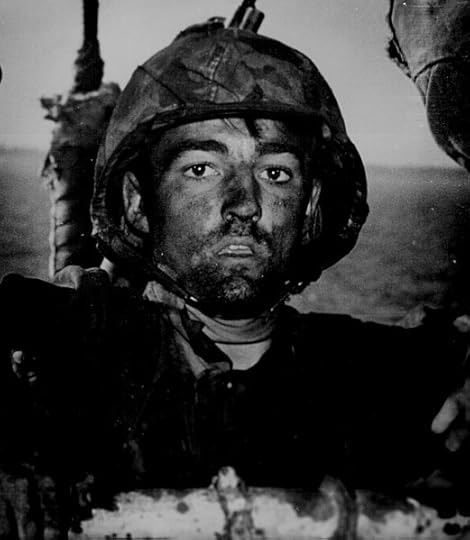
Chapter three was basically a summary of Eugene Sledge's book With the Old Breed, about the horrific battles of Peleliu and Okinawa, which I highly recommend. I won't do it justice by resummarizing Toll's summary.
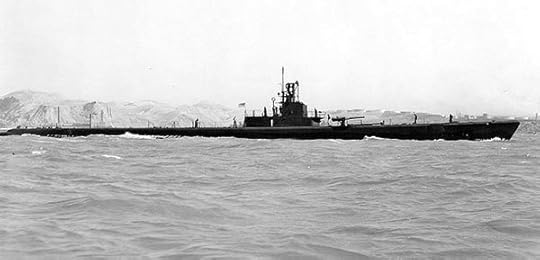
There is a chapter about submarine warfare. Sub captains were competitive and rated by how much tonnage they sank. It is astounding how many thousands of tons of ships and cargo, oil and materials, and men, were sent to the bottom.
One of the best hunters in the sub fleet was Commander Dudley Morton, and the USS Wahoo sank 19 ships and 55,000 tons before it failed to report back from its final mission. As submariners say, it is now on "Eternal Patrol." (Its wreck was finally discovered in 2006.)
Early in the war, American submarines suffered from faulty torpedoes, which would occasionally circle around and sunk the sub that had launched them. There are a lot of rich technical details here, but even more about....
The B-29 Superfortress
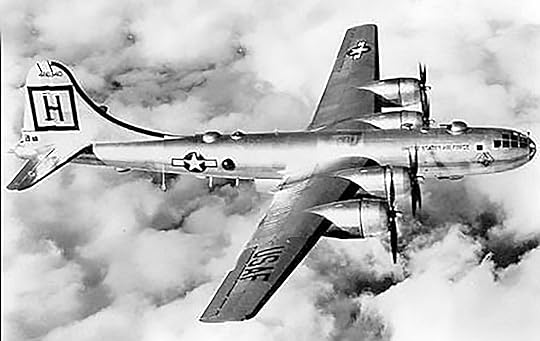
This monster allowed the U.S. to bomb the shit out of anyone, anywhere, and bomb they did. It was also an enormously expensive program ($2B dollars in 1944!), and a huge windfall for Boeing. Like the chapter on submarines, the chapter on American aviation, the rapid innovation of new planes and pilot training programs, and the fearsome power of the B-29s, and the terror of flying in them under fire, is worth a book in itself.
(There are so many things that stand out about the wastefulness of war, like the fact that at the height of the fighting, as Japan was running out of planes and pilots, the U.S. was churning out so many new planes every month that older planes that just needed minor repairs would simply be junked or tossed over the side to be replaced with a shiny new one.)
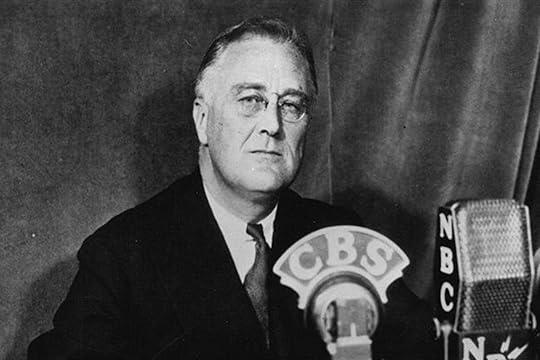
Franklin Delano Roosevelt, who ran for an unprecedented 4 terms and would not live to see the end of the war, figures prominently only in the first part of this volume, though American politics were a bigger part of the first book in the trilogy.
A point that will seem very familiar to modern readers is FDR's relationship with the press. During WWII, the government imposed censorship that would never be accepted today. Some was "voluntary" — American newspapers were unabashedly on America's side in the war, even if they were willing to criticize how it was being conducted, so of course they didn't want to publish anything that might help the Axis. But gradually they stopped accepting this as an excuse, as censors took a very broad view of what might constitute "helping the enemy." Journalists started pushing back on restrictions, and the chummy atmosphere FDR had cultivated with the press began to deteriorate. Donald Trump blasted the media by calling it "Fake news," while FDR would just flatly call reporters and columnists who published things he didn't like liars.
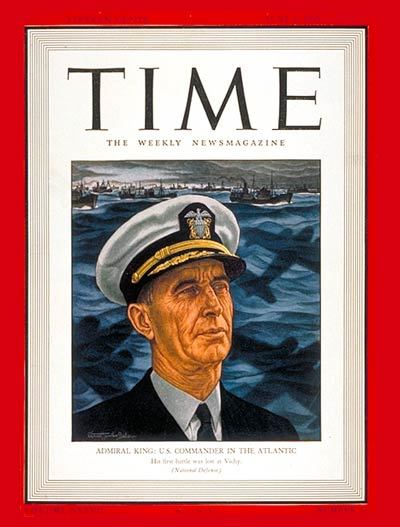
Earnest King was the Commander in Chief of the US fleet and Chief of Navy Operations. As COMINCH, he was second only to Admiral Leahy, and he was the one who primarily gave Nimitz and the other admirals their orders.
King, like most high-ranking naval officers at the time, considered the press a scourge. Their formative years as junior officers had seen a scandal in which rival admirals had washed the Navy's dirty linen in public; henceforth, most admirals considered journalists to be pests if not actively hostile, and not to be spoken to. King took the job as COMINCH on condition that he would not have to do press conferences.
Ironically, King would eventually cultivate personal relationships with some members of the press, setting up a little "boys club" where they'd drink and shoot the breeze, and by so doing, King began playing them like a fiddle, selectively leaking information he wanted to disseminate while manipulating how they covered the Navy. He initially had no use for the press, but learned to have a lot of use for them.
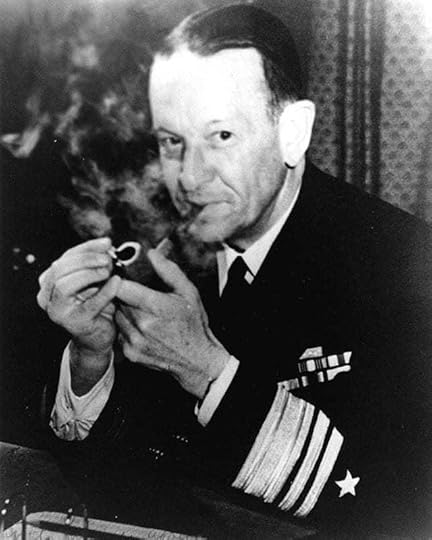
Admiral Spruance was, like most of his peers, a "black shoe" admiral. The "brown shoes" were the aviators, and the new hotness, but black shoe admirals still mostly ran things. But Spruance was a genius, so much so that Admiral Halsey named him as his stand-in. The descriptions of Spruance's rather odd personality, his flat responses to military engagements, his habit of pacing decks, sometimes in bathrobe and slippers, his idiosyncratic brilliance, made me think that nowadays he might have been considered "on the spectrum
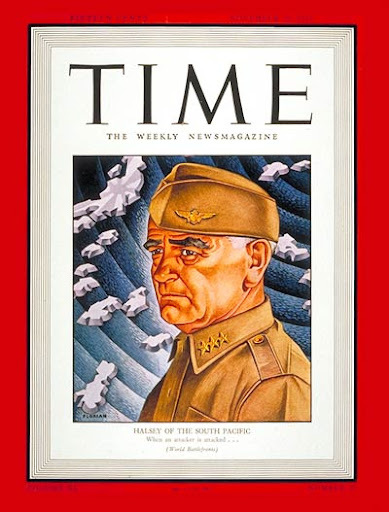
Admiral William "Bull" Halsey was put in charge of Task Force 58, which was the largest assembled naval force the world has ever seen. TF 58 was a flotilla of carriers, cruisers, and their accompanying destroyers, and they could basically sail anywhere they wanted to and swat whatever they wanted to.
Halsey's nickname of "Bull" was rarely used to his face. He was blunt and belligerent and the press and the American public loved it. One of his most popular dictums was "“Kill Japs, kill Japs and keep on killing Japs.”
He had a temper to go with his brashness. In one of the most notorious incidents of the war, during the Battle of Leyte Gulf, Halsey had taken TF 34 (part of TF 58) and gone in pursuit of what later turned out to be a decoy Japanese force. The lightly armed escort carriers he left behind desperately radioed for support when the real Japanese force of battleships came after them. Fleet Admiral Nimitz sent a radio query asking for TF 34's current location:
The details of this require some explanation of cryptography (which Toll explains in the book), but basically, random "padding" was added to the actual message text to make it harder to decode. "The World wonders" was just padding that wasn't meant to be part of the message, but by mistake, Halsey was delivered a message from Nimitz that read "Where is Where is Task Force Thirty Four the world wonders?"
Halsey interpreted this as a sarcastic rebuke sent over the airwaves, and had a four-star meltdown. His chief of staff had to calm him down and get him off the bridge, and Halsey sulked until finally turning TF 34 around... far too late to join what would later be known as the Battle of Samar.
Nimitz, in his memoirs, would later admit that he knew where TF 34 was and that he was pointedly chiding Halsey — though the addition of "The World wonders" really wasn't his doing.
Halsey comes off in this book as quite an interesting character, maybe second only to MacArthur for being an irascible, temperamental glory-hound. At the Battle of Leyte Gulf, he made what most considered to be a tactical blunder, but his counterpart, Admiral Kiroto, made a mistake that canceled it out. Halsey would deny until the end of his life that he'd made a mistake, and would even rally his friends to dogpile any historian or journalist who said otherwise.

Douglas MacArthur was enormously popular back home, and not nearly as popular with his own troops, though few folks back home knew this. Hagiographic biographies full of fanciful embellishments were being published about him before the war was even over. He was a glory hound. He became a celebrity, and he knew how to pose for the cameras. Quite a few photo ops depicted him as "riding with the troops on the front lines" when he was actually just riding a jeep in Australia.
He meddled in politics, both American and Australian and Philippine, and he was sometimes borderline insubordinate. At one point, he was seriously considering making a run for President, before he got slapped down.
For all that, no one could say he lacked courage. He stood on the decks of warships watching kamikaze pilots blazing in, and walked on beaches within range of potential Japanese snipers, much to the dismay of his subordinates.
His military genius may have been overestimated, but as a symbol he was enormously popular.
As the U.S. began determining how it was going to launch the final siege against Japan, there is a big debate between the Luzon (Philippines) approach, or using Formosa (Taiwan) as the launching point. MacArthur favored Luzon, of course, because he wanted to keep his promise to the Philippines that he would return. Eventually he won this battle, and he did indeed return.
From the Philippines, U.S. forces ground inexorably closer and closer to the Japanese home islands, finally landing on Okinawa.
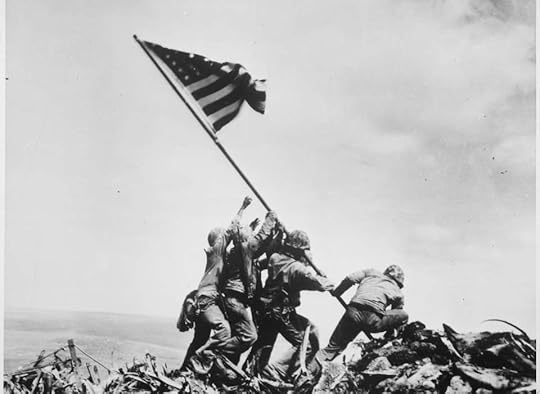
Raising the flag on Iwo Jima was really just the beginning of the battle for Okinawa, which was in many ways even worse than Peleliu. It was hellish, the Japanese continued to behave atrociously (native Okinawans were not really considered "Japanese" and were treated not much better than the Japanese had treated any of their other colonized peoples), and the U.S. prepared for Operation Downfall: the invasion of Japan itself.
Unconditional Surrender
"Unconditional Surrender," the only terms the U.S. would accept, seems pretty unambiguous, right? But it turns out there was quite a lot of nuance to it. While in the popular imagination, this meant the Japanese would bow before their conquerors and accept a boot on their necks or whatever else the Americans saw fit to subject them to, there were backchannel negotiations going on even as the Americans publicly said "Unconditional Surrender!" and the Japanese publicly said "We will never surrender!"
The negotiations were complicated and delicate, especially within Japanese circles. There was a "peace faction" that could never openly say they wanted to surrender, even though everyone knew they were going to have to. The militant faction openly claimed they would fight to the death (and that the indomitable spirit of the Japanese people would propel them to victory despite American numerical superiority and, uh, Japan running out of oil, planes, money, and food), even while they tried to reach a consensus about the terms of their surrender.
The sticking point was the Emperor. A majority of the American public wanted Hirohito tried as a war criminal, and removed from his throne at the very least. But ensuring the safety of the Emperor and his family was the one thing the Japanese weren't prepared to yield on, and might have actually fought to the bitter end over.
The most accurate thing to say about the unofficial "understanding" reached between American and Japanese negotiators would be that the Japanese "unconditionally surrendered," while having been made to understand that Hirohito would be allowed to stay on the throne, even if this was never promised or written in so many words. This was one of the most interesting chapters in the book, as the process of Japanese decision-making and the many miscommunications between Japanese and Americans, all with the backdrop of a Soviet advance in Manchuria complicating things, made this so much more complex than "The U.S. dropped atomic bombs on Japan and Japan surrendered."
There are two big questions I always have about the end of World War II: how culpable was Emperor Hirohito, really? And was nuking Hiroshima and Nagasaki really the only alternative to an invasion?
Toll does not answer either question definitively. Like most authors, he relies on a lot of primary sources, but primary sources in the Japanese high council meetings were not particularly forthcoming about any decision-making power the Emperor had, and MacArthur himself found it useful to depict Hirohito as a puppet of the military junta. What we can glean from discussions in which Hirohito took part is that he was not merely a figurehead. He couldn't exactly command the Japanese military to do something and make it so; Japan's constitutional monarchy limited his role. However, his blessing was needed to go forward, and even the militarists felt an almost religious reverence for the Emperor, so to act against his wishes would have been difficult. Hirohito giving his blessing to an unconditional surrender, even accepting that he would be in the hands of the Americans, to do with as they pleased, made unconditional surrender possible. But could Hirohito have ended the war even earlier, and did he want to?
As for the atomic bombs, Toll covers the details of the flights over Hiroshima and Nagasaki, the events before and after the bombing, and the dreadful effects of it. (He also spends a lot of time discussing the even more dreadful conventional firebombings of Japanese cities, which killed many more people even more horrifically.) But modern readers may be surprised just how little impact the bombs probably had at the time. The Japanese actually had a nuclear program of their own, though it had never gotten very far, so while they were skeptical that Americans had actually developed a fission bomb, they were not unfamiliar with the concept. But the loss of Hiroshima and Nagasaki really didn't impress them that much — they'd already suffered far more damage from B-29s.
What really ended Japanese hopes for a conditional surrender was the declaration of war by the Soviet Union. Japan had hoped the Soviets would help them negotiate a more acceptable peace with the Allies, but Stalin was stringing them along, and in an almost Pearl Harbor-like move, ended the Japanese-Soviet neutrality pact and invaded Manchuria the next morning. That was when even the hardliners knew the jig was well and truly up.
I've covered just a few of the highlights above. This book is so big and comprehensive, full of so many interesting battles, strategic decisions, personalities, military blunders, politics, and diplomacy... and it's just the last two years of the Pacific War. Ian Toll's trilogy ranks up there as one of my favorite non-fiction series of all time, and is a must-read for any WWII aficionado.
Twilight of the Gods covers the end stages of the War in the Pacific - 1944 and 1945. By this point, it was obvious to everyone, even the hardliners in Japan, that Japan could not hope to win the war. They could only hope to negotiate the terms of their surrender, and eventually even that hope was all but gone.
Which did not prevent those final years from being the most horrific and bloody of the war, with more casualties on both sides than in all the years preceding.
Toll describes many of the great battles of the Pacific War in great detail, but he looks at them primarily in strategic terms (how did the affect the course of the war?) and in political terms (how did they affect the calculus of leaders on both sides?). He also examines the leadership qualities of all the admirals and generals in charge, finding quite a few wanting in many respects. And without being overly gruesome, he describes the human cost, the horror, the bloody carnage, the shattered and broken men, the hell they endured, on the shores and aboard ships being attacked by kamikazes, and beneath the waves, where submarines played deadly cat and mouse with Japanese destroyers.
For the Japanese as well, because Japanese soldiers suffered as well, and possibly more so, because their leaders treated their lives far more expendably than the Allies treated their own forces. It's easy to see the Japanese as the "villains," and Toll points out repeatedly that they earned their bad reputation. Other atrocities committed by the Japanese (notably in China) don't get as much coverage because these books are primarily about the Pacific theater, but in the Philippines, when MacArthur returned and American forces crushed the abandoned and unsupplied Japanese defenders, the Japanese brutally slaughtered civilians and their atrocities escalated as their final defeat became inevitable. Yet we also learn that even in the beginning, Japanese soldiers, sailors, and airmen were not all obedient, fanatical Samurai willing to casually throw their lives away, and as the corruption and ineptitude of their leaders, and the disaster it had brought to their country, became obvious even to the most loyal, dissent and even disobedience grew in the ranks. Some of the most tragic passages are towards the very end, where Toll collected some letters written by kamikaze pilots, including a sensitive university-educated poet, a Marxist, and a Japanese Christian, expressing how much they hated the war and what they were being asked to do... before they went out and did it and died. It's both inexplicable and not — they knew what they were doing was wrong and futile, and yet, how do you become a deserter and a coward, forsaking your country, knowing that all of your comrades will go and die in your place?
Chapter three was basically a summary of Eugene Sledge's book With the Old Breed, about the horrific battles of Peleliu and Okinawa, which I highly recommend. I won't do it justice by resummarizing Toll's summary.
There is a chapter about submarine warfare. Sub captains were competitive and rated by how much tonnage they sank. It is astounding how many thousands of tons of ships and cargo, oil and materials, and men, were sent to the bottom.
One of the best hunters in the sub fleet was Commander Dudley Morton, and the USS Wahoo sank 19 ships and 55,000 tons before it failed to report back from its final mission. As submariners say, it is now on "Eternal Patrol." (Its wreck was finally discovered in 2006.)
Early in the war, American submarines suffered from faulty torpedoes, which would occasionally circle around and sunk the sub that had launched them. There are a lot of rich technical details here, but even more about....
The B-29 Superfortress
This monster allowed the U.S. to bomb the shit out of anyone, anywhere, and bomb they did. It was also an enormously expensive program ($2B dollars in 1944!), and a huge windfall for Boeing. Like the chapter on submarines, the chapter on American aviation, the rapid innovation of new planes and pilot training programs, and the fearsome power of the B-29s, and the terror of flying in them under fire, is worth a book in itself.
(There are so many things that stand out about the wastefulness of war, like the fact that at the height of the fighting, as Japan was running out of planes and pilots, the U.S. was churning out so many new planes every month that older planes that just needed minor repairs would simply be junked or tossed over the side to be replaced with a shiny new one.)
Franklin Delano Roosevelt, who ran for an unprecedented 4 terms and would not live to see the end of the war, figures prominently only in the first part of this volume, though American politics were a bigger part of the first book in the trilogy.
A point that will seem very familiar to modern readers is FDR's relationship with the press. During WWII, the government imposed censorship that would never be accepted today. Some was "voluntary" — American newspapers were unabashedly on America's side in the war, even if they were willing to criticize how it was being conducted, so of course they didn't want to publish anything that might help the Axis. But gradually they stopped accepting this as an excuse, as censors took a very broad view of what might constitute "helping the enemy." Journalists started pushing back on restrictions, and the chummy atmosphere FDR had cultivated with the press began to deteriorate. Donald Trump blasted the media by calling it "Fake news," while FDR would just flatly call reporters and columnists who published things he didn't like liars.
Earnest King was the Commander in Chief of the US fleet and Chief of Navy Operations. As COMINCH, he was second only to Admiral Leahy, and he was the one who primarily gave Nimitz and the other admirals their orders.
King, like most high-ranking naval officers at the time, considered the press a scourge. Their formative years as junior officers had seen a scandal in which rival admirals had washed the Navy's dirty linen in public; henceforth, most admirals considered journalists to be pests if not actively hostile, and not to be spoken to. King took the job as COMINCH on condition that he would not have to do press conferences.
Ironically, King would eventually cultivate personal relationships with some members of the press, setting up a little "boys club" where they'd drink and shoot the breeze, and by so doing, King began playing them like a fiddle, selectively leaking information he wanted to disseminate while manipulating how they covered the Navy. He initially had no use for the press, but learned to have a lot of use for them.
Admiral Spruance was, like most of his peers, a "black shoe" admiral. The "brown shoes" were the aviators, and the new hotness, but black shoe admirals still mostly ran things. But Spruance was a genius, so much so that Admiral Halsey named him as his stand-in. The descriptions of Spruance's rather odd personality, his flat responses to military engagements, his habit of pacing decks, sometimes in bathrobe and slippers, his idiosyncratic brilliance, made me think that nowadays he might have been considered "on the spectrum
Admiral William "Bull" Halsey was put in charge of Task Force 58, which was the largest assembled naval force the world has ever seen. TF 58 was a flotilla of carriers, cruisers, and their accompanying destroyers, and they could basically sail anywhere they wanted to and swat whatever they wanted to.
Halsey's nickname of "Bull" was rarely used to his face. He was blunt and belligerent and the press and the American public loved it. One of his most popular dictums was "“Kill Japs, kill Japs and keep on killing Japs.”
He had a temper to go with his brashness. In one of the most notorious incidents of the war, during the Battle of Leyte Gulf, Halsey had taken TF 34 (part of TF 58) and gone in pursuit of what later turned out to be a decoy Japanese force. The lightly armed escort carriers he left behind desperately radioed for support when the real Japanese force of battleships came after them. Fleet Admiral Nimitz sent a radio query asking for TF 34's current location:
TURKEY TROTS TO WATER GG FROM CINCPAC ACTION COM THIRD FLEET INFO COMINCH CTF SEVENTY-SEVEN X WHERE IS RPT WHERE IS TASK FORCE THIRTY FOUR RR THE WORLD WONDERS[8]
The details of this require some explanation of cryptography (which Toll explains in the book), but basically, random "padding" was added to the actual message text to make it harder to decode. "The World wonders" was just padding that wasn't meant to be part of the message, but by mistake, Halsey was delivered a message from Nimitz that read "Where is Where is Task Force Thirty Four the world wonders?"
Halsey interpreted this as a sarcastic rebuke sent over the airwaves, and had a four-star meltdown. His chief of staff had to calm him down and get him off the bridge, and Halsey sulked until finally turning TF 34 around... far too late to join what would later be known as the Battle of Samar.
Nimitz, in his memoirs, would later admit that he knew where TF 34 was and that he was pointedly chiding Halsey — though the addition of "The World wonders" really wasn't his doing.
Halsey comes off in this book as quite an interesting character, maybe second only to MacArthur for being an irascible, temperamental glory-hound. At the Battle of Leyte Gulf, he made what most considered to be a tactical blunder, but his counterpart, Admiral Kiroto, made a mistake that canceled it out. Halsey would deny until the end of his life that he'd made a mistake, and would even rally his friends to dogpile any historian or journalist who said otherwise.
Douglas MacArthur was enormously popular back home, and not nearly as popular with his own troops, though few folks back home knew this. Hagiographic biographies full of fanciful embellishments were being published about him before the war was even over. He was a glory hound. He became a celebrity, and he knew how to pose for the cameras. Quite a few photo ops depicted him as "riding with the troops on the front lines" when he was actually just riding a jeep in Australia.
He meddled in politics, both American and Australian and Philippine, and he was sometimes borderline insubordinate. At one point, he was seriously considering making a run for President, before he got slapped down.
For all that, no one could say he lacked courage. He stood on the decks of warships watching kamikaze pilots blazing in, and walked on beaches within range of potential Japanese snipers, much to the dismay of his subordinates.
His military genius may have been overestimated, but as a symbol he was enormously popular.
As the U.S. began determining how it was going to launch the final siege against Japan, there is a big debate between the Luzon (Philippines) approach, or using Formosa (Taiwan) as the launching point. MacArthur favored Luzon, of course, because he wanted to keep his promise to the Philippines that he would return. Eventually he won this battle, and he did indeed return.
From the Philippines, U.S. forces ground inexorably closer and closer to the Japanese home islands, finally landing on Okinawa.
Raising the flag on Iwo Jima was really just the beginning of the battle for Okinawa, which was in many ways even worse than Peleliu. It was hellish, the Japanese continued to behave atrociously (native Okinawans were not really considered "Japanese" and were treated not much better than the Japanese had treated any of their other colonized peoples), and the U.S. prepared for Operation Downfall: the invasion of Japan itself.
Unconditional Surrender
"Unconditional Surrender," the only terms the U.S. would accept, seems pretty unambiguous, right? But it turns out there was quite a lot of nuance to it. While in the popular imagination, this meant the Japanese would bow before their conquerors and accept a boot on their necks or whatever else the Americans saw fit to subject them to, there were backchannel negotiations going on even as the Americans publicly said "Unconditional Surrender!" and the Japanese publicly said "We will never surrender!"
The negotiations were complicated and delicate, especially within Japanese circles. There was a "peace faction" that could never openly say they wanted to surrender, even though everyone knew they were going to have to. The militant faction openly claimed they would fight to the death (and that the indomitable spirit of the Japanese people would propel them to victory despite American numerical superiority and, uh, Japan running out of oil, planes, money, and food), even while they tried to reach a consensus about the terms of their surrender.
The sticking point was the Emperor. A majority of the American public wanted Hirohito tried as a war criminal, and removed from his throne at the very least. But ensuring the safety of the Emperor and his family was the one thing the Japanese weren't prepared to yield on, and might have actually fought to the bitter end over.
The most accurate thing to say about the unofficial "understanding" reached between American and Japanese negotiators would be that the Japanese "unconditionally surrendered," while having been made to understand that Hirohito would be allowed to stay on the throne, even if this was never promised or written in so many words. This was one of the most interesting chapters in the book, as the process of Japanese decision-making and the many miscommunications between Japanese and Americans, all with the backdrop of a Soviet advance in Manchuria complicating things, made this so much more complex than "The U.S. dropped atomic bombs on Japan and Japan surrendered."
There are two big questions I always have about the end of World War II: how culpable was Emperor Hirohito, really? And was nuking Hiroshima and Nagasaki really the only alternative to an invasion?
Toll does not answer either question definitively. Like most authors, he relies on a lot of primary sources, but primary sources in the Japanese high council meetings were not particularly forthcoming about any decision-making power the Emperor had, and MacArthur himself found it useful to depict Hirohito as a puppet of the military junta. What we can glean from discussions in which Hirohito took part is that he was not merely a figurehead. He couldn't exactly command the Japanese military to do something and make it so; Japan's constitutional monarchy limited his role. However, his blessing was needed to go forward, and even the militarists felt an almost religious reverence for the Emperor, so to act against his wishes would have been difficult. Hirohito giving his blessing to an unconditional surrender, even accepting that he would be in the hands of the Americans, to do with as they pleased, made unconditional surrender possible. But could Hirohito have ended the war even earlier, and did he want to?
As for the atomic bombs, Toll covers the details of the flights over Hiroshima and Nagasaki, the events before and after the bombing, and the dreadful effects of it. (He also spends a lot of time discussing the even more dreadful conventional firebombings of Japanese cities, which killed many more people even more horrifically.) But modern readers may be surprised just how little impact the bombs probably had at the time. The Japanese actually had a nuclear program of their own, though it had never gotten very far, so while they were skeptical that Americans had actually developed a fission bomb, they were not unfamiliar with the concept. But the loss of Hiroshima and Nagasaki really didn't impress them that much — they'd already suffered far more damage from B-29s.
What really ended Japanese hopes for a conditional surrender was the declaration of war by the Soviet Union. Japan had hoped the Soviets would help them negotiate a more acceptable peace with the Allies, but Stalin was stringing them along, and in an almost Pearl Harbor-like move, ended the Japanese-Soviet neutrality pact and invaded Manchuria the next morning. That was when even the hardliners knew the jig was well and truly up.
I've covered just a few of the highlights above. This book is so big and comprehensive, full of so many interesting battles, strategic decisions, personalities, military blunders, politics, and diplomacy... and it's just the last two years of the Pacific War. Ian Toll's trilogy ranks up there as one of my favorite non-fiction series of all time, and is a must-read for any WWII aficionado.

October 7, 2020
This is the sort of book where I wish that the author had put the time and effort to name his chapters with the material covered. It is all well and good to cover a wide variety of topics concerning the last year in the war, and the author covers the material well, but it is a great benefit to the book reviewer when the material of the book is listed openly in the table of contents. Be that as it may, this particular book begins with a confession on the part of the author about how long it took for him to write this book, and as the book ended up being 800 pages or so, it is no surprise that the book took so long, or that it went down so many rabbit holes involving politics, Japanese and American especially. This material is deeply interesting and suggests at least some of the struggles that were faced by the United States in turning its obvious military advantage into a decisive victory in the war itself, namely the way that the Japanese civilians had to be convinced that as brutal as the Americans fought--especially when it came to strategic bombing--that they were not monsters invent on rape and torture of prisoners. Were it not for the excessive Japanese regard for face and their own checkered record of war atrocities, it is possible that Japan would have been defeated with a lot less violence involved, but it was not possible.
This book is a massive one, but in reading it, it makes complete sense why. There is a discussion of censoring and the struggle for the Navy to convey an understanding of its war effort in the Pacific when dealing with the personal magnetism of MacArthur and the interests of the army. There is detailed discussion of a variety of campaigns, including the conquest of the Marianas Islands, the Philippines, Iwo Jima, and Okinowa. there is a look at the logistics of World War II and the submarine warfare against Japan, as well as a look at why it was that Formosa was not invaded. The author explores the tactics of battles, the larger strategy, what Allied efforts may or may not have been useful (giving a good reason why Iwo Jima was a worthwhile island to invade because of how it helped preserve the lives of many pilots returning from bombing runs). In its discussion of the American, Chinese, Japanese, and Russian perspectives, and giving attention to everything from the Manhattan Project to obscure conferences in Japan and Pearl Harbor, this book is a worthy one to read about the end of World War II, even if it makes for somewhat gloomy reading.
In reading this book there is a sense of great loss about it. Not only is there the concern about which attacks were worthwhile and which may not have been, but there is the immense destruction of ships, planes, airplanes, submarines, cities laid waste by fire, civilians and troops committing mass suicide because it costs too much face to surrender, and Japan's casual lack of interest in the well-being of their bravest and most able military men. It is a great shame that things happened as they did, and though the emperor of Japan was able to keep his throne, a great many of his loyal servants in the military were sacrificed so that end could happen, and so that Japan could find a way forward from miltarism and the threat of destruction. And even that was a near-run thing as Japan's emperor had to hide out from a threatened coup that nearly derailed Japan's efforts at securing a conditional surrender, albeit barely.
This book is a massive one, but in reading it, it makes complete sense why. There is a discussion of censoring and the struggle for the Navy to convey an understanding of its war effort in the Pacific when dealing with the personal magnetism of MacArthur and the interests of the army. There is detailed discussion of a variety of campaigns, including the conquest of the Marianas Islands, the Philippines, Iwo Jima, and Okinowa. there is a look at the logistics of World War II and the submarine warfare against Japan, as well as a look at why it was that Formosa was not invaded. The author explores the tactics of battles, the larger strategy, what Allied efforts may or may not have been useful (giving a good reason why Iwo Jima was a worthwhile island to invade because of how it helped preserve the lives of many pilots returning from bombing runs). In its discussion of the American, Chinese, Japanese, and Russian perspectives, and giving attention to everything from the Manhattan Project to obscure conferences in Japan and Pearl Harbor, this book is a worthy one to read about the end of World War II, even if it makes for somewhat gloomy reading.
In reading this book there is a sense of great loss about it. Not only is there the concern about which attacks were worthwhile and which may not have been, but there is the immense destruction of ships, planes, airplanes, submarines, cities laid waste by fire, civilians and troops committing mass suicide because it costs too much face to surrender, and Japan's casual lack of interest in the well-being of their bravest and most able military men. It is a great shame that things happened as they did, and though the emperor of Japan was able to keep his throne, a great many of his loyal servants in the military were sacrificed so that end could happen, and so that Japan could find a way forward from miltarism and the threat of destruction. And even that was a near-run thing as Japan's emperor had to hide out from a threatened coup that nearly derailed Japan's efforts at securing a conditional surrender, albeit barely.
Displaying 1 - 30 of 585 reviews