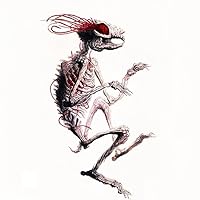
Lupus Lablennorre is a man on the run. Like a cosmic Odysseus, he wanders from planet to planet, haunted by his past and orbiting around a woman. It starts as a fishing trip with his ex-military pal Tony. Their lifelong friendship has started to feel different lately, and not just because of the drugs. Picking up Sanaa, a wealthy and mysterious runaway, only complicates the situation. When tragedy strikes and they’re forced to flee, new worlds await with many ways to disappear. But Lupus will find that the tendrils of friendship, love, and family are not so easily severed. Armed with astonishingly expressive brushwork and a dreamy, intimate narrative, Frederick Peeters drifts on the solar winds to a new understanding of memory, guilt, isolation, and connection.
Frédérik Peeters (born 13 August 1974, in Geneva) is a contemporary Swiss graphic novelist. He received his bachelor of arts degree in visual communication from the École Supérieure d’Arts Appliqués in Geneva in 1995. Peeters currently lives with his partner Cati, her son, and their daughter in Geneva.
His autobiographical graphic novel Blue Pills received the Polish Jury Prize at the Angoulême International Comics Festival, where it was also nominated for Best Book. Blue Pills also won the Premios La Cárcel de Papel in Spain for Best Foreign Comic. This is his first work to be translated into English.
A long buddy road trip comics tale for two twenty-something guys, Lupus and Tony, tooling around the universe on an old junker of a spaceship (think: Hans Solo with a wrench or Malcolm of Joss Whedon's Firefly). The possible love of a woman is involved, adventures ensue. The artwork is, as usual, the main reason to take a look at a Peeters comic. It took me a long time to get through this one; hey, it might have been my mood, but I lost interest in the "quest" and the odyssey angle, but I could get talked into it.
About a decade and a half ago, the Dutch publisher BEE DEE published the first volume of Peeter's Lupus. Shortly thereafter that publisher went bankrupt and no other company dared to take on the translation of the next three volumes. At times like these I regret not having paid more attention during my classes French at school. I had to wait until two weeks ago to finally be able to read the whole story of Lupus thanks to this complete edition by Top Shelf. Luckily it is a timeless tale set in space and in the future, about running away from your past and from responsibilities, about what it means to love someone... about the meaning of life... This is an essential piece of sequential storytelling for people who love to wonder off the beaten track.
He leído poco del autor, pero lo que he leído tiene en común historias extrañas con un dibujo poco definido, pero muy adictivas. Esta historia acompañada de alguna substancia alucinógena, seguro que mejora.
Holy shit did this book make a comeback in the final act.
I was enjoying this graphic novel due to its interesting premise, exploration of alien worlds, and the interaction of characters. Things were going along fine until the titular character became obnoxiously dickish--that is to say, he was fast becoming more and more of an asshole. But let's step back a moment.
Lupus and Tony are on a never-ending fishing trip filled with drugs and booze, hopping from one world to another as a means of escaping their young adult angst. When I say young adult, I don't mean high schoolers with their mood swings. I mean young adults who are having trouble transitioning to full-fledged adulthood. They meet a cute girl who wants to join them on their adventures, and we follow this threesome as they make their way across the universe. Each one is running from something, and, as is often the case, the past will inevitably catch up to them.
Or will it?
This story takes the reader on a pretty wild ride. Expectations should be left at the door before proceeding, and the reader should not think they've got this graphic novel pinned down after a few scenes. I was beginning to dislike how things were going, but Frederik Peeters showed that that was intended. It concludes masterfully. Everything comes into place in a satisfying way, and I was left thinking how much more I would get out of it by reading it again. There is so much subtlety, so much interconnectedness, that I imagine this story will reward its readers again and again.
With 100 pages left, I though I'd end up giving this about a 3.5 rounded to 4. Instead I bestow an imperfect 5 and hope to read it again one day.
Edit: And, my god, the drawings! I mentioned in an update that this work contains some of the best scene transitions I've ever come across. But beyond that, Peeters makes deft use of lines, as the whole comic is in black-and-white. Alien things look alien. Spaceships borrow designs from the world of sci-fi yet remain unique. Expressions are captured vividly even with the simple art style. The artist's imagination was never limited, and the drawings help propel the story as much as the dialogue.
A couple of gadabouts bop around the galaxy in their spaceship looking for great fishing holes and lots of drugs. But when they take aboard a sexy young runaway girl, they find themselves targeted by thugs hired by her powerful father. Violence ensues, and then they are on the run through outer space, crossing paths with colorful characters during their search for a safe haven.
This book is sort of an inversion of typical action movies that have slam-bang adventure broken up by brief interludes of calm and reflection. The interludes go on forever and eventually take over so much that the last bit of action basically happens offscreen. Frankly, the characters aren't interesting enough to merit all this time to reflect.
Total snoozefest. But I should have expected as much from Euro science fiction, since I have such a poor track record with that garbage.
Lupus, by Frederick Peters, is a fantastic science fiction graphic novel. It follows two men on a listless, drug fuelled fishing trip across multiple planets in a futuristic setting akin to Cowboy Beebop. The two men are sick of each other and strung out, until they meet a young girl looking to escape her past. Events take a turn, and soon they are on the run from the girls father, travelling to locations both exotic and mundane, across a very human galaxy. This novel was brilliant; interesting science fiction worldbuilding, believable characters, trippy visuals, and much more. The writing here is subdued and moody, perfect for a Fear and Loathing style space adventure. The illustrations are excellent, with a noir style feel that fits perfectly with the tone and character of the story. This was a pure joy to read, and kept me riveted from start to finish. It is not a grand story, but one that feels grounded, even if the concept is about space travel. A really good time, and an easy recommendation for anyone looking for a unique science fiction graphic novel.
This large-format (+9" x 12"), near 500-page, 'Edition Integrale' is a release by the Swiss indie-publisher 'Atrabile', a company founded by Frederik Peeters himself. As someone who loves everything even tangentially related to Books and Art, I am very impressed with the quality of Peeter's design, the smyth-sewn binding, and the thick matte stock, which is both acid-free and therefore archival-grade. It's a book a want to pick up and examine, to appreciate the inherent artistry of the tome itself
Peeters made a name for himself in the Sequential Art world with 'Blue Pills', now considered an essential work, a step forward in the tradition of autobiographical comics that includes Harvey Pekar, Robert Crumb, Justin Green, Joe Matt, Chester Brown, Julie Doucet, and Craig Thompson in North America, and David B., Killoffer, Lewis Trondheim, Blutch, and Herve Tanquerelle in Europe. But Peeters tale, while possessing the naked, brutal honesty of Joe Matts' works, doesn't do it for comedic value. Some aspects are funny, some are shocking, and it has all the contradictions of life. It involved the artists' relationship with an attractive young woman with a small child. As things progress, she stuns him with the news that she has HIV. How they cope with this, and eventually accept it as a 'new normal' forms the crux of the story.
After 'Blue Pills', Peeters changed directions, and produced three speculative fiction/science fiction stories, of which 'Lupus' was the first. His artistic evolution still continues, with his latest SF saga (the first SF comic to be released by high-brow publishers 'Gallimard'), AAMA, demonstrating a more representational style that still retains his expressive brushwork, and is absolutely perfect for the material. This full-color artistry has established him as one of my favorite comic artists. He tailors his art to the narrative tone as effectively as any artist alive, with Chris Ware and Killoffer being the names to beat.
'Lupus' represents a experimental stage in his career, with crisp, heavily inked black and white art that is reminiscent of Jens Harder and Blutch. The story takes place in the not too distant future, as Lupus and his pal embark on a 'fishing trip', flying from planet to planet looking for exotic challenges. They meet a girl who is on the run from her very rich father, and after taking her with them, various problems suddenly disrupt the two men's lives, and they are now being hunted too. Lupus' friend is killed at the end of the first chapter, and the couple hide out in an anarchist commune on a retiree planet. The girl is now pregnant, and they are once again forced to run, finding some refuge in an abandoned space-station hotel. It's a slow-burning SF drama that is far more contemplative than American SF, but it keeps you intrigued, and the art alone is worth the price.
One caveat emptor: this is a French-language book. If you can read French just well enough to stumble through it, like me, you should enjoy this book immensely. If you can't read French, you can: 1) pick up a French-English dictionary and give it a shot; the pictorial aspect of comics make them an ideal medium for learning another language, or 2) forget this version and wait for an English edition. 'Selfmadehero' has already translated Peeters' books like 'AAMA: Vol.1', 'Pachyderme' and 'Sandcastle', so 'Lupus' shouldn't be too far behind.
Simply amazing, both the story and visually. This is what science-fiction is really about for me, no matter which year, no matter where in the universe, it's about life and its consequences.
Lupus and Tony are travelling across the universe, officially in a fishing trip, unofficially, sampling as many drugs as they can. As Lupus says, maybe they are taking so many drugs so that they don't notice that they are not that close anymore. In one of the many planets they visit, they meet Sanaa, a beautiful girl that wants to leave the planet and asks them to take her with them. Although Sanaa tells them that she brings trouble, they do not realise up to which point that is true. The rest of the book is spent running away, with one brilliant stop in a retirement planet where they meet some friends.
Interesante historia acerca de dos amigos que se dedican a recorrer el espacio, consumir drogas y meterse en problemas. Aunque tiene sus puntos buenos me da la impresión de que la historia no acaba de encajar del todo. He disfrutado de su lectura pero me gustó más Píldoras azules, más redonda. Recomendable.
I recently discovered Frederik Peeter's work when I came across his graphic novel The Sandcastle. I was instantly hooked and trying to find some of his other works, I have stumbled here on Lupus.
Lupus is a seemingly fun story about humans living and traveling through space, hopping from planet to planet for parties and drugs and wild adventures. As the story develops though, things get dark...and bizarre...and that is when the REAL story of Lupus starts to develop.
The story is rich, and afterwards makes you contemplate life, more specifically the choices we make each day that lead us to bigger milestones. The thought, "how did I end up here?" is definitely one that you reflect on after finishing Lupus.
All in all a great graphic novel, FULL story, and the artwork is amazing as always when Peeters is involved.
Tras la maravillosa "Píldoras azules", en la que narraba su propia historia de amor con una chica seropositiva, Frederik Peeters presentó esta obra con nombre de enfermedad (House nos hizo imposible olvidarla) pero que no tenía nada que ver con eso. Lupus es el nombre del protagonista de esta historia, un tipo rozando la treintena que está de vacaciones con su amigo Tony yendo a diferentes sitios para pescar, y que en uno de sus destinos conoce a una chica llamada Sanaa que cambiará su vida para siempre. Lo que no he contado en esa breve sinopsis es que Lupus y su amigo van en una nave espacial y viajan por el universo de planeta en planeta. Esa premisa es la que atrae al lector de primeras, pero es la trama tipo road-movie y el devenir personal del protagonista lo que engancha de veras. Peeters construye una historia preciosa y entretenida, en la que se entrevé un final agridulce, que al llegar deja con ganas de más al que lo lee. Fantástico cómic.
This story of two childhood friends who go on a meandering, drug-addled road trip in space, which gets complicated by an unexpected passenger and an even more unexpected murder, has moments of really brilliant and nuanced storytelling in its first half. However, the art and narrative ultimately prove to be as unfocused as its main character, and we are left wondering what this was really lull about—especially after its ending, which utterly fails to stick the landing.
A diferencai de los personajes de este libro, nunca fui de consumir drogas ni de viajar por el espacio. Sin embargo, la historieta me gustó mucho (más el dibujo que el guion) y me resultó muy verosímil, salvo algún que otro histeriqueo perenne que podrían haber resuelto en algún momento.
Como siempre Peeters dota de sensibilidad escenas cotidianas, ya sean en una habitación o en una estación lunar. Con multitud de recursos, un trazo excelente y viñetas perfectas es un comic placentero.
I had forgotten about this novelist. I have read Blue Pills which I really liked. Before I looked up his biography, I felt that these illustrations reminded me of Crepax or some other Heavy Metal magazine regular. Of course, after looking him up and seeing Swiss French, this makes sense.
This is a sprawling story that always remains personal. I am having some difficulty with my eldest son right now and I can see that his idea of me isn't quite true. There is nothing that can be done to persuade him differently. In some ways, I see the main character as similar to my son.
It both saddens me and gives me hope reading this. There is such a resonance here for me. I only hesitate to give it five stars because I felt that there are a few choices in the story that might have enriched it. I find myself not quite liking the lead female character and I feel that maybe it was due to the scripting choices. I didn't end up believing parts of the story because of it.
This is a minor quibble. This is already a deeply emotional scifi story. That, in itself, is something of a wonder. It seems to me that if folks still think of scifi as being purely mechanical or whimsical, then they haven't been paying attention.
As superheroes stand in for soap operas and melodrama, scifiction is standing in for straight up interpersonal drama. This is a good example of that.
Gorgeous as always. I would go as far as to say my favorite visual book by him.Visually I have nothing but one pair of hands to complain about in the whole comics. The paneling was great, the pace appropriate, the characters unique, recognizable and beautiful, the backgrounds emersive, diverse and complete.
It is not 5 stars however, because of the main character Lupus. His stuck-up personality, disregard for anyone else's feelings or opinions and just how spoiled and negative he is made this book very hard to read. He is not only all that but also self-centered to a fault. So despite all the interesting, fun and diverse characters this ride was a long and tedious one because it's all told from the perspective of Lupus. I am extremely disappointed in how he treated Sanaa.
I am not saying that every main character should be the perfect person, full of optimism and love. Far from it. But Lupus was hard to love. Neither tragic and broken enough to feel empathy or pity. Nether good and kind enough to respect and love. So this was hard for me to enjoy to the fullest because of his presence in it, and he was all over the place.
This entire review has been hidden because of spoilers.
Lupus Lablennorr is a drug-addicted space farer going on a fishing trip with his pal Tony. At a bar, Lupus meets Sanaa, a beautiful but melancholic woman who joins the pair on their trip. What starts off as a quiet little trip involving a budding romantic relationship soon turns into a violent nightmare involving space criminals and other colorful characters. There are bursts of action throughout Lupus, but those are often interjected with lulls in both the pacing and the narrative. It's a distinctive sci-fi tale since it doesn't really engage in traditional tropes found in action-heavy space operas, despite having the trappings of one. Frederik Peeters is on another level with this graphic novel, though I did find the rather overlong story to drag down my interest by the second half. It's inventive at times, but not sufficiently interesting enough to justify the lengthy page count here. At half its length, I imagine I'd have liked this more. But as it stands, this is a fun but rather forgettable sci-fi comic.
Une lente (trop lente) quête existentielle dans l'espace.
Le dessin est plaisant. Les différentes séquences / lieux aussi).
Le passé des personnages n'est à mon sens pas assez exploré. Littéralement lorsqu'un des personnages commence à raconter son enfance le texte est grisé alors même que le retour en enfance (et finalement à la vie) d'un des personnages sera son (encore une fois long) déclic sans qu'on comprennent vraiment pourquoi...
Bien que les notions d'amour, rivalité, parentalité, fuite et responsabilités soient clairement abordées, peu de clés de compréhension sont données, nous laissant projeter notre lecture.
Et ça a été mon problème : mon incapacité à me projeter pour comprendre ces deux anti-héros passifs.
Lupus - Really loved this book. A science-fiction tale that breaks from all genre convention. It was like taking characters you may typically see in a Richard Linklater movie and placing them in a space adventure. Far less about the gadgets and more about the personal exploration
How these characters are trying to find themselves as they try to stop the universe from crashing in on them. Ends up being akin to a Bonnie and Clyde like adventure except their crimes are more by accident than purposeful rebellion.
It is the type of narrative where the small moments matter the most. People being put in a situation where they have to face deep personal truths. Compelling from start to finish with imperfect characters that explore those imperfections
7.1 Widzę w "Lupusie" kilka problemów, które nie pozwalają mi się cieszyć historią w pełni - skupiają się głównie w końcowej części tej opowieści (tom 3 i 4), gdzie występują dłużyzny, a całość staje się znacznie mniej ekscytująca wizualnie oraz tonalnie. Mówiąc to, jestem absolutnie kupiony tym, co Peeters zdołał przedstawić w dwóch początkowych tomach swojej opowieści: tytułowy bohater jest bardzo ludzki, złożony i interesujący; nakreślony świat, choć wizualnie pokazany dość wąsko, wydaje się być przemyślany i przyjemnie znajomy. Nad wszystkim unosi się aura dość niszowych produkcji sci-fi (Cowboy BeBop, anyone?), co dopełniane jest tym specyficznym łączeniem czerni i bieli, które bardzo lubię. Mocno żałuję scenariuszowego rozpadu i pobieżnego traktowania wątków pod koniec, ale być może nie można mieć wszystkiego.
Lupus is a truly haunting and unique graphic novel. It’s an epic sci fi adventure story turned romance at the end. I found the story so unique and the premise is well executed. Two friends sent off on a drug fuelled fishing trip across the galaxies but it quickly turns and becomes something even more interesting, if you can believe. The world building is so well done. The outdoor scenes as well as when they are trapped inside, the book has created a beautiful, sad world. Lupus is even surprisingly light hearted at times. Easily one of the best graphic novels I’ve read in a long time.
Two childhood friends take a road trip (fishing, seeing the solar system, connecting as friends again, and taking psychedelics/other drugs are purpose of this trip) through space traveling to different planets in the solar system. They meet some people along the way that add to the aspect of this journey. Many obstacles in this graphic novel with a touching aspect of the need to love another and connect with those around you. Quality read and excellent out of the box artwork. 👍🏾
I recently started seeking out Peeters books and this one is tied with Pachyderme for "most like a French film". You start with no preamble, little to no "what's going on" and there is a lot of weird for the sake of weird panels. It's an interesting read if you're in it just to see what's going to happen, but there are also a couple of times where you get a little invested in what might be and then hard U-turn away from that because it would have to be explained and we don't want that.
For example, they find a living organism that is like a plant animal - or an animal plant? - and it goes for a couple frames and then it's never brought up again. Sure, I guess!?
Lupus é uma algo surreal história de pura ficção científica, que cruza o intimista com a sensação de vastidão do espaço. Quando dois amigos de infância, à deriva pela galáxia em busca de aventuras e drogas, aterram num planeta distante e se cruzam com uma jovem cansada do seu destino, acabam por se meter em mais problemas do que esperavam. Um deles acaba morto, e em fuga, os dois jovens refugiam-se numa estação espacial abandonada. Aguardam o nascimento de uma criança, enquanto observam intrusões de vida alienígena no ecossistema da estação. A ficção científica e os seus cenários são o palco de uma história essencialmente existencial, onde os dramas e traumas das personagens colidem e se entrelaçam em relações de proximidade.
Comme dans les précédentes œuvres de Frederik Peeters que j'ai lues, une histoire qui prend aux tripes. Les dessins sont très beaux, très organiques. Les visages paraissent parfois simples mais sont très précis dans les expressions, avec toujours cette interrogation sur le vieillissement (même le bébé a parfois les traits d'un vieillard), sur la naissance, la transmission de la paternité
what I love about a comic this long, is the inevitable evolution of an artists style, as I found myself enjoying the artwork more toward the end as it got tighter a good story told in a cool setting which poses the question for the reason for our relationships, whether that be a pregnant woman or guppy