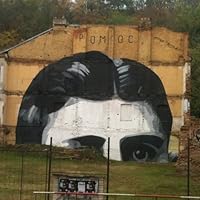
Franck Chopin n'est pas de ces hommes qui ont eu très tôt un but dans la vie. Nulle vocation chez cet individu sinon celle de vétérinaire, vers dix ans, lorsqu'il aimait tellement soigner les petits mammifères, puis à vingt ans celle de chef de la révolution mondiale (Marx, Engels, Lénine, Chopin) - ensuite plus rien. Ensuite il va faire des études de sciences, qui le ramèneront à s'occuper des animaux - mais son objet d'étude est devenu l'insecte, la mouche plus précisément, qui est un genre qu'on ne soigne pas. Et quatre ou cinq fois dans sa vie, il a disparu deux mois ; comme il connaît peu de personnes, on ne s'est pas trop inquiété.
Jean Echenoz is a prominent French novelist, many of whose works have been translated into English, among them Chopin’s Move (1989), Big Blondes (1995), and most recently Ravel (2008) and Running (2009).
echenoz her kitabında farklı bir şey deniyor. bunda da özellikle 50'ler kara polisiyesini ti'ye alan bir polisiye yazmış. sürekli sigara içen çapkın özel dedektifler yok ama dinleme görevi verilen sinekler, unutamadıkları kadınları hatırlayıp ağlayan takipçiler, buluşma yeri olarak gidilen mezbahada duygulanan patronlar var... hop diye biten kitaplarını ve echenoz'u çok seviyorum.
Sağlam yazar Echenoz bu defa bir polisiye/casusluk romanı denemiş. Benzersiz ironik üslubuyla yine başarmış. Mehmet Emin Özcan da yine ustaca çevirmiş. Zaten Helikopter'in bastığı kitapları okumak ayrı bir zevk.
Paris’te bir böcekbilimci olan Franck Chopin aynı zamanda bir Fransız istihbarat ajanıdır. Eşini arayan bir kadın olan Suzy ile yolu kesişen Chopin’in son yeni takip görevinin ucu Suzy’e kadar gidecektir. Başka bir teşkilattan olan Vital Veber’i Dinleme görevi olan Chopin, casusluk yaparken ihanetle tanışıp iki teşkilatın arasındaki güç ilişkisini sorgulayacaktır.
Konu hakkında çok detay vermek istemiyorum. Kitabın genelinin bir casusluk romanı olacağını zannetsek de tipik bir Echenoz anlatımıyla karşı karşıya kalıyoruz. Postmodern detaylarla süslenen, bir sinema filmi ve çizgi roman tadında Göl. Paris banliyölerinde gidip gelen karakterlerle birçok mekanı tanıtıp anlatıyor yazar ve bunu yaparken metaforları da kullanıyor. Etrafında olan olayları anlama arzusu ile dolu olan Chopin’in görme eksikliklerine tanık oluyoruz roman boyunca ve anlamlandırma çabasıyla dolu zihni, ihanetin duygusal ekseninden bir anda casusluğun soğuk eksenine geçiyor. Eski silik kimliğine dönmek istemese de esrarengiz dünyanın işaretlerini okumaya çalışırken keşfedecek hiçbir şey olmadığını idrak ediyor Franck. Ve tam da burada bir casus romanı değil parodisi okuduğumuzu farkediyoruz biz de.
Göl’ü farklı kılan en önemli unsur görme teması bence. Kitaptaki her karakter bir şeyleri görüp bilmek istiyor. İnce ruhuyla farklı bir casus yaratan Echenoz, kitap ilerledikçe hüzünle buluşturuyor okuru. Alışılmışın dışında bir kitap Göl. Her okurun seveceğini düşünmediğim ama benim tam da aradığım gibiydi. Echenoz ve tuhaf kurgusu ile tanışmak isteyenlere tavsiye ediyorum.
Paris semasında bir kuşun peşine takılırsın ve olaylar değişir. Bir bara girersin, bakışın sesi kısılmış TV'deki eski filmin oltasına takılır ara sıra ve bu seni mekanın bir ucundaki tiple bağlayıverir. Echenozvari olan böyledir işte. Olay örgüsünde denediği tatlar bir yana, üslup yine yaylım ateş açıyor; aynı anda oyunbaz, zeki, küstah, derinlikli, çelişkili, deneysel, ayrıntıcı, komik, acıklı, sürprizli vb. 7/10
Jean Echenoz es uno de mis escritores favoritos, tiene su propio mundo, y tiene un ritmo unico en su manera de escribir. Entrar en una historia de echenoz es dejar la realidad a un lado, y entrar a conocer su sutileza, sentido del humor y sus personajes, es un placer. Este libro parece una parodia de las novelas policiacas, pero a la vez no tiene nada que ver con una novela policiaca. Combina el mundo del espionaje, una historia de amor frustrado, personajes de los cuales te enamoras y algo de aventura con un toque que viene sólo de el. Hay que leer a Echenoz, y esta novela, así como Rubias Peligrosas, es un buen lugar para empezar.
şu ana kadar okuduğum en kötü Echenoz kitabı. yazarken yeni bir şey denemiş ama ben anlamadım ve okurken çok sıkıldım, polisiye olmasına rağmen ne anlattığını bile anlamakta zorlandım. nerede koşmak nerede bu.
Just when you think you've seen it all, along comes a writer like Jean Echenoz with such a dazzling array of tricks that by the time you've come to the end of this slim book, you are shaking your head in wonder, marveling at the truly infinite possibilities of language. For the palate of the jaded reader, I can think of no better cleanser, for Echenoz is that rarest of birds, a writer who is deserving of the tag 'sui generis'. The closest parallel I can think of is Simenon - the placid Parisian surfaces, the cataloguing of the quotidian - but underneath, roiling passions, violence, deception, ineffable mystery...
But this comparison is inapt, because Simenon's stories have a certain directness, a sense of purpose, whereas Echenoz cares nothing for destinations. For him the journey is all. Lake is, on the face of it, a spy story but it is like no other spy story you've read. You sense the author's pleasure on every page, he is pleased as much for you as he is for himself, with his beguiling trickery and genre-bending flights of fancy. In other words, Lake is an exercise in pure style.
*
The bones of the story are straightforward enough. Chopin is an entomologist, a researcher of the common fly. He is also a sleeper agent for the secret service, activated at short notice to carry out surveillance on a visiting spymaster. But Chopin has gotten mixed up (of course) with an attractive woman; Suzy has a gaping mystery in her own past. After a busy setup, the action unfurls in a private luxury hotel in the outskirts of Paris, standing next to the artificial lake of the title.
There are plenty of nods to convention: gunplay and abductions, bag exchanges and midnight meetups, burly Slavic thugs and secret microdot messages. But it is when Chopin contrives to introduce fruitflies attached with mini-microphones into the room of Secretary-General Veber - bugs with bugs, basically - it is then that you are confirmed in your suspicion that the writer is not quite on the up and up here. Echenoz is playing games, he is stretching and distorting the boundaries of the genre like so many rubber bands. Even then, the spy story accepted on its own terms is entirely plausible and never less than compelling. It's just that the whole edifice is never quite what it seems...
That sense of unreality is a hallmark of the Echenoz style. Guido Waldman has done a stunning job of rendering Echenoz's prose in English. Strong and sinuous sentences uncoil like so many serpents, but there is more to the metaphor - like snakes, the prose has a surface shimmer, slithery and ever elusive. The suburbs of Echenoz's Paris are an endless netherland of grey rain-stained concrete, a hallucinatory hellhole halfway between The Twilight Zone and The Wasteland. The most dramatic locale of the entire book must be the massive wholesale food market planted in the suburbs, where Chopin and Colonel Seck meet by night, conducting their clandestine business in a welter of blood, bone and offal.
Echenoz also has the unnerving ability to zoom in and zoom out at will - whether describing the act of peeling a banana, or lingering on the material of an old satchel - revealing an assured touch with narrative and pacing. No run-of-the-mill genre hackery here, this is the real literary deal. Ends are tied up neatly at the end, but days later I'm still finding it hard to shake off some of the images. It means that I'll be finding my way back to Jean Echenoz before long.
OR, a pointless delight - like an intricate navel-gazing machine (100 eyes, 100 belly buttons) within a globe of glass with three dozen jointed arms rapidly manipulating objects in a world of self-contained objects through a series of plottings and counter-plottings with the detailed grace of slender fingers tickling the ivories, the brilliant music vanishing as soon as the key is struck, vibrations dampened by cool and unrelenting sunlight - translating its bound and airy joy into your mobile and airy joy, empty but for its light cerebral calisthenics and focused exhilaration;
OR, if you will, a parodic romp executed with agile efficiency.
Hikayesi pek iyi olmasa da Echenoz'un kalemiyle zorlanmadan okunur bir kitap. Tanımlamaları herzamanki gibi çok çok iyi, basit bir asansörü veya posta kutularını ya da bir marketi anlatırken kendinizi o anda oradaymışsınız gibi hissediyorsunuz. Diğer kitaplarından farklı bir tarz ve konuyla ortaya çıkan Jean Echenoz'u okumaya devam....
Lac quel titre étrange. C’est paradoxalement un titre court — 3 lettres et pas de sous-titre, on peut difficilement faire mieux — et très énigmatique, il ne nous donne aucune indication sur le contenu du livre. C’est en fait un titre très echenozien (Nous trois, Un an, Au piano, Ravel, Courir, Des éclairs) ou plus généralement emblématique des Éditions de Minuit. Il ressemble à sa prose, raffinée et distillée pour obtenir un texte ciselé et épuré. Il faut lire lentement, savourer chaque phrase pour en apprécier le juste équilibre, le raffinement dans le choix des mots et dans leur agencement. Il n’y en a ni trop, ni pas assez, juste ce qu’il faut, c’est du très bon minimalisme.
L’histoire est une histoire d’espionnage, vous savez, celles où l’on croise des agents doubles. Pourtant on est bien loin des S.A.S. car dans ce roman l’histoire pourrait paraître accessoire. En fait, Echenoz s’empare volontairement d’un sous-genre romanesque, le roman d’espionnage, pour tisser sa trame et parfois le tourner en dérision — l’utilisation de grossiers stéréotypes et de procédés loufoques comme les mouches et la communication par prospectus en sont la preuve. Ici, ce n’est pas l’écriture qui est au service de l’histoire mais l’histoire qui est au service de l’écriture. Ne vous méprenez pas, elle n’est pas pour autant ennuyeuse et est même plutôt bien ficelée et intéressante. Jean Echenoz offre un bon divertissement servi par une prose délicate sur un ton volontairement neutre. Je repense avec écoeurement à tous les pavés étouffants - n’est pas Proust qui veut - que j’ai avalé en sautant des passages pour abréger mes souffrances — aïe aïe aïe, j’ai encore le souvenir douloureux du Jonathan Strange & Mr Norrell de Susanna Clarke. Echenoz m’a amené à reconsidérer la lecture; la vie est trop courte — et il y a tellement mieux à faire — pour perdre son temps à lire des phrases dont le seul intérêt est de remplir des pages. Lisez du concentré de littérature, lisez Echenoz. http://www.aubonroman.com/2012/07/lac...
Like everything I've read by Echenoz so far, this novel is a strange delight: it's a spy novel that strips away the "point" of a spy novel -- the secrets, the surprises, the big reveal -- and delivers only the structure and shape of the genre, in exuberant language and crisp detail. There are intrigues, and shadowy figures (like the one-legged courier), and behind-the-scenes machinations, but none of that is the point. Or maybe the fact that it isn't the point is the point... one or the other, perhaps. Reading Chopin's Move is a bit like watching a magic show, in that you know it's all sleight of hand with little or nothing of any firmness behind it, but done so well you're more than willing to go along with the illusion as long as it lasts. The sheer energy of the performance is the thing, but that, too, raises questions about how much more interesting our own lives become when we fill them with codes and intrigues -- even meaningless ones.
Es un libro prolijo, elegante y bien escrito, como todo lo de Echenoz, pero salvo por eso no me gustó mucho. Por momentos es lento, pretencioso y, sobre todo, aburrido. Pretende ser una especie de parodia de un policial inglés o de una película de espías tipo James Bond, pero termina siendo apenas un mal chiste. Supongo que la pésima traducción de Anagrama (que se nota permanentemente) tampoco ayuda mucho. Es un libro premiado, de un autor de culto y blablabla, pero personalmente no lo recomiendo.
An interesting take on the spy novel, this book (mostly) follows part-time amateur agent Chopin. As a small cog in a big machine, Chopin (and the reader) never get to see the big picture and are left with a series of strange orders and events without the context to give them meaning. A strange and enjoyable book that contrasts pleasurably with the typical super-spy novel where everything is of Earth-shattering importance.
This is my fourth of Echenoz’s books, and I do enjoy his quirky and unpredictable style of writing.
Entomolgist Franck Chopin, known as ‘a man of tact and science’, is headhunted as a spy for his special talents of using flies with his work, this time fitting them with tiny microphones to listen in to conversations, bugs as they may appropriately be called. In situ, at the Parc Palace du Lac hotel he sets his flies to work on an economic leader from overseas in the neighb Vital Verber. In a separate thread of the story, Oswald Clair, of Foreign Affairs has disappeared, and his wife, Suzy, meets Chopin and co-opts him to help. They end up complicating Chopin’s primary objective of spying.
Typical of Echenoz, this is far from being a conventional spy novel, in fact is something of a parody instead,
The most enjoyment is in the descriptions of the often banal lives of the characters, even as they are spying and being spied upon.
2.5 Lire Échenoz c'est comme manger de la pâtisserie, on s'y délecte avec la finesse, la onctuosité et la visualité de son phrasé. Impressionnisme en français, c'est assez époustouflant et il n'y a aucun doute que Échenoz est un orfévre de la langue. En même temps, j'ai eu beaucoup de mal à entrer dans cette histoire, et autant de mal à y rester. Les personnages m'ont laissé de marbre.
Here's a delightful writer who, like James Sallis, Jerome Charyn, or Paul Auster, appropriates genre conventions in wildly original, amusing ways. It would seem we're in a spy novel. A one-legged agent is sent to surveille entomologist Franck Chopin, who in turn is set on the trail of government official Vital Veber and his entourage as they vacation in a resort hotel, using ingenious gadgets to track their every move. Betrayals and unsuspected alliances surface, plots reverse themselves, romance flares, appearances deceive, and ambiguity abounds. But in the end there really is no point at all, and the top-secret bureau supposedly pulling the strings, the so-called "Steering Committee," is in truth steering us nowhere. While there are some amusing gags, such as Chopin's gadgets — houseflies with tiny microphones — the real joy of this book is not the flow of the absurd plot, but the glorious eddies and refractions along the way. Many books have an occasional turn of phrase that delights, the line that makes you stop and sigh or smile at its ingenuity. Chopin’s Move overflows with them — wonderfully expressive metaphors and quirky observations that in their miniature perfection recall the melodic dalliances of the original Chopin. In the end, this humoresque is a stylistic triumph, and much credit has to go to translator Mark Polizzotti, who does an amazing job of finding English equivalents for Echenoz's gems, and to Dalkey Archive, a publisher worth following.
Deneysel bi tarafı varmış ama ben deneyi de anlamadım, kurgudaki ilginçlikleri de fark edemedim. Ara ara çok üstünkörü geçilen tasvir ilginçliklerinin sonradan kurguya iki üç sayfa içinde bağlandığı oldu ama bilmiyorum o muydu özgün teknik.
Her neyse. Tasvirleri aşırı mekanik, kurguyu aşırı yüzeysel buldum. Genel his bir boşvermişlik gibiydi, yani ilginç kelimeler kullanıyorum ilginç olaylar anlatıyorum ama bir yazar olarak bütün bunları ilginç bulduğumu sanma sakın, zira bak her neyi anlatırsam anlatayım detaylandırmamda bir değişiklik olmuyor, neyin ilginç olup olmadığını ayırt edemiyorum, tarafsız bir kamerayım ...
Böyle yazarken deneysel olanın ne olduğuna işaret etmiş olabilirim, ama olmayabilirim de. Yazarın aradan çekilmesine benzeyen bir yanı var, ama kayıtsızlığın her şeyi didik didik eden ve bu didik didiklikte ayrım yapmamasıyla neyin önemli neyin önemsiz olduğunun arasındaki farkı yine silen bir versiyonu... mu? Ne bileyim.
Echenoz'dan okuyup beğenmediğim ikinci kitap, herhalde başka bi kitap da okumam artık.
Kimin hangi gruba ya da kuruma calistigini bilmediginiz , bilmeye de gerek duymadiginiz , gizli gorusmelerin mezbaha, sapel gibi her ayrintisina vakif oldugunuz mekanlarda yapildigi ve sonunda tum karakterlerin bir butik otelde yollarinin kesistigi bu polisiye roman her tur polisiye roman klisesini kullanmasina ragmen klise bir poliseye roman olmadiysa bunu uslubuna borclu.
It would seem incumbent upon the prospective commentator to begin an assessment of the Dalkey Archive edition of Jean Echenoz's CHOPIN'S MOVE by noting that is serves as a translation of a French novel originally titled LAC. The difference between the two titles is not merely curious, but speaks to two very different, and I believe extremely telling, ways of framing the novel. The novel is itself in the most reductive terms a parody of the popular spy novel, or novels, ubiquitous as these are, focused on matters pertaining to espionage; the English title seems patently to represent a choice that would seem appropriate to an earnest novel of that particular sort. It is not hard to imagine a tawdry paperback called CHOPIN'S MOVE about an enterprising spy named Chopin, rife with predictable titillations and borrowed plot mechanics. The French title, however, if carried over to English more or less as is, would be LAKE. This title tells us far more about the intellectual character of the work in question. The austerity of that title certainly presents us with something elegant and slightly inscrutable. As it appropriate. It also asks to reader to maintain at the forefront of his or her thinking a sense of the natural world against the background of which the novel's frenzied and absurd action is set in motion, the sound and fury ultimately signifying tellingly little. A lake does figure prominently in the novel, sitting there relatively fixed, representing an impassive form of comparative permanence when counterpointed with the transience of baleful human drama. If the title CHOPIN'S MOVE could easily serve a book of innocuous genre-beholden entertainment, the title LAC, especially applied to the actual work in question, speaks to a far higher category of enterprise, thoughtful, ironic, and unmistakably literary as it is. CHOPIN'S MOVE is absolutely a novel of irony, as well as one fundamentally parodic in nature, but its subtlety and unusual tact prevent it from being boisterously declarative in these respects. Its humour is sly, its style smooth and unprepossessing. Its strangeness, perhaps because appropriately muted, is both arresting and exceedingly French. There are no shortage of postmodern American novels that anarchically embed themselves in genre for the sake of playful upheaval, but CHOPIN'S MOVE could hardly be more different than, say, Robert Coover's NOIR, a novel whose baroque pyrotechnics it by design never comes anywhere near. The novelists that Echenoz resembles are French novelists, generally, his countrymen. There is to be certain more than a little hint of the Nouveau Roman, though I thought more of Alain Robbe-Grillet's 1966 film TRANS-EUROP-EXPRESS than I did any of his novels with which I am familiar, though certainly did recognize is CHOPIN'S MOVE fealty to Robbe-Grillet the novelist's pronounced interest in objects and spaces, with human beings thinly drawn, conspicuously irreal, frequently ciphers. I also thought a bit of Jean-Philippe Toussaint whilst reading CHOPIN'S MOVE. Toussaint is another contemporary French writer whose novels have found a home in English translation at Dalkey, and as with Echnoz his work is characterized by ironic intelligence and understated oddness. These are all French writers whose work is rich in ideas, all of them at times seeming like chess masters moving pieces on a board, their cunning everywhere evident ... for those looking on with sufficient care. I would suggest that it is no accident that Echenoz has written a smart, streamlined absurdist novel of ideas which is also a playful deconstruction of the conventions of genre fiction. If we consider that the traditional philosophical concept of the absurd, within and beyond modernist conventions, lies is the fundamental meaninglessness of existence, Echenoz would seem to see such meaninglessness as likewise at the heart of our pacifying entertainments. If already in Borges there is the emergence of a tradition that sees in the hyper-rational sleuth a tendency to encounter the impregnability of fundamental problems inherent to deduction, Echenoz takes apart the spy novel to reveal that our popular imagination remains obsessed by pointless labyrinthine endeavours, probably because our lives are themselves generously garlanded with endeavours equally pointless. The comedy of human existence is a comedy of vigorous struggle for naught. This becomes all the more evident when the human life finds itself situated amidst the manoeuverings of other sinister, opaque operators, themselves steadfast, themselves invariably floundering. An absurd novel about the sundry pratfalls of interconnected political operators ultimately cannot help but serve as commentary on the geopolitical realm more generally. Political power is characterized by the compromising appetites of powerful men and women already compromised by their blind spots. And nature as the backdrop. The ground of our absurd theatrics is an unmoved material world, offering nary a remark, no matter to what violence we may deign to subject it and each other. The absurd really does come down to Hamlet. Tale of sound and fury. Signifying nothing. Of course it is always a pleasure when the tale is as indelibly told as is Echenoz's rueful farce.
Echenoz’dan yine bir oturuşta biten bir novella. Farklı türden bir casus öyküsü diyebiliriz. Yine çok akıcı, çok tempolu. Yazarın alameti farikası diyebileceğimiz o çok başarılı üslubunu bu eserde görmek de mümkün.
An early Echenoz, where his style, his characters and his love for detective-like situations already shines through. And also the importance of the setting: the city comes through so strongly in his works. I love him - what else can I say?!
LoUn poquito a la nuestro hombre en la Habana otro tanto a la nouveau Román y borisvianesca , Ese realismo que más que absurdo se enfoca en lo innecesario , la mirada se posa lo stesso en cosas en personas,
la trama en cuanto tal es lo de menos, aquí un deconstruct del gasto expenditure y la burocracia del espionaje, la ciencia va para allá, la entomología ya superada...
Jefes espiandose por espiar , al final solo cambian de puestos , un pretexto para jubilar, el amor no es un vínculo tan poderoso.. Divertidaza, memorable el microscopio , no es tan experimental que sea posthumano
Franck Chopin , Suzy Clair... los gorilas guarura a lo lejos , el acuarelista infiltrado , el coronel Seck, Vital Veber...
Los impulsos ya idos de la guerra fría clave catarsis
This entire review has been hidden because of spoilers.
A fantastic send up of the espionage novel with a bit of William Burroughs thrown in for good measure. Some of the plotting, such that it is, reminded me of John Hawkes' Lime Twig. Combined with Jean-Philippe Toussaint, Chopin's Move is an interesting look at what's going on in the French-speaking part of the literary world.
Une manière de roman d'espionnage, pas forcément recommandable aux amateurs du genre, à moins qu'ils soient de ceux que Jean Echenoz fait rire par l'incongruité d'une comparaison ou la place d'une ponctuation. Avec un détachement très classieux.
Je découvre Echenoz avec ce titre ("Lac" en français). La version anglaise ne m'a pas laissé une excellente impression. Les phrases ne semblaient pas naturelles, sa prose est peut être difficile à traduire.
Didn't realize this was a satire until after I'd finished it. That bit with the fly would have been a lot funnier if I'd know.
Lesson learned: when reading a translation, it's not a bad idea to do a little research on genre/tone/intent first just to help you get your feet on solid ground.