Berlino prima della caduta del muro è una città divisa, ma i suoi abitanti cercano un modo normale per vivere, e sopravvivere, da entrambi i lati della barriera. Robert racconta storie al bancone del bar mentre, tra una birra e una vodka, progetta una nuova vita all’ovest; Pommerer si difende dal sistema di Berlino Est in attesa di sfuggirgli; il narratore è uno scrittore che attraversa i checkpoint avanti e indietro in cerca di storie interessanti; il suo amore, la bella e seducente Lena, è in esilio lontana dalla famiglia; tre giovani si calano oltre il confine per vedere i film occidentali; un uomo passa il muro ossessivamente, solo perché non riesce a smettere di farlo. Tutti, in qualche modo, saltano su quel muro cercando di fuggire da un passato che vuole trattenerli, e dovranno fare i conti con se stessi prima dello scatto decisivo verso la libertà. Peter Schneider ha scritto l’unico romanzo che racconta il muro di Berlino visto da ovest, un libro diventato un caso editoriale mondiale e una testimonianza senza tempo sulla forza invisibile che ci spinge verso i nostri desideri.
Peter Schneider is a German novelist. His novel Lenz, published in 1973, had become a cult text for the Left, capturing the feelings of those disappointed by the failure of their utopian revolt. Since then, Peter Schneider has written novels, short stories and film scripts, that often deal with the fate of members of his generation. Other works deal with the situation of Berlin before and after German reunification. Schneider is also a major Essayist; having moved away from the radicalism of 1968, his work now appears predominantly in bourgeois publications.
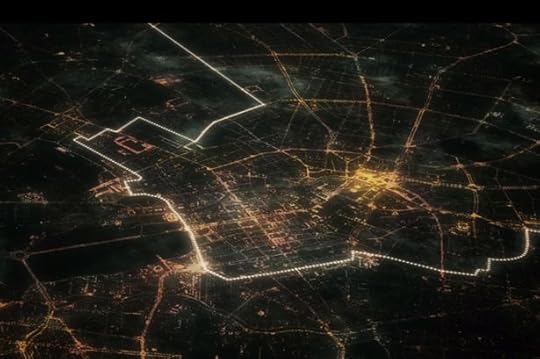
Reading this, I immediately cast my mind back to Anna Funder's fascinating book Stasiland, which I read a few years ago. That was written long after the fall of the wall, whereas Schneider's 1982 short novel came at time when it was very much a case of the east and west divide. Interestingly, and I didn't know this, is that even now after more than three decades there are still signs of Berlin's two halves when seen from space. (The city's lights - orange in the east, white in the west). Sadly, as soon as words like 'War', 'Visa', and 'Russia', were mentioned, it doesn't take a genius to figure out what else I was reminded of as well. I'm sure I'm not the only one that thinks this madness is all just a bad dream, and that it can't really be happening; today; right now.
Schneider, who was definitely giving me Kundera vibes, seeing as the overriding theme here is that of identity, overlaps to clever effect stories from both sides, focusing mainly on three characters: Pommerer, who defends the system in the east but is close to deserting it; the narrator's ex-love Lena, who is exiled from her family in the East, but manages to maintain a better a life than in the West; and Robert, who struggles to adapt with life in the west after recently enterting from the east. For me though, it was a minor character called Kabe that took the spotlight, and also added a bit of lightheartedness, because of his fifteen jumps.
Fifteen jumps, from one side to the next, for no other reason, than... er, just wanting to jump. The authorities can't figure him out and deem him nuts, sending him for a psychiatric assessment. Verdict: sane. He just likes to jump. He is a jumper. And a good one too.
The wall Jumper reads both like a work of fiction and a piece of important reporting, and I wanted to give it a higher score simply because it's a novel of historical value and merit more than it is escapism. But for me, it was just all too short. These characters, I really wanted to get to know a lot more; go deeper into their lives. So in a way, I couldn't help but be slightly disappointed when it ended.
It is tempting to think of the DDR as a completely closed off system, the Wall having achieved its maximum purpose: keeping everyone and everything out and letting no one and nothing in. If only this were true perhaps the absurdity of the situation, a Wall in the middle of a city and of a country, breaking it in two, would be less obvious.
This 1982 book by Peter Schneider sets out to show the absurdity of the situation Germans lived in from 1961 to 1989. Through a series of stories, which might or might not be real, our narrator, a West German, travels to and fro East Berlin, entering and leaving the DDR, visiting friends, bringing them cigarettes, and exchanging stories. When he returns to West Berlin, he meets escaped dissenters in an effort to bridge the differences between them – differences, he argues, artificially created by a geopolitical situation. Differences that are real but that were purposefully fabricated.
All the while, he wonders about his own identity and whether he would be a different person had he been born in East Germany. The question, dismayingly as it might be, is yes. It is easy to believe that it is what we are that makes us immune to propaganda, to tyranny, to self-aggrandizement. But as the narrator realises, that is a fantasy that no conscientious German can afford to believe in.
And yet, this is a book about what slips through the cracks. Even as he is writing the narrator, and the author, know that this state of affairs can’t last forever. It is an unstainable situation by virtue of its absurdity. Behind the curtain there is the question what happens after the Wall? How can we reconcile our differences? What remains of German identity once this monstrosity falls down?
The answer is being answered as I write this. Perhaps in ways the author never predicted: it’s been, overall, a success. The physical Wall and the Wall of the mind fell down, and its vanquishing process is steadily ongoing.
One of my favourite books this year, when I picked it up it was totally new to me I knew nothing about the author and had never heard of the book. the best feeling is to be totally overwhelmed by a book you expected nothing of. Regardless of your politics or what you chose to interpret from this novel, its an extremely complex and nuanced portrayal of so many questions and aspects of being a person, engaging with other people, engaging with identity, and engaging with a state. You get the feeling always that the characters in this book are fully grown separate individuals, other times theyre totally fluid and mix and mingle with each other, I confused some of the characters with each other a couple of times. It totally breaks down your conception of what is an identity, what is a national identity, what are barriers, boarders, walls, do they keep people apart? where does the state end and the self begin is a question the speaker constantly grapples with as he, a western german, compares himself to his eastern german friends and wonders how much of himself is his and how much is a result of his environment, state and economic system. A truly incredible read.
«Sarà più difficile per noi abbattere il muro che abbiamo in testa che per una impresa demolitrice distruggere quello vero»
Peccato, perché in conclusione il sentimento che prevale è quello della noia, che unita alla delusione non giustifica a mio avviso la lettura di questo agile (ma solo per dimensioni) insieme di riflessioni di Schneider sulla Berlino degli anni ’70-’80 divisa dal muro. Lo sguardo e il punto di vista dell’autore (che è tedesco, ma non berlinese - nasce nel 1940 a Lubecca, si laurea a Friburgo e che arriva nel 1962, poco più che maggiorenne in una città dove il muro già divide i suoi abitanti) è acuto e interessante, nostalgico e indagatore, ma il risultato finisce per essere quello di un insieme di aneddoti e riflessioni disorganiche che finiscono per disorientare e stancare chi legge. Peccato, dicevo, perché alcuni aneddoti e storie - come quelle dei tanti protagonisti del “salto del muro” (salti fisici, non simbolici, dall’est verso l’ovest, ma anche viceversa, anche solo per andare al cinema a vedere i film americani e ritorno a casa) o la storia dei due studenti di Gorizia che scavarono un tunnel, il Tunnel 29, per permettere a un amico rimasto intrappolato “dall’altra parte” di tornare a ovest (da questa storia è stato tratto un film tv, Il tunnel della libertà con Kim Rossi Stuart e la moglie di uno dei protagonisti, Elle Sesta ha scritto un libro Il tunnel della libertà. 123 metri sotto il muro di Berlino: la straordinaria avventura di due italiani nel 1961 per raccontarla pubblicandolo solo dopo la morte del marito), sono non solo incredibili, ma anche la testimonianza storica della percezione diversa che abbiamo avuto noi della convivenza dei tedeschi di ambo le parti con il muro.
Su tutte, comunque, le domande che Schneider si pone (nel 1982 - e questo mi preme sottolinearlo, perché ha il valore di un documento storico in presa diretta) e l’elaborazione dei suoi pensieri, trovo che siano le più interessanti quelle dove si interroga sulla casualità della divisione e sugli effetti, provocati dal modello sociale di riferimento in cui gli individui si erano trovati a vivere e a formarsi, che aveva determinato, quale risultanza, una persona anziché un’altra: «In Germania non soltanto il modo di parlare, ma anche particolari rughe della faccia dipendono dai punti cardinali. Queste impressioni, ogni volta facilmente dimenticate, accumulandosi nel corso degli anni si trasformarono in un vero e proprio senso di fastidio. Che nel giro di trent’anni fosse stato possibile creare due sistemi sociali opposti fa quello stesso popolo che con la sua “superiorità” voleva salvare il mondo era già abbastanza sorprendente. Ma ancora più sorprendente era l’intensità con la quale questa contrapposizione esterna era penetrata nel comportamento e nei riflessi di ognuno. Fintanto che questo fastidio investiva solo i tedeschi al di là del muro, non supervalutazioni i limiti di un’esperienza di viaggio. Ma il sospetto che gli abitanti della Germania siano mostruosamente intercambiabili non poteva indietreggiare davanti a un confine, In questo paese la scoperta della plasmabili degli individui non può fermarsi davanti al muro e prima o poi cercherà in prima persona: che cosa sarebbe stato di me, che pensieri, che aspetto avrei, se…»
Ecco, trovo questo brano emblematico, per certi versi il cuore di tutto il libro, l’interrogativo sulla plasmabilità dell’individuo emotivamente sconcertante e destabilizzante, un vero colpo al cuore della democrazia e della libertà personale, che si ripropone, verso la fine, in forma autobiografica, nel capitolo intitolato a Dresda e nell’incontro che l’autore ha con una zia di cui ricordava a malapena l’esistenza e nel “non incontro” con un cugino, che invece non sapeva affatto di avere, che non scende nemmeno le scale per incontrarlo perché ai militari della DDR era vietato incontrare i visitatori dell’ovest, se non in condizioni particolari e dopo richiesta di autorizzazione: «È la prima volta che sento parlare di questo cugino. Il fatto che rispetti il divieto (dal momento in cui nessuno, se non un suo poliziotto interno, avrebbe potuto impedirgli di affacciarsi almeno per un attimo) mi porta a immaginare uno scambio di persona. Se fossi cresciuto nelle stesse condizioni, nella stessa casa, nello stesso posto del cugino, avrei mai potuto sviluppare una tale disponibilità all’obbedienza? Se immagino una risposta conciliante è forse perché non sono mai stato sottoposto a costrizioni del genere? Oppure è perché mi sarei rifiutato di obbedire? E quando avrei iniziato a ribellarmi? […]»
Tutto questo, questa idea del risultato di uno stesso individuo nato e cresciuto a ovest, e di quello stesso individuo cresciuto a est, identici, ma diversi, mi ha fatto pensare alla serie Counterpart, dove, in una Berlino del futuro, divisa in due non da un muro ma da corridoi, stanze di confine e porte scorrevoli, e da una scissione che ha generato di ogni individuo il suo doppio dall’altra parte, si affrontano due umanità identiche ma diverse, l’uno la controparte dell’altro (ed è bravissimo Howard J.K. Simmons nel doppio ruolo che interpreta dell’uno e dell’altro Howard Silk, protagonista della serie).
Qui una recente intervista a Peter Schneider, molto più brillante del libro stesso, in occasione del trentennale della caduta del muro.
I’ve never been great at writing reviews because my opinion of the book will usually change so many times whilst I’m reading it that by the end, I either know I liked it or didn’t, but would have forgotten the finer details. But in this case, I don’t _want_ to forget the finer details. So I am writing this as I read the book because there are some things I know I’ll forget.
Firstly, I initially found this book awful, that’s got to be said. I think the combination of having to read it for school, in a foreign language, and having to translate a ridiculous amount per week, made it more of a chore instead of allowing me to actually pause and enjoy it, or actually think about what it was saying.
Secondly, for the first time, I’m going to say that revision is a good thing. Had I not revised this and sat down for hours each day and actually looked at each page and analysed the meaning behind previously obscure phrases, I would have continued thinking that this was a dull, pointless book and continued to despise it.
Now that that’s done with, let me begin the praises. The first thing must be how universal the book is, how a book written about the Berlin Wall, years ago, can touch on issues so prevalent in our society today. And without explicitly saying so, Peter Schneider questions the motives of human nature and our actions themselves from various different angles. For example, whilst writing about how the Stasi treat different groups of easterners differently, thereby creating different senses of identities and privileges, and preventing them from acting as a group, the reader begins to see links between that exact creation of privilege and various forms of oppression, in society today, e.g. racism and white privilege.
There is an underlying theme of apathy and indifference which runs throughout this novel, and one of Schneider’s key focuses, seems to be to look at that from various angles. Again not explicitly, he weaves this idea in time and time again, yet never answers why people are so indifferent. This allows the reader to make up their own mind and use his pieces of evidence in their own way. Again, this is such an important idea for today’s society, as it shows how we become desensitised to events which initially shocked us, and how things can ‘fade into a metaphor in our consciousness’.
The ending was, like the rest of the book, obscure and abstract, yet it did have a tinge of hope. Overall, this book really does address important issues from various different angles, yet doesn’t feel like it is trying to do a for and against sort of argument. So although this does create a sort of fragmentation within the novel and makes it hard to follow, it reflects the confusion of those at the time who had had their country split into two. Most importantly, it tries to be impartial as best as it can, and doesn’t try to provide an answer to ‘die deutsche frage’ or which side or political system is better.
Combined with Schneider’s beautiful prose and incredible metaphors, and the way such deep ideas are interspersed throughout the book, this makes for an incredible read, and one which I will definitely read again when I am not going to be examined on it! Highly highly recommend!
Peter Schneider’s The Wall Jumper is fiction that feels like artful reportage. In contrast to, say, Anna Funder’s Stasiland: Stories from Behind the Berlin Wall, which is artful reportage that feels like fiction. Both Schneider’s and Funder’s books take us into the German Democratic Republic (GDR) and ts side of the Wall. And both Schneider’s and Funder’s books introduce us to the psychology — or at least the authors’ interpretation of the psychology — of the Wall and its impact on both the GDR and Federated Republic of Germany (FRG) and especially West Berlin.
Schneider reveals the pride and the defensiveness of some GDR citizens. Here Schneider discusses the views of an East Berlin émigré to West Berlin: ”A friend who in my view is shy, in Robert’s view is only pretending to be shy. A colleague doesn’t just succeed; he has a formula for success. As Robert sees it, western society is essentially a well-organized syndicate deliberately kept in a state of disorder by a few people in the know. Whether consciously or not, every impulse within the society follows a plan for the benefit of the bosses: coincidences, accidents are built in; the world is controlled by the secret services” (page 76).
According to Schneider, in 1982 when The Wall Jumper was published, West Germans talked a good game but in fact cared little about the separation: “ It would be unwise to conclude, from the frequency of official appeals to the will for unity and the survival of the nation, that the corresponding feelings also survive. A more realistic inference is that most Germans west of the Elbe have long since reconciled themselves to partition. In their separation pangs they resemble a lover grieving not so much for his loved one as for the strong emotion he once felt. In Germany, it seems, time doesn’t heal wounds; it kills the sensation of pain” (page 25).
In Scheider’s view, the Wall that separates East and West Berlin lives and would live on in the minds and attitudes of their respective citizens: ”It will take us longer to tear down the Wall in our heads than any wrecking company will need for the Wall we can see. [We]. . . can disassociate ourselves from our states as much as we like, but we can’t speak to each other without having our states speak for us” (page 97). And ” What would happen if, say, both German governments took a year’s vacation; if the journalists fell silent for a year; if the border police took a year to recuperate on the Adriatic and the Black Sea, and the people started their own East-West negotiations? After a brief embrace, they would discover that they resemble their governments much more closely than they care to admit. It would become evident that they have long since made their own crusade out of the accident of growing up in different occupation zones — later, different social systems” (page 59).
Peter Schneider’s The Wall Jumper is an excellent novel that helps the reader to understand what the Wall may have meant to both some East Berliners and some West Berliners. It’s a fascinating historical view of the FRG and the GDR back then. Of course, and this is inherent in such a novel, the reader may be left wondering at just how accurate his portrait was.
This novel of the Berlin Wall and the divided city it bisected draws its power from being written in an almost bland journalistic style, as if it were reportage rather than fiction. It’s also unexpectedly funny. “Where does the state end and the self begin?” Schneider’s narrator wonders towards the end; the novel seeks not to answer the question but invite the reader to get to grips with it.
“Where does the state end and the self begin?” I am absolutely in love with Berlin as a city and the history of the wall, but I found it hard to focus on this book. I think I would have benefitted from more of a structure than just some friends telling stories (I didn’t understand who the characters were.) I really struggled to get through it.
Nonetheless, there are some great themes in this book which I always find fascinating: how the state shapes you as a person, the ways in which you internalise the state, intellectualism vs lived experience, the similarities under any totalitarian government. I think I was expecting another Goodbye to Berlin, which this sadly wasn’t.
"Seen from the air the city of Berlin appears perfectly homogenous, the wall zi-zaging across it like a figment of some anarchic imagination. In reality the Berlin Wall is the world's most closely guarded barrier - a powerful symbol of our divided world.
"In Peter Schneider's arresting novel a young writer, living in West Berlin, sets out to examine the effects of political division on life, love and identity in his 'Sismese City'. He notes the curious atmosphere of ease: obsessed by the Wall as a physical obstacle, the inhabitants of the twin cities have long since ceased to 'see' it. With seeming casualness Schneider juxtaposes images and anecdotes, fantastic humour and intense feeling, in an intricate, beautifully crafted mosaic in which every detail becomes charged with significance.
"Peter Schneider speaks for a whole generation of young Germans. His novel...reminds...(us) that Berlin is a microcosm of twentieth century rifts and borders, both political and personal, the place where we all really live..."
From the flyleaf of the jacket of the 1984 English edition from Allison & Busby - quoted extensively because on Goodreads many of the early English (as of March 2023) have only a German language synopsis and the more recent Penguin editions have a English synopsis which I find highly misleading. The description above for good or bad is the most accurate description of this novel.
This book is very much of its time, rather like the first book of Peter Schneider's that I read 'Berlin Now: The City After the Wall'. I read that book eight years after its publication and despite recognising its qualities I did feel it was beginning to date badly. So what of this novel which I am reading forty years after publication? Has it dated? Is still worth reading?
The answers are Yes and a Qualified Yes. To try and get back into the mind set of the late Cold War when the Wall, the division of Germany, Europe and the World into two ideologically inspired blocks was taken as a given - people forget that when the original Star Trek TV programme one of the crew, Chekhov, was a Russian from a clearly still communist Russia - it all appeared so permanent that questioning or speculating on alternatives seemed less real or likely then inter stellar ships and journeys of Star Trek. Yet only half a dozen years after publication the Wall, East Germany, the communist bloc and the Soviet Union had vanished without a fight, barely a whimper.
What makes this novel fascinating is as a portrait of how left leaning intellectuals in West Germany accommodated themselves to existing with the Wall. I am not a die-hard reactionary anti-communist but unintentionally Peter Schneider's portrait of intellectuals east and west of the wall is not flattering one. I find it distasteful that in all the various ways he discusses 'wall jumpers' there is no room for even a mention of Peter Fechter*.
Equally I found it difficult to stomach one of Schneider's East German intellectual friends defending the system in the east:
"Granted that you can voice criticism in the West, but it has absolutely no effect. And in the final analysis, the repression of dissident writers in the East proves that they're taken seriously."
The monomaniacal self centered absorption of that remark will be even more appalling if you have read my footnote on poor Peter Fechter.
It was a time when many intellectuals in the West viewed East Germany and the rest of the Soviet Bloc through a prism of equivalence which ended up seeing no real difference between the two systems. Things like the Stassi are known and mentioned in books like Schneider's but the reality, the all pervasive and at times malevolently destructive activities of the Stassi were not really known or understood. Everyone now knows how universal it was and some of the most devastated by the revelations' were East German dissidents who had no idea that it was their best friends, colleagues, wives, husbands and children who were spying on and denouncing them. Reading Schneider's accounts of so many get togethers with East German writers, etc. it is impossible not to wonder how many were there compiling reports and denunciations. I am sure the thought has crossed Schneider's mind.
Of course the full extent of the Stassi's activities only became apparent after the demise of the East German state but, and this is why I keep coming back to poor Peter Fechter, up until the last moment when the barrier rose and thousands of Berliners poured from East to West that state continued to meet out his fate to others and there was a real possibility that even as it passed into Trotsky's 'junkyard of History' that thousands might die in a hideous communist equivalent of Hitler's Berlin Gotterdamerung.
So this is a flawed novel but I would not claim that I would have seen those faults so clearly if I had read it in 1984. Being from the pre internet social media years I am sure that the chances of youthful stupidities resurfacing are remote. But this is not a bad novel. There is a great deal that is still wonderfully fascinating, humorous and interesting. It is worth reading as long as it is read for what it is not for any retrospective attempts at redefinition. Sometimes even the best of us write things that we might wish had been otherwise. But if they were written honestly and with good intentions then that will help carry them on.
*Peter Fechter was an 18 year old brick layer living in East Germany who with a friend attempted to scale the wall in 1962 and was shot in the pelvis by the East German order guards and left in no man's land, unreachable by those in the west who had observed his attempt, and ignored by the East German guards while he lay bleeding to death and screaming in agony for an hour. I can't help wondering wondering what comfort it would have been, while he lay alone bleeding and in pain, that the repression of the regime that killed him would allow others to feel important when their writings were censored? I strongly recommend reading some of the extensive information about Peter and others who died crossing the Wall - Google it.
Definito come "caso editoriale mondiale" dalla Nave di Teseo, che l'ha appena ripubblicato, avevo grandi aspettative su questo libro, che prometteva di raccontare il muro visto da Ovest come nessuno mai.
In questo libro c'è il muro, c'è anche una Berlino divisa, ma manca una storia in grado di tenere insieme tutti i pezzi che saltano fuori dalle pagine. Il narratore vive a Berlino Ovest, anche se non è nato nella capitale, e racconta delle differenze con la vita all'Est attraverso gli avvenimenti che riguardano il suo amico Pommerer, che improvvisamente non riesce più a ricevere telefonate, oppure attraverso le differenze che traspaiono tra la sua visione e quella della donna amata Lena, nata e cresciuta nella parte orientale. Ci si interroga su come sia possibile dividere un popolo in maniera del tutto casuale e avere come risultato due popoli agli antipodi, che ormai si definiscono con "noi" e "loro". Le notizie e in generale ogni evento si trasforma a seconda della lente politica attraverso cui lo si osserva, questo ci mostra il narratore... Peccato che lo faccia in maniera incostante, a singhiozzo, senza fornire una testimonianza ragionata a posteriori, ma quasi una riflessione in corso d'opera, visto che il muro è ancora in piedi nel libro e gli aneddoti più godibili sono proprio quelli relativi ai saltatori, quelli che in un modo o in un altro lo oltrepassano con successo.
In breve offre qualche spunto interessante, ma niente di più.
A novel that promises much more than it delivers. A sort of half formed thing that flirts with reportage, novel structure and absurdity but which largely fails on all three points. Some very interesting observations on comparison, but ultimately a number of passages in the book are somewhat tedious.
3.5 stars Some beautiful prose and memorable moments, but was a struggle to read. Would have hated this as a school child, but as an adult I can see how it is considered a classic.
"Die Mauer im Kopf einzureißen wird länger dauern, als irgendein Abrißunternehmen für die sichbare Mauer braucht." (To tear down the wall within our heads will take longer than any demolition company takes to tear down the visible wall.)
I was born in 1999, 10 years after the fall of the Berlin wall, in the west of Germany. The literal division of the country that was so normal for my parents throughout their lives has for me always been a story out of history books. The Germany I grew up in takes pride in being reuinified and that includes the tale of the terrible DDR that once existed behind walls that nobody could ever cross without being in danger. There've always been nuances to this story depending on who tells it. But the general consensus remains.
I have never been someone that takes pride in the country I grew up in. I have spent all my life criticising past and current German governments - and especially capitalism. And since I know way more people that grew up in the BRD than the DDR I have heard way more grim stories about western Germany in the 60s-70s than about eastern Germany. Nevertheless, when I imagine how my family in the west grew up I imagine it almost the same as my life now whereas life in the DDR in my mind almost takes on a caricature of tristness - a colorless life in a country that feels like a prison.
What's probably most interesting about this perception though is that the idea of any difference at all, in my mind, completely precedes the beginning of my life. Honestly, until 2016 - when the political climate made it inevitable - I had never considered that any current differences of people growing up in Germany had to do with the decades long border that used to run through it. Of course our privileges did or whether we grew up on the countryside or in a city, but the side of the border on which our parents grew up rarely crossed my mind. Had someone asked me back then I am sure I would've concluded that of course as any historical events leave their scars this one did as well. But it always seemed so far away and I simply didn't think about it much.
Now, this book was published 17 years before I was born - 7 years before the fall of the wall - in 1982. It is a portray of Berlin: the devided city. The narrator, an author from West Berlin, is looking for a story about someone crossing the border again and again. And while doing so he crosses it himself many time and shares with the reader the experiences he makes, the people he meets, the stories he hears.
The picture of the two parts of the city it paints felt very real. But even more so did the interactions and disputes. Our narrator keeps trying to stay objective in his observations, to not compare too much. Yet he keeps watching his own failure, noticing how ingrained the western narrative is in himself even though he is aware of the faults within the capitalist system.
It's a story about propaganda and identity. About where individuality begins and where we remain molded by the system we grew up in. It's a story about the qualities of life, the meaning of freedom and that opression can have different faces. And ultimately it's a story about curiosity, about simply wanting to know what's on the other side.
I did enjoy the book for the image it painted and the perspectives it gave. I must say though the style of writing wasn't really my cup of tea. And honestly at times it just felt like Peter Schneider wanted to teach us something. And yes, I am all for a good lesson within a book, but I prefer it when it feels like the lesson is woven within the story instead of the story being woven around the lesson.
And lastly, as with many books written by straight men at that time (or even still today, let's not pretend) I didn't really like how Schneider wrote about women within the book. Honestly, women don't play a huge role in the book at all as all the main characters are white male authors (or poets). The only reoccuring female character is the narrators former girlfriend Lena who is portrayed as having turned into a paranoid and jealous person due to her homesickness of the DDR she left behind. There is, of course, also some occasional sexualisation of female characters within the book. Let me say this: I have read a lot worse. For a book from the time this really cannot be considered an especially sexist one. But as a reader from today I would've loved more nuanced female characters and the kind of sexualization just makes me uncomfortable when I read it.
As a conclusion: Starting the book I really didn't like it much and struggled to proceed. Ultimately there are parts I really enjoyed and I love the image it paints. For me it was lacking in multiple parts, but it still made me think.
Revisiting after reading during study abroad in Berlin in 2015…
“The pearwood furniture had survived three generations and would fill the grandchildren’s apartments… the chandeliers… and enamel breadbox had outlasted two German empires; the state was powerless before the tiled stove.”
A masterpiece of a novella that stands alone among literary examinations of East and West Berlin. The Wall Jumper is the singularly human tale of the tortured relationship between the two halves of Germany’s capital, told through the eyes of its citizens. I have read quite a few books on the divided Berlin but have never been affected so profoundly as I was by Schneider’s work. Of course, films like The Lives of Others and Goodbye Lenin show the ridiculousness of the DDR, as well as the terrors inflicted by the state in the name of “security,” but to read something so honest and spartan is refreshing. Schneider shows a society at war with itself, confused about the line between human being and citizen. His Berliners attack and ridicule each other simply because they live a few miles apart. There is a dark comedy at play in these pages.
Schneider offers a lesson for any society, not just divided Germans: to be defined not by who you are but by who you are not – finding identity and truth only through the exclusion and rejection of the other – is beyond absurd. Citizens in his Berlin are forced constantly to pledge allegiance to their respective states, so they “hunt for a no-man’s land between the borders.” The obsessive competition between states renders all expression meaningless – there is no joy in reading Marx and calling each other Comrade if they are forced to do so.
Cold War Germany provides a shocking case of “what if?” for every German. They are one people, divided not by conviction or true political allegiance, but by an arbitrary line drawn by conquering armies. They speak the same language and have the same values, but they are forced to think of themselves as different. Why should they “other” the family down the street just because someone erected a wall between their homes? Schneider asks over and over: “what would I be like if I had grown up in the East?” and the questions are fascinating. Would he pine after Capitalism simply because the boys across the wall experienced it? Would he love Russian composers instead of Austrians?
In other words, where does the State end and the Self begin? What aspects of his personality are truly his and could never be different, and in what way is he just a product of the beliefs of a few bureaucrats who drew a line through a map of Berlin?
In the end, I am left thinking how surreal the entire situation is. The stories told in the book are almost fantastical, and yet they are believable by virtue of their insanity. Especially while living in such a bizarre place as Cold War Berlin, one must have needed to believe in a pair of independent wall jumpers bumping into each other and dancing as they made their escapes to the other side…
I picked this book up at Waterstones on Piccadilly Circus prior to an impending trip to Berlin. Having completed 5 days in the city visiting the Wall and famous sites such as the Stasi Museum it was timely for me to read this on my return flight from Berlin London. Peter Schneider was born in Lübeck, Germany 1940 and this novel - first published when the wall was still standing in 1982 - is particularly poignant and challenges the reader to consider how the Wall impacts on individuals. By offering stories of people who have “escaped the wall” in both directions (not just west bound but also east) Schneider contends that human are only a product of what they know and argues that the division caused by this man made structure blinds people living either side of it to the reality that their ideals are not that far apart despite the propaganda from both governments conditioning them to think their way of life is both superior and proper. A very interesting read and I appreciated being able to picture places referred to in the book that I had visited just this week (admittedly in a different context now the Wall has been down for some 20 years). The foreword by Ian McEwan is enlightening and strengthens the impact of the book.
A short novel set in Berlin during the early 1980s, a significant amount of time before the wall came down. The unnamed narrator is a writer, collecting stories about people who have crossed over from East to West Berlin, like himself, and vice versa, and their lives as both Germans and people living in different states and under different political regimes. Mostly the stories are told with some humor, and in some way this makes readers question the popularly held ideas of what daily life was like in this divided city. Both sides seemed guilty of providing misinformation however, a theme that has resonance in today's social and political world, so ultimately we wonder how real everything is, and how much the inhabitants on both sides of the wall are victims of brainwashing (usually believed to happen only to those on the 'other' side of course). Well written and immensely readable.
I have to admit: I did not have great expectations about this book. Generally, prescribed books leave a sour taste (even if only due to their mandatory nature) and political essays don't spark my imagination... But The Wall Jumper is just the right combination of political commentary, literary creativity, and contextual immersion to showcase amazing quotes and their universal relevance.
This is not the type of book to make you attached to characters and I expected nothing more on that front. It is, however, the type of book that will engage readers in their own thoughts, persuasions, perspectives. It is not so much the people in the book, but rather the people reading the book, whom Schneider sets out to explore. Incredibly written and well-paced. Five stars.
It's October and this is a fitting book to celebrate German reunification. Adored this doc-realist style novel, written in the early eighties. It manages to be completely of it's time but like the best books has an underlying message that still rings true today, the idea of where does the state end and the individual begin? The idea of breaking down the psychological wall between the two different Germany's. Historically, it's fascinating. I presume the vignettes the narrator tells us are inspired by true stories while the Wall was up. I love how non-chalantly the narrator crosses the border and lives a kind of shadow life over there. It's a short book beautifully written and translated and is particularly good if your interested in the fascinating quagmire that was Germany in the 20th century.
Diese Geschichtensammlung aus der Berliner Mauerzeit zeigt, wie ungewöhnlich diese Barriere wirklich war (und ist). Der Satz “die Mauer in Kopf einzureißen wird länger dauern als irgendein Abrißunternehmen für die sichtbare Mauer braucht” stimmt auch heute noch. Leider fand ich Schneiders Schreibstil manchmal ein bisschen tangential und abschweifend. Deswegen habe ich dieses Buch nicht so schnell wie üblich verschlungen
I quite enjoyed this book of stories set in the 1980s during the period before the fall of the Berlin Wall in 1989 with what Ian McEwan describes in the introduction as a Scheherazade-like narrative structure jumping and jump cutting from one story to the next about people and their relationship to the wall. It is interesting to me to consider that period because I grew up knowing about the wall in the shadow of the Cold War but it has now passed into history and there are whole generations growing up after 1989 for whom it is merely history rather than lived and understood reality. I wasn't overwhelmed by the book which is why I am not giving it four or five stars but I did enjoy it well enough if not being amazed at it.
Manchmal trotz des schmalen Umfanges des Buchs etwas langatmig, z. T. jedoch interessante Figuren. Geschichten diesseits und jenseits der frisch errichteten Mauer – und vielleicht eines der ersten Dokumente eines Ostbewusstseins.
This book definitely holds much more than I was able to get out of it. I mostly just found it a bit bewildering. But fun and cool and deep. Where does a state end and a self begin, I would love to know. It's a weird uneasy feeling to think that maybe you're just entirely a product of your environment. What even is identity. Anyway. Relevant in surprising ways. More stories about irreverent disregard for borders/state power please.
An interesting book because it reads like a memoir but is actually fiction. But I felt like it gives a really good view into the mental wall that existing between East and West Germans.
Read this for a class on Postwar Germany politics and culture. While I don't usually add books I have read for a class, this one was pretty fun and I think c0uld definitely be read outside of an academic context and come away with something. But, even through deep analysis, the book is confusing and difficult to know what exactly is happening and what to take away from it.
This is a good book that casts an oblique glance on the Berlin Wall and conditions either side at a time when the fabled structure only had a few more years to exist. It’s erudite, well written and translated and balanced but I’ll admit to a problem I am developing with short books – I tend to be thinking about finishing them almost as soon as I have started them and find it hard to resist the tendency to skim read (my attention for this book was encroached upon by a number of other short term tasks). So, I find it hard to give it a justified review or mark. Not that this will stop me mind.
Schneider's novella, The Wall Jumper is an odd blend of Scheherazade-esque short stories, essays and philosophical musings on the nature of the Berlin Wall and its impact upon the citizens living on either side. Schneider evocatively illustrates the contrast between the liberal, jazz-loving denizens of West Berlin, residing in the counter-culture of Kreuzberg, and their eastern counterparts cocooned within the overarching GDR.
I enjoyed how Schneider depicted the ambivalence of each community. His landlord, Schalter, for example, shows how one can tire of the "cutthroat competition in the West" and the "loss of a sense of solidarity and willing sacrifices", and how the GDR's "untouched lakes and villages" remind him of his Swabian childhood. Yet, such safety comes at a cost: young intellectuals in the East are perhaps only cynical towards the West due to a lack of information. Ultimately, what do we prefer? The devil we know, or the one we do not?
The set-piece stories in this book - those of Kabe, Gartenschlager, Bolle, and Lutz - stand out and read extremely well amidst the broader tales of Western resident/dissident Robert, and love interest, Lena, which can be tougher to follow as multiple subplots and narratives intertwine in a Kundera-style fragmentation of chapters. This was a shame, as there are some achingly beautiful lines: "What attracted me to [Lena] wasn't so much the mystery in her looks, as the sense that I might never figure it out: a rigor and vulnerability in her face that at the same time belied those words: a laughter you couldn't share." In the end, I'm putting this down to the fragmentation of the narrative (which is no doubt necessary to the book's success: a more straightforward story wouldn't quite capture the same feeling of cutting collision reminiscent of Berlin in the 80s), as well as the context in which the book was published. Much of the contextual background is taken for granted, and reading it over twenty-five years later makes comprehension a bit trickier. Understanding that Schönefeld Airport is in East Berlin is not explicitly stated, but in having to check this, the flow is broken up. No doubt upon rereading in the future, such obstacles towards appreciation won't matter so much.
In the end, the key theme of self and environment (or state) shone through the most for me here. How far does the state dictate who you are? Schneider retells a visit to an auntie in East Germany, whereupon he makes the discovery that his cousin (of whom he did not know existed) has refused to meet him or even poke his head around the corner to say "hi". Schneider puts this down to an "internal policeman" wrought by the GDR and Stasi - a sense that one is watching oneself. Similarly, the author tells of how his drinking companion, Robert, cannot help but see the same events from an Eastern perspective due to his upbringing across the border: "The instant replay shows it clearly: what to me is a point for the Americans, to Robert is a foul against the Russians." Where do our identities - if we can lay claim to such things - begin and end, and how far do our governments and societies encroach upon us?
After Stasiland, this book wasn't exactly what I was looking for. I would have preferred something more straight-cut and explicitly factual. But, that said, The Wall Jumper is still an absolute gem that I look forward to returning to once I know a bit more about the German split or, as Schneider describes Berlin, "the Siamese city".