So, we'll go no more a-roving
So late into the night,
Though the heart be still as loving,
And the moon be still as bright.
For the sword outwears its sheath,
And the soul wears out the breast,
And the heart must pause to breathe,
And love itself have rest.
Though the night was made for loving,
And the day returns too soon,
Yet we'll go no more a-roving
By the light of the moon.
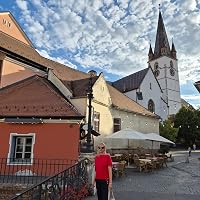
This is the Lord Byron poem that inspired the title of this book, and several of its ideas map beautifully onto Jančar's novel. Mainly, that love does not necessarily end because the feeling disappears. "And Love Itself" begins with an act of love. In Nazi-occupied Maribor, Sonja Belak approaches Ludwig Mischkolnig, a German SS officer she vaguely knew as a child, and asks him to intervene on behalf of her imprisoned boyfriend, Valentin Gorjan. This one decision gives birth to a story in which love and guilt become inseparable. The novel is split into three parts, each following one character: Ludwig, the Slovenian-born Nazi officer who has embraced Germanness with almost fanatical devotion and despises the Slovenian identity he associates with his own origins; Valentin, the geology professor turned partisan; and Sonja, a former medical student whose life has been interrupted by the occupation.
Ludwig is probably the most awful character, but at the same time, as much as I hated being in his head, the most psychologically interesting. His fanaticism is inseparable from his inferiority complex. It's fascinating how he has constructed an exaggerated German identity and now imagines himself as the saviour of his city from the supposedly inferior Slavs. He takes pleasure in his authority over Sonja and Valentin and even rationalizes the Nazi violence. His relationship with Sonja makes the imbalance of power very clear. Valentin is easier to sympathize with, but Jančar doesn't make him into a heroic resistance fighter, and that's one of the aspects I love about this novel, the complete absence of romanticization we tend to find in contemporary historical fiction. Valentin may be motivated by nationalism and fighting for freedom, but he's more often than not a fool. His transformation happens gradually. The young man who once exchanged poetry with Sonja becomes someone who can remain passive in the face of violence because war alters the boundaries of what he is willing to accept. Caught between these two men, Sonja becomes the emotional center of the novel, despite having the least control over what happens to her. Her initial action is motivated entirely by love, but almost every consequence of it is determined by men, and her act of salvation effectively destroys her own life.
And this is what makes the novel's treatment of love much darker than you'd guess from the title. Valentin repeatedly returns to the idea that love conquers everything. But does it? Love may survive history, but it cannot necessarily defeat it. Sonja loves Valentin enough to risk herself for him, but war transforms both of them so much that love cannot simply restore what existed before. As in Byron's poem, love remains, it was not destroyed by some conventional romantic trope, but something has been exhausted. "So, we'll go no more a roving/So late into the night…" The entire novel is populated by people who cannot return to the lives they had before the war, and the same is true about Maribor as a city. It's a very, very sad conclusion that there are circumstances in which even true love cannot undo what has happened. And this realism is why I appreciate this novel so much.
Jančar wrote this book in a way that makes everything feel oppressive. It's one of those novels where the setting - Maribor, in this instance - is almost a character. We see the city through its multiple transformations generated by history - streets and hotels receive German names, intellectuals disappear, prisons fill, buildings are bombed, and later the German signs vanish only to be replaced by communist propaganda. The city survives, but its identities are repeatedly overwritten by whoever happens to be in power. And life just... goes on. A bit frightening, no? How ordinary life can just continue alongside all of this. People go to work, drink, fall in love and try not to think about what happens inside Gestapo prisons. Jančar is very good at showing the coexistence between normality and horror. Nothing in this novel is romanticised, and the author doesn't limit violence to a single political system. The Nazis imprison, torture, deport and murder, but the partisan movement is far from being glorified. And after liberation, the people who were once Nazi supporters adapt very quickly to the new communist order. In fact, while the two regimes are not historically identical, the same mechanisms (obedience, ideology, fear, bureaucracy, suspicion) perpetuate through violence, and people prefer to look away instead of acting. We have mastered the art of hypocrisy. Or let's just call it survival, to sound less negative about it.
What I appreciated most is the novel's refusal to give its characters clean moral categories. It's not a story where we can see a clear separation between heroes, villains and victims. Sure, Ludwig is unquestionably responsible for terrible things, but even his story eventually intersects with compassion. Valentin fights against fascism but becomes involved in another violent political system. Partisans are both liberators and executioners. The recurring idea that "love conquers all" therefore becomes a distant dream. Love motivates extraordinary acts, but it doesn't exist outside history and can't automatically overcome history. I found the book bleak and morally much more complicated than I initially expected. It's not your usual historical fiction. The ideas I will carry with me are that history is something that enters private lives, and that liberation does not reset the world.