

What do you think?

Hinge
Finding joy and beauty in the face of suffering
Readers enter “a stunted world,” where landmarks—a river, a house, a woman’s own body—have become unrecognizable in a place as distorted and dangerous as any of the old tales poet Molly Spencer remasters in this elegant, mournful collection. In myth and memory, through familiar stories reimagined, she constructs poetry for anyone who has ever stumbled, unwillingly, into a wilderness. In these alluring poems, myth becomes part of the arsenal used to confront the flaws and failures of our fallible bodies. Shadowing the trajectory of an elegy, this poetry collection of lament, remembrance, and solace wrestles with how we come to terms with suffering while still finding joy, meaning, and beauty.
Spencer alternates between the clinical and the domestic, disorientation and reorientation, awe and awareness. With the onset of a painful chronic illness, the body and mental geography turn hostile and alien. In loss and grief, in physical and psychological landscapes, Spencer searches the relationship between a woman’s body and her house—places where she is both master and captive—and hunts for the meaning of suffering. Finally, with begrudging acceptance, we have a hypothesis for all there is suffering, there is mercy; they are not separate but are for and of one another.
Readers enter “a stunted world,” where landmarks—a river, a house, a woman’s own body—have become unrecognizable in a place as distorted and dangerous as any of the old tales poet Molly Spencer remasters in this elegant, mournful collection. In myth and memory, through familiar stories reimagined, she constructs poetry for anyone who has ever stumbled, unwillingly, into a wilderness. In these alluring poems, myth becomes part of the arsenal used to confront the flaws and failures of our fallible bodies. Shadowing the trajectory of an elegy, this poetry collection of lament, remembrance, and solace wrestles with how we come to terms with suffering while still finding joy, meaning, and beauty.
Spencer alternates between the clinical and the domestic, disorientation and reorientation, awe and awareness. With the onset of a painful chronic illness, the body and mental geography turn hostile and alien. In loss and grief, in physical and psychological landscapes, Spencer searches the relationship between a woman’s body and her house—places where she is both master and captive—and hunts for the meaning of suffering. Finally, with begrudging acceptance, we have a hypothesis for all there is suffering, there is mercy; they are not separate but are for and of one another.
- GenresPoetry
96 pages, Paperback
First published October 20, 2020
Ratings & Reviews
Friends & Following
Create a free account to discover what your friends think of this book!
Community Reviews
Displaying 1 - 6 of 6 reviews

April 27, 2021
I always compare poetry collections to music albums. Sometimes certain songs don’t quite measure up to other tracks. It’s the same with poetry. Some aren’t on the same level as others. But not here. Not with this vivid and beautiful gathering of poems by Molly Spencer. Each is a winner. Haunting, lyrical, and memorable. Do yourself a favor and add this book to your shelves.

November 22, 2020
Hinge is a beautiful collection of interior portraits of home, of body, and of relationships. The lush language of pain and life weaves vivid patterns in these portraits. Stunning.

November 11, 2020
Myth, legend, landscape...lush and razor-sharp lines...HINGE is exactly that: revealing and concealing, sometimes squeaky--moments in time.
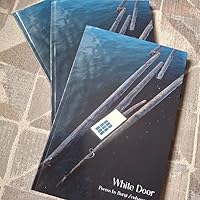
Aside from the arresting cover, HINGE by Molly Spencer (Crab Orchard Series in Poetry, 2020) is a gorgeous meditation of motherhood, the passage of time, a stunted world--in terms of all--land, home, marriage, and body. There's a great deal of tension and then well-earned release, the world and imagery rich in details and texture, about creation and recreation, told in a simply elegant, yet mournful voice. I have a wealth of images trapped in my mind from the words--and worlds--created within these pages. It's about space and homes and how they all tie together, but also seasons and cycles and interiority.
HINGE is the perfect read for the bleaker days of late fall, into winter, as we naturally fold within ourselves.
I was reminded, in part, of Laurie Patton's HOUSE CROSSING, but also the specifics of of space as depicted in Gaston Bachelard's THE POETICS OF SPACE meets classical mythology.
For all my reviews, including author interviews, please visit: www.leslielindsay.com|Always with a Book.
Special thanks to the author for this review copy. All thoughts are my own.
Aside from the arresting cover, HINGE by Molly Spencer (Crab Orchard Series in Poetry, 2020) is a gorgeous meditation of motherhood, the passage of time, a stunted world--in terms of all--land, home, marriage, and body. There's a great deal of tension and then well-earned release, the world and imagery rich in details and texture, about creation and recreation, told in a simply elegant, yet mournful voice. I have a wealth of images trapped in my mind from the words--and worlds--created within these pages. It's about space and homes and how they all tie together, but also seasons and cycles and interiority.
HINGE is the perfect read for the bleaker days of late fall, into winter, as we naturally fold within ourselves.
I was reminded, in part, of Laurie Patton's HOUSE CROSSING, but also the specifics of of space as depicted in Gaston Bachelard's THE POETICS OF SPACE meets classical mythology.
For all my reviews, including author interviews, please visit: www.leslielindsay.com|Always with a Book.
Special thanks to the author for this review copy. All thoughts are my own.
November 18, 2020
What an apt choice of title: the hinge where things turn: from autumn to winter, to spring and back, literally and metaphorically; or the hinge a mother feels she is or feels she ought to be; wellbeing on which everything hinges; and so much more. Words like delicate, perceptive, many-stranded, and richness come to mind when reading this collection. Though living with chronic illness gives rise to these poems it is by no means what dominates them. And by that I don't mean to say the author minimizes or euphemises illness in anyway. Not at all. She is opening doors for herself in these poems and so opens them for us too. Step through!

May 29, 2022
I will have to read this again, but in the first read what I see is an exploration of domesticity, motherhood, daughterhood, and chronic pain, with an interesting use of the house as a metaphor for the speaker’s life.
It was interesting to discover in the acknowledgments that Hinge was written before If the House. The two books together seem to make a narrative—the growing brittleness of the marriage here becoming the divorce and aftermath there.
It was interesting to discover in the acknowledgments that Hinge was written before If the House. The two books together seem to make a narrative—the growing brittleness of the marriage here becoming the divorce and aftermath there.

October 15, 2020
Brilliant. I often struggle with poetry. If there’s an objective way to tell if it’s great, I don’t know if it. So subjectively, I really connected with the vivid imagery and language.
Displaying 1 - 6 of 6 reviews