

What do you think?
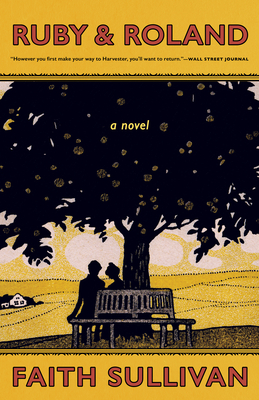
Ruby & Roland: A Novel
Not yet published
Expected 31 Jan 28From the author of Good Night, Mr. Wodehouse and The Cape Ann comes a new tale of resilient womanhood in Harvester, Minnesota.
Growing up in early twentieth-century Illinois, Ruby Drake is a happy child. But one winter’s night, her beloved parents perish in an accident―and suddenly Ruby finds herself penniless and nearly alone in the world. Her new path eventually takes her to Harvester, where she is lucky enough to find work on the welcoming Schoonover farm. Kind Emma, forward-thinking Henry, and their hired men―ambitious Dennis and reserved Jake―soon become a second family to the orphaned teenager.
At a historical moment when young women are expected to be focused on courtship and marriage, the industrious, bright Ruby searches for opportunities to expand her horizons at every step. Mastering her responsibilities on the farm. Learning to smoke cigarettes. Borrowing books from the local lending library, reading devotedly and mythology, romance, poetry. And falling in love with her married neighbor, “the most beautiful man―maybe in the world.” But when Ruby is asked to care for Roland’s wife in the wake of tragedy, she is torn between duty and passion, between what has been her lot and what could be.
Jane Eyre set in Faith Sullivan’s “reliably inviting world” ( Wall Street Journal ), Ruby & Roland is a story of relationships―friendship, romance, and the families we are born with and create―and of one woman’s journey of selfhood on the prairie.
Growing up in early twentieth-century Illinois, Ruby Drake is a happy child. But one winter’s night, her beloved parents perish in an accident―and suddenly Ruby finds herself penniless and nearly alone in the world. Her new path eventually takes her to Harvester, where she is lucky enough to find work on the welcoming Schoonover farm. Kind Emma, forward-thinking Henry, and their hired men―ambitious Dennis and reserved Jake―soon become a second family to the orphaned teenager.
At a historical moment when young women are expected to be focused on courtship and marriage, the industrious, bright Ruby searches for opportunities to expand her horizons at every step. Mastering her responsibilities on the farm. Learning to smoke cigarettes. Borrowing books from the local lending library, reading devotedly and mythology, romance, poetry. And falling in love with her married neighbor, “the most beautiful man―maybe in the world.” But when Ruby is asked to care for Roland’s wife in the wake of tragedy, she is torn between duty and passion, between what has been her lot and what could be.
Jane Eyre set in Faith Sullivan’s “reliably inviting world” ( Wall Street Journal ), Ruby & Roland is a story of relationships―friendship, romance, and the families we are born with and create―and of one woman’s journey of selfhood on the prairie.
256 pages, Paperback
Expected publication January 31, 2028
Ratings & Reviews
Friends & Following
Create a free account to discover what your friends think of this book!
Community Reviews
Displaying 1 - 30 of 98 reviews
September 14, 2022
This is a pleasant story of a woman living in the period around the time of World War I. The story moves at a very leisurely pace, but it is a short book and a fast read. Much of the story centers on her time on a farm in Southern Minnesota where “the weather is the boss.” Although the life depicted here is difficult, this is a strong woman who handles the workload and any tragedies without complaint, just like most of the other woman in this story.
I thought the story dealt with many human emotions: love and jealousy, joy and hopelessness, and loyalty, character and friendship. Although I must say if there were any male characters in this story I have forgotten them. Roland is just a “boy toy”, but one character, Dennis, did teach Ruby how to smoke a cigarette.
I especially liked Ruby’s philosophical comment after hearing of one such tragedy.
Very wise words Ruby.
I thought the story dealt with many human emotions: love and jealousy, joy and hopelessness, and loyalty, character and friendship. Although I must say if there were any male characters in this story I have forgotten them. Roland is just a “boy toy”, but one character, Dennis, did teach Ruby how to smoke a cigarette.
I especially liked Ruby’s philosophical comment after hearing of one such tragedy.
Once more I felt that emptiness of the universe, how—in some sense—we were each of us alone in it, piloting our own little bark, dependent upon our own strength and resources. Maybe not quite adrift. No, we had received wealth. Books, for instance, I owned everything in the books I had read and I could not be robbed of it. No legacy was greater.
Very wise words Ruby.

November 16, 2019
I generally like Faith Sullivan's books. Her women are independent and strong, and the Harvester, Minnesota setting is a gentle place to be. So when I saw she had a new novel out, I requested it from the library. I couldn't quite get with the story line in this one though. Ruby was a great character, Roland not so much, and I felt the ending was a little improbable.

September 30, 2019
This book has a decent feel for farm or small town life in the early 20th century Midwest, not completely earthy and realistic, but decent enough. I actually could have done without the Roland of the title. I felt Ruby's relationship with the other women in the book, including Roland's wife Dora were far better developed and Roland himself was at best two dimensional. It was hard to see why he was such a favorite of everyone. Dora seems pretty dumb not to have figured out what was up. My favorite part of the book was when Ruby returns to Southern Illinois and works and makes friends there. Her decision at the end of the book, her devotion to Roland and his life, was something I honestly wanted to smack her for. Jeez girl! Live your own life. I think I was suppose to believe that she loved life on the Minnesota farm, but that just did not come through forcefully enough for me to really believe it.

April 29, 2020
A 12 year old orphan makes her way in the world, becoming a hired girl on a Minnesota farm. Descriptions of farm life seem very authentic.

November 30, 2019
Faith Sullivan does not disappoint. This coming-of-age story of a young woman named Ruby takes us from her being orphaned to learning to work on a farm to passionate love and beyond. It is set in Harvester, Minnesota, the setting of many of Sullivan's novels, but we catch only a glimpse of the characters we've come to know in prior novels. I have seldom read a novel featuring a young girl growing into womanhood that rings so true emotionally for me. The prose is beautiful, for example:
"The late afternoon was as thick and golden as a jar of honey. Larks soared skyward in bursts of song while mourning doves, in the dense growth hugging the fences, cooed dolefully, recalling old losses."
"The late afternoon was as thick and golden as a jar of honey. Larks soared skyward in bursts of song while mourning doves, in the dense growth hugging the fences, cooed dolefully, recalling old losses."
December 19, 2019
I liked Ruby's story....except for the whole Roland romance thing. What they did was gross, and that Ruby never told Dora was also gross.
October 14, 2019
I loved it as I do all her books. Mrs. Stillman was even mentioned in it. I love when she brings in characters from other books.
February 28, 2021
Wonderful female characters! The men weren't badly drawn characters; they just weren't the focus of the book, with the exception of Roland, and even then, the book wasn't really about Roland but about Ruby and the other women. Farm life will never be something I enjoy, but I did enjoy reading about it and about Ruby's love of the land, the rewards of hard work, etc. I suspect there are a lot of women who love someone else's husband, but I doubt there are many that would do what Ruby did just to be close to the man they love.

June 29, 2021
This was a very well written, pleasant book. Nothing bad “lurking around the corner “ as many books seem to require. Just a simple life story told with warmth and depth. I enjoyed it very much!
September 6, 2026
Just the book for a lazy Saturday. A quiet story of a teenage orphan who finds a new family and community in southern Minnesota and a secret affair that could make her an outcast. I enjoy Faith Sullivan’s characters and the realistic details of Minnesota life.

January 17, 2022
I loved this book. It had so many things I could relate to growing up in this time. Never lived on a farm but I knew of the hard work that was done by everyone including the women. Times gone by. It made me smile, laugh and felt sad for Ruby and Roland’s relationship. I love the description of the man with big ears, looking like a tea pot when he turned his head to hear better. But the very best was “you are not stupid, you just don’t know very much”
November 24, 2019
Once again Faith has brought a character from Harvester to life! I do so enjoy her lovely simple people driven stories.

April 15, 2020
Ruby Drake's early years are like a fairy tale, a beautiful child, loved and nurtured by her parents, Serena and Denton, exposed to Shakespeare and rich language, an idyllic life. In 1910, when she is twelve, on a winter sleigh ride at night, her parents, "too happy and devoted to live," are killed; Ruby's great-aunt Bertha hastily ships her off from Beardsley, Illinois, to Salisbury, Iowa. Herr and Frau Oster, colorless compared to her parents, are kind German Lutherans who have lost their only son and teach Ruby many skills on their farm; Ruby comforts herself with a picture of her parents, a china tea set, her mother's books and a special painting and frequent conversations with her mother.
Three years later when the Osters inherit a small estate in Bavaria, arrangements are made for Ruby to live with a family in Harvester, Minnesota, a familiar setting for Faith Sullivan's novels.
Again, Ruby settles into her new life on a larger farm with more responsibilities than before, surrounded by the artifacts of her life with her parents. Emma and Henry Schoonover, who have also known loss, are dedicated to a work ethic that makes their farm profitable, expecting the same of those who work for them, treating them with dignity and respect.
The young couple who live on the adjacent farm have been the subject of Harvester gossip. Dora, pampered and used to being the center of attention, has married Roland, a man ambitious about farming, yearning to learn as much as he can, committed to working hard. She knows little about keeping house and has less interest in farm chores. When her new baby dies, Dora suffers a deep depression.
Fifteen-year-old Ruby is attracted to the very handsome Roland, and for a short time, she yearns for him in a typical adolescent way until one day, while Dora suffers, Ruby and Roland begin an affair.
The description of farm life, long hours and back-breaking chores, is balanced with descriptions of winter evenings playing rummy and Parcheesi, weekly trips into Harvester, the easy friendship between the Schoonovers and their hired help, and letters with her parents' friend, Barrett Cromwell. All the while, Ruby and Roland meet when they can. The Lusitania is sunk, and the inevitability of war haunts the people of Harvester, foreshadowing what is to come for Ruby and Roland and Dora.
While the very young Ruby might have wished for a fairy tale ending and Roland may have shown more fidelity to his suffering wife, the astute reader knew a different outcome was in store. The ever-so-kind Emma directs Ruby to assist Dora, first with cleaning and cooking, and then after Dora has an accident, with her recovery and housekeeping and farm skills. An unexpected friendship grows between the two young women, and when Dora's tutelage is complete, Ruby returns to Beardsley.
"You put one foot ahead of the other, little girl. And hope that someday they carry you to a high and peaceful place." Despite her broken heart, Ruby develops new friendships and new skills, becomes more independent, enjoys the companionship of Professor Bartlett Cromwell, and summoned to spend time with her great- aunt Bertha, comes to understand Bertha's complicated emotions, "a soul in torment," and her feelings about Ruby and her mother. As always, she is sustained by her love of literature, nurtured by her mother.
The plot continues to evolve with Ruby unexpectedly returning to Harvester, making choices that might surprise some readers and disappoint others. Strong women are developed throughout this novel, resilient, supported by friendship and perhaps, the comfort of the Harvester community in the heart of the mid-west. "We love whom we will."
Three years later when the Osters inherit a small estate in Bavaria, arrangements are made for Ruby to live with a family in Harvester, Minnesota, a familiar setting for Faith Sullivan's novels.
Again, Ruby settles into her new life on a larger farm with more responsibilities than before, surrounded by the artifacts of her life with her parents. Emma and Henry Schoonover, who have also known loss, are dedicated to a work ethic that makes their farm profitable, expecting the same of those who work for them, treating them with dignity and respect.
The young couple who live on the adjacent farm have been the subject of Harvester gossip. Dora, pampered and used to being the center of attention, has married Roland, a man ambitious about farming, yearning to learn as much as he can, committed to working hard. She knows little about keeping house and has less interest in farm chores. When her new baby dies, Dora suffers a deep depression.
Fifteen-year-old Ruby is attracted to the very handsome Roland, and for a short time, she yearns for him in a typical adolescent way until one day, while Dora suffers, Ruby and Roland begin an affair.
The description of farm life, long hours and back-breaking chores, is balanced with descriptions of winter evenings playing rummy and Parcheesi, weekly trips into Harvester, the easy friendship between the Schoonovers and their hired help, and letters with her parents' friend, Barrett Cromwell. All the while, Ruby and Roland meet when they can. The Lusitania is sunk, and the inevitability of war haunts the people of Harvester, foreshadowing what is to come for Ruby and Roland and Dora.
While the very young Ruby might have wished for a fairy tale ending and Roland may have shown more fidelity to his suffering wife, the astute reader knew a different outcome was in store. The ever-so-kind Emma directs Ruby to assist Dora, first with cleaning and cooking, and then after Dora has an accident, with her recovery and housekeeping and farm skills. An unexpected friendship grows between the two young women, and when Dora's tutelage is complete, Ruby returns to Beardsley.
"You put one foot ahead of the other, little girl. And hope that someday they carry you to a high and peaceful place." Despite her broken heart, Ruby develops new friendships and new skills, becomes more independent, enjoys the companionship of Professor Bartlett Cromwell, and summoned to spend time with her great- aunt Bertha, comes to understand Bertha's complicated emotions, "a soul in torment," and her feelings about Ruby and her mother. As always, she is sustained by her love of literature, nurtured by her mother.
The plot continues to evolve with Ruby unexpectedly returning to Harvester, making choices that might surprise some readers and disappoint others. Strong women are developed throughout this novel, resilient, supported by friendship and perhaps, the comfort of the Harvester community in the heart of the mid-west. "We love whom we will."

June 16, 2020
“Some things that are meant to be, can’t be.” A profound insight that would probably help people to be happier with their lives—and the perfect “thesis statement” for this novel. Centering around Ruby, she discovers the depth of this statement as it connects to her romances. If you like romances, historical fiction (set in pre WWI Harvester), stories of women who rise to challenges and adversity, or stories that delve the depths 9f an emotional experience, this is a great one. 4.5 stars, easy.
For those who have already visited Harvester, this one has just enough references to keep the world Faith Sullivan has created present as a framework. But if you have never been there, the references fit right in, so they are not obtrusive or confusing.
Poor orphaned Ruby finds herself a hired hand in a farm in Harvester, where she, unexpectedly, fits right in—unexpected because she is also a self-made scholar, deeply devoted to continuing her pursuit of culture to connect herself with her dead parents. But she finds farm life to be fulfilling and an education of its own. Emma, the real heroine of the story, teaches Ruby all she needs to know and introduces her to their neighbor, Roland. Instant attraction draws Ruby and Roland together, which would be cute, except that Roland is married to a woman who is struggling through deep depression. You can see where this is headed.
In an ironic twist of fate, Ruby must take care of Dora, Roland’s ailing wife. Through the differences in their personalities, Ruby is able to convince Dora to get up and do something—which changes the course of her marriage with Roland.
In light of this, Ruby must decide to face her past, which includes a young man with connections with her parents. Where Ruby and Roland were connected physically, Ruby and Professor Cromwell share emotional and intellectual connections. The plot begins to gently parallel, with relationships at the heart of the similarities. Seizing the precious moments one gets with those you love is better than many alternatives.
Through it all, Ruby remains poetic, thoughtful, and empathetic. However, I thought her too mature for her years, even for a mature character. And despite the maturity, she totally doesn’t see another budding relationship in her life. Is it intentional blindness, shielding her pain? But she is a delightful character driving a delicious plot through Harvester—always a wonderful place to visit.
For those who have already visited Harvester, this one has just enough references to keep the world Faith Sullivan has created present as a framework. But if you have never been there, the references fit right in, so they are not obtrusive or confusing.
Poor orphaned Ruby finds herself a hired hand in a farm in Harvester, where she, unexpectedly, fits right in—unexpected because she is also a self-made scholar, deeply devoted to continuing her pursuit of culture to connect herself with her dead parents. But she finds farm life to be fulfilling and an education of its own. Emma, the real heroine of the story, teaches Ruby all she needs to know and introduces her to their neighbor, Roland. Instant attraction draws Ruby and Roland together, which would be cute, except that Roland is married to a woman who is struggling through deep depression. You can see where this is headed.
In an ironic twist of fate, Ruby must take care of Dora, Roland’s ailing wife. Through the differences in their personalities, Ruby is able to convince Dora to get up and do something—which changes the course of her marriage with Roland.
In light of this, Ruby must decide to face her past, which includes a young man with connections with her parents. Where Ruby and Roland were connected physically, Ruby and Professor Cromwell share emotional and intellectual connections. The plot begins to gently parallel, with relationships at the heart of the similarities. Seizing the precious moments one gets with those you love is better than many alternatives.
Through it all, Ruby remains poetic, thoughtful, and empathetic. However, I thought her too mature for her years, even for a mature character. And despite the maturity, she totally doesn’t see another budding relationship in her life. Is it intentional blindness, shielding her pain? But she is a delightful character driving a delicious plot through Harvester—always a wonderful place to visit.

February 13, 2021
I read this because I like Faith Sullivan's other books. The writing style here didn't match the lyrical reflectiveness of the others, and it felt very choppy. I also did not feel like the book had any point--the best I can get is that we are given a character who's orphaned and she starts working on a farm. Nothing else packed much punch: We are repeatedly reminded about Ruby's love with Roland, and her thoughts about her parents, but I didn't feel any meaningful connection or changed behavior.
Reading other reviews I think I was supposed to take away Ruby's resilience. But to me, her strength feels more like pining for a man she knew from the start she should get over, so I don't feel impressed. In fact, she actually does cheat with Roland, knowing he has a wife, and additionally, she never tells his wife, with whom she develops a very close relationship, so I really don't think highly of Ruby. Many of the characters feel underdeveloped: Ruby is obsessed with Roland for no reason we are told, and her enjoyment of her mother's books feels thrown in as a hobby without impact on her life. Roland is similarly obsessed with Ruby for reasons I can only detect being that he is disappointed his wife lost their baby. Between the lines, I can see how much Roland wants his farm to succeed, but it's covered up so much by his curiously long-lasting "love" for Ruby. Professor Cromwell also is obsessed with Ruby, keeping up correspondence with this girl who moves away who is 10 years younger than him whom he only knew as his friends' kid. It's unclear why he bothers.
What stands out about this book is the farmlife. The book would have been better if it'd been titled "Ruby & the Farm" or "Ruby & Dora" (and remove all the unconvincing love plots). Several scenes depict their work on the farm, and Ruby teaching town-girl Dora about farmlife to rekindle Dora's lost and depressed soul. The author lovingly depicts these details, which helps me to realize the strength, endurance, and beauty of living on a farm. The town of Harvester, which Sullivan's other novels also take place in, is what I came here to read about, so all the time she spends in Illinois chasing-not-chasing after the ghost of her mother editably doesn't seem as significant. The book may have had potential, highlighting themes of friendship and loss, but I think it needed a lot of plot revisions to create a stronger purpose.
Reading other reviews I think I was supposed to take away Ruby's resilience. But to me, her strength feels more like pining for a man she knew from the start she should get over, so I don't feel impressed. In fact, she actually does cheat with Roland, knowing he has a wife, and additionally, she never tells his wife, with whom she develops a very close relationship, so I really don't think highly of Ruby. Many of the characters feel underdeveloped: Ruby is obsessed with Roland for no reason we are told, and her enjoyment of her mother's books feels thrown in as a hobby without impact on her life. Roland is similarly obsessed with Ruby for reasons I can only detect being that he is disappointed his wife lost their baby. Between the lines, I can see how much Roland wants his farm to succeed, but it's covered up so much by his curiously long-lasting "love" for Ruby. Professor Cromwell also is obsessed with Ruby, keeping up correspondence with this girl who moves away who is 10 years younger than him whom he only knew as his friends' kid. It's unclear why he bothers.
What stands out about this book is the farmlife. The book would have been better if it'd been titled "Ruby & the Farm" or "Ruby & Dora" (and remove all the unconvincing love plots). Several scenes depict their work on the farm, and Ruby teaching town-girl Dora about farmlife to rekindle Dora's lost and depressed soul. The author lovingly depicts these details, which helps me to realize the strength, endurance, and beauty of living on a farm. The town of Harvester, which Sullivan's other novels also take place in, is what I came here to read about, so all the time she spends in Illinois chasing-not-chasing after the ghost of her mother editably doesn't seem as significant. The book may have had potential, highlighting themes of friendship and loss, but I think it needed a lot of plot revisions to create a stronger purpose.
March 2, 2023
God, this was a tough one to finish. Never judge a book by its cover. I picked it off the shelf at the library because my baby was running down the aisles, throwing books on the floor and I couldn’t focus. It had nice cover art and said something about a farm. Good enough for me! Nah. Definitely not.
It felt like some middle-aged woman’s weird sexual fantasies. The whole story revolves around this girl Ruby who is sleeping with a married man. For one, there’s NO plot development up to that. She just thinks he’s beautiful and they start going at it. While his wife is at home, unable to pull herself out of a crippling depression since her baby died a few months earlier. As someone who has a baby, allow me to say- f*ck you, Ruby.
And then she becomes SUPER CLOSE with his wife!!! And never gets caught! Well, some people do figure it out and they’re just totally cool with it. Again, a middle-aged woman’s fantasy. Because that’s ridiculously unrealistic. And if it isn’t- it’s not a world I want to live in. It’s impossible to like Ruby with the selfish, immature thing she’s doing, so I wanted to see her ruined. But, nope!
I could go on. The storyline is disjointed, spans way too long of a period for the plot (if there is a plot, at all), and there really aren’t many like-able characters. The most like-able one is the poor wife and even then it’s all pretty flat. I’m just glad it’s done. I don’t usually feel I waste time reading anything, but this was a waste. I gave it a second star because I liked some of the descriptive language.
It felt like some middle-aged woman’s weird sexual fantasies. The whole story revolves around this girl Ruby who is sleeping with a married man. For one, there’s NO plot development up to that. She just thinks he’s beautiful and they start going at it. While his wife is at home, unable to pull herself out of a crippling depression since her baby died a few months earlier. As someone who has a baby, allow me to say- f*ck you, Ruby.
And then she becomes SUPER CLOSE with his wife!!! And never gets caught! Well, some people do figure it out and they’re just totally cool with it. Again, a middle-aged woman’s fantasy. Because that’s ridiculously unrealistic. And if it isn’t- it’s not a world I want to live in. It’s impossible to like Ruby with the selfish, immature thing she’s doing, so I wanted to see her ruined. But, nope!
I could go on. The storyline is disjointed, spans way too long of a period for the plot (if there is a plot, at all), and there really aren’t many like-able characters. The most like-able one is the poor wife and even then it’s all pretty flat. I’m just glad it’s done. I don’t usually feel I waste time reading anything, but this was a waste. I gave it a second star because I liked some of the descriptive language.
This entire review has been hidden because of spoilers.

February 16, 2021
I keep going back-and-forth between 2 and 3 stars. Ultimately, I enjoyed the book. It was an easy read that I finished quickly and did find myself liking. I was a fan of Ruby, but the whole concept of Roland was strange. He literally did not have any part in the book except for a few sexual encounters and acting as a pseudo-son for Emma and Henry (even though we never even really saw them together). I think a more fitting title would just be "Ruby" or even "Ruby & Dora," since I found their relationship far more interesting than hers with Roland. The ending wasn't what I expected and I can't decide if it's good or bad. I had expected her to marry the professor after Roland's death (which was a very cliche death when it comes to most farm stories), but instead she moved in with Dora. I thought this was a really cute idea, but I feel like she could have told Dora before she moved in and then watch them grow and accept each other. Maybe bond over the fact that they both lost someone they loved.
However, the writing was enjoyable and I found myself content reading it. Nothing I would recommend, but didn't feel like a waste of time. I loved the depictions of farm life/gardening and I truly believed that Ruby enjoyed it. I found myself rolling my eyes when she would refer to her parents by their first names, though. Sure, your parents can be young and cool, but you can't call them Mom and Dad? I just thought it was an odd detail, but it may be something some families do that I am unaware of.
However, the writing was enjoyable and I found myself content reading it. Nothing I would recommend, but didn't feel like a waste of time. I loved the depictions of farm life/gardening and I truly believed that Ruby enjoyed it. I found myself rolling my eyes when she would refer to her parents by their first names, though. Sure, your parents can be young and cool, but you can't call them Mom and Dad? I just thought it was an odd detail, but it may be something some families do that I am unaware of.
This entire review has been hidden because of spoilers.
May 10, 2021
Loved the story of Ruby who stayed positive when her parent perished in an accident and made the best of life with foster families when her aunt would not take her in. Her new path eventually takes her to Harvester, where she is lucky enough to find work on the welcoming Schoonover farm. Kind Emma, forward-thinking Henry, and their hired men--ambitious Dennis and reserved Jake--soon become a second family to the orphaned teenager.
At a historical moment when young women are expected to be focused on courtship and marriage, the industrious, bright Ruby searches for opportunities to expand her horizons at every step. Mastering her responsibilities on the farm. Learning to smoke cigarettes. Borrowing books from the local lending library, reading devotedly and expansively: mythology, romance, poetry. And falling in love with her married neighbor, Roland: "the most beautiful man--maybe in the world." But when Ruby is asked to care for Roland's wife in the wake of tragedy, she is torn between duty and passion, between what has been her lot and what could be.
At a historical moment when young women are expected to be focused on courtship and marriage, the industrious, bright Ruby searches for opportunities to expand her horizons at every step. Mastering her responsibilities on the farm. Learning to smoke cigarettes. Borrowing books from the local lending library, reading devotedly and expansively: mythology, romance, poetry. And falling in love with her married neighbor, Roland: "the most beautiful man--maybe in the world." But when Ruby is asked to care for Roland's wife in the wake of tragedy, she is torn between duty and passion, between what has been her lot and what could be.
January 26, 2023
The story follows the life of Azalea "Knot" Centre from 1941 through 1987. Knot lives in a small African American community in NC populated with colorful characters. She lives life as she pleases and is happiest when she's drinking her moonshine.
I don't check reader reviews until after I'm done a book. I noted a number of comments indicating very little happened and most of the people were not likeable. I found it the opposite. Yes, there was very little plot. It was a day/week/month/years in the life of Knot with her past decisions forever clouding her present and future. Great dialogue and supporting characters, with secrets of their own, who loved and supported the flawed Knot.
2023(5)
I don't check reader reviews until after I'm done a book. I noted a number of comments indicating very little happened and most of the people were not likeable. I found it the opposite. Yes, there was very little plot. It was a day/week/month/years in the life of Knot with her past decisions forever clouding her present and future. Great dialogue and supporting characters, with secrets of their own, who loved and supported the flawed Knot.
2023(5)
October 2, 2019
It's difficult to describe why I enjoyed this book so much without giving away plot turns that readers will want to discover for themselves, but I can say that
1. The description of farm life seems very authentic (though I wasn't around quite yet in 1900).
2. It's a tribute, and perhaps a guide, to resilience.
3. So many books/movies/TV shows feature characters who might be interesting and entertaining, but aren't people one would ever want to know in real life. This book is full of the opposite--believable, hardworking, kind people.
I loved The Cape Ann, which Sullivan published in 1988. Thirty years later, she's written another that's even better.
1. The description of farm life seems very authentic (though I wasn't around quite yet in 1900).
2. It's a tribute, and perhaps a guide, to resilience.
3. So many books/movies/TV shows feature characters who might be interesting and entertaining, but aren't people one would ever want to know in real life. This book is full of the opposite--believable, hardworking, kind people.
I loved The Cape Ann, which Sullivan published in 1988. Thirty years later, she's written another that's even better.

February 18, 2020
Ok, first of all I would like to say that I appreciate reading a book with an optimistic and resilient main character. I liked that about Ruby. But it just didn't work for me. It's a short book and I didn't feel that Ruby really changed or matured at all throughout the book. And the ending just made me roll my eyes. She ends up living with the widow of her lover but never tells her she's the one he was cheating with? Seriously? Just no. And she never moves on from him. Despite the fact that basically they made googley eyes at each other and managed to have sex a few times. That's all. She never grows out it her entire life? Really? I just have problems.
This entire review has been hidden because of spoilers.

February 14, 2023
A bittersweet love story, that reminds me of a Nickolas Sparks novel. In the early 1900's, Ruby loved a happy life with her parents, until they died in an accident. She went to live with a German couple, than another couple who lived on a farm. Ruby learned how to do chores on a farm and grew to love it. Across the street, lived a couple whose wife was severely depressed and a husband who didn't know how to help her. Roland and Ruby love each other despite the fact he is married. Ruby makes some difficult decisions. The plot moves quickly and the characters are realistic. I enjoyed it.

January 26, 2020
I wanted so badly to like this book, and I thought there was a pretty good chance that I would. An elderly Mid-Westerner writing romance with a seemingly independent and endearing main character; an local, independent, and non-profit publishing house. What's not to like? But I found the romance at the center of the story to be wholly unbelievable and uninteresting. I also found the main character not all that likable. Finally, none of the characters felt fully developed and were therefore lacking.

February 1, 2020
This felt so comfortable. It it also held my interest. Southern Minnesota farm life in the era of WWII is the setting for these fine characters to develop. I’m unsure if there was a particular message, but I enjoyed palling around with Ruby as she figured out who she was as an orphaned young girl, a hired girl, a farmer, a girlfriend, and an intellect in her own right. Even if some of her decision-making led her astray, her heart, she dug out a life in the unlikeliest of circumstances. I enjoyed this!

February 24, 2020
Faith Sullivan presents wonderful female characters. Their independence and interdependence paints a soft picture of real friendship. Her characters believe in hard work and are happier when they are working for something. I appreciated the farming/nature setting of this story but most of all, I wanted to know the women — every one of them — and invite them for tea. And I missed them when the book ended.
The romance in the novel was steeped more in memory than on a living romance — perhaps an easier way to live an independent life. I liked the story.
The romance in the novel was steeped more in memory than on a living romance — perhaps an easier way to live an independent life. I liked the story.
March 21, 2020
"Ruby & Roland" is a story of relationships―friendship, romance, and the families we are born with and ultimately create―and of one woman's journey of selflessness on the prairie fduring WWI-WWII. A fascinating tale of one woman's resilience in Harvester, Minnesota. A very pleasant book like her other books I've read. Her writing reminds me of Sinclair Lewis in "Main Street." Yet, another story of a resilient woman, Carol Kennicott, who had to make her own way in a small town as well, despite her husband being the town doctor. I recommend this book, 3 stars.

October 5, 2020
Returning to harvester, MN again was delightful. The best part of the book was the relationships between the women. Ruby was a young teen star struck and in love with the neighbor married to a needy, mostly invalid wife. Finally coming to her senses she leaves harvester and with the professors help find work and new friends and family in her original hometown. But alas, at the first opportunity she runs back to harvester and things wrap up tidily but not quite believable. Good reading except for the conclusion

January 21, 2023
I would give this book a 4 or 5 for writing , I have read several Faith Sullivan novels and find her to be a truly gifted writer . I can picture and feel things just as she describes them. I adored many of the characters in this novel but the story line was so messed up! I don’t want to give anything away but I just found the main character Ruby to be despicable. I would only give the story 3.5 stars as I was mad most of the book at Ruby . However I found the book to be entertaining and enjoyed it for most part.
June 13, 2024
I have read several books by this author they have all been very good. They all take place in Minnesota and they all have strong women characters
The story takes place around the time of WWI. A young girl age around 12 or 13 she becomes orphaned and in those days orphaned kids were sent off to farm families that agreed to take them figuring the kids are extra hands to help. So this girl ‘Ruby’ was sent to live with a German couple she did not know until they went back to Germany. Ruby is then sent on to another farm in Minnesota to help a very kind couple (Emma & Henry) that agreed to take her to provide help on the farm. From both of these experiences Ruby never complained she just did what was necessary. In this area all the farmers worked together and were very close socially because they were away from town and that is what farmers did.
When Ruby met the man across the road she was smitten (Roland) he was a youngish guy with a youngish wife (Dora)that had a baby die so she also lost her will. In the meantime Ruby & Roland secretly fell in love with each other. Emma feels bad for Roland because his wife has checked out of life and just stays bedridden so she asks Ruby to go take care of Dora
for Roland’s sake, this is a difficult task for Ruby given her relationship with Roland (a secret affair).
Ruby does such a good job, Dora becomes the wife Roland needed. This is to hard for Ruby so she creates a lan to leave and go back her hometown to create a new life. Emma secretly knows why Ruby is going, Emma hates to see her go because by now they really are family. Ruby settles in with help of a family friend and inherits a house and money from a great aunt that was a mean nasty woman. Ruby misses the farm and all the folks that became her family. Ruby learns of a farm tragedy and events unfold and she has to make some decisions for her future happiness.
I don’t want to spoil the end so from here I encourage everyone to check this book out, Faith Sullivan is a master at her Down home Minnesota tales.
February 5, 2026
a book where nobody faces any consequences and conflict barely exists on the periphery; the characters are shallowly drawn and the our sympathies lie basically nowhere. it draws on cliches of classic literature including orphans and forbidden romances but it lacks the gravity of the books it emulates; every chance it has to pivot toward something interesting it runs away from and moves instead toward an something duller, something that takes no aesthetic or moral or narrative risk. this is a flat line of a book.
Displaying 1 - 30 of 98 reviews