

What do you think?

The Butcher of Paris #1-5
The Butcher of Paris
In 1944, as Swastikas flew over Paris, one of the most notorious and prolific serial killers in history turned the occupied city into his personal hunting ground.
Under the guise of opportunity and freedom, a killer preys on those desperate to flee . . . until a gruesome discovery alerts the police. In a city on the brink of war, the hunt for a serial killer begins as a French detective races to catch the villain before the Nazis beat him to it.
Written by Stephanie Phillips (Descendent, Devil Within) with art by Dean Kotz (Mars Attacks), The Butcher of Paris is a historical, true crime thriller about a killer wanted by both the Nazis and allied forces for the death of nearly two-hundred victims.
Collects Butcher of Paris #1-#5.
Under the guise of opportunity and freedom, a killer preys on those desperate to flee . . . until a gruesome discovery alerts the police. In a city on the brink of war, the hunt for a serial killer begins as a French detective races to catch the villain before the Nazis beat him to it.
Written by Stephanie Phillips (Descendent, Devil Within) with art by Dean Kotz (Mars Attacks), The Butcher of Paris is a historical, true crime thriller about a killer wanted by both the Nazis and allied forces for the death of nearly two-hundred victims.
Collects Butcher of Paris #1-#5.
112 pages, Paperback
First published December 29, 2020
Ratings & Reviews
Friends & Following
Create a free account to discover what your friends think of this book!
Community Reviews
Displaying 1 - 30 of 71 reviews

April 24, 2024
For a comic about a serial killer operating in Nazi-occupied Paris, this was shockingly dull.
It's a true story, and maybe Phillips didn't want to sensationalize it, but it could have used several more issues to flesh out what happened.
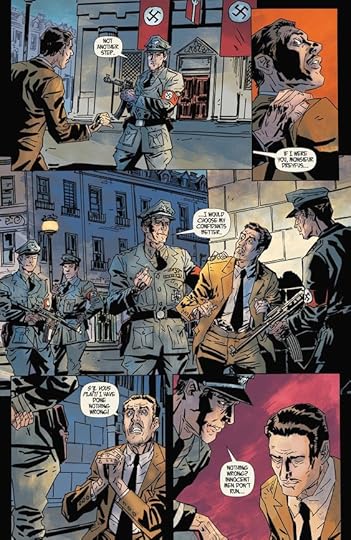
I mean, since it was a true story, you already know the guy got caught, but even so, there should have been some feeling of suspense to the story while I was reading. Worse, it seemed to flip around from Nazi characters to French police to victims without much finesse.
I don't even know why some of the characters (especially the Nazis) were even in this.
I get it, in that Germany had taken France, but the conversations of Nazi officers at a party really had little to no impact on what was happening with the serial killer storyline.
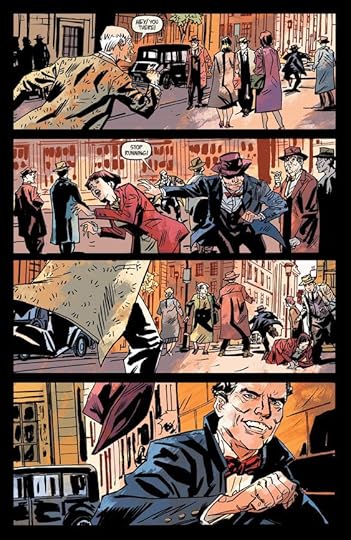
The ending courtroom scene wasn't even all that good.
It may have even been word-for-word what happened, but it was just badly told. Same thing with his execution. I think that could have been great, but it fell flat.
You know what this reminded me of?
One of those books geared toward 12 year olds who are just learning about history that's trying to make it seem interesting without going into too much detail.
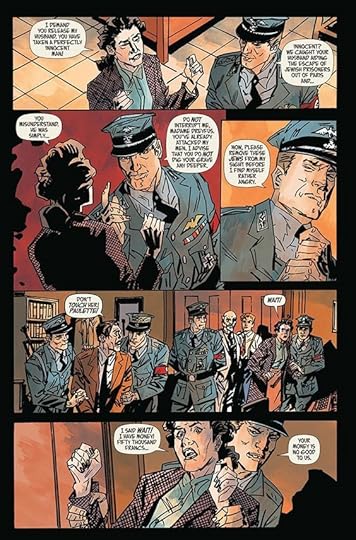
The art didn't do this thing any favors, either. There was nothing here visually that didn't make me just wish I could close my eyes and hope it would look different when I opened them again.
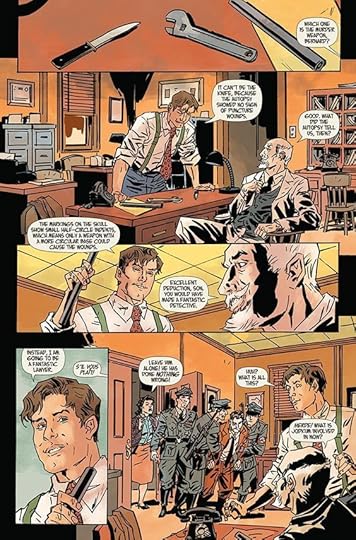
It's an interesting true crime story about a serial killer who pretended to work with the resistance and used people's desperation and panic as a way to feed his sick desire to kill.
But at the end of the day, I'd like someone else to take a crack at telling this one.
It's a true story, and maybe Phillips didn't want to sensationalize it, but it could have used several more issues to flesh out what happened.
I mean, since it was a true story, you already know the guy got caught, but even so, there should have been some feeling of suspense to the story while I was reading. Worse, it seemed to flip around from Nazi characters to French police to victims without much finesse.
I don't even know why some of the characters (especially the Nazis) were even in this.
I get it, in that Germany had taken France, but the conversations of Nazi officers at a party really had little to no impact on what was happening with the serial killer storyline.
The ending courtroom scene wasn't even all that good.
It may have even been word-for-word what happened, but it was just badly told. Same thing with his execution. I think that could have been great, but it fell flat.
You know what this reminded me of?
One of those books geared toward 12 year olds who are just learning about history that's trying to make it seem interesting without going into too much detail.
The art didn't do this thing any favors, either. There was nothing here visually that didn't make me just wish I could close my eyes and hope it would look different when I opened them again.
It's an interesting true crime story about a serial killer who pretended to work with the resistance and used people's desperation and panic as a way to feed his sick desire to kill.
But at the end of the day, I'd like someone else to take a crack at telling this one.

December 22, 2020
In 1944 Paris, a serial killer was luring Jews to their doom. He posed as a member of the resistance helping Jews flee the Nazis while in reality he was torturing and dismembering them. It's a fascinating true crime case. The story leaves out too many details though. The art is spotty and the coloring awful. I'd love to see Rick Geary turn this into one of his True Crime comics.
Received a review copy from Dark Horse and Edelweiss. All thoughts are my own and in no way influenced by the aforementioned.
Received a review copy from Dark Horse and Edelweiss. All thoughts are my own and in no way influenced by the aforementioned.

June 22, 2021
I have seen this volume mentioned in conjunction with comics awards, or thought so, so picked it up, but was not a fan of it visually, for the quality of the art, for the coloring. This is a pretty interesting piece of history, I guess, that in Paris 1944 a serial killer, pretending to be operating on behalf of the resistance, lured as many as 200 Jews into his secret murdering quarters. This is real life horror, as was the killing of Jews and anyone else the Nazis didn't find equal to their "Master Race," but once you know it, do you need to see it?
The heart of this story is torture porn, and we see too much of it, like making a comic of Jeffrey Dahmer's Milwaukee apartment. Once you know that this elaborate operation existed, you can't really unsee it anyway, so what do we learn from it, finally, that can make us better humans? That in the midst of 60+ million dead in a short period of history, that a serial killer was doubling down on the moral outrage? I wanted more history, and less psychopathy.
The heart of this story is torture porn, and we see too much of it, like making a comic of Jeffrey Dahmer's Milwaukee apartment. Once you know that this elaborate operation existed, you can't really unsee it anyway, so what do we learn from it, finally, that can make us better humans? That in the midst of 60+ million dead in a short period of history, that a serial killer was doubling down on the moral outrage? I wanted more history, and less psychopathy.

June 7, 2020
3.25 stars. I had read issues 1-4 as they were coming out but then Diamond shut down. So it had been months since I read this stuff as I got issue 5. So I decided to re-read it all at once. It started out really good, intriguing as hell. But toward the end it started to skip stuff and speed to an ending. Like I would have like to have seen how Jodkum had been captured. I would have liked to have seen what happened to Detective Massu after he was falsely accused of helping the SS. Then the ending was a bit of a let down. Good art, good set up just not the best ending. See my single issue reviews for more.

February 24, 2023
The Butcher of Paris collects issues 1-5 of the Dark Horse Comics series written by Stephanie Phillips and art by Dean Kotz.
The true story of one of history’s most prolific serial killers Marcel Petoit. During World War II, Frenchman Petoit used the guise helping Jewish citizens sneak out out Nazi-occupied France to target and ensnare his victims. With a known 26 victims, it is believed he carried out anywhere between 66-200 murders in only 6 years. The book only covers a small part of the overall story starting when a fire at Petoit’s apartment leads to the discovery of the partial remains of over 20 victims and the search and eventual trial of the Monster Petoit.
This book could have been so much better but skips over a lot of history and events that are alluded to in the introduction. Because the creators didn’t want to celebrate the serial killer and tried to tell a story of those around the case, it doesn’t have as much impact. To truly understand the horrors that this man committed, we needed to see more of what he did. I completely understand the creators’ intentions, but I think it actually understated how truly evil he was. The most effective part of the book is the very end with the trial of Petoit that showcased how warped his viewpoints were. It’s still a very interesting read of a historical figure that isn’t widely known, even in today’s cultural obsession with serial killers and true crime.
The true story of one of history’s most prolific serial killers Marcel Petoit. During World War II, Frenchman Petoit used the guise helping Jewish citizens sneak out out Nazi-occupied France to target and ensnare his victims. With a known 26 victims, it is believed he carried out anywhere between 66-200 murders in only 6 years. The book only covers a small part of the overall story starting when a fire at Petoit’s apartment leads to the discovery of the partial remains of over 20 victims and the search and eventual trial of the Monster Petoit.
This book could have been so much better but skips over a lot of history and events that are alluded to in the introduction. Because the creators didn’t want to celebrate the serial killer and tried to tell a story of those around the case, it doesn’t have as much impact. To truly understand the horrors that this man committed, we needed to see more of what he did. I completely understand the creators’ intentions, but I think it actually understated how truly evil he was. The most effective part of the book is the very end with the trial of Petoit that showcased how warped his viewpoints were. It’s still a very interesting read of a historical figure that isn’t widely known, even in today’s cultural obsession with serial killers and true crime.

May 31, 2021
(3,8 of 5 for decent history-crime story)
In the time of the Nazi occupation of Paris, there was a man who took the advantage of the situation to fulfil his homicidal desires.
Well, I like history in comics but it's a hard bargain. The author needs to keep the story interesting and "working", but also keep it as close to faithfulness as possible.
Butcher of Paris feels right. Balanced - researched, descriptive but still working as a story and not lost or boring. It has its flaws, but the art is good, the story works and you got some new knowledge from history.
In the time of the Nazi occupation of Paris, there was a man who took the advantage of the situation to fulfil his homicidal desires.
Well, I like history in comics but it's a hard bargain. The author needs to keep the story interesting and "working", but also keep it as close to faithfulness as possible.
Butcher of Paris feels right. Balanced - researched, descriptive but still working as a story and not lost or boring. It has its flaws, but the art is good, the story works and you got some new knowledge from history.

June 1, 2020
Read the whole series in one night..so apologies for not writing detailed descriptions of each volume..the series starts of rather well with the Gestapo apprehending a French Jew (and possible member of the resitance?) and using him to try and uncover a resistance cell..what happens next changes the entire plot as we are introduced to Paris' version of Jack the Ripper and a tireless detective seeks to combat interefernce of the Gestapo and the ingenuity of the criminal to solve the case and redeem himself..there are social undertones as well..the prevention of the utter destruction of Paris in contradiction to Hitler's orders...the grey area in which 'Patriots' and 'Quislings' were uncovered in the aftermath of the liberation..and the final judgement itself..the ending felt a bit weak condiering the build-up..but a good read nonetheless

January 29, 2021
Disappointingly dry for a based-in-truth serial-killer with Nazis story.

July 9, 2021
"To Catch a Serial Killer" in Nazi-occupied Paris? Yes, please. This true-crime/historical fiction gem is supremely fascinating, if rarely surprising. Is the killer caught? Of course. Are the Nazis jerks and the Parisians unsung heroes? Of course. Is it still rollicking fun to hate the smug Nazis and cheer for the local detectives as they both track down a vile murderer? YES.
Excellent art also kept me more than invested in The Butcher of Paris. If you like crime, comics, or both, this is a very worthwhile read.
Excellent art also kept me more than invested in The Butcher of Paris. If you like crime, comics, or both, this is a very worthwhile read.

September 29, 2021
Who would have ever thought someone would be killing even more people during this time in history? Very interesting read.

June 19, 2021
First get a box, Second toss in Paris WWII Nazis A French detective teaching his lawyer son, and a serial killer preying on Jews attempting to flee, shake violently, add a dash of acceptable if not particularly inspired art, and you have this. Let us all greet it with the Nom de Plume - well it has potential - and allow the condemnation to linger as we move on to more glorious artistic accomplishments.

July 19, 2022
It was short, and it jumped around. I thought we would get to know more about the killer but focused on the detective and son duo instead and ended in a rush. I did enjoy what it was though and the art was nice.
August 18, 2020
4/5 (Blood and gore rating: 6-7.5/10, depending on the issue)
“Based on a True Story”
I’M ALWAYS A SLUT FOR FICTION BASED ON A TRUE STORY!
I don’t even think I read the blurb on the Preview page before having my comic shop put this on my pull list. The cover and title alone ticked all my favorite boxes so I was sold from the beginning.
Not going to spoil the plot, but this would have made an awesome Criminal Minds episode. The art/design fits well with the setting, heavier lines and bolder, blockier images really put you in the mood of WWII. The story itself is great. I didn’t feel lost at any point with my less-than-stellar knowledge of WWII (thanks American public education system! /s), which I was afraid would happen once I got into the story.
The ending though. Man, did that feel rushed. I actually flipped back through part of issue five thinking that maybe two pages had stuck together. It wasn’t exactly BAD, more like there should have been a sixth issue. Several plot threads that I really would have liked to see explored more before being wrapped up. (I would pay SO MUCH MONEY to have one issue that’s just the killer recounting his crimes with a disgusting level of detail and glee.) The psychology behind the killer felt like it was just forgotten about by the end; why did he do it? What did he get out of the killings? A lot of questions I still have, but now I want to read more about the actual event.
Definitely a good one-sitting read, especially if you like historical events.
“Based on a True Story”
I’M ALWAYS A SLUT FOR FICTION BASED ON A TRUE STORY!
I don’t even think I read the blurb on the Preview page before having my comic shop put this on my pull list. The cover and title alone ticked all my favorite boxes so I was sold from the beginning.
Not going to spoil the plot, but this would have made an awesome Criminal Minds episode. The art/design fits well with the setting, heavier lines and bolder, blockier images really put you in the mood of WWII. The story itself is great. I didn’t feel lost at any point with my less-than-stellar knowledge of WWII (thanks American public education system! /s), which I was afraid would happen once I got into the story.
The ending though. Man, did that feel rushed. I actually flipped back through part of issue five thinking that maybe two pages had stuck together. It wasn’t exactly BAD, more like there should have been a sixth issue. Several plot threads that I really would have liked to see explored more before being wrapped up. (I would pay SO MUCH MONEY to have one issue that’s just the killer recounting his crimes with a disgusting level of detail and glee.) The psychology behind the killer felt like it was just forgotten about by the end; why did he do it? What did he get out of the killings? A lot of questions I still have, but now I want to read more about the actual event.
Definitely a good one-sitting read, especially if you like historical events.

August 20, 2021
The premise of the story is more exciting than the execution. It's more or less a generic crime thriller, but set in Nazi-occupied Paris. Some good art that rarely gets a chance to be truly gruesome or take any dynamic approaches to layouts. It's good that the book doesn't glorify the murders of very real and innocent people, but there isn't any real plot other than a bunch of officers and detectives standing around wondering how they're going to catch the killer. And eventually they will! The end.

August 30, 2021
I'd never heard of this guy, but it makes sense that a serial killer could flourish in the midst of the war. Like the chaos and churn in Chicago for The Devil in White City, it was probably easy to find victims in Paris who would be hard to trace.
The art was good, and it was an interesting story, but the dialogue felt a little stiff and there wasn't much tension in the search for the killer.
The art was good, and it was an interesting story, but the dialogue felt a little stiff and there wasn't much tension in the search for the killer.


April 25, 2021
Crazy case, but the book doesn't convey as much horror or drama as you might expect.

August 1, 2022
The awful crimes of Dr. Satan were buried under the carnage of WWII but Ms. Phillips and co. do an amazing job of bringing the terrifying facts to the surface. Vive la Guillotine!

November 8, 2023
the foreword was the most interesting part of the comic

August 30, 2021
The Butcher of Paris is an historical-fiction account of the infamous serial killer Marcel Petiot.
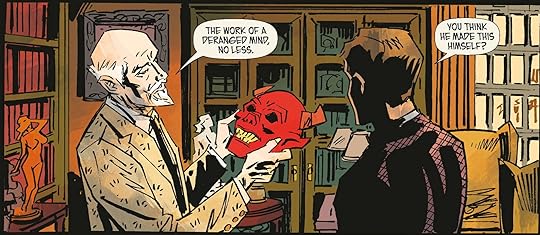
This book follows the French police, The Gestapo, Jewish citizens trying to escape Paris and the activities of Marcel Petiot himself.
The tension and fear of the Jewish citizens is clearly illustrated and demonstrated in their encounters with the Gestapo and Petiot himself. Marcel Petiot posed as a member of the resistance and offered to help Jews escape from Paris. Instead he stole from and murdered them. He was convicted of 2 counts of murder but it is estimated he had between 60 and 200 victims.
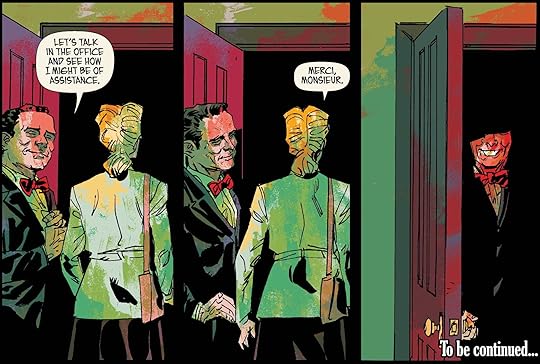
While there are scenes of a gruesome and horrific nature in this work the story mostly revolves around the detectives investigations of the murder and the Gestapo’s attempts to uncover the murderers smuggling operation for getting Jews out of France. This was actually a front to allow the killer opportunity to find victims, take their money and murder them. While definitely not for younger readers this is not a wall-to-wall bloodbath. That said what violence there is is sometimes very graphic and intense and could be disturbing to some readers.
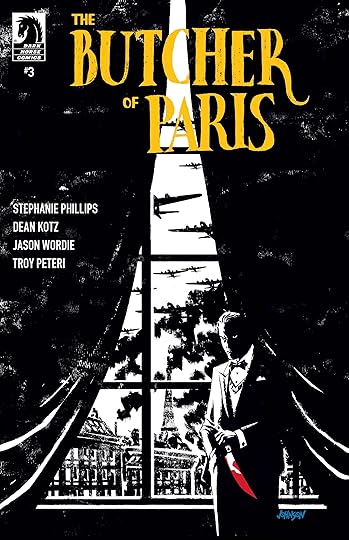
The art is edgy and dark which suits the material well in my mind. I especially like the dark minimalist, mostly black and white, covers of the original individual 5 volumes.
I would recommend this to fans of true stories of murderers and those interested in stories set during the Second World War.
Reviewed by Sophus at Richmond Library
This book follows the French police, The Gestapo, Jewish citizens trying to escape Paris and the activities of Marcel Petiot himself.
The tension and fear of the Jewish citizens is clearly illustrated and demonstrated in their encounters with the Gestapo and Petiot himself. Marcel Petiot posed as a member of the resistance and offered to help Jews escape from Paris. Instead he stole from and murdered them. He was convicted of 2 counts of murder but it is estimated he had between 60 and 200 victims.
While there are scenes of a gruesome and horrific nature in this work the story mostly revolves around the detectives investigations of the murder and the Gestapo’s attempts to uncover the murderers smuggling operation for getting Jews out of France. This was actually a front to allow the killer opportunity to find victims, take their money and murder them. While definitely not for younger readers this is not a wall-to-wall bloodbath. That said what violence there is is sometimes very graphic and intense and could be disturbing to some readers.
The art is edgy and dark which suits the material well in my mind. I especially like the dark minimalist, mostly black and white, covers of the original individual 5 volumes.
I would recommend this to fans of true stories of murderers and those interested in stories set during the Second World War.
Reviewed by Sophus at Richmond Library
This entire review has been hidden because of spoilers.

November 3, 2023
Started: 10.28.23
Finished: 10.30.23
~The Butcher of Paris, Vol.1 by Stephanie Phillips (Writer), Dean Kotz & Jason Wordie (Illustrators) | #GraphicNovel
#JayBookSexxy2023Boal Book.102
#Booktober #Octoborror
Foreword:
“Both the Gestapo and French police were invested in catching Petiot (how bad does it have to be when the Nazis want you arrested…?). As such, I really wanted to tell a story about tensions of war and occupation, about a city once known as “The City of Light” going dark. Petiot happens to be in this city and in this story, but this is a story about victims, about a struggling city, and about complicity. While the entire creative team has attempted to be as faithful to the historical material as possible, our larger goal was to tell a story that holds a mirror to those who are complicit and provide a reminder about the dangers of silence.”
“The monsters that appear in ‘The Butcher of Paris’ were not exorcised in the 1940s.”
~Stephanie Phillips-September, 2019~
Epigraph:
“We must take sides. Neutrality helps the oppressor, never the victim. Silence encourages the tormentor, never the tormentor.”
~Elie Wiesel~
SynopSin: As if the atrocities of WWII weren’t enough, more darkness is unearthed. Crazy true story of a French serial killer killing women, and Jews, in Paris during WWII. I had never heard of Petiot, or his sordid deeds. I will need to do a deeper dive into this. The volume I have felt rushed, and several aspects unexplained. Overall, the story was well-told and the art, though macabre, was brilliant.
JBSR: 📚📚📚📚
Illustrations: 📚📚📚📚📚
#thebutcherofparis #stephaniephillips #deankotz #jasonwordie #macabre #historical #truecrime
#booksinart73 #staybookedhappyreading #keepturningpages #booknerd #bookworm #bookdragon #bibliophile #bookstagram #bookstagrammer
Instagram: BookSin.Art73
Finished: 10.30.23
~The Butcher of Paris, Vol.1 by Stephanie Phillips (Writer), Dean Kotz & Jason Wordie (Illustrators) | #GraphicNovel
#JayBookSexxy2023Boal Book.102
#Booktober #Octoborror
Foreword:
“Both the Gestapo and French police were invested in catching Petiot (how bad does it have to be when the Nazis want you arrested…?). As such, I really wanted to tell a story about tensions of war and occupation, about a city once known as “The City of Light” going dark. Petiot happens to be in this city and in this story, but this is a story about victims, about a struggling city, and about complicity. While the entire creative team has attempted to be as faithful to the historical material as possible, our larger goal was to tell a story that holds a mirror to those who are complicit and provide a reminder about the dangers of silence.”
“The monsters that appear in ‘The Butcher of Paris’ were not exorcised in the 1940s.”
~Stephanie Phillips-September, 2019~
Epigraph:
“We must take sides. Neutrality helps the oppressor, never the victim. Silence encourages the tormentor, never the tormentor.”
~Elie Wiesel~
SynopSin: As if the atrocities of WWII weren’t enough, more darkness is unearthed. Crazy true story of a French serial killer killing women, and Jews, in Paris during WWII. I had never heard of Petiot, or his sordid deeds. I will need to do a deeper dive into this. The volume I have felt rushed, and several aspects unexplained. Overall, the story was well-told and the art, though macabre, was brilliant.
JBSR: 📚📚📚📚
Illustrations: 📚📚📚📚📚
#thebutcherofparis #stephaniephillips #deankotz #jasonwordie #macabre #historical #truecrime
#booksinart73 #staybookedhappyreading #keepturningpages #booknerd #bookworm #bookdragon #bibliophile #bookstagram #bookstagrammer
Instagram: BookSin.Art73

October 2, 2023
A graphic examination of a serial killer operating in an already amoral and murderous period of modern history.
Marcel Petiot was a doctor who exploited his French Resistance status to kill Jews fleeing the Nazi regime in France's capital during WW2. The Butcher of Paris follows the uncovering of his crimes by Jodkum, a cruel Gestapo officer, Commissaire Massu, a kind detective and Bernard, Massu's son and protégé. Though the Gestapo's antisemitic agenda and other sociopolitical factors get in the way of Petiot's capture, it isn't long before he is caught and put to trial.
Phillips' storytelling follows the scandal and grotesquery of Petiot's crimes, as it should, though at times it felt like some depth was missing. I don't doubt Petiot had few redeeming features though he must have had more to him than his drive to maim and murder. For instance it would have been good to learn more about the nature of his fierce patriotism and why his wife could scarcely believe claims about his monstrous obsession. Also it seemed like Bernard was bound for some greater role in the investigation but that never quite panned out. I suppose this being a miniseries of comics had some kind of impact on the tale Phillips wanted to tell.
I enjoyed Kotz's art for the most part, though the scratchy linework did lead to some strange bodily proportions. Wordie's colouring was autumnal, which fits dramatic depictions of the 40's, though I would have liked a bit more of black and white, as depicted on the front cover.
These small concerns aside, I appreciated learning about a prolific serial killer using bloody war to his twisted advantage. I'm grateful to Phillips for this grisly history lesson. I recommend The Butcher of Paris to anyone else curious about hidden wartime atrocities.
Marcel Petiot was a doctor who exploited his French Resistance status to kill Jews fleeing the Nazi regime in France's capital during WW2. The Butcher of Paris follows the uncovering of his crimes by Jodkum, a cruel Gestapo officer, Commissaire Massu, a kind detective and Bernard, Massu's son and protégé. Though the Gestapo's antisemitic agenda and other sociopolitical factors get in the way of Petiot's capture, it isn't long before he is caught and put to trial.
Phillips' storytelling follows the scandal and grotesquery of Petiot's crimes, as it should, though at times it felt like some depth was missing. I don't doubt Petiot had few redeeming features though he must have had more to him than his drive to maim and murder. For instance it would have been good to learn more about the nature of his fierce patriotism and why his wife could scarcely believe claims about his monstrous obsession. Also it seemed like Bernard was bound for some greater role in the investigation but that never quite panned out. I suppose this being a miniseries of comics had some kind of impact on the tale Phillips wanted to tell.
I enjoyed Kotz's art for the most part, though the scratchy linework did lead to some strange bodily proportions. Wordie's colouring was autumnal, which fits dramatic depictions of the 40's, though I would have liked a bit more of black and white, as depicted on the front cover.
These small concerns aside, I appreciated learning about a prolific serial killer using bloody war to his twisted advantage. I'm grateful to Phillips for this grisly history lesson. I recommend The Butcher of Paris to anyone else curious about hidden wartime atrocities.

June 19, 2023
The Nazi occupation of Paris during WW2 is not the only thing plagueing parisians. There is also a serial killer about. So the Nazis aren't the only killers out there. If only the story manifested its potential. It barely shows the suffering of the parisians under the Nazis, it jumps between moments that seem months apart, it has deus ex machinas which I love as much as a kick in the groin. The whole progression is ruined, though the preparation scenes are well written. Almost a waste of time.
The Gestapo is trying to track the organization that is smuggling jews out of Paris. Marcel Petiot is suspected by Gestapo commissioner Jodkum of being a member of the resistance. When his house is found to contain several mutilated bodies, he is also suspected of being a serial killer.
The Gestapo is trying to track the organization that is smuggling jews out of Paris. Marcel Petiot is suspected by Gestapo commissioner Jodkum of being a member of the resistance. When his house is found to contain several mutilated bodies, he is also suspected of being a serial killer.

September 14, 2024
Pretty mundane for a serial killer story. The inciting incident is the discovery of 18 full or partial corpses inside a property owned by a shady doctor. The bodies show evidence of surgical skill, so... this story isn't exactly going to be a whodunit.
Now the onus is on the creators to make the characters come to life, and to make the hunt for the killer as interesting as possible. The Butcher of Paris fails on both fronts.
The only memorable character is the old French detective, at odds with the Nazi occupiers in the collection of leads and evidence. The Nazis want to portray the murderer as a French patriot, as a way of discrediting the Resistance.
A lot of time is spent on the Nazis, who were not compelling in any way, and only served as a plodding, malicious impediment to the goal of catching a killer.
I doubt that Phillips embellished the true story, because the story she tells is, well... dull.
I would characterize Kotz's art as workmanlike. Like Phillips, he conveys the story in a rather unspectacular fashion. He is not an artist I would call on to depict nuanced facial expressions. And the color work was, to my tastes, subpar.
I feel certain there's a thrilling tale to be told from these true events, during one of the most fraught periods in French history. This is not it.
Now the onus is on the creators to make the characters come to life, and to make the hunt for the killer as interesting as possible. The Butcher of Paris fails on both fronts.
The only memorable character is the old French detective, at odds with the Nazi occupiers in the collection of leads and evidence. The Nazis want to portray the murderer as a French patriot, as a way of discrediting the Resistance.
A lot of time is spent on the Nazis, who were not compelling in any way, and only served as a plodding, malicious impediment to the goal of catching a killer.
I doubt that Phillips embellished the true story, because the story she tells is, well... dull.
I would characterize Kotz's art as workmanlike. Like Phillips, he conveys the story in a rather unspectacular fashion. He is not an artist I would call on to depict nuanced facial expressions. And the color work was, to my tastes, subpar.
I feel certain there's a thrilling tale to be told from these true events, during one of the most fraught periods in French history. This is not it.
May 23, 2021
I mean this graphic-novel is like, you wanna read a crime story, but aren't comfortable with R rated stuffs and too complex plots.
So, I read this after reading the graphic-novel, FROM HELL by Alan Moore (So, u understand what type of crime I went throughಥ_ಥ)
Here's my non-spoiler review :-
1. Art is good and five stars for it.
2. Story spoiled the art. The true case-files hasent been much digged upon and the writer has just penned down what she has heard.
3. The story is based on nobody's perspective which adds a major flaw. Unlike, From hell where Alan Moore has written 95% of the incidents from the antagonist's point of view.
4. This story is more of the detective, whose character could make an huge impact but failed due to...again the writer tbh *pffttt*
5. In all, the story isn't much slow paced, yet very small. I mean the story ends with the death penalty of the culprit. Cmon dude! I wanted more.
6. Also the crimes aren't been dealt upon, a direct result of not reading the original case-files.
7. Yes, it's a true story and I ...umm.. cannot go more than 2 stars. feel sorry for the artist :( He has done a great job.
Hence Art - 5stars || Story - 2 stars
Average - Okay I'll give it a 3.
Thanks,
Rishabh.
(instagram @rishabhxart)
So, I read this after reading the graphic-novel, FROM HELL by Alan Moore (So, u understand what type of crime I went throughಥ_ಥ)
Here's my non-spoiler review :-
1. Art is good and five stars for it.
2. Story spoiled the art. The true case-files hasent been much digged upon and the writer has just penned down what she has heard.
3. The story is based on nobody's perspective which adds a major flaw. Unlike, From hell where Alan Moore has written 95% of the incidents from the antagonist's point of view.
4. This story is more of the detective, whose character could make an huge impact but failed due to...again the writer tbh *pffttt*
5. In all, the story isn't much slow paced, yet very small. I mean the story ends with the death penalty of the culprit. Cmon dude! I wanted more.
6. Also the crimes aren't been dealt upon, a direct result of not reading the original case-files.
7. Yes, it's a true story and I ...umm.. cannot go more than 2 stars. feel sorry for the artist :( He has done a great job.
Hence Art - 5stars || Story - 2 stars
Average - Okay I'll give it a 3.
Thanks,
Rishabh.
(instagram @rishabhxart)

April 22, 2023
The Butcher of Paris leaves me with unanswered questions about the case and characters, but this is wonderful because it revealed a rabbit hole for me; when it comes to nonfiction, one should never assume that one author, one thin volume, is going to catch all the nuance and complexities of a case or an epoch in history. That's lazy reading. Stephanie Phillips was striving to show the theme of complicity than selling comics w/sensationalism. There is nudity without being erotic (unless you're a depraived scumbag), violence without exploring the methods (why is it so important that you know those gruesome details?). These absences don't hurt her approach to storytelling, they advance it.
There seems to be a lot of criticism of the artwork in Goodreads' reviews of this volume. Dean Kotz's art made me think of Guy Davis', who I greatly admire. It also did a great job of balancing the mood of the setting and the story--which was dark and somber--with the lights of Paris. I love it.
Available in softcover from Dark Horse Comics with a cover price of $19.99.
There seems to be a lot of criticism of the artwork in Goodreads' reviews of this volume. Dean Kotz's art made me think of Guy Davis', who I greatly admire. It also did a great job of balancing the mood of the setting and the story--which was dark and somber--with the lights of Paris. I love it.
Available in softcover from Dark Horse Comics with a cover price of $19.99.

August 31, 2022
A stylized story about a real serial killer who hunted in the chaos that was nazi occupied 1940s Paris. This is not an easy story to read. While true crime is always going to hit hard, navigating the usual disgust at humanity while reading about a serial killer is 100x worse when combined with Nazis. Investigating Petiot was made so much more complicated as he was wanted by French police for being a suspected killer and by the SS for being a suspected member of the resistance. Which further complicated catching him as the two groups not only did not work together, but would actively work against each other, while some people were actively helping Petiot evade both. Finally caught, Petiot treated his trial as a show and he was the star. It didn't help that most people were amused, if not in awe of him.

July 21, 2021
The Butcher of Paris is based on the true story of a serial killer who took advantage of the German occupation of Paris to kill an estimated 60-200 people. This story focuses largely on the detective, Massu, trying to capture the killer, Marcel Petiot. Massu has to deal with the Germans, also hunting the killer out of fear he is a resistance fighter. The story is briefly told, but I found it riveting.
My main issue with the book is that I didn’t particularly like the art. Some of the characters are hard to tell apart, which leads to some confusion early on about who is who. While the story has a rough start, it gets better as it goes along. The conclusion shows how easily society can grow enamored with a man who embodies evil, and that’s probably the scariest part of the book.
My main issue with the book is that I didn’t particularly like the art. Some of the characters are hard to tell apart, which leads to some confusion early on about who is who. While the story has a rough start, it gets better as it goes along. The conclusion shows how easily society can grow enamored with a man who embodies evil, and that’s probably the scariest part of the book.

October 18, 2021
This has the potential to be a really gripping story, but this book didn't hook me. I feel that the book could have gone more in depth. I had never heard of this serial killer during the occupation of France, and I would have liked to learn more. I'm not sure why the book goes in the direction it does.

February 18, 2021
A historical fiction detective story set during the nazi occupation of France. The forward discussing the inspiration of the story ( a real life serial killer during this time period) was more interesting to read. The characters feel like flat caricatures and the story is strangely paced. If there was more space to explore the setting and the players in the story, I feel like I would have enjoyed this more. Instead, I was treated to a rushed, though well illustrated, period piece without any soul.
Displaying 1 - 30 of 71 reviews