What do you think?
Rate this book


220 pages, Hardcover
First published August 4, 2020
“When will you have achieved all your ambitions, Mrs. Pemberton?” she asked, as others jostled around them.Ron Rash writes of place and people. The place is Appalachia, the people are its residents, and those who stop by to extract what it has to offer.
“When the world and my will are one,” Serena answered.
--------------------------------------
The mountain lion was the first to depart the valley. The front paw lost years back to a trap’s steel teeth was warning enough. As the trees began to fall, others followed: black bear and bobcat, otter and mink, some in pairs, some singly. Then beaver and weasel, deer and muskrat, groundhog and fox. After them raccoon and rabbit, opossum and chipmunk, squirrel and vole, deer mouse and shrew . . .
One thing I want to do is for landscape and my characters to be inextricably bound together. I believe the landscape people live in has to affect their psychology. - from the Transatlantica interviewThe time? Fluid, any time from the Civil War to the present.
In a sense, I’m writing a current that runs through time in those stories. And, also, paradoxically time is a kind of geography as well: it is also a way of showing people in much different cultural mindsets, even within a specific culture, and thus another way to probe for the universal within a specific cultural landscape.There are nine stories and one novella in this collection, the book taking its title, In the Valley, from that longer piece.
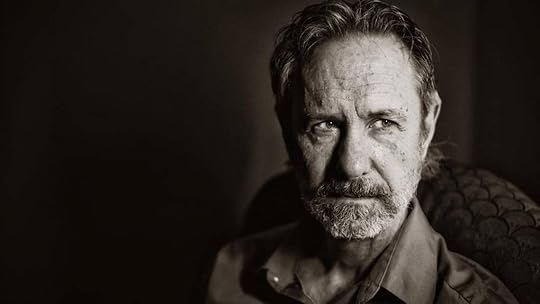
If the language were not so beautiful and sublime, particularly in a play such as King Lear, the experience would be unbearable. What I’m trying for in my work—it’s up to the reader to decide if I do—is the sublime. I want my work to take the reader to that place. And I think you can do that with that juxtaposition of language and violence. - from the Transatlantica interviewBut most of all there is In the Valley. If you have not read Rash’s masterpiece, Serena, I urge you to either order it online or dash out to an open bookstore and pick up a copy ASAP. It is one of the best novels ever. Sadly, the film that was made of it was a huge disappointment. But that changes nothing about the book. Read it, please, please, please. You will not be sorry. You can read In the Valley without having read Serena, but, really, don’t. This novella continues the tale of Serena Pemberton, a Lady Macbethian figure, with no moral restrictions. Her only law is greed, and if that requires some violence, no problem. Her personal thug, Galloway, despite having lost part of an arm, does his best to spread his pain around.
I think I tend to use maimed characters with the idea that the world they inhabit is wounded. - from the Transatlantica interviewSerena stands in for extraction industries of all sorts. Her only goal is to take as much as she can get. Attempting to clear-cut the remains of the land left to her when her husband died, under mysterious circumstances, in the novel, she feels no obligation to clean up the mess she leaves behind, ecological or human. Serena drives her men like livestock and will stop at nothing, even manipulating time itself, to see that the job gets done on schedule. Rash includes several chapter-end inserts that list all the local life that has been removed with each new level of destruction. I included one of these at the top of this review.
The women would bring food enough to get Rebecca and the children through the winter. Men would bring axes and the surrounding woods would sound like gunshots as the honed metal struck in the November air. All day the women would cook and tend fires. Children would gather kindling, then scuff among ashes for the iron nails that had secured the shingles. Everyone would work until dusk, then return the next day to help more. Ira Wilkey might or might not say We will get through this together, but that was understood. They were neighbors.There is a great twist here. Be ready.
When Brent was growing up, his father would point out how a plumber in Brevard had done shoddy work but then gone out of business, or how a county clerk embezzled money for three years but ended up in prison. It catches up with you, son, he’d say. But plenty did get away with it, Brent knew. All you had to do was look at the recession, which almost caused him and his father to lose everything. The silk-tied crooks who’d done it weren’t arrested and no one pretended they ever would be. People like that got away with anything. Get caught robbing folks, all you had to do was pay back part of what you stole. Turn a million people into drug addicts, you didn’t spend a day in jail.The treatment of Roger Stone would fit right in. Why be decent in an indecent world?
Four congregation members on his porch, Marvin Birch at the head. They do not want him to baptize Gunter. He says there is a chance that the baptism may cleanse his soul, even if he does not really expect it to do so. And if he refuses, he will force Eliza [Pearl’s mother] and Pearl to walk in the freezing cold to another preacher much farther away, endangering their health.A tough tale on the challenge of doing the right thing while contending with the demands of religious law and an awful human being.
Trout have to live in a pure environment unlike human beings; they can’t live in filth! And so I think there is a kind of wonder; to me, they’re incredibly beautiful creatures…when such creatures disappear, we have lost something that cannot be brought back. - from the Transatlantica interviewLast Bridge Burned
I think people in mountains tend to feel very close to that place. … There’s almost the sense that the mountains are rising up around them, protecting them, almost like a womb. There’s a sense of security in a way. I think that also at times it can be oppressive. There’s a sense of mountains looming over people, reminding them how small and brief their lives are. I find it interesting to see what I can do with that as a writer. - from the Daily “Yonder interviewIn the Valley is a magnificent collection, showing off one of America’s greatest writers at the peak of his powers, in his favorite form.
Short fiction is the medium I love the most, because it requires that I bring everything I’ve learned about poetry—the concision, the ability to say something as vividly as possible—but also the ability to create a narrative that, though lacking a novel’s length, satisfies the reader. - from The Daily Beast interviewHe takes on classic conflicts, particularly exploitation of the lesser by the greater, or at least, by the cruder, but with a modern sensibility. He brings his poet’s ear for language to the short prose form, elevating the stories to high art. And he does this without losing the ability to engage, to make you feel, and to make you consider. And if that is not enough, he adds in twists that would make O Henry proud. My only gripe about In the Valley is that it did not go on forever. It is nothing less than sublime.
He headed west on Highway 19, the directions on the passenger seat. The leaves were off the trees now, revealing time-worn swells so unlike the wild, seismic peaks and valleys beloved by European Romantics such as Pernhart and Friedrich. Sturm und Drang. Yet the Appalachians were daunting in their uniformity, a vast wall, unmarked by crevices that might provide an easy path out.

"She’s back," Snipes said, as the men followed the bird’s flight toward the head of the valley. There they saw their employer of three years, a woman who at first had done things no woman they’d ever known would have dared, then later no man.
The name had been bestowed on her last summer at the ranger academy. In nineteenth-century Colorado, the instructor had told them, a woman hoeing in her garden had watched a raven fly toward her, dip low as it passed overhead, and settle a few feet away. The bird performed the same action twice more. Perplexed, the woman looked around the surrounding land. She saw it then, a mountain lion hunched low in the prairie grass. She dropped her hoe and fled, barely reaching the safety of her cabin.
So what have we learned from this story? the instructor had asked. One trainee spoke of the woman’s ability, learned from living close to nature, to interpret the bird’s actions as a warning. Another spoke of the bird’s intelligence, its creation of a way to communicate danger to humans. The instructor waited and Stacy raised her hand for the only time all term. The bird was leading the cougar to prey they could share, she told the instructor. The class was silent but the professor nodded, said Stacy was the first student who’d ever answered correctly.

 come to my blog!