

What do you think?

Far North
Far North is a 2009 National Book Award Finalist for Fiction.
My father had an expression for a thing that turned out bad. He'd say it had gone west. But going west always sounded pretty good to me. After all, westwards is the path of the sun. And through as much history as I know of, people have moved west to settle and find freedom. But our world had gone north, truly gone north, and just how far north I was beginning to learn.
Out on the frontier of a failed state, Makepeace—sheriff and perhaps last citizen—patrols a city's ruins, salvaging books but keeping the guns in good repair.
Into this cold land comes shocking evidence that life might be flourishing elsewhere: a refugee emerges from the vast emptiness of forest, whose existence inspires Makepeace to reconnect with human society and take to the road, armed with rough humor and an unlikely ration of optimism.
What Makepeace finds is a world unraveling: stockaded villages enforcing an uncertain justice and hidden work camps laboring to harness the little-understood technologies of a vanished civilization. But Makepeace's journey—rife with danger—also leads to an unexpected redemption.
Far North takes the reader on a quest through an unforgettable arctic landscape, from humanity's origins to its possible end. Haunting, spare, yet stubbornly hopeful, the novel is suffused with an ecstatic awareness of the world's fragility and beauty, and its ability to recover from our worst trespasses.
My father had an expression for a thing that turned out bad. He'd say it had gone west. But going west always sounded pretty good to me. After all, westwards is the path of the sun. And through as much history as I know of, people have moved west to settle and find freedom. But our world had gone north, truly gone north, and just how far north I was beginning to learn.
Out on the frontier of a failed state, Makepeace—sheriff and perhaps last citizen—patrols a city's ruins, salvaging books but keeping the guns in good repair.
Into this cold land comes shocking evidence that life might be flourishing elsewhere: a refugee emerges from the vast emptiness of forest, whose existence inspires Makepeace to reconnect with human society and take to the road, armed with rough humor and an unlikely ration of optimism.
What Makepeace finds is a world unraveling: stockaded villages enforcing an uncertain justice and hidden work camps laboring to harness the little-understood technologies of a vanished civilization. But Makepeace's journey—rife with danger—also leads to an unexpected redemption.
Far North takes the reader on a quest through an unforgettable arctic landscape, from humanity's origins to its possible end. Haunting, spare, yet stubbornly hopeful, the novel is suffused with an ecstatic awareness of the world's fragility and beauty, and its ability to recover from our worst trespasses.
288 pages, Paperback
First published June 9, 2009
About the author
Marcel Theroux
13 books175 followersMarcel (Raymond) Theroux is a British novelist and broadcaster. He is the older son of the American travel writer and novelist, Paul Theroux. His younger brother, Louis Theroux, is a journalist and television reporter.
Born in Kampala, Uganda, Theroux was brought up in Wandsworth, London. After attending a state primary school he boarded at Westminster School. He went on to study English at Clare College of the University of Cambridge and international relations at Yale University. Currently he lives in London and is married. His French last name originates from the region around Sarthe and Yonne in France. It is quite common in Francophone countries and is originally spelled Théroux. His paternal grandfather was French Canadian.
He wrote The Stranger in The Earth and The Confessions of Mycroft Holmes: a paper chase for which he won the Somerset Maugham Award in 2002. His third novel, A Blow to the Heart, was published by Faber in 2006. His fourth, Far North, a future epic set in the Siberian taiga, was published in June 2009. He worked in television news in New York and Boston.
In 2004 he presented The End of the World as We Know It part of the War on Terra television series about climate change on Channel 4, for which he was chosen as presenter precisely because he initially knew nothing about the subject. He even had a preconception about environmentalists being spoilsports opposed to progress. But during his research he became convinced that we face a global problem, on a scale so serious that an expansion of nuclear energy is probably the best solution (choosing the lesser evil). He reached this conclusion partly via the subjects of several interviews, amongst them Gerhard Bertz of insurance agency Munich Re, who indicated that in the past 20 years payments for natural disasters have increased by 500 percent. During another, with Royal Dutch Shell chairman Lord Ron Oxburgh, a PR assistant intervened to curtail the conversation, apparently because Oxburgh's negative views on the consequences of current oil consumption were considered detrimental to the corporation's image.
In March 2006 Theroux presented Death of a Nation on More4, as part of the The State of Russia series. In the program he explored the country's post-Soviet problems including population decline, the growing AIDS epidemic and the persecution of the Meskhetian Turks.
On 28 September 2008 he presented Oligart: The Great Russian Art Boom on Channel 4 about how Russia's rich are keeping Russia's art history alive by buying, and exhibiting domestic art.
On 16 March 2009, Marcel Theroux presented In Search of Wabi-sabi on BBC Four as part of the channel's Hidden Japan season of programming. Marcel travelled throughout Japan trying to understand the aesthetic tastes of Japan and its people.
Born in Kampala, Uganda, Theroux was brought up in Wandsworth, London. After attending a state primary school he boarded at Westminster School. He went on to study English at Clare College of the University of Cambridge and international relations at Yale University. Currently he lives in London and is married. His French last name originates from the region around Sarthe and Yonne in France. It is quite common in Francophone countries and is originally spelled Théroux. His paternal grandfather was French Canadian.
He wrote The Stranger in The Earth and The Confessions of Mycroft Holmes: a paper chase for which he won the Somerset Maugham Award in 2002. His third novel, A Blow to the Heart, was published by Faber in 2006. His fourth, Far North, a future epic set in the Siberian taiga, was published in June 2009. He worked in television news in New York and Boston.
In 2004 he presented The End of the World as We Know It part of the War on Terra television series about climate change on Channel 4, for which he was chosen as presenter precisely because he initially knew nothing about the subject. He even had a preconception about environmentalists being spoilsports opposed to progress. But during his research he became convinced that we face a global problem, on a scale so serious that an expansion of nuclear energy is probably the best solution (choosing the lesser evil). He reached this conclusion partly via the subjects of several interviews, amongst them Gerhard Bertz of insurance agency Munich Re, who indicated that in the past 20 years payments for natural disasters have increased by 500 percent. During another, with Royal Dutch Shell chairman Lord Ron Oxburgh, a PR assistant intervened to curtail the conversation, apparently because Oxburgh's negative views on the consequences of current oil consumption were considered detrimental to the corporation's image.
In March 2006 Theroux presented Death of a Nation on More4, as part of the The State of Russia series. In the program he explored the country's post-Soviet problems including population decline, the growing AIDS epidemic and the persecution of the Meskhetian Turks.
On 28 September 2008 he presented Oligart: The Great Russian Art Boom on Channel 4 about how Russia's rich are keeping Russia's art history alive by buying, and exhibiting domestic art.
On 16 March 2009, Marcel Theroux presented In Search of Wabi-sabi on BBC Four as part of the channel's Hidden Japan season of programming. Marcel travelled throughout Japan trying to understand the aesthetic tastes of Japan and its people.
Ratings & Reviews
Friends & Following
Create a free account to discover what your friends think of this book!
Community Reviews
Displaying 1 - 30 of 614 reviews

August 9, 2012
Powerful book. Powerful, magnificent, but brutal and bleak. Makepeace is one of the most resilient characters that I have ever come across while reading fiction.
I have noticed that many reviews here give away too much of the plot. I would advice against reading them as the magnificence of this book comes out through Marcel Theroux's ingenious writing. He tells you the story by Makepeace's point of view but everytime Theroux holds something back and reveals it finally in a single sentence as if it was of no consequence whatsoever to start with and we (the reader) would have already guessed that fact by ourselves. Marcel kept surprising me right till the end. And I liked the ending too.
The post-apocalyptic scenario is also very well realized as there are no sword-wielding weirdos which is a major cliché of so many post-apocalyptic novels.
But the thing is, it's bloody brutal, right up there with Cormac McCarthy's "The Road" but with one major difference. Here, the "apostrophes" survived the apocalypse.
I have noticed that many reviews here give away too much of the plot. I would advice against reading them as the magnificence of this book comes out through Marcel Theroux's ingenious writing. He tells you the story by Makepeace's point of view but everytime Theroux holds something back and reveals it finally in a single sentence as if it was of no consequence whatsoever to start with and we (the reader) would have already guessed that fact by ourselves. Marcel kept surprising me right till the end. And I liked the ending too.
The post-apocalyptic scenario is also very well realized as there are no sword-wielding weirdos which is a major cliché of so many post-apocalyptic novels.
But the thing is, it's bloody brutal, right up there with Cormac McCarthy's "The Road" but with one major difference. Here, the "apostrophes" survived the apocalypse.

March 12, 2012
You know that Tom Hanks movie, Cast Away, the one where Hank's character is stranded on an island alone and everyone on the plane with him that crashed is dead? He has a few reminders from civilization, undelivered packages, some toys – a volleyball. Now imagine that he never got off the island and imagine that it was really really cold. Now imagine that he met some slavers and what happened after that was not pleasant. Then imagine that he met some opportunists who do anything to control their little area on the island; imagine that there are anthrax spores lying around unchecked and large areas of the island that are contaminated by nuclear radiation. Now imagine that he is either never able to get back to his home country or even if he does get back, what he knew is gone; it no longer exists. Okay, okay, I think after you imagine all of that you may get the gist of this book and you may be able to understand the depth of the loneliness and remoteness that is conveyed by the text. Actually, I am being unfair. The book is not bleak, there is bleakness in the horizon and around the corner or hiding in the woods, but the story itself is not bleak. The story is highly emotional; it is devastating at times but I never stopped cheering for the hero. Really horrible things happen, but so do good things and hope seems always present. Most importantly, this book is written beautifully. It is told from the first person narrative of one character; we see the events and the past through this one character’s perspective.
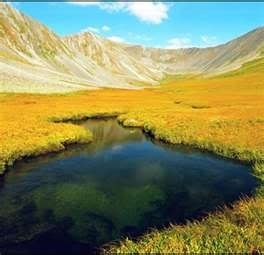
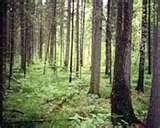
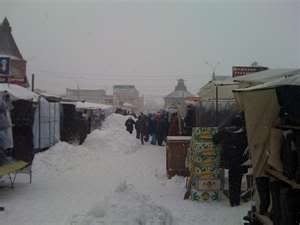
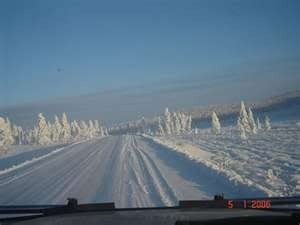
The setting is Siberia in an undefined future. Siberia? Yes, Siberia. What Theroux describes went beyond my imagining of Siberia. It is cold and brutal, but has amazing variety in plant and animal life and is beautiful; harsh, but beautiful.
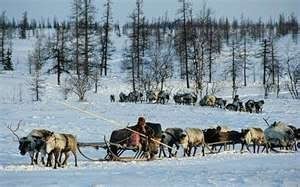
And not this, nothing as fun as this …
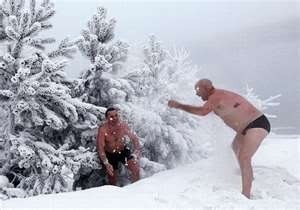
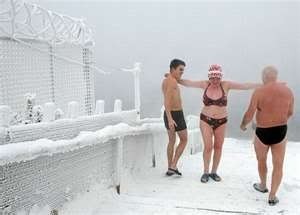
I feel sort of dirty for throwing that in to a book like this, but I felt the need to lighten the mood!
Far North was a National Book award runner up for 2009 and I have been anxiously awaiting the opportunity to read it for years. I decided to do the audio version of this book and I was not disappointed – either by the narration nor by the story. If you decide to read this book and enjoy audio books, then I highly recommend the narrated version.
A constant theme present in Far North is what we – the civilized world – what we have lost. Technology, art, books, community – all parts of civilization? These are gone. The main character, Makepeace, is tied to the home that the character has always known. When Makepeace leaves this home and is forcibly separated, the character longs for home, thinks of home and fights to get back there. Although home seems to go beyond a place and a house; it definitely includes the location, but Makepeace remembers parents, siblings, the piano, soap and love – all of these are the home that Makepeace longs for and attempts to recapture. The character’s pull for the home of the past that is remembered from childhood and the pull of the house and community that has been “Home” or so long comes to a point where a choice is made. Makepeace begins to long for people and for community and realizes that it is no longer satisfactory to be alone. Thus the journey begins.
Without reading the book, it is difficult to understand how the text describes the vastness and solitary nature of the arctic circle. I never thought I would want to visit the arctic circle, much less Siberia but Marcel Theroux has me interested. He created this amazing world that is on the one hand convincing as to why Americans are living in Siberia and on the other hand, convincing as to why society has faded away. The vision of what could be if we continue to ruin our environment and push its limits is frightening. I do not know if I agree about what he believes we will become with the lack of society as a structure; perhaps I don’t want to believe. I guess I only have to look to our past to feudal and slave based societies as a reminder of what was. I have a hope that if there is a break down we do not have to do so in such a violent way.
Back to the book … Makepeace is a survivor. The character has the ability to live off of the land in Siberia; to grow anything, hunt and butcher any animal and make products by which to survive. But in surviving, Makepeace is all alone. Theroux says this on his website, “It’s clear that as civilization advances, certain kinds of knowledge become obsolete. The farrier’s son puts on a tie and gets a job in a bank, or at a call centre, or as a tour guide. At the same time, the wide knowledge and physical competence that was characteristic of his forebears is replaced by specialization. This is the price of progress. It’s hard not feel that many of us have lost a once instinctive relationship with fundamental natural processes.” With this thought obviously heavy in mind, Theroux writes the characters which survive as ones with the physical competence to live in this harsh environment; and those that die off are the ones with the precious knowledge and appreciation for books, music and other characteristics of our society but little practical knowledge about day to day survival. This book is reminiscent of lone settlers in the prairie or in the west of the US; in a way it is an adult version of Little House on the Prairie. The difference being that instead of society working toward an apex, society is coming down off its height.
Marchel Theroux has a website dedicated to his novels: http://www.thisworldofdew.com/novels/...
I highly recommend this book. But warning it can be brutal.
To see this review and more like this check out my blog: http://outsidethebounds.blogspot.com/...
The setting is Siberia in an undefined future. Siberia? Yes, Siberia. What Theroux describes went beyond my imagining of Siberia. It is cold and brutal, but has amazing variety in plant and animal life and is beautiful; harsh, but beautiful.
And not this, nothing as fun as this …
I feel sort of dirty for throwing that in to a book like this, but I felt the need to lighten the mood!
Far North was a National Book award runner up for 2009 and I have been anxiously awaiting the opportunity to read it for years. I decided to do the audio version of this book and I was not disappointed – either by the narration nor by the story. If you decide to read this book and enjoy audio books, then I highly recommend the narrated version.
A constant theme present in Far North is what we – the civilized world – what we have lost. Technology, art, books, community – all parts of civilization? These are gone. The main character, Makepeace, is tied to the home that the character has always known. When Makepeace leaves this home and is forcibly separated, the character longs for home, thinks of home and fights to get back there. Although home seems to go beyond a place and a house; it definitely includes the location, but Makepeace remembers parents, siblings, the piano, soap and love – all of these are the home that Makepeace longs for and attempts to recapture. The character’s pull for the home of the past that is remembered from childhood and the pull of the house and community that has been “Home” or so long comes to a point where a choice is made. Makepeace begins to long for people and for community and realizes that it is no longer satisfactory to be alone. Thus the journey begins.
Without reading the book, it is difficult to understand how the text describes the vastness and solitary nature of the arctic circle. I never thought I would want to visit the arctic circle, much less Siberia but Marcel Theroux has me interested. He created this amazing world that is on the one hand convincing as to why Americans are living in Siberia and on the other hand, convincing as to why society has faded away. The vision of what could be if we continue to ruin our environment and push its limits is frightening. I do not know if I agree about what he believes we will become with the lack of society as a structure; perhaps I don’t want to believe. I guess I only have to look to our past to feudal and slave based societies as a reminder of what was. I have a hope that if there is a break down we do not have to do so in such a violent way.
Back to the book … Makepeace is a survivor. The character has the ability to live off of the land in Siberia; to grow anything, hunt and butcher any animal and make products by which to survive. But in surviving, Makepeace is all alone. Theroux says this on his website, “It’s clear that as civilization advances, certain kinds of knowledge become obsolete. The farrier’s son puts on a tie and gets a job in a bank, or at a call centre, or as a tour guide. At the same time, the wide knowledge and physical competence that was characteristic of his forebears is replaced by specialization. This is the price of progress. It’s hard not feel that many of us have lost a once instinctive relationship with fundamental natural processes.” With this thought obviously heavy in mind, Theroux writes the characters which survive as ones with the physical competence to live in this harsh environment; and those that die off are the ones with the precious knowledge and appreciation for books, music and other characteristics of our society but little practical knowledge about day to day survival. This book is reminiscent of lone settlers in the prairie or in the west of the US; in a way it is an adult version of Little House on the Prairie. The difference being that instead of society working toward an apex, society is coming down off its height.
Marchel Theroux has a website dedicated to his novels: http://www.thisworldofdew.com/novels/...
I highly recommend this book. But warning it can be brutal.
To see this review and more like this check out my blog: http://outsidethebounds.blogspot.com/...

October 29, 2010
I was drawn to this book because of its setting in the north and post-apocalyptic genre, but I was pleasantly surprised by some of its distinctives. First, Second, the novel is both unafraid to discuss some of the events that led to the current apocalypse, but its focus is mainly philosophical and psychological. It leaves enough enough mysteries (like the glowing vials of energy and the memory stones), while not being teasing by refusing to explain anything, as some novels in this genre are.
More than anything, it is an exploration of a solitary life among the ruins, and throughout the novel I found myself simply wishing Makepeace would get back home, as isolated a setting as that may be. In contrast to other reviewers, I didn't find this novel bleak--it seemed filled with subtle humor and wit, and hewed a path towards those things which help us to remain human.
More than anything, it is an exploration of a solitary life among the ruins, and throughout the novel I found myself simply wishing Makepeace would get back home, as isolated a setting as that may be. In contrast to other reviewers, I didn't find this novel bleak--it seemed filled with subtle humor and wit, and hewed a path towards those things which help us to remain human.
This entire review has been hidden because of spoilers.

September 19, 2014
What took place in this took me completely by surprise. All of it, from start to finish. To say much would be to spoil it. I read this is pretty much one sitting. I think that in itself can say much about a book (and that I had a day off to devote to it). It deserves it. My day off. I feel satisfied. If you like PA, this is something you may like. If you don't like Post Apocalypse novels, I still suggest this one. I find it strangely relevant to the times we are in. The warming of the Arctic, the migration of people or refugees as they are currently called. Foreshadowing perhaps....

August 7, 2011
This one is bleak. Not quite as soul-crushing as The Road, but definitely harsh. That is part of the beauty of it though.
Thoroughly engrossing, with a main character (Makepeace) you can enjoy getting to know, both the good and the bad. Makepeace is someone you can't help but admire for sheer stubborn will to live.
I also found the various survival aspects interesting - it never fails to amaze me how authors in the post-apocalyptic genre continue to find new ways to demonstrate the various difficulties and dilemnas characters have to endure in a PA world.
However, one of the weaknesses of the book is that while it is very tragic, with numerous pretty-darn-awful things happening, when they happen they don't always feel tragic. You read the words and understand, but the gut-wrenching you should feel doesn't always happen, and I think this is a side effect of the writing style.
Lastly, there are a couple of larger stories that are pretty fascinating to unravel, both in Makepeace's life as well as the overall "how it all ended" story.
Memorability 7/10
Thoroughly engrossing, with a main character (Makepeace) you can enjoy getting to know, both the good and the bad. Makepeace is someone you can't help but admire for sheer stubborn will to live.
I also found the various survival aspects interesting - it never fails to amaze me how authors in the post-apocalyptic genre continue to find new ways to demonstrate the various difficulties and dilemnas characters have to endure in a PA world.
However, one of the weaknesses of the book is that while it is very tragic, with numerous pretty-darn-awful things happening, when they happen they don't always feel tragic. You read the words and understand, but the gut-wrenching you should feel doesn't always happen, and I think this is a side effect of the writing style.
Lastly, there are a couple of larger stories that are pretty fascinating to unravel, both in Makepeace's life as well as the overall "how it all ended" story.
Memorability 7/10

November 1, 2011
Let me start by saying it took me 11 days to read this book. 300 pages over 11 days is, what, 27-odd pages a day which is VERY unusual for me. I do confess that I was in something of a reading slump when I started this, so please take what I say with a pinch of salt!
This book is beautifully written in a bleak, harsh and short way, full of twists that I didn’t see coming, and gradually reveals its secrets at the right parts of the story.
Without giving away too many twists and secrets, I just found this book a pretty hard slog – I didn’t find the character of Makepeace interesting in the least, the secondary characters seemed two-dimensional with little substance to even make me curious about them and found the ending unsatisfactory apart from the fact that it meant I was finally finished.
As I said at the beginning, perhaps I wasn’t in the right frame of mind for this book. Of course that does not make it a bad book, and as one friend said ‘it’s written like a western’ (thanks Alison!), which is spot-on – so if that type of writing appeals to you, then you should just ignore me and try it for yourself.
Full review on my blog: theaussiezombie.blogspot.com
This book is beautifully written in a bleak, harsh and short way, full of twists that I didn’t see coming, and gradually reveals its secrets at the right parts of the story.
Without giving away too many twists and secrets, I just found this book a pretty hard slog – I didn’t find the character of Makepeace interesting in the least, the secondary characters seemed two-dimensional with little substance to even make me curious about them and found the ending unsatisfactory apart from the fact that it meant I was finally finished.
As I said at the beginning, perhaps I wasn’t in the right frame of mind for this book. Of course that does not make it a bad book, and as one friend said ‘it’s written like a western’ (thanks Alison!), which is spot-on – so if that type of writing appeals to you, then you should just ignore me and try it for yourself.
Full review on my blog: theaussiezombie.blogspot.com

June 17, 2019
Nie ganz schlecht, Far North ist auch nie ganz gut.
January 5, 2025
Premier coup de cœur 2025.
Le post-apo n'est pas vraiment ma came mais celui là se démarque par son personnage principal.
L'auteur a su plusieurs fois m'amener là où je m'attendais pas. Le style et le nature writing sont envoûtants. Un sans faute dans le genre.
Le post-apo n'est pas vraiment ma came mais celui là se démarque par son personnage principal.
L'auteur a su plusieurs fois m'amener là où je m'attendais pas. Le style et le nature writing sont envoûtants. Un sans faute dans le genre.

January 29, 2011
Where I got the book: my own selection, from the library.
Makepeace is a survivor in an age where drought and famine have wiped out most of the population. A remnant of a religious community that settled the farthest northern reaches of Asia, Makepeace struggles with the choice between isolated self-sufficiency and reaching out to other humans in an age where brutality is the norm.
Far North is a compelling book. I've always loved end-of-days novels, and if you've ever read John Wyndham's 1950s classic The Chrysalids (and if you haven't, you're missing out on a great book) you would probably, as I did, place Makepeace's society a couple of hundred years before the farming communities of that story, and find an echo of the older book in Theroux's novel.
What kept me turning the pages of Far North was the writing. Theroux's descriptions are wonderfully evocative, his writing crisp and unadorned. This keeps the story moving along at a fast pace, and I stayed up late because I just had to finish the last hundred pages.
Far North is a little short on plot, in my opinion, and the narrative takes sudden, unexpected turns that are both frustrating and intriguing. So if you're the sort of reader that likes all loose ends woven in and tied with a neat bow, you won't find that here. If you're of the camp that believes a novel should reflect life's untidiness, you'll love the meandering action. I hope that, like me, you'll grow fond of the unlovely Makepeace and find yourself projecting the character into the future.
I'm giving Far North four stars for the writing and the author's imagination. It stopped short of rocking my world, but I'll be looking out for more books by this author.
Makepeace is a survivor in an age where drought and famine have wiped out most of the population. A remnant of a religious community that settled the farthest northern reaches of Asia, Makepeace struggles with the choice between isolated self-sufficiency and reaching out to other humans in an age where brutality is the norm.
Far North is a compelling book. I've always loved end-of-days novels, and if you've ever read John Wyndham's 1950s classic The Chrysalids (and if you haven't, you're missing out on a great book) you would probably, as I did, place Makepeace's society a couple of hundred years before the farming communities of that story, and find an echo of the older book in Theroux's novel.
What kept me turning the pages of Far North was the writing. Theroux's descriptions are wonderfully evocative, his writing crisp and unadorned. This keeps the story moving along at a fast pace, and I stayed up late because I just had to finish the last hundred pages.
Far North is a little short on plot, in my opinion, and the narrative takes sudden, unexpected turns that are both frustrating and intriguing. So if you're the sort of reader that likes all loose ends woven in and tied with a neat bow, you won't find that here. If you're of the camp that believes a novel should reflect life's untidiness, you'll love the meandering action. I hope that, like me, you'll grow fond of the unlovely Makepeace and find yourself projecting the character into the future.
I'm giving Far North four stars for the writing and the author's imagination. It stopped short of rocking my world, but I'll be looking out for more books by this author.

April 26, 2010
Marcel Theroux’s Far North is a tale of endurance and survival, though not necessarily in the way one might anticipate.
Our narrator is Makepeace Hatfield, the constable of a frontier town in Siberia, though she’s not really sure how many people there are to protect and/or fend off any more. Makepeace is the daughter of parents who, along with others from the US, settled in Siberia looking for a simpler life, environmental changes having put intolerable pressures on the life they knew. It didn’t work out, and now who knows what’s going on in the wider world? Not Makepeace, who has enough on her plate with day-to-day living. But when, one day, she sees a plane – a sure sign of other humanity – she decides to head out beyond her town to see what she can find. In due course, she is captured and taken to a prison-town, where she discovers that maybe not all of that old world has gone, or perhaps a new one may yet be forged.
Far North is striking both for what it is and is not. It is a clearly told tale (Theroux’s prose is expressive, but not densely poetic; the latter would be out of place in the harsh world of his book) of a woman who has to face up to a life and world of deep contradiction; for example, she doesn’t ‘share [her parents’:] view of the merits of scarcity’ (50), yet efforts to rebuild the world bring their own difficulties.
But, even though Far North tells of an individual making her way through the wilderness, it’s not a tale of survival in a documentary sense; the landscapes and how people live are in there, but the details of those aren’t the main focus. Rather, I think Theroux is interested in depicting a more fundamental kind of endurance – the endurance of the human spirit.
Throughout the novel, one is constantly reminded that this is a story: the references to Makepeace writing her words down; the beats of the narrative (the knowledge that Makepeace is a woman comes twenty pages in, in a way that could wrong-foot the unwary reader). And, if we take the view that stories are a way in which humans make sense of the world, then we can say that a story is being enacted even in this harsh setting, which would seem to have no room for stories. Yet the story goes on, and so does humanity.
What I take away most from Far North is a sense of the enormous pressures (and I’m talking about psychic pressures here as much as physical ones) under which Theroux’s characters have been placed, and the price they’ve had to pay within themselves in order to survive. The novel’s title refers to a moral compass as well as a geographical one, and the idea that, if you travel far enough north, all directions start to lose meaning. Both Makepeace and other characters have done (and do) morally reprehensible things; but right and wrong become malleable concepts in the reality of this book, and that’s what Theroux captures so well.
Far North announces itself quietly, and never raises its voice – but its echoes remain after the book is closed. Like humankind in the tale, it endures.
Our narrator is Makepeace Hatfield, the constable of a frontier town in Siberia, though she’s not really sure how many people there are to protect and/or fend off any more. Makepeace is the daughter of parents who, along with others from the US, settled in Siberia looking for a simpler life, environmental changes having put intolerable pressures on the life they knew. It didn’t work out, and now who knows what’s going on in the wider world? Not Makepeace, who has enough on her plate with day-to-day living. But when, one day, she sees a plane – a sure sign of other humanity – she decides to head out beyond her town to see what she can find. In due course, she is captured and taken to a prison-town, where she discovers that maybe not all of that old world has gone, or perhaps a new one may yet be forged.
Far North is striking both for what it is and is not. It is a clearly told tale (Theroux’s prose is expressive, but not densely poetic; the latter would be out of place in the harsh world of his book) of a woman who has to face up to a life and world of deep contradiction; for example, she doesn’t ‘share [her parents’:] view of the merits of scarcity’ (50), yet efforts to rebuild the world bring their own difficulties.
But, even though Far North tells of an individual making her way through the wilderness, it’s not a tale of survival in a documentary sense; the landscapes and how people live are in there, but the details of those aren’t the main focus. Rather, I think Theroux is interested in depicting a more fundamental kind of endurance – the endurance of the human spirit.
Throughout the novel, one is constantly reminded that this is a story: the references to Makepeace writing her words down; the beats of the narrative (the knowledge that Makepeace is a woman comes twenty pages in, in a way that could wrong-foot the unwary reader). And, if we take the view that stories are a way in which humans make sense of the world, then we can say that a story is being enacted even in this harsh setting, which would seem to have no room for stories. Yet the story goes on, and so does humanity.
What I take away most from Far North is a sense of the enormous pressures (and I’m talking about psychic pressures here as much as physical ones) under which Theroux’s characters have been placed, and the price they’ve had to pay within themselves in order to survive. The novel’s title refers to a moral compass as well as a geographical one, and the idea that, if you travel far enough north, all directions start to lose meaning. Both Makepeace and other characters have done (and do) morally reprehensible things; but right and wrong become malleable concepts in the reality of this book, and that’s what Theroux captures so well.
Far North announces itself quietly, and never raises its voice – but its echoes remain after the book is closed. Like humankind in the tale, it endures.

August 8, 2010
what an awesome little book. reminded me of maureen f. mchugh's Mission Child, except told even more sparely.
this is my favorite kind of sf read: a first-person narrative of a small world, intensely and intimately experienced. no view from orbit here--everything is close-up, full of sensory detail, and all acts have significance and meaning.
the narrator here is a the sole remaining inhabitant of a former utopian town. she doesn't remain alone for long, however, so it's a good thing she's got plenty of bullets, because utopia is long gone.
this is not a dystopian tale along the lines of cormac mccarthy's vile The Road, however. you won't feel a need to down a bottle of Prozac with each page. it's definitely dystopian, but not hopeless, and not entirely inhuman. neither does it have a saccharine ending. it's a survivor's tale, the tale of someone who wishes to not only survive but remain human.
this book is also of the highest craftsmanship--nothing wasted, nothing pointless, nothing not knitted to the tale. it's magnificent. give it a try.
this is my favorite kind of sf read: a first-person narrative of a small world, intensely and intimately experienced. no view from orbit here--everything is close-up, full of sensory detail, and all acts have significance and meaning.
the narrator here is a the sole remaining inhabitant of a former utopian town. she doesn't remain alone for long, however, so it's a good thing she's got plenty of bullets, because utopia is long gone.
this is not a dystopian tale along the lines of cormac mccarthy's vile The Road, however. you won't feel a need to down a bottle of Prozac with each page. it's definitely dystopian, but not hopeless, and not entirely inhuman. neither does it have a saccharine ending. it's a survivor's tale, the tale of someone who wishes to not only survive but remain human.
this book is also of the highest craftsmanship--nothing wasted, nothing pointless, nothing not knitted to the tale. it's magnificent. give it a try.

January 13, 2025
Whenever I am oppressed by reading a particular book, or just drained by life in general, I often like to return to my guilty pleasure of post-apocalyptic fiction for some cosy, escapist nonsense. And for me, that's usually post-apocalyptic stories about loners surviving in some isolated wilderness (preferably with a dog). This book seemed like the perfect candidate for that kind of thing and for the first third, it was indeed exactly what I had hoped for. The book is set in the Far North (in this case Siberia) and takes place after some kind of global catastrophe that we don't get much background on (possibly nuclear war but unclear). The book opens with an ambiguous narrator who turns out to be a woman (but Theroux keeps this vague for a few chapters) who is is surviving alone in this frozen wasteland, scavenging, hunting, occasionally trading with the native Tungus people, and sometimes even having to kill them if need be. Then she meets a young Chinese boy called Ping who also (later) turns out to be a woman (women making themselves look like men is understandable during an apocalypse); and for a while their quiet lives become very stable and happy (though this period is very quickly dealt with before we move on). This first third of the book was hugely enjoyable to read and it was precisely what I had hoped it would be, hunting for food, exploring the barren landscape for food, building a home, etc. I was completely on board.
But then, after a traumatic event occurs, the protagonist (Makepeace) decides to leave to see if she can find some sign of civilisation. Eventually she does come across others but, as you might expect, it's not very pretty or what she had anticipated. This was basically the point in the story where I was quickly starting to lose interest; it all just becomes very samey and repetitive and involves a great deal of slavery, abuse, and tyrannical hierarchy. She gets locked up by a community and this is pretty much where the book stays until the very end. From this point on, the book abandons the cosy catastrophe element (what is what I most enjoy) of surviving and travelling and switches instead to a rather dull series of beatings, solitude, and abuse which slows the whole thing down. I just wasn't very invested or entertained. It all became a little boring and obvious and frankly, I just wanted it to end. The knowledge we acquire towards the end does add some colour to her background (and the reasons Ping's story affected her so much) but I was already done by then.
Ultimately, it was a tad disappointing. Theroux does a pretty good job of convincingly writing a woman but, in my opinion, he only achieves this because he keeps her personality very mannish and aloof, especially making sure to avoid any form of sexuality. Truth be told, if you want a woman surviving the apocalypse by pretending to be a man, I would recommend The Book of The Unnamed Midwife instead. This was just a bit... meh!
But then, after a traumatic event occurs, the protagonist (Makepeace) decides to leave to see if she can find some sign of civilisation. Eventually she does come across others but, as you might expect, it's not very pretty or what she had anticipated. This was basically the point in the story where I was quickly starting to lose interest; it all just becomes very samey and repetitive and involves a great deal of slavery, abuse, and tyrannical hierarchy. She gets locked up by a community and this is pretty much where the book stays until the very end. From this point on, the book abandons the cosy catastrophe element (what is what I most enjoy) of surviving and travelling and switches instead to a rather dull series of beatings, solitude, and abuse which slows the whole thing down. I just wasn't very invested or entertained. It all became a little boring and obvious and frankly, I just wanted it to end. The knowledge we acquire towards the end does add some colour to her background (and the reasons Ping's story affected her so much) but I was already done by then.
Ultimately, it was a tad disappointing. Theroux does a pretty good job of convincingly writing a woman but, in my opinion, he only achieves this because he keeps her personality very mannish and aloof, especially making sure to avoid any form of sexuality. Truth be told, if you want a woman surviving the apocalypse by pretending to be a man, I would recommend The Book of The Unnamed Midwife instead. This was just a bit... meh!

November 19, 2009
If Cormac McCarthy’s brutal western Blood Meridian were set in the dystopian future of The Road and then translated into home-spun sentences by Larry McMurtry, you’d approach Far North, by Marcel Theroux.
Narrated by Makepeace, the constable of a barren, post-apocalyptic town in Siberia, Far North is a story about survival in a struggling world. A “broken age,” as Makepeace tells it. One in which human beings who are deprived of food and “unwatched” are rat cunning and will not just kill you, but will “come up with a hundred and one reasons why you deserve it.”
Makepeace is a natural prophet. A Gandhi with a gun who speaks practical benevolence like a wisecracking cowpoke. And when our hero espies something unbelievable from the past, it launches an arduous journey east. With two horses and the wits of a Tungus tribesman, Makepeace encounters the shrapnel of past communities and the shards of the worst of Man.
Theroux has developed an original character with a voice true to someone living off the land, and he reveals the surprising history of Makepeace gradually and artfully. Just when you think you have a strong purchase on the introspective gunslinger, a modest descriptive bomb drops mid-sentence to put you back to square one. The plot is just as slippery. Chapter three turns the story on its ear and by chapter six, the reader learns not to try to guess what’s going to happen next.
The horror of this damaged world is sewn with beautiful writing. When you exhale, “you’ll hear the ice crystals in your breath tinkling together, making the sound they call ‘the whisper of angels.’” When you cut ice blocks from the lake, they “sparkle in the lengthening yellow light, like outsize sugar candy, or pale blue Turkish delight dusted with powdered sugar.”
Far North investigates the meaning of our existence without braining us over the head with dense, big-picture pondering. Theroux writes simply via a simple narrator and the words that come out of Makepeace shock with their matter-of-fact observation. As Makepeace reflects, “Everyone expects to be at the end of something. What no one expects is to be at the end of everything.”
Narrated by Makepeace, the constable of a barren, post-apocalyptic town in Siberia, Far North is a story about survival in a struggling world. A “broken age,” as Makepeace tells it. One in which human beings who are deprived of food and “unwatched” are rat cunning and will not just kill you, but will “come up with a hundred and one reasons why you deserve it.”
Makepeace is a natural prophet. A Gandhi with a gun who speaks practical benevolence like a wisecracking cowpoke. And when our hero espies something unbelievable from the past, it launches an arduous journey east. With two horses and the wits of a Tungus tribesman, Makepeace encounters the shrapnel of past communities and the shards of the worst of Man.
Theroux has developed an original character with a voice true to someone living off the land, and he reveals the surprising history of Makepeace gradually and artfully. Just when you think you have a strong purchase on the introspective gunslinger, a modest descriptive bomb drops mid-sentence to put you back to square one. The plot is just as slippery. Chapter three turns the story on its ear and by chapter six, the reader learns not to try to guess what’s going to happen next.
The horror of this damaged world is sewn with beautiful writing. When you exhale, “you’ll hear the ice crystals in your breath tinkling together, making the sound they call ‘the whisper of angels.’” When you cut ice blocks from the lake, they “sparkle in the lengthening yellow light, like outsize sugar candy, or pale blue Turkish delight dusted with powdered sugar.”
Far North investigates the meaning of our existence without braining us over the head with dense, big-picture pondering. Theroux writes simply via a simple narrator and the words that come out of Makepeace shock with their matter-of-fact observation. As Makepeace reflects, “Everyone expects to be at the end of something. What no one expects is to be at the end of everything.”

October 7, 2010
If you're looking for a novel with a strong female protagonist who is never overshadowed by any male characters or caught up in romantic subplots, Far North beats most of those I've read.
The strength of this novel is the protagonist and first-person narrator, Makepeace. She's tough, practical, and capable of being violent when she has to be, but never without purpose or remorse. She has a very straightforward way of telling her story -- she doesn't seem to dwell on things or spend too much time doubting herself or bemoaning her often tragic circumstances. But the author (through her) still describes her environment in all its vast, frozen majesty, and also describes the way society fell apart, the way decent people act very badly, and, gradually, things that happened before Makepeace was left alone, before everyone she knew died, which come back to haunt her years later. It's a stark but textured novel. None of the characters are saints, and they're mostly sinners, but no one is purely evil. Makepeace makes a lot of decisions, some good and some bad, and then lives with them.
This story of a lone survivor in an empty land follows the trend of many recent post-apocalyptic novels, in that the exact nature of the apocalypse and how civilization fell isn't specified, though there have obviously been climactic changes, and there are hints of a big collapse precipitated by shortages, wars, and other disasters.
The ending was neither happy nor sad. When civilization falls, you're not realistically going to see some bright new world rising out of the ashes any time soon. At best, you'll see a gleam of hope for future generations, and that's what you get here.
I debated between 4 and 5 stars. I'd probably give it 4.5, but I'll be generous and round up to 5. I have no specific complaints, as the writing was richly descriptive, nothing pushed my suspension of disbelief, and the characters were all complex and believable. I guess my hesitancy is that the story itself didn't quite jump off the page for me until the very end. But overall, one of the better books I've read recently.
The strength of this novel is the protagonist and first-person narrator, Makepeace. She's tough, practical, and capable of being violent when she has to be, but never without purpose or remorse. She has a very straightforward way of telling her story -- she doesn't seem to dwell on things or spend too much time doubting herself or bemoaning her often tragic circumstances. But the author (through her) still describes her environment in all its vast, frozen majesty, and also describes the way society fell apart, the way decent people act very badly, and, gradually, things that happened before Makepeace was left alone, before everyone she knew died, which come back to haunt her years later. It's a stark but textured novel. None of the characters are saints, and they're mostly sinners, but no one is purely evil. Makepeace makes a lot of decisions, some good and some bad, and then lives with them.
This story of a lone survivor in an empty land follows the trend of many recent post-apocalyptic novels, in that the exact nature of the apocalypse and how civilization fell isn't specified, though there have obviously been climactic changes, and there are hints of a big collapse precipitated by shortages, wars, and other disasters.
The ending was neither happy nor sad. When civilization falls, you're not realistically going to see some bright new world rising out of the ashes any time soon. At best, you'll see a gleam of hope for future generations, and that's what you get here.
I debated between 4 and 5 stars. I'd probably give it 4.5, but I'll be generous and round up to 5. I have no specific complaints, as the writing was richly descriptive, nothing pushed my suspension of disbelief, and the characters were all complex and believable. I guess my hesitancy is that the story itself didn't quite jump off the page for me until the very end. But overall, one of the better books I've read recently.

January 14, 2017
With a good start and alot of potential what went wrong??
Far North is a Post Apocalyptic book which is a mixture of books such as The Road, Station Eleven set in a sort of new Ice Age and reads slightly like a western in places.
With a promising start this book does draw you in too a cruel world however the writing style of this book and decisions made by the author are just awful in places. The author seems to change his mind time and time again about where to take the story and he sort of just suddenly ends certain parts of the journey which comes across as cheap and I really do feel ripped off of what might have been.
I dont like the decision to have the main characters past told in sort of flashback scenes which are out of place and does make the pacing of this book a mess. Thankfully it is a short book as I did struggle to get through the final 100 pages and gave up all interest in the story and the characters involved.
The overall description of the world is very poor to me and comes across as someone who has not researched the setting of the book and is just guessing and it makes it difficult to become absorbed in the world.
I wish I would have something positive to say about this book as it sounded so amazing and the main character was a great idea but I just wish it was written by a different author.
Saying that though this reminded me so much of The Road and Station Eleven and I really disliked both of those books also so maybe its just this sort of genre is one I would like to enjoy but one that I actually hate. Dont let my review put you off if you do like the former two books as you might enjoy this, but for me it was such a dissappointment.
Far North is a Post Apocalyptic book which is a mixture of books such as The Road, Station Eleven set in a sort of new Ice Age and reads slightly like a western in places.
With a promising start this book does draw you in too a cruel world however the writing style of this book and decisions made by the author are just awful in places. The author seems to change his mind time and time again about where to take the story and he sort of just suddenly ends certain parts of the journey which comes across as cheap and I really do feel ripped off of what might have been.
I dont like the decision to have the main characters past told in sort of flashback scenes which are out of place and does make the pacing of this book a mess. Thankfully it is a short book as I did struggle to get through the final 100 pages and gave up all interest in the story and the characters involved.
The overall description of the world is very poor to me and comes across as someone who has not researched the setting of the book and is just guessing and it makes it difficult to become absorbed in the world.
I wish I would have something positive to say about this book as it sounded so amazing and the main character was a great idea but I just wish it was written by a different author.
Saying that though this reminded me so much of The Road and Station Eleven and I really disliked both of those books also so maybe its just this sort of genre is one I would like to enjoy but one that I actually hate. Dont let my review put you off if you do like the former two books as you might enjoy this, but for me it was such a dissappointment.

September 7, 2012
This is the second time I have read this book. I was contemplating what to read next and came across this on my Nook. I remember it from 5 years ago but didn't remember specifics, so I thought I would read about 10 pages to jolt my memory. After 50 pages, I was hooked again and had to re-read it. This is a dystopian novel but how the end happened does not matter as much as what life and survival and humanity means now that the world has changed. Makepeace is the main character and it's her musings on life that draw me into this novel so much. Definitely more philosophical post-apocalyptic than anything to do with zombies or viruses run amok. For those who liked "Station Eleven" or "The Road".

November 20, 2009
This is a wonderfully engrossing story - couldn't put it down and stayed up too late each night reading it. Other than the almost preternatural calm that Makepeace displays throughout the book, seems like a very real, plausible way for the world to go.
Highly recommend.
Highly recommend.

March 27, 2019
3.25 rounded down. A very surprising and powerful book. Humanity is as harsh and cruel as the landscape that Makepeace inhabits. This was not an enjoyable read but a very worthwhile story that keeps you thinking about it long after it’s over.

December 10, 2021
When a book is described as a mixture of The Road and Station Eleven, I'm obviously going to give it a go. Unfortunately, this wasn't anywhere near as gritty as the former, nor as thematically impactful as the latter. This was more of a by-the-numbers post-apocalypse story which I feel like I've seen/read at least a dozen times.
The boring protagonist was mostly swept along by the plot which wasn't particularly interesting either. I mostly kept reading out of momentum and the faint hope things would pick up eventually. However, after the third or fourth abrupt and terribly motivated plot twist, I mostly gave up hope and just pushed through since it wasn't too long. A few of the latter reveals perked my interest, but it was mostly too little too late at that point and the minimal explanations only confirmed my suspicion they were thrown in as convenient plot devices.
I'm a sucker for a post-apocalyptic setting, but this one was severely underdeveloped thanks to some bland world-building. And it wasn't helped by the fact that the protagonist was actively disinterested in the past. It came across as lazy writing and when you add that to the boring characters and plot, it's no wonder this book didn't work for me.
But it didn't have to be that way. Most of the secondary characters had the potential to be impactful and interesting, but the author simply didn't do anything with them. I pretty much forgot about them as soon as they left the plot, and when one came back near the end, I was genuinely unable to place him. And speaking of the end, it was boring enough to knock half a star off the final rating. Just a complete aside I didn't care about at all.
So a 1.5, rounded up since it was just about readable. It had mediocre writing with ok prose, dull dialogue, bad plot development, unengaging characters, shoddy pacing, and only the bare minimum of creativity required for a post-apocalyptic story. It's not awful, but it's not in the same league as The Road or Station Eleven. Probably give this a skip unless you really like the idea of a gritty post-apocalyptic story without any real grittiness and the safe knowledge that your protagonist will get their happy ending.
The boring protagonist was mostly swept along by the plot which wasn't particularly interesting either. I mostly kept reading out of momentum and the faint hope things would pick up eventually. However, after the third or fourth abrupt and terribly motivated plot twist, I mostly gave up hope and just pushed through since it wasn't too long. A few of the latter reveals perked my interest, but it was mostly too little too late at that point and the minimal explanations only confirmed my suspicion they were thrown in as convenient plot devices.
I'm a sucker for a post-apocalyptic setting, but this one was severely underdeveloped thanks to some bland world-building. And it wasn't helped by the fact that the protagonist was actively disinterested in the past. It came across as lazy writing and when you add that to the boring characters and plot, it's no wonder this book didn't work for me.
But it didn't have to be that way. Most of the secondary characters had the potential to be impactful and interesting, but the author simply didn't do anything with them. I pretty much forgot about them as soon as they left the plot, and when one came back near the end, I was genuinely unable to place him. And speaking of the end, it was boring enough to knock half a star off the final rating. Just a complete aside I didn't care about at all.
So a 1.5, rounded up since it was just about readable. It had mediocre writing with ok prose, dull dialogue, bad plot development, unengaging characters, shoddy pacing, and only the bare minimum of creativity required for a post-apocalyptic story. It's not awful, but it's not in the same league as The Road or Station Eleven. Probably give this a skip unless you really like the idea of a gritty post-apocalyptic story without any real grittiness and the safe knowledge that your protagonist will get their happy ending.

November 29, 2015
Normally I like to know something about a book before I start reading it, but more and more I find I'm just clicking onto the next on my Kindle and going with the flow. Sometimes that yields unexpected gems. Thrust into this novel with no idea of its subject, I'm delighted I didn't read a blurb beforehand because that is exactly how this book should be read. It's clearly post-apocalyptic, but what apocalypse? It's in first-person narration and, trust me, you get a bit of a jolt about the identity of the narrator early on. It's a journey in a place with no landmarks, for the narrator and the reader.
This is well written and intriguing as all get go. I'll update when done.
Finished.
This is an extremely well written novel with intriguing ideas and a winding narrative that sucks you into this bizarre, post-apocalyptic world. There's one passage towards the end which sums up the whole experience for me
This a bleak book that reminded me a little of The Road. Not for those looking for a jolly read, but an essential and fascinating addition to the apocalyptic genre.
This is well written and intriguing as all get go. I'll update when done.
Finished.
This is an extremely well written novel with intriguing ideas and a winding narrative that sucks you into this bizarre, post-apocalyptic world. There's one passage towards the end which sums up the whole experience for me
...right was like north to my father: a thing as real as sunlight, a place on the map, the arrow on a compass. It was the unalterable facts of duty, love, and conscience. But our world had gone so far north that the compass could make no sense of it, could only spin hopelessly in its binnacle. North had melted right off the map. North was every which way. North was nowhere. ...I was stood in the dark trying to make sense of a room that was lit by flashes of light through a keyhole.
This a bleak book that reminded me a little of The Road. Not for those looking for a jolly read, but an essential and fascinating addition to the apocalyptic genre.

September 23, 2013
How strong is the will to stay alive when the world lies in ruins and basic survival instincts may outweigh morality? This story of endurance, in the aftermath of the collapse of civilisation, is as bleak and unforgivingly harsh as the Siberian landscape in which it is set. Yet the powerful narrative compels the reader to follow one survivor's journey to its conclusion, in hope that the human spirit can somehow survive against all the odds.
Extract:
'The Scriptures were certainly fulfilled, though, just not in the way anyone had expected. There was no Second Coming, no lion and lamb lying down together. No. An orderly, modern city descended into a bunch of hungry tribes fighting over a desert. So I guess you could call the Bible a prophetic book in that sense.'
Reviewed on www.whichbook.net

June 28, 2023
Détonnant mélange post-apocalyptique et d'aventure, avec un petit côté western. Le destin que l'auteur (spécialiste du changement climatique) nous prédit fait frissonner, et pourtant, on adore suivre les nombreuses péripéties de Makepeace, héroïne forte au grand cœur.

March 10, 2011
An outstanding, well-written, postapocalyptic odyssey of an American-born expatriate in Siberia, repeatedly hurt both physically and emotionally, who yearns to know something of the outside world and is repeatedly forced to struggle to survive in a harsh, unforgiving world. Makepeace is an intelligent, compelling character, but often naive, who nonethless is a survivor and an observer of man. Anyone who enjoys this genre will find a dash of McCarthy in this, though the styles are very different (especially, in what I call the "everyone dies" way, or , more to the point, there isn't always the simple good-versus-evil thing going). I encourage people to try this, even if postapocalyptic is not your normal bag.

December 4, 2009
I liked the book, overall, and I thought Makepeace was an easy and likable narrator. I just felt, for a book about the end of the world and the aftermath of global catastrophe, there wasn't much _urgency_ to the book. Makepeace was at times _too_ easygoing. Theroux writes well about the Siberian landscape, and there are the occasional very pretty turns of phrase, but ultimately I found the book a bit forgettable. Ultimately, I wish he'd written a present-day (or even historical) novel about wilderness survival and Siberia rather than this one.

January 9, 2017
This was much better than I expected, a truly interesting voice and compelling storytelling.

February 22, 2020
У грудні я читав «Мальвіль» Робера Мерля. Там постапокаліптичний світ був сповнений таких надій… На іншій шальці терезів лежить «Крайня Північ» Марселя Теру – про те, коли чи радше де надія вже полишила людство.
Суспільство впало під власною вагою: кліматичні зміни, перенаселення, голод, війна повернули уцілілих у напівдикий стан. Мейкпіс Гетфілд, констебль і водночас єдина мешканка колись 30-тисячного міста, підтримує в ньому останній вогник цивілізації, на який насувається нещадна тайга. Але перший літак, який вона бачить у своєму житті, змушує її повірити, що десь люди ще намагаються жити по-колишньому. Вона вирушає у мандрівку на пошуки інших.
У Мерля найстрашнішим вдався епізод, коли зграя голодних людей поїдає сирі зерна. Вони перетворилися на бездумну сарану. Їх не лякають жодні погрози, їх не турбує, що буде завтра, якщо сьогодні вони знищать весь врожай. Теру згадуває про доведених до відчаю голодних людей, але до подробиць не вдається. Дякую. Загальний же тон у нього все одно значно похмуріший. У світі, де у всьому відчувається нестача, немає місця для милості. Єдиний позитивний персонаж – це підліток-тунгус, який відповів добром на добро і ніколи не зробив би нічого більше. І двоє доброзичливих священників, які помруть на самоті, сподіваючись, що до них все ж хтось навідається з великого світу. А загалом люди повертаються до тваринних інстинктів. Це не значить, що вони стають хижаками. Просто пріоритети розставлені не на користь інших.
Суспільство впало під власною вагою: кліматичні зміни, перенаселення, голод, війна повернули уцілілих у напівдикий стан. Мейкпіс Гетфілд, констебль і водночас єдина мешканка колись 30-тисячного міста, підтримує в ньому останній вогник цивілізації, на який насувається нещадна тайга. Але перший літак, який вона бачить у своєму житті, змушує її повірити, що десь люди ще намагаються жити по-колишньому. Вона вирушає у мандрівку на пошуки інших.
У Мерля найстрашнішим вдався епізод, коли зграя голодних людей поїдає сирі зерна. Вони перетворилися на бездумну сарану. Їх не лякають жодні погрози, їх не турбує, що буде завтра, якщо сьогодні вони знищать весь врожай. Теру згадуває про доведених до відчаю голодних людей, але до подробиць не вдається. Дякую. Загальний же тон у нього все одно значно похмуріший. У світі, де у всьому відчувається нестача, немає місця для милості. Єдиний позитивний персонаж – це підліток-тунгус, який відповів добром на добро і ніколи не зробив би нічого більше. І двоє доброзичливих священників, які помруть на самоті, сподіваючись, що до них все ж хтось навідається з великого світу. А загалом люди повертаються до тваринних інстинктів. Це не значить, що вони стають хижаками. Просто пріоритети розставлені не на користь інших.

March 5, 2025
Un bon western qui se déroule dans le nord.
Je m'attendais pas à un univers post-apo' mais ça rajoute un petit plus.
Un red dead en mode the last of us, sans les champis et zombies 😅
Je m'attendais pas à un univers post-apo' mais ça rajoute un petit plus.
Un red dead en mode the last of us, sans les champis et zombies 😅

July 11, 2019
Literary post-apocalyptic fiction. Well-written but bleak.
September 1, 2026
The book had a great beginning, but I slowly became more and more annoyed with the initially strong and smart main character.

September 3, 2026
A post apocalyptic story, vaguely reminiscent of The Road but with more detail. 4.5 stars!
Displaying 1 - 30 of 614 reviews