

What do you think?
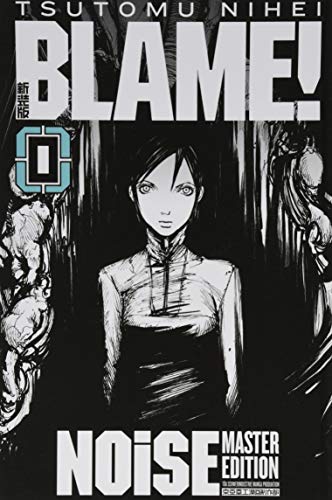
BLAME! #0
BLAME! 0: NOiSE
Die Vorgeschichte zum Bestseller BLAME!, dem Sci-Fi-Klassiker von Star-Mangaka Tsutomu Nihei. In einer edlen Hardcover-Edition!
Lange bevor Killy auf seine Suche nach den Netzwerkgenen aufbricht, folgen die junge Polizistin Musubi Susuno und ihr Partner Clauthor der Spur einer Reihe von Kindesentführungen – und werden in die grausame Intrige einer Untergrundsekte hineingezogen. Mit kunstvollen Zeichnungen entführt Tsutomu Nihei seine Leser ein weiteres Mal in die Welt von BLAME! Das Prequel NOiSE erzählt von den Anfängen der Siliziumwesen und der Schutzwache, und von den Ursprüngen von Killy selbst.
Lange bevor Killy auf seine Suche nach den Netzwerkgenen aufbricht, folgen die junge Polizistin Musubi Susuno und ihr Partner Clauthor der Spur einer Reihe von Kindesentführungen – und werden in die grausame Intrige einer Untergrundsekte hineingezogen. Mit kunstvollen Zeichnungen entführt Tsutomu Nihei seine Leser ein weiteres Mal in die Welt von BLAME! Das Prequel NOiSE erzählt von den Anfängen der Siliziumwesen und der Schutzwache, und von den Ursprüngen von Killy selbst.
192 pages, Hardcover
First published October 20, 2001
About the author
Tsutomu Nihei
216 books801 followersSee also 弐瓶 勉.
Tsutomu Nihei (弐瓶 勉 Nihei Tsutomu, born 1971) is a Japanese manga artist. His cyberpunk-influenced artwork has gained a strong cult following. He has a relatively large community of fans in Germany where his manga Blame!, NOiSE and Biomega were published by Ehapa. Blame! was also published in France and Spain by Glénat, in the US by Tokyopop and in Italy by Panini Comics.
At first he studied architecture and later it is shown up in his manga works with drawing huge structures. This became one of his general theme that makes his manga unique. His works are usually in black and white. He is also an avid fan of the video game series Halo, as he mentions in his commentary section in the Halo Graphic Novel.
Taken from Wikipedia: http://en.wikipedia.org/wiki/Tsutomu_...
Tsutomu Nihei (弐瓶 勉 Nihei Tsutomu, born 1971) is a Japanese manga artist. His cyberpunk-influenced artwork has gained a strong cult following. He has a relatively large community of fans in Germany where his manga Blame!, NOiSE and Biomega were published by Ehapa. Blame! was also published in France and Spain by Glénat, in the US by Tokyopop and in Italy by Panini Comics.
At first he studied architecture and later it is shown up in his manga works with drawing huge structures. This became one of his general theme that makes his manga unique. His works are usually in black and white. He is also an avid fan of the video game series Halo, as he mentions in his commentary section in the Halo Graphic Novel.
Taken from Wikipedia: http://en.wikipedia.org/wiki/Tsutomu_...
Ratings & Reviews
Friends & Following
Create a free account to discover what your friends think of this book!
Community Reviews
Displaying 1 - 30 of 96 reviews

February 24, 2023
I always feel at home in Nihei's goth sci-fi dystopias. Don't you want to explore an infinite city of columned plazas metal catwalks, and branching spires?

manga
January 2, 2020

I would like to note that the single most important aspect of this manga is the art, since without it, the story could not be conveyed as well, as it is here.The art isn't perfect. It's busy, sometimes unclear, and faces can be off. It's very different from the clean approach taken in most manga, but it works. This is a dirty, dark world (literally...I don't think the sun made an appearance), and the art matches.


You will notice that as you read, there is very little in the way of dialogue and I believe this serves to further place the reader into Susano's shoes- effectively portraying her feeling of loss and confusion as she wonders aimlessly through the desolate city streets. Since less dialogue serves to invite more subjective judgments on the part of the reader, rather then simply only following what the character says and taking that as how you should feel if you were to be in that position.


The issue that is immediately apparent in NOiSE is that the series starts directly with a hook that has no setting or characters to stand on. We’re introduced to two characters, the protagonist, Susono Musubi, and Clawsa, investigating a place where missing children were found dead. The chapter jumps straight into the plot, with the most basic and confusing characterization possible.
Noise is not a stand-alone work. It's the prequel to Blame and hints at the background for that manga (i.e. how that world came to be).

February 16, 2023
A cool, pulpy cybernoir with some cult-y stuff. Maybe the first thing I've read by Nihei that I can remember the plot details of. Technically marketed as the prequel to Blame! but it's also a solid standalone read.

October 23, 2009
The self-contained nature results in less filler, with the plot feeling more important to the actual volume than in BLAME!. On the other hand, the plot doesn't feel like it really leads anywhere or adds much, and is ultimately unsatisfying.

April 27, 2020
Me encanta el concepto y la idea de la historia pero deja muchas preguntas sin contestar, espero que estas se respondan en sus otras series.
January 22, 2025
It's fine, I find it hard to follow the action, but I think the main character's coolness compensates for that.

January 30, 2021
So I read this and I was totally confused. Then I realized this was set in the Blame! universe, and I know nothing about Blame! As a standalone, it was okay but it felt like I had been dropped in the middle of the story, which I sort of had just didn't realize it.
I'll just say if you don't know anything about Blame! this wont do much for you, but from the reviews I've seen Blame! fans enjoy it.
I'll just say if you don't know anything about Blame! this wont do much for you, but from the reviews I've seen Blame! fans enjoy it.

August 31, 2020
A side-addition serving as a prequel of sorts to the popular and much-acclaimed Blame!, Vol. 1, felt really hollow and devoid of a plot.
My Rating - 3/5
My Rating - 3/5

October 3, 2026
No se pierde nada si no se lee, pero como soy fan de Nihei y me gustó mucho BLAME!, quería leer esto también. Está historia ocurre antes de BLAME!, pero no hay que leerla esperando respuestas. La única respuesta que me ha dado ha sido de dónde demonios salen los seres de silíceo. Igualmente me ha gustado como complemento a la historia principal.

May 26, 2026
as usual with nihei works i just admire the art

November 24, 2025
that was so beautiful, but I still need more

April 26, 2025
Tsutomu Nihei work in NOiSE and Blame! (hereafter referred to as just 'Blame!' as this volume is a prequel and first glimpse into the world and its origin) offers a profound meditation on existential givens, bringing together Heidegger’s thrownness (Geworfenheit), being-in-the-world (In-der-Welt-sein), and the existential necessity/responsibility of choice/freedom amid a seemingly indifferent and chaotic universe. Through stark architecture, fragmented societies, and the silent persistence of its protagonist Killy, Blame! visualizes and dramatizes core existential tensions.
At its heart, Blame! portrays a world abandoned by intelligible order: the Megastructure, endlessly expanding without clear function or limit, exemplifies Heidegger’s notion of thrownness. Killy awakens into a reality he did not shape, has no power to fully comprehend, and is left to navigate without sufficient tools or guides. His journey across endless, crumbling vertical cities, across collapsing bridges and across cavernous, dead spaces, is less a quest toward a known goal than an affirmation of being amid absence. As Heidegger argues, being is always “being-thrown” into situations we do not choose, and authentic existence requires confronting this without self-deception. Blame! renders this condition literal: Killy moves through a reality so enormous and hostile that any attempt to impose human understanding seems absurd.
Structures are not merely massive, they are purposeless. Societies like the Electro-Fishers, isolated and degenerate, cling to survival but lack even myths to explain their existence. Similarly, Cibo—the cyborg scientist who aids Killy—represents the Heideggerian anxiety of technological being: a post-human entity still trapped within systems she cannot master, a being seeking freedom in a collapsed world. Her repeated deaths, mutilations, and rebirths dramatize the existential struggle: existence is no longer guaranteed by rationality or by technology, but must be reclaimed moment by moment.
In Sartrean thought, humans are condemned to freedom: they must choose, must act, despite the lack of objective meaning. Killy’s search for the Net Terminal Gene is irrational in Sartrean terms—it cannot guarantee salvation, nor is there proof of its existence—but it nonetheless constitutes a project, a self-imposed meaning. In Being and Nothingness, Sartre insists that even despair and absurdity are not escapes from responsibility; one must still act. Killy’s near-mute persistence, his refusal to abandon the search despite infinite setbacks, captures this ethic of radical commitment.
Camus’ Sisyphus, endlessly pushing his boulder uphill, finds dignity not in success but in the conscious embrace of his absurd task. Similarly, Killy’s endless traversal of the Megastructure, often in isolation and without reward, affirms existence against cosmic absurdity. His journey is not tragic but heroic in Camus’ sense: he accepts the void without recourse to illusory hope. The Megastructure’s corridors and spiral staircases, which seem to defy physics and logic, externalize Camus’ vision of a universe stripped of human-centered meaning yet still demanding engagement.
The visual style is amazing, truly unique in that i cannot find anything like it (besides another manga by Nihei). The overwhelming verticality of the Megastructure evokes the existential “fall”—a feeling of perpetual descent into meaninglessness. Endless staircases that lead nowhere, parts of the city suspended in mid-collapse, monstrous beings like the Silicon Life forms—once-human, now grotesque—stand as metaphors for the breakdown of teleological order. In traditional science fiction, architecture and technology are means of mastery; in Blame!, they are sites of alienation. The world resists being known. Heidegger’s tool-analysis (Zeug), in which objects reveal themselves primarily through their use, collapses here: tools and systems no longer disclose a world but obscure it.
Killy’s laconic existence also helps set the existential frame. Speech, a traditional marker of human community and understanding, is nearly absent. Encounters are wordless or minimalist; communication fails as often as it succeeds. This silence resonates with Heidegger’s claim that authentic being-with-others (Mitsein) is rare and difficult. Cibo’s fragile alliance with Killy momentarily restores a trace of human relationality, but their bond is tentative, imperiled by the hostile world around them. Their relationship embodies the existential necessity of solidarity without illusions: mutual aid without guarantees.
Importantly, Blame! refuses consolations typical of dystopian narratives. There is no hidden Eden, no secret rebellion, no final victory. Instead, existence itself becomes resistance. Killy’s quiet resilience, the persistence of organic and cybernetic life, even the half-forgotten rituals of survival among the Electro-Fishers—all stand as muted affirmations of being. As Camus writes, “The struggle itself… is enough to fill a man’s heart.” In Blame!, the struggle—unadorned, unrewarded, often unnoticed—is the only authentic answer to the world’s absurdity.
In sum, Blame! is a stark existential parable (among other things, e.g., just a good story without analysis). It strips away comforting narratives of progress, mastery, or redemption, and confronts the reader with a world that demands choice and action despite offering no ultimate meaning. In Killy’s endless quest through the ruins of human ambition, Nihei crystallizes the fundamental existential insight: we are thrown into a chaotic world not of our making, and our only true responsibility is to persist, to act, and thereby to affirm our being against the silence of the void.
At its heart, Blame! portrays a world abandoned by intelligible order: the Megastructure, endlessly expanding without clear function or limit, exemplifies Heidegger’s notion of thrownness. Killy awakens into a reality he did not shape, has no power to fully comprehend, and is left to navigate without sufficient tools or guides. His journey across endless, crumbling vertical cities, across collapsing bridges and across cavernous, dead spaces, is less a quest toward a known goal than an affirmation of being amid absence. As Heidegger argues, being is always “being-thrown” into situations we do not choose, and authentic existence requires confronting this without self-deception. Blame! renders this condition literal: Killy moves through a reality so enormous and hostile that any attempt to impose human understanding seems absurd.
Structures are not merely massive, they are purposeless. Societies like the Electro-Fishers, isolated and degenerate, cling to survival but lack even myths to explain their existence. Similarly, Cibo—the cyborg scientist who aids Killy—represents the Heideggerian anxiety of technological being: a post-human entity still trapped within systems she cannot master, a being seeking freedom in a collapsed world. Her repeated deaths, mutilations, and rebirths dramatize the existential struggle: existence is no longer guaranteed by rationality or by technology, but must be reclaimed moment by moment.
In Sartrean thought, humans are condemned to freedom: they must choose, must act, despite the lack of objective meaning. Killy’s search for the Net Terminal Gene is irrational in Sartrean terms—it cannot guarantee salvation, nor is there proof of its existence—but it nonetheless constitutes a project, a self-imposed meaning. In Being and Nothingness, Sartre insists that even despair and absurdity are not escapes from responsibility; one must still act. Killy’s near-mute persistence, his refusal to abandon the search despite infinite setbacks, captures this ethic of radical commitment.
Camus’ Sisyphus, endlessly pushing his boulder uphill, finds dignity not in success but in the conscious embrace of his absurd task. Similarly, Killy’s endless traversal of the Megastructure, often in isolation and without reward, affirms existence against cosmic absurdity. His journey is not tragic but heroic in Camus’ sense: he accepts the void without recourse to illusory hope. The Megastructure’s corridors and spiral staircases, which seem to defy physics and logic, externalize Camus’ vision of a universe stripped of human-centered meaning yet still demanding engagement.
The visual style is amazing, truly unique in that i cannot find anything like it (besides another manga by Nihei). The overwhelming verticality of the Megastructure evokes the existential “fall”—a feeling of perpetual descent into meaninglessness. Endless staircases that lead nowhere, parts of the city suspended in mid-collapse, monstrous beings like the Silicon Life forms—once-human, now grotesque—stand as metaphors for the breakdown of teleological order. In traditional science fiction, architecture and technology are means of mastery; in Blame!, they are sites of alienation. The world resists being known. Heidegger’s tool-analysis (Zeug), in which objects reveal themselves primarily through their use, collapses here: tools and systems no longer disclose a world but obscure it.
Killy’s laconic existence also helps set the existential frame. Speech, a traditional marker of human community and understanding, is nearly absent. Encounters are wordless or minimalist; communication fails as often as it succeeds. This silence resonates with Heidegger’s claim that authentic being-with-others (Mitsein) is rare and difficult. Cibo’s fragile alliance with Killy momentarily restores a trace of human relationality, but their bond is tentative, imperiled by the hostile world around them. Their relationship embodies the existential necessity of solidarity without illusions: mutual aid without guarantees.
Importantly, Blame! refuses consolations typical of dystopian narratives. There is no hidden Eden, no secret rebellion, no final victory. Instead, existence itself becomes resistance. Killy’s quiet resilience, the persistence of organic and cybernetic life, even the half-forgotten rituals of survival among the Electro-Fishers—all stand as muted affirmations of being. As Camus writes, “The struggle itself… is enough to fill a man’s heart.” In Blame!, the struggle—unadorned, unrewarded, often unnoticed—is the only authentic answer to the world’s absurdity.
In sum, Blame! is a stark existential parable (among other things, e.g., just a good story without analysis). It strips away comforting narratives of progress, mastery, or redemption, and confronts the reader with a world that demands choice and action despite offering no ultimate meaning. In Killy’s endless quest through the ruins of human ambition, Nihei crystallizes the fundamental existential insight: we are thrown into a chaotic world not of our making, and our only true responsibility is to persist, to act, and thereby to affirm our being against the silence of the void.
March 26, 2018
Great addition to a great series
This graphic novel is a perfect addition to the BLAME! franchise and maintains the atmosphere and illustration quality of the rest of the series! However it does require some prior understanding of the rest of the series and so may not be a friendly entry into the series for newcomers.
This issue aside the story is compelling and gives the reader a great insight into BLAME! And its history.
This graphic novel is a perfect addition to the BLAME! franchise and maintains the atmosphere and illustration quality of the rest of the series! However it does require some prior understanding of the rest of the series and so may not be a friendly entry into the series for newcomers.
This issue aside the story is compelling and gives the reader a great insight into BLAME! And its history.

January 10, 2018
I'll keep this simple. If you like Blame, you'll like this.

August 10, 2018
This prequel to the main story Blame! gives you a few more clues how the story started. But really, just a few. Still so many questions open.
July 9, 2019
Everything you want and expect from peak Nihei.

May 8, 2023
Weird psychedelic scifi, like the rest of the series. Truly unique and inspiring, even if I don't understand half of what's happening.

August 7, 2024
Quand on aime la SF et les mangas, dur de passer à côté de Tsutomu Nihei mais avec son esthétique et son univers si particulier, pour ne pas dire clivant, nous sommes nombreux à ne pas avoir osé nous lancer. J’avais déjà tenté autrefois avec plusieurs de ses titres (Blame, Biomega, Knight of Sidonia) sans jamais avoir réussi à dépasser le premier tome face à l’immensité de l’univers et ma faible compréhension de celui-ci. Il aura donc fallu Noise, un oneshot, pour changer cela.
Paru initialement en 2003 dans un format manga classique, le volume a été réédité depuis en grand format pour s’harmoniser à la nouvelle édition de Blame et est présenté désormais comme un tome 0, une aventure s’inscrivant dans le même univers, comme une histoire bonus. Il faut dire que même si le dessin est plus discret, plus modeste, on retrouve le même univers de cyberpunk et d’enquêtes très sombre avec une terrible organisation en train de prendre le pouvoir.
Manga d’aventure, court et efficace, il nous met dans la peau de l’enquêtrice Susono Musubi qui met le doigt sur quelque chose avec son collègue en cherchant des enfants disparus. Les choses s’emballent alors et c’est une sorte de western cybernique punk totalement débridé auquel nous allons ensuite assister où des machines transhumanistes vont poursuivre notre enquêtrice qui se défendra avec une arme bien mystérieuse.
Comme toujours avec Nihei, franchement, on ne comprend pas grand-chose en dehors des minces clés qu’il nous donne et on sent derrière un univers bien plus riche à base de tromperies des humains par les machines ou d’organisation pseudo religieuse cherchant la fin de l’humanité. Mais ce n’est pas grave, on se régale de ses propositions graphiques démesurées à base d’un trait rempli de hachures sombres rappelant ces fils qui nous connectent tous de plus en plus et de ces tiges qui viennent figer béton et construction. C’est lunaire comme dessin, si immersif et ici, rempli d’une action sale et violente.
Il faut avoir le coeur accroché quand on lit du Nihei. Ce n’est pas gentil. Ce n’est pas fait pour faire rêver. C’est fait pour réveiller. On passe ici la majeure partie du temps avec une héroïne en danger cherchant à y échapper et ce genre d’action pulp violente est bandante à lire. L’auteur puise à merveille dans le registre du gore et de la SF organique pour mettre en scène pour mieux venir nous secouer et nous déranger. Et ça fonctionne à merveille ! C’est assez unique dans le milieu du manga.
Certes Noise n’est pas le chef d’oeuvre de l’auteur et c’est une oeuvre un peu inachevée, mais elle met grandement l’eau à la bouche si on est amateur de western cyberpunk un peu gore et très organique avec des planches démentielles et une action menée tambours battant dans un univers sombre et intrigant dont il faut accepter de ne pas avoir tous les codes. Pour ma part, j’ai adoré et je compte du coup redonner sa chance à l’auteur !
Article complet : https://lesblablasdetachan.wordpress....
Paru initialement en 2003 dans un format manga classique, le volume a été réédité depuis en grand format pour s’harmoniser à la nouvelle édition de Blame et est présenté désormais comme un tome 0, une aventure s’inscrivant dans le même univers, comme une histoire bonus. Il faut dire que même si le dessin est plus discret, plus modeste, on retrouve le même univers de cyberpunk et d’enquêtes très sombre avec une terrible organisation en train de prendre le pouvoir.
Manga d’aventure, court et efficace, il nous met dans la peau de l’enquêtrice Susono Musubi qui met le doigt sur quelque chose avec son collègue en cherchant des enfants disparus. Les choses s’emballent alors et c’est une sorte de western cybernique punk totalement débridé auquel nous allons ensuite assister où des machines transhumanistes vont poursuivre notre enquêtrice qui se défendra avec une arme bien mystérieuse.
Comme toujours avec Nihei, franchement, on ne comprend pas grand-chose en dehors des minces clés qu’il nous donne et on sent derrière un univers bien plus riche à base de tromperies des humains par les machines ou d’organisation pseudo religieuse cherchant la fin de l’humanité. Mais ce n’est pas grave, on se régale de ses propositions graphiques démesurées à base d’un trait rempli de hachures sombres rappelant ces fils qui nous connectent tous de plus en plus et de ces tiges qui viennent figer béton et construction. C’est lunaire comme dessin, si immersif et ici, rempli d’une action sale et violente.
Il faut avoir le coeur accroché quand on lit du Nihei. Ce n’est pas gentil. Ce n’est pas fait pour faire rêver. C’est fait pour réveiller. On passe ici la majeure partie du temps avec une héroïne en danger cherchant à y échapper et ce genre d’action pulp violente est bandante à lire. L’auteur puise à merveille dans le registre du gore et de la SF organique pour mettre en scène pour mieux venir nous secouer et nous déranger. Et ça fonctionne à merveille ! C’est assez unique dans le milieu du manga.
Certes Noise n’est pas le chef d’oeuvre de l’auteur et c’est une oeuvre un peu inachevée, mais elle met grandement l’eau à la bouche si on est amateur de western cyberpunk un peu gore et très organique avec des planches démentielles et une action menée tambours battant dans un univers sombre et intrigant dont il faut accepter de ne pas avoir tous les codes. Pour ma part, j’ai adoré et je compte du coup redonner sa chance à l’auteur !
Article complet : https://lesblablasdetachan.wordpress....

January 18, 2018
“NOiSE” (2001), un volumen bajo cuyo título se recopilan tres historias de Tsutomu Nihei es, ante todo, un asombroso despliegue de imágenes oscuras e inquietantes que se presentan en su conjunto como una precuela de Blame! (1998), el primer gran trabajo en serie de este prolífico mangaka. En la primera historia, compuesta por seis capítulos, seguimos a la detective Susono Musubi, de la sección de crímenes infantiles, en una investigación concerniente al secuestro de niños de los bajos fondos de la ciudad por parte de una hermandad que pretende, mediante macabras ceremonias y experimentos, crear caos en la Red y hacerse con su dominio. Retomando algunos conceptos ya expuestos en la serie Blame!, y añadiendo un par de ideas nuevas,
El volumen se completa con una segunda historia titulada “El corredor negativo” que, sin una sola palabra durante sus escazas seis páginas, nos presenta una visión simbólica, silenciosa y extraña del mundo post humanidad, y una tercera historia que corresponde al one-shot original Blame!, que dio origen a la serie del mismo nombre y en la que aparece por primera vez su protagonista, Killy, miles de años atrás, cuando aún era humano y existía algo parecido a nuestra sociedad.
Muy en el estilo narrativo eminentemente gráfico de su autor, estas historias carecen de explicaciones formales, lo que añadido a su brevedad hace que NOiSE sea un volumen argumentalmente poco consistente por sí mismo. En cuanto al estilo de sus dibujos, en lo que también es considerado entre sus seguidores como un sello personal del autor, suelen parecer en muchas ocasiones más parecidos a bocetos que a lo que podría esperarse de un producto bien acabado y final. Como contrapartida hay que decir también que, con atención y un poco de imaginación, de sus fantásticos detalles se puede inferir mucho más de lo que se percibe en un primer vistazo.
En resumen, creo que NOiSE difícilmente será del agrado de quien lo tome como primer acercamiento a la obra de Nihei. Más bien lo recomendaría para quienes hayan disfrutado previamente con la serie Blame! y quieran echar a volar su imaginación una vez más con los delirios arquitectónicos y pesadillas biotecnológicas del creador de otras obras tan reconocidas actualmente como Biomega y Sidonia no Kishi.
Por último, decir que como obra independiente le doy tres estrellas; como trabajo inserto en el universo creado por el autor le doy cuatro.
El volumen se completa con una segunda historia titulada “El corredor negativo” que, sin una sola palabra durante sus escazas seis páginas, nos presenta una visión simbólica, silenciosa y extraña del mundo post humanidad, y una tercera historia que corresponde al one-shot original Blame!, que dio origen a la serie del mismo nombre y en la que aparece por primera vez su protagonista, Killy, miles de años atrás, cuando aún era humano y existía algo parecido a nuestra sociedad.
Muy en el estilo narrativo eminentemente gráfico de su autor, estas historias carecen de explicaciones formales, lo que añadido a su brevedad hace que NOiSE sea un volumen argumentalmente poco consistente por sí mismo. En cuanto al estilo de sus dibujos, en lo que también es considerado entre sus seguidores como un sello personal del autor, suelen parecer en muchas ocasiones más parecidos a bocetos que a lo que podría esperarse de un producto bien acabado y final. Como contrapartida hay que decir también que, con atención y un poco de imaginación, de sus fantásticos detalles se puede inferir mucho más de lo que se percibe en un primer vistazo.
En resumen, creo que NOiSE difícilmente será del agrado de quien lo tome como primer acercamiento a la obra de Nihei. Más bien lo recomendaría para quienes hayan disfrutado previamente con la serie Blame! y quieran echar a volar su imaginación una vez más con los delirios arquitectónicos y pesadillas biotecnológicas del creador de otras obras tan reconocidas actualmente como Biomega y Sidonia no Kishi.
Por último, decir que como obra independiente le doy tres estrellas; como trabajo inserto en el universo creado por el autor le doy cuatro.
December 31, 2022
It is centuries before the Kyrii and his adventures in Blame. It is time during which humanity has fallen low but still exists - at least in more consistent way.
When Susono Musubi, police inspector investigating children abductions loses her partner she discovers two things - strange satanic cult (W40K vibes all the way) using some weird technology and bodies (or parts of bodies) to bring to life what looks like Safeguard Exterminators from Blame and weird looking short sword that brings total destruction when she uses it for the first time. If one is familiar with the W40K then delivery of "time bomb" device with remains of children linked to cybernetic device and spawning of Exterminator like a warp demon brings parallels with the Chaos cults.
I wont go into more details because of spoilers. What I can say is that story shows origins of Net Terminal gene was introduced (too real for me considering trends in our crazy world), how Silicon Life came to be, and what was the goal of Safeguard (especially terrifying statement that humans without Net Terminal Gene will be terminated with extreme prejudice - and this was way before world as we know ti from Blame).
Ending is as grim as expected.
Excellent book, very atmospheric art and gotta admit more action and less introspection than original Blame volumes. Which was good for a change.
Great addition to fans of original Blame (although do not expect too many revelations) and Lovecraftian/W40K SF/fantasy horror.
When Susono Musubi, police inspector investigating children abductions loses her partner she discovers two things - strange satanic cult (W40K vibes all the way) using some weird technology and bodies (or parts of bodies) to bring to life what looks like Safeguard Exterminators from Blame and weird looking short sword that brings total destruction when she uses it for the first time. If one is familiar with the W40K then delivery of "time bomb" device with remains of children linked to cybernetic device and spawning of Exterminator like a warp demon brings parallels with the Chaos cults.
I wont go into more details because of spoilers. What I can say is that story shows origins of Net Terminal gene was introduced (too real for me considering trends in our crazy world), how Silicon Life came to be, and what was the goal of Safeguard (especially terrifying statement that humans without Net Terminal Gene will be terminated with extreme prejudice - and this was way before world as we know ti from Blame).
Ending is as grim as expected.
Excellent book, very atmospheric art and gotta admit more action and less introspection than original Blame volumes. Which was good for a change.
Great addition to fans of original Blame (although do not expect too many revelations) and Lovecraftian/W40K SF/fantasy horror.
January 24, 2026
i, like many others, read snikt! purely for nihei's work but, to spice up my comic reading, i like to sprinkle in some manga: it's easier to carry around and i can read it before sleeping --
not that i read this before sleeping because this was scary as shit
now, i don't know too much about blame but i know enough and NOiSE as a prequel doesn't really give you too much context, 50% through i started getting lost but the ending really brought it all together like damn - that just happened
nihei's raw inking and gritty architectural work is so fitting, like, imagine the guy woke up and decided that instead of making dystopians he wanted to draw romances, he's like my junji ito and i haven't read any ito (i should) but he's filling in until i can stomach reading more scary stuff. look, nihei can draw romances if he wants to but this man was put on this earth to create dark, sci-fi stories
as a massive d-dubs fan, i love when the creator is both the author and the illustrator; there's a difference in the work because in most cases you understand your vision more than anyone else
keen to learn more about this world and its scarily accurate representation of our rapidly developing relationship with artificial intelligence. man, i love literature !!!
3.5/5
not that i read this before sleeping because this was scary as shit
now, i don't know too much about blame but i know enough and NOiSE as a prequel doesn't really give you too much context, 50% through i started getting lost but the ending really brought it all together like damn - that just happened
nihei's raw inking and gritty architectural work is so fitting, like, imagine the guy woke up and decided that instead of making dystopians he wanted to draw romances, he's like my junji ito and i haven't read any ito (i should) but he's filling in until i can stomach reading more scary stuff. look, nihei can draw romances if he wants to but this man was put on this earth to create dark, sci-fi stories
as a massive d-dubs fan, i love when the creator is both the author and the illustrator; there's a difference in the work because in most cases you understand your vision more than anyone else
keen to learn more about this world and its scarily accurate representation of our rapidly developing relationship with artificial intelligence. man, i love literature !!!
3.5/5

April 15, 2025
4/5
A really good prequel to Blame!. I enjoy that it's a different character, and the world feels so viscerally real. It is both entrancing and disgusting to see how the people live, where they live, how they move, etc.
If your environment is void of beauty, how would you live? Would you find it, create it; would you dream about it, hope for it? Or would you resign to your immediate forces. When would it be wise to surrender, and when would it be wise to fight for?
I wonder if I'm using my time well. I don't know what that fully means, but I worry that I keep wasting my life on things which don't matter. How many of my habits inhibit me from enjoying life in a fuller sense? Too many, I think. At least now. Always so worked up. Nonverbal. Don't really talk in classes; struggle to keep conversation with my other quiet roommate. Bought him a pizza for his birthday the other day. We went to a nice place; brick oven-style pizza. In the living room tonight he complained to me about how bad that quite expensive pizza was. I had to give him a laugh. I thought I would implode. He has been a good roommate, and I didn't get him food to earn something for myself. It was just a nice thing to do. Unfortunate he didn't like it.
A really good prequel to Blame!. I enjoy that it's a different character, and the world feels so viscerally real. It is both entrancing and disgusting to see how the people live, where they live, how they move, etc.
If your environment is void of beauty, how would you live? Would you find it, create it; would you dream about it, hope for it? Or would you resign to your immediate forces. When would it be wise to surrender, and when would it be wise to fight for?
I wonder if I'm using my time well. I don't know what that fully means, but I worry that I keep wasting my life on things which don't matter. How many of my habits inhibit me from enjoying life in a fuller sense? Too many, I think. At least now. Always so worked up. Nonverbal. Don't really talk in classes; struggle to keep conversation with my other quiet roommate. Bought him a pizza for his birthday the other day. We went to a nice place; brick oven-style pizza. In the living room tonight he complained to me about how bad that quite expensive pizza was. I had to give him a laugh. I thought I would implode. He has been a good roommate, and I didn't get him food to earn something for myself. It was just a nice thing to do. Unfortunate he didn't like it.

December 30, 2023
I love Tsutomu Nihei's work, it's just gorgeous and this doesn't disappoint it's a visual joy around every corner. I like the story as well but as this was a short story and one volume there wasn't much depth you could get from it.
It's about a cop investigating a cyborg cult, it's weird and it doesn't really explain what is going on but it's decent and there are a lot of twists and turns to keep you entertained. I'd love to say much but apart from the cop losing her job because of it and going the rouge detective trope that we are all used to there isn't much to talk about.
The highlight of this was strangely enough Four Seasons Chapter Blame! which was the original Blame! prototype, the story is quite and simple another investigation story but the art it's very raw and feels much more closer to a Shonen art that Tsutomu Nihei's monstrous art we usually get, it was fascinating to see.
It's about a cop investigating a cyborg cult, it's weird and it doesn't really explain what is going on but it's decent and there are a lot of twists and turns to keep you entertained. I'd love to say much but apart from the cop losing her job because of it and going the rouge detective trope that we are all used to there isn't much to talk about.
The highlight of this was strangely enough Four Seasons Chapter Blame! which was the original Blame! prototype, the story is quite and simple another investigation story but the art it's very raw and feels much more closer to a Shonen art that Tsutomu Nihei's monstrous art we usually get, it was fascinating to see.

January 25, 2023
Comecei a ler Blame! e não entendi nada, então decidi dar uma chance a esse prequel, que dá um pouco de profundidade narrativa que falta nos primeiros capítulos da obra prima do autor. O estilo de desenho dele é muito característico, bem sujo, com muitas hachuras e personagens muitas vezes lembrando mais a tradição de quadrinhos ocidental do que a maioria dos mangás. Mas o destaque sem dúvida é a profundidade dos cenários. Nihei tem um dom para a arquitetura, que aqui acaba não se desenvolvendo tanto, mas que serve como aperitivo para a leitura de Blame! A estética parece saída dos filmes de Alien (e das obras de Giger, de forma mais ampla) no que se refere à mistura entre gótico e ficção científica, mas trocando a claustrofobia por megacontruções. A vibe lembra muito certos jogos antigos da franquia Shin Megami Tensei, especialmente na mistura de tecnologia e satanismo.

February 2, 2023
Parecía una buena obra independiente al Blameverse o cualquier otra obra clave famosa de este mangaka, pero pasados los 2 primeros capítulos de tratar de entender mínimamente el mundo donde se mueve esta protagonista, donde la religión está en sus últimos estertores y necesitando fagocitar esa Red de información que domina todo aspecto de la vida... Luego hay una espada sci-fi super bigarda... Pero Nihei no da respiro alguno y pronto el lectore solo puede seguir pasando viñetas y escenas de acción over the top destrozando antagonistas biomecanicos hasta poder vislumbrar lo que podremos encontrarnos en Blame mediante dos one-shots anexos (uno de ellos, de hecho, el que sirvió de base para Nihei al ser además su primera obra presentada a editorial).
Si conoces a Nihei, pues funciona mínimamente, no será caso para profanos.
Si conoces a Nihei, pues funciona mínimamente, no será caso para profanos.

November 17, 2018
A dark and gruesome manga with technological themes and an overall sense of malaise. I personally find manga/graphic novels difficult to follow sometimes, being much more of a verbal learner than a visual one. Given the chaotic/dark style of the illustrations in this volume, I found this doubly true, and most often was guessing what the characters were doing or what the action scenes were meant to represent. The theme of the book was interesting to a point, but the general confusion about plot-points, omission of relevant information, and stilted dialogue made the story itself not much fun to follow.
More of a great theme-piece than an actual narrative/story, still worth picking up for the illustrations alone, especially if you need some gruesome techno-fear in your life.
More of a great theme-piece than an actual narrative/story, still worth picking up for the illustrations alone, especially if you need some gruesome techno-fear in your life.

January 15, 2024
It was interesting to see the world of Blame with people living within it. This Blade Runner-esque feeling gave the first few chapters a horror feeling, which was well executed.
But as with most Nihei work, there were panels that were a bit confusing and a nebulous-like plot that was difficult to pin down. The last chapter was quite a mystery.
However, the art was fantastic, and the atmosphere of this dark city with levels and nooks and crannies where dark things lie and are unaccounted for, really blended well.
It would have been more interesting to see more of this human-based Blame world with the detective trying to solve crimes.
But as with most Nihei work, there were panels that were a bit confusing and a nebulous-like plot that was difficult to pin down. The last chapter was quite a mystery.
However, the art was fantastic, and the atmosphere of this dark city with levels and nooks and crannies where dark things lie and are unaccounted for, really blended well.
It would have been more interesting to see more of this human-based Blame world with the detective trying to solve crimes.
July 27, 2026
Tsutomu Nihei is a creator whose works I find polarizing: from title to title (or even chapter to chapter) I can find them alternately enjoyable or boring, with artwork that is either inspiringly imaginative or messily crude.
Without context, the story of Noise is simple enough, but the difficulty comes in trying to decipher the artwork. Noise uses an expressive and painterly art style that feels rushed, which is only confirmed by the relative tidiness of the bonus chapter that follows it.
In all, Noise is probably worth reading for fans of Blame!, as it supposedly sets up the background of that particular world. On its own, though, it's not a particularly deep or compelling book.
Without context, the story of Noise is simple enough, but the difficulty comes in trying to decipher the artwork. Noise uses an expressive and painterly art style that feels rushed, which is only confirmed by the relative tidiness of the bonus chapter that follows it.
In all, Noise is probably worth reading for fans of Blame!, as it supposedly sets up the background of that particular world. On its own, though, it's not a particularly deep or compelling book.

July 9, 2023
Three millennia before the events of BLAME!, Musubi's partner is murdered during the search for kidnapped children, driving her away from the force and on a quest for vengeance - one that will transform her as a dark force drives its way across the seemingly endless world...Nihei draws readers into a grimdark realm, atmospheric and lavishly illustrated, with a decently intriguing mystery to grip fans and newcomers alike. Who are these masked cultists, and what are their plans for all the missing children?

June 11, 2022
I enjoyed it when I was younger, but to be honest... It's not that great, especially as a stand-alone piece. If you love BLAME!, of course, check this out as well, but don't set your expectations too high, there's no real explanation here. Also, unpopular opinion time: The art also didn't stand the test of time, unlike Biomega, for example.
As for the content of the manga - dark, dystopian, little to no plotline, many buildings, no nature, future bad.
As for the content of the manga - dark, dystopian, little to no plotline, many buildings, no nature, future bad.
Displaying 1 - 30 of 96 reviews