Érik Orsenna, pseudonyme d'Erik Arnoult est un romancier français. Après des études de philosophie et de sciences politiques, il a fait des études en Angleterre (London School of Economics). Son pseudonyme Orsenna est le nom de la vieille ville du Rivage des Syrtes, de Julien Gracq.
Érik Orsenna, nom de plume of Erik Arnoult is a French novelist. After studying philosophy and political science, he studied economics at the London School of Economics. His pseudonym Orsenna is the name of the old town of The Opposing Shore by Julien Gracq.
Dizem que Cristóvão Colombo inspirou tantos livros como a II Guerra Mundial. A ser verdade, é obra!
«Empresa das Índias» (2010) é um saboroso livro escrito com um grande sentido de humor (pelo menos até meio da narrativa) por Erik Orsenna, vencedor do Prémio Goncourt em 1988 com o romance «A Exposição Colonial»
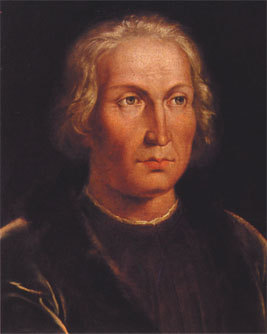
Através dos olhos do irmão Bartolomeu, cartógrafo em Lisboa, conta-se a história da vivência e aprendizagem portuguesa do outro Colombo, o ruivo de «cabelo da cor do sol poente» que tinha o sonho de chegar à Índia por Oeste.
Uma grande variedade de personagens onde até existe um fabricante de viúvas – afinal, as portuguesas da época dos Descobrimentos não tinham tanta vocação para Penélopes como eu pensava!
Numa entrevista ao Diário de Notícias, Orsenna explica, porém, que Lisboa é a verdadeira personagem principal do seu romance e descreve a cidade portuguesa como sendo na época «a capital da curiosidade.»
As páginas dedicadas - e são muitas - a essa Lisboa, capital do «glorioso país da mentira», vibrante e cosmopolita da época, onde coabitavam conhecimento, verdades e mentiras ao serviço do secretismo que caracterizou a saga dos Descobrimentos, são as mais interessantes do livro.
Gostei de ler, ou não fosse eu uma apaixonada pelos séculos XV e XVI espanhol e português.
The younger brother of Christopher Columbus speaks,...he says about the Hispañola Island (*): he himself and brother didn't discover paradise, Bible's,...but got close to it.
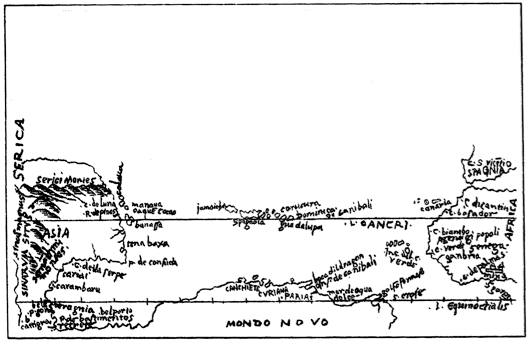
(One of the three maplets, or map sketches, attributed to Bartholomew Columbus showing the new discoveries “attached to Asia”, also shown is western Africa)
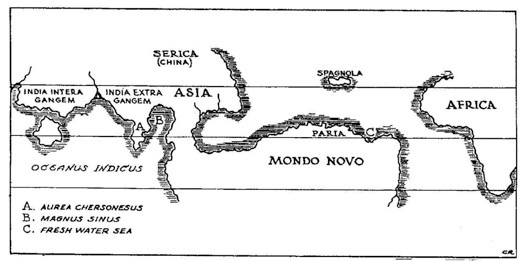
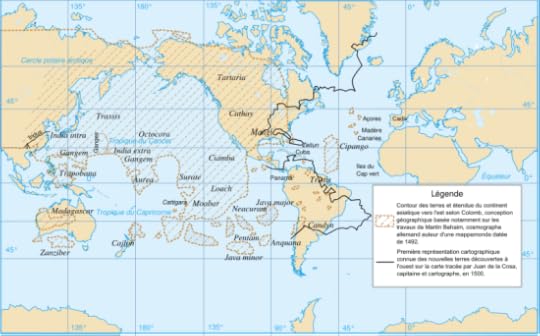
(A re-drawing of all three map sketches illustrating Columbus’ view of the world)
Bartolomeo recounts the inflamed church sermons of Frei [Friar] Antonio Montesinos: in defense of the native Indians, victims of exploitation. And there's this man who travelled with Colombo in his second voyage (1493) to the New World: Bartolomeo de las Casas. Both Bartolomeos talk about the Discoveries and the cruelty it brought to the Island.
It's 1511, Christmas time. The Bartolomeos try to find the answer to the problem in the Bible. Columbus and his brother used to read a chapter of the Book every Sunday, back in Lisbon.
Oh Lisbon! once, so great you were...!
It seems all started in Lisbon, Bartolomeo recalls. He had spent childhood in Genova, Italy, with his brother. Mother Susana had arranged them to attend the worst school in the place; a school where Bartolomeo was educated in the "Holy Ignorance" spirit- the religious one...the one that made Bartolomeo think for some time that the Earth was flat.
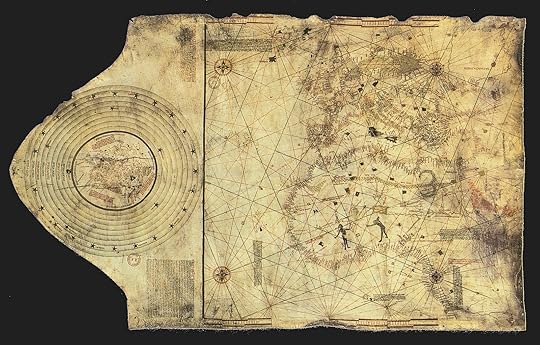
(The “Columbus map” which perhaps was drawn by Christopher Columbus and his brother Bartolomeo in Lisbon around 1490 before the discovery of the New World, showing the known world in their time)
And then 1469: he arrives to Lisbon, and with some difficulty and luck gets a job in the office of the great Cartographer Andrea. This one will open his eyes in what concerns geography knowledge. Andrea teaches Bartolomeo: Erastotenes, Hiparco of Niceia and the Jew Abraham Cresques (author of the Catalan Atlas). Bartolomeu goes through rebellion feelings towards his previous education. He still remembers with some jealousy back in Genova: "Christopher's only interest was his Enterprise [of the Indies] and everybody cared only about Christopher".
In Lisbon, it´s a new vision of the world, timid Bartolomeo develops: Earth as a sphere.
(The "Colombus map" was drawn circa 1490 in the workshop of Bartolomeo and Christopher Columbus in Lisbon)
In the city there's so much agitation and people rush constantly to see the ships arriving; like that one that brought a rhinoceros; what a creature from another world! A mix of animal and rock...a beast not created by God,says a priest in his church: an entity issued from a "hole in time"; let's burn it!! And then the crowd wants more: a fight! the rhinoceros versus an elephant in a public plaza; it seems the rhino charged...the elephant got away,...and later, with rhino tusks, a business thrived for a short while: the magic virility tusks...powder.
I won't resist quoting Erik Orsenna vision of the Portuguese: "Inhabitants of a lovely country, and so tempered, sometimes too quiet, the Portuguese could not avoid falling in love with the wild life". Correct.
After the rhinos came the turtles and the leprosy remedies; and there's this feverish endeavor to name (in Portuguese! No savage syllables allowed!) all the wild species imported; so, "mogno" for a tree, and "lamantin" for a kind of seal, and so on.
The King expressly instituted an Academy of Translation. Yes, Italian/Genovese Bartolomeo was witnessing these manoeuvres in Portuguese land. Bartolomeu learned that the Lie is daughter of the Truth...and at the Cartographer's he understands why two kinds of maps are being made: the true ones for the King and the false ones to fool the enemies.
In 1473 he receives one visitor: red-hair brother Christopher, so busy, it's been years, voyaging through the Atlantic Ocean. Bartolomeu now is no more a child; Christopher mocks about the maps of Andrea and is obsessed with the "Journey Around"...; and reveals a true faith in the stars, the sea currents and the winds; it's a brief encounter.
Bartolomeu felt the older brother, the wizard of his childhood, wanted to hire him.
Amazing description of Lisbon of those times; one unforgettable detail: a garden for the blind...
(*) A major island in the Caribbean, containing the two sovereign states of the Dominican Republic and Haiti.
Celui ci est l'un parmi nombreux livres qui parlent de cristophe Colomb et de sa découverte des Indes. Erik Orsenna nous emporte dans ce roman sur les chemins de l'histoire, il nous parle de cristophe un peu, mais sur tout de son frère Bartolomé ainsi sa vision des choses et sa participation à l'établissement du rêve de son frère. On découvre aussi Lisbonne et la vie des cartographes. C'est un livre a mettre entre tous les mains.
Au risque de passer pour une snob je n'ai pas tellement accrochée avec ce livre et son histoire. Je pensais lire l'envers du décors du voyage de Christophe Colomb, ne serait-ce que des détails inédits mais malheureusement il ne se passe absolument rien dans ce livre.
Le style est très bon et si le lien n'était pas fait avec Colomb, le livre serait, je pense, meilleur. On passe son temps a attendre qu'il se passe quelque chose, l'auteur flirte avec la supposée folie de son frère, les choses terribles qu'il a vue... Il faut attendre les dernières pages pour que le personnage avoue, du bout des lèvres, des secrets qui laissent un peu sur la faim.
Cela ressemble à un exercice de style litteraire, raconter une histoire d'un autre point de vue. Dans ce cas-là, l’exercice est réussi. Cependant cela n'en fait pas forcément un roman.
No sé mucho, o más bien nada, de estos temas de descubrimientos y conquista, pero este libro me gustó bastante. En algunas partes me pareció tedioso y tardé más de lo que pensé que tardaría en terminarlo, pero creo que lo que no quería era que acabara la historia.
Debo confesar que me atrapó mucho más la historia de Bartolomé que la de Cristóbal.
Este libro me dejó un montón de temas y personajes para investigar.
Aunque una mención al Rey de Cataluña (sic) en la primera página y una aseveración sobre la menor crueldad del colonialismo portugués sobre el español, basado sólo en que aquel actuó sobre uns porción de terreno menor, hace que dudes de la fiabilidad de lo escrito, el libro va discurriendo como una carabela sobre el mar. Interesante sobre todo para amantes de cartografía y navegación
Erik Orsenna tem um estilo maravilhoso de escrever. Mistura poesia com ironia e bom humor. Esse livro trata da preparacao da viagem de descoberta. Tudo aqui se passa antes da viagem. O Livro é escrito na forma de descricao dessa preparacao pelo seu irmao mais jovem Bartolomeu. Extremamente interessante no que diz respeito à cartografia da época.
J’aime le style d’Orsenna et sa capacité à nous immerger dans un espace / une époque. De plus point de vue intéressant que de découvrir la découverte de l’Amérique via le point de vue du frère de Christophe Colomb
Fantástica narrativa de Orsenna, quizá haya muchos saltos que destantean a la historia y el final se siente dejado a un lado, a diferencia de otras secuencias en las que uno queda enganchado, pero sin duda una experiencia fantástica.
Loved this book. I picked it up from a "leave a book, take a book" shelf at a conference center in Singapore (the book I left was IN COLD BLOOD by Capote). Orsenna pulls off a tough challenge with this volume: the "less successful younger brother" shtick. But he nails it. The book isn't about exploration, maps, or history. It's about an idea - the idea of this "enterprise of the Indies," Christopher Columbus's dream of sailing west to find the Indies. Narrating to a Dominican friar, Bartolomeo Columbus recounts his childhood in Genoa with his older brother, the brother's long years away at sea in the 1470s and '80s, and his obsessive - almost desperate - efforts to assess the size of the Asian continent as it extends eastward, away from Europe. The farther Asia reaches, the smaller the expanse of ocean that Columbus will have to cross to land there from the East.
There is a focus, of course, on Bartolomeo's many years as a mapmaker, and those interested in cartography (or the idea of it, even) will find the first half of the book very engaging, just on that basis.
The language is tinged with enough detail to evoke the 15th century European setting, but the narrative moves quickly enough between the worldly and the personal to keep the story interesting. Orsenna avoids the mistake (of which AS Byatt and Charles Frazier are among the worst offenders) of giving too much period detail in an attempt to legitimize the setting. Not needed: the ideas carry the work forward, not the recipes or the style of hat.
I knew nothing about Orsenna before reading this, but will seek out more of his works, based on L'ENTREPRISE.
Qué mejor para alguien apasionado de la historia moderna un libro sobre este periodo contado por uno de sus protagonistas? Claro que en clave de ficcion, el hermano de Cristobal Colon relata como fueron los hechos que llevaron a su hermano a pensar y planificar su famoso viaje por occidente para alcanzar las Indias.
2.5 would have been a more fair rating, as it was an interesting and original way to tell about the discovery of America; on the other hand, the first person and the voice used for the narrative never convinced me.
Eu, que costumo gostar de tudo o que esteja relacionado com a história, não gostei muito deste livro. O autor relata os preparativos da viagem de Cristóvão Colombo mas, na minha opinião, não consegue prender o leitor.
Il est toujours intéressant et agréable de découvrir une histoire que l'on connaît à travers un autre point de vu mais on ne s'attache pas vraiment à un des personnages et les anecdotes historiques qui pourraient compenser cette distance ne sont pas au rendez-vous. Un peu déçu par le tout.
The live of Bartholomew Columbus, younger brother of Christopher and governor of Hispaniola. He talks about his young adult life in Lisbon before his brother's voyages. An okay work of fiction.
Si en vez de un sólo libro de 500 páginas, fueran 5 de 100, sería una serie de libritos maravillosos. Pero como no es así, el libro es un tostón aburridísimo e infumable.