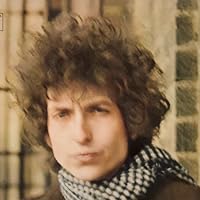
A stunning documentary portrait, Don't Look Back is the complete book of the cinema verite film of Bob Dylan--his poetry, his philosophy, his personality, his life onstage and off during a smash hit concert tour of England. Included in the text are the lyrics to his most famous songs--"Gates of Eden," "The Times They Are A-Changin'" "Don't Think Twice," and others. The photographs--over 200 of them--are from actual frames of the Leacock Pennebaker film.
Super duper bra! Perfekt bok till en Bob filmen eftersom han ibland han prata lite sluddrigt… Den var rolig att läsa eftersom jag har sett filmen så många gånger och kunde se varje scen framför mig. Fina bilder och bra och tydligt upplagt, hade kunnat bli rörigt eftersom hela boken består av dialoger men det var mycket tidigt. Det känns också häftigt att läsa en bok där det exemplar jag håller i original (1968) och att George Harrison också läst den!!!
Few seem as capable of handling frenzy on a gigantic scale as D.A. Pennebaker. From Crisis to Primary, Monterey Pop to Don't Look Back, each film captures a massive disruption of the status quo. Pennebaker, who was born in Evanston, Illinois, in 1925, confesses that besides luck (and the ability to be in the right place at the right time) his enduring good fortune may be due to the talent that has gathered around his nest.
The following interview (excerpted here from the extensive STOP SMILING cover story) took place in Pennebaker's office in the Upper West Side of New York, which he shares with his wife and collaborator Chris Hegedus, director Nick Doob and a host of talented, ambitious documentary filmmakers.
Stop Smiling: How has “documentary” changed in meaning over the years?
D.A. Pennebaker: I think a lot of people making so-called documentaries are really making personal, hybrid films. The difference between a documentary and a fiction film is getting harder to find. If you re-enact stuff, is that a documentary? Maybe it is, if you say so! In coming years, the line will blur more and more. Documentaries have simply become interesting to do, and there might be money there. It's very much like the novel bursting out at the beginning of the last century. There were certain writers whose voices you wanted to hear. I think that's happening now with documentary makers.
SS: How do you know when a project is right for you?
DAP: We're sort of like Robinson Crusoe: We're sitting on this island, day after day, no particular thoughts come to us. But somewhere in the back of our heads is the idea we're supposed to get off of here! Then one day you see a footprint — and that gives us a sense of action. We're always looking for that footprint. The film has to come to us in some fashion where we understand it wants to happen. And then we join hands with it and see what comes. You'd have a hard time selling stock in this company on that basis.
In this book companion piece to the landmark 1967 cinéma vérité documentary, Pennebaker chronicles the life of Bob Dylan on the road during a series of concerts across England in 1966. With interviews, film transcripts, and stills from the documentary, the story of one of the greatest artists and periods in rock and roll continues to be relevant today.
The book was enjoyable but doesn't depart from the source material. The book is literally the documentary but in printed form. Shot details, interviews, and footage are faithfully transcribed. Images from the movie also provide a visual element to the narrative that reinforce the book's companion status to the film.
"Don't Look Back" was a decent read, but not entirely necessary. The movie is perfect and is the greatest rock documentary of all time. The magic, spontaneity, and spirit of the film don't translate well to the page. If you want to experience Dylan in his most eccentric and prolific form, just watch the documentary.
Transcript of a movie I haven't actually seen (with stills). Seems like a good snapshot of early Dylan, the Dylan that captured the imagination of at least one entire generation