

What do you think?
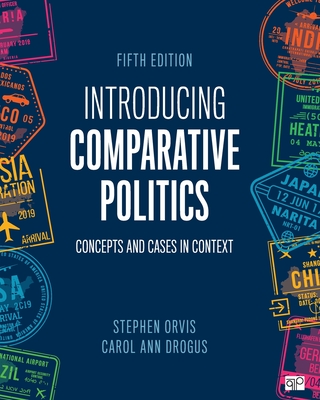
Introducing Comparative Politics: Concepts and Cases in Context
Organized thematically around important questions in comparative politics―who rules? what explains political behavior? where and why?― Introducing Comparative Politics, Fifth Edition , integrates a set of extended case studies of 11 countries that vividly illustrate issues in cross-national context. Serving as touchstones, the cases are placed within the chapters where they make the most sense ―not separated from the theory or in a separate volume―helping students make connections between the two earlier in the semester. The book’s hybrid organization gives students a more holistic view of comparative politics.
650 pages, Paperback
First published January 14, 2014
Ratings & Reviews
Friends & Following
Create a free account to discover what your friends think of this book!
Community Reviews
Displaying 1 - 5 of 5 reviews

Read
April 9, 2021lezgoooo baybeee (for the record, the content of this textbook interested me more than my last polisci textbook)

August 22, 2022
This textbook was used by my teacher for AP Comparative Government and Politics. This book was written for first-year college Comparative Politics, so it was stuffed with so much unnecessary information for the AP exam. The tests I had to take for each chapter were also hard. If I hadn't improved so much on the tests in the second semester, I probably wouldn't have ended with an A on the AP course.

June 16, 2023
Not the best textbook choice for learning just the material for the AP course, but it obviously comes from the teachers' heart of wanting students to not just learn the material, but to become interested in political science and all of its intricacies, which I appreciate.

April 14, 2021
Explains concepts well. Unnecessarily long. Boring but good information and well structured. Useful examples but examples are often too long.

April 21, 2017
PLS 103: Issues in Comparative Politics
Displaying 1 - 5 of 5 reviews