

What do you think?

Wretchedness
Waiting by the canal in Malmö, a young cellist meets a disorientated junkie. The encounter sends him into a turmoil of memories, voices and associations. As the cellist oscillates between present and past, he is paralysed by doubt and confusion and he begins to question his own place in society.
From sprawling social housing estates, via basement clubs and squat parties, and culminating in a dramatic role reversal, Wretchedness is a delirious trip through Europe’s underbelly. With a rhythmic, mesmerising flow, Tichy’s novel explores the possibility of social mobility and the ambivalent desire to escape your origins, asking how to love your neighbour when that neighbour is an addict, a criminal, wretched.
From sprawling social housing estates, via basement clubs and squat parties, and culminating in a dramatic role reversal, Wretchedness is a delirious trip through Europe’s underbelly. With a rhythmic, mesmerising flow, Tichy’s novel explores the possibility of social mobility and the ambivalent desire to escape your origins, asking how to love your neighbour when that neighbour is an addict, a criminal, wretched.
176 pages, Paperback
First published August 1, 2016
Ratings & Reviews
Friends & Following
Create a free account to discover what your friends think of this book!
Community Reviews
Displaying 1 - 30 of 91 reviews

Read
March 18, 2021
Literary critic James Wood writes: "Reality examined to the point of madness. What would this look like in contemporary writing? It might look like the fiction of László Krasznahorkai, the difficult, the peculiar, obsessive visionary Hungarian novelist."
After multiple readings of Wretchedness, I'd suggest it might also look like the fiction of the young Czech Polish author Andrzej Tichý.
The novel's opening scene sets the frame: it's late October down by the canal in the Swedish city of Malmö and the narrator, a gent in his late thirties who plays the cello, takes in the whitish-pink perfumed petals of the wax plants as he waits for two of his fellow classical musicians, a guitarist and a composer. He reflects on their morning practice session, a focused, fruitful run-through of music by the innovative 20th century composer Giacinto Scelsi. He tries to think of the name of the Italian philosopher who wrote an incisive essay on Scelsi when he's jolted out of his reverie by a thin young guy wearing a black hooded jacket asking if he can spare some change.
You would think a classical musician reflecting on philosophy and art, imbibing the fragrance and subtle beauty of flowers would come from a background where supportive parents provided a safe home and the resources necessary to foster a son's development as a budding cellist. However, this was decidedly not the case - our tale's narrator survived a life of squalor, of pain, a life lived in a slum filled with drugs, violence, fear, crime, surrounded by hatred based on nationality and race.
The book's chapters are, in effect, eight paragraphs consisting of mostly long, rambling Thomas Bernhard-esque sentences that seem to go on forever. However, there's good news: although some bits of drug and punk lingo might be unfamiliar, the language is clear; there's none of that Irvine Welsh mashing of words into heavy accents or regional dialects. Special call-out to Nichola Smalley's English translation from the original Swedish.
"I kick him in the calves a few times and press my forehead against the bridge of his nose, with small jolts, to push him away. A pulsating rhythm, a repeating pattern, a regular oscillation between stronger and weaker points in repeating cycles of various kinds. Bach's cello suites, where the fuck did you get that from you little cunt, get out of here, a sucker punch and a headbutt and there's no one else left in the room, and my tongue is still silent, unswollen, but now I know I'm Cody."
Re the above quote: note the use of the present tense (in-your-face nowness) as action seamlessly shifts between music and street violence, as if, for example, a reference to C in the world of Wretchedness can signify the key of C and/or the snorting of C.
A typical question I had to ask myself while reading: does this scene depict an urban brawl with avant-garde music playing in the background or are we among attendees at a concert of classical music where a cadenza prompts one of the musicians (narrator Cody?) to think back to an episode of Clockwork Orange ultra-violence?
Cody recollects growing up in a Sweden not usually visible or media-worthy for those outside the country, a Sweden not of affluent Swedes but of a mixing of races and ethnic groups in neighborhoods degraded as "human rubbish dumps," neighborhoods where young gangs roamed and inhabitants were pushed, shoved and reduced to struggle through hardscrabble alienation and pain. Andrzej Tichý social commentary, anyone?
"I figured out that they weren't Turks after all, they were like Christian Armenians, or Assyrians, or Syrians or something...but we didn't have any Iranians, you know, it was mostly Yugos, Chileans, Hungarians, Roma, Albanians and Poles, no Finns, or maybe a few, Arabs from different countries, Turks, Afghans, Somalis, a few Russians, a load of dropout Swedes, yeah, yeah."
Yet, there's music such as Scelsi's String Quartet No. 4 consisting of one ten-minute movement based formally on the golden section and symmetric principles throughout. Such contrast, such irony - Cody confronts the chaos of Malmö mauling while playing his cello in compositions expressing exquisite harmonies.
"The whole morning, while practicing a Scelsi piece - his Fourth String Quartet, to be precise - I kept glancing at the wax-plant flowers that had opened during the night. The white and pink blossoms hung in clusters and looked like tiny eyes watching over me."
Wretchedness, the novel's title, comes from a quote by Simone Weil that serves as the book's epigraph: "Contradiction alone is the proof that we are not everything. Contradiction is our wretchedness, and the sense of our wretchedness is the sense of reality. For we do not invent our wretchedness. it is true. That is why we have to value it. All the rest is imaginary."
And there's that twist at end, on the final page, prompting a reader to immediately return to the opening for a reread while asking the question: who, in fact, is narrating this tale?
Sound intriguing? I certainly hope so! I'll close by sharing what critic Jan-Olov Nyström has to say: "The darkness Tichý evokes has an epic, radiant energy. The frenzy of the narrator's flashbacks forces its way up through the narrative like volcanic continents, full of ruin, tragedy, wretchedness, and a rare, raging and destructive power. It is magnificent, across the board magnificent."

Czech Polish author Andrzej Tichý, born 1978
April 19, 2021
This narrative has reminded me a figure of 8. Not a spiral, not a circle. It might have been a Mobus stripe. But it was a figure of 8 for me - something that twists, intersects once and then repeat itself without a beginning or an end.
I do not think many people would like this novel. But I loved it. I liked both how the subject matter is presented and how the novel is written. For me it was the case when those two sides perfectly complemented each other.
The book made me think how much in our lives depends on a simple luck. There is quite limited amount of cross-roads an average human being faces during her life time. But each of those crossroads bears huge importance for what would happen next. And, while on some of them, a person would not always be in position to chose which way to go. Luck or should we call it pure chance, or history would decide.
“Soot is a reflection of something, a reflection, an inside-out being, an interior on the surface, the outside within him, a whole world in there, a world of reactions, effects, consequences.”
The first of those cross-roads is simply someone’s birth. One person might be born to clever caring parents in a safe place adorned with genes and cultural capital. Another - not so lucky. Then it might become a little less random. Or so it seems, or so we want to think. But still on each of those cross-roads any human being might take a wrong turn without even being aware of it. And there would be no way back. In each of these points we leave a shadow of us, a doppelgänger - someone we have not become and never would, but it was a fair chance there and then for better or worse.
This book is in a way a reminder about it. About this potential alternative which might be less comfortable, less pleasing and safe. And that the fact the we are here in a safe country means very likely that there are many other places where it does not feel that safe. The fact that some people try to come to our safe country to rescue their children or maybe to give them what seems a better chance. But very often these people pay a huge price. They pay with their dignity and sometimes with the dignity of their children.
And it might have been that those parents would have been us and our children would have been theirs.
Pathetic and long-winding way of saying a simple thing. I know. But that is what the author made me think about. Many other authors tried that and they failed. In particular, I cannot stand so called “misery memoirs”. But this author has totally succeeded. He does something special with the language. He writes in a figure of 8. He writes a novel trembling with urgent words like a string of a cello the main character plays on.
I said “the character” but it is more like a voice. Actually many voices, but they seem to be coming from one source; maybe it is this single person thinking or maybe not. They are getting entangled with each other, they compete with each other, you cannot always tell who is speaking; noting you can do but follow the stream, the sound of those voices. And they weave together a collective portrait, collective conscienceless. This is very disorienting. It throws you off guard. And the voices take you into the dark places; They talk to you about working in a cruise ship’s kitchen or restaurant toilets; they make you understand why people hit each other; why some of them would tame their terror of death with substance abuse; why children would grow to become the same as their parents. At least many of them would:
“…The thing that drove me mad, the thing that pulled me out of my childishly straightforward, simple existence, out of my wits, was the realisation – at first diffuse, covert and inexplicable, before becoming a revelation and then a kind of experience, a somatically and intellectually couched understanding – that some lives don’t deserve to be lived. That this lie prevails. And no one can do anything about it….
...You live fully in the shadow of your parents’ failures, their losses, their blind struggle. You’ve got kids to take care of but you go to pieces, breaking down the moment you start thinking about your own childhood.”"
The words Amor Fati is tattooed in a scar tissue of the one of the characters’s chest. “Love your fate”. I've looked it up. It is often associated with what Friedrich Nietzsche called "eternal recurrence", the idea that, over an infinite period of time, everything recurs infinitely… Figure of 8.
These voices also show how fragile this balance, this borderline that seems to be totally solid between “their” world and “ours”. A girl is telling about her encounter with “do-gooders”:
“but if I say shit about how things are, real talk, and maybe my thoughts about why things are the way they are, they look at me with the same expression I imagine a certain person was wearing when he looked at Oliver Twist asking for more food.
… that’s why we laugh at them, right, laugh at them and say: we feel sorry for you, cos we know we’re better equipped for the future than you could ever be, with your straight spines and broad smiles, … Feeling at ease in the world, is there anything more twisted, is it even possible to be more conceited?” Another figure of 8.
There is abrupt musicality in the style of the text. The music also brings its symbolism into the narrative. Two names stood out: Scelsi with his strange, non-european music where everything has to do with rhythm, not melody. Everything is alien like the people from foreign lands coming and bringing their sounds with them. And ÉricSatie, an early 20th-century Parisian avant-garde who liked his repetitions. Amor Fati - “eternal recurrence”.
This whole work has reminded me a novel by another Scandinavian author, Jon Fosse The Other Name: Septology I-II. In a different way it deals with similar questions. The fear of death, the fear of life, the alternative fates. And these books in a way are more real than life. Paraphrasing Kundera, in a novel one could be both. In one life you are an artist and in another - you are an alcoholic. In one life you are a musician playing Scelsi and in another you are a tired, beaten half-alive junkie. And it could still be you in both cases. No moral lesson in it.
But there are moments:
“That sensuality, in living. A soft scarring. The body faced with this love, yeah an address, a message of love, why ever not, that had previously been concealed, now came forth into the light. And this light flooded, heavy and urgent, over objects and beings, over the world, whose age and size were so enormous that the mere hint of it, the mere hint of the contours of just an insignificant fraction of all that, of the unnameable fabric of eternity, that boundless cloud of not knowing, had me drowning in love.”
PS
In terms of the parallels in style, another two names came to my mind is Celine and Lobo Antunes.
I do not think many people would like this novel. But I loved it. I liked both how the subject matter is presented and how the novel is written. For me it was the case when those two sides perfectly complemented each other.
The book made me think how much in our lives depends on a simple luck. There is quite limited amount of cross-roads an average human being faces during her life time. But each of those crossroads bears huge importance for what would happen next. And, while on some of them, a person would not always be in position to chose which way to go. Luck or should we call it pure chance, or history would decide.
“Soot is a reflection of something, a reflection, an inside-out being, an interior on the surface, the outside within him, a whole world in there, a world of reactions, effects, consequences.”
The first of those cross-roads is simply someone’s birth. One person might be born to clever caring parents in a safe place adorned with genes and cultural capital. Another - not so lucky. Then it might become a little less random. Or so it seems, or so we want to think. But still on each of those cross-roads any human being might take a wrong turn without even being aware of it. And there would be no way back. In each of these points we leave a shadow of us, a doppelgänger - someone we have not become and never would, but it was a fair chance there and then for better or worse.
This book is in a way a reminder about it. About this potential alternative which might be less comfortable, less pleasing and safe. And that the fact the we are here in a safe country means very likely that there are many other places where it does not feel that safe. The fact that some people try to come to our safe country to rescue their children or maybe to give them what seems a better chance. But very often these people pay a huge price. They pay with their dignity and sometimes with the dignity of their children.
And it might have been that those parents would have been us and our children would have been theirs.
Pathetic and long-winding way of saying a simple thing. I know. But that is what the author made me think about. Many other authors tried that and they failed. In particular, I cannot stand so called “misery memoirs”. But this author has totally succeeded. He does something special with the language. He writes in a figure of 8. He writes a novel trembling with urgent words like a string of a cello the main character plays on.
I said “the character” but it is more like a voice. Actually many voices, but they seem to be coming from one source; maybe it is this single person thinking or maybe not. They are getting entangled with each other, they compete with each other, you cannot always tell who is speaking; noting you can do but follow the stream, the sound of those voices. And they weave together a collective portrait, collective conscienceless. This is very disorienting. It throws you off guard. And the voices take you into the dark places; They talk to you about working in a cruise ship’s kitchen or restaurant toilets; they make you understand why people hit each other; why some of them would tame their terror of death with substance abuse; why children would grow to become the same as their parents. At least many of them would:
“…The thing that drove me mad, the thing that pulled me out of my childishly straightforward, simple existence, out of my wits, was the realisation – at first diffuse, covert and inexplicable, before becoming a revelation and then a kind of experience, a somatically and intellectually couched understanding – that some lives don’t deserve to be lived. That this lie prevails. And no one can do anything about it….
...You live fully in the shadow of your parents’ failures, their losses, their blind struggle. You’ve got kids to take care of but you go to pieces, breaking down the moment you start thinking about your own childhood.”"
The words Amor Fati is tattooed in a scar tissue of the one of the characters’s chest. “Love your fate”. I've looked it up. It is often associated with what Friedrich Nietzsche called "eternal recurrence", the idea that, over an infinite period of time, everything recurs infinitely… Figure of 8.
These voices also show how fragile this balance, this borderline that seems to be totally solid between “their” world and “ours”. A girl is telling about her encounter with “do-gooders”:
“but if I say shit about how things are, real talk, and maybe my thoughts about why things are the way they are, they look at me with the same expression I imagine a certain person was wearing when he looked at Oliver Twist asking for more food.
… that’s why we laugh at them, right, laugh at them and say: we feel sorry for you, cos we know we’re better equipped for the future than you could ever be, with your straight spines and broad smiles, … Feeling at ease in the world, is there anything more twisted, is it even possible to be more conceited?” Another figure of 8.
There is abrupt musicality in the style of the text. The music also brings its symbolism into the narrative. Two names stood out: Scelsi with his strange, non-european music where everything has to do with rhythm, not melody. Everything is alien like the people from foreign lands coming and bringing their sounds with them. And ÉricSatie, an early 20th-century Parisian avant-garde who liked his repetitions. Amor Fati - “eternal recurrence”.
This whole work has reminded me a novel by another Scandinavian author, Jon Fosse The Other Name: Septology I-II. In a different way it deals with similar questions. The fear of death, the fear of life, the alternative fates. And these books in a way are more real than life. Paraphrasing Kundera, in a novel one could be both. In one life you are an artist and in another - you are an alcoholic. In one life you are a musician playing Scelsi and in another you are a tired, beaten half-alive junkie. And it could still be you in both cases. No moral lesson in it.
But there are moments:
“That sensuality, in living. A soft scarring. The body faced with this love, yeah an address, a message of love, why ever not, that had previously been concealed, now came forth into the light. And this light flooded, heavy and urgent, over objects and beings, over the world, whose age and size were so enormous that the mere hint of it, the mere hint of the contours of just an insignificant fraction of all that, of the unnameable fabric of eternity, that boundless cloud of not knowing, had me drowning in love.”
PS
In terms of the parallels in style, another two names came to my mind is Celine and Lobo Antunes.

May 25, 2020
Nichola Smalley wins the Oxford-Weidenfeld Translation Prize for Wretchedness, her translation from Swedish of Eländet by Andrzej Tichý, published by And Other Stories.
The title comes from the novel’s epigraph taken from Simone Weil, quoted in the Swedish as “Motsägelsen är vårt elände, och känslan av vårt elände är känslan av verklighet”, translated here in English as “ Contradiction is our wretchedness, and the sense of our wretchedness is our sense of reality,” and in the original “La contradiction est notre misère, et le sentiment de notre misère est le sentiment de la réalité.”
The novel is set in an immigrant-dense suburb of Malmö, and is narrated in the first person by a cellist. As the novel opens he is thinking about the piece he has just rehearsed when he meets a junkie begging for change:
That last day - a Friday afternoon at the beginning of October - I was waiting for the guitarist and the composer down by the canal, by the gravel track between the police station and the water. I stood there, thinking about the wax plants, whose whitish-pink and perfumed petals had opened overnight, and about some of the lessons I felt I might take away from that morning's practice of a Scelsi piece, which had been as focused as it was fruitful. And just as I was unsuccessfully trying to remember the name of an Italian philosopher who'd written a long and exceptionally deep and incisive essay on Scelsi's work and importance, a guy came up and asked if I could spare any change for the homeless.
Coincidentally this is the second novel I’ve read in as many months featuring the composer Giacinto Scelsi, the other being Gabriel Josipovici’s excellent Infinity: The Story of a Moment The influence of both Scelsi’s trademark mono-tonal compositions as well as the great Thomas Bernhard is clear in the form of the novel which consists of a number of breathless, visceral single-paragraph monologues, as the young narrator thinks back on his own life, as an immigrant growing up in deprivation, and as an itinerant worker across Europe and frequenter of the underground music and drug scene, and of his friends from that milieu and what became of them, proceeding by a non-linear chain of associations:
An image. That flashes up for a moment. And then what? Unveils its significance? Never to be seen again? Can past really be captured that way? How can you reconcile that volatility with the enormity and persistence of experience? And what is true in this shifting moment? Whose truth, whose history? I don't know. I only know that I’m tied to it. And there's always more to be said about it. There's always more of it. Even when it's quiet. It's so quiet. The days pass. No, the days fall. Slowly, like softly fluted petals. Weeks, months, years. We grow older. We forget one another, the contours of our faces fade and we renember other things entirely. Everything shapeshifts, over and over. In the end we don’t know what’s true, what’s false, where one thing starts and the next finishes, or what one thing has to do with the next.
A representative excerpt is available here: https://www.wordswithoutborders.org/a...
There is also humour in the novel including some sideswipes at those who make art out of misery, and even at Bernhardian nested reported speech:
He told us about his ABC book, he called it The ABC of Storytelling, which everyone thought was fucking dull, about A, who's 'telling a story in which B orates on the way C talks about D describing how E chattered on about F's retelling of that time G'd rambled on about the way H related how I'd extolled J's criticism of K's way of announcing that L had posited that M had whispered something about N's tendency to declare that O some-times lisps on about the fact that P's spoken about Q mumbling something about R's assertion that S once said that T confirmed the fact that U pointed out that V noted W's habit of gossiping about the time X yelled that Y implied Z should stop lying about what kind of stories A is telling’.
And the novel comes neatly full circle at the end.
Not a comfortable read but worthwhile and remiscent, albeit in its very different setting, of Hurricane Season. 3.5 stars - 4 for the quality of the novel, but 3 for my own experience, as I didn't feel I could fully appreciate what the novel had achieved.
A review by Caleb Klaces that does the book more justice:
https://www.thewhitereview.org/review...
https://www.thewhitereview.org/review...
The title comes from the novel’s epigraph taken from Simone Weil, quoted in the Swedish as “Motsägelsen är vårt elände, och känslan av vårt elände är känslan av verklighet”, translated here in English as “ Contradiction is our wretchedness, and the sense of our wretchedness is our sense of reality,” and in the original “La contradiction est notre misère, et le sentiment de notre misère est le sentiment de la réalité.”
The novel is set in an immigrant-dense suburb of Malmö, and is narrated in the first person by a cellist. As the novel opens he is thinking about the piece he has just rehearsed when he meets a junkie begging for change:
That last day - a Friday afternoon at the beginning of October - I was waiting for the guitarist and the composer down by the canal, by the gravel track between the police station and the water. I stood there, thinking about the wax plants, whose whitish-pink and perfumed petals had opened overnight, and about some of the lessons I felt I might take away from that morning's practice of a Scelsi piece, which had been as focused as it was fruitful. And just as I was unsuccessfully trying to remember the name of an Italian philosopher who'd written a long and exceptionally deep and incisive essay on Scelsi's work and importance, a guy came up and asked if I could spare any change for the homeless.
Coincidentally this is the second novel I’ve read in as many months featuring the composer Giacinto Scelsi, the other being Gabriel Josipovici’s excellent Infinity: The Story of a Moment The influence of both Scelsi’s trademark mono-tonal compositions as well as the great Thomas Bernhard is clear in the form of the novel which consists of a number of breathless, visceral single-paragraph monologues, as the young narrator thinks back on his own life, as an immigrant growing up in deprivation, and as an itinerant worker across Europe and frequenter of the underground music and drug scene, and of his friends from that milieu and what became of them, proceeding by a non-linear chain of associations:
An image. That flashes up for a moment. And then what? Unveils its significance? Never to be seen again? Can past really be captured that way? How can you reconcile that volatility with the enormity and persistence of experience? And what is true in this shifting moment? Whose truth, whose history? I don't know. I only know that I’m tied to it. And there's always more to be said about it. There's always more of it. Even when it's quiet. It's so quiet. The days pass. No, the days fall. Slowly, like softly fluted petals. Weeks, months, years. We grow older. We forget one another, the contours of our faces fade and we renember other things entirely. Everything shapeshifts, over and over. In the end we don’t know what’s true, what’s false, where one thing starts and the next finishes, or what one thing has to do with the next.
A representative excerpt is available here: https://www.wordswithoutborders.org/a...
There is also humour in the novel including some sideswipes at those who make art out of misery, and even at Bernhardian nested reported speech:
He told us about his ABC book, he called it The ABC of Storytelling, which everyone thought was fucking dull, about A, who's 'telling a story in which B orates on the way C talks about D describing how E chattered on about F's retelling of that time G'd rambled on about the way H related how I'd extolled J's criticism of K's way of announcing that L had posited that M had whispered something about N's tendency to declare that O some-times lisps on about the fact that P's spoken about Q mumbling something about R's assertion that S once said that T confirmed the fact that U pointed out that V noted W's habit of gossiping about the time X yelled that Y implied Z should stop lying about what kind of stories A is telling’.
And the novel comes neatly full circle at the end.
Not a comfortable read but worthwhile and remiscent, albeit in its very different setting, of Hurricane Season. 3.5 stars - 4 for the quality of the novel, but 3 for my own experience, as I didn't feel I could fully appreciate what the novel had achieved.
A review by Caleb Klaces that does the book more justice:
https://www.thewhitereview.org/review...
https://www.thewhitereview.org/review...

April 14, 2021
Longlisted for the International Booker Prize 2020
This book has had decidedly mixed reviews, and it is near the bottom of the Mookse group's rankings for the International Booker shortlist, which lowered my expectations, but I rather enjoyed it. Much of the subject matter is bleak - the cellist narrator Cody spends most of the book looking back at the adventures of his youth as a drug addict drifting around Europe in various squats and casual jobs, and many of his friends are now dead, but this is mixed with an extraordinary range of musical references, both high and low-brow - one of the first that caught my eye was a quote from Robert Wyatt's Free Will and Testament: "What kind of spider understands arachnophobia?", and other reference points include thrash metal, hip-hop, modern serious music (John Cage, Arvo Pärt and Giacinto Scelsi), Hildegard of Bingen and many more. The text is a stream of consciousness written in very long paragraphs, some of them Bernhardian rants, and it has a propulsive rhythmic quality. One thing I did struggle a little with was working out which character's thoughts were being portrayed - there are reported conversations that go on for pages at a time.
This book has had decidedly mixed reviews, and it is near the bottom of the Mookse group's rankings for the International Booker shortlist, which lowered my expectations, but I rather enjoyed it. Much of the subject matter is bleak - the cellist narrator Cody spends most of the book looking back at the adventures of his youth as a drug addict drifting around Europe in various squats and casual jobs, and many of his friends are now dead, but this is mixed with an extraordinary range of musical references, both high and low-brow - one of the first that caught my eye was a quote from Robert Wyatt's Free Will and Testament: "What kind of spider understands arachnophobia?", and other reference points include thrash metal, hip-hop, modern serious music (John Cage, Arvo Pärt and Giacinto Scelsi), Hildegard of Bingen and many more. The text is a stream of consciousness written in very long paragraphs, some of them Bernhardian rants, and it has a propulsive rhythmic quality. One thing I did struggle a little with was working out which character's thoughts were being portrayed - there are reported conversations that go on for pages at a time.

June 28, 2021
4,5*
Epigrafas: 'Contradiction alone is the proof that we are not everything. Contradiction is our wretchedness, and the sense of our wretchedness is the sense of reality. For we do not invent our wretchedness. It is true. That is why we have value it. All the rest is imaginary.' -Simone Weil, Gravity And Grace, 1947
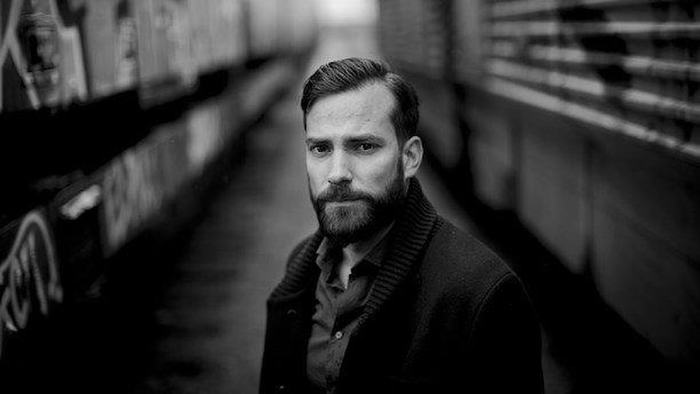
Andrzej Tichý - čekų- lenkų - švedų rašytojas.
Aštuonių paragrafų sąmonės srauto pasakojimas. Apie 'white-trash things'. Apie rytų Europos jaunuolius-imigrantus Švedijoje. Apie tuos, kuriems dėl įvairiausių priežasčių ne(pa)siseka.
Tikrai sugebėjo šis pasakojimas palįsti man po oda, nors ir nebuvo labai originalaus - nei stiliumi, nei konstrukcija, nei temomis... Patiko pasakojimo lyriškas grubumas, nuskambėjęs beviltiškai, bet kartu lyg ir su sunkiai įžiūrimomis kruopelytėm vilties. Daug žargono, kurio tikrai įkandau tik mažąją dalį, bet buvo įdomu. Greičiausiai angliškas vertimas yra puikus, nes knyga pateko į International Booker Prize (2021) ilgąjį sąrašą. O laimi prizą ir aut. ir vertėja(-s).
Beje, autoriui pavyko nuvainikuoti Švediją. Aš priklausiau tiems, kurie apie šią šalį turėjo labai gerą nuomonę ;))
[...]'it's beautiful, and it was true in a way, cos it is, it is beautiful, in its way, even if it's ugly' [...]
[...] 'the Easter European kids fuck themselves in the arse with turquoise double-enders, their tender, oozing dreams flowing like pure shit, what's happening, man, how hard can life be, really, if we're honest, and how tender is it to die by your own hand, just how, how focused do you have to be, yeah, yeah,' [...]
'Tichý writes a delirious, detailed prose, studded with Malmö slang and contemporary verve. The language pours forth over the pages like a contaminated river, full of filth, despair and anxiety, an associative flow of long, disjointed, almost endless sentences.' -Eva Johansson, Svenska Dagbladet
Epigrafas: 'Contradiction alone is the proof that we are not everything. Contradiction is our wretchedness, and the sense of our wretchedness is the sense of reality. For we do not invent our wretchedness. It is true. That is why we have value it. All the rest is imaginary.' -Simone Weil, Gravity And Grace, 1947
Andrzej Tichý - čekų- lenkų - švedų rašytojas.
Aštuonių paragrafų sąmonės srauto pasakojimas. Apie 'white-trash things'. Apie rytų Europos jaunuolius-imigrantus Švedijoje. Apie tuos, kuriems dėl įvairiausių priežasčių ne(pa)siseka.
Tikrai sugebėjo šis pasakojimas palįsti man po oda, nors ir nebuvo labai originalaus - nei stiliumi, nei konstrukcija, nei temomis... Patiko pasakojimo lyriškas grubumas, nuskambėjęs beviltiškai, bet kartu lyg ir su sunkiai įžiūrimomis kruopelytėm vilties. Daug žargono, kurio tikrai įkandau tik mažąją dalį, bet buvo įdomu. Greičiausiai angliškas vertimas yra puikus, nes knyga pateko į International Booker Prize (2021) ilgąjį sąrašą. O laimi prizą ir aut. ir vertėja(-s).
Beje, autoriui pavyko nuvainikuoti Švediją. Aš priklausiau tiems, kurie apie šią šalį turėjo labai gerą nuomonę ;))
[...]'it's beautiful, and it was true in a way, cos it is, it is beautiful, in its way, even if it's ugly' [...]
[...] 'the Easter European kids fuck themselves in the arse with turquoise double-enders, their tender, oozing dreams flowing like pure shit, what's happening, man, how hard can life be, really, if we're honest, and how tender is it to die by your own hand, just how, how focused do you have to be, yeah, yeah,' [...]
'Tichý writes a delirious, detailed prose, studded with Malmö slang and contemporary verve. The language pours forth over the pages like a contaminated river, full of filth, despair and anxiety, an associative flow of long, disjointed, almost endless sentences.' -Eva Johansson, Svenska Dagbladet

May 27, 2020
I got this one in the mail as part of my monthly subscription with the UK publishing house "And Other Stories" which, I have to tell you, after Barn 8 and Invisible Yet Enduring Lilacs, is batting something far less than 1000.
I just couldn't get into this. It's written in such a way that's supposed to keep you from really "getting into" it, designed perhaps to intentionally turn readers off. In this case though, heed the warning signs and be turned off, because this simply isn't worth the effort.
This is supposed to be about how the poor live in a wealthy western society, in this case, Sweden. It's trying a bit too hard to be A Clockwork Orange, except that we're supposed to point the finger not at the characters here, but at ourselves for sort of being witness to it all ... or something.
I can't honestly say, because I didn't finish this one. Just didn't have the will or the patience to wade through the interminably long paragraphs. This isn't Hurricane Season. It's just not worth the work.
So while I'm sure it's trying to say something very poignant about the plight of the poor in affluent society, it's yet another important issue that's overshadowed by shoddy writing.
One thing the publisher did get right, though, is the title, because this truly does make for "wretched" reading.
I just couldn't get into this. It's written in such a way that's supposed to keep you from really "getting into" it, designed perhaps to intentionally turn readers off. In this case though, heed the warning signs and be turned off, because this simply isn't worth the effort.
This is supposed to be about how the poor live in a wealthy western society, in this case, Sweden. It's trying a bit too hard to be A Clockwork Orange, except that we're supposed to point the finger not at the characters here, but at ourselves for sort of being witness to it all ... or something.
I can't honestly say, because I didn't finish this one. Just didn't have the will or the patience to wade through the interminably long paragraphs. This isn't Hurricane Season. It's just not worth the work.
So while I'm sure it's trying to say something very poignant about the plight of the poor in affluent society, it's yet another important issue that's overshadowed by shoddy writing.
One thing the publisher did get right, though, is the title, because this truly does make for "wretched" reading.

April 12, 2021
I read this book due to its longlisting for the 2021 International Booker Prize - thankfully the book quietly disappearing at the shortlist stage. The translator Nichola Smalley won the Oxford-Weidenfeld Translation Prize (I assume for the technical aspects of translation).
The book’s title is taken from a Simone Weil quote included in the epigraph where it is translated from the French via the Swedish as “Contradiction is our wretchedness, and the sense of our wretchedness is our sense of reality” – and (in contrast to some other books on the longlist) I am glad here the publishers and translator retained the original title and I think this gets at the heart of the book – a fundamental contradiction between a life the narrator is now living and the reality of the way he grew up.
The book could be said to be a tale of modern art music mixed with drugs and violence which is Proustian in composition, told in a Bernhardian style and with an Atkinsonesque ending.
Unfortunately I also found it be to be rather Wretched to read.
The narrator is a classical musician in his late 30s, but one who grew up on a deprived immigrant-filled suburb of Malmo – one described in 1985 by a Swedish journalist as a “human rubbish dump”, the narrator and his immigrant – or as his father preferred to say emigrant/exile - family moving there in 1982 having seen Sweden as something of a promised land. He then seems to fall in with a gang of friends who one of their members describes as “failed-abortions” and into a life of drugs, violence, tagging, suicidal tendency hip-hop and metal music all played out against a background of ethnic/racial tension – and later (I think) moves around a number of European cities.
His first Madeleine is a changed-begging junkie he encounters when walking away from a rehearsal of a piece by the composer Giacinto Scelsi.
Sometimes discussions with two fellow musicians have the same impact – for example when discussing a piece “Airs” the narrator starts thinking about the effect of broken ribs and the difficulty of taking in air in a way I found rather clunky (I started being concerned that “flats” would remind him of where he grew up, “sharps” of some knife crime and “minor scales” of the juvenile justice system – but to be fair I think the author pulled back from this).
As my brother Paul has pointed out, there is a fascinating partially-inverse symmetry in this book to last year’s main-Booker longlisted “Who They Was” by Gabriel Krauze. In this book as have a narrator who starts in a life of drug use and violence on Swedish estates, but who by the time of the main narration has become a professional cellist. Krauze by contrast (for his book was almost entirely autobiographical) grew up in a middle-class family and learnt the cello (his brother is a professional violinist) – before deliberately choosing to move to a London estate and getting involved in gang drug use and violence.
One of the most worrying but also strongest aspects of Krauze’s book was its autobiographical nature. Most worrying because it seemed from interviews after publication (I originally read it pre-publication) that for all his protestations that he was a changed man, the author seemed to rather revel in his crimes and assaults – posing with his “grillz” for publicity photos. Strongest because it gave the book real authenticity: incidents in the book, places, roads can be easily looked up and verified – plus you know that that the author is speaking from real experience. Another strong aspect for me was its London setting – the book had much to say about the divide in London into almost two different Cities, and with most of the book set less than 10 miles from where I have worked for 25 or so years, this really struck home with me.
Here I felt the book had much lower impact on me (in fact almost no impact) – both due to its lesser authenticity (the author has said much comes from "indirect" experience, which is really not the same thing) and to the much reduced personal resonance of its setting.
This book has extensive musical references and the author has produced a Spotify playlist – with detailed notes on how it relates to the book
https://thequietus.com/articles/28531...
I cannot pretend that the modern art music here really appeals to me at all – and nor did the references in the book.
As a quick musical aside though – the Scelsi piece in the article is a “slow, creeping, microtonal movement from one note C to another A". Returning to the Krauze comparision (as an aside Krauze’s political cartoonist father shares the author of this novel’s first name) neither of the two books describe the move from one state (cello/crime) to the other (crime/cello) with any real conviction or at any real length. In Krauze’s case this is part of what makes the book feel ultimately uncomfortable, he cannot really account for his life choice; in this novel the author in the playlist article refers to wanting to show the “fallacy of social mobility” and a simplistic redemption or improvement narrative was not going to fit.
The writing style between the two books is also different - single-paragraph chain-of-association monologues with often spooling sentences, as opposed to the immediacy and tautness of Krauze’s prose.
On one level this suits the two books I think: one as I described above a Proustian style reverie taking place in the narrator’s mind and memories while he is simultaneously carrying on a present day classical music conversations; the other designed to put us right in the narrator’s eyes and body in his gangster days - right from the impactful first chapter.
But I have to say that the Krauze approach worked better for me – the combination of the rather repulsive subject matter and rather reprehensible narrator worked better for me with staccato immediacy that with sentences I found to be completely unreadable. I would rather read a quick description of some more drugs and fights – matching how they actually occurred - than one that takes place over pages of interminable and contorted prose.
In the end I started flicking through my Kindle from around 25% onward with this book – went to the end (which was rather cliched in its twist) and then went back only to start flicking through again.
Overall a book I was pleased not to see on the shortlist.
The book’s title is taken from a Simone Weil quote included in the epigraph where it is translated from the French via the Swedish as “Contradiction is our wretchedness, and the sense of our wretchedness is our sense of reality” – and (in contrast to some other books on the longlist) I am glad here the publishers and translator retained the original title and I think this gets at the heart of the book – a fundamental contradiction between a life the narrator is now living and the reality of the way he grew up.
The book could be said to be a tale of modern art music mixed with drugs and violence which is Proustian in composition, told in a Bernhardian style and with an Atkinsonesque ending.
Unfortunately I also found it be to be rather Wretched to read.
The narrator is a classical musician in his late 30s, but one who grew up on a deprived immigrant-filled suburb of Malmo – one described in 1985 by a Swedish journalist as a “human rubbish dump”, the narrator and his immigrant – or as his father preferred to say emigrant/exile - family moving there in 1982 having seen Sweden as something of a promised land. He then seems to fall in with a gang of friends who one of their members describes as “failed-abortions” and into a life of drugs, violence, tagging, suicidal tendency hip-hop and metal music all played out against a background of ethnic/racial tension – and later (I think) moves around a number of European cities.
His first Madeleine is a changed-begging junkie he encounters when walking away from a rehearsal of a piece by the composer Giacinto Scelsi.
Sometimes discussions with two fellow musicians have the same impact – for example when discussing a piece “Airs” the narrator starts thinking about the effect of broken ribs and the difficulty of taking in air in a way I found rather clunky (I started being concerned that “flats” would remind him of where he grew up, “sharps” of some knife crime and “minor scales” of the juvenile justice system – but to be fair I think the author pulled back from this).
As my brother Paul has pointed out, there is a fascinating partially-inverse symmetry in this book to last year’s main-Booker longlisted “Who They Was” by Gabriel Krauze. In this book as have a narrator who starts in a life of drug use and violence on Swedish estates, but who by the time of the main narration has become a professional cellist. Krauze by contrast (for his book was almost entirely autobiographical) grew up in a middle-class family and learnt the cello (his brother is a professional violinist) – before deliberately choosing to move to a London estate and getting involved in gang drug use and violence.
One of the most worrying but also strongest aspects of Krauze’s book was its autobiographical nature. Most worrying because it seemed from interviews after publication (I originally read it pre-publication) that for all his protestations that he was a changed man, the author seemed to rather revel in his crimes and assaults – posing with his “grillz” for publicity photos. Strongest because it gave the book real authenticity: incidents in the book, places, roads can be easily looked up and verified – plus you know that that the author is speaking from real experience. Another strong aspect for me was its London setting – the book had much to say about the divide in London into almost two different Cities, and with most of the book set less than 10 miles from where I have worked for 25 or so years, this really struck home with me.
Here I felt the book had much lower impact on me (in fact almost no impact) – both due to its lesser authenticity (the author has said much comes from "indirect" experience, which is really not the same thing) and to the much reduced personal resonance of its setting.
This book has extensive musical references and the author has produced a Spotify playlist – with detailed notes on how it relates to the book
https://thequietus.com/articles/28531...
I cannot pretend that the modern art music here really appeals to me at all – and nor did the references in the book.
As a quick musical aside though – the Scelsi piece in the article is a “slow, creeping, microtonal movement from one note C to another A". Returning to the Krauze comparision (as an aside Krauze’s political cartoonist father shares the author of this novel’s first name) neither of the two books describe the move from one state (cello/crime) to the other (crime/cello) with any real conviction or at any real length. In Krauze’s case this is part of what makes the book feel ultimately uncomfortable, he cannot really account for his life choice; in this novel the author in the playlist article refers to wanting to show the “fallacy of social mobility” and a simplistic redemption or improvement narrative was not going to fit.
The writing style between the two books is also different - single-paragraph chain-of-association monologues with often spooling sentences, as opposed to the immediacy and tautness of Krauze’s prose.
On one level this suits the two books I think: one as I described above a Proustian style reverie taking place in the narrator’s mind and memories while he is simultaneously carrying on a present day classical music conversations; the other designed to put us right in the narrator’s eyes and body in his gangster days - right from the impactful first chapter.
But I have to say that the Krauze approach worked better for me – the combination of the rather repulsive subject matter and rather reprehensible narrator worked better for me with staccato immediacy that with sentences I found to be completely unreadable. I would rather read a quick description of some more drugs and fights – matching how they actually occurred - than one that takes place over pages of interminable and contorted prose.
In the end I started flicking through my Kindle from around 25% onward with this book – went to the end (which was rather cliched in its twist) and then went back only to start flicking through again.
Overall a book I was pleased not to see on the shortlist.

April 18, 2021
The style of this book made for an exhilarating read… an exhausting one. Every time I took a break, I'd feel like I was coming out of a fog. The style is steam-of-consciousness to the extreme (no paragraph breaks, run-on sentences, zero indication of who's speaking), a style I loved in my favorite book of last year, Hurricane Season. Here, the style feels even more exasperating (multiple characters speaking at once, book references, music references, long-winded conversations, drug trips). It took a lot more work and effort. But as I was reading, I kept wondering how this was going to come together. Was this going to turn out to be just an "empty" creative writing experiment? It isn't. It all came together in the end in such a satisfying way. I'm a huge fan of this.

June 1, 2021
"An image. That flashes up for a moment. And then what? Unveils its significance? Never to be seen again? Can past really be captured that way? How can you reconcile that volatility with the enormity and persistence of experience? And what is true in this shifting moment? Whose truth, whose history? I don't know. I only know that I’m tied to it. And there's always more to be said about it."
Set in a poor, developmentally deficient & immigrant-heavy region in Malmö, Sweden, it is narrated by a cellist whose present good fortune is a far cry from the messy days of his childhood and youth. Each chapter is one single paragraph alternating between short, punchy sentences & long, run-on ones. There is a breathless quality granted to the narrative by stream-of-consciousness writing. Tichý moves across space-time, making allusions and associations, seamlessly connecting events to render a complex narrative: a truthful, unflattering look at perilous life in poverty and deprivation, characterized by lawlessness, rash habits, heavy drug use.
The writing style is reminiscent of Hurricane Season and it takes time to get used to. Lack of clarity is a given as it is hard to figure out who's who and who's talking. There is a lot of non-linear time shuffling that one must pay attention to to notice the shifts. The prose itself is brilliant, really poetic in places due to the use of subtle rhymes. Nichola Smalley has done a commendable job. A hard-hitting, distressing book immersed in avant-garde music, it all comes full circle. It is an exploration of wretchedness, social mobility, and escape.
(I am on the 2021 Booker International Shadow Panel and I was sent a finished copy by the publisher in exchange for an honest review.)

August 13, 2023
Historia rozpoczyna się od przypadkowego spotkania muzyka z bezdomnym chłopakiem na ulicach Malmö. Mężczyzna patrząc i rozmawiając z człowiekiem, który sięgnął dna, uświadamia sobie, że on tez mógł tak skończyć. I tak wchodzimy w strumień świadomości narratora, w którym cofamy się w przeszłość, kiedy to on sam należał do środowiska nazywanego „ludzkim wysypiskiem”, z którego ostatecznie udało mu sie wyrwać.
Nie zawsze strumienie świadomości przypadają mi do gustu, ale ten w wykonaniu Tichy’ego pasował mi bardzo. I właśnie formą, językiem i stylem ta książka stoi (przynajmniej dla mnie). Długaśne zdania w zdaniu i w zdaniu i w zdaniu. Potok słów bez akapitów, który co chwila przeskakuje z jednego tematu w drugi, pełen dygresji i będący z jednej strony chaotyczny, a z drugiej rytmiczny przypominający mi flow kawałków hiphopowych. Tichy nawija jak u nas Masłowska albo jak autor jednej z lepszych książek, które czytałam w tym roku, Gabriel Krauze i „Tu byli, tak stali” (o tym drugim porównaniu przeczytałam u @ola_czyta i absolutnie sie z tym zgadzam!).
I oczywiście oprócz ciekawej formy jest w niej również przesłanie mówiące o tym jak cienka granica, jedna nietrafiona decyzja może nas dzielić od tytułowej nędzy oraz zwraca uwagę na społeczność młodzieży z biednych dzielnic imigranckich, ale dla mnie na pierwszy plan wybija się jednak oryginalny i hipnotyzujący styl autora.
Ta książka jest żywa, mroczna, niepokojąca, bezpretensjonalna i niezwykle błyskotliwa. Nie wciągnie każdego, ale myślę, że od razu po przeczytaniu pierwszych kilku wersów tego monologu wewnętrznego bedziecie wiedzieć czy to coś dla was. Ja polecam bardzo!
Nie zawsze strumienie świadomości przypadają mi do gustu, ale ten w wykonaniu Tichy’ego pasował mi bardzo. I właśnie formą, językiem i stylem ta książka stoi (przynajmniej dla mnie). Długaśne zdania w zdaniu i w zdaniu i w zdaniu. Potok słów bez akapitów, który co chwila przeskakuje z jednego tematu w drugi, pełen dygresji i będący z jednej strony chaotyczny, a z drugiej rytmiczny przypominający mi flow kawałków hiphopowych. Tichy nawija jak u nas Masłowska albo jak autor jednej z lepszych książek, które czytałam w tym roku, Gabriel Krauze i „Tu byli, tak stali” (o tym drugim porównaniu przeczytałam u @ola_czyta i absolutnie sie z tym zgadzam!).
I oczywiście oprócz ciekawej formy jest w niej również przesłanie mówiące o tym jak cienka granica, jedna nietrafiona decyzja może nas dzielić od tytułowej nędzy oraz zwraca uwagę na społeczność młodzieży z biednych dzielnic imigranckich, ale dla mnie na pierwszy plan wybija się jednak oryginalny i hipnotyzujący styl autora.
Ta książka jest żywa, mroczna, niepokojąca, bezpretensjonalna i niezwykle błyskotliwa. Nie wciągnie każdego, ale myślę, że od razu po przeczytaniu pierwszych kilku wersów tego monologu wewnętrznego bedziecie wiedzieć czy to coś dla was. Ja polecam bardzo!

August 24, 2026
Ono što kreće kao priča o jednom violončelisti koji doživljava susret s jednim džankijem i koji upada u vrtlog uspomena i prisjećanja, lelujajući između sadašnjosti i prošlosti, u jednom trenutku mijenja perspektivu i postaje priča o imigrantskom životu marginalizovanih u Malmeu. Taj prelaz gotovo je neosjetan, a čitaoca vodi nazad ka sceni kojoj je svjedočio u prvom dijelu knjige. Korektno, ali da je trunku prohodnije, vjerujem da bi zadovoljstvo čitanja bilo daleko veće.

April 8, 2021
Before actually reviewing the book it’s best to give a little preamble.
The main protagonist of the book is a cellist who is practicing a complicated piece by Giacinto Scelsi. Upon researching him, I discovered that Scelsi was an Italian composer who created symphonies that shifted soundwise. In fact, according to articles, his approach to music was postmodern. Wretchedness is also a book which shifts narrative voice but also the end result is a cohesive whole.
While the cellist is on his way to practice he meets a homeless man and this sparks up memories of his youth in the 90’s; One filled with violence, drug taking and hip hop. There are endless descriptions of people being beat up, bad language and bands ranging from C.L. Smooth to Public Enemy (even Scottish post-rockers Mogwai get a mention) being name-dropped.
Like a symphony, there are quiet moments which juxtapose the nosier parts. There are scenes when the cellist discusses Scelsi and the proper orchestral arrangements with his guitarist. Also most sections start with a description of a bouquet of flowers. However, the descent into violence happens quickly and the pretty moments serve as breathers.
Reading Wretchedness is like being pummeled incessantly. If one is a fan of the visceral, explosive writing with an experimental feel then Wretchedness is definitely the rawest novel you’ll read all year.
The main protagonist of the book is a cellist who is practicing a complicated piece by Giacinto Scelsi. Upon researching him, I discovered that Scelsi was an Italian composer who created symphonies that shifted soundwise. In fact, according to articles, his approach to music was postmodern. Wretchedness is also a book which shifts narrative voice but also the end result is a cohesive whole.
While the cellist is on his way to practice he meets a homeless man and this sparks up memories of his youth in the 90’s; One filled with violence, drug taking and hip hop. There are endless descriptions of people being beat up, bad language and bands ranging from C.L. Smooth to Public Enemy (even Scottish post-rockers Mogwai get a mention) being name-dropped.
Like a symphony, there are quiet moments which juxtapose the nosier parts. There are scenes when the cellist discusses Scelsi and the proper orchestral arrangements with his guitarist. Also most sections start with a description of a bouquet of flowers. However, the descent into violence happens quickly and the pretty moments serve as breathers.
Reading Wretchedness is like being pummeled incessantly. If one is a fan of the visceral, explosive writing with an experimental feel then Wretchedness is definitely the rawest novel you’ll read all year.

April 1, 2020
I read the English edition entitled “Wretchedness”, translated expertly by Nichola Smalley and published by And Other Stories. It is a remarkable book that will be difficult to forget. In contemporary slang turned into poetry, Tichy paints jarring images drawn from a desolate landscape of inner city poverty full of disappointment and hopelessness. An ode to empty existence that is deep, dark, vivid, raw and painful.
A world where “the days fall. Softly, like softly fluted petals”, lives are lived “fully in the shadow of your parents’ failures, their losses, their blind struggle” — the destiny of each successive generation fatally marked by the wretchedness of the one preceding it. The innocence and dreams of childhood gradually poisoned with “a paralysing fatalism combined with an all-eclipsing defeatism”, hurtling downhill in a drug-fuelled aimless fog.
Tichy is scathing on the subject of “gutter tourists” .... and the reader cannot but feel the finger pointed at him/her. The book exposed the conceit of believing oneself safe in the world. As the narrator says: “we laugh at them [“the tourists”] and say: we fell sorry for you, cos we know we’re are better equipped for the future than you could ever be, with your straight spines and broad smiles, I mean, better equipped for at least one future, a possible, potential future where most of what surrounds us now has literally collapsed and been torn apart, caved in on itself, a time when all that remains is struggle; blind, raw struggle for survival”. Topical, no? in case anyone has been living in a cave over the past month!
A world where “the days fall. Softly, like softly fluted petals”, lives are lived “fully in the shadow of your parents’ failures, their losses, their blind struggle” — the destiny of each successive generation fatally marked by the wretchedness of the one preceding it. The innocence and dreams of childhood gradually poisoned with “a paralysing fatalism combined with an all-eclipsing defeatism”, hurtling downhill in a drug-fuelled aimless fog.
Tichy is scathing on the subject of “gutter tourists” .... and the reader cannot but feel the finger pointed at him/her. The book exposed the conceit of believing oneself safe in the world. As the narrator says: “we laugh at them [“the tourists”] and say: we fell sorry for you, cos we know we’re are better equipped for the future than you could ever be, with your straight spines and broad smiles, I mean, better equipped for at least one future, a possible, potential future where most of what surrounds us now has literally collapsed and been torn apart, caved in on itself, a time when all that remains is struggle; blind, raw struggle for survival”. Topical, no? in case anyone has been living in a cave over the past month!
April 15, 2021
3.5
Seemingly, on a global scale, the paragraph is dead, and the long sentence is in when it comes to more mainstreamed experimental literary fiction. I'm not against it. I'm a proponent of the Proustian predilection for stacked clauses. I think it worked well here, but, since I have to compare it by nature, this doesn't reach the heights of Hurricane Season by Fernanda Melchor even remotely. She gets you so profoundly involved in the intimacies of her characters in a way this novel never allows, which is part of Tichý's game, especially considering the twist at the end of the novel. I found this to be entertaining but also tiring as it went along due to its formalistic tendencies. But, in comparison to Minor Detail, Wretchedness seems to actually understand how to include repeated phrases and images in the way that seems far less cloying and bland and blasé. Mixed bag but overall a good time that I'd recommend for fans of Melchor's novel or the Booker-longlisted Who They Was.
Seemingly, on a global scale, the paragraph is dead, and the long sentence is in when it comes to more mainstreamed experimental literary fiction. I'm not against it. I'm a proponent of the Proustian predilection for stacked clauses. I think it worked well here, but, since I have to compare it by nature, this doesn't reach the heights of Hurricane Season by Fernanda Melchor even remotely. She gets you so profoundly involved in the intimacies of her characters in a way this novel never allows, which is part of Tichý's game, especially considering the twist at the end of the novel. I found this to be entertaining but also tiring as it went along due to its formalistic tendencies. But, in comparison to Minor Detail, Wretchedness seems to actually understand how to include repeated phrases and images in the way that seems far less cloying and bland and blasé. Mixed bag but overall a good time that I'd recommend for fans of Melchor's novel or the Booker-longlisted Who They Was.

April 7, 2021
Trainspotting, but make it boring. Also, Mark Renton is a musician.
Или секс, наркотици, рокендрол. Но без секса. И рокендрола.
Страшно досадна книга. Прекалената фрагментарност на текста може би спомага за усещането, че си предозирал на някаква евтина дизайнерска дрога, но според мен изобщо не помага на историята, която и без това е скучна. Автора малко (доста) се е поувлякъл в опита да напише експериментален роман и се получил просто един експеримент, но без роман.
Или секс, наркотици, рокендрол. Но без секса. И рокендрола.
Страшно досадна книга. Прекалената фрагментарност на текста може би спомага за усещането, че си предозирал на някаква евтина дизайнерска дрога, но според мен изобщо не помага на историята, която и без това е скучна. Автора малко (доста) се е поувлякъл в опита да напише експериментален роман и се получил просто един експеримент, но без роман.

April 18, 2021
This is what I expect from a prize-winning novel. If this does not make the Booker International shortlist I will be VERY disappointed.
It's challenging, there is social commentary (immigration, drug use, abuse, mental illness, poverty, coming-of-age), it's sad and hopeful, there are references to real places and people (that also leave me wondering what I missed), it is original, and it all comes together in the end.
Yet I feel like I really need to read it again.
It's challenging, there is social commentary (immigration, drug use, abuse, mental illness, poverty, coming-of-age), it's sad and hopeful, there are references to real places and people (that also leave me wondering what I missed), it is original, and it all comes together in the end.
Yet I feel like I really need to read it again.

July 13, 2025
Den här boken fick ett uppsving efter att ha varit med på Expressens lista över de senaste tjugofem årens bästa svenska böcker, och jag skulle väl ljuga om det inte delvis var anledningen till att jag läste den nu efter att ha haft den stående i hyllan ett tag. Men ett minst lika tungt vägande skäl var att Tichýs förra bok, ”Händelseboken”, var en läsupplevelse som fortfarande hänger kvar.
Det finns vissa likheter, kanske främst i hur det är samhällets baksida som visas upp. Här handlar det om en cellist som står och väntar på ett par andra musiker då han träffar på en uteliggare. Mötet sätter igång en kedja associationer och minnen som följer mannen medan han och de andra musikerna vandrar till centralen i Malmö, tar tåget till Köpenhamn och går på en konsert. Den inramning som finns med klassisk musik och kultur står i stark kontrast till mannens uppväxt och bakgrund i förorter, bland alkoholister och knarkare, vänner som dött unga, svartjobb med mera. Hur de här två världarna möts i en och samma person skapar en massa frågor, särskilt som övergången från det ena till det andra aldrig skrivs ut.
Texten i sig är en närmast malande medvetandeström som hoppar mellan tider och skeenden, skiftar perspektiv och här och där stoppar in vad som känns som slumpmässiga meningar. Det påminner om såväl Thomas Bernhard som Jon Fosse, bland annat i sina omtagningar kring replokalens nyss utslagna porslinsblomma, men utan att vara någon blek kopia. Och handlar det ens om ett och samma medvetande, eller flera olika? Bokens upplösning ställer fler frågor än den ger svar på den punkten, och är ett sånt som inte lämnar en i första taget. Men som det inledande Simone Weil-citatet säger: ”Motsägelsen är vårt elände, och känslan av vårt elände är känslan av verklighet.”
En mycket läsvärd bok med andra ord, väl värd det nyväckta intresse som den fått och som i sig visar att det finns ett värde i att på olika sätt uppmärksamma böcker efter att det initiala intresset lagt sig.
Det finns vissa likheter, kanske främst i hur det är samhällets baksida som visas upp. Här handlar det om en cellist som står och väntar på ett par andra musiker då han träffar på en uteliggare. Mötet sätter igång en kedja associationer och minnen som följer mannen medan han och de andra musikerna vandrar till centralen i Malmö, tar tåget till Köpenhamn och går på en konsert. Den inramning som finns med klassisk musik och kultur står i stark kontrast till mannens uppväxt och bakgrund i förorter, bland alkoholister och knarkare, vänner som dött unga, svartjobb med mera. Hur de här två världarna möts i en och samma person skapar en massa frågor, särskilt som övergången från det ena till det andra aldrig skrivs ut.
Texten i sig är en närmast malande medvetandeström som hoppar mellan tider och skeenden, skiftar perspektiv och här och där stoppar in vad som känns som slumpmässiga meningar. Det påminner om såväl Thomas Bernhard som Jon Fosse, bland annat i sina omtagningar kring replokalens nyss utslagna porslinsblomma, men utan att vara någon blek kopia. Och handlar det ens om ett och samma medvetande, eller flera olika? Bokens upplösning ställer fler frågor än den ger svar på den punkten, och är ett sånt som inte lämnar en i första taget. Men som det inledande Simone Weil-citatet säger: ”Motsägelsen är vårt elände, och känslan av vårt elände är känslan av verklighet.”
En mycket läsvärd bok med andra ord, väl värd det nyväckta intresse som den fått och som i sig visar att det finns ett värde i att på olika sätt uppmärksamma böcker efter att det initiala intresset lagt sig.

April 11, 2024
Brilliant, lyrical, breathless, polyrhythmic novel. I am not sure there’s a single paragraph break in this, (except where the chapters split) and the style works perfectly for this story. A cellist with a past that took him through the seedy underbellies of European cities, squat raves, drug dealers, drug takers, and a distinct feeling that he cannot overcome his past. But really, who can.
Another banger in the Scandinavian experimental literature “genre.” I love how deeply the novel is tied to the music that is described in the book, it really acts as a binding thread to understand it all, and I highly recommend anyone who reads this to take the time and listen to the music when it comes up in the book. Not gonna give too much away here because we’re gonna talk about it in book club, but definitely pick this up if you get a chance.
“You're an adult but you see yourself as a damaged child. You see yourself as a victim and therefore feel that your right to this hatred, indiscriminate and to be honest pretty vaguely defined, is unshakeable. You live fully in the shadow of your parents' failures, their losses, their blind struggle. You've got kids to take care of but you go to pieces, breaking down the moment you start thinking about your own childhood. You want to murder the person you see in the mirror, but you daren't, so you swap the mirror for a window. Who's out there? Your self-image leads to a critical situation in which the most important elements are a paralysing fatalism combined with an all-eclipsing defeatism.”
“Whatever happens, the person you are now is going to die, and die young, either because you stay who you are - in which case this life will kill you - or because you'll become a different person, you'll always be carrying your own corpse within you, you know, like something that lies beneath everything, behind everything, between everything.”
Another banger in the Scandinavian experimental literature “genre.” I love how deeply the novel is tied to the music that is described in the book, it really acts as a binding thread to understand it all, and I highly recommend anyone who reads this to take the time and listen to the music when it comes up in the book. Not gonna give too much away here because we’re gonna talk about it in book club, but definitely pick this up if you get a chance.
“You're an adult but you see yourself as a damaged child. You see yourself as a victim and therefore feel that your right to this hatred, indiscriminate and to be honest pretty vaguely defined, is unshakeable. You live fully in the shadow of your parents' failures, their losses, their blind struggle. You've got kids to take care of but you go to pieces, breaking down the moment you start thinking about your own childhood. You want to murder the person you see in the mirror, but you daren't, so you swap the mirror for a window. Who's out there? Your self-image leads to a critical situation in which the most important elements are a paralysing fatalism combined with an all-eclipsing defeatism.”
“Whatever happens, the person you are now is going to die, and die young, either because you stay who you are - in which case this life will kill you - or because you'll become a different person, you'll always be carrying your own corpse within you, you know, like something that lies beneath everything, behind everything, between everything.”
May 1, 2021
Tichý's first novel translated into English is a wild, frenetic experiment with sight and tongue. Language here is unnerving. Tichý's prose is simultaneously cackling and incendiary. The narrative follows a musician as he recollects his experiences throughout Europe, growing up in poverty and always lingering on the fringes of society. It's the voice that's most remarkable. In chapters that are often single sentences, the novel becomes a series of evanescent monologues, almost as rooted in the performance of language as the book is in the proliferation of text. This Malmö is a sonic Malmö. It is a city where verbal textures are heard, not written. And it's this sonic characteristic that creates the most tension in the novel: characters from multi-cultural backgrounds rub up against each other, racism and homophobia abounding as Tichý scrutinizes Sweden's ostensibly pearly surface.
This novel is difficult. But difficulty, here, reaps rewards. There are not many writers whose style can be claimed to be as unique and confident as Tichý. His hypermodernist (as it's been described) prose is often scintillating, often scathing. And his vision of society, his characteristic of modern Europe, is vexing and deeply profound. A literary voice worth paying close attention to.
This novel is difficult. But difficulty, here, reaps rewards. There are not many writers whose style can be claimed to be as unique and confident as Tichý. His hypermodernist (as it's been described) prose is often scintillating, often scathing. And his vision of society, his characteristic of modern Europe, is vexing and deeply profound. A literary voice worth paying close attention to.

March 5, 2024
DNF 70%
„Nędza” Andrzeja Tichy (tł. Dominika Górecka) to historia mężczyzny, który pewnego dnia spotyka bezdomnego chłopaka. To spotkanie wywołuje falę wspomnień.
„Nędza” okazała się dla mnie bardzo wymagającą lekturą. Napisana w formie strumienia świadomości. Zdania potrafią się ciągnąć przez kilka stron. Gdy już wpadnie się w jej rytm, to lektura powinna pójść sprawnie. Z tym, że mi się to nie udało.
I choć narracja i styl pisania mi się podobały, to nie mogłam poczuć tej powieści, nie umiałam się wgryźć i wciągnąć się w historię bohatera. Niby czytałam, ale jakby treść do mnie nie docierała i ciężko było mi się połapać, o co chodzi. Dlatego też po przeczytaniu 70% uznałam, że dalsza lektura nie ma sensu, bo i tak nic dla mnie nie wniesie.
Być może „Nędzę” powinno się przeczytać na raz, tak żeby wciągnąć się w tę narrację. Dla mnie okazała się zbyt trudna i chaotyczna, przez co nie byłam usatysfakcjonowana lekturą.
„Nędza” okazała się dla mnie jedną z bardziej wymagających Pauz. Nie zamierzam ani jej odradzać ani polecać. Jak zawsze warto przekonać się na własnej skórze, bo może akurat do was trafi.
„Nędza” Andrzeja Tichy (tł. Dominika Górecka) to historia mężczyzny, który pewnego dnia spotyka bezdomnego chłopaka. To spotkanie wywołuje falę wspomnień.
„Nędza” okazała się dla mnie bardzo wymagającą lekturą. Napisana w formie strumienia świadomości. Zdania potrafią się ciągnąć przez kilka stron. Gdy już wpadnie się w jej rytm, to lektura powinna pójść sprawnie. Z tym, że mi się to nie udało.
I choć narracja i styl pisania mi się podobały, to nie mogłam poczuć tej powieści, nie umiałam się wgryźć i wciągnąć się w historię bohatera. Niby czytałam, ale jakby treść do mnie nie docierała i ciężko było mi się połapać, o co chodzi. Dlatego też po przeczytaniu 70% uznałam, że dalsza lektura nie ma sensu, bo i tak nic dla mnie nie wniesie.
Być może „Nędzę” powinno się przeczytać na raz, tak żeby wciągnąć się w tę narrację. Dla mnie okazała się zbyt trudna i chaotyczna, przez co nie byłam usatysfakcjonowana lekturą.
„Nędza” okazała się dla mnie jedną z bardziej wymagających Pauz. Nie zamierzam ani jej odradzać ani polecać. Jak zawsze warto przekonać się na własnej skórze, bo może akurat do was trafi.

November 4, 2020
Wasn’t a big fan of this book. Long stream of consciousness sentences dominate this short novel from a guy in Scandinavia living in the streets. It feels like it’s meant to be a tough gritty portrayal of a grown up street kid (a bit lik a Trainspotting) but feels more like it stereotypes it.

September 3, 2021
I like that its a stream of consciousness book that references Tupac and Resident Evil

October 28, 2016
Сюжет досить простий: скрипаль постійно ходить на репетиції, думає про музику і згадує своє нелегке дитинство у емігрантських районах Мальме.
Як на мене, то в цій книжці занадто багато спогадів і занадто мало подій. Занадто багато роздумів про музику, композиторів, які нікуди не ведуть і які ні про що не говорять читачеві. Просто думки вголос і про одне і те саме, що як для 250 сторінок занадто.
Я все чекала, що щось там поверне і я нарешті зрозумію, за що її так хвалять і вибрали в номінанти на премію Августа. Але ні, я так і не зрозуміла за що. І це при тому що попередня книжка автора мене вразила і я з нетерпінням чекала його наступний роман. Та з наступним у мене не склалося. Три поставила лише тому, що він справді гарно пише, але за відсутність притомного сюжету - двійка! Уже на 20ій сторінці ти розумієш, як думає автор, ти наперед бачиш усі його прийоми, і в таких випадках рятує лише сюжет, а коли він не зачіпає, то починаєш просто нудитися і нема бажання дрчитувати взагалі.
Як на мене, то в цій книжці занадто багато спогадів і занадто мало подій. Занадто багато роздумів про музику, композиторів, які нікуди не ведуть і які ні про що не говорять читачеві. Просто думки вголос і про одне і те саме, що як для 250 сторінок занадто.
Я все чекала, що щось там поверне і я нарешті зрозумію, за що її так хвалять і вибрали в номінанти на премію Августа. Але ні, я так і не зрозуміла за що. І це при тому що попередня книжка автора мене вразила і я з нетерпінням чекала його наступний роман. Та з наступним у мене не склалося. Три поставила лише тому, що він справді гарно пише, але за відсутність притомного сюжету - двійка! Уже на 20ій сторінці ти розумієш, як думає автор, ти наперед бачиш усі його прийоми, і в таких випадках рятує лише сюжет, а коли він не зачіпає, то починаєш просто нудитися і нема бажання дрчитувати взагалі.

November 10, 2016
A frightening book, about a world completely foreign to most of us. I found it a little difficult to read, not just because of its style (seemingly endless passages with no punctuation but the occasional comma; disconnected fragments of conversations in which it was difficult to determine who was talking to whom) but also in part because of the vocabulary from a different universe. I might indeed have enjoyed it more if only I had understood more of it.

February 16, 2024
to książka z tych, które w trakcie może nie wydają się dobre, ale zakończenie sprawia, że człowiek ma ochotę przeczytać jeszcze raz, skupić się bardziej, być może na innych rzeczach. Daję trzy gwiazdki, bo te alegorie i odniesienia muzyczne są dla mnie niezbyt zrozumiałe, pewnie stąd moje mniejsze zaangażowanie. Strumień świadomości sprawdza się tu całkiem nieźle, szczególnie biorąc pod uwagę zakończenie - o nim na pewno długo nie zapomnę.
February 7, 2025
Really enjoyed this. Very weird, very visceral. This was surreal and yet incredibly concrete and well-rooted. As with most books of this ilk though, I wouldn't mind a little structure and plot.
I would write more about the book, but I want to talk about the publisher, And Other Stories. I hadn't heard of them until picking up this book at Oxfam. They seem really interesting: they publish literary fiction and, particularly, translations of foreign literature; they're part funded by the Arts and Humanities Research Council; and they sell direct to consumer. All their subscribers' names are printed in the book of their books too. I don't know if it's a sustainable business model, but I will subscribe when I am less poor (lol).
I would write more about the book, but I want to talk about the publisher, And Other Stories. I hadn't heard of them until picking up this book at Oxfam. They seem really interesting: they publish literary fiction and, particularly, translations of foreign literature; they're part funded by the Arts and Humanities Research Council; and they sell direct to consumer. All their subscribers' names are printed in the book of their books too. I don't know if it's a sustainable business model, but I will subscribe when I am less poor (lol).

April 26, 2021
Typisk fyrplussig sak, kanske, om jag inte hade känt mig en smula uttråkad där nånstans på mitten. (Mea culpa).
"Han gick till ett bibliotek och blev förvånad när bibliotekarien, en sextioårig tant, plockade fram en massa böcker om zombies och gamla tyska dikter om lik och sånt" (s. 35).
"Han gick till ett bibliotek och blev förvånad när bibliotekarien, en sextioårig tant, plockade fram en massa böcker om zombies och gamla tyska dikter om lik och sånt" (s. 35).

April 18, 2024
En bok man blir andfådd av att läsa, men på ett bra sätt.

January 20, 2025
jag säger som Karl: En bok man blir andfådd av att läsa, men på ett bra sätt.
Displaying 1 - 30 of 91 reviews