What do you think?
Rate this book


114 pages, Paperback
First published April 1, 2017
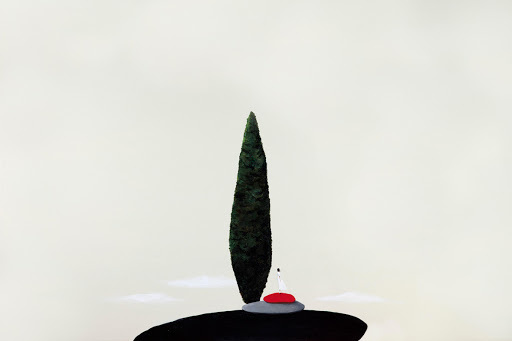
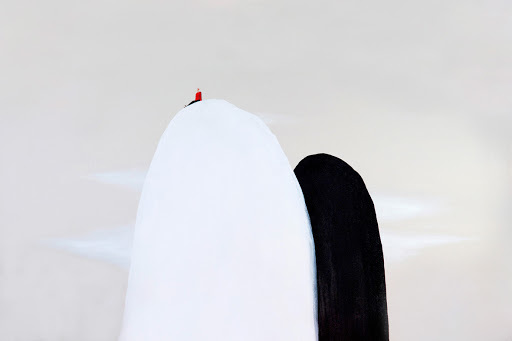
“There’s not much difference between Sisyphus, a story before bed and a hit song. Musicians and grandparents alike know that the story doesn’t belong to them that they have to sing, and that’s that”
This connection of apparently random ideas reminded me of Colum McCann’s book Apeirogon which I read earlier this year. This also draws lines between dots that you might not imagine are connected and continues to draw lines until some kind of pattern starts to emerge. The same happens here.
The writing style in several sections of the book reminded me of David Markson. For me, this is a very good thing as I am a great admirer of Markson’s work, as, I believe, is the author.
The exploration of connections reminded me of several of Richard Powers’ novels. Of course, Powers has written his own novel inspired by The Goldberg Variations and he also wrote about Messianen’s “Quartet for the End of Time” in Orfeo in a way that reduce me to tears: Sagasti here also writes about that piece of music and several other compositions by Messiaen. But it’s not just the common topics that reminded me of Powers: it is equally the building of connections between apparently unconnected things.
"There is a more or less widely held view that music and sleep share certain convolutions. In truth, they inhabit the present moment in different ways. Music promises the pleasure of the future: anticipating a melody that flutters a few steps ahead is the dessert we savour even as we raise another streaming forkful to our lips. The present of sleep is pure mother’s milk; there is nothing beyond it."
"What begins almost in unison gradually falls out of synch; there follow waves of overlaid rhythms, flocks of birds wheeling across the sky without colliding. As the instruments begin to slow, galloping horses emerge, typewriters on overtime, raindrops on tin roofs, the unending applause to a speech by Stalin. In this long-distance race of one hundred monocord voices, Bach fugue-style, the horses gradually fall away, the sun breaks through the clouds and the rain eases off, the typists abandon their offices, the Soviet sycophancy of a secretarial trio fades out until only the tick-tock of an alarm clock remains."There's a melancholic element to the whole book as if we're waiting for the final note to put us all to rest. Definitely an author and a press from whom and which I'd like to read more.
Messiaen: Birds are the opposite to Time; they are our desire for light, for stars, for rainbows, and for jubilant songs. Each bird, each instrument has its own tempo, and by overlaying them we achieve a confused and joyous harmony.