

What do you think?

Lessons from Surah al-Kahf
The Qur’an is full of parables. Each one, when its meaning is unpacked and understood, offers wisdom and guidance. Surah Kahf, chapter 18 from the Qur’an, is particularly thought provoking, and Muslims are advised to read it at least once a week.
But why? And what can we gain from it?
In this book Yasir Qadhi leads us through Surah Kahf, unfolding the lines, stories and symbols that have inspired people for over a thousand years: the people of the cave, Prophet Musa’s momentous encounter with Khidr, the two men and their gardens, and Gog and Magog.
And surely We have explained matters in people in the Qur’an in diverse ways, using all manners of parables. (Qur’an 18:54)
Through Yasir Qadhi’s unmistakeable voice, modern Muslims may glimpse some of the Qur’an’s profound meaning.
Say: “If the sea were to become ink to record the Words of my Lord, indeed the sea would all be used up before the Words of my Lord are exhausted…” (Qur’an 18:109)
248 pages, Kindle Edition
Published March 4, 2020
About the author
Abu Ammaar Yasir Qadhi
61 books391 followersDr. Yasir Qadhi is a prolific author and Islamic teacher who has written several books about Islam. He is a popular speaker in many Muslim circles in the United States, Canada, England and Australia. His lectures at different locations can be found on YouTube. He is one of the few people who has combined an Islamic seminary training (from Islamic University of Madinah) with Western education (from universities of Houston and Yale).
Dr. Qadhi was born in Houston, Texas, to Pakistani parents, in 1975, went to high school in Jeddah, Saudi Arabia, graduating valedictorian of his class, and completed a Bachelor of Science in Chemical Engineering from the University of Houston. After working for Dow Chemical for a short stint, he decided to pursue an education in Islamic studies, and left for the Islamic University of Madinah. There, he completed a second bachelor's degree, specializing in hadith studies, and then went on to complete an M.A. in Theology. Presently, he is in the final stages of completing his Ph.D in Religious Studies from Yale University in New Haven, Connecticut.
He is the Dean of Academic Affairs and an Instructor in the AlMaghrib Institute. He appears on a number of Islamic satellite channels (Islam Channel in England; Al-Huda Channel in Egypt; Al-Fajr Channel in Egypt; and Peace TV in India, U.K and U.S), where he teaches theology, Seerah, Tajweed, and other topics. He gives regular sermons and lectures. He also blogs at MuslimMatters.org, where he is the group-blog's lead specialist.
Dr. Qadhi was born in Houston, Texas, to Pakistani parents, in 1975, went to high school in Jeddah, Saudi Arabia, graduating valedictorian of his class, and completed a Bachelor of Science in Chemical Engineering from the University of Houston. After working for Dow Chemical for a short stint, he decided to pursue an education in Islamic studies, and left for the Islamic University of Madinah. There, he completed a second bachelor's degree, specializing in hadith studies, and then went on to complete an M.A. in Theology. Presently, he is in the final stages of completing his Ph.D in Religious Studies from Yale University in New Haven, Connecticut.
He is the Dean of Academic Affairs and an Instructor in the AlMaghrib Institute. He appears on a number of Islamic satellite channels (Islam Channel in England; Al-Huda Channel in Egypt; Al-Fajr Channel in Egypt; and Peace TV in India, U.K and U.S), where he teaches theology, Seerah, Tajweed, and other topics. He gives regular sermons and lectures. He also blogs at MuslimMatters.org, where he is the group-blog's lead specialist.
Ratings & Reviews
Friends & Following
Create a free account to discover what your friends think of this book!
Community Reviews
Displaying 1 - 30 of 68 reviews

April 7, 2025
this is definitely one of my favourite surahs and one that i have a very close relationship with. i remember this being the first ever surah that i revised (i did it with my class at the time) and i feel like this book gave me a good understanding and helped me remember the info of this surah while going more deep into it.
this surah teaches so many lessons Subhanallah it's incredible. it talks abt four fitnahs (stories)
- the fitnah of religion (story of the people of the cave)
- the fitnah of wealth (story of the man with the two gardens)
- the fitnah of knowledge (story of Musa and Khidr)
- the fitnah of power (story of Dhul Qarnayn)
i've started to read this surah every friday since it comes with so many benefits. Inshallah we all memorize this surah with ease as it'll protect us from the Dajjal (the AntiChrist).
i rly like this author tho, i like how he added the arabic ayats with the english translation and then went into detail abt it. his books are also not rly lengthy either this was only abt 200 ish pages. i'll defs read more books from him.
quotes:
"Whoever draws close to me by the length of a hand, I will draw close to him by the length of an arm. Whoever draws close to me the by length of an arm, I will draw close to him by the length of a fathom. Whoever comes to me walking, I will come to him running. And whoever meets me with enough sins to fill the earth, not associating any idols with me, I will meet him with as much forgiveness.”
‘Indeed, there is ease with hardship.’
‘This is one of the Signs of Allah. Whomsoever Allah guides, he alone is led aright; and whomsoever Allah lets go astray, you will find for him no guardian to direct him.' (18:17)
...never does Allah SWT threaten except that He also promises His rewards. Never does Allah SWT talk about His ʿadhab (punishment) without also talking about his raḥmah (mercy). This is the logical way of Islam, a carrot and stick method. We need to be both frightened and encouraged;
Your Lord is All-Forgiving, full of mercy. Had He wished to take them to task for their doings, He would have hastened in sending His scourge upon them. But He has set for them a time-limit which they cannot evade. (al-Kahf 18: 58)
He will always continue to forgive, and He will always have mercy, and if Allah SWT were to deal with you as you deserve in fairness, the punishment would have come right now. But they will have some time to think, to seek forgiveness and be guided if they want. But if they don’t take advantage of that time then they will never find an escape from the time that Allah SWT has placed for them.
Allah SWT has everything written down. He sees what they are doing, and when these cities and towns disobeyed and transgressed, He took them to account. But there is a time, and that time will not be hastened just because you don’t understand Allah’s S wisdom. The Quraysh had a time, ʿĀd had a time, Thamūd had a time, Firawn had a time. Allah SWT is watching what they’re doing, and He knows the reality. And when the time comes, they will not be saved from punishment. So this is a consolation to the Prophet PBUH and the Muslims that the Quraysh will face justice. It is a threat to those who reject Islam that the time will come, and until that time, anyone who repents, Allah SWT is always forgiving. This is the greatest mercy of Allah SWT that no matter how evil a person has been, if they repent before the ʿathāb comes or before death comes, Allah SWT will accept that repentance. But when the punishment or death comes, it will never be possible to change that for them.
Every one of us has gone through ups and downs in life, but we would not be where we are today had it not been for those problems over the years. Allah SWT knew that for you to be here right now you had to cross those barriers. When they happened, those barriers might have been the biggest calamity, but if we were patient and we put our trust in Allah SWT, He blessed us with something that was even better.
when faced with a calamity and wondering where the help of Allah SWT is, we must remind ourselves that He knows when to respond to our duʿā’. Allah SWT knows when to give us what we want, and we must put our trust in Allah SWT and know that His knowledge is infinite and our knowledge is finite. Remember what Allah SWT says in the Qur’an: ‘But perhaps you hate a thing and it is good for you; and perhaps you love a thing and it is bad for you. And Allah knows and you know not.
if you are righteous and put your trust in Allah SWT then there is a wisdom behind everything that happens. Good in this world, and of course the next, will come for us, but even in this world any accident, any loss of life, any trial or any sickness, whatever happens there is a wisdom and there is good for us in this world before the next world. It is due to the relationship with Allah SWT of those fishermen and the righteous parents that their dunyā, in this world and the next, was taken care of. He who believes in qadar should never feel pessimistic. He who believes that Allah SWT is in control of everything can never ask ‘why is this happening to me?’ Allah SWT loves us more than our mothers do, as our Prophet PBUH said. Allah’s S plan is better than our plan and His wisdom is infinitely greater than our wisdom. We must put our trust in Allah SWT and know that whatever happens happens for our good, as long as we truly believe in Allah SWT and put our tawakkul in Him.
We see after ʿadhāb comes rahmah , because Allah SWT does not want to leave us on a pessimistic note with something that is only anger and threat. Allah SWT always pairs together His Anger with His Mercy.
‘If the sea were to become ink to record the Words of my Lord, indeed the sea would be all used up before the Words of my Lord are exhausted, and it would be the same even if We were to bring an equal amount of ink.’ (al-Kahf 18: 109)
The speech of Allah SWT is infinite, and it does not matter how much ink or how many pens we have, His speech and knowledge will nonetheless remain forever.
Another lesson we take from the surah is that Allah SWT controls each and every aspect of our lives. Nothing happens even if we consider it to be a muṣībah, or calamity, except that there is a blessing for us in it if we have true tawakkul in Allah SWT. There is no musībah (disater) except that within that musībah there are also blessings for us, if only we have patience and trust in Allah SWT. If we have yaqīn, or certainty, then there is no such thing as a pure evil. Any harm will be outweighed by the good and any evil will be won over by the benefit that will eventually happen, if we have yaqīn in Allah SWT.
The surah also demonstrates for us on multiple occasions the dangers of arrogance. We are given the example of the man of the two gardens and his arrogance. Iblīs is also mentioned by name because of his arrogance. Surah al-Kahf also tells us to not follow the community just because they are the ones that are at the pinnacle of civilization, or have more money or power. The surah warns us against being deluded by this false sense of arrogance.
Another takeaway of Surah al-Kahf is that we learn that we should treat people according to his or her level. We don’t treat people according to our level of knowledge but according to their level. We don’t treat people according to what we are doing but based on their circumstance. When you find a person who is not practising Islam at all, we need to be gentle with them and preach to them what is more important at the expense of what is less important. We must not be harsh with the person who doesn’t deserve that harshness. The example the surah gives is in the account of Mūsā AS and Khidr AS. Mūsā brings with him a youth, Yūshaʿ ibn Nūn a, to accompany him on his journey. Yūshaʿ would go on to become a prophet, but at that point he was a young man, perhaps even a teenager. When Yūshaʿ forgets or makes a mistake, Mūsā overlooks his error. Even though the nature of Mūsā is strong, his character and wisdom is also strong and he knows when to be strong and when to overlook.
Of all the lessons from this surah, the primary one is that the ultimate life is the next life. Jannah and Nār (fire) are awaiting humanity in the Hereafter and our response to the fitans, or trials, of this world will decide our fate in the next life.
'As for those who believe and do good works, the Gardens of Paradise shall be there to welcome them;' (al-Kahf 18: 107)
this surah teaches so many lessons Subhanallah it's incredible. it talks abt four fitnahs (stories)
- the fitnah of religion (story of the people of the cave)
- the fitnah of wealth (story of the man with the two gardens)
- the fitnah of knowledge (story of Musa and Khidr)
- the fitnah of power (story of Dhul Qarnayn)
i've started to read this surah every friday since it comes with so many benefits. Inshallah we all memorize this surah with ease as it'll protect us from the Dajjal (the AntiChrist).
i rly like this author tho, i like how he added the arabic ayats with the english translation and then went into detail abt it. his books are also not rly lengthy either this was only abt 200 ish pages. i'll defs read more books from him.
quotes:
"Whoever draws close to me by the length of a hand, I will draw close to him by the length of an arm. Whoever draws close to me the by length of an arm, I will draw close to him by the length of a fathom. Whoever comes to me walking, I will come to him running. And whoever meets me with enough sins to fill the earth, not associating any idols with me, I will meet him with as much forgiveness.”
‘Indeed, there is ease with hardship.’
‘This is one of the Signs of Allah. Whomsoever Allah guides, he alone is led aright; and whomsoever Allah lets go astray, you will find for him no guardian to direct him.' (18:17)
...never does Allah SWT threaten except that He also promises His rewards. Never does Allah SWT talk about His ʿadhab (punishment) without also talking about his raḥmah (mercy). This is the logical way of Islam, a carrot and stick method. We need to be both frightened and encouraged;
Your Lord is All-Forgiving, full of mercy. Had He wished to take them to task for their doings, He would have hastened in sending His scourge upon them. But He has set for them a time-limit which they cannot evade. (al-Kahf 18: 58)
He will always continue to forgive, and He will always have mercy, and if Allah SWT were to deal with you as you deserve in fairness, the punishment would have come right now. But they will have some time to think, to seek forgiveness and be guided if they want. But if they don’t take advantage of that time then they will never find an escape from the time that Allah SWT has placed for them.
Allah SWT has everything written down. He sees what they are doing, and when these cities and towns disobeyed and transgressed, He took them to account. But there is a time, and that time will not be hastened just because you don’t understand Allah’s S wisdom. The Quraysh had a time, ʿĀd had a time, Thamūd had a time, Firawn had a time. Allah SWT is watching what they’re doing, and He knows the reality. And when the time comes, they will not be saved from punishment. So this is a consolation to the Prophet PBUH and the Muslims that the Quraysh will face justice. It is a threat to those who reject Islam that the time will come, and until that time, anyone who repents, Allah SWT is always forgiving. This is the greatest mercy of Allah SWT that no matter how evil a person has been, if they repent before the ʿathāb comes or before death comes, Allah SWT will accept that repentance. But when the punishment or death comes, it will never be possible to change that for them.
Every one of us has gone through ups and downs in life, but we would not be where we are today had it not been for those problems over the years. Allah SWT knew that for you to be here right now you had to cross those barriers. When they happened, those barriers might have been the biggest calamity, but if we were patient and we put our trust in Allah SWT, He blessed us with something that was even better.
when faced with a calamity and wondering where the help of Allah SWT is, we must remind ourselves that He knows when to respond to our duʿā’. Allah SWT knows when to give us what we want, and we must put our trust in Allah SWT and know that His knowledge is infinite and our knowledge is finite. Remember what Allah SWT says in the Qur’an: ‘But perhaps you hate a thing and it is good for you; and perhaps you love a thing and it is bad for you. And Allah knows and you know not.
if you are righteous and put your trust in Allah SWT then there is a wisdom behind everything that happens. Good in this world, and of course the next, will come for us, but even in this world any accident, any loss of life, any trial or any sickness, whatever happens there is a wisdom and there is good for us in this world before the next world. It is due to the relationship with Allah SWT of those fishermen and the righteous parents that their dunyā, in this world and the next, was taken care of. He who believes in qadar should never feel pessimistic. He who believes that Allah SWT is in control of everything can never ask ‘why is this happening to me?’ Allah SWT loves us more than our mothers do, as our Prophet PBUH said. Allah’s S plan is better than our plan and His wisdom is infinitely greater than our wisdom. We must put our trust in Allah SWT and know that whatever happens happens for our good, as long as we truly believe in Allah SWT and put our tawakkul in Him.
We see after ʿadhāb comes rahmah , because Allah SWT does not want to leave us on a pessimistic note with something that is only anger and threat. Allah SWT always pairs together His Anger with His Mercy.
‘If the sea were to become ink to record the Words of my Lord, indeed the sea would be all used up before the Words of my Lord are exhausted, and it would be the same even if We were to bring an equal amount of ink.’ (al-Kahf 18: 109)
The speech of Allah SWT is infinite, and it does not matter how much ink or how many pens we have, His speech and knowledge will nonetheless remain forever.
Another lesson we take from the surah is that Allah SWT controls each and every aspect of our lives. Nothing happens even if we consider it to be a muṣībah, or calamity, except that there is a blessing for us in it if we have true tawakkul in Allah SWT. There is no musībah (disater) except that within that musībah there are also blessings for us, if only we have patience and trust in Allah SWT. If we have yaqīn, or certainty, then there is no such thing as a pure evil. Any harm will be outweighed by the good and any evil will be won over by the benefit that will eventually happen, if we have yaqīn in Allah SWT.
The surah also demonstrates for us on multiple occasions the dangers of arrogance. We are given the example of the man of the two gardens and his arrogance. Iblīs is also mentioned by name because of his arrogance. Surah al-Kahf also tells us to not follow the community just because they are the ones that are at the pinnacle of civilization, or have more money or power. The surah warns us against being deluded by this false sense of arrogance.
Another takeaway of Surah al-Kahf is that we learn that we should treat people according to his or her level. We don’t treat people according to our level of knowledge but according to their level. We don’t treat people according to what we are doing but based on their circumstance. When you find a person who is not practising Islam at all, we need to be gentle with them and preach to them what is more important at the expense of what is less important. We must not be harsh with the person who doesn’t deserve that harshness. The example the surah gives is in the account of Mūsā AS and Khidr AS. Mūsā brings with him a youth, Yūshaʿ ibn Nūn a, to accompany him on his journey. Yūshaʿ would go on to become a prophet, but at that point he was a young man, perhaps even a teenager. When Yūshaʿ forgets or makes a mistake, Mūsā overlooks his error. Even though the nature of Mūsā is strong, his character and wisdom is also strong and he knows when to be strong and when to overlook.
Of all the lessons from this surah, the primary one is that the ultimate life is the next life. Jannah and Nār (fire) are awaiting humanity in the Hereafter and our response to the fitans, or trials, of this world will decide our fate in the next life.
'As for those who believe and do good works, the Gardens of Paradise shall be there to welcome them;' (al-Kahf 18: 107)

January 19, 2021
I first listened to Dr Yasir Qadhi's lectures in 2015 during Ilmfest in Putrajaya. In one of his talks, he gave tafsir of just one ayat, that is ayat an-Nur (An-Nur:24). After the Ilmfest, I searched for "Yasir Qadhi tafsir Al Kahf" on YouTube and found his series of lectures.
I have to say, that is one of the most life-changing series that I have ever listened to. I will, insyaaAllah talk more about it later, but right now I'll tell you about this book.
The book Lessons from Surah al-Kahf was published in 2020, which has similar content as the lecture series. It is an easy read, and the book is not heavy so you can carry it around easily. A book version of the tafsir makes it easy for those who don't have good internet coverage in their areas, or those who'd prefer to read.
Personally, I had a more profound experience listening to the lectures compared to reading this book. Maybe because I have listened to the stories and their interpretations before. Or maybe there really is more things covered in the lectures as compared to the book.
Having said that, this is a great book for those who want to learn about the surah that we're encouraged to read every Friday. Understanding the surah makes us not want to miss reading surah al-Kahf every week. The lessons that we could obtain from the surah would certainly change the way we look at our deeds and our lives in a truly positive manner.
I have to say, that is one of the most life-changing series that I have ever listened to. I will, insyaaAllah talk more about it later, but right now I'll tell you about this book.
The book Lessons from Surah al-Kahf was published in 2020, which has similar content as the lecture series. It is an easy read, and the book is not heavy so you can carry it around easily. A book version of the tafsir makes it easy for those who don't have good internet coverage in their areas, or those who'd prefer to read.
Personally, I had a more profound experience listening to the lectures compared to reading this book. Maybe because I have listened to the stories and their interpretations before. Or maybe there really is more things covered in the lectures as compared to the book.
Having said that, this is a great book for those who want to learn about the surah that we're encouraged to read every Friday. Understanding the surah makes us not want to miss reading surah al-Kahf every week. The lessons that we could obtain from the surah would certainly change the way we look at our deeds and our lives in a truly positive manner.

April 6, 2024
The beauty of the Qur’an 🤍
❣️"It is for all these benefits that Surah al-Kahf is the surah our Prophet f wanted us to read every Friday. Life is a test and every week we face challenges. When we read Surah al-Kahf we calm ourselves, we remind ourselves that trials are a part of this life and we should turn to Allah S. It reminds us to thank Allah S for His blessings, to seek refuge in Him from evil and to have a strong tawakkul and yaqīn in Allah "
🤲🏻"May Allah bless us with the Qur’an, through the Qur’an, and by the Qur’an. May Allah cause us to be of the people of the Qur’an. May Allah cause the Qur’an to be an evidence for us and not an evidence against us. May Allah allow the Qur’an to intercede for us on the Day of Judgement and we seek refuge in Allah from the Qur’an witnessing against us. May Allah make us from the people of the Qur’an and the chosen people. Amīn."
❣️"It is for all these benefits that Surah al-Kahf is the surah our Prophet f wanted us to read every Friday. Life is a test and every week we face challenges. When we read Surah al-Kahf we calm ourselves, we remind ourselves that trials are a part of this life and we should turn to Allah S. It reminds us to thank Allah S for His blessings, to seek refuge in Him from evil and to have a strong tawakkul and yaqīn in Allah "
🤲🏻"May Allah bless us with the Qur’an, through the Qur’an, and by the Qur’an. May Allah cause us to be of the people of the Qur’an. May Allah cause the Qur’an to be an evidence for us and not an evidence against us. May Allah allow the Qur’an to intercede for us on the Day of Judgement and we seek refuge in Allah from the Qur’an witnessing against us. May Allah make us from the people of the Qur’an and the chosen people. Amīn."

April 9, 2025
This book felt like sitting in a really good halaqah with someone who just gets it. Yasir Qadhi takes Surah al-Kahf—something I’ve recited many times—and opens it up in a way that made me slow down and reflect. Each story (the people of the cave, the man with the two gardens, Musa and Khidr, and Dhul-Qarnayn) carries its own unique lesson, but what I loved is how he tied them all back to everyday struggles: doubt, wealth, knowledge, and power.
It didn’t feel like a lecture—it was more like a deep heart-to-heart. The way he explained the deeper meanings and little linguistic gems made me appreciate the surah even more. I was highlighting and tabbing so much, especially when he spoke about trusting Allah even when things don’t make sense to us in the moment.
Now, reciting Surah al-Kahf feels amazing. Knowing what it teaches us and what the stories really mean adds so much depth to it. It’s not just something to check off on a Friday anymore—it feels like a weekly reset with real purpose and wisdom behind it.
It’s definitely one of those books I’ll revisit again. If you want to build a deeper connection with the Qur’an and reflect on how its stories speak to our lives today, I really recommend this one!!
It didn’t feel like a lecture—it was more like a deep heart-to-heart. The way he explained the deeper meanings and little linguistic gems made me appreciate the surah even more. I was highlighting and tabbing so much, especially when he spoke about trusting Allah even when things don’t make sense to us in the moment.
Now, reciting Surah al-Kahf feels amazing. Knowing what it teaches us and what the stories really mean adds so much depth to it. It’s not just something to check off on a Friday anymore—it feels like a weekly reset with real purpose and wisdom behind it.
It’s definitely one of those books I’ll revisit again. If you want to build a deeper connection with the Qur’an and reflect on how its stories speak to our lives today, I really recommend this one!!

March 18, 2024
I’ve grown accustomed to taking in whatever Yasir Qadhi says or releases with a grain of salt. Only due to the fact that he does share a lot of weak or fabricated hadith/stories. Even though he gives a warning before stating them, it could be misleading for some. But he is an educated brother and perfect for those who are entering the religion with no knowledge or struggling to do the basics.
Back to the book review, it was a good read and I definitely enjoyed and learned a lot. I took a ⭐️ away because again, sharing weak hadith or stories. In terms of sharing details of the unseen (things that haven’t occurred yet), such as the story of Yajuj and Majuj, Yasir Qadhi shared details that aren’t from the Qur’an or Sunnah (sahih sunnah). From what I’ve learned, when discussing such stories of the unseen, we should take in what we see and hear from the Qur’an and Sunnah ONLY and refrain from stories from outside because most likely they were all fabricated.
May Allah bless the brother nonetheless.
Back to the book review, it was a good read and I definitely enjoyed and learned a lot. I took a ⭐️ away because again, sharing weak hadith or stories. In terms of sharing details of the unseen (things that haven’t occurred yet), such as the story of Yajuj and Majuj, Yasir Qadhi shared details that aren’t from the Qur’an or Sunnah (sahih sunnah). From what I’ve learned, when discussing such stories of the unseen, we should take in what we see and hear from the Qur’an and Sunnah ONLY and refrain from stories from outside because most likely they were all fabricated.
May Allah bless the brother nonetheless.

May 7, 2021
A simple explanation of a beautiful Surah. I highly recommend it, especially for those that read Surah Al Kahf every Friday.

July 22, 2026
I love suratul kahf.
But reading this increases the love and brought understanding to the verses I don't understand.
But reading this increases the love and brought understanding to the verses I don't understand.

July 7, 2023
Excellent and in depth explaination of Surah Al Kahf and what all the stories mean as well as the benefits of it

April 20, 2022
"𝙃𝙚 𝙬𝙝𝙤 𝙗𝙚𝙡𝙞𝙚𝙫𝙚𝙨 𝙞𝙣 𝙦𝙖𝙙𝙖𝙧 𝙨𝙝𝙤𝙪𝙡𝙙 𝙣𝙚𝙫𝙚𝙧 𝙛𝙚𝙚𝙡 𝙥𝙚𝙨𝙨𝙞𝙢𝙞𝙨𝙩𝙞𝙘."
Surah al- Kahf is among the earliest revelations received by our Prophet Muhammad ﷺ. The reason for this early revelation is that this surah fortifies the believer with īman. Many hadiths describe the blessings of surah al-Kahf as Abu Sa’id al-Khudri reported:
The Prophet ﷺ said, “Whoever recites Surat al-Kahf on Friday will have a light between this Friday and the next.” (Al-Sunan al-Kubrá 5856)
In another hadith Abu Darda' reported Allah's Apostle ﷺ as saying:
“If anyone learns by heart the first ten verses of the Surah al-Kahf, he will be protected from the Dajjal.” (Sahih Muslim 809a).
This book is a comprehensive commentary of the surah al-kahf, explaining the background of this surah, its importance & the lessons, going through each Ayah covering the four main stories detailed in the surah. This book is divided into 21 chapters and breaks down the surah into four themes, The trial of faith ( The story of the people of the cave), The trial of wealth (The story of the man with two gardens), The trial of knowledge ( The story of Musa عليه السلام & Khidr), The trial of power ( The story of Dhū Al- Qarnayn). Along with these, there are many other themes that the author explained like the importance of saying Insha'Allah and highlighting how it is linked to this surah. The primary theme of this surah is that Allah ﷻ will protect those who turn to Him & believe in Him that He will save them from all trials. It teaches us to have tawakkul & īman in Allah ﷻ.
"𝙏𝙝𝙞𝙨 𝙙𝙪𝙣𝙮𝙖̄ 𝙞𝙨 𝙣𝙤𝙩 𝙩𝙝𝙚 𝙩𝙚𝙨𝙩 𝙩𝙝𝙖𝙩 𝘼𝙡𝙡𝙖𝙝 ﷻ 𝙡𝙤𝙫𝙚𝙨 𝙮𝙤𝙪, 𝙧𝙖𝙩𝙝𝙚𝙧 𝙞𝙩 𝙞𝙨 𝙩𝙝𝙚 𝙣𝙚𝙭𝙩 𝙬𝙤𝙧𝙡𝙙 𝙩𝙝𝙖𝙩 𝙙𝙚𝙩𝙚𝙧𝙢𝙞𝙣𝙚𝙨 𝙩𝙝𝙞𝙨."
Dr Yasir Qadhi beautifully interpreted every Ayah in a profound way which made it clear & easy to understand. He also uses references from Quran & Hadiths to clarify many points and make them more understandable. This book teaches many lessons & I'd recommend reading it yourself to fully understand its meaning & its message. A great & beneficial read.
Surah al- Kahf is among the earliest revelations received by our Prophet Muhammad ﷺ. The reason for this early revelation is that this surah fortifies the believer with īman. Many hadiths describe the blessings of surah al-Kahf as Abu Sa’id al-Khudri reported:
The Prophet ﷺ said, “Whoever recites Surat al-Kahf on Friday will have a light between this Friday and the next.” (Al-Sunan al-Kubrá 5856)
In another hadith Abu Darda' reported Allah's Apostle ﷺ as saying:
“If anyone learns by heart the first ten verses of the Surah al-Kahf, he will be protected from the Dajjal.” (Sahih Muslim 809a).
This book is a comprehensive commentary of the surah al-kahf, explaining the background of this surah, its importance & the lessons, going through each Ayah covering the four main stories detailed in the surah. This book is divided into 21 chapters and breaks down the surah into four themes, The trial of faith ( The story of the people of the cave), The trial of wealth (The story of the man with two gardens), The trial of knowledge ( The story of Musa عليه السلام & Khidr), The trial of power ( The story of Dhū Al- Qarnayn). Along with these, there are many other themes that the author explained like the importance of saying Insha'Allah and highlighting how it is linked to this surah. The primary theme of this surah is that Allah ﷻ will protect those who turn to Him & believe in Him that He will save them from all trials. It teaches us to have tawakkul & īman in Allah ﷻ.
"𝙏𝙝𝙞𝙨 𝙙𝙪𝙣𝙮𝙖̄ 𝙞𝙨 𝙣𝙤𝙩 𝙩𝙝𝙚 𝙩𝙚𝙨𝙩 𝙩𝙝𝙖𝙩 𝘼𝙡𝙡𝙖𝙝 ﷻ 𝙡𝙤𝙫𝙚𝙨 𝙮𝙤𝙪, 𝙧𝙖𝙩𝙝𝙚𝙧 𝙞𝙩 𝙞𝙨 𝙩𝙝𝙚 𝙣𝙚𝙭𝙩 𝙬𝙤𝙧𝙡𝙙 𝙩𝙝𝙖𝙩 𝙙𝙚𝙩𝙚𝙧𝙢𝙞𝙣𝙚𝙨 𝙩𝙝𝙞𝙨."
Dr Yasir Qadhi beautifully interpreted every Ayah in a profound way which made it clear & easy to understand. He also uses references from Quran & Hadiths to clarify many points and make them more understandable. This book teaches many lessons & I'd recommend reading it yourself to fully understand its meaning & its message. A great & beneficial read.

Read
March 3, 2023A Surah with 4 stories, each with a different theme - the trial of faith, the trial of wealth, the trial of knowledge and the trial of power, respectively. The one who recites Surah Kahf on Friday will have a light that will shine from him from one Friday to the next, and it is also a protection against the fitnah of Dajjal.
Each of the lessons are ones that could have been told directly. However, Allah, in His Divine and Infinite Wisdom, chose to convey them to us through stories, that peak our interest and appeal to our human nature. SubhanAllah, the eloquence and the spiritual impact is unparalleled.
‘We narrate to you their true story. They were a party of young men who had faith in their Lord, and We increased them in guidance.’ (18:13)
May Allah increase us in guidance through the Quran, and allow us to be people of the Quran. May Allah allow the Quran to be an evidence for us and not an evidence against us.
The book has very easy language and is very easy to follow, for all ages. May Allah bless Yasir Qadhi for his efforts.
Each of the lessons are ones that could have been told directly. However, Allah, in His Divine and Infinite Wisdom, chose to convey them to us through stories, that peak our interest and appeal to our human nature. SubhanAllah, the eloquence and the spiritual impact is unparalleled.
‘We narrate to you their true story. They were a party of young men who had faith in their Lord, and We increased them in guidance.’ (18:13)
May Allah increase us in guidance through the Quran, and allow us to be people of the Quran. May Allah allow the Quran to be an evidence for us and not an evidence against us.
The book has very easy language and is very easy to follow, for all ages. May Allah bless Yasir Qadhi for his efforts.

April 28, 2020
A great read
This book gives the reader a new perspective towards the surah and brings up thought provoking aspects that one doesn't think of while reading just the surah and it's translation..Really enjoyed it
This book gives the reader a new perspective towards the surah and brings up thought provoking aspects that one doesn't think of while reading just the surah and it's translation..Really enjoyed it

September 23, 2023
Surah Kahf is one of my favorite surahs and I really like the stories in this Surah.
I try to read it every Friday and Alhamdulillah it’s going pretty good.
I’ve read Surah Kahf with translation with a teacher and I have heard many explanations of Surah Kahf as well.
But this boom was really easy to read and had a really concise and good explanation of Surah Kahf.
I learnt a lot and alot of the things were revised when I read this book.
This was the first book I read of Dr Yasir Qadhi and in sha Allah I will read more of his books.
I try to read it every Friday and Alhamdulillah it’s going pretty good.
I’ve read Surah Kahf with translation with a teacher and I have heard many explanations of Surah Kahf as well.
But this boom was really easy to read and had a really concise and good explanation of Surah Kahf.
I learnt a lot and alot of the things were revised when I read this book.
This was the first book I read of Dr Yasir Qadhi and in sha Allah I will read more of his books.

March 19, 2021
I wish we have more of these books. Explaining in a very easy and understanding way the verses that some people find complicated.
I read Surat Al Kahf every Friday morning, but after finishing reading this books, it feels different for me.
I know the reason behind this Surah, I know the lessons that we should learn. Before I didn’t get the link of the stories together but now thankful to this book I Understand ❤️
I read Surat Al Kahf every Friday morning, but after finishing reading this books, it feels different for me.
I know the reason behind this Surah, I know the lessons that we should learn. Before I didn’t get the link of the stories together but now thankful to this book I Understand ❤️
January 9, 2025
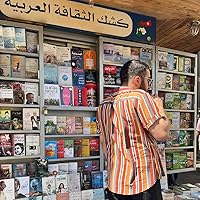
Very well written book. I used the author’s online lecture series as an audiobook companion of this read, and while I finished the videos weeks ago and they match pretty well with the book, I just finished the actual text today. Surat Al Kahf is a beautiful surah full of significant lessons and parables for living a mindful, successful life. I love a book that makes me want to be a better person.

August 14, 2025
The many key important themes that are learned through reading this book on Surah Al- Kahf. I really recommend this book for anyone seeking knowledge. And to understand why Surah al Kahf is the surah we read every Friday and the benefits behind it. It was easy to read throughout the book.

May 21, 2021
Alhamdulillah great read, easy to understand and absorb

August 13, 2023
For those of us who may not be able to watch or listen to lectures by religious scholars, this book is the perfect alternative. It offers a thorough explanation of every verse!

Read
March 15, 2025Loved
September 1, 2025
Great summary of Surah Al Kahf. Highlights the stories of the Surah and their meanings. One of my favorite surahs and the story of Musa as And Al Khidr as is absolutely mu favorite story and parable of the Quran. May Allah swt keep us on the path of righteousness, taqwa and tawakkul.

April 11, 2025
★★★★★ (5/5)
A selection of my favourite passages
On the Majesty of Quran
• It is notable here that Allah S says the dreadful claim comes from their ‘mouths’, because to claim Allah S has a child cannot come from intellect, knowledge or a Divine book.
• That our Lord does not even address the Quraysh for rejecting the Prophet (S) but addresses him for his grief and being rejected reflects that Allah S cares for the affirmers, not the rejectors.
• It is commonly mentioned by Quranic scholars that a third of the Qur’an is stories, a third is law and a third is theology.
• It shows us that the Qur’an is not the speech of the Messenger (S). He was not sitting at home composing verses, because if that had been the case then he would have presented them with his revelation the next day. The fact that he has to wait for fifteen days demonstrates that he is not the author of the Qur’an, and that it is not in his control.
• when in trouble, turn to the Qur’an for protection
• this is the height of eloquence. Allah S spends four verses describing the man’s garden and all the ways in which He perfected it, and then He spends two words describing its destruction without any details.
• Aḥṣā means to write in explicit meticulous detail, and there is nothing large or small except that this book has meticulously preserved it.
Lessons from the Story of the Seven Sleepers
• Pure halal food shows us how much we care about Allah S, it is the real sign of taqwā (fear of Allah). Because when we monitor what we eat and where our money comes from, this truly shows how conscientious we are.
• Another point of benefit from the story of the People of the Cave is the virtue of having good companionship. The People of the Cave were a group, they were not alone. Believers gain help from the other believers; they seek help from Allah S for their brothers and sisters.
Lessons from the story of Two Gardens
• The first story, of the Sleepers of the Cave, was about the fitnah of religion, this second story concerns the fitnah of money
• A notable point here is the companion who is criticizing the man does so by teaching him as to how the latter should have acted. A Muslim never criticizes just by being negative and demeaning; rather, even in his criticism, he is merciful and tender.
• The companion then goes to the third and final point. His first point was on the man’s rejection of Allah S, the second on the man’s arrogance, the third is on how the man demeans his companion. The companion responds to all of these in the order that it deserves.
• And you come from a nuṭfah, a drop of fluid that disgusts you such that if it falls on your garment you wash it off. This is your origin, and now here you are arrogant and mighty…Out of this turāb and then out of nuṭfah Allah S has made you into this beautiful perfect human being and He has given you all that you have, so be grateful.
• by attributing this garden to himself the man made himself an idol besides Allah S.
• In the use of in tarani, i.e. ‘if you percieve’ or ‘if you find’, there is a sense of the companion highlighting the man’s delusion. He did not say, ‘I am less than you’ but ‘you perceive me to be less than you.’
Lessons from the story of Musa (R) and Khiḍr (A)
• the position that Khiḍr (A) is a walī and that he is still alive has no shred of evidence in the Qur’an and Sunnah, nor in common sense, reason and intellect.
• Mūsā would have every right to ask to study with Khiḍr because he was a fellow prophet.
• In the previous verse regarding the boat, Mūsā used the milder term imran, or to do something bad; however here he is using the harsher term nukra.
• Allah, the Exalted, says: ‘I have no reward other than Jannah for a believing slave of Mine who remains patient for My sake when I take away his beloved one from among the inhabitants of the world.’
• never does a person leave something for the sake of Allah S except that He gives him something better in return.
• Khiḍr is displaying Islamic manners; he ascribes the negative to himself, and the positive to Allah S.
Lessons from the story of Dhu Al-Qarnayn
• The first of the stories dealt with the fitnah of persecution for the sake of religion. The second story dealt with the fitnah of money. The third story dealt with the fitnah of knowledge. This fourth story deals with the fitnah of power; what happens when a person becomes powerful.
• flirting with power and being involved with power, infiltrates a person’s mind, and there is nothing more destructive to a person’s ego than power. Power gives fame, wealth, fortune and access to all of the other fitnas that a man has.
On Supplication
• ‘lā ḥawla wa lā quwwata illā billāh, there is no might or power except with Allah.
• this is one of those phrases that we should repeat and make a part of our ritual to remember Allah S. It is especially important when we feel a sense of ghurūr, a type of self- delusion or self- grandeur, or when we feel ḥasad, or jealousy, towards another;
• So if we feel jealous of someone, we should say mashā’Allāh bāraka Allāhu lak, meaning may Allah S give you more baraka, or blessings.
Kinds of Praise
• Hamd is completely different to shukr and madḥ.
• Ḥamd is to praise solely because the one that you are praising is worthy of that praise. So it is simultaneously broader and more specific. It is broader because it has nothing to do with what the one that you are praising might have done for you. And it is also more specific in that you have to praise the one being praised solely because he deserves that praise due to internal characteristics that he possesses, and not due to anything he has done to or for you.
• While shukr is in response to a favour of some kind or because you hope for a return, ḥamd is done because the one you are praising is worthy of that ḥamd.
On Knowledge
• Allah S warns us that we must speak with knowledge or don’t speak at all. He criticizes those who speak without knowledge and chastises those who say about Allah S that which is not true.
• When was the last time our pride allowed us to sit down under somebody younger than us, or who knows less than us overall but in a particular area knows more, so can benefit us with that knowledge?
• generally speaking argumentation has been discouraged, because truth is clear from error and argumentation or philosophizing too much is simply a waste of time.
• Too much questioning will lead you to find ways to block the truth, and this is not the way of the believers.
• Knowledge is a blessing if it is acted upon, but it becomes a curse if it leads to arrogance. It is a blessing if it enters the heart, but if knowledge remains in the head and doesn’t reach the heart then it becomes a curse.
• Notice it is raḥmah that comes first before knowledge in the verse. This is because if we have raḥmah without knowledge, we can still be good people, but knowledge without raḥmah is a problem.
• the only way— to gain knowledge is by studying it with the ʿulamā’, the teachers of knowledge.
• One of our classical scholars said that whoever takes his books as his teachers and makes the kutub his sheikhs, his mistakes will be greater than what he is correcting.
On Life and Vegetation
• Buildings, greenery and water is ingrained in us, and so Allah S speaks to us in a language we all understand. Jannah is far more than this, yes, so let us not feel embarrassed about its descriptions. It is what Muslims and non-Muslims alike all want.
• The example of the life of this world being like vegetation is a very common theme of the Qur’an and appears at least seven times.
• There are a number of commonalities between life and crops. First, the fact that it is temporary. Secondly, that it is luscious when it is alive and green, and thirdly that when it is gone it is useless. Similarly, when this world goes by you cannot retrieve it.
On the Day of Judgement and the Hereafter
• ‘There will come a time when the best property of a Muslim will be sheep, which he will take to the tops of mountains and the places of rainfall so as to flee with his religion from the afflictions.’
• people will seek protection in the caves and mountains from Dajjāl, thus resembling the young men and the cave mentioned in the beginning of the surah.
• Thus Allah S will command such people to fling themselves into the Fire and if they do so with full trust in the promise of Allah S then that Fire will become their Jannah. Those who refuse and do not show their trust in Allah’s S promise will then be punished with the real Fire.
• Notice that Allah S mentions two conditions to attain Jannah. Firstly, īmān and secondly aʿmālun Ṣāliḥāh or righteous deeds. These two conditions are paired together in over seventy verses in the Qur’an.
Gems from the Surah
• All of this underscores a very fundamental point of our religion of Islam. Islam is simple, logical and rational. It appeals to the mind, body, intellect and soul.
• Furthermore, the three pillars of īmān have also been referenced: loving Allah S, fearing Him, and hoping in Allah S. The verses clarify it thus; Allah S is worthy of being praised because we love Him, we are warned against punishment and we fear His punishment, and glad tidings are given of reward and we hope for Allah’s S reward.
• He instructed the angels to bow down before Adam and all did except Iblīs, ‘… he was of the jinn’. This is very explicit evidence that Iblīs was of the jinn, not of the angels as some other religions believe.
• In one example, a Ṣaḥābī complained about struggling to concentrate in ṣalāh and the Prophet (S) said that there is a Shayṭān whose name is Khinzab and whose job is to spoil your concentration in ṣalāh.
• This indicates that for every problem in the world there is one Shayṭān whose responsibility it is to tempt you to it.
• the salām and the greetings of the salām are uniquely Islamic concepts. That all of the believers of Allah S would greet one another with salām.
Points to Deliberate Upon
• Blessings begin from within before they manifest without. Before protection from their enemies, they needed protection from themselves and their wavering doubts.
• Never does Allah S test us except He also blesses us. With every fitnah (trial) there is faraj (remedy), and with every ʿadhāb (punishment) there is also raḥmah (mercy).
• He will protect us in manners we cannot expect.
• Being a believer does not mean we act in a foolhardy manner; courage and foolishness are not the same thing. The believer is brave but not foolish, they have trust in Allah S but they take precautions.
• Our religion says preserve religion, life, sanity and wealth; these are the maqāṣid or the goals of the Shariah.
• Sometimes Allah S commands, sometimes He threatens, sometimes He promises and sometimes He tells stories. Each are different methods Allah S employs to impart the point to us. If we don’t pay heed to one method, we may pay heed to another.
• in the Qur’an ‘kufr’ has two opposites. The first opposite of kufr is īmān and the other opposite is shukr (thankfulness).
• You and we all come from dust, turāb
• You need a little bit of this world, but if you immerse yourself too much into it then it will cause your own destruction.
• Mujrim also encompasses those Muslims who are not righteous and don’t live good lives, even if they knew the truth.
• if we want to protect our wealth we should give it fī sabīlillāh, in the way of Allah S.
Lessons of Surah Al-Kahf
• The importance of the Qur’an and its recitation is established.
• The surah also begins and ends with the theme of the prophethood of Muhammad (S) and his role and function.
• Among the many benefits of the surah is the constant praising of Allah S at all times.
• Throughout the surah we have clear examples of Allah S warning people to be careful when they speak about Him and His religion.
• As Surah al- Kahf shows us, the fact of the matter is anyone who wants to become an ʿalim needs an actual physical teacher as a mentor and tutor. The teacher– student relationship is necessary for a person to become a scholar.
• A repeated theme of this surah is that this world is temporary and this life is short.
• Another benefit of the surah is that it teaches us the importance of keeping good company and how helpful righteous friends are.
• There is no muṣībah except that within that muṣībah there are also blessings for us, if only we have patience and trust in Allah
• Surah al-Kahf also tells us to not follow the community just because they are the ones that are at the pinnacle of civilization, or have more money or power. The surah warns us against being deluded by this false sense of arrogance.
• Another takeaway of Surah al-Kahf is that we learn that we should treat people according to his or her level. We don’t treat people according to our level of knowledge but according to their level. We don’t treat people according to what we are doing but based on their circumstance.
• If we want to get to Jannah then we need to have strong iman and do good deeds for the sake of Allah S without showing off, without any arrogance and without corrupting and polluting those deeds.
A selection of my favourite passages
On the Majesty of Quran
• It is notable here that Allah S says the dreadful claim comes from their ‘mouths’, because to claim Allah S has a child cannot come from intellect, knowledge or a Divine book.
• That our Lord does not even address the Quraysh for rejecting the Prophet (S) but addresses him for his grief and being rejected reflects that Allah S cares for the affirmers, not the rejectors.
• It is commonly mentioned by Quranic scholars that a third of the Qur’an is stories, a third is law and a third is theology.
• It shows us that the Qur’an is not the speech of the Messenger (S). He was not sitting at home composing verses, because if that had been the case then he would have presented them with his revelation the next day. The fact that he has to wait for fifteen days demonstrates that he is not the author of the Qur’an, and that it is not in his control.
• when in trouble, turn to the Qur’an for protection
• this is the height of eloquence. Allah S spends four verses describing the man’s garden and all the ways in which He perfected it, and then He spends two words describing its destruction without any details.
• Aḥṣā means to write in explicit meticulous detail, and there is nothing large or small except that this book has meticulously preserved it.
Lessons from the Story of the Seven Sleepers
• Pure halal food shows us how much we care about Allah S, it is the real sign of taqwā (fear of Allah). Because when we monitor what we eat and where our money comes from, this truly shows how conscientious we are.
• Another point of benefit from the story of the People of the Cave is the virtue of having good companionship. The People of the Cave were a group, they were not alone. Believers gain help from the other believers; they seek help from Allah S for their brothers and sisters.
Lessons from the story of Two Gardens
• The first story, of the Sleepers of the Cave, was about the fitnah of religion, this second story concerns the fitnah of money
• A notable point here is the companion who is criticizing the man does so by teaching him as to how the latter should have acted. A Muslim never criticizes just by being negative and demeaning; rather, even in his criticism, he is merciful and tender.
• The companion then goes to the third and final point. His first point was on the man’s rejection of Allah S, the second on the man’s arrogance, the third is on how the man demeans his companion. The companion responds to all of these in the order that it deserves.
• And you come from a nuṭfah, a drop of fluid that disgusts you such that if it falls on your garment you wash it off. This is your origin, and now here you are arrogant and mighty…Out of this turāb and then out of nuṭfah Allah S has made you into this beautiful perfect human being and He has given you all that you have, so be grateful.
• by attributing this garden to himself the man made himself an idol besides Allah S.
• In the use of in tarani, i.e. ‘if you percieve’ or ‘if you find’, there is a sense of the companion highlighting the man’s delusion. He did not say, ‘I am less than you’ but ‘you perceive me to be less than you.’
Lessons from the story of Musa (R) and Khiḍr (A)
• the position that Khiḍr (A) is a walī and that he is still alive has no shred of evidence in the Qur’an and Sunnah, nor in common sense, reason and intellect.
• Mūsā would have every right to ask to study with Khiḍr because he was a fellow prophet.
• In the previous verse regarding the boat, Mūsā used the milder term imran, or to do something bad; however here he is using the harsher term nukra.
• Allah, the Exalted, says: ‘I have no reward other than Jannah for a believing slave of Mine who remains patient for My sake when I take away his beloved one from among the inhabitants of the world.’
• never does a person leave something for the sake of Allah S except that He gives him something better in return.
• Khiḍr is displaying Islamic manners; he ascribes the negative to himself, and the positive to Allah S.
Lessons from the story of Dhu Al-Qarnayn
• The first of the stories dealt with the fitnah of persecution for the sake of religion. The second story dealt with the fitnah of money. The third story dealt with the fitnah of knowledge. This fourth story deals with the fitnah of power; what happens when a person becomes powerful.
• flirting with power and being involved with power, infiltrates a person’s mind, and there is nothing more destructive to a person’s ego than power. Power gives fame, wealth, fortune and access to all of the other fitnas that a man has.
On Supplication
• ‘lā ḥawla wa lā quwwata illā billāh, there is no might or power except with Allah.
• this is one of those phrases that we should repeat and make a part of our ritual to remember Allah S. It is especially important when we feel a sense of ghurūr, a type of self- delusion or self- grandeur, or when we feel ḥasad, or jealousy, towards another;
• So if we feel jealous of someone, we should say mashā’Allāh bāraka Allāhu lak, meaning may Allah S give you more baraka, or blessings.
Kinds of Praise
• Hamd is completely different to shukr and madḥ.
• Ḥamd is to praise solely because the one that you are praising is worthy of that praise. So it is simultaneously broader and more specific. It is broader because it has nothing to do with what the one that you are praising might have done for you. And it is also more specific in that you have to praise the one being praised solely because he deserves that praise due to internal characteristics that he possesses, and not due to anything he has done to or for you.
• While shukr is in response to a favour of some kind or because you hope for a return, ḥamd is done because the one you are praising is worthy of that ḥamd.
On Knowledge
• Allah S warns us that we must speak with knowledge or don’t speak at all. He criticizes those who speak without knowledge and chastises those who say about Allah S that which is not true.
• When was the last time our pride allowed us to sit down under somebody younger than us, or who knows less than us overall but in a particular area knows more, so can benefit us with that knowledge?
• generally speaking argumentation has been discouraged, because truth is clear from error and argumentation or philosophizing too much is simply a waste of time.
• Too much questioning will lead you to find ways to block the truth, and this is not the way of the believers.
• Knowledge is a blessing if it is acted upon, but it becomes a curse if it leads to arrogance. It is a blessing if it enters the heart, but if knowledge remains in the head and doesn’t reach the heart then it becomes a curse.
• Notice it is raḥmah that comes first before knowledge in the verse. This is because if we have raḥmah without knowledge, we can still be good people, but knowledge without raḥmah is a problem.
• the only way— to gain knowledge is by studying it with the ʿulamā’, the teachers of knowledge.
• One of our classical scholars said that whoever takes his books as his teachers and makes the kutub his sheikhs, his mistakes will be greater than what he is correcting.
On Life and Vegetation
• Buildings, greenery and water is ingrained in us, and so Allah S speaks to us in a language we all understand. Jannah is far more than this, yes, so let us not feel embarrassed about its descriptions. It is what Muslims and non-Muslims alike all want.
• The example of the life of this world being like vegetation is a very common theme of the Qur’an and appears at least seven times.
• There are a number of commonalities between life and crops. First, the fact that it is temporary. Secondly, that it is luscious when it is alive and green, and thirdly that when it is gone it is useless. Similarly, when this world goes by you cannot retrieve it.
On the Day of Judgement and the Hereafter
• ‘There will come a time when the best property of a Muslim will be sheep, which he will take to the tops of mountains and the places of rainfall so as to flee with his religion from the afflictions.’
• people will seek protection in the caves and mountains from Dajjāl, thus resembling the young men and the cave mentioned in the beginning of the surah.
• Thus Allah S will command such people to fling themselves into the Fire and if they do so with full trust in the promise of Allah S then that Fire will become their Jannah. Those who refuse and do not show their trust in Allah’s S promise will then be punished with the real Fire.
• Notice that Allah S mentions two conditions to attain Jannah. Firstly, īmān and secondly aʿmālun Ṣāliḥāh or righteous deeds. These two conditions are paired together in over seventy verses in the Qur’an.
Gems from the Surah
• All of this underscores a very fundamental point of our religion of Islam. Islam is simple, logical and rational. It appeals to the mind, body, intellect and soul.
• Furthermore, the three pillars of īmān have also been referenced: loving Allah S, fearing Him, and hoping in Allah S. The verses clarify it thus; Allah S is worthy of being praised because we love Him, we are warned against punishment and we fear His punishment, and glad tidings are given of reward and we hope for Allah’s S reward.
• He instructed the angels to bow down before Adam and all did except Iblīs, ‘… he was of the jinn’. This is very explicit evidence that Iblīs was of the jinn, not of the angels as some other religions believe.
• In one example, a Ṣaḥābī complained about struggling to concentrate in ṣalāh and the Prophet (S) said that there is a Shayṭān whose name is Khinzab and whose job is to spoil your concentration in ṣalāh.
• This indicates that for every problem in the world there is one Shayṭān whose responsibility it is to tempt you to it.
• the salām and the greetings of the salām are uniquely Islamic concepts. That all of the believers of Allah S would greet one another with salām.
Points to Deliberate Upon
• Blessings begin from within before they manifest without. Before protection from their enemies, they needed protection from themselves and their wavering doubts.
• Never does Allah S test us except He also blesses us. With every fitnah (trial) there is faraj (remedy), and with every ʿadhāb (punishment) there is also raḥmah (mercy).
• He will protect us in manners we cannot expect.
• Being a believer does not mean we act in a foolhardy manner; courage and foolishness are not the same thing. The believer is brave but not foolish, they have trust in Allah S but they take precautions.
• Our religion says preserve religion, life, sanity and wealth; these are the maqāṣid or the goals of the Shariah.
• Sometimes Allah S commands, sometimes He threatens, sometimes He promises and sometimes He tells stories. Each are different methods Allah S employs to impart the point to us. If we don’t pay heed to one method, we may pay heed to another.
• in the Qur’an ‘kufr’ has two opposites. The first opposite of kufr is īmān and the other opposite is shukr (thankfulness).
• You and we all come from dust, turāb
• You need a little bit of this world, but if you immerse yourself too much into it then it will cause your own destruction.
• Mujrim also encompasses those Muslims who are not righteous and don’t live good lives, even if they knew the truth.
• if we want to protect our wealth we should give it fī sabīlillāh, in the way of Allah S.
Lessons of Surah Al-Kahf
• The importance of the Qur’an and its recitation is established.
• The surah also begins and ends with the theme of the prophethood of Muhammad (S) and his role and function.
• Among the many benefits of the surah is the constant praising of Allah S at all times.
• Throughout the surah we have clear examples of Allah S warning people to be careful when they speak about Him and His religion.
• As Surah al- Kahf shows us, the fact of the matter is anyone who wants to become an ʿalim needs an actual physical teacher as a mentor and tutor. The teacher– student relationship is necessary for a person to become a scholar.
• A repeated theme of this surah is that this world is temporary and this life is short.
• Another benefit of the surah is that it teaches us the importance of keeping good company and how helpful righteous friends are.
• There is no muṣībah except that within that muṣībah there are also blessings for us, if only we have patience and trust in Allah
• Surah al-Kahf also tells us to not follow the community just because they are the ones that are at the pinnacle of civilization, or have more money or power. The surah warns us against being deluded by this false sense of arrogance.
• Another takeaway of Surah al-Kahf is that we learn that we should treat people according to his or her level. We don’t treat people according to our level of knowledge but according to their level. We don’t treat people according to what we are doing but based on their circumstance.
• If we want to get to Jannah then we need to have strong iman and do good deeds for the sake of Allah S without showing off, without any arrogance and without corrupting and polluting those deeds.

June 22, 2025
From now on, I'll read Surah Kahf in a completely different light, InShaAllah.
It explains the linkage of 4 stories and also the fitna of Dajjal so well.
Usually, we hear from our elders that this surah is very powerful, but it hits differently when you actually understand it.
It explains the linkage of 4 stories and also the fitna of Dajjal so well.
Usually, we hear from our elders that this surah is very powerful, but it hits differently when you actually understand it.

May 22, 2023
Surat Al-Kahfi ini ibaratnya surat yang dekat dengan kita, karena selalu dibaca di hari jumat. Walaupun jujur pasti ada aja minggu yang akhirnya nge-skip baca karena aku gak bisa manage waktu. Pas baca inituh rasanya aku ditampar berkali-kali, bahwa ternyata yang aku baca berulang-ulang tiap minggunya pun masih banyak hal yang gak aku resapi, sekedar baca ya baca aja.
Terutama di bagian kisah Ashabul Kahfi sih, padahal kita selalu ngerasa “oh itu yang cerita pemuda tertidur di gua beratus-ratus tahun” padahal ya ceritanya gak sekedar itu aja, ada alasan kenapa Allah kirim mereka ke gua itu dan ditidurkan dalam jangka waktu yang lama, gimana Allah ngerancang posisi tidur mereka supaya bisa tetap ‘hidup’ dan lain-lain.
Bagian yang paling aku suka kalau baca tafsir adalah bagian pembahasan per-kata. Di buku ini pun aku nikmatin banget bagian itu, kalau ngeliat gimana susunan kata di Al-Quran rasanya gak akan berhenti muji Allah gak sih? Ada alasan kenapa Al-Kahfi dibuka dengan kata pujian, dan kenapa kata hamd yang digunakan bukan madh atau syukr.
Pokoknya apa yang aku sajiin disini cuma 0,05% dari isi buku, sisanya bisa dibaca sendiri karena akupun masih banyak ngulang-ngulang beberapa bagian karena takut salah nangkep. Ohiya, karena ini buku terjemahan, ada kalimat-kalimat yang mungkin agak miss jadi buat nangkepnya kayak butuh waktu dulu, but overall mudah dipahami kok penjelasannya.
Sekian review ala kadar ini, semoga Allah mudahkan kita untuk terus memahami ayat-ayatnya!
Terutama di bagian kisah Ashabul Kahfi sih, padahal kita selalu ngerasa “oh itu yang cerita pemuda tertidur di gua beratus-ratus tahun” padahal ya ceritanya gak sekedar itu aja, ada alasan kenapa Allah kirim mereka ke gua itu dan ditidurkan dalam jangka waktu yang lama, gimana Allah ngerancang posisi tidur mereka supaya bisa tetap ‘hidup’ dan lain-lain.
Bagian yang paling aku suka kalau baca tafsir adalah bagian pembahasan per-kata. Di buku ini pun aku nikmatin banget bagian itu, kalau ngeliat gimana susunan kata di Al-Quran rasanya gak akan berhenti muji Allah gak sih? Ada alasan kenapa Al-Kahfi dibuka dengan kata pujian, dan kenapa kata hamd yang digunakan bukan madh atau syukr.
Pokoknya apa yang aku sajiin disini cuma 0,05% dari isi buku, sisanya bisa dibaca sendiri karena akupun masih banyak ngulang-ngulang beberapa bagian karena takut salah nangkep. Ohiya, karena ini buku terjemahan, ada kalimat-kalimat yang mungkin agak miss jadi buat nangkepnya kayak butuh waktu dulu, but overall mudah dipahami kok penjelasannya.
Sekian review ala kadar ini, semoga Allah mudahkan kita untuk terus memahami ayat-ayatnya!

May 21, 2023
I was absolutely blown away by this Tafsir! The amount of research Dr. Yasir Qadhi must have undertaken was evident, specifically when he was addressing the false information that Muslims derive from Surah al-Kahf. One notable example, was during the story of Prophet Musa (AS) and Khidr (AS). Qadhi clarified that some individuals mistakenly consider Khidr (AS) as a mystic or Sufi, when in fact he was a Prophet, as indicated by the Surah's wording. This was an eye-opening observation that helped me correct any misinformation I previously heard. Moreover, I found it very insightful to hear Qadhi's own interpretation of Surah al-Kahf, because it allowed me to gain a deeper understanding of the Surah's lessons. I began to ponder over important questions, like what should I take away? What lessons should I implement in my life moving forward? Lastly, the Tafsir had great clarity and structure, which in my opinion makes it understandable for even the most novice readers.
For the above-mentioned reasons, I gave this Tafsir 5 stars! 100% recommend!
PS. I have decided to adopt a more concise approach in my future reviews. While some books may still get a detailed analysis from me, others will be shorter and more succinct.
For the above-mentioned reasons, I gave this Tafsir 5 stars! 100% recommend!
PS. I have decided to adopt a more concise approach in my future reviews. While some books may still get a detailed analysis from me, others will be shorter and more succinct.
January 9, 2022
MashaAllah may Allah reward dr Qadhi for this beautiful tafseer of Surat al kahf. Reading this book will definitely raise your iman, understanding the words of Allah, the meanings of the Ayats in detail , and the events the occurred during the time of when the Ayats were revealed will leave you in aww for more. May Allah grant us all hidaya and a strong iman to seek out more knowledge like the ones presented in this book.

June 29, 2022
so easy to understand and truly helps you connect with the surah and it’s meaning! I noticed this in his other book too (lessons from surah yusuf) but I like that yasir qadhi always mentions majority and minor opinions on certain topics in Islam.
surah al kahf is broken into 4 parts:
- young men in the cave (fitnah of persecution for religion)
- man and the two gardens (fitnah of money)
- musa AS and khidr (fitnah of knowledge)
- dhul qarnayn (fitnah of power)
surah al kahf is broken into 4 parts:
- young men in the cave (fitnah of persecution for religion)
- man and the two gardens (fitnah of money)
- musa AS and khidr (fitnah of knowledge)
- dhul qarnayn (fitnah of power)

April 16, 2022
"Life is a test and every week we face challenges. When we read Surah al-Kahf we calm ourselves, we remind ourselves that trials are a part of this life and we should turn to Allah s.w.t. It reminds us to thank Allah s.w.t. for His blessings, to seek refuge in Him from evil and to have a strong tawakkul and yaqin in Allah s.w.t." - Lessons from Surah Al-Kahf by Dr Yasir Qadhi
Lessons from Surah Al-Kahf is a comprehensive and succinct summary of the beautiful and sublime Surah Al-Kahf. Divided into 21 chapters, Dr Yasir Qadhi explains in detail, the four main narratives found in the Surah - the People of the Cave; the Man with Two Gardens; Musa and Khidr; and Dhu al-Qarnayn.
The four narratives are accompanied by the encompassing themes of the adhab and rahmah of Allah s.w.t., which are constantly reiterated through the other lessons found in Surah Al-Kahf. Dr Yasir Qadhi also elaborates the importance of seeking knowledge of qualified teachers, of the role of our beloved Prophet Muhammad s.a.w, of attributing our blessings to Allah s.w.t, and of constantly remembering to do good deeds, and ascribing to the oneness of Allah s.w.t, among others.
I loved how Dr Yasir Qadhi took great care to examine each verse of the Surah, drawing references to several other verses of the Quran and the hadith to explain the meaning and wisdom behind each verse. The recurring theme of the trials of the dunya, and how salvation is found in the remembrance and reliance on Allah s.w.t is a great reminder on our duty to follow the Shariah, and to have iman and tawakkul in Allah s.w.t.
There is a great number of pearls of wisdom in this book, such as the explanation of the use of InshaAllah, and the major signs of the Day of Judgment. It is certainly a great companion for those who wish to understand and immerse in the themes and meanings behind the Surah, and it is a great reminder for us to remember how Allah s.w.t is in control of the whole universe, and how it is important for us to have taqwa and iman in His Will. I do believe that I will continuously refer to this book in the future.
Lessons from Surah Al-Kahf is a comprehensive and succinct summary of the beautiful and sublime Surah Al-Kahf. Divided into 21 chapters, Dr Yasir Qadhi explains in detail, the four main narratives found in the Surah - the People of the Cave; the Man with Two Gardens; Musa and Khidr; and Dhu al-Qarnayn.
The four narratives are accompanied by the encompassing themes of the adhab and rahmah of Allah s.w.t., which are constantly reiterated through the other lessons found in Surah Al-Kahf. Dr Yasir Qadhi also elaborates the importance of seeking knowledge of qualified teachers, of the role of our beloved Prophet Muhammad s.a.w, of attributing our blessings to Allah s.w.t, and of constantly remembering to do good deeds, and ascribing to the oneness of Allah s.w.t, among others.
I loved how Dr Yasir Qadhi took great care to examine each verse of the Surah, drawing references to several other verses of the Quran and the hadith to explain the meaning and wisdom behind each verse. The recurring theme of the trials of the dunya, and how salvation is found in the remembrance and reliance on Allah s.w.t is a great reminder on our duty to follow the Shariah, and to have iman and tawakkul in Allah s.w.t.
There is a great number of pearls of wisdom in this book, such as the explanation of the use of InshaAllah, and the major signs of the Day of Judgment. It is certainly a great companion for those who wish to understand and immerse in the themes and meanings behind the Surah, and it is a great reminder for us to remember how Allah s.w.t is in control of the whole universe, and how it is important for us to have taqwa and iman in His Will. I do believe that I will continuously refer to this book in the future.

March 18, 2026
I had high hopes for this, but it didn't end up meeting my expectations. The book felt like it had originated as a transcript from a lecture, so the reading felt jarring in parts. The editing let it down by not maintaining form and consistency with names and general spellings (different variants of Muhammad and Judgement were two that I kept spotting). The book felt like a first draft and really needed another developmental edit to smooth out clarity and conciseness. For example, several paragraphs were just reiterating the same point in a way that wasn't helpful.
Furthermore, there were entire asides into Arabic lexicon which weren't explained adequately enough (and sometimes not at all) for a layperson with little to no experience of the Arabic language. So there was a roadblock for accessibility and ease of reading there, which I personally found frustrating because I wanted to understand, but simply couldn't.
More importantly, there were glaring factual errors, which I only picked up on because I take a keen interest in Islamic history, particularly the Caliphates of the Rashidun during the mid-7th Century, after the death of the Prophet Muhammad (peace be upon him). The author makes the statement that Jerusalem was conquered during the caliphate of Abu Bakr and repeated that claim a further time. In fact, Jerusalem was conquered during the caliphate of his successor, Umar, and around two years after Abu Bakr's death.
Where tafsir (Qur'anic exegesis) is concerned, I want to be able to trust the knowledge of the teacher or author. Unfortunately, the aforementioned problems I kept encountering, made this a book that I can't recommend in good faith.
I feel like I need to add that the one star rating is NOT a rating for the Islamic sources, but rather, the way in which Yasir Qadhi and the editorial team/publishers chose to convey the information.
I'm still hunting for an al-Kahf tafsir that is: a) well-written and b) accessible for modern readers. So any recommendations will be greatly appreciated.
Furthermore, there were entire asides into Arabic lexicon which weren't explained adequately enough (and sometimes not at all) for a layperson with little to no experience of the Arabic language. So there was a roadblock for accessibility and ease of reading there, which I personally found frustrating because I wanted to understand, but simply couldn't.
More importantly, there were glaring factual errors, which I only picked up on because I take a keen interest in Islamic history, particularly the Caliphates of the Rashidun during the mid-7th Century, after the death of the Prophet Muhammad (peace be upon him). The author makes the statement that Jerusalem was conquered during the caliphate of Abu Bakr and repeated that claim a further time. In fact, Jerusalem was conquered during the caliphate of his successor, Umar, and around two years after Abu Bakr's death.
Where tafsir (Qur'anic exegesis) is concerned, I want to be able to trust the knowledge of the teacher or author. Unfortunately, the aforementioned problems I kept encountering, made this a book that I can't recommend in good faith.
I feel like I need to add that the one star rating is NOT a rating for the Islamic sources, but rather, the way in which Yasir Qadhi and the editorial team/publishers chose to convey the information.
I'm still hunting for an al-Kahf tafsir that is: a) well-written and b) accessible for modern readers. So any recommendations will be greatly appreciated.

April 28, 2026
Genre: Non-fiction • Islamic Studies • Tafsir • Religious Education
What this book is about:
Dr. Yasir Qadhi explains Surah Al-Kahf in a clear and practical way, connecting its timeless lessons to modern life. The book shows how this Surah prepares believers for the trials of faith, wealth, knowledge, and power, especially in times of confusion and fitnah.
Rather than being only a tafsir, this book helps you understand how Surah Al-Kahf applies to everyday struggles, decisions, and beliefs.
🕊 The People of the Cave — Trial of Faith
What it teaches: Holding onto faith may require sacrifice.
Key lesson: Allah protects sincerity, even when the world stands against you.
🌱 The Man of Two Gardens — Trial of Wealth
What it teaches: Pride in wealth leads to loss.
Key lesson: Gratitude and humility preserve blessings.
🌊 Musa (AS) & Khidr (AS) — Trial of Knowledge
What appears wrong or unfair may be part of a greater wisdom known only to Allah.
• The damaged boat: Small losses may protect us from greater harm.
• The slain boy: Some painful outcomes are hidden mercy.
• The repaired wall: Good deeds are rewarded in unseen ways.
🛡️ Dhul-Qarnayn — Trial of Power
What it teaches: Power tests character.
Key lesson: True leadership is justice, humility, and service.
✨ What I loved:
Deep yet easy to understand, with strong connections between Quranic lessons and real-life challenges.
📌 Final Thoughts:
A powerful book to truly understand Surah Al-Kahf—not just recite it.
Which story impacted you the most? 🌙📖
What this book is about:
Dr. Yasir Qadhi explains Surah Al-Kahf in a clear and practical way, connecting its timeless lessons to modern life. The book shows how this Surah prepares believers for the trials of faith, wealth, knowledge, and power, especially in times of confusion and fitnah.
Rather than being only a tafsir, this book helps you understand how Surah Al-Kahf applies to everyday struggles, decisions, and beliefs.
🕊 The People of the Cave — Trial of Faith
What it teaches: Holding onto faith may require sacrifice.
Key lesson: Allah protects sincerity, even when the world stands against you.
🌱 The Man of Two Gardens — Trial of Wealth
What it teaches: Pride in wealth leads to loss.
Key lesson: Gratitude and humility preserve blessings.
🌊 Musa (AS) & Khidr (AS) — Trial of Knowledge
What appears wrong or unfair may be part of a greater wisdom known only to Allah.
• The damaged boat: Small losses may protect us from greater harm.
• The slain boy: Some painful outcomes are hidden mercy.
• The repaired wall: Good deeds are rewarded in unseen ways.
🛡️ Dhul-Qarnayn — Trial of Power
What it teaches: Power tests character.
Key lesson: True leadership is justice, humility, and service.
✨ What I loved:
Deep yet easy to understand, with strong connections between Quranic lessons and real-life challenges.
📌 Final Thoughts:
A powerful book to truly understand Surah Al-Kahf—not just recite it.
Which story impacted you the most? 🌙📖
This entire review has been hidden because of spoilers.

January 6, 2026
ੈ♡˳ Lessons from Surah al-Kahf by Yasir Qadhi is a luminous and insightful guide to one of the Qur’an’s most profound chapters, illuminating its timeless wisdom with clarity, depth, and spiritual resonance.
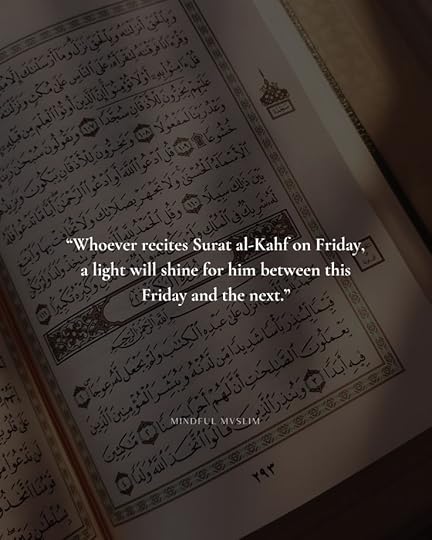
♡ Rather than offering a purely technical tafsir, Qadhi frames Surah al-Kahf as a living roadmap for navigating faith in times of confusion, trial, and moral pressure.
⋆.˚🦋༘⋆ Qadhi distills complex themes into clear insights, helping readers understand not only what the surah conveys, but why it still resonates today.
“Wealth and children are the adornments of this life, but lasting deeds are better.” (18:46)
Through its four central narratives - the People of the Cave, the Man of Two Gardens, Musa and Khidr, and Dhul-Qarnayn - the book highlights recurring tests of faith, knowledge, wealth, and power, showing how these trials remain timeless and universal.
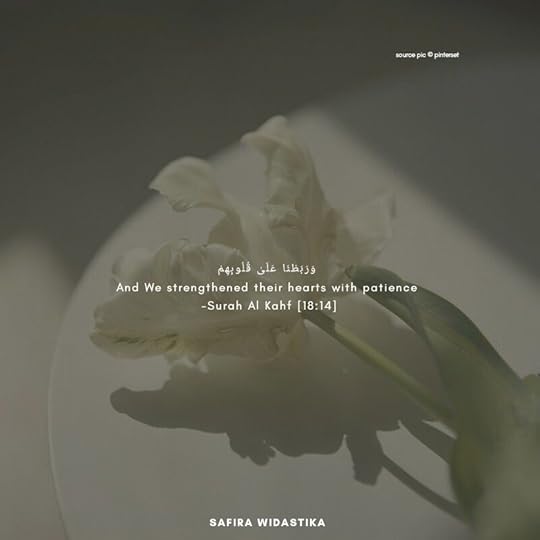
𔓘 The book encourages reflection, humility, and spiritual resilience, making Surah al-Kahf feel less like a text to be recited weekly and more like guidance to be lived.
♡ Rather than offering a purely technical tafsir, Qadhi frames Surah al-Kahf as a living roadmap for navigating faith in times of confusion, trial, and moral pressure.
⋆.˚🦋༘⋆ Qadhi distills complex themes into clear insights, helping readers understand not only what the surah conveys, but why it still resonates today.
“Wealth and children are the adornments of this life, but lasting deeds are better.” (18:46)
Through its four central narratives - the People of the Cave, the Man of Two Gardens, Musa and Khidr, and Dhul-Qarnayn - the book highlights recurring tests of faith, knowledge, wealth, and power, showing how these trials remain timeless and universal.
𔓘 The book encourages reflection, humility, and spiritual resilience, making Surah al-Kahf feel less like a text to be recited weekly and more like guidance to be lived.

January 16, 2026
Great book exploring the stories & takeaways from Surah Kahf. There were many interesting details about the young men of the cave, and the other three stories mentioned in Surah Kahf: the man with the two gardens, Musa and Khidr, and Dhu al Qarnayn. I particularly enjoyed the story of Musa and Khidr, which beautifully highlighted the importance of patience, knowledge, and acquiescing to the qadr of Allah in every situation.
It was interesting to see various linguistic choices in the Surah analyzed and explained, continuously demonstrating the wisdom of Allah. I love that there were also many hadiths included to contextualize ayahs of Surah Kahf, as well as verses from other surahs that further help our understanding of different concepts.
This was a simple and easy read, using the stories from Surah Kahf to advise us all on how to live our lives as Muslims. However, it sometimes read like a kids’ book due to some of the very basic sentences and explanations. The analysis in the Seerah by Dr. Yasir Qadhi was also similarly written, but because it was filled with SO much knowledge and so many stories, the simplicity of the analysis was not as apparent. I understand this is to prevent any confusion or misunderstanding on such important topics, so I commend the accessibility. Overall, an enjoyable and informative read, but I was hoping for a bit more depth.
It was interesting to see various linguistic choices in the Surah analyzed and explained, continuously demonstrating the wisdom of Allah. I love that there were also many hadiths included to contextualize ayahs of Surah Kahf, as well as verses from other surahs that further help our understanding of different concepts.
This was a simple and easy read, using the stories from Surah Kahf to advise us all on how to live our lives as Muslims. However, it sometimes read like a kids’ book due to some of the very basic sentences and explanations. The analysis in the Seerah by Dr. Yasir Qadhi was also similarly written, but because it was filled with SO much knowledge and so many stories, the simplicity of the analysis was not as apparent. I understand this is to prevent any confusion or misunderstanding on such important topics, so I commend the accessibility. Overall, an enjoyable and informative read, but I was hoping for a bit more depth.
Displaying 1 - 30 of 68 reviews