

What do you think?

Terapia chronicznego wstydu. Perspektywa relacyjna i neurobiologiczna
Skuteczna metoda pracy z pacjentami doświadczającymi paraliżującego i wyniszczającego wstydu. Chroniczny wstyd jest bolesny, destrukcyjny i przyjmuje rozmaite postaci. Trudno samodzielnie się z nim uporać, ponieważ jest odporny nawet na intensywną terapię analityczną. W swojej książce Patricia A. DeYoung łączy najnowsze odkrycia z dziedziny neuronauki z bogatą tradycją psychoterapii relacyjnej, a także ukazuje, co kryje się za różnorodnymi objawami, i odsłania prawdziwą, relacyjną naturę wstydu. Wyjaśnia też, w jaki sposób chroniczny wstyd zapisuje się w mózgu i wpływa na osobowość, tłumaczy złożone teorie i przekłada je na codzienną praktykę terapeutyczną.
Terapia chronicznego wstydu to rezultat wieloletnich doświadczeń klinicznych. Autorka pokazuje, jak rozpoznać wstyd w relacji terapeutycznej, przeanalizować jego źródła i wpływ na życie klienta oraz wybrać najlepszą metodę terapii. Książka zawiera liczne opisy przypadków i propozycje rozwiązań, które można natychmiast zastosować w praktyce. Ta pobudzająca do myślenia, pouczająca i rozwijająca publikacja pomoże psychoterapeutom poszerzyć zakres oddziaływań terapeutycznych i zwiększyć skuteczność w pracy z klientami cierpiącymi na chroniczny wstyd.
Wstyd jest zjawiskiem neurologicznym, psychologicznym i relacyjnym, a Patricia A. DeYoung wykonała solidną pracę, opisując w dogłębny, ludzki i jednocześnie naukowy sposób życie z chronicznym wstydem i metody terapii.
dr Louis Cozolino, wykładowca psychologii w Graduate School of Education and Psychology, Pepperdine University
Definiując wstyd jako doświadczenie przede wszystkim relacyjne, autorka naświetla rozlegle i niszczące skutki przeżywania go chronicznie. Jednocześnie jasnym i przystępnym językiem przedstawia metody jego skutecznego leczenia. Książka Patricii DeYoung to cenne źródło wiedzy dla psychologów klinicznych, którzy chcą zrozumieć i leczyć wstyd w ujęciu psychodynamicznym.
dr Martha Sweezy, zastępczyni dyrektora i dyrektorka ds. kształcenia w programie dialektycznej terapii behawioralnej w Cambridge Health Alliance, Harvard Medical School
Część I. Zrozumieć chroniczny wstyd
• Wstyd: problem, o którym się nie mówi
• Wstyd jest relacyjny
• Wstyd i relacyjny mózg
• Relacyjne i neurobiologiczne narracje o wstydzie
• Rozpoznanie wstydu
Część II. Uleczyć chroniczny wstyd
• Wymagania do pracy z chronicznym wstydem
• Budowanie prawopólkulowego kontaktu
• Narracja jako integracja prawej półkuli mózgu
• Wyciąganie wstydu na światło i powietrze
• Praca ze zdysocjowanym wstydem
• Redukcja wstydu na przestrzeni życia
Dr Patricia A. DeYoung jest psychoterapeutką relacyjną z ponadtrzydziestoletnim stażem. Założyła Toronto Institute for Relational Psychotherapy.
Terapia chronicznego wstydu to rezultat wieloletnich doświadczeń klinicznych. Autorka pokazuje, jak rozpoznać wstyd w relacji terapeutycznej, przeanalizować jego źródła i wpływ na życie klienta oraz wybrać najlepszą metodę terapii. Książka zawiera liczne opisy przypadków i propozycje rozwiązań, które można natychmiast zastosować w praktyce. Ta pobudzająca do myślenia, pouczająca i rozwijająca publikacja pomoże psychoterapeutom poszerzyć zakres oddziaływań terapeutycznych i zwiększyć skuteczność w pracy z klientami cierpiącymi na chroniczny wstyd.
Wstyd jest zjawiskiem neurologicznym, psychologicznym i relacyjnym, a Patricia A. DeYoung wykonała solidną pracę, opisując w dogłębny, ludzki i jednocześnie naukowy sposób życie z chronicznym wstydem i metody terapii.
dr Louis Cozolino, wykładowca psychologii w Graduate School of Education and Psychology, Pepperdine University
Definiując wstyd jako doświadczenie przede wszystkim relacyjne, autorka naświetla rozlegle i niszczące skutki przeżywania go chronicznie. Jednocześnie jasnym i przystępnym językiem przedstawia metody jego skutecznego leczenia. Książka Patricii DeYoung to cenne źródło wiedzy dla psychologów klinicznych, którzy chcą zrozumieć i leczyć wstyd w ujęciu psychodynamicznym.
dr Martha Sweezy, zastępczyni dyrektora i dyrektorka ds. kształcenia w programie dialektycznej terapii behawioralnej w Cambridge Health Alliance, Harvard Medical School
Część I. Zrozumieć chroniczny wstyd
• Wstyd: problem, o którym się nie mówi
• Wstyd jest relacyjny
• Wstyd i relacyjny mózg
• Relacyjne i neurobiologiczne narracje o wstydzie
• Rozpoznanie wstydu
Część II. Uleczyć chroniczny wstyd
• Wymagania do pracy z chronicznym wstydem
• Budowanie prawopólkulowego kontaktu
• Narracja jako integracja prawej półkuli mózgu
• Wyciąganie wstydu na światło i powietrze
• Praca ze zdysocjowanym wstydem
• Redukcja wstydu na przestrzeni życia
Dr Patricia A. DeYoung jest psychoterapeutką relacyjną z ponadtrzydziestoletnim stażem. Założyła Toronto Institute for Relational Psychotherapy.
320 pages, Paperback
First published February 9, 2015
Ratings & Reviews
Friends & Following
Create a free account to discover what your friends think of this book!
Community Reviews
Displaying 1 - 30 of 48 reviews

November 30, 2022
Let’s talk about shame.
SHAME!
Shame is a very social (relational) emotion.
People develop healthy (appropriate) shame in early childhood (beginning around age 2) as we become aware of our parents, and later peers expectations regarding our behavior.
Socialized (as it were).
Louis Cozolino writes: “appropriate shame and guilt supports the development of the social conscience, deepens our empathetic abilities, and enhances our self-esteem as a caring person. In contrast, core shame develops as a function of overwhelmingly negative attachment experiences. The emotions of core shame are distinguishable from healthy shame in that they are not related to behavior but to the experience of the self. Children and adults with core shame come to experience themselves as fundamentally defective, worthless, and unlovable. Core shame is the polar opposite of self-esteem.”
Oh man.
What he said ☝️
I’m feeling it.
In other words.
If you grow up in a neglecting, or unpredictable, or abusive emotional environment. And you are held in that state of yuck for too long. You emerge into childhood, adolescence and later adulthood feeling broken, or empty, or unworthy of love, and maybe like an imposter, or that you have to be extra, or perfect just to get your basic needs met.
You don’t so much think all that as FEEL it.
You SENSE it at the CORE of your being.
It’s a VISCERAL type of knowing that we rarely come to explicitly understand. But that DOMINATES our lives, at work, school and especially….
In relationship 🫥
Core shame is the hallmark of developmental trauma.
And the thing behind the thing with most:
- addiction
- anxiety
- depression
I could go on.
This book is about a very similar (almost identical) construct.
Chronic shame.
Patricia DeYoung defines chronic shame as “an experience of one's felt sense of self disintegrating in relation to a dysregulating other.”
Have you ever been put on the spot, or felt judged or rejected, and part of you just freezes?
Goes off line?
Goes blank?
Can’t talk?
Can’t think?
You become disoriented.
Dissociated.
You wish you could disappear.
Your sense of self disappears.
If the answer is yes, I imagine your next question might be:
So what can one do about this?
That’s what this book is all about.
Understanding (and importantly) treating (if you’re a therapist) or recovering from (particularly if you’re a therapist) chronic shame.
I could write a book about this book.
But it would be better if you just read the book.
5/5 stars ⭐️
SHAME!
Shame is a very social (relational) emotion.
People develop healthy (appropriate) shame in early childhood (beginning around age 2) as we become aware of our parents, and later peers expectations regarding our behavior.
Socialized (as it were).
Louis Cozolino writes: “appropriate shame and guilt supports the development of the social conscience, deepens our empathetic abilities, and enhances our self-esteem as a caring person. In contrast, core shame develops as a function of overwhelmingly negative attachment experiences. The emotions of core shame are distinguishable from healthy shame in that they are not related to behavior but to the experience of the self. Children and adults with core shame come to experience themselves as fundamentally defective, worthless, and unlovable. Core shame is the polar opposite of self-esteem.”
Oh man.
What he said ☝️
I’m feeling it.
In other words.
If you grow up in a neglecting, or unpredictable, or abusive emotional environment. And you are held in that state of yuck for too long. You emerge into childhood, adolescence and later adulthood feeling broken, or empty, or unworthy of love, and maybe like an imposter, or that you have to be extra, or perfect just to get your basic needs met.
You don’t so much think all that as FEEL it.
You SENSE it at the CORE of your being.
It’s a VISCERAL type of knowing that we rarely come to explicitly understand. But that DOMINATES our lives, at work, school and especially….
In relationship 🫥
Core shame is the hallmark of developmental trauma.
And the thing behind the thing with most:
- addiction
- anxiety
- depression
I could go on.
This book is about a very similar (almost identical) construct.
Chronic shame.
Patricia DeYoung defines chronic shame as “an experience of one's felt sense of self disintegrating in relation to a dysregulating other.”
Have you ever been put on the spot, or felt judged or rejected, and part of you just freezes?
Goes off line?
Goes blank?
Can’t talk?
Can’t think?
You become disoriented.
Dissociated.
You wish you could disappear.
Your sense of self disappears.
If the answer is yes, I imagine your next question might be:
So what can one do about this?
That’s what this book is all about.
Understanding (and importantly) treating (if you’re a therapist) or recovering from (particularly if you’re a therapist) chronic shame.
I could write a book about this book.
But it would be better if you just read the book.
5/5 stars ⭐️

August 8, 2025
In her first book, Relational Psychotherapy, esteemed Toronto analyst Patricia A. DeYoung introduced this branch of treatment to those new to its techniques. Here she takes on chronic shame from that same relational perspective.
Shame receives very little attention from reputable therapists, largely because it is difficult to address and frequently unresolvable. Introduced through parenting at an early age, a healthy application of shame strengthens boundaries that lead to ethical behavior and desirable social outcome. There are, however, caretakers who employ shaming to gain and maintain personal advantage over their charges. In so doing, they damage areas of critical importance to a developing identity - among them confidence, assertiveness, self-respect and self-worth. This damage is viewed by professionals as essentially irreparable because the voice of that destructive individual becomes hardwired into the function of a child's critical thinking. Most analysts, upon encountering a client's shame, will do their best to construct a work-around. DeYoung takes a more confrontational stance, suggesting that shame (when and if a patient is willing to allow it to appear) be given "light and air;" that bringing it out of silence and into the view of a compassionate other will, in many instances, help with its management.
DeYoung's work is highly-detailed and filled with case examples. Its relational approach, while certain to be dynamic for practitioners, may prove painful for those struggling with the conflict - possibly to the point of provoking anxiety. Take care with this one. The material can get a little intense.
Shame receives very little attention from reputable therapists, largely because it is difficult to address and frequently unresolvable. Introduced through parenting at an early age, a healthy application of shame strengthens boundaries that lead to ethical behavior and desirable social outcome. There are, however, caretakers who employ shaming to gain and maintain personal advantage over their charges. In so doing, they damage areas of critical importance to a developing identity - among them confidence, assertiveness, self-respect and self-worth. This damage is viewed by professionals as essentially irreparable because the voice of that destructive individual becomes hardwired into the function of a child's critical thinking. Most analysts, upon encountering a client's shame, will do their best to construct a work-around. DeYoung takes a more confrontational stance, suggesting that shame (when and if a patient is willing to allow it to appear) be given "light and air;" that bringing it out of silence and into the view of a compassionate other will, in many instances, help with its management.
DeYoung's work is highly-detailed and filled with case examples. Its relational approach, while certain to be dynamic for practitioners, may prove painful for those struggling with the conflict - possibly to the point of provoking anxiety. Take care with this one. The material can get a little intense.
July 10, 2016
This book helped me complete my long-term therapy for attachment issues.
Processing anxiety and anger from child abuse and neglect in an excellent long-term therapy, my therapist and I found ourselves stuck at a deep point after years of productive work, unable to understand some of my recurring anger at her. A Psychology Today article alerted me that my anger might come from shame. I looked shame up on my Kindle and chose this book, which led my therapist and I through processing my shame. Once my shame was processed, the anxiety and anger evaporated. I am grateful to live in a time when we can easily access the work of deep thinkers on very specific subjects via a simple five-minute Internet search. Thank you, Dr. DeYoung.
Processing anxiety and anger from child abuse and neglect in an excellent long-term therapy, my therapist and I found ourselves stuck at a deep point after years of productive work, unable to understand some of my recurring anger at her. A Psychology Today article alerted me that my anger might come from shame. I looked shame up on my Kindle and chose this book, which led my therapist and I through processing my shame. Once my shame was processed, the anxiety and anger evaporated. I am grateful to live in a time when we can easily access the work of deep thinkers on very specific subjects via a simple five-minute Internet search. Thank you, Dr. DeYoung.

June 26, 2021
This book is, hands-down, one of the best therapy books I’ve ever read. DeYoung posits a cohesive, understandable and neurobiologically informed theory of shame and its treatment.
This book was beautifully written, provided insights that were relevant for myself and potential clients, and adds a much needed and significant layer to the current literature available regarding shame within therapy.
I will be reading this more than once, and would highly recommend it to anyone in the field.
This book was beautifully written, provided insights that were relevant for myself and potential clients, and adds a much needed and significant layer to the current literature available regarding shame within therapy.
I will be reading this more than once, and would highly recommend it to anyone in the field.

June 20, 2021
I learnt so much from this book and can’t recommend it enough. It reminds me to make every session with my clients a nonjudgmental empathic hour, not hurrying too much. The beautify of being just being there, slowly discovering how the past affect the now, was clear. Interesting case stories made the theory even more interesting.

March 6, 2025
Thorough review of shame, its presentation in treatment, and how clinicians can provide compassion and support to clients.

September 28, 2015
This is an accessibly and engagingly written, comprehensive overview of the phenomenon of shame as understood in a variety of psychotherapeutic and neuroscientific traditions. Exploring the relational roots of chronic shame, the author provides vivid case studies to illustrate the ways shame is often the cornerstone of other behaviours (such as addiction), 'conditions' (depression, anxiety, personality disorder, dissociation, etc), and difficulties in relating that might be a client's ostensible presenting problem. Proposing a relational approach to working with shame in ways that allow it to be spoken about openly, and to give a reparative experience of relationship that encourages a visceral, 'right-brain' experience of being accepted with all their human fallibilities, the author resists the temptation to offer a cure, but suggests ways of 'managing' chronic shame, through knowing how to identify it and understanding how it operates in ourselves and our clients.

March 29, 2022
This book does a good job of integrating a lot of heavy and complex theoretical material into something coherent and helpful. In my view it is not a beginners text and you will get the most from it if you are already comfortable with some principles from interpersonal neurobiology, object relations theory, and self-psychology. This text is certainly a springboard for further thinking and reading, emphasis on the further reading. It will be worth a read if you are a therapist working with complex trauma, relational difficulties, or with people who have had adverse life experiences in their developmental history. I listened to the audiobook version and I was impressed by the narration. At times the book dives into some pretty complex (and verbose) stuff, but the narrator holds up pretty consistently across the book, which made taking it in much easier.
February 10, 2017
Should be read by all therapists
I would recommend this book to all therapists and also clients as it explains exactly how to deal constructively with shame. Also how to deal with shame when it comes up in the therapeutic relationship. A very easy to understand honest book.
I would recommend this book to all therapists and also clients as it explains exactly how to deal constructively with shame. Also how to deal with shame when it comes up in the therapeutic relationship. A very easy to understand honest book.

March 22, 2018
Mind-blowing, life-changing. I only give 5 stars if it was also enjoyable to read and/or it's one I'd keep going back to.

August 6, 2026
This is more aimed at mental health professionals than I initially thought, which made it less useful for me personally, but it was still very enlightening.
May 16, 2026
An interesting read that provided many insights into a phenomenon that everyone struggles with to some extent - the breakdown of relationships and relational understanding. However, some have struggled with this in a more extensive way throughout early relational experiences, and therefore have more intense symptoms like dissociation that may reach even to DID. The book is written from the lens of a therapist, and provides comprehensive descriptions of shame from multiple different approaches to therapy. One view is produced by DeYoung, but others are considered. I appreciated the way the book approached shame from many different perspectives, but I felt that it also at times overcomplicated the issue of shame by all the various descriptions. It got redundant at times also, and made the solutions sound more complicated then they actually are - healthy relationships involving emotional attunement whether in therapy or outside life. I don’t agree that the self can be repaired by meditation or taking stances of pretending you are a compassionate person. The self was damaged in relationship to others - on which the self is built, and therefore it must be healed in relation to others, not merely self to self. DeYoung only proposes this at the end as one possible shame reduction method though anyways. Other than this I thought the book was excellent.
January 15, 2024
Really more for therapists than everyday readers. I put it down because there were so few practical applications for the average person. Even though it was interesting and made me think, it just motivated me to find another book geared towards the average person. In addition to the lack of practical insights, the language and terminology of the book was pretty far above my head too. And I read empirical self-help books regularly.
January 7, 2023
a bit redundant on the right vs left brain integration. but insightful and clear about affect theory. im not giving 5 stars because there are better books addressing chronic shame imo. like the haunted self or janina fisher's healing the fragmented selves of trauma survivors
August 5, 2020
The best book I’ve ever read on shame. Loved it. She weaves in personal vignettes with theory.

February 16, 2025
Very dense, will definitely be reading again at some point

November 2, 2025
Insightful and helpful tools prov8ded in a clear and simple way.

Read
February 15, 2023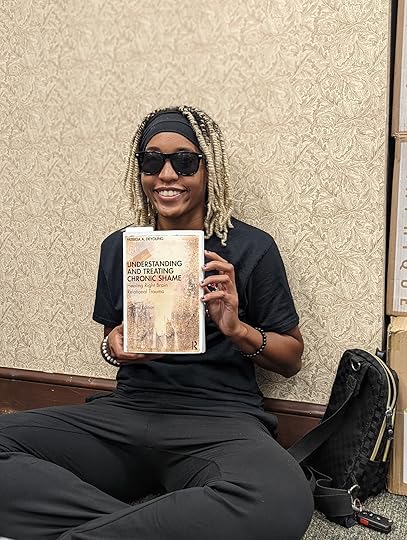
"Shame, as specifically a right-brain experience, is a relatively pure form of shame affect that overwhelms and wipes out sense of self. So, essentially whenever you're shamed, you kind of disintegrate from the inside and lose who you are and it leaves you vulnerable to the person shaming you. The ability to bring yourself back to your sense of self is how you determine if it's chronic or acute. I've experienced religious shame. There's so many rules when it comes to religion and so much hypocrisy and it's kind of just embedded within society. I know we separate church and state, but everyone knows the concept of "One nation under God", and how you follow certain rules, and if you don't follow these rules, you're shamed and you're outcast. I went to church every Sunday. It can go on for like 10 hours. It's like, well, if we haven't caught the holy ghost yet, he's not coming."
I talk to humans reading around us. Check out some of my links if these posts peek your interest!
Linktree

May 20, 2017
Fantastic.

December 30, 2017
One of the best books in my counseling library.

August 11, 2020
By far, the most helpful book, practically and theoretically, that I have read in my training as a therapist. A must-read!
July 26, 2026
A remarkable and deeply humane book
There are books that teach you something new, and there are books that quietly change the way you see people. Understanding and Treating Chronic Shame is firmly in the second category.
Patricia DeYoung has written one of the most compassionate and insightful books on chronic shame that I have ever read. Rather than asking "What's wrong with this person?", she consistently asks the far more important question: "What happened to this person?" That simple shift changes everything.
What impressed me most is the way she brings together attachment theory, interpersonal neurobiology, relational psychotherapy, affect regulation and decades of clinical experience into a coherent and deeply human understanding of shame. This isn't a book that labels or pathologises people; it helps you understand why they protect themselves in the ways they do, often without even realising it.
This is not a light read. At times the writing is dense and assumes some familiarity with psychotherapy and relational theory. There were chapters where I found myself slowing down, rereading paragraphs and reflecting on what Patricia was really saying. Yet that effort is richly rewarded. By the end of the book, the individual ideas come together into a remarkably coherent picture, and the final chapters are among the most hopeful and moving I've read on the subject.
As someone who has lived with chronic shame for much of my own life, I found this book unexpectedly personal. Patricia doesn't simply write about people living with shame; she writes to them and for them. At no point did I feel judged. Instead, I felt understood.
One of the book's greatest strengths is that it never offers false promises. Patricia doesn't suggest that shame can simply be erased or that healing is quick or straightforward. Instead, she offers something far more believable: the possibility of living a life in which shame no longer has the final say. That message is both realistic and profoundly hopeful.
If you are a therapist, counsellor, coach or anyone interested in attachment, trauma, relationships or emotional development, this book deserves a place on your bookshelf. Equally, if you have ever struggled with the quiet feeling that somehow you are "not enough", you may well find parts of your own story reflected in these pages.
For me, this has become one of the most important books I've read on the subject of shame. It is thoughtful, compassionate, intellectually rigorous and, above all, deeply humane.
Highly recommended.
There are books that teach you something new, and there are books that quietly change the way you see people. Understanding and Treating Chronic Shame is firmly in the second category.
Patricia DeYoung has written one of the most compassionate and insightful books on chronic shame that I have ever read. Rather than asking "What's wrong with this person?", she consistently asks the far more important question: "What happened to this person?" That simple shift changes everything.
What impressed me most is the way she brings together attachment theory, interpersonal neurobiology, relational psychotherapy, affect regulation and decades of clinical experience into a coherent and deeply human understanding of shame. This isn't a book that labels or pathologises people; it helps you understand why they protect themselves in the ways they do, often without even realising it.
This is not a light read. At times the writing is dense and assumes some familiarity with psychotherapy and relational theory. There were chapters where I found myself slowing down, rereading paragraphs and reflecting on what Patricia was really saying. Yet that effort is richly rewarded. By the end of the book, the individual ideas come together into a remarkably coherent picture, and the final chapters are among the most hopeful and moving I've read on the subject.
As someone who has lived with chronic shame for much of my own life, I found this book unexpectedly personal. Patricia doesn't simply write about people living with shame; she writes to them and for them. At no point did I feel judged. Instead, I felt understood.
One of the book's greatest strengths is that it never offers false promises. Patricia doesn't suggest that shame can simply be erased or that healing is quick or straightforward. Instead, she offers something far more believable: the possibility of living a life in which shame no longer has the final say. That message is both realistic and profoundly hopeful.
If you are a therapist, counsellor, coach or anyone interested in attachment, trauma, relationships or emotional development, this book deserves a place on your bookshelf. Equally, if you have ever struggled with the quiet feeling that somehow you are "not enough", you may well find parts of your own story reflected in these pages.
For me, this has become one of the most important books I've read on the subject of shame. It is thoughtful, compassionate, intellectually rigorous and, above all, deeply humane.
Highly recommended.

January 29, 2026
با مطالعه این کتاب اینگونه برداشت میکنم که شرم مانع از تجربه هیجانات مثبت میشود. فردی که غرق در شرم است، احساس میکند که لایق شادی، آرامش یا موفقیت نیست. حتی زمانی که اتفاقات خوبی رخ میدهد، شرم میتواند آنها را آلوده کند (“من لیاقت این را ندارم” یا “این موفقیت واقعی نیست”) درک پدیدارشناسانه از شرم نشان میدهد که برای درمان آن، نمیتوان تنها با افکار مبارزه کرد.
شرم یک تجربه زیسته است که در بدن و احساسات فرد ریشه دوانده. بنابراین، درمان باید بتواند رابطه فرد با این تجربه بدنی و هیجانی را تغییر دهد، نه اینکه صرفاً محتوای افکار را به چالش بکشد. خود-انتقادگری صدای درونی شرم است.
این صدای درونی مدام فرد را سرزنش میکند و استانداردهای غیرممکنی را برای او تعیین میکند. ناتوانی در رسیدن به این استانداردها، چرخه شرم را تقویت میکند. درمان باید بر خاموش کردن یا تغییر رابطه با این صدای منتقد متمرکز باشد. یکی از ابعاد مهم شرم، جنبه بینشخصی آن است.
شرم دیوار ضخیمی بین فرد و دیگران ایجاد میکند. فرد شرمگین از صمیمیت میترسد زیرا صمیمیت نیازمند آسیبپذیری است و آسیبپذیری برای او به معنای خطر طرد شدن است. این انزوا، نیازهای اساسی انسان برای ارتباط را بیپاسخ میگذارد. مکانیسمهای رفتاری مقابله با شرم اغلب ناسازگار هستند.
افراد برای اجتناب از تجربه دردناک شرم، ممکن است به راهبردهایی مانند پرخاشگری (حمله به دیگران)، کنارهگیری (حمله به خود)، یا مصرف مواد مخدر روی آورند. در اعتیاد، شرم هم علت و هم معلول مصرف است؛ فرد مصرف میکند تا شرم را فراموش کند، اما رفتار مصرف باعث شرم بیشتر میشود.
شرم یک تجربه زیسته است که در بدن و احساسات فرد ریشه دوانده. بنابراین، درمان باید بتواند رابطه فرد با این تجربه بدنی و هیجانی را تغییر دهد، نه اینکه صرفاً محتوای افکار را به چالش بکشد. خود-انتقادگری صدای درونی شرم است.
این صدای درونی مدام فرد را سرزنش میکند و استانداردهای غیرممکنی را برای او تعیین میکند. ناتوانی در رسیدن به این استانداردها، چرخه شرم را تقویت میکند. درمان باید بر خاموش کردن یا تغییر رابطه با این صدای منتقد متمرکز باشد. یکی از ابعاد مهم شرم، جنبه بینشخصی آن است.
شرم دیوار ضخیمی بین فرد و دیگران ایجاد میکند. فرد شرمگین از صمیمیت میترسد زیرا صمیمیت نیازمند آسیبپذیری است و آسیبپذیری برای او به معنای خطر طرد شدن است. این انزوا، نیازهای اساسی انسان برای ارتباط را بیپاسخ میگذارد. مکانیسمهای رفتاری مقابله با شرم اغلب ناسازگار هستند.
افراد برای اجتناب از تجربه دردناک شرم، ممکن است به راهبردهایی مانند پرخاشگری (حمله به دیگران)، کنارهگیری (حمله به خود)، یا مصرف مواد مخدر روی آورند. در اعتیاد، شرم هم علت و هم معلول مصرف است؛ فرد مصرف میکند تا شرم را فراموش کند، اما رفتار مصرف باعث شرم بیشتر میشود.

August 2, 2025
Dozvolite sebi da upoznate stid. Pomozite sebi i ljudima oko vas.
Izvanredna knjiga Patricie DeYoung, Hronični stid, vodi nas od tihog, svakodnevnog osećaja “da nešto nije u redu sa mnom” do dubljeg razumevanja kako stid nastaje, kako se maskira — i kako može da se zaleči.
DeYoung ne piše sa distance, već sa saosećanjem. Kroz psihološke uvide i stvarne primere pokazuje kako stid postaje temelj ličnog identiteta, kako utiče na odnose, samopouzdanje, čak i na telo. Naučićete da prepoznate mehanizme bega od stida: perfekcionizam, povlačenje, zavisnosti, emocionalnu disocijaciju — ali i da ih nežno prepoznate kao pokušaje samoodbrane.
Ova knjiga ne nudi gotova rešenja, već prostor za razumevanje i integraciju — kroz povezanost, empatiju i kontakt sa sobom. Pisana je stručno, ali jasno i korisno svima koji žele da razumeju sebe dublje.
•Ne moramo da budemo savršeni da bismo zaslužili pripadanje — samo viđeni.
•Ne stidimo se zato što smo loši — već zato što smo naučili da nismo dovoljno dobri.
•Mnogi ljudi sa hroničnim stidom izgledaju sasvim ‘normalno’ — dok iznutra vode rat protiv sebe
•Stid nije samo osećaj. To je cela priča koju smo naučili o sebi.
Izvanredna knjiga Patricie DeYoung, Hronični stid, vodi nas od tihog, svakodnevnog osećaja “da nešto nije u redu sa mnom” do dubljeg razumevanja kako stid nastaje, kako se maskira — i kako može da se zaleči.
DeYoung ne piše sa distance, već sa saosećanjem. Kroz psihološke uvide i stvarne primere pokazuje kako stid postaje temelj ličnog identiteta, kako utiče na odnose, samopouzdanje, čak i na telo. Naučićete da prepoznate mehanizme bega od stida: perfekcionizam, povlačenje, zavisnosti, emocionalnu disocijaciju — ali i da ih nežno prepoznate kao pokušaje samoodbrane.
Ova knjiga ne nudi gotova rešenja, već prostor za razumevanje i integraciju — kroz povezanost, empatiju i kontakt sa sobom. Pisana je stručno, ali jasno i korisno svima koji žele da razumeju sebe dublje.
•Ne moramo da budemo savršeni da bismo zaslužili pripadanje — samo viđeni.
•Ne stidimo se zato što smo loši — već zato što smo naučili da nismo dovoljno dobri.
•Mnogi ljudi sa hroničnim stidom izgledaju sasvim ‘normalno’ — dok iznutra vode rat protiv sebe
•Stid nije samo osećaj. To je cela priča koju smo naučili o sebi.

September 4, 2026
Maybe more like 3.5 stars because there is valuable information in here, it’s jut presented in ways that felt unnecessarily convoluted. Lots of theory and detailed explanations about why we experience various forms of shame and how it can show up in life and in the therapy room. It also felt over thought and over explained. As I read through the various explanations, the thought I continued to have appeared in a sub-heading in one of the final chapters: “it all comes back to being with.” This book can be summarized in one sentence: People often experience shame because of harm done by caregivers and this can be repaired within a therapeutic relationship when the therapist exists with the client in ways that are emotionally attuned, curious, and compassionate. So basically, be a good therapist.

July 19, 2022
Puiki knyga, kuomet kyla klausimų dirbant su gėdos jausmą išgyvenančiais klientais. Autorė pavyzdžiais, remdamasi įvairiais literatūros šaltiniais, supažindina su šiuo labai intensyviu jausmu: jo susiformavimo aplinkybėmis, žmogaus gebėjimu "būti" su gėda, kai kartais tas buvimas adaptyvus, kartais – ne, kaip psichoterapeutams "matyti" šiuos pacientus ir su jais komunikuoti. Praplečianti akiratį ir duodanti stimulą galvoti ir pergavoti, dar kartą paskatinanti, kad kartais svarbiau dirbti ne interpretacijomis, o santykiu.
"Chronic shame is first felt sense of nobody understands or cares about me, with the felt implication, so I'm not worth care and understanding. Ideas about being inadequate, wrong or flawed follow in order to make sense of the feeling."
"Chronic shame is first felt sense of nobody understands or cares about me, with the felt implication, so I'm not worth care and understanding. Ideas about being inadequate, wrong or flawed follow in order to make sense of the feeling."

June 4, 2026
This is a really engaging and accessible book that is quite comprehensive despite being fairly short. It touches upon anxiety, dissociation, depression, and character pathologies by discussing the underlying chronic shame that is at the root. The book also modernizes and makes accessible many ideas from mid 20th century psychoanalysis, specifically ideas from self psychology and relational psychoanalysis. Many statements and examples were quite clear and profound, and I found myself highlighting almost half the book. The only drawback was that I found some chapters to be somewhat repetitive. Actually 4.5 stars but I'm rounding up to 5 :)

April 5, 2019
So good. For all my therapist friends this is a must read. This book has really sharpened my knowledge on the subject of shame and gives practical useful information about treating shame. It also validates the things we already do to counter shame and gives a wonderful neurological description of why those things work. For my non therapist friends: This book is still useful in understanding this complex human emotion that is undoubtedly in you and those around you.
May 24, 2023
4.5/5
An excellent book on the topic of shame for practicing therapists. I am not someone who normally highlights a book, but I had to pull it out for this one so I can come back to important parts. She weaves together clinical practice and neuroscience effectively throughout, making it both practical and yet drawing from a strong theoretical base. Probably a book I will go back and re-read, if nothing else what I underlined.
An excellent book on the topic of shame for practicing therapists. I am not someone who normally highlights a book, but I had to pull it out for this one so I can come back to important parts. She weaves together clinical practice and neuroscience effectively throughout, making it both practical and yet drawing from a strong theoretical base. Probably a book I will go back and re-read, if nothing else what I underlined.

June 25, 2024
Patricia DeYoung is incredibly articulate and thorough in this book which carries deep and holy stories of shame from therapy rooms and personal life. Littered with psychological jargon and dense dense pages (as well as therapeutic approaches for confronting shame), this book is one to take slowly and in chunks— not to be listened to on audible, but read over and over again, underlined and wept into.
Displaying 1 - 30 of 48 reviews