

What do you think?

Balkan Trilogy #1
The Great Fortune
WITH AN INTRODUCTION BY RACHEL CUSK'A fantastically tart and readable account of life in eastern Europe at the start of the war' Sarah Waters'Wonderfully entertaining' ObserverAutumn, 1939. Newly-weds Guy and Harriet Pringle step aboard the train to Bucharest. Guy's lecturing job awaits, alongside friends and the ever-ardent Sophie - but for Harriet, alone and naive, it's a strange new life. As Guy's world collides with that of his new bride, Harriet realises how little she knows the man she has married. Manning's masterpiece, alive with exhilarating characters, is a haunting evocation of young love and the uncertainty of war.
334 pages, Paperback
First published January 1, 1960
Ratings & Reviews
Friends & Following
Create a free account to discover what your friends think of this book!
Community Reviews
Displaying 1 - 30 of 292 reviews

February 10, 2014
“The area was primitive, bug-ridden and brutal. It’s streets, unlike the fashionable streets, were as crowded in winter as in summer. The gas-lit windows threw out a greenish glow. The stalls dripped with gas flares. Harriet pushed her way between men and women who, wrapped to the eyes in woolen scarves, were bulky with frieze, sheep-skin and greasy astrakhan. The beggars, on home ground, rummaging for food under the stalls, did not usually trouble to beg here, but the sight of Harriet was too much for them.
When she stopped at a meat stall to buy veal, she became conscious of a sickening smell of decay beside her. Turning, she saw an ancient female dwarf who was thrusting the stump of an arm up to her face. She searched hurriedly for a coin and could find nothing smaller than a hundred-lei note. She knew it was too much but handed it over. It led, as she feared, to trouble. The woman gave a shrill cry calling to her a troupe of children, who at once set upon Harriet, waving their deformities and begging with professional and remorseless piteousness.
She took the meat she had bought and tried to escape into the crowd. The children clung like lice. They caught hold her arms, their faces screwed into the classical mask of misery while they whined and whimpered in chorus.”
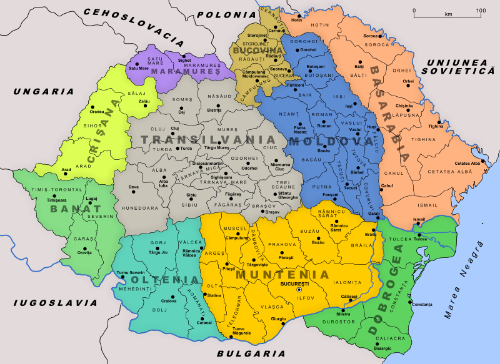
Rumania 1930’s.
The Kingdom of Rumania/Romania declared their independence from the Ottoman Empire in 1877. After WW1 they won the territory lottery and acquired Transylvania, Bukovina, and Bessarabia. In 1939, the year that Guy Pringle arrives with his new bride Harriet, the Rumanian government has officially declared themselves neutral in the new war. The Pringle’s had a whirlwind romance. I’m sure that Guy tackled the idea of a wife much like he tackles any project, with single minded determination. Harriet is unsure of just about everything, and is quickly wondering how insane she was to follow this guy she barely knows to Bucharest.
Guy had already lived in Bucharest for a year so when he returns it is like slipping on a custom fitted glove. He has a job teaching English. He has friends. He knows where he likes to eat and drink. His life is going pretty much the same as before he married, but as we all know changes, compromises, and a proper amount of attention need to happen for a marriage to be successful.
Guy is usually in his own universe.
”Guy’s figure appeared in the square, Harriet’s forbearance was not what it had been. She watched him emerge out of a blur of dust--a large, untidy man clutching an armful of books and papers with the awkwardness of a bear. A piece of pediment crashed before him. He paused, blinded; peered about through his glasses and started off in the wrong direction. She felt an appalled compassion for him.”
Well, and then there is Sophie, nothing like a beautiful girl that knows your husband better than you do to make a you feel insecure.
”She was a pretty enough girl, dark like many Rumanian, too full in the cheeks. Her chief beauty was her figure. Looking at Sophie’s well developed bosom, Harriet felt at a disadvantage. Perhaps Sophie’s shape would not last, but it was enviable with it lasted.”
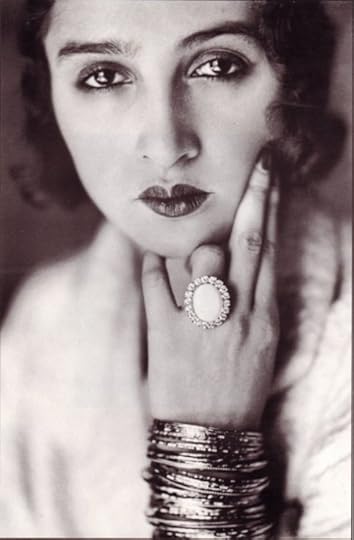
There are lonely people everywhere. (This is Renee Perle famous Romanian model.)
Guy also has this annoying habit of collecting people. He invites them over to dinner. In the case of Yakimov he lets him move into the spare room.
”Yakimov, in his long full-skirted greatcoat, an astrakhan cap on top of his head, his reed of a body almost overblown by the wind, looked like a phantom from the First World War--a member of some seedy royal family put into military uniform for the purposes of a parade.”
Yakimov becomes a special project for Guy. That is all fine and good, but any project that Guy acquires is also a problem for Harriet. Yakimov is more worried about food, not just any food, but the rich food that his palate craves. He often finds himself destitute because the money he “borrows” for clothing or rent generally ends up exchanged for a few fine meals instead.
”Guy picks up with the most extraordinary people. Take Yakimov, for instance. Now, there’s a mollusc on the hull of life, a no-man’s-land of the soul. I doubt if Guy will ever shake him off. You’ve got him for life now.”
That was Clarence speaking to Harriet. She often finds herself in his company as Guy is always busy bustling about from one undertaking to the next. Guy doesn’t seem to worry at all that he is throwing two lonely people together. Harriet knows she is treading in dangerous waters with an unattached, attractive male such as Clarence, but he wants to pay attention to her and she wants to be paid attention to.
As Germany slices through the Allies, the people of Bucharest are relieved that the war is going West and not coming in their direction. Although they become angry that the Russians, the French, and the British are not making a better fight of it. They instinctively know that if the Germans finish off the Allies that it won’t be long before they turn their attention to countries like Rumania.
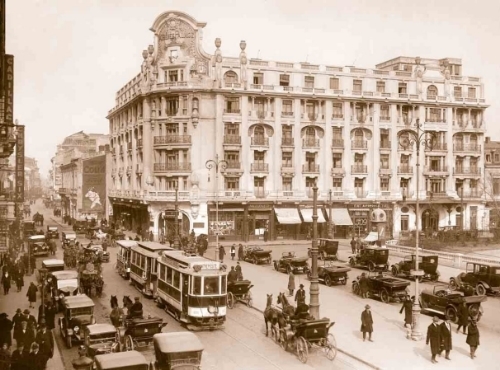
Bucharest, the Athenee Palace.
Guy begins to assemble a cast for the Shakespeare play Troilus and Cressida. Harriet just shakes her head, but for Guy the play is a place that he can escape to and provides a safe haven for their friends from the worries of the world. Harriet is first cast as Cressida, but is soon replaced in the role with...you can probably guess...the needy and ever present Sophie.
If the Nazis ever came for Guy he would protest that he is simply too busy to be arrested.
Harriet is working through her own prejudices about these non-British people that she has been dropped in the middle of. She struggles for the attention of her husband. She is caught in a vortex of people that she doesn’t know very well, or even likes very much. She wants more order in her life, but she finally comes to this conclusion.
”Really we behave like children.” Harriet said and it occurred to her that they were not, in fact, grown-up enough for the life they were living.”
I have a feeling that is all going to change.
We leave the Pringles while they are acquiring Visas from neighboring countries in case they have to suddenly flee. Olivia Manning doesn’t portray the Rumanian people in the most favorable light. They are certainly tinted through the lenses of a twenty-two year old British woman’s eyes, but I certainly felt like Manning captured the uncertainty of being foreigners in a culture with the lurking worries of a world war rising on the horizon. I will move on to read book two The Spoilt City very shortly. Now that I’ve met the Pringles I’m curious to see their relationship evolve as their circumstances become more and more perilous.
When she stopped at a meat stall to buy veal, she became conscious of a sickening smell of decay beside her. Turning, she saw an ancient female dwarf who was thrusting the stump of an arm up to her face. She searched hurriedly for a coin and could find nothing smaller than a hundred-lei note. She knew it was too much but handed it over. It led, as she feared, to trouble. The woman gave a shrill cry calling to her a troupe of children, who at once set upon Harriet, waving their deformities and begging with professional and remorseless piteousness.
She took the meat she had bought and tried to escape into the crowd. The children clung like lice. They caught hold her arms, their faces screwed into the classical mask of misery while they whined and whimpered in chorus.”

Rumania 1930’s.
The Kingdom of Rumania/Romania declared their independence from the Ottoman Empire in 1877. After WW1 they won the territory lottery and acquired Transylvania, Bukovina, and Bessarabia. In 1939, the year that Guy Pringle arrives with his new bride Harriet, the Rumanian government has officially declared themselves neutral in the new war. The Pringle’s had a whirlwind romance. I’m sure that Guy tackled the idea of a wife much like he tackles any project, with single minded determination. Harriet is unsure of just about everything, and is quickly wondering how insane she was to follow this guy she barely knows to Bucharest.
Guy had already lived in Bucharest for a year so when he returns it is like slipping on a custom fitted glove. He has a job teaching English. He has friends. He knows where he likes to eat and drink. His life is going pretty much the same as before he married, but as we all know changes, compromises, and a proper amount of attention need to happen for a marriage to be successful.
Guy is usually in his own universe.
”Guy’s figure appeared in the square, Harriet’s forbearance was not what it had been. She watched him emerge out of a blur of dust--a large, untidy man clutching an armful of books and papers with the awkwardness of a bear. A piece of pediment crashed before him. He paused, blinded; peered about through his glasses and started off in the wrong direction. She felt an appalled compassion for him.”
Well, and then there is Sophie, nothing like a beautiful girl that knows your husband better than you do to make a you feel insecure.
”She was a pretty enough girl, dark like many Rumanian, too full in the cheeks. Her chief beauty was her figure. Looking at Sophie’s well developed bosom, Harriet felt at a disadvantage. Perhaps Sophie’s shape would not last, but it was enviable with it lasted.”

There are lonely people everywhere. (This is Renee Perle famous Romanian model.)
Guy also has this annoying habit of collecting people. He invites them over to dinner. In the case of Yakimov he lets him move into the spare room.
”Yakimov, in his long full-skirted greatcoat, an astrakhan cap on top of his head, his reed of a body almost overblown by the wind, looked like a phantom from the First World War--a member of some seedy royal family put into military uniform for the purposes of a parade.”
Yakimov becomes a special project for Guy. That is all fine and good, but any project that Guy acquires is also a problem for Harriet. Yakimov is more worried about food, not just any food, but the rich food that his palate craves. He often finds himself destitute because the money he “borrows” for clothing or rent generally ends up exchanged for a few fine meals instead.
”Guy picks up with the most extraordinary people. Take Yakimov, for instance. Now, there’s a mollusc on the hull of life, a no-man’s-land of the soul. I doubt if Guy will ever shake him off. You’ve got him for life now.”
That was Clarence speaking to Harriet. She often finds herself in his company as Guy is always busy bustling about from one undertaking to the next. Guy doesn’t seem to worry at all that he is throwing two lonely people together. Harriet knows she is treading in dangerous waters with an unattached, attractive male such as Clarence, but he wants to pay attention to her and she wants to be paid attention to.
As Germany slices through the Allies, the people of Bucharest are relieved that the war is going West and not coming in their direction. Although they become angry that the Russians, the French, and the British are not making a better fight of it. They instinctively know that if the Germans finish off the Allies that it won’t be long before they turn their attention to countries like Rumania.

Bucharest, the Athenee Palace.
Guy begins to assemble a cast for the Shakespeare play Troilus and Cressida. Harriet just shakes her head, but for Guy the play is a place that he can escape to and provides a safe haven for their friends from the worries of the world. Harriet is first cast as Cressida, but is soon replaced in the role with...you can probably guess...the needy and ever present Sophie.
If the Nazis ever came for Guy he would protest that he is simply too busy to be arrested.
Harriet is working through her own prejudices about these non-British people that she has been dropped in the middle of. She struggles for the attention of her husband. She is caught in a vortex of people that she doesn’t know very well, or even likes very much. She wants more order in her life, but she finally comes to this conclusion.
”Really we behave like children.” Harriet said and it occurred to her that they were not, in fact, grown-up enough for the life they were living.”
I have a feeling that is all going to change.
We leave the Pringles while they are acquiring Visas from neighboring countries in case they have to suddenly flee. Olivia Manning doesn’t portray the Rumanian people in the most favorable light. They are certainly tinted through the lenses of a twenty-two year old British woman’s eyes, but I certainly felt like Manning captured the uncertainty of being foreigners in a culture with the lurking worries of a world war rising on the horizon. I will move on to read book two The Spoilt City very shortly. Now that I’ve met the Pringles I’m curious to see their relationship evolve as their circumstances become more and more perilous.

December 3, 2018
I knew before starting this that it wasn't going to be any kind of dazzling literary masterpiece (despite Anthony Burgess telling me Olivia Manning is the most considerable of our woman writers - a quote I find patronising and begs the question, how many women writers has he read?) What I was hoping was that it would be entertaining and also provide insights into how the second world war was experienced by a novelist living through it. It delivered on both those accounts.
An interesting debate would be whether or not a novelist has an advantage if she is writing about something she has experienced first hand. The advantages are obvious. First and foremost, the poignant and telling small details first hand observation provides. The disadvantages probably reside in the temptation to get carried away with all the minutiae of the personal experience. Manning, wanting to be faithful to her experience, probably tries to cram in too many characters all of whom you sense are modelled on real people and which necessitate too many sideshows. Which is why this novel, a trilogy, is so long. You also sense Manning perhaps uses the novel to settle scores. She doesn't seem very keen on most of her characters, including her blundering, insensitive well-meaning husband. Some details though would be hard for a novelist to invent. Like the battle between the German and British propaganda offices in Bucharest in 1940 where they war for attention with their window displays.
So, no, it's not any kind of dazzling literary masterpiece but yes, it is entertaining and I'm looking forward to reading the second instalment.
An interesting debate would be whether or not a novelist has an advantage if she is writing about something she has experienced first hand. The advantages are obvious. First and foremost, the poignant and telling small details first hand observation provides. The disadvantages probably reside in the temptation to get carried away with all the minutiae of the personal experience. Manning, wanting to be faithful to her experience, probably tries to cram in too many characters all of whom you sense are modelled on real people and which necessitate too many sideshows. Which is why this novel, a trilogy, is so long. You also sense Manning perhaps uses the novel to settle scores. She doesn't seem very keen on most of her characters, including her blundering, insensitive well-meaning husband. Some details though would be hard for a novelist to invent. Like the battle between the German and British propaganda offices in Bucharest in 1940 where they war for attention with their window displays.
So, no, it's not any kind of dazzling literary masterpiece but yes, it is entertaining and I'm looking forward to reading the second instalment.

July 9, 2022
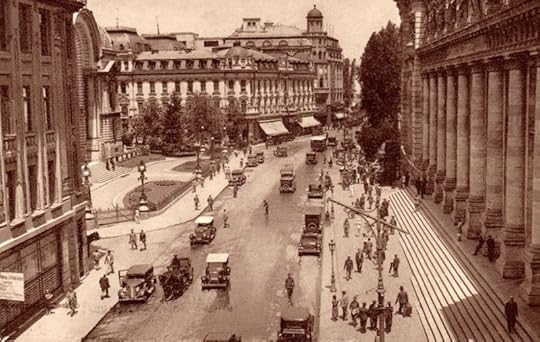
We are very lucky to have this testimony of the days leading to the outbreak of WW2. That it is partly fictionalized and that the account takes place in a country which was at first on the margins of the dreadful war theatre, do not in the least detract from this book being a document.
The fictional aspect remains a thin veil and, even if names and some other facts have been changed, the novel offers a freshness that many novels written well after the war and by writers who did not live through these calamitous years, just cannot convey. Even Harriet’s (Olivia’s) prejudices against the Romanians, and the beggars’ unpleasantness, offer such a candid tint, that the overall tone is one of rare authenticity. As she says: the trouble with prejudice is, there’s usually a reason for it.
And that the story takes place on the backstage of the war also adds a tension to those days of great anxiety – the various people try to lead a normal life of café gatherings but are nonetheless possessed, as the news trickle in, by an unnerving uncertainty. I found that whenever an event was mentioned, often in passing, I was immediately checking the exact date. These functioned as milestones. The first is the fall of Poland (and we have a Polish character in the story), followed by the assassination of the Prime Minister Calinescu, the invasion of the Lowlands, and the Dunkirk evacuation, highly dispiriting for the British community in Romania.
This is a Romania that stranded between the German and the Russian menace, with their hopes put on France first and then Britain. Reading this now, with Ukraine in our consciousness, makes this read even more poignant.
In the last section of the novel most of the characters are involved in the production of a play – Shakespeare’s Troilus and Cressida – and the staged tragedy absorbs more of their attention than the one they were living, the one pushing them onto the abyss. This obliviousness is so ironic that it becomes almost grotesque. The final section comes across as a Dance Macabre against the fall, if not of Troy, certainly of European civilization as it was known then.
Together with this documentary, the novel also offers an interesting study of human nature. The reader could wonder why Harriet was ready to move to a country of which she knew nothing, and marry this Guy Pringle, a man she just met and who seems if not quite to ignore her at least oblivious to her own sensibilities. But then gradually Guy’s kindness generous to all, and his attitude to life – always ready to embrace it fully, bewitches the reader too. For he is a complex person who irradiates simplicity.
I am ready to proceed to the sequel The Spoilt City.

February 14, 2021
The Great Fortune is the first book in the Balkan Trilogy by Olivia Manning. I remember many many years ago my mum telling me to read these books. So this year I’ve decided to start The Balkan Trilogy, in bite size pieces and read the books separately.......The Great Fortune, The Spoilt City and Friends and Heroes.
Newly weds Guy & Harriet Pringle are on the Simplon Orient heading across Europe as the war breaks. They are heading to Bucharest where Guy is a university lecturer.
Romania, as World War II progresses, is relatively unaffected. Life continues in this expat community with restaurants and cafe culture in the summer and snow, iced over lakes and sleigh rides in the winter.
The characters are fabulous, especially Prince Yakimov, an ex-playboy son of an exiled White Russian. With no money he wheedles his way around getting free drinks and his meals paid for, he gets invites to parties and scrounges for loans (that he never pays back! ).
Another good character is the wily, whining Sophie. She is Guy’s work colleague and she takes an instant dislike to Harriet.
This book ends as Paris is taken over by Nazi troops. Guy and Harriet stand at the window of the German Propaganda Bureau in Bucharest and stare in shock at the map displayed in the window. The dot of Paris is hidden beneath a black swastika!
This feels like a great introduction to the series and I’m really looking forward to the next instalment!
Newly weds Guy & Harriet Pringle are on the Simplon Orient heading across Europe as the war breaks. They are heading to Bucharest where Guy is a university lecturer.
Romania, as World War II progresses, is relatively unaffected. Life continues in this expat community with restaurants and cafe culture in the summer and snow, iced over lakes and sleigh rides in the winter.
The characters are fabulous, especially Prince Yakimov, an ex-playboy son of an exiled White Russian. With no money he wheedles his way around getting free drinks and his meals paid for, he gets invites to parties and scrounges for loans (that he never pays back! ).
Another good character is the wily, whining Sophie. She is Guy’s work colleague and she takes an instant dislike to Harriet.
This book ends as Paris is taken over by Nazi troops. Guy and Harriet stand at the window of the German Propaganda Bureau in Bucharest and stare in shock at the map displayed in the window. The dot of Paris is hidden beneath a black swastika!
This feels like a great introduction to the series and I’m really looking forward to the next instalment!

May 10, 2013
Odlična trilogija... pred i za vreme Drugog svetskog rata... urađena je i sjajna ekranizacija s Kenetom Branom pre mnogo mnogo godina... :)

May 27, 2020
If negotiating the terms of a new marriage, especially to a partner known for no more than a few months, is challenging, then how much more so when set against the start of WW2?
Guy and Harriet Pringle have met and married over the summer break before travelling to Bucharest where Guy is a British Council lecturer. There's no overarching plot to this semi-autobiographical novel, it's more a meandering portrait of characters: Harriet's realisation that Guy's big heart and interest in everyone around him means he might never prioritise her or their relationship; the jaw-droppingly selfish Yakimov who will survive whatever happens (and who seems to have wandered in from a Dickens novel, so close is he to caricature); Sheppy trying to mobilise an assorted array of British businessmen and lecturers into some kind of strike force against the Germans.
Although first published in 1960, this has quite an old-fashioned air about it, not least in the general superiority of the British characters as they rather nastily dismiss anyone not English ('But all Rumanians are much of a muchness. They can absorb facts but can't do anything with them. A lot of stuffed geese, I call them. An uncreative people'; 'She placed them in two categories: the honest imbeciles and the intelligent delinquents'). There are some interesting characters but the dated attitudes towards empire and nationality, however accurate to the time, are off-putting, especially as they appear to reflect Manning's own cultural values ('If Rumania had been as long under the Austrians as she was under the Turks, she might be civilised now'). An interesting portrait of a historical place and time, but I found it disappointing that it endorses rather than critically examining the cultural framework of the British - this is no The Jewel in the Crown of the Balkans.
Guy and Harriet Pringle have met and married over the summer break before travelling to Bucharest where Guy is a British Council lecturer. There's no overarching plot to this semi-autobiographical novel, it's more a meandering portrait of characters: Harriet's realisation that Guy's big heart and interest in everyone around him means he might never prioritise her or their relationship; the jaw-droppingly selfish Yakimov who will survive whatever happens (and who seems to have wandered in from a Dickens novel, so close is he to caricature); Sheppy trying to mobilise an assorted array of British businessmen and lecturers into some kind of strike force against the Germans.
Although first published in 1960, this has quite an old-fashioned air about it, not least in the general superiority of the British characters as they rather nastily dismiss anyone not English ('But all Rumanians are much of a muchness. They can absorb facts but can't do anything with them. A lot of stuffed geese, I call them. An uncreative people'; 'She placed them in two categories: the honest imbeciles and the intelligent delinquents'). There are some interesting characters but the dated attitudes towards empire and nationality, however accurate to the time, are off-putting, especially as they appear to reflect Manning's own cultural values ('If Rumania had been as long under the Austrians as she was under the Turks, she might be civilised now'). An interesting portrait of a historical place and time, but I found it disappointing that it endorses rather than critically examining the cultural framework of the British - this is no The Jewel in the Crown of the Balkans.

July 27, 2016
Well, I cannot stop after only reading the first book, i.e. The Great Fortune, of the The Balkan Trilogy! Now I continue with the second - The Spoilt City.
Very good characterizations and an interesting perspective - WW2 through the eyes of ex-patriots living in Bucharest, Romania, from the fall of 1939 through June 1940! This is the setting of the first book.
The writing captures the fear, the confusion and the uncertainty of the times. I love how Bucharest, its cafés, bars, streets and inhabitants are picturesquely and minutiously drawn. Also wonderfully described are each character’s emotional response and behavior to both personal and historical events - when Prime Minister Cälinescu is assassinated, when amnesty is given to the Iron Guard, as the Maginot Line fails, Calais is invaded and Paris falls. There are a wide cast of characters, many but not all British ex-patriots - some from the British legation, a newlywed couple, journalists and war correspondents. By the end of the first novel you recognize that each is perceptively drawn. Each very different in character, and all connected to the story interestingly told.
The story does move slowly in parts.
The audiobook narration by Harriet Walter is very good. She does dramatize. I don’t usually like that, but here I did. You feel as though you are watching a European movie from an earlier time. Each character sounds exactly as they should. There is whining and sobbing. There are sleazy loafers, flirtatious women, imperious decision-makers and an enthused, motivated educator. All are well impersonated. All feel utterly real. The author’s words and the narration are marvelously matched.
For now I will give both the book and the narration four stars. I may change that when I complete the entire trilogy. All three parts are meant to be read together and should be judged as one whole.
Very good characterizations and an interesting perspective - WW2 through the eyes of ex-patriots living in Bucharest, Romania, from the fall of 1939 through June 1940! This is the setting of the first book.
The writing captures the fear, the confusion and the uncertainty of the times. I love how Bucharest, its cafés, bars, streets and inhabitants are picturesquely and minutiously drawn. Also wonderfully described are each character’s emotional response and behavior to both personal and historical events - when Prime Minister Cälinescu is assassinated, when amnesty is given to the Iron Guard, as the Maginot Line fails, Calais is invaded and Paris falls. There are a wide cast of characters, many but not all British ex-patriots - some from the British legation, a newlywed couple, journalists and war correspondents. By the end of the first novel you recognize that each is perceptively drawn. Each very different in character, and all connected to the story interestingly told.
The story does move slowly in parts.
The audiobook narration by Harriet Walter is very good. She does dramatize. I don’t usually like that, but here I did. You feel as though you are watching a European movie from an earlier time. Each character sounds exactly as they should. There is whining and sobbing. There are sleazy loafers, flirtatious women, imperious decision-makers and an enthused, motivated educator. All are well impersonated. All feel utterly real. The author’s words and the narration are marvelously matched.
For now I will give both the book and the narration four stars. I may change that when I complete the entire trilogy. All three parts are meant to be read together and should be judged as one whole.

December 28, 2014
This is the first in Oliva Manning’s Balkan trilogy – a semi-autobiographical work based loosely around her own experiences as a newlywed in war torn Europe. It is 1939 and Harriet Pringle is going to Bucharest with her new husband, Guy. Guy Pringle has been working the English department of the University for a year and met, and married, Harriet during his summer holiday. As they travel through a Europe newly at war, one of the other characters on the train is Prince Yakimov, a once wealthy man who is now without influence or protection and who feels he is being unjustly ‘hounded’ out of one capital city after another. Harriet herself has virtually no family – her parents divorced when she was young and she was brought up by an aunt. In personality she is much less extrovert than Guy, who befriends everyone and expects to be befriended in turn. Throughout this novel I shared Harriet’s exasperation with her new husband, who constantly seems to care about everyone’s feelings, but ignores his new wife’s plight of being isolated in a new city, where she feels friendless and lonely.
This is the first in a book which introduces us to the characters and places that populate the trilogy. From ‘poor old Yaki’ who yearns constantly for a life now gone, to Guy’s boss, Professor Inchcape, to Guy’s colleague Clarence Lawson, whose company Harriet accepts when her own husband is too busy, to the scheming Sophie, who attempted to marry Guy for a British passport, to the journalists who cluster round the bars and cafes listening to rumours. For it is the phoney war and rumours abound about the possibility of the Germans invading. The English expats reassure themselves that the weather is too bad, that the Germans have other priorities, that the war will be soon be over. Meanwhile, the British Information Bureau (run by Inchcape) and the German Information Bureau delight in attempting to outdo each other with maps and window displays to create the illusion that they are winning. At this time, though, the Germans are certainly looking much stronger. As Guy throws all his time and energy into organising a play, Harriet is unable to refuse reality. At the end of this volume, Paris falls and England stands alone. The next book in the trilogy is, “The Spoilt City” and I look forward to reading on and finding out what happens to Harriet and Guy.
This is the first in a book which introduces us to the characters and places that populate the trilogy. From ‘poor old Yaki’ who yearns constantly for a life now gone, to Guy’s boss, Professor Inchcape, to Guy’s colleague Clarence Lawson, whose company Harriet accepts when her own husband is too busy, to the scheming Sophie, who attempted to marry Guy for a British passport, to the journalists who cluster round the bars and cafes listening to rumours. For it is the phoney war and rumours abound about the possibility of the Germans invading. The English expats reassure themselves that the weather is too bad, that the Germans have other priorities, that the war will be soon be over. Meanwhile, the British Information Bureau (run by Inchcape) and the German Information Bureau delight in attempting to outdo each other with maps and window displays to create the illusion that they are winning. At this time, though, the Germans are certainly looking much stronger. As Guy throws all his time and energy into organising a play, Harriet is unable to refuse reality. At the end of this volume, Paris falls and England stands alone. The next book in the trilogy is, “The Spoilt City” and I look forward to reading on and finding out what happens to Harriet and Guy.

November 23, 2025
Una lectura desafiante por la cantidad de detalles, personajes secundarios y situaciones que viven un grupo de personas de diferentes nacionalidades en la Rumanía de los años 40. No sé si seguiré con la trilogía y no podría recomendarlo a todos, pero si les gusta este periodo histórico es una buena a opción.

May 26, 2022
Fortunes of War is the first book in Olivia Manning’s Balkan trilogy. After reading this one, I very much doubt I will continue on. What bothered me about the book was how little I cared for any of the characters. They were so annoying, so oblivious for the most part to what was happening, so high minded with the ideas they spouted.
Apparently this trilogy is semi autobiographical. Olivia Manning went with her husband to Bucharest and was there when WWII escalated. As I read this book, I felt so sorry for Harriet( main character, probably Olivia), saddled with a self centred husband and a cast of people who made me cringe.
To give credit to the author, the book was well written, the people were well depicted or I wouldn’t have disliked them so much and I felt she captured Romania at this time really well.
If anyone who has read this trilogy feels that the books get better and I should persevere, please let me know. Otherwise, I am done!
Published:1960
Apparently this trilogy is semi autobiographical. Olivia Manning went with her husband to Bucharest and was there when WWII escalated. As I read this book, I felt so sorry for Harriet( main character, probably Olivia), saddled with a self centred husband and a cast of people who made me cringe.
To give credit to the author, the book was well written, the people were well depicted or I wouldn’t have disliked them so much and I felt she captured Romania at this time really well.
If anyone who has read this trilogy feels that the books get better and I should persevere, please let me know. Otherwise, I am done!
Published:1960

February 13, 2021
I've been aware if this trilogy for a while and curious to discover it because of its international setting (Romania in the months leading up to the 2nd World War) though equally wary, because of its English ex-pat protagonists living a life of privilege among a population that's suffering economic hardship and the threat of their being positioned between two untrustworthy powers (Russia and Germany).
The story is chiefly about a young couple and their first year of marriage in Romania on the eve of war. Guy, a young English literature professor returns to Bucharest after a summer in England, with his new wife Harriet, a woman he met and married within a month. We know nothing about that month, or their romance, or why/how they came together so impulsively.
Over the course if the novel we get to know through Harriet's perceptive observations and self awareness of her own flaws and Guy's, what their characters are, why they act in the way they do, and the effect they have on each other, due to their differences. These aspects of personality are reflected through the way they interact and respond to others around them.
It took a little while initially to overcome my semi-reluctance to be among such a crowd, (being somewhat averse to novels where purposeless woman follow their husbands around and wonder why they are unhappy with life) and admittedly most of the characters and their behaviours in the setting up stage of the novel, are often tiresome, but the ability of Harriet to see through each of them, in an effort to better know her husband, after a while becomes more and more engaging.
Harriet lacks purpose and so it's no surprise that her energy and focus turns towards analysing and judging others. In a way she reminded me of Hadley Richardson in Paula McLain's The Paris Wife and Zelda Fitzgerald in Z: A Novel of Zelda Fitzgerald by Therese Anne Fowler, women with aspirations, who find themselves in the shadows of the larger player, their husband's lives, men whom other people are drawn too and seek attention from, leaving the wife as a companion and bedwarmer for those few hours he finds himself solitary.
They too, are stories of the lives of young internationals, professors, diplomats, journalists, the locals they fall in with, the cafes, restaurants and hotels they frequent, the political background constantly a source of conversation, the lack of family and a rootlessness that drives them to seek each other out in this environment that throws people together, who wouldn't otherwise cross paths.
It also reminded me a little of She Came to Stay by Simone de Beauvoir, though that was a book I was unable to finish.
The novel does become even more interesting and ironic when Guy decides to produce an amateur production of the Shakespearean play Troilus and Cressida, diverting the attention of his fans and followers, young and old, at a time when war is creeping ever closer and everyone else not involved in his amateur dramatics is frantic with worry. The play itself is the tragic story of lovers set against the backdrop of war.
Dropped as one of the players, Harriet is upstaged by local Sophie, a woman whose affection for Guy and history that precedes her, adds to the tension of their new marriage, the novel ends leaving us wondering what will happen next, as Europe itself is a bed of tension and danger, depending on where one's loyalties lie.
The story is chiefly about a young couple and their first year of marriage in Romania on the eve of war. Guy, a young English literature professor returns to Bucharest after a summer in England, with his new wife Harriet, a woman he met and married within a month. We know nothing about that month, or their romance, or why/how they came together so impulsively.
Over the course if the novel we get to know through Harriet's perceptive observations and self awareness of her own flaws and Guy's, what their characters are, why they act in the way they do, and the effect they have on each other, due to their differences. These aspects of personality are reflected through the way they interact and respond to others around them.
It took a little while initially to overcome my semi-reluctance to be among such a crowd, (being somewhat averse to novels where purposeless woman follow their husbands around and wonder why they are unhappy with life) and admittedly most of the characters and their behaviours in the setting up stage of the novel, are often tiresome, but the ability of Harriet to see through each of them, in an effort to better know her husband, after a while becomes more and more engaging.
Harriet lacks purpose and so it's no surprise that her energy and focus turns towards analysing and judging others. In a way she reminded me of Hadley Richardson in Paula McLain's The Paris Wife and Zelda Fitzgerald in Z: A Novel of Zelda Fitzgerald by Therese Anne Fowler, women with aspirations, who find themselves in the shadows of the larger player, their husband's lives, men whom other people are drawn too and seek attention from, leaving the wife as a companion and bedwarmer for those few hours he finds himself solitary.
They too, are stories of the lives of young internationals, professors, diplomats, journalists, the locals they fall in with, the cafes, restaurants and hotels they frequent, the political background constantly a source of conversation, the lack of family and a rootlessness that drives them to seek each other out in this environment that throws people together, who wouldn't otherwise cross paths.
It also reminded me a little of She Came to Stay by Simone de Beauvoir, though that was a book I was unable to finish.
The novel does become even more interesting and ironic when Guy decides to produce an amateur production of the Shakespearean play Troilus and Cressida, diverting the attention of his fans and followers, young and old, at a time when war is creeping ever closer and everyone else not involved in his amateur dramatics is frantic with worry. The play itself is the tragic story of lovers set against the backdrop of war.
Dropped as one of the players, Harriet is upstaged by local Sophie, a woman whose affection for Guy and history that precedes her, adds to the tension of their new marriage, the novel ends leaving us wondering what will happen next, as Europe itself is a bed of tension and danger, depending on where one's loyalties lie.
September 11, 2018
The three volumes of this trilogy and the three subsequent volumes of The Levant Trilogy (plus a sequel of sorts set in Palestine), make for one of my favorite repeat reading experiences. I very much love the intense and brought-to-life characterizations amid a world well-described with seemingly little effort--though Olivia Manning was a true Mistress of the Pen. In this first volume, the reflective Harriet's perspective. Guy and Yakimov are two of the most irritating characters I have ever encountered in literature, yet I can't let go...and despite how exasperated I feel with Guy, I almost named my son Guy (three of my favorite books star a Guy, two are exasperating!).
There is a large cast of characters, all deftly drawn, and all illustrative of human failings--Sophie, Clarence, Inchcape and more. I feel it paints an extremely accurate slice of a life of a time and place representative of the British at the out break of WWII in a place they ought not to be, perhaps.
HIGHLY recommended.
There is a large cast of characters, all deftly drawn, and all illustrative of human failings--Sophie, Clarence, Inchcape and more. I feel it paints an extremely accurate slice of a life of a time and place representative of the British at the out break of WWII in a place they ought not to be, perhaps.
HIGHLY recommended.

December 8, 2025
This is Book One of the Balkan Trilogy. It opens in Bucharest in September 1939, where Guy and Harriet Pringle, originally from England, arrive as newlyweds. Guy has been teaching and lecturing at the University of Bucharest, but Harriet is living in an unfamiliar environment. She struggles to understand her husband's generosity with his time and attention to students and colleagues, leaving little time for her. The couple is adjusting to marriage and dealing with the political chaos in Bucharest. Prince Yakimov, an impoverished former aristocrat from Russia, becomes a fixture in their lives, much to Harriet’s dismay.
This is a story of displacement and waiting. The storyline is chronological, following major events in 1939 and 1940 in the leadup and early days of WWII. The British expatriates try to maintain daily routines during a time of increasing uncertainty but eventually must act. Another primary storyline focuses on the Pringles’ marriage. Guy’s social and academic life leaves Harriet feeling emotionally abandoned. I very much enjoyed this book and am looking forward to finishing the series. Recommended to fans of realistic historical fiction.
This is a story of displacement and waiting. The storyline is chronological, following major events in 1939 and 1940 in the leadup and early days of WWII. The British expatriates try to maintain daily routines during a time of increasing uncertainty but eventually must act. Another primary storyline focuses on the Pringles’ marriage. Guy’s social and academic life leaves Harriet feeling emotionally abandoned. I very much enjoyed this book and am looking forward to finishing the series. Recommended to fans of realistic historical fiction.

December 22, 2014
A book that is both fascinating and frustrating.
I was interested in the semi-autobiographical evocation of a British expat community in pre-WW2 Romania as the war looms. The story is narrated by Harriet who has recently married Guy Pringle, an English teacher. She knows little about him or Romania before their marriage, and we learn a lot about Bucharest and her new husband through her narration.
The evocation of Bucharest and the expat community is done brilliantly and I could vividly imagine the poverty, the peasants, the parks, apartments and restaurants of the city, and the cast of characters who feature in the novel. One of these is Prince Yakimov, a down-and-out Russian noble who went to a minor English public school, he is jawdroppingly selfish and with a wonderful instinct for self-preservation. His character is one of the novel's highpoints and it's a shame there weren't a few more such compelling characters.
Guy and Harriet's relationship is also intriguing. We never discover how they got together however it is clear that they know little about each other before embarking on marriage. Harriet's discoveries about Guy's idiosyncratic personality are one of her many challenges. Her forbearance is remarkable.
The book's greatest flaw is the lack of a plot. This is a description of day-to-day life, admittedly lived against a backdrop of pending war and the tensions that inevitably follow. I kept hoping for some drama to propel the narrative forward but aside from news coming from the outside world, there was just more lunches, walks, and shopping etc. I have to confess to finding the book increasingly turgid and had to force myself to read through to the end.
Some readers and critics have compared this to Anthony Powell's brilliant A Dance To The Music Of Time series. Both series follow a cast of characters however one of the key differences is that most of Powell's characters are based on notable figures from the era which gives an added level of intrigue and interest. I also found Powell's series to be compelling from the outset.
I am reliably informed that The Balkan Trilogy (of which The Great Fortune is the first of the three books) gets better and better, and that the follow up trilogy, The Levant Trilogy is also well regarded. I read The Great Fortune as part of a group read and will now wait to see how my co-readers respond to the rest of the trilogy before deciding whether to continue.
I was interested in the semi-autobiographical evocation of a British expat community in pre-WW2 Romania as the war looms. The story is narrated by Harriet who has recently married Guy Pringle, an English teacher. She knows little about him or Romania before their marriage, and we learn a lot about Bucharest and her new husband through her narration.
The evocation of Bucharest and the expat community is done brilliantly and I could vividly imagine the poverty, the peasants, the parks, apartments and restaurants of the city, and the cast of characters who feature in the novel. One of these is Prince Yakimov, a down-and-out Russian noble who went to a minor English public school, he is jawdroppingly selfish and with a wonderful instinct for self-preservation. His character is one of the novel's highpoints and it's a shame there weren't a few more such compelling characters.
Guy and Harriet's relationship is also intriguing. We never discover how they got together however it is clear that they know little about each other before embarking on marriage. Harriet's discoveries about Guy's idiosyncratic personality are one of her many challenges. Her forbearance is remarkable.
The book's greatest flaw is the lack of a plot. This is a description of day-to-day life, admittedly lived against a backdrop of pending war and the tensions that inevitably follow. I kept hoping for some drama to propel the narrative forward but aside from news coming from the outside world, there was just more lunches, walks, and shopping etc. I have to confess to finding the book increasingly turgid and had to force myself to read through to the end.
Some readers and critics have compared this to Anthony Powell's brilliant A Dance To The Music Of Time series. Both series follow a cast of characters however one of the key differences is that most of Powell's characters are based on notable figures from the era which gives an added level of intrigue and interest. I also found Powell's series to be compelling from the outset.
I am reliably informed that The Balkan Trilogy (of which The Great Fortune is the first of the three books) gets better and better, and that the follow up trilogy, The Levant Trilogy is also well regarded. I read The Great Fortune as part of a group read and will now wait to see how my co-readers respond to the rest of the trilogy before deciding whether to continue.

April 19, 2025
I have heard about this trilogy as a modern classic and after a trip to the Balkans I have a keen interest in this area. I thought this first book in the trilogy would give me some background of the history during the early days of WWII in this region and set the stage for whether I would want to continue on with the trilogy. It did neither.
I wanted to like it more. at times the writing was so good but too often the story it was telling just fell flat for me. I ended up being somewhat disappointed in this book which begins in the early days of the marriage of Harriet and Guy in Bucharest, Romania where Guy is employed to teach Lit and English at the University there. The story is primarily about their early relationship as Harriet tries to adapt to being married to a man she is only now beginning to know and see in his current environment. The Romanians if discussed at all seem to have little respect from this group of young ex-pats. All seem waiting around to see what Hitler will do next and if they should have any cause for alarm.
I found little here to chew on aside from many lovely turns of phrase and felt it to be an examination of a marriage rather than the historical fiction I was looking for. I feel much of this early going is the set up and towards the end I could feel the action and historical events waiting just in the wings--so at this point I am unsure if I will give this the benefit of my doubt and continue on. Will think on that. If you've read the entire trilogy I would appreciate any advice.
I wanted to like it more. at times the writing was so good but too often the story it was telling just fell flat for me. I ended up being somewhat disappointed in this book which begins in the early days of the marriage of Harriet and Guy in Bucharest, Romania where Guy is employed to teach Lit and English at the University there. The story is primarily about their early relationship as Harriet tries to adapt to being married to a man she is only now beginning to know and see in his current environment. The Romanians if discussed at all seem to have little respect from this group of young ex-pats. All seem waiting around to see what Hitler will do next and if they should have any cause for alarm.
I found little here to chew on aside from many lovely turns of phrase and felt it to be an examination of a marriage rather than the historical fiction I was looking for. I feel much of this early going is the set up and towards the end I could feel the action and historical events waiting just in the wings--so at this point I am unsure if I will give this the benefit of my doubt and continue on. Will think on that. If you've read the entire trilogy I would appreciate any advice.

July 5, 2026
The Great Fortune succeeds as an entwining of the personal with the geopolitical. The story centers on Harriet and Guy, a young English couple living in Bucharest at the start of World War II. We see most of the story through Harriet’s point of view, and she’s overwhelmed by the complete newness of her situation: a new war, a new home, and a new husband who she’s realizing she doesn’t actually know particularly well.
Where the novel really excels is in character-building and the subtlety of observation. Harriet is reserved, skeptical, and judgmental, while Guy is outgoing, naive, and generous to a fault. Another character describes him as a saint, which reminds me of Owell’s line that “sainthood is a thing that human beings must avoid.” Because Guy seems to give himself to everyone equally, Harriet often feels neglected and unloved, leading her to contemplate an affair with her husband’s colleague. Because we’re so immersed in Harriet’s side of things, Guy feels ephemeral and easy to dislike, but there are moments when his goodwill shines through.
The novel also does well exploring the effects of the war and the internal politics of Rumania itself (as it was then called). Along with Harriet, we follow the Nazis’ advance on Paris, the British retreat from Dunkirk, and speculation of a German invasion of Rumania. We also see internal coups and assassinations, along with social barriers between wealthy Rumanians, wealthy foreigners, workers, peasants, and Jews, who remain largely segregated. Harriet’s prickly personality makes its way into her political and social views, another area of conflict with her husband.
It took me a little while to really get immersed in this book, but once it got going I liked it quite a bit. It has a huge cast of characters (which I didn’t even get into), well-developed relationships, wry humor, and it captures the spirit of a time and place. It’s the first of a six book series, and there are ways that it reminds me a bit of A Dance to the Music of Time, but the story is darker, tighter, and very much a feminine perspective. I’m looking forward to continuing the series.
Where the novel really excels is in character-building and the subtlety of observation. Harriet is reserved, skeptical, and judgmental, while Guy is outgoing, naive, and generous to a fault. Another character describes him as a saint, which reminds me of Owell’s line that “sainthood is a thing that human beings must avoid.” Because Guy seems to give himself to everyone equally, Harriet often feels neglected and unloved, leading her to contemplate an affair with her husband’s colleague. Because we’re so immersed in Harriet’s side of things, Guy feels ephemeral and easy to dislike, but there are moments when his goodwill shines through.
The novel also does well exploring the effects of the war and the internal politics of Rumania itself (as it was then called). Along with Harriet, we follow the Nazis’ advance on Paris, the British retreat from Dunkirk, and speculation of a German invasion of Rumania. We also see internal coups and assassinations, along with social barriers between wealthy Rumanians, wealthy foreigners, workers, peasants, and Jews, who remain largely segregated. Harriet’s prickly personality makes its way into her political and social views, another area of conflict with her husband.
The situation would have been simplified for her could she, like Guy, have seen the peasants not only as victims, but as blameless victims. The truth was, the more she learnt about them, the more she was inclined to share Doamna Drucker's loathing of them; but she would not call them beasts. They had not the beauty or dignity of beasts. They treated their animals and their women with the simple brutality of savages.
It took me a little while to really get immersed in this book, but once it got going I liked it quite a bit. It has a huge cast of characters (which I didn’t even get into), well-developed relationships, wry humor, and it captures the spirit of a time and place. It’s the first of a six book series, and there are ways that it reminds me a bit of A Dance to the Music of Time, but the story is darker, tighter, and very much a feminine perspective. I’m looking forward to continuing the series.

February 1, 2021
The first book in her Balkan Trilogy, which is considered by many to be her masterpiece. It is a semi-autobiographical account of her time in Romania at the outbreak of WW2.
Guy, an English teacher returns to Bucharest with Harriet, his new wife. They haven't known each other long and she not only had to get used to get husband but also a new country, and then, on top of that, war is declared.. Most of this takes place during the 'phoney war', where not much happened, and the community of ex-pats that populate the novel, are concerned but not overly worried.
The writing gets across a real sense of time and place that clearly comes from experience, and one wonders how loosely, (or not), the characters are based on real people. There are many in this that I just wanted to give a good shake, particularly 'poor old Yaki' used to the high life, but now a man of straightened means, I initially felt sorry for him, but he became increasingly irritating as he does nothing to help himself but relies on other people to do everything for him.
I felt a palpable sense of unease when the community learn of Dunkirk, it's now they seem to understand just how serious their situation is. I love forward to The Spoilt City, the next in the trilogy.
*Many thanks to the published and Netgalley for a copy in exchange for an honest review*
Guy, an English teacher returns to Bucharest with Harriet, his new wife. They haven't known each other long and she not only had to get used to get husband but also a new country, and then, on top of that, war is declared.. Most of this takes place during the 'phoney war', where not much happened, and the community of ex-pats that populate the novel, are concerned but not overly worried.
The writing gets across a real sense of time and place that clearly comes from experience, and one wonders how loosely, (or not), the characters are based on real people. There are many in this that I just wanted to give a good shake, particularly 'poor old Yaki' used to the high life, but now a man of straightened means, I initially felt sorry for him, but he became increasingly irritating as he does nothing to help himself but relies on other people to do everything for him.
I felt a palpable sense of unease when the community learn of Dunkirk, it's now they seem to understand just how serious their situation is. I love forward to The Spoilt City, the next in the trilogy.
*Many thanks to the published and Netgalley for a copy in exchange for an honest review*

August 30, 2025
3.5
A realistic look at the beginnings of WWII amongst various nationalities in Romania. Centering on the marriage of Guy and Harriet Pringle.
A realistic look at the beginnings of WWII amongst various nationalities in Romania. Centering on the marriage of Guy and Harriet Pringle.
November 29, 2018
2,5. Am avut aşteptări foarte mari de la cartea aceasta, însă nu mi-au fost satisfăcute. Mi-ar fi plăcut să simt o acțiune adevărată, însă primele 100 de pagini nu conțin decât şuete pe Calea Victoriei şi mese în restaurante de fiță, pe care protagoniştii nu şi le permit. Încercând să evidențieze penibilul burgheziei bucureştene, cei doi nu fac decât să-şi evidențieze propriul caracter burghez şi snob, dovadă fiind tocmai faptul că cinează şi frecventează doar localuri high class. Da, e penibil cum femeile umblau pe Calea Victoriei cu blănuri de vulpe, sub care tremurau de foame. But let's face it, they were doing exactly the same.

February 22, 2012
Not much plot in this character-driven, historical novel. This made for a slow read for me. However, Manning is very adept at writing character portraits and describing life in Bucharest society during the beginning of WW11.

April 9, 2024
3.5
"Ogni uomo è definito dalle circostanze della sua vita", affermò. "Se si desidera di cambiarlo, è dalle circostanze che bisogna cominciare"
I novelli sposi Guy e Harriet Pringle arrivano a Bucarest, la cosiddetta Parigi dell'Est, nell'autunno del 1939. Guy insegna all'università, è tanto socievole quanto sua moglie è introversa, e Harriet si rende subito conto, con terrore, che dovrà condividere il suo adorato marito con un'ampia cerchia di amici e conoscenti.
Se siete alla ricerca di un libro che parla della Seconda Guerra Mondiale ma non nelle solite ambientazioni di cui siamo abituati e che si focalizza soprattutto su quelli che sono i personaggi, questo è il libro per voi.
Ci troviamo infatti a Bucarest, in Romania e la novella coppia di sposi inizia così la sua vita coniugale che, però, risulta molto diversa da quella che la protagonista si aspettava.
Harriet ne parla con questi termini: Da nubile, Harriet aveva avuto una personalità tutta sua. Da sposata, si vedeva vivere, se di vita si poteva parlare, all’ombra di Guy.
Harriet è una protagonista insolita, lei come tutti gli altri personaggi sono complessi, ricchi di sfaccettature e, soprattutto, ricchi di difetti. Ogni personaggio è costruito con estrema attenzione e questo si nota non solo dai protagonisti ma anche dai personaggi secondari.
Harriet è sempre stata alla ricerca di attenzioni, soprattutto dopo l'abbandono dei genitori e si accorge che suo marito non è in grado di darle ciò che vuole perché è troppo impegnato a dare attenzioni a tutto il resto del mondo. E questo è soltanto uno dei problemi della relazione tra i due protagonisti. Harriet viene spesso fraintesa, da Guy ma non solo; viene capita solo da Clarence ma lui la spaventa perché è troppo simile a lei e, anche se tra i due c’è intesa, lei non è intenzionata a portare avanti la cosa.
Nel suo complesso, mi è piaciuta molto come protagonista nonostante i vari difetti o, forse, proprio per questo.
In linea di massima, mi aspettavo di più da questo romanzo o, meglio, mi aspettavo più trama. A livello di eventi succede poco e niente, proprio perché il focus dell’autrice erano i personaggi e la loro caratterizzazione. Aggiungerei, inoltre, che la penna di Olivia Manning è sensazionale, semplice ma allo stesso tempo evocativa, in grado di trasportarti in un’altra epoca e in un altro mondo.
"Ogni uomo è definito dalle circostanze della sua vita", affermò. "Se si desidera di cambiarlo, è dalle circostanze che bisogna cominciare"
I novelli sposi Guy e Harriet Pringle arrivano a Bucarest, la cosiddetta Parigi dell'Est, nell'autunno del 1939. Guy insegna all'università, è tanto socievole quanto sua moglie è introversa, e Harriet si rende subito conto, con terrore, che dovrà condividere il suo adorato marito con un'ampia cerchia di amici e conoscenti.
Se siete alla ricerca di un libro che parla della Seconda Guerra Mondiale ma non nelle solite ambientazioni di cui siamo abituati e che si focalizza soprattutto su quelli che sono i personaggi, questo è il libro per voi.
Ci troviamo infatti a Bucarest, in Romania e la novella coppia di sposi inizia così la sua vita coniugale che, però, risulta molto diversa da quella che la protagonista si aspettava.
Harriet ne parla con questi termini: Da nubile, Harriet aveva avuto una personalità tutta sua. Da sposata, si vedeva vivere, se di vita si poteva parlare, all’ombra di Guy.
Harriet è una protagonista insolita, lei come tutti gli altri personaggi sono complessi, ricchi di sfaccettature e, soprattutto, ricchi di difetti. Ogni personaggio è costruito con estrema attenzione e questo si nota non solo dai protagonisti ma anche dai personaggi secondari.
Harriet è sempre stata alla ricerca di attenzioni, soprattutto dopo l'abbandono dei genitori e si accorge che suo marito non è in grado di darle ciò che vuole perché è troppo impegnato a dare attenzioni a tutto il resto del mondo. E questo è soltanto uno dei problemi della relazione tra i due protagonisti. Harriet viene spesso fraintesa, da Guy ma non solo; viene capita solo da Clarence ma lui la spaventa perché è troppo simile a lei e, anche se tra i due c’è intesa, lei non è intenzionata a portare avanti la cosa.
Nel suo complesso, mi è piaciuta molto come protagonista nonostante i vari difetti o, forse, proprio per questo.
In linea di massima, mi aspettavo di più da questo romanzo o, meglio, mi aspettavo più trama. A livello di eventi succede poco e niente, proprio perché il focus dell’autrice erano i personaggi e la loro caratterizzazione. Aggiungerei, inoltre, che la penna di Olivia Manning è sensazionale, semplice ma allo stesso tempo evocativa, in grado di trasportarti in un’altra epoca e in un altro mondo.

March 4, 2017
The Great Fortune is the first book in Olivia Manning’s autobiographical Balkan trilogy – which I first read many moons ago and have been wanting to re-read for ages. Naturally I had forgotten a lot of the details of the novel, and so it was like coming to it afresh.
What Manning captures perfectly is the ex-pat community clustered together in city beset by rumour and the ever-present threat of invasion. It is clear she knew just how it felt to live in such circumstances. Rumanian officials, poverty stricken aristocrats, University teachers and tetchy landladies – are portrayed with realistic authenticity. Manning’s Rumanian characters are not always portrayed sympathetically – there is frequently an air of irritation surrounding them, but what Manning also recreates so well is the awkwardness of different nationalities coming together, and living in difficult times fraught with tension.
Rumania at this time had declared itself to be neutral – but how long it would be able to remain unaffected remains to be seen.
It is 1939, and Guy Pringle brings Harriet; his new young wife back from England with him to Bucharest, Rumania. He and Harriet have not known each other all that long, and Harriett must adjust herself to both married life, and being a member of an ex-pat community in war time. Guy has a job teaching English, he slips easily back into the life he knows – having already spent some time in Bucharest before returning to England where he met, fell in love with and married Harriet.
Full review: https://heavenali.wordpress.com/2017/...
What Manning captures perfectly is the ex-pat community clustered together in city beset by rumour and the ever-present threat of invasion. It is clear she knew just how it felt to live in such circumstances. Rumanian officials, poverty stricken aristocrats, University teachers and tetchy landladies – are portrayed with realistic authenticity. Manning’s Rumanian characters are not always portrayed sympathetically – there is frequently an air of irritation surrounding them, but what Manning also recreates so well is the awkwardness of different nationalities coming together, and living in difficult times fraught with tension.
Rumania at this time had declared itself to be neutral – but how long it would be able to remain unaffected remains to be seen.
It is 1939, and Guy Pringle brings Harriet; his new young wife back from England with him to Bucharest, Rumania. He and Harriet have not known each other all that long, and Harriett must adjust herself to both married life, and being a member of an ex-pat community in war time. Guy has a job teaching English, he slips easily back into the life he knows – having already spent some time in Bucharest before returning to England where he met, fell in love with and married Harriet.
Full review: https://heavenali.wordpress.com/2017/...

January 27, 2016
Very meh, white people abroad as world goes to hell. Local color abounds. Eccentrics buzz about like radicalized moths. Should we trust the natives? Amen.

November 11, 2020
De entrada debo dar mi mea culpa, pues hace unos días emití un comentario respecto a este libro, donde decía que los primeros capítulos se me hacían como barco de papel sobre un riachuelo, el cual se va desvaneciendo a medida que pasa el tiempo, pues no lograba captar mi atención para embárcame en una novela secuencial. Pero, a medida que iba pasando páginas, la historia se iba tornando mas interesante, claro no diciendo con esto que haya podido ver ella la gran novela.
La gran fortuna es el primer libro de la trilogía balcánica, una autobiográfica de Olivia Manning, la cual captura a la perfección la comunidad de expatriados, en una ciudad acosada por los rumores y la amenaza constante de invasión. Una Europa sometida al mínimo estado de las emociones que afecta a todo un colectivo, sin mira de nivel académico. “Manning no está ahí para hablar de sí misma, sino para ser testigo de lo que ocurre: su vista y su oído se ponen siempre al servicio del vasto retablo de la guerra. El Bucarest de los años 1939-40 que retrata rebosa de inquietud, los vaivenes políticos son una constante y la ciudad está invadida por una legión de extranjeros —escritorzuelos, gorrones, diplomáticos, vagabundos y estraperlistas— que quedan vergonzosamente expuestos por el resplandor del conflicto.”
Leer este libro es poder ver un retrato intimo del propio matrimonio de Olivia Manning, la cual estaba casada con el socialista R.D. Smith, quien no pudo ingresar al servicio militar por su miopía, pero trabajó como profesor del British Council. Un matrimonio duradero pero atrapada en el choque de las necesidades privadas del individuo y las demandas publicas del tiempo y las circunstancias.
La novela tiene su accionar en Rumania, la cual se había declarado neutral, pero a expensa de cuanto duraría esto. 1939, año en que Guy Pringle trae a Harriet, su esposa de Inglaterra a Bucarest. Harriet debe adaptarse a la vida matrimonial como un miembro expatriado. Guy tiene amigos y conocidos, pero desconocidos para Harriet, uno de los cuales es Sophie, una rumana que obviamente no le caí bien a Harriet, pues le tiraba el ojo a Guy, y que en su momento iban a casarse como medio para darle los papeles migratorios en caso de una invasión alemana. No hare mas larga la historia.
Es una novela interesante, más no raya según mi parecer a una gran novela, independientemente de Guy, ese personaje irritante y desagradable, donde pone en mal trecho a Harriet, haciéndola ver estúpida, y mas allá que otras cosas en detrimento a la dama ‟Pero no creo que exista para mejorar tu sentido de superiodidad. Existo para satisfacer mis propias demandas sobre mi mismo, y son mas altas delo que probablemente sean las tuyas. Si no te gusto como soy, no me importa”. Yakimov un personaje trágico, un invitado no deseado, un cómico que raya en lo patético.
La gran fortuna es el primer libro de la trilogía balcánica, una autobiográfica de Olivia Manning, la cual captura a la perfección la comunidad de expatriados, en una ciudad acosada por los rumores y la amenaza constante de invasión. Una Europa sometida al mínimo estado de las emociones que afecta a todo un colectivo, sin mira de nivel académico. “Manning no está ahí para hablar de sí misma, sino para ser testigo de lo que ocurre: su vista y su oído se ponen siempre al servicio del vasto retablo de la guerra. El Bucarest de los años 1939-40 que retrata rebosa de inquietud, los vaivenes políticos son una constante y la ciudad está invadida por una legión de extranjeros —escritorzuelos, gorrones, diplomáticos, vagabundos y estraperlistas— que quedan vergonzosamente expuestos por el resplandor del conflicto.”
Leer este libro es poder ver un retrato intimo del propio matrimonio de Olivia Manning, la cual estaba casada con el socialista R.D. Smith, quien no pudo ingresar al servicio militar por su miopía, pero trabajó como profesor del British Council. Un matrimonio duradero pero atrapada en el choque de las necesidades privadas del individuo y las demandas publicas del tiempo y las circunstancias.
La novela tiene su accionar en Rumania, la cual se había declarado neutral, pero a expensa de cuanto duraría esto. 1939, año en que Guy Pringle trae a Harriet, su esposa de Inglaterra a Bucarest. Harriet debe adaptarse a la vida matrimonial como un miembro expatriado. Guy tiene amigos y conocidos, pero desconocidos para Harriet, uno de los cuales es Sophie, una rumana que obviamente no le caí bien a Harriet, pues le tiraba el ojo a Guy, y que en su momento iban a casarse como medio para darle los papeles migratorios en caso de una invasión alemana. No hare mas larga la historia.
Es una novela interesante, más no raya según mi parecer a una gran novela, independientemente de Guy, ese personaje irritante y desagradable, donde pone en mal trecho a Harriet, haciéndola ver estúpida, y mas allá que otras cosas en detrimento a la dama ‟Pero no creo que exista para mejorar tu sentido de superiodidad. Existo para satisfacer mis propias demandas sobre mi mismo, y son mas altas delo que probablemente sean las tuyas. Si no te gusto como soy, no me importa”. Yakimov un personaje trágico, un invitado no deseado, un cómico que raya en lo patético.

January 16, 2013
I'm giving 3 stars to this first part of the trilogy, but it may change as I read books 2 and 3 and get further into the story. This felt like an introduction to the characters, some of them quite unlikeable, as the English community in Romania slowly come to realize what the advancing German troops will mean for them. I am sympathizing with Harriet as she slowly learns about Guy, who she married without really knowing him at all. Overall, a very good read.

February 6, 2019
At first I didn't know what to make of this book. The callous disregard the expats in Bucharest had for foreigners and lower class people at times bordered on the offensive. I was also amazed at the lack of appreciation they had for the dangers of the impending war but that may well have been an accurate depiction of the atmosphere and sentiments of the time. Even though none of the characters appealed to me I may be intrigued enough to continue the trilogy to see what happens to them.

May 29, 2024
Le premesse mi avevano intrigato tantissimo, ma si è rivelato di una noia mortale. Sono arrivata a pagina 130 e non succede praticamente nulla.
Poi lui, Guy, non lo sopporto. Harriett l'ho adorata.
Lo stile di scrittura è troppo frammentario e non mi ha coinvolto, uscivo dalla storia e pensavo ai fatti miei di continuo.
Poi lui, Guy, non lo sopporto. Harriett l'ho adorata.
Lo stile di scrittura è troppo frammentario e non mi ha coinvolto, uscivo dalla storia e pensavo ai fatti miei di continuo.

December 3, 2020
You might wonder how much of Olivia Manning is in Harriet Pringle, the hero of this book (and the five which follow it, together making up the "Balkan" and "Levant" trilogies). It is mostly autobiographical: like Manning, Pringle marries young to a radical, charismatic future radio producer currently working as an English teacher in Bucharest (the "Paris of the East", although the book underlines mostly how it suffers by the comparison); is trapped by the war and makes her way out via Greece, Egypt and Palestine; and suffers from insecurity and jealousy. But while Harriet, trapped by her unhappiness, sees others mostly as threats or nuisances (unlike Manning she, significantly, is not an aspiring writer), Manning noticed more, because we see glimpses of other people's perspectives. This isn't a richly researched book, nor a masterpiece of English prose, but it contains real, endearing characters - the cheerful refugee economist Klein, the despairing relief worker Clarence, the profligate aristocrat Yakimov (played by Ronald Pickup with perfect hangdog, wheedling, charm in the 1987 Masterpiece Theatre adaptation). There is a gap in perspective between Harriet and Manning, where the author transcends her solipsistic protagonist and takes on an omniscient voice, enough for me to reconsider what I had jotted down halfway through: "like any neurotic, H not really capable of imagining other minds".
Manning's lifelong friend Stevie Smith wrote a war novel even more solipsistic, yet bizarre and playful in a really good way (my review here). (Friendship might be stretching it; Smith wrote a poem entitled "Murder" in which a man standing by a grave says, "My hand brought Reggie Smith [Manning's husband] to this strait bed/ Well, fare his soul well, fear not I the dead".) In fact it is so little about the war that she simply find-replaced "war" with "post-war" in a later edition without subtracting much meaning. Manning is far more tethered to reality, but facts about the country and the international situation drift by mostly by accident.
And what of the Balkans? As a card-carrying Patrick Leigh Fermor stan (another Anglo-Irish writer, with what Manning called "the usual sense of belonging nowhere"), I was hoping for detailed descriptions of the Avar invasions and the Iron Gates, but this book contains little of that, except in snatches of conversation. (There is a plot to blow up the Gates to block food exports up the Danube to Germany.) The English, even a poorly-paid university lecturer like Harriet's husband, are privileged by relative wealth, wafting over a sea of desperate poverty. Although throughout much of the novel they are concerned by the progress of the German blitzkrieg (culminating in the book's end in the fall of Paris), they are far from the front and never really in the same danger as the locals, who fear both Fascist and Soviet invasion, and let the Iron Guard terrorise the country's Jews (who are despised by everyone). The biggest tensions in the novel are the death of a kitten and a production of Troilus and Cressida.
There's room to debate how much of this is ingrained English arrogance (especially in the twilight of empire) and how much what the scholar Maria Todorova has termed Balkanism (à la Orientalism): the tendency to see the Balkans as European but less so - inherently poorer, less capable, less cultured, like a peasant from a Borat caricature. Lines like this don't help:
Overall, an enjoyable if flawed novel, with a highly subjective and selective view of expat Bucharest and the periphery of WWII as it begins.
Manning's lifelong friend Stevie Smith wrote a war novel even more solipsistic, yet bizarre and playful in a really good way (my review here). (Friendship might be stretching it; Smith wrote a poem entitled "Murder" in which a man standing by a grave says, "My hand brought Reggie Smith [Manning's husband] to this strait bed/ Well, fare his soul well, fear not I the dead".) In fact it is so little about the war that she simply find-replaced "war" with "post-war" in a later edition without subtracting much meaning. Manning is far more tethered to reality, but facts about the country and the international situation drift by mostly by accident.
And what of the Balkans? As a card-carrying Patrick Leigh Fermor stan (another Anglo-Irish writer, with what Manning called "the usual sense of belonging nowhere"), I was hoping for detailed descriptions of the Avar invasions and the Iron Gates, but this book contains little of that, except in snatches of conversation. (There is a plot to blow up the Gates to block food exports up the Danube to Germany.) The English, even a poorly-paid university lecturer like Harriet's husband, are privileged by relative wealth, wafting over a sea of desperate poverty. Although throughout much of the novel they are concerned by the progress of the German blitzkrieg (culminating in the book's end in the fall of Paris), they are far from the front and never really in the same danger as the locals, who fear both Fascist and Soviet invasion, and let the Iron Guard terrorise the country's Jews (who are despised by everyone). The biggest tensions in the novel are the death of a kitten and a production of Troilus and Cressida.
There's room to debate how much of this is ingrained English arrogance (especially in the twilight of empire) and how much what the scholar Maria Todorova has termed Balkanism (à la Orientalism): the tendency to see the Balkans as European but less so - inherently poorer, less capable, less cultured, like a peasant from a Borat caricature. Lines like this don't help:
Attempting to lighten the tone of the talk, Yakimov said: "Ah, dear girl, you should have met my dear old friend, Count Horvath. He had the finest Jew-shoot in Hungary."(But how reliable is it?)
She nodded. "So, in Hungary they shoot Jews! They have wisdom. Here they do not shoot them. In Rumania it is always so – the nature is too soft." As she spoke her whole face drooped with greed, inertia and discontent.
Yakimov, disconcerted, said: "They do not really shoot Jews. It was only a joke."
"A joke, heh?" In her disgust, she thrust into her mouth a piece of Turkish delight so large it left round her mouth a fur of sugar.
Overall, an enjoyable if flawed novel, with a highly subjective and selective view of expat Bucharest and the periphery of WWII as it begins.

June 8, 2023
Me ha gustado pero esperaba más. Es genial la ambientación y que se centre en Rumanía, un país más al margen que los del centro en relación a los eventos de la Segunda Guerra Mundial, pero se hace algo pesado y en momentos aburrido.
Tampoco ayuda que no aguante a Guy, pero eso habla de lo bien que describe y consigue trasmitir Manning al lector.
https://lahierbaroja.com/2023/06/06/l...
Tampoco ayuda que no aguante a Guy, pero eso habla de lo bien que describe y consigue trasmitir Manning al lector.
https://lahierbaroja.com/2023/06/06/l...

May 13, 2020
Last spring, while recovering from a major fracture, I took the opportunity to read three sets of novels: Anthony Powell’s A Dance to the Music of Time, Javier Marias’s Your Face Tomorrow trilogy and Edward St Aubyn’s Patrick Melrose novels, all of which ended up on my best-of-year highlights. When the current lockdown kicked it, it seemed timely to crack on with another literary doorstop – in this instance, Olivia Manning’s much-admired Balkan Trilogy, starting with the first in the series, The Great Fortune.
First published in 1960, this novel is considered to be largely autobiographical, based as it is on Manning’s experiences in WW2. In 1939, Manning married British Council lecturer R. D. Smith, who was in the midst of a posting to Bucharest. As a consequence, she accompanied Smith to Romania, and subsequently to Greece, Egypt and Palestine as the Nazis continued their advance through Eastern Europe. The couple were the inspiration for the two central characters in the trilogy, Guy and Harriet Pringle (both in their early twenties) who, as the first book opens, arrive in Bucharest just days after their wedding. While Harriet is new to Bucharest, Guy has been working as a lecturer at the city’s University for the past twelve months, his relationship with Harriet having come about when the pair met in England during the summer holidays.
Essentially the book is a portrait of a marriage, albeit one unfolding against the backdrop of uncertainty and the looming threat of war – the year is 1939 and the sense of tension palpable. Moreover, the novel gives an insight into the impact of the impending war on a group of ex-pats and émigrés, predominantly the British.
The move to Bucharest presents significant challenges for Harriet, requiring her to adjust to a new city with an unfamiliar culture alongside marriage to Guy. With his strong Communist ideals, Guy believes passionately in supporting needy individuals, virtually irrespective of their character and motivations. He frequently champions lost causes, generously giving his time and limited resources to the down-and-outs of the city.
As a consequence, Harriet initially feels shut out of the marriage, somewhat resentful of having to share Guy with those in the faculty and beyond. She is naturally suspicious of some of Guy’s friends, particularly the curvy Romanian student, Sophie, who calls on Guy’s sympathies at the most frustrating of times. Sophie – who clearly has designs on Guy – bitterly resents Harriet’s presence in Bucharest, a situation that causes Harriet to question the wisdom of her decision.
To read the rest of my review, please visit:
https://jacquiwine.wordpress.com/2020...
https://jacquiwine.wordpress.com/2020...
First published in 1960, this novel is considered to be largely autobiographical, based as it is on Manning’s experiences in WW2. In 1939, Manning married British Council lecturer R. D. Smith, who was in the midst of a posting to Bucharest. As a consequence, she accompanied Smith to Romania, and subsequently to Greece, Egypt and Palestine as the Nazis continued their advance through Eastern Europe. The couple were the inspiration for the two central characters in the trilogy, Guy and Harriet Pringle (both in their early twenties) who, as the first book opens, arrive in Bucharest just days after their wedding. While Harriet is new to Bucharest, Guy has been working as a lecturer at the city’s University for the past twelve months, his relationship with Harriet having come about when the pair met in England during the summer holidays.
Essentially the book is a portrait of a marriage, albeit one unfolding against the backdrop of uncertainty and the looming threat of war – the year is 1939 and the sense of tension palpable. Moreover, the novel gives an insight into the impact of the impending war on a group of ex-pats and émigrés, predominantly the British.
The move to Bucharest presents significant challenges for Harriet, requiring her to adjust to a new city with an unfamiliar culture alongside marriage to Guy. With his strong Communist ideals, Guy believes passionately in supporting needy individuals, virtually irrespective of their character and motivations. He frequently champions lost causes, generously giving his time and limited resources to the down-and-outs of the city.
As a consequence, Harriet initially feels shut out of the marriage, somewhat resentful of having to share Guy with those in the faculty and beyond. She is naturally suspicious of some of Guy’s friends, particularly the curvy Romanian student, Sophie, who calls on Guy’s sympathies at the most frustrating of times. Sophie – who clearly has designs on Guy – bitterly resents Harriet’s presence in Bucharest, a situation that causes Harriet to question the wisdom of her decision.
To read the rest of my review, please visit:
https://jacquiwine.wordpress.com/2020...
https://jacquiwine.wordpress.com/2020...
Displaying 1 - 30 of 292 reviews