When Taran N. Khan first arrived in Kabul in the spring of 2006-five years after the Taliban government was overthrown-she found a city both familiar and unknown. Falling in with poets, archaeologists and film-makers, she begins to explore the city and, over the course of several returns, discovers a Kabul quite different from the one she had expected. Shadow City is an account of these expeditions, a personal and meditative portrait of a city we know primarily in terms of conflict. With Khan as our guide, we move from the glitter of wedding halls to the imperilled beauty of a Buddhist monastery, slip inside a beauty salon and wander through book markets. But as these walks take us deeper into the city, it becomes clear that to talk of Kabul's various wars in the past tense is a mistake. Part reportage and part reflection, Shadow City is an elegiac prose map of Kabul's hidden spaces-and the cities that we carry within us.
Khan’s perambulations around Kabul give us a glimpse into its past, present and future, into its mystique and magnificence, which has long since disintegrated beneath the weight of perpetual war and the insurgence of fundamentalism. Yet, beyond all this, Khan explores the everyday lives of Kabulians, from the sense of hopelessness which pervades their lives, to their efforts to recapture a sense of normalcy, to regain a sense of dignity even as the world around them crumbles apart.
Khan briefly explores the origins of Kabul, a time of myth and magic and a springboard for Babur to launch the Mughal Empire, only for it become a place of refuge for Muslims seeking to escape the British Empire and soldiers from World War One. The brief burgeoning of modernity in Kabul was ruptured by successive revolutions and power struggles culminating in the rise of the Talban, whose vice-like grip on Afghanistan led to a fundamentalist regime which was eventually deposed by American and its allies in the aftermath of 9/11. All of this has led to a society which is deeply traumatised, where drug use and mental health problems are prevalent and where poverty still prevails. Khan also explores the unusual quirks of Afghan culture, from its preoccupation with Bollywood to its penchant for extravagant weddings, Khan is able to depict the lives of the people she encounters with sensitivity, never turning them into tropes, but instead drawing onto the sense of hope they are trying to regain amidst an irrevocably broken world.
As Khan explores Kabul, the reader becomes increasingly aware of how this somewhat obscure city has been a springboard for so much history; from the fall of the Soviet Union, the rise of Islamic Fundamentalism, the founding of the Mughal Empire, the stirrings of the Indian independence movement and the War on Terror, Kabul has played a huge role in shaping human history, all of which has left deep fissures in modern day Kabul, fissures from hopefully it can one day recover and regain its past beauty and glory.
I stumbled across Taran N. Khan's Shadow City: A Woman Walks Kabul on my library app, and thought it sounded fascinating. Thankfully the ebook version was available for me to borrow, and I began it right away. First published in 2019, Indian author Khan arrived in Kabul, Afghanistan in 2006, three years after the Taliban regime was overthrown.
On her arrival in Kabul, where she embarked on a new work project with her husband at a local television station, Khan was 'cautioned never to walk [around the city]. Her instincts compelled her to do the opposite: to take that precarious first step and enter the life of the city with the unique, tactile intimacy that comes from being a walker.' As a Muslim woman, she was able to access parts of the city which were closed to other travellers. She continued to walk around different regions of the city until she returned to India in 2013.
In her memoir, Khan 'paints a lyrical, personal, and meditative portrait of a city we know primarily in terms of conflict and peace.' Shadow City has accordingly been split up into seven different sections, and begins and ends with a chapter named 'Returns'. Throughout, Khan gives a comprehensive history of Afghanistan, and of Kabul specifically. The city is one which kept drawing Khan back, and even after short absences, she always longed to return.
In her foreword, Khan writes: 'Memory returns in fragments. I remember walking through the half-empty streets feeling the sun on my back. I heard snatches of song on a radio, passed a group of young men lounging on a broken sofa they had pulled onto the street. I saw walls with bullet marks, and barriers across gates... Under my feet was the slush of the spring.' She later describes Kabul as a place of hidden scenes: 'It deceives you with its high walls streaked with brown mud... It hides behind the fine mist of dust that hangs over its streets and homes, so that the city appears as though from the other side of a soft curtain. Like a mirage, a place that is both near and far away.'
Khan's ability to walk around Kabul was a sharp contrast to her strict upbringing in the city of Aligarh, India. The few outings which she was allowed on were strictly regulated, and she was always chaperoned. Of her past and present, she reflects: 'The carefully cloistered routines of my adolescence corresponded seamlessly with the rhythm of the city in 2006... the things other women from abroad found difficult about the city often seemed quite natural to me.'
Khan comments: 'Being told not to walk was another way in which Kabul felt familiar. To map the city, I drew on the same knowledge and intuition that had helped me navigate the streets of my home town... These were routes of discovery - maps of being lost. To be lost is a way to see a place afresh... To be lost in Kabul is to find it - as a place of richness and possibility.' I can understand Khan's outlook, as a fellow walker; one of my favourite things to do is to wander, sometimes aimlessly, particularly when I am exploring new places. Walking also allows Khan some freedom; she allows herself to walk, as a woman, around a male-dominated space, which ultimately gives her a lot of agency. She becomes a flaneuse, an observer of her new place.
An element of Shadow City which I particularly enjoyed was the way in which Khan notices and interprets absences; for instance, of those who have passed away, and who now reside in various graveyards - a 'web of memorials' - around the city. She also describes, quite wonderfully, how the city alters over her repeated visits: 'With each return, my paths turned inwards as well. I learned to see Kabul in fragments, to move through terrains of the imagination while remaining motionless. I wandered through myths and memories...'.
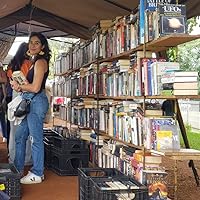
Shadow City is an impressive debut, which sings with the glory of being in charge of one's own agency, even in a geographical location which is often threatened by external forces. Khan's narrative is both rich and thorough, and gives a different, and worthy, perspective to the Kabul which many of us in the Western world are aware of. Shadow City is fascinating, and serves to open a window onto both geography and society, politics and remnants of war. Khan gives her readers an insider's view of a city which most of us have largely seen in the wake of destruction. She writes about the wonderful people which she meets, a sometimes fruitless search for reading material, and the way in which Kabul is slowly regaining itself.
I picked up Shadow City: A Woman Walks Kabul soon after the Taliban returned to power in 2021 after waging insurgency against the US backed government for two decades. Fresh from reading reports of the many restrictions which the Taliban had placed on women, and seeing archival photographs of a westernised and cosmopolitan city, one was, of course, immensely curious to know more about how the two realities could have been simultaneously true about the country. Taran Khan is an Indian who lived and worked in Kabul for extended periods of time as an expat after the ouster of the Taliban in 2001. Unlike most expatriates, she chose to step outside the sanitised spaces to explore the city and interact with the residents. This book is the culmination of her effort to understand the many layers of Kabul. Having grown up in India, the author, like most Indian women, viewed walking for leisure as a luxury. We have all been conditioned into staying away from public spaces, and pretending that our walks are purposeful because that is the only way a woman can justify being out on the street alone. In Kabul, she was subject to similar restriction- she was told it was dangerous to venture out on her own, yet she walked, and as she walked, new layers of the city revealed itself to her. The book is divided into seven sections, the first and last of which are called "Returns". In the first "Return", she talks about how her family was originally from Afghanistan and of how she viewed going to Kabul as a way of returning home. While she can read the Persian script, she didn't know the language, so most of the written word was inaccessible to her. But her grandfather, who like many educated Indians of his generation was fluent in Persian, helped contextualise most of her experiences by relating them what he had read about Kabul. The "Returns" with which she concludes the book is her return to India after her last tour in Afghanistan. Over the years, she has seen the city change, till it is almost unrecognisable to her. The optimism she encountered in her first trip has been replaced by apprehension, and there is the fear of what might happen when the US troops withdraw and international aid dries up. People were worried about the growing power of the Taliban and making plans to escape. Would the country return to what it was before the boom that she witnessed? The each of the other five chapters, she picks up a different aspect of life in Kabul, and shows how in Afghanistan layers always peel away to reveal the same story being told over and over again. The history of Afghanistan is of cycles where there is a complete erasure of history, only for the same story to be told again and again. She talks about books and writing, about mental illness, about weddings, about movies and even about Buddhism. In each of the topics, she brings her own viewpoint which is simultaneously that of a curious but empathetic outsider and an insider. Her own childhood in Aligarh finds resonance in what she sees in Kabul, and reading her account, you are struck by how deeply intertwined society in Afghanistan and India is. It is, however, impossible to read the book without remembering and being reminded of what is happening in Afghanistan today. The same women who danced at their weddings dressed in the latest designs from European catwalks have been rendered completely invisible today. The people who carved out joyful lives for themselves within the constraints placed by society are today reduced to baby making machines. There is despair while reading the book, but there is also hope because the cyclical nature of history in Afghanistan shows that one should never give up hope. The book is also a clarion call to not take a freedom for granted because freedom is precious.
This may be the first time I've read a book about a non western person being an expat in another non western country - and imo the book is worth it for that experience alone. But it's also just really well written and very interesting. Very bitter to read it rn, a year after the Taliban takeover, ofc.
Pięknie napisana książka. Uwielbiam motyw flâneuse, bardzo mnie interesuje to, jak kobiety mogą się poruszać w przestrzeni, jak ją mogą odkrywać, które miejsca są dla nich dostępne, a które nie. W tej książce Khan zaprasza nas do Kabulu, oprowadzając nas po nim nie tylko z perspektywy historycznej, ale także przyglądając się trudnym tematom takim jak uzależnienia czy choroby psychiczne nękające mieszkańców tego miasta. To wyważone historie, opisane nie tylko z uwzględnieniem własnej perspektywy autorki, ale także przywołujące wiele głosów, które autorka spotyka na swojej drodze.
Afghanistan and Kabul have a place in our collective imagination - war-torn, tragic, ill-fated. I also carry a more distant memory of an Afghanistan of Michener's Caravans and Tagore's Kabuliwalah - again tragic, but with a dash of bravery, romance and in the case of Michener, savagery. Taran Khan's Kabul is more intimate, every day, as she describes lives lived under deeply uncertain and disruptive circumstances. She walks an un-walkable city, through ravaged neighbourhoods, speaking to people of love, memories, books and poetry, history, war, grief, exile, home. It's an interior monologue and a journalistic essay, memoir and history. Taran writes beautifully, her prose is poetic, evocative, delicate. It is a lovely read.
This book is an account of walking through Kabul - both its recent history and distant past. Khan explores the city's contradictions through a focus on particular spaces, from wedding halls and cinemas, to the archives, ruins and graveyards that are found beside new developments and secure compounds. Whilst this book was first published in 2019, and doesn't take in the impact of the last 2 years on the city, it's still an interesting look at its cultural geography.
I am not sure if it was the beautiful cover or the line “A woman walks Kabul” that made me pick up Shadow City. This is a memoir by Indian journalist Taran N. Khan, of her walks through every corner of Kabul from hills to wedding halls, between 2006- 2013.
The Kabul that the author portraits differs vastly from other contemporary works on Afghanistan which are often replete with bias and gross generalisations. It is not a city in ruins, rather one with a glorious past and heritage,which had been snatched away from it,making its magnificence recede in to shadows. This book is thus a mind-blowing narrative of the changing terrains of Kabul, the emotional writing style making it one of my favourite reads this year.I felt a growing attachment to the city and a sense of relief,seeing its actual face. For instance,it was so heartening to read about the real bookseller of Kabul.
In conversations with people, Taran Khan contemplates about experiences in her home town in Aligarh, literary discussions with her grandfather from Baburnama to Kabuliwala, which made me to pause and think of Calicut and Doha, cities I consider home and cannot but marvel at the shared heritage we all hold and the similarities in our experiences, no matter where we live.
She does not shy away from listing the problems Kabul has, from drug addiction to mental health issues, but does so with sincerity and tenderness and gives the reasons for these, the prominent being years of civil war, political anarchy and power struggles. This is so unlike the conclusions that the media offer - that the city was born with these issues. In fact, Taran Khan talks about the hospitality extended by Afghanistan to the migrants from India in the 1930s, a history comfortably forgotten.
As the author walks through Kabul for the last time in 2013, I could feel her nostalgia as well, seeing the disappearing city, the old, familiar paths erased.
As the pictures of Autumn from around the world slowly changed to wintry white in my Instagram feed, enticing me, Kabul "inhabited" my thoughts. As Raja Shehadeh, author of Palestinian Walks, says " I took Kabul with me” when I finished reading Shadow City.
Indian journalist Taran Khan, like me, arrived in Kabul in the winter 2006 and then, also like me, spent the next years travelling back and forth between the city and home. That really is where the similarities end. It's almost as though she and I spent those years in the same city but in different parallel universes. My Kabul was one of guns and armour, SUVs, safe havens, barriers, and protective bubbles. Taran's, on the other hand, was a city that she could explore, on foot. It was a city of ghosts, shadows, and djinns, diverse histories, graveyards, poetry, and people: a cast of diverse Kabulis, each with their own fascinating stories, the bookseller, the actor, the librarian poet, addicts, the mentally ill, the archaeologist, and the wedding photographer.
Her city was one I would have liked to explore, I spotted it out of the corner of my eye now and then, a reflection, but then it was gone. Whilst she, somehow, seems to have largely avoided my violent, chaotic, noisy Kabul. But in the end, I think she began to notice it out of the corner of her eye, it was no reflection and it was becoming clearer.
A nuanced and intimate picture of Kabul - an eerie read considering recent events, but perhaps all the more important for it. Khan unveils a portrait of Kabul that is at the the same time hopeful, beautiful, nostalgic and deeply troubled.
3.25 ish actually; but rounded down because ultimately I was underwhelmed.
I think my problem with this book was that I went in with unrealistic expectations. Based on the blurb and marketing, I expected to feel like I was walking the streets of Kabul myself, while learning about its ancient and modern history. Or at least an witness testimony of how Kabul was, under the ISAF administration. Instead I got seven loosely connected articles meditating on various aspects of life in early 21st century Kabul - with very little history/documentation, and even less walking.
Honestly, this was more a memoir than a travelogue or journalistic work - and I probably would have enjoyed this if I went in expecting a memoir. The parallels the author draws between her experiences in Aligarh and Kabul were interesting, but I wasn't in the mood for that. Instead of engaging with her thoughts and contrasting my own experiences, I was merely screaming in my head "Yes, yes, conservative religious households are the same everywhere, I already knew that. When are we actually going to *walk* in Kabul!?" The figure of her grandfather, a fluent speaker of Persian, and an admirer of early to mid 20th century Kabul was also interesting - but the book focused way too much on their personal connection, and way too little on the broader historical context. I wanted to know more about the city that he admired, the city that was the refuge of so many Indian revolutionaries and so eulogized in literature of the time - and I wanted to know how everything fell apart (& maybe I really wanted to know if we in India are heading towards falling apart into a hateful religious theocracy too - but that's neither here nor there). Instead, I got pictures of her grandfather's library. Which is lovely, but not what I was here for! The anecdotes that were most interesting to me - like the story of the girls who spent the Taliban years watching Bollywood movies in hiding; the women who unveil and dance with abandon at every wedding; the film archives that survived the Taliban - was glossed over, to make room for the author's life experiences. To be fair to her, those experiences weren't irrelevant and shoved in - and are perfectly fine in a memoir. But that's not how this book was marketed (to me, at least).
Overall, it's a beautiful and poignant memoir of a woman who has developed a special relationship with the city of Kabul. Go in with that expectation and you'll probably enjoy the book. But if you expect any actual walking, any deep exploration of Afghanistan's history (or present), anything other than surface level anecdotes about the author's time in Afghanistan, you'll probably be disappointed. At least, I was.
The details about the lost city, the richness in accounts of the not-so-usual things make this a book a must read. Whether it was the story of Kabuli weddings or the archaeologist following his passion in a city plagued with problems, the writer has done a great job helping us walk through the history of the city through steps of her own.
Beautiful, powerful, haunting. Filled with research, and the author’s lived in experience of Kabul, read this book to enter a world of its shrines, wedding halls, beauty salons, cinema halls, ancient ruins, and archaeological sites. This is a stellar book.
“Sometimes, to see the city completely, we must learn to see what is missing. What has been forgotten, or what lies beneath the surface of the amnesiac city. The other side of the maps of graveyards, which are maps of remembering, are maps of what is forgotten.”
A truthful, first-hand escapade penned into an evocative travelogue. The war-ravaged Afghanistan is a country out of reach for me. Maybe, one day, I will tread on a similar journey as Taran. It seems like an alienated parallel universe of permanent war and unspeakable injustices. An induced magnet by worldly superpowers for their obsessive shelling, perpetual air strikes, land mines and bombings. Sad truths.
My first encounter with Afghanistan was through literature. Rabindranath Tagore's Kabulimama (Kabuliwallah), and then Khaled Hosseini's heart-wrenching stories: The Kite Runner, A Thousand Splendid Suns, And The Mountains echoed. Again through Taran's literary depiction of Afghanistan.
I think I agree with Taran that a woman with a mind of her own, walking the unfamiliar streets (alone) is empowering. Shatters the policing on woman's freedom and the most basic form of transportation. And this is exactly what I tell myself in new terrains: To keep walking. The joy of discovering new spots, stopping whenever and wherever and seeking adventures on foot is indescribable. An intimate game of lost and found. She brought back memories of me losing my way and mobile reception as I crossed borders. My favourite line, "His hands on my shoulders, the road behind us. 'Hazar baar boro', he said in Persian. 'Saad hazar baar biya.' [Go a thousand times. Return a hundred thousand times.]."
Taran discovers libraries, bookshops, excavation sites, graveyards of deafening silence, the film fanaticism in the cinemas, naïve romances, extravagant Kabuli weddings, poetry to express the deep-seated sorrows, and the inevitable submission to opium when the western forces intervened the country. I enjoyed the chapter on 'Walking With Djinns'. The characters strived to be normal. "If I am taking it, I have no fear. The aeroplanes seem like butterflies." And the sense of normalcy meant to become numb, desensitize the trauma and conjure up hallucinations to temporarily erase the land getting torn down in the background.
Koh-e-Sher Darwaza and Koh-e-Asmai scale the Kabuli horizons (and the vision of the readers) on either sides with a bridge suspended over a river that cuts through forming the landscape to the amnesic city. Between the Taliban and the U.S forces or their predecessors the Soviet intrusions, which of these would you consider as the lesser evil of the unbridled forces of evils present? The rest of us watched in silence just like we did for the rest of the war crimes in the world. At the end of it women and children are the ravaged pawns in this profiteering businesses of war.
I enjoyed Taran's flashbacks of her life in Aligarh and the timely reminders given to her by her beloved late grandfather Baba. So beautiful how she drew inspirations from her own life in Aligarh. It is like carrying a piece of her home with her. She built the connection of the silent fight for freedom from her world to Kabul. They somewhat breathed life and warmth into the stories people she met at the nooks and corners of Kabul. She meticulously unearthed the layers of the systematic involvement in this gross humanitarian crisis. While embodying the sound and sights capes she witnessed by foot. Oh! With a map to match your imaginations too!
Thanks to Taran, I learnt about the Afghani Elvis - Ahmad Zahir. Read the last 3 chapters with his playlist of urdu songs in my background. Man, what a voice! Felt I was instantly teleported to Kabul.
This is a story of the people by the people trying to thrive on this state of permanence : torrential wars, rippling trauma and collective grief. Shadow City is a deepfelt poignant and introspective telling through an unfiltered lens. Not about tragedy. But about life and livelihoods beyond it. An investigative journalism by a sensitive and compassionate journalist. This is a relevant and potent read for today especially that the political currents are shifting in Afghanistan. 'Bood, nabood.'
A fascinating book, full of insight. I picked up this book out of curiosity and was soon fascinated by its account of a city and a culture of which I knew far less than I should: Kabul, seen in the period of relative peace and prosperity between 2001 and 2013. Taran Khan was born and raised in India but has familial links with Afghanistan. The book unfolds partly as a kind of dialogue between her and her beloved grandfather, who'd made a lifetime's study of Kabul and its culture though he never visited in person. Khan spent several extended periods there and her explorations of the city, often on foot (sometimes against the advice of friends) bring it to life in a way we don't get from conventional history books and news reports. There are chapters on subjects as diverse as drugs and mental health, and the extravagant culture of the 'wedding halls' which sprang up in great numbers during the years in question. I was particularly taken by the chapter on bookshops and libraries, and its testimony to the courage and determination of those who protected Kabul's written heritage and culture during the first period of Taliban rule. A very moving, elegiac, final chapter records the closing days of Khan's final sojourn in Kabul, as the security situation deteriorates, and as she makes her reluctant farewells. We are left to wonder what has happened to the engaging and spirited characters we've come to know in these pages. Unreservedly recommended.
A woman walks Kabul. The author is a journalist from India who walked Kabul between 2001 and 2013. This is the time when the US took over the earlier government, and the development started after three to four decades of perpetual war there.
The author walks Kabul, exploring the then places, people, events, literature, and art in shadow of the history of wars, and cultures that existed before 2001. The author is a woman who belongs to Aligarh in India. In her exploration, she also goes back and forth in her memories of childhood in India, and stories of Kabul she heard from her family members, bridging the gaps of her imagination and reality she is exposed to in Kabul.
Her exploration takes a perspective of a woman living in a religious and conservative society. She makes it easier for us to empathise with the people she met there and made friends. The subjects are diverse and have great depth in her accounts.
Overall, I really enjoyed this book. It is written in a calm, soothing style, with interesting unexpected accounts of conflicts here and there that keeps reminding you of the airs in Kabul. I would recommend reading it slow, a chapter a day for best experience.
"गुरबत में हों अगर हम, रहता है दिल वतन में ,समझो वहीं हमें भी, दिल हो जहाँ हमारा"
This couplet by iqbal gives a perfect description to kabul and it's people.
Taran khan has done a tremendous job with this book I was totally transported to a city I've never seen photo of or have any connection with. Kabul (Afghanistan largely) has been at the centre of the war against terror, it has been subjected to conquerors and "peacemakers" for centuries. It has been a place where empires crumble. But this book does not deal with it's complex history infact it tries to give a description of a living breathing city. I was not expecting to read about the real djinns of society. The chapter on writings about kabul was just outstanding. Connections which the author made with kabul being a city of returns and fleeing gave an indepth view to the people of kabul. A city situated on a magic river with a bridge joining it.
I'm so glad I spent as much time with this book as I did. Taking my time as Khan takes her time walking the streets of this iconic city, on her many visits and stays from her home in India. What Khan uncovers in the streets—amid chapters thematically organized around film warehouses and cinemas, wedding venues and bridal parlors, or archeological sites and shrines, drug clinics and psych wards for women—is a city that is constantly changing, a city people escape from but also travel to, like Khan herself. With the Taliban takeover, Kabul went through another change, but the city itself will endure, and people like Khan will continue to be drawn to its streets, to walk, to listen, to discover that part of yourself that will always remain there.
Chief image I took away from this book: emptied artillery shells repurposed as flower pots. 🌼
Journalist RAran Khan goes to Kabul, Afghanistan, in 2006. She was told "never walk in the city," but in order to really see the city and its people that is exactly what she did. She walked everywhere and found ancient ruins and modern buildings. She talked to people living by codes that trace back 3000 years, while others are trying to work into a modern style. The city itself was in a transformative state of flux - trying to regain a sense of peace after decades of war and occupation. Old sites disappeared while new streets and buildings took their place.
It is a very interesting look at a fascinating city.
اشتريت هذا الكتاب لأن عنوانه ذكرني بكتاب "بائع الكتب في كابول" للصحفية النرويجية آسني سييرستاد، التي أعشق كتاباتها وقرأت جميع كتبها التي تُرجمت إلى العربية، وكتبت عنها مقالاً أيضاً.
عودة إلى هذا الكتاب، فهو كتاب جيد جداً. تعيبه بعض الأمور، مثل صغر حجم الخط، وأيضاً العاطفة المفرطة للكاتبة التي هي صحفية أيضاً، لكنها برأيي لا تتمتع لموهبة سييرستاد في الكتابة، أو ربما ببساطة لم يتوفر لها محررون بنفس الكفاءة.
الثلث الأول من الكتاب كان مملاً وكدت أندم على شرائه، لكنه بعد ذلك تحسن بإيقاع تصاعدي. صحبتنا الكاتبة في العديد من القصص الممتعة مع أحد صانعي الأفلام، وأيضاً وصفها لحفلات الزفاف كان متبصراً.
في المجمل كتاب جيد جدا، وترجمة عبد الرحيم يوسف مميزة وسلسة.
I was a bit disappointed that there was so little walking in the book. For understandable reasons, but it seems a bit bizarre to put it in your title then just take taxis to most places. Overall it was an interesting read, but I think the author used too many metaphors repeatedly and then kept referring back to them in a way she may have thought was smart but I just found a bit irritating. The city being the 'shadow city' was the most repeated one, but each chapter had its own. I didn't really understand WHY she was walking (driving) about, other than to write a book and why she didn't learn any Dari if she was going to be be visiting frequently for long periods.
The book is sprinkled with poetry and written like poetry! It delves into the intricacies of life - in Kabul and Aligarh - and dances away gracefully to present you with an overview that will make you read paragraphs again! It's dotted with writing that changes landscapes in your head and makes you long for the days you spent listening to your grandparents' stories. So simply written but so very beautiful. I've blocked out traffic and have been taken to the bustling bazaars and empty streets of Kabul so many times this week!
“It was a reminder that we live on invisible fault lines, and arbitrary borders can appear anywhere.”
This book was beautiful. We are so good at othering what we don’t understand, and in this collection, Khan does just the opposite. Her love for Kabul is apparent on every page as she speaks about the places and the people she has met in her time there. Seeing Kabul through her eyes was so sweet and extremely refreshing from the normal poverty and war torn country tropes it is usually presented as. I thoroughly enjoyed this book.
I wanted to really like this book but sadly I found it a struggle to get through.
There were chapters I really enjoyed, the film making, the secret lives, the wedding industry, lots of interesting parts to immerse myself in.
I’ve read many books set in Afghanistan, and I was looking for the Kabul that’s not portrayed in the media. I’m just not sure why I found this a struggle to read. Perhaps it was too personal to the author? Perhaps it’s the style or I had different expectations.
Rate: ⭐️ ⭐️⭐️⭐️⭐️ 5/5 Review: A woman walks Kabul, the streets of Kabul and shares her experiences on what Kabul is portrayed otherwise! A war zone a city full of deaths no life, no education no community! Behind all this myth there is magic in Kabul and this is exactly what Taran reveals. Such an insight and would highly recommend 🙌🏼 . #tarankhanbooks #shadowcity #awomanwalkskabul #septemberread #readingtime #feedyourmind #learn #readingisfundamental #readingislife #bookworm #readabookamonth #summer2023read