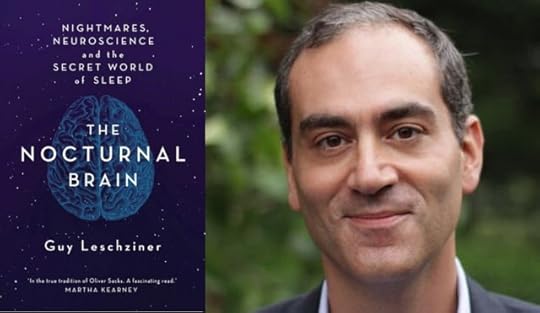
A renowned neurologist shares the true stories of people unable to get a good night’s rest in The Nocturnal Nightmares, Neuroscience, and the Secret World of Sleep, a fascinating exploration of the symptoms and syndromes behind sleep disorders.
For Dr. Guy Leschziner’s patients, there is no rest for the weary in mind and body. Insomnia, narcolepsy, night terrors, apnea, and sleepwalking are just a sampling of conditions afflicting sufferers who cannot sleep―and their experiences in trying are the stuff of nightmares. Demoniac hallucinations frighten people into paralysis. Restless legs rock both the sleepless and their sleeping partners with unpredictable and uncontrollable kicking. Out-of-sync circadian rhythms confuse the natural body clock’s days and nights.
Then there are the extreme cases. A woman in a state of deep sleep who gets dressed, unlocks her car, and drives for several miles before returning to bed. The man who has spent decades cleaning out kitchens while “sleep-eating.” The teenager prone to the serious, yet unfortunately nicknamed Sleeping Beauty Syndrome stuck in a cycle of excessive unconsciousness, binge eating, and uncharacteristic displays of aggression and hypersexuality while awake.
With compassionate stories of his patients and their conditions, Dr. Leschziner illustrates the neuroscience behind our sleeping minds, revealing the many biological and psychological factors necessary in getting the rest that will not only maintain our physical and mental health, but improve our cognitive abilities and overall happiness.
Guy Leschziner is a consultant neurologist at Guy’s and St Thomas’ Hospitals in London, where he leads the Sleep Disorders Centre, one of the largest sleep services in Europe, and professor of neurology and sleep medicine at King’s College London.
Alongside his clinical work, he is the presenter of the "Mysteries of Sleep" and "Senses" series on BBC Radio 4 and BBC World Service, is editor of the forthcoming Oxford Specialist Handbook of Sleep Medicine (OUP), and is Neurology Section editor for the next edition of Principles and Practice of Sleep Medicine (Elsevier).
Like Oliver Sacks the author is both a neurologist and talented writer. Also like Oliver Sacks, but unlike most doctors and doctor-books, he does not regard the person who suffers from a disorder as being primarily the disorder. Neither of them would ever think of someone as autistic, but as a person with autism. And both of them, again quite unlike other doctors, treat the person as an equal partner in sorting out the neurological problem.
Perhaps the most interesting of all the weirdness that the author describes as going on when we are asleep and quite unconscious of it was a man who cursed, swore and made terrible threats against his partner and her family and his ex-girlfriend, going so far as to even tell his partner his ex-girlfriend's phone number.
His partner would wake him telling him he was shouting threats of violence and naturally this worried them both until he ended up in the author's consulting rooms. He had been to a sleep clinic but they had picked up nothing, this is quite common apparently. He underwent all sorts of tests and suggestions and did everything the author suggested except bring his girlfriend in. She didn't want to participate.
Imagine the state the poor man was in?
Until one day he bought a noise-activated voice recorder and fell asleep on the sofa one afternoon. He was awoken by his girlfriend shaking him and shouting herself saying he was screaming and cursing and threatening again in his sleep. Later he played back the tape. The only screaming on it was his girlfriend's. He had slept peacefully.
Years later this totally psychotic woman was committed to a mental home!
Great book. I hope the author writes more books. It is a rare talent to be a consultant neurologist at the top of their game in an unusual speciality and to be an equally good writer.
4.5 "interesting, informative and compassionate" stars !!!
2020 Honorable Mention Read
Thank you to Netgalley, the author and St. Martin's Press for an e-copy of this book in exchange for an honest review. This book was released in July 2019.
Dr. Leschziner is a neurologist and a specialist in a variety of sleep disorders. He comes across as humble, intelligent, compassionate and very knowledgeable about his field. He is the type of doctor that I am sure sufferers of sleep disorders are extremely grateful to find. He works in two clinic in the U.K.
This book is a treasure trove of information on a wide variety of sleep disorders from the very common but troublesome disorders of insomnia and sleep apnoea to less common restless leg, sexsomnia, narcolepsy, circadian rhythm disorder and a fascinating condition known as Klein-Levin syndrome that renders young people hypersomnic, derealized, constantly famished and sexually pre-occupied. Dr. L. presents case studies of all these conditions and more and delves into the physical and psychological impact of these disorders on people's lives. He also presents a very interesting case of a personality disordered partner who abuses their spouse and lies about sleep talking that does not truly exist.
I found having some background in neuroanatomy, neurophysiology and neuropsychiatry very helpful in parsing out much of the information presented. Although this background is not required to enjoy this book I found the knowledge deepened the utility of this book for me.
Most of us have had transient issues with sleep but some of us suffer greatly because of one or more sleep disorders. Careful diagnosis is important and then following through and trying a variety of both pharmacological and behavioural treatments can help minimize the impact that sleep issues has on our work, leisure, health and social relationships.
Sleep disorders are no laughing matter but I could not resist the following pic.
An interesting and thought provoking look into many sleep related disorders. I was interested in reading this because I have been having trouble sleeping, off and on, and was curious to see what would be offered in the way of information. I found it wasn't until the last chapter that this was discussed, but the actual stories presented before that chapter, were fascinating.
Sleep eating, sleep driving, sleep eating and even sleep sex. Seems like some mammals, these people are the victims of a brain that is only half asleep. The actual cases are presented, how the symptoms manifested, their struggle for answers, and what effect this has had on their lives. The chapter on sleep apnea was quite scary, and many people could have it without knowing. There was also rather disorders presented, which were beyond challenging for all involved.
Seems 1 in every 10 persons are inflicted with some type of insomnia. Their are explanations and some suggested ways to counter this. All in all, I'm glad I read this, so many interesting cases presented, and written in a manner that was easy to read and understand.
I have had difficulty sleeping as long as I can remember and for the last year or more I've had very weird hallucinations and such. It have sparked a new interest to learn more about sleep but haven't yet come across what I'm struggling with
An interesting read in the vein of the Man Who Mistook His Wife For a Hat about the outer shores of sleep weirdness (people who sleep-ride motorbikes, or act out incredibly bizarre dreams, or have constantly shifting body clocks for no reason). The author writes with a lot of compassion and humanity about his patients, for whom it's impossible not to feel sorry--there are some utter hells on earth being lived through, and the effects of not enough sleep are utterly horrible. (Do yourself a favour: get to bed earlier and *no screens*, for heaven's sake.)
It was a tad heavy on the neuroscience for me (which it says on the tin, so this is a feature not a bug), but not overwhelmingly, and the author sensibly doesn't burden the storytelling parts with the bits about receptors. Overall an enjoyable and interesting read, with one story in here so good that I actually shouted "You WHAT?!" while reading, in an empty room. I won't spoil it here, but I will be recounting it in the pub a *lot*.
Most of us are aware of sleep apnea and restless legs syndrome. Some of us have family members who sleepwalk or sleep talk, and most of us have probably had episodes of insomnia. In this book, Dr. Leschziner covers all of these conditions and more. He also presents a number of very unusual sleep disorders that I had never heard of, providing an overview of the relevant neuroanatomy and neurophysiology in language that is accessible to the lay reader. Some of the concepts are challenging and the neurologist-author uses analogies to clarify them . Each chapter focuses on a different condition, examining it through the eyes of one or two patients. Some disorders are not easily remedied, and the reader learns of the physician’s challenges in attempting to treat sufferers as well.
While I enjoyed the book and learned a lot, I did feel that most chapters could have been pared down. Some material is repetitive, and some patients’ comments are not particularly illuminating or insightful.
I love this book in concept, and it definitely wasn't lacking in the data or factual basis departments. However, Leschziner crafts his work in a non-popular science manner in that readability of the concepts and case studies isn't necessarily tailored to an average knowledge base.
While I did enjoy reading some of the case studies and the bizarre symptoms of the patients, as well as theories of what was causing these symptoms on a neurological level, the organization of the information was confusing and resulted in a choppy kind of reading process.
It felt more like a collection of cases than a book with more of a narrative or agenda, which I respect, but it ends up interfering with the progression of the book instead of adding onto the collected sleep disorders.
In general, it had a lot of good information that was introduced in a way that did not allow for the book to reach its potential for me.
Thank you to Netgalley and St. Martin's Press for the ARC!
Thankfully I have never had any issues in sleeping. I put my head on the pillow and almost always I am asleep within a few minutes. I sleep deeply too, I missed the entire Great Storm in 1987 and was totally oblivious to a massive lightning storm that struck an oak tree opposite where I lived. My father has always called it a short course in death…
Sleep is essential to our health, but no one can say with any conviction exactly why we need it. If we are sleep deprived then there is a finite time that we can survive, hence why it is used as a form of torture. So what happens to our brain at night? A lot of what we can learn about the brain when it is resting is by studying those that struggle with all manner of sleep-related issues.
Guy Leschzineris well placed to explain these sleep issues as he is the head of the Sleep Disorders Centre at Guy's and St. Thomas's Hospitals. In this book, he explains the various types of disorders that he has come across, such as sleepwalking, apnoea, night terrors and narcolepsy through the stories of the people that he has met and treated. Some of the things that these people have to suffer sound horrendous, paralysis, tremors and hallucinations for example. The story of a lady who would wake in the middle of the night and drive around whilst asleep and be utterly unaware what she was doing is terrifying.
This book by Leschziner is a fine addition to the discussion and understanding of this little understood habit that we have to undertake every day for our health. His compassionate writing about the people that he is treating will help those that have been suffering from insomnia and other sleeping disorders to understand that they are not alone. There are several books out there now about sleeping. Why We Sleep by Matthew Walker is a really good explanation of why we need sleep and this accessible book is a fine addition to the knowledge of sleep.
One way of discovering how any bodily organ does what it does is to study the effects produced when it goes wrong, and that’s as true of the sleeping brain as any other organ. The Secret World of Sleep is a book of case studies, the personal stories of patients who have passed through the Sleep Disorders Centre based at two hospitals, Guy’s and St. Thomas’s, in London. As the author puts it, “…while we think of our brains switching off at night, these patients illustrate that quite the opposite is true. The functions and dysfunctions of our nocturnal brains are as numerous and varied as those of the daytime, and influence every aspect of our waking lives too.” And some of the things people struggle with, for years, when sleep goes haywire are astonishing. For example, cases of people having sex in their sleep (or, more usually, attempting to have it) are so well-known this condition even has a name: sexomnia. What doesn’t have a name is climbing out of bed during the night, getting fully dressed and then driving a car for miles—without mishap and all while sound asleep. Or compulsively eating vast amounts of food at night, fast asleep. Then there’s cataplexy, an instant collapse into deep sleep triggered by a sudden emotion—laughing at a joke for instance. Can you imagine going through life half-afraid to laugh at anything funny for fear of keeling over in front of everybody? Narcolepsy is worse: this is excessive sleep, sleeping the majority of the time, and can include falling asleep without warning at any moment—while walking down the street say, or crossing a busy road, or just trying to do a day’s work. Then there are disorders of our internal body-clock: picture a 24-hour wall-clock running just a little too fast; every now and then it will be showing the right time, before creeping ahead again until, weeks later, it is the full twelve hours out of synch. Incredibly, there are people saddled with an internal clock just like that. The conventional view is that we are either awake or asleep, and one thing this book has taught me is that it’s not that clear-cut at all. Also, the brain isn’t awake or asleep as a unit either; some parts sleep while the rest is awake (I knew dolphins and birds such as swifts do this, but had no idea that, to a much lesser extent, so do we). One message that comes across from this book overall is of increasingly blurring “boundaries”—as much between “awake” and “asleep” as between the biological and psychological. To be honest, while the individual cases here are fascinating, I’m not sure I learned as much about sleep itself as I was hoping to. I did read this book out of interest in the brain though, rather than because of any sleep problems of my own; and that’s something it definitely has given me: a real appreciation of just how lucky I am that I don’t; a true appreciation, for the first time really, of a good night’s sleep.
Guy Leschziner is a neurologist who specializes in sleep disorder. He works at Guy's Hospital in London. Can there be a more fitting name for this doctor?
There are 14 chapters, each of a different sleep disorder. Within each chapter, the author explains the disorder and tells stories of his patients. A book for fans of Oliver Sacks.
One thing strikes me is that in the realm of human brains, the line between psychology and neurology is often very, very thin.
A collection of clinical stories (in the spirit of Oliver Sacks, who is explicitly cited in the introduction as an influence) about parasomnias from a sleep neurologist? What a fantastic idea for a book! I was excited to read this, especially after reading the indispensable Why We Sleep: Unlocking the Power of Sleep and Dreams.
Credit where it's due, Leschziner doesn't just borrow Oliver Sacks's book format—he borrows Oliver Sack's genuine care for his patients' well-being. Both men's view of their patients as partners in their own treatment (and not merely as objects for the doctor's study) equips them to better communicate their patients' disorders to the reader. Reading The Nocturnal Brain gives the reader a strong sense of how patients' lives are negatively impacted by their parasomnias, which makes the entire book more engaging and better as an educational tool.
However, I think The Nocturnal Brain could have used work in the editing phase. I have two major issues with the book which dragged it down from being a good short book to just a decent longer one:
1)Not all the parasomnias are as interesting as each other. One of the earliest chapters is about a woman who goes on motorcycle rides while she's asleep. That's pretty insane! But how do you follow that up with a later chapter about a person who snores from sleep apnea?¹ This sort of jumping from epic absurdity to more pedestrian parasomnias creates a kind of "intrigue whiplash." It's like if I wrote a memoir and one chapter was about the time I hacked into a nazi space satellite and crashed it into Himmler's secret zoo of turantula-dinosaur hybrids, then followed it up with a chapter about when I went to middle school and a Twix melted in my pocket.
2) Leschziner takes too long to explain the various parasomnias. This is a much more subjective point, but I think every chapter is too long. The author will explain part of the patient's case, then explain their disorder, then explain part of the case, then explain some background neurology, etc. This back-and-forth already makes the flow of each story choppier, but Leschziner takes way too long to get to the meat of the neurology. This disruption of each chapter makes the book into kind of a slog for such an interesting collection of subjects.
Overall, The Nocturnal Brain might make for a better audiobook that you can drift in and out of than a start-to-finish read. If you're interested in parasomnias then it is definitely worth checking out (after you've read Why We Sleep: Unlocking the Power of Sleep and Dreams).
¹Here's something that deeply bothers me: I'm an English person by blood, but raised in America. I cannot for the life of me understand why the English think it's acceptable to write the word "apnea" as "apnoea". The latter is a grotesque splatter of vowels; plus, that "o" is entirely unnecessary! Americans spell words better.
I find the entire idea of sleep just fascinatingly weird. How strange is it that all of us go unconscious and completely defenseless for a third of our lives. How did this weird evolutionary behavior ever get started!? Given that, I was really excited to pick up this book. However, this excitement was short-lived.
While the topic is undeniably fascinating - the nocturnal brain, its secrets, the mysteries of sleep – this book really lacked in so many ways. There were opportunities to delve deeper, to really pull the reader into the magic and mystery of the brain at night, but these opportunities were often missed. It felt like standing at the edge of a beautiful lake, but only being allowed to dip a toe in.
First off, the pacing. I get that diving into the intricacies of the brain, especially the nocturnal side of it, isn't a breezy topic. But man, there were sections in this book that felt like I was wading through a dense, endless forest with no clearing in sight. Leschziner seems to have forgotten that he's writing for a general audience and not exclusively for his neuroscience buddies. It would have been nice to have some balance between the heavy, technical jargon and layman’s terms.
I understand that there's a fine line between oversimplifying and overcomplicating, but there were a lot of times where the author just missed the mark. This could have been easily avoided with a clearer breakdown or even a simple diagram here and there. I’m all for learning new terms, but there were instances where it felt more like a dense academic paper than a book intended for popular consumption.
Now there were some good things about this book. There certainly were some interesting case studies presented. You get a behind-the-scenes look at some of the strangest and most bewildering sleep disorders out there. The descriptions and patient histories provided a weird but compassionate look into the real-life impacts of these conditions.
But, and it's a sizable 'but', the book simply lacks cohesion. It feels like a random collection of loosely related stories. As interesting as some of the individual accounts could be, they felt like puzzle pieces from different sets. The lack of a consistent narrative thread made it challenging to get a clear, overarching understanding of the nocturnal brain as a whole.
While there were some good stories, a lot of the chapters in this book felt like they were in there just to add bulk rather than genuinely enhancing our understanding. Some tightening up of the narratives would've helped keep the reader engaged.
Now, I'm not saying the entire book was a drag. I’m sure some readers found it valuable, and I did glean some interesting insights from it. But these bad sections, they were like potholes in an otherwise scenic drive. I just wish Leschziner had taken the time to smooth out the road for his readers.
In the end, if you're really into the topic and can navigate the rough patches, you might find it worth a read. But for casual readers looking for a straightforward dive into the world of sleep and the brain? There might be smoother paths out there.
The Nocturnal Brain was an interesting look into the many different pathologies associated with sleep.
Author Guy Leschziner is a consultant neurologist at Guy’s and St Thomas’ Hospitals in London, where he leads the Sleep Disorders Centre, one of the largest sleep services in Europe, and professor of neurology and sleep medicine at King’s College London.
Guy Leschziner:
The book opens with a decent introduction, where the author intro mentions the clinical work he does as a neurologist, as well as his patient's various sleep disorders.
Leschziner writes with a decent style here; for the most part, and the book has a good flow. The formatting was also well done. The writing in the book proper is a compendium of case studies from his clinical practice. Each chapter features a case study, and then talk about the underlying pathology.
The book begins by talking about the famous case of railroad worker Phineas Gage, who had a rod explode and go through the front of his head; damaging his prefrontal cortex. This had the tragic effect of drastically altering Gage's personality; his friends saying that he "was no longer Gage..."
There was some super interesting writing about the circadian rhythm as well as delayed sleep phase syndrome early on. Leschziner also talks about a patient who drove her car and rode her motorcycle while sleepwalking (WOW LOL).
Some more of what the author covers here includes: • Night terrors • REM sleep behaviour disorder, (RBD for short) • Sleep apnea; a possible link to dementia and Alzheimer's • Narcolepsy • Restless leg syndrome (RLS) • Epilepsy • Sleep paralysis • Sexsomnia • Sleep-related eating disorder • Kleine—Levin syndrome (KLS) • REM sleep; dreaming • Sleep deprivation and interrogation • Insomnia
***********************
I enjoyed The Nocturnal Brain. I would recommend it to anyone interested. 4.5 stars.
The grumpus23 (23-word commentary) Captivating medical stories like Oliver Sacks but from the world of sleep. If you have sleep issues don't despair, it could be worse.
For those who misses Oliver Sack's knowledge about neuroscience and his ability to convey his knowledge into words... read this book. I haven't seen a medical doctor that is also proficient in written words in present time since When Breath Becomes Air.
A look at sleep disorders from the perspective of a neurologist, when most of my previous knowledge about sleep, being a respiratory therapist, came from the perspective of pulmonologists. This was interesting as the author told stories of people he had as patient with unusual sleep disorders and how the problem was addressed. If you are interested in sleep or have any sleep issues you might find this fascinating. Also it is not technical so you probably with find it was reading.
Love me a good neuroscience book, and I loved reading about the topic of sleep. Even cooler that I got this book signed at Hay Festival by the author! Slightly worrying to read about the detrimental effects of sleep deprivation while only sleeping a couple of hours a night in a tent 😆
"الدماغ هو جهاز مثير جدًا للاهتمام، ويُعد بوابة للعديد من التساؤلات والفضول. أثناء قراءتي للكتاب، شعرت وكأنني قد أُصبت بأحد أو بعض الأعراض المذكورة. الكتاب علمي بحت، ولكنه مكتوب بأسلوب أدبي سلس، مما يجعله سهل القراءة وممتعًا رغم غزارة المعلومات.
الحالات الطبية التي تناولها الكتاب كانت مذهلة للغاية، وقد استفدت كثيرًا وتعلمت العديد من المصطلحات الطبية الجديدة. ما لفت انتباهي هو الربط بين الجوانب القانونية لبعض الاضطرابات العصبية والنفسية، خاصةً تلك التي قد تؤدي إلى إيذاء الآخرين، وليس المصاب فقط.
لطالما قرأت مقالات طبية، لكن هذا هو أول كتاب أقرأه في مجال الأدب الطبي. لم أكن على دراية بوجود اضطرابات نوم خطيرة قد تدفع المصاب للقيام بأفعال كالأكل أو ممارسة أنشطة وهو في حالة غير واعية أو مدركة. أمر الدماغ عجيب حقًا، سبحان الله.
لاحظت من خلال قراءتي أن البحث العلمي في كثير من الأحيان يركز على معالجة الأعراض بدلًا من إيجاد علاج جذري. قد يعود ذلك لأسباب متعددة، منها شركات الأدوية، وتعقيد الأجسام البشرية، بالإضافة إلى التأثيرات الخارجية التي قد تكون خارجة عن سيطرة الإنسان.
تساءلت كثيرًا: هل سيتمكن العقل (الروح) يومًا ما من السيطرة على الجسد (المادة) بالكامل؟ كثير من الاضطرابات الجسدية تنبع من أسباب نفسية، ومع ذلك، حتى عندما يكون المريض مدركًا لحالته، لا يستطيع أن يأمر دماغه بالتوقف عن التسبب في المرض. هذه الفكرة جعلتني أتأمل في العلاقة العميقة والمعقدة بين الدماغ وهذه الاضطرابات.
هل سنتمكن يومًا من توجيه عقولنا إلى عدم الخوف، أو منع رؤية الكوابيس؟ هل سنستطيع إجبار الدماغ على الطاعة الكاملة؟ لماذا لا يمكننا التحكم المطلق في أدمغتنا؟
الكتاب طرح العديد من التساؤلات لدي، وجعلني أصفن وأتفكر في أعماق العقل البشري.
أنا سعيد جدًا لأنني تعلمت واستفدت من هذه الرحلة المعرفية. الكتاب جميل جدًا ويستحق القراءة.
أشكر صاحب محل الكتب الذي نصحني بقراءته (لربما كان يريد التخلص منه او بيعه)، فقد كانت تجربة ثرية ومثرية. كما استمتعت بالبحث عبر الإنترنت عن تشريح الدماغ والتعرف على أجزائه، مما جعلني أغوص أكثر في هذا العالم العجيب.
"الدماغ الليلي" هو فرصة حقيقية للإثراء المعرفي، وأوصي به لكل من لديه فضول حول الدماغ وعلوم الأعصاب.
The Nocturnal Brain is a fascinating look at sleep disorders. The author, Dr. Guy Leschziner, is a neurologist in charge of a sleep clinic in London. Dr. Leschziner comes across as curious and compassionate, two stellar traits for medical professionals.
Although I don't have a medical background, I found the information easily digestible. People with medical training will have a more informed experience. I have infrequently experienced both night terrors and sleep paralysis and appreciated the explanation of the biological cause.
Dr. Leschziner mentions the late Dr. Oliver Sacks as an early inspiration in his career. As a huge fan of Oliver Sacks, I highly recommend his books as well. The structural format Dr. Leschziner uses in this book is similar to Oliver Sacks, highlighting unusual cases and sharing the science behind the disorders. The brain is an intriguing organ.
The Nocturnal Brain by Dr. Guy Leschziner was a very inspired and well-written book. I love the easy to follow descriptions and the writing and analysis were well-researched. This book is for anyone interested in learning more about the brain. I think everyone can get something from this book and I highly recommend it.
I received a review copy from the publisher, via NetGalley, for my honest review. Opinions expressed in this review are completely my own.
Highly interesting and in parts very surprising! Switching between anecdotes and the science behind the problems made for an easy-to-read guide to the nocturnal brain.
Here and there the introductions of the patients annoyed me, when physical (but non medical) appearances were described. When reading this type of book, I am not looking to hear how smartly dressed someone is, or how really, rather beautiful they are.
So thorough, medical, and insightful! A gorgeous mix of scientific and anecdotal. An excellent starter read into the world of sleep and sleep disorders for those interested. I learned so much
Cuốn sách thứ 3 mình đọc về giấc ngủ gần đây (sau Why We Sleep - highly recommended và Why We Dream). Cuốn này được viết bởi Guy Leschziner - bác sĩ chuyên điều trị những căn bệnh liên quan đến giấc ngủ nổi tiếng trên thế giới.
Đọc xong sách mới cảm thấy mình may mắn vì không bị vấn đề gì liên quan đến giấc ngủ. Đôi ba buổi mải game thức khuya nên sáng mệt, hay dăm bữa nằm trên giường trằn trọc hoài không ngủ được, chỉ là muỗi so với nỗi khổ mà những bệnh nhân được nêu trong sách phải chịu đựng.
- Có cậu bị rối loại chu kì giấc ngủ, thay vì 24 giờ thì thành 25 giờ. Tối hôm nay ngủ lúc 10h, thì ngày mai phải 11h mới ngủ, ngày mốt nửa đêm mới ngủ. Thành ra cứ xoay vòng 24 ngày thì mới có 2, 3 ngày cậu ấy được sống như giờ người bình thường. Điều này ảnh hưởng tới cuộc sống, học tập và công việc. - Có trường hợp bị nacrolepsy (chứng ngủ rũ), ban ngày cứ đùng một cái là lăn ra ngủ, bất kể là đang ở đâu. Và đi thẳng từ trạng thái thức tỉnh sang trạng thái ngủ sâu, kiểu ngay trong vài giây luôn íh. - Có trường hợp cực kì bạo lực, la hét, đấm đá người khác trong giấc ngủ mà không ý thức được. Như là bị ma quỷ nhập vào, sức mạnh đột nhiên tăng mạnh và như điên như cuồng. - Có trường hợp bị Restless legs syndrome. Vừa nằm rơi vào giấc ngủ là cảm thấy chân tay ngứa ngáy không yên nổi, buộc phải thức dậy để đi vòng vòng. Cứ một đêm thế vài lần là tới ngày hôm sau mệt mỏi không thể làm được gì .....
Bằng sự hợp tác của người bệnh (gắn chip vào da đầu để theo dõi sóng não phát ra khi ngủ), các chuyên gia đã lí giải được nguyên nhân của những căn bệnh thường gặp, và cả phỏng đoán cho những bệnh hiếm gặp đã nêu trên.
Đại loại là khi chúng ta rơi vào REM (Rapid eye movement) sleep, bộ não chúng ta sẽ tiết ra chất để làm vô hiệu hoá chức năng của chân tay, cơ thể (chỉ chừa lại các cơ để thở và cơ mắt nhấp nháy), tránh trường hợp làm cơ thể tổn thương. Ở những người bị rối loạn giấc ngủ REM (gọi là RBD), não đã rơi vào trạng thái ngủ say rồi, nhưng chức năng vô-hiệu-hoá đó bị hỏng, thành ra họ ngủ nhưng tay chân vẫn đấm đá, gào thét liên hồi tuỳ vào giấc mơ của mình.
NREM (Non-REM) thì ngược lại, khi đi vào deep sleep thì bị đánh thức, thành ra bộ não sẽ chia làm 2 nửa (được đo đàng hoàng dưới dạng sóng), 1 nửa chìm vào giấc ngủ vô ý thức, 1 nửa điều khiển tay chân này nọ vẫn hoạt động, thành ra mới có nhiều trường hợp mộng du, ngủ mà vẫn dậy mặc quần áo, lái xe... như thường.
-----------------
Nói chung cuốn này đọc hay mà khó, do có quá nhiều từ chuyên môn. Đây là một trong những cuốn mình vừa đọc vừa phải hì hục note lại, thậm chí tra cứu thêm trên mạng. Mình nghĩ là dù có thể chúng ta không có các bệnh ở trên, có thời gian vẫn nên đọc để hiểu thêm về giấc ngủ - và sự quý giá biết bao khi mình vẫn có được giấc ngủ như thường :)
Thanks to NetGalley for a Kindle ARC of The Nocturnal Brain.
This is a fascinating book about some of the most popular sleep disorders (and not so popular) most people experience at least once in their lives, such as insomnia.
The author, an expert in his field, uses case studies culled from his patients, who were kind enough to share their troubling sleep disorders.
For each patient, Dr. Leschziner offers a brief profile and character study, how he came to his diagnosis, treatment and what part of the brain the disorder originates from.
There's no doubt how vital sleep is, for our mental, emotional and psychological health.
The narrative does tend to get very science mumbo jumbo techno speak at times but its still an interesting read.
The Nocturnal Brain is a trove of useful information for anyone who suffer sleep disturbances and want to learn more.
Hopefully, people suffering from poor sleep will find hope and seek help after reading this.
This is also a good read for anyone intrigued by what happens when we sleep.
الكتاب ليس بفسحة خاصة بجانبه الطبي العلمي، بكل مرة هو يطرح علة نوم ثم عرض أسبابها وأحيانًا كيفية السيطرة عليها التي تمثل العلاج. متعب جدًا خاصة ان عقلي يتعاطاه كأنه مادة أكاديمية يشبع بحفظ النصوص "زيادة حركة العين" "قلة الدوبامين وعلاجه أدوية الاكتئاب" "يجب صرف علاج غير إدماني" "مشكلة بمنطقة المهاد لدى المخ… إلخ إلخ إلخ كنت أتصوره كتاب نفسي والحقيقة طغت عليه صبغة الأعصاب والجهاز العصبي، الأمراض النفسية أحيانًا تلازم لكن بالأصل هي علل نوم خاصة بالأعصاب وسبحان الله الدقيق، النوم ليس شرابًا سهلًا وليس غرقًا سريعًا بعالمه، يحتاج عمليات حيوية وبيولوجية لا إلا نعلم شق صغير منها.
أتصوره ممتع لطبيب قارئ ويا حبذا لو كان طبيب متخصص بالأعصاب، أرى أنه سيستمتع أكثر من استمتاعنا نحن العوام بالمجال الطبي 🎁ع.ز
Even though I’ve had my fair share of sleep issues on both sides of the wakefulness and sleepiness spectrum, I never grasped how TRULY troublesome it can be for some people. This was very eye-opening.
Why this only gets 4 stars is because I felt some information could’ve been condensed down, and sometimes there were repetitions that I felt weren’t necessary.
In a funny irony, pretty much every time I picked this book up, I had to fight falling asleep… I definitely could go for a nap right now lol… don’t know if I should be concerned or not!
I think this book would be a great introduction to sleep for people interested in the topic, Leschziner talks about a wide range of sleep-related topics in a clear manner while also presenting complexes cases from some of his patients. I really enjoyed learning about some patients' experiences with sleep parasomnia, I wish I had discovered this book before I did my EPQ.
Well, let me tell you this: after reading this book I'm SO happy about my easy night's sleep!
The book mostly deals with sleep disorders and it does it in a concise, entertaining and yet compassionate way. It's not only a trove of information about what science knows about sleep but also about what does not know. Which is quite a bit, unsurprisingly.