

What do you think?

America Before: The Key to Earth's Lost Civilization
The Instant New York Times Bestseller!
Was an advanced civilization lost to history in the global cataclysm that ended the last Ice Age? Graham Hancock, the internationally bestselling author, has made it his life's work to find out--and in America Before , he draws on the latest archaeological and DNA evidence to bring his quest to a stunning conclusion.
We’ve been taught that North and South America were empty of humans until around 13,000 years ago – amongst the last great landmasses on earth to have been settled by our ancestors. But new discoveries have radically reshaped this long-established picture and we know now that the Americas were first peopled more than 130,000 years ago – many tens of thousands of years before human settlements became established elsewhere.
Hancock's research takes us on a series of journeys and encounters with the scientists responsible for the recent extraordinary breakthroughs. In the process, from the Mississippi Valley to the Amazon rainforest, he reveals that ancient "New World" cultures share a legacy of advanced scientific knowledge and sophisticated spiritual beliefs with supposedly unconnected "Old World" cultures. Have archaeologists focused for too long only on the "Old World" in their search for the origins of civilization while failing to consider the revolutionary possibility that those origins might in fact be found in the "New World"?
America The Key to Earth's Lost Civilization is the culmination of everything that millions of readers have loved in Hancock's body of work over the past decades, namely a mind-dilating exploration of the mysteries of the past, amazing archaeological discoveries and profound implications for how we lead our lives today.
Was an advanced civilization lost to history in the global cataclysm that ended the last Ice Age? Graham Hancock, the internationally bestselling author, has made it his life's work to find out--and in America Before , he draws on the latest archaeological and DNA evidence to bring his quest to a stunning conclusion.
We’ve been taught that North and South America were empty of humans until around 13,000 years ago – amongst the last great landmasses on earth to have been settled by our ancestors. But new discoveries have radically reshaped this long-established picture and we know now that the Americas were first peopled more than 130,000 years ago – many tens of thousands of years before human settlements became established elsewhere.
Hancock's research takes us on a series of journeys and encounters with the scientists responsible for the recent extraordinary breakthroughs. In the process, from the Mississippi Valley to the Amazon rainforest, he reveals that ancient "New World" cultures share a legacy of advanced scientific knowledge and sophisticated spiritual beliefs with supposedly unconnected "Old World" cultures. Have archaeologists focused for too long only on the "Old World" in their search for the origins of civilization while failing to consider the revolutionary possibility that those origins might in fact be found in the "New World"?
America The Key to Earth's Lost Civilization is the culmination of everything that millions of readers have loved in Hancock's body of work over the past decades, namely a mind-dilating exploration of the mysteries of the past, amazing archaeological discoveries and profound implications for how we lead our lives today.
640 pages, Paperback
First published April 23, 2019
About the author
Graham Hancock
129 books4,226 followersGraham Hancock is a British writer and journalist. His books include Lords of Poverty, The Sign and the Seal, Fingerprints of the Gods, Keeper of Genesis (released in the US as Message of the Sphinx), The Mars Mystery, Heaven's Mirror (with wife Santha Faiia), Underworld: The Mysterious Origins of Civilization, Talisman: Sacred Cities, Secret Faith (with co-author Robert Bauval), Supernatural: Meeting with the Ancient Teachers of Mankind and Magicians of the Gods. He also wrote and presented the Channel 4 documentaries Underworld: Flooded Kingdoms of the Ice Age and Quest for the Lost Civilisation. His first novel, Entangled, was published in 2010.
Ratings & Reviews
Friends & Following
Create a free account to discover what your friends think of this book!
Community Reviews
Displaying 1 - 30 of 317 reviews

April 22, 2019
Hancock delivers another winner. The book takes us a step further towards finding definitive proofs of the existence of one or more advanced civilizations during the Ice Age, civilizations that collapsed with the cataclysm that started the Younger Dryas. Hancock focused on America because of a detail found in Plato’s references to Atlantis, a detail that others caught on to as well: the location of the home of the Egyptians’ ancestors was far from the Atlantic shore, in an island larger than “Asia and Libya put together”. There’s, of course, an “island” that fits that description far from the Atlantic coast of Europe and Africa: America. The continent was also called "Turtle Island" by the/some Native Americans for some reason.
Hancock delves into the recent paleontological and geo-astronomical developments regarding human presence in the Americas, as well as the cataclysm that ended the Ice Age. Turns out there’s plenty. It’s better to start from what the average person assumes as true regarding that mysterious, yet very recent period of human history, and the human inhabitation of America.
What everybody needs to realize first is that the Earth during the Ice Age was a different world. Look at a map of the landmasses from back then. You can see a small version right below, but open the enlarged version and compare it with what you know about modern geography.

The British Isles didn’t exist. In fact, Europe was about twice as large. Australia was attached to Papua New Guinea. Indonesia wasn’t a series of isles, but a large subcontinent called Sundaland, about as large as India. Japan was attached to China. There was no Bering strait: a land called Beringia connected Asia and America; in fact, you could walk from Galicia in the northwest of Spain to Tierra del Fuego, the southern tip of Chile. There were a myriad of islands all over the world that are now submerged.
As you can see in the following image, most of North America was buried under 2 miles of ice. There was close to nothing exposed of what is now Canada, and the ice caps reached as far south as Chicago. Most of northern Europe was buried under similar ice caps.

The Earth didn’t change a million years ago to its current state, but only 12,800 years ago. After a cataclysm for which we now have a lot of evidence, and until 8,000 years ago (because the sea levels rose in distinct pulses), the ice caps melted to the extent that the sea levels rose around 120 meters/395 feet. Human beings witnessed an area of exposed land as large as Europe and China put together disappear under the seas and oceans. And this didn’t happen when our species had barely descended from the trees: when the cataclysm ended the Ice Age, we had been anatomically modern for about 117,200 years in conservative estimates. The coasts, entire islands and valleys, the best places to build cities, got flooded in some cases in a matter of days or hours. It’s no wonder that the myths of floods destroying the world have been the most prevalent in hundreds of cultures.
Our species wasn’t alone during the Ice Age either, because we shared this planet with other intelligent species. Both Neanderthals and Denisovans developed sophisticated art and jewelry when our own species was still in the Paleolithic. The Denisovans have been in the news in the last few years because a refuge of theirs, the so called Denisova cave in Siberia (millennia old remains are preserved far better in caves, but it doesn't mean that they were hanging out in caves all the time), is being worked on. The next picture is of a bracelet made by Denisovans at least 40,000 years ago. Look at it and understand what it means: proof of absolute intelligence by an intelligent species that isn't us:

Many or most of our modern stories in the fantasy genre are set in a mythical past where we had to deal, wage war and negotiate with other intelligent humanoid species. It’s maybe an echo built into our collective unconscious about a period of time much longer than our modern history in which we had to do exactly that. Apart from other intelligent species, enormous animals generally referred to as megafauna roamed the forests and valleys. They had to be sights as taken for granted as the existence of lions, elephants, giraffes, rhinos, etc. are for us, and yet around a hundred species of megafauna went extinct practically overnight from a geological perspective.

None of the other intelligent species managed to adapt to the post-Apocalyptic world either. Asterix feared the sky falling on their heads, a terror that likely persisted for a long time because that’s exactly what happened: for around 21 years, the Earth was bombarded with comet fragments from the Taurid stream. It’s something of a miracle that anything significant of us survived at all. As I mentioned in another review, the Apocalypse already happened, and we are all the descendants of the wasteland survivors.
The average person with a minimal knowledge about so far back in the past might have retained the following notions:
-That the Ice Age ended because of gradual climate change
-That the ancestors of the Native Americans crossed the Bering strait to get into the continent, some time after the North American ice caps melted
-You might have heard about a Clovis culture, that during the last centuries of the Ice Age managed to cross the narrow path between the Cordilleran and Laurentide ice sheets and settled in North America, only to go extinct when the Ice Age ended, for no particular reason beyond climate change
-That the megafauna disappeared because the aforementioned Clovis culture overhunted everything way beyond their ability to exploit it
-That there used to be other human species, but they were barely intelligent
-That the vikings might have gotten to the Americas before Columbus, but that there was no significant contact between Native Americans and the rest of the world
-That civilization started with Sumeria in the Middle East around 6,000 years ago
Many of those points were demonstrably false, but additionally these last few years there have been enormous discoveries regarding the first inhabitants of the Americas, along with their genetic profiles, and regarding the cataclysm that changed the face of this planet and started the Younger Dryas. You can look at the changes in temperature of the last 17,000 years or so in the following graph:

I’ll list the updated knowledge as of 2019 regarding both topics:
-There are impact proxies and tell-tale signs of gigantic wildfires that burned around 9% of the world’s biomass, that can only be explained by a comet impact (or by a solar micronova and geographical pole shift maybe, but a world changing cataclysm in any case).

Those impact proxies are materials that are only known to appear in that distribution when an extraterrestrial rock hits the planet with enough force. They present the evidence that something produced heat high enough to melt iron, for example. The last time from the geological record that such a thing happened to this degree, a comet had erased the dinosaurs.
-While a lot of Siberians and Asians must have crossed the Bering strait when the Ice Age ended, there were already people in the continent way before the Clovis culture, that for a long time were considered the first people to inhabit it. How far back is troublesome. In just these last few years sites with intelligent activity have been found from 20,000, 30,000, 50,000 and around 130,000 years ago. The last one is particularly mind-boggling, because anatomically modern humans have only have been supposed to exist for around 130,000 years.
-Many tribes in the Amazon are more genetically similar to Australasians than to Siberians and Europeans. In fact, the genetic signs support that there were different founding populations for the Americas, and that maybe even North America was populated from the South.
-Many scientists consider that the “out of Africa” theory of human development must be scrapped. The genetic links around the world support that anatomically modern humans started in Australasia, and that in fact Africa was one of the last places to have been inhabited. Native Australian genes pop up in the strangest places.
-The overhunting hypothesis for the extinction of dozens of species of megafauna is blatantly ridiculous. Not only they disappeared in different continents, and amongst them were vicious predators that early hunter-gatherers would have serious trouble with, but massive die-offs have been unearthed in which thousands of mammoths and other species died almost instantaneously, buried by cement-like mud, some flash-frozen to the extent that the content of their stomachs were preserved. There are many skeletons of megafauna that have been torn apart as if hit by a gigantic fist: for example a mammoth with its feet lodged in the ground but the body having been ripped from them. Human beings didn’t kill off the megafauna. Saying otherwise is like stating that if a comet hits us today and every duck species goes extinct, the fact that people hunted ducks up to this point contributed to their extinction. Well, yes. Only in the most meaningless technical sense.
-Our cousin human species were intelligent, and in the case of the Neanderthals, even more intelligent than us, or at least managed to evolve quicker. They had a greater brain size as well; although that doesn't necessarily correlate with intelligence, they reached the Neolithic about a couple dozen thousands of years before homo sapiens sapiens. They were artistic and sensitive. That all the remaining species of human beings went extinct is an almost unimaginable tragedy
-Look up Göbekli Tepe and absorb what it implies.

It was built in the 9th/10th century BC, around the time the Younger Dryas ended, in one of the few areas of the world connected to the oceans (through the Mediterranean) that didn’t change significantly in comparison with so many other places of the world that went underwater. Although I’ve seen other maps better than the shown below, the idea is that agriculture started in the same area as Göbekli Tepe, which displays knowledge and sophistication that had no precedent in the historical record. It supports the idea that some civilized people who lost their homelands resettled there and taught the locals; one of Hancock’s main points. Additionally, the whole thing about civilization starting 6,000 years ago is based on Abrahamic numerology. Even the Egyptians and Sumerians had records of kings having reigned around 30,000 years from their eras, and the Egyptians themselves taught that their ancestors had left their homeland 9,000 years before their era (which would coincide as well with the end of the Younger Dryas).

Regarding contact with the ancient Native Americans and the rest of the world, here is where Hancock found new clues that links its inhabitants, from North to South, to Egypt, Australasia and other places that the survivors of the lost civilization(s) visited in order to rekindle civilization in isolated groups of hunter-gatherers. Some Native American myths are nearly identical to Egyptians’ stories about the afterlife, down to absurd details (see quotes I added from the book). Some of the Amazonian tribes have origin myths of their cultures that are almost identical from those in non-Amazonian South America: that a band of “supernaturals” somehow associated with serpents taught them agriculture, construction, astronomy, etc., and built mounds where in the future monuments should be constructed. Same thing happened, the mound building, in Egypt.
It looks like echoes of the lost civilization(s) endured in the ancient world right until the point when Christianity took over Rome and began the burning and destruction of temples, libraries and in general anything related to the prehistory and polytheism. The lost ancient civilization was intriguingly very often associated with serpents (had serpent-like "canoes", seemed to pass on the symbol of serpents as the image of gigantic, winding floods and/or the Milky Way, the headdresses of the most ancient cultures that featured mound building, astronomically aligned monuments, etc. also used serpent symbolism for their royalty, etc.). In fact, the Genesis of the Hebrews could be translated as "those serpent people interacted with our women and that's why everything went to shit." Serpents didn't use to symbolize evil before the Abrahamic religions, either.
I remember that one of the first concrete clues that we had about a sea faring civilization from deep antiquity that had explored the world comes from the Piri Re'is map: when the Ottomans conquered Constantinople in the 15th century, they took for themselves manuscripts that had been kept in their vaults, many of them that in turn came from the library of Alexandria. Piri Re'is compiled his world map, of which only part of the Western half survived, through copying "extremely ancient, crumbling maps", and they showed not only somewhat controversially Antarctica hundreds of years before it was discovered in modern times, but also islands and parts of the world as they were when the sea levels were far lower (for example the Bimini road, which is now submerged): therefore, at least 8,000 years ago, but likely during the Ice Age. If the library of Alexandria had survived, we likely would have known already everything there was to know about our collective past before the cataclysm. We had a second chance, but monotheistic barbarism killed it as well: when my ancestors, those who were Christians at least, invaded the Americas, they imposed their religion on the Incas and Maya. The Incas were illiterate, although a lot could have been learned from their oral history, but the Maya were very literate, and in fact the Spanish chroniclers gloat about how they burned thousands and thousands of codices that contained all they knew about history and their ancestors. Anything that wasn't Christian belonged to the devil, and so it goes.
As an aside, the people we know as the Inca apparently weren't. The society was divided between the plebs and a ruling class that intriguingly, and according to the mummies found, didn't belong to the same race. The term Inca was used for the ruling class, and they had been exterminated in a civil war shortly before the Spanish came. Brien Foerster has attempted to do genetic research on those strange mummies (some of which seem to have genetically elongated skulls as well as differences in dental development), but it seems to have gone nowhere, because "reputable" laboratories don't want to touch "controversial" topics.
Regarding the paleontological and archaeological evidence waiting in North America, beyond what’s buried under a Walmart or that during the expansion of the United States was demolished because it was “Indian nonsense”, consider that North America suffered possibly the worst floods in the history of this planet. I leave it to the great Randall Carlson to explain the almost supernatural floods that scoured thousands of kilometers.
I had heard that Hancock had suffered from health issues, but after his explanation on this book, I worry that he doesn't have many books left. When he was a teenager he had the bright idea of touching the outlet of his parents' fridge while barefoot and on a pool of water. The shock threw him against a wall, and he had the kind of out of body experience we've heard before: he saw himself from above while feeling relieved from having gotten rid of the weight of his body. That likely started his interest in alternative states of consciousness. Although he ended up surviving, obviously, from then on he suffered from numerous migraines that he apparently needed to inject himself daily to prevent. However, while writing this book he suffered a stroke, through which he discovered not only a previously undiagnosed heart condition, but that the medicine he had been taking for the migraines was going to kill him. So now he has to tolerate disabling migraines or risk dying (I have a migraine once every two/three months; it makes me unable to work or even think coherently. If I don't take medication in time, the next couple of days I'll suffer a terrible headache. There's also a risk that any of them might do permanent damage to your brain). After the initial stroke, Hancock suffered a few more, and ended up getting put into an induced coma and intubated. There's always the risk of getting out of a stroke so diminished that you can't barely think properly, or that what used to drive you doesn't anymore because that function of your brain has been compromised; for example, after the brilliant novelist John Fowles, author of "The Collector" and "The Magus", suffered a stroke, he found that he didn't want to/couldn't write anymore. I haven't heard much of Dawkins either after he suffered his.
UPDATE: Hancock has just gone on Joe Rogan to talk about this book: video.
In summary, don't you dare die before you find the definitive proof of the lost civilization, Hancock.
Hancock delves into the recent paleontological and geo-astronomical developments regarding human presence in the Americas, as well as the cataclysm that ended the Ice Age. Turns out there’s plenty. It’s better to start from what the average person assumes as true regarding that mysterious, yet very recent period of human history, and the human inhabitation of America.
What everybody needs to realize first is that the Earth during the Ice Age was a different world. Look at a map of the landmasses from back then. You can see a small version right below, but open the enlarged version and compare it with what you know about modern geography.
The British Isles didn’t exist. In fact, Europe was about twice as large. Australia was attached to Papua New Guinea. Indonesia wasn’t a series of isles, but a large subcontinent called Sundaland, about as large as India. Japan was attached to China. There was no Bering strait: a land called Beringia connected Asia and America; in fact, you could walk from Galicia in the northwest of Spain to Tierra del Fuego, the southern tip of Chile. There were a myriad of islands all over the world that are now submerged.
As you can see in the following image, most of North America was buried under 2 miles of ice. There was close to nothing exposed of what is now Canada, and the ice caps reached as far south as Chicago. Most of northern Europe was buried under similar ice caps.
The Earth didn’t change a million years ago to its current state, but only 12,800 years ago. After a cataclysm for which we now have a lot of evidence, and until 8,000 years ago (because the sea levels rose in distinct pulses), the ice caps melted to the extent that the sea levels rose around 120 meters/395 feet. Human beings witnessed an area of exposed land as large as Europe and China put together disappear under the seas and oceans. And this didn’t happen when our species had barely descended from the trees: when the cataclysm ended the Ice Age, we had been anatomically modern for about 117,200 years in conservative estimates. The coasts, entire islands and valleys, the best places to build cities, got flooded in some cases in a matter of days or hours. It’s no wonder that the myths of floods destroying the world have been the most prevalent in hundreds of cultures.
Our species wasn’t alone during the Ice Age either, because we shared this planet with other intelligent species. Both Neanderthals and Denisovans developed sophisticated art and jewelry when our own species was still in the Paleolithic. The Denisovans have been in the news in the last few years because a refuge of theirs, the so called Denisova cave in Siberia (millennia old remains are preserved far better in caves, but it doesn't mean that they were hanging out in caves all the time), is being worked on. The next picture is of a bracelet made by Denisovans at least 40,000 years ago. Look at it and understand what it means: proof of absolute intelligence by an intelligent species that isn't us:
Many or most of our modern stories in the fantasy genre are set in a mythical past where we had to deal, wage war and negotiate with other intelligent humanoid species. It’s maybe an echo built into our collective unconscious about a period of time much longer than our modern history in which we had to do exactly that. Apart from other intelligent species, enormous animals generally referred to as megafauna roamed the forests and valleys. They had to be sights as taken for granted as the existence of lions, elephants, giraffes, rhinos, etc. are for us, and yet around a hundred species of megafauna went extinct practically overnight from a geological perspective.
None of the other intelligent species managed to adapt to the post-Apocalyptic world either. Asterix feared the sky falling on their heads, a terror that likely persisted for a long time because that’s exactly what happened: for around 21 years, the Earth was bombarded with comet fragments from the Taurid stream. It’s something of a miracle that anything significant of us survived at all. As I mentioned in another review, the Apocalypse already happened, and we are all the descendants of the wasteland survivors.
The average person with a minimal knowledge about so far back in the past might have retained the following notions:
-That the Ice Age ended because of gradual climate change
-That the ancestors of the Native Americans crossed the Bering strait to get into the continent, some time after the North American ice caps melted
-You might have heard about a Clovis culture, that during the last centuries of the Ice Age managed to cross the narrow path between the Cordilleran and Laurentide ice sheets and settled in North America, only to go extinct when the Ice Age ended, for no particular reason beyond climate change
-That the megafauna disappeared because the aforementioned Clovis culture overhunted everything way beyond their ability to exploit it
-That there used to be other human species, but they were barely intelligent
-That the vikings might have gotten to the Americas before Columbus, but that there was no significant contact between Native Americans and the rest of the world
-That civilization started with Sumeria in the Middle East around 6,000 years ago
Many of those points were demonstrably false, but additionally these last few years there have been enormous discoveries regarding the first inhabitants of the Americas, along with their genetic profiles, and regarding the cataclysm that changed the face of this planet and started the Younger Dryas. You can look at the changes in temperature of the last 17,000 years or so in the following graph:
I’ll list the updated knowledge as of 2019 regarding both topics:
-There are impact proxies and tell-tale signs of gigantic wildfires that burned around 9% of the world’s biomass, that can only be explained by a comet impact (or by a solar micronova and geographical pole shift maybe, but a world changing cataclysm in any case).
Those impact proxies are materials that are only known to appear in that distribution when an extraterrestrial rock hits the planet with enough force. They present the evidence that something produced heat high enough to melt iron, for example. The last time from the geological record that such a thing happened to this degree, a comet had erased the dinosaurs.
-While a lot of Siberians and Asians must have crossed the Bering strait when the Ice Age ended, there were already people in the continent way before the Clovis culture, that for a long time were considered the first people to inhabit it. How far back is troublesome. In just these last few years sites with intelligent activity have been found from 20,000, 30,000, 50,000 and around 130,000 years ago. The last one is particularly mind-boggling, because anatomically modern humans have only have been supposed to exist for around 130,000 years.
-Many tribes in the Amazon are more genetically similar to Australasians than to Siberians and Europeans. In fact, the genetic signs support that there were different founding populations for the Americas, and that maybe even North America was populated from the South.
-Many scientists consider that the “out of Africa” theory of human development must be scrapped. The genetic links around the world support that anatomically modern humans started in Australasia, and that in fact Africa was one of the last places to have been inhabited. Native Australian genes pop up in the strangest places.
-The overhunting hypothesis for the extinction of dozens of species of megafauna is blatantly ridiculous. Not only they disappeared in different continents, and amongst them were vicious predators that early hunter-gatherers would have serious trouble with, but massive die-offs have been unearthed in which thousands of mammoths and other species died almost instantaneously, buried by cement-like mud, some flash-frozen to the extent that the content of their stomachs were preserved. There are many skeletons of megafauna that have been torn apart as if hit by a gigantic fist: for example a mammoth with its feet lodged in the ground but the body having been ripped from them. Human beings didn’t kill off the megafauna. Saying otherwise is like stating that if a comet hits us today and every duck species goes extinct, the fact that people hunted ducks up to this point contributed to their extinction. Well, yes. Only in the most meaningless technical sense.
-Our cousin human species were intelligent, and in the case of the Neanderthals, even more intelligent than us, or at least managed to evolve quicker. They had a greater brain size as well; although that doesn't necessarily correlate with intelligence, they reached the Neolithic about a couple dozen thousands of years before homo sapiens sapiens. They were artistic and sensitive. That all the remaining species of human beings went extinct is an almost unimaginable tragedy
-Look up Göbekli Tepe and absorb what it implies.
It was built in the 9th/10th century BC, around the time the Younger Dryas ended, in one of the few areas of the world connected to the oceans (through the Mediterranean) that didn’t change significantly in comparison with so many other places of the world that went underwater. Although I’ve seen other maps better than the shown below, the idea is that agriculture started in the same area as Göbekli Tepe, which displays knowledge and sophistication that had no precedent in the historical record. It supports the idea that some civilized people who lost their homelands resettled there and taught the locals; one of Hancock’s main points. Additionally, the whole thing about civilization starting 6,000 years ago is based on Abrahamic numerology. Even the Egyptians and Sumerians had records of kings having reigned around 30,000 years from their eras, and the Egyptians themselves taught that their ancestors had left their homeland 9,000 years before their era (which would coincide as well with the end of the Younger Dryas).
Regarding contact with the ancient Native Americans and the rest of the world, here is where Hancock found new clues that links its inhabitants, from North to South, to Egypt, Australasia and other places that the survivors of the lost civilization(s) visited in order to rekindle civilization in isolated groups of hunter-gatherers. Some Native American myths are nearly identical to Egyptians’ stories about the afterlife, down to absurd details (see quotes I added from the book). Some of the Amazonian tribes have origin myths of their cultures that are almost identical from those in non-Amazonian South America: that a band of “supernaturals” somehow associated with serpents taught them agriculture, construction, astronomy, etc., and built mounds where in the future monuments should be constructed. Same thing happened, the mound building, in Egypt.
It looks like echoes of the lost civilization(s) endured in the ancient world right until the point when Christianity took over Rome and began the burning and destruction of temples, libraries and in general anything related to the prehistory and polytheism. The lost ancient civilization was intriguingly very often associated with serpents (had serpent-like "canoes", seemed to pass on the symbol of serpents as the image of gigantic, winding floods and/or the Milky Way, the headdresses of the most ancient cultures that featured mound building, astronomically aligned monuments, etc. also used serpent symbolism for their royalty, etc.). In fact, the Genesis of the Hebrews could be translated as "those serpent people interacted with our women and that's why everything went to shit." Serpents didn't use to symbolize evil before the Abrahamic religions, either.
I remember that one of the first concrete clues that we had about a sea faring civilization from deep antiquity that had explored the world comes from the Piri Re'is map: when the Ottomans conquered Constantinople in the 15th century, they took for themselves manuscripts that had been kept in their vaults, many of them that in turn came from the library of Alexandria. Piri Re'is compiled his world map, of which only part of the Western half survived, through copying "extremely ancient, crumbling maps", and they showed not only somewhat controversially Antarctica hundreds of years before it was discovered in modern times, but also islands and parts of the world as they were when the sea levels were far lower (for example the Bimini road, which is now submerged): therefore, at least 8,000 years ago, but likely during the Ice Age. If the library of Alexandria had survived, we likely would have known already everything there was to know about our collective past before the cataclysm. We had a second chance, but monotheistic barbarism killed it as well: when my ancestors, those who were Christians at least, invaded the Americas, they imposed their religion on the Incas and Maya. The Incas were illiterate, although a lot could have been learned from their oral history, but the Maya were very literate, and in fact the Spanish chroniclers gloat about how they burned thousands and thousands of codices that contained all they knew about history and their ancestors. Anything that wasn't Christian belonged to the devil, and so it goes.
As an aside, the people we know as the Inca apparently weren't. The society was divided between the plebs and a ruling class that intriguingly, and according to the mummies found, didn't belong to the same race. The term Inca was used for the ruling class, and they had been exterminated in a civil war shortly before the Spanish came. Brien Foerster has attempted to do genetic research on those strange mummies (some of which seem to have genetically elongated skulls as well as differences in dental development), but it seems to have gone nowhere, because "reputable" laboratories don't want to touch "controversial" topics.
Regarding the paleontological and archaeological evidence waiting in North America, beyond what’s buried under a Walmart or that during the expansion of the United States was demolished because it was “Indian nonsense”, consider that North America suffered possibly the worst floods in the history of this planet. I leave it to the great Randall Carlson to explain the almost supernatural floods that scoured thousands of kilometers.
I had heard that Hancock had suffered from health issues, but after his explanation on this book, I worry that he doesn't have many books left. When he was a teenager he had the bright idea of touching the outlet of his parents' fridge while barefoot and on a pool of water. The shock threw him against a wall, and he had the kind of out of body experience we've heard before: he saw himself from above while feeling relieved from having gotten rid of the weight of his body. That likely started his interest in alternative states of consciousness. Although he ended up surviving, obviously, from then on he suffered from numerous migraines that he apparently needed to inject himself daily to prevent. However, while writing this book he suffered a stroke, through which he discovered not only a previously undiagnosed heart condition, but that the medicine he had been taking for the migraines was going to kill him. So now he has to tolerate disabling migraines or risk dying (I have a migraine once every two/three months; it makes me unable to work or even think coherently. If I don't take medication in time, the next couple of days I'll suffer a terrible headache. There's also a risk that any of them might do permanent damage to your brain). After the initial stroke, Hancock suffered a few more, and ended up getting put into an induced coma and intubated. There's always the risk of getting out of a stroke so diminished that you can't barely think properly, or that what used to drive you doesn't anymore because that function of your brain has been compromised; for example, after the brilliant novelist John Fowles, author of "The Collector" and "The Magus", suffered a stroke, he found that he didn't want to/couldn't write anymore. I haven't heard much of Dawkins either after he suffered his.
UPDATE: Hancock has just gone on Joe Rogan to talk about this book: video.
In summary, don't you dare die before you find the definitive proof of the lost civilization, Hancock.

Read
April 27, 2019The argument is not whether or not every idea posited here is absolutely correct.
The lesson is that when new evidence is presented we-you-I should gather and critically assess facts. Trust, but verify. This book is filled with fascinating and verifiable facts that, at the very least, may have you wondering, "Why isn't at least 'some' of this knowledge more mainstream?"
Graham mentions that this book might be his last as the "culmination of his life's work". I am both a more curious and knowledgable human because of Graham and have, and will continue to, recommend his writing to pretty much anyone I end up talking to for more than 15 minutes.
The lesson is that when new evidence is presented we-you-I should gather and critically assess facts. Trust, but verify. This book is filled with fascinating and verifiable facts that, at the very least, may have you wondering, "Why isn't at least 'some' of this knowledge more mainstream?"
Graham mentions that this book might be his last as the "culmination of his life's work". I am both a more curious and knowledgable human because of Graham and have, and will continue to, recommend his writing to pretty much anyone I end up talking to for more than 15 minutes.

March 24, 2022
5 Stars for America Before: The Key to Earth’s Lost Civilization (audiobook) by Graham Hancock read by the author.
This was a fascinating look into the distant past of the Americas. This book is a culmination of a lot of years of research. I’m so glad that the author is dedicated to finding out more about these lost civilizations.
This was a fascinating look into the distant past of the Americas. This book is a culmination of a lot of years of research. I’m so glad that the author is dedicated to finding out more about these lost civilizations.

August 4, 2019
So, I'm listening to this book exploring the archaeology of the Americas and how the writer proposes that the time of migration to the Americas from Asia should be moved back many many thousands of years. However, I start to get uneasy as the author constantly complains about the "institutional" archaeologists and scientists try to muscle him out because what he proposes would "destroy" their careers. Then he starts making connections with Native American beliefs and Egyptian beliefs. So far, I'm like, "OK, maybe he is a little on the fringe, but still within the realm of possibilities provided that more evidence can ever be found." Then, WHAM! In the last hour of this 16 hour audiobook, Hancock goes off on a tangent about Ancient Americans or a group of mysterious world travelers using telepathy, telekinetics, and ESP to construct all sorts of marvels. And all this knowledge is lost in a great cataclysmic rain of comet fragments on North America. Now I don't know what to believe from this book, but I will tell you, it ain't much. This book is worthy of a History Channel special, right next to Pawn Stars and Ancient Aliens because like them, it has little to do with history.

May 10, 2019
First of all, I do like Graham Hancock no matter what the mainstream thinks of him or his ideas. I don't know if I buy everything he is selling in every book but lots of his "fringe" ideas are starting to look mainstream like the Ark in Ethiopia (if it in fact is really inside St Mary of Zion is another story) and the weathering of the Sphinx by rain in a pre-desert Egypt...etc. So that is my feelings on the authors.
This book had real promise but for me there was too much detail, too much fluff that I got bored in parts. It really could be edited down to about 220-250 pages. Half of it were descriptions and calculations that I had no real interest in. If you say that the top of this megalith aligns with the solstice I believe you. If you're fibbing someone smarter than I will publish a paper refuting you. I would have rather read a strip down book just giving the story and discoveries, leaving all but the most vital details out. I felt like it became a slog to make it to the end.
But his proposal that there is a lost civilization doesn't seem loony. I live not far from Meadowcroft so I am aware of the whole Clovis/Pre-Clovis argument. It wouldn't suprise me in the least if tomorrow, somewhere in the Western Hemisphere they find a site that dates back to some remote part of antiquity that breaks all the rules. If that mastodon site in San Diego is to be believed, our ideas about the collective past of man are wrong and we need to take a second look.
I think this would make a rad mini-series or something. Somebody get on that!
This book had real promise but for me there was too much detail, too much fluff that I got bored in parts. It really could be edited down to about 220-250 pages. Half of it were descriptions and calculations that I had no real interest in. If you say that the top of this megalith aligns with the solstice I believe you. If you're fibbing someone smarter than I will publish a paper refuting you. I would have rather read a strip down book just giving the story and discoveries, leaving all but the most vital details out. I felt like it became a slog to make it to the end.
But his proposal that there is a lost civilization doesn't seem loony. I live not far from Meadowcroft so I am aware of the whole Clovis/Pre-Clovis argument. It wouldn't suprise me in the least if tomorrow, somewhere in the Western Hemisphere they find a site that dates back to some remote part of antiquity that breaks all the rules. If that mastodon site in San Diego is to be believed, our ideas about the collective past of man are wrong and we need to take a second look.
I think this would make a rad mini-series or something. Somebody get on that!
June 25, 2019
I was really enthused to read this book, given the glowing reviews and how little I know about the Americas before colonization. And this book does have some really, really interesting insights, including ancient man-made mounds, crop behaviors in the Amazon, and our ancestors' radically different relationship to the celestial universe.
However, these insights are just buried between page after page of criticism of the scientific community. I understand that Hancock fundamentally disagrees with their methods and conclusions, and he might be totally right. But this book is 3/4 criticism of existing theories and 1/4 insights about "America Before". For that reason, it's incredibly hard to read.
Perhaps I am the wrong audience, but this book is clearly not for someone like me, a lay person that wants to learn about the ancient Americas. Instead, it's an extraordinarily in-depth examination of all the reasons existing science on the Americas is flawed; which is fine, it's just not the topic the cover suggests.
However, these insights are just buried between page after page of criticism of the scientific community. I understand that Hancock fundamentally disagrees with their methods and conclusions, and he might be totally right. But this book is 3/4 criticism of existing theories and 1/4 insights about "America Before". For that reason, it's incredibly hard to read.
Perhaps I am the wrong audience, but this book is clearly not for someone like me, a lay person that wants to learn about the ancient Americas. Instead, it's an extraordinarily in-depth examination of all the reasons existing science on the Americas is flawed; which is fine, it's just not the topic the cover suggests.

April 8, 2019
An excellent and very stimulating read. I have been following Graham Hancock's work for a number of years and I purchased this book in advance - last December - the only book I have ever done this for so far. After the relatively recent discoveries of the 'Hobbit' on the island of Flores in Indonesia and of Denisovans in Siberia, I have long suspected that many more as yet 'unknown' human ancestors/ cousins will emerge in surprising places. The fantastic finds at the Cerutti Mastodon site in North America c. 130,000 years ago described here and the plethora of sites now unearthed in South America over 20,000 years in age indicate that our ancestors were far more travelled and widespread in the past than most people will ever have imagined.
Hancock points out the numerous similarities in religious beliefs and in the configuration of ancient temples and building sites across the globe - from South America, North America, Ancient Egypt, India and Cambodia et al. He also mentions the striking similarities in the intricacy of religious beliefs that have been remarkably constant across continents and over massive swathes of time in regard to the importance of the Orion constellation and the Milky Way and the journeys of the soul to these places as revealed in numerous religious tracts.
He points out that there are far more languages spoken in New Guinea and the Amazon basin than anywhere else on Earth - and yet supposedly the 'Out of Africa' paradigm indicates that our earliest ancestors came from that continent where far fewer languages are spoken. Hancock reveals that there are DNA links between people from East Asia and South America! How could this be unless populations were able to migrate across oceans in the distant past? The similarities in religious beliefs across thousands of miles in the past up to the present day also supports the theory that our ancestors were capable of long voyages by sea.
( It is thought that Homo Erectus, the most likely direct ancestor of the 'Hobbit' got to the island of Flores 800,000 years ago. To do so they would have had to cross west to east the 25 km Sunda Straits where there are very strong and dangerous currents. Unless that is, thy ORIGINATED in the Far East! See Bruce Fenton's 'Into Africa' for more on this theory. Eugene Dubois who discovered Java Man believed that our earliest ancestors would be found in Asia).
In this book there is much detailed and fascinating debate about the Younger Dryas when the Earth plunged back into a mini-ice age that lasted from 12,800 - 11,600 years ago. Hancock is an adherent of the Younger Dryas Impact Hypothesis which credits this abrupt climate change to a swathe of large cometary fragments that inundated the globe c. 12,800 years ago. It was centred on the North American mainland where the impacts hit massive glaciers in what is now Canada. These impacts melted billions of tons of ice which 'turned -off' the Gulf Stream and led to the mini-ice age. There is particulate and microscopic evidence for this deposited all around the world but especially in ice cores and lake bed deposits in the Northern hemisphere. He believes this is what led to the extinction of all the mega-fauna in North America around that time. I had personally favoured the 'overkill' theory before but his evidence is extremely persuasive. The entire Clovis culture 'vanished' almost overnight due to this celestial bombardment.
Not surprisingly, Hancock speculates that the 'lost civilization' that he has been pursuing all his life might have existed on the North American continent BEFORE the last major Ice Age but that all signs of it have been simply obliterated by the water, wind, blast, bombardment and fire that accompanied the Younger Drayas Impact Event.
At the end of his book he mentions some of the incredible structures built in Ancient Egypt and by ancient civilizations in South America and elsewhere. Unlike the 'Ancient Alien' crowd he avers that these were all man-made. However, he has no idea how blocks of stone weighing hundreds of tons were manipulated and placed in perfect alignment all those thousands of year ago - some huge blocks inside the pyramids of Egypt are suspended 150 feet in the air! It is an incredible achievement and even today 'experts' have no idea how some of these ancient monuments were erected with such precision.
Hancock concludes with the thought that perhaps inherent human abilities now long-lost or unutilized might have enabled these projects to have been built with the aid of psi powers and esoteric mind-matter-manipulation while under the influence of powerful drugs. This is a provocative theory indeed. However, in the U.K. Richard Rudgely has written of the importance of drugs to ALL early human cultures.
Read this book - it will really make you THINK! (less)
updated 2 minutes ago · delete
Hancock points out the numerous similarities in religious beliefs and in the configuration of ancient temples and building sites across the globe - from South America, North America, Ancient Egypt, India and Cambodia et al. He also mentions the striking similarities in the intricacy of religious beliefs that have been remarkably constant across continents and over massive swathes of time in regard to the importance of the Orion constellation and the Milky Way and the journeys of the soul to these places as revealed in numerous religious tracts.
He points out that there are far more languages spoken in New Guinea and the Amazon basin than anywhere else on Earth - and yet supposedly the 'Out of Africa' paradigm indicates that our earliest ancestors came from that continent where far fewer languages are spoken. Hancock reveals that there are DNA links between people from East Asia and South America! How could this be unless populations were able to migrate across oceans in the distant past? The similarities in religious beliefs across thousands of miles in the past up to the present day also supports the theory that our ancestors were capable of long voyages by sea.
( It is thought that Homo Erectus, the most likely direct ancestor of the 'Hobbit' got to the island of Flores 800,000 years ago. To do so they would have had to cross west to east the 25 km Sunda Straits where there are very strong and dangerous currents. Unless that is, thy ORIGINATED in the Far East! See Bruce Fenton's 'Into Africa' for more on this theory. Eugene Dubois who discovered Java Man believed that our earliest ancestors would be found in Asia).
In this book there is much detailed and fascinating debate about the Younger Dryas when the Earth plunged back into a mini-ice age that lasted from 12,800 - 11,600 years ago. Hancock is an adherent of the Younger Dryas Impact Hypothesis which credits this abrupt climate change to a swathe of large cometary fragments that inundated the globe c. 12,800 years ago. It was centred on the North American mainland where the impacts hit massive glaciers in what is now Canada. These impacts melted billions of tons of ice which 'turned -off' the Gulf Stream and led to the mini-ice age. There is particulate and microscopic evidence for this deposited all around the world but especially in ice cores and lake bed deposits in the Northern hemisphere. He believes this is what led to the extinction of all the mega-fauna in North America around that time. I had personally favoured the 'overkill' theory before but his evidence is extremely persuasive. The entire Clovis culture 'vanished' almost overnight due to this celestial bombardment.
Not surprisingly, Hancock speculates that the 'lost civilization' that he has been pursuing all his life might have existed on the North American continent BEFORE the last major Ice Age but that all signs of it have been simply obliterated by the water, wind, blast, bombardment and fire that accompanied the Younger Drayas Impact Event.
At the end of his book he mentions some of the incredible structures built in Ancient Egypt and by ancient civilizations in South America and elsewhere. Unlike the 'Ancient Alien' crowd he avers that these were all man-made. However, he has no idea how blocks of stone weighing hundreds of tons were manipulated and placed in perfect alignment all those thousands of year ago - some huge blocks inside the pyramids of Egypt are suspended 150 feet in the air! It is an incredible achievement and even today 'experts' have no idea how some of these ancient monuments were erected with such precision.
Hancock concludes with the thought that perhaps inherent human abilities now long-lost or unutilized might have enabled these projects to have been built with the aid of psi powers and esoteric mind-matter-manipulation while under the influence of powerful drugs. This is a provocative theory indeed. However, in the U.K. Richard Rudgely has written of the importance of drugs to ALL early human cultures.
Read this book - it will really make you THINK! (less)
updated 2 minutes ago · delete

April 27, 2019
The main question tackled in this book is when and how did people reach the Americas. The answer is apparently a lot earlier than anyone knew and via a rather mysterious method, with fascinating insights into archaeological sites across the Amazon and Mississippi Valley. From this thesis, he sets up two even more interesting sub-plots of what happened to those people and why have scientists clung to belief in out-dated theories about the settlement.
The author's previous works talk about the evidence for a highly advanced civilisation that was wiped out by cataclysm, maybe 13,000 years ago and has left behind only fragments for us to find now tens of thousands of years later. For bringing forward this hypothesis, he seems to have been called a crank and shunned by others calling themselves scientists. As he points out in this book though, the "consensus" theory of how people reached America has been proven wrong on numerous occasions and only revised when the main proponent of that theory dies - science advancing one funeral at a time...
Having been to Cusco & Machu Picchu myself, I agree with the author that there are anomalies to investigate that haven't been satisfactorily explained. I might not agree with his final conclusions, especially on psychotropic drug use, but the backlash he has faced shows the ugly side of academia.
The author's previous works talk about the evidence for a highly advanced civilisation that was wiped out by cataclysm, maybe 13,000 years ago and has left behind only fragments for us to find now tens of thousands of years later. For bringing forward this hypothesis, he seems to have been called a crank and shunned by others calling themselves scientists. As he points out in this book though, the "consensus" theory of how people reached America has been proven wrong on numerous occasions and only revised when the main proponent of that theory dies - science advancing one funeral at a time...
Having been to Cusco & Machu Picchu myself, I agree with the author that there are anomalies to investigate that haven't been satisfactorily explained. I might not agree with his final conclusions, especially on psychotropic drug use, but the backlash he has faced shows the ugly side of academia.

August 15, 2022
I've been a fan of Mr. Hancock's other books that I've read, and this one was just as enjoyable. Very interesting presentation of the latest theories and studies into the past civilizations of the Americas.

November 10, 2020
This book was absolutely ridiculous. If I had read this book for fun, I may have found it mildly interesting. However, I was reading it critically, and all the jumps in logic and misrepresentations of facts were too numerous to ignore. I want my time back.

April 9, 2019
A culmination
A brilliant culmination of 25 years of work. Eloquent , elegant and sublime writing. A well presented thoroughly documented book that tackles some difficult questions regarding human prehistory . Cultural and genetic inheritance and similarities are challenged and reevaluated in light of new data from a variety of disciplines including Anthropology , Geology , Paleontology and Genetics. Many of Graham Hancocks previous books are uncanny in their validation of this wonderful book.
A brilliant culmination of 25 years of work. Eloquent , elegant and sublime writing. A well presented thoroughly documented book that tackles some difficult questions regarding human prehistory . Cultural and genetic inheritance and similarities are challenged and reevaluated in light of new data from a variety of disciplines including Anthropology , Geology , Paleontology and Genetics. Many of Graham Hancocks previous books are uncanny in their validation of this wonderful book.

August 18, 2023
I like Hancock's books because they provide interesting places and ideas for further research. I appreciate his efforts to highlight these archaic places, ruins and artifacts. I found the sections on the Great Serpent Mound in Ohio; the sections on the Amazonian civilization, genetics and terra preta (anthropologically created extra fertile black earth); and the section on the Younger Dryas Impact Hypothesis especially interesting (the middle bit on Egyptian metaphysics/life after death was a tad tedious). However, I don't much care for his wild logic-jumps; or his unsubstantiated assumptions; or his wild "statements of fact" at what the ancient people knew or didn't know (did he get in his time machine to ask them or just making things up?); or the wild speculations without anything substantial to support it (he especially falls off the deep end in the last chapter). Hancock also tends to cherry-pick the data that fits his narrative. There is a great deal of speculation in this book, which is entertaining in a way. The book is good for data mining, but read with caution and a bucket of salt.
January 12, 2023
The book is a bit dense in places however another interesting chapter into the world of a potential ancient civilisation.
I would recommend his new Netflix docu-series or JRE podcasts for a more high level understanding of Hancock’s theories and supporting evidence.
3.5*
I would recommend his new Netflix docu-series or JRE podcasts for a more high level understanding of Hancock’s theories and supporting evidence.
3.5*

September 19, 2020
Let me start this review by saying I am a scientist with peer-reviewed publications and a background in atmospheric science... so when Graham Hancock bemoans establishment thinking, weaponization of findings for political gain, and the career-jeopardizing risks associated with questioning the dominant paradigm, all I can say to him is: 1) You're not wrong, and 2) I would advise against a second career in climate change.
Gregg Easterbrook used to posit in a weekly NFL column (I'm paraphrasing) that every time major breakthroughs come in our understanding of ourselves, humanity gets older and space gets bigger. There seems to be nothing in Hancock's work to dispute that. His idea is straightforward: many ancient societies - geographically and temporally diverse - share remarkably similar characteristics. Present-day Amazonian tribes have a strong Indo-Australian DNA signal, as well as astro-geometrically aligned stone monuments like those found in Egypt and Britain. North America has similar monuments and lore which echo the Egyptian devotion to the constellation Orion. Did the Egyptians build spaceships and fly them to the Americas? Did aliens visit our planet and teach early humans to manipulate stone with their minds? Probably not, Hancock agrees. But there is growing evidence that humans were already in the Americas long before the opening of the Bering Land Bridge, possibly over 100,000 years ago. Given a few additional tens of thousands of years, Hancock suggests a single ancient culture that predates what we are familiar with now, and could have achieved the mobility needed to spread their ideas of cosmology, construction, and religion around the world. But evidence of their existence would have been wiped out with a cataclysmic comet strike around 12,800 years ago that is now believed to have wiped out most of North America's Clovis culture also.
What struck me from a scientific perspective (Hancock is not, and does not claim to be a scientist) was how incredibly recent many of his sources were. Citing breakthrough papers from Nature, PNAS, and major research universities, Hancock is drawing on work from the last 5-10 years. Maybe he wrote his book too soon, and in another 5-10 years we will have even more concrete evidence of some of the things he suggests. Of course, it could be as simple as ancient people living closer to the land would have been more attuned to patterns in nature and the cosmos - Orion is pretty easy to spot, after all - and from that it seems reasonable that more than one culture could build monuments based on celestial movement without interference from one another or a more ancient parent culture. The point is, we aren't even asking the question, and Hancock rightfully argues it's worth a deeper look.
I came to this book hoping for some fringe thinking; the stuff of Ancient Aliens. There is a bit of that in the final chapter where Hancock suggests this "lost civilization" was able to use shamanism to manipulate matter, but after 450 pages and a lifetime of gathering sound evidence, I have no problem with a little wild speculation. Even if it doesn't turn out exactly like this - and that will be difficult given the constraints of physics - I have no doubt we'll be able to look back at some point, after some yet unknown archeological discovery, and say, hey, that guy was right!
Gregg Easterbrook used to posit in a weekly NFL column (I'm paraphrasing) that every time major breakthroughs come in our understanding of ourselves, humanity gets older and space gets bigger. There seems to be nothing in Hancock's work to dispute that. His idea is straightforward: many ancient societies - geographically and temporally diverse - share remarkably similar characteristics. Present-day Amazonian tribes have a strong Indo-Australian DNA signal, as well as astro-geometrically aligned stone monuments like those found in Egypt and Britain. North America has similar monuments and lore which echo the Egyptian devotion to the constellation Orion. Did the Egyptians build spaceships and fly them to the Americas? Did aliens visit our planet and teach early humans to manipulate stone with their minds? Probably not, Hancock agrees. But there is growing evidence that humans were already in the Americas long before the opening of the Bering Land Bridge, possibly over 100,000 years ago. Given a few additional tens of thousands of years, Hancock suggests a single ancient culture that predates what we are familiar with now, and could have achieved the mobility needed to spread their ideas of cosmology, construction, and religion around the world. But evidence of their existence would have been wiped out with a cataclysmic comet strike around 12,800 years ago that is now believed to have wiped out most of North America's Clovis culture also.
What struck me from a scientific perspective (Hancock is not, and does not claim to be a scientist) was how incredibly recent many of his sources were. Citing breakthrough papers from Nature, PNAS, and major research universities, Hancock is drawing on work from the last 5-10 years. Maybe he wrote his book too soon, and in another 5-10 years we will have even more concrete evidence of some of the things he suggests. Of course, it could be as simple as ancient people living closer to the land would have been more attuned to patterns in nature and the cosmos - Orion is pretty easy to spot, after all - and from that it seems reasonable that more than one culture could build monuments based on celestial movement without interference from one another or a more ancient parent culture. The point is, we aren't even asking the question, and Hancock rightfully argues it's worth a deeper look.
I came to this book hoping for some fringe thinking; the stuff of Ancient Aliens. There is a bit of that in the final chapter where Hancock suggests this "lost civilization" was able to use shamanism to manipulate matter, but after 450 pages and a lifetime of gathering sound evidence, I have no problem with a little wild speculation. Even if it doesn't turn out exactly like this - and that will be difficult given the constraints of physics - I have no doubt we'll be able to look back at some point, after some yet unknown archeological discovery, and say, hey, that guy was right!
May 2, 2019
A riveting read and essential addition to current archaeological, anthropological, and historical conversation on the true level of complexity in the origins of the early Americas. Graham’s books are thoroughly sourced, deeply researched, and still carry a narrative style that guides the reader on a riveting journey through space & time.
I’ve been an advocate of Graham’s work since Fingerprints, yet although I loved the ideas presented in his earlier works, the level of careful attention to detail and cross-pollination with renown experts in various fields dramatically strengthens his current works. Graham Hancock will go down in history as one of the greatest maverick thinkers of our age at a time where status quo paradigm conservatism has devastated many important leaps in the field of archaeology and historical narrative. He admittedly does not hold all the answers. Yet boy does he ask some critically important questions! And in the end, that is all he is asking for - we will only ever know as much about our phenomenally rich and profound history as we are willing to keep an open mind & humbly seek to discover.
I’ve been an advocate of Graham’s work since Fingerprints, yet although I loved the ideas presented in his earlier works, the level of careful attention to detail and cross-pollination with renown experts in various fields dramatically strengthens his current works. Graham Hancock will go down in history as one of the greatest maverick thinkers of our age at a time where status quo paradigm conservatism has devastated many important leaps in the field of archaeology and historical narrative. He admittedly does not hold all the answers. Yet boy does he ask some critically important questions! And in the end, that is all he is asking for - we will only ever know as much about our phenomenally rich and profound history as we are willing to keep an open mind & humbly seek to discover.

May 20, 2019
Graham Hancock has become a victim of his own success (what an amazing problem to have!). Let's face it, there is no way to ever top Fingerprints of the Gods, or to even match it. Heck, this latest book isn't even as good as Magicians of the Gods. Months and months of buildup and promotion and you read this book and it's really good, but it isn't earth shattering. Perhaps the worst part is that Hancock's great storytelling gets lost in endless talk about scientific papers and a comet—which I thought we got more than enough of in Magicians of the Gods.
It is a good book, it really is. But for me, it did not live up to the months and months of hype.
It is a good book, it really is. But for me, it did not live up to the months and months of hype.

May 1, 2019
Wow! Anyone who has been curious about the “lost” knowledge of the Aztecs, Incas, Egyptians, and others needs to read this book. Anyone interested in the Mound Builders of the Mississippian, or the sudden disappearance of the Clovis people or Megafauna in the Americas need to read this book. It is the last of a string of books challenging the accepted theories of Archeology by Hancock and the best!
February 19, 2020
I was really appreciating this book up until the end when he suddenly began making wild conjectures about humanity's lost ability to use telepathy and other "psypowers" to accomplish great feats. He admittedly doesn't even attempt to provide any evidence. I am ok with an author making some speculations, clearly labeled, but this is too much. It really makes me question all the other conclusions of the book.
This entire review has been hidden because of spoilers.

July 31, 2025
This is an Amazing Book - really lets you get a glimpse into the true potential of what humanity has always been capable of. Warning: may leave reader with a strong hatred for Walmart.

May 28, 2020
Ever since the book has been published there has been numerous papers proving the younger dryas impact theory which he has been pushing forward for years. He has pushed for the idea that human culture is older than what the history books told us. Lo and behold, the finely crafted giant monuments of Gobekli Tepe were found to be over 10,000 years old, thus proving his theory. I don't believe in everything Hancock says but some of his ideas are great hypotheses to start with. I hope someone will take Hancock's torch and push towards alternative ways of looking into our forgotten past.

March 7, 2023
Earth’s lost ancient advanced civilization? I don’t know about all that. The real value I got from this book was learning about the ancient history of the first nations peoples spread out along two continents we now call Turtle Island. This isn’t the relatively recent history that I’ve been reading about the past few years. It’s a delve into thousands of years of the past. I think Graham Hancock delivers in presenting some of the latest archeological evidence and scientific disputes, while weaving in his admittedly interesting narrative of an ancient advanced and lost civilization that was located in North America.
While his theory is not definitively proven by the end of the book, there are some very interesting curiosities. Specifically, the uncanny similarities regarding conceptions of the soul and the afterlife journey along the Milky Way, amongst not only dozens of Eastern Woodland tribes (Mohegan, Iroquois, Ojibwa, Algonquin, etc) but also the Plains tribes (Osage, Lakota, Mandan, Pawnee, Hidatsa, Crow, Arapaho, etc). These various tribes have different languages, different customs, and live in vastly different geographical areas, yet they all have very similar afterlife beliefs. Hancock goes on to show how the ancient city of Cahokia along the Mississippi also showed signs of similar beliefs. “What the evidence suggests is the former existence of an ancient North American international religion…a common ethnoastronomy, and a common mythology”.
He takes it a step further by using his vast knowledge of Ancient Egyptian culture to compare their beliefs of the afterlife with the beliefs of the “Native Americans”. He goes in detail and I must say, some similarities seem like more than just coincidence, given how specific some beliefs are. Very interesting stuff.
I loved Hancock’s discussion about the dearth of archeological evidence available because of the sustained violence and ethnocide by the Spanish and British… together called ‘The Conquest’. I learned about two astonishing events of historical erasure. In November 1530, Bishop Juan de Zumarraga burned an Aztec man at the stake in the city of Texcoco, and then proceeded to build a pyramid of thousands of documents, Aztec history, paintings, manuscripts and hieroglyphic writings, “all of which we committed to flames while the natives cried and prayed” (page 445). Over thirty years later, in July 1562 in the city of Mani, Bishop Diego de Landa burned thousands of Mayan codices. He said that these were inhibiting the people from accepting Christianity;
“He noted that the Maya ‘used certain characters or letters, which they wrote in their books about the antiquities and their sciences’, and he informs us ‘we found a great number of books in these letters, and since they contained nothing but superstitions and falsehoods of the devil we burned them all, which they took most grievously and which gave them great pain’” (page 446).
Just imagine all that was lost! While these sections I listed above cover the post-Conquest period, it only comprises about 50 pages of this book. The vast majority of this book goes back much further in time, to investigate some of that lost history.
My biggest interest in picking up this book was learning about the mystery of the “first Americans”. Who were they? When did they arrive? How did they arrive? Ever since a 1964 study published in the journal Science, the consensus has been that the first peoples (the ‘Clovis’ people) arrived 13,600 years ago through the Beringia land bridge and ice free corridor. This was the story I believed to be true (not sure when I first heard it), but then in the November 2011 issue of Scientific American, I read about new evidence of a pre-Clovis site at Buttermilk Creek dated between 18,000 to 15,000 years ago…thousands of years earlier than previously thought. Furthermore, the Beringia land bridge may not have even been used by the first peoples. There is a hypothesis that the first peoples arrived by boat, along the west coast of the continent (Coastal Route theory).
Then I came across a 28 page article in the December 2000 issue of National Geographic that reported a site in central Texas that was dated about 19,000 years ago. But if the ice sheets were at their max level between 22,000 and 19,000 years ago, how did the first peoples get to the continent? There would have been no ice-free corridor at this time. Could this be explained by the Coastal Route theory?
I recently watched the NOVA episode titled ‘Ancient Builders of the Amazon’ on PBS (season 50, episode 3), which presented new evidence of human settlements in the Amazon 50,000 years ago!
And now, with this book, Graham Hancock writes about the 2013 discovery of a 50,000 year old site in the coastal plains of South Carolina. Then he writes about a recent 2017 finding near San Diego published in the scientific journal Nature, of a possible human presence 130,000 years ago! The picture gets murkier and murkier, and while many archaeologists reject the conclusions of those findings, this does raise interesting possibilities.
We know that the earth has been through a series of glacial cycles (or Ice Ages). The previous glacial period would be the PGP, which began about 194,000 years ago and ended 135,000 years ago. At this time, there would have been another ice-free corridor present. Could it be that humans traveled to ‘North America’ way back then? And what are the potential consequences of humans being here that much longer than previously thought? It’s Hancock’s contention that this would have given enough time for an advanced civilization to take root and flourish for millenia. He presents strong scientific evidence that a global cataclysm (a comet debris stream hitting primarily North America but affecting most of the globe) 12,800 years ago, did indeed occur, and that it would have destroyed most of North America, including all the megafauna which we know disappeared around this time (mastodons, saber tooth tigers, giant sloths, cave bears, wooly mammoths, american horse, etc). The sections where he goes into detail describing the horror that would befall North America, and how many of the landmarks we see today that were created by those impacts, was great stuff. After this horrific event, everything in North America would have had to almost start from scratch.
Regarding the first people to arrive, the debate is far from resolved, so I’ll keep reading what I can…even the wackier theories like those of Gavin Menzies. I’m open to all of it!
It was also interesting to learn about the amazing diversity of languages in the Americas. With 42% of the global languages, more than almost anywhere in the world (except strangely in New Guinea), many linguists have argued that it would have been impossible for that amount of languages to have been created in just 13,000 years (as the long standing scientific consensus of the peopling of the ‘Americas’ held). Hancock notes that Papuans had 50,000 years to develop their language diversity, so it never made sense that the extraordinary diversity of languages in the ‘Americas’ would emerge after only 13,000 years. The Amazon region of South America holds the most language diversity in the ‘Americas’ and I enjoyed learning a bit about these Amazonian tribes (the Manchineri, the Apurina, the Aruak, the Choco, the Tukano, the Pano, the Araona, the Munduruku, the Surui, the Karitiana, the Xavante, the Piapoco, the Arawete, the Jivaro, the Mehinaku, the Barasana and the Cashinahua).
Learning about the Amazonian Terra Preta was fascinating. Also called ‘black earth’ or Amazonian Dark Earth (ADE), it is a magnificent indigenous creation to terra form the Amazon with rich soils to be used for generations, without losing any fertility! It really is a miracle soil and is completely human made. Also seen in the NOVA documentary Ancient Builders of the Amazon, this amazing substance is viewed by Hancock as “the product of deliberate, ingenious, organized, focused, scientific activity.” (page 166)
Another interesting nugget was learning about our beliefs concerning how early humans began to travel the seas. Hancock notes how it is believed that the early polynesians began seafaring 3,500 years ago to arrive at their remote islands. In the Scientific American article I noted above, I read how it was estimated that the first humans to island-hop from Asia to Australia likely did so around 45,000 years ago. But only recently have we realized that this seafaring tradition is much older than we previously thought, and even predates homosapiens! Hancock references published articles indicating that ancient rock-art found in the island of Crete, 600 miles off the coast of Greece, was made by Neanderthals.
This leads me to all the various archaeological dating processes. It was a pleasure to learn how they are done (tree ring vs ice core sampling vs radiocarbon dating vs accelerator mass spectrometry C-14 dating vs optically stimulated luminescence dating). While I read in the National Geographic article that Carbon dating is now a fairly accurate science (with a limit of 50,000 years), I’m somewhat doubtful about the accuracy of some of these methods. I suppose I don’t know enough of the nitty-gritty science, but when I read that in 1986, rock art in the Brazilian state of Piaui was dated to be 17,000 years old, then in 2003, more archaeologists dated the rock art to be 36,000 years old, I get a bit skeptical. So who was right? How were they off-the-mark by 19,000 years? How solid can that science be? Could they be off by another 19,000 years? Hell, could that rock art have been made in the 1600s, or last week? If you can be off the mark 19,000 years, then I’m not so sure I can be confident in that dating technique (Carbon 14 dating).
Which leads me to a few critiques. Since Hancock has devoted so much of his life to proving his thesis, I get the feeling he presents things in a way that seems a bit more dramatic, or conclusive, than they really are. For example, in page 403, he notes that “in September 2013, Yingzhe Wu, Mukul Sharma et al. drew attention to the Gulf of St. Lawrence, Canada, where a submerged impact crater with a diameter of 4 kilometers - the Corossol Crater - has been dated to the Younger Dryas Boundary.” This would add to the evidence of a comet strike in North America, wiping out the advanced ancient civilization 12,800 years ago. As I read this, I excitedly went online to view this crater from satellite imagery. And after a few minutes of reading the Wikipedia page, I learned that the dating technique used in the 2013 study referenced by Hancock has since been brought into question, and that scientists now say that the Corossol Crater is in fact tens of millions of years old. So who is right? I don’t expect Hancock to know, but this opposing evidence was not even mentioned in the book. And although it doesn’t disprove his theory of a cosmic cataclysm 12,800 years ago (due to much more reliable ice core evidence), I would have liked to have been made aware of the disputed findings.
Another example is when Hancock is presenting DNA evidence that calls into question some of the ancestry of certain Amazonian tribes. He goes on to write “genetics, unlike archaeology, is a hard science where the pronouncements of experts are based on facts, measurements, and replicable experimentation rather than inferences or preconceived opinions”. He at least concedes that “mistakes are made by geneticists, of course, but it will streamline matters greatly here if we trust the conclusions of specialists working with the latest high-tech tools at the cutting edge of analysis of ancient DNA.” (page 113). I’m glad he added that caveat, because from the light research I’ve done in the past, DNA science is not hard science at all! Where do I start? There’s the example of twin sisters getting their DNA analyzed to find out their ancestral heritage, and coming up with different data for each sister. Then they sent their DNA to another lab, where Middle Eastern ancestry came back (but the sisters didn’t receive any Middle Eastern ancestry in their first set of lab results). Or there’s the example of a Korean man who had his DNA analyzed and found out he was 40% Japanese, and how he had to come to terms with that…his whole identity shaken (because of Japan’s horrendous colonial history in Korea), only to find out that the lab made a subsequent update months later and removed all traces of Japanese ancestry from his file. Talk about an emotional rollercoaster! There’s more stories like that, and when I read the articles, I saw how even the scientists admitted that it was a bit of an art, at least as much as a science. That doesn’t sound like ‘hard science’ to me.
Although I enjoyed this book, I can’t give it more than 3 stars, because some parts did get a bit tedious. I feel there is some fat that could have been trimmed (much like this overly long review) from this 600 page book. At least 100 pages of fat in my estimation. There must be about 10 to 15 pages alone of Hancock railing on the ‘stubborn, overly dogmatic archaeology discipline’. And reading 100 pages on burial mounds and all the possible celestial alignments (from solstitial equinox, to minimum southern moonset, to maximum northern standstill, to summer solstice sunrise and on and on and on), it was getting to a point where I feel he was just drawing lines and making any connections he could with the mounds and the stars/moon/sun.
Anyways, the book is generally well sourced, with many studies and scientific journal publications…although some sources are website articles (which isn’t that great in my opinion), some of which I couldn’t even access when I tried to enter in the URLs.
Overall there is a lot to learn here if you’re looking for information about the deep past of indigenous history. The book is well presented in terms of relatively short chapters and alot of images and diagrams. Just don’t read this looking to be convinced of an ancient lost civilization. You won’t be. Hancock’s previous books are likely to do a better job at that.
And on a somewhat personal note, I just like the guy. Thank you Graham, for dedicating a lot of your time to investigating the ancient first nation peoples! He’s obviously passionate about what he does, and as a bonus, he’s against patriotism as an idea, so he seems like one of the good guys in my book.
I’ll end this review with the words of the German born Peruvian archaeologist and mathematician Maria Reiche, who’s comments to Graham regarding the significance of ancient geoglyphs in South America neatly summarize the ethos of this book:
“They teach us that our whole idea of the peoples of antiquity is wrong - that here in Peru was a civilization that was advanced, that had an advanced understanding of mathematics and astronomy, and that was a civilization of artists expressing something unique about the human spirit for future generations to comprehend” (page 184).
While his theory is not definitively proven by the end of the book, there are some very interesting curiosities. Specifically, the uncanny similarities regarding conceptions of the soul and the afterlife journey along the Milky Way, amongst not only dozens of Eastern Woodland tribes (Mohegan, Iroquois, Ojibwa, Algonquin, etc) but also the Plains tribes (Osage, Lakota, Mandan, Pawnee, Hidatsa, Crow, Arapaho, etc). These various tribes have different languages, different customs, and live in vastly different geographical areas, yet they all have very similar afterlife beliefs. Hancock goes on to show how the ancient city of Cahokia along the Mississippi also showed signs of similar beliefs. “What the evidence suggests is the former existence of an ancient North American international religion…a common ethnoastronomy, and a common mythology”.
He takes it a step further by using his vast knowledge of Ancient Egyptian culture to compare their beliefs of the afterlife with the beliefs of the “Native Americans”. He goes in detail and I must say, some similarities seem like more than just coincidence, given how specific some beliefs are. Very interesting stuff.
I loved Hancock’s discussion about the dearth of archeological evidence available because of the sustained violence and ethnocide by the Spanish and British… together called ‘The Conquest’. I learned about two astonishing events of historical erasure. In November 1530, Bishop Juan de Zumarraga burned an Aztec man at the stake in the city of Texcoco, and then proceeded to build a pyramid of thousands of documents, Aztec history, paintings, manuscripts and hieroglyphic writings, “all of which we committed to flames while the natives cried and prayed” (page 445). Over thirty years later, in July 1562 in the city of Mani, Bishop Diego de Landa burned thousands of Mayan codices. He said that these were inhibiting the people from accepting Christianity;
“He noted that the Maya ‘used certain characters or letters, which they wrote in their books about the antiquities and their sciences’, and he informs us ‘we found a great number of books in these letters, and since they contained nothing but superstitions and falsehoods of the devil we burned them all, which they took most grievously and which gave them great pain’” (page 446).
Just imagine all that was lost! While these sections I listed above cover the post-Conquest period, it only comprises about 50 pages of this book. The vast majority of this book goes back much further in time, to investigate some of that lost history.
My biggest interest in picking up this book was learning about the mystery of the “first Americans”. Who were they? When did they arrive? How did they arrive? Ever since a 1964 study published in the journal Science, the consensus has been that the first peoples (the ‘Clovis’ people) arrived 13,600 years ago through the Beringia land bridge and ice free corridor. This was the story I believed to be true (not sure when I first heard it), but then in the November 2011 issue of Scientific American, I read about new evidence of a pre-Clovis site at Buttermilk Creek dated between 18,000 to 15,000 years ago…thousands of years earlier than previously thought. Furthermore, the Beringia land bridge may not have even been used by the first peoples. There is a hypothesis that the first peoples arrived by boat, along the west coast of the continent (Coastal Route theory).
Then I came across a 28 page article in the December 2000 issue of National Geographic that reported a site in central Texas that was dated about 19,000 years ago. But if the ice sheets were at their max level between 22,000 and 19,000 years ago, how did the first peoples get to the continent? There would have been no ice-free corridor at this time. Could this be explained by the Coastal Route theory?
I recently watched the NOVA episode titled ‘Ancient Builders of the Amazon’ on PBS (season 50, episode 3), which presented new evidence of human settlements in the Amazon 50,000 years ago!
And now, with this book, Graham Hancock writes about the 2013 discovery of a 50,000 year old site in the coastal plains of South Carolina. Then he writes about a recent 2017 finding near San Diego published in the scientific journal Nature, of a possible human presence 130,000 years ago! The picture gets murkier and murkier, and while many archaeologists reject the conclusions of those findings, this does raise interesting possibilities.
We know that the earth has been through a series of glacial cycles (or Ice Ages). The previous glacial period would be the PGP, which began about 194,000 years ago and ended 135,000 years ago. At this time, there would have been another ice-free corridor present. Could it be that humans traveled to ‘North America’ way back then? And what are the potential consequences of humans being here that much longer than previously thought? It’s Hancock’s contention that this would have given enough time for an advanced civilization to take root and flourish for millenia. He presents strong scientific evidence that a global cataclysm (a comet debris stream hitting primarily North America but affecting most of the globe) 12,800 years ago, did indeed occur, and that it would have destroyed most of North America, including all the megafauna which we know disappeared around this time (mastodons, saber tooth tigers, giant sloths, cave bears, wooly mammoths, american horse, etc). The sections where he goes into detail describing the horror that would befall North America, and how many of the landmarks we see today that were created by those impacts, was great stuff. After this horrific event, everything in North America would have had to almost start from scratch.
Regarding the first people to arrive, the debate is far from resolved, so I’ll keep reading what I can…even the wackier theories like those of Gavin Menzies. I’m open to all of it!
It was also interesting to learn about the amazing diversity of languages in the Americas. With 42% of the global languages, more than almost anywhere in the world (except strangely in New Guinea), many linguists have argued that it would have been impossible for that amount of languages to have been created in just 13,000 years (as the long standing scientific consensus of the peopling of the ‘Americas’ held). Hancock notes that Papuans had 50,000 years to develop their language diversity, so it never made sense that the extraordinary diversity of languages in the ‘Americas’ would emerge after only 13,000 years. The Amazon region of South America holds the most language diversity in the ‘Americas’ and I enjoyed learning a bit about these Amazonian tribes (the Manchineri, the Apurina, the Aruak, the Choco, the Tukano, the Pano, the Araona, the Munduruku, the Surui, the Karitiana, the Xavante, the Piapoco, the Arawete, the Jivaro, the Mehinaku, the Barasana and the Cashinahua).
Learning about the Amazonian Terra Preta was fascinating. Also called ‘black earth’ or Amazonian Dark Earth (ADE), it is a magnificent indigenous creation to terra form the Amazon with rich soils to be used for generations, without losing any fertility! It really is a miracle soil and is completely human made. Also seen in the NOVA documentary Ancient Builders of the Amazon, this amazing substance is viewed by Hancock as “the product of deliberate, ingenious, organized, focused, scientific activity.” (page 166)
Another interesting nugget was learning about our beliefs concerning how early humans began to travel the seas. Hancock notes how it is believed that the early polynesians began seafaring 3,500 years ago to arrive at their remote islands. In the Scientific American article I noted above, I read how it was estimated that the first humans to island-hop from Asia to Australia likely did so around 45,000 years ago. But only recently have we realized that this seafaring tradition is much older than we previously thought, and even predates homosapiens! Hancock references published articles indicating that ancient rock-art found in the island of Crete, 600 miles off the coast of Greece, was made by Neanderthals.
This leads me to all the various archaeological dating processes. It was a pleasure to learn how they are done (tree ring vs ice core sampling vs radiocarbon dating vs accelerator mass spectrometry C-14 dating vs optically stimulated luminescence dating). While I read in the National Geographic article that Carbon dating is now a fairly accurate science (with a limit of 50,000 years), I’m somewhat doubtful about the accuracy of some of these methods. I suppose I don’t know enough of the nitty-gritty science, but when I read that in 1986, rock art in the Brazilian state of Piaui was dated to be 17,000 years old, then in 2003, more archaeologists dated the rock art to be 36,000 years old, I get a bit skeptical. So who was right? How were they off-the-mark by 19,000 years? How solid can that science be? Could they be off by another 19,000 years? Hell, could that rock art have been made in the 1600s, or last week? If you can be off the mark 19,000 years, then I’m not so sure I can be confident in that dating technique (Carbon 14 dating).
Which leads me to a few critiques. Since Hancock has devoted so much of his life to proving his thesis, I get the feeling he presents things in a way that seems a bit more dramatic, or conclusive, than they really are. For example, in page 403, he notes that “in September 2013, Yingzhe Wu, Mukul Sharma et al. drew attention to the Gulf of St. Lawrence, Canada, where a submerged impact crater with a diameter of 4 kilometers - the Corossol Crater - has been dated to the Younger Dryas Boundary.” This would add to the evidence of a comet strike in North America, wiping out the advanced ancient civilization 12,800 years ago. As I read this, I excitedly went online to view this crater from satellite imagery. And after a few minutes of reading the Wikipedia page, I learned that the dating technique used in the 2013 study referenced by Hancock has since been brought into question, and that scientists now say that the Corossol Crater is in fact tens of millions of years old. So who is right? I don’t expect Hancock to know, but this opposing evidence was not even mentioned in the book. And although it doesn’t disprove his theory of a cosmic cataclysm 12,800 years ago (due to much more reliable ice core evidence), I would have liked to have been made aware of the disputed findings.
Another example is when Hancock is presenting DNA evidence that calls into question some of the ancestry of certain Amazonian tribes. He goes on to write “genetics, unlike archaeology, is a hard science where the pronouncements of experts are based on facts, measurements, and replicable experimentation rather than inferences or preconceived opinions”. He at least concedes that “mistakes are made by geneticists, of course, but it will streamline matters greatly here if we trust the conclusions of specialists working with the latest high-tech tools at the cutting edge of analysis of ancient DNA.” (page 113). I’m glad he added that caveat, because from the light research I’ve done in the past, DNA science is not hard science at all! Where do I start? There’s the example of twin sisters getting their DNA analyzed to find out their ancestral heritage, and coming up with different data for each sister. Then they sent their DNA to another lab, where Middle Eastern ancestry came back (but the sisters didn’t receive any Middle Eastern ancestry in their first set of lab results). Or there’s the example of a Korean man who had his DNA analyzed and found out he was 40% Japanese, and how he had to come to terms with that…his whole identity shaken (because of Japan’s horrendous colonial history in Korea), only to find out that the lab made a subsequent update months later and removed all traces of Japanese ancestry from his file. Talk about an emotional rollercoaster! There’s more stories like that, and when I read the articles, I saw how even the scientists admitted that it was a bit of an art, at least as much as a science. That doesn’t sound like ‘hard science’ to me.
Although I enjoyed this book, I can’t give it more than 3 stars, because some parts did get a bit tedious. I feel there is some fat that could have been trimmed (much like this overly long review) from this 600 page book. At least 100 pages of fat in my estimation. There must be about 10 to 15 pages alone of Hancock railing on the ‘stubborn, overly dogmatic archaeology discipline’. And reading 100 pages on burial mounds and all the possible celestial alignments (from solstitial equinox, to minimum southern moonset, to maximum northern standstill, to summer solstice sunrise and on and on and on), it was getting to a point where I feel he was just drawing lines and making any connections he could with the mounds and the stars/moon/sun.
Anyways, the book is generally well sourced, with many studies and scientific journal publications…although some sources are website articles (which isn’t that great in my opinion), some of which I couldn’t even access when I tried to enter in the URLs.
Overall there is a lot to learn here if you’re looking for information about the deep past of indigenous history. The book is well presented in terms of relatively short chapters and alot of images and diagrams. Just don’t read this looking to be convinced of an ancient lost civilization. You won’t be. Hancock’s previous books are likely to do a better job at that.
And on a somewhat personal note, I just like the guy. Thank you Graham, for dedicating a lot of your time to investigating the ancient first nation peoples! He’s obviously passionate about what he does, and as a bonus, he’s against patriotism as an idea, so he seems like one of the good guys in my book.
I’ll end this review with the words of the German born Peruvian archaeologist and mathematician Maria Reiche, who’s comments to Graham regarding the significance of ancient geoglyphs in South America neatly summarize the ethos of this book:
“They teach us that our whole idea of the peoples of antiquity is wrong - that here in Peru was a civilization that was advanced, that had an advanced understanding of mathematics and astronomy, and that was a civilization of artists expressing something unique about the human spirit for future generations to comprehend” (page 184).

August 16, 2026
Enlightening. So many questions and so few answers. Glad I picked this book up and finished it.

July 19, 2020
He has said it before, there was an advanced civilization before the official history of man was recorded. Piecing together the evidence Graham Hancock proves to us that human civilization is older than what we have recorded. The first pieces of evidence to be examined are ruin that have been left behind some going back possibly hundreds of thousand of years. Looking at ruins of structures in Ohio, Louisiana, and Missispi Valley it shows they were built with astrological precision. They are times to coincide with the summer and winter equinox. There is a structure resembling a snake in Ohio that stops short of where an ice age glacier this large snake shows advanced engineering technique.
There are also burial mounds and Stonehenge like buildings.
The next pieces of evidence involves genetics. There are different genetic signatures for North America natives have different DNA then the natives of South America. The northern natives had more Denisovan DNA and some what closer to European DNA. In the south there is a mixture of Australia melenese DNA. Like how did Australians end up in South America. There is speculation that part of the population crossed on the Bering straight but also that a group, possibly Denisovan got stuck there and evolved into a more complex society. This society was so advanced Thst they were able to map the stars and the planet. They were also very maritime an they sailed the entire world. It is believed that this society taught or spread its culture all over the world to anyone who would listen.
The next area to be covered is in the journey of the afterlife. Egyptian, Native American and even far Easter. Have the same journey of the soul. Boiled down to basics the soul travel through Orion’s Belt to the Milky Way. How did all,these ideas so similar end up in completely different societies. There is no way that these societies had any contact with each other. Unless the idea was diffused from a single source.
All the signs are there but where did this society go to? Where and when did they disappear ? Every so often the Earth intersect with the Orontid meteors. Around 12,800 years ago they crossed this meteor belt and North America was subject to heavy comet bombardment that tore up the ground, caused the forest to burn and covered the continent with snow. This got rid of Thst society. Any trace would have been washed away by floods or burned a way. Plus when Americans got here they destroyed a lot of indigenous archaeology. Before this catastrophe this society spread their culture and tried to set up colonies world wide. Now all we see are reflection of their knowledge.
There are also burial mounds and Stonehenge like buildings.
The next pieces of evidence involves genetics. There are different genetic signatures for North America natives have different DNA then the natives of South America. The northern natives had more Denisovan DNA and some what closer to European DNA. In the south there is a mixture of Australia melenese DNA. Like how did Australians end up in South America. There is speculation that part of the population crossed on the Bering straight but also that a group, possibly Denisovan got stuck there and evolved into a more complex society. This society was so advanced Thst they were able to map the stars and the planet. They were also very maritime an they sailed the entire world. It is believed that this society taught or spread its culture all over the world to anyone who would listen.
The next area to be covered is in the journey of the afterlife. Egyptian, Native American and even far Easter. Have the same journey of the soul. Boiled down to basics the soul travel through Orion’s Belt to the Milky Way. How did all,these ideas so similar end up in completely different societies. There is no way that these societies had any contact with each other. Unless the idea was diffused from a single source.
All the signs are there but where did this society go to? Where and when did they disappear ? Every so often the Earth intersect with the Orontid meteors. Around 12,800 years ago they crossed this meteor belt and North America was subject to heavy comet bombardment that tore up the ground, caused the forest to burn and covered the continent with snow. This got rid of Thst society. Any trace would have been washed away by floods or burned a way. Plus when Americans got here they destroyed a lot of indigenous archaeology. Before this catastrophe this society spread their culture and tried to set up colonies world wide. Now all we see are reflection of their knowledge.

February 6, 2021
This book was better than I feared it would be. It does not claim that aliens helped out or controled humanity. The focus is on humans, humans before the last major ice age.
We know that humans didn't sudden appear after the last major ice age, that's established science, but Hancock shows us sites in North and South America that push back when humans arrived on those continents. I'm appear of such recent scholarship but since I'm not a pre-historian, I wasn't aware of how hard it has been for such evidence to be accepted. This book does a good job of showing that.
When the book sticks to evidence, it is impressive. I can ignore the poetic tone and speculations and focus on the studies he writes about. The photos and drawings are helpful, too.
But then near the end he goes beyond the evidence to pure speculation. I could believe in earlier humans and a civilization though I'd want evidence. Hancock should be pushing for more digs, more publications, and more research into and beyond the last major ice age. Instead, he proclaims facts about an early civilization that cannot be proved by citing "evidence" about certain abilities today that are not scientifically proven (contrary to what he wants to claim). I don't want to ruin it, but why would a culture based on such advanced mental powers just disappear? That is the biggest hole in his argument and it was utterly unnecessary.
We know that humans didn't sudden appear after the last major ice age, that's established science, but Hancock shows us sites in North and South America that push back when humans arrived on those continents. I'm appear of such recent scholarship but since I'm not a pre-historian, I wasn't aware of how hard it has been for such evidence to be accepted. This book does a good job of showing that.
When the book sticks to evidence, it is impressive. I can ignore the poetic tone and speculations and focus on the studies he writes about. The photos and drawings are helpful, too.
But then near the end he goes beyond the evidence to pure speculation. I could believe in earlier humans and a civilization though I'd want evidence. Hancock should be pushing for more digs, more publications, and more research into and beyond the last major ice age. Instead, he proclaims facts about an early civilization that cannot be proved by citing "evidence" about certain abilities today that are not scientifically proven (contrary to what he wants to claim). I don't want to ruin it, but why would a culture based on such advanced mental powers just disappear? That is the biggest hole in his argument and it was utterly unnecessary.

June 30, 2019
I give this four stars because Hancock is a really engaging writer who always takes me on quite a journey in his books. I do NOT endorse his hypotheses (that Earth was once home, MANY thousands of years ago before any Ice Ages, to a technologically advanced human civilization which has left threads and memes behind to be decoded in places like Stonehenge, the Pyramids at Giza, the Mayan cities, great earthworks of the Americas, and so on), because...well, Hancock connects the dots in a lot of ways that are *almost* convincing, but ultimately fall too short of actual evidence and too squarely in the realm of assuming that every coincidence must be de facto evidence.
I started reading Hancock in the 1990s during my "conspiracy theory" phase (itself brought about by popular culture artifacts like THE X-FILES), and many of his notions have in fact found their way into my own fiction (anyone reading my FORGOTTEN STARS books will see a LOT of Graham Hancock's influence on that story's background). Hancock writes wonderfully and I'm always willing to go along with him, but I must admit that I never get totally on board with him.
Recommended, but don't forget your grain of salt.
I started reading Hancock in the 1990s during my "conspiracy theory" phase (itself brought about by popular culture artifacts like THE X-FILES), and many of his notions have in fact found their way into my own fiction (anyone reading my FORGOTTEN STARS books will see a LOT of Graham Hancock's influence on that story's background). Hancock writes wonderfully and I'm always willing to go along with him, but I must admit that I never get totally on board with him.
Recommended, but don't forget your grain of salt.

September 2, 2021
As a geologist who is personally familiar with some of the places and people Graham references I can say that the man is a lair or a idiot. This is the worst kind of trash that’s peddled as science. It’s worse than “ancient astronauts” or “chariots of the gods”. It’s a pity this kind of trash makes it to print. It’s truly a disservice to society. The out right lies are not only demonstrably false, the defy common sense.
My advice is do not waste your time on this piece of fecal matter.
My advice is do not waste your time on this piece of fecal matter.

April 8, 2022
This book is not well researched at all. The author seems to be unaware of the types of cultures that have been well documented. This was a disappointing read. If you are into anthropology and archeology this book is not for you.

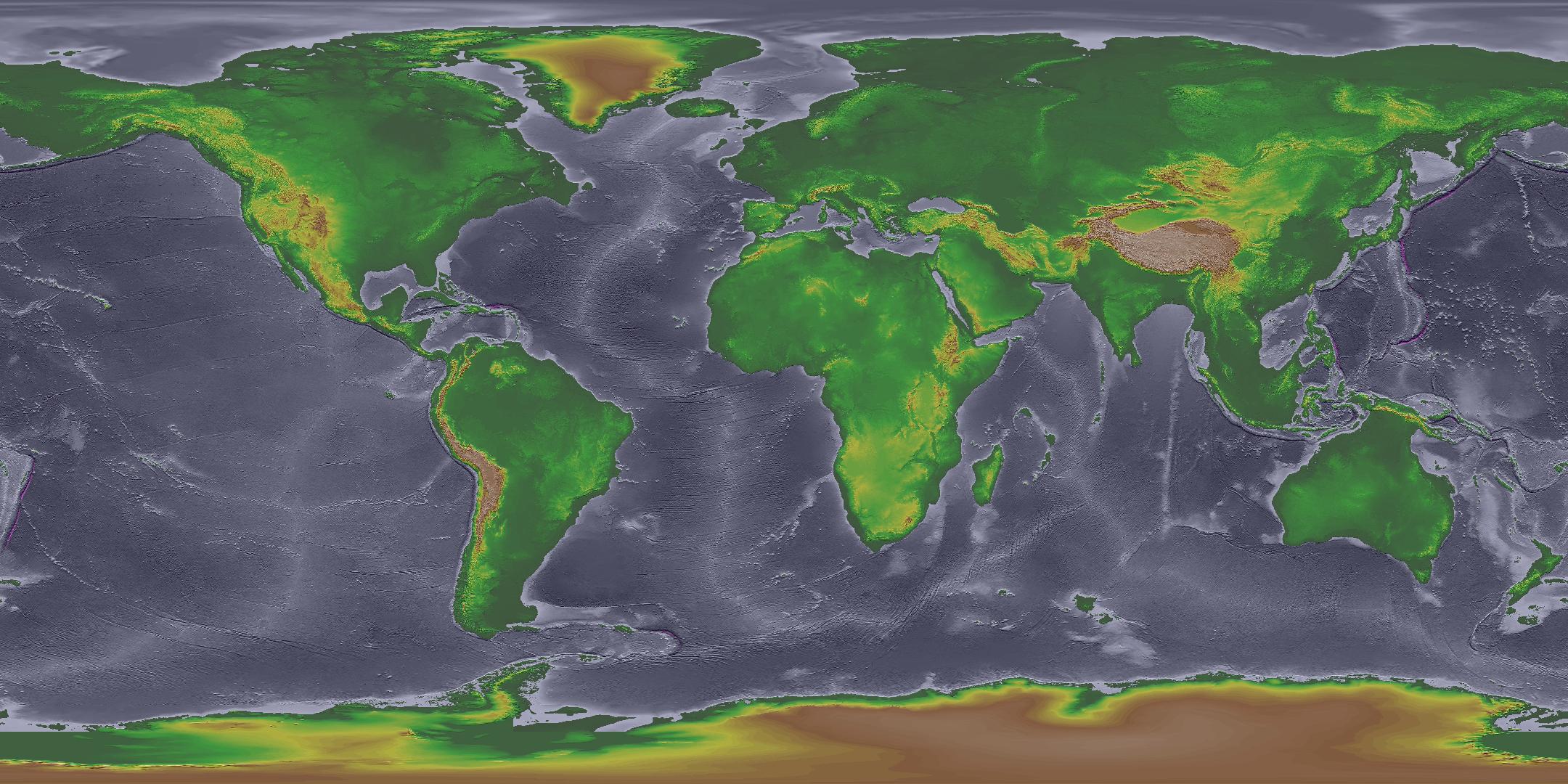
July 7, 2019
Too much speculation. No actual evidence of his claims. It's an interesting idea but he doesn't support his speculation with anything other than more speculation.
March 22, 2021
Pseudohistory. Pseudoarchaeology. Archaeocryptography.
November 11, 2022
If you like snake-oil, you‘ll love this book.
Displaying 1 - 30 of 317 reviews