

What do you think?

Girl Gone Viral
"Smart, timely and riveting."-- The New York Times Book Review
Perfect for fans of Warcross and Black Mirror , Girl Gone Viral is the inventive and timely story of a seventeen-year-old coder's catapult to stardom.
For seventeen-year-old Opal Hopper, code is magic. She builds entire worlds from Mars craters, shimmering lakes, any virtual experience her heart desires.
But she can't code her dad back into her life. When he disappeared after her tenth birthday, leaving only a cryptic note, Opal tried desperately to find him. And when he never turned up, she enrolled at a boarding school for technical prodigies and tried to forget.
Until now. Because WAVE, the world's biggest virtual reality platform, has announced a contest where the winner gets to meet its billionaire founder. The same billionaire who worked closely with Opal's dad. The one she always believed might know where he went. The one who maybe even murdered him.
What begins as a small data hack to win the contest spirals out of control when Opal goes viral, digging her deeper into a hole of lies, hacks, and manipulation. How far will Opal go for the answers--or is it the attention--she's wanted for years?
Perfect for fans of Warcross and Black Mirror , Girl Gone Viral is the inventive and timely story of a seventeen-year-old coder's catapult to stardom.
For seventeen-year-old Opal Hopper, code is magic. She builds entire worlds from Mars craters, shimmering lakes, any virtual experience her heart desires.
But she can't code her dad back into her life. When he disappeared after her tenth birthday, leaving only a cryptic note, Opal tried desperately to find him. And when he never turned up, she enrolled at a boarding school for technical prodigies and tried to forget.
Until now. Because WAVE, the world's biggest virtual reality platform, has announced a contest where the winner gets to meet its billionaire founder. The same billionaire who worked closely with Opal's dad. The one she always believed might know where he went. The one who maybe even murdered him.
What begins as a small data hack to win the contest spirals out of control when Opal goes viral, digging her deeper into a hole of lies, hacks, and manipulation. How far will Opal go for the answers--or is it the attention--she's wanted for years?
432 pages, Paperback
First published May 21, 2019
About the author
Arvin Ahmadi
5 books601 followersArvin Ahmadi is the author of Down and Across, Girl Gone Viral, and How It All Blew Up. He graduated from Columbia University and worked in the tech industry prior to becoming a full-time writer. When he's not reading or writing books, he can be found watching late-night talk show interviews and editing Wikipedia pages. He lives in New York City.
Ratings & Reviews
Friends & Following
Create a free account to discover what your friends think of this book!
Community Reviews
Displaying 1 - 30 of 363 reviews

July 31, 2019
I wanted this to be better
I liked the premise of this book and it started off solid, but I began to get a bit bored about half way through the book. Then at about 70%, things really picked up, but too much started happening. The main character began changing so much as to be unlikeable and the main plot that was described in the beginning didn’t even really come about until the last few pages, then it sort of ended with a bunch of open questions.
The book was about Opal Hopper, who lost her father seven years ago when he just disappeared one day. She doesn’t believe he is dead and believes a business associate of his and the creator of the most successful VR company in the world, knows something. So her and some of her friends at her high school create a VR talk show in order to win a contest for cash and to meet him.
The book is sort of reminiscent of Ready Player One, but with more angst and it gets serious where RPO is witty and nostalgic. This book deals with more political issues of Privacy and Technology and has a Luddite political party.
The first half of the book does well in character development with Opal and her best friend Shane and boyfriend Moyo. It is just that later in the book her relationships with them seemed to change and I didn’t really like the resolution.
Blog|Goodreads|Facebook|Amazon|Twitter|BookBub
I liked the premise of this book and it started off solid, but I began to get a bit bored about half way through the book. Then at about 70%, things really picked up, but too much started happening. The main character began changing so much as to be unlikeable and the main plot that was described in the beginning didn’t even really come about until the last few pages, then it sort of ended with a bunch of open questions.
The book was about Opal Hopper, who lost her father seven years ago when he just disappeared one day. She doesn’t believe he is dead and believes a business associate of his and the creator of the most successful VR company in the world, knows something. So her and some of her friends at her high school create a VR talk show in order to win a contest for cash and to meet him.
The book is sort of reminiscent of Ready Player One, but with more angst and it gets serious where RPO is witty and nostalgic. This book deals with more political issues of Privacy and Technology and has a Luddite political party.
The first half of the book does well in character development with Opal and her best friend Shane and boyfriend Moyo. It is just that later in the book her relationships with them seemed to change and I didn’t really like the resolution.
Blog|Goodreads|Facebook|Amazon|Twitter|BookBub

June 17, 2019
I received a copy of this book from Penguin Teen. I had no obligation to read or review this book and all opinions are my own.
Want to Read
January 29, 2019> GAMES?!
> Ready Player One-twist?!
> GAAAAMES?!
Like, I loved Warcross, Wildcard AND Ready Player One so I can only assume I'd love this one as well.
On the TBR you go, dearie!
> Ready Player One-twist?!
> GAAAAMES?!
Like, I loved Warcross, Wildcard AND Ready Player One so I can only assume I'd love this one as well.
On the TBR you go, dearie!

May 25, 2019
Girl Gone Viral was disappointing. It started well and then it went downhill.
The novel lost it's compelling edge. I actually expected a lot from the title.
The novel lost it's compelling edge. I actually expected a lot from the title.

October 3, 2019
Imagine you gather the perfect ingredients for a cake. You measure them well, pour them into a nice bowl, and mix to a gorgeous, smooth consistency. You take a few whiffs of the nice-smelling batter, maybe. Perhaps even lick the whisk. Then, last but definitely longest, you pour the batter into a pot full of water on the stovetop and let it boil.
That is what Arvin Ahmadi did with this book.
———————————————————————
I have never seen such a promising buildup go so far downhill. When I was in the first 1/4 of this book, I would have easily described it as amazing. The world building was awesome, the perfect amount of realistic and detailed. The plot that was set up at the beginning made me anticipate a mind-blowing conclusion.
I was let down so bad.
First of all, the female PoV is beyond cringey and so unnatural. A nightmare. I turned a blind eye to this at first, as the author’s clear attempts to make this book feminist made me not want to judge that aspect too harshly. But it just kept getting worse and worse, the simplification and misunderstanding of women as people starting to stick out like Michael Scott’s mouth pimple. It was impossible to keep pretending the awkward injections of girl-power moments made up for the rest of the mess. Also, the main character is supposed to be extremely intelligent—at least academically—but oh my do her actions say otherwise. One example that stuck out was a scene where she, for some reason, is so surprised and offended that celebrities fake things for publicity. And the way it’s written makes it seem like her innocent vision of the world is being shattered, and that it’s just so wrong that celebrities, like, stage stuff. I was like girl, you’re 17 and “smart” and you’re truly surprised? On that note, there were so many pop culture references from current times that were just... okay at the beginning but quickly got too much. Like, no teenager 30 years from now is going to be referencing Britney Spears songs. Also, the descriptions of female characters’ appearances were ridiculous. And the way Opal’s emotions were written was such a joke and I just could not care less when she was going through it. She’d be completely fine one second and all of a sudden she’s “breaks down,” completely sobbing, and there’s no transition, barely a reason, and it’s very clear that the author thinks that is how women’s feelings work.
Then, there was the unnecessary romance. I think we’re all quite familiar with this: reading a great story full of compelling elements when all of a sudden WHAM! Two characters are making out and then in love and for some reason it’s relevant and apparently we were supposed to be rooting for them and somehow this is supposed to serve the plot?
Next, there was the message. The theme, if you will. Or, more accurately, lack thereof. The book sets up the Luddites as clear villains—from the main character’s point of view, that was bound to develop (or so I thought)—so obviously and cartoonishly antagonized that there’s no question the moral greyness will be addressed later in the book.
It is not.
The Luddites are very conservative and very extreme in promoting their ideas. They’re violent and imposing and downright criminal, but their concerns about lack of privacy and the pervasiveness of technology are fully legitimate and blatantly supported by the book itself. It seemed like a given, considering Opal and her friends’ behavior, that they’d eventually realize that technology can be dangerous, but they have to go about fighting that ethically. Lack of privacy and intense tracking and personalization of technology are some of the main things this books discusses! It just didn’t deal with them at all, and while the story seemed to be suggesting one thing for most of the book, the attitude towards the Luddites never changed, and they remained clear villains throughout the entirety of the book.
Finally, let’s talk about the unmet plot potential. There was a foundation for such a great revelation at the end. A big mystery was set up that could have resulted in the uncovering of a huge conspiracy. A huge mess-up by the main characters could have gone so wrong so interestingly, and it seemed like all these things were being built up, but the resolutions were barely existent and so underwhelming. Instead of developing these ideas that had oh so much potential, Ahmadi decided to focus on the minute details of Opal’s personal life, and when there’s a main character as obnoxiously written as her, trudging through that, waiting for hundreds of pages for the actually interesting conflicts to come together... it ain’t fun.
So yeah. 10/10 would recommend if Ahmadi wrote the exposition and then let someone else take over completely.
That is what Arvin Ahmadi did with this book.
———————————————————————
I have never seen such a promising buildup go so far downhill. When I was in the first 1/4 of this book, I would have easily described it as amazing. The world building was awesome, the perfect amount of realistic and detailed. The plot that was set up at the beginning made me anticipate a mind-blowing conclusion.
I was let down so bad.
First of all, the female PoV is beyond cringey and so unnatural. A nightmare. I turned a blind eye to this at first, as the author’s clear attempts to make this book feminist made me not want to judge that aspect too harshly. But it just kept getting worse and worse, the simplification and misunderstanding of women as people starting to stick out like Michael Scott’s mouth pimple. It was impossible to keep pretending the awkward injections of girl-power moments made up for the rest of the mess. Also, the main character is supposed to be extremely intelligent—at least academically—but oh my do her actions say otherwise. One example that stuck out was a scene where she, for some reason, is so surprised and offended that celebrities fake things for publicity. And the way it’s written makes it seem like her innocent vision of the world is being shattered, and that it’s just so wrong that celebrities, like, stage stuff. I was like girl, you’re 17 and “smart” and you’re truly surprised? On that note, there were so many pop culture references from current times that were just... okay at the beginning but quickly got too much. Like, no teenager 30 years from now is going to be referencing Britney Spears songs. Also, the descriptions of female characters’ appearances were ridiculous. And the way Opal’s emotions were written was such a joke and I just could not care less when she was going through it. She’d be completely fine one second and all of a sudden she’s “breaks down,” completely sobbing, and there’s no transition, barely a reason, and it’s very clear that the author thinks that is how women’s feelings work.
Then, there was the unnecessary romance. I think we’re all quite familiar with this: reading a great story full of compelling elements when all of a sudden WHAM! Two characters are making out and then in love and for some reason it’s relevant and apparently we were supposed to be rooting for them and somehow this is supposed to serve the plot?
Next, there was the message. The theme, if you will. Or, more accurately, lack thereof. The book sets up the Luddites as clear villains—from the main character’s point of view, that was bound to develop (or so I thought)—so obviously and cartoonishly antagonized that there’s no question the moral greyness will be addressed later in the book.
It is not.
The Luddites are very conservative and very extreme in promoting their ideas. They’re violent and imposing and downright criminal, but their concerns about lack of privacy and the pervasiveness of technology are fully legitimate and blatantly supported by the book itself. It seemed like a given, considering Opal and her friends’ behavior, that they’d eventually realize that technology can be dangerous, but they have to go about fighting that ethically. Lack of privacy and intense tracking and personalization of technology are some of the main things this books discusses! It just didn’t deal with them at all, and while the story seemed to be suggesting one thing for most of the book, the attitude towards the Luddites never changed, and they remained clear villains throughout the entirety of the book.
Finally, let’s talk about the unmet plot potential. There was a foundation for such a great revelation at the end. A big mystery was set up that could have resulted in the uncovering of a huge conspiracy. A huge mess-up by the main characters could have gone so wrong so interestingly, and it seemed like all these things were being built up, but the resolutions were barely existent and so underwhelming. Instead of developing these ideas that had oh so much potential, Ahmadi decided to focus on the minute details of Opal’s personal life, and when there’s a main character as obnoxiously written as her, trudging through that, waiting for hundreds of pages for the actually interesting conflicts to come together... it ain’t fun.
So yeah. 10/10 would recommend if Ahmadi wrote the exposition and then let someone else take over completely.

October 5, 2019
Slightly but not totally tongue-in-cheek trigger warning: absolutely not for students (and their parents) who are applying to colleges, especially Stanford. This book just ratchets up admissions anxiety a hundred-fold.
Armadi has written about a fictional high school in Palo Alto but he himself went to TJ (Thomas Jefferson) and I wish he'd written about that instead. Still, Palo Alto is extremely cool--I love it--and this has the merit of keeping everything in one place. Opal's dedication to finding out what happened to her father drives the narrative. (The answer, alas, is rather too predictable & the villains are unimaginative cardboard.)
Ahmadi's tech/media & understanding of Silicon Valley culture/Palo Alto neighborhoods, right down Blue Bottle, Philz, and suicide-by-Caltrain, is outstanding.
The use of the last name "Hopper" is a nice touch, a reference to early mathematician and computer programmer Grace Hopper. https://www.biography.com/scientist/g...
Ahmadi would have done well to just leave out Opal's mother's character. There is little meaningful interaction, so she's kind of a deux ex machina.
The wide-eyed stuff about Stanford is cute, but feels a bit googly-eyed: 3% admission rate, the tension of college decision days, etc. Spoiler: Opal gets in, but is that because she's so amazing or because her mother is a Stanford dean? Ahmadi unfortunately had to load the dice, to the detriment of the strengths he has previously built up in Opal's character.
Ahmadi absolutely gets the overwhelming power of social media and emotion correct and describes credible interactions among the group of four friends.
Despite the points above, I do recommend Girl Gone Viral to readers of YA (except for those applying to college/Stanford), science thrillers, science fiction, and technothrillers.
Armadi has written about a fictional high school in Palo Alto but he himself went to TJ (Thomas Jefferson) and I wish he'd written about that instead. Still, Palo Alto is extremely cool--I love it--and this has the merit of keeping everything in one place. Opal's dedication to finding out what happened to her father drives the narrative. (The answer, alas, is rather too predictable & the villains are unimaginative cardboard.)
Ahmadi's tech/media & understanding of Silicon Valley culture/Palo Alto neighborhoods, right down Blue Bottle, Philz, and suicide-by-Caltrain, is outstanding.
The use of the last name "Hopper" is a nice touch, a reference to early mathematician and computer programmer Grace Hopper. https://www.biography.com/scientist/g...
Ahmadi would have done well to just leave out Opal's mother's character. There is little meaningful interaction, so she's kind of a deux ex machina.
The wide-eyed stuff about Stanford is cute, but feels a bit googly-eyed: 3% admission rate, the tension of college decision days, etc. Spoiler: Opal gets in, but is that because she's so amazing or because her mother is a Stanford dean? Ahmadi unfortunately had to load the dice, to the detriment of the strengths he has previously built up in Opal's character.
Ahmadi absolutely gets the overwhelming power of social media and emotion correct and describes credible interactions among the group of four friends.
Despite the points above, I do recommend Girl Gone Viral to readers of YA (except for those applying to college/Stanford), science thrillers, science fiction, and technothrillers.

May 29, 2019
Girl Gone Viral is kind of like a mashup of a slower, character-driven YA contemporary with elements from books like An Absolutely Remarkable Thing, Warcross, and Ready Player One. It is a near future story about a girl who codes on a virtual reality platform and is trying to discover what happened when her father disappeared years earlier. It is also about fame, social media, friendship, love, and betrayal.
I liked a lot of what this book was trying to do and there is really thoughtful handling of thematic content including women in STEM, the problems that come with overnight success and celebrity, what technological development means for people and society, and what it means to be a good friend. It even tackles mental health concerns and complex family dynamics. It is racially and ethnically diverse, but set in Palo Alto at a prestigious private school.
However, while I appreciate the ambition of the project, I think perhaps there was too much going on here. There is a mismatch between the thriller elements of the story (I would expect more of a page-turner) and the slow-paced, thoughtful approach to character development and emphasis on unpacking high school relationships. That said, I did still enjoy it, I'm just having trouble categorizing it and I don't think it was quite what I expected. If you go in expecting to really sit with these characters, and expecting something that is really about the teen-coming of age experience in complicated times, then you might really love it.
Content Warnings for cyber-bullying, depression, alcoholism, and discussion of suicide
I liked a lot of what this book was trying to do and there is really thoughtful handling of thematic content including women in STEM, the problems that come with overnight success and celebrity, what technological development means for people and society, and what it means to be a good friend. It even tackles mental health concerns and complex family dynamics. It is racially and ethnically diverse, but set in Palo Alto at a prestigious private school.
However, while I appreciate the ambition of the project, I think perhaps there was too much going on here. There is a mismatch between the thriller elements of the story (I would expect more of a page-turner) and the slow-paced, thoughtful approach to character development and emphasis on unpacking high school relationships. That said, I did still enjoy it, I'm just having trouble categorizing it and I don't think it was quite what I expected. If you go in expecting to really sit with these characters, and expecting something that is really about the teen-coming of age experience in complicated times, then you might really love it.
Content Warnings for cyber-bullying, depression, alcoholism, and discussion of suicide
May 26, 2019
I wanted a bit more nuance to the messages this story contains.

June 2, 2019
3.5 stars. I really enjoyed the first 2/3 of this, thought it. Was a 5 star read but I found the last third to be an anti climax and felt a bit let down and disappointed.

August 17, 2019
Writing near future SF is ambitious due to the speed of technical innovation, social change because of it, and the difficulty of predicting both. (Have a read of some of Charles Stross's articles on doing so for some of the reasons why; he's had to trunk whole books because real world events moved faster than he could write). Writing it with a YA bent, at what's essentially the leading edge of this type of social change is leaning into the problem. This book is a superb effort, even while it doesn't quite nail the ending.
Opal Hopper is a coder and data analysis genius at a STEM-focused high school. She's part of a small team competing in a social media competition on WAVE, the cutting edge mass market VR platform. The first prize includes a meeting with WAVE founder Howie Mendelsohn, the reclusive billionaire creator of the platform, and someone that Opal desperately wants answers from because her father was his original partner before going missing.
When her data analysis of some hacked data from a new face-tracking feature of WAVE leads to some surprising conclusions about people's social media habits, she becomes a surprise social media star with every chance to actually realize her goal. But in the process she has to put everything to the test: her friendships, her relationships and maybe her future.
I absolutely loved this book. Even just for the view into the lives of people who have been born into the IT age and thrive there, and what their relationships to technology, media and each other are like because of it. But this is far more than that, because it also talks about the future of politics as automation removes the livelihoods of many people and what the backlash might look like. The new Luddites presented here aren't even all that unsympathetic. And the look at social media here is also layered with nuance, particularly around looking past trolls to empathic response, but clearly identifying that there is manipulation going on at all levels.
I did have some minor quibbles (for a long-running social media show, Opal's thing seems really light-on for actual content) and while Opal does find out about her father and resolves that part of her story, so much else is left hanging, but with little room for a sequel. Overall, I'd give it 4.5 if I could, but I think the ending here lets it down just a little too much, so I'll round down.
Opal Hopper is a coder and data analysis genius at a STEM-focused high school. She's part of a small team competing in a social media competition on WAVE, the cutting edge mass market VR platform. The first prize includes a meeting with WAVE founder Howie Mendelsohn, the reclusive billionaire creator of the platform, and someone that Opal desperately wants answers from because her father was his original partner before going missing.
When her data analysis of some hacked data from a new face-tracking feature of WAVE leads to some surprising conclusions about people's social media habits, she becomes a surprise social media star with every chance to actually realize her goal. But in the process she has to put everything to the test: her friendships, her relationships and maybe her future.
I absolutely loved this book. Even just for the view into the lives of people who have been born into the IT age and thrive there, and what their relationships to technology, media and each other are like because of it. But this is far more than that, because it also talks about the future of politics as automation removes the livelihoods of many people and what the backlash might look like. The new Luddites presented here aren't even all that unsympathetic. And the look at social media here is also layered with nuance, particularly around looking past trolls to empathic response, but clearly identifying that there is manipulation going on at all levels.
I did have some minor quibbles (for a long-running social media show, Opal's thing seems really light-on for actual content) and while Opal does find out about her father and resolves that part of her story, so much else is left hanging, but with little room for a sequel. Overall, I'd give it 4.5 if I could, but I think the ending here lets it down just a little too much, so I'll round down.

December 16, 2018
Okay, look: to be honest, I was expecting this book to be filled with much more twists and turns—due to its marketing pitch of 'for fans of Warcross [and Black Mirror],'—it becoming a highly anticipated release of mine because of that. (Insert me screaming about it here. Also in my pre-review back in December.) Though unfortunately, it didn't hit that spot Warcross did for me.
I feel as if there wasn't much of Opal finding the answers to her father's disappearance in this book—and the fact is wholly disheartening. When it was revealed, the whole thing was barely acknowledged and everyone just moved on right after??? There was so much buildup towards Opal aching to know 'the truth,' and at the end, it was barely important to the novel.
Though, while I'm still sad this book didn't go in the direction I was so excited for, I thought it was a nice read overall, I guess. I would for sure recommend Girl Gone Viral if you're looking to have a good time for a couple of hours.
representation: Nigerian LI, mlm side character
content warnings: mentions of suicide
I feel as if there wasn't much of Opal finding the answers to her father's disappearance in this book—and the fact is wholly disheartening. When it was revealed, the whole thing was barely acknowledged and everyone just moved on right after??? There was so much buildup towards Opal aching to know 'the truth,' and at the end, it was barely important to the novel.
Though, while I'm still sad this book didn't go in the direction I was so excited for, I thought it was a nice read overall, I guess. I would for sure recommend Girl Gone Viral if you're looking to have a good time for a couple of hours.
My pals and I, we'll survive.
representation: Nigerian LI, mlm side character
content warnings: mentions of suicide

August 13, 2019
The story follows this structure:
1) Nerdy, wounded/angry, shy girl takes centre stage and gains fame.
2) Girl works really hard with her two friends to become more famous and influential.
3) Girl makes mistake after mistake, sabotaging all of her relationships while gaining more fame.
4) Girl decides to own up and start treating her friends better.
The story is fast-moving, and while I could predict around when Opal was going to do certain things in service of her fame, and when she’d finally begin turning things around, I still liked this book. And I liked the idea of the Luds party and their desire to drag the US backwards, through fear, violence and legislation to an unrealistic, nostalgic past because that would make the US better again. The author's use of technology/automation in place of immigration was a slightly unusual touch, considering the number of immigration-related stories coming out now, and the somewhat open ending had me wondering what Opal and Co. would do to fight the Luds.
1) Nerdy, wounded/angry, shy girl takes centre stage and gains fame.
2) Girl works really hard with her two friends to become more famous and influential.
3) Girl makes mistake after mistake, sabotaging all of her relationships while gaining more fame.
4) Girl decides to own up and start treating her friends better.
The story is fast-moving, and while I could predict around when Opal was going to do certain things in service of her fame, and when she’d finally begin turning things around, I still liked this book. And I liked the idea of the Luds party and their desire to drag the US backwards, through fear, violence and legislation to an unrealistic, nostalgic past because that would make the US better again. The author's use of technology/automation in place of immigration was a slightly unusual touch, considering the number of immigration-related stories coming out now, and the somewhat open ending had me wondering what Opal and Co. would do to fight the Luds.
July 30, 2019
Slightly but not totally tongue-in-cheek trigger warning: absolutely not for students (and their parents) who are applying to colleges, especially Stanford. This book just ratchets up admissions anxiety a hundred-fold.
Armadi has written about a fictional high school in Palo Alto but he himself went to TJ (Thomas Jefferson) and I wish he'd written about that instead. Still, Palo Alto is extremely cool--I love it--and this has the merit of keeping everything in one place. Opal's dedication to finding out what happened to her father drives the narrative. (The answer, alas, is rather too predictable & the villains are unimaginative cardboard.)
Ahmadi's tech/media & understanding of Silicon Valley culture/Palo Alto neighborhoods, right down Blue Bottle, Philz, and suicide-by-Caltrain, is outstanding.
The use of the last name "Hopper" is a nice touch, a reference to early mathematician and computer programmer Grace Hopper. https://www.biography.com/scientist/g...
Ahmadi would have done well to just leave out Opal's mother's character. There is little meaningful interaction, so she's kind of a deux ex machina.
The wide-eyed stuff about Stanford is cute, but feels a bit googly-eyed: 3% admission rate, the tension of college decision days, etc. Spoiler: Opal gets in, but is that because she's so amazing or because her mother is a Stanford dean? Ahmadi unfortunately had to load the dice, to the detriment of the strengths he has previously built up in Opal's character.
Ahmadi absolutely gets the overwhelming power of social media and emotion correct and describes credible interactions among the group of four friends.
Despite the points above, I do recommend Girl Gone Viral to readers of YA (except for those applying to college/Stanford), science thrillers, science fiction, and technothrillers.
Armadi has written about a fictional high school in Palo Alto but he himself went to TJ (Thomas Jefferson) and I wish he'd written about that instead. Still, Palo Alto is extremely cool--I love it--and this has the merit of keeping everything in one place. Opal's dedication to finding out what happened to her father drives the narrative. (The answer, alas, is rather too predictable & the villains are unimaginative cardboard.)
Ahmadi's tech/media & understanding of Silicon Valley culture/Palo Alto neighborhoods, right down Blue Bottle, Philz, and suicide-by-Caltrain, is outstanding.
The use of the last name "Hopper" is a nice touch, a reference to early mathematician and computer programmer Grace Hopper. https://www.biography.com/scientist/g...
Ahmadi would have done well to just leave out Opal's mother's character. There is little meaningful interaction, so she's kind of a deux ex machina.
The wide-eyed stuff about Stanford is cute, but feels a bit googly-eyed: 3% admission rate, the tension of college decision days, etc. Spoiler: Opal gets in, but is that because she's so amazing or because her mother is a Stanford dean? Ahmadi unfortunately had to load the dice, to the detriment of the strengths he has previously built up in Opal's character.
Ahmadi absolutely gets the overwhelming power of social media and emotion correct and describes credible interactions among the group of four friends.
Despite the points above, I do recommend Girl Gone Viral to readers of YA (except for those applying to college/Stanford), science thrillers, science fiction, and technothrillers.
This entire review has been hidden because of spoilers.

October 16, 2019
I can read that the ideas are there, the story is there, the crux is there, but Girl Gone Viral is let down by its tepid storytelling that lacks purpose that would otherwise grip my attention.
- Follows Opal, a coder prodigy and daughter of a man who disappeared under mysterious circumstances. When a spontaneous decision to feature in a virtual reality channel turns out of control, Opal finds herself in the spotlight - changing her life forever.
- This book isn't the kind of 'fast-paced action' sort of science-fiction. Rather, this is more like a drama sci-fi that explores the implications of technological advancement that has shaped society and our ideas of 'normal'.
- The story is also about empathy, friendship, relationships, and how technology is intertwined with these. It also explores social media, political discourse (and how tech can be leveraged to ignite nationalism) and our obsession with sharing and performance.
- There are some great character studies and relationship studies in the story, as well as a mystery surrounding Opal's father's disappearance.
- However, I just felt like this book was undermined by its weaker storytelling. I know that Ahmadi has some incredible and timely ideas and discourse (that were fantastic) but the story's lukewarm direction made it difficult for me to engage with the book.
Trigger/content warning:
- Follows Opal, a coder prodigy and daughter of a man who disappeared under mysterious circumstances. When a spontaneous decision to feature in a virtual reality channel turns out of control, Opal finds herself in the spotlight - changing her life forever.
- This book isn't the kind of 'fast-paced action' sort of science-fiction. Rather, this is more like a drama sci-fi that explores the implications of technological advancement that has shaped society and our ideas of 'normal'.
- The story is also about empathy, friendship, relationships, and how technology is intertwined with these. It also explores social media, political discourse (and how tech can be leveraged to ignite nationalism) and our obsession with sharing and performance.
- There are some great character studies and relationship studies in the story, as well as a mystery surrounding Opal's father's disappearance.
- However, I just felt like this book was undermined by its weaker storytelling. I know that Ahmadi has some incredible and timely ideas and discourse (that were fantastic) but the story's lukewarm direction made it difficult for me to engage with the book.
Trigger/content warning:

April 3, 2019
DNF at 36%. I found this book...kind of boring. The writing style is bland, the world building is unimpressive, the author tells a lot of the story rather than showing it. At this point I realized I just didn’t even really care what was happening. Usually a central mystery can keep me going because of a desire to know what’s happening but not in this case.

June 2, 2019
3.5 stars. Overall I really enjoyed this. It was a fast fun read but the last quarter of the book kept me from rating it higher. The last part felt like a rush to wrap up all the dangling plot points and most of them were unsatisfactory in the end.

August 28, 2019
1 star
!WARNING! THIS REVIEW MAY BE LONGER THAN EXPECTED.
Gosh, I got myself kind of excited for this one and it ended up being a flop. At least, for me anyway. I was expecting a really good mystery involving some tech, but honestly I'm not sure what the point of this book even is. I honestly felt nothing with this one. I never laughed, I never cried... I guess I was angry but that was the entire time because I was just SO annoyed. And I'm also angry because I wasted post-its on this to write about all the points that just irritated me all the time.
Shall we start at the beginning?
All right, I am actually very sorry because I'm not normally the kind of person who tears a book apart like that. I came in wanting to like it but the writing, the characters, the emotion, it just wasn't real to me and then I just became SUPER annoyed. I am also sorry to the people who have liked this book. I just feel like the sci-fi of this one didn't work for me because it just wasn't very original. I still don't know what side I was supposed to be on or who I am supposed to think is evil or if the author's goal was to change how people feel about technology. If that was the goal, I'm not sure if they are supposed to be for or against virtual reality.
Sorry, again.
!WARNING! THIS REVIEW MAY BE LONGER THAN EXPECTED.
Gosh, I got myself kind of excited for this one and it ended up being a flop. At least, for me anyway. I was expecting a really good mystery involving some tech, but honestly I'm not sure what the point of this book even is. I honestly felt nothing with this one. I never laughed, I never cried... I guess I was angry but that was the entire time because I was just SO annoyed. And I'm also angry because I wasted post-its on this to write about all the points that just irritated me all the time.
Shall we start at the beginning?
All right, I am actually very sorry because I'm not normally the kind of person who tears a book apart like that. I came in wanting to like it but the writing, the characters, the emotion, it just wasn't real to me and then I just became SUPER annoyed. I am also sorry to the people who have liked this book. I just feel like the sci-fi of this one didn't work for me because it just wasn't very original. I still don't know what side I was supposed to be on or who I am supposed to think is evil or if the author's goal was to change how people feel about technology. If that was the goal, I'm not sure if they are supposed to be for or against virtual reality.
Sorry, again.

May 6, 2019
This book was a rollercoaster. It took me a little while to get used to the technologies, but once I was immersed into it all, I really loved it, the discussions surrounding technologies, the central presence of complex friendships and the mystery at its heart, too. A very entertaining read!
Read my full review of Girl Gone Viral on the blog.
Thank you to Penguin Random House International and Bookworms Unite PH for sending me the e-ARC of this book and allowing me to take part in the INTL blog tour for this book. This did not, in any way, influenced my thoughts and rating.
My Blog - Drizzle & Hurricane Books - Twitter - Bloglovin'
Read my full review of Girl Gone Viral on the blog.
Thank you to Penguin Random House International and Bookworms Unite PH for sending me the e-ARC of this book and allowing me to take part in the INTL blog tour for this book. This did not, in any way, influenced my thoughts and rating.
My Blog - Drizzle & Hurricane Books - Twitter - Bloglovin'

March 28, 2019
*4.5 stars*
I would have given this a full five star rating if the ending wasn't so rushed. The rest of the book was paced very well, was highly entertaining, and easy to read. The characters were so fun to get to know! Each character was so interesting and very unique. Also, this book dealt with mental health which I was not expecting! I felt that this story had very accurate representation of mental illness. I would highly recommend this book to everyone! It comes out in May so be sure to get your hands on a copy!
*I won an advanced readers copy of this book from a Goodreads giveaway*
I would have given this a full five star rating if the ending wasn't so rushed. The rest of the book was paced very well, was highly entertaining, and easy to read. The characters were so fun to get to know! Each character was so interesting and very unique. Also, this book dealt with mental health which I was not expecting! I felt that this story had very accurate representation of mental illness. I would highly recommend this book to everyone! It comes out in May so be sure to get your hands on a copy!
*I won an advanced readers copy of this book from a Goodreads giveaway*

February 23, 2020
DNF @72%
The book was cool, futuristic. But boring. I kept waiting for the good part, but I couldn’t wait any longer.
The book was cool, futuristic. But boring. I kept waiting for the good part, but I couldn’t wait any longer.

July 18, 2020
interesting concept, didn't deliver on a lot of its promises, left too many things open-ended

June 18, 2021
(boy am i glad to have already finished receiving university decisions before reading this.)

July 27, 2019
My rating: 4/5
Review:
This book was really interesting and a page turner. I stayed up late reading this book just to uncover what will happens next! Let’s first start with the story background, I love that the book is set up in a futuristic time. Where our lives are filled with Virtual Reality, Artificial Intelligence, self-driving cars and many more.
Besides that, I love that the book showed equality and not to underestimate women capabilities in achieving great things just like men could.
“His prejudice became my ammunition” -In Girl Gone Viral, by Arvin Ahmadi
Furthermore, I admire the main character Opal, she is smart, brave and determine. Even though, she made mistakes with her decisions, she rises up and learned from them. This book contains a lot of elements on being a good book. It also wrote about mental health. The story showed that it is important to be there for your friends and families that shows signs in having mental health issues. In addition, it showed that there will always be someone better than us in life, but that does not mean we should give up in our dreams.
“We are driven by numbers and comparisons, but often, it’s to our detriment. There’s always going to be someone more successful than you, someone more liked than you, with more views than you” -In Girl Gone Viral, by Arvin Ahmadi
The book also highlighted that as human we tend to get hurt and sad. But, we shouldn’t use our weaknesses to be weaker, instead to be stronger.
“You can be strong and vulnerable at the same time” -In Girl Gone Viral, by Arvin Ahmadi
“I don’t need to take off a few weeks. I don’t even need a day. Pain shouldn’t get to win, ever, for any of us.” -In Girl Gone Viral, by Arvin Ahmadi
Lastly, what I mostly loved about this book is that it showed me how the internet and technology can have its benefits and drawbacks. Such as all our data are available in the internet. Hence, it is easy to access and can be stolen by irresponsible parties. Meanwhile, the technology such as Artificial Intelligence can have its benefits, however it takes away humans their jobs and it does not have the human touch. Therefore, humans should use the internet and technology with good intentions and not to abuse it.
“Artificial intelligence, virtual reality– these are all wonderful things. But they were invented by humans. They will not save us, nor will they destroy us. They are tools. There must always be a human touch” -In Girl Gone Viral, by Arvin Ahmadi
However, Girl Gone Viral could have gotten a full 5/5 rating from me. Sadly, I was expecting more from it. I felt that the ending was too rushed. Moreover, it could have venture more in depth about the character President Gaby Swift and the human uprising against technology.
Overall, Girl Gone Viral was a great read. I would recommend this book if your looking for a futuristic element read!
Thank you so much @times.reads, for sending me a copy of Girl Gone Viral by Arvin Ahmadi in return for an honest review.
This book is available at all good bookstores!
Sincerely,
Natasha (TheNatashaReads) ❤️
Review:
This book was really interesting and a page turner. I stayed up late reading this book just to uncover what will happens next! Let’s first start with the story background, I love that the book is set up in a futuristic time. Where our lives are filled with Virtual Reality, Artificial Intelligence, self-driving cars and many more.
Besides that, I love that the book showed equality and not to underestimate women capabilities in achieving great things just like men could.
“His prejudice became my ammunition” -In Girl Gone Viral, by Arvin Ahmadi
Furthermore, I admire the main character Opal, she is smart, brave and determine. Even though, she made mistakes with her decisions, she rises up and learned from them. This book contains a lot of elements on being a good book. It also wrote about mental health. The story showed that it is important to be there for your friends and families that shows signs in having mental health issues. In addition, it showed that there will always be someone better than us in life, but that does not mean we should give up in our dreams.
“We are driven by numbers and comparisons, but often, it’s to our detriment. There’s always going to be someone more successful than you, someone more liked than you, with more views than you” -In Girl Gone Viral, by Arvin Ahmadi
The book also highlighted that as human we tend to get hurt and sad. But, we shouldn’t use our weaknesses to be weaker, instead to be stronger.
“You can be strong and vulnerable at the same time” -In Girl Gone Viral, by Arvin Ahmadi
“I don’t need to take off a few weeks. I don’t even need a day. Pain shouldn’t get to win, ever, for any of us.” -In Girl Gone Viral, by Arvin Ahmadi
Lastly, what I mostly loved about this book is that it showed me how the internet and technology can have its benefits and drawbacks. Such as all our data are available in the internet. Hence, it is easy to access and can be stolen by irresponsible parties. Meanwhile, the technology such as Artificial Intelligence can have its benefits, however it takes away humans their jobs and it does not have the human touch. Therefore, humans should use the internet and technology with good intentions and not to abuse it.
“Artificial intelligence, virtual reality– these are all wonderful things. But they were invented by humans. They will not save us, nor will they destroy us. They are tools. There must always be a human touch” -In Girl Gone Viral, by Arvin Ahmadi
However, Girl Gone Viral could have gotten a full 5/5 rating from me. Sadly, I was expecting more from it. I felt that the ending was too rushed. Moreover, it could have venture more in depth about the character President Gaby Swift and the human uprising against technology.
Overall, Girl Gone Viral was a great read. I would recommend this book if your looking for a futuristic element read!
Thank you so much @times.reads, for sending me a copy of Girl Gone Viral by Arvin Ahmadi in return for an honest review.
This book is available at all good bookstores!
Sincerely,
Natasha (TheNatashaReads) ❤️

May 26, 2019
Gone Viral is a fantastic coming of age contemporary that includes technology that really roots itself in how tech and social media are a big part of growing up today. You can read my post as part of Penguin's Blog Tour here!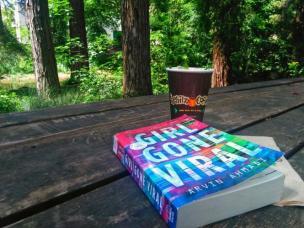
ARC sent by Penguin Teen in exchange for my honest review.
“Humans are experts in sharing. It started with cave paintings and evolved into books, tweets, virtual reality. […]The book is told in the first person perspective of Opal Tal, a 17-year old coding genius who is determined to find the answers to her father’s disappearance seven years earlier. She’s tried to move on, reinventing herself as Opal Hopper to hide from her past in anonymity, but when a competition comes up with the prize of meeting reclusive tech genius Howie Mendelsohn she can’t help but enter for a chance to meet him and get the answers she is sure he can provide.
We’re complicated beings who hardly understand our own selves, and that’s precisely why we put those experiences out into the world. To find our place in it.”
WAVE is the latest craze, and you can think of it as the virtual reality equivalent of Youtube. Instead of vlogging on your kitchen floor in front of a camera, WAVE is a full-on production with design and digital avatar viewers when you go live. And Opal stumbles upon some information and her show goes viral with her honest depiction of reality and how the way we portray ourselves online doesn’t line up with how we truly feel. It is a really interesting take on how people put their best version of themselves up on social media, as well as how easy it is for people to hop onto a bandwagon because everyone else is doing it. The book honestly made me think a lot about my relationship with social media, which has definitely been evolving over the last two years.
“Be careful putting yourself out there; privacy is hard to get back.”I love the characters so much. Opal, Moyo, and Shane are such a great friend group and I love how they support one another. It’s their senior year and with college applications looming and the pressures of soon venturing into a new stage of life, I think Ahmadi depicted the struggles of teenagers really well. (Also can I just reiterate again how glad I am that social media was not a thing when I was in high school? Because I am forever thankful.) I felt most connected to Opal and Shane, but I really enjoyed everyone… even Kara grew on me! What was most interesting for me was how Opal’s relationship with her friends evolves as the story progresses, as evidenced by how they interact with her. Her grief and desire for answers makes her selfish and a little difficult to like in that regard but she felt like a real person to me just doing her damn best.
Girl Gone Viral is more than sci-fi: it’s about coming of age in a world rapidly changing & polarizing worldviews. It’s set in a plausible near future with tech that could launch tomorrow. Or very well could exist now but because I’m old and the opposite of hip I don’t know about it but that isn’t the point. Because with a society obsessed with tabloids and the voyeuristic nature of following online influencers, of course there would be paparazzi drones.
Reading this one was especially fun for me because it is set in Palo Alto, CA and there’s so much discussion on the whole start-up/tech culture of Silicon Valley that is relatable as a person that currently lives in the vicinity. A big thing in the tech world is disruption, essentially challenging the way we’ve always done things and making things better.
“Sometimes I wonder if people are right, when they refuse to treat me or talk to me with equal respect, because I’m a girl. Maybe we live in a world where I’m not meant to succeed. A world that actively fights to limit my success. And maybe, in that same world, my dad really did bring his fate upon himself.”When an investor appears and talks about how gloriously disruptive the show is, I couldn’t help but laugh because she was challenging the careful facades that everyone puts on online. But there are definitely challenges to getting an investor, as our characters discover. Opal struggles to have her experiences and opinions validated by the adults around her, asserting that they know what is best. Considering that she is in a high school for tech geniuses and how much women are underrepresented in STEM fields, I personally appreciated this added discussion because it felt believable to me but also challenges those ideas in the text.
Ahmadi effortlessly crafted a future that parallels society today, using the lens of technology to discuss the post-2016 election Nationalistic world that America has found itself in. Instead of “Make America Great Again,” we have the Luddite “Back to basics” political movement that rises to power against all odds on a platform of “bring the jobs back to people from machines.”
“It all boils down to comfort with the old way of doing things. It boils down to nostalgia.”It’s a social commentary that I really appreciated that has relevance well beyond the Trump Election comparison. The notion of nostalgia plays a bit role in the rise of nationalism has been sweeping the globe in recent years, but the methods are direct descendants what has been seen throughout history during colonization. The idea that society has been led astray from the time when things were perfect, and this group is the one position to bring back that Golden Era. The problem with a revisionist view of the past is that “better” is not for everyone, and often that idealized history didn’t exist in the first place. In the case of the Luddite argument, it completely disregards all the positives that technology brings society – and that throughout history when jobs have gone obsolete, people find new careers. We no longer have a need for lamplighters now that we have electricity, and we don’t have people phone operators anymore. But what we do need are the people capable of creating and maintaining technology, along with countless other fields.
The pacing of the book is solid, building in tension towards the revelations but the ending did feel a little rushed compared to the rest of the book. The main mystery of what happened to Opal’s father is revealed but the ending of the book is left a bit too open for my tastes. My one complaint is that the book doesn’t feel like a standalone, it actually feels like the ending was a set-up for a sequel. I just feel like there was so much development on the political front to have it end where it did! But the fact that created a world that I cannot get enough of is impressive and I truly hope that he writes more.
Overall, I loved this book so much! I found it to be fast-paced and engaging, with a good balance between making me think and being about the characters. I wouldn’t call this quiet YA at all, but the characters do each deal with their own internalized struggles of wanting to be good enough and succeed. I highly recommend this one and don’t think that the technology is too advanced to deter people that typically shy away from science fiction.
REPRESENTATION: black rep (Nigerian), depression rep (Shane), women in STEM
CONTENT WARNINGS: alcoholism, cyber bullying, depression, loss of a parent, on-page death, suicide
Many thanks to Penguin Teen for sending me an ARC for my honest review and letting me participate in the blog tour! Quotes are taken from an unfinished ARC and may not match final publication.
Blog | Twitter | Pinterest
April 24, 2022
Oleks ma kohe märganud kaane peal olevat teksti "You can't CTRL the truth" oleks ma äkki olnud piisavalt tark ja jätnud selle raamatu lugemata...
Üks täielik pudru ja kapsad.
Tagakaane tekst jätab mulje, et loos saab olema palju põnevat häkkimist ja kodeerimist ja põnev võistlus. Reaalsus - populaarsuse mäng ehk kes saab enim vaatajaid/jälgijaid ja vahendid ega moraal pole olulised ning ega algne eesmärk ununeb ka kiirelt.
Lisaks. Ma ei kannata kui raamat on üles ehitatud mingile suurele saladusele ja pole mitttttte ühtegi põhjust, miks seda saladust ei oleks võinud kohe alguses välja käia. Mitte mingit. Ja nagu? Kas peategelane üldse kodeeris ka kunagi midagi? Ja kas kodeerimisest räägiti rohkem kui "näe vaata, nüüd on uued toolid"??
Loos on kaks leeri. Need, kes on kõige digitaliseerumise vastu ja need, kes selle poolt. Ja ma ei saanud lõpuni aru, mis oli autori seisukoht või sõnum. Peategelane on digitaliseerumise poolt, aga samas kogu see plot-line on üles ehitatud selliselt, et tundsin, et räigelt tahetakse kogu sellist maailma täiega maha teha. Olgugi, et ma ise olen digitaliseerumise poolt, siis raamatus kõlasid kordadelt tugevamalt pidurdajate argumendid. Mitte, et ma oleks nendega nõustunud, aga neil vähemalt oli argumente. Ehk siis mulle jäi tunne järjekordsest raamatust, mis üritab selgeks teha, kuidas sotsiaalmeedia ja kõik digitaalne on halb.
Ma ei tea. Lihtsalt täielikult segane, pealiskaudne, sisutu, jabur.
Lausa 2 tärni teenib sellepärast, et kui mitte eriti kaasamõelda, siis siukest ajaviiteloo materjali temas on.
Üks täielik pudru ja kapsad.
Tagakaane tekst jätab mulje, et loos saab olema palju põnevat häkkimist ja kodeerimist ja põnev võistlus. Reaalsus - populaarsuse mäng ehk kes saab enim vaatajaid/jälgijaid ja vahendid ega moraal pole olulised ning ega algne eesmärk ununeb ka kiirelt.
Lisaks. Ma ei kannata kui raamat on üles ehitatud mingile suurele saladusele ja pole mitttttte ühtegi põhjust, miks seda saladust ei oleks võinud kohe alguses välja käia. Mitte mingit. Ja nagu? Kas peategelane üldse kodeeris ka kunagi midagi? Ja kas kodeerimisest räägiti rohkem kui "näe vaata, nüüd on uued toolid"??
Loos on kaks leeri. Need, kes on kõige digitaliseerumise vastu ja need, kes selle poolt. Ja ma ei saanud lõpuni aru, mis oli autori seisukoht või sõnum. Peategelane on digitaliseerumise poolt, aga samas kogu see plot-line on üles ehitatud selliselt, et tundsin, et räigelt tahetakse kogu sellist maailma täiega maha teha. Olgugi, et ma ise olen digitaliseerumise poolt, siis raamatus kõlasid kordadelt tugevamalt pidurdajate argumendid. Mitte, et ma oleks nendega nõustunud, aga neil vähemalt oli argumente. Ehk siis mulle jäi tunne järjekordsest raamatust, mis üritab selgeks teha, kuidas sotsiaalmeedia ja kõik digitaalne on halb.
Ma ei tea. Lihtsalt täielikult segane, pealiskaudne, sisutu, jabur.
Lausa 2 tärni teenib sellepärast, et kui mitte eriti kaasamõelda, siis siukest ajaviiteloo materjali temas on.
March 2, 2019
HOLY AMAZEBALLS. THIS. BOOK. Now it sort off dawned on me why Penguin Teen called out Arvin on Twitter to submit this because heck, I WOULD HAVE PROBABLY DONE THE SAME THING. LOL
That being said, I was in the middle of a ridiculous!! slump when I started reading this book, but it was the cure to my sanity. I love stories that deal with virtual reality, much so if it involves technology and discussions. There's all this talk about augmented reality, people against technology, and virtual talk shows. I'm here for it and Arvin has executed it so well. I was engrossed with this book, because it is eerily familiar yet foreign to me, and I cannot help but be kept on my toes the entire time.

My full review is slated to go up in May as I am contributing for the tour of this book, but some things to anticipate:
- Opal Hopper, because she is amazing. Girls who code? UMM, YES.
- Dynamic friendships
- WAVE (eat your heart out, YOUTUBE.)
- Discussions of grief, relationships, importance of taking care of your mental health, and moral grounds
There are no words to describe the truth bombs that this book has up its sleeve. I can't even fully describe the emotions that I felt when I finished it. Hot tip: Do not read this book if you're bad at concealing your "WTF is going on here" face. Honestly May feels like it is still so far because I NEED TO TALK TO SOMEONE ABOUT THIS BOOK BECAUSE IT IS JUST SO DARN GOOD AND THERE IS A LOT OF GROUND OPEN FOR DISCUSSION. Arvin this better have a sequel or so help me...
Huge thanks to Bookworms Unite for letting me join the tour.
That being said, I was in the middle of a ridiculous!! slump when I started reading this book, but it was the cure to my sanity. I love stories that deal with virtual reality, much so if it involves technology and discussions. There's all this talk about augmented reality, people against technology, and virtual talk shows. I'm here for it and Arvin has executed it so well. I was engrossed with this book, because it is eerily familiar yet foreign to me, and I cannot help but be kept on my toes the entire time.
My full review is slated to go up in May as I am contributing for the tour of this book, but some things to anticipate:
- Opal Hopper, because she is amazing. Girls who code? UMM, YES.
- Dynamic friendships
- WAVE (eat your heart out, YOUTUBE.)
- Discussions of grief, relationships, importance of taking care of your mental health, and moral grounds
There are no words to describe the truth bombs that this book has up its sleeve. I can't even fully describe the emotions that I felt when I finished it. Hot tip: Do not read this book if you're bad at concealing your "WTF is going on here" face. Honestly May feels like it is still so far because I NEED TO TALK TO SOMEONE ABOUT THIS BOOK BECAUSE IT IS JUST SO DARN GOOD AND THERE IS A LOT OF GROUND OPEN FOR DISCUSSION. Arvin this better have a sequel or so help me...
Huge thanks to Bookworms Unite for letting me join the tour.

May 18, 2019
This was a highly promising premise that, thankfully, delivered. It was very Ready Player One-ish, but less wish fulfillment-y, less infodump-y, and definitely with much less annoying characters. (Can you tell that I didn’t like Ready Player One?)
Opal Hopper is a rising star. A senior at one of the most exclusive STEM boarding schools ever, a genius at coding, not to mention a shoo-in for Stanford, she’s got a bright future ahead of her. When she and her friends Moyo, Shane, and Kara join Make-A-Splash, a contest on who can get the views on a YouTube-esque subscriber-based platform called WAVE, they all think that it’s just another way to pad their college applications.
But Opal has an ulterior motive. One of Make-A-Splash’s prizes is the chance to meet Howie Mendelsohn, the founder of WAVE. Opal’s father, Aaron Tal, a co-founder of WAVE, disappeared when Opal was young, and she’s been looking for answers ever since. One of Opal’s avenues for answers is to talk to Howie. Unfortunately, Howie has avoided her since her father’s disappearance, which is why she wants to join and win Make-A-Splash, win that meeting with Howie, and finally get some closure.
But Opal’s WAVE show, Behind the Scenes, goes beyond just drawing in viewers and subscribers. Thanks to a data hack that allows Opal and her friends to collect biodata, they shake things up by proving once and for all that the personality that avatars display online isn’t what they’re truly feeling. Opal and her friends ride the wave (pardon the pun) of success, including playing a role in the elections that gets Gaby Swift, leader of an anti-progression “back-to-the-basics” political group known as the Luds, all the way to the White House. With the government suddenly taking anti-technology steps and Palo Alto Labs, the company that owns WAVE, pressing Opal to bend to their whims, Opal finds herself unable to focus on the things that really matter: being with her friends, her budding feelings for Moyo, her fractured relationship with her mother, and the continuing search for her father.
I found nearly everything about this book interesting and relevant, especially in our society of increased reliance on technology. I especially loved this novel’s analysis of how differently we present ourselves online as compared to what we actually are, and how our behavior online tends to follow a mob. I also appreciated the discussion of the effect of technology on the human condition, particularly in how we build relationships.
Another thing I absolutely adored how the book dealt with Opal and her friends becoming viral sensations overnight. This was an interesting peek into the lives of what YouTube celebrities must be like, and it really made me feel for them. As celebrities, Opal, Moyo, Shane, and Kara have the world’s eye on them, and have to struggle with being kids and doing normal kid stuff like going to dances, applying to college, and falling in love while being followed around – both in real life and online – by fans, haters, and the press.
If there’s one thing that I found a little weak about this book, it was how the fate of Opal’s father was revealed. I felt it was rushed, and practically shoehorned into the book. I also wish that there had been more elaboration about the political ramifications of Gaby Swift, the leader of the anti-technology faction, winning the presidential elections. If those aspects had been handled better, I feel like I would have given this book the full five stars!
Find more from me:
Blog | Twitter | Instagram | Youtube
Opal Hopper is a rising star. A senior at one of the most exclusive STEM boarding schools ever, a genius at coding, not to mention a shoo-in for Stanford, she’s got a bright future ahead of her. When she and her friends Moyo, Shane, and Kara join Make-A-Splash, a contest on who can get the views on a YouTube-esque subscriber-based platform called WAVE, they all think that it’s just another way to pad their college applications.
But Opal has an ulterior motive. One of Make-A-Splash’s prizes is the chance to meet Howie Mendelsohn, the founder of WAVE. Opal’s father, Aaron Tal, a co-founder of WAVE, disappeared when Opal was young, and she’s been looking for answers ever since. One of Opal’s avenues for answers is to talk to Howie. Unfortunately, Howie has avoided her since her father’s disappearance, which is why she wants to join and win Make-A-Splash, win that meeting with Howie, and finally get some closure.
But Opal’s WAVE show, Behind the Scenes, goes beyond just drawing in viewers and subscribers. Thanks to a data hack that allows Opal and her friends to collect biodata, they shake things up by proving once and for all that the personality that avatars display online isn’t what they’re truly feeling. Opal and her friends ride the wave (pardon the pun) of success, including playing a role in the elections that gets Gaby Swift, leader of an anti-progression “back-to-the-basics” political group known as the Luds, all the way to the White House. With the government suddenly taking anti-technology steps and Palo Alto Labs, the company that owns WAVE, pressing Opal to bend to their whims, Opal finds herself unable to focus on the things that really matter: being with her friends, her budding feelings for Moyo, her fractured relationship with her mother, and the continuing search for her father.
I found nearly everything about this book interesting and relevant, especially in our society of increased reliance on technology. I especially loved this novel’s analysis of how differently we present ourselves online as compared to what we actually are, and how our behavior online tends to follow a mob. I also appreciated the discussion of the effect of technology on the human condition, particularly in how we build relationships.
Another thing I absolutely adored how the book dealt with Opal and her friends becoming viral sensations overnight. This was an interesting peek into the lives of what YouTube celebrities must be like, and it really made me feel for them. As celebrities, Opal, Moyo, Shane, and Kara have the world’s eye on them, and have to struggle with being kids and doing normal kid stuff like going to dances, applying to college, and falling in love while being followed around – both in real life and online – by fans, haters, and the press.
If there’s one thing that I found a little weak about this book, it was how the fate of Opal’s father was revealed. I felt it was rushed, and practically shoehorned into the book. I also wish that there had been more elaboration about the political ramifications of Gaby Swift, the leader of the anti-technology faction, winning the presidential elections. If those aspects had been handled better, I feel like I would have given this book the full five stars!
Find more from me:
Blog | Twitter | Instagram | Youtube

August 14, 2020
I wouldn't give this book any more than 1.5 stars. I wanted to stop reading it multiple times but I persisted, hoping it would get better. It didn't.
Opal is a lying, manipulative, judgemental, hypocrite who only cares about herself. She treats her mother like crap and the "patching up" of their relationship is completely glossed over. She treats her best friend turned boyfriend like crap too and is completely selfish in their relationship. She lies to him and manipulates him multiple times in order to get what she wants but it's supposed to all be okay because he's a pushover who will just forgive her for absolutely everything anyway.
And she NEVER apologizes for any of it. The lies, the secrets, the manipulation. All of this towards her friends. There is no apology whatsoever and nothing happened by the end of this book to make me believe that she even learned how to be a better person. There was no character growth. Just long monologues that felt rehearsed. The only thing we got was some guilt sprinkled in here and there but then she would push it away and talk herself into believing that she was only doing things for a good reason but, NEWS FLASH, that's a lie too. So it only makes sense that she lies to other people because she lies to herself too.
Did mention she was a hypocrite??
The mystery of her missing father is pretty much a side plot that barely even gets any attention which makes me feel completely misled by the synopsis of this book. And the creator of this WAVE world also doesn't make an appearance until the very end as well. This is just a book about teenagers and their addiction to internet fame and technology.
Oh, I understood what the author was trying to do, though. Start a discussion about humanity verses technology and the impact that has on us personally as well are our relationships with others. He even brought in aspects of our current American society and it's politics, masking them under the guise of this VR world that thrives on XPs and whatever other technology he made up. He was even sure to include corrupt police officers.
YouTube, Instagram, Twitter, Jimmy Fallon, Ellen DeGeneres. All these people and things are mentioned, and more, but they are all practically relics of the past. Technology has advanced light-years past this. Some of these celebrities are still alive though which make it hard to know what year this book is even supposed to take place.
There were other things that could have been good discussion starters, but I do not think it was executed well at all. And for all the diversity in this book, there were still some things that the author would say, phrase them in a certain way, that would rub me all types of wrong ways.
Also, trigger warning for virtual sexual assault that pretty much gets swept under the rug. A guy literally ambushes Opal on stage, in front of an audience, and gropes her boobs to feel her cup size. He gets booted out the VR and that's it. Are you freaking kidding me?
Other trigger warnings: mentions of suicide and a fairly graphic death (that also gets swept under the rug).
Will not reread.
Do not recommend.
Opal is a lying, manipulative, judgemental, hypocrite who only cares about herself. She treats her mother like crap and the "patching up" of their relationship is completely glossed over. She treats her best friend turned boyfriend like crap too and is completely selfish in their relationship. She lies to him and manipulates him multiple times in order to get what she wants but it's supposed to all be okay because he's a pushover who will just forgive her for absolutely everything anyway.
And she NEVER apologizes for any of it. The lies, the secrets, the manipulation. All of this towards her friends. There is no apology whatsoever and nothing happened by the end of this book to make me believe that she even learned how to be a better person. There was no character growth. Just long monologues that felt rehearsed. The only thing we got was some guilt sprinkled in here and there but then she would push it away and talk herself into believing that she was only doing things for a good reason but, NEWS FLASH, that's a lie too. So it only makes sense that she lies to other people because she lies to herself too.
Did mention she was a hypocrite??
The mystery of her missing father is pretty much a side plot that barely even gets any attention which makes me feel completely misled by the synopsis of this book. And the creator of this WAVE world also doesn't make an appearance until the very end as well. This is just a book about teenagers and their addiction to internet fame and technology.
Oh, I understood what the author was trying to do, though. Start a discussion about humanity verses technology and the impact that has on us personally as well are our relationships with others. He even brought in aspects of our current American society and it's politics, masking them under the guise of this VR world that thrives on XPs and whatever other technology he made up. He was even sure to include corrupt police officers.
YouTube, Instagram, Twitter, Jimmy Fallon, Ellen DeGeneres. All these people and things are mentioned, and more, but they are all practically relics of the past. Technology has advanced light-years past this. Some of these celebrities are still alive though which make it hard to know what year this book is even supposed to take place.
There were other things that could have been good discussion starters, but I do not think it was executed well at all. And for all the diversity in this book, there were still some things that the author would say, phrase them in a certain way, that would rub me all types of wrong ways.
Also, trigger warning for virtual sexual assault that pretty much gets swept under the rug. A guy literally ambushes Opal on stage, in front of an audience, and gropes her boobs to feel her cup size. He gets booted out the VR and that's it. Are you freaking kidding me?
Other trigger warnings: mentions of suicide and a fairly graphic death (that also gets swept under the rug).
Will not reread.
Do not recommend.

May 4, 2019
Not good, not great just OK!

October 25, 2024
The story takes place in the future, where there are self-driving cars, bullet trains, and immersive VR, but it can’t be too far ahead as Jimmy Fallon is still alive.
We follow a group of smart high school seniors with a VR podcast that gradually becomes famous. The story started off pretty strong, meandered a bit in the middle, and then the end left a lot of loose ends unanswered. It felt like a setup for sequels, but I don’t think there are any.
The way the narrator pronounced Palo Alto, San Jose, and Monterey made it clear to me she was not from the area. Nonnatives likely wouldn’t notice. But then she said “Nevahda” and I lost all respect for her.
Language: Occasional strong language
Sexual Content: Implied only
Violence/Gore: Mild/rare
Harm to Animals:
Harm to Children:
Other (Triggers):
We follow a group of smart high school seniors with a VR podcast that gradually becomes famous. The story started off pretty strong, meandered a bit in the middle, and then the end left a lot of loose ends unanswered. It felt like a setup for sequels, but I don’t think there are any.
The way the narrator pronounced Palo Alto, San Jose, and Monterey made it clear to me she was not from the area. Nonnatives likely wouldn’t notice. But then she said “Nevahda” and I lost all respect for her.
Language: Occasional strong language
Sexual Content: Implied only
Violence/Gore: Mild/rare
Harm to Animals:
Harm to Children:
Other (Triggers):
Displaying 1 - 30 of 363 reviews