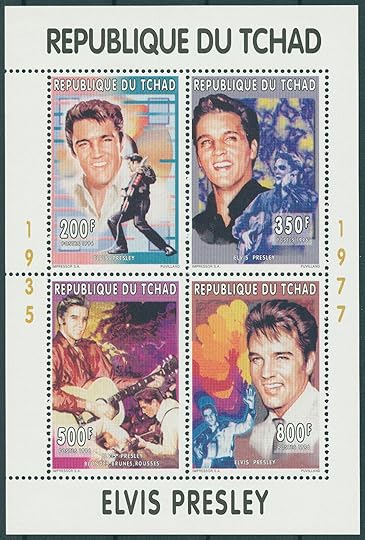
Careless Love is the full, true, and mesmerizing story of Elvis Presley's last two decades, in the long-awaited second volume of Peter Guralnick's masterful two-part biography.
Last Train to Memphis, the first part of Guralnick's two-volume life of Elvis Presley, was acclaimed by the New York Times as "a triumph of biographical art." This concluding volume recounts the second half of Elvis' life in rich and previously unimagined detail, and confirms Guralnick's status as one of the great biographers of our time.
Beginning with Presley's army service in Germany in 1958 and ending with his death in Memphis in 1977, Careless Love chronicles the unravelling of the dream that once shone so brightly, homing in on the complex playing-out of Elvis' relationship with his Machiavellian manager, Colonel Tom Parker. It's a breathtaking revelatory drama that for the first time places the events of a too-often mistold tale in a fresh, believable, and understandable context.
Elvis' changes during these years form a tragic mystery that Careless Love unlocks for the first time. This is the quintessential American story, encompassing elements of race, class, wealth, sex, music, religion, and personal transformation. Written with grace, sensitivity, and passion, Careless Love is a unique contribution to our understanding of American popular culture and the nature of success, giving us true insight at last into one of the most misunderstood public figures of our times.
Peter Guralnick is an acclaimed American music critic, author, and screenwriter best known for his deeply researched works on the history of rock and roll. He earned a master’s degree in creative writing from Boston University and soon began writing about blues, country, soul, and early rock music. His two-volume biography of Elvis Presley, Last Train to Memphis and Careless Love, is considered a definitive account of the singer’s life. Guralnick also authored landmark biographies of Sam Cooke and Sam Phillips, earning praise from critics and musicians alike. He has written liner notes for legends like Jerry Lee Lewis and Charlie Rich, winning a Grammy for his notes on Sam Cooke Live at the Harlem Square Club. His documentary scripts include Sam Cooke – Legend and Feel Like Going Home, directed by Martin Scorsese. Guralnick’s writing stands apart for its straightforward, unembellished style, earning him a reputation as one of rock’s most respected storytellers. He has taught at Vanderbilt University since 2005 and was inducted into the Blues Hall of Fame in 2010. His recent works include Looking to Get Lost and a forthcoming biography of Colonel Tom Parker. Guralnick lives with his wife, Alexandra, and their family. His extensive archive is housed at the University of North Carolina’s Wilson Library.
i started out being a fan of the image elvis portrayed, the music that he brought into the world. then i made the mistake of wanting to get to know him as a person. after being thoroughly inspired by guralnick's first book, "last train to memphis," i delved almost immediately into this one, the second volume of the "definitive biography" on the king himself. i'd read countless reviews of this volume in preparation for the tragic ending. and tragic it is indeed.
as a matter of fact, his death wasn't so sad as it was the years preceding it. it was obvious to everyone, even elvis himself though he always denied it, that the guy was miserable. his complete dependence on pharmaceuticals and narcotics was actually his way of committing a very slow and painful suicide.
there are many ways to interpret his life: as a greek tragedy, as the fall of the american dream, as a religious tale of someone who got totally swept up by every sin in the book. you name it, elvis lived it.
I took the plunge. "Elvis, if we're gods, or at least have this 'divinity' in us, why do we need drugs?" "Silence is the resting place of the soul. It's sacred. And necessary for new thoughts to be born. That's what my pills are for...to get as close as possible to that silence." - p. 456
i think what's sad the most is that he was always innocent underneath it all. being a psychologist, i saw someone who was still very connected to his mother though she passed away. (a lot of the women he was "with" felt they often took on the role of "mother," talking to him in baby talk, responding to him when he called them "mommy.") from the time of her death, it was all downhill from there for elvis. that's another reason why i wasn't as traumatized by his death; he finally go to be with her, he finally got to rest. the guy was never at peace.
"He used to say to me, 'Honey, you're not going to change a forty-year-old man.' But in another way there was also this very naive, this almost infantile quality about him - very innocent and very pure, kind of pitiful. He definitely evoked a protective quality - he called me 'mommy,' and I wasn't the mother of his childd. But I was an incredibly maternal presence in his life." - p. 582
look at me, i'm talking as though i knew the guy. and that's one of the great things about this book. the interviews that guralnick compiled really gives the reader an in-depth look at the man behind the god. i no longer feel that it would be right to call him "sex-on-legs" anymore. there's more to him than that. that was just stuff we all saw on the surface, but underneath it all, he was lonely, he was miserable. as a young boy, he was a social outcast. he just wanted to connect with people; that was what his music originally did. but then fame and celebrity took over and his personal connection with his fans was drowned out by deadlines and music contracts, all of which appeared to have stifled the very core of being human.
in some ways i'd like to call the colonel, his manager, as the devil. he orchestrated a lot of elvis' success financially, but at the expense of elvis' humanity. it was all just business with that fucker.
i could go on and on, but i'm going to save that for the next elvis book i hope to get my paws on later, "the inner elvis."
This massive two-part biography is one of the best books I've ever read. I would put it in a shortlist of the essential nonfiction books to read if you want to understand American culture.
Elvis was always an awkward and lonely person that loved all kinds of music. But our rapidly shifting culture made him look like a chameleon - he started out as a scandalous rock and roller in the mid-50's, then he was the patriotic symbol of post-war American exceptionalism in the late 50's, then he became the poster boy for pointless Hollywood sellout dreck in the early-to-mid 60's, then he was the stuck-in-the-past square during the British Invasion of mid-to-late 60's, then he was the roots rocker rising from the ashes ('68 comeback special), then he was a glorified lounge act (for his Vegas shows), and then, tragically, he was the stereotypical bloated, out-of-touch, and self-destructive rock star in the seventies. It's heartbreaking to read about Elvis struggling to stay relevant in a culture that he adores but always, even at the height of his popularity, thinks of him as a gimmick. He starts his career being too dangerous for late night TV, but at the end of his short life, he could not even watch late night TV because his favorite hosts were making fun of him for being "fat and forty."
This book will break your heart. All I need to say to convince you is that his bloated corpse was photographed by his own cousin to sell to tabloids. I kept rooting for an intervention as Elvis becomes completely dependent on prescription medications to do literally anything - amphetamines to wake up, painkillers all day, and sleeping pills at night. The interventions are halting and sincere but they all quickly fail. His friends (all on his payroll) try to figure out how to save his life while paradoxically pushing him to endlessly tour so he could continue to buy them new cars every Christmas and jewelry whenever the mood struck.
I was surprised by how much I liked his friends/layabout employees, even the unbelievably incompetent Dr. Nick, who basically wrote prescriptions for whatever Elvis wanted and defended himself by saying that he actually gave him placebos sometimes to curb his habits. I was not surprised at all that Dr. Nick was the inspiration for the quack Simpsons character. But Elvis cared about these men and they did all care for Elvis, even the ones who wrote tell-all biographies about him. The author makes gentle reminders that they did not know what they were doing and did not know how to help him. There was no Betty Ford clinic back then. Even Dr. Nick tried to get Elvis treated for depression by sneaking in psychiatrists disguised as doctors during one of his many hospital stays, but Elvis saw right through them. Elvis needed professional help from the future and, even if it had been available, he probably would not have accepted it. So, the author wisely stays away from moralizing and instead focuses on why Elvis liked having his friends around. And that makes a richer reading experience overall.
The author also does a great job of detailing Elvis' spiritual crises without being condescending. Elvis was very close with his mother and when she died, suddenly and quite young, Elvis was devastated. Not helping his emotional state were his father, who quickly stole a new girlfriend from a friend in the Army, and his fame reached a level where photographers were snapping pictures at his house as he cried in his father's arms.
After his mother's death, he surrounded himself with paid friends because he did not want to be alone, ever. He was hurt, alone, and adrift. He obsessively read religious texts, consulted gurus, and searched for "The Answer" to give his life meaning. He even neglected some of his blockbuster contractual obligations because he was so busy studying. A gospel record finally reignited his passion for music. I was impressed by how sympathetic the book was to Elvis' spiritual quest. A less dignified or compassionate biographer would look at pop culture spirituality as an opportunity to toss a few potshots and snarky comments. But Elvis was sincere, so this biography takes him seriously.
Although this book is unbearably sad, there are a few hilarious moments. My favorite was his meeting at the White House with Nixon. The photograph is deservedly infamous, but I didn't know that Elvis set it up as a stop on his one-man officer's-badge-collecting quest (Elvis loved being named honorary Sherrif's deputy in random towns and wanted a federal narcotics officer badge for his collection). Elvis bullied the Secret Service into allowing his friends/bodyguards to tag along and then rummaged through Oval Office desk drawers for nick-nacks they could take back to their wives as gifts. The other great moment is when Elvis saw a fight break out at a gas station and jumped out of his limousine in a sequined jumpsuit and struck a karate pose to intervene. Who knows what kind of hijinks he would have gotten into as a goofy rock star if he wasn't sedated most of the time.
It's impossible to pinpoint where you'd have to time travel to alter history and save Elvis. It's not like there was one big decision that went wrong. There wasn't one bad guy that led him astray. He slowly unraveled for twenty years. He had serious emotional needs, had way too much money, was isolated by fame, and was a hypochondriac with an insatiable appetite for medications. If he didn't like what you were saying, you could be banished from his life forever. To be close enough to try to save you, you had to enable him. The touring at the end of his life drained him of his energy but at the same time, his fans were one of the few things that brought him joy. I just wish he had been able to hold on long enough to enjoy a renaissance like Johnny Cash or Roy Orbison. He deserved to be appreciated on his own terms.
If volume 1 (Last Train to Memphis: The Rise of Elvis Presley) was the triumphant rags-to-riches part of the story, this is the crash and burn. What is so sad is that the seeds of the final destruction are set so early.
This picks up the story with Elvis' stint as a GI in Germany in the late '50s and already he's on pills to curb his weight (wait, while he's in the army?), and then is introduced to amphetamines to keep his energy levels artificially high. Inevitably, this leads to him having to take tranquillisers to come down and sleeping tablets... Not surprising, then, that the previously sweet if single-mindedly ambitious man starts showing extreme mood swings, flashes of cruelty and ego.
Also disturbing is his meeting with Priscilla when she's just 14 (he's ten years older) and while he refuses to have a sexual relationship with her until she's older, they certainly have a romantic relationship. His obsession that she remain 'pure' (good wife material) is just as disturbing, as is the increasing flow-through of women.
Back in civilian life, there are major changes, too. Colonel Tom Parker calls all the shots (not that Elvis disapproves) and has put his money on Hollywood: cue the stream of mostly forgettable films that replace Elvis' touring and concerts, with recording dropping off the back of the films. As time goes on, the movies becomes more and more disposable, some being filmed in under three weeks, and the sheer number of movies made is incredible: Elvis comes off set, has a few weeks off, starts the next one. Apart from a few iconic movie scenes like Jailhouse Rock, most of the musical content is pretty bland (check YouTube) though Elvis' charisma still shines in the corny but cute Wooden Heart, GI Blues, and some of his scenes with Ann-Margaret (Viva Las Vegas).
In 1968 Elvis finally calls a halt and makes a 'comeback' TV special (again, check it out on YouTube): puffy, dripping with sweat in his black leather suit, porn-star sideburns and all he still is enthralling to watch as his cheeky smile flashes out and he's having fun again with music, his musicians and his audience. But at just 35, he's already surviving on a cocktail of drugs, is unhappy, depressive, and increasingly paranoid - and the final tragic decade that is to end on that bathroom floor is already in train.
It struck me while reading this that while we hear much about the curtailing of artistic freedom and creativity under Soviet rule (Solzenitsyn, Bulgakov, Pasternak, Shostakovich), it's rarer to explicitly contemplate the way western capitalism might also impact on artists: Elvis' career from 1958 onwards, masterminded by Colonel Parker, becomes all about how to maximise the profit - making increasingly throwaway films in Hollywood simply pays far more (and all the financial and contract details are here) than recording and touring, playing the music that Elvis genuinely lived for. Of course, Elvis was himself complicit in this, but it never made him happy. Buying yachts, planes, giving away fleets of luxury cars to his entourage, stumbling through interchangeable relationships with women who were never replacements for his dead mother, surviving on pills to wake up, perk up and go to sleep, all constituted a kind of depressing half-life.
So this is a desperately sad, though gripping, book - comparing the pure joy of Elvis' first breaks into music with the broken spectacle he became is tragic. So much ferocious talent, so much raw and natural charm, such a voice and musicality - such an ending.
One of the most compelling biographies I've ever read. I've been an off-and-on Elvis fan most of my life. Only a fan of the early, young, rocking Elvis ...not the bloated balladeer.
This is Guralnick's follow-up to his ground shaking that covers the life of Elvis up to his being drafted by the U. S. Army. I own a copy of the first biography but haven't read it.
This book picks up after Elvis is in the Army and stationed in Germany. It's an interesting enough account but what anyone really wants to read about are the details of his fall from grace. Probably the greatest, most astonishing fall of a stomping Godzilla of a Rock & Roll hero ever recounted.
This book is brutally honest about Elvis's countless personal faults, including his sense of making love being nothing more than a kind of infantilism. Elvis preferred "smooching", adolescent-like making out (kissing, fondling, embracing, feeling-up) with a girl rather than doing the old hump-and-get-it-& -get-off. Especially towards the last half of the book, several of Elvis's "girlfriends" complain of his almost sex-less love making.
I'm no shrink but some of that was due no doubt to a non-specified psychological hang-up but as Elvis aged further into his late thirties and was reaching deeper into his depthless medicine chest, the lack of sex was due mostly to his pharmacological needs and preferences.
The book will depress the hell out of almost anyone -fan or not. He surrounded himself with predatory types, buying the love and allegiance of friends, family, and strangers alike with spur-of-the-moment gifts: sports cars, luxury cars, jewelry, homes and even -at one stage- horses. Almost every friend he ever had was more than happy to prey on Elvis's largesse.
I grew up in Memphis in the late 60s. In those days it was impossible to not run into Elvis. Especially when I was a teen in the early '70s. He was everywhere. Always seeking recognition and attention from fans. He loved being idolized. I was also acquainted with the boyfriend of the sister of Elvis's last fiancee. I was hearing some of the stories of Elvis's aberrant behavior while obviously on drugs two years before the publication of . This book reveals more about that era than I ever heard first hand.
Say what you will, this book is certainly not stingy with the lurid gossip. It holds up as a chronicle of the life of Elvis Presley from his release from the Army to his humiliating death. It's also the kind of book that if you aren't interested in the minutia, you can just flip through and read of the young Elvis's on-set affairs with his female co-stars or similar show-biz gossip.
I know of no sadder story…. It is, I think, a tragedy, and no more the occasion for retrospective moral judgements than any other biographical canvas should be.
Well, biography is nothing if not a very judgy form of writing – if the author isn’t doing it for sure the reader is.
*
The voice was beautiful, huge, and could glide from a tender whisper to a perfect thrilling high tenor flourish; he was just as big as those big singers of the 50s Al Martino, Guy Mitchell and Frankie Laine, but they, of course, could not rock. And they didn’t look like a juvenile delinquent. Elvis could and did. He was perfect, and he overtook the world of popular music in the late 50s, he had everyone eating from the palm of his hand, and it all went horribly wrong.
I was interested that part – what went wrong so badly and so gracelessly, and for such an impressively long time. Elvis arrives and conquers : 1954 to 1958. Elvis in the army : 1958-60. Elvis does nothing but make awful movies : 1960-68 (nearly a decade, and him at the peak of his powers!). Finally Elvis makes fabulous comeback : 1968-70. But then : Elvis declines and falls: 1971-77.
This is a tale of shoulda woulda coulda. In 1960 Elvis could have picked up where he left off in 1958 but he didn’t. In the 70s Elvis could have had a whole second career of making great music but he didn’t. Instead he died a self inflicted death in 1977 at the age of 42.
So this book does have a sad story to tell but – maybe appropriately – in the end it all became stultifying. Too many parties, too many women, too much money, too many uppers and downers, too many stupid films, too many fans, too much of nothing, too much of everything. First you are King Midas, then you are King Midas in reverse.
*
Ah, those Elvis Presley movies. Maybe you heard of GI Blues, Jailhouse Rock, King Creole, but only the dwindling hardcore saw Harum Scarum, Clambake and The Trouble with Girls (not to be confused with Girl Happy or Girls! Girls! Girls!). 29 of them, three per year in the mid-60s. It was Elvis in a coma.
His famous manager Colonel Tom Parker (real name Andreas Cornelis van Kuijk) never tired of telling everyone that they always made money. You start off sympathising with Elvis – well, he was very unsure that he could get his career back after the army (seems ridiculous, but he wasn’t confident at all). So he jumped up on the conveyor belt. But after three or four years, and meanwhile noticing the rock revolution happening without him under his nose, him being hermetically sealed away in Elvisland, you might think he would say hey, enough of this, I’m gonna do a proper album, I’m gonna get all the great songwriters around to give me a song, I refuse to be an old fart at the age of 26. But he didn’t. He politely and most contritely went along with all the trashy music and trashy movies put in front of him.
*
The Colonel and money loom large in this very long book. Your eyes glaze over with all the details – what is this, the Financial Times?
P213
In exchange for what amounted to a one year extension, RCA would raise its guaranteed annual payments to Elvis from $200,000 to $300,000 (there was currently about $1 million owed in back royalties, so the total would come to $2.1 million in guaranteed payments over the next seven years, with $1.1 million left to be recouped).
P248
If Elvis were contracted to MGM for a picture for which he was to receive $750,000 plus 50% of the profits, the Colonel would take his normal 25% management fee on that portion of the deal that represented salary, but on the profits there would be a 50-50 split
P325
He wanted $500,000 for four weeks, one show per night, two on the weekends, with Monday nights off; if Shoofey preferred two weeks, he would give him that for $300,000….The International definitely wanted four weeks and would pay the $500,000 he was asking if Elvis were to open the hotel; otherwise the salary would be $400,000
The other big topic is Elvis and his various female companions. It’s quite weird – especially as regards Priscilla, who he met in Germany in 1959 when she was 14 and he was 24. They got married 8 years later. Between 1960 and 1966 she lived with Elvis – chaperoned at all times by his grandma, he told her parents. His views on women and marriage were shall we say unreconstructed. And he at all times surrounded himself with a pack of jolly young men who were paid to be his friends, and cavort and play with him and his toys. What a lot of psychology there is to be sure in the story of Elvis.
*
This biography gets nothing but high praise but I found it wearing, vastly repetitive, cramful of quite unnecessary detail, and it wore me down, I was itching like a man on a fuzzy tree. In comparison, Mark Lewisohn’s even more fanatically detailed biography of The Beatles (the first volume is 944 pages long) is never dull, not for a moment. So holy smokes and land sakes alive for me this was a two star headache-inducing reading experience.
Harrowing. That's the best word to describe this brilliant, scrupulously researched biography of the King of Rock and Roll and his descent into lunacy. I've read many rock and roll biographies, mostly to satiate my inexplicable fascination with music and tragedy, and there have been some gems, man: Morrison, Hendrix, Joplin, Ian Curtis, Gene Clark, the list goes on and on. Still, none of those stories came close, remotely, to the tragic downfall of Elvis. Not only was he ten times more famous than the aforementioned, but he was much more disturbed. He was an enigma. A secret, even unto himself. He really had no idea who he was, and it was insanely sad. Never leaving his room, the drugs, his strange fascination with law enforcement badges, the strange childlike manner in which he courted women (well, very young girls), his bursts of primal anger, etc. And still, he seemed like a good man. A lost child swimming in a sea of madness he never really wanted.
This is a incisive, chilling portrait of a man who gained and lost everything. Read it. And weep.
Exceedingly well documented and written. A mega star who had incredible talent. It the end, his demons won. Giving away ctars, houses and any big ticket item available, Elvis Presley gifted friends in tandem with the drugs that consumed him, and in the end, led to his death.
Women grew weary of the self obsessed, narcissistic little boy, who like Peter Pan, simply refused to grow up. By the time of his death, he was only 42 years old with a bloated body, a voice that could not deliver, and performances at his shows were mediocre at best.
He was a man who thought and acted like a boy. Always craving an entourage that never left him, none of the people who surrounded him could help his addiction to a plethora of drugs. His autopsy showed an enlarged heart, liver damage as well as a painful bowel condition caused by excess drug usage. At the time of his death, at least 14 different drugs were in his body. The amount of codeine was ten times a normally prescribed level. His addiction to quaaludes brought toxic levels to a body that over abused drugs for many years.
With all abandonment for caution of how mass consumption of long-term usage of unnecessary medications, doctors freely prescribed drugs in mass quantities to the King of Rock and Roll.
No one could stop the train wreck that was Elvis Presley.
Following on from Last Train To Memphis: The Rise of Elvis Presley, this is the second volume in this definitive Elvis biography, taking his life from his time in the army until his death in 1977. Subtitled, "the unmaking of Elvis Presley" this is not the story of his rise, but rather his fall. It takes us through his dissatisfaction with his career in endless teen films, his desire to go back on tour, his short lived marriage and many girlfriends. Towards the end of his life both his personal relationships and his career seemed to be in freefall and there was much to read that saddened me. However, the author always treats his subject with respect and understanding. If you want to understand the man that Elvis was, you could do little better than read this two volume biography, which is written with enormous depth and also immense affection.
A 2017 documentary called The King features interviews about Elvis and fame and America with various celebrity talking heads as they interact with Presley's Rolls Royce Phantom V limousine. At one point, musician John Hiatt, sitting in the back seat of the car, bursts into tears. "He was so trapped," he says, simply, after regaining composure. Reading Careless Love, the second volume of Peter Guralnik's definitive biography of Presley, which traces the concluding arc of Elvis's life from the start, in 1958, of his two-year stint in the Army, we are trapped right along with him. While it isn't, as a piece of writing, inferior to the first volume , Last Train to Memphis, as a reading experience, it is. Downright suffocating in fact. I can't remember ever so wanting to be done with a book - a good book -almost from the beginning. I'm a fan and I wanted to know the story, so I was gonna see it through, but this trip is grim.
Maybe the worst part is that Elvis, who had seemed such a sweet, lovable boy in the first volume, turns into a complete asshole, the sort of guy who would threaten to take back a transplanted kidney he had been instrumental in obtaining for a subsequently-out-of-favor lackey. Never being told "no" turns out to be one of the worst things that can happen to you. There is brief window in the narrative, from 1968 to about 1971, a time when Presley was making exciting music again, both in the NBC comeback special and the From Elvis in Memphis album, where you feel like you can breathe for a little while, but this is an almost 700-page cautionary tale about the soul-killing nature of money and fame in America, one that feels chillingly relevant as the attention economy destroys democracy.
In her review in the New Yorker, Joan Accocella described the recent Graham Greene study, Unquiet Englishman, as a "Monday-Tuesday" biography. "On one page, it tells you what Greene did on a certain day in, say, June of 1942. On the next page it tells you what he did on the following day, or three days later." Careless Love suffers from too much of this quality. The horror of Presley's latter days came from their sameness - same removed environments; same venal, stunted entourage; same compulsive purchasing; same increasingly terrible music and toxic pharmaceutical diet. I think it's important that we feel restive as we accompany Elvis into his self-constructed prison, but if I weren't more than a little obsessive/compulsive, I doubt if I would've finished. Not because it's bad. Careless Love succeeds entirely in that it makes the reader as desperate to escape the life under examination as Elvis was.
This book, along with its preceding volume Last Train to Memphis: The Rise of Elvis Presley, make up the best rock & roll biography I’ve ever read. Author Peter Guralnick manages to deftly shape the facts into a compelling story, and rarely gets in the way with his own opinions, except on the occasions when he has to write “and then Elvis did another crappy movie.” And that’s pretty well fact rather than opinion. Admittedly, it’s not a light read. And the latter volume can be pretty tough to get through, as Elvis slowly disintegrates. But it is American mythology. When a demigod was created in Greek mythology, Zeus had to dress up like a swan or a bull and bang some broad. Not in America. In America, we create our own demigods. And, when we get bored with them, we often tear them down. What Guralnick makes so painfully clear is that Elvis was this guileless white-trash nobody who sir’ed all the right sirs and ma’am’ed all the right ma’ams. His pre-fame idea of a good time was going to see a gospel quartet. And, most amazingly for someone of his time and place, he didn’t have a racist bone in his body. Then we heaped unimaginable fame and fortune upon him. When he broke under all that pressure, we laughed as he fell apart. To coin a phrase from the Stones: “I shouted out ‘Who killed Elvis Presley?’ / When, after all, it was you and me.” I first read this book when it was originally published. I decided to try out the audiobook this time around, read by Kevin Stillwell. He's a pleasant enough reader but, for someone narrating the tale of the King of Rock & Roll, he knows little about the subject. If there's a famous name he can get wrong, he will. But his most embarrassing mistake is when he mentions the classic Ray Charles song "What'd I Say" and calls it "What Did I Say." It's a little like listening to C3PO reciting Eminem lyrics.
I always loved Elvis' music in the early 70s..... the powerful ballads, the top notch band behind him (that boy can sing!).
But, like many fans, I've always been limited by the media and the 'myth' of Elvis. Here's a book that takes you behind the scenes and gives you the real story. Believe it or not, he's an extremely insecure, frail human being. Yes, it's sad in many ways. The drugs, the objectification of women (he didn't respect his marriage at all), the pain from losing his mom, retreating to his room all the time, the Memphis Mafia always hanging around him like puppy dogs waiting for the next car he'd buy them.
Elvis had a really good heart and desire to please everyone. Unfortunately, this also made him seem so ill-equipped to handle the pressures of fame. I'm not in any place to judge a man. I have NO CLUE what it's like to be an icon. He cared for people and loved buying stuff for people. But, yikes, he had so much pride. He never let anyone help him, and the power of his empire and place in society allowed him to get away with whatever he wanted. Skip a show? The Colonel (his manager) will explain why. Ditch another recording session? Oh well. In truth, he earned that privilege with his incredible talent, but his pride took him for a ride, and he couldn't stop the downward spiral of self-destruction. I'll always love his music.
The miracle of Last Train to Memphis, Peter Guralnick's portrait of Elvis Presley's early years, was that it erased the memory of that bloated caricature of a performer who staggered across the stage in Las Vegas and elsewhere in his final years and presented us instead with the exuberant young man of the 1950s who was in the throes of fashioning a new kind of music.
Expect no such happy miracle in Careless Love: The Unmaking of Elvis Presley, the second volume in Guralnick's excellent and exhaustive biography of the King of Rock and Roll. This book is, as Guralnick himself writes in his opening note, a tragedy. It follows Elvis from his years in the Army in Germany, through his strange, prolonged courtship of Priscilla, his unfulfilling career in the movies, his triumphant return to live performance, his growing isolation and seemingly inexorable decline, and, finally, his death in Memphis in August of 1977.
There's a moment from the film Pulp Fiction that ended up on the cutting room floor in which Mia Wallace asks Vincent Vega whether he's an Elvis man or a Beatles man. "You might like both," she tells Vincent, "but you always like one better." I'm a hardcore Beatles fan, but I'm still fascinated by Elvis -- especially the post-GI, bad-movie making, white jump-suited, bloated karate Elvis. And that's why I bypassed completely Last Train to Memphis -- the first book in Guralnick's two-part Elvis bio, which tells the story of Elvis' meteoric rise -- and headed right for the good stuff.
Guralnick tells Elvis' story in a clear-eyed manner, spinning a story that's almost Shakespearian in its tragedy. And it quickly gets ugly, as Elvis corrodes into a lazy, strung-out fat kid, distracted by go-carts, badge collecting, and playing cowboys and Indians with his sycophantic Memphis Mafia, all the while derailing his own career, despite an incredibly forgiving fan base. From one oh-my-gosh, no way! moment to another, Guralnick delivers the goods, careening like a barely-controlled jalopy toward the decidedly non-glamorous ending we all know is coming. Look away? Heck no. Cringe-inducing? Heck yes. Awesome.
The title of the second volume of Peter Guralnick’s biography, Careless Love, could refer to Elvis’ cavalier treatment of women, or equally here to the squandering of his own natural talent. In this telling, the latter is largely down to the exploitative machinations of ‘Colonel’ Tom Parker, but also due to his own problems coping with overnight fame and wealth, and the loneliness he experienced.
The volume begins with Elvis leaving the Army, where he seems to have been relatively happy, although that is also where his long addiction to uppers began; these enabled him to party late and to be ‘Elvis Presley’. During this period, as the author tells us in the stupefying detail that blights this volume, Elvis dated many women but then meets air force brat Priscilla (Beau, as was), when she was but 14 years old and is smitten. He is respectful and continues to sleep with other women while chastely ‘courting’ her, which makes for slightly uncomfortable reading in 2020. They eventually marry, in 1964, and have a child, Lisa Marie, shortly after, but he does not take readily to the role of father-husband and continues to do as he pleases, being often away with his entourage on tour or just having fun.
Elvis was always surrounded by an entourage of home-town and ex-army buddies (the ‘Memphis Mafia’), who were all fuelled on uppers and who lived off his largesse (he was extremely generous with money and gifts). Meanwhile, the carnival conman Colonel Tom Parker directs Elvis’s career – towards more trashy films, in particular, and fewer records (so as not to flood the market and keep the value high). The films' OSTs actually sold more than Elvis’ ‘real’ LPs, so the Colonel was happy to keep churning these out, at the expense of his musical career or development.
The book spends far too much time on recounting the conveyor-belt films made by Elvis in the 60s, mainly with legendary producer Hal Wallis, which nearly all feature exotic scenery and scores of girls, including such classics as Girls! Girls! Girls!, GI Blues, Blue Hawaii, Fun in Acapulco, Kissin Cousins and Roustabout (none of which has the raw energy of earlier efforts like Jailhouse Rock or King Creole). Thanks to the Colonel’s efforts, Elvis would make up to three such films per year. Elvis himself harboured ambitions to be a real actor and would endlessly watch ‘serious’ films in his home cinema, to garner acting tips. Unfortunately, he never fulfilled his ambition to make a serious film, though he is quite decent in Viva Las Vegas and Kid Galahad, I think, and has a certain charm on screen.
While making these formulaic films, Elvis’ musical career was mostly stalled but, in 1968, he made a great ‘Comeback’ TV show, and the Colonel secures a lucrative residential spot in Vegas, alongside Frank, Dino and other lounge lizard acts (meanwhile, the Colonel passes his time by gambling away millions of dollars on the roulette tables, bizarrely). Meanwhile, he continues to live on uppers and downers, surrounded by sycophants and dabbling in spiritualism, while practising karate, often on stage (he has several karate coaches, and takes it very seriously).
Eventually, Priscilla, bored of being alone and of turning a blind eye to the King’s numerous affairs, runs off with her karate instructor. They finally divorce in 1973 and Elvis seems to lose touch with reality and begins to fall apart, prone to making rambling speeches on stage, falling out with people, and looking unwell. He is ever more reliant on pills, especially Demerol (a painkiller), although he is a registered agent of the Federal Bureau of Narcotics (thanks to his surreal meeting with President Nixon), barely sleeps, is bloated and seems depressed and sick of life (‘a walking corpse’ as one person describes him). Elvis’ last few years of life are a litany of illness, chaotic gigs (in which he would often forget the lyrics to his songs), rages and occasional hospitalisations. It is a long downward spiral towards the inevitable end in 1977, a sordid demise that we know is coming from p. 1 but which is still quite shocking. In a telling coda, Guralnick describes how the Colonel refused to look at Elvis’s body and instead waylaid a shocked Vernon Presley to impress upon him the need to continue all financial contracts (with his 50% cut).
Coming off of the triumphant Last Train to Memphis I was incredibly eager to devour this book as well, knowing full well its tragic nature. As a pre-teen I became obsessed with Elvis. I read a couple biographies, and studied just about as much as I could have at that age, to the point that I was quite familiar with the general details of this story beforehand, unlike the early years chronicled in the previous entry. What I did not know was if there was any specific reason why Elvis became so artistically listless after Elvis is Back! It's been a conundrum that has puzzled me for years. Why would a performer as original, brilliant, enthralling, and vibrant as Elvis Presley so quickly fizzle out into a joke? Why was there no urge to create something of worth? As a young man with no experience as a famous musician, I really don't know what makes so many performers stop worrying about the music. Sure, you can say it's the hedonistic pursuits, but is that really enough for someone to utterly disregard any artistic standards?
I don't believe I will ever understand why Elvis never got off his butt somewhere at least in the mid 60's and decided he was going to quit that movie crap and make good music again. He could have easily gotten together a session in Nashville, found some solid songs he wanted to try, and I assure you even if it wasn't as good as Elvis Is Back! it would be considered essential listening instead of something like Clambake. I essentially spent the entirety of this book hoping the story wasn't going where I knew it was going, rooting for Elvis at every step of the way to change the road he was on. Usually I don't care much what a man does in his life as it relates to his art. If he produces quality art, I will focus on the art rather than the man behind it. The case of Elvis is different to me because there was so much potential for great art that was shamefully squandered due to his inept life choices. This actually makes me very mad, because I fervently love Elvis, and to see him toss away such a gift from God is truly tragic.
I'm also mad because he never really had the chance for a true redemption to the public. I believe he was redeemed in the eyes of the Lord for sure, but I only wish he could have enjoyed the kind of comeback that Johnny Cash or Roy Orbison did so he could leave a more respectable legacy. I know the opinion of the public doesn't really matter and it will fade away soon enough, but it just makes me furious that people refuse to see the awe-inducing power Elvis had musically and instead focus on his sordid end. If he had had some kind of a late career renaissance with a fantastic producer at the helm I believe more people would speak of him in the same tone of respect as they do for Johnny Cash. Cash too had many dark periods of his life like Elvis, and a large chunk of his career was spent making garbage as well. Despite this, no one would ever wrinkle their face at the thought of Johnny Cash and start complaining about his awful 70's-80's albums. They focus on his creative peaks, just like we should do for the King. Elvis impersonators certainly don't help this problem, but that's a different topic.
Guralnick did the best job he could possibly do writing this book, and I appreciate his respectful tone and hyperbole-free style.
I would say if you want to try to make more sense of Elvis's post army career that this is the best place to do it. It really creates what appears to be a well-rounded (fat-Elvis joke unintended) portrait suitable for becoming more informed concerning his life at this time. It's not gossipy, weepy, hero-worshiping, or uninteresting, it's really a true study in who Elvis was and why he became the way he did. There are no answers spelled out for the reader, and there will probably never be full answers this side of paradise. I look forward to the day I'll meet Elvis in his full glory, we'll sing all our favorite spirituals together, and this sorry shadow of a man will be an ancient forgotten whisper.
For the perfect summary of this book, I refer to the second to last chapter title in this book: ELVIS, WHAT HAPPENED?
After reading the first book, The last train to Memphis, I needed to read this one. Peter Guralnick did a stellar job in writing about Elvis’s life without all the unnecessary drama just for the sake of it. His recount of it feels respectful and honest and thoroughly researched and he does so in a manner that keeps the reader engaged and willing to go on reading, even though the outcome is already known. Still, I learned about some things I hadn’t known yet, and all the recounts were interesting. Along the way, when the story comes closer to the last days of his life, I couldn’t help but feel some kind of anxiety, a kind of not being ready for that final moment, even when it was clear from the decline in Elvis’s health and his out of control intake of drugs there was no other way for this to end. And I can’t help but feel sorry for a man who had everything one could wish for, but who had lost his mother way too soon and seemed to possibly be one of the loneliest people alive.
4.5 stars. This audiobook had excellent narration and was very well done overall. Gave a comprehensive view of the life of Elvis Presley in an interesting way.
This is 800 pages of a sad complex tragic song. Massive praise to Guralnick for this richly detailed and so well written biography. Undoubtably, Elvis was an incredibly talented artist and should be respected for his artistic achievements. What can also be held true concurrently was his deeply flawed and contentious self as a mere mortal drowning in predatory environments with explosive mental health and substance abuse issues that went untreated by actual professionals. There are plenty of “wtf” moments accelerated by a lonely and grief stricken existence - not to mention the toxic company he kept - but just as powerful are the blips of humanity and empathy as Elvis the entertainer and Elvis the man. I think the saddest part of his story is that it’s impossible to pinpoint where to go back in time to save him from his unraveling. Even knowing the ending, I was so desperately rooting for an intervention that would cause some cosmic shift for the better rather than continue the spiraling emotional blender that he had gotten so used to. Knowing his greatest fear was being forgotten, he was a master chameleon depending on his audience at hand - and continuously proving self doubt as one of humanity’s great equalizers spanning triumphs and tragedies.
Wow, what a read! This is a tome, and requires a certain amount of commitment and dedication to complete but the journey is a worthwhile one. I am not a particularly big Elvis fan but I read something about the author Peter Guralnick and his attention to detail and accuracy in the portrayal of Elvis that peeked my curiosity into finding out more about this 20th century music icon. Guralnick had written an earlier biography of Elvis but this is the second and deals with his life from when he returns from his stint in Germany whilst in the army up till his untimely death.
It has a cast of hundreds, many of whom are difficult to remember and place, especially those of the 1950's and there is too much detail charting the financial details of Presley's and Parker's business deals and splits but that is my only criticism. It is a scholarly book and is keen to be accurate so these details are just part of that package.
I am left with an overwhelming sadness after reading this book. Elvis Presley had such potential and was poised for greatness but his deep insecurities seemed to have motivated him to create a parallel world for himself to live in which isolated him from all outside influences that could have helped him to remain a successful performer. It was a shrunken world that he inhabited, a sealed environment that stifled creativity. He surrounded himself with a coterie of people, mainly guys who indulged his every whim for both the fun of it and for the financial rewards that rewarded them for their complete loyalty. Family and friends were forced to display sycophantic behaviour, to do otherwise would incur ostracism or ridicule. Along with this was a stream of young beautiful women only too happy to be his escort/girlfriend for the night or longer. Whoever joined this group, all had to change their sleeping habits and exchange day for night.
He was generous to a fault and this caused lots of jealousies amongst the group. If he gave one person something, he needed to give something to everyone. From reading this book you get the sense of the entourage that was formed around him and the fuzzy relationships that were navigated between being friend, family, and employee. Elvis Presley was a cash cow for so many people and unfortunately, in the end this was what he seemingly felt of himself.
This book goes behind the myth of Elvis Presley so there is a much clearer understanding of the complicated relationship that evolved between him and his manager Colonel Parker. Colonel Parker was without doubt an astute business man who conducted himself and his business in a unique way. "How was it that this clownish figure, whom they were perfectly prepared to patronise for his lack of polish and lack of manners, always acted as if he held all the cards, even if they were looking at four aces?" Presley's and Parker's individual backgrounds and personalities effected a synergy that is understandable but fraught with contradictions and complexities. Parker kept the business going and ensured that the dollars flowed but it may have been a very high price for Elvis to pay. Elvis' potential may have been eclipsed eventually by the colonel's relentless pursuit of financial deals.
I get a sense that Elvis never fully developed into a man. He remained an insecure boy, afraid of the dark but owner of an amazing talent and ability to charm people. The empire he created with all its wealth and privilege did nothing to assuage his inner emptiness. Prescription drugs provided him with something only he could understand. It was a hugely destructive choice and in the end forced him to become a ridiculous caricature of himself "the living legend is fat and ludicrously aping his former self..." He just seemed to "run out of gas". of course, ultimately the drugs killed him. It is such a shame. At one time he was "a champion, the only one in his class".
A few years before his death he summed up how difficult it was to be Elvis Presley. He told a reporter "Well the image is one thing and the human being another... it's very hard to live up to an image."
In this second volume about Elvis Presley by Peter Guralnick, the author relates Presley's time in Germany as an enlisted man in the US Army, his introduction to Amphetamines, courting of a 14 year old Priscilla and eventual marriage to her, his growing addiction to pills of various types, his fawning sycophantic entourage, his decade of soul destroying performances in C-grade movies, his surprise 1968 comeback, his bizarre spending sprees, and his various relationships with women. This is the really sad biography of an immature man who built an insular environment around himself, reinforced by an entourage completely reliant on his largesse. A mamma’s boy who never really recovered from his mother's death and who was incapable of having a mature relationship with women. It's also the biography of a tremendously gifted interpreter of other writers songs, and a man who though he never toured outside the USA became an international star, beloved by millions. I recommend this as essential reading to anyone interested in Elvis Presley, music in the 50's-70's or the cost of success in the entertainment industry in America.
There is no such word as "unmaking" in the English language.
Goldman -- sorry, I mean Guralnick -- is so desperate to absolve Elvis for all responsibility for his own life that he needs to describe the King's ignominious decline as an "unmaking." As if to say that Elvis didn't self-destruct, but was somehow dissolved, or disassembled by forces beyond his control. It's a strange thing to imagine a "hero" as entirely passive and ruled by fate. It implies that you don't really trust the man, or respect him. That you're just covering for him, even after he's dead.
It turns out that Elvis Presley, the guy who was on the final train to Memphis, ended up becoming quite the singing sensation. Back then, in the 1960s and 70s, if you were a singing sensation, the music industry gave you drugs. Loads of them. The drugs were a reward, like pellets of cheese given to obedient lab mice, or as a Pavlovian incentive to keep singing,as your voice was a golden goose. Eventually many of the singing sensations of the 1960s and 70s became quite dependent on the drugs. They cared only about the drugs, and forgot about everything else, including the music. That's how Elvis got careless with his love and his gift.
Don't get me wrong I do know that Elvis Presley has died but oh my god it has been so very difficult to read the last few pages and see his final decline and death. This is a wonderful book. So close to the facts and yet humane and gentle. I do wish I had read it before. Good news is I found out that this remarkable author and fan of Elvis Presley is writing a new book about Elvis Presley and his relationship with Colonel Parker due to be released on August 6, 2025. I can't wait to read that one as well because the way he writes makes you want to read on and on even when you're trying to pace yourself so you can enjoy the book more. Only small drawback is the few photos but obviously you can go online and find an avalanche of photos of Elvis Presley with literally every person mentioned in the book. So in the end the few photos don't take anything away from the book. You can't read this book and not become a fan of Elvis Presley if you're not already that is. Also you can find and watch all the live performances mentioned so this book is better than any documentary because it's so detailed. I'm going to miss reading about Elvis Presley!
This is the second volume in Guralnick's epic biography of Elvis. These were some of the best historical writings I've ever read. It's crafted in such a way that you can easily visualize all these people.
Where the first book catalogs Elvis's meteoric rise to fame, the second installment is the slow implosion of a dying star. It picks up after Gladys's death and Elvis's military service. This is so aptly named "The Unmaking of Elvis Presley." The author does not worship Elvis but the story that unfolds is devastating.
Elvis was either a child or a god to everyone in his life. His unmaking was a man haunted by loneliness and wasted potential.
This is the sequel to the first biography of Elvis Presley, beginning at the end of his two years in the Army years in Germany. It continues as he follows his musical career, and movies. He continues through years of movies, into his touring years, his years of his one marriage and one child. He's years of many records and performances with his great public popularity before his unknown years of prescription addiction and years of illness.
This was a great book but the story was difficult to read. Elvis seemed so alone after his mother died and just made horrible, truly odd choices when he wasn't reaching some impressive heights in his career.
The most disturbing part was how everyone around him either seemed to abandon him or take from him. The Colonel and his father were content to let Elvis flounder in his personal life because "it's his life." Elvis's father embarked on some gross relationship with some cheap moron two minutes after Gladys died. Literally everyone else took from him: Priscilla and Linda Thompson got to Hollywood, his "friends" got cars, houses, and access to endless women, I'm guessing his doctors didn't give him the drugs for free, RCA cashed their checks.
The second part of this two volume definitive look at the life of Elvis Presley slams the brakes on one of the most famous and notorious tales of living The American Dream. Whereas the author's earlier book, Last Train to Memphis, brought home the story of a young boy from a poor family who was blessed with unnatural talent and timing rising almost overnight to unimaginable heights of fame and fortune, Careless Love details his tragic end. A creature of habit and familiar surroundings, the outside world becomes his playground while his inner self struggles to make sense of it all through spirituality, a series of isolating "yes" men and women, and drugs.
In hindsight Elvis' downfall is almost as sudden as his rise and the author once again does a masterful job of researching and writing every detail. We all know what's coming at the end, just as we did watching the film Titanic, but like all great true stories the reader's interest is held not by what happened - but how. The pieces begin falling into place during his stint in the Army while stationed in Germany. He's introduced to drugs that will keep him awake on duty and to his future wife, 14 year old Priscilla Beaulieu. It continues through a string of Hollywood B-movies, numerous affairs and an immature lifestyle of "horsing around" supported by the guys now universally known as The Memphis Mafia. As long as they don't say "no" Elvis remains forever young and they remain on the payroll.
There are many highlights such as his legendary "come back" television special, return to live shows in Las Vegas and the first worldwide concert broadcast, Aloha From Hawaii. But after that it rapidly all goes downhill. The American Dream becomes An American Tragedy and held this reviewer in its grip until the bitter end.
If I were to throw in any minor criticism toward this book it would concern keeping track of everyone involved. This is not the writer's fault. The small world Elvis inhabited in the first volume simply explodes in Careless Love and the girls, guys, musicians, directors, producers, promoters, actors and actresses, songwriters and countless others enter, exit, return and exit again throughout. The end of his life was a series of tours, excess spending and drug-induced behavior. It's a lot to read about and as this book describes, impossible to live.
Elvis was much more than the overweight, bloated and almost comatose performer he had become by the end of his career. Last Train to Memphis proves that to anyone, while Careless Love confirms it. I highly recommend both - in the order they were meant to be read.
Elvis Presley was an interesting man whom wanted love and friendship, yet felt that showering gifts upon people would win him their affection and loyalty which in many cases would backfire on him. He was sensitive and kind but also hot-tempered and cruel at the same time and his behavior would end up pushing away many people who genuinely cared for him. I was shocked to find out how he treated women, especially Priscilla and wondered why he could never find satisfaction and comfort in just being with someone who loved him instead of looking for it in all the wrong places.
I read this book to find out more about his personal life instead of his music career and was surprised to find out many details. It was nice to find rumors of him being a racist debunked and I wondered how they could even have started. I thought that his desire to be a DEA agent or policeman was interesting considering his favorite pastime as a serious drug addict. I just wish that he could have gotten help for his drug dependency because he could have done so much more with his life.
I knew this book would be a tougher read than Guralnick’s first book in his Elvis biography. This is just as thorough and full of fascinating observations of Elvis’s life. It does not shy away from his increasing dependence on prescription drugs, and brutally chronicles the ruin they wreak in his physical condition. It’s pretty amazing that he didn’t actually die several years sooner. It was tough reading about such a talent destroy himself, surrounded by enablers, who either wouldn’t, or in many cases couldn’t, despite repeated attempts, do anything to help him.




 that covers the life of Elvis up to his being drafted by the U. S. Army.
 .
.