Jump to ratings and reviews
Rate this book

The Topeka School

Rate this book
From the award-winning author of 10:04 and Leaving the Atocha Station, a tender and expansive family drama set in the American Midwest at the turn of the century: a tale of adolescence, transgression, and the conditions that have given rise to the trolls and tyrants of the New Right

Adam Gordon is a senior at Topeka High School, class of '97. His mother, Jane, is a famous feminist author; his father, Jonathan, is an expert at getting "lost boys" to open up. They both work at a psychiatric clinic that has attracted staff and patients from around the world. Adam is a renowned debater, expected to win a national championship before he heads to college. He is one of the cool kids, ready to fight or, better, freestyle about fighting if it keeps his peers from thinking of him as weak. Adam is also one of the seniors who bring the loner Darren Eberheart--who is, unbeknownst to Adam, his father's patient--into the social scene, to disastrous effect.

Deftly shifting perspectives and time periods, The Topeka School is the story of a family, its struggles and its strengths: Jane's reckoning with the legacy of an abusive father, Jonathan's marital transgressions, the challenge of raising a good son in a culture of toxic masculinity. It is also a riveting prehistory of the present: the collapse of public speech, the trolls and tyrants of the New Right, and the ongoing crisis of identity among white men.

A NEW YORK TIMES, TIME, GQ, Vulture, and WASHINGTON POST TOP 10 BOOK of the YEAR

NAMED ONE OF THE BEST BOOKS OF THE YEAR BY: Esquire, NPR, Vogue, Amazon, Kirkus, The Times (UK), The Telegraph (UK), Financial Times (UK), Lit Hub, The Times Literary Supplement (UK), SPY.com, and the New York Public Library

284 pages, Paperback

First published October 1, 2019

4519 people are currently reading
45791 people want to read

About the author

Ben Lerner

71 books1,609 followers
Ben Lerner is an American poet, novelist, and critic. He was awarded the Hayden Carruth prize for his cycle of fifty-two sonnets, The Lichtenberg Figures. In 2004, Library Journal named it one of the year's twelve best books of poetry. The Lichtenberg Figures appeared in a German translation in 2010, for which it received the "Preis der Stadt Münster für internationale Poesie" in 2011, making Lerner the first American to receive this honor.

Born and raised in Topeka, which figures in each of his books of poetry, Lerner is a 1997 graduate of Topeka High School where he was a standout in debate and forensics. At Brown University he earned a B.A. in Political Theory and an MFA in Poetry. He traveled on a Fulbright Scholarship to Madrid, Spain in 2003 where he wrote his second book, Angle of Yaw, which was published in 2006 and was subsequently named a finalist for the National Book Award, and was selected by Brian Foley as one of the "25 important books of poetry of the 00s (2000-2009)". Lerner's third full-length poetry collection, Mean Free Path, was published in 2010.

Lerner's first novel, Leaving the Atocha Station, was published by Coffee House Press in August 2011. It was named one of the best books of the year by The New Yorker, The Guardian, The New Statesman, The Wall Street Journal, The Boston Globe, and New York Magazine, among other periodicals. It won the Believer Book Award and was a finalist for the Los Angeles Times Book Award for "first fiction" and the New York Public Library's Young Lions prize.

In 2008 Lerner began editing poetry for Critical Quarterly, a British academic publication. He has taught at California College of the Arts, the University of Pittsburgh, and in 2010 joined the faculty of the MFA program at Brooklyn College.

Lerner's mother is the well-known psychologist Harriet Lerner.

Ratings & Reviews

What do you think?
Rate this book

Friends & Following

Create a free account to discover what your friends think of this book!

Community Reviews

5 stars
5,395 (19%)
4 stars
9,582 (34%)
3 stars
8,361 (29%)
2 stars
3,616 (12%)
1 star
1,223 (4%)
Displaying 1 - 30 of 3,733 reviews
Profile Image for Adam Dalva.
Author 8 books2,160 followers
January 18, 2020
A fascinating departure for Lerner, but also a homecoming, as this novel's increasingly fractured language embraces poetics in a way LEAVING THE ATOCHA STATION and 10:04 skirted. There is a sedate pace here that reminds me of Saul Bellow or John Cheever, with the massive ambition of re-capturing America of the 90's as a way to explain America now. Adam, the protagonist of L.T.A.S., returns, predominantly in high school, with his parents' monologues and Faulkner-lite vignettes from the perspective of a mentally impaired classmate accompanying him. The book seems harder than it is - all comes together fairly neatly, the call-backs and set-ups become more apparent, and there are few of the non-sequiturs that peppered Lerner's earlier work.

I think, most of all, of the movie WHITE RIBBON, by Haneke. That marvelous film is set in a German town during World War I, and tells the distressing stories of the children of that village. But the subtext, never stated, is the key: those children will become Nazis. Here, in the Kansas of the Westboro Baptist Church, in a time in the 90s where (in every frame of the book) rapidity overtakes reason in argument, where violence lurks everywhere, Lerner wants, transparently, to seed the roots of 2019. Toxic masculinity - a term used several times in the novel - and mansplaining, and fear begetting violence. It is, despite it's temporal setting, a novel of right now. One to look forward to, and then come back to.
Profile Image for Meike.
Author 1 book4,942 followers
September 27, 2019
This book is like a skeleton clock: There are a lot of different elements, some of them only added or painted for show, coming together to form one mechanical piece – and while the first look suggests a complicated interplay of intricate parts, it’s ultimately just wheels and springs doing their thing, and the oscillation of the balance wheel remains minimal. Ben Lerner bombards his readers with topics and jumping timelines, but ultimately, the density of the writing does not cover up the fact that this story is lacking depth and elegance.

The main storyline focuses on Adam who is a debate champion at Topeka High School in the 90’s – just like the author once was. Adam’s parents work as psychologists, his mother is a renowned feminist and author – again, dito for Lerner, and that’s not all: The story is written down in 2019 by the now grown-up Adam, just like Lerner wrote this book. When it comes to mirror images and contrasts, it will be hard to outdo this book, because that’s basically what the whole construction relies upon.

From this main narrative thread, Lerner ventures into the lives of Adam’s parents, his grandparents (to a lesser degree) and the married Adam, constantly changing perspectives and giving the whole text the appearance of being a montage of interviews. This impression is partly disturbed by the insertion of the life story of Darren, a kid with a developmental disorder who went to school with Adam. Treated cruelly by his peers, Darren’s rage drives him to commit a heinous act for which Adam feels partly responsible.

Which leads us to the first major topic of the book: Toxic masculinity. Adam is struggling with migraines: “The pressures of passing himself off as a real man, of staying true to type – the constant weight lifting, the verbal combat – would eventually reduce him to a child again, calling out for his mother from his bed.” In his professional life, Adam’s dad is an expert for troubled boys, while he himself has issues with marital faithfulness; at the same time, his successful mother, “the Brain”, is confronted with sexist stereotypes, constantly stated by “the Men”. And then there’s Klaus, a holocaust survivor who, also a psychologist, is suffering from severe trauma (and might be gay). And then there’s Fred Phelps of the infamous Westboro Church, located in Topeka. And then there’s Adam’s friend Jason, and a father who abuses his daughter, and Donald Trump. This is a lot, and this is just one of the topics.

Lerner also connects questions of politics, technology, media and language (“if he had the language he wouldn’t express himself with symptoms”) throughout the narrated time. Often, he does this by employing the aforementioned mirror images: For instance, there is a rosewood table and a rose painting, a kid with a head injury and a mother looking “concussed”, and there are even sequences repeated verbatim “mother, mom, mommy”, “the curve where her shoulder met her breast”, etc. Plus there are lots and lots of tornadoes and thunderstorms, fittingly sweeping up everything in a destructive whirl; Darren even thinks he managed to create a tornado with supernatural powers, thus wreaking havoc.

And if you now think “enough already”, I’m sorry to break this to you, but there is yet another layer to this: Various strands in the book are playing with Hermann Hesse’s short story “Ein Mensch mit Namen Ziegler”. Ziegler is an average guy with a firm believe in the power of science and money, until he takes a mysterious pill; fast forward: He ends up in an institution (read the story and watch out for the pills / the institution that feature in Lerner’s text!).

So much for the German short story, and I am aware that lately, it has been chic to incorporate German words into books, but kids “who had no volk beyond their common privilege” simply makes no sense. I see what you mean, Ben Lerner, but really: This is gibberish. Also, I had to look up “Kohlwurst”, because I’ve never heard of it (it’s apparently a real, but rather obscure thing), and God only knows why Lerner writes “Schirmmütze” instead of “cap”.

So in a way, this whole novel reads like a debate (unsurprisingly, there are many debates depicted in the text) or one of the frequently mentioned Thematic Apperception Tests: “America was one vast institution; it had no outside.” This is a message that comes across, and there are some smart ideas and strong passages in this text, especially when Lerner talks about the relationships between the characters, but all in all, it’s overwritten. Less could have been more.
Profile Image for Angela M .
1,456 reviews2,115 followers
Read
November 11, 2019

Sometimes a book just doesn’t work for me and this is one of them. There was such an introspective feel right from the beginning and I usually enjoy that in a novel, but at 40% I’m giving up. I put it down several times and each time I wasn’t all that interested in finding out more about these dysfunctional and complex characters. Just not for me. I’m not rating it since I didn’t finish and I recommend you read the reviews of those who did. Too many books and so little time as they say, so I’m moving on.

I received an advanced copy of this book from Farrar, Straus & Giroux through Edelweiss.
Profile Image for Orsodimondo.
2,457 reviews2,431 followers
September 10, 2025
L’AMERICA È UN’ADOLESCENZA SENZA FINE


Duccio di Buoninsegna: Madonna col bambino (1300 circa), Metropolitan Museum di New York. Più volte citato nel testo.

La scrittura di Ben Lerner mi conquista sempre.
Anche questa volta che ha voluto farmi credere che stava per offrirmi un romanzo romanzo, e invece ancora una volta si è mosso in un solco che sta tra autofiction e saggio. Ma in fondo questa narrazione, come le due che hanno preceduto, gioca e flirta – oh, ma quanto piacevolmente! – tra finzione e realtà, costruzione e verità.

Alternando prima e terza persona – la prima usata nei capitoli dedicati ai genitori, il padre Jonathan e la madre Jane, entrambi newyorkesi trasferiti per lavoro a Topeka, Kansas (e quindi dalla sofisticata costa est al rozzo Midwest), entrambi prestigiosi psicologi in un importante istituto (o meglio, importante fondazione), lui impegnato a salvare adolescenti perduti attraverso l’uso di tecniche e riprese cinematografiche, lei autrice di bestseller femministi perfino invitata in tv da Oprah – la terza persona si presenta per i momenti/capitoli dedicati al figlio Adam bambino e adolescente - tranne tornare alla prima nell’appendice finale dove Adam, ormai adulto, sposato con due figlie piccole, poeta pubblicato, ritorna a Topeka invitato per un reading, e siamo passati dal 1997 (presidente Clinton) a qualche anno fa, presidente Trump (occorre dire quale delle due presidenze è più prossima al sentire e al pensiero di Lerner?).

Ad alternare questi capitoli ne compaiono altri più brevi, in corsivo, dove il personaggio principale è Darren, un adolescente con problemi mentali che, a una festa, ha commesso un atto di violenza, di cui Adam si sente complice e responsabile.


Fotografia di Andreas Gursky.

La maggior parte della vicenda gira intorno al 1997, alle gare di retorica cui partecipa il giovanissimo Adam (non dimentichiamoci che siamo nel paese che se non ha inventato il mestiere d’avvocato, lo ha reso esagerato), intorno alle vicende professionali e sentimentali dei suoi genitori e di una coppia di colleghi e amici, genitori del presunto miglior amico di Adam.
Intorno c’è una (finta) parrocchia, quasi sicuramente una setta-culto di bigotti retta da un losco figuro che però, alla resa dei conti, al di là di qualche telefonata anonima, di qualche minaccia mai neppure lontanamente portata in fondo, e di qualche piccola manifestazione con cartelli, non si spinge. Ma rende l’idea del clima omofobo, chiuso, misogino, retrogrado, machista che domina a Topeka, Kansas, in quel 1997.
Il testosterone scorre e rimbalza anche tra i compagni di scuola di Adam, sia quelli come lui impegnati a gareggiare in retorica e oratoria, sia quelli più banalmente impegnati a rimorchiare. Ne paga il prezzo Darren, coetaneo con disturbi mentali, cui sono dedicati i brevi capitoli in corsivo. È forse per questo che l’America (USA) è un’adolescenza senza fine?
Non per niente l’ultimo capitolo, quello in cui Adam narra in prima persona, è ambientato nell’epoca della presidenza Trump e gli umori di quella piccola chiesa/setta sono nel frattempo diventati nazionali, il populismo reazionario domina e impera.


Fotografia di Andreas Gursky.

Per la modalità autofiction, Lerner è nato a Topeka come lo è Adam; in high school partecipava a gare di oratoria e retorica, proprio come fa Adam, che vince il primo premio nazionale. E i suoi genitori, entrambi psicologi, hanno lavorato in un’importante clinica psichiatrica proprio di Topeka.
Qui, tra le altre cose, il personaggio pivotale si chiama Adam Gordon proprio come quello della prima uscita narrativa (Leaving Atocha Station – Un uomo di passaggio), e visto che entrambi fanno i poeti - proprio come lo è Lerner prima di cimentarsi nella narrativa – viene da credere che siano la stessa persona, e che tra il 1997, anno in cui vince il premio nazionale di retorica, e il 2017, anno in cui viene invitato nella sua città natale, Topeka, per leggere pubblicamente le sue poesie, il poeta Adam Gordon sia andato in Spagna con una borsa di studio – uomo di passaggio alla stazione di Atocha, Madrid – e blablabla.
Qui, tra le altre cose, la prima volta che si sente la voce di Jane, la mamma di Adam, Lerner mi porta in un territorio che ha subito acceso un magnifico ricordo, un film che non dovrebbe sfuggire o andar perso, perché vale davvero:
https://www.imdb.com/title/tt4015500/...
E se la settima arte va sempre più inseguendo plot, trama, storia, colpi di scena (vedi la serialità televisiva), l’arte narrativa – che non so quale numero indichi la corrispondete musa – se ne va sempre più allontanando. Almeno nelle pagine di Lerner, “funambolo” della parola.


Fotografia di Andreas Gursky.
Profile Image for Alyssia Cooke.
1,418 reviews38 followers
October 11, 2019
Whilst there are some good moments in this, they are vastly outweighed by the sheer confusing tangle of webs and people and ideas all strung together with high brow language that makes the book a real drudge to try to plough through. The constant flipping of characters and between the past and the present is confusing, particularly when the language makes it so difficult to easily grasp what is going on. There were multiple moments where I found myself going back pages to try to figure out who, what or where we were, which simply shouldn't happen if a book is well written.

In honesty, this comes across as the author trying so hard to be clever, to be literary that he ends up losing sight of the things that actually make a good novel like a strong narrative voice, characters you can empathise with and writing you are drawn in by. The narrative voice here is all over the place as Lerner tries to do so many things with so many characters that it is just a mess of half formed ideas. You have Adam's story as he grows up, a champion debater trying to fit in as one of the lads. Then you have his parents stories - a psychologist and a famous feminist author - and, to a lesser degree, his grandparents. You have a whole load of psychology and psychoanalysis scattered through the book, along with a retelling and constant references Hesse's short story, A Man By the Name of Ziegler, which is used constantly to highlight characters actions throughout the book.

On top of this you have a variety of themes scattered through the novel; politics and Trump and protesters, the psychology of debating and it's inclusion in the real world, toxic masculinity, the #metoo movement, the abuse of strong female figures and use of psychology to shut them up. Homosexuality gets a look in, as does adultery and the aspects of sexuality in growing up and in a completely different line, you get the story of Darren, a youngster with a significant development disorder, how he is treated by his peers and how it results in violence. On top of this, the time lines are all over the place, often shifting without any warning and you have to figure out what the hell is going on... which due to the writing style can sometimes take pages at a time. There is far too much going on here and due to the mass of ideas vomited across the pages, most aspects feel rushed and unfinished. Of the aspects that do get delved into deeply, you end up with a huge amount of psycho-babble and naval gazing, which feels self-indulgent rather than actually bringing anything useful to the plot.

Bringing the focus back to the writing style and use of language, some aspects are highly poetic, but as a whole the entire novel is hugely over-written. There is a lot of repetition, obviously deliberate, as Lerner tries to bring aspects to the fore or link them to something that has previously occurred; the use of Ziegler is a key example of this. More than that though, the writing is so dense that it is a struggle to get through. There's huge swathes of description, psychology and introspection, which would slow the pace down anyway, and because the writing is so heavy and dense it amplifies this effect ten fold. When put together with the style involving so much flipping between present and past, it means the novel never seems to be going anywhere and the characters are floating in a sea of excessive vocabulary and complex sentences.

All in all, this really wasn't for me. I got to the end because having been given an ARC copy, it only seemed fair. If I'd have bought it, I very much doubt I'd have got past about 20%. Thanks to NetGalley and the publisher for the ARC.
Profile Image for Maureen.
634 reviews
October 21, 2019
What did I just read? I have no freaking idea. Stream of consciousness and changing points of view are great but this book made me feel like the ball in a Pong game. Meaninglessly bouncing back and forth.

Told from the different perspectives of three family members who are not only one-dimensional but incredibly unlikeable. There is no connection between the three so I frankly didn't care. The book description states that the son (Adam) will bring a young man into the group who will do something so heinous as to shake the foundation of everyone. Yes, what he did was heinous, but it is a sum total of 7 sentences in the book, all of which happen in the final 40 pages in the book; it is not like the remainder of the book is a build up to this penultimate event. The remainder of the book is a fever dream of words strung together. How do I keep landing on these ridiculous vanity projects?!? Makes me want to read James Patterson; at least I would know what to expect.

This book was a most anticipated of numerous publications. Did they read this book? I would say not because it blew. Hated it.
Profile Image for Ron Charles.
1,165 reviews50.9k followers
October 8, 2019
Ben Lerner’s new book, “The Topeka School,” is an extraordinarily brilliant novel that’s also accessible to anyone yearning for illumination in our disputatious era. If you’ve been nervously hopping along the shore of Lerner’s work, now’s the time to dive in. As in his previous novels, this story is semi-autobiographical and the structure is complex, but “The Topeka School” is no Escher sketch of literary theory. Its complexity is beautifully subsumed in a compelling plot about two psychotherapists and their son. As Lerner revolves through these wholly realized characters, we come to know exactly who they are. And as we turn these pages with growing excitement, we know exactly where we are: here, in the middle of a rage-filled country tearing itself apart.

The story takes place in the 1990s in Topeka, Kan., where a high school senior named Adam Gordon is a star on the debate team (as was Lerner). Early in the novel, we follow Adam on a Saturday morning to a tournament in an eerily empty high school. By any standard, this is a contest of no consequence in a remote place involving sweaty kids in ill-fitting clothes spouting off about. . . .

To read the rest of this review, go to The Washington Post:
https://www.washingtonpost.com/entert...
Profile Image for Blaine.
1,019 reviews1,089 followers
December 26, 2021
If he had the language, he wouldn’t express himself with symptoms.

Nothing is a cliché when you’re living it.
Sometimes Literary Fiction just works. It’s brilliantly written, full of richly drawn characters, social commentary and observations. And sometimes it doesn’t work at all. The writing may be great, but the meaning is too oblique and inaccessible, the character’s actions and motivations too hard to understand, and the story seems to go nowhere.

And what makes Literary Fiction such a difficult genre in which to select books to read is that not many people read it at all, and everyone’s line between what works and what doesn’t is dramatically different. I absolutely loved Normal People, and really liked Zone One, but I was ambivalent about Dept. of Speculation, and I didn’t care for The Memory Police or Severance at all. And you could read the same five books and have completely opposite opinions even if we largely share the same taste in books.

So know that I went into reading The Topeka School with high hopes. The description of the book sounded cool. But as you may have guessed, this book did not work for me. There’s almost no plot to speak of. None of the characters are particularly interesting. And every thread seemed to reach—or strain to reach—the same message: that an inability to communicate with other people is leading to interpersonal conflict and much of the societal friction we’re experiencing today. But that conclusion is merely told, not shown; a kid throwing a cue ball at someone does not explain Alex Jones or Donald Trump, who is referred to near the end of the book briefly, obliquely, and unnecessarily.

The Topeka School is very well written, especially when characters start leaping from one memory to another in a way that felt real and very stream-of-consciousness. The other thing that pushed me to finish the book was all of the discussion of high school debate. I’ve not seen that used before as the backdrop of a novel, and as a former high school debater, it brought back some fond memories. That said, I’d have to recommend passing on this book.
Profile Image for Chelsea Humphrey.
1,487 reviews83k followers
September 19, 2019
This is one of those books where the story is fabulous, but the execution and writing style aren't my cup of tea. I appreciate what the author is doing here, but the text is packed solid to the point that there is very little dialogue, and this paired with continuous thoughts that felt like mental run-on sentences, was a struggle. Again, I may not be high brow enough or as much of a literary fiction connoisseur as the reader who this novel is intended for, so I would definitely recommend with caution.

*Many thanks to the publisher for providing my review copy via NetGalley.
Profile Image for Ken.
Author 3 books1,238 followers
November 28, 2019
It's always a good feeling when you settle in for the beginning of a new book that has landed on everybody's "Top Tippity-Top" lists for damn good books. It's less a good feeling when you reach the century mark page-wise and find yourself still squinting through the binoculars to figure out who the guy on first is.

And it's not a good feeling at all when you feel that you've paid your dues on the exposition as a reader and, spoiled as you are, expect some kind of reward. As in, the "Now-I-Get-It" package. Or the "At-Last-the-Plot-Arrives!" package.

Nope. Not on either count, really. Instead, just more exposition. An exposition sandwich: Three slices of exposition between two pieces of exposition slathered with some Hellman's Exposition (hold the pickle).

Some good writing though. And all manner of moving back and forth in time. Technical merit scores high, explaining the huzzahs. But good old-fashioned payoff? Not so much. At least for this perhaps too simple reader.

So slog it was. Mind you, I won't even bother if the slogging has NO rewards, but at times I got caught up in the narrative. Little bursts. But that was all I was allowed before the author again yanked away a character in favor of another or a year in favor of another or a point of view in favor of another.

Killjoy.

But hey, I made it, and oh, what a feeling when you make it on this kind of book. The TBR books are catcalling you all the way, just begging you to come over to their places. And so finally, I will. thus leaving the Top Tippety-Top books for more sophisticated readers than myself, I guess.

2.5 Topekas, rounded up for technical merit and Tippety-Tops.
Profile Image for Michael Finocchiaro.
Author 3 books6,260 followers
June 15, 2022
I had high hopes for Ben Lerner's The Topeka School, but although I did appreciate the writing, I felt it was not as good as some other recent fiction that is discussed in relation to the 2020 Pulitzer such as Disappearing Earth. The story revolves around a family of psychotherapists in Topeka, Kansas and is supposed to be a sort of deconstructionist view of the New Right. I was not really able to connect with the protagonists, Dr John (father), famous writer Jane (mother), Adam (son) and Darren (assistant to John but local loser). There are some well-written passages (unfortunately, I read it in Libby and it is difficult to extract quotes from that app), and I appreciated how the book was brought up to date with ICE and Trumpism, but there lacked some analysis here in my mind in terms of truly explaining how the misogynist ideology that the author condemns came to preponderance and impacted the lives of the protagonists. I felt that something was missing. As for writing style, it is definitely is a non-linear plot showing influence of DFW in places. Just not my cup of tea I suppose, but nonetheless a good read.

A few quotes (page numbers from my copy on Libby, your mileage may vary):
...since America is adolescence without end, boys without religion on the one hand or a charismatic leader on the other; they don’t even have a father - President Carter! - to kill or a father to tell them to kill the Jew; they have no Jew, they are libidinally driven to mass surrender without anything to surrender to; they don’t even believe in money or in science, or those beliefs are insufficient; their country has fought and lost its last real war; in a word, they are over fed; in a word, they are starving. (21%) This quote reminded me of Marathe’s discourse in Invisible Jest by DFW about Americans surrendering the right to choose.
If I say life is pain, that is true, profoundly so; so too, that life is joy; the more profound the statement, the more reversible; the deep truths are sedimented in syntax, the terms can be reversed, just as there is no principle of non-contradiction, no law of the excluded middle, governing the unconscious. (22%)
Sima made a space for me to hear that there were depths beneath what I was saying that I hadn’t sounded yet. (31%)
Of course they knew better, but knowing is a weak state; you cannot assume your son will opt out of the dominant libidinal economy, develop the right desires from within the wrong life; the travesty of inclusion they were playing out with Darren — their intern - was also a citation and critique of the Foundation’s methods; if they were at once caring for and castigating Darren, they were also modeling and mocking their own parents. (42%)
They felt at once profoundly numb and profoundly ecstatic to be young and inflicting option damage on each other; the heat was its own justification, but there was a second-order thrill in knowing that you could kick someone in the chest without emotion. To have violent conflict without competing notions. (43%)
He imagined his mothering launching into a story about how he wrapped his body in gum. This is my nice little boy named baby tu Joo. He felt there was something effete about the way he was holding the créatine with both arms, cradling it, and he repositioned the tub. (46%)
And finally, an intern pushing the metal show box: see the cow, the purple body of the hide barely perceptible, blood seeping from the small holds punched by a .22, ears tagged with plastic. Shitting itself, despite the tranquilizers, out of terror at being nearly real. (47%)
Evanson was gifted at committing the plausibly deniable outrage, then taking tactical umbrage, claiming the high ground. (50%). I detest people like that, don’t you?
A failure of continuity: he remembered climbing into his bed at home, then he remembered waking in a hospital bed, receiving guests, his parents in a kind of mania of relief. Everything he suffered in that interval was lost, at least to the first person; he possessed images formed from the stories he’d been told. The memory - Klaus was the last visitor that day - was burned in places, black at the left edge. (52%)
On day, on a hill near the school, Toomey handed Russell his .22-caliber rifle and instructed the man child to shoot almost every scrawny cow in a local farmer’s herd. I saw some of it before I fled, tears in my eyes, wimp that I was; a pop, more the report of a cap gun than a weapon, and then a cow would take a knee, lie down, eerily calm, while Toomey kept barking instructions at Russell like a commanding officer. (Each dying cow spoke with his eyes, “two big brown eyes. His silent gaze expressed dignity, resignation, sadness and with regard to the visitor” - the American - “a lofty and solemn contempt.”) The farmer, whose life, or at least livelihood, was destroyed, showed up, to everyone’s amazement, at the International School the next day, screaming, crying; I was told that what he demanded was not compensation, or that Russell be punished, but that someone face him and apologize. I don’t remember what happened beyond the fact that kids made fun of the farmer in mock-Chinese, Jerry Lewis gibberish, mimicked how he crossed his arms and refused to budge until the police carried him away. (Half of what came out of American adolescent mouths was that racist travesty of speech.) (58%)
He had committed a kind of sexual wrong, was becoming a man, while the man of the house, in the way of men, was betraying my mom, who was sick, who we were making sick. (59%)
There wasn’t a change until there was; I sat down and we made small talk, but now the few inches between us was all static; my imagination, no, my awareness of her thigh beneath the white silk of her slacks; I could barely look at her; I stared at the clock, the trees, every leaf more sharply delineated than it had been a few minutes before. The content of that conversation - it probably lasted twenty minutes - it lost, but it was the first time I noticed her reach back for the pendant, move it forward. It marked a difference, signaled a shift. And that was the start of it, our meetings, our walks around the grounds. Private, but in plain sight. (60%)
Several times this motif appears in relationship to love interests of both father and son: the curve where her shoulder met her breast (60%) and then stopping to admire her necklace lifting the little pendant from her collarbone (57%). Perhaps there was a deeper symbolism that eluded me.
I remember calling out to her as I filmed, to get her to look my way. She did she waved. But suddenly, a teenage appears in the shot, seems to say something to my mom. And as I watched him walk away out of the frame, I realized he was me. (62%)
a moment of wonder when Amber discovered a ladybug on a leaf of iceberg lettuce in her salad, holding up the scarlet beetle on her chopstick. It had avoided the thick ginger dressing and so, when she blew on it, proved capable of flight. (68%)
The desire to know more and the desire to know less fought each other to a standstill within Adam, making it hard to move. He sensed his dad was bracing himself to field the difficult questions. (86%)
He heard the six-second Windows startup sound composed by Brian ENOVIA (87%) I had no idea that that sound was created by Brian Eno!
No, I said, it’s not okay; the child is father to the man, what the kids will “figure out” is repetition. (I helped create her, Ivana, my daughter, Ivana, she’s six feet tall, she’s got the best body, she made a lot of money. Because when you’re a star they let you do it. You can do anything. You have the authority. A moon or dead star infinitely dense suspended in the basement filament.) (93%)

My List of 2020 Pulitzer Candidates: https://www.goodreads.com/list/show/1...
My blog about the 2020 Pulitzer: https://wp.me/phAoN-19m
Profile Image for TXGAL1.
393 reviews40 followers
May 25, 2024
Set in Topeka, Kansas this story follows the lives of the Gordon family. Jonathan and Jane Gordon are psychologists on staff at the world-renowned The Foundation, a psychiatric clinic that attracts a varied and talented staff as well as patients. The Gordons include son Adam who is a popular senior at Topeka High School, class of 1997, a national debater and orator, and a good son. Jonathan is well-known for his work with "lost boys" while Jane, in addition to her work at The Foundation, is a feminist author.

Told in the third-person, readers are taken on a journey through alternating time periods and frames of reference from each family member. One more speaker gives us his perspective of his life in Topeka--Darren Eberheart, a troubled "man-child" who is always on the fringes, not quite fitting in with the other kids he's grown up around. Adam tries to include Darren in the group of high school seniors as graduation approaches. But, unknown to Adam, Darren is a patient of Dr. J at The Foundation--Adam's father.

Lerner's narrative gives us a front-row view to the Gordon family's marriage and their journey to raise a smart, thoughtful son during the blossoming internet and social media wave. They are challenged by the breakdown of common decency, respect for the right to speak, and a culture of noxious male chest-thumping.

After reading THE TOPEKA SCHOOL I was left reflecting how the shadows of a parent's life can touch a child and imprint the child with the consequences of choices made by the parent. But, more so, I was confused about the presentation of the book. For me, it was difficult to follow and confusing with the book's continuous stream of speaker-changing thought. Many times I had to reread passages (more than twice) or take notes on the characters in order to fully grasp where the author was going.

I understand that there are many of my Goodreads community that find THE TOPEKA SCHOOL to be 4 & 5 stars. Unfortunately, for me, it is 3 stars.

Many thanks to FSG for the ARC in exchange for my honest review.
Profile Image for ©hrissie ❁ .
93 reviews470 followers
June 27, 2022
A complex, ambitious novel. Brilliant execution.

4.5 stars

***

Woah, what's happening. Another chance encounter with - and reminiscent of - the Proust-Sebald-Marías strand of writing.

Disintegrated frames of perception, discursive thinking, failures of language...Collapsed coordinates of human comprehension. ❤️❤️❤️

'I was having my own experience of depersonalisation, no drugs involved--an overwhelming sense of frames of reference giving way, of the past and present collapsing in on one another.'
Profile Image for Jonathan.
190 reviews187 followers
May 31, 2019

The Topeka school by Ben Lerner is a modern day masterpiece, it’s an engaging important read. This book was not easy, and a lot of people will hate it ( fair warning) however, Lerner blends language in an artistic and intellectual way that challenged me as a reader and a thinker. This novel paints a portrait of the end of the twentieth century as seen from our disastrous present. It’s a timeless tale of everything that is wrong with this country today told in the past and how we seem to have gotten here. .
The Topeka school follows Adam, a high school senior in 97’ who is the top of his class on the debate team and expected to win a national championship in the art, his mother Jane who is a famous feminist author who constantly experiences backlash from men harassing and calling her to tell her she is ruining their lives giving women so much thought and power, His father Jonathan who is a psychiatrist known for helping “lost boys” open up, who battles with his own infidelity and shortcomings as a father and husband, and finally the book weaves inbetween the story of Darren Eberheart, an outcast whose act of violence hovers above the entire book. A patient of Jonathan’s and a “friend” of Adams group, or more so the butt of all the jokes, a boy with a learning disability which enables him to be normal. Lerner touches mainly on toxic masculinity and the ultimate effects it has had on the political climate of today. There is hidden abuse from a father to a daughter, infidelity, and racial appropriation. .
Reminiscent of David Foster Wallace and infinite jest minus the tennis and 700 pages, and adding a better story line, the writing is stunning, it shows a families struggle in middle America, a struggle that still seems to be raging today. I could go on for days about this book but I’d never run out of things to say. Again it’s a difficult read and The dense layers and writing will be hard to get through but when the bigger picture is imagined you can’t believe such a book has been written. Lerner’s magnum opus, his gift to the literary world, chalked full of praise from Maggie Nelson, Claudia Rankine, and Ocean Vuong...
Profile Image for lucky little cat.
550 reviews116 followers
December 2, 2019
I thoroughly enjoyed 10:04, Lerner's last novel just before Topeka School. I recommend reading that one instead.

Topeka School is hard to love. The multiple narrators are supposed to sound profoundly thoughtful, but the men all come across as self-absorbed twirps. And the sole woman sounds like a slightly nicer self-absorbed man.

And if you read this, you will learn much more than you ever wanted to know about a) high school debate meets and b) privileged white male neuroses and rage.
Profile Image for Blair.
2,038 reviews5,859 followers
September 23, 2019
Occasionally I read a book at a funny time in my life – when there's a lot going on and I don't have as much mental RAM available as usual – and I don't feel equipped to review it properly. That's definitely the case with The Topeka School, a wonderfully dense and intelligent novel exploring the youth of Adam Gordon and a group of characters surrounding him. (Adam is also the protagonist of Lerner's Leaving the Atocha Station and, in turn, also a stand-in for the author.) I'm not sure that I liked this book as much as I did 10:04 – it had less emotional resonance for me personally, and initially I found it less accessible, which I wasn't expecting – but it feels like a bigger achievement. Strangely both narrower and more expansive, hyper-focused on the Topeka milieu to the point that I kept having to google names to see if they were real people, but also reflecting and remixing its story through different viewpoints so that it becomes a kind of narrative kaleidoscope that seems to spin and glimmer on forever. Words and phrases and phenomena recur – glossolalia, phosphenes, 'America is adolescence without end'. It's noticeably poetic, rhythmic, without moving into the potentially mawkish style often associated with the term 'lyrical'.

One of the most ambitious and formally imaginative novels I've read this year, rivalled only by Gina Apostol's Insurrecto.

I received an advance review copy of The Topeka School from the publisher through NetGalley.

TinyLetter | Twitter | Instagram | Tumblr
Profile Image for Brad.
161 reviews23 followers
July 9, 2019
Being from Topeka, just slightly older than Ben Lerner, and going to Topeka West instead of Topeka High, this book feels like history and mythology blended together. I only know Ben and his family by reputation and shared acquaintances. How much of this narrative is his thinly veiled family? How much is fabricated? I don't know and it doesn't much matter. This book, for me, weirdly distills the same world I inhabited in the 1990s, yet saw from a completely different perspective. I knew no one at the "Foundation." Never debated or participated in forensics. But this is a tale I've heard spun all my life, stories of the debate and forensics badasses who went to Topeka High. People I knew of and felt inferior to as a competitive high school kid. To read this story of this place as a nationally published novel is surreal. I thank Ben Lerner for his skill at capturing the world of a thoughtful, brilliant kid growing up in Topeka. Highly recommended.
Profile Image for Lee.
381 reviews7 followers
January 14, 2020
I was worried for a while there that nobody would or could take over from DeLillo. I think Ben Lerner and Rachel Kushner have it covered.

This is a book about many things - how we deal with time, how we compartmentalise grief, the nature and efficacy of language, gender, toxic masculinity, indoctrination v instinct. Primarily it's about a resistance to homogeneity, and the poisonous state of the USA.

If I read a better contemporary book this year I'll be amazed and very grateful.
Profile Image for Anita Pomerantz.
779 reviews201 followers
March 1, 2020
In an interview with the Guardian, the author writes, “The thing I’m proud of about this book, is just that I didn’t know what I was doing, and it was hard and upsetting. That I didn’t write a book where I knew what I was doing.”

Yeah, I didn't know what you were doing either, Ben. But I kinda had fun watching you do it.

So let's start with the fun part. Lerner's command and use of the English language is something to behold. His vocabulary alone is astounding. When he applied this command to a scene in the book, the result was often compelling. So these scenes - - the debate stage, at a NYC protest, in a house party, on a playground, searching for his girlfriend - - individually are compelling reading. By and large, I really liked and admired the writing. I would definitely give Lerner another try because I enjoyed the reading experience.

But here's the thing, did this book really say anything? The reviews insist it is social commentary on the state of our country today. The book references these things, yes, but in the end, was it enlightening or insightful in its totality? If it was, I didn't see it (or maybe I'm just not smart enough to get it). To make matters worse, a lot of the plot lines are left completely hanging. What happens to these people? I don't generally need everything tied up with a bow, but here I felt like nothing was tied up with a bow. Throw me a bone as a reader. Please.

Apparently this book was based on an article published in Harper's. I thought maybe that would enlighten me a bit, and it was at least a bit more explicit in connecting Lerner's politics to his storytelling. It certainly shows how autobiographical this work of fiction was, and maybe that explains why the many loose ends. The story isn't truly over. You can read the piece here: https://harpers.org/archive/2012/10/c....
Profile Image for Peter Boyle.
581 reviews742 followers
April 26, 2020
It's Kansas in the 90s, and on the surface, Adam Gordon looks to have it pretty good. He's popular at school and has a hot girlfriend. He gets on well with his parents, who both work at the Foundation, an experimental psychiatric clinic. He's also highly intelligent and is set to compete in a national debating championship. But underneath, some cracks are beginning to show. He suffers from severe migraines, the result of a childhood accident. His folks have started to argue a lot more. And there is also the Darren Eberheart situation - the details are sketchy to begin with though it's clear that Adam feels remorse about an incident involving this young man. Adam is the main narrator but we also hear from his parents, Jonathan and Jane. We learn how they met and why their marriage is strained. The story explores the fortunes of the Gordon family as they struggle to overcome their difficulties.

From what I understand, a lot of this novel mirrors Ben Lerner's own life - he took part in high school debates and his parents were psychoanalysts. I guess you could call it autofiction, which seems to be all the rage these days. Language is an important theme in the book - like how debating techniques such as 'the spread' (overwhelming an opponent with information) came to be used by politicians. What Lerner seems to be saying is that language is not always used for communication any more, it's more like a weapon to silence the other side. I found the book compelling up to a point - I was invested in Adam's fate and I definitely wanted to find out what happened with Darren Eberheart. But the conclusion was a real let-down - it was as if Lerner didn't know how to wrap things up. I turned the final page thinking, "Is that it?" So I'm on the fence about this one. There are some fascinating insights and great sentences in The Topeka School, but as a story it didn't quite come together for me.
Profile Image for Brendan Monroe.
684 reviews189 followers
March 26, 2020
Ever since watching "The Wizard of Oz" as a child, I've wanted to be a storm chaser. Not just a storm chaser, per se, but a tornado chaser, like those guys (and Helen Hunt) in "Twister," another movie that made storm chasing look oh so cool. I faced a few setbacks along the way, like living in a state that gets only the very occasional — and never very powerful — tornado, and regardless of how hard I pushed my parents to relocate the family to Kansas or somewhere else inside "Tornado Alley," I was stuck to live a tornado free life in Arizona and, later, Florida.

This wasn't the only setback. In 1998, enamored as I was with tornadoes, I insisted on visiting Universal Studios to "ride" their new "Twister" attraction. We waited for three hours in the June heat — I remember the beads of sweat rolling down my back to this day — and finally arrived inside to watch ... what, exactly? Some special effects that made it kind of, sort of look like you're mere meters away from a wispy column of steam meant to resemble a tornado? Googling it now, I'm happy to report that in 2017 "Twister" was closed, replaced by some Jimmy Fallon nonsense that has the advantage of replacing the worst ride ever.

All of which brings us to the third paragraph, the one in which I finally mention "The Topeka School," the cover of which caused that old fascination of mine to flare up once again. A book about the life I COULD have had if we had lived in "Tornado Alley" and I'd grown up chasing tornadoes!

Except it's not. I'm sorry to say that "The Topeka School" is about as much of a letdown as that "Twister" ride at Universal Studios. There aren't even any tornadoes featured! Only a passing reference to one. "Don't judge a book by its cover" indeed!

But I get it ... the tornado featured on the cover of Ben Lerner's book is meant to serve as a metaphor for the storm that our characters can see gathering over America from the front porch in their 1997 setting. Riiiight. Clever clever.

It doesn't work. Lerner is trying to write a big, beautiful book on Trumpism, toxic masculinity, free speech, #MeToo, etc etc etc. All the things that make up modern American life. He swings wildly, shoots for the stars, throws a hail mary pass — choose whichever sports metaphor you like best — and misses. He tries to take on too much here, and what we're left with is an overwritten, overwrought, overbaked novel that feels autobiographical but is too plodding and predictable to be real.

I wanted this to be good, I really did, and there are moments where you recognize in the writing that this could have been something special, the Great (Modern) American Novel, perhaps, but it never comes close. The writing is too dense, what little story there is too hard to follow, the characters blending together, all leaving me feeling I haven't been paying enough attention.

I appreciate the fact that Lerner here is attempting a Michael Haneke, who in his film "The White Ribbon" shows us the Nazis as children, a "how did they/things get that way?" kind of novel, but despite a genuinely intriguing setting (and an excellent cover) it just doesn't work.

These times require a better novel. Preferably one with real, not just metaphorical, tornadoes.
Profile Image for Kuszma.
2,849 reviews285 followers
January 25, 2021
Ez amúgy szerintem nem egy regény, hanem kettő. (Bár mindkettő az agráriumáról méltán híres Kansasban játszódik, ami lemorzsolódott sarkú téglalapként feszít az USA-térképek közepén.) Az első, talán a fontosabb Darrené, ezé a mentálisan kicsit sérült srácé, akinek ujjai a szöveg egy pontján rákulcsolódnak egy billiárdgolyóra, és lendületet vesz. Csak Darren nem tudta megírni, mert ő nem az az író-fajta, ő csak üldögél némán, igyekszik beleolvadni a közösségbe, elhinni az illúziót, hogy befogadták – amíg el nem éri a láthatatlan határvonalat, ami mögött az erőszak torka ásít. Az ő mondandója - ezek a döcögős szavak - éppen csak beszűrődik a könyvbe, majdhogynem eltakarja három írástudó monológja: Adamé, az országos vitabajnokságok sztárjáé, valamint szüleié, akik mindketten elismert pszichológusok, ilyen értelemben pedig kvázi Darren-szakértők. Ők a sikeres amerikaiak (vagy amerikai sikeresek), a fehér felső középosztálybeli értelmiség. Jóindulatúak, empatikusak a maguk módján, aztán mégse látják, mi lesz Darrennel.

Vagy mi lesz Amerikával.

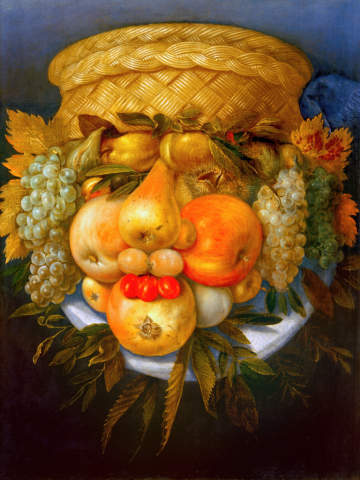
Mert végtére is ez egy „Mi lesz Amerikával?” regény. De nagyon finoman az. Sokáig nem is világos, mire megy ki a játék, bár végig érezzük a kesernyés mellékízt. Látunk szétcsúszást, tehetetlenséget, általános társadalmi bizonytalanságot, és látjuk, kik ennek a legnagyobb nyertesei: azok, akik a lehető leghatározottabban tudják tolni a maguk botegyszerű téveszméit. Aztán jön az a pazar, de tényleg pazar utolsó fejezet, ami gyönyörűen helyükre rántja a dolgokat. Mint egy Arcimboldo-festmény: először csak nézed, mi ez a sok szőlő meg körte egymásra hányva – de aztán látod, hoppá, ez igazából egy arckép.

description

Na, kire emlékeztet?
Profile Image for Paolo.
161 reviews194 followers
December 12, 2020
Giusto perché in qualche altro luogo qui si parlava di nefandezze e sciatterie varie riguardo alla nostra lingua, segnalo qui il giudizio della quarta di copertina riportato dal solitamente ineccepibile editore Sellerio:
"Topeka School è un romanzo di esilarante ricchezza intellettuale, di penetrante sguardo sociale e di profonda sensibilità psicologica. Per quanto sia possibile parlare di futuro, credo che il futuro del romanzo sia questo» (Sally Rooney, autrice di Persone normali).
A parte il fatto che penso ci siano recensori più navigati ed autorevoli della Rooney, balza all'occhio quell'"esilarante" che temo sia la maldestra traduzione di "exhilarating", che vuol dire emozionante, avvincente.
Cosa vorrà dire "esilarante ricchezza intellettuale"?
I migliori numeri di Aldo Giovanni e Giacomo e qualche recente uscita dell'assessore Gallera sono "esilaranti", volontariamente o involontariamente. Qui non c'è proprio niente di esilarante, al massimo un po' di umorismo ebraico ed anche abbastanza annacquato.

Il libro è organizzato in capitoli in cui i genitori del protagonista (ambedue psicanalisti) ed il protagonista medesimo raccontano momenti salienti della loro esistenza. Salienti per loro, ma di per sé abbastanza ordinari. Lo spunto più interessante è la partecipazione dell'autore/protagonista a quelle tenzoni di eloquenza che consistono nel prevalere dialetticamente sull'avversario indipendentemente dal contenuto della tesi illustrata. Il successo è il "sigillum veri" ed è emblema della competitività parossistica della società americana e del prolisso e vacuo chiacchiericcio che ormai pervade ogni espressione mediatica.
Per carità, per leggersi si legge, l'autore scrive benissimo, ed anche la versione italiana è accurata (ancor meno si comprende e tollera lo strafalcione in copertina), ma poco o niente che non si sia già letto sulla famiglia americana (che è poi quella dell'autore) istruita, liberale e progressista che vive il disagio di trovarsi a vivere nell'era Trump. E sul perché ora ci sia Trump sembra che l'autore non sappia o non voglia dirci granché.
Da chiedersi come mai Foster Wallace l'avesse già capito con 20 anni di anticipo con visionaria nitidezza.
Profile Image for ThereWillBeBooks.
82 reviews13 followers
August 24, 2020
If you are interested in what it was like to be Ben Lerner in High School this is the book for you. If your tastes run in any other direction you may want to give this one a pass, as Lerner seems incapable of viewing any aspect of the human experience without using himself as a filter. Unfortunately this book tries to capture the current moment in American life, and the past experiences and reminisces of Ben Lerner are nowhere near up to the task.

I know that there is no accounting for taste and all that, but I have a hard time believing the critics that showered The Topeka School with praise actually read the thing. It is one of the shallowest books that I’ve read in a long time. It fetishizes the mechanics of language without having anything of substance to say and mistakes nervous hand wringing for serious moral inquiry. Hollow all the way through.
Profile Image for Jaclyn.
Author 56 books804 followers
November 29, 2019
Ben Lerner is one of the best (thought-provoking, form reinventing, intellectually insightful) writers of my generation and this might just be his best book yet. I’m so happy I am alive at the same time as Lerner so he can help me make sense of this moment. If you have any inclination towards psychological inquiry make this your next read.
Profile Image for Alex.
817 reviews123 followers
December 15, 2019
Understanding the current political and cultural polarization is at the heart of much fiction today, although doing so in a sophisticated and subtle way is not often easy. In the world filled with self parodies like Trump how does one answer of how we got here without a heavy hand?

In many ways, Ben Lerner has managed to do that in his acclaimed third novel, THE TOPEKA SCHOOL. Taking place mostly in the mid 1990s, in the middle of the Clinton years but also in the heart of red America Kansas, surrounded by plotting libertarians or fanatic followers of Fred Phelps, Lerner reflects back onto his own experiences as a champion debater. He recounts his partly fictionalized past, an adolescence filled with conflicting feelings and ideas that would germinate (at least with others) into the toxic masculinity of hate and violence that are quickly becoming ubiquitous in the here and now. Switching back and forth between the naarative voices of Adam (himself), Jane (his mother) and Jonathan (his father), Lerner delves into the big ideas of relationships we have with our family, our friends and our colleagues, trying to figure how these most basic relationships in the past have shaped and poisoned the well of contemporary America.

Lerner uses his skills as a poet to tell his story in a lyrical but blunt prose, a style that I would have liked less a few years ago but that I have grown to admire. At times direct, at other times surreal, jumping back and forth in time disorienting the reader. Lerner's writing (like a good poet) forces the reader to slow down, to read more deliberately and thoughtfully. It is the only way to appreciate what Lerner is doing here.

In the end, Lerner may have produced the best American novel of the year, speaking to the cultural and political zeitgeist in an unexpected way, tackling the crisis from an unexpected angle. Brilliantly written, this is a book that will sit with me for a while.

#bookstagram #booksofinstagram #igbooks #books #reader #benlerner #thetopekaschool #bookreviews #book #read #nytimesbooks #pulitzerprize #americanliterature #bookworm #indybookstores
Profile Image for Sallie Dunn.
891 reviews106 followers
August 12, 2020
⭐️⭐️ This was a hard book for me to like. It was dense, probably highly intellectual, and simply had little to no plot. It meandered into different directions with seemingly little connection. It’s the story of a family of high brow psychotherapists and their son who are associated with a famous mental health institute in Topeka, Kansas. I think the family was more on the dysfunctional side. There were also vignettes (done in italics) of another young man who was a classmate of the son and also a patient at this same institute. He had some spectrum of mental disorder, probably both emotional and intellectual. This book just did not work for me and if it wasn’t a book club book I might not have read it in its entirety. Two little stars, awarded begrudgingly.
Profile Image for Pedro.
237 reviews663 followers
god-knows-i-tried
August 4, 2022
God knows how much I tortured myself for a week only to get to page 199 of 280, when I promised myself I was never going to read Don DeLillo’s pretentious nonsense ever again.

Bye forever. I’m off now to look for a book written by someone who didn’t come from a different planet.
Profile Image for Vesna.
239 reviews169 followers
August 20, 2020
It's amazing how Lerner manages to write this novel through three different voices, his own as the character Adam Gordon, his father Jonathan, and his mother Jane. Their chapters alternate and Lerner's virtuosity is evident as not once a reader feels that they were all written by one author. The verbal style and personalities of Adam, Jonathan and Jane are sharply distinct, and it felt as if each wrote their own chapters. I personally adored Jane's first-person monologues and hope Lerner will one day write a new novel as Jane (his real life mother).

It's autobiographical, his real mother is the best-selling author of psychology books, Harriet Lerner, and his father is Steve Lerner, both psychologists as in the novel. Adam, of course, is Ben Lerner himself and the novel reads as a coming-of-age story of a writer in a Midwestern (mostly) conservative town in the 1990s that is in sharp contrast to his home life with liberal parents, academics, and urbanites, born and educated in the cities with a different subculture than in Topeka (Kansas) where they live and teach.

Lerner touches on several themes, above all the culture of sexism, macho masculinity and homophobia. It's also about the stereotypes about a white male such as in Adam's hometown where poetry is for "pussies" but he eventually succeeds to avoid such masculine entrapments with his way with words as a gifted debater in school and later as a budding writer.

While extraordinary in looking back into his early age to trace his development against all odds and peer pressure into a writer, he also looks at the 1990s marked by the 'conservative revolution' (Bob Dole as a Kansas native even visits his high school and hands him the trophy for winning the school debate) as a source for the current political conservative turn with the election of Trump. I don't find the novel quite succeeded in the latter, and I felt it was too abrupt when the demonstrations and rallies, both pro- and anti-Trump policies, were presented toward the end of the book. Moreover, there is one character, Darren, whose story we follow in between the main chapters. He was an outcast, often bullied in school but then himself turning violent and now he is a Trump supporter. It would have been much more interesting to follow an average ('regular') man or woman from his culturally conservative childhood hometown as an ardent participant in anti-immigration and similar rallies today.

While I didn't find it as convincing or fully developed as a political novel, it's nonetheless a beautifully written story, sometimes even amusing and funny, about growing up from a boy with an "identity crisis" into a full-fledged writer. The writing is remarkably fluent, intelligent and originally structured, narrated by three different characters with bravura.
Profile Image for fatma.
1,020 reviews1,179 followers
November 23, 2019
i feel like i understood maybe 60% of this book at most, and that's a generous estimate

You know those books you read that feel like they were written so you can analyze them in an essay for English class? Yeah, The Topeka School is one of those books. Whether that's a good or bad thing is up to you.

I tend to vacillate between hating and being engaged by books like The Topeka School. On the one hand, I like to be intellectually challenged. I like a novel that evades my attempts to pin it down, that makes me work to understand it. On the other hand, I don't like pretentious novels, novels that are purposely difficult for no other reason than to be difficult. As if difficulty means quality. In the case of this particular novel, I fall somewhere in between.

The Topeka School is like a delicate piece of French pastry: it's multi-layered, but the moment you try to get a hold of any of those layers to try to understand them, they crumble in your hands. It's interesting enough to draw you to its story, but impenetrable enough to reject any of your attempts to get beyond its surface, to emotionally connect to it on any level.

I read this 280-page novel in 3 days and it absolutely exhausted me. When the book you're reading feels like it's just labyrinths within more labyrinths, the reading experience becomes taxing, and not in a rewarding way.

Reading The Topeka School felt a lot like reading Don DeLillo's White Noise, actually. It reminded me of that feeling you get when you're reading a book that is very explicitly Trying to Do Something. Which is kind of a ridiculous thing to say—all books are obviously trying to do something—but in this case it feels like the point of the book is to get that Thing done—comment on American masculinity, rhetoric and its relation to politics, etc.—rather than to actually tell a story.

To each their own I guess. I didn't hate this book, and I'm sure I would've gotten a lot more out of it had I read it for an English class, but I didn't so all I really feel about it right now is: it was fine.
Displaying 1 - 30 of 3,733 reviews

Can't find what you're looking for?

Get help and learn more about the design.