

What do you think?

An Unnatural Life
Murderbot meets To Kill a Mockingbird in Erin K. Wagner's An Unnatural Life , an interplanetary tale of identity and responsibility.
The cybernetic organism known as 812-3 is in prison, convicted of murdering a human worker but he claims that he did not do it. With the evidence stacked against him, his lawyer, Aiya Ritsehrer, must determine grounds for an appeal and uncover the true facts of the case.
But with artificial life-forms having only recently been awarded legal rights on Earth, the military complex on Europa is resistant to the implementation of these same rights on the Jovian moon.
Aiya must battle against her own prejudices and that of her new paymasters, to secure a fair trial for her charge, while navigating her own interpersonal drama, before it's too late.
The cybernetic organism known as 812-3 is in prison, convicted of murdering a human worker but he claims that he did not do it. With the evidence stacked against him, his lawyer, Aiya Ritsehrer, must determine grounds for an appeal and uncover the true facts of the case.
But with artificial life-forms having only recently been awarded legal rights on Earth, the military complex on Europa is resistant to the implementation of these same rights on the Jovian moon.
Aiya must battle against her own prejudices and that of her new paymasters, to secure a fair trial for her charge, while navigating her own interpersonal drama, before it's too late.
192 pages, Paperback
First published September 15, 2020
About the author
Erin K. Wagner
14 books48 followersErin K. Wagner (also E. K. Wagner) is a professor by trade, a medievalist by discipline, and a writer of speculative fiction by design.
She lives in upstate New York, a storied and story-making place, but her roots are in Appalachia, since she grew up in rural southeast Ohio. Presently, she teaches an array of literature and composition courses in the SUNY system as an English professor. Her interests, both academic and creative, lie in examining how the human responds to the nonhuman (whether that be AI, religion, or nature).
She lives in upstate New York, a storied and story-making place, but her roots are in Appalachia, since she grew up in rural southeast Ohio. Presently, she teaches an array of literature and composition courses in the SUNY system as an English professor. Her interests, both academic and creative, lie in examining how the human responds to the nonhuman (whether that be AI, religion, or nature).
Ratings & Reviews
Friends & Following
Create a free account to discover what your friends think of this book!
Community Reviews
Displaying 1 - 30 of 142 reviews

July 28, 2020
This book was fascinating and I did enjoy it but the ending broke my heart

I wanted to read this book as I love science fiction books and the summary sounded good. The book isn’t some big space odyssey. This book is a short story about robotnik, 812-3, and him being wrongly accused of murder. His lawyer, Aiya, works to get him a fair trial through an appeal.
Things are not what they seem and it’s truly a sad and unfair story
Some things were a bit confusing and the book is just point blank about the basic storyline. You won’t find any kind of world building etc, but if you’re looking for a real life type story in a sci-fi setting, then this is the novella for you.
*I would like to thank Netgalley and Tor for a digital copy of this book.
Mel 🖤🐶🐺🐾
BLOG: https://melissa413readsalot.blogspot....
I wanted to read this book as I love science fiction books and the summary sounded good. The book isn’t some big space odyssey. This book is a short story about robotnik, 812-3, and him being wrongly accused of murder. His lawyer, Aiya, works to get him a fair trial through an appeal.
Things are not what they seem and it’s truly a sad and unfair story
Some things were a bit confusing and the book is just point blank about the basic storyline. You won’t find any kind of world building etc, but if you’re looking for a real life type story in a sci-fi setting, then this is the novella for you.
*I would like to thank Netgalley and Tor for a digital copy of this book.
Mel 🖤🐶🐺🐾
BLOG: https://melissa413readsalot.blogspot....

June 19, 2020
4.0 Stars
This was a fascinating science fiction novella that explored universal themes of personhood and basic human rights through the lens of an AI legal case. In terms of tone and subject matter, this one was very heavy. I can certainly see the comparisons to To Kill a Mockingbird because it addressed similar issues and illustrated the challenges that marginalized people face in prejudice justice systems.
As someone who loves the topic of artificial intelligence, this story immediately appealed to me just from the brief synopsis. Furthermore, I hold a deep fascination with criminal law so I was equally interested in those aspects of the story. I really enjoyed all the legal jargon and details surrounding the case proceedings. I wished more of the novella had involved those aspects, but I understand the logistics of criminal law was not the main focus of the narrative.
Even though this story was set on another planet and dealt with artificial intelligence, there was very little focus on the science and technology of this future. Instead, this was really a story about humanity at its core. Therefore, I would widely recommend this one to readers who do not normally venture into the science fiction genre. This novella can (and should) be read by anyone looking for a powerful story that reflects the inhumanities and injustices of modern society.
Disclaimer: I received a copy from the publisher.
This was a fascinating science fiction novella that explored universal themes of personhood and basic human rights through the lens of an AI legal case. In terms of tone and subject matter, this one was very heavy. I can certainly see the comparisons to To Kill a Mockingbird because it addressed similar issues and illustrated the challenges that marginalized people face in prejudice justice systems.
As someone who loves the topic of artificial intelligence, this story immediately appealed to me just from the brief synopsis. Furthermore, I hold a deep fascination with criminal law so I was equally interested in those aspects of the story. I really enjoyed all the legal jargon and details surrounding the case proceedings. I wished more of the novella had involved those aspects, but I understand the logistics of criminal law was not the main focus of the narrative.
Even though this story was set on another planet and dealt with artificial intelligence, there was very little focus on the science and technology of this future. Instead, this was really a story about humanity at its core. Therefore, I would widely recommend this one to readers who do not normally venture into the science fiction genre. This novella can (and should) be read by anyone looking for a powerful story that reflects the inhumanities and injustices of modern society.
Disclaimer: I received a copy from the publisher.

June 22, 2020
2.5 stars. I was intrigued by a legal crime SFF novel, but unfortunately this doesn't really flesh out its premise or its story in a satisfying way.
I had more and more questions and fewer and fewer answers as the book went on. It jumps in time so frequently that it can be hard to get any momentum. And the worldbuilding is more about rules without much sense. (Why must everyone live in pairs? How exactly are the robots sentient but also criminally culpable? Why is this a book about an appeal? How is there no real legal system on Europa? How is there not already a robust set of precedents around robots in the law? Why does this character say she was a public defender but she never seems to act like one?) There is plenty to dive into here that would be worthy of a novel, but to be honest, if it had been a novel I wouldn't have finished it.
I had more and more questions and fewer and fewer answers as the book went on. It jumps in time so frequently that it can be hard to get any momentum. And the worldbuilding is more about rules without much sense. (Why must everyone live in pairs? How exactly are the robots sentient but also criminally culpable? Why is this a book about an appeal? How is there no real legal system on Europa? How is there not already a robust set of precedents around robots in the law? Why does this character say she was a public defender but she never seems to act like one?) There is plenty to dive into here that would be worthy of a novel, but to be honest, if it had been a novel I wouldn't have finished it.

September 26, 2020
3.5
What I loved: The hard questions that Wagner is bringing up about prejudice and the right to fair trials that can be applied to our own world and modern times.
What I liked: The treatment of A.I. and the morality involved in the mistreatment of A.I. The sexism towards the lawyer and how similar her treatment was to the treatment of the A.I. that was in prison.
What I didn't like: I didn't care for the structure of the story. I didn't really understand the exploration exerts and how it pertained to the story but it probably just went over my head. I felt that it could have been much stronger if Wagner really embraced the themes above and made it more political and feminist.
What I loved: The hard questions that Wagner is bringing up about prejudice and the right to fair trials that can be applied to our own world and modern times.
What I liked: The treatment of A.I. and the morality involved in the mistreatment of A.I. The sexism towards the lawyer and how similar her treatment was to the treatment of the A.I. that was in prison.
What I didn't like: I didn't care for the structure of the story. I didn't really understand the exploration exerts and how it pertained to the story but it probably just went over my head. I felt that it could have been much stronger if Wagner really embraced the themes above and made it more political and feminist.

September 12, 2021
3.5 stars. thoroughly enjoyable and thought provoking throughout, heartbreaking ending, brought up lots of valuable questions in regards to humanity/AI, law/legality, equality and intelligent beings, etc. I wish some of the concepts were fleshed out more but I know that's not what this novella is intended to do, so it was good for what it is. I have questions about the book for sure and I dont think I fully understand it tbh

May 16, 2022
"By law, we can no longer access an AI's files without consent. "
"That doesn't make any sense." Peri scraped the remainder of the eggs into the disposal. Her arm moves in quick, fierce jerks. "We make them. We manufacture them. We should control them. We can't have it both ways. Give them human rights and still treat them like slaves."
"So better we strip the rights?"
Peri's back trembles. She is angry or she is crying. Or both. "Either they're machines or we're monsters."
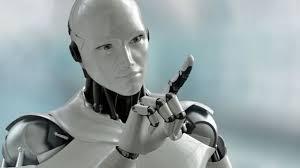
~~Worker class 812-3 is described in such a way as to appear very close to human. In fact, to the untrained eye, AI robots can appear human in this future. Finding a photograph online to match my mental image was therefore almost impossible. Currently, "lifelike" robots seem to mostly be made to look like females. I'll let you guess why. This picture was the best I could find.
First two sentences: The prison is separated from the rest of the Europan colony by a long narrow tunnel of ice. The tunnel is not supported by the same atmosphere or life support system as the main settlement.
Meet Aiya Ritsehrer. Previously a defense attorney on Earth, she's now part of a Europa, a colony on the Jovian moon of Jupitar. She's part of a program to rehabilitate prisoners on the moon, as the labor pool could use all the help it can get. Her first assignment is the "grunt" or AI 812-3. Rehabilitating robots is controversial. Many wonder why resources are spent on a robot which could just be given a hard reboot. However, rebooting has been banned as un-ethical, along with other practices such as accessing a robot's memory card (referenced in the opening quote).
So Aiya meets with 812-3. And surprisingly (or unsurprisingly--almost every prisoner feels wrongly accused after all), 812-3 asserts his innocence. He asks Aiya to launch an appeal for him. She has personal qualms about doing so. She's not sure 812 is innocent. She's facing a lot of backlash, but that's never influenced her choice of actions before. But then she starts to really think about her client's trial and conviction. According to laws that date back to the United States, all suspects deserve the right to an impartial jury of peers. No matter what else Aiya may think about the entire situation, one thing is clear, 812-3 did *NOT* get an impartial jury. But what exactly does "peer" mean. Are AI human enough to be given rights? Are humans their peers? Wagner attempts to answer these questions...or at least bring them into discussion in this short novella.
My two cents: Wagner attempts to tackle large ethical issues that may occur in the future. However, in my humble opinion, this short novella wasn't long enough to live up to the challenge. We see glimpses of the world Wagner created, but the foundations of her society weren't well fleshed out. And like other reviewers, I felt that by the year 2145, there should have already been precedents set for the issues that Aiya had to tackle. Namely, how could the government put into place so many laws surrounding the rights of AI, but not establish rules for instances where they are being prosecuted? So I had big problems with the premise of the novella, however Wagner writes with skill, and Aiya is a fun protagonist to root for. Another big bonus for me was that she did *not* write a dystopian future. She gives hope that our great-grandchildren will not live in a completely broken society. Given 3 stars or a rating of "good". Recommended as as library checkout if you enjoy futuristic novels, and especially if you are interested in possible roles that AI will have in our lives in the next century.
Another favorite quote: But Aiya could not make her legs move. She was struggling to remember why she had traveled seven hundred million kilometers or more through space. To get away from people? And yet everything here, from the artificial sunlight to the domes, smacked of human bureaucracy. There was no frontier here.
"That doesn't make any sense." Peri scraped the remainder of the eggs into the disposal. Her arm moves in quick, fierce jerks. "We make them. We manufacture them. We should control them. We can't have it both ways. Give them human rights and still treat them like slaves."
"So better we strip the rights?"
Peri's back trembles. She is angry or she is crying. Or both. "Either they're machines or we're monsters."
~~Worker class 812-3 is described in such a way as to appear very close to human. In fact, to the untrained eye, AI robots can appear human in this future. Finding a photograph online to match my mental image was therefore almost impossible. Currently, "lifelike" robots seem to mostly be made to look like females. I'll let you guess why. This picture was the best I could find.
First two sentences: The prison is separated from the rest of the Europan colony by a long narrow tunnel of ice. The tunnel is not supported by the same atmosphere or life support system as the main settlement.
Meet Aiya Ritsehrer. Previously a defense attorney on Earth, she's now part of a Europa, a colony on the Jovian moon of Jupitar. She's part of a program to rehabilitate prisoners on the moon, as the labor pool could use all the help it can get. Her first assignment is the "grunt" or AI 812-3. Rehabilitating robots is controversial. Many wonder why resources are spent on a robot which could just be given a hard reboot. However, rebooting has been banned as un-ethical, along with other practices such as accessing a robot's memory card (referenced in the opening quote).
So Aiya meets with 812-3. And surprisingly (or unsurprisingly--almost every prisoner feels wrongly accused after all), 812-3 asserts his innocence. He asks Aiya to launch an appeal for him. She has personal qualms about doing so. She's not sure 812 is innocent. She's facing a lot of backlash, but that's never influenced her choice of actions before. But then she starts to really think about her client's trial and conviction. According to laws that date back to the United States, all suspects deserve the right to an impartial jury of peers. No matter what else Aiya may think about the entire situation, one thing is clear, 812-3 did *NOT* get an impartial jury. But what exactly does "peer" mean. Are AI human enough to be given rights? Are humans their peers? Wagner attempts to answer these questions...or at least bring them into discussion in this short novella.
My two cents: Wagner attempts to tackle large ethical issues that may occur in the future. However, in my humble opinion, this short novella wasn't long enough to live up to the challenge. We see glimpses of the world Wagner created, but the foundations of her society weren't well fleshed out. And like other reviewers, I felt that by the year 2145, there should have already been precedents set for the issues that Aiya had to tackle. Namely, how could the government put into place so many laws surrounding the rights of AI, but not establish rules for instances where they are being prosecuted? So I had big problems with the premise of the novella, however Wagner writes with skill, and Aiya is a fun protagonist to root for. Another big bonus for me was that she did *not* write a dystopian future. She gives hope that our great-grandchildren will not live in a completely broken society. Given 3 stars or a rating of "good". Recommended as as library checkout if you enjoy futuristic novels, and especially if you are interested in possible roles that AI will have in our lives in the next century.
Another favorite quote: But Aiya could not make her legs move. She was struggling to remember why she had traveled seven hundred million kilometers or more through space. To get away from people? And yet everything here, from the artificial sunlight to the domes, smacked of human bureaucracy. There was no frontier here.

May 8, 2022
I love robots and will read all about them. Tor.com this month offered its newsletter subscribers not one but three robot-themed novellas or short novels. Terrific ones, too.
I’ve been striking out with science fiction lately, but this one reminded me of why I like the genre in the first place.
It’s a murder mystery/legal drama set on Europa in a not-too-distant future of 2145. Europa has been colonized but modestly. There’s a small population of people and robots working side by side. The robots have been given some rights, but it’s far from the separate but equal situation. The balance gets tested when a robot convicted for murdering a person decides to appeal the court’s decision.
A lawyer, disillusioned with Earth and looking for a fresh start on Europa, takes up his case and finds herself at odds with the local population in a case that is threatening to upend all the existing boundaries and conventions.
A fascinating story that questions the legal and moral assumptions or a divided society, this story worked on every level: from terrific world-building to great character writing to being a poignant and thought-provoking intelligent literary read.
There was an interesting choice here (either deliberate by the author or it’s just how it read to me) where the robot, 812-3, comes across more humane that its carbon-based-meat-and-blood counterparts. The lawyer character makes less sense in her actions than he does in his, in a way. The robot’s motivations are more clearly laid out…and more emotionally driven too.
Some fascinating juxtapositions there; makes the reader question the very nature of being. Just how artificial is AI? Just how authentic are we?
And that ending…what a gut punch.
Overall,a very good read. Smart, emotionally engaging and entertaining too. Sped by in one relatively brief sitting and well worth checking out. Recommended.
This and more at https://advancetheplot.weebly.com/
I’ve been striking out with science fiction lately, but this one reminded me of why I like the genre in the first place.
It’s a murder mystery/legal drama set on Europa in a not-too-distant future of 2145. Europa has been colonized but modestly. There’s a small population of people and robots working side by side. The robots have been given some rights, but it’s far from the separate but equal situation. The balance gets tested when a robot convicted for murdering a person decides to appeal the court’s decision.
A lawyer, disillusioned with Earth and looking for a fresh start on Europa, takes up his case and finds herself at odds with the local population in a case that is threatening to upend all the existing boundaries and conventions.
A fascinating story that questions the legal and moral assumptions or a divided society, this story worked on every level: from terrific world-building to great character writing to being a poignant and thought-provoking intelligent literary read.
There was an interesting choice here (either deliberate by the author or it’s just how it read to me) where the robot, 812-3, comes across more humane that its carbon-based-meat-and-blood counterparts. The lawyer character makes less sense in her actions than he does in his, in a way. The robot’s motivations are more clearly laid out…and more emotionally driven too.
Some fascinating juxtapositions there; makes the reader question the very nature of being. Just how artificial is AI? Just how authentic are we?
And that ending…what a gut punch.
Overall,a very good read. Smart, emotionally engaging and entertaining too. Sped by in one relatively brief sitting and well worth checking out. Recommended.
This and more at https://advancetheplot.weebly.com/

June 2, 2023
Put this one in the "I admired parts of it more than I enjoyed the whole" stack at 3 stars on the nose.
The story follows 812-3, a robotnik who's in jail on Jupiter for murder, and Alya, the volunteer who ends up organizing his appeal, a trial that touches on the rights that robots have to a fair trial composed of their peers. The robotnici are in an interesting place, having gained sentience and some rights (like not having their memories erased as punishment) while still being marginally accepted, not quite protected in the way that humans are are. The story really shines in people's discomfort with that situation, whether in straightforward bigotry or in the awkward realizing that if the robotnici are people, their place in society is unacceptable.
I wanted to love it for the legal angle, but the story remains stuck too much in Alya's perspective as she deals with people's outrage about the trial and copes with her own shapeless sadness about leaving home and feeling isolated on Jupiter. Some of her sections showed flashes of something interesting, but they're all short and skip time between segments, so the story feels jagged and rushed, without time to really slow down and get to know a situation, and it robs a lot of later moments in the story of emotional impact. There are some tiny intervening sections about research being done around a geyser, and the dates are such that I was hoping for an interesting convergence (maybe about alien life being discovered while artificial life is being litigated?), but in the end it seems like an awkward sidebar without much connection. If anyone spotted a brilliant connection here that I missed, let me know.
A 500-page version of this story, complete with POV segments from 812-3 and other robotnici, lawmakers on Earth and civilians on Jupiter, Alya's nervous roommate-partner and other prisoners struggling with Jupiter's incomplete justice system, could have been fantastic. As it stands, the story is a narrow window, both structurally and emotionally, and I never really felt the wide-reaching impact of it-- some novellas make it work, but this one didn't click for me.
Overall, it's also just very bleak. Sometimes that works (the choices of vocabulary and architecture reminds me of some novels with Soviet settings where the structure of life amplifies the despair people feel there), but the constant low mood makes it hard to be invested in the rise and fall of events. I can see this working for other readers-- it just wasn't really to my tastes.
//About 3 stars for me. There are some great ideas here, but the choppy little chapters don't leave much room to connect with these characters. RTC.
Other recommendations:
-In some ways, this reminds me of The Employees: A Workplace Novel of the 22nd Century. The format here is more straightforward and focused on a smaller number of characters, but the bleakness of how humanity and mercy are ground away in a bleak space away fomr Earth is similar.
The story follows 812-3, a robotnik who's in jail on Jupiter for murder, and Alya, the volunteer who ends up organizing his appeal, a trial that touches on the rights that robots have to a fair trial composed of their peers. The robotnici are in an interesting place, having gained sentience and some rights (like not having their memories erased as punishment) while still being marginally accepted, not quite protected in the way that humans are are. The story really shines in people's discomfort with that situation, whether in straightforward bigotry or in the awkward realizing that if the robotnici are people, their place in society is unacceptable.
I wanted to love it for the legal angle, but the story remains stuck too much in Alya's perspective as she deals with people's outrage about the trial and copes with her own shapeless sadness about leaving home and feeling isolated on Jupiter. Some of her sections showed flashes of something interesting, but they're all short and skip time between segments, so the story feels jagged and rushed, without time to really slow down and get to know a situation, and it robs a lot of later moments in the story of emotional impact. There are some tiny intervening sections about research being done around a geyser, and the dates are such that I was hoping for an interesting convergence (maybe about alien life being discovered while artificial life is being litigated?), but in the end it seems like an awkward sidebar without much connection. If anyone spotted a brilliant connection here that I missed, let me know.
A 500-page version of this story, complete with POV segments from 812-3 and other robotnici, lawmakers on Earth and civilians on Jupiter, Alya's nervous roommate-partner and other prisoners struggling with Jupiter's incomplete justice system, could have been fantastic. As it stands, the story is a narrow window, both structurally and emotionally, and I never really felt the wide-reaching impact of it-- some novellas make it work, but this one didn't click for me.
Overall, it's also just very bleak. Sometimes that works (the choices of vocabulary and architecture reminds me of some novels with Soviet settings where the structure of life amplifies the despair people feel there), but the constant low mood makes it hard to be invested in the rise and fall of events. I can see this working for other readers-- it just wasn't really to my tastes.
//About 3 stars for me. There are some great ideas here, but the choppy little chapters don't leave much room to connect with these characters. RTC.
Other recommendations:
-In some ways, this reminds me of The Employees: A Workplace Novel of the 22nd Century. The format here is more straightforward and focused on a smaller number of characters, but the bleakness of how humanity and mercy are ground away in a bleak space away fomr Earth is similar.

May 23, 2022
This is an interesting mystery that works through the 3 Laws and the impact of allowing AI robots to have certain freedoms. Faced with prejudice and bigotry, and the murder weapon, it looks like a no-win situation for our intrepid lawyer. By setting the story on a distant moon, the isolation aspects, both individually and in the small-community, build the tension. A little bit of the Old West - laws don't apply out here.
The approach to the situation is interesting and clever in a legal sense. Some of that applies to our world today. The ending is uncomfortable - lost the battle but won the war?
I'm interested in reading other books by this author.
The approach to the situation is interesting and clever in a legal sense. Some of that applies to our world today. The ending is uncomfortable - lost the battle but won the war?
I'm interested in reading other books by this author.

June 5, 2020
I really enjoyed this. It is very topical, but in such a way that I could enjoy it a lot. I'll write a longer review shortly.
ARC received from Tor.com on Netgalley. This did not affect my review.
To read more reviews, check out my blog keikii eats books!
ARC received from Tor.com on Netgalley. This did not affect my review.
To read more reviews, check out my blog keikii eats books!

September 13, 2020
Review crossposted from Reanne Reads.
I always love a good android story, so I was eager to request this one from NetGalley. (Insert disclaimer about how I got a free copy of this from NetGalley in exchange for an honest review.) It’s actually a novella, rather than a novel like I initially assumed, so it’s a pretty quick read.
To be honest, I didn’t really like this story. For one thing, it didn’t feel much like an android story. The android character really felt like he could have been any kind of person at all. I found it very hard to relate to or like the android character, largely because he is not actually the main character, and we don’t see enough of him to even form an opinion for quite a while. And even when we do see him, the author doesn’t make much attempt at all to get us to like him or find him sympathetic for his own sake. If the set up had been exactly the same, but the character of the android was immediately likable and sympathetic, where we as the reader automatically believe him and think it’s terribly unjust for the people to have convicted him in such a biased way, I would have been much more engaged in the story. As it is, I don’t care about the android character enough to want him to get his appeal. In fact, when the main character agrees to help him—at great risk to herself—he doesn’t even act grateful. If anything, he’s actively unlikable. In fact, the more we learn about him, the less I liked him or had sympathy for him (he was an adulterer, for one thing). (Later on in the story, the android aspect comes into play due to programming being significant, but it wasn’t enough to make him feel like an android to me. It could have as easily been a human with some kind of override chip in his head.)
Maybe the author is trying to make the point that people shouldn’t have to be likable in order for us to want them to get a fair trial, which is a true enough point. But that comes back to this being a message story instead of an entertainment story. The author seems to be trying to teach us something rather than to entertain us, and that’s just not the kind of story I enjoy. Maybe others do.
The bigger problem, though, was that the whole story felt like the author was trying to specifically make some kind of political or social message and was deliberately using androids to represent any kind of minority group among human society. In other words, it felt like a message story. As someone who enjoys android stories but not message stories, I didn’t like it.
The idea behind this book reminds me of the Star Trek TNG episode “The Measure of a Man”, where Data (an android) is put on trial to basically decide if he is enough of a real person to deserve human rights. In that case, it was basically just the right of self-determination, the right to decide not to follow an order which would have . . . if I’m remembering correctly . . . resulted in basically his death and de-person-hood in the name of scientific progress. That was, I think, a very effective and entertaining story about androids and their place in human society.
This book, by contrast, was not nearly as effective or entertaining. It wasn’t about the androids’ rights, really. In this book, they already have may of the same legal rights as humans, including the right to not be murdered and even the right not to have their memories accessed without their permissions. And the thing that the android is on trial for isn’t simply his right to be a person but for murder. This is part of what made it feel not at all like a real android story to me but like a message story about whoever the minority group in a society of humans is. The comparison to To Kill A Mockingbird in the publisher’s description pretty well reinforces this. I know a lot of people like sci-fi to be a way of using metaphors to talk about modern-day issues, but I like sci-fi when it’s just sci-fi. In other words, I want androids to be their own thing. I want them to be androids. Not stand-ins for something else.
When the truth of what happened is eventually explained, I had to wonder why the android character didn’t just tell the whole truth and let them access his memories. Seems like it would have cleared his name. And yeah, someone might have gotten in trouble for something, but it shouldn’t have been murder, given the situation.
So, in short, this was too much of a message story and not enough of an actual android story for me. As someone who loves androids, this didn’t hit any of the right buttons for me, personally. Someone who enjoys sci-fi as social commentary will likely enjoy it more.
I always love a good android story, so I was eager to request this one from NetGalley. (Insert disclaimer about how I got a free copy of this from NetGalley in exchange for an honest review.) It’s actually a novella, rather than a novel like I initially assumed, so it’s a pretty quick read.
To be honest, I didn’t really like this story. For one thing, it didn’t feel much like an android story. The android character really felt like he could have been any kind of person at all. I found it very hard to relate to or like the android character, largely because he is not actually the main character, and we don’t see enough of him to even form an opinion for quite a while. And even when we do see him, the author doesn’t make much attempt at all to get us to like him or find him sympathetic for his own sake. If the set up had been exactly the same, but the character of the android was immediately likable and sympathetic, where we as the reader automatically believe him and think it’s terribly unjust for the people to have convicted him in such a biased way, I would have been much more engaged in the story. As it is, I don’t care about the android character enough to want him to get his appeal. In fact, when the main character agrees to help him—at great risk to herself—he doesn’t even act grateful. If anything, he’s actively unlikable. In fact, the more we learn about him, the less I liked him or had sympathy for him (he was an adulterer, for one thing). (Later on in the story, the android aspect comes into play due to programming being significant, but it wasn’t enough to make him feel like an android to me. It could have as easily been a human with some kind of override chip in his head.)
Maybe the author is trying to make the point that people shouldn’t have to be likable in order for us to want them to get a fair trial, which is a true enough point. But that comes back to this being a message story instead of an entertainment story. The author seems to be trying to teach us something rather than to entertain us, and that’s just not the kind of story I enjoy. Maybe others do.
The bigger problem, though, was that the whole story felt like the author was trying to specifically make some kind of political or social message and was deliberately using androids to represent any kind of minority group among human society. In other words, it felt like a message story. As someone who enjoys android stories but not message stories, I didn’t like it.
The idea behind this book reminds me of the Star Trek TNG episode “The Measure of a Man”, where Data (an android) is put on trial to basically decide if he is enough of a real person to deserve human rights. In that case, it was basically just the right of self-determination, the right to decide not to follow an order which would have . . . if I’m remembering correctly . . . resulted in basically his death and de-person-hood in the name of scientific progress. That was, I think, a very effective and entertaining story about androids and their place in human society.
This book, by contrast, was not nearly as effective or entertaining. It wasn’t about the androids’ rights, really. In this book, they already have may of the same legal rights as humans, including the right to not be murdered and even the right not to have their memories accessed without their permissions. And the thing that the android is on trial for isn’t simply his right to be a person but for murder. This is part of what made it feel not at all like a real android story to me but like a message story about whoever the minority group in a society of humans is. The comparison to To Kill A Mockingbird in the publisher’s description pretty well reinforces this. I know a lot of people like sci-fi to be a way of using metaphors to talk about modern-day issues, but I like sci-fi when it’s just sci-fi. In other words, I want androids to be their own thing. I want them to be androids. Not stand-ins for something else.
When the truth of what happened is eventually explained, I had to wonder why the android character didn’t just tell the whole truth and let them access his memories. Seems like it would have cleared his name. And yeah, someone might have gotten in trouble for something, but it shouldn’t have been murder, given the situation.
So, in short, this was too much of a message story and not enough of an actual android story for me. As someone who loves androids, this didn’t hit any of the right buttons for me, personally. Someone who enjoys sci-fi as social commentary will likely enjoy it more.

July 7, 2021
VERDICT: 3.8 stars, rounded up to 4.
Better than expected. Good main human protagonist. Interesting robot/AI. Very similar to some older Asimov tales with same basic plot (Is This Robot a Murderer--and if so, WHY?), but I liked it anyway.
.
.
.
Better than expected. Good main human protagonist. Interesting robot/AI. Very similar to some older Asimov tales with same basic plot (Is This Robot a Murderer--and if so, WHY?), but I liked it anyway.
.
.
.
November 1, 2020
Cogito, ergo sum - I think, therefore I am - just doesn't cut it any more.
When does an AI become so close to human, that it should get the same rights as a human? (Never, because today, there are humans that don't have the same basic rights as humans, and probably never will.) But it's an interesting question to ponder and has been done before many times in fiction.
I think my favourite one was the courtroom drama in To Kill a Mockingbird that I think inspired this book (substitute African-American for AI). Equal favourite was the brilliant episode of Star Trek called "The Measure of A Man" - Star Trek: The Next Generation, Series 2, Episode 9. Other faves were: Blade Runner (Where I'm still not sure if Deckard was an android or not. What do you think?), Ex Machina, HAL9000 and even The Robot from Lost In Space.
When I think of examples like that, I feel that this novella is decidedly average. The characters seemed pretty sterile, but the scenes of Europa gave a pretty good "feel" for the place. I was unable to glean the meaning of the Europan geyser study team's journal entries that started most chapters. Was it the feeling of impending danger from being camped so close to an active geyser? Was that a parallel for taking on a case to prove a convicted AI's innocence in a town full of AI-haters? Something's gonna blow?
What really made it average for me was the ending. It was incomplete, underdone and ultimately - disappointing. Only two stars worth of enjoyment in this book for me. One refreshing upside was the graceful prose and the lack of spelling and grammatical errors - but you'd expect that from an associate professor of Literature.
When does an AI become so close to human, that it should get the same rights as a human? (Never, because today, there are humans that don't have the same basic rights as humans, and probably never will.) But it's an interesting question to ponder and has been done before many times in fiction.
I think my favourite one was the courtroom drama in To Kill a Mockingbird that I think inspired this book (substitute African-American for AI). Equal favourite was the brilliant episode of Star Trek called "The Measure of A Man" - Star Trek: The Next Generation, Series 2, Episode 9. Other faves were: Blade Runner (Where I'm still not sure if Deckard was an android or not. What do you think?), Ex Machina, HAL9000 and even The Robot from Lost In Space.
When I think of examples like that, I feel that this novella is decidedly average. The characters seemed pretty sterile, but the scenes of Europa gave a pretty good "feel" for the place. I was unable to glean the meaning of the Europan geyser study team's journal entries that started most chapters. Was it the feeling of impending danger from being camped so close to an active geyser? Was that a parallel for taking on a case to prove a convicted AI's innocence in a town full of AI-haters? Something's gonna blow?
What really made it average for me was the ending. It was incomplete, underdone and ultimately - disappointing. Only two stars worth of enjoyment in this book for me. One refreshing upside was the graceful prose and the lack of spelling and grammatical errors - but you'd expect that from an associate professor of Literature.

June 19, 2020
Originally published at Reading Reality
I picked this up as early as I did because it was teasing me. Specifically, the recommendations I received from a friend listed some readalikes for this book and I was just sure that something was missing – actually I was positive that at least two somethings were missing – and I had to read it to see if I was right.
You know how it is, there’s something on the tip of your tongue, or just out of reach in your memory but you can’t quite grasp it. It was driving me nuts that I just couldn’t remember what one of the books I KNEW this reminded me of was, so I had to read it and find out.
In case you’re wondering, the recommendation said Murderbot, which, well, of course, yes. Because Murderbot is so ‘top of mind’ after the recent release of Network Effect. And there is something to be said for the correlation, although strictly speaking Murderbot isn’t exactly a self-aware AI. Self-aware, absolutely, an AI, not exactly. But the concept of humans creating an enslavable and exploitable underclass is certainly a match. The other readalike was the classic The Caves of Steel by Isaac Asimov, which I have not read. The ‘so many books, so little time’ conundrum rears its ugly head yet again.
I was thinking of Medusa Uploaded by Emily Devenport for both the self-aware AI and the specifically created underclass, even though in Medusa they are not exactly embodied in the same person – or at least not all of the time.
But those references felt fairly obvious. The one lurking in the back of my mind turned out to be the steampunk world created in Ian Tregillis’ Alchemy Wars series, starting with The Mechanical. While the ‘mechanicals’ of that series were created through alchemy rather than science, the situation they find themselves in is much the same as it is in An Unnatural Life. They are created to be slaves and they seem to have no recourse towards freedom. But they are self-aware, and they strike out for freedom anyway, in spite of the odds, the laws, and their own programming.
In the end, the story this reminded me of the most was the classic Star Trek: The Next Generation episode “The Measure of a Man“, where Data is on trial. Not for a crime as the AI here is, but for his right to be a self-determining being in his own right, and not property as has occurred in the world posited in this story. Picard’s speech in Data’s defense echoes many of the abuses that are highlighted in this story, as it is all too clear from humanity’s history that if Data is not considered an autonomous being in his own right that he and others like him will be declared to be ‘property’ and abused as happened in the backstory for this book. Also as did happen in the later history of the universe of Star Trek, as represented in the events of its latest series, Star Trek: Picard.
The story in An Unnatural Life, just like the story in The Measure of a Man, isn’t really about the android, the AI, the ‘grunt’, after all. It’s a story about humans, and about humanity’s inhumanity to humanity. It’s about just how very easy we find it to believe that anyone we define as ‘them’ can be treated as inhumanely as we want, because we’ve decided that the only ones worthy of being considered ‘human’ are ‘us’.
But Walt Kelly’s Pogo had it right all along when he said, “We have met the enemy and he is us”. And he still is.
Escape Rating A-: There are actually two stories in this slim little volume. One is the obvious, the story of Aiya Ritsehrer’s appeal on behalf of the AI 812-3 due to the obvious fact that the AI did not face a jury of his peers, but rather a jury that was utterly prejudiced against the AI, as was the judge and the prosecution. Aiya is convinced the AI did not receive a fair trial, and it’s oh-so-clear that she is correct.
There is also a story tucked in-between the chapters about Aiya, the trial and its result. I think that it was about an expedition to discover whether or not there was already life on Europa when it was settled by humans. But that story is more tantalizing than realized. Which is possibly intended, but left me a bit frustrated by its ambiguity, hence the A- rating.
Back to the story I’m entirely too sure of. One of the things that so frequently gets lost in the gee-whiz sensawunda that science fiction and fantasy often provoke is that no matter who or what is at the center of the story, no matter where or when it is set, all stories are about human beings. Because human beings are the only creatures that we really know. Writers may do their very best to guesstimate what androids or aliens in the far future or the mythic past might think and feel and say and do, but the fact is that the perspective from which all of those ‘otherworldly’ characters are written is the human one in the here and now of the author.
So from one perspective this is a story about a self-aware AI in search of justice on one of Jupiter’s moons. But on the other, the story underneath that, is a story about prejudice and justice. It’s a story about the lengths and depths that humans, following their worser instincts and not their better ones, will go to in order to preserve the status quo that makes them feel safe and comfortable.
It is also a story about one woman fighting, not just for justice for an underdog, but for what is right instead of what is easy, in spite of all of her own prejudices, and in spite of the very real fear that her pursuit of justice will bring her into deadly danger in a situation where no one will stand by her, no one will protect her, and no one will seek justice on her behalf.
Because all of those humans believe that their hatred of ‘the other’ and their willingness, even eagerness to destroy anyone who shines a light on that hatred, is not human either and therefore deserves whatever happens to them. That they brought it on themselves, and that their fate is not the fault of anyone but themselves for standing up for ‘the other’.
And if you don’t see any parallels between the story and both history and current events, you’re not paying attention.
I picked this up as early as I did because it was teasing me. Specifically, the recommendations I received from a friend listed some readalikes for this book and I was just sure that something was missing – actually I was positive that at least two somethings were missing – and I had to read it to see if I was right.
You know how it is, there’s something on the tip of your tongue, or just out of reach in your memory but you can’t quite grasp it. It was driving me nuts that I just couldn’t remember what one of the books I KNEW this reminded me of was, so I had to read it and find out.
In case you’re wondering, the recommendation said Murderbot, which, well, of course, yes. Because Murderbot is so ‘top of mind’ after the recent release of Network Effect. And there is something to be said for the correlation, although strictly speaking Murderbot isn’t exactly a self-aware AI. Self-aware, absolutely, an AI, not exactly. But the concept of humans creating an enslavable and exploitable underclass is certainly a match. The other readalike was the classic The Caves of Steel by Isaac Asimov, which I have not read. The ‘so many books, so little time’ conundrum rears its ugly head yet again.
I was thinking of Medusa Uploaded by Emily Devenport for both the self-aware AI and the specifically created underclass, even though in Medusa they are not exactly embodied in the same person – or at least not all of the time.
But those references felt fairly obvious. The one lurking in the back of my mind turned out to be the steampunk world created in Ian Tregillis’ Alchemy Wars series, starting with The Mechanical. While the ‘mechanicals’ of that series were created through alchemy rather than science, the situation they find themselves in is much the same as it is in An Unnatural Life. They are created to be slaves and they seem to have no recourse towards freedom. But they are self-aware, and they strike out for freedom anyway, in spite of the odds, the laws, and their own programming.
In the end, the story this reminded me of the most was the classic Star Trek: The Next Generation episode “The Measure of a Man“, where Data is on trial. Not for a crime as the AI here is, but for his right to be a self-determining being in his own right, and not property as has occurred in the world posited in this story. Picard’s speech in Data’s defense echoes many of the abuses that are highlighted in this story, as it is all too clear from humanity’s history that if Data is not considered an autonomous being in his own right that he and others like him will be declared to be ‘property’ and abused as happened in the backstory for this book. Also as did happen in the later history of the universe of Star Trek, as represented in the events of its latest series, Star Trek: Picard.
The story in An Unnatural Life, just like the story in The Measure of a Man, isn’t really about the android, the AI, the ‘grunt’, after all. It’s a story about humans, and about humanity’s inhumanity to humanity. It’s about just how very easy we find it to believe that anyone we define as ‘them’ can be treated as inhumanely as we want, because we’ve decided that the only ones worthy of being considered ‘human’ are ‘us’.
But Walt Kelly’s Pogo had it right all along when he said, “We have met the enemy and he is us”. And he still is.
Escape Rating A-: There are actually two stories in this slim little volume. One is the obvious, the story of Aiya Ritsehrer’s appeal on behalf of the AI 812-3 due to the obvious fact that the AI did not face a jury of his peers, but rather a jury that was utterly prejudiced against the AI, as was the judge and the prosecution. Aiya is convinced the AI did not receive a fair trial, and it’s oh-so-clear that she is correct.
There is also a story tucked in-between the chapters about Aiya, the trial and its result. I think that it was about an expedition to discover whether or not there was already life on Europa when it was settled by humans. But that story is more tantalizing than realized. Which is possibly intended, but left me a bit frustrated by its ambiguity, hence the A- rating.
Back to the story I’m entirely too sure of. One of the things that so frequently gets lost in the gee-whiz sensawunda that science fiction and fantasy often provoke is that no matter who or what is at the center of the story, no matter where or when it is set, all stories are about human beings. Because human beings are the only creatures that we really know. Writers may do their very best to guesstimate what androids or aliens in the far future or the mythic past might think and feel and say and do, but the fact is that the perspective from which all of those ‘otherworldly’ characters are written is the human one in the here and now of the author.
So from one perspective this is a story about a self-aware AI in search of justice on one of Jupiter’s moons. But on the other, the story underneath that, is a story about prejudice and justice. It’s a story about the lengths and depths that humans, following their worser instincts and not their better ones, will go to in order to preserve the status quo that makes them feel safe and comfortable.
It is also a story about one woman fighting, not just for justice for an underdog, but for what is right instead of what is easy, in spite of all of her own prejudices, and in spite of the very real fear that her pursuit of justice will bring her into deadly danger in a situation where no one will stand by her, no one will protect her, and no one will seek justice on her behalf.
Because all of those humans believe that their hatred of ‘the other’ and their willingness, even eagerness to destroy anyone who shines a light on that hatred, is not human either and therefore deserves whatever happens to them. That they brought it on themselves, and that their fate is not the fault of anyone but themselves for standing up for ‘the other’.
And if you don’t see any parallels between the story and both history and current events, you’re not paying attention.

August 31, 2020
Actual Rating 3.5
I really enjoyed the writing in this novella and how our main character, Aiya, gives us a good look into what it means to be human, especially in this futuristic setting, and how it pertains directly to the incarcerated AI, 812-3.
However, as with other novellas I've read, my issues with this book relate to how much content we have, or rather, what seems to be missing. I felt that Erin K. Wagner must have done quite a bit of world-building before writing because I feel it on the fringes of the story. However, I wish the book was longer so that we could really delve into it. Same with the characters' personalities. I got the bare bones of who Aiya and 812-3 were, but I was unable to really connect with them.
There were also passages in between the chapters that felt like they didn't pertain to the story, and while intriguing, I did not understand why they were included.
A great premise, and a quick read, but I just wanted MORE.
Thank you to the publisher and Netgalley for providing the E-ARC in exchange for an honest review.
I really enjoyed the writing in this novella and how our main character, Aiya, gives us a good look into what it means to be human, especially in this futuristic setting, and how it pertains directly to the incarcerated AI, 812-3.
However, as with other novellas I've read, my issues with this book relate to how much content we have, or rather, what seems to be missing. I felt that Erin K. Wagner must have done quite a bit of world-building before writing because I feel it on the fringes of the story. However, I wish the book was longer so that we could really delve into it. Same with the characters' personalities. I got the bare bones of who Aiya and 812-3 were, but I was unable to really connect with them.
There were also passages in between the chapters that felt like they didn't pertain to the story, and while intriguing, I did not understand why they were included.
A great premise, and a quick read, but I just wanted MORE.
Thank you to the publisher and Netgalley for providing the E-ARC in exchange for an honest review.

May 21, 2022
There’s a lot to like in this AI/robot/legal novella but none of it is fully fleshed out to give the reader a true understanding of the characters or their motivations.

May 19, 2022
It's common for speculative fiction, especially science fiction, to use other sentient beings as an allegory for prejudice and racism... and robots seem to be a ripe target for allegory. (Possibly for the servitude/slavery analogy? I dunno, I don't study these things, I just read them...) "An Unnatural Life" is very much a "message" book in that it's less focused on telling a story and more focused on making a statement. Unfortunately, this means that the story itself is a clunker, the characters are props, and the message itself is pretty heavy-handed, making for a book that feels longer than it's under-200-page word count.
On a colony on the moon Europa, robotnik 812-3 has been imprisoned for murdering a human. Public defender Aiya steps forward to try to help him... but the robot doesn't want to be made more comfortable in prison. He wants an appeal, and he wants Aiya to help him fight for one. And as Aiya battles the legal systems of two worlds -- systems that feel incredibly stacked against her client -- she realizes that humanity's distrust and fear of robotniks aren't just a threat to 812-3, but to her as well.
The prose in this book feels a little stiff, and the story feels somewhat incoherent, jumping from place to place and wandering a fair bit. The characters are pretty flat and stagnant as well -- we never really find ourselves rooting for Aiya or 812-3. Heck, I felt more sorry for Aiya's roommate for the danger she was in, despite the fact that she's clearly supposed to be something of an antagonist, simply because she showed more personality than Aiya did. It's fairly obvious that putting together a compelling story and characters were playing second fiddle to hammering out a message here, and while there's a place for "message" stories, they often don't make for good leisure reading.
I have a number of other beefs with this book as well. The expedition logs before each chapter don't fit with the story at all, and made me wonder what the heck was going on. The term "robotnik" may have seemed clever, but seeing as it's used interchangeably with "robot" why was the former term even used? (Not to mention that it just made me think of "Sonic the Hedgehog" every time it came up...)
The message itself is an all too timely one -- prejudice and racism are destructive -- but it gets driven in with the subtlety of a hammer here. And while it's easy to draw parallels between the plight of 812-3 and countless others who are wrongfully incarcerated and denied appeals, I can still applaud this book's message and still find the book itself a bit of a drudge to read.
On a colony on the moon Europa, robotnik 812-3 has been imprisoned for murdering a human. Public defender Aiya steps forward to try to help him... but the robot doesn't want to be made more comfortable in prison. He wants an appeal, and he wants Aiya to help him fight for one. And as Aiya battles the legal systems of two worlds -- systems that feel incredibly stacked against her client -- she realizes that humanity's distrust and fear of robotniks aren't just a threat to 812-3, but to her as well.
The prose in this book feels a little stiff, and the story feels somewhat incoherent, jumping from place to place and wandering a fair bit. The characters are pretty flat and stagnant as well -- we never really find ourselves rooting for Aiya or 812-3. Heck, I felt more sorry for Aiya's roommate for the danger she was in, despite the fact that she's clearly supposed to be something of an antagonist, simply because she showed more personality than Aiya did. It's fairly obvious that putting together a compelling story and characters were playing second fiddle to hammering out a message here, and while there's a place for "message" stories, they often don't make for good leisure reading.
I have a number of other beefs with this book as well. The expedition logs before each chapter don't fit with the story at all, and made me wonder what the heck was going on. The term "robotnik" may have seemed clever, but seeing as it's used interchangeably with "robot" why was the former term even used? (Not to mention that it just made me think of "Sonic the Hedgehog" every time it came up...)
The message itself is an all too timely one -- prejudice and racism are destructive -- but it gets driven in with the subtlety of a hammer here. And while it's easy to draw parallels between the plight of 812-3 and countless others who are wrongfully incarcerated and denied appeals, I can still applaud this book's message and still find the book itself a bit of a drudge to read.

September 6, 2020
Rating based on a free ARC provided by the publisher in exchange for my fair and honest review.
When Aiya agreed to assist in Europa’s prisoner rehabilitation program, she didn’t expect a robotnik to be her first client – or that he would ask her to appeal his murder conviction. After some reluctance, Aiya agrees, but she faces an uphill battle. Europa is resistant to acknowledging the rights of robotniks, and Aiya will have to come up with a compelling reason why the case was mishandled to begin with.
Let’s start this review by setting the expectations for this book. Marketing has been pushing Murderbot meets TO KILL A MOCKINGBIRD, but if you come to this story expecting action and a sarcastic tone, you will be sorely disappointed. This is much closer to a sci-fi TO KILL A MOCKINGBIRD, one that is much more contemplative than anything else.
The author manages to do a great job of world building, establishing the feeling of this colony in a short amount of pages. I particularly liked her descriptions of the robotnik (essentially an android) 812-3. She managed to capture how unsettling the robotnik could be, even when not doing anything inherently threatening. I could have used a little less of the cliched “Most people hate robotniks and mistreat them when given the chance,” but otherwise it was an interesting world setup.
On the downside, though, this was a book that was much more interested in introducing questions than interrogating those questions. To be fair, AN UNNATURAL LIFE raises some interesting points. One of Aiya’s legal tactics, for instance, is to propose that 812-3 was not tried by a jury of his peers. But is declaring that humans are not the peers of robotniks a good thing in the long run? And what does that mean in the grand scheme of things? The author will leave you to debate that, rather than offer any true opinions on this and other questions raised in the story. She’s here to poke, not render judgement. It’s an approach that left me feel like the story was half-finished.
Your enjoyment of AN UNNATURAL LIFE will depend on how much you want the author to do the heavy lifting for you when it comes to more philosophical questions. The tale is otherwise well-written, so if you like your sci-fi to give you questions to ponder, this may be exactly your cup of tea! I prefer my reads to be a little more meaty and have a definitive thesis, so it didn’t win me over as much as I was hoping. Either way, this is a quick read easily consumed in an afternoon, and worth a look at for sci-fi fans.
When Aiya agreed to assist in Europa’s prisoner rehabilitation program, she didn’t expect a robotnik to be her first client – or that he would ask her to appeal his murder conviction. After some reluctance, Aiya agrees, but she faces an uphill battle. Europa is resistant to acknowledging the rights of robotniks, and Aiya will have to come up with a compelling reason why the case was mishandled to begin with.
Let’s start this review by setting the expectations for this book. Marketing has been pushing Murderbot meets TO KILL A MOCKINGBIRD, but if you come to this story expecting action and a sarcastic tone, you will be sorely disappointed. This is much closer to a sci-fi TO KILL A MOCKINGBIRD, one that is much more contemplative than anything else.
The author manages to do a great job of world building, establishing the feeling of this colony in a short amount of pages. I particularly liked her descriptions of the robotnik (essentially an android) 812-3. She managed to capture how unsettling the robotnik could be, even when not doing anything inherently threatening. I could have used a little less of the cliched “Most people hate robotniks and mistreat them when given the chance,” but otherwise it was an interesting world setup.
On the downside, though, this was a book that was much more interested in introducing questions than interrogating those questions. To be fair, AN UNNATURAL LIFE raises some interesting points. One of Aiya’s legal tactics, for instance, is to propose that 812-3 was not tried by a jury of his peers. But is declaring that humans are not the peers of robotniks a good thing in the long run? And what does that mean in the grand scheme of things? The author will leave you to debate that, rather than offer any true opinions on this and other questions raised in the story. She’s here to poke, not render judgement. It’s an approach that left me feel like the story was half-finished.
Your enjoyment of AN UNNATURAL LIFE will depend on how much you want the author to do the heavy lifting for you when it comes to more philosophical questions. The tale is otherwise well-written, so if you like your sci-fi to give you questions to ponder, this may be exactly your cup of tea! I prefer my reads to be a little more meaty and have a definitive thesis, so it didn’t win me over as much as I was hoping. Either way, this is a quick read easily consumed in an afternoon, and worth a look at for sci-fi fans.

January 21, 2021
I’ve done a unit in my class in the past about the ethics of cloning. We start with a couple articles about the process in sheep and cats… then we start speculating about humans. My students always have insightful responses and we usually end the unit with a lively debate. Wagner’s An Unnatural Life would be a good addition to my curriculum. She pushes the argument further and gives the reader a great ‘what if.’ Should AI be granted the same rights as humans? ie Should they have the right to defend themselves in a criminal trial?
While artificial lifeforms have already been granted legal rights on Earth, out in space the mining colonies and other settlements have been reluctant to make such changes. Up on Europa, a moon of Jupiter, the robot designated 812-3 is accused and jailed on a murder charge with no option for appeal. Initially sent to the colony to assist prisoners, Aiya Ritsehrer is pulled into the case when 812 pleads with her to defend him.
What follows is a fascinating contemplation on human rights and how they may or may not be applied to our tech friends. Is it too much to ask for a fair trial? It’s up to you to decide!
4.5 out of 5 stars.
For all my reviews: https://paulspicks.blog
While artificial lifeforms have already been granted legal rights on Earth, out in space the mining colonies and other settlements have been reluctant to make such changes. Up on Europa, a moon of Jupiter, the robot designated 812-3 is accused and jailed on a murder charge with no option for appeal. Initially sent to the colony to assist prisoners, Aiya Ritsehrer is pulled into the case when 812 pleads with her to defend him.
What follows is a fascinating contemplation on human rights and how they may or may not be applied to our tech friends. Is it too much to ask for a fair trial? It’s up to you to decide!
4.5 out of 5 stars.
For all my reviews: https://paulspicks.blog

November 22, 2020
A great AI legal thriller. It kinda reminded me of I robot but without the action. Slower pace reveal..the ending wasnt what I was expecting at all. Good world buidling although it wasnt grand in scale. It was more based around the legal aspects of the current world. Short read do worth it if you want something under 200 pages

October 19, 2020
Poorly written and poorly developped plot.

August 6, 2025
I read an ARC of the full-length novel Mechanize My Hands to War by this author at the end of last year. In that story, I thought Erin K Wagner did a wonderful job of humanizing the A.I. robot characters and I greatly enjoyed her writing. I found similar aspects to like in this earlier novella. Wagner has some of the same themes, as she did in her full-length novel, in this story featuring an A.I. robot who has been imprisoned for a murder that he might not have committed. She demonstrates, through her allegory of space colonization, the unfortunate nature of human beings to find the ‘less than human’ aspects of those different from ourselves. If A.I. persons become sentient, then how should they be treated? Are they simply smart machines? Or should they be equal to humans? Wagner raises these important questions for the future of A.I. and space expansion - if we ever get there - and tells a wonderful story in the process. Highly recommended!

June 18, 2022
I’m always interested in a story involving androids that have achieved sentience and the problems that brings when something goes wrong. Do they get the same rights as human beings or are they treated as lesser than a person? This story explores that issue with former public defender Aiya taking on the appeal of convicted murderer Worker-class, ID 812-3, who insists that “he” is not guilty. The novella was a fascinating read but a bit depressing because of the prejudice and mistreatment discovered by Aiya, and then there is an even more unfortunate ending, but there is hope that some good might come out of Aiya’s involvement and continued efforts to prove 812-3’s innocence. Definitely well worth reading and I’ll be interested to read more from this author.

November 25, 2022
A fascinating and philosophical examination of legal rights and who gets to be a person / human set in space. The protagonist is a solicitor and she is asked by an imprisoned cybernetic organism (I'd say person) to help him appeal. He was convicted for having murdered a human, but there is more to the story than it seems. The legal perspective made this all the more fascinating and our protagonist goes above and beyond to bring justice about -- even at the price of her own happiness and security. Fascinting, might be a bit too dry or short or weird for some, but I loved it.
4.5 stars
4.5 stars

July 31, 2025
4.5. I really loved this little book. It’s honest and thoughtful about prejudice and the reality of fighting for new configurations of personhood. I found its portrayal of Aiya’s confusion about her own beliefs and prejudices to be genuine and compassionate. I will be thinking about 812-3, and all the Others he represents, for a long time.

October 28, 2020
Fantastic if not economical story that wrestled with age-old ethical questions about how humans treat the “other,” with less emphasis on whether AI can be considered “human,” though the question is threaded throughout. Can’t wait for a novel-length work from this author!

April 21, 2022
actual rating: 4.5

March 23, 2023
Terribly sad.
May 19, 2025
2,5 ⭐️

June 20, 2022
Examination of the legal system as it applies to AI. A robot is convicted of a crime, but was it tried fairly, by a jury of its peers?
Interesting concept, and reinforces ACAB, especially as it applies to military police/prison guards.
Interesting concept, and reinforces ACAB, especially as it applies to military police/prison guards.
Displaying 1 - 30 of 142 reviews