

What do you think?

Tell Me Why You Fled: True Stories of Seeking Refuge
Semifinalist for the Kore Press Memoir Award
When Karen O’Reilly’s 28-year-old friend and roommate dies by suicide on a bright New Year’s Day, Karen, also suffering from severe depression, decides that she needs to do something drastic to avoid following a similar path. Six months later she leaves her comfortable western existence behind to work with refugees in Uganda.
In this candid and irreverent memoir, Karen tells the story of working with people seeking refuge — from war, and torture, and genocide — as a young woman seeking refuge from herself. She describes the unexpected connections she makes with the refugees with whom she the Somali woman who, pitying her, prays for her to find a husband; the suspected Rwandan génocidaire who argues with her about soccer and makes her undrinkable coffee; the transgender Burundian woman who commissions a matching rooster-print blouse and skirt for her, as a thank you gift. Outside of work, she tries to forget the corruption and sexual abuse she is shocked to encounter in the humanitarian world. She drinks gin, dances at illicit gay bars, sees local psychiatrists with unorthodox ideas, and tries to make sense of the refugees’ stories and her own.
When Karen O’Reilly’s 28-year-old friend and roommate dies by suicide on a bright New Year’s Day, Karen, also suffering from severe depression, decides that she needs to do something drastic to avoid following a similar path. Six months later she leaves her comfortable western existence behind to work with refugees in Uganda.
In this candid and irreverent memoir, Karen tells the story of working with people seeking refuge — from war, and torture, and genocide — as a young woman seeking refuge from herself. She describes the unexpected connections she makes with the refugees with whom she the Somali woman who, pitying her, prays for her to find a husband; the suspected Rwandan génocidaire who argues with her about soccer and makes her undrinkable coffee; the transgender Burundian woman who commissions a matching rooster-print blouse and skirt for her, as a thank you gift. Outside of work, she tries to forget the corruption and sexual abuse she is shocked to encounter in the humanitarian world. She drinks gin, dances at illicit gay bars, sees local psychiatrists with unorthodox ideas, and tries to make sense of the refugees’ stories and her own.
- GenresMemoir
223 pages, Paperback
Published November 20, 2019
Ratings & Reviews
Friends & Following
Create a free account to discover what your friends think of this book!
Community Reviews
Displaying 1 - 11 of 11 reviews

May 21, 2020
5-
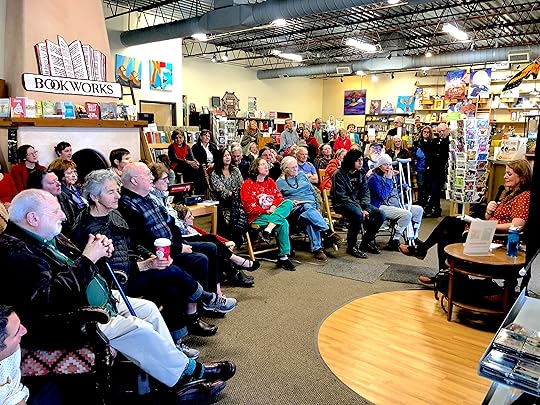
Back before the world turned upside down, I was able to see Karen read and discuss Tell Me Why You Fled at my favorite local bookstore. This is such a powerful, important, and special book. Although the premise is mostly serious and often sorrowful, Karen's tone and use of humor are pitch-perfect. It really blew me away and I hope this work gets more attention.
Back before the world turned upside down, I was able to see Karen read and discuss Tell Me Why You Fled at my favorite local bookstore. This is such a powerful, important, and special book. Although the premise is mostly serious and often sorrowful, Karen's tone and use of humor are pitch-perfect. It really blew me away and I hope this work gets more attention.

March 14, 2021
I purchased this e-book through BookBub, and I’m really glad I did. I really liked this book!
This is not a book for the faint of heart, but it’s one that shows a part of the world we may not want to think about, for it’s easier that way, to not know how difficult life is for others.
Born in Ireland, Karen works for the UN (United Nations). These are stories about that experience.
In her orientation, she watched a CD-ROM on “security in the field.” It mainly consisted of lessons on security precautions: how to identify a landmine; how to choose the safest room in a hotel; how to find your way home after being kidnapped, using only the stars.
She shares some of the interviews she did with refugees, relaying their devastating stories. She had to develop strategies for coping with hearing such stories. The first was to let herself believe that the story she heard was somehow not actually true.
The other part that was hard for her to deal with is the inequality. How she and others were surrounded by and benefited from living high on a hill with running water and electricity, from where they could look down at night on the campfires in the refugee slums.
On occasion she said refugees would pay families who were being resettled to pretend that their children where theirs so that they could be resettled with them.
Some people would live in camps for up to fifteen years. Some never found a country to resettle to.
As her “volunteer” stipend she said she made seventeen hundred dollars a month more than three times what some permanent local staff earned—a five hundred dollars a month salary, and the refugees, if they received money, only got about forty dollars a month.
She also speaks of corruption and sexual misconduct.
Facts such as almost 20% of children in Somalia died before the age of five.
She had worked with refugees whose whole families had been killed in front of them, and young men who have been forced to rape their mothers in front of their fathers.
Interviews were not always easy. Many times, interpreters were needed. Some refugees had no numeracy skills. Women with young children estimated their age at sixty and said their children were born four months apart. It was her job to help get their stories straight and down on paper She did not make the final decision. Her job was simply to argue their case for resettlement.
Always the main part of the interview was: tell me why you fled.
The imagination of torturers was one of the elements of refugee’s stories that always disturbed and bewildered her the most. She wondered how anyone could come up with the most awful and painful degrading forms of torture they could think of.
The worst story she heard was of a woman who had been held hostage by a cannibal set in eastern Congo. As punishment for her husband belonging to a rival militia, her baby was killed in front of her. She was then forced to cook and eat her child’s remains.
The author also writes about her struggles with depression. And of a friend in Ireland who had committed suicide. A lot of what Karen went through I feel was grief related.
She is now married with children, living in the US. Between deployments she works as a volunteer with a local organization that assists refugees who have just resettled in the country, giving her the opportunity to finally see what refuges lives are like after resettlement.
You will not find this book on any bestseller list, but some of the best reads are never best sellers. I love finding these books that offer insight into the lives of others. Real stories that touch my heart. This book is well-written and I thank the author for sharing her experiences.
This is not a book for the faint of heart, but it’s one that shows a part of the world we may not want to think about, for it’s easier that way, to not know how difficult life is for others.
Born in Ireland, Karen works for the UN (United Nations). These are stories about that experience.
In her orientation, she watched a CD-ROM on “security in the field.” It mainly consisted of lessons on security precautions: how to identify a landmine; how to choose the safest room in a hotel; how to find your way home after being kidnapped, using only the stars.
She shares some of the interviews she did with refugees, relaying their devastating stories. She had to develop strategies for coping with hearing such stories. The first was to let herself believe that the story she heard was somehow not actually true.
The other part that was hard for her to deal with is the inequality. How she and others were surrounded by and benefited from living high on a hill with running water and electricity, from where they could look down at night on the campfires in the refugee slums.
On occasion she said refugees would pay families who were being resettled to pretend that their children where theirs so that they could be resettled with them.
Some people would live in camps for up to fifteen years. Some never found a country to resettle to.
As her “volunteer” stipend she said she made seventeen hundred dollars a month more than three times what some permanent local staff earned—a five hundred dollars a month salary, and the refugees, if they received money, only got about forty dollars a month.
She also speaks of corruption and sexual misconduct.
Facts such as almost 20% of children in Somalia died before the age of five.
She had worked with refugees whose whole families had been killed in front of them, and young men who have been forced to rape their mothers in front of their fathers.
Interviews were not always easy. Many times, interpreters were needed. Some refugees had no numeracy skills. Women with young children estimated their age at sixty and said their children were born four months apart. It was her job to help get their stories straight and down on paper She did not make the final decision. Her job was simply to argue their case for resettlement.
Always the main part of the interview was: tell me why you fled.
The imagination of torturers was one of the elements of refugee’s stories that always disturbed and bewildered her the most. She wondered how anyone could come up with the most awful and painful degrading forms of torture they could think of.
The worst story she heard was of a woman who had been held hostage by a cannibal set in eastern Congo. As punishment for her husband belonging to a rival militia, her baby was killed in front of her. She was then forced to cook and eat her child’s remains.
The author also writes about her struggles with depression. And of a friend in Ireland who had committed suicide. A lot of what Karen went through I feel was grief related.
She is now married with children, living in the US. Between deployments she works as a volunteer with a local organization that assists refugees who have just resettled in the country, giving her the opportunity to finally see what refuges lives are like after resettlement.
You will not find this book on any bestseller list, but some of the best reads are never best sellers. I love finding these books that offer insight into the lives of others. Real stories that touch my heart. This book is well-written and I thank the author for sharing her experiences.

December 31, 2019
I enjoyed Karen O’Reilly’s memoir so much—like, really took pleasure in the reading of it. I wasn’t necessarily expecting that, because TELL ME WHY YOU FLED is not a tale of lightness and sweet, quirky life lessons. But it sort of reads like it is, or like a dear friend has sat you down with a drink and is pouring out everything of significance that’s happened to her in the past five years. Chapters with the easy-to-swallow feel of linked essays follow this sort-of-lost, but also curious and active Irish woman on her journey towards figuring out who she is. Under the burden of a terrible and growing depression, O’Reilly finds a way to go on living in the world: she begins working for the UN, writing reports, conducting interviews, and making recommendations to convince host countries to accept the world’s most desperate and needful refugees. The work is meant to provide an anchor to a life swimming out from under her, and in some ways, it does. She’s able to live well in Uganda on her small “volunteer” salary—to buy art, party with friends, smoke cheap cigarettes, employ a housekeeper—and she enjoys the satisfaction of knowing she’s doing true good in the world. But cracks in the organization quickly make themselves apparent. There's an office sexual predator who’s given zero incentive to stop, and a racist boss who holds his own Ugandan employees in contempt, and worst of all, endless rules and policies that discredit and dehumanize the very refugees her UN office is supposed to be protecting. O’Reilly’s writing shines in these stories, which she tells in an unadorned, unsentimental way that lets you see exactly how this broken system serving broken people must be breaking her heart, because it’s breaking yours too. But while the book is unsparing in its portrayal of the UN and its endless corruptions both large and small, it’s no polemic—everything is brought back to the faulty human woman at its center. O’Reilly continuously questions her own motives (which are mixed), her own effectiveness, hangups, and moral standing. She makes very clear that as much as the refugees with whom she works need virtual superheroes, neither she nor the organization she works for can measure up… and yet the work goes on, needing to be done. If this all sounds very serious, it is—but what makes this book so readable is the warm, kind, funny voice at its center, and the careful pacing that ensures no emotion drives us off a cliff. I recommend this book equally to those who want to understand current world events and those who just want to curl up with a glass of wine and take in a heartfelt memoir.
November 27, 2019
At it's heart this is a memoir which outlines the harrowing stories of Ugandan refugees awaiting and hoping for relocation. But the personal narrative - a young UNCHR employee battling her own demons while attempting to comprehend alleged corruption within her organisation, all the while a long way from home - is what makes this so readable. Heartbreaking in places, of course - but also loaded with black humour and often heading off on unusual tangents, the author meeting and befriending a number of colourful characters along the way. Provocative yet entertaining, devastating yet optimistic. A masterpiece.
December 20, 2019
Pitch perfect detail make these personal stories seep into your heart and mind. It is a book that encourages empathy and changes the reader's perspective. I wholeheartedly recommend it.

February 7, 2020
This book should be way more famous. I can’t wait to read more by this author. This memoir only covers her first UNCHR placement, so I’m hopeful there will be more to come.
She does not hold back in her criticism of the UN as a whole, her colleagues, and herself. Her description of her parents’ denial around her mental health issues and her criticism of white expatriates’ treatment of their household staff were as memorable as the stories of the refugees she interviewed. She paints a vivid, relatable picture.
Highly recommended!
She does not hold back in her criticism of the UN as a whole, her colleagues, and herself. Her description of her parents’ denial around her mental health issues and her criticism of white expatriates’ treatment of their household staff were as memorable as the stories of the refugees she interviewed. She paints a vivid, relatable picture.
Highly recommended!
August 10, 2020
Gripping read
I haven't put this book down since starting it. What a wonderful insight to a completely unknown world. So eye opening about what's going on that we aren't aware of. Thank you for such a wonderful fly on the wall view.
I haven't put this book down since starting it. What a wonderful insight to a completely unknown world. So eye opening about what's going on that we aren't aware of. Thank you for such a wonderful fly on the wall view.

November 11, 2020
I read this book 4 days ago and am still thinking about it. It's so hard to read these experiences but the way the author leads us through them is very well done.

May 18, 2021
Super easy read with lots of meaning
Super easy read with good insights on what it’s like to work in humanitarian organisations and with refugees alongside all of the obstacles that you could come across. I know how important it is to tell the stories of those who fled and I think this book is a good starter read for anyone who wants to learn more about the world, the people that live in it and the importance of humanity.
Super easy read with good insights on what it’s like to work in humanitarian organisations and with refugees alongside all of the obstacles that you could come across. I know how important it is to tell the stories of those who fled and I think this book is a good starter read for anyone who wants to learn more about the world, the people that live in it and the importance of humanity.
December 17, 2021
A must read
An eye opening book on the work of UNHCR. This book doesn’t give any answers to the question of where do displaced people go. However, it is a valuable insight into how flawed the system is. And why everyone has a duty to support refugees.
An eye opening book on the work of UNHCR. This book doesn’t give any answers to the question of where do displaced people go. However, it is a valuable insight into how flawed the system is. And why everyone has a duty to support refugees.

July 14, 2020
A memoir written quite honestly about aid work, including all of the corruption, racism, and sexual harassment that is rampant in the sector. I did appreciate that the author reflected on her own privilege throughout, and many of the internal conversations she has are the same kinds of conversations we’ve had out loud in the field. A good read for anyone wanting to get into aid work. For those of us already in the sector, a good read that allows us to reflect on our own experiences and compare notes.
Displaying 1 - 11 of 11 reviews